Beyond Stereotypes: Reclaiming Muslim Histories during Ramadan

Civil Society, Global, Global Governance, Headlines, Human Rights, International Justice, IPS UN: Inside the Glasshouse, Religion, TerraViva United Nations

Opinion

Muslim History Month poster- artist Siddhesh Gautam

DELHI, India, Mar 18 2026 (IPS) – In public discourse today, Muslims often appear as subjects of debate rather than authors of their own histories. Discussions about Muslim societies tend to revolve around geopolitics, security or conflict, leaving little space for the cultural, artistic and intellectual traditions that have shaped Muslim communities across centuries.


Reclaiming these narratives is therefore about reclaiming narrative authority. As a Muslim woman, I have often seen how Muslim voices are sidelined even when conversations centre on our own communities and pasts. It was within this context that I started Muslim History Month, together with my friend and colleague Ashwini KP, currently UN Special Rapporteur on Racism, in 2020, choosing to mark it during the month of Ramadan. Hosted on www.zariya.online, the initiative emerged from a simple conviction: communities must have the space to document and narrate their own histories.

Mariya Salim

Muslim History Month also draws inspiration from earlier community-led initiatives such as Black History Month and Dalit History Month. These movements have long shown how marginalized communities can reclaim pasts and their present, that have been ignored or distorted.

They remind us that history is not only about remembering the past but also about challenging exclusion and reshaping how societies understand themselves. Muslim History Month builds on this legacy by creating a platform where Muslims, and others who are allies, themselves reflect on the diversity, complexity and richness of their historical and cultural experiences.

What began as a modest collaborative project has since developed into a global platform bringing together writers, scholars, artists and activists to explore overlooked dimensions of Muslim histories. Contributors have written from Egypt, the United States, Palestine, Nepal and Russia, among others, representing a range of communities including Pasmanda, Tsakhurs, Roma and Uyghur Muslims. This year alone there are contributors from over 6 countries, from Lebanon and Palestine to India, Egypt and Indonesia.

The urgency of documenting these histories is reflected in the commitment of the contributors themselves. Rima Barakat, an academic in Islamic Art History from the Lebanese American University (LAU), wrote her contribution this year from Beirut. Explaining why she chose to participate in our endeavour despite living amid ongoing conflict, she observed:

“War always incites me to act culturally and to contribute amidst political turmoil. Historically, during World War I and World War II, artists and writers produced prolifically and contributed to sustaining a cultural economy. That is what I do today and how survival is measured by cultural and artistic endurance.”

Mihrab at the Jami Masjid, 17th century, Bijapur, India. Photo- Author Rajarshi Sengupta

Her words capture something fundamental about the role of culture in difficult times. Artistic expression is often treated as secondary to more immediate political realities. Yet history repeatedly shows that culture can become one of the most powerful ways communities endure, remember and rebuild.

The first edition of Muslim History Month brought together writers from different parts of the world to document overlooked aspects of Muslim communities. Contributors wrote about subjects ranging from Sheedi Muslims in Pakistan to what Ramadan/Ramzaan means. The second edition shifted the focus toward Muslim women from across the world who are no longer with us, many of whose contributions have faded from historical memory, from architect Zaha Hadid to Indian Spy Noor Inayat Khan. By revisiting their lives and work, the edition sought to address the erasures that often shape how Muslim women’s life and experiences are recorded.

The third edition, launched this year, turns its attention to Muslim art and architecture. Rather than limiting the discussion to monumental structures or gallery-based art alone, the edition explores a wider spectrum of creative practices. Art and architecture here include performance traditions, Calligraphy and mosque architecture, craft practices like Rogan Art, cultural rituals like wearing Amulets and everyday acts of creativity through which communities’ express faith, identity and belonging.

One of the contributions by Kawther Alkholy Ramadan in Canada for instance reflects on the aftermath of the Afzaal family murders in London, Ontario. In 2021, the Afzaal family was deliberately targeted and killed in an act of anti-Muslim violence that deeply affected the local community. Rather than focusing solely on the violence of the attack, Ramadan’s piece examines how Muslim women responded through creative and cultural expression.

Stories such as these challenge conventional assumptions about what counts as art. They show how creativity often emerges most powerfully in moments of crisis, when communities search for ways to process trauma and reaffirm their presence.

Another contribution from Indonesia by Adzka Haniina Albarri, for instance explores the performative art known as Shalawat Musawa. Shalawat refers to devotional invocations offered by Muslims in honour of the Prophet Muhammad (PBUH) The article examines how Shalawat Musawa has become a space where discussions around gender equality can be articulated. By encouraging women’s participation in a devotional practice historically dominated by men, performers are using art to engage with evolving debates about gender and social justice.

Across the edition, similar stories emerge from different parts of the world. Some pieces engage with contemporary artists, including an interview with world renowned Tunisian calligrapher Karim Jabbari, articles by Palestinian jewellery designer Mai Zarkawi and Egyptian academic Balsam Abdul Rahman Saleh. Others explore artistic traditions shaped by migration, diaspora and local cultural histories.

Muslim History Month III highlights how artistic expression remains embedded in everyday life. From neighbourhood cultural initiatives, architectural marvels, discussions on the Bihari Script Quran in Dallas Museum, to devotional performances, these practices reveal how creativity continues to shape the social and spiritual landscapes of Muslim communities.

They also illustrate the diversity within Muslim cultural production. Muslim societies are far from monolithic, and neither are their artistic traditions.

At a time when public discourse frequently reduces Muslims to political headlines or security narratives, these stories offer an important counterpoint. They remind us that Muslim histories are also histories of creativity, scholarship, craftsperson-ship and cultural exchange.

Documenting these histories is itself an act of preservation. History, and for that matter the present that remains unwritten, are easily forgotten or misrepresented. When communities claim authority to narrate their own pasts and present, they challenge the structures that have historically excluded them from broader cultural narratives. Therefore, Muslim History Month, then, is not only about looking back. It is also about shaping how Muslim histories will be understood in the future.

As Rima Barakat’s reflection from Beirut reminds us, even in times marked by war and uncertainty, cultural production persists. For many communities, it is precisely through artistic endurance that survival itself is measured.

Beyond the stereotypes and headlines that dominate public discourse lies a far richer narrative, one shaped by art, architecture, memory and the collective imagination of communities determined to tell their own stories.

Mariya Salim is co-founder of Zariya. She is a Human Rights activist and an international SGBV expert based in Delhi India.
https://zariya.online/category/muslim-history-month-iii/

IPS UN Bureau
  Source

A Remotely-Piloted Weapon That Targets Civilians in War Zones

Armed Conflicts, Civil Society, Crime & Justice, Democracy, Featured, Global, Headlines, Human Rights, IPS UN: Inside the Glasshouse, TerraViva United Nations

A Remotely-Piloted Weapon That Targets Civilians in War Zones

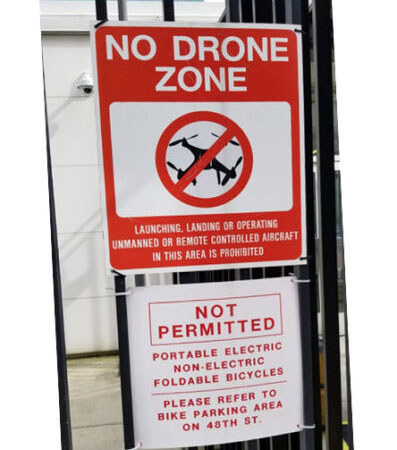
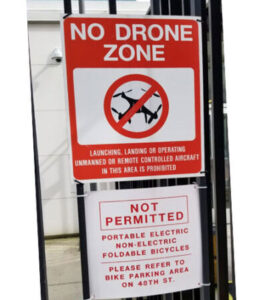
A sign outside the UN Secretariat building last year.

UNITED NATIONS, Mar 18 2026 (IPS) – As the world continues to be weighed down in political and military turmoil, drones are being increasingly used as weapons of war in a rash of ongoing conflicts—including Ukraine vs Russia, Israel vs Palestine, US vs Iran and Israel vs Lebanon, plus in civil wars in the Democratic Republic of the Congo (DRC), Sudan and Haiti.


Described as Unmanned Aerial Vehicles (UAV), drones have fundamentally transformed modern warfare, “offering a low-cost, high-impact form of air power, challenging traditional military doctrines and giving rise to new tactics and ethical debates”.

Once limited to major military powers like the U.S. and Israel, drones are now being used by numerous state and non-state actors, including militant groups and even organized crime cartels.

The use of drones, particularly in targeted killings and with increasing autonomy, has raised significant international debate regarding accountability, civilian casualties, and compliance with international humanitarian law

UN High Commissioner for Human Rights Volker Türk said last week he was “appalled by the devastating impact on civilians of increasing drone attacks”, amid reports that more than 200 civilians have been killed by drones since 4 March alone in the Kordofan region, and in White Nile state.

“It is deeply troubling that despite multiple reminders, warnings and appeals, parties to the conflict in Sudan continue to use increasingly powerful drones to deploy explosive weapons with wide-area impacts in populated areas,” said Türk.

“I renew my call on them to abide fully with international humanitarian law in their use of these weapons, particularly the clear prohibition on directing attacks against civilians and civilian objects and infrastructure, and against any form of indiscriminate attacks.”

Many homes, schools, markets and health facilities were damaged or destroyed in the attacks, compounding the impacts on civilians and local communities, he said.

Meanwhile drones are also being used in the politically-troubled Haiti and also in the conflict between the Democratic Republic of Congo (DRC) and Rwanda despite a peace agreement brokered by the US last year.

According to a report in Cable News Network (CNN) March 17, the war in Iran is continuing to disrupt travel across the Gulf after Iranian drone strikes triggered two major air incidents in recent days. Flights at Dubai International Airport were briefly suspended on Monday after a drone struck a nearby fuel tank, igniting a large fire.

The shutdown forced cancellations and diversions as aviation authorities closed the airport. Part of the UAE’s airspace was also closed for a few hours overnight after the country said it was responding to incoming missiles and drone strikes from Iran.

Meanwhile, the prices of many global airfares that bypass the Middle East are rising, as the conflict drives up oil prices and airlines warn of higher fuel costs ahead, said CNN.

Focusing on a military perspective, Siemon Wezeman, Senior Researcher, Arms Transfers Programme, Stockholm International Peace Research Institute (SIPRI), told IPS more and more states, (and also non-state armed- rebel – groups) acquire drones of all sizes.

“Some of the numbers are quite amazing – Ukraine getting not a few 1,000, but far over 10,000 drones from various suppliers, and Russia, Ukraine and Iran each use drones by the 100s almost every day in the current conflicts.”

And different from some 10 years ago, when most of the drones where for reconnaissance roles, he pointed out, today many drones are armed and many more are ‘one-way attack drones’ (also called suicide or kamikaze drones). The latter are becoming a cheap alternative for long-range missiles against ground targets.

In the SIPRI arms transfers database (https://armstransfers.sipri.org), he said, “we record transfers of all armed drones, and reconnaissance drones with a weight of at least 150kg (we had to put a weight limit to be able to keep monitoring drone transfers with the resources and sources we have)”.

“And we clearly see in recent years that a) the total numbers of drones transferred between states has grown, b) several non-state actors (e.g. Houthis and Hezbollah) have also been supplied with drones, c) the number of states and non-state actors that have acquired drone has grown – most states in the world have now acquired drones, many of them from foreign suppliers, d) the number of producers and suppliers has grown – the simpler drones are offered by dozens if not 100s of large and very small companies and that number is growing, and e) drones, and especially armed drones.”

That is the picture for flying drones, Wezeman said.

But also, sea drones (surface or submarine) are starting to become popular – even if not yet transferred in any significant number. And land drones are also starting to become popular, he declared.

At a press conference March 10, UN Under-Secretary-General for Humanitarian Affairs Tom Fletcher said: “I’m really worried about drones in particular. I think the world has decided that it’s far more interested in spending enormous amounts of money developing these increasingly deadly weapons than it is on saving lives, and it seems to have decided that it hasn’t got time to work on ensuring that the rules that govern these weapons, these lethal autonomous weapons, keep up with the pace of technology.”

So you’ve got this dangerous alliance between very innovative technology and huge amounts of money and people’s desire to kill more people – and that’s a toxic combination, he said.

“And last year, 90 per cent of all deaths caused by drones were civilians, many of them humanitarians. And we’re seeing that across the crises on which we work – whether it’s Gaza, Sudan or in Ukraine, we’re seeing these bad practices move between crises”.

In the DRC last week, a senior official of the UN children’s agency UNICEF and two civilians were killed in drone strikes.

Amplifying further Wezeman said all these drones and one-way attack drones have become more capable, especially in range (the simple Shahed, one-way attack drones used by Iran and sold to Russia have a range of up to 1500 to 2000km), changing them from tactical battlefield weapons to more strategic weapons.

Development is very rapidly continuing for all type of drones, including making them more autonomous and intelligent to be capable of independent targeting and other decision-making. AI plays a growing role in this process. This process leads to questions about control, but right now it seems the process is moving faster than the discussion on controlling the autonomous aspects (see also our programme on emerging technologies.

https://www.sipri.org/research/armament-and-disarmament/emerging-military-and-security-technologies.

Will they replace systems with a human on board or in the loop? The development goes certainly that way and for missiles and one-way attack drones that has already started. For the larger, more capable and more complex systems such as combat aircraft, warships and larger combat vehicles that is still a future – but not a distant dream as development of for example drone combat aircraft is already moving into prototypes in the USA, China, Australia and Europe.

There still is an element of doubt however – drones need navigation that now is largely based on GPS-type systems, something that is not free from the risks of being jammed or stopped.

The simpler drones, with their simple technology, cheap and easy to produce are also not as effective as hoped. Most of them are rather easy prey for air-defence systems (or jamming) – while Russia, Iran and Ukraine send every day dozens or 100s to attack their opponents, most do no reach their target but are shot down or lost due to jamming or other causes, declared Wezeman.

Meanwhile Human Rights Watch said last week its latest research on “how Haitian security forces and private contractors working with them have conducted extensive and apparently unlawful lethal drone strikes in densely populated areas killing and injuring residents who were not members of criminal groups, including children”.

“We call on Haitian authorities to urgently rein in the security forces and private contractors working for them before more children die”, said HRW.

According to data from multiple sources reviewed by Human Rights Watch, at least 1,243 people were killed by drone strikes in 141 operations between March 1, 2025, and January 21, 2026, including at least 43 adults who were reportedly not members of criminal groups, and 17 children. The data also shows that the drone strikes injured 738 people, at least 49 of whom were reportedly not members of criminal groups.

“Dozens of ordinary people, including many children, have been killed and injured in these lethal drone operations,” said Juanita Goebertus, Americas director at Human Rights Watch. “Haitian authorities should urgently rein in the security forces and private contractors working for them before more children die.”

The United Nations Integrated Office in Haiti has attributed the drone attacks in Haiti to a specialized “Task Force” established by Prime Minister Alix Didier Fils-Aimé that is operated with support from the private military company Vectus Global.

The US ambassador to Haiti has confirmed that the US State Department issued a license to Vectus Global to export defense services to Haiti.

Thalif Deen, Senior Editor, Inter Press Service (IPS) news agency, was a former Director, Foreign Military Markets at Defense Marketing Services; Senior Defense Analyst at Forecast International; military editor Middle East/Africa at Jane’s Information Group and UN correspondent for Jane’s Defence Weekly, London.

IPS UN Bureau Report

  Source

Oil Shocks, Political Upheaval and the One Solution Governments Keep Ignoring

Active Citizens, Armed Conflicts, Civil Society, Climate Action, Climate Change, Crime & Justice, Development & Aid, Economy & Trade, Energy, Environment, Featured, Financial Crisis, Global, Headlines, Human Rights, Natural Resources, TerraViva United Nations

Opinion

Oil Shocks, Political Upheaval and the One Solution Governments Keep Ignoring

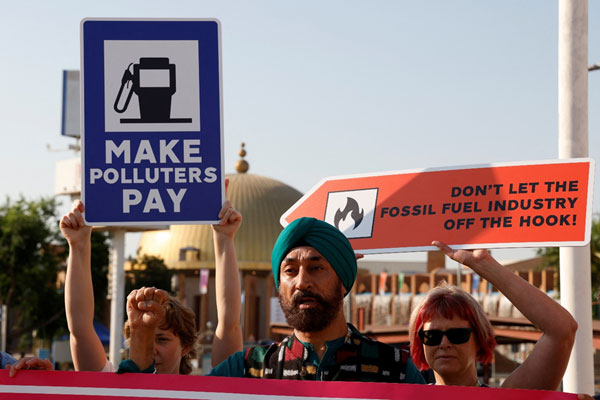
Credit: Marcelo Del Pozo/Reuters via Gallo Images

LONDON, Mar 16 2026 (IPS) – Once again, global oil prices are spiking, driven by the Israeli-US war against Iran. With Iran retaliating by attacking infrastructure and transport hubs and blocking the Strait of Hormuz, through which one-fifth of the world’s oil passes, oil supplies from the region are being choked, pushing up prices. The cost of a barrel of Brent crude – the international benchmark for oil prices – stood at US$73 before the conflict but has surged beyond US$100 since. It could go higher still as war continues.


The impacts are already being felt when drivers fill up their petrol- and diesel-powered vehicles. But they go much wider. Bigger household energy bills will likely result, while businesses will pass on their increased costs in the form of higher prices. Russia’s 2022 full-scale invasion of Ukraine sent oil prices soaring and sparked a global cost-of-living crisis, and now, as many economies seemed to be recovering, the war in the Gulf has brought another shock. Impacts could be political as well as financial: in numerous countries, the cost-of-living crisis helped drive voters towards right-wing populist and nationalist politicians. Recent years have seen Gen Z-led protests erupt in countries around the world, fuelled in part by young people’s anger at failing economies.

In a world increasingly characterised by conflict and with powerful states tearing up the international rulebook in pursuit of material interests, more oil shocks and big economic and political impacts seem inevitable. Governments typically react with economic policies that fail to protect those with the least, and by meeting political unrest with repression. They should consider another way.

The world will remain vulnerable to oil price shocks only for as long as it stays dependent on oil. The climate crisis compels a rapid move away from fossil fuel dependency to abate the worst impacts of global heating. Increasingly, this should also be seen as a matter of economic and political security.

Some steps have been taken in the right direction. Renewables now provide over 30 per cent of global electricity. Investments in renewables more than double those in fossil fuels. But fossil fuel companies have immense power and are determined not to give it up. That was reflected in the fact that 1,600 fossil fuel lobbyists attended the latest global climate summit, COP30 in Brazil, and succeeded in preventing any new commitment to end fossil fuel extraction. Their power is shown in the lawsuit an oil company brought against Greenpeace, leading to a widely criticised trial in North Dakota, USA, with the campaigning organisation facing a punitive US$345 million damages bill. Their influence was reaffirmed by Donald Trump’s election win, after a campaign in which fossil fuel companies gave US$450 million in donations to Trump and his allies – and they were rewarded by US intervention in Venezuela.

Fossil fuel companies are determined to hold back the tide of renewables for as long as possible, because every day of delay is another day of profit, even though every fraction of a degree of temperature rise means avoidable suffering for millions of people. Delay is the new climate denial.

As the latest State of Civil Society Report points out, civil society’s working to make the difference, urging governments to hasten the transition and calling on global north states to make funding available for global south states to decarbonise and adapt to climate impacts. Civil society is exposing the environmental devastation caused by extraction and the complicity of fossil fuel companies in human rights abuses. Its strategies include advocacy, public campaigning, protests, direct action and, increasingly, litigation.

In 2025, climate litigation scored some big successes. The International Court of Justice (ICJ) issued an unprecedented advisory opinion, ruling that states have a legal duty to prevent environmental harm, which requires them to mitigate emissions and adapt to climate change. This victory originated in civil society: in 2019, student groups from eight countries formed the Pacific Islands Students Fighting Climate Change network to persuade their governments to seek an ICJ ruling.

Following extensive civil society engagement, the Inter-American Court of Human Rights issued a similar ruling. The African Court for Human and Peoples’ Rights is set to issue its advisory opinion following a petition brought by the African Climate Platform, a civil society coalition.

These rulings can seem symbolic, but they strengthen national-level efforts to hold states and corporations accountable. These have paid off recently too. In 2025, two South African groups stopped an offshore oil project after a court found its environmental assessments were deeply flawed. More litigation is coming, including in New Zealand, where civil society has filed a lawsuit after the government weakened its emissions reduction plan.

But civil society faces a backlash. Around the world, climate and environmental activists and their allies, Indigenous and land rights defenders, experience severe state and corporate repression.

Last year in Uganda, authorities arrested 11 activists for protesting against the construction of the East African Crude Oil Pipeline. In Peru, police used teargas and non-lethal weapons against people blocking a road to protest against a mine. In Cambodia, five young activists from the Mother Nature environmental group have been in jail since July 2024.

The French government has repeatedly vilified environmental campaigners and deployed police violence against protests, while last year the German government launched an inquiry into public funding of environmental groups and the Dutch parliament adopted a motion condemning Extinction Rebellion and urging the removal of its tax-exempt status.

As the latest oil price shocks reverberate around the global economy, governments should learn the lessons. As economies deteriorate, the temptation will be to say that transition is a luxury, something that can be put off even further. This is the wrong lesson: recent research in the UK suggests that the cost of achieving net zero will be about the same as the cost of another oil price crisis. Economic and political security lies in ending fossil fuel dependency as quickly as possible. To learn the right lessons, governments should stop repressing climate activism and instead listen to and work with civil society.

Andrew Firmin isCIVICUS Editor-in-Chief, co-director and writer for CIVICUS Lens and co-author of the State of Civil Society Report.

For interviews or more information, please contact research@civicus.org

  Source

Tanzania, Mozambique and Malawi Launch $7.12 Million GEF Project to Protect the Ruvuma Basin

Africa, Biodiversity, Conferences, Conservation, Development & Aid, Economy & Trade, Editors’ Choice, Environment, Featured, Green Economy, Headlines, Natural Resources, Sustainable Development Goals, TerraViva United Nations

Environment

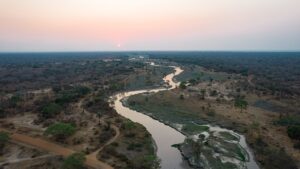
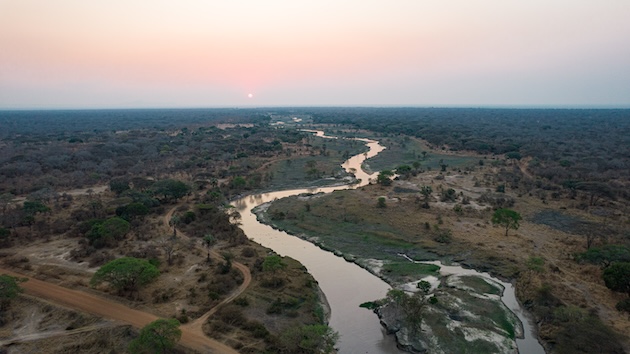
The Ruvuma River winds through wetlands and forests in southern Tanzania, forming part of the natural border with Mozambique. The river sustains farming, fishing and wildlife across the vast Ruvuma River Basin, supporting millions of people who depend on its waters for their livelihoods. Credit: Kizito Makoye/IPS

The Ruvuma River winds through wetlands and forests in southern Tanzania, forming part of the natural border with Mozambique. The river sustains farming, fishing and wildlife across the vast Ruvuma River Basin, supporting millions of people who depend on its waters for their livelihoods. Credit: Kizito Makoye/IPS

DAR ES SALAAM, Tanzania, Mar 16 2026 (IPS) – At dawn, the Ruvuma River moves quietly through a vast wetland along the border between Tanzania and Mozambique. Its muddy waters appear calm, disturbed only by drifting logs and the occasional ripple.


But the fishermen paddling wooden canoes across the river know the danger that lurks under the surface.

“Always keep away from the edge,” says Hamisi Mkude, a fisherman from Michenjele village. “Never trust this river.”

For generations, communities living along the Ruvuma Basin have learned to coexist with crocodiles, whose presence defines life on one of East Africa’s most dangerous rivers. Fishermen follow unwritten rules passed down through families: stay away from the water’s edge, avoid muddy banks marked by crocodile tracks, and never wade into the river.

“That distance saves lives,” Mkude tells IPS by phone. “Crocodiles attack from the bank.”

Inside the small fishing boats, discipline is strict. Arms and legs must never dangle over the side, and no one stands on the canoe’s edge while pulling in nets.

Yet despite the dangers, the Ruvuma River remains the lifeline of millions of people who live within its vast basin.

Stretching across about 155,000 square kilometres, the Ruvuma Basin connects southern Tanzania’s highlands with eastern Malawi and northern Mozambique before snaking into the Indian Ocean. Along its long journey, the river nourishes forests, wetlands and fertile floodplains that support farming, fishing and transport.

But the ecosystem that sustains these communities is increasingly under pressure from deforestation, unsustainable land use and climate change.

Now, Tanzania, Mozambique and Malawi have launched a new regional initiative aimed at protecting the fragile ecosystems of the basin.

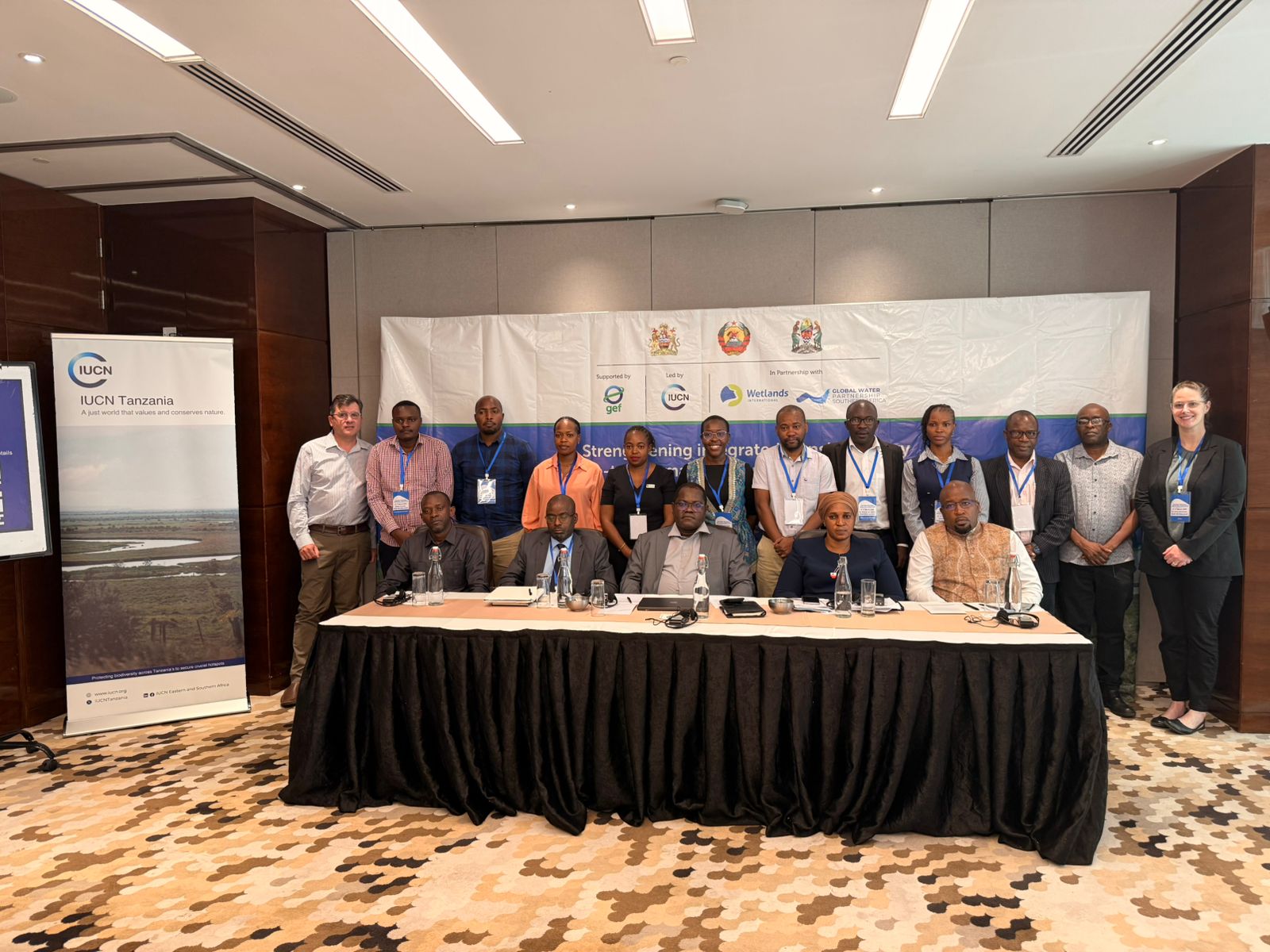
Delegates from Tanzania, Mozambique and Malawi pose for a group photo during the inception workshop launching the “Strengthening Integrated Transboundary Source-to-Sea Management of the Ruvuma River Basin and Its Coastal Zones” project at Johari Rotana on March 4, 2026. The five-year, USD 7.12 million initiative funded by the Global Environment Facility aims to improve cross-border management of the Ruvuma River Basin, protecting ecosystems while strengthening livelihoods for communities across Tanzania, Mozambique and Malawi. Credit: Kizito Makoye/IPS

Delegates from Tanzania, Mozambique and Malawi pose for a group photo during the inception workshop launching the “Strengthening Integrated Transboundary Source-to-Sea Management of the Ruvuma River Basin and Its Coastal Zones” project at Johari Rotana on March 4, 2026. The five-year, $7.12 million initiative funded by the Global Environment Facility aims to improve cross-border management of the Ruvuma River Basin, protecting ecosystems while strengthening livelihoods for communities across Tanzania, Mozambique and Malawi. Credit: Kizito Makoye/IPS

A Transboundary Effort

The three countries have unveiled a project to strengthen environmental management across the Ruvuma Basin.

Officials announced the initiative during a workshop in Dar es Salaam, bringing together policymakers, scientists and conservationists concerned about the basin’s future.

The programme will be implemented with USD 7.12 million in funding from the Global Environment Facility (GEF) and led by the International Union for Conservation of Nature (IUCN) with Global Water Partnership Southern Africa and Wetlands International.

About 65 percent of the basin lies in Mozambique, 34 percent in Tanzania, and a small portion in Malawi, making cooperation between the three countries essential.

“This inception workshop marks an important milestone,” said Julie Mulonga, director of Wetlands International Eastern Africa. “It represents the transition from planning to implementation, when our shared vision begins to translate into coordinated action.”

The initiative aims to improve management of forests, wetlands and water resources from the upper catchments of the basin to its coastal ecosystems.

A River That Sustains Millions

The Ruvuma River begins in the highlands of southern Tanzania and flows more than 800 kilometres to the Indian Ocean.

Along the way, it supports a wide range of ecosystems, including wetlands, forests, floodplains and estuaries that are among the most biologically diverse landscapes in southeastern Africa.

For communities scattered along its banks, the river is central to daily life.

Farmers depend on its waters to irrigate crops such as maize, rice and cassava. Fishermen rely on the river for their daily catch. Women collect water for cooking and washing, while pastoralists bring livestock to drink.

Seasonal rhythms shape life across the basin.

During the rainy season, the river swells and floods surrounding wetlands that serve as breeding grounds for fish and wildlife. In the dry months, shrinking channels concentrate fish stocks that sustain local economies.

But these natural cycles are becoming increasingly unpredictable.

“The Ruvuma landscape is both ecologically important and socially vital,” Mulonga told participants at the meeting. “Its wetlands, forests and agricultural lands support millions of people across Tanzania, Malawi and Mozambique.”

“These ecosystems regulate water resources, sustain biodiversity and underpin livelihoods and food security,” she added.

Growing Environmental Pressures

Environmental experts warn that the basin’s ecosystems are under mounting strain.

Across the region, forests are being cleared for farmland and charcoal production. Hillsides once covered with woodland are now exposed to erosion, sending sediment into rivers and damaging aquatic habitats.

Population growth is increasing demand for land, while climate change is altering rainfall patterns.

“Land degradation, unsustainable farming and deforestation are placing increasing pressure on these ecosystems,” Mulonga said.

Scientists warn that without coordinated action, the basin could lose ecological functions that are vital for both biodiversity and human livelihoods.

A “Source-to-Sea” Approach

The new initiative adopts what experts call a “source-to-sea” approach, recognising that environmental activities upstream can affect ecosystems downstream.

For example, deforestation in the upper catchments can increase soil erosion and sediment in rivers, affecting fisheries and coastal habitats further along the basin.

Project planners say the programme will focus on improving land management in agricultural areas, restoring degraded landscapes and protecting wetlands.

“The Ruvuma River Basin serves as a vital lifeline for millions across Malawi, Mozambique, and Tanzania,” said Andrew Hume, International Waters Focal Area Coordinator at the Global Environment Facility.

“This project demonstrates how safeguarding the basin depends on a shared vision and collaborative transboundary efforts. By supporting this initiative, the GEF is helping to connect land, freshwater, and marine management in a model that transcends national borders. This comprehensive, source-to-sea approach reflects our commitment to protecting international waters and will guide our future investments in shared ecosystems as we move toward GEF-9.”

The project aims to restore about 88,620 hectares of degraded ecosystems while improving landscape management across nearly 280,000 hectares. More than 50,000 people are expected to benefit directly from the initiative.

Representatives from conservation organisations say the project could demonstrate how integrated environmental management can work across national borders.

“The project embodies an integrated vision of land, freshwater and marine resources,” said a representative from the IUCN. “It positions the Ruvuma Basin as a model for transboundary resource management and sustainable development.”

Cooperation Across Borders

Because the river crosses national boundaries, cooperation among the three countries is critical.

Decisions made upstream can have consequences downstream.

For instance, changes in land use in Tanzania may affect water flows in Mozambique, while environmental degradation in Malawi could influence sediment levels in the lower basin.

For years, limited coordination between countries made it difficult to manage the basin effectively.

But officials say that is beginning to change.

The three countries have signed agreements to strengthen collaboration through the Joint Development and Management of the Ruvuma Basin.

James Chitete, head of the Malawian delegation, said the project represents an opportunity for shared responsibility.

“The project is not only about water management,” he said. “It is about safeguarding ecosystems, improving livelihoods and ensuring our natural resources benefit present and future generations.”

Improving Knowledge and Governance

Beyond environmental restoration, the initiative will also focus on strengthening governance and scientific research.

Experts say that data on water flows and environmental changes in the basin remain limited.

The project aims to improve hydrological monitoring and data sharing between the three countries to help policymakers make informed decisions.

“The source-to-sea approach recognises that land management affects river health and coastal ecosystems,” said the chairperson of the Joint Development and Management of the Ruvuma Basin.

“Decisions made in one part of the basin can have consequences across borders.”

Communities at the Centre

Experts stress that local communities must play a central role in protecting the basin.

Farmers, fishermen and pastoralists interact with the landscape every day, making them key partners in conservation efforts.

The project therefore emphasises community participation and aims to involve women and youth in environmental decision-making.

“The Ruvuma River Basin is a shared resource and opportunity,” said Shamiso Kumbirai of Global Water Partnership Southern Africa.

“Through cooperation and inclusive governance, this project can strengthen ecosystem health and regional collaboration.”

Protecting Wetlands

Wetlands – often overlooked in development planning – are receiving particular attention under the initiative.

These ecosystems act as natural filters, trapping sediment and pollutants before they reach rivers.

They also store water during rainy seasons and release it gradually during dry periods, helping regulate river flows and reduce flood risks.

“Wetlands are often undervalued,” Mulonga said.

“Yet they regulate water flows, reduce flood risks and support biodiversity. They are natural infrastructure that enhances climate resilience.”

Climate Change Challenges

Climate variability is already affecting communities along the Ruvuma River.

Farmers report shifting rainfall patterns that disrupt planting seasons, while fishermen say fish populations are changing as water temperatures fluctuate.

Floods have also become more intense in recent years, damaging homes and crops.

To address these challenges, the project will promote nature-based solutions such as forest restoration, sustainable agriculture and wetland conservation.

Experts say strengthening ecosystems can help communities adapt to climate change while protecting biodiversity.

Life Along the River

Back on the Ruvuma River, fishermen like Abdallah Hassan say they understand the delicate balance between humans and nature.

Declining fish stocks or polluted water would threaten their livelihoods.

“You must respect the river,” Hassan says. “If you respect it, it will feed you.”

As the meeting in Dar es Salaam concludes, officials express cautious optimism that the new initiative could improve cooperation and restore degraded ecosystems across the basin.

Conservation groups say the project could also become a model for transboundary environmental management in Africa.

For communities living along the river, the stakes are high.

At sunset, fishermen pull in their nets as lanterns flicker on the darkening waters of the Ruvuma.

Beneath the surface, crocodiles slither silently.

For generations, survival here has depended on knowledge, discipline and cooperation — principles that the three nations now hope will guide the protection of the river they share.

For fishermen like Mkude, the hope is simple: That the Ruvuma River will endure for generations to come.

Note: This feature is published with the support of the GEF. IPS is solely responsible for the editorial content, and it does not necessarily reflect the views of the GEF

IPS UN Bureau Report


Housing as Climate Resilience in Asia-Pacific Cities

Asia-Pacific, Civil Society, Climate Change, Environment, Featured, Headlines, Humanitarian Emergencies, Sustainable Development Goals, TerraViva United Nations

Opinion

Housing as Climate Resilience in Asia-Pacific Cities

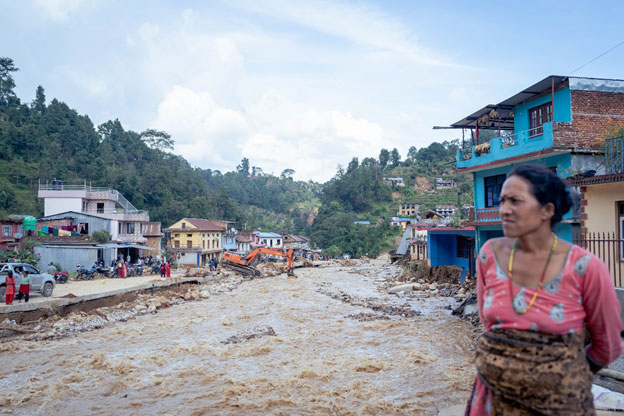
A woman looking at the flooding and landslides in Panauti Muncipality of central Nepal in October 2024. Housing resilience is essential in preventing urban loss and saving lives. Credit: UNICEF/ Rabik Upadhayay

BANGKOK, Thailand, Mar 16 2026 (IPS) – Access to adequate housing is a foundation of resilient cities. Safe and affordable homes provide stability, allow residents to access essential services, and enhance the capacity for communities to withstand and recover from shocks. Yet housing is often treated as a downstream outcome of urban development or disaster recovery rather than as a strategic investment in resilience.


The Asia and the Pacific SDG Progress Report 2026 delivers a stark warning. The region is not on track to achieve the Sustainable Development Goals, and 88 per cent of measurable targets are projected to be missed by 2030 at the current pace. Progress across SDG 11 indicators reflects mixed trends. While some indicators show improvement, disaster losses and infrastructure damage continue to rise.

This widening gap between policy commitments and real-world outcomes exposes a growing resilience deficit in urban systems. Accelerating progress on SDG Target 11.1, which calls for access to adequate, safe and affordable housing and the upgrading of informal settlements, will be critical to reducing urban vulnerability across Asia and the Pacific.

Regional dialogue increasingly reflects this shift toward translating policy commitments into concrete action that reduces urban vulnerability. Discussions at the 13th Asia-Pacific Forum on Sustainable Development in 2026 and statements at the eighty-first session of the Economic and Social Commission for Asia and the Pacific, held under the theme resilient and sustainable urban development for regional cooperation, highlighted housing affordability, informal settlements and climate-resilient housing as growing policy priorities requiring stronger action at the city level.

Across Asia and the Pacific, around 700 million people, nearly one-third of the region’s urban population, live in informal settlements – many located in hazard-prone areas exposed to flooding, extreme heat, landslides and sea-level rise.

Urban informality reflects deeper structural weaknesses in urban systems, such as gaps in land governance, planning frameworks and service delivery, concentrating climate risks in the same neighbourhoods where housing conditions are most fragile.

Urban vulnerability is shaped by the way cities are built and governed. Unplanned development, weak land-use systems and inadequate housing expose millions of urban residents to climate hazards and disaster risks. In informal settlements, these risks intensify through substandard construction, overcrowding, and limited access to water and sanitation.

Climate change further amplifies these vulnerabilities as flooding, extreme heat, water insecurity, land subsidence and air pollution interact through fragile urban systems.

Evidence also shows that improving housing conditions generates broad development gains. Habitat for Humanity’s research indicates that large-scale upgrading of informal settlements could raise GDP per capita by up to 10 per cent and increase life expectancy by four percent.

Within just one year, housing improvements could prevent more than 20 million illnesses, avert nearly 43 million incidents of gender-based violence, and avoid around 80,000 deaths. These findings highlight that expanding affordable housing and upgrading informal settlements are critical investments in climate adaptation, public health and inclusive development.

A shared but differentiated responsibility

To realign SDG trajectories and move the region closer to a resilient urban future, housing must be understood as a core component of the urban system. Achieving this requires coordinated action across governments, the private sector and civil society.

Governments: From pilot projects to systemic guarantees

Governments must anchor climate-resilient and adequate housing as a national priority, embedding secure tenure, resilient housing and informal settlement upgrading within urban development, climate adaptation and disaster risk reduction strategies. Regulatory frameworks should enable participatory and in-situ upgrading and community-led tenure solutions that allow residents to invest in climate-resilient housing improvements.

Private sector: From speculative value to resilient value

The private sector can help scale resilient housing solutions by mobilizing blended finance that combines guarantees, concessional capital and private investment. These mechanisms can support incremental home improvements, affordable rental supply and climate-resilient retrofits. Companies can also prioritize locally sourced, low-carbon materials and passive design solutions such as cool roofs, insulation and cross-ventilation suited to tropical cities.

Civil society and academia: From isolated initiatives to knowledge-powered coalitions

Civil society and academic institutions play an essential role in co-producing evidence and solutions with communities. This includes exploring nature-based approaches in informal settlements and ensuring policies reflect lived realities on the ground. They also help hold institutions accountable to SDG 11 and climate justice by tracking progress on Target 11.1 and ensuring policies and investments prioritize the most vulnerable.

Housing will shape the region’s urban resilience

The future of urban resilience in Asia and the Pacific will largely be determined in its informal neighbourhoods. If current trends continue, millions more families will be pushed into precarious and hazard-exposed housing. Aligning housing policy with climate adaptation, disaster risk reduction and inclusive urban governance therefore offers one of the most powerful pathways to accelerate SDG 11 and strengthen resilience across the region.

Sanjeevani Singh is Economic Affairs Officer, ESCAP; Enid Madarcos is Associate Director for Urban, Land and Policy, Habitat for Humanity International (Asia-Pacific)

IPS UN Bureau

  Source

Why Does African Leadership Lack Coordination on Reparations?

Civil Society, Global, Global Governance, Headlines, Human Rights, International Justice, IPS UN: Inside the Glasshouse, TerraViva United Nations

Opinion

Why Does African Leadership Lack Coordination on Reparations?

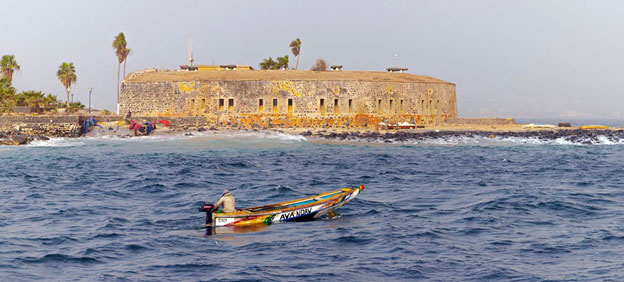
Unsplash Fort of Goree Island, Senegal, was the site of one of the earliest European settlements in Western Africa. Source UN News

The calls for reparatory justice can no longer be ignored, speakers at the fourth session of the United Nations Permanent Forum on African Descent said last April.

They urged greater collaboration between governments, civil society and regional organizations to create a system that would compensate Africa and the African diaspora for the enduring legacies of colonialism, enslavement, apartheid and genocide between the 16th and 19th centuries. “Africa was under siege,” said Hilary Brown, speaking on behalf of the Caribbean Community (CARICOM) about the 300 years of enslavement and exploitation on the continent. “Her political, economic and social systems thrown into chaotic instability as Europe plundered the continent for her most valuable asset, her people.”

MOSCOW, Mar 13 2026 (IPS) – Professor Jude Osakwe—a Nigerian scholar at the Namibian University of Science and Technology (NUST) and Continental Chairman of the Nigerians in Diaspora Organisation Africa (NIDOAF)—has reiterated the absolute truth over Reparations for Africa, noting that African governments have consistently expressed only ’emotional solidarity’ over Reparations instead of tackling and addressing, with seriousness, this pertinent issue within the context of diplomacy.


He strongly believes that despite sharp political and cultural diversity influencing developments, African leaders can still adopt a collective strategy in pursuit of advantageous aspirations for sustaining continental sovereignty. The concept of Pan-Africanism is noticeably fragmented while grassroot movements lack strategic coordination.

Here are excerpts from the interview:

How well do African people represent the continent on Reparations and Pan-Africanism?

Professor Jude Osakwe: Honestly, inadequately, but not without effort. Representation is fragmented. The loudest voices on reparations often come from the Caribbean and African-American communities, while continental Africans, remain largely sidelined in that global conversation.

Pan-Africanism as an ideology is more spoken about than practiced. There is emotional solidarity, but very little structural unity. The honest reality is that African governments have not made reparations a serious diplomatic priority, and grassroots movements lack the coordination to pressure them to do so.

Does the diaspora media landscape affect how these topics are viewed in a Western light?

Professor Osakwe: Absolutely.

Western media frames Pan-Africanism as either nostalgic romanticism or a political threat, and frames reparations as a Black American issue, effectively erasing the continental African dimension entirely. As an African in the diaspora, you are constantly navigating between your own lived framework and a media environment that either misrepresents or ignores your perspective.

This creates a psychological burden, you must actively resist the dominant narrative just to maintain an accurate self-understanding. African diaspora media exists, but it remains underfunded and underreached compared to mainstream outlets, which means the Western framing dominates public discourse by default.

What are the measures for upholding African identity in the diaspora, and diaspora contributions amid geopolitical shifts?

Professor Osakwe: Key measures:

    • Intentional cultural transmission, language, history, and values must be actively taught, not assumed
    • Building diaspora institutions that are African-led, not just African-themed
    • Political engagement both in host countries and in countries of origin
    • Economic networking through platforms like NIDO that connect diaspora professionals to continental development

On geopolitical contributions: The current moment, with Africa renegotiating relationships with Western powers, China, Russia, and Gulf states, is actually an opportunity for the diaspora. Diaspora Africans sitting inside Western governments, universities, and financial institutions carry real leverage.

The question is whether that leverage gets used collectively or dissipates individually. Remittances already outpace foreign aid to many African countries. What’s needed now is moving beyond remittances to strategic investment, policy advocacy, and knowledge transfer, turning the diaspora from a financial lifeline into a genuine development partner.

Kester Kenn Klomegah focuses on current geopolitical changes, foreign relations and economic development-related questions in Africa with external countries. Most of his well-resourced articles are reprinted in several reputable foreign media.

IPS UN Bureau

  Source