From Indonesia to India: Is There Hope for Anti-Corruption Efforts Within the G20?

Civil Society, Development & Aid, Economy & Trade, G20, Global, Global Governance, Headlines, TerraViva United Nations

Opinion

Many of the global crises we face are caused or exacerbated by corruption. Credit: Ashwath Hedge/Wikimedia Commons

Many of the global crises we face are caused or exacerbated by corruption. Credit: Ashwath Hedge/Wikimedia Commons

WASHINGTON DC, Sep 27 2022 (IPS) – As global crises mount, the G20 is proving unable to find solutions. Political disagreements within the bloc- including most prominently with Russia over the ongoing war in Ukraine- have hamstrung collective efforts.


Economic challenges have inevitably led to a focus on domestic priorities. And significant political changes in key G20 countries over the past few months- such as the UK and Italy- have further undermined joint decision-making.

Equally, on corruption issues, the G20 has a long way go, although the body continues to reiterate its commitment fighting graft and leading by example on core issues such as the role of audit institutions, anti-corruption education, money laundering and graft in the renewable energy sector.

The G20 Anti-Corruption Working Group (ACWG) meets for the final time under the Indonesian Presidency this week- and while there remains plenty to do, there are also glimmers of hope for the future, as India takes on leadership of the G20 for 2023.

It is easy to get disheartened about the continued ubiquity of corruption- but beyond the headlines and if we pay attention to the small print, there is some important progress being made

To better understand the progress made, Accountability Lab, as one of the international Co-Chairs of the C20 Anti-Corruption Working Group (ACWG), has partnered with the Royal United Services Institute (RUSI) to distill complex and scattered information on anti-corruption within G20 countries (often buried in lengthy reports, as we’ve highlighted previously) into a set of easy-to-understand one-pagers. Each of these (see Australia here or South Africa here for example) outlines for each of the member countries the progress made against key priorities, with the goal of encouraging sharing of ideas and learning within the G20.

Here is what we found:

Enhancing the role of audit in tackling corruption

The G20 ACWG recognizes the important role of audit in preventing corruption in both the public and private sectors, and member countries have institutions and systems in place to deter corruption.

For instance, 17 out of the 19 G20 member countries (the 20th is the EU) score over a global average of 63 on the International Budget Partnership’s metric for oversight by supreme audit institutions. Brazil has received a great deal of scrutiny in recent years because of corruption, but Brazil’s Tribunal de Contas da Uniao (TCU) is cited as an example for its innovative use of data analytics and artificial intelligence including identifying indicators of corruption.

Member countries are also improving existing laws, with Japan proposing to reform its audit law to provide more enforcement power to the Japanese Institute of Certified Public Accountants and improve oversight of listed companies.

Promoting public participation and anti-corruption education

Most G20 member countries have policies guaranteeing the right to participation through specific laws such as the right to information, public information disclosure or public procurement, to name a few.

In India, the Pre-legislative Consultation Policy was passed recently to ensure public participation in policy-making processes, and government as well as civil society platforms are available to promote public education, including on corruption issues.

Similarly, South Korea’s Public-Private Consultative Council for Transparent Society under the Anti-Corruption and Civil Rights Commission provides a platform to inform and disseminate anti-corruption messages. South Korea also aims to strengthen civic space and public participation including through a national Participatory Budgeting Citizens’ Committee.

In Australia a public-private partnership (Bribery Prevention Network) launched in October 2020 bringing together the private sector, civil society, government and academia to provide free resources to help corporates implement anti-bribery programmes, and was runner up in the Anti Corruption Collective Action Awards 2022.

Professional enablers of money laundering

The G20 acknowledges gaps in member countries’ anti-money laundering efforts, particularly related to preventive measures targeting professional enablers, including accountants, lawyers, or real estate agents- and is aiming to pull together guidance on these issues through a Compendium for Professional Enablers of Money Laundering.

While most countries do not have a comprehensive definition of Designated Non-Financial Business Professionals (DNFBPs), Indonesia, Japan, Mexico, and Saudi Arabia comply with the 2012 Financial Action Task Force (FATF) standards on the definition. The 2021 follow-up review from FATF noted that the revisions to China’s anti-money laundering law will include general provisions and supervision of DNFPBs.

In the US, if the ENABLERS Act– which was approved by the House of Representatives in July 2022– is passed by the Senate, it could regulate professional enablers; and in the UK, lack of supervision of enablers is being acknowledged by the government as it looks at different models to strengthen the supervision of accountants and lawyers.

Promoting corruption in the renewable energy sector

The G20 is working on a background note on Promoting Anti-Corruption in Renewable Energy in order to raise awareness and increase collaboration to prevent corruption in the energy sector. In 2022, Argentina launched an open information system (SIACAM) which provides public access to data on mining activities in the country, including their environmental and socio-economic impacts.

The Resource Governance Index notes that Argentina is one of only 7 countries that has made this type of data available. Similarly in Mexico, progress has been made with the publication of all oil procurement contracts on the state-owned website oil company, Pemex.

Japan’s cooperation agreement with India and the European Union to share experiences and best practices on liquid natural gas is cited as an example to follow by the International Energy Agency.

It is easy to get disheartened about the continued ubiquity of corruption- but beyond the headlines and if we pay attention to the small print, there is some important progress being made.

With the G20, the key now- as India assumes leadership of group- is for member countries to double down on their commitments and follow-through on implementation of reforms. Many of the global crises we face are caused or exacerbated by corruption- now is the time for our leaders to get this right.

Blair Glencorse is Executive Director of Accountability Lab; Sanjeeta Pant is of Accountability Lab. This piece draws on research carried out with RUSI. Follow the Lab on Twitter @accountlab

  Source

We Need Urgent Commitment, Resources & Action to Tackle Hunger Crisis

Civil Society, Development & Aid, Editors’ Choice, Featured, Food and Agriculture, Global, Headlines, Population, Poverty & SDGs, TerraViva United Nations

Opinion

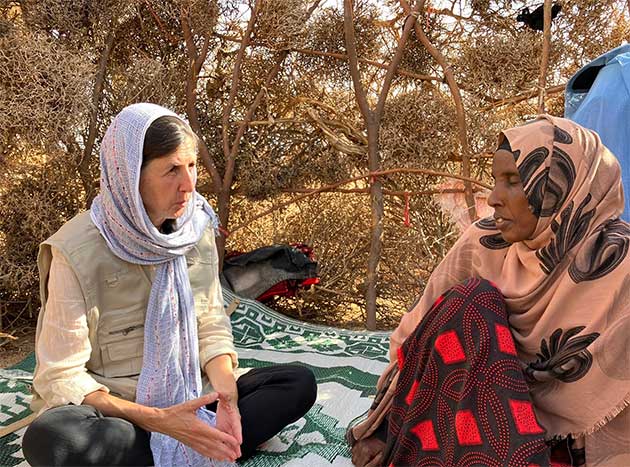
Conversation at the UN General Assembly Side Event on Responding to the Urgent Humanitarian Needs in the Horn of Africa. Credit: Karelia Pallan/Oxfam

NEW YORK, Sep 27 2022 (IPS) – Last week, as world leaders gathered in New York for the 77th United Nations General Assembly, one topic came up more than most: looming famine. That’s because despite a global commitment to make famine a relic of the past, it is once again knocking at our door.


In Somaliland two weeks ago, I witnessed communities past their breaking points. Grandparents there told me they could not recall a drought like this in their lifetimes.

At UNGA, I was honored to take part in many discussions on this and other topics – in particular a panel about the urgent humanitarian needs in the Horn of Africa. The region is facing several interlinked issues, including hunger, conflict, climate, and COVID-19. As we discuss – and more importantly, respond to – the crisis, we should keep in mind three themes: the urgency of the moment, the need for more access and more funding, and the implementation of a systemic solution.

The humanitarian crisis in the Horn needs to be at the top of the international agenda, and we need commitment, resources and action urgently. We have seen the warning signs that famine is coming for quite some time – and now we have been warned that it could be declared in Somalia as soon as next month.

Often, the international community is reactionary to crises, but this time we must also be anticipatory in assessing and responding to the needs of the region. In my trip to Somaliland, I spoke to farmers, pastoralists, and visited communities impacted by conflict, climate, and COVID-19. It was my first visit back to Somaliland in more than 20 years, which offered an interesting perspective of the arc of change.

Abby Maxman speaks with Safia, a woman forced to leave her home in Somaliland amid the drought and growing hunger. Credit: Chris Hufstader/Oxfam

Their shared experience is clear: their livelihoods and way of life – and that of their ancestors – are in danger and the need for action now is more urgent than ever. It is dispiriting that these preventable tragedies continue to repeat when the world has the resources and know-how to prevent them.

I spoke with Safia, a 38-year-old divorced mother of eight children, who lost 90% of her livestock. She stayed as long as she could in her community until she felt unsafe as the weak and dead livestock attracted hyenas at night, compelling her to make the five-day journey to reach the Dur-Dur IDP (Internally Displaced Person) camp near Burao.

At Dur Dur they were welcomed with clean water, some food, and materials to build a shelter. She and her children have been there for about three months. They are struggling to get enough food and might eat one meal a day, if they can. Oxfam and others are there offering support, but it’s not nearly enough to meet their basic needs.

Safia’s experience was just one of countless more of those who are bearing the brunt of the dual global hunger and climate crises that has been brought on by distant forces who are prioritizing profits over people and planet.

Earlier this year, Oxfam’s research estimated that one person is dying from acute hunger in the region every 48 seconds. Since then, the situation has only gotten worse. We have a narrow window of opportunity to stave off hunger in the horn. It is not too late to avert disaster, but more needs to be done immediately.

We know that anticipatory action saves lives, livelihoods, and scarce aid money, and across Oxfam and with our partners we have been sounding the alarm of this slow, onset emergency at local, national, and global levels for the past two years. Yet we are witnessing a system that is failing the people who are least responsible for this crisis.

We need more access and a lot more funding that supports frontline organizations and leaders. During the panel, it was encouraging to hear Under-Secretary-General for Humanitarian Affairs and Emergency Relief Coordinator Second Martin Griffiths put such emphasis on funding local organizations and leaders who have the knowledge, access, and courage to make real impact.

Local organizations know where the most vulnerable people are located, they can reach disaster zones quickly, and they understand the languages, cultures, geography, and political realities of the affected communities far better than outsiders.

These local leaders should be given the resources and space to make decisions to have the most effective response that will save lives now and in the long run. This may mean that international donors and organizations need to be more flexible in how they coordinate, fund, and implement a humanitarian response. The old way may not be the most effective – in fact we know it is not – especially where there are access challenges.

Finally, we must take a systemic approach in tackling these issues. We know that hunger, climate, and conflict do not happen in silos – they are inextricably linked. We must make sure we are fighting these interlinked crises, especially hunger and climate, together.

Climate change is causing more extreme weather events like droughts, floods, and heatwaves, which devastate crops and displace vulnerable communities. In fact, hunger has more than doubled in 10 of the worst climate hotspots in recent years.

Countries that have contributed the least to emissions are bearing the worst impacts of the climate crisis, while fossil fuel companies see record-breaking profits. Less than 18 days of profits from fossil fuel companies could cover the whole UN humanitarian appeal of $48.82 billion for 2022.

These conversations and convenings are important, but we must do more than raise the alarm – we must see action to follow them up. I hope that leaders recommit the political will to fulfill their moral obligation to meet this crisis in the Horn head on.

Safia is doing all she can to ensure her family’s survival – we must see leaders do all in their power, right now, to make sure she and millions more get the urgent aid they need now to survive, and see their right to a safe, healthy future recognized and realized in years to come.

Abby Maxman is President and CEO Oxfam America.

IPS UN Bureau

  Source

Getting to the roots of family

I married my cousin. Before you judge me, let me explain. We are divorced (unrelated to above confession) but remain great friends — could this be because of a warm, familiar connection?

Much hilarity about this discovery aside, we are only seventh cousins, which means there are a few hundred years between us and our common ancestor. This might sound alarming but, apparently, if you still live in the general area your relatives did, it’s likely you have met, and perhaps even married, a distant cousin. 

Start looking into your genealogy, the study of ancestors and family history, and you are sure to find a skeleton or 10 in your closet.

I started my genealogy journey in 2019, inspired by the TV series Finding Your Roots. It is the creation of historian Henry Louis Gates, director of the Hutchins Centre for African and African American Research at Harvard in the US. His interest in genealogy came from the 1977 miniseries Roots. It made him dream of finding his African ancestry and helping other people do the same — not easy, because much African American ancestry is unknown and only found in slave-ownership records.

Finding Your Roots is a fascinating investigation into the lineage of well-known Americans, including artist Kara Walker, politician Condoleezza Rice and comedian Andy Samberg. Using records and DNA analysis, it shows humanity at its best and worst. Often focusing on slavery and African-American heritage, it is a sensitive study of the importance of understanding the past and where you came from. 

Following the line

My family tree is still a work in progress but I have unearthed fascinating stories that are interwoven with South Africa’s past.

I learnt that the women in my family were unbelievably brave and strong. Case in point, my three times great-grandmother, Margaret, was a “Kennaway Girl”. This group of 150 young Irish women were given the name because they travelled to South Africa on the Lady Kennaway ship in 1857 to start a new life as wives for a group of German former soldiers who’d settled in the Eastern Cape. 

I also discovered my two times great-grandmother, Mimi, died in an Anglo-Boer War concentration camp. 

Then there was proving who an illegitimate relative’s mother was. For the first time in 118 years, we proudly added her to our family tree. 

Court documents showed this courageous woman sued a man who promised marriage, seduced her, and left her pregnant. Scandalous in conservative 1904, she took him for everything he was worth, including a buggy and some sheep. 

Having recently lost my father, I’m grateful we could build our family tree together while he was still alive. 

Do it yourself

If you’re feeling inspired to do some ancestral digging of your own, there are some practical places to start. My first step was to start a free account on familysearch.org. This non-profit platform is the world’s largest shared family tree, dedicated to helping people discover their family story. The site lets you build your own tree and puts millions of digitised records at your fingertips. 

FamilySearch.org is owned and run by the Church of Jesus Christ of Latter-day Saints (LDS). They have a deep involvement in genealogical research and believe it’s essential for people to strengthen relationships with family members (alive or dead), so they can be together after this life. 

Wayne van As, FamilySearch Southern Africa’s area manager, says: “We go out and negotiate with governments, churches and archives for their records. We then provide them with a mutually beneficial agreement and basically preserve their records. We also provide them with a digital donor copy of everything that we digitised for them, in exchange for allowing us to put these records on familysearch.org.”

An alternative to FamilySearch is ancestory.com, the world’s largest for-profit genealogy company. Although it is pricey — it costs up to $60 (R1 000) a month — it offers over 30-billion records, including census, military and immigration records. Chatting to older family members — even if their memories are vague — was useful, because there is generally some truth in what they recall. 

Googling historic events that acted as a backdrop for my ancestors’ stories helped, as did online national archives. The result — my family tree now runs to the 1400s. I also did a course with Natalie da Silva of the Joburg branch of the Genealogical Society of SA. This is a great introduction to the extensive archives and records available, especially for those who are not comfortable with online searches and apps.

If research isn’t your thing, you can hire an expert to put in the hard miles. 

Heather MacAlister, a respected family tree and genealogy researcher, runs ancestors.co.za. Of her work she says: “Clients come to me for all sorts of reasons. From helping people who are adopted to try and source original birth entries that home affairs can’t find, to naturalisations, to working with film companies to do research. And even aiding probate lawyers from around the world looking for heirs in South Africa.”

Henry Louis Gates’ dream of finding his African ancestry is not easily realised because much African American ancestry is unknown and only found in slave-ownership records

Not so easy

It would be remiss not to discuss what this ancestral-tracing process is like for black South Africans. When I spoke to friends of colour, a general thread was that they knew very little, despite having strong family stories and a tradition of family names. 

This got me thinking about what colonial and apartheid records are like for people of colour and what effect the migrant labour system and cross-border migration had on the genealogical record. I tried researching two friends’ families, one Pedi from Limpopo, the other coloured, from Johannesburg. This was harder than researching my own line — the paper trail is severely limited. 

MacAlister explains, “One also needs to distinguish between black and coloured and Indian. For example, coloured is much easier [to trace] than black ancestry.”

Most experts I chatted to had seldom been asked to research people of colour’s families. On this point, Van As says: “For a long time, people of African descent didn’t think records were kept but they were. If a person of colour had an estate, or if they have left something behind, their last will and testament is recorded at the master’s office.”

The department of home affairs also has records, such as death notices, births and marriages, of African people.  There are lots of sources of African records if you know where to look but, too often, people focus on European descent. 

Da Silva has been working on compiling a database of indigenous marriages in early Johannesburg. And FamilySearch is always looking for opportunities to digitise records. Van As says a good example of this is the apartheid-era “dompas”, or pass, records which the LDS church has been trying to track down for years, having heard there are shipping containers full of them somewhere. 

Van As advises a good way to get started is to contact family members. 

“Go back to the family village and sit down with the village elders to discuss your family. Find out who the first ancestors were and gather as much info as possible. Of course, bearing in mind many people have migrated from villages to the city, and don’t go back to their homes often. 

“Once you have that info, you can start adding it to familysearch.org. 

“If you are allowed to, record the elders speaking — oral history recordings are important as it’s normally done in people’s own language.”

The LDS church has long recognised the significance of oral record-keeping. FamilySearch has been gathering oral histories in Africa for years, in over 14 countries and are expanding and looking to expand to several countries, including Malawi, Zambia and, hopefully, South Africa. 

“We have just done our millionth interview and from that preserved over 170-million names of people and their ancestors. This is something we are trying to do, so that we can provide an experience on FamilySearch for people that can’t get back to their villages, so then the village will come to them,” says Van As.  

He added, “We have over 10 000 field agents, who go to villages and do the interview on a cellphone. They also take a picture of the person, their family and the village. So, you have the pictures and audio. We then print out and bind all the info we have recorded, giving a copy back to the village and community.”

Cracking the code

Archival and oral history research go hand in hand with a DNA test. 

“The paper trail can be full of errors, so having your DNA tested will complement your paper research,” MacAlister says, “especially if you don’t know who your parents, grandparents or great-grandparents were.” 

She recommends doing this on ancestry.com as it’s the best for an autosomal DNA test. Once you have got the results, you can download your DNA and upload it to platforms like MyHeritage, FamilyTreeDNA and GEDmatch, where you will find even more DNA matches.

The implication of DNA research is widespread and surprising. For example, the Continuum Project uses genetic science and the arts to explore the identity of African American children who descend from enslaved people. By testing their DNA, they can pinpoint where in Africa they originate from and instil pride in their heritage.

So, skeletons in the closet aside, researching your heritage, whether through oral history, archives or studying genetic makeup, is valuable. After learning about his ancestors on Finding Your Roots, actor Leslie Odom Jr said his search had led to a reimagining of himself. I couldn’t agree more — the roots of your family tree are like an anchor, keeping you steady in a storm.

Source

Women Advocates for Harvesting Rainwater in Salinity-Affected Coastal Bangladesh

Asia-Pacific, Climate Change, Development & Aid, Editors’ Choice, Environment, Featured, Headlines, Humanitarian Emergencies, Innovation, Natural Resources, TerraViva United Nations

Humanitarian Emergencies

Lalita Roy now has access to clean water and also provides a service to her community by working as a pani apa (water sister), looking after the community's rainwater harvesting plants. Credit: Rafiqul Islam/IPS

Lalita Roy now has access to clean water and also provides a service to her community by working as a pani apa (water sister), looking after the community’s rainwater harvesting plants. Credit: Rafiqul Islam/IPS

KHULNA, Bangladesh, Sep 23 2022 (IPS) – Like many other women in Bangladesh’s salinity-prone coastal region, Lalita Roy had to travel a long distance every day to collect drinking water as there was no fresh water source nearby her locality.


“In the past, there was a scarcity of drinking water. I had to travel one to two kilometers distance each day to bring water,” Roy, a resident of Bajua Union under Dakope Upazila in Khulna, told IPS.

She had to collect water standing in a queue; one water pitcher was not enough to meet her daily household demand.

“We require two pitchers of drinking water per day. I had to spend two hours each day collecting water. So, there were various problems. I had health complications, and I was unable to do household work for lack of time,” she said.

After getting a rainwater harvesting plant from the Gender-response Climate Adaptation (GCA) Project, which is being implemented by United Nations Development Programme (UNDP), Roy is now collecting drinking water using the rainwater harvesting plant, which makes her life easier.

“I am getting the facilities, and now I can give two more hours to my family… that’s why I benefited,” she added.

Shymoli Boiragi, another beneficiary of Shaheber Abad village under Dakope Upazila, said women in her locality suffered a lot in collecting drinking water in the past because they had to walk one to three kilometers every day to collect water.

“We lost both time and household work. After getting rainwater harvesting plants, we benefited. Now we need not go a long distance to collect water so that we can do more household work,” Boiragi said.

Shymoli revealed that coastal people suffered from various health problems caused by consuming saline water and spent money on collecting the water too.

“But now we are conserving rainwater during the ongoing monsoon and will drink it for the rest of the year,” she added.

THE ROLE OF PANI APAS

With support from the project, rainwater harvesting plants were installed at about 13,300 households under 39 union parishads in Khunla and Satkhira. One pani apa (water sister) has been deployed in every union from the beneficiaries.

Roy, now deployed as a pani apa, said the GCA project conducted a survey on the households needing water plants and selected her as a pani apa for two wards.

“As a pani apa, I have been given various tools. I go to every household two times per month. I clean up their water tanks (rainwater plants) and repair those, if necessary,” he added.

Roy said she provides services for 80 households having rainwater harvesting plants, and if they have any problem with their water tanks, she goes to their houses to repair plants.

“I go to 67 households, which have water plants, one to two times per month to provide maintenance services. If they call me over the cellphone, I also go to their houses,” said Ullashini Roy, another pani apa from Shaheber Abad village.

She said a household gives her Taka 20 per month for her maintenance services while she gets Taka 1,340 (US$ 15) from 67 households, which helps her with family expenses.

Ahoke Kumar Adhikary, regional project manager of the Gender-Response Climate Adaptation Project, said it supported installing rainwater harvesting plants at 13,300 households. Each plant will store 2,000 liters of rainwater in each tank for the dry season.

The water plants need maintenance, which is why the project has employed pani apas for each union parishad (ward or council). They work at a community level on maintenance.

“They provide some services, and we call them pani apas. The work of pani apas is to go to every household and provide the services,” Adhikary said.

He said the pani apas get Taka 20 from every household per month for providing their services, and if they need to replace taps or filters of the water plants, they replace those.

The pani apas charge for the replacements of equipment of the water plants, he added.

NO WATER TO DRINK

The coastal belt of Bangladesh is one of the most vulnerable areas to climate change as it is hit hard by cyclones, floods, and storm surges every year, destroying its freshwater sources. The freshwater aquifer is also being affected by salinity due to rising sea levels.

Ullashini Roy said freshwater was unavailable in the coastal region, and people drinking water was scarce.

“The water you are looking at is saline. The underground water is also salty. The people of the region cannot use saline water for drinking and household purposes,” Adhikary said.

Ahmmed Zulfiqar Rahaman, hydrologist and climate change expert at Dhaka-based think-tank Center for Environmental and Geographic Information Services (CEGIS), said if the sea level rises by 50 centimeters by 2050, the surface salinity will reach Gopalganj and Jhalokati districts – 50 km inside the mainland from the coastal belt, accelerating drinking water crisis there.

PUBLIC HEALTH AT RISK

According to a 2019 study, people consuming saline water suffer from various physical problems, including acidity, stomach problems, skin diseases, psychological problems, and hypertension.

It is even being blamed for early marriages because salinity gradually changes girls’ skin color from light to gray.

“There is no sweet water around us. After drinking saline water, we suffered from various waterborne diseases like diarrhea and cholera,” Ullashini said.

Hypertension and high blood pressure are common among coastal people. The study also showed people feel psychological stress caused by having to constantly collect fresh water.

Shymoli said when the stored drinking water runs out in any family; the family members get worried because it’s not easy to collect in the coastal region.

SOLUTIONS TO SALINITY

Rahaman said river water flows rapidly decline in Bangladesh during the dry season, but a solution needs to be found for the coastal area.

The hydrologist suggested a possible solution is building more freshwater reservoirs in the coastal region through proper management of ponds at a community level.

Rahaman said low-cost rainwater harvesting technology should be transferred to the community level so that coastal people can reserve rainwater during the monsoon and use this during the dry season.

He added that the government should provide subsidies for desalinization plants since desalinizing salt water is costly.

IPS UN Bureau Report

  Source

The Beat Goes On: Melody Gardot in smoky jazz duo; a hot slate at the Drake, and more

The Beat Goes On: Melody Gardot in smoky jazz duo; a hot slate at the Drake, and more<br />


  • Singer Melody Garot teamed with pianist Phillipe Powell on “Entre Eux Deux.” She’s at the Academy of Music Sept. 11. CONTRIBUTED/MELODY GARDOT

  • Jazz drummer and composer Jonathan Barber and his ensemble Vision Ahead play the Drake in Amherst Sept. 8. COURTEST JONATHAN BARBER

  • Named for a glen in western Ireland, The Alt bring their unique Irish music to the Drake on Sept. 9. PHOTO BY DOUGLAS ROBERTSON

  • Matt Lorenz brings his one-man band The Suitcase Junket to the Drake in Amherst Sept. 10. GAZETTE FILE PHOTO

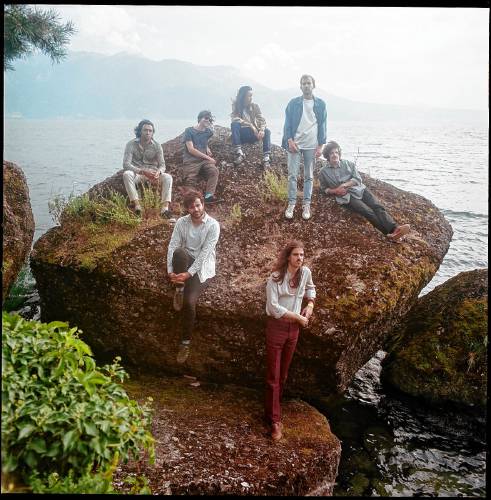
  • Jam band L’Eclair, from Switzerland, brings its deep instrumental grooves to the Drake Sept. 11. COURTESY L’ECLAIR

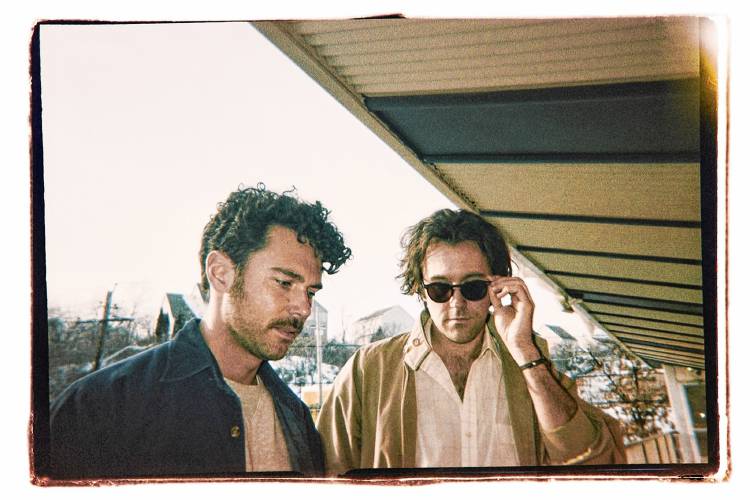
  • Tall Heights, the Boston duo of guitarist Tim Harrington and cellist Paul Wright, combine their tight vocals in a Sept. 7 show at Race Street Live in Holyoke. CONTRIBUTED/DSP SHOWS

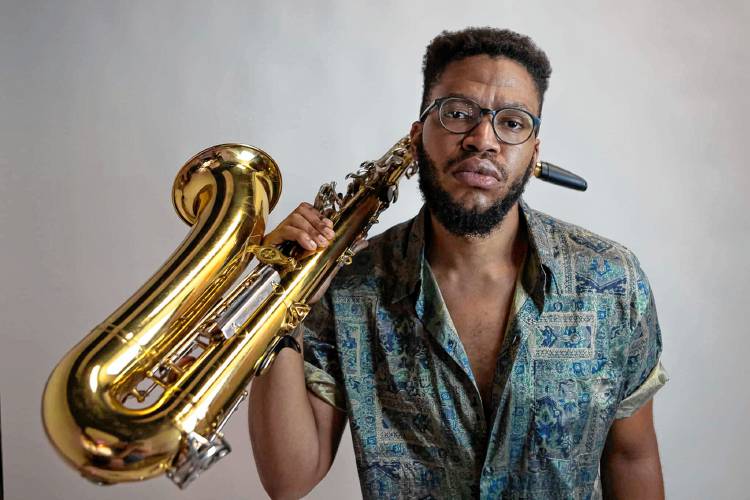
  • Amherst native Mtali Shaka Banda and his ensemble bring a mix of funk, jazz, soul and more to Millpond Live in Easthampton on Sept. 9. Millpond Live website


Staff Writer

Monday, September 12, 2022

In the musical world, it’s now a classic comeback story: how jazz singer Melody Gardot, then 19 years old, was struck by a car while bicycling in her native Philadelphia in 2003 and suffered serious head and spinal injuries, a broken pelvis, and neurological damage that affected her movement and memory.

She was also left with hypersensitivity to light and sound and had to learn to walk again once she finally rose from her hospital bed.

But Gardot, who comes to the Academy of Music in Northampton on Sept. 11 at 8 p.m., spent part of her recovery time writing songs, learning how to play guitar while lying on her back, and in general drawing on music as a vital part of therapy. In nearly two decades since her accident, she’s released six albums and earned legions of fans — notably in Europe — who are drawn to her smoky jazz/blues voice, piano playing and songwriting.

Gardot, who speaks fluent French and knows other languages, too, has traveled and performed extensively in Europe; she calls herself a “citizen of the world.” As such she’s soaked up a lot of influences, and on her newest album, “Entre Eux Deux” (Between Us Two), released in May, she’s distilled some of those down to a spare soundscape of her vocals alongside piano accompaniment by French-Brazilian keyboardist Philippe Powell — the first time she hasn’t played piano on one of her albums.

“If I had to sum up the record in a few words,” Gardot said in an interview earlier this year, “I’d say it’s a dance between two people who love and value the same things: deep poetry and solid melodies … it’s a peek into the world of two artists who just really dig each other.”

The album’s 10 songs, which Gardot sings in English and French, came out of an intense two-week workshop the two friends held in Gardot’s Paris apartment, with a view of the Eiffel Tower, at which they wrote and shared lyrics, melodies and ideas. In that sense it’s really a duo album, with Powell singing harmony on a few tracks and the two sharing songwriting credits on a number of the tunes.

It’s music for late, quiet nights and contemplative moments, with a few covers as well, including “Plus Fort que Nous” from the classic French film “Un Homme et Une Femme.” Jazzwise calls the album “good stuff, the best album Gardot has yet made. Give it a try, you might like it; and if you’re a fan of brooding torch songs, you’ll probably love it.”

French/American Jazz singer Laura Anglade, who’s drawn comparisons to Anita O’Day, Shirley Horn and Blossom Dearie, opens the show.

Since opening this spring, the Drake in Amherst has built a reputation for putting together a wide-ranging, eclectic lineup, and this weekend over four consecutive nights the downtown club hosts a jazz drummer, traditional Irish music, a one-man folk-rock band, and two rock bands with unique sounds — in that order.

Red-hot jazz drummer Jonathan Barber, voted the top up-and-coming drummer of 2018 by the readers of Modern Drummer, started things off Thursday.

On Friday at 7 p.m., The Alt — Irish musicians John Doyle, Nuala Kennedy, and Eamon O’Leary — come to the Drake to offer instrumental interplay that Acoustic Guitar Magazine calls “telepathic and miraculous.” Combining on guitar, bouzouki, flute, and vocals, the three musicians are all notable folk performers in their own right but together create a sound that “is really a celebration of friendship and song,” as they put it.

Then on Saturday, at 8 p.m., the Drake welcomes Valley favorite The Suitcase Junket, aka Matt Lorenz, who specializes in playing guitar and singing while playing a homemade drum kit with his feet. He’s also been known to play the cymbals while holding a drumstick in the same hand he’s using to strum his guitar. He’s a versatile man.

Finally, the Swiss instrumental ensemble L’Eclair, which offers the kind of danceable grooves alternately called “expansive” and “spacey” — SPIN describes the band as “jamming their way to instrumental bliss” — will be at the Drake Sunday at 8 p.m. Valley rockers Carinae open the show.

If you’re looking for more musical variety, you can likely find it at Millpond Live, the free (donations encouraged) outdoor concert series that takes place at Easthampton’s Millside Park, which this year begins on Friday and Saturday with six bands playing everything from electronic fusion and R&B to Latin American rhythms to a variety of jazz. (Additional shows take place Sept. 16 and 17.)

Of particular note at the Friday concert, which runs from 6 to 10 p.m., is Mtali Shaka Banda and his ensemble. Banda, a saxophonist, is an Amherst native and the son of a Malawian refugee father and an African American mother. Growing up he also spent several years in Wisconsin and Georgia, then was back in Massachusetts in Brockton, followed by a move to Israel when he was 18.

Now living in Massachusetts again, Banda has absorbed numerous influences during his journeys — jazz, funk, soul, folk, R&B and hip hop — and his music also contains elements of travelogue, memoir and family history. One thing he doesn’t play, he says, is classical: “I have too much backbeat in me.”

Visit millpond.live to see a list of other performers at the festival. 

Steve Pfarrer can be reached at spfarrer@gazettenet.com. For more Beat Goes On news about musical happenings around the Valley, check out the Daily Hampshire Gazette.

[embedded content]

[embedded content]


<!– Go to www.addthis.com/dashboard to customize your tools –>

Source