Indigenous Rights Approach a Solution to Climate Change Crisis

Biodiversity, Civil Society, Climate Change, Conferences, Development & Aid, Environment, Featured, Global, Headlines, Human Rights, Indigenous Rights, Sustainability, TerraViva United Nations
Indigenous Rights

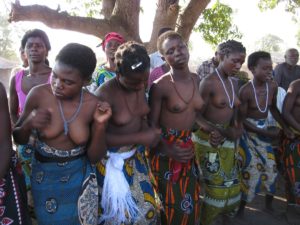
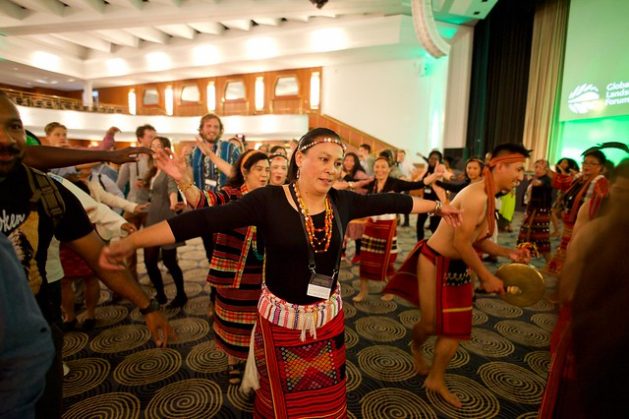
The Global Landscapes Forum (GLF) was held in Bonn, Germany and focused on how to give land rights the visibility needed to showcase that a rights approach, particularly when it comes to indigenous people, is a solution to the climate change crisis. Courtesy: Pilar Valbuena/GLF

Jun 29 2019 (IPS) – The Global Landscapes Forum (GLF) was held in Bonn, Germany to rally behind a new approach to achieving a future that is more inclusive and sustainable than the present – through the establishment of secure and proper rights for all.


On Jun. 22 and 23, experts, political leaders, NGOs and indigenous peoples and communities gathered to deliberate on a methodology that emphasises rights for indigenous peoples and local communities in the management and perseveration of landscapes. The forum took place alongside the  United Nations Framework Convention on Climate Change Bonn Climate Change Conference.

The forum focused giving land rights the visibility needed to showcase that a rights approach is a solution to the climate change crisis, and to develop a ‘gold standard’ for rights.

Indigenous peoples, local communities, women and youth, are believed to be the world’s most important environmental stewards but they are also among the most threatened and criminalised groups with little access to rights.

“We’re defending the world, for every single one of us,” said Geovaldis Gonzalez Jimenez, an indigenous peasant leader from Montes de María, Colombia.

But industries such as fossil fuels, large-scale agriculture, mining and others are not only endangering landscapes but also the lives of the people therein.

Already this year, said Gonzalez, his region witnessed 135 murders, adding that the day before the start of the GLF a local leader was killed in front of a 9-year-old boy.

According to the United Nations, the land belonging to the 350 million indigenous peoples across the globe is one of the most powerful shields against climate change as it holds 80 percent of the world’s biodiversity and sequesters nearly 300 billion metric tons of carbon

It is for this reason that amid the urgency to meet Sustainable Development Goals (SDGs) under pressure from the climate threat, dialogues about the global future have begun to wake up to the fact that indigenous peoples’ relationships with the natural world are not only crucial to preserve for their own sakes, but for everyone’s.

The drafting of the document of rights was led by Indigenous Peoples Major Group (IPMG) for Sustainable Development and the Rights and Resources Initiative in the months leading up to the GLF.

Wider discussions and workshops over the two days served as a consultation on the draft (which is expected to be finalised by the end of the year) as a concrete guide for organisations, institutions, governments and the private sector on how to apply different principles of rights. This includes the rights to free, prior and informed consent; gender equality; respect to cultural heritage; and education.

U.N. Special Rapporteur on the Rights of Indigenous Peoples Vicky Tauli-Corpuz said lands managed by indigenous peoples with secure rights have lower deforestation rates, higher biodiversity levels and higher carbon storage than lands in government-protected areas.

But Diel Mochire Mwenge, who leads the Initiative Programme for the Development of the Pygme in the Democratic Republic of Congo (DRC), one of the largest indigenous forest communities in Central Africa, said he has witnessed more than one million people being evicted from the national parkland where they have long lived. He explained that they had not been given benefits from the ecotourism industries brought in to replace them and were left struggling to find new income sources.

“Our identity is being threatened, and we need to avoid being completely eradicated,” said Mwenge.

In Jharkhand, India, activist Gladson Dungdung, whose parents were murdered in 1990 for attending a court case over a local land dispute, said an amendment to India’s Forest Rights Act currently being reviewed by the Supreme Court could see 7.5 million indigenous peoples evicted from their native forest landscapes. The act can impact a further 90 million people who depend on these forests’ resources for their survival, he said.

The amendment, Dungdung said, would also give absolute power to the national forest guard; if a guard were to see someone using the forest for hunting or timber collection, they could legally shoot the person on-sight.

“Indigenous peoples are right on the frontline of the very real and dangerous fight for the world’s forests,” said actor and indigenous rights activist Alec Baldwin in a video address.

“Granted that indigenous peoples are the superheroes of the environmental movement,” Jennifer Morris, president of Conservation International wondered why they are not heard until they become victims. “Why do we not hear about these leaders until they’ve become martyrs for this cause?”

The examples of intimidation, criminalisation, eviction and hardship shared throughout the first day clearly showcased what indigenous peoples and local communities go through to preserve the forests or ‘lungs of the earth’.

The rights approach, according to conveners of the GLF, aims to strengthen respect, recognition and protection of the rights of indigenous peoples and local communities as stewards and bearers of solutions to landscape restoration, conservation, and sustainable use. It also aims to end persecution of land and environment defenders; build partnerships to enhance engagement and support for rights-based approaches to sustainable landscapes across scales and sectors; and, scale up efforts to legally recognise and secure collective land and resource rights across landscapes.

“By implementing a gold standard, we can both uphold and protect human rights and develop conservation, restoration and sustainable development initiatives that embrace the key role Indigenous peoples and local communities are already playing to protect our planet,” said Joan Carling, co-convener of IPMG.

IPMG recognises that indigenous and local communities are bearers of rights and solutions to common challenges.

“This will enable the partnership that we need to pave the way for a more sustainable, equitable and just future,” added Carling.

And the Center for International Forestry Research (CIFOR) Director General, Robert Nasi, said when rights of local communities and indigenous peoples are recognised, there are significant benefits for the fight against climate change and environmental degradation.

“Whoever controls the rights over these landscapes has a very important part to play in fighting climate change,” he said.

In the climate and development arenas, the most current alarm being sounded is for rights–securing the land rights and freedoms of indigenous peoples, local communities and the marginalised members therein.

How can these custodians of a quarter of the world’s terrestrial surface be expected to care for their traditional lands if the lands don’t, in fact, belong to them? Or, worse, if they’re criminalised and endangered for doing so?

The basic principles of a ‘gold standard’ already exist, such as free, prior and informed consent, according to Alain Frechette of the Rights and Resources Initiative (RRI). What has been lacking, he said, is the application of principles that could be boosted by high-level statements that could “spur a race to the top”.
 

A Roadmap for Children as Victims, not Terrorists

Armed Conflicts, Civil Society, Featured, Global, Global Governance, Globalisation, Headlines, Human Rights, IPS UN: Inside the Glasshouse, Peace, TerraViva United Nations

UNITED NATIONS, Jun 26 2019 (IPS) – The feeling in the air at a recent meeting of the United Nations Office on Drugs and Crime (UNODC) was one of compassion and benevolence.

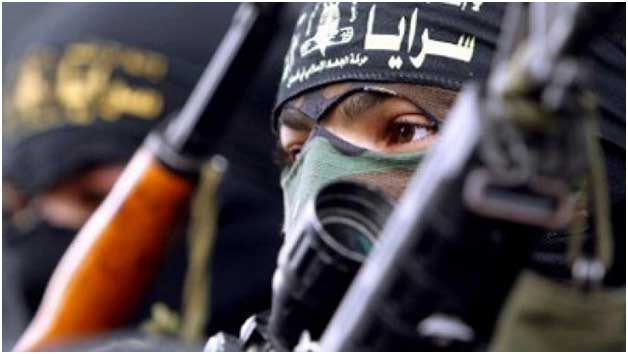
The focus was on children as Foreign Terrorist Fighters (FTFs), a subject that everyone at the panel discussion argued is delicate and politically sensitive.


Alexandra Martins, the Crime Prevention and Criminal Justice Officer at the UNODC, pointed out that “”Nobody is a lost cause, and there is always a possibility to rehabilitate and reintegrate children from these groups.”

Two of her words were repeated by almost every speaker: “rehabilitate and reintegrate”.

The meeting was meant to discuss the release of the UNODC Handbook on Children Recruited and Exploited by Terrorist and Violent Extremist Groups.

The roadmap’s main goal is to provide UN’s 193 Member States with guidance on how to treat children associated with terrorist and violent extremist groups. It argues for an approach to rehabilitate those associated with or accused of being FTFs, and to reintegrate them back into their communities.

Though many of the children accused have taken part in terrorism, the UNODC advocates for a change in the way Member States handle the children.

Speaking during the release of the handbook, Dr. Jehangir Khan, Director at the UN Office of Counter-Terrorism/Counter Terrorism Centre (UN OCT/CCT), said “children must be seen first and foremost as victims.”

The roadmap was released alongside 4 technical assistance tools: UNODC Handbook on Children Recruited and Exploited by Terrorist and Violent Extremist Groups: The Role of the Justice System (2018); the UNODC Training Manual on Prevention of Child Recruitment by Terrorist and Violent Extremist Groups (May 2019); the UNODC Training Manual on Rehabilitation and Reintegration of Child Victims of Recruitment by Terrorist and Violent Extremist Groups (to be released in July 2019); the UNODC Training Manual on Justice for Children in the Context of Counter-Terrorism (May 2019).

The documents are based on three years of technical assistance work conducted by the UNODC to Member States that have found children as FTFs.

One country already advocating its support for the Roadmap is Lebanon. Until 2013, children accused of being or associated with terrorist fighters were kept in adult prisons and tried as such.

“It is in prison that I learned the meaning of life” one of the boys, aged 19, remarked in a video played by the representative from Lebanon stated.

A step in the direction of treating children as victims came in 2013, when they were moved to a juvenile prison.

Lebanon’s Head of the Prison Administration at the Ministry of Justice of Lebanon, Judge Raja AbiNader, said: “By showing them the same respect we showed the rest of the children, things started to change.”

Martins told IPS that there are many such countries, like Lebanon, whose children and communities have already benefited from the guidance offered in the Roadmap.

“As a result of the protocol, children deprived of liberty for association with Boko Haram were released and transferred to child protection authorities to begin a process of reintegration in their communities,” she said.

Martins stated that more than 30 countries have received guidance on child FTFs from the UNODC’s, from 6 different regions (West Africa, East Africa, Middle East and North Africa, South Asia, Southeast Asia and Central Asia).

Despite the Roadmap offering guidance, at the panel discussion, Martins clarified that “there is no one size fits all approach” on handling children.

There have been different approaches offered on handling the children in general, and specifically when dealing with different genders.

There will be a second event during the United Nations General Assembly (UNGA) in September that Martins hopes will “promote the guidance further.”

Gender and the Roadmap

But there appears to be some disagreement still on the treatment of boys and girls during the rehabilitation and reintegration processes.

Under international law (Havana Rule 87.d., Bangkok Rules), boys and girls must be held in separate detention facilities. But the Roadmap encourages them to still engage together, to foster development.

The Roadmap also advocates for targeted approaches on the treatment of girls.

Martins told IPS that girls are “considerably more vulnerable to both physical and sexual abuse and require special attention in this regard.”

She noted that “girls deprived of liberty are exposed to other forms of sexual violence such as threats of rape, touching, ‘virginity testing’, being stripped naked, invasive body searches, insults and humiliations of a sexual nature.”

Given these sensitive issues, and the fact that girls are different physiologically and often psychologically from boys at certain development stages, the Roadmap advocates for an awareness of gender and for specific targeted approaches.

“A section in the manual alludes that girl victims of recruitment and exploitation by terrorist and violent extremist groups require specific approaches to reintegration, because of their increased exposure to violence at multiple levels and from different actors,” Martins said.

But it is not clear yet that this section on gender differences has been implemented.

While Martins says the Roadmap takes seriously the different approaches for girls and boys, Judge AbiNader told IPS that in Lebanon “Very honestly, we’re not working specifically with girls concerning rehabilitation.”

As of June 7th, Lebanon has 10 boys and 2 girls in prison for being associated with or accused of being FTFs.

When asked why there were not specific programs that tackle children of divergent genders differently, he argued that they girls “should be treated the same” during rehabilitation.

“And it hasn’t been discussed because the number [of girls in prison for accusations of being FTFs] is so low,” he added.

Despite the low numbers of accused girls in detention facilities, Martins believes that targeted women’s health education should be provided, and that “Access to age- and gender-specific programmes and services, such as counselling for sexual abuse or violence, has to be given to girls.”

Though the UNODC has advocated a change in outlook on children involved with terrorist organizations, the Roadmap’s release is just the beginning of that change being implemented.


Louisville based organization is helping connect children from opposite ends of the world

CommUNITY Champion: Louisville organization helps connect children from opposite ends of the world

Hide Transcript Show Transcript

STEPHON: IT’S A JOURNEY BACK TO THE MOTHER LAND BY WAY OF THE AFRICAN DIASPORA. STACY BAILEY-NDIYAE IS EMPOWERING YOUNG KIDS HERE IN LOUISVILLE AND SIX OTHER COUNTRIES IN AFRICA TO GET THEM PREPARE AS FUTURE ANCESTORS. >> [SINGING] >> WE FOCUS ON THE POWER OF USING AFRICAN HERITAGE CULTURE AS A TOOL TO HELP DEVELOP COMMUNITIES WHERE YOUNG PEOPLE CAN THRIVE STEPHON: BRIDGE KIDS INTERNATIONAL WORKS WITH COMMUNITIES TO CREATE AND CELEBRATE A SENSE OF CULTURE. THEY FOCUS ON THE AFRICAN DIASPORA, WHICH REFERS TO THE DISPERSAL OF AFRICAN PEOPLE THROUGHOUT THE WORLD. >> PART OF THAT, USING THE AFRICAN HERITAGE CULTURE, IS CONNECTING PEOPLE OF THE AFRICAN DIASPORA, SO THAT’S AFRICAN AMERICANS, AFRICANS, BUILDING THOSE RELATIONSHIPS, BECAUSE QUITE OFTEN, WE MAY SHARE A NEIGHBORHOOD. WE DEFINITELY SHARE A CITY, AND JUST BECAUSE WE MAY KIND OF LOOK ALIKE, WE DON’T KNOW EACH OTHER. STEPHON: KNOWING WHERE YOU COME FROM IS WHAT’S MOST IMPORTANT HERE STUDENTS LEARNING EARLY HOW TO EMBRACE DIVERSITY AND GO BEYOND WHAT THEY SEE ON A DAY TO DAY BASIS. >> AND THAT’S WHAT WE REALLY WANT. WE WANT PEOPLE FROM THE VARIETY OR THE RANGE OF THE AFRICAN DIASPORA BECAUSE WE KNOW IF WE START WITH YOUNG PEOPLE, DEVELOPING THOSE RELATIONSHIPS EARLY ON, THOSE CAN TAKE THEM THROUGH OUT THEIR LIFE STEPHON: STUDENTS LEARNS SON OF EMPOWERMENT TO KEEP THEM UPLIFTED AS THEY LEARN ABOUT VARIOUS PARTS OF THE WORLD. >> FOR ME, WHEN I SEE THAT HAPPENING, NOT ONLY DOES IT GIVE ME HOPE FOR THE FUTURE, BUT IT GIVES ME HOPE FOR THE PRESENT. WE NEED THEM RIGHT NOW, SO WE NEED THEIR IDEAS. WE NEED THEM TO HAVE THE CONFIDENCE THAT THEY CAN STEP UP AND SOMEHOW PARTICIPATE IN THE COMMUNITY. STEPHON: STACY BAILEY-NDIYAE CO FOUNDED BRIDGE KIDS INTERNATIONAL SEVERAL YEARS AGO. THE HEADQUARTERS IS HERE IN LOUISVILLE THEY ALSO OPERATE IN GHANA, MALAWI, RWANDA, KENYA AN SENEGAL. >> IT’S A DREAM COME TRUE. IVE BEEN BLESSED TO SEE SOME OF OUR YOUNG PEOPLE FROM AROUND T WORLD. WE’VE DONE A COUPLE OF BRIDGE KIDS CAMPS IN SENEGAL, AND WE HAD SOME YOUNG PEOPLE FROM LOUISVILLE GO TO THAT AS WELL. STEPHON: THE PROGRAM COVERS ECONOMIC DEVELOPMENT, THE ENVIRONMENT, WOMEN’S RIGHTS AND HEALTH. BUILDING THESE RELATIONSHIPS EARLY ALLOWS THESE FUTURE ANCESTORS TO LEARN FROM THE PAST AND NAVIGATE THE PRESE >> THE DECISIONS THAT I MAKE NOW ARE ABSOLUTELY CRITICA IT’S KNOWING THAT THEY EXIST ON THIS CONTINUUM AND ITS REALLY IMPORTANT BECAUSE IT GROUN YOUNG PEOPLE AND IT SETS THEIR FACE TOWARDS THE FUT

Advertisement

CommUNITY Champion: Louisville organization helps connect children from opposite ends of the world


A local organization is connecting young children back to their roots.Community Champion Stacey Bailey-Ndivae co-founded Bridge Kids International as a way for the children to work with communities to create and celebrate a sense of culture.They focus on the African diaspora, which refers to the dispersal of African people throughout the world.WLKY reporter Stephon Dingle has more.

A local organization is connecting young children back to their roots.

Community Champion Stacey Bailey-Ndivae co-founded Bridge Kids International as a way for the children to work with communities to create and celebrate a sense of culture.

Advertisement

They focus on the African diaspora, which refers to the dispersal of African people throughout the world.

WLKY reporter Stephon Dingle has more.

International conference in Vienna: Successful societies are those that manage diversity and stimulate empathy towards the Other

Conferences, Human Rights, Religion

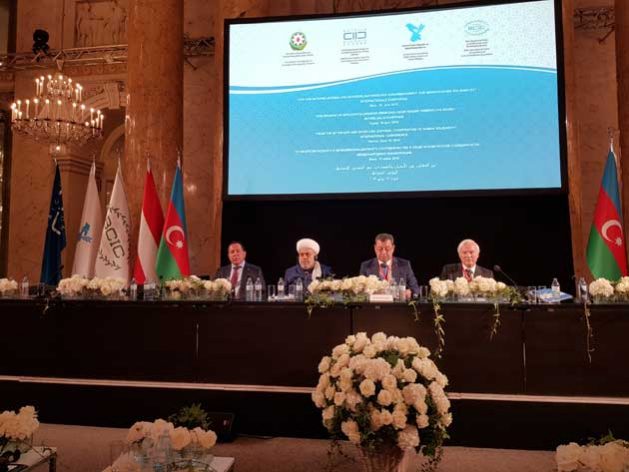
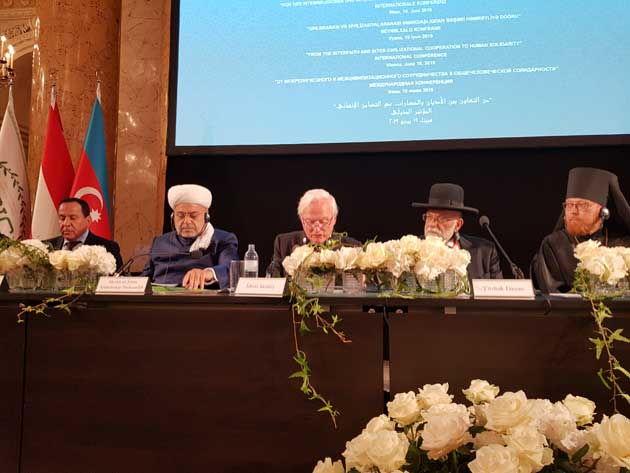
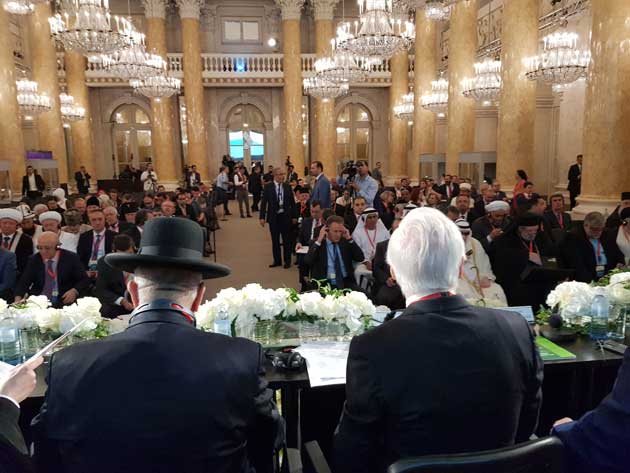
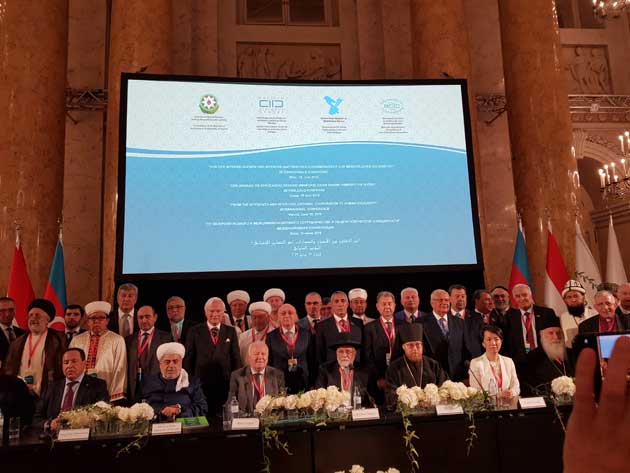
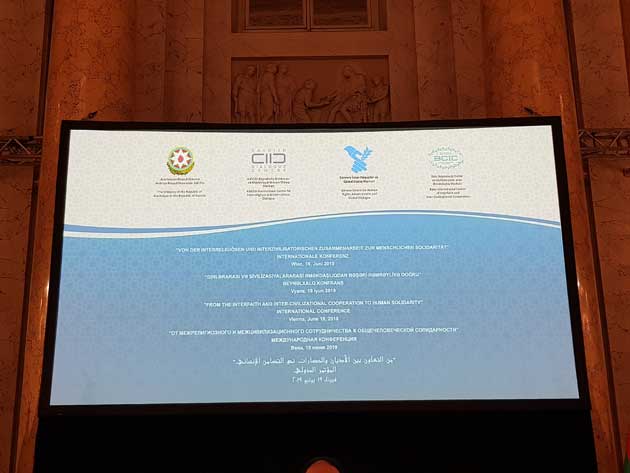
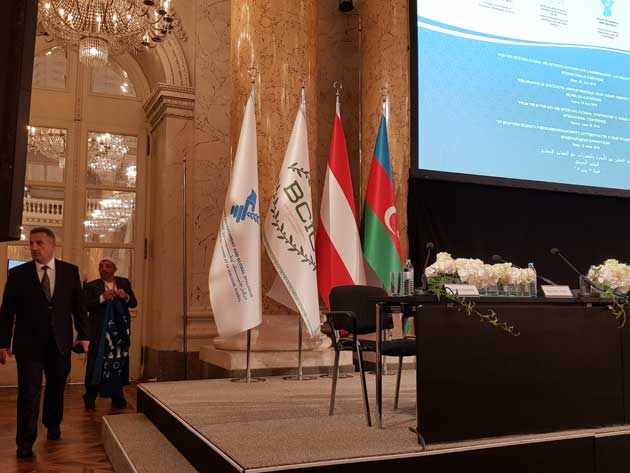
VIENNA, Jun 21 2019 – Societies must work together to build more tolerance, solidarity and peace within and between nations, said the Executive Director of the Geneva Centre for Human Rights Advancement and Global Dialogue, Ambassador Idriss Jazairy, during the 19 June international conference on “From Interfaith, Inter-Civilizational Cooperation to Human Solidarity.” He emphasized that all such societies are built on shared aspirations and not shared ethnicity.


This Geneva Centre was one of the organizers of this major event together with the Baku International Centre for Interreligious and Inter-Civilizational Cooperation and the KAICIID Interreligious and Intercultural Dialogue Centre.

It gathered over 200 high-level experts from 30 countries and 10 international organizations. A special message of greeting was extended to the co-organizers of the conference and the participants by the President of the Republic of Azerbaijan HE llham Aliyev during the inaugural ceremony.

As the moderator of the opening and the first plenary sessions, Ambassador Jazairy stated that although the Berlin Wall was demolished in 1989, new physical and virtual walls were being erected which were breaking up societies and multilateralism.

It is one of the greatest paradoxes of the contemporary world that major world faiths and creeds that all preach human fraternity are being perverted to justify hatred and exclusion. The threat to peoples is not diversity, but poverty. Terrorism has no religion, denomination or nationality. It is a social cancer that affects the whole world,” he said.

To overcome this situation, Ambassador Jazairy highlighted the importance of promoting awareness of both the commonality of values and the specificities of practices of diverse faiths as expressions of enrichment through pluralism. He emphasized that all faiths supported God-given dignity to human beings and the duty of all to uphold it in particular for women and girls and vulnerable groups. Likewise, he recalled that all such faiths equally advocate the love of one’s neighbor.

The Executive Director of the Geneva Centre praised the outcome of the 25 June 2018 World Conference on religions and equal citizenship rights, the World Tolerance Summit organized in November 2018 in Dubai, the historical meeting of 4 February 2019 between the Pope and the Grand Imam of Al Azhar held in Abu Dhabi, and the Fifth World Forum on Intercultural Dialogue held in-May 2019 in Azerbaijan.

In his concluding remarks, the Geneva Centre’s Executive Director underlined that the promotion of equal citizenship rights is the silver-bullet to promote successful societies that manage diversity and stimulate empathy towards the other.

Ambassador Jazairy added: ‘Ethnicity, religious or political affiliations do not convey more rights on some groups than on others. As the US Congress affirmed already in 1782 ‘E pluribus unum.’ This diversity needs to become again the subject of cultural celebration and lay the foundation for social cohesion and the promotion of inclusive societies. There can be no sustainable pursuit of happiness in islands of prosperity surrounded by oceans of poverty.”

The Executive Director of the Geneva Centre concluded his statement by appealing to countries from the Global North and the Global South to jointly promote empathy between different cultures and civilizations and to “speak up together so that the conference message comes out loud and clear and is picked up by politicians who can make it become a reality.”

In the concluding session of the conference, the co-organizers endorsed an outcome declaration welcoming, inter alia, the adoption of the 25 June 2018 World Conference 10-Point Outcome Declaration on “Moving Towards Greater Spiritual Convergence Worldwide in Support of Equal Citizenship Rights” which was sponsored by the Geneva Centre and its partners last year.

The co-organizers likewise adopted a joint message to the President of Azerbaijan HE Ilham Aliyev and to the President of Austria HE Alexander Van der Bellen appealing to both countries to address obstacles to sustainable peace and development, promote inter-civilizational dialogue and to make this conference format replicable at regular intervals in the future.


This Day In History– June 18

Nysaland

Today is the 169th day of 2019. There are 196 days left in the year.

TODAY’S HIGHLIGHT

2010: BP removes chief executive Tony Hayward from day-to-day oversight of the Gulf of Mexico oil spill crisis, a day after he was pummelled by US lawmakers at a hearing.

OTHER EVENTS

1757: Holy Roman Empire forces defeat of Prussia’s King Frederick II in Seven Years War battle of Kollin, now in Czech Republic, and he loses 13,000 of 33,000 troops.

1779: French forces take St Vincent in West Indies from British.

1812: United States declares war against Britain because of restrictions imposed on shipping during the Napoleonic Wars.

1815: British under Duke of Wellington and Prussians under Gerhard von Blucher defeat France’s Napoleon Bonaparte at Waterloo.

1823: King John VI annuls Portuguese Constitution of 1822 after uprisings against his rule and the loss of Brazil.

1900: With the anti-foreign Boxer Rebellion already under way, the dowager empress of China orders all foreigners killed.

1940: General Charles de Gaulle makes his famous BBC broadcast from London, in which he declares himself leader of the “Free French” and urges compatriots to resist Nazi occupation.

1940: Germans capture French port of Cherbourg.

1952: British announce plan to unite Rhodesia and Nyasaland — now Zimbabwe and Malawi — in Central African Federation.

1953: Egypt is proclaimed a republic with General M Naguib as president.

1961: Three princes of Laos meet in Zurich, Switzerland, and agree to form coalition government to unite the war-torn kingdom.

1965: Air Vice-Marshal Nguyen Cao Ky assumes office as premier of South Vietnam and vows to spur war against Viet Cong.

1975: Prince Faisal Ibn Musaed is publicly beheaded in Riyadh for the murder of his uncle, King Faisal of Saudi Arabia.

1985: US space shuttle Discovery, with a Saudi Arabian prince aboard as passenger, launches a satellite for Arab world.

1993: The UN Security Council approves sending 7,600 peacekeepers to six Bosnian cities.

1996: The UN Security Council lifts its embargo of heavy weapons against the former Yugoslav republics, following an arms control agreement in Bosnia.

1997: One of the most reviled figures of the century, the fugitive Cambodian Khmer Rouge leader Pol Pot, surrenders to his former comrades.

2000: Ethiopia and Eritrea agree to cease hostilities immediately in two-year-old border war that killed, wounded, and displaced thousands.

2001: Some 30,000 Syrian troops pull out of Beirut and redeploy after 25 years. The Syrians were invited into Lebanon in 1976 as part of an Arab peacekeeping force to quell a civil war.

2002: A Palestinian suicide bomber detonates explosives on a bus in Jerusalem, killing himself and at least 19 Israelis, in the deadliest attack in Jerusalem since 1996.

2004: European Union leaders agree on a first-ever constitution for their newly reunited continent, overcoming disputes about power-sharing and national sovereignty.

2008: Zhang Xiaoyan, a woman trapped under rubble for 50 hours in the May 12 earthquake in China, delivers a healthy baby girl in a touching coda to the massive tragedy that killed almost 70,000 people. Democratic presidential candidate Barack Obama says he would bring Osama bin Laden to justice in a way that wouldn’t allow the terrorist mastermind to become a martyr, but that bin Laden might be killed if the US Government found him. (Bin Laden was tracked down and slain by US forces in May 2011 during Obama’s presidency.)

2012: Islamist candidate Mohammed Morsi claims a hollow victory in Egypt’s presidential election just hours after the country’s military rulers strip the office of its most important powers.

2013: The Taliban and the US say they will hold talks on finding a political solution to end nearly 12 years of war in Afghanistan, as the international coalition formally hands over control of the country’s security to the Afghan army and police.

2014: Iraq’s Shiite prime minister extends overtures to his Sunni and Kurdish political rivals as his forces battle Sunni militants over control of the nation’s largest oil refinery and a strategic city near the Syrian border.

2017: Charleena Lyles, a 30-year-old African American mother of four, is shot and killed by two white Seattle police officers after she called 911 to report a burglary; authorities said Lyles had pulled a knife on the officers. Voters give French President Emmanuel Macron’s fledgling party a solid victory in parliamentary elections.

TODAY’S BIRTHDAYS

Edward Scripps, US newspaper publisher (1854-1926); Anastasia, daughter of Russian czar Nicholas II (1901-1918); Paul McCartney, British singer (1942- ); Thabo Mbeki, South African president (1942- ); Roger Ebert, US film critic (1942-2013); Isabella Rossellini, Italian-born model-actress (1952- ); Tom Bailey, British singer (1957- ).

— AP

Now you can read the Jamaica Observer ePaper anytime, anywhere. The Jamaica Observer ePaper is available to you at home or at work, and is the same edition as the printed copy available at http://bit.ly/epaperlive

There’s No Continent, No Country Not Impacted by Land Degradation

Biodiversity, Climate Change, Combating Desertification and Drought, Conferences, Editors’ Choice, Featured, Global, Headlines, Regional Categories, Sustainability, TerraViva United Nations

Combating Desertification and Drought

On all continents you have the issue of land degradation, and it requires governments, land users and all different communities in a country to be part of the solution. Credit: Albert Oppong-Ansah /IPS

ANKARA, Jun 17 2019 (IPS) – The coming decades will be crucial in shaping and implementing a transformative land agenda, according to a scientist at the United Nations Convention to Combat Desertification (UNCCD) framework for Land Degradation Neutrality (LDN).


UNCCD-Science Policy Interface co-chair Dr. Mariam Akhtar-Schuster, who spoke with IPS ahead of the start of activities to mark World Day to Combat Desertification (WDCD) on Monday, Jun. 17, said this was one of the key messages emerging for policy- and other decision-makers.

This comes after the dire warnings in recent publications on desertification, land degradation and drought of the Global Land OutlookIntergovernmental Science-Policy Platform on Biodiversity and Ecosystem Services (IPBES) Assessment Report on Land Degradation and Restoration, World Atlas of Desertification, and IPBES Global Assessment on Biodiversity and Ecosystem Services.

“The main message is: things are not improving. The issue of desertification is becoming clearer to different communities, but we now have to start implementing the knowledge that we already have to combat desertification,” Akhtar-Schuster told IPS.

“It’s not only technology that we have to implement, it is the policy level that has to develop a governance structure which supports sustainable land management practices.”

IPBES Science and Policy for People and Nature found that the biosphere and atmosphere, upon which humanity as a whole depends, have been deeply reconfigured by people.

The report shows that 75 percent of the land area is very significantly altered, 66 percent of the ocean area is experiencing increasing cumulative impacts, and 85 percent of the wetland area has been lost.

“There are of course areas which are harder hit; these are areas which are experiencing extreme drought which makes it even more difficult to sustainably use land resources,” Akhtar-Schuster said.

“On all continents you have the issue of land degradation, so there’s no continent, there’s no country which can just lean back and say this is not our issue. Everybody has to do something.”

Akhtar-Schuster said there is sufficient knowledge out there which already can support evidence-based implementation of technology so that at least land degradation does not continue.

While the information is available, Akhtar-Schuster said it requires governments, land users and all different communities in a country to be part of the solution.

“There is no top-down approach. You need the people on the ground, you need the people who generate knowledge and you need the policy makers to implement that knowledge. You need everybody,” the UNCCD-SPI co-chair said.

“Nobody in a community, in a social environment, can say this has nothing to do with me. We are all consumers of products which are generated from land. So, we in our daily lives – the way we eat, the way we dress ourselves – whatever we do has something to do with land, and we can take decisions which are more friendly to land than what we’re doing at the moment.”

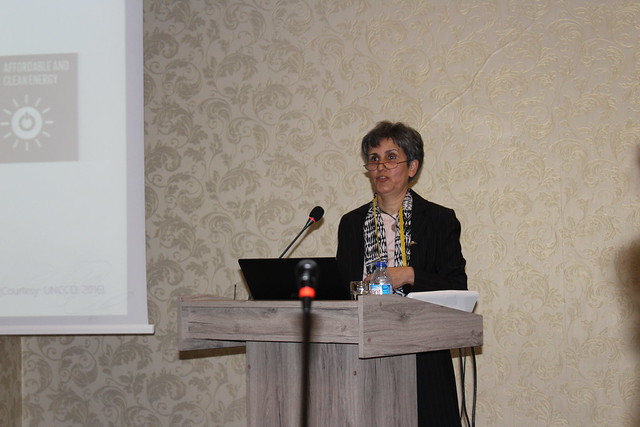
UNCCD-Science Policy Interface co-chair Dr. Mariam Akhtar-Schuster says things are not improving and that the issue of desertification is becoming clearer to different communities. Credit: Desmond Brown/IPS

UNCCD Lead Scientist Dr. Barron Joseph Orr said it’s important to note that while the four major assessments were all done for different reasons, using different methodologies, they are all converging on very similar messages.

He said while in the past land degradation was seen as a problem in a place where there is overgrazing or poor management practices on agricultural lands, the reality is, that’s not influencing the change in land.

“What’s very different from the past is the rate of land transformation. The pace of that change is considerable, both in terms of conversion to farm land and conversion to built-up areas,” Orr told IPS.

“We’ve got a situation where 75 percent of the land surface of the earth has been transformed, and the demand for food is only going to go up between now and 2050 with the population growth expected to increase one to two billion people.”

That’s a significant jump. Our demand for energy that’s drawn from land, bio energy, or the need for land for solar and wind energy is only going to increase but these studies are making it clear that we are not optimising our use,” Orr added.

Like Akhtar-Schuster, Orr said it’s now public knowledge what tools are necessary to sustainably manage agricultural land, and to restore or rehabilitate land that has been degraded.

“We need better incentives for our farmers and ranchers to do the right thing on the landscape, we have to have stronger safeguards for tenures so that future generations can continue that stewardship of the land,” he added.

The international community adopted the Convention to Combat Desertification in Paris on Jun. 17, 1994.

On the occasion of the 25th anniversary of the Convention and the World Day to Combat Desertification in 2019 (#2019WDCD), UNCCD will look back and celebrate the 25 years of progress made by countries on sustainable land management.

At the same time, they will look at the broad picture of the next 25 years where they will achieve land degradation neutrality.

The anniversary campaign runs under the slogan “Let’s grow the future together,” with the global observance of WDCD and the 25th anniversary of the Convention on Jun. 17, hosted by the government of Turkey.