Let’s Get Climate Action into Traction with Gender Equality

Civil Society, Climate Change, Featured, Global, Green Economy, Headlines, Peace, TerraViva United Nations, Women & Climate Change

Opinion

Ulrika Modéer is UNDP’s Assistant Administrator and Director of the Bureau of External Relations and Advocacy, and Anita Bhatia is UN Women’s Deputy Executive Director for Resource Management, Sustainability and Partnerships.
Credit: UN Women

UNITED NATIONS, Sep 11 2019 (IPS) – Climate change is already altering the face of our planet. Research shows that we need to put all our efforts over the coming decade to limit warming to 1.5°C and mitigate the catastrophic risks posed by increased droughts, floods, and extreme weather events.


But our actions will not be effective if they do not include measures to ensure social justice, equality and a gender perspective. So, how do we integrate gender equality in climate change actions?

The impact of climate change affects women and girls disproportionately due to existing gender inequalities. It also threatens to undermine socio-economic gains made over previous decades.

With limited or no access to land and other resources including finance, technology and information, women and girls suffer more in the aftermath of natural disasters and bear increased burdens in domestic and care work.

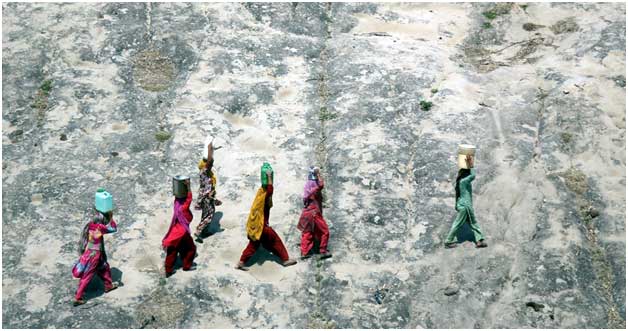
Women and girls have also seen their water collection time increased and firewood and fodder collection efforts thwarted in the face of droughts, floods and deforestation, occupying a significant portion of their time that could have been used for their education or leisure.

This is not only theory. For example, women and children accounted for more than 96 per cent of those impacted by the flash floods in Solomon Islands in 2014 and in Myanmar, women accounted for 61 percent of fatalities caused by Cyclone Nargis in 2008.

Women and girls also remain marginalized in decision-making spheres — from the community level to parliaments to international climate negotiations. Global climate finance for mitigation and adaptation programmes remain out of reach for women and girls because of their lack of knowledge and capacity to tap into these resources.
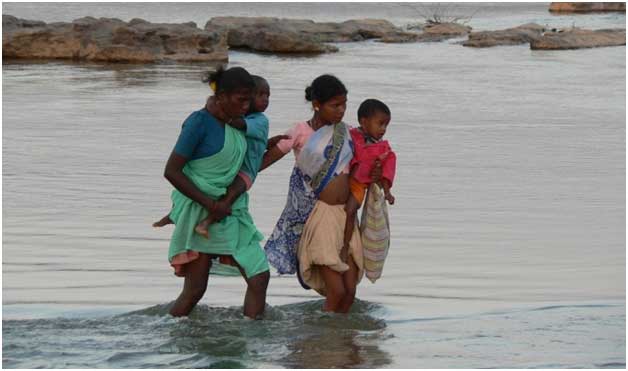
Despite these challenges, women and girls play a critical role in key climate related sectors and have developed adaptation and resilience-building strategies and mitigation techniques, such as driving the demand for renewable energy at the household and community levels for lighting, cooking and productive use solutions that the international community must now support.

Women are holders of traditional farming methods, first responders in crises situations, founders of cooperatives, entrepreneurs of green energy, scientists and inventors, and decision-makers with respect to the use of natural resources.

Women comprise an average of 43 percent of the agricultural work force in developing countries1 and manage 90% of all household water and fuel-wood needs in Africa. Some studies have shown that if women were afforded equal access to productive resources as men, their agricultural outputs would exceed men’s by 7 to 23 percent. It is therefore imperative to embrace and scale-up the initiatives of the 51 per cent of the world’s population.

In recent times, women and girls have used their knowledge and experience to lead in mitigation efforts. From developing apps to track and reduce the carbon emitted as a result of individual consumption, to reducing food by connecting neighbors, cafes, and local shops to share leftover and unsold food 2.

Young women scientists, like South-African teenager Kiara Nirghin, are making a difference in the fight against climate change. They are building on the legacies of women and girls such as Nobel Prize winner Wangari Maathai, who empowered communities to manage their natural resources in a sustainable way.

At the same time, UNDP and UN Women have been collaborating to advance gender equality and women’s leadership on climate change. For example, in Ecuador, the two UN agencies have teamed up with the government to support the inclusion of gender in the country’s climate action plans.

UNDP and UN Women have also collaborated globally to ensure that gender remains a key factor when world leaders make critical decisions on climate change.

If policies and projects take into account women’s particular roles, needs and contributions to climate action and support women’s empowerment, there will be a greater possibility to limit warming to 1.5°C in line with the 2030 Agenda for Sustainable Development. We must continue to engage women and women’s organizations, learning from their experiences on the ground to build the evidence for good practices and help replicate more inclusive climate actions.

The UN Secretary-General’s Climate Action Summit in New York on September 23, 2019 is a unique opportunity to elevate at the highest level the need for substantive participation of women and girls in efforts against climate change.

At the Summit, there will be several initiatives put forth to address climate change, including one focusing on gender equality. The initiative recognizes the differential impact of climate change on women and girls, and seeks support for their leadership as a way to make climate actions more effective.

It calls for the rights, differentiated needs and contributions of women and girls to be integrated into all actions, including those related to climate finance, energy, industry and infrastructure. It promotes support for women and girls in developing innovative tools and participating in mitigation and adaptation efforts and calls for accountability by tracking and reporting progress towards achieving these goals.

For climate action to get more traction and be effective, we need a critical mass of Governments and other stakeholders to sign on to the Climate Action Summit’s gender-specific initiative. The world cannot afford to keep limiting the potential of women and girls in shaping climate actions, as all evidence points towards the benefits of their involvement.

There is already interest by United Nations Member States, as shown in the increased integration of gender considerations in their national climate plans, but a broader movement is needed. We need multi-stakeholder partnerships and engage a critical mass of supporters – governments, UN entities, financial mechanisms, and civil society organizations to support the gender-specific initiative of the SG’s Climate Action Summit.

The time for gender-responsive climate action is now.

1 Food and Agriculture Organization of the United Nations (FAO), The State of Food and Agriculture: Closing the Gender Gap for Development (Rome: FAO, 2011a).
2 Olio, a food-sharing app was founded by women from Sweden, the UK and USA. For more info: https://unfccc.int/climate-action/momentum-for-change/women-for-results/women-leading-a-food-sharing-revolution; One Million Women was founded by a woman in Australia to get one million women to change their lifestyles to mitigate climate change. The group has an app that provides the tools to cut carbon pollution in home energy savings and clean energy options, minimising food waste, reducing over-consumption, investing and divesting (your money) wisely, sustainable fashion, low-impact travel, etc. For more info: https://www.1millionwomen.com.au/
  Source

Nothing For Us, Without Us – Hansen’s Disease-Affected Tell International Gathering

Asia-Pacific, Civil Society, Conferences, Development & Aid, Featured, Global, Headlines, Health, Human Rights, Regional Categories, TerraViva United Nations

Human Rights

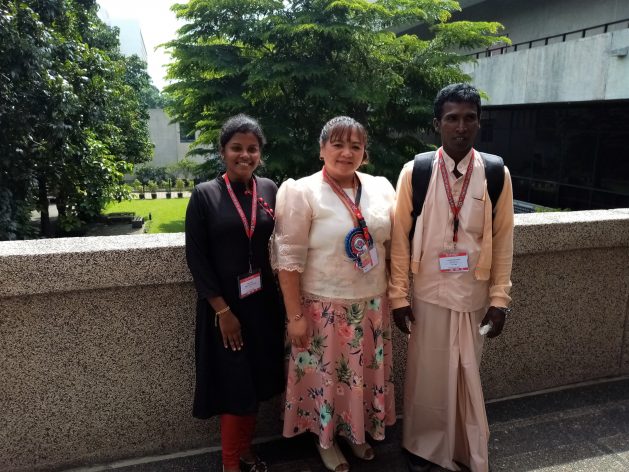
Jennifer Quimno of the Coalition of Leprosy Advocates of the Philippines (CLAP) (centre) is joined by Sri Lanka’s Shagana Thiygalingam (L) and Amarasinghe Manjula (R) after Quimno delivered the recommendations presented by the Global Forum of People’s Organisations on Hansen’s Disease to the International Leprosy Congress in Manila on September 11. Credit: Ben Kritz/IPS

MANILA, Sep 11 2019 (IPS) – Stronger government action to fight stigma and discrimination, more government funding for health and non-health support programmes, and a larger role for people’s organisations in developing policy towards Hansen’s disease treatment and eradication are still needed for eliminating the disease.


This was some of the recommendations made by participants of the first ever Global Forum of People’s Organisations on Hansen’s Disease today, Sept. 11 during a presentation to global academics, scientists, researchers, health staff, partners and those affected by the disease at the 20th International Leprosy Congress (ILC).

Jennifer Quimno, secretary of the Coalition of Leprosy Advocates of the Philippines (CLAP), was chosen by the forum participants to represent the group.

“I really felt I was carrying everyone’s voices with me,” Quimno told IPS.

Ending stigma, improving cooperation

The ILC, which is currently being held in Manila, Philippines, is hosted every three years and was last held in China in 2016.

Prior to the start of the congress, Japan’s Sasakawa Health Foundation (SHF) and The Nippon Foundation (TNF), which support elimination of the disease as well as various organisations of persons affected by the disease, held a global gathering from Sept. 7 to 10. For the first time, organisations of those affected by Hansen’s disease from 23 countries across Africa, Asia, Latin America and the Caribbean met to share their know-how and experiences in eliminating Hansen’s disease.

Along with recommendations for eliminating discriminatory laws and practices, including social, psychological, and economic support in Hansen’s disease management programmes, and giving people affected by the disease a greater voice in policy formulation, the forum debated that a shift in terminology from “leprosy” to “Hansen’s disease” be promoted to help combat the historic stigma associated with the disease. No consensus was reached, however.

The recommendations called for comprehensive action and the involvement of non-health agencies and other stakeholders, because areas such as clean water and sanitation, proper housing, education, and dignified work are all, in the view of people’s organisations, critical to efforts to stamp out the disease.

The forum also called for a much greater role for people’s organisations in sustaining Hansen’s Disease treatment, rehabilitation, and services, and in promoting dignity, equality, and respect for human rights.

“Hansen’s disease is more than a disease caused by a bacterium. Poverty, institutional, social and political neglect, complacency and the structural invisibility of vulnerable populations contribute to the perpetuation of Hansen’s disease,” the final draft of the forum’s recommendations read.

Other key recommendations presented to the ILC by the forum include: More funding for research to fill scientific knowledge gaps that still exist (much remains unclear about the transmission of the disease); greater focus by national programmes on case detection, disability prevention, and rehabilitation during treatment; and more funding for “care after cure” programmes, including psychological, social, and economic rehabilitation.

To combat the stigma associated with the disease, the forum urged the widest possible dissemination and adoption by governments, NGOs, and other stakeholders of United Nations guidelines for the elimination of stigma and discrimination. 

The conclusions also made a firm demand for the elimination of all existing discriminatory laws and practises globally, saying that this would further require “affirmative and reparation policies,” in order to be truly effective in promoting equality.

The people’s organisations also made a call for a greater role in government policy-making toward leprosy. They did not neglect improvements in their own capabilities as well. While calling on governments to develop measurable action plans, the people’s organisations noted they must improve their effectiveness by through strengthening networks, and engaging more productively with governments.

Hope for the future, but a few uncertainties

Participants at the global forum who attended the first day of the ILC expressed hope the recommendations would lead to positive action, but noted uncertainties remain.

“Being able to do this at the ILC is a milestone for us, to have our perspective heard,” Frank Onde, president of CLAP, told IPS. While people affected by Hansen’s disease have regularly participated in the ILC, Onde felt this was the first time recommendations were presented in an organised way.

For Indonesia’s Ermawati, a member of PerMaTa, “Attending this congress is like a dream, to come from my village to be involved in a gathering like this,” she told IPS. “It’s inspiring, and I hope it would inspire others [affected by leprosy] to join us and help others.” 

Ermawati was hopeful the recommendations would lead to greater awareness and reduce stigma, particularly the discrimination against women in her country. “I hope it leads to greater acceptance, particularly of us women. In my country, the stigma is very great.” One problem faced by Indonesian women afflicted with leprosy is that they cannot marry; if laws in an area do not actually prohibit it, the culture in most places encourages men to shun these women.

Shagana Thiyagalingam, who is from Sri Lanka, felt that Quimno’s presentation was inspiring. Quimno spoke of how after both she and her father had contracted the disease, but how she still continued her studies currently works with the government health department. “Her story was so motivational,” Shagana told IPS. “It should encourage other women to come forward and feel less stigma.”

Thiyagalingam’s traveling companion Amarasinghe Manjula was likewise inspired by Quimno’s personal story.

While optimistic about what lies ahead, CLAP’s Onde, and his Indonesian counterpart Paulus Manek, the president of PerMaTa, expressed a few reservations. “The barriers [between people’s organisations and government agencies] really need to be minimised,” Onde said.

Manek saw the size of the ILC gathering itself as a sort of barrier to effective action. “It’s almost too big,” Manek said. “I see people here, they are interested in one or two issues only. Maybe there should be a closer focus on fewer issues at once.”

He also suggested that new guidelines from the United Nations Human Rights Council would be useful.  

“It would help us,” Manek said. “I think the media can also help to spread awareness and stopping discrimination.”

Quimno for her part was hoping to see some concrete actions taken as a result of her presentation on behalf of the global forum. “There are so many gaps to fill, so I would hope these people here would commit to studying and planning actions to take on the things we recommended. That would be progress.”


The Emergence of a Global Voice for Hansen’s Disease Affected Persons

Active Citizens, Asia-Pacific, Civil Society, Conferences, Development & Aid, Featured, Global, Headlines, Health, Human Rights, Regional Categories, Sustainability, TerraViva United Nations

Human Rights

Her experience and the chance “to help strengthen Colombia, the world, and my family” through participating in the Global Forum of People’s Organisations on Hansen’s Disease, sponsored by the Nippon Foundation and the Sasakawa Health Foundation, was like “rising from the ashes” for Lucrecia Vazques from Felehansen Colombia. Vazques’ family was hit hard by leprosy, with not only herself, but her son and one-month-old granddaughter being afflicted. Credit: Ben Kritz/IPS

MANILA, Sep 10 2019 (IPS) – The Global Forum of People’s Organisations on Hansen’s Disease, which was attended by members of people’s organisations from 23 different countries, wrapped up in Manila, Philippines, today Sept. 10 after four days of discussion and deliberation.

The main outcome was a set of recommendations, which included participants stating that those affected by the disease should have more inclusive roles in the global campaign against leprosy.

Asked to share his impressions of the forum with his fellow participants, Joshua Oraga, who is a member of ALM Kenya, a local Hansen’s disease non-profit, told the audience, “We should all familiarise ourselves with the WHO [World Health Organisation] guidelines on strengthening the participation of persons affected by leprosy in leprosy services. That should be our creed, because if you look at that document, you will see that we are the only stakeholders who have an end-to-end role.”

He said that those affected by leprosy or Hansen’s disease had a role in overcoming stigma and discrimination.

“We have a role in the promotion of equity, social justice, and human rights, we have a role in addressing gender issues, we have a role in the dissemination of information, education, communication…. We have a role in advocacy, we have a role in counselling and psychological support, we have a role in training and capacity-building, we have a role in referral services, we have a role in resource mobilisation…. So, we are everywhere!”

Oraga’s enthusiastic impressions in a way defined the outcome of the forum organised by Japan’s Sasakawa Health Foundation (SHF) and The Nippon Foundation (TNF), which support elimination of the disease globally and provide information and awareness about the disease through their dedicated website titled Leprosy Today.

The recommendations will be presented on the first day of the International Leprosy Congress (ILC), which is also being held in Manila from Sept. 11 to 13. The recommendations addressed increasing awareness of Hansen’s Disease among the public and governments, calling for greater government support for people’s organisations’ advocacies, taking a larger role in helping to form anti-leprosy policy, and working to build sustainability and more effective networks among organisations spread around the world.

A true people’s forum

To Dr. Takahiro Nanri, Executive Director of SHF, the real value of the recommendations lies not in their details, but in the manner in which they developed.

Nanri noted that the forum’s carefully-planned agenda was quickly thrown off-schedule by the spirited discussions among the participants. “The people really led the forum, and did the work they wanted to do, and I am very happy about that.”

“The recommendations were good ones, but what I think is really important is the process we saw,” he added.

Oraga was likewise pleased and motivated by his experience. Oraga, who had leprosy as a youth, said, “This is the first time I have had the opportunity to take part in a meeting at this level, so imagine my excitement and happiness to be able to come here.”

Oraga also expressed his gratitude for the work that Yohei Sasakawa, World Health Organization’s (WHO) Goodwill Ambassador for Leprosy Elimination and chairperson of TNF, has done over the last four decades. Sasakawa’s foundations have contributed over USD200 million in financial support for the WHO’s Global Leprosy programme. He also advocated for discrimination and stigmatisation against people affected by Hansen’s disease to be included in the United Nations human rights agenda. The resolution was passed in 2010.

“He has done so much for leprosy around the world, and personally I am grateful. Just think of it, because of Mr. Sasakawa, in three years, maybe leprosy will just be like any ordinary sickness,” Oraga said.

Lucrecia Vazques of Felehansen, Colombia also felt the forum was an extraordinary experience. “It’s been wonderful,” she told IPS through a Spanish translator. “It is like resuscitating after a hard moment.”

Vazques’s bubbly personality belies her own difficult experience with Hansen’s disease, which not only afflicted her, but her one-month-old granddaughter and her son, who was diagnosed first.

“It was hard,” Lucrecia said. “I had no knowledge whatsoever.We thought we would die.”

“But there was something to fight for, and to live for, and here I am. This forum means rising from the ashes. And if I had the choice, I would rise from the ashes again, and I would be right here, to help strengthen Colombia, and the world, and my family,” she said.

Looking ahead

But there is much work to still do.

“Because this was a people-led forum, it gives us direction. As you know, our resources are not limitless. We have an obligation, but it is of course better if we can maximise our efforts, and the recommendations help,” Nanri said.

Nanri reiterated the value of the “process” that he saw evolve during the forum, particularly in the context of the Joint Campaign on World Leprosy Day 2020, which will be observed on Jan. 26 next year.

“This was a step. You don’t go from the ground to the 10th floor in one jump. So now the first step has been taken. The next step is to get the groups around the world to do the activities at the same time,” which is the goal of the joint campaign. “When these recommendations are presented at the ILC, the next step can begin,” he said.


‘Join Me on this Journey’ to Eliminate Leprosy – WHO Ambassador

Asia-Pacific, Civil Society, Conferences, Development & Aid, Editors’ Choice, Featured, Global, Headlines, Health, Human Rights, Multimedia, Regional Categories, TerraViva United Nations, Video

Human Rights

YOHEI SASAKAWA, World Health Organization’s (WHO) Goodwill Ambassador for Leprosy Elimination and chairperson of The Nippon Foundation, speaks to IPS correspondent Stella Paul about his decades long campaign to achieve zero leprosy and eliminate stigmatisation of those affected.

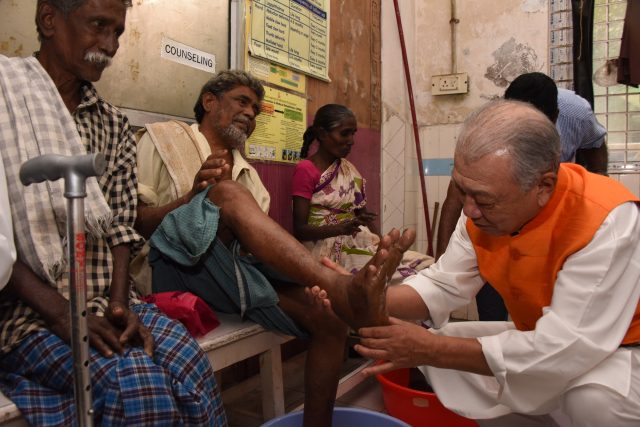
MANILA, Sep 10 2019 (IPS) – Octogenarian Yohei Sasakawa has travelled to more than 90 countries across the globe; from areas of conflict, to the jungles of Brazil, shaking hands, hugging and washing the feet of Hansen’s disease-affected people. His message is simple: Stop stigmatisation and eliminate the disease.


Sasakawa, who has spent more than 40 years working towards elimination of Hansen’s disease, is the World Health Organization’s (WHO) Goodwill Ambassador for Leprosy Elimination and chairperson of The Nippon Foundation (TNF). Since 1975, TNF and its sister organisation, the Sasakawa Health Foundation (SHF), have contributed over USD200 million in financial support for the WHO’s Global Leprosy programme. Both foundations support elimination of the disease globally and provide information and awareness about the disease through the Leprosy Today website.

Sasakawa told IPS in an exclusive interview that he does not believe in sitting in “air-conditioned rooms” looking at data and making decisions about the elimination of the disease. “That will not be helpful to people. You must go to the actual site. That is why I travel across the world — even if it’s scorching deserts or the jungles of Brazil or areas that are difficult to reach or even areas that are dangerous.”

Sasakawa, who says that discrimination and stigmatisation against people affected by Hansen’s disease was the original human rights violation, advocated for this to be included in the United Nations human rights agenda.

Yohei Sasakawa, the World Health Organization’s (WHO) Goodwill Ambassador for Leprosy Elimination and chairperson of The Nippon Foundation, has dedicated more than four decades towards eliminating Hansen’s disease and putting an end to the stigmatisation that people affected by the disease face globally. Courtesy: Sasakawa Health Foundation/The Nippon Foundation

In 2010, his efforts bore fruition when the United Nations General Assembly Resolution on elimination of discrimination against persons affected by leprosy and their family members and accompanying principle and guidelines was passed.

“If you look around us, there are multiple issues in front of us. When it comes to leprosy, people discriminating against people started in the age of the Old Testament. So it goes back a long time in our past history. So I think leprosy is the origin of human rights violation because of the fact that it started such a long time ago,” the recipient of the 2019 Order of the Rising Sun and 2018 Gandhi Peace Prize winner told IPS.

He said that 60 percent of the more than 210,000 new global leprosy cases for 2017 originated in India, adding that India’s Prime Minister Narendra Modi had made a strong commitment to make 2030 the year of zero leprosy in the country.

Sasakawa is currently in Manila, Philippines, to attend the TNF/SHF-sponsored Global Forum of People’s Organisations on Hansen’s Disease, which is being held Sept. 7 to 10. He will also deliver a keynote address at the 20th International Leprosy Congress (ILC), which takes place Sept. 11 to 13.

Through his work Sasakawa has met more than 150 national leaders, including presidents and prime ministers, sharing his message and gaining their support and commitment to eliminate leprosy.

However, he stressed, that his efforts alone would not eliminate the disease and called on the youth to “take action in their own countries” and encouraged them to begin discussions for solutions on social media platforms.

“I would definitely ask young people to join me on this journey.”

[embedded content]

  Source

India Promotes South-South Cooperation, but Key Questions Unaddressed

Biodiversity, Climate Change, Combating Desertification and Drought, Conferences, Development & Aid, Economy & Trade, Environment, Featured, Food & Agriculture

Opinion

Joydeep Gupta is the South Asia Director for the Third Pole.

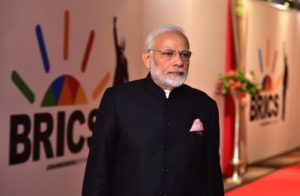
Indian Prime Minister Narendra Modi advocated, “greater South-South cooperation in addressing climate change, biodiversity and land degradation.” Courtesy: GCIS

At his speech at the United Nations Convention to Combat Desertification (UNCCD) summit in Delhi, Prime Minister Narendra Modi emphasised South-South cooperation and technology solutions, but issues of land ownership dog the ongoing negotiations.

As the second week of the UNCCD Conference of Parties (COP) kicked off in Delhi, Indian Prime Minister Narendra Modi highlighted South-South cooperation and issues of land degradation.

Speaking at the opening ceremony of the high level segment, he said that it was increasingly accepted that climate change impacts were leading to a loss of land, plants and animal species, and that it was causing, “land degradation of various kinds (including) rise of sea levels, wave action, and erratic rainfall and storms”.

All of these issues have a significant impact on India, and other developing countries, and as such, the Prime Minister advocated, “greater South-South cooperation in addressing climate change, biodiversity and land degradation.”

He said India would act both internally and externally on this. Domestically, he said that India was increasing its commitment to restore 21 million hectares of land by 2030 to 26 million hectares, an increase of 5 million hectares. The co-benefit of this would be that it would help create a carbon sink for 2.5-3 billion tonnes of carbon through increased tree cover.

On external action, he said that India was, “happy to help other friendly countries cost-effective satellite and space technologies,” and that it would be creating a Centre for Excellence at the Indian Council for Forestry Research and Education in Dehradun to promote South-South cooperation, where other countries could access technology and training.

Hard questions

Nevertheless, this avoids some of the hard questions that have been dogging the UNCCD COP. Who owns the land? Who is responsible when the land is no longer able to support a livelihood, and a farmer is forced to migrate?

These are not questions anyone thought about when they launched the UNCCD 25 years ago. But since degradation of land due to a variety of reasons precedes desertification, these questions are increasingly worrying policymakers, especially from developing countries. At the ongoing New Delhi summit, the issues have come to the fore, and have divided governments along the lines of developed and developing nations, a process familiar to observers of UN climate negotiations.

Despite Narendra Modi’s speech at the high level segment, these issues remained unresolved, with bureaucrats awaiting instructions from the 100-odd ministers gathered at the Indian capital.

The NGOs who work on farming issues are clear that land degradation cannot be halted unless farmers around the world have guaranteed rights over the land on which they grow food for everyone. This may sound like a no-brainer, but estimates show that globally only around 12% of all farmers can claim legal rights over the land they till. To this, experts would like to add the land held in various forms of community ownership, sometimes by indigenous communities. But few countries have strong laws to protect such ownership.

In the first week of the New Delhi summit, developing country governments have wanted this issue of land tenure being discussed at the UNCCD forum, and developed countries – led by the US delegation – have opposed the inclusion. The industrialised countries say it is an issue of different laws in different countries, and discussing it in the UN is not going to help.

Land tenure

But, with land degradation being inextricably tied up with climate change and biodiversity, the urgency of the situation may force UNCCD to discuss land tenure in this and future meetings, and to come up with possible solutions.

The solutions are not always as straightforward as they may seem, warned UNCCD chief scientist Baron Orr in a conversation with thethirdpole.net. Think of what a farmer – especially a smallholder farmer – is likely to do if offered a high price for land. Most of them are likely to sell, as evidenced by the mushrooming malls, offices and homes all around the current summit venue, which was all farmland just about a decade ago. And what happens to our food supply if this replicated globally?

Land tenure is important to halt degradation because people naturally provide better protection to land they own. But it is not enough. A farmer faced with competitors using chemical fertilisers and pesticides is not going to move to organic farming just because that is better for the soil.

Most farmers cannot afford to do that. They need help, as was seen in India when the state of Sikkim pledged to do only organic farming. Sikkim is a relatively small state – replicating that kind of help on a global or even national scale may need far more money than is available for the purpose, as Orr pointed out.

Land tenure is also an area where women face discrimination in a big way. Data journalism site IndiaSpend reported that 73.2% of the country’s rural women workers are farmers, but have only 12.8% of India’s land holdings.

Migration: the hot potato

Farmers being forced to migrate because their farms can no longer support them due to land degradation and climate change is the hottest potato of them all. Developed countries are united in opposing this major “push” factor in migration, insisting that people migrate only due to “pull” factors such as better economic opportunities. Developing countries, especially those from the Sahel belt stretching from the western to the eastern coast of Africa, point to numerous instances where farmers are forced off land gone barren, and insist on this issue being discussed by UNCCD.

Former UNCCD chief Monique Barbut has said almost all Africans trying to move to Europe are doing so due to land degradation and drought. Without putting it in words that strong, current UNCCD chief Ibrahim Thiaw has backed the inclusion of migration in the conference agenda.

As host government and conference president, India may have to use all its diplomatic skills if this knot is to be untied during this summit – an especially tricky manoeuvre because India has consistently refused to accept that immigrants from Bangladesh are entering this country because their farms can no longer support them.

And it is not just migration across countries. At a meeting organised on the sidelines of the summit by local government organisation ICLEI, mayor after mayor got up to say farmers are coming into their cities in increasing numbers due to land degradation and climate change, but they have no budget to provide any housing, water, electricity, roads or any form of livelihood to these millions of immigrants.

Still, developed country delegations insist UNCCD is not the right forum to discuss migration. What all 196 governments and the European Union agree upon in the next day or two remains to be seen.

Human efforts

Prakash Javadekar, India’s Minister of Environment, Forests and Climate Change and the conference president, had said at the opening, “If human actions have created the problems of climate change, land degradation and biodiversity loss, it is the strong intent, technology and intellect that will make (the) difference. It is human efforts that will undo the damage and improve the habitats. We meet here now to ensure that this happens.” This foreshadowed what the Prime Minister said today.

He pointed out that 122 countries, among them Brazil, China, India, Nigeria, Russia and South Africa, which are among the largest and most populous nations on earth, “have agreed to make the Sustainable Development Goal of achieving land degradation neutrality a national target.”

Thiaw drew attention to the warnings sounded by recent scientific assessments and the growing public alarm at the frequency of weather-related disasters such as drought, forest fires, flash floods and soil loss. He urged delegates to be mindful of the opportunities for change that are opening up, and take action. The response of governments from developed countries will decide how useful the current summit will be.

The world is in trouble otherwise. The current pace of land transformation is putting a million species at risk of extinction. One in four hectares of this converted land is no longer usable due to unsustainable land management practices. These trends have put the well-being of 3.2 billion people around the world at risk. In tandem with climate change, this may force up to 700 million people to migrate by 2050.

This story was first published on thethirdpole.net and can be found here.


Awareness Should be the Priority in Public Health Efforts against Leprosy

Asia-Pacific, Civil Society, Conferences, Development & Aid, Featured, Global, Global Governance, Headlines, Health, Human Rights, Population, Poverty & SDGs, Regional Categories, TerraViva United Nations

Health

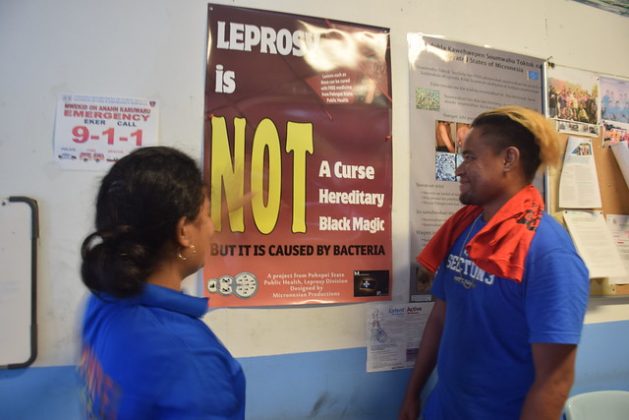
Dexter, a 25-year-old fisherman from Pohnpei in the Federated States of Micronesia, received treatment for Hansen’s disease, also known as leprosy, for over a year. He has been cured of the disease. Credit: Stella Paul/IPS

MANILA, Sep 9 2019 (IPS) – Increasing awareness of the continuing existence of Hansen’s Disease (leprosy) is critical to sustaining effective public health efforts against the disease, eliminating the social stigma associated with it, and halting its transmission.


That was the consensus reached by participants at the Global Forum of People’s Organisations on Hansen’s Disease in Manila on Sept. 9, following a lecture by Dr. Arturo Cunanan, the Chief Medical Officer of the Culion Sanitarium and General Hospital in the Philippines.The forum was organised by Japan’s Sasakawa Health Foundation (SHF) and The Nippon Foundation. 

Cunanan noted that for several years, the number of new cases has plateaued at about 200,000 per year, a troubling statistic that he attributed in part to a lack of awareness among public health bodies as well as people affected by the disease.

The social stigma attached to leprosy is a barrier to early detection of the disease, which is the key to slowing its rate of transmission. Cunanan said that the average length of time between the onset of the disease and the beginning of treatment is about two years.

This happens because on the one hand, patients are unaware of medical help available to them, unwilling, or otherwise unable to seek treatment due to stigma; and on the other, a lack of expertise and resources on the part of public health departments due to a misunderstanding of the persistence of the disease.

Not a priority

“Many public health and government officials confuse elimination and eradication,” Cunanan told the forum participants. “They think that leprosy being eliminated as a public health problem means it has been eradicated, so they are surprised when they learn it still exists.”

What this has resulted in is a decline in the material and human resources available for combatting leprosy. “Leprosy will never be a priority” for government health programmes, Cunanan said. “There are more pressing problems, bigger emergencies.”

The Philippines is a good example. The disease is considered a minor problem, and the number of new cases each year is relatively low – there were 2,108 new cases in 2017, out of a national population of about 107 million – but has been relatively consistent year after year, “between 2,000 and about 3,000”.

Because of the mistaken belief that leprosy has either disappeared entirely or has become rare, medical expertise and programmes have disappeared from public health institutions. That in turn has degraded the supervision and monitoring needed to identify new cases and prevent the transmission of the disease, Cunanan explained.

Lucy Massao, a member of the Tanzania Leprosy Association (TLA), noted that the stigma and lack of understanding of leprosy among the public in her country was also reflected in the shortcomings of the public health framework.

“We at TLA really spend a lot of time trying to educate people, including the officials,” she said. “Many patients, the health officials refer to us, because they cannot offer much support except for the medications. But they are improving, through working with us.”

Role of people’s organisations

Public health authorities elsewhere are also gradually recognising the value of the organisations of people who have been affected by leprosy. “You are the best experts,” Cunanan told the forum participants, “Because you have first-hand experience.”

Organisation members can assist in early detection and outreach, Cunanan explained, and help public health authorities improve their services to leprosy patients.

In the Philippines, collaboration with people’s organisations such as Coalition of Leprosy Advocates of the Philippines has actually been included in official policy. Philippine Assistant Secretary of Health Dr. Maria Laxamana, who delivered the keynote address on the forum’s first day, noted that “intensified collaborative efforts among [government] agencies and with private partners” is a key objective of the government’s National Leprosy Control Programme.

Dr. V.R. Pemmaraju of the World Health Organisation’s (WHO) Global Leprosy Programme said that there has been a marked growth in talent and inclusiveness among people’s organisations, which is increasing their effectiveness in supporting and extending public health efforts towards leprosy.

“What we’re seeing, and you can see it at this forum, is that the groups are more global, include more women, and are more educated about the disease and the support needed,” Pemmaraju told IPS.

“This has been very good from the point of view of the WHO, because of the added social aspect of the Global Leprosy Partnership,” he explained. Where people’s organisations still need to develop is in working effectively with governments.

“They [the organisations] have the experience and knowledge about leprosy, but what I’ve seen is that most need more skills in negotiating and engaging with government officials,” Pemmaraju said. “There is still some gap in inclusion of people’s organisations in forming public health policy [related to leprosy], and developing those skills would help to reduce that.”

Pemmaraju is upbeat about the prospects of people’s organisations gaining a bigger voice in public health policy towards leprosy.

“In each of these meetings, I see the groups growing globally and gaining more influence,” Pemmaraju said. “With the engagement of the people’s organisations, we [the WHO] are optimistic that we can achieve our goal of ‘zero leprosy.’”