Rajagopal PV’s Blueprint for Another World: Peace

Active Citizens, Africa, Asia-Pacific, Civil Society, Conferences, Editors’ Choice, Featured, Global, Headlines, Human Rights, Humanitarian Emergencies, Peace, Population, Sustainable Development Goals, TerraViva United Nations
Peace

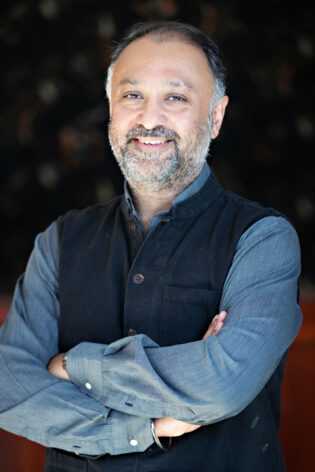
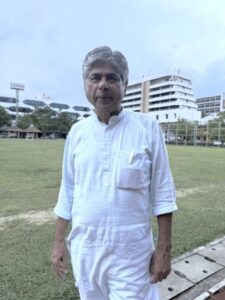
Rajagopal P.V. at the International Civil Society Week (ICSW2025) in Bangkok. Credit: Zofeen Ebrahim/IPS

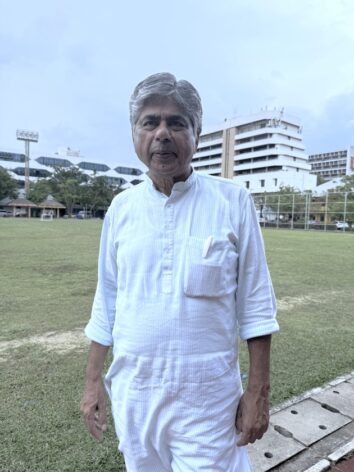
Rajagopal P.V. at the International Civil Society Week (ICSW2025) in Bangkok. Credit: Zofeen Ebrahim/IPS

BANGKOK, Nov 4 2025 (IPS) – “If nations can have defense ministries, why not peace ministries?” asks Rajagopal PV, the soft-spoken yet formidable founder of Ekta Parishad. “We are told to see issues through a gender lens—why not a peace lens? Why can’t we imagine a business model rooted in non-violence or an education system that teaches peace?”


Founded in 1989, Ekta Parishad—literally Forum for Unity—is a vast people’s movement of more than 250,000 landless poor, now recognized as one of India’s largest and most disciplined grassroots forces for justice.

To Rajagopal, these aren’t utopian dreams—they’re blueprints for a possible world.

Over the decades, Ekta Parishad has secured land rights for nearly half a million families, trained over 10,000 grassroots leaders, protected forests and water bodies, and helped shape key land reform laws and policies in India.

All this has been achieved not through anger, but through disciplined, nonviolent marches that stretch across hundreds of kilometers. Along the way, many leaders have walked beside him—among them, the current Prime Minister of Armenia.

In an age marked by deep disorder—where wealth concentrates in few hands, poverty spreads, and the planet itself trembles under human greed—the 77-year-old Gandhian remains unshaken in his belief that peace alone can redeem humanity.

“We must rescue peace from the clutches of poverty and all its evils,” he told IPS on the sidelines of the International Civil Society Week, standing on the football ground of Bangkok’s Thammasat University.

“And it can be done,” he insists—and his life is proof. In 1969, the centenary year of Mahatma Gandhi’s birth, the Government of India launched a unique exhibition on wheels, a ten-coach train carrying Gandhi’s life and message across the nation. Rajagopal was part of the team that curated and travelled with it.

“For an entire year, we journeyed from state to state. Thousands of schoolchildren would gather at railway platforms, their faces lit with curiosity, waiting to meet Gandhi through our displays,” he recalls.

Yet somewhere along those long railway tracks, Rajagopal began to feel that displaying Gandhi’s ideals wasn’t enough. “The exhibition was beautiful,” he says, “but what was the use of preaching non-violence if we couldn’t live it, breathe it, and bring it to life?”

That realization led him to one of the most daring experiments in peacebuilding India had ever seen—negotiating with the feared bandits of the Chambal valley. “It was 1970,” he recalls. “We moved cautiously, first meeting villagers on the periphery to build trust. Once we had their confidence, we sent word to the dacoits: we wanted to talk. With the government’s consent, we ventured into what we called a ‘peace zone’—often by night, walking for hours through deep ravines—to meet men the world only knew as outlaws.”

The dialogues continued for four years. Eventually, as many as 570 bandits laid down their arms before a photograph of Mahatma Gandhi—a sight India had never seen before. The government, in turn, promised they would not face the death penalty and would receive land and livestock to rebuild their lives. Rehabilitation took another four painstaking years, but it was a victory of conscience over fear.

“They didn’t just surrender their weapons—they surrendered their anger,” Rajagopal says quietly. “There was real repentance, and that takes time—but it lasts.” His commitment came at a cost. At his ashram—a spiritual retreat he had founded—he was threatened, beaten, and ordered to abandon his peace efforts. He talked them through to accepting his presence.

“Today that same region is heaven,” he smiles, his eyes crinkling with memory. “Fifty years ago, people trembled at sunset—terrified of the bandits. Today, you can travel at 2:00 pm in the night, where fear ruled once.”

The mass surrender may have looked like a triumph for the state, but Rajagopal urges people to look deeper. “It’s the invisible violence—poverty, injustice, and oppression—that breeds the visible one: dacoities, kidnappings, and killings,” he explains.

Though Rajagopal and his companions had ended one form of violence, the deeper, quieter kind—born of poverty and neglect—still festered. Until that was confronted, he knew, peace would remain incomplete.

Years of working alongside the poor had taught him one truth: non-violence needs structure. If India’s Indigenous and landless communities were to be heard, they had to be organized.

“We began training young people from dozens of villages,” he says. “They went door to door, teaching others not only about their rights—especially the right to land—but also how to claim them peacefully.”

With that foundation, a five-year plan took shape. Each village home chose one member to take part. Every day, the family set aside one rupee and a fistful of rice—a humble but powerful act of commitment.

They even created a “playbook” of possible scenarios—how to stay calm under provocation, how to respond to setbacks, and how to practice non-violence in thought and action. “In one of our marches, a truck ran over three of our people, killing them,” he recalls softly. “There was grief, but no retaliation. Instead, they sat in silence and meditated. That was our true test.”

In 2006, 500 marchers walked 350 kilometers from Gwalior to Delhi, demanding land rights. Nothing changed. But they didn’t stop.

A year later, in 2007, 25,000 people—many barefoot—set out again on the national highway. “Imagine that sight,” Rajagopal says, eyes gleaming. “Twenty-five thousand people walking for a month, powered only by hope.”

The march displayed not just India’s poverty but also its power—the quiet power of the poor united. It was among the most disciplined mobilizations the country had ever seen. “There was one leader for every hundred people,” Rajagopal explains. “We walked by day and slept on the highway by night. Those in charge of cooking went ahead each morning so that by sundown, a single meal was ready for all.”

In a later march, Rajagopal recalls, the government sent a large police force. “I was worried,” he admits. “I called the authorities to tell them this was a non-violent protest—we didn’t need protection. The officer replied, ‘They’re not there for you; they’re here to learn how disciplined movements should be.’”

Along the route, villages greeted them like family—offering bags of rice, water, and prayers. “There was never a shortage of food,” Rajagopal smiles. “When your cause is just, the world feeds you.”

By the time the march reached Delhi, the government announced a new land reform policy and housing rights and agreed to enact the Forest Rights Act.

The government dispersed the marchers with hollow promises and the reforms never happened.

So Ekta Parishad planned an even larger march—a Jan Satyagraha of 100,000 people in 2012.

“Halfway through, the government came running.”

Rajagopal’s face lights up as he recalls the event. “They agreed to our ten-point agenda and signed it in front of the people. That moment was historic—governments almost never do that; the Indian government certainly never does it!”

The agreement included land and housing rights, a national task force on land reform, the prime minister’s oversight of policy implementation, and fast-track courts to resolve land disputes.

Today, because of these long, barefoot marches, more than three million Indigenous people in India now have legal rights to land and housing. The struggle also gave birth to India’s Land Acquisition, Rehabilitation, and Resettlement Act—a landmark in people’s movements.

“The Act also safeguards fertile land,” Rajagopal explains. “Before the government can acquire any area, a social impact study must be done. And if farmland is taken, the owners receive four times its value in compensation.”

“The purpose of our marches,” Rajagopal says, “is not to fight the government, but to win it over. The government is not the enemy; injustice is. We must stand on the same side of the problem.”

For Rajagopal, peace is not a sentiment but a system—something that must be built, brick by brick, through dialogue and respect. “Non-violence,” he says, “isn’t passive. It’s active patience—listening, accepting differences, never policing thought.” The same principle, he believes, can heal families, neighborhoods, nations—and the world itself.

His next mission is to create a Youth Peace Force, ready to enter conflict zones and resolve disputes through dialogue. He has also launched the Peace Builders Forum, or Peace7, uniting seven countries—South Africa, Japan, Costa Rica, Switzerland, Canada, India, and Armenia. His dream is to expand it to Peace20, where, as he smiles, “wealth will never be a criterion for membership.”

IPS UN Bureau Report
 

As Civil Society Is Silenced, Corruption and Inequality Rise

Active Citizens, Asia-Pacific, Civil Society, Climate Change, Climate Change Justice, Conferences, COP30, Democracy, Editors’ Choice, Environment, Featured, Global, Headlines, Human Rights, Press Freedom, Sustainable Development Goals, TerraViva United Nations

Civil Society

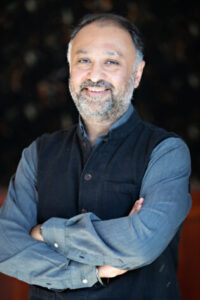
Mandeep Tiwana, Secretary General, CIVICUS Global Alliance. Credit: CIVICUS

Mandeep Tiwana, Secretary General, CIVICUS Global Alliance. Credit: CIVICUS

BULAWAYO & BANGKOK, Oct 31 2025 (IPS) – From the streets of Bangkok to power corridors in Washington, the civil society space for dissent is fast shrinking. Authoritarian regimes are silencing opposition but indirectly fueling corruption and widening inequality, according to a leading global civil society alliance.


The warning is from Mandeep Tiwana, Secretary General of CIVICUS Global Alliance, who points to a troubling trend: civil society is increasingly considered a threat to those in power.

That is a sobering assessment from CIVICUS, which reports that a wave of repression by authoritarian regimes is directly fueling corruption and exploding inequality.

“The quality of democracy on hand around the world is very poor at the moment,” Tiwana tells IPS in an exclusive interview. “That is why civil society organizations are seen as a threat by authoritative leaders and the negative impact of attacking civil society means there is a rise in corruption, there is less inclusion, there is less transparency in public life and more inequality in society.”

His comments come ahead of the 16th International Civil Society Week (ICSW) from 1–5 November 2025 convened by CIVICUS and the Asia Democracy Network. The ICSW will bring together more than 1,300 delegates comprising activists, civil society groups, academics, and human rights advocates to empower citizen action and build powerful alliances. ICSW pays tribute to activists, movements, and civil society achieving significant progress, defending civic freedoms, and showing remarkable resilience despite the many challenges.

The ICSW takes place against a bleak backdrop. According to the CIVICUS Monitor, a research partnership between CIVICUS and over 20 organizations tracking civic freedoms, civil society is under attack in 116 of 198 countries and territories. The fundamental freedoms of expression, association, and peaceful assembly face significant deterrents worldwide.

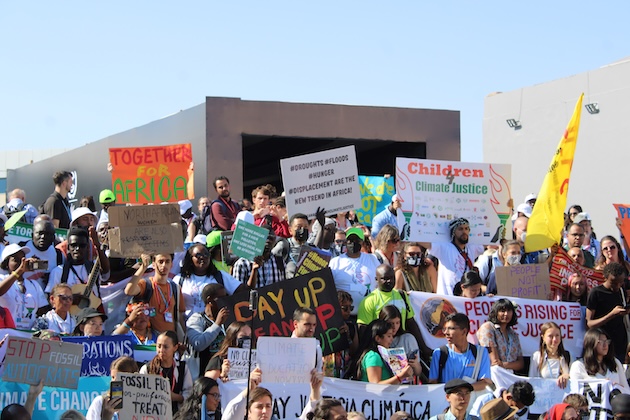
Protests at COP27 in Egypt. Mandeep Tiwana, Secretary General of CIVICUS Global Alliance, is hopeful that COP30, in Belém, Brazil, will be more inclusive. Credit: Busani Bafana/IPS

Protests at COP27 in Egypt. Mandeep Tiwana, Secretary General of CIVICUS Global Alliance, is hopeful that COP30, in Belém, Brazil, will be more inclusive. Credit: Busani Bafana/IPS

“It is becoming increasingly dangerous to be a civil society activist and to be the leader of a civil society organization,” Tiwana tells IPS. “Many organizations have been defunded because governments don’t like what they do to ensure transparency or because they speak out against some very powerful people. It is a challenging environment for civil society.”

Research by CIVICUS categorizes civic freedom in five dimensions: open, narrowed, obstructed, repressed, and closed. Alarmingly, over 70 percent of the world’s population now lives in countries rated in the two worst categories: ‘repressed’ and ‘closed.’

“This marks a regression in democratic values, rights, and accountability,” Tiwana noted, adding that even in the remaining 30% of nations, restrictions on civic freedoms remain.

Repression Tools in Tow

The ICSW, being held under the theme ‘Celebrating citizen action: reimagining democracy, rights, and inclusion for today’s world,’ convenes against this backdrop.

Multifaceted tools are used by governments to stifle dissent. Governments are introducing laws to block civil society organizations from receiving international funding while simultaneously restricting domestic resources. Besides, laws have also been enacted in some countries to restrict the independence of civil society organizations that scrutinize governments and promote transparency.

For civil society activists, the consequences are sobering.

“If you speak truth to power, uncover high-level corruption and try to seek transformative change in society, whether it’s on gender equality or inclusion of minorities you  can be subjected to severe forms of persecution,” Tiwana explained. “This includes stigmatization, intimidation,  imprisonment for long periods, physical attacks, and death.”

Multilateralism Tumbles, Unilateralism Rises

Tiwana said there is an increasing breakdown in multilateralism and respect for international laws from which civil society draws its rights.

This erosion of civic space is reflected in the breakdown of the international system. Tiwana identified a surge in unilateralism and a disregard for the international laws that have historically safeguarded the rights of civil society.

“If you look at what’s happening around the world, whether with regard to conflicts in Palestine, in the Congo, in Sudan, in Myanmar, in Ukraine, in Cameroon, and elsewhere, governments are not respecting international norms,” he observed, remarking that authoritarian regimes were abusing the sovereignty of other countries, ignoring the Geneva conventions, and legalizing attacks on civilians, torturing and persecuting civilians.

This collapse of multilateralism has enabled a form of transactional diplomacy, where narrowly defined national interests trump human rights. Powerful states now collude to manipulate public policy, enhancing their wealth and power. When civil society attempts to expose these corrupt relationships, it becomes a target.

“They are colluding to game public policy to suit their interests and to enhance their wealth.  The offshoot of this is that civil society is attacked when it tries to expose these corrupt relationships,” said Tiwana, expressing concern  about the rise in state capture by oligarchs who now own vast swathes of the media and technology landscapes.

Citing countries like China and Rwanda, which, while they have different ways of functioning, Tiwana said both are powerful authoritarian states engaging in transactional diplomacy and are opposed to the civil society’s power to hold them to account.

The election of Donald Trump as US President in 2025 has shattered the foundation of the US as a democracy, Tiwana noted. The country no longer supports democratic values internationally and is at home with  attacks on the media and defunding of civil society.

The action by the US has negative impacts, as some leaders around the world are taking their cue from Trump in muzzling civil society and media freedoms, he said, pointing to how the US has created common cause with authoritarian governments in El Salvador, Israel,  Argentina, and Hungary.

The fight Goes On

Despite facing repression and threats, civil society continues to resist authoritarian regimes. From massive street protests against corruption in Nepal, and Guatemala  to pro-democracy movements that have removed  governments in Bangladesh  and Madagascar,

“People need to have courage to stand up for what they believe and to speak out when their neighbors are persecuted,” Tiwana told IPS. “People still need to continue to speak the truth and come out in the streets in peaceful protest against the injustice that is happening. They should not lose hope.”

On the curtailing of civil society participation in climate change negotiations, Tiwana said the upcoming COP30 in Brazil offered hope. The host government believes in democratic values and including civil society at the table.

“Past COPs have been held in petro states—Azerbaijan, the United Arab Emirates and Egypt—which are all authoritarian states where civil society has been attacked, crushed, and persecuted,” he said. “We are hopeful that there will be greater inclusion of voices and the commitments that will be made to reduce emissions will be ambitious but the question is really going to be after the COP and if those commitments will be from governments that really don’t care about civil society demands or about the well-being of their people.”

Young people, Tiwana said, have shown the way. Movements like Fridays for Future  and the Black Lives Matter have demonstrated the power of solidarity and unified action.

But, given the massive protests, has this resistance led to change of a similar scale?

“Unfortunately, we are seeing a rise in military dictatorships around the world,” Tiwana admitted, attributing this to a fraying appetite by the international community to uphold human rights and democratic values.

“Conflict, environmental degradation, extreme wealth accumulation, and high-level corruption are interlinked because it’s people who want to possess more than they need.”

Tiwana illustrated what he means by global priorities.

“We have USD 2.7 trillion in military spending year-on-year nowadays, whereas 700 million people go to bed hungry every night.”

“As civil society, we are trying to expose these corrupt relationships that exist. So the fight for equality, the struggle to create better, more peaceful, more just societies—something CIVICUS supports very much—are some of the conversations that we will be looking to have at the International Civil Society Week.”

IPS UN Bureau Report

  Source

‘It’s Time UN Turned Ideas to ‘UNMute’ Civil Society into Action’

Activists, CSOs and faith-based leaders this week pondered how you get a seat at the table when they couldn't even get access to the UN building.

Activists, CSOs and faith-based leaders this week pondered how you get a seat at the table when they couldn’t even get access to the UN building.

By Abigail Van Neely
NEW YORK , Jul 21 2023 (IPS)

How do you get a seat at the table when you can’t even access the building? This question loomed as activists, faith-based leaders, and NGO representatives gathered at the NY Ford Foundation. They discussed how to amplify the voice of civil society organizations at the UN Headquarters across the street.


“How to UNMute” was hosted on July 20, 2023, as a side event during the ongoing 2023 High-Level Political Forum (HLPF). The event kicked off the creation of a manual to break down barriers to civil society engagement as the first step towards turning ideas into action.

Maithili Pai, the UN advocate for the International Service for Human Rights, illustrated the divide between the UN’s verbal commitments and its actual practices. Sometimes, Pai said, civil society representatives could not enter UN meeting rooms or waited years for UN accreditation. According to Pai, some representatives even faced retaliation for trying to interact with UN bodies.

“We understand very well that civil society is under attack and that there are people pushing you back,” Costa Rica’s Ambassador to the UN, Maritza Chan, told the audience.

Chan stressed that meeting the UN’s 17 sustainable development goals (SDGs) required empowering civil society organizations that provide critical insight.

“We need civil society in the room at all times, providing advice, supporting states, and also calling us when we are not doing things right,” Chan said.

Recommendations for the manual on ‘unmuting’ civil society were developed at a recent workshop. They include better-resourced UN NGO support offices, increased financing for participation in UN events, and more supportive visa processes, especially for delegates from the global south who have been historically excluded. Advocates also called for more systematic flows of information, methods of participation, and pathways into the UN.

Arelys Bellorini, the senior UN representative from World Vision, said she has to go to friendly missions to facilitate youth access to the UN.

Nelya Rakhimova, a sustainable development specialist, said she was asked to pay $1,500 to be at the UN.

Carmen Capriles, an environmental policy expert at the United Nations Environment Program, said she could not attend meetings on climate change because they were closed.

The Ambassador to the UN from Denmark, Martin Bille Hermann, pushed these advocates to present specific action items. “You’re not giving me easy avenues to deliver,” Hermann said. “Develop a toolbox that would allow us to continue to live in an old house.”

“We cannot expect different results by doing the same things,” Chan added.

This is not the first time these issues have been raised.

On the 75th anniversary of the UN in 2020, the General Assembly committed to making the UN more inclusive to respond to common challenges. The following year, a set of steps to strengthen the meaningful participation of stakeholders across the UN was presented to the secretary general by a group of civil society organizations and the permanent missions of Denmark and Costa Rica. The recommendations were endorsed by 52 member states and 327 civil society organizations.

The 2021 letter focused on the use of technology to make UN meetings more accessible. It cited an evaluation survey that found 50 percent of participants during the virtual 2020 HLPF joined for the first time. Most of these new participants represented civil societies in developing countries.

One suggestion for bridging digital divides and incorporating a more diverse range of participants was to host hybrid events and offer internet connection at UN country-based offices. However, Rakhimova pointed out that some events still do not have hybrid options.

The 2021 letter also called for a civil society envoy to the UN and an official civil society day. Neither recommendation has been formally implemented yet.

Mandeep Tiwana, chief officer of CIVICUS, a global alliance of civil society organizations with a strong presence in the global south, addressed inequalities in who influences international decision-making. Tiwana expressed concern that wealthy members of the private sector can “come in through the backdoor.” Meanwhile, activists already facing restrictions on their work wait outside.

“The time to open the doors to the UN virtually, online, and in person has come,” Chan said.
IPS UN Bureau Report



!function(d,s,id){var js,fjs=d.getElementsByTagName(s)[0],p=/^http:/.test(d.location)?’http’:’https’;if(!d.getElementById(id)){js=d.createElement(s);js.id=id;js.src=p+’://platform.twitter.com/widgets.js’;fjs.parentNode.insertBefore(js,fjs);}}(document, ‘script’, ‘twitter-wjs’);  

Source

Mandela Day Reminder to Stand Witness to Human Rights Defenders

Nelson Mandela, then Deputy President of the African National Congress of South Africa, raises his fist in the air while addressing the Special Committee Against Apartheid in the General Assembly Hall, June 22, 1990. Global alliance CIVICUS commemorated Mandela Day with a reminder that many rights defenders are jailed and intimidated. Credit: UN Photo/Pernaca Sudhakaran

Nelson Mandela, then Deputy President of the African National Congress of South Africa, raises his fist in the air while addressing the Special Committee Against Apartheid in the General Assembly Hall, June 22, 1990. Global alliance CIVICUS commemorated Mandela Day with a reminder that many rights defenders are jailed and intimidated. Credit: UN Photo/Pernaca Sudhakaran

By Joyce Chimbi
NAIROBI , Jul 18 2023 (IPS)

As human rights increasingly deteriorate, rights defenders are being violently suppressed. Abducted, detained, tortured, and humiliated, many now live one day at a time. They have been told, in no uncertain times, that anything could happen. They are now asking the global community to stand as a witness.


“Like Nelson Mandela was, hundreds of human rights defenders around the world are in prison for their human rights activities. Just like him, they are unjustly treated, fictitious charges levelled against them and handed the most serious sentences that are often used against criminals. One of our priorities is to work with human rights defenders to advocate for their release,” says David Kode from CIVICUS, a global alliance of civil society with a presence in 188 countries around the world.

Inspired by the life story of the late iconic South African President Nelson Mandela, the Stand As My Witness Campaign was launched on Nelson Mandela Day in 2020 by CIVICUS, its members and partners.

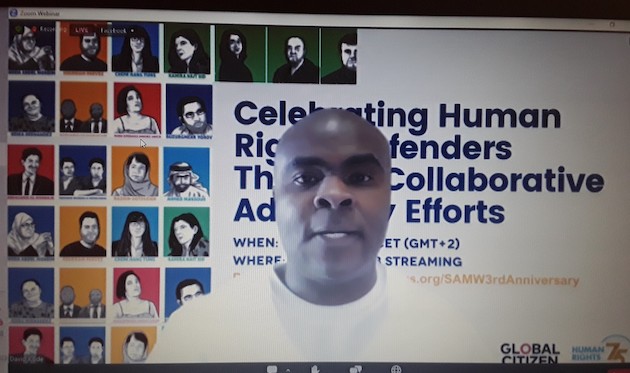
In commemoration of the third anniversary of the Stand As My Witness campaign, CIVICUS and its partners, including human rights defenders, hosted a public event titled, ‘Celebrating Human Rights Defenders through Collaborative Advocacy Efforts’, to celebrate the brave contributions of human rights defenders and raise awareness about those who are still in detention.

David Kobe said that CIVICUS had profiled at least 25 human rights defenders since the Stand As My Witness Campaign started three years ago. Credit: Joyce Chimbi/IPS

David Kobe said that CIVICUS had profiled at least 25 human rights defenders since the Stand As My Witness Campaign started three years ago. Credit: Joyce Chimbi/IPS

“Over the last three years, we have profiled more than 25 human rights defenders collectively because some human rights defenders are profiled as individuals and others, such as those in Burundi, are profiled as a group because they were arrested as a group. More than 18 human rights defenders have been released over the last three years. As we celebrate, we must recognize that the journey has just started, it is quite long, and the battle is far from over,” Kode said.

The event brought together families and colleagues of detained human rights defenders, previously detained human rights defenders, representatives from the Office of the High Commissioner for Human Rights (OHCHR) and other human rights mechanisms and civil society organisations.

Lysa John, the Secretary General of CIVICUS, spoke about how special Mandela Day is, for it is the one day of the year when the spirit of solidarity is celebrated in his memory. It is also a day to look back at what has been achieved and how much more could be achieved in solidarity.

She further addressed issues of civic space restrictions, closure of civic space and how these restrictions impact societies and individuals. John stressed that the event was held in the context of the 25th anniversary of the adoption of the UN Declaration on Human Rights Defenders and the 75th anniversary of the UNDHR or Human Rights 75 to promote their objectives.

“One-third of the population of the world live in contexts which are closed. Where attacks on people who speak out or exercise their civic freedoms are attacked or arrested without any accountability. More and more people in the world, in fact, the largest section of the world, estimated at 44 percent live in countries where civic space and civic freedoms are restricted. In this regard, civic society is more than ever reinventing itself, and there is increased support for them,” she said.

Birgit Kainz from OHCHR spoke about the importance of bringing to life the UN Declaration on Human Rights Defenders for its adoption was a consensus that human dignity is at the core of everything.

She spoke about the need to be deliberate in the defence of civic space as it enables people to shape their future and that of their children. Kainz said that protection and security are two sides of the same coin and urged participants to network and connect to improve civic space and to also play a complementary role. Further emphasizing the need to maintain data, especially about who is in detention and where in line with SDGs.

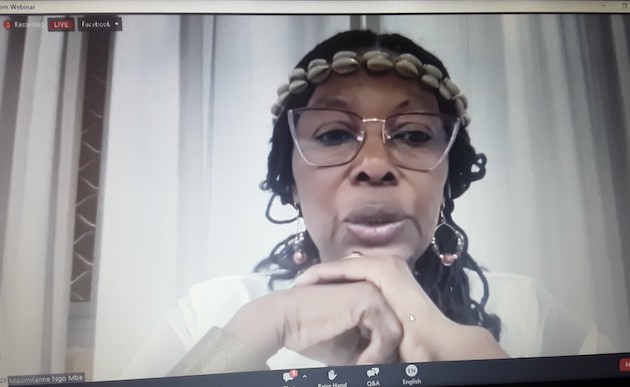
Maximilienne Ngo Mbe from Cameroon is one of the most prolific human rights defenders in Africa. She spoke about the need to create safe spaces for women rights defenders. Photo Joyce Chimbi.jpg

Maximilienne Ngo Mbe from Cameroon is one of the most prolific human rights defenders in Africa. She spoke about the need to create safe spaces for women rights defenders. Credit: Joyce Chimbi/IPS

Maximilienne Ngo Mbe spoke about the life and times of human rights defenders today. She is one of the most prolific human rights defenders in Africa and continues to receive a lot of restrictions for her fearless human rights activities that often have her fleeing from Cameroon to other countries for safety.

“We need a network for women rights defenders because of the special challenges they face as girls, wives, mothers and vulnerable people. Women are engaging less and less because of these challenges and the multiple roles they play in society,” she said.

The event was an opportunity for released human rights defenders such as Maria Esperanza Sanchez from Nicaragua to speak about resilience in the face of brutal regimes. She spoke about how armed men often came to her house to threaten and intimidate her. Of her arrest, humiliation and torture in 2020, being sentenced to 10 years in prison and her eventual release.

It was also an opportunity to speak on behalf of those who cannot. They include Khurram Parvez, a prolific human rights defender in India. At the time of his arrest for human rights activities, he was leading two critical organizations at the national and regional levels.

Parvez is being charged as a terrorist. His story aligns with that of Kenia Hernandez, a 32-year-old indigenous Amuzga woman, mother of two, lawyer and an advocate for human rights who is currently detained in a maximum-security prison in Mexico and has been sentenced to 21 years. Her story is illustrative of the high-risk female rights defenders and people from marginalized groups face.

Ruben Hasbun from Global Citizen spoke about how to effectively advocate for the release of human rights defenders, sharing lessons from Stand As My Witness campaigners.  The event further opened up space to address the role of the private sector.

Christopher Davis from Body Shop, a brand that continues to be at the forefront of supporting human rights and rights defenders, fighting social and environmental injustice.

At the end of the session, participants were invited to sign a petition to have the United Arab Emirates immediately and unconditionally release all those detained solely for the exercise of their human rights and end all abuse and harassment of detained critics, human rights defenders, political opposition members, and their families.

IPS UN Bureau Report


!function(d,s,id){var js,fjs=d.getElementsByTagName(s)[0],p=/^http:/.test(d.location)?’http’:’https’;if(!d.getElementById(id)){js=d.createElement(s);js.id=id;js.src=p+’://platform.twitter.com/widgets.js’;fjs.parentNode.insertBefore(js,fjs);}}(document, ‘script’, ‘twitter-wjs’);  

IPS – UN Bureau, IPS UN Bureau Report, CIVICUS

Source

Human Rights Defenders in Exile Safety Imperiled by Host Countries’ Declining Civil Rights

Irene Grace says human rights defenders hiding in Kenya fear harassment and intimidation due to a decline in civic rights. Credit: Joyce Chimbi/IPS

Irene Grace says human rights defenders hiding in Kenya fear harassment and intimidation due to a decline in civic rights. Credit: Joyce Chimbi/IPS

By Joyce Chimbi
NAIROBI, Jun 20 2023 (IPS)

While leaving one’s country and becoming a refugee is a last resort, it is a decision that many, like Steve Kitsa, have had to make. As conflict becomes increasingly protracted in many African countries, many others will take this step.


“In a matter of life and death, I fled the Democratic Republic of Congo (DRC) five years ago and left my elderly mother behind. One day we were seated in a group of young men, chatting and enjoying the morning sun, when a lone gunman in uniform approached us and started firing away unprovoked. Such incidences had become too common in the eastern region, and some of my friends were killed,” Kitsa tells IPS.

Kenya hosts one of the largest refugee populations in Africa. Kitsa is one of more than 520,000 registered refugees and asylum seekers. But human rights defender Irene Grace, who fled Uganda two years ago, says the number is much higher because borders are porous.

Nevertheless, official records show that about 287,000 refugees come from Somalia, 142,000 from South Sudan, 50,000 from DRC, and 32,000 from Ethiopia; many live in Dadaab and Kakuma camps.

Others, like Kitsa, have found their way into the urban centers of Nairobi, Kisumu, Mombasa, and Eldoret. Outdated statistics from 2017 indicate that more than 67,267 refugees live in Nairobi.

“There is a lot of exploitation because we need the locals to survive. Along the highways, you will find many young men hawking peanuts. You can tell they are from DRC because of the kind of Swahili they speak. They sell these peanuts under the hot sun, all day, every day, in exchange for a plate of food and somewhere to sleep as the profits go to the host. Most of us are desperate to go to France,” he explains.

Irene Grace fled Uganda for promoting the rights of the LGBTQI community as the country clamped down on their rights. As the government-endorsed crackdown against the community intensified, so did threats against her life.

“The issue of human rights defenders in exile is one aspect of the refugee situation that is hardly ever talked about. The risk is very high because you are under an alias in a foreign country, and if murdered, you are likely to remain unidentified for a long time, and it might take years to connect the dots. The question of who bears the duty of protection for us remains unanswered,” Grace says.

Her fears and concerns reflect the 2022 report findings by the global civil society alliance, CIVICUS, and the Kenya Human Rights Commission (KHRC), highlighting the decline in civil rights in Kenya. According to the report, the government was using excessive force to quieten dissent.

Kenya was placed on the CIVICUS Monitor’s human rights ‘Watchlist’ in June 2022. The Watchlist highlights countries with a recent and steady decline in civic freedoms, including the rights of free speech and peaceful assembly.

Kenya was rated Obstructed by the CIVICUS Monitor. There are 42 countries in the world with this rating. The rating is typically given to countries where power holders heavily contest civic space and impose a combination of legal and practical constraints on the full enjoyment of fundamental rights.

In 2021, Front Line Defenders released a report accusing the governments of Uganda and Kenya of giving the South Sudanese National Security Service (NSS) intelligence agency the freedom to target refugee human rights workers who fled the country.

“It is very difficult to continue with activism in such a hostile environment, on top of the many other challenges confronting us, such as a lack of documentation and access to services. Some of us left our families behind, exposed and unprotected. Over the eight years, I have lived in Kenya, I have received many threatening calls from South Sudan, but I know the information of my whereabouts came from within this country,” Deng G, an activist from South Sudan, tells IPS.

“Our situation worsens when local activists are targeted. In exile, you must connect with local networks to survive and continue with your activism. I am aware of activists in Kenya currently being held without trial for protesting against the high cost of living.”

KHRC continues to express concerns over the misuse of laws to undermine peaceful protest and recently responded with speed when five activists from the Social Justice Center, a Nairobi-based grassroots group, were arrested during a peaceful protest against the controversial Finance Bill 2023.

A pre-independence Public Order Act requires activists to notify authorities of protests at least three days in advance. Police have mistakenly understood the provision as a requirement for protests to be approved or denied, using it as an excuse to deem protests ‘unpermitted.’ Even though the right to peaceful assembly is guaranteed in Kenya’s constitution, it is continually undermined, says CIVICUS and KHRC.

Irene Grace says ongoing hostilities have derailed efforts to promote the safety and security of LGBTQI asylum seekers and refugees in the Kakuma Refugee Camp complex in northwestern Kenya whose lives are at risk. She says they are experiencing discrimination, and physical and sexual violence, among other forms of human rights violations.

“I am unable to travel there to determine how we can mobilize and improve their safety, working hand in hand with grassroots activists in Kenya. There are corrupt security officers, and once they discover you are hiding in the country, you become a target. They want you to pay them to turn a blind eye as you go on with your activities,” she says.

Kitsa says the issue of bribes is a most pressing challenge for many refugees seeking to integrate with the locals.

“They usually threaten to send you to the refugee camps despite having refugee documentation allowing you to live among the locals. They can create many problems for you.”

Against this backdrop, Irene Grace says activism is being suppressed from multiple angles, and human rights activists, local and those operating from exile, must now go back to the drawing board to find safer, impactful ways to speak truth to power and take the powers that be head-on.
IPS UN Bureau Report


!function(d,s,id){var js,fjs=d.getElementsByTagName(s)[0],p=/^http:/.test(d.location)?’http’:’https’;if(!d.getElementById(id)){js=d.createElement(s);js.id=id;js.src=p+’://platform.twitter.com/widgets.js’;fjs.parentNode.insertBefore(js,fjs);}}(document, ‘script’, ‘twitter-wjs’);  

Excerpt:

Home Away From Home is the theme of World Refugee Day 2023. However, for many, including human rights activists who have fled their homes, a decline in civil rights in their host countries means their lives are often endangered and their activism curtailed. Source