The Boon and Bane of LDC Graduation: The Bangladesh Experience

Asia-Pacific, Civil Society, Development & Aid, Economy & Trade, Education, Food & Agriculture, Gender, Headlines, Health, TerraViva United Nations

Opinion

SINGAPORE, Feb 22 2021 (IPS) – Bangladeshis at the present time share a modicum of justifiable pride in the fact that the world merits this country worth watching in terms of its economic potentials. To my mind , we have reached this stage for the following reasons: First, effective utilization of early foreign assistance; second a steady ,albeit sustained, move away from a near -socialistic to an open and liberal economy; third , a shift from agriculture to manufacturing as land-space shrank to accommodate urbanization; fourth , an unleashing of remarkable entrepreneurial spirit among private sector captains of industry, as evidenced in the Ready Made Garments industry: fifth, the prevalence of a vibrant civil society intellectually aiding the social transformation with its focus on health, education, and gender issues: and finally ,a long period of political stability notwithstanding the traditional predilections of Bengali socio-political activism.

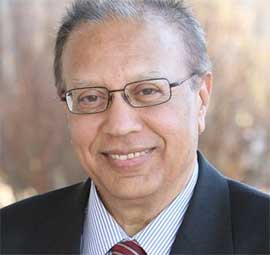
Dr. Iftekhar Ahmed Chowdhury

The philosophical underpinning behind the concept of ‘Least Developed Countries’ (LDCs) devised at the UN in the 1960s was to identify a set of States whose impediment to development was structural, and not due to their own faults. Hence the idea that the global trading system needed to be adjusted by providing these nations ‘special and differential treatment’, such as entailed in non-reciprocal preferential market access. This would, hopefully, create for them a level playing field. Bangladesh joined the Group in 1975, immediately following its UN membership. The conditions for joining the list of LDCs or graduating from it , are determined by the Committee for Development Policy (CDP) based on certain criteria. Out of original 48 six countries have already graduated: Botswana, Cape Verde, Maldives, Samoa, Equatorial Guinea, and Vanuatu. Nepal and Bangladesh are in the cusp of graduation.

Graduation is for Bangladesh a mix of boon and bane. It is a boon because it is an acknowledgment of progress, a major milestone in the nation’s development journey. It would improve the country’s global image which should give it better credit ratings. This would allow it to borrow more cheaply on the world market. It is a bane because it would ultimately lose all the preferences accorded to LDCs in global trade such as under the European Union’s Everything but Arms (EBA) initiative. However, Bangladesh has not quite optimized on those advantages.

Incidentally, as chair of the WTO Committee of Trade and Development, as also of the LDC Group in Geneva in the late 1990s and early 2000, and also as Special Advisor to Secretary General Rubens Ricupero of the United Nations Conference on Trade and Development (UNCTAD), I was involved with the related deliberations with the European Union. Bangladesh has always played a leadership role on behalf of the LDCs in all multilateral negotiations, both at the WTO in Geneva and at the United Nations in New York. Sometimes these involved not only tough deliberations with developed countries and ‘economies in transition’ (former socialist countries) , but also with developing member-States of the Group of 77 (because it entailed the sharing of the cake).Bangladesh’s graduation will in many ways deprive the LDCs of this capacity. Across the diplomatic scene, Bangladesh could also depend on the support of fellow-LDCs on a broad range of issues. I would gratefully recall the contribution in this regard of the so-called “Utstein Sisters” of Europe (named after a venue in Northern Europe where they met), five women Development Cooperation Ministers, including Evelyn Herfkens of the Netherlands and Claire Short of the UK. They were ardent advocates of LDC aspirations, and were instrumental, among other things, in the WTO’s acceptance, unlike in the case its predecessor, the General Agreement on Trade and Tariff (GATT), of the broad principle that trade is a key tool of development.

Following graduation, Bangladesh will need to negotiate a continuation of international support measures to render the graduation process smooth and sustainable. If needs be, even after the grace period of quota-free duty- free market access vis-à-vis Europe till 2029. Though in Brussels the EU could cut Bangladesh some slack because of its performance, at the WTO, Bangladesh, will be well advised to attempt a norm setting exercise with regard to graduating countries with the new Director General, Dr Ngozi Okonjo-Iweala, who is empathetic, as well as with the membership. This will take some skillful diplomacy. But I would like to strongly underscore that negotiations are but the tip of the ice- berg. The main challenge would lie in tackling the fundamentals beneath. For instance, in addressing domestically the 27 requirements, including corruption, non-compliances, and other inadequacies, across the governance spectrum to achieve GSP -plus status. Also, to derive other global market benefits.

Comparative advantages would have to be transformed into competitive advantage. Low-wages will tend to perpetuate poverty. So wage-rise, an essential tool for poverty mitigation, would need to be carefully calibrated with the increase in productivity. Economy should diversify, particularly into services, which do not face goods tariff and hence less affected by loss of preferences. The Internet sector, on which the government is prudently laser-focused, can help Bangladesh leapfrog into economic modernity. The pharmaceutical industry should seriously reflect on how to navigate WTO regulations on Trade in Intellectual Property, or TRIPS. Mutually rewarding arrangements with other Asian economic powerhouses are called for. For instance, Free Trade Agreement with a country like Singapore could, and I use the word ‘could’ advisedly, unlock potentials, but that would require further serious study and examination.

Throughout my negotiating career I had felt that preferences tend only to prolong pain. There are no such things as friends in the marketplace. The sooner we start to confront the real world of competition the better off we are. Indeed, if we can play our cards right, the graduation could be our ‘’break-out” moment to reflect on reforms, on raising productivity and on boosting growth. Efforts must be directed towards moving up the value chain by attracting quality FDI. From my current perch in the corporate sector in Singapore, I see Vietnam as an example worthy of emulation.

So, to conclude, graduation is inevitable if progress is the goal, as it must be, and indeed desirable, just as, in our individual lives, coming of age, that is of turning 21, is. Readiness is key. From what I see, there is nothing like the last minute in speeding up requisite preparations. Doubtless, there is much work to be done. But we must bear in mind that if there is a hill to climb, waiting will not make it any smaller!

Dr Iftekhar Ahmed Chowdhury is the Honorary Fellow at the Institute of South Asia Studies, NUS. He is a former Foreign Advisor (Foreign Minister) of Bangladesh and President & Distinguished Fellow of Cosmos Foundation. The views addressed in the article are his own. He can be reached at: isasiac@nus.edu.sg

This story was originally published by Dhaka Courier.
  Source

Mahatma’s Non-Violence: Essence of Culture of Peace for New Humanity

Armed Conflicts, Civil Society, Crime & Justice, Democracy, Education, Featured, Gender, Global, Global Governance, Headlines, Human Rights, Inequity, IPS UN: Inside the Glasshouse, Peace, TerraViva United Nations, Women in Politics

Opinion

Ambassador Anwarul K. Chowdhury, former Under-Secretary-General and High Representative of the United Nations and Founder of The Global Movement for The Culture of Peace (GMCoP), was the keynote speaker at the observance of the International Day of Non-Violence on the 15th Mahatma Gandhi Day Celebration, organized virtually by the Gandhi International Institute for Peace (GIIP)

Credit: United Nations

HONOLULU, Hawaii, Oct 22 2020 (IPS) – I will begin by presenting to you excerpts from the message from UN Secretary-General António Guterres on the International Day of Non-Violence.


I quote: “In marking the birthday of Mahatma Gandhi, this International Day highlights the remarkable power of non-violence and peaceful protest. It is also a timely reminder to strive to uphold values that Gandhi lived by: the promotion of dignity; equal protection for all; and communities living together in peace.

On this year’s observance, we have a special duty: stop the fighting to focus on our common enemy: COVID-19. There is only one winner of conflict during a pandemic: the virus itself. As the pandemic took hold, I called for a global ceasefire. Now is the time to intensify our efforts. Let us be inspired by the spirit of Gandhi and the enduring principles of the UN Charter.” End of quote

At the outset, let me thank the Gandhi International Institute for Peace (GIIP) and its dynamic President Mr. Raj Kumar for organizing the observance of the International Day of Non-Violence and of the 15th Mahatma Gandhi Day Celebration by the Institute.

The theme of my keynote speech today is “Mahatma’s Non-Violence: Essence of The Culture of Peace for New Humanity”

The Mahatma affirmed that he was not a visionary but a practical idealist. He affirmed that “Non- violence is the law of our species, as violence is the law of the brute. The spirit lies dormant in the brute and he knows no law but that of physical might. The dignity of man requires obedience to a higher law – to the strength of the spirit.”

It is said that “he was the first in human history to extend the principle of non-violence from the individual to the social and political plane.” He entered politics for the purpose of experimenting with non-violence and establishing its validity.

Ambassador Chowdhury

The Mahatma had said that “Nonviolence is the greatest and most active force in the world. One cannot be passively nonviolent … One person who can express ahimsa in life exercises a force superior to all the force of brutality.” I believe whole-heartedly that Mahatma Gandhi’s principle of nonviolence or Ahimsa has found true reflection in the life of a great son of the United States, Dr. Martin Luther King Jr.’s own struggle for equality and justice.

Dr. King considered his Nobel Peace Prize as “a profound recognition that nonviolence is the answer to the critical political and racial questions of our time – the need for man to overcome oppression without resorting to violence“. I reiterate this mainly to highlight the need for revisiting those words in view of what is happening in many parts of our world, including in this country.

As I have stated on many occasions, my life’s experience has taught me to value peace and non-violence as the essential components of our existence. Those unleash the positive forces of good that are so needed for human progress. Peace is integral to human existence — in everything we do, in everything we say and in every thought we have, there is a place for peace.

It is important to realize that the absence of peace takes away the opportunities that we need to prepare ourselves, to empower ourselves to face the challenges of our lives, individually and collectively. This intellectual and spiritual inspiration is implanted in me through the Mahatma’s life and his words.

The United Nations Charter emerged in 1945 out of the ashes of the Second World War. The UN Declaration and Programme of Action on Culture of Peace was born in 1999 in the aftermath of the Cold War. I was the chair of the nine-month-long negotiations from 1998 to 1999 that produced the Programme of Action on Culture of Peace.

For more than two decades, I have continued to devote considerable time, energy and effort to realizing the implementation of this landmark, norm-setting decision of the UN. For me, this has been a realization of my personal commitment to peace inspired by the Mahatma and my humble contribution to humanity.

My work took me to the farthest corners of the world and I have seen time and again how people – even the humblest and the weakest – have contributed to building the culture of peace in their personal lives, in their families, in their communities and in their countries – all these contributing to global peace one way or the other.

The focus of my work and advocacy has been on advancing the culture of peace which aims at making peace and non-violence a part of our own self, our own personality – a part of our existence as human beings. I believe this will empower ourselves to contribute more effectively to bring inner as well as outer peace.

In simple terms, the Culture of Peace as a concept means that every one of us needs to consciously make peace and nonviolence a part of our daily existence. We should know how to relate to one another without being aggressive, without being violent, without being disrespectful, without neglect, without prejudice.

We should not isolate peace as something separate or distant. More so, in today’s world so full of negativity, tension, poverty and suffering, the culture of peace should be seen as the essence of a new humanity, a new global civilization based on inner oneness and outer diversity.

In my keynote address on “Human Security – an Essential Element for Creating the Culture of Peace” at the Victoria University in Wellington, New Zealand, in August 2007, inspired by Mahatma’s eternal words “Be the change that you want to see in the world,” I underscored that “Peace is a prerequisite for human development.… We all must undertake efforts to inculcate the culture of peace in ourselves. We cannot expect the world to change if we do not start first and foremost with changing ourselves – at the individual levels.”

The objective of the culture of peace is the empowerment of people, as has been underscored by the global leader for peace and Buddhist philosopher Daisaku Ikeda. As we say “Peace does not mean just to stop wars, but also to stop oppression, injustice and neglect”. The culture of peace can be a powerful tool in promoting a global consciousness that serves the best interests of a just and sustainable peace.

I am encouraged that the 2030 Agenda for Sustainable Development adopted by the UN in 2015 includes, among others, the culture of peace and non-violence as well as global citizenship as essential components of today’s education.

This realization has now become more pertinent in the midst of the ever-increasing militarism and militarization that is destroying both our planet and our people. The Mahatma asserted that “One thing is certain. If the mad race for armaments continues, it is bound to result in a slaughter such as has never occurred in history. If there is a victor left, the very victory will be a living death for the nation that emerges victorious. There is no escape from the impending doom save through a bold and unconditional acceptance of the nonviolent method with all its glorious implications.”

Dr. King had advised us rightly, “… I suggest that the philosophy and strategy of nonviolence become immediately a subject for study and for serious experimentation in every field of human conflict, by no means excluding the relations between nations.”

The last decades of violence and human insecurity should lead to a growing realization in the world of education today that children should be educated in the art of peaceful, non-violent, non-aggressive living.

Never has it been more important for the next generation to learn about the world and understand and respect its diversity. I want to underscore one particular aspect in this context. In the culture of peace movement, we are focusing more attention on children because that contributes in a major way to the sustainable and long-lasting impact on our societies. As the Mahatma’s words highlight, “Real education consists in drawing the best out of yourself.”

An essential message that I have experienced from my work for the culture of peace is that we should never forget that when women – half of world’s seven plus billion people – are marginalized, there is no chance for our world to get sustainable peace in the real sense.

Women bring a new breadth, quality and balance of vision to a common effort of moving away from the cult of war towards the culture of peace. “Without peace, development cannot be realized, without development, peace is not achievable, but without women, neither peace nor development is possible.”

I believe the culture of peace is not a quick-fix. It is a movement, not a revolution.

Let us remember that the work for peace is a continuous process. Each one of us can make a difference in that process. The culture of peace cannot be imposed from outside; it must be realized from within.

  Source

Collaboration Can Help Eradicate COVID-19

Civil Society, Development & Aid, Education, Featured, Global, Headlines, Health, Humanitarian Emergencies, TerraViva United Nations

Opinion

Rev Liberato C. Bautista is assistant general secretary for United Nations and International Affairs of the United Methodist Board of Church and Society. He also serves as president of the Conference of Non-Governmental Organizations in Consultative Relationship with the United Nations.

Coronavirus pandemic threatens crises-ravaged communities, UN appeals for global support. Credit: United Nations

NEW YORK, Apr 23 2020 (IPS) – Since the founding of the United Nations in 1945, space for multilateral policy development and commitment has grown. Its growth in the global health field augurs well as we find ways to mitigate the spread of the novel coronavirus.


Multilateralism is a difficult word, often misconstrued to be about the global and not the local and daily life. Perception plays a major role in how the public perceives multilateralism. This is in part due to the complexity of modern global challenges, which are well beyond the capacity of any one state or even a small group of states to resolve by themselves.

The novel coronavirus pandemic may yet change this perception.

As the saying goes, all politics is local. My rejoinder to this is that one’s local is another’s global. The local and the global are simultaneous realities. United Methodist connectionalism is akin to multilateralism.

As a church, we address social issues central to the multilateral agenda, including health, migration, peace, climate, and concerns about global poverty, trading and commerce, sustainable development, social justice, women, children and gender justice, human rights, indigenous peoples, and more.

Holistic health, healing and wholeness are intrinsic to Methodism and its Wesleyan roots. John Wesley attended to both the care for the soul and for the biological body with his abundant tips and remedies for ailments during his time.

Throughout the United Methodist connection, we are doing advocacy on public health policies at national legislatures and multilateral settings. We are in global mission together for sustainable development and humanitarian assistance, building capacity for peoples and communities to manage their healthcare needs.

Our numerous United Methodist-affiliated clinics, hospitals, colleges and universities around the world are training medical, health, social work and pastoral care professionals.

The Rev. Liberato Bautista. Credit: Marcelo Schneider, World Council of Churches

Human rights intrinsic to health, healing and wholeness

Global pandemics such as the novel coronavirus respect no sovereign boundaries or national allegiances. The coronavirus ravages all peoples across races and social classes, but its effects are more devastating on vulnerable populations everywhere and on struggling low- and middle-income economies around the world.

To mitigate the virulent spread of COVID-19, we are called by national authorities to stay at home, wash our hands, stay in place and practice physical distancing. These public health directives imply that we have houses to stay in, water to wash our hands, and some space where we can move around and still maintain six feet distance from each other.

When Philippine government officials issued the directive for Filipinos to stay at home, Norma Dollaga, a United Methodist deaconess and justice advocate from the Philippines, reacted through her Facebook page: “Stay at home. That’s for those who have homes. How about the homeless?”

The reality is that the human rights to health, housing and water, along with human mobility, have long been imperiled in many places around the world prior to COVID-19’s onslaught. Moreover, the health crisis has been used as an excuse in other parts of the world to grab power or tighten national security laws that are assaulting civil liberties and violating democratic rights.

Neither pandemic nor political or economic exigency can derogate from the enjoyment of fundamental human rights.

That the outbreak of COVID-19 started in Wuhan City in China has resulted in undue rise in racist and xenophobic acts especially against people of Chinese origin, or Asians in general. This is on top of an ongoing surge of populism and xenophobic nationalism around the world.

Health is wealth, fund it robustly

If health is wealth, it behooves peoples and their governments to protect it. Health care workers who are on the front line against this pandemic should have all the resources they need without begging for them.

A war may have been declared in the eradication of the novel coronavirus pandemic. But it is looking more like the deployment of war rhetoric and not the funding that real wars have received.

National budgets are moral documents. Health is the true common wealth that we must invest human and budgetary resources to. Yet we know that defense spending today far outweighs the puny investments from national coffers that health care urgently needs and strategically deserves.

Global collaboration is indispensable

The role of the U.N. in forging global cooperation is crucial, in times of crisis or calm. Global cooperation in the surveillance of emerging viruses and bacteria is necessary if pandemics are to be mitigated and diseases eradicated.

Coordinating this global collaboration and leading the development of a vaccine to treat the COVID-19 disease gives the public good reason to trust global institutions like World Health Organization. Think of the eradication of smallpox — and the ongoing programs to eventually eradicate polio and malaria — as examples of how global cooperation benefits us in our local daily lives.

To triumph over COVID-19, comprehensive cooperation is needed on many fronts — medical, pharmaceutical, healthcare workers, mental health providers, healthcare facilities. Public and private coordination is necessary in ensuring that the supply chain for much needed testing kits, ventilators, as well as personal protective equipment like N95 face masks, gloves, gowns, aprons, face shields and respirators remain unbroken.

A successful multilateral response requires a “whole-of-government,” “whole-of-society” and evidence-based public health approach. Mitigation works best when countries share expertise and scientific knowledge about threats to health, to climate, to populations and to peace and security.

Social inequalities imperil public health

The Commission on the Social Determinants of Health established by WHO in 2005 elaborated on the disastrous effects of social inequalities on people’s health. The intersections of physical, mental and social health, healing and wholeness are abundantly clear.

The commission’s 2008 final report stated: “The social determinants of health are the conditions in which people are born, grow, live, work and age. These circumstances are shaped by the distribution of money, power and resources at global, national and local levels.

The social determinants of health are mostly responsible for health inequities — the unfair and avoidable differences in health status seen within and between countries.”

The U.N. commemorates its 75th anniversary this year. It is an auspicious time to reaffirm support for its mandates, especially the securing of health for all peoples and the planet. A healthy population makes for a healthy planet.

Nongovernmental organizations, including faith-based organizations like our United Methodist representations at the U.N., are in a kairos moment to help achieve the U.N.’s mandates.

COVID-19 may have been virulent and will forever change the rules of social etiquette and socialization. But the novel coronavirus has done what multilateral negotiations have not done — pause globalization and its unbridled pursuit of profit and capital.

When the world reopens from the ravages of the virus, we have a momentous task not to return to, but to transform, global and local arrangements to protect humanity and the planet, at least from the ravages of pandemics and social inequalities.

It comforts me that not all contagions are deadly. Some are beneficial. Love and kindness are. So are hospitality, mercy and justice.

*This article 0riginally appeared in UM News”. The link follows: https://www.umnews.org/en/news/collaboration-can-help-eradicate-covid-19

  Source

COVID-19 in the Time of Insecurity

Civil Society, Crime & Justice, Development & Aid, Economy & Trade, Education, Featured, Gender, Global, Headlines, Health, Human Rights, Humanitarian Emergencies, Inequity, TerraViva United Nations

Opinion

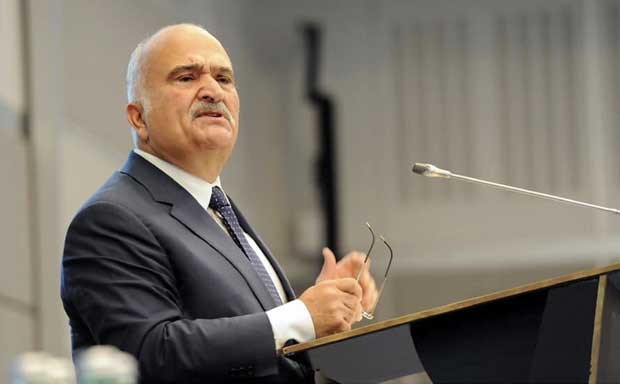
HRH Prince El Hassan bin Talal

AMMAN, Jordan, Mar 26 2020 (IPS) – Humankind has outlived multiple pandemics in the course of world history. The kingdoms and states of Central and Western Europe abolished the institution of serfdom once it had become clear that medieval rule in the aftermath of devastating pestilence would founder without ending the dependency and servitude that characterized the Dark Ages. The vulnerability of entire nations to the risk of total collapse in the absence of widespread access to the most basic healthcare in the Spanish Flu spurred governments to build the public health systems that have made the progress and development of the last hundred years possible. If the past is prologue, then continuity and survival command that we change.


We have more often than not banded together in the face of all kinds of threats. In all its ramifications, COVID-19 threatens to push our social, political and economic structures to the brink. Disease, recession and fright can rapidly overwhelm states and societies. Each coming day will bring increasing challenges that can only be met by caring for the sick, minimizing the impact of shutdowns on lives and livelihoods, securing the delivery of adequate water, food and energy supplies, and racing for a cure. Success – as in an asymmetric conflict – rests on resilience. To contain the socio-political and socio-economic fallout from the crisis, policymaking efforts should center on human dignity and welfare as the bedrock of national and international security.

The most vulnerable members of society in some parts of our world are those on the front lines of the crisis: the doctors, nurses, care-givers, pharmacists, sanitation workers, farmers, supermarket cashiers and truck drivers whose courage, sacrifice and dedication will see us through the next 12 to 18 months of expected lockdowns. In the absence of state support, what will happen to the hundreds of thousands of people who have already been laid off, while millions more face looming hardship as the numbers of layoffs grow? Some will continue to ignore the vulnerable and marginalized, those who have least access to humanitarian assistance, while others will continue to exploit them. The calls for social distancing have grown louder and more frequent over the last couple of days, and as we begin to separate from one other we must remember our humanitarian duty to each another.

Security, far from being individual, is collective and global. The current crisis calls for transcendent thinking between politicians on both sides of the aisle. Grey areas in politics in which zero-sum games and the perverse logic of mutually assured destruction proliferate will not protect and promote human dignity and welfare. Conservatives and reformers must now move beyond the tournaments and arm-twisting of politics. The logic of mutually assured survival cannot accept grey areas. If conflict resolution transcends political beliefs, nationality, ethnicity, gender, and religion, then human dignity and welfare is the benchmark of the humanitarian commitment to life.

Reliable brokers in the management of this crisis and other crises do exist as in the International Committee of the Red Cross and Médecins Sans Frontières. Corporate social responsibility requires developing a public platform of health facts so that people-to-people conversations and consultations can be promoted through civil society, the media and educational institutions. We cannot cherry-pick energy and climate change without talking about health or education and human dignity. Migrants and refugees must be an integral part of the national response for halting the spread of the novel coronavirus. The United Nations Economic and Social Commission for West Asia reports that 55 million people, in West Asia region, require some sort of humanitarian assistance and that the vulnerability of displaced women and girls is especially heightened in a pandemic. Post-conflict insecurity – whether in countries ravaged by war or across the urban centers and countrysides of advanced economies overwhelmed by disease – can only be addressed in the careful terrain mapping of humanitarian access. Yemen, Syria, Gaza and Libya are frighteningly vulnerable to the onslaught of epidemics – what will peace uncover there when the wars end?

Regional insecurity is heightened in the absence of cooperation, but the multilateral system is not at a loss in facing an existential crisis. European solidarity has been sharply damaged by the onset of widespread disease although China is performing through the swift and effective action that has come to the aid of the people and government of Italy. Multilateralism today can only be revisited with a focus on the interdisciplinary priorities of the twenty-first century that include addressing the need for a Law of Peace. We draw humanitarian concessions from the law of war in times of conflict, but have no recourse to legal instruments that can secure the dignity and welfare of all in times of peace.

The current crisis is as much a global health crisis as it is a crisis of the globalization that has come to undermine the foundations of modern society with its rampant inequality and rising injustice and which threatens the very survival of our species with climate change. The planet that we share with other organisms is fragile and prone to crises. A resolution to our predicament will take nothing short of extending the ethic of human solidarity beyond the contours of our immediate response to the outbreak of COVID-19. Real success lies not in the taming of a pathogen or in re-discovering the value of compassion, respect and generosity, but in institutionalizing these values in the days, weeks and months ahead.

  Source

Why Empowering National Human Rights Institutions Helps on the Quest for Healthy Earth?

Asia-Pacific, Civil Society, Climate Change, Development & Aid, Education, Environment, Featured, Global, Headlines, Human Rights, Population

Claudia Ituarte-Lima, Stockholm University, Sweden and University of British Columbia, Canada

 
Claudia Ituarte-Lima is researcher on international environmental law at the Stockholm Resilience Centre, and affiliated senior researcher at the Raoul Wallenberg Institute of Human Rights and Humanitarian Law. She is currently a visiting researcher at the Institute for Resources, Environment and Sustainability, University of British Columbia. She holds a PhD from the University College London and a MPhil from the University of Cambridge.

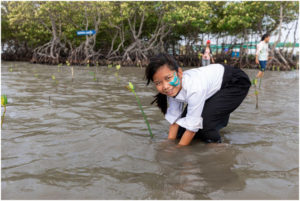
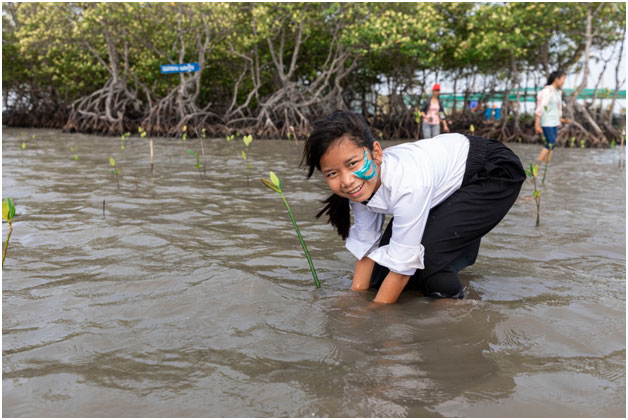
On March 2020, over 330 students, women champions, government officials, NGO members and community members from around Kampot and Kep gathered in an effort to plant 3,000 mangroves and conserve Cambodia’s coastline. The local activity took place as part of a larger mangrove planting and marine exhibition under Action Aid’s 100,000 Mangroves campaign, supported by the United Nations Development Programme (UNDP) under the project ‘Strengthening Climate Information and Early Warning Systems in Cambodia’. The campaign aims to plan 100,000 mangroves in eight community fisheries by May 2020, and raise awareness of the importance of marine ecosystems. Credit: ManuthButh/UNDP Cambodia

VANCOUVER, British Columbia, Canada, Mar 24 2020 (IPS) – We are living in a critical time. As we face existential environmental challenges from climate crises to the mass extinction of species, it is difficult sometimes to see solutions and new ideas. This is why we all need to celebrate and give visibility to creative and courageous efforts of people and organizations striving towards a healthy planet for all.


I write today about the key role played by National Human Rights Institutions (NHRIs) in the Global South in our collective fight against climate change. The time has come to empower NHRIs.

Their unique position mandated by law yet independent from the government can make an urgent needed bridge between legal and policy advances, and ground-up efforts such as youth and women movements, thereby contributing to the enjoyment of the right to a healthy environment.

I have recently had the chance of learning real-world success stories by brave NHRIs working in some of the most challenging contexts. While being a member of the facilitators’ team of a series of webinars* for technical staff and decision-makers working in NHRIs and prior face-to-face interaction with them, it became crystal clear that strengthening the skills and capacities of NHRIs can contribute positive outcomes for both human rights and the environment.

In Mongolia, for instance, the NHRI with the support of civil society organizations and environmental researchers has recently developed a draft law for safeguarding the rights of environmental defenders.

The NHRIs have also intervened in a variety of sectoral issues from pesticides and agriculture in Costa Rica, to mining in South Africa and the connections between coal mining and transportation in Mongolia. The Morocco NHRI has prompted other African NHRIs and civil society organizations to actively participate in international climate negotiations.

Business and human rights was a key issue raised by our NHRIs colleagues.

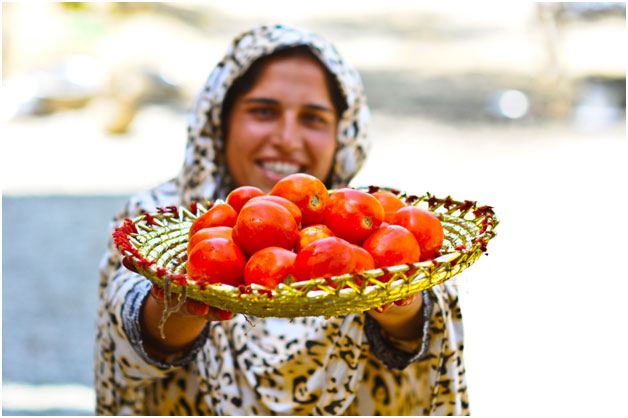
Nazia, 38, proudly shows off her home-grown tomatoes in Nadirabad village, Pakistan. She participated in kitchen gardening training offered under the joint UNDP-EU Refugee Affected and Host Areas (RAHA) Programme in Pakistan. Credit: UNDP Pakistan

The significant legal, institutional and financial obstacles that national duty bearers face to investigate transnational corporations and their responsibilities concerning their impacts to a safe climate has not proved insurmountable for NHRIs.

The Philippine’s NHRI has a mandate to promote human rights which, creatively interpreted, allowed it to investigate the climate change and human rights nexus beyond its national borders.

The systemic nature of climate change justified a national inquiry rather than a field visit. Because climate change is an existential issue not only to Filipino people but globally, the Philippines national inquiry on climate change turned into an inquiry with strong global dimensions.

It included public hearings in the Philippines, New York and London, virtual hearings and expert advice from the former UN Special Rapporteur on human rights and environment, academics from different parts of the world and the Asia-Pacific regional network of NHRIs.

A major comparative advantage presented by the NHRIs is their unique position in working hand in hand with right holders in addressing environmental – human rights gaps facing the most vulnerable populations.

Costa Rica NHRI has found, for instance, that women, girls, men and boys and elder living in coastal areas become especially vulnerable to climate change because their access to clean drinking water and fish become scarce.

The South African NHRI together with food sovereignty civil society organizations has developed a draft climate charter, to be presented to the parliament, with a more holistic approach to the current climate policy.

In recent years, the awareness of the linkages between human rights and climate change has greatly increased. The legal recognition of the right to a healthy environment in more than 150 countries, together with judicial decisions, and academic studies on the safe climate dimension of this right has grown rapidly. NHRIs can be instrumental in translating them into results and action, including under difficult circumstances.

Their role in advising duty bearers, working together with right-holders helps to understand and act upon systemic environmental challenges. Their synergies with environmental human rights defenders can also contribute to more effective investigation and advocacy, not least in the context of informal and unregulated business activities where it is especially difficult to collect data and hold businesses accountable.

Time has come for the international community to do more to support NHRIs in the Global South, a key player often overlooked in climate and biodiversity talks, debates and funding. Due to the intrinsic connections between human rights and environment, the NHRIs need to be further supported to perform their innovative roles in safeguarding life-support systems at various jurisdictional scales, including advocating for the global recognition of the right to a healthy environment by the United Nations.

* The series was organized by the Global Alliance for National Human Rights Institutions (GANHRI), UNDP, the UN Special Rapporteur on Human Rights and the Environment, the Swedish Environmental Protection Agency and UN Environment. A final report with key messages from the webinar series is available on the UNDP website.

  Source

Young People Bring Solar Energy to Schools in the Argentine Capital

Civil Society, Development & Aid, Editors’ Choice, Education, Energy, Environment, Featured, Headlines, Integration and Development Brazilian-style, Latin America & the Caribbean, Population, Projects, Regional Categories, Special Report, TerraViva United Nations

Energy

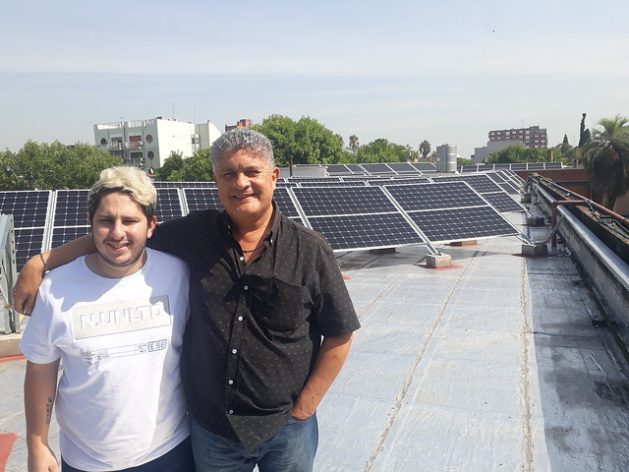
Sebastián Ieraci (L), a member of the group of students who in 2014 pushed for the switch to solar energy at the Antonio Devoto High School, stands next to the school's principal Marcelo Mazzeo on the rooftop of the educational institution located in the Buenos Aires neighbourhood of Villa Devoto. Credit: Daniel Gutman/IPS

Sebastián Ieraci (L), a member of the group of students who in 2014 pushed for the switch to solar energy at the Antonio Devoto High School, stands next to the school’s principal Marcelo Mazzeo on the rooftop of the educational institution located in the Buenos Aires neighbourhood of Villa Devoto. Credit: Daniel Gutman/IPS

BUENOS AIRES , Mar 19 2020 (IPS) – “The idea came to a group of schoolmates and me in 2014, but we never thought it could become a reality,” says Sebastián Ieraci, 23, as he points to a multitude of photovoltaic solar panels shining on the roof of the Antonio Devoto High School in the Argentine capital.


The secondary school is one of the first public centres in Buenos Aires that has managed, since last November, to cover 100 percent of its electricity needs from renewable energy generated in the building itself.

Although today only seven of the city’s public schools have solar panels, the authorities have identified another 140 school buildings with the conditions to generate solar energy, and the plan is to gradually equip all of them with solar panels.

But perhaps the most interesting aspect of this case is that it was the students’ own enthusiasm for clean energy and community involvement that allowed the school to be chosen for an experiment that is new to Buenos Aires.

“Now they come to see us from schools in different parts of the country, to see what we have done and to try to replicate it.” — Marcelo Mazzeo

Ieraci, who arrives in a hurry at his former school after his workday at a paint factory, was in his last year of high school in 2014, when law teachers suggested to him and his classmates that they come up with a project for the programme The Legislature and Schools.

The programme, carried out for over 20 years, invites final-year high school students to submit proposals to the Buenos Aires city legislature, in the areas of environment, public spaces, traffic and transport and security.

Once they do so, the students sit on the city legislature for an afternoon to discuss their proposals with students from other schools.

“We came up with the idea of installing solar panels because we knew that the school’s rooftop was not being used for anything and that doing so could be doubly beneficial, both environmentally and economically, since the school could generate its own energy,” says Ieraci during IPS’s visit to his former school.

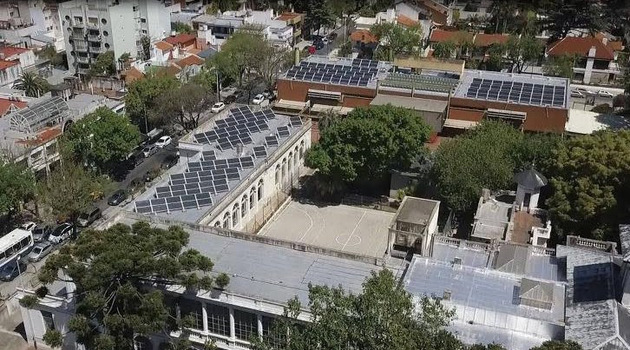
Aerial view of the rooftops of the primary and secondary schools located across from the main square in Villa Devoto, a residential neighborhood in the Argentine capital. The adjacent schools now have 200 solar panels with an installed capacity of 70 kilowatts, and the surplus is injected into the Buenos Aires electricity grid. Credit: Courtesy of Buenos Aires city government

Aerial view of the rooftops of the primary and secondary schools located across from the main square in Villa Devoto, a residential neighborhood in the Argentine capital. The adjacent schools now have 200 solar panels with an installed capacity of 70 kilowatts, and the surplus is injected into the Buenos Aires electricity grid. Credit: Courtesy of Buenos Aires city government

“Then we started looking for information, and after a month we presented the project. Back then it was a utopia and today seeing these panels makes me very proud, because this is a school that generates a sense of belonging,” he explains.

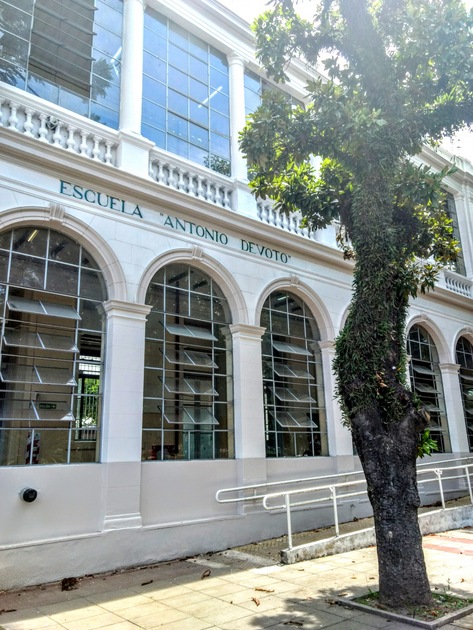
The school is located in a large two-storey building that preserves the style of the old manor house that Italian immigrant Antonio Devoto had built there at the beginning of the 20th century. Devoto is considered the founder of the middle-class residential neighbourhood that today bears his name.

The school is located across from the main square of Devoto, in an area with many old trees and few tall buildings, full of bars and restaurants, and bursting with vitality far from the centre of Buenos Aires.

The Devoto teenagers’ solar panel project was the winner among more than 70 initiatives that students presented in 2014 to the local legislature, and in 2016 the Buenos Aires city government launched it. The first step was to start feasibility studies in more than 600 school buildings.

But it was in 2017 that the school received the definitive push to move towards solar energy, when it once again presented the project in a competition, this time in BA Elige (Buenos Aires Chooses), a citizen participation programme in which the more than three million inhabitants of Buenos Aires proper vote on the projects they want to see carried out.

On that occasion, the residents of Devoto expressed their opinions online, supporting the installation of solar panels in the neighbourhood schools and thus enabling the authorities to allocate budget funds.

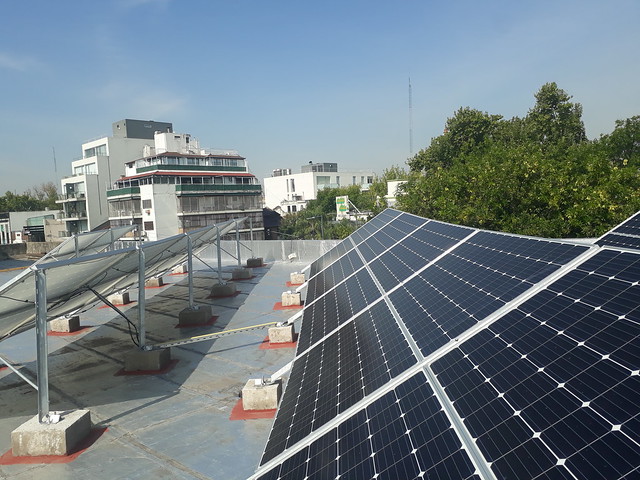
The installation of the solar panels began in August 2019 and took three months. Since November, 87 two-by-one meter solar panels have been in operation on the rooftop of the Antonio Devoto High School.

The primary school next door was soon incorporated into the programme, and since January 113 solar panels have been operating, bringing the total to 200 panels on the adjacent rooftops of the two schools that serve a combined total of 500 students.

Solar panels nearly cover the entire rooftop of the Antonio Devoto High School in Buenos Aires. Until last year the rooftop area was not put to any use. The idea of using that space to generate renewable energy came from students in their final year in 2014, who presented a project to the Buenos Aires city legislature. Credit: Daniel Gutman/IPS

Solar panels nearly cover the entire rooftop of the Antonio Devoto High School in Buenos Aires. Until last year the rooftop area was not put to any use. The idea of using that space to generate renewable energy came from students in their final year in 2014, who presented a project to the Buenos Aires city legislature. Credit: Daniel Gutman/IPS

“In secondary schools, the panels have 30 kilowatts (kW) of installed capacity, and in primary schools, 40. But the most interesting thing is that the primary school injects its surplus energy into the city’s electricity grid, generating credit with the power company,” engineer Andrés Valdivia, head of climate action in the city government’s Ministry of Education, told IPS.

The Ministry reports that the 140 school rooftops declared suitable for the installation of solar panels – because there are few high buildings surrounding them and they receive good solar radiation – have a combined surface area of 145,000 square meters and could have a total installed capacity of 13 megawatts (MW).

Renewable energies – basically, solar and wind – have experienced major growth in Argentina since a fund was created by law in September 2015 to finance the construction of facilities and to guarantee the purchase of the energy generated.

By late 2019, nearly eight percent of the electricity produced in the country came from renewable sources, up from just 2.2 percent in early 2016, according to official statistics.

However, that growth will not continue because the recession and the devaluation of the local currency in Argentina mean that almost no new projects will be launched, say industry analysts.

View of the front of the Antonio Devoto High School, which was built in an old manor house belonging to the Italian immigrant recognised as the founder of the Villa Devoto neighbourhood in Buenos Aires, the capital of Argentina. Credit: Courtesy of Marcelo Mazzeo

View of the front of the Antonio Devoto High School, which was built in an old manor house belonging to the Italian immigrant recognised as the founder of the Villa Devoto neighbourhood in Buenos Aires, the capital of Argentina. Credit: Courtesy of Marcelo Mazzeo

“Ours is not a technical school; we have an orientation in economics and administration. But the kids’ interest in the energy transition surprised us and led us to gather a lot of information together about the subject,” said Marcelo Mazzeo, the principal of the Antonio Devoto High School.

“Now they come to see us from schools in different parts of the country, to see what we have done and to try to replicate it,” he told IPS.

Félix Aban, one of the law teachers who worked with the students on the project and is now the school’s vice-principal, said that “one of the most interesting things was that in 2014 the kids suggested that the surplus energy generated by their schools could be injected into the power grid, when that possibility was not even being discussed in Argentina.”

In fact, the law on distributed (or decentralised) energy was not approved by Congress until 2017, under the official name “Regime to foment distributed renewable energy generation integrated into the public electricity grid”.

“They investigated and found that in other countries individual generators fed power into the grid. So we can say that the kids at this school were really ahead of the game,” said Aban.

  Source