UNITED NATIONS, Jul 3 2019 (IPS) – How effective is the global war on drugs?
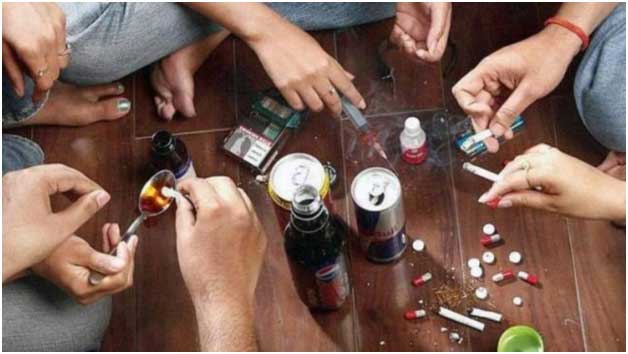
The latest statistics released by the UN Office on Drugs and Crime (UNODC) are staggering: 35 million people across the globe currently have a substance use disorder, and as of 2017, 585,000 people have died worldwide as a result of drug use.
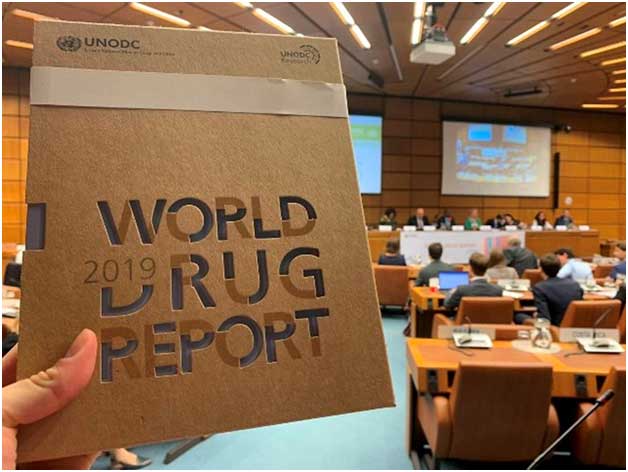
According to a recently-released UNODC report, the lack of proficient drug treatment and facilities for those that need it is impacting mortality rates at alarming levels.
Hence, it stands to reason that treatment and prevention are immensely falling short of the mark on a global scale.
Prisons are also no exception to these shortcomings. In fact, the Report unmasked that those incarcerated for drugs are more likely to continue being exposed to drugs.
The Report also highlighted that out of the 149 countries that were surveyed, about 1 in 3 people reported that they consumed drugs in prison at least once while incarcerated, and 1 in 5 people who are currently incarcerated reported that they have used drugs within the past month.
“In terms of data, we did some data collection, always trying to get as much as possible, in terms of socio-economic characteristics, we would have this type of data, I imagine, and this is also something that will run throughout the new report, and is being discussed now.” Chloé Carpentier, Chief of the Drug Research Section told IPS.
The issue between drugs and human rights is on Secretary General António Guterres’ radar as well.
“Together, we must honour the unanimous commitments made to reduce drug abuse, illicit trafficking and the harm that drugs cause, and to ensure that our approach promotes equality, human rights, sustainable development, and greater peace and security.” Secretary General António Guterres stated on the International Day Against Drug Use and Illicit Trafficking.
“We will make sure that no one with a drug problem is left behind” Dr. Miwa Kato assured, during the official launch of the Report on June 26.
Dr. Kato continued to push this message throughout her speech and cited that “Health and justice need to work hand in hand.”
Beyond the UN, this is a topic of interest for the academia world as well, since young people are heavily susceptible to a substance use disorder.
“It is important that we say people— not user or addicts, that language itself is stigmatizing.” Dr. Danielle Ompad, Associate Professor, College of Global Public Health and Deputy Director, Center for Drug Use and HIV Research at New York University (NYU) told IPS.
Dr. Ompad highlighted the importance of person-first language, citing that “It is important how we refer to people, and view them as humans, and not just the behavior (the substance use).
In terms of the World Drug Report, she noted that “The war on drugs, if you look at it, hasn’t really been an effective war”, and elaborated that the focus should not be supply- side intervention, because in the long run, drugs are going to be produced and sold no matter what, which leads to mass incarceration, which doesn’t benefit any party.
It is also important to recognize that “not everyone needs treatment, and those that do should absolutely have access to it. But just because you use marijuana does not mean you are an addict”.
She went on to suggest a harm- reduction approach. The harm-reduction approach blends a plethora of strategies from safer use to managed use to abstinence- it meets the need of the person.
Meanwhile, tracing back to the issue of treatment, the Report affirmed that over 80% of the world’s population lack access to adequate treatment with only 1 out of 7 people with a substance use disorder receiving treatment each year.
The Report showcased that women cited a strong sense of fear that kept them from seeking the help that they needed for a variety of reasons that ranged from possible legal issues to the lack of childcare while in treatment.
Another issue is several countries, particularly in Asia, is the death penalty for any person found guilty of a drug ‘offense.’
Last month, Sri Lanka’s President, Maithripala Sirisena signed death warrants for four convicts- thus pushing the notion that those who have a substance use disorder are ‘dirty’ and should be disposed of.
Similarly, in a 2014 study conducted by Johns Hopkins Bloomberg School of Public Health, it was shown that having a substance use disorder was viewed more negatively than mental illness. Ironically, however, the two are all but intertwined.
This is also evidenced by the Report- about half of the world’s population that develop a mental disorder will also experience a substance use disorder in their lifetime.
However, it is to be noted, that despite all of the above, the Report only cited the “lack of effective treatment interventions based on scientific evidence and in line with human rights obligations.” but made no further elaborations on the what’s and how’s and was only discussed briefly at the official Report launch.
That said, the issue of ensuring those that do have a substance use disorder are provided for while figuring out more beneficial and healthier initiatives to reduce drug rates across the globe are currently being discussed among the United Nations (UN) and United Nations Office on Drugs and Crime (UNODC).
Dr. Ompad said for better or worse, licit, and illicit drug use is part of our world.
“Focus a little bit more on harm reduction,” Dr. Ompad stated, and above all “We need to stop the war on the people who use drugs,” she declared.
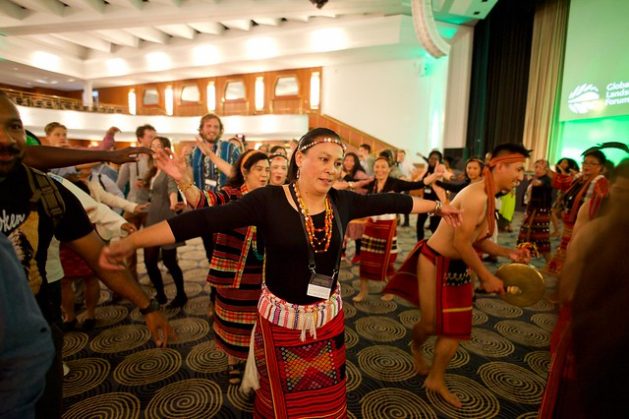
The Global Landscapes Forum (GLF) was held in Bonn, Germany and focused on how to give land rights the visibility needed to showcase that a rights approach, particularly when it comes to indigenous people, is a solution to the climate change crisis. Courtesy: Pilar Valbuena/GLF
Jun 29 2019 (IPS) – The Global Landscapes Forum (GLF) was held in Bonn, Germany to rally behind a new approach to achieving a future that is more inclusive and sustainable than the present – through the establishment of secure and proper rights for all.
On Jun. 22 and 23, experts, political leaders, NGOs and indigenous peoples and communities gathered to deliberate on a methodology that emphasises rights for indigenous peoples and local communities in the management and perseveration of landscapes. The forum took place alongside the United Nations Framework Convention on Climate Change Bonn Climate Change Conference.
The forum focused giving land rights the visibility needed to showcase that a rights approach is a solution to the climate change crisis, and to develop a ‘gold standard’ for rights.
Indigenous peoples, local communities, women and youth, are believed to be the world’s most important environmental stewards but they are also among the most threatened and criminalised groups with little access to rights.
“We’re defending the world, for every single one of us,” said Geovaldis Gonzalez Jimenez, an indigenous peasant leader from Montes de María, Colombia.
But industries such as fossil fuels, large-scale agriculture, mining and others are not only endangering landscapes but also the lives of the people therein.
Already this year, said Gonzalez, his region witnessed 135 murders, adding that the day before the start of the GLF a local leader was killed in front of a 9-year-old boy.
It is for this reason that amid the urgency to meet Sustainable Development Goals (SDGs) under pressure from the climate threat, dialogues about the global future have begun to wake up to the fact that indigenous peoples’ relationships with the natural world are not only crucial to preserve for their own sakes, but for everyone’s.
Wider discussions and workshops over the two days served as a consultation on the draft (which is expected to be finalised by the end of the year) as a concrete guide for organisations, institutions, governments and the private sector on how to apply different principles of rights. This includes the rights to free, prior and informed consent; gender equality; respect to cultural heritage; and education.
U.N. Special Rapporteur on the Rights of Indigenous Peoples Vicky Tauli-Corpuz said lands managed by indigenous peoples with secure rights have lower deforestation rates, higher biodiversity levels and higher carbon storage than lands in government-protected areas.
But Diel Mochire Mwenge, who leads the Initiative Programme for the Development of the Pygme in the Democratic Republic of Congo (DRC), one of the largest indigenous forest communities in Central Africa, said he has witnessed more than one million people being evicted from the national parkland where they have long lived. He explained that they had not been given benefits from the ecotourism industries brought in to replace them and were left struggling to find new income sources.
“Our identity is being threatened, and we need to avoid being completely eradicated,” said Mwenge.
In Jharkhand, India, activist Gladson Dungdung, whose parents were murdered in 1990 for attending a court case over a local land dispute, said an amendment to India’s Forest Rights Act currently being reviewed by the Supreme Court could see 7.5 million indigenous peoples evicted from their native forest landscapes. The act can impact a further 90 million people who depend on these forests’ resources for their survival, he said.
The amendment, Dungdung said, would also give absolute power to the national forest guard; if a guard were to see someone using the forest for hunting or timber collection, they could legally shoot the person on-sight.
“Indigenous peoples are right on the frontline of the very real and dangerous fight for the world’s forests,” said actor and indigenous rights activist Alec Baldwin in a video address.
“Granted that indigenous peoples are the superheroes of the environmental movement,” Jennifer Morris, president of Conservation International wondered why they are not heard until they become victims. “Why do we not hear about these leaders until they’ve become martyrs for this cause?”
The examples of intimidation, criminalisation, eviction and hardship shared throughout the first day clearly showcased what indigenous peoples and local communities go through to preserve the forests or ‘lungs of the earth’.
The rights approach, according to conveners of the GLF, aims to strengthen respect, recognition and protection of the rights of indigenous peoples and local communities as stewards and bearers of solutions to landscape restoration, conservation, and sustainable use. It also aims to end persecution of land and environment defenders; build partnerships to enhance engagement and support for rights-based approaches to sustainable landscapes across scales and sectors; and, scale up efforts to legally recognise and secure collective land and resource rights across landscapes.
“By implementing a gold standard, we can both uphold and protect human rights and develop conservation, restoration and sustainable development initiatives that embrace the key role Indigenous peoples and local communities are already playing to protect our planet,” said Joan Carling, co-convener of IPMG.
IPMG recognises that indigenous and local communities are bearers of rights and solutions to common challenges.
“This will enable the partnership that we need to pave the way for a more sustainable, equitable and just future,” added Carling.
And the Center for International Forestry Research (CIFOR) Director General, Robert Nasi, said when rights of local communities and indigenous peoples are recognised, there are significant benefits for the fight against climate change and environmental degradation.
“Whoever controls the rights over these landscapes has a very important part to play in fighting climate change,” he said.
In the climate and development arenas, the most current alarm being sounded is for rights–securing the land rights and freedoms of indigenous peoples, local communities and the marginalised members therein.
How can these custodians of a quarter of the world’s terrestrial surface be expected to care for their traditional lands if the lands don’t, in fact, belong to them? Or, worse, if they’re criminalised and endangered for doing so?
The basic principles of a ‘gold standard’ already exist, such as free, prior and informed consent, according to Alain Frechette of the Rights and Resources Initiative (RRI). What has been lacking, he said, is the application of principles that could be boosted by high-level statements that could “spur a race to the top”.
UNITED NATIONS, Jun 26 2019 (IPS) – The feeling in the air at a recent meeting of the United Nations Office on Drugs and Crime (UNODC) was one of compassion and benevolence.
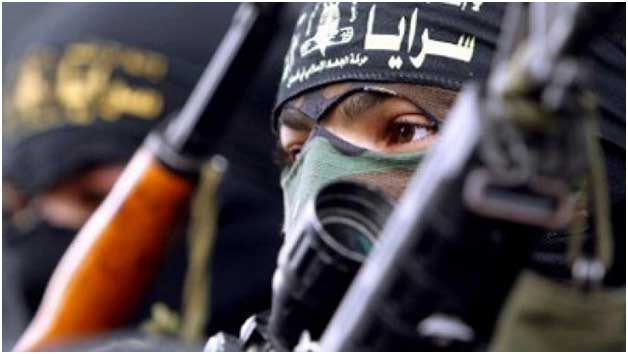
The focus was on children as Foreign Terrorist Fighters (FTFs), a subject that everyone at the panel discussion argued is delicate and politically sensitive.
Alexandra Martins, the Crime Prevention and Criminal Justice Officer at the UNODC, pointed out that “”Nobody is a lost cause, and there is always a possibility to rehabilitate and reintegrate children from these groups.”
Two of her words were repeated by almost every speaker: “rehabilitate and reintegrate”.
The meeting was meant to discuss the release of the UNODC Handbook on Children Recruited and Exploited by Terrorist and Violent Extremist Groups.
The roadmap’s main goal is to provide UN’s 193 Member States with guidance on how to treat children associated with terrorist and violent extremist groups. It argues for an approach to rehabilitate those associated with or accused of being FTFs, and to reintegrate them back into their communities.
Though many of the children accused have taken part in terrorism, the UNODC advocates for a change in the way Member States handle the children.
Speaking during the release of the handbook, Dr. Jehangir Khan, Director at the UN Office of Counter-Terrorism/Counter Terrorism Centre (UN OCT/CCT), said “children must be seen first and foremost as victims.”
The roadmap was released alongside 4 technical assistance tools: UNODC Handbook on Children Recruited and Exploited by Terrorist and Violent Extremist Groups: The Role of the Justice System (2018); the UNODC Training Manual on Prevention of Child Recruitment by Terrorist and Violent Extremist Groups (May 2019); the UNODC Training Manual on Rehabilitation and Reintegration of Child Victims of Recruitment by Terrorist and Violent Extremist Groups (to be released in July 2019); the UNODC Training Manual on Justice for Children in the Context of Counter-Terrorism (May 2019).
The documents are based on three years of technical assistance work conducted by the UNODC to Member States that have found children as FTFs.
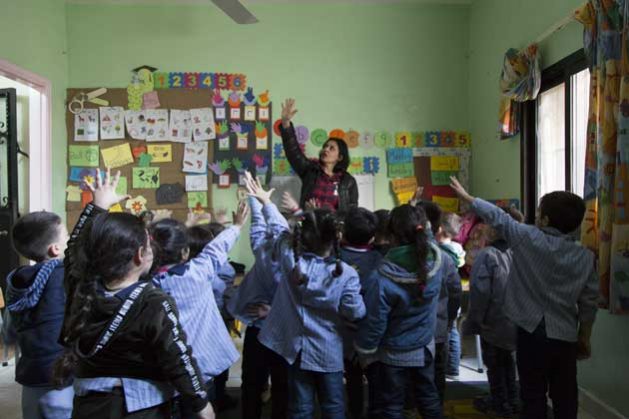
One country already advocating its support for the Roadmap is Lebanon. Until 2013, children accused of being or associated with terrorist fighters were kept in adult prisons and tried as such.
“It is in prison that I learned the meaning of life” one of the boys, aged 19, remarked in a video played by the representative from Lebanon stated.
A step in the direction of treating children as victims came in 2013, when they were moved to a juvenile prison.
Lebanon’s Head of the Prison Administration at the Ministry of Justice of Lebanon, Judge Raja AbiNader, said: “By showing them the same respect we showed the rest of the children, things started to change.”
Martins told IPS that there are many such countries, like Lebanon, whose children and communities have already benefited from the guidance offered in the Roadmap.
“As a result of the protocol, children deprived of liberty for association with Boko Haram were released and transferred to child protection authorities to begin a process of reintegration in their communities,” she said.
Martins stated that more than 30 countries have received guidance on child FTFs from the UNODC’s, from 6 different regions (West Africa, East Africa, Middle East and North Africa, South Asia, Southeast Asia and Central Asia).
Despite the Roadmap offering guidance, at the panel discussion, Martins clarified that “there is no one size fits all approach” on handling children.
There have been different approaches offered on handling the children in general, and specifically when dealing with different genders.
There will be a second event during the United Nations General Assembly (UNGA) in September that Martins hopes will “promote the guidance further.”
Gender and the Roadmap
But there appears to be some disagreement still on the treatment of boys and girls during the rehabilitation and reintegration processes.
Under international law (Havana Rule 87.d., Bangkok Rules), boys and girls must be held in separate detention facilities. But the Roadmap encourages them to still engage together, to foster development.
The Roadmap also advocates for targeted approaches on the treatment of girls.
Martins told IPS that girls are “considerably more vulnerable to both physical and sexual abuse and require special attention in this regard.”
She noted that “girls deprived of liberty are exposed to other forms of sexual violence such as threats of rape, touching, ‘virginity testing’, being stripped naked, invasive body searches, insults and humiliations of a sexual nature.”
Given these sensitive issues, and the fact that girls are different physiologically and often psychologically from boys at certain development stages, the Roadmap advocates for an awareness of gender and for specific targeted approaches.
“A section in the manual alludes that girl victims of recruitment and exploitation by terrorist and violent extremist groups require specific approaches to reintegration, because of their increased exposure to violence at multiple levels and from different actors,” Martins said.
But it is not clear yet that this section on gender differences has been implemented.
While Martins says the Roadmap takes seriously the different approaches for girls and boys, Judge AbiNader told IPS that in Lebanon “Very honestly, we’re not working specifically with girls concerning rehabilitation.”
As of June 7th, Lebanon has 10 boys and 2 girls in prison for being associated with or accused of being FTFs.
When asked why there were not specific programs that tackle children of divergent genders differently, he argued that they girls “should be treated the same” during rehabilitation.
“And it hasn’t been discussed because the number [of girls in prison for accusations of being FTFs] is so low,” he added.
Despite the low numbers of accused girls in detention facilities, Martins believes that targeted women’s health education should be provided, and that “Access to age- and gender-specific programmes and services, such as counselling for sexual abuse or violence, has to be given to girls.”
Though the UNODC has advocated a change in outlook on children involved with terrorist organizations, the Roadmap’s release is just the beginning of that change being implemented.
On all continents you have the issue of land degradation, and it requires governments, land users and all different communities in a country to be part of the solution. Credit: Albert Oppong-Ansah /IPS
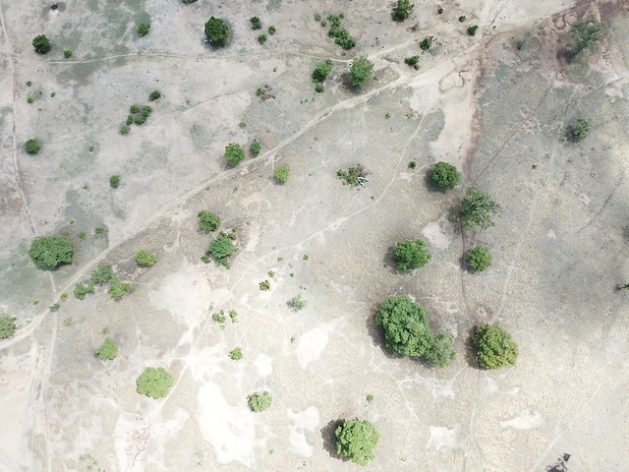
ANKARA, Jun 17 2019 (IPS) – The coming decades will be crucial in shaping and implementing a transformative land agenda, according to a scientist at the United Nations Convention to Combat Desertification (UNCCD) framework for Land Degradation Neutrality (LDN).
UNCCD-Science Policy Interface co-chair Dr. Mariam Akhtar-Schuster, who spoke with IPS ahead of the start of activities to mark World Day to Combat Desertification (WDCD) on Monday, Jun. 17, said this was one of the key messages emerging for policy- and other decision-makers.
“The main message is: things are not improving. The issue of desertification is becoming clearer to different communities, but we now have to start implementing the knowledge that we already have to combat desertification,” Akhtar-Schuster told IPS.
“It’s not only technology that we have to implement, it is the policy level that has to develop a governance structure which supports sustainable land management practices.”
IPBES Science and Policy for People and Nature found that the biosphere and atmosphere, upon which humanity as a whole depends, have been deeply reconfigured by people.
The report shows that 75 percent of the land area is very significantly altered, 66 percent of the ocean area is experiencing increasing cumulative impacts, and 85 percent of the wetland area has been lost.
“There are of course areas which are harder hit; these are areas which are experiencing extreme drought which makes it even more difficult to sustainably use land resources,” Akhtar-Schuster said.
“On all continents you have the issue of land degradation, so there’s no continent, there’s no country which can just lean back and say this is not our issue. Everybody has to do something.”
Akhtar-Schuster said there is sufficient knowledge out there which already can support evidence-based implementation of technology so that at least land degradation does not continue.
While the information is available, Akhtar-Schuster said it requires governments, land users and all different communities in a country to be part of the solution.
“There is no top-down approach. You need the people on the ground, you need the people who generate knowledge and you need the policy makers to implement that knowledge. You need everybody,” the UNCCD-SPI co-chair said.
“Nobody in a community, in a social environment, can say this has nothing to do with me. We are all consumers of products which are generated from land. So, we in our daily lives – the way we eat, the way we dress ourselves – whatever we do has something to do with land, and we can take decisions which are more friendly to land than what we’re doing at the moment.”
UNCCD-Science Policy Interface co-chair Dr. Mariam Akhtar-Schuster says things are not improving and that the issue of desertification is becoming clearer to different communities. Credit: Desmond Brown/IPS
UNCCD Lead Scientist Dr. Barron Joseph Orr said it’s important to note that while the four major assessments were all done for different reasons, using different methodologies, they are all converging on very similar messages.
He said while in the past land degradation was seen as a problem in a place where there is overgrazing or poor management practices on agricultural lands, the reality is, that’s not influencing the change in land.
“What’s very different from the past is the rate of land transformation. The pace of that change is considerable, both in terms of conversion to farm land and conversion to built-up areas,” Orr told IPS.
“We’ve got a situation where 75 percent of the land surface of the earth has been transformed, and the demand for food is only going to go up between now and 2050 with the population growth expected to increase one to two billion people.”
That’s a significant jump. Our demand for energy that’s drawn from land, bio energy, or the need for land for solar and wind energy is only going to increase but these studies are making it clear that we are not optimising our use,” Orr added.
Like Akhtar-Schuster, Orr said it’s now public knowledge what tools are necessary to sustainably manage agricultural land, and to restore or rehabilitate land that has been degraded.
“We need better incentives for our farmers and ranchers to do the right thing on the landscape, we have to have stronger safeguards for tenures so that future generations can continue that stewardship of the land,” he added.
The international community adopted the Convention to Combat Desertification in Paris on Jun. 17, 1994.
At the same time, they will look at the broad picture of the next 25 years where they will achieve land degradation neutrality.
The anniversary campaign runs under the slogan “Let’s grow the future together,” with the global observance of WDCD and the 25th anniversary of the Convention on Jun. 17, hosted by the government of Turkey.
AMMAN, May 29 2019 (IPS) – On the eve of the Women Deliver conference in Vancouver June 3-6, Princess Sarah Zeid of Jordan interviewed Dr. Olfat Mahmoud, a Palestinian refugee and women’s rights advocate.
Princess Sarah spoke with Dr. Olfat about what the humanitarian system would look like if organizations like hers could help shape it, and the messages she hopes to bring to Women Deliver.
Excerpts from the interview:
Princess Sarah: Tell me a little about yourself. What drew you to your work and why does it matter?
Dr. Olfat: I was born a Palestinian refugee, so witnessed injustice all my life. Yet what defines me is not that I grew up in a refugee camp in Lebanon, or that I spent most of my life in a war zone, but that I am a nurse and advocate in my community.
Even amid crisis, my parents were open-minded and encouraged me to be independent, so that is exactly what I set out to do. I studied and practiced nursing during the Lebanese civil war, and through that work witnessed the overlooked hardships faced by refugee women and children.
As a medical practitioner, I saw how essential services for girls and women of all ages – such as psychosocial support and sexual and reproductive health care– were chronically overlooked. And as an advocate in my community, I found that supporting women empowered me as well.
I established the Palestinian Women’s Humanitarian Organization (PWHO) to fill these gaps and fulfill the needs of refugee girls and women so they can lead better futures. Not a single international organization stepped up to do this important work – so I knew that change had to come from those of us within the community.
Princess Sarah: What are the main challenges girls and women face in your community? What makes women-focused civil society organizations (CSOs) like yours most well-equipped to respond to these challenges?
Dr. Olfat: For girls and women, life in refugee settings require superhuman strength. We are particularly vulnerable when it comes to access to essential health services, information, and education, and disproportionately suffer from gender-based violence.
Women-focused civil society organizations are most well-equipped to respond to these challenges because women are the best experts on our lives. Our lived experiences make us better advocates for ourselves and for others in similar situations. For example, the PWHO women’s centers – staffed by refugee women themselves– have gained unparalleled trust from the community, and become a second home for many.
With that trust, we can more easily identify what women want and need – like access to non-discriminatory health services, psychosocial support, rights-based education, and leadership skills – and design programs that are tailored for them. We can also negotiate with local leaders to push for a more supportive environment for women’s rights – a key ingredient to driving lasting change in conservative contexts.
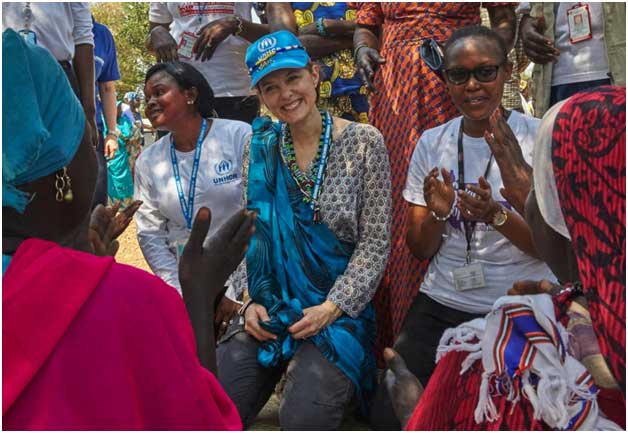
UNHCR Patron, HRH Sarah Zeid of Jordan, meets with a women’s group at Doro refugee camp in South Sudan. Credit: UNHCR/Jan Møller Hansen
Princess Sarah: What could the international community – including donors, decision-makers, and practitioners – do more or less of to maximize sustainable positive impact for the populations you serve?
Dr. Olfat: The international community wields a lot of power – especially the power of money and the power of influence. To drive real change in my community, international actors must use those powers more efficiently.
First, there is a critical need to fill funding gaps for programs that are specifically designed for refugee girls and women. With more girls and women displaced today than ever before in global history, their needs are rising – yet funding for them is decreasing.
We need smarter investments in programs that enable refugee girls and women to lead better futures, including through education and quality vocational and life skills training, as well as access to sexual and reproductive health care.
Yet money alone is not enough. The international community must also use their influence to challenge national and regional political barriers that hold us back.
This includes respecting and upholding international agreements, including UN resolutions, which support and protect refugees. It also means addressing legal restrictions that keep refugee women from working, obtaining formal education, and exercising other basic human rights in their host countries.
Princess Sarah: Currently only 3% of humanitarian aid goes to local and national organizations – and even less to those focused on girls and women. What types of concrete investments does your organization need to extend your impact and plan for the future?
Dr. Olfat: Right now, the needs we see are greater than the resources we have. To meet those needs, we don’t just need more funding – but more of the right kinds of funding.
Too often, grants and funding opportunities for women-focused CSOs are designed without consulting us on the types of investments we know girls and women in our communities need the most.
Other times, we aren’t able to access grants because of unrealistic reporting requirements that are either unsuitable or unmanageable for a small grassroots organization like ours.
For example, many grants for vocational programs in Lebanon require organizations to report success by the number of jobs their beneficiaries gain as a result – which isn’t possible in a context where refugees aren’t legally allowed to work. To support women-focused CSOs and the communities they serve, we must be more meaningfully engaged in setting investment agendas at the start.
We also need access to more flexible and sustainable funding opportunities, including core funding. It’s impossible to plan for the future when we rely on six- to twelve- month grants. We’re committed to supporting refugee girls and women in our community for as long as we’re needed – but require the right resources to fulfill that goal.
Princess Sarah: You have also been advocating for the international community to more meaningfully engage women-focused CSOs in humanitarian decision-making. In your view, what concrete steps can the international community take to put more power and influence in the hands of women-focused CSOs like yours, and why should this be an urgent priority?
Dr. Olfat: Women-focused CSOs must be heard in humanitarian policy meetings to ensure decisions reflect realities on the ground. This requires inviting us to important discussions held in New York and Geneva, but it also means making sure we can get there through travel and logistics support. And when we are there, it means carving out spaces for us to safely and honestly share the solutions we need with the assurance that we will be heard.
The alternative – excluding refugee women from decisions that affect their work and lives – isn’t acceptable and isn’t working. When we are engaged, we make humanitarian policy and practice stronger and more effective.
Princess Sarah: What do you hope to achieve at the Women Deliver Conference in Vancouver, Canada? What advocacy asks do you hope to bring forward at this meeting?
I hope to raise awareness to the needs of Palestinian refugee girls and women in Lebanon, to ensure that they are not forgotten. And I want to highlight solutions women-focused CSOs like PWHO need – money, influence, and power – to push for the change I’ve wanted to see all my life.
At the same time, I hope to learn from other advocates around the world, and build networks so we can collectively push for a humanitarian system that puts girls and women at the center. Solidarity is our strength and our power – and we need to be stronger together to achieve a better world for all of us.
CHRIS WELLISZ is on the staff of Finance & Development published by the International Monetary Fund*
Credit: IMF
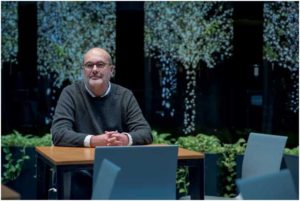
WASHINGTON DC, May 24 2019 (IPS) – As a child growing up in Communist Yugoslavia, Branko Milanovic witnessed the protests of 1968, when students occupied the campus of the University of Belgrade and hoisted banners reading “Down with the Red bourgeoisie!”
Milanovic, who now teaches economics at the City University of New York, recalls wondering whether his own family belonged to that maligned group. His father was a government official, and unlike many Yugoslav kids at the time, Milanovic had his very own bedroom—a sign of privilege in a nominally classless society. Mostly he remembers a sense of excitement as he and his friends loitered around the edge of the campus that summer, watching the students sporting red Karl Marx badges.
“I think that the social and political aspects of the protests became clearer to me later,” Milanovic says in an interview. Even so, “1968 was, in many ways, a watershed year” in an intellectual journey that has seen him emerge as a leading scholar of inequality. Decades before it became a fashion in economics, inequality would be the subject of his doctoral dissertation at the University of Belgrade.
Today, Milanovic is best known for a breakthrough study of global income inequality from 1988 to 2008, roughly spanning the period from the fall of the Berlin Wall—which spelled the beginning of the end of Communism in Europe—to the global financial crisis.
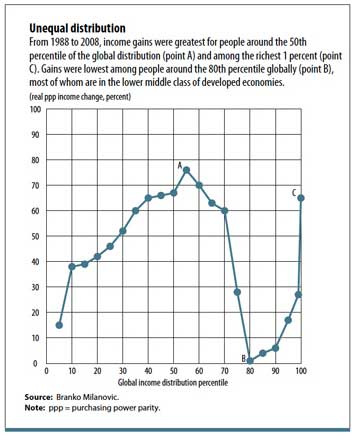
The 2013 article, co-written with Christoph Lakner, delineated what became known as the “elephant curve” because of its shape (see chart). It shows that over the 20 years that Milanovic calls the period of “high globalization,” huge increases in wealth were unevenly distributed across the world.
The middle classes in developing economies—mainly in Asia—enjoyed a dramatic increase in incomes. So did the top 1 percent of earners worldwide, or the “global plutocrats.”
Meanwhile, the lower middle classes in advanced economies saw their earnings stagnate.
The elephant curve’s power lies in its simplicity. It elegantly summarizes the source of so much middle-class discontent in advanced economies, discontent that has turbocharged the careers of populists from both extremes of the political spectrum and spurred calls for trade barriers and limits on immigration.
“Branko had a deep influence on global inequality research, particularly with his findings on the elephant curve, which has set the tone for future research,” says Thomas Piketty, author of the bestselling Capital in the Twenty-First Century.
Piketty and his collaborators confirmed the findings in a 2018 study, which found that the top 1 percent globally captured twice as much of total growth as the bottom 50 percent from 1980 to 2016.
Milanovic’s findings “appear to be even more spectacular than what was initially suggested,” Piketty says. “The elephant looks more like a mammoth.”
Economists long disdained the study of inequality. Many lived in a theoretical world populated by a mythical figure known as homo economicus, or rational man, whose only attribute was a drive to maximize his well-being. Differences among people, or groups, were irrelevant. Variety was irrelevant. Only averages mattered.
In this world of identical rational actors, the forces of supply and demand worked their magic to determine prices and quantities of goods, capital, and labor in a way that maximized welfare for society as a whole. The distribution of wealth or income didn’t fit into the picture. It was simply a by-product of market forces.
“The market solves everything,” Milanovic says. “So the topic really was not—still is not—totally mainstream.”
Then came the global financial crisis of 2008, and with it “the rise of the realization that the top 1 percent or the top 5 percent have really vastly outstripped, in income growth, the middle class,” he says.
The study of inequality also got a boost from the explosion of data that can be mined with evermore powerful computers, making it easier to divide the anonymous masses of consumers and workers into groups with common characteristics. Big data, he says, “enables the study of heterogeneity, and inequality is by definition heterogenous.”
Data has always been one of Milanovic’s passions, alongside his interest in social classes, which flourished during his high school years in Brussels, where his economist father was posted as Yugoslav envoy to the then–European Economic Community.
“High school in Belgium—and I think it was the same in France—was very Marxist,” he says.
His classmates were divided between leftist kids, influenced by the student movements of the late 1960s and early 1970s, and “bourgeois” kids. As the privileged son of a diplomat representing an ostensibly workers’ government, young Branko didn’t quite fit either category. “It was a very peculiar situation,” he says.
At university in Belgrade, Milanovic initially leaned toward philosophy but decided economics would be more practical. It also offered a way to combine his interests in statistics and social classes.
Graduate studies led to a fellowship at Florida State University in Tallahassee, where he was impressed by American abundance—huge portions of inexpensive food, free refills of coffee, big cars—alongside stark income inequality and racial discrimination.
Two years later, he was back in Belgrade to work on his doctoral dissertation on inequality in Yugoslavia, mining rare household survey data supplied by a friend who worked in the federal statistical office.
While his dissertation raised eyebrows in Marxist Yugoslavia—along with his decision to avoid joining the Communist Party—it launched a two-decade career at the World Bank’s Research Department.
“Branko was really one of the leading experts, even at that time, on income distribution,” says Alan Gelb, who hired Milanovic to join a small team studying the transition to market economies in post-Communist eastern Europe. Milanovic focused on issues of poverty and income distribution.
The wealth of data the World Bank collects was a priceless resource, and it inspired Milanovic to carry out cross-country comparisons of inequality, which were a novelty. One day in 1995, Milanovic was talking with Gelb’s successor as the head of his unit.
“I suddenly had this idea: ‘Look, we have all this data from around the world. We study individual countries, but we never put them together.’ ” Four years later, he published the first study of global income distribution based on household surveys.
In the years that followed, Milanovic published widely and profusely. Alongside his work on post-Communist economies, he continued to explore inequality and its link with globalization. His articles and books display the broad range of his interests, which include history, literature, and sports.
In one article, he estimates the average income and inequality level in Byzantium in the year 1000. Another looks at the links between labor mobility and inequality in soccer, which he calls the most globalized sport.
He found that club soccer has become very unequal because a dozen top European teams can afford to recruit the world’s best players. On the other hand, the free movement of soccer players has reduced inequality among national teams. The reason: players from small countries can hone their skills at top club teams, then return home to compete for their national teams.
Literary conversations with his wife, Michele de Nevers, a specialist in climate finance at the Center for Global Development, inspired him to write an offbeat analysis of Jane Austen’s Pride and Prejudice.
Arguing that the book is as much about money as love, he estimates the incomes of various characters and looks at how wealth influences the choice of mates for Austen’s protagonist, Elizabeth Bennet.
He did the same for Leo Tolstoy’s Anna Karenina. Both essays were published in Milanovic’s 2011 book, The Haves and the Have-Nots: A Brief and Idiosyncratic History of Global Inequality .
Another book, Global Inequality: A New Approach for the Age of Globalization, was a milestone that synthesized years of his scholarship on inequality within and among countries since the Industrial Revolution.
In contrast to Piketty, who argues that inequality inexorably widens under capitalism, Milanovic sees it moving in waves or cycles under the influence of what he calls benign and malign forces.
In advanced economies, income disparity widened in the 19th and early 20th centuries until the malign forces of war and hyperinflation reduced it by destroying wealth. After World War II, benign forces such as progressive taxation, more powerful labor unions, and more widely accessible education pushed inequality down.
The fall of the Berlin Wall was a watershed. It brought the former Soviet bloc states into the global economy at a time when China also began opening up. Rapid growth in the developing world narrowed inequality between countries while widening it in the developed world, where middle-class incomes stagnated as the wealthy prospered.
What does the future hold? It looks good for much of the developing world and especially Asia, which will continue to catch up with the rich countries. In advanced economies, on the other hand, the outlook seems grimmer.
There, the twin forces of globalization and technological innovation will continue to squeeze the middle class. Social mobility will decline as an entrenched elite benefits from greater access to expensive higher education and wields its political clout to enact “pro-rich” policies, such as favorable tax regimes.
As income disparities grow, so will social tensions and political strife—a prognosis confirmed by events such as Brexit and protests in France that have occurred since the book’s publication in 2016.
Milanovic worries that this friction might lead to a “decoupling” of democracy and capitalism, resulting in plutocracy in the United States and populism or nativism in Europe.
While there has been considerable debate about inequality over the past decade, “nothing has really moved” in policy terms, he says. “We are on this automatic pilot which basically leads to higher inequality. But I am not totally losing faith.”
The traditional answer—redistribution of income—won’t work as well as it did in the past because of the mobility of capital, which allows the wealthy to shelter their incomes in tax havens. Instead, policy should aim for a redistribution of “endowments” such as wealth and education.
Measures would include higher inheritance taxes, policies that encourage companies to distribute shares to workers, and increased state funding for education.
“We cannot achieve that tomorrow,” he says. “But I think we should have an idea that we want to move to a capitalist world where endowments would be much more equally distributed than today.”
Milanovic also takes on the nettlesome issue of inequality between countries. He calculates that an American, simply by virtue of being born in the United States, will earn 93 times more than a person born in the world’s poorest country.
This is what Milanovic calls the “citizenship premium,” and it gives rise to pressure for migration as people born in poor countries seek their fortunes in richer ones.
Milanovic argues that halting migration is no more feasible than halting the movement of goods or capital. Yet it’s also unrealistic to expect citizens of advanced economies to open their borders. His solution: allow more immigrants but deny them the full rights of citizenship, and perhaps tax them to compensate citizens displaced in the labor force.
His current work, in a way, brings him back to his roots in Yugoslavia. It involves the study of class structure in the People’s Republic of China and, in particular, a close look at the top 5 percent of the income distribution. It forms a part of his next book, Capitalism, Alone, which argues that China has developed a distinct form of capitalism that will coexist with its liberal forebear.
Where is the study of inequality headed? Milanovic sees two frontiers, both driven by the availability of new data. One is wealth inequality, à la Piketty; the other is intergenerational inequality, a subject plumbed by economists such as Harvard’s Raj Chetty.
The two areas “appeal to young people who are now very socially aware,’’ he says. “On the other hand, they are very smart and want to work on tough topics.” He adds, “I am very optimistic in that sense.”
*Opinions expressed in articles and other materials are those of the authors; they do not necessarily reflect IMF policy.




 The documents are based on three years of technical assistance work conducted by the UNODC to Member States that have found children as FTFs.
 Meanwhile, the lower middle classes in advanced economies saw their earnings stagnate.





