Jan 23 2026 (IPS) – CIVICUS speaks with Belarusian activist, blogger and journalist Mikola Dziadok about his experiences as a two-time political prisoner and the repression of dissent in Belarus. Mikola was jailed following mass protests in 2020.
Mikola Dziadok
Amid continued repression, Belarus experienced two limited waves of political prisoner releases in 2025. In September, authorities freed around 50 detainees following diplomatic engagement, and in December they pardoned and released over 120, including Nobel laureate Ales Bialiatski and opposition figure Maria Kolesnikova. Many were forced into exile. Human rights groups stress that releases appear driven by geopolitical bargaining rather than systemic reform, with over 1,200 political prisoners believed to remain behind bars.
Why were you arrested following protests in 2020?
I was arrested because I was not silent and I was visible. During the 2020 uprising, I ran Telegram and YouTube channels where I shared political analysis, explained what was happening and gave people advice on how to resist repression. I talked about strategies to protect ourselves, counter state violence and survive under authoritarian pressure. The regime viewed this as extremely threatening.
By that time, I had around 17 years of experience in the anarchist movement, which is a part of a broader democratic movement in Belarus. But most people who joined the protests weren’t political at all: they’d never protested before, never faced repression, never dealt with police violence. They were desperate for guidance, particularly as there was an information war between regime propaganda, pro-Kremlin narratives and independent voices.
Authorities made a clear distinction between ‘ordinary people’ who apologised and promised never to protest again, who were released, and activists, organisers and others who spoke publicly, who were treated as enemies. I was imprisoned because I belonged to the second category.
What sparked the 2020 uprising?
By 2020, Belarus had already lived through five fraudulent elections. We only had one election the international community recognised as legitimate, held in 1994. After that, President Alexander Lukashenko changed the constitution so he could rule indefinitely.
For many years, people believed there was nothing they could do to make change happen. But in 2020, several things came together. The COVID-19 pandemic left the state’s complete failure exposed. As authorities did nothing to protect people, civil society stepped in. Grassroots initiatives provided information and medical help. People suddenly saw they could do what the state couldn’t. From the regime’s perspective, this was a very dangerous realisation.
But what truly ignited mass mobilisation was violence. In the first two days after the 9 August presidential election, over 7,000 protesters were detained. Thousands were beaten, humiliated, sexually abused and tortured. When they were released and showed their injuries, the images spread through social media and Telegram, and people were shocked. This brought hundreds of thousands onto the streets, protesting against both election fraud and violence against protesters.
What’s the situation of political prisoners?
Since 2020, over 50,000 people have spent time in detention, in a country of only nine million. There have been almost 4,000 officially recognised political prisoners, and there are now around 1,200, although the real number is higher. Many prisoners ask not to be named publicly because they fear retaliation against themselves or their families.
Repression has never subsided. Civil society organisations, human rights groups and independent media have been destroyed or forced into exile. Belarussians live under constant pressure, not a temporary crackdown.
Political prisoners are treated much worse than regular prisoners. I spent 10 years as a political prisoner: five years between 2010 and 2015, and another five years after 2020. During my second sentence, I spent two and a half years in solitary confinement. This is deliberate torture designed to break people physically and psychologically.
How did your release happen?
My release was a political transaction. Lukashenko has always used political prisoners as bargaining chips. He arrests people, waits for international pressure to reach its peak and then offers releases in exchange for concessions. This time, international negotiations, unexpectedly involving the USA, triggered a limited release.
The process itself was terrifying. I was taken suddenly from prison, handcuffed, hooded and transferred to the KGB prison in the centre of Minsk. I was placed in an isolation cell and not told what would happen. It was only when I saw other well-known political prisoners being brought into the same space that I realised we were going to be freed, most likely by forced expulsion.
No formal conditions were announced, but our passports were confiscated and we were forced into exile. We were transported under armed guard and handed over at the Lithuanian border. Many deportees still fear for relatives who remain in the country, because repression often continues through family members. That’s why I asked my wife to leave Belarus as quickly as possible.
What should the international community and civil society do now?
First, they should make sure Belarus continues receiving international attention. Lukashenko is afraid of isolation, sanctions and scrutiny. Any attempt to normalise relations with Belarus without real change will only strengthen repression and put remaining prisoners at greater risk.
Second, they should financially support independent Belarusian human rights organisations and media. Many are struggling to survive, particularly after recent funding cuts. Without them doing their job, abuses will remain hidden and prisoners will be forgotten.
Most importantly, activists should not lose hope. We are making history. Dictatorships fall and fear eventually breaks. Freedom always returns – but only if we hold fast to our values and sustain the struggle.
The country faces a challenging transition, but it can progress if the people work together.
WASHINGTON DC, Jan 22 2026 (IPS) – Nepal has a unique opportunity for transformation. The recent youth-led protests underscored aspirations for greater transparency, governance and a more equal distribution of economic opportunities and resources. This yearning resonated in Nepal and beyond.
Now, Nepal must find a balance in setting prudent political, economic and financial policies to steer a difficult transition in an orderly manner. Adding to the complex domestic situation is the lingering uncertainty in the global economy. The transition process in this challenging environment should ensure an inclusive future for Nepal’s people.
Economic challenges
History shows that more equal societies tend to be associated with greater economic stability and more sustained growth. This will be a helpful guiding strategy as Nepal charts its own path to change. Indeed, a solid strategy needs to be founded on two key pillars: economic stability and inclusive growth.
In 2022, stability was among the top priorities when the country’s leaders approached the IMF for support. The collapse of tourism in the wake of the Covid-19 pandemic took a heavy toll on Nepal’s economy, including on its job market.
The IMF’s financing package assisted the authorities’ Covid-19 response in mitigating the pandemic’s impact on economic activity, protecting vulnerable groups and laying the groundwork for sustained growth. The program also supported reforms to foster durable growth and reduce poverty over the medium term, including by implementing cross-cutting institutional reforms to improve governance and reduce corruption vulnerability.
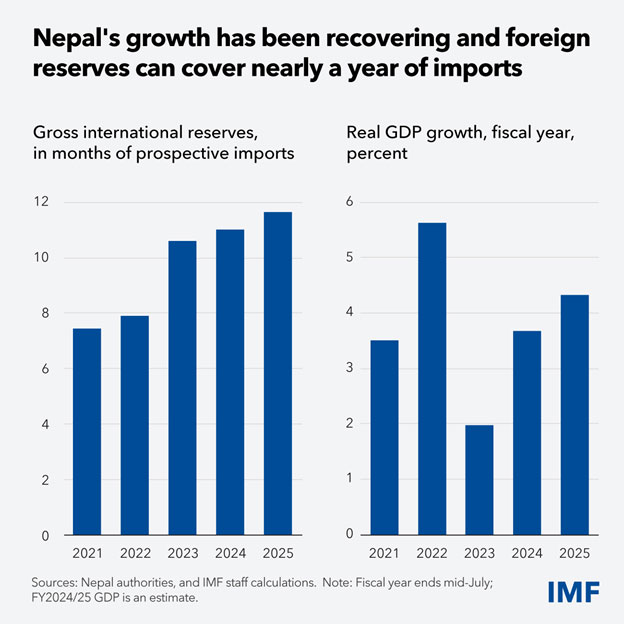
In October, Nepal completed the sixth of seven program reviews, showing tangible improvement in the economy. Indeed, Nepal has been seeing the green shoots of recovery with real GDP growth rising from a mere 2 percent in FY 2023, to 3.7 percent in FY 2024, to an estimated 4.3 percent in FY 2025—more than double the pace in just a few years.
In FY 2026, we still expect the country’s economic recovery to continue, though at a more moderate pace amid a complex domestic environment and global uncertainty.
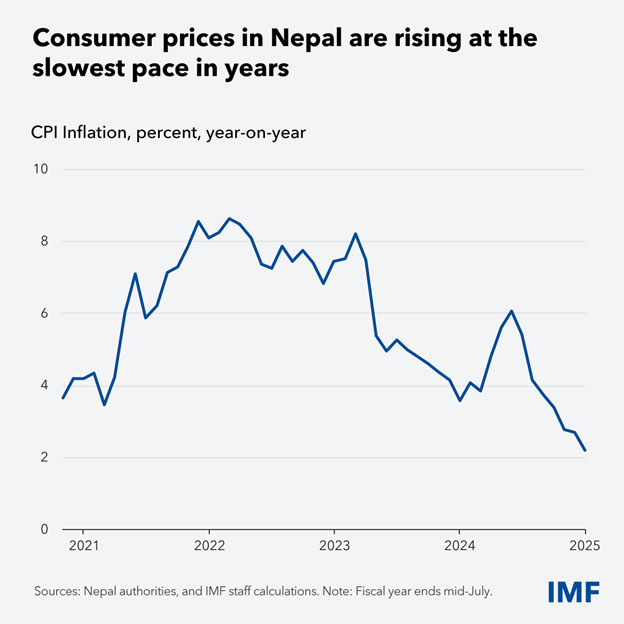
Nepal has also been very successful in rebuilding policy buffers. Foreign exchange reserves have risen to nearly $20 billion, enough to cover almost a full year of imports. Fiscal discipline has helped stabilise public debt. Inflation remains well below the Nepal Rastra Bank’s target.
This hard-won economic stability should be safeguarded. At the same time, the economy hasn’t fully recovered. Domestic demand remains subdued, investor confidence is waning, and more efforts are needed to protect vulnerable people.
Nepal has achieved significant milestones on structural reforms, in part with support from the IMF capacity development. On the fiscal front, frameworks for increasing government revenue and fiscal transparency have improved with the publication of the domestic revenue mobilization strategy, fiscal risk statement and the tax expenditure report. The National Planning Commission has issued revised guidelines for the National Project Bank, which will strengthen capital project selection and execution.
Likewise, in the financial sector, bank supervision has improved through the Supervisory Information System. The Nepal Rastra Bank has also recently launched a loan portfolio review of 10 large commercial banks, which is expected to provide deep insights into the health of the banking sector.
Measures have been taken to improve governance and transparency, including by improving the anti-money laundering framework, though further efforts are needed to enhance implementation.
As part of the program, four priority nonfinancial public enterprises had their financial statements audited. Work is underway to amend the Nepal Rastra Bank Act to strengthen its autonomy and governance.
Yet, unresolved structural issues and emerging headwinds are testing these gains. Policymakers must ensure that the fruits of macroeconomic stability and growth are broadly shared. Continued reforms will help. In the near term, this implies accelerating budget execution and improving project readiness—particularly in areas such as hydropower and trade-related infrastructure—and reducing logistics frictions, which will crowd-in private investment.
This will also lay the foundation for a more diversified, higher value-added growth model that creates more domestic jobs.
Unlocking private sector growth to deliver more jobs and better livelihoods is critical. This can only be accomplished when the basic building blocks of private enterprise are in place: Strong institutions, free and fair markets and a stable macroeconomic environment.
Over the medium term, strengthening governance and anti-corruption institutions, improving the investment climate, enhancing financial oversight, trade integration and expanding targeted social protection will be key to unlocking inclusive and sustainable growth.
Reason for hope
Let us conclude by expressing our deep sympathy for the profound loss during the recent social unrest. We are deeply saddened by the loss, but also heartened by the resilience of the Nepali people striving for a better future.
While global economic prospects remain dim amid uncertainty, Nepal gives reason for hope—a nation reimagined with greater equality and good governance. The country faces a challenging transition, but it can make the most progress if the people work together. For policymakers, this implies steering the economy on the course of continued reforms that safeguard macroeconomic and financial stability while laying strong foundations for durable and inclusive growth, coupled with good governance.
This is a unique moment in the country’s long history, and a time to set a new standard for the future. The IMF is ready to support Nepal in its journey.
Krishna Srinivasan is the head of the Asia and Pacific Department at the IMF. Sarwat Jahan is the mission chief for Nepal and a deputy division chief in the Asia and Pacific Department.
Flagship report calls for fundamental reset of global water agenda as irreversible damage pushes many basins beyond recovery.
UNITED NATIONS, Jan 21 2026 (IPS) – The world is already in the state of “water bankruptcy”. In many basins and aquifers, long-term overuse and degradation mean that past hydrological and ecological baselines cannot realistically be restored.
While not every basin or country is water-bankrupt, enough critical systems around the world have crossed these thresholds, and are interconnected through trade, migration, climate feedbacks, and geopolitical dependencies, that the global risk landscape is now fundamentally altered.
The familiar language of “water stress” and “water crisis” is no longer adequate. Stress describes high pressure that is still reversible. Crisis describes acute, time-bound shocks. Water bankruptcy must be recognized as a distinct post-crisis state, where accumulated damage and overshoot have undermined the system’s capacity to recover.
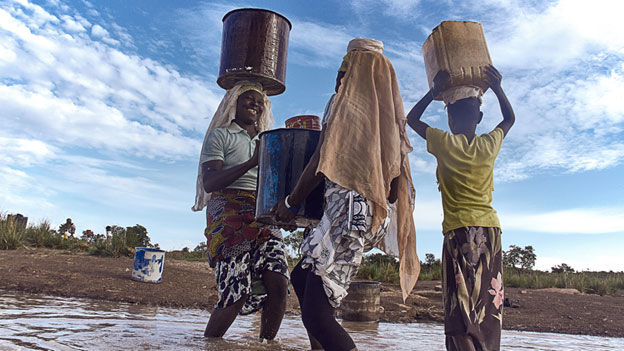
A group of women fetching water from a dam in Taha, Northern Region of Ghana. Credit: Evans Ahorsu. Source: UN University’s Institute for Water, Environment and Health
Water bankruptcy management must address insolvency and irreversibility. Unlike financial bankruptcy management, which deals only with insolvency, managing water bankruptcy is concerned with rebalancing demand and supply under conditions where returning to baseline conditions is no longer possible.
Anthropogenic drought is central to the world’s new water reality. Drought and water shortage are increasingly driven by human activities, over-allocation, groundwater depletion, land and soil degradation, deforestation, pollution, and climate change, rather than natural variability alone. Water bankruptcy is the outcome of long-term anthropogenic drought, not just bad luck with hydrological anomalies.
Water bankruptcy is about both quantity and quality. Declining stocks, polluted rivers, and degrading aquifers, and salinized soils mean that the truly usable fraction of available water is shrinking, even where total volumes may appear stable.
Managing water bankruptcy requires a shift from crisis management to bankruptcy management. The priority is no longer to “get back to normal”, but to prevent further irreversible damage, rebalance rights and claims within degraded carrying capacities, transform water-intensive sectors and development models, and support just transitions for those most affected.
Governance institutions must protect both water and its underlying natural capital. The existing institutions focus on protecting water as a good or service disregarding the natural capital that makes water available in the first place. Efforts to protect a product are ineffective when the processes that produce it are disrupted.
Recognizing water bankruptcy calls for developing legal and governance institutions that can effectively protect not only water but also the hydrological cycle and natural capital that make its production possible.
Water bankruptcy is a justice and security issue. The costs of overshoot and irreversibility fall disproportionately on smallholder farmers, rural and Indigenous communities, informal urban residents, women, youth, and downstream users, while benefits have often accrued to more powerful actors. How societies manage water bankruptcy will shape social cohesion, political stability, and peace.
Water bankruptcy management combines mitigation with adaptation. While water crisis management paradigms seek to return the system to normal conditions through mitigation efforts only, water bankruptcy management focuses on restoring what is possible and preventing further damages through mitigation combined with adaptation to new normals and constraints.
Water can serve as a bridge in a fragmented world. Water can align national priorities with international priorities and improve cooperation between and within nations. Roughly 70% of global freshwater withdrawals are used for agriculture, much of it by farmers in the Global South. Elevating water in global policy debates can help rebuild trust between South and North but also within nations, between rural and urban, left and right constituencies.
Water must be recognized as an upstream sector. Most national and international policy agendas treat water as a downstream impact sector where investments are focused on mitigating the imposed problems and externalities. The world must recognize water as an upstream opportunity sector where investments have long-term benefits for peace, stability, security, equity, economy, health, and the environment.
Water is an effective medium to fulfill the global environmental agenda. Investments in addressing water bankruptcy deliver major co-benefits for the global efforts to address its environmental problems while addressing the national security concerns of the UN member states.
Elevating water in the global policy agenda can renew international cooperation, increase the efficiency of environmental investments, and reaccelerate the halted progress of the three Rio Conventions to address climate change, biodiversity loss, and desertification.
A new global water agenda is urgently needed. Existing agendas and conventional water policies, focused mainly on WASH, incremental efficiency gains and generic IWRM guidelines, are not sufficient for the world’s current water reality. A fresh water agenda must be developed that takes Global Water Bankruptcy as a starting point and uses the 2026 and 2028 UN Water Conferences, the conclusion of the Water Action Decade in 2028, and the 2030 SDG 6 timeline as milestones for resetting how the world understands and governs water.
Global Water Bankruptcy: Living Beyond Our Hydrological Means in the Post-Crisis Era | UN University Institute for Water, Environment and Health (UNU-INWEH) (20 January) (press release)
Support Paper Madani K. (2026) Water Bankruptcy: The Formal Definition, Water Resources Management, 40 (78) doi: 10.1007/s11269-025-04484-0)
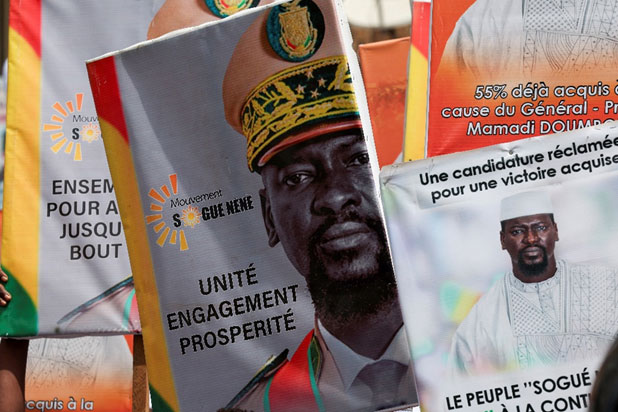
MONTEVIDEO, Uruguay, Jan 20 2026 (IPS) – In December, the dust settled on Guinea’s first presidential election since the military took control in a 2021 coup. General Mamady Doumbouya stayed in power after receiving 87 per cent of the vote. But the outcome was never in doubt: this was no a democratic milestone; it was the culmination of Guinea’s denied transition to civilian rule.
Doumbouya has successfully performed an act of political alchemy, turning a military autocracy into an electoral one. By systematically dismantling the opposition, silencing the press and rewriting laws to suit his ambitions, he has made sure to shield his grip on power with a thin veil of electoral legitimacy.
The architecture of autocracy
The path to this moment was paved with precision. In April 2025, Doumbouya announced a constitutional referendum, a move that may have looked like it would herald the beginning of the end of military rule. But it was something else entirely. By June, Doumbouya had further centralised control by creating a new General Directorate of Elections. This body, placed firmly under the thumb of the Ministry of Territorial Administration, reversed previous efforts to establish an independent electoral institution.
The constitution was drafted in the shadows by the National Council of the Transition, the junta-appointed legislative body. While early drafts reportedly contained safeguards against lifetime presidencies, these were stripped away before the final text reached the public. The result was a document that removed a ban on junta members running for office, extended presidential terms from five to seven years and granted the president the power to appoint a third of the newly created Senate.
When the referendum was held on 21 September, it rubber-stamped de facto rule. Official figures claimed 89 per cent support with an 86 per cent turnout, numbers that defied the reality of a widespread opposition boycott and a palpable lack of public enthusiasm.
A climate of fear
With a blanket ban on protests in effect since May 2022, those who’ve dared challenge the junta’s controlled transition have been met with security force violence. On 6 January 2025, security forces killed at least three people, including two children, during demonstrations called by the opposition coalition Forces Vives de Guinée.
The political landscape was further cleared through administrative and judicial means. In October 2024, the government dissolved over 50 political parties. By August 2025, major opposition groups such as the Rally of the People of Guinea had been suspended. Key challengers, including former Prime Minister Cellou Dalein Diallo, remain in exile, while others, among them Aliou Bah, have been sentenced to prison – in Bah’s case, for allegedly insulting Doumbouya.
The atmosphere of fear has been reinforced by a brutal crackdown on the media. Guinea plummeted 25 places in the 2025 World Press Freedom Index, the year’s largest fall. Independent outlets have had their licences revoked and journalists have been detained. Those still working have learned to practise strict self-censorship to avoid becoming the next target. This meant that as voters went to the polls, there was nobody to provide diverse perspectives, scrutinise the process, investigate irregularities or hold authorities accountable.
Coup contagion
Guinea is no outlier. Since 2020, a coup contagion has swept through Africa, with military takeovers in Burkina Faso, Chad, Gabon, Guinea-Bissau, Madagascar, Mali, Niger and Sudan. In each instance, the script has been similar: military leaders seize power promising to ‘correct’ the failures of the previous regime, only to break their promises of a return to civilian rule.
Guinea is now the third country among this recent wave to move from a military dictatorship to an electoral autocracy. It follows in the footsteps of Chad, where Mahamat Idriss Déby secured victory in May 2024 after the suspicious killing of his main opponent, and Gabon, where General Brice Oligui Nguema won a 2025 election with a reported 90 per cent of the vote.
The international community does little. Doumbouya routinely ignored deadlines and sanctions from the Economic Community of West African States, which once prided itself on a ‘zero-tolerance’ policy for coups, and no consequences ensued. The African Union and the United Nations offered rhetorical concern, but their warnings were not accompanied by tangible diplomatic or economic repercussions.
The world’s willingness to maintain business as usual while Doumbouya steered through a fake transition sends a dangerous message to other aspiring autocrats, in the region and beyond.
Democracy denied
When Doumbouya seized power in 2021, he was greeted with a degree of cautious optimism. His predecessor, Alpha Condé, had controversially amended the constitution to secure a third term amid violent protests and corruption and fraud allegations. Doumbouya promised to fix things, but instead became a mirror image of the man he ousted, using the same tactics of constitutional revision and repression to secure his power.
The statistics of the December election – an 87 per cent victory on a claimed 80 per cent turnout – do not reflect a genuine mandate but rather a vacuum: with no independent media to scrutinise the process and no viable opposition allowed to run, the election was a technicality.
The prospects for real democracy in Guinea appear remote. Doumbouya has secured a seven-year mandate through an election that eliminated the essential infrastructure needed for democracy. In the absence of stronger international pressure and tangible support for Guinean civil society, Guinea faces prolonged authoritarian rule behind a democratic facade, with dismal human rights prospects.
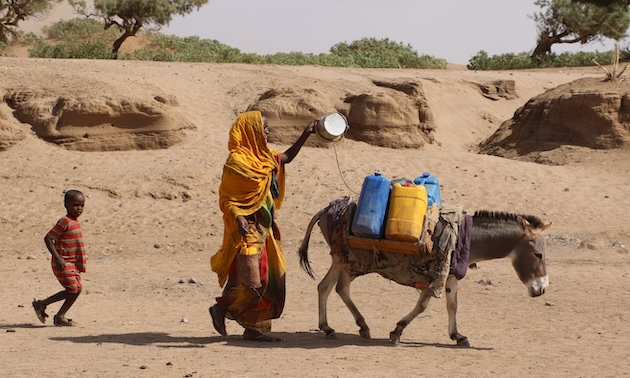
Collecting water in Ethiopia. A new report, ‘Global Water Bankruptcy: Living Beyond Our Hydrological Means in the Post Crisis Era’ warns that many of the earth’s water resources have been pushed to a point of permanent failure. Credit: EU/ECHO/Anouk Delafortrie/IPS
UNITED NATIONS & SRINAGAR, India, Jan 20 2026 (IPS) – The world has entered what United Nations researchers now describe as an era of Global Water Bankruptcy, a condition where humanity has irreversibly overspent the planet’s water resources, leaving ecosystems, economies, and communities unable to recover to previous levels.
The new report, released by the United Nations University Institute for Water, Environment and Health, titled Global Water Bankruptcy: Living Beyond Our Hydrological Means in the Post-Crisis Era. The report argues that decades of overextraction, pollution, land degradation, and climate stress have pushed large parts of the global water system into a permanent state of failure.
“The world has entered the era of Global Water Bankruptcy,” the report reads, adding that “in many regions, human water systems are already in a post-crisis state of failure.”
According to the report, the language of “water crisis” is no longer sufficient to explain what is happening. A crisis implies a shock followed by recovery. Water bankruptcy, by contrast, describes a condition where recovery is no longer realistically possible because natural water capital has been permanently damaged.
In an exclusive interview with Inter Press Service, former Deputy Head of Iran’s Department of EnvironmentProf. Kaveh Madani, who currently is the Director at United Nations University, Institute for Water, Environment and Health, said that declaring that the planet has entered the era of water bankruptcy must not be interpreted as universal water bankruptcy, as not all basins, aquifers, and systems are water bankrupt.
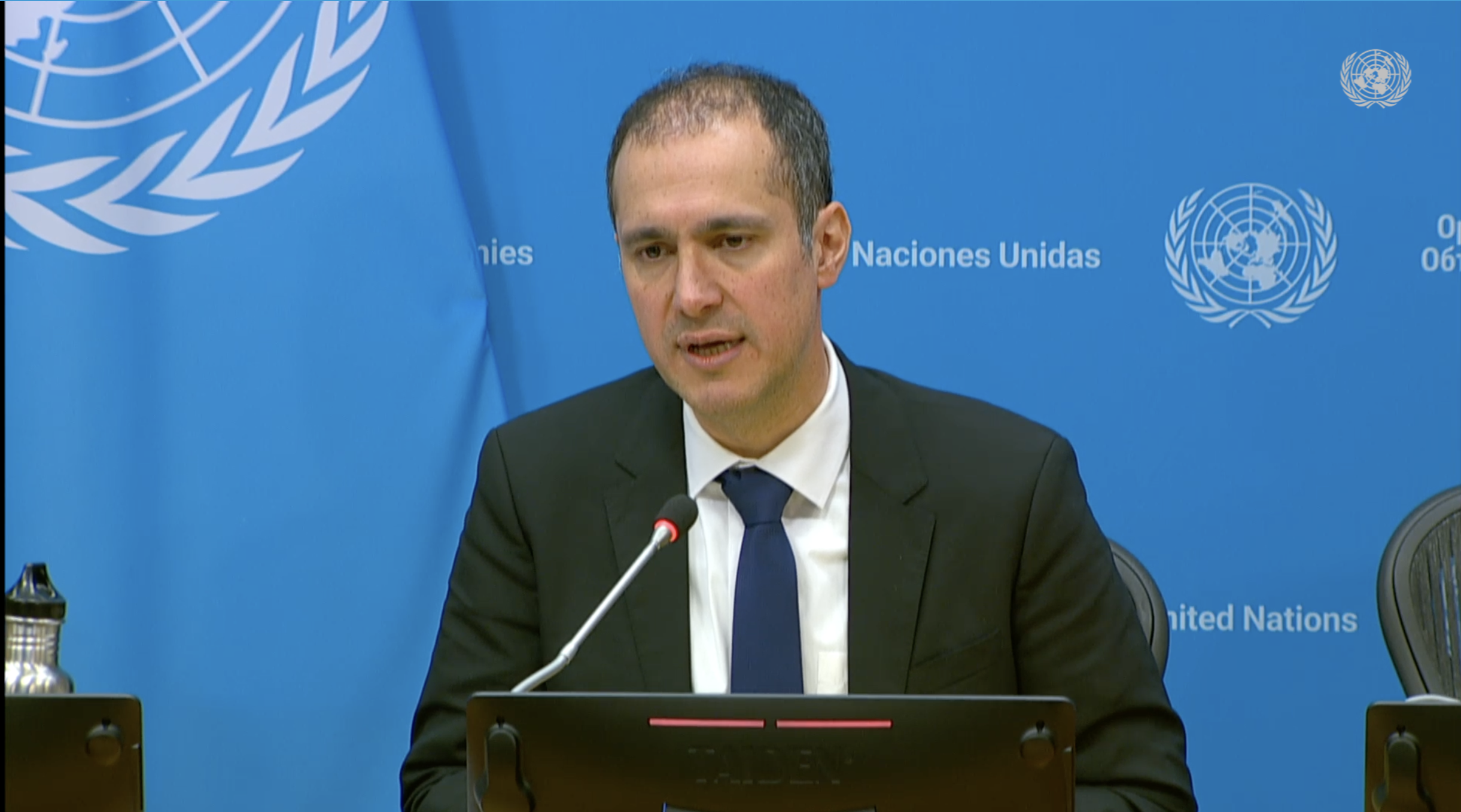
Prof. Kaveh Madani, Director at the United Nations University, Institute for Water, Environment and Health, addresses the UN midday press briefing. Credit: IPS
“But we now have enough critical basins and aquifers in chronic decline and showing clear signs of irreversibility that the global risk landscape is already being reshaped. Scientifically, we know recovery is no longer realistic in many systems when we see persistent overshoot (using more than renewable supply) combined with clear markers of irreversibility—for example aquifer compaction and land subsidence that permanently reduce storage, wetland and lake loss, salinization and pollution that shrink usable water, and glacier retreat that removes a long-term seasonal buffer. When these signals persist over time, the old “bounce back” assumption stops being credible,” Madani said.
“Over decades, societies have withdrawn more water than climate and hydrology can reliably provide, drawing down not only the annual income of renewable flows but also the savings stored in aquifers, glaciers, soils, wetlands, and river ecosystems,” the report says.
The scale of the problem, as per the report, is global. Nearly three-quarters of the world’s population now lives in countries classified as water insecure or critically water insecure.
Madani said, adding that water bankruptcy is best assessed basin by basin and aquifer by aquifer, not by country.
“Please note that, based on the water security definition used by the UN system, water insecurity and water bankruptcy are not equivalent. Water bankruptcy can drive water insecurity, but water insecurity can also stem from limited financial and institutional capacity to build and operate infrastructure for safe water supply and sanitation, even where physical water is available,” he explained.
Madani added that the regions most consistently closest to irreversible decline cluster in the Middle East and North Africa, Central and South Asia, parts of northern China, the Mediterranean and southern Europe, the southwestern United States and northern Mexico (including the Colorado River system), parts of southern Africa, and parts of Australia.
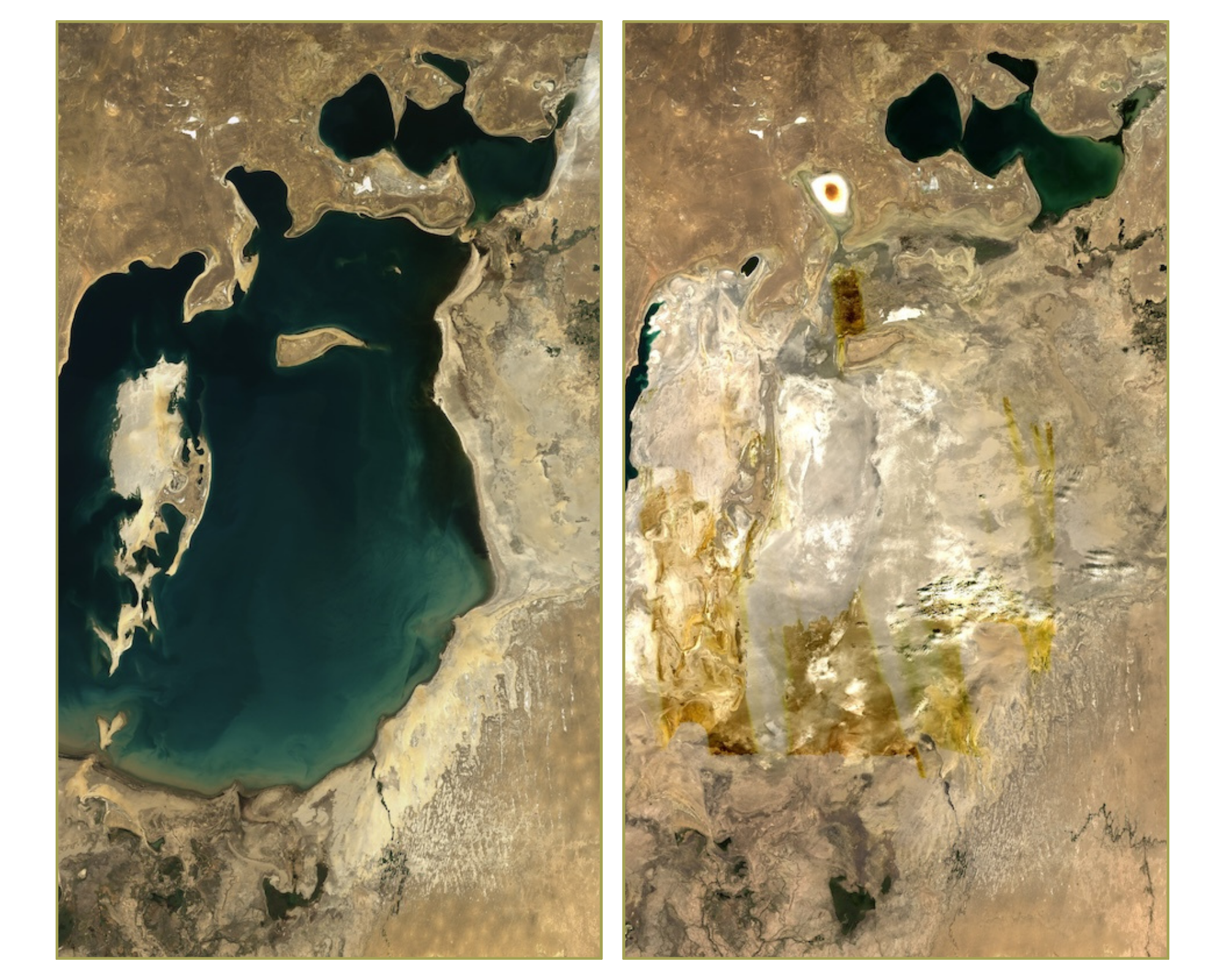
The Aral Sea, which lies between Kazakhstan and Uzbekistan, shows dramatic water loss between 1989 and 2025. Credit: UNU-INWEH
Surface Water Systems Are Shrinking Rapidly
The report shows how more than half of the world’s large lakes have lost water since the early 1990s, affecting nearly one quarter of the global population that depends directly on them. Many major rivers now fail to reach the sea for parts of the year or fall below environmental flow needs.
Massive losses have occurred in wetlands, which serve as natural buffers against floods and droughts. Over the past five decades, the report claims that the world has lost roughly 410 million hectares of natural wetlands, almost the size of the European Union. The economic value of lost ecosystem services from these wetlands exceeds 5.1 trillion US dollars.
Groundwater depletion is one of the clearest signs of water bankruptcy. Groundwater, says the report, now supplies about 50 percent of global domestic water use and over 40 percent of irrigation water. Yet around 70 percent of the world’s major aquifers show long-term declining trends.
“Excessive groundwater extraction has already contributed to significant land subsidence over more than 6 million square kilometers,” the report says, warning that in some locations land is sinking by up to 25 centimeters per year, permanently reducing storage capacity and increasing flood risk.
In coastal areas, overpumping has allowed seawater to intrude into aquifers, rendering groundwater unusable for generations. In inland agricultural regions, falling water tables have triggered sinkholes, soil collapse, and the loss of fertile land.
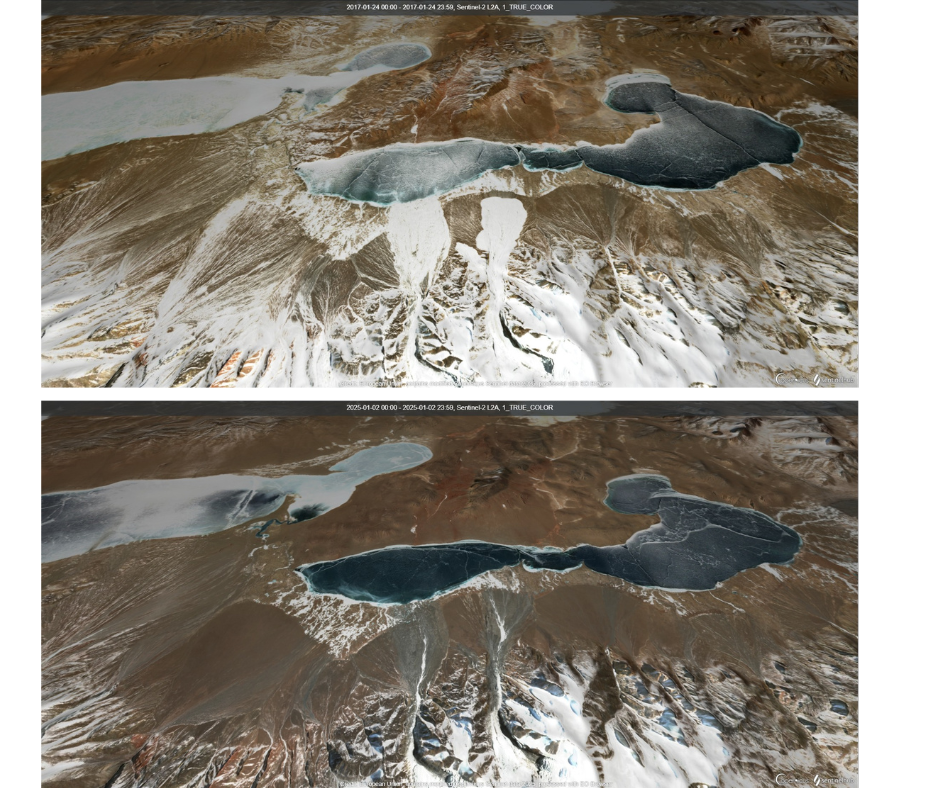
These satellite images show a dramatic impact of the Aru glacier collapses in western Tibet. First image was taken in 2017 and the second in 2025. Credit: UNU-INWEH
The cryosphere, glaciers and snowpacks that act as natural water storage systems are also being rapidly liquidated. The world has already lost more than 30 percent of its glacier mass since 1970. Several low- and mid-latitude mountain ranges could lose functional glaciers within decades.
“The liquidation of this frozen savings account interacts with groundwater depletion and surface water over-allocation to lock many basins into a permanent worsening water deficit state,” says the report.
This loss, as per the report, threatens the long-term water security of hundreds of millions of people who depend on glacier- and snowmelt-fed rivers for drinking water, irrigation, and hydropower, particularly in Asia and the Andes.
Madani said the biggest failure was treating groundwater as an unlimited safety net instead of a strategic reserve.
He says that when surface water tightened, many systems defaulted to “drill deeper” without enforceable caps.
“Authorities often recognize the consequences when it is already late, and meaningful action then faces major political barriers. For example, reducing groundwater use in farming can trigger unemployment, food insecurity, and even instability unless farmers are supported through short-term compensation and a longer-term transition to alternative livelihoods,” he added.
According to Madani, that kind of transition cannot be implemented overnight.
“So, business as usual continues. The result is predictable: groundwater gets “liquidated” to postpone hard choices, and by the time the damage is obvious, recovery is no longer realistic,” he told IPS news.
Agriculture Lies at the Heart of the Crisis
According to the report, farming accounts for approximately 70 percent of global freshwater withdrawals. About 3 billion people and more than half of the world’s food production are located in regions where total water storage is already declining or unstable.
The report states that more than 170 million hectares of irrigated cropland are under high or very high water stress. Land and soil degradation are making matters worse by reducing the ability of soils to retain moisture. The degradation of more than half of the global agricultural land is now moderate or severe.
Drought, once considered a natural hazard, is increasingly driven by human activity. Overallocation, groundwater depletion, deforestation, land degradation, and climate change have turned drought into a chronic condition in many regions.
“Drought-related damages, intensified by land degradation, groundwater depletion and climate change rather than rainfall deficits alone, already amount to about 307 billion US dollars per year worldwide,” the report states.
Water quality degradation further shrinks the usable resource base. Pollution from untreated wastewater, agricultural runoff, industrial effluents, and salinization means that even where water volumes appear stable, much of that water is unsafe or too costly to treat.
The report adds that the planetary freshwater boundary has already been crossed. Both blue water, surface and groundwater, and green water, soil moisture, have been pushed beyond a safe operating space.
Current governance systems, the authors argue, are not fit for this reality. Many legal water rights and development promises far exceed degraded hydrological capacity. Existing global agendas, focused largely on drinking water access, sanitation, and incremental efficiency gains, are inadequate for managing irreversible loss.
“Water bankruptcy must be recognized as a distinct post-crisis state, where accumulated damage and overshoot have undermined the system’s capacity to recover,” the report says.
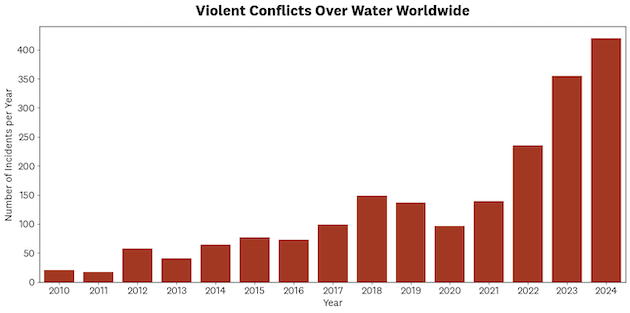
Water bankruptcy could result in a further increase in conflicts. Credit: UNU-INWEH
It warns that the implications of water bankruptcy are dire.
UN Under-Secretary-General Tshilidzi Marwala, Rector of UNU explains, “Waterbankruptcy is becoming a driver of fragility, displacement, and conflict. Managing it fairly—ensuring that vulnerable communities are protected and that unavoidable losses are shared equitably—is now central to maintaining peace, stability, and social cohesion.”
Policy Implications
Instead of crisis management aimed at restoring the past, the report actually pitches for bankruptcy management. That means acknowledging insolvency, accepting irreversibility, and restructuring water use, rights, and institutions to prevent further damage.
The authors lay stress on the fact that water bankruptcy is also a justice and security issue. The costs of overshoot fall disproportionately on small farmers, rural communities, women, Indigenous peoples, and downstream users, while benefits have often accrued to more powerful actors.
“How societies manage water bankruptcy will shape social cohesion, political stability, and peace,” the report warns.
Furthermore, it urges governments and international institutions to use upcoming UN Water Conferences in 2026 and 2028 as milestones to reset the global water agenda, calling for water to be treated as an upstream sector central to climate action, biodiversity protection, food security, and peace.
“This is about a crisis that might arrive in the future. The world is already living beyond its hydrological means,” reads the report.
When asked why the report frames water bankruptcy as a justice and security issue and how governments can implement painful demand reductions without triggering social unrest or conflict, Madani said the demand reduction becomes dangerous when it is treated as a technical exercise instead of a political economy reform. In many water-bankrupt regions, according to him, water is effectively a jobs policy: it keeps low-productivity farming and local economies afloat.
“If you cut water without an economic transition, you create unemployment, food insecurity, and unrest. So the practical pathway is to decouple livelihoods and growth from water consumption. In many economies, water and other natural resources are used to keep low-efficiency systems alive. In most places, it is possible to produce more strategic food with less water and less land, and with fewer farmers—provided that farmers are supported through a transition and offered alternative livelihoods.”
According to Madani, governments should protect basic needs but target the big reductions where most water is used, especially agriculture and besides that, pair caps with a just transition package for farmers—compensation, insurance, buy-down or retirement of water entitlements where relevant, and real income alternatives.
He further suggests that the governments should invest in diversification, including services, industry, value-added agri-processing, and urban jobs, so communities can earn a living without expanding water withdrawals.
“In short, you avoid conflict by making demand reduction part of a broader economic transition, not a standalone water policy.”
Agnès Callamard is Amnesty International’s Secretary General
Credit: World Economic Forum/Gabriel Lado. Source: Amnesty International
LONDON, Jan 16 2026 (IPS) – “The ‘spirit of dialogue’, the theme for this year’s meeting in Davos, which begins January 19, has been painfully and increasingly absent from international affairs of late. President Trump’s first year back in office has seen the United States withdraw from multilateral bodies, bully other states and relentlessly attack the principles and institutions that underpin the international justice system.
At the same time, the likes of Russia and Israel have continued to make a mockery of the Geneva and Genocide Conventions without facing meaningful accountability.
“A few powerful states are unashamedly working to demolish the rules-based order and reshape the world along self-serving lines. Unilateral interventions and corporate interests are taking precedence over long-term strategic partnerships grounded in universal values and collective solutions.
This was evident in the Trump administration’s military action in Venezuela and its stated intent to ‘run’ the country, which the president himself admitted was at least partially driven by the interests of US oil corporations. Make no mistake: the only certain consequence of vandalizing international law and multilateral institutions will be extensive suffering and destruction the world over.
“When faced with diplomatic, economic and military bullying and attacks, many states and corporations have opted for appeasement instead of taking a principled and united stand. Humanity needs world leaders, business executives and civil society to collectively resist or even disrupt these destructive trends. It requires denouncing the bullying and the attacks, and strong legal, economic, and diplomatic responses.
What should not happen is silence, complicity and inaction. It also demands engaging in a transformative quest for common solutions to the many shared and existential problems we face.
“We need UN Security Council reform to address abuse of veto powers, robust regulation to protect us against harmful new technologies; more inclusive and transparent decision-making on climate solutions; and international treaties on tax and debt to deliver a more equitable, rights-based global economy. But this will only be achievable through cooperation and steadfast will to resist those who seek to strongarm and divide us.”
-Israel’s ongoing genocide against the Palestinians in Gaza
-The USA’s military action in Venezuela, Russia’s war of aggression against Ukraine, and the conflicts in Sudan, DRC and Myanmar
-The importance of revindicating and revitalizing multilateralism
-The need for global tax and debt reform and universal social protection
-The urgent need for a full, fast, fair and funded fossil fuel phase-out
-The need to massively scale up climate finance, including to address loss and damage
-Big Tech, corporate accountability and the risks of deregulation
-How to limit the harmful impact of artificial intelligence on human rights, including the right to a healthy environment