Leprosy has a Cure, so has Prejudice, says Miss Universe for Brazil

Civil Society, Development & Aid, Featured, Gender, Headlines, Health, Human Rights, Inequity, TerraViva United Nations
Human Rights

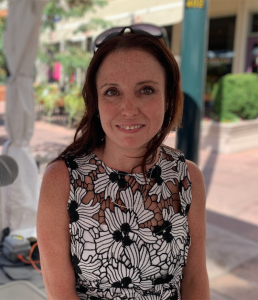
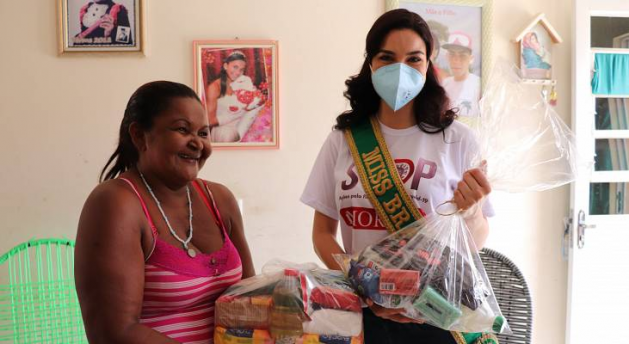
Julia Gama, Miss Brazil Universe working with Morhan to deliver food baskets to people affected by Hansen’s disease, with support from the Sasakawa Health Foundation. Credit: Morhan

NAIROBI, KENYA, Sep 29 2021 (IPS) – A new dawn has come, and it was through the work of Yohei Sasakawa, the WHO Goodwill Ambassador for Leprosy Elimination, that those affected by leprosy now had a voice to speak for themselves.


So said Faustino Pinto, a person affected by leprosy and Vice National Coordinator of Movement for the Reintegration of People Affected by Hansen’s disease (Morhan), at a webinar with the theme ‘Hansen’s Disease/Leprosy as Human Rights issue’.

Sasakawa, who is also the chairperson of the Nippon Foundation, and Dr Alice Cruz, UN Special Rapporteur on the Elimination of Discrimination against Persons Affected by Leprosy, addressed the webinar. Guests included Caroline Teixeira, Miss World Brazil 2021 and Julia Gama, Miss Universe Brazil 2020. The Sasakawa Health Foundation, in collaboration with Morhan, were co-conveners. The event forms part of a 10-month-long campaign dubbed ‘Do not Forget Leprosy’.

The celebrity guests applauded his sentiments.

Faustino Pinto, a person affected by leprosy and Vice National Coordinator of Morhan. Credit: Joyce Chimbi

Gama, also working with Morhan, told IPS: “Hansen’s disease has a cure, and I believe so does prejudice. I will use my voice to ensure that those who were silenced are heard. I believe togetherness is our strength, and together we can eradicate Hansen’s disease.”

Pinto praised Sasakawa for his lifelong commitment to improving the lives of those affected by the disease.

“We were taught to just accept what we were told: Take the medicine, keep the appointments, open your mouth to check if you did take the medicine, do not abandon the treatment,” says Pinto. This changed when Sasakawa became involved.

Pinto appealed for those affected by leprosy to be heard, seen, and involved in efforts towards zero leprosy.

He lauded the Sasakawa and the Foundation “for always talking about us and including us in the debate” and for “truly listening to us and giving us a voice”. It is this voice that Pinto used to appeal to the global community, saying, “Don’t Forget Hansen’s Disease. Don’t Forget Us.”

At the heart of discussions was the bid to draw the world’s attention to a disease in equal measure, a medical and social problem. Furthermore, the meeting was a key platform where participants were urged to approach leprosy as a human’s rights issue.

While concerted efforts have today led to less than one case of leprosy in a population of 10 000 people as per WHO estimates, with at least 200 000 new cases reported annually, experts say leprosy is still very much a concern.

“There are more than one billion people in the world living with disabilities, including persons affected by leprosy. We need to create an inclusive society where everyone can have an education, find work, and get married if they want to. People have passion and motivation. Often, all they lack is opportunity,” says Sasakawa.

Governments efforts to respond to COVID-19 is believed to have setback the progress towards zero leprosy.

“Persons affected by leprosy face multiple discrimination. They are often discriminated against on various grounds – like leprosy, but also gender, age, poverty, disability, sexuality, and race. They also struggle with violence from the State and society and with interpersonal violence,” says Cruz.
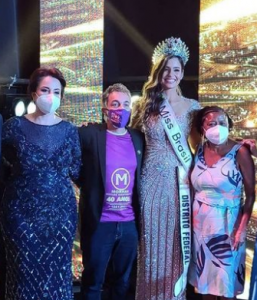
Caroline Teixeira, Miss World Brazil, with Morhan’s national coordinators Artur Custódio (centre) and Lucimar Batista (right), and the director of the National Beauty Contest and Morhan volunteer, Marina Fontes (left). Credit: Morhan

“There is such ability and potential in the world, and to have everyone participate in society will create a truly wonderful future. That is why it is important for persons affected by leprosy to have confidence and speak out,” Sasakawa emphasises.

“To support them, Sasakawa Health Foundation and The Nippon Foundation are helping them to build up their organisational capacity. I would like to see a society in which everyone is active, able to express their opinions to the authorities with confidence, and their contribution is valued,” he adds.

Over ten months, the campaign, which leverages Sasakawa’s 20th anniversary as Goodwill Ambassador, will raise awareness of why the world should stay focused on leprosy.

“It was a great honour to be chosen Miss World Brazil and thus become an ambassador of the fight against Hansen’s disease in Brazil, the country with the highest incidence of the disease in the world,” Teixeira told IPS.

“In the coming days, I will be part of a Morhan delegation visiting several cities in the north of the country, sensitising governments to action in defence of the rights of persons affected. We will certainly unite many voices so that Hansen’s disease is not forgotten,” she says.

Nevertheless, left untreated, leprosy can result in permanent disability. Worldwide, three to four million people live with some form of disability due to leprosy, as per WHO estimates.

There is growing concern that COVID-19 and the fear of discrimination could further prevent people from visiting hospitals, leading to diagnosis and treatment delays.

As it is, WHO’s 2020 statistics show an estimated 40 percent drop in the detection of new leprosy cases, which, experts warn, will lead to increased transmission of leprosy and more cases of disability.

Discrimination and stigma remain a primary concern for Sasakawa. He decries that “people who should be part of society remain isolated in colonies facing hardships. The more you look into it, the more you see the restrictions they live under, including legal restrictions in some cases. Is it not strange that someone cured of a disease cannot take their place in society?”

“I belatedly realised that if the human rights aspect wasn’t addressed, then elimination of leprosy in a true sense would not be possible. I would like to create a society where everyone feels fully engaged, able to express their opinions, and appreciated. The coming era must be one of diversity, and for that, we need social inclusion.”
  Source

Scientific Panel’s Scoping Report Instructive for Global Food Systems Transformation

Biodiversity, Conferences, Environment, Featured, Food and Agriculture, Food Security and Nutrition, Food Sustainability, Global, Green Economy, Headlines

Biodiversity

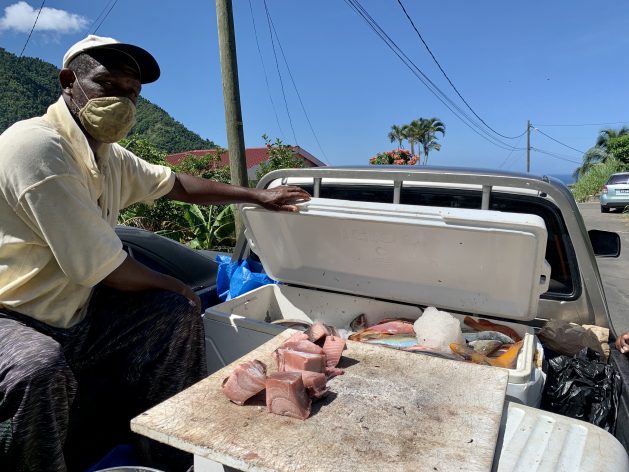
A fisherman displays his catch of the day in Dominica. Credit: Alison Kentish/IPS

DOMINICA, Sep 24 2021 (IPS) – On September 10th, on a sweltering summer afternoon, three fishers drove a van around the residential community of Castle Comfort in Dominica, blowing forcefully into their conch shells – the traditional call that there is fresh fish for sale in the area.


One of the men, Andrew Joseph, urged a customer to double her purchase of Yellowfin Tuna, stating that at five Eastern Caribbean dollars a pound (US$1.85), she was getting the deal of the summer. (In the lean season, that price can double).

“It’s good fish, it’s fresh, it’s cheap,” he told IPS, adding that, “People eat too much meat. This is what is good for the body and the brain.”

Little did he know that he was echoing the words of a scientist who is rallying the world, and the landmark United Nations Food Systems Summit (UNFSS) to put greater emphasis on the financial, nutritional and traditional benefits of aquatic foods.

“Foods coming from marine sources, inland sources, food from water, they are superfood, but this is being ignored in the global debate and at the country level, because we have had a focus on land production systems and we have to change that,” Shakuntala Haraksingh Thilsted, Global Lead for Nutrition and Public Health at World Fish told IPS.

The nutrition scientist is also the Vice-Chair of Action Track 4, Advancing Equitable Livelihoods, at the UNFSS.

As the landmark summit hopes to deliver urgent change in the way the world thinks about, produces and consumes food, issues like the linkages between aquatic systems and health are emerging.

So are other linkages a scoping report by the Intergovernmental Science-Policy Platform on Biodiversity and Ecosystem Services (IPBES) says the world cannot ignore. The report, approved in June, paves the way for a 3-year assessment of the interlinkages among biodiversity, water, food and health.

In the case of the UNFSS, it shows how food systems transformation can be achieved if tackled as one part of this network.

“It will assess the state of knowledge, including indigenous and local knowledge, on past, present, and possible future trends in these interlinkages, with a focus on biodiversity and nature’s contributions to people,” IPBES Executive Secretary Dr Anne Larigauderie told IPS.

“The IPBES nexus assessment will contribute to the development of a strengthened knowledge base for policymakers for the simultaneous implementation of the post-2020 global biodiversity framework, under the Convention on Biological Diversity, and the Paris Agreement adopted under the United Nations Framework Convention on Climate Change and the 2030 Agenda for Sustainable Development.”

Landscape Ecology Professor Ralf Seppelt was one of the scoping experts for the nexus assessment. He says the science is clear on how food systems impact biodiversity and why agroecology must be a pillar of efforts to transform food systems.

“Micronutrients are lacking a lot. Micronutrients are provided by fruits and vegetables, which need pollination. So, the nexus is really strong between agroecological principles and the nutritional value of what we are producing,” he told IPS.

“Wherever we have to increase production, we should do it on agroecological principles. We should consider what farmers say and do, their needs, their access to production goods such as fertilizers and seeds, and it’s equally important to change our diets. It’s not just reducing harvest losses and food waste, but also about moving away from energy-rich, meat-based diets and feeding ourselves in an environmentally friendly way,” he said.

Professor Seppelt is also hoping that the voices of small farmers and indigenous communities are amplified in the global food transformation conversation. “IPBES made an enormous effort to work with indigenous peoples and local communities and include indigenous and local knowledge in its reports. We organized workshops, to collect a diversity of views about nature and its contributions to people, or ecosystem services to make the assessment as relevant as possible to a range of users,” he said.

For Thilsted, any plan to revamp food systems must come with a commitment to weed out inequality. She says from access to inputs and production to consumption and waste, inequality remains a problem.

“This unequal distribution of who wins, who loses, who does well, who does not do too well, who profits and who does not is putting a strain on food and nutrition and it is limiting our progress towards a sustainable development future,” she told IPS.

“COVID-19 has shown the fragility of the system and it is further displacing the vulnerable, for example, women and children who are being more exposed to food and nutrition insecurity.”

The IPBES nexus assessment hopes to better inform policymakers on these key issues.

It is not the first assessment of interlinkages. Earlier this year IPBES and the Intergovernmental Panel on Climate Change (IPCC) launched a landmark workshop report that focused on tackling the climate and biodiversity crises as one.

Now, the current nexus assessment on interlinkages among biodiversity, water, food and health will explore options for sustainable approaches to water, climate change, adaptation and mitigation, food and health systems.

IPBES Executive Secretary Dr Anne Larigauderie says it also shows that there is hope for restoring the balance of nature.

“I would like people to remember and know that they are a part of nature, that the solutions for our common future are in nature; that nature can be conserved and restored to allow us, human beings, to simultaneously meet all our development goals. We can do this if we work together, act more based on equity, social and environmental justice, reflect on our values systems, and on our visions of what a good life actually is.”


Nurturing a New Generation of Food Leaders

Biodiversity, Conferences, Environment, Featured, Food and Agriculture, Food Security and Nutrition, Food Sustainability, Global, Headlines, Health, Humanitarian Emergencies, Sustainability, TerraViva United Nations

Food Sustainability

An European Institute for Innovation and Sustainability (EIIS) programme focusses on production, distribution, and consumption issues of food systems. Credit: Joyce Chimbi/IPS

NAIROBI, KENYA, Sep 22 2021 (IPS) – Food security experts have raised an alarm that with as many as 811 million people the world over or 10 percent of the global population going hungry, the world is off-track to ending hunger and malnutrition.


More so, after a decade of steadily declining, the number of malnourished people grew by 161 million from 2019 to 2020 alone, a spike attributed to complex global challenges such as COVID-19, climate change and conflict, according to the United Nations.

Against this backdrop, the European Institute for Innovation and Sustainability (EIIS) launched a three-month, challenge-based and solutions-oriented food sustainability certificate course in May 2021 to actively help countries fix their food systems.

“Our aim is to provide a comprehensive base for a deeper understanding of the complex dynamics of food, giving course participants the tools and insights to perform better at work, shift careers, and become even more conscious and responsible consumers,” says Sveva Ciapparoni, the Food and Sustainability course coordinator.

With a special focus on G20 countries, as they are most representative of the world’s population and economy, the EIIS food sustainability programme uses the Food and Sustainability Index (FSI) to help learners understand the dynamics behind food systems and their inherent power to promote or derail the attainment of UN’s Sustainable Development Goals (SDGs).

Developed by the Economist Intelligence Unit with the Barilla Center for Food and Nutrition Foundation, the food index collects data from 67 countries worldwide to showcase best practices and highlight key areas for improvement towards the production and consumption of sufficient, sustainable and healthy food.

The EIIS programme breaks away from traditional food courses solely centred around gastronomy, culinary management and hospitality to focus on production, distribution and consumption issues at the very heart of the SDGs.

Marcela Villarreal, the Director of Partnerships and UN Collaboration Division at the Food and Agriculture Organization (FAO), indicates that the “course directly addresses several SDGs. These include fighting hunger (SDG 2), promoting the health of both people and planet (SDGs 3, 13, 15), and encouraging conscious and responsible consumption (SDG 12).”

“The food system approach adopted by the course through specific challenges is particularly conducive to understanding the SDG agenda and proposing solid and interconnected solutions,” Villarreal, also one of the foremost experts from the Food and Sustainability course’s faculty, says.

As such, participants, who were part of the May 2021 cohort of learners, had an opportunity to intersect the three critical pillars of any food system, including sustainable agriculture, nutritional challenges and food loss and waste, with the three areas where food experts say solutions to the broken food systems lie: innovation, education and policy.

Also unique to the course, the programme is taught through a Challenge Based Learning approach that “allows for the practical application of the concepts learned throughout the modules.

“How to feed 10 billion healthy foods, preserving the health of people and planet is the ambitious challenge tackled by the participants,” says Villarreal.

Participant Anant Saraf confirmed that being taken through online tuition combined with practical workshops enabled them to analyse food systems, understand the complexities of the food systems, and identify the most pressing problems facing specific food systems to provide solutions.

Importantly, Ciapparoni says that the course is an opportunity to interact with topics increasingly crucial to food production, distribution, and consumption in line with the SDGs and the UN’s first-ever food systems summit that kicks off on September 23, 2021.

Held within the UN General Assembly week in New York, the virtual UN Food Systems Summit will set the stage for global food systems transformation.

To do so, the UN will engage citizens from all over the world, including youth, researchers, food producers, indigenous people, civil society, and the private sector, in a discourse to transform how the world produces and consumes food.

As with the EIIS food sustainability course, the UN Food Systems Summit is a golden opportunity to empower people to understand and use the power of food systems to recover from COVID-19 and get back on track to end world hunger and malnutrition.

Ciapparoni indicates that course participants were aware that they would be contributing to the Summit.

The course challenge aligns with the UN Food Systems Summit agenda as it was developed in consultation with Martin Frick, deputy to the UN Secretary-General Special Envoy for the UN Food Systems Summit 2021, he added.

Therefore, at the heart of the EIIS course was an urgent need to build a generation of food leaders that can effectively transform food systems for food security, improved nutrition, and affordable healthy diets for all.

Towards this objective, Villarreal says that course participants were “divided into teams based on their backgrounds, diversity being the main criteria and that each team got assigned a G20 country to be analysed, with a specific focus on its food system.”

“After identifying the country’s key challenges, each team proposed possible solutions to improve their assigned country’s food system. The underlying idea is that, by proposing ways in which single countries can improve the sustainability of their food systems, participants will be able to suggest how to promote food sustainability globally – and thus address the course’s main challenge,” Villarreal adds.

Team South Africa, for instance, discussed the country’s rapid urbanisation and unfolding food production and security challenges in light of climate change and complex social, economic, and environmental challenges.

As for Saudi Arabia, the team concluded that the food system faces numerous challenges, as highlighted in the food and sustainability index of 2021 that ranked Saudi Arabia last compared to other G20 countries.

Saudi Arabia has the highest reliance on food imports among the G20 countries. The team aimed to identify how the country could overcome the food production challenges caused by its dry and hot climate.

Team India had the task of identifying how the country, ranked 13th among the world’s extremely water-stressed countries due to inefficient irrigation systems, groundwater depletion, and high production of water-consuming crops, can overcome these challenges.

With regard to the USA, the team analysed how the country, which has the highest food waste per capita globally, can address this problem.

Team Russia sought to fix the country’s faulty food production systems, processing, and transportation.

Team South Korea’s challenge was found in the globalisation of the country’s food system has increased consumption of highly processed foods leading to a food crisis.

Participants navigated through these challenges under the guidance of food and sustainability experts, including Villarreal. By providing solutions to fix broken food systems in specific countries, the EIIS course will have contributed towards practical solutions on how to feed 10 billion people by 2050 healthy food without harming the planet.


If Women Farmers were Politicians, the World Would be Fed, says Danielle Nierenberg

Biodiversity, Conferences, Economy & Trade, Environment, Featured, Food and Agriculture, Food Security and Nutrition, Food Sustainability, Gender, Global, Green Economy, Headlines, Health, Humanitarian Emergencies, Natural Resources, TerraViva United Nations, Women & Climate Change, Women in Politics

Food Sustainability

Women produce more than 50 percent of the food in the world but are disadvantaged when it comes to access to resources such as land and financial services. Credit: Busani Bafana, IPS

BULAWAYO, Zimbabwe, Sep 17 2021 (IPS) – Women, key contributors to agriculture production, are missing at the decision table, with alarming consequences, says Food Tank President Danielle Nierenberg in an exclusive interview with IPS.


Giving women a seat at the policymaking table could accelerate Sustainable Development Goals (SDGs) and keep the world fed and nourished. This necessitates a transformation of the currently lopsided global food system, she says.

Food Tank President Danielle Nierenberg.

Nierenberg, a top researcher and advocate on food systems and agriculture, acknowledges that women are the most affected during environmental or health crises. The COVID-19 pandemic disrupted global food production, affecting women farmers and food producers who were already excluded from full participation in agricultural development.

“We still have a long way to go in making sure that policies are not gender blind and include the needs of women at the forefront when mass disasters occur,“ Nierenberg told IPS, adding that policymakers need to understand the needs of farmers and fisherfolk involved in food systems.

“I think it is time we need more people who are involved with agriculture to run for political office because they understand its challenges,” she said. “If we had more farmers in governments around the world, imagine what that would look like. If we had women farmers running municipalities, towns and even countries, that is where change would really happen.”

According to the United Nations Food and Agriculture Organisation (FAO), women contribute more than 50 percent of food produced globally and make up over 40 percent of the agricultural labour force. But while women keep families fed and nourished, they are disadvantaged in accessing critical resources for food production compared to men. They lack access to land, inputs, extension, banking and financial services.

“Until we end the discrimination of women around the globe, I doubt these things will change even though women are in the largest part of the world’s food producers,” said Nierenberg, who co-founded and now heads the global food systems think tank, Food Tank.

Arguing that COVID-19 and the climate crisis were not going to be the last global shocks to affect the world, Nierenberg said women and girls had been impacted disproportionately; hence the need to act now and change the food system. Women have experienced the loss of jobs and income, reduced food production and nutrition and more girls are now out of school.

“It is not enough for me to speak for women around the globe. Women who are actually doing the work need to speak for themselves; they need to be included in these conversations,” Nierenberg said.

“What happens is that in conferences, there are a lot of white men in suits talking on behalf of the rest of the world. But we need the rest of the world, and women included, to be in the room.”

A food system is a complex network of all activities involving the growing, processing, distribution and consumption of food. It also includes the governance, ecological sustainability and health impact of food.

Noting that the COVID-19 pandemic has highlighted invisible issues, like the interconnectedness of our food systems, she said it was urgent to invest in regional and localized food systems that included women and youth. Food Tank and the Barilla Center for Food and Nutrition (BCFN) work collaboratively to investigate and set the agenda for concrete solutions for resetting the food system.

Divine Ntiokam, Food Systems Champion and Founder and Managing Director, Climate Smart Agriculture Youth Network Global (GCSAYN), agrees. While youth are ready to engage in promoting a just and inclusive transformation of rural areas, it was unfortunate they were rarely involved in decision-making, she said. They are excluded from the household level to larger political institutions and companies and need better prospects of financial security to remain in the farming sector.

“Young men and women need to be given special attention in formulating legislation to purchase land and receive proper land rights,” Ntiokam told IPS.

“International donors and governments need to invest in youth, particularly young women and girls, for their meaningful participation along with the food systems value network,” he said.

“Youth need to have a ‘seat at the table’, as they have at the Summit, in terms of decision-making on where governments and international donors invest their resources to make agriculture and food a viable, productive and profitable career.”

Researchers say current food systems are unfair, unhealthy, and inequitable, underscoring the urgency to transform the global food system. According to the FAO, more than 800 million people went to bed hungry in 2020, and scores of others are malnourished.

Jemimah Njuki, Director for Africa at IFPRI and Custodian for the Gender Equality and Women’s Empowerment Lever of the UN Food Systems Summit.

For food systems to be just, there is an urgency to close the gender resource gap, says Jemimah Njuki, Director for Africa at IFPRI and Custodian for the Gender Equality and Women’s Empowerment Lever of the UN Food Systems Summit.

UN Secretary-General Antonio Guterres will, on September 23, 2021 host the UN Food Systems Summit during the UN General Assembly High-Level Week. The Summit is billed as a platform to push for solid support in changing the world food systems to help the world recover from the COVID-19 pandemic while spurring the achievement of the SDG by 2030.

The Summit, the UN says will “culminate in an inclusive global process, offering a catalytic moment for public mobilization and actionable commitments by heads of state and government and other constituency leaders to take the food system agenda forward”.

“They (food systems) must also transform in ways that are just and equitable, and that meaningfully engage and benefit women and girls,” Njuki told IPS. She added that harmful social and gender norms creating barriers for women and girls by defining what women and girls can or cannot eat, what they can or cannot own, where they can go or not go should be removed.

“This transformation has to be driven from all levels and all sectors in our food systems: global to local, public to private, large scale producers to smallholder farmers and individual consumers,” Njuki said.

Leaders should enact policies that directly address injustices – such as ensuring women’s access to credit, markets, and land rights, Njuki said, noting that individual women and men need to confront social norms and legal prejudices and demand changes.

Njuki believes that current food systems have contributed to wide disparities among rich and poor.

“These negative outcomes are intimately linked with many of the biggest challenges facing humanity right now – justice and equality, climate change, human rights – and these challenges cannot be addressed without transforming how our food systems work,” Njuki told IPS.

“We are at a pivotal moment on the last decade before the deadline for the UN Sustainable Development Goals. This must be the decade of action for food systems to end hunger.”


As War Keeps Poisoning Humanity, Organizing Continues to Be the Antidote

Armed Conflicts, Civil Society, Featured, Global, Global Governance, Headlines, IPS UN: Inside the Glasshouse, Peace, TerraViva United Nations

Opinion

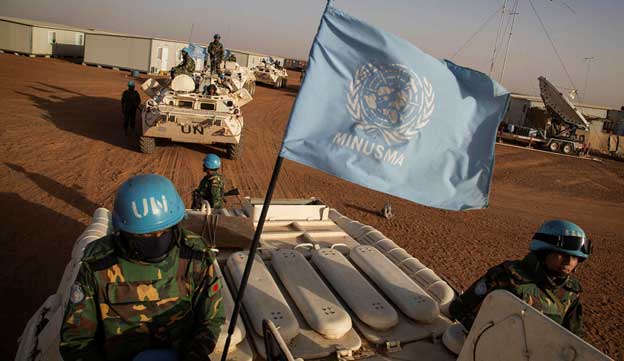
United Nations military personnel are the Blue Helmets on the ground. Today, they consist of over 70,000 troops contributed by national armies from across the globe and help keep the peace in military conflicts worldwide. Credit: United Nations

SAN FRANCISCO, USA, Sep 14 2021 (IPS) – Last weekend, U.S. corporate media continued a 20-year repetition compulsion to evade the central role of the USA in causing vast carnage and misery due to the so-called War on Terror. But millions of Americans fervently oppose the military-industrial complex and its extremely immoral nonstop warfare.


CodePink and Massachusetts Peace Action hosted a national webinar to mark the 20th anniversary of 9/11 — the day before Sunday’s launch of the Cut the Pentagon campaign — and the resulting video includes more than 20 speakers who directly challenged the lethal orthodoxy of the warfare state. As part of the mix, here’s the gist of what I had to say:

When we hear all the media coverage and retrospectives, we rarely hear — and certainly almost never in the mass media hear — that when people are killed, whether it’s intentional or predictable, those are atrocities that are being financed by U.S. taxpayers.

And so we hear about the evils of Al Qaeda and 9/11, and certainly those were evils, but we’re not hearing about the predictable as well as the intentional deaths: the tens of thousands of civilians killed by U.S. air strikes alone in the last two decades, and the injuries, and the terrorizing of people with drones and other U.S. weapons. We’re hearing very little about that.

Part of the role of activists is to make those realities heard, make them heard loud and clear, as forcefully and as emphatically and as powerfully as possible. Activist roles can sometimes get blurred in terms of becoming conflated with the roles of some of the best members of Congress.

When progressive legislators push for peace and social justice, they deserve our praise and our support. When they succumb to the foreign-policy “Blob” — when they start to be more a representative of the establishment to the movements rather than a representative of the movements to the establishment — we’ve got a problem.

It’s vital for progressive activists to be clear about what our goals are, and to be willing to challenge even our friends on Capitol Hill.

I’ll give you a very recent example. Two leaders of anti-war forces in the House of Representatives, a couple of weeks ago, circulated a “Dear Colleague” message encouraging members of the House to sign a letter urging the chair of the House Armed Services Committee, Adam Smith, to stand firm behind President Biden’s 1.6 percent increase in the Pentagon budget, over the budget that Trump had gotten the year before.

The point of the letter was: Chairman Smith, we want you to defend the Biden budget’s increase of 1.6 percent, against the budget that has just been approved by the Senate Armed Services Committee with a 3.3 percent increase.

That kind of a letter moves the goal posts further and further to the liking of the military-industrial complex, to the liking of war profiteers, to the liking of the warfare state. And so, when people we admire and support, in this case Rep. Mark Pocan and Rep. Barbara Lee, circulate such a Dear Colleague letter, there’s a tendency for organizations to say: “Yeah, we’re going to get behind you,” we will respond affirmatively to the call to urge our members to urge their representatives in Congress to sign this letter.

And what that creates is a jumping-off point that moves the frame of reference farther and farther into the militarism that we’re trying to push back against. For that reason, my colleagues and I at RootsAction decided to decline an invitation to sign in support.

I bring up that episode because it’s indicative of the pathways and the crossroads that we face to create momentum for a stronger and more effective peace and social justice movement. And it’s replicated in many respects.

When we’re told it’s not practical on Capitol Hill to urge a cutoff of military funding and assistance to all countries that violate human rights — and when we’re told that Israel is off the table — it’s not our job to internalize those limits that have been internalized by almost everyone in Congress, except for the Squad and a precious few others.

It’s our job to speak not only truth to power but also about power. And to be clear and candid even when that means challenging some of our usual allies. And to organize.

At RootsAction, we’ve launched a site called Progressive Hub, as an activism tool to combine the need to know with the imperative to act.

It’s not easy, to put it mildly, to go against the powerful flood of megamedia, of big money in politics, of the ways that issues are constantly framed by powerful elites. But in the long run, peace activism is essential for overcoming militarism. And organizing is what makes that possible.

Norman Solomon is the national director of RootsAction.org and the author of many books including War Made Easy: How Presidents and Pundits Keep Spinning Us to Death. He was a Bernie Sanders delegate from California to the 2016 and 2020 Democratic National Conventions. Solomon is the founder and executive director of the Institute for Public Accuracy.

  Source

A Milestone Anniversary Reiterates The Culture of Peace is a Movement, not a Revolution

Armed Conflicts, Civil Society, Featured, Global, Global Governance, Headlines, IPS UN: Inside the Glasshouse, North America, Peace, TerraViva United Nations

Opinion

Credit: United Nations

NEW YORK, Sep 13 2021 (IPS) – Today, on 13 September 2021, the UN Declaration and Programme of Action adopted by the General Assembly in 1999 will be turning 22.

You would recall that the 20th anniversary of The Culture of Peace of its adoption by the world’s highest multilateral body in 2019 was observed by the United Nations in an appropriate and befitting manner, as called for by the Assembly. It was an occasion for reiteration and recommitment by us all to create the culture of peace in our world, beginning with each one of us.


After the UN Charter, this is the only major document of the UN which focuses on peace in a most comprehensive manner. We need to pay increasingly more attention to this landmark document for its full and effective implementation.

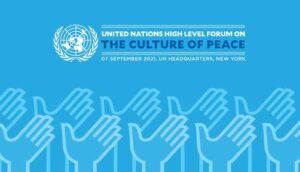
Last week another integrally-connected milestone gathering – the 2021 UN High Level Forum on The Culture of Peace – took place at the UN General Assembly convened by its President of the 75th session.

This day-long event organized on 7 September 2021 attained a special profile and attention as it was the 10th anniversary of the annual UN high level forums which was first initiated in 2012 during the 66th session of the Assembly by its then President, Ambassador Nassir Al-Nasser of Qatar.

His objective was to create a new platform for the culture of peace at the UN to be held on an annual basis for an opportunity to exchange ideas between the Member States and civil society organizations.

I happened to be his senior special advisor involved in conceptualizing and organizing that very first forum on 14 September, the day after the 11th anniversary of The Culture of Peace.

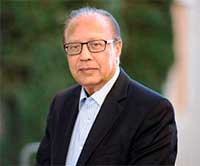
Ambassador Anwarul K Chowdhury

This year’s Forum was held in a hybrid format, both in-person and virtual platforms. With its focus on the theme “The Transformative Role of The Culture of Peace: Promoting Resilience and Inclusion in Post-Covid Recovery”, the Forum provided the opportunity to the participants and all stakeholders to exchange ideas and make suggestions on how to utilize the values of culture of peace in post-Covid recovery efforts, especially to ensure that the recovery, which unfortunately is yet to happen, is durable, resilient and inclusive.

The President of the General Assembly Volkan Bozkir of Turkey, under whose leadership the 2021 Forum took place, earned the grateful tribute of all stakeholders for his guidance, initiative and encouragement in convening and holding this 10th anniversary forum under extremely challenging circumstances very successfully. The Panel Discussion was a fitting conclusion to this remarkable gathering.

As I was preparing for the Panel Discussion, I ran into the historical perspective that this year will reach the quarter century mark of my close association with and advocacy for the culture of peace at the United Nations. In 1997, I took the lead in proposing along with some other Ambassadors in a letter to the newly-elected UN Secretary-General Kofi Annan to include a specific, self-standing agenda item of the UN General Assembly (UNGA) on The Culture of Peace.

A new agenda item was thus agreed upon after considerable negotiating hurdles and the new item was allocated to the plenary of the General Assembly for discussion on an annual basis. That is the basis for the annual resolutions on The Culture of Peace by the General Assembly from that year.

Under this item, UNGA adopted in 1997 a resolution to declare the year 2000 the “International Year for The Culture of Peace”, and in 1998, a resolution to declare the period from 2001 to 2010 as the “International Decade for The Culture of Peace and Nonviolence for the Children of the World”.

In the year after that the United Nations adopted its Declaration and Programme of Action on The Culture of Peace, a monumental document that transcends boundaries, cultures, societies and nations. It was an honor for me to Chair the nine-month long negotiations that led to the adoption of this historic norm-setting document by consensus.

As I mentioned Secretary-General Kofi Annan earlier, let me quote his thoughts on the culture of peace – I cite this quote often: “Over the years we have come to realize that it is not enough to send peacekeeping forces to separate warring parties. It is not enough to engage in peace-building efforts after societies have been ravaged by conflict. It is not enough to conduct preventive diplomacy. All of this is essential work, but we want enduring results. We need, in short, the culture of peace.”

Absolutely right – we need “enduring results” and for that we need “The Culture of Peace”. The Culture of Peace is not a hollow phrase – or an empty sentiment. It has a transformational opportunity for humanity – it has the energy and enthusiasm of many of us individually and collectively around the world.

These annual forums are very special in their involvement of civil society. These are the only High-Level Forums in the UN which are fully 50-50 gender balanced in their panel compositions. I am proud to say that this was possible as the Global Movement for The Culture of Peace (GMCoP) which is the civil society partner in supporting the Forum has been very diligent in upholding these values.

The concept note of this year’s Forum forcefully reiterated that “…it is an imperative to inculcate the values of The Culture of Peace among nations, societies and communities, with particular attention to the younger generation, through promotion of compassion, tolerance, inclusion, global citizenship and empowerment of all people.”

The theme focusing on the transformative role of the culture of peace in relation to Covid recovery provided a platform to explore and discuss multiple ways and means for empowering all segments of the society, towards a resilient recovery, including by ensuring vaccine equity, asserting universal vaccination as a public good, bridging digital divide, ensuring centrality of women’s equality and empowerment, harnessing the power of youth and highlighting education, health and overall wellbeing of children.

Bangladesh Foreign Minister Dr. AK Abdul Momen in his pre-recorded video presentation at the Forum articulated succinctly that “We must recognize that rebuilding from the COVID pandemic necessitates a renewed commitment and partnership of all stakeholders. Our efforts should be undergirded by the values of “The Culture of Peace’ as instilling these values contribute to building a resilient, inclusive and peaceful society.”

This year’s Forum heard the inspirational keynote speech by Dr. Beatrice Fihn, the Executive Director of 2017 Nobel Peace Prize winning organization ICAN, International Coalition for the Abolition of Nuclear Weapons, by calling on all that “On this 10th anniversary of the culture of peace, I am urging you all to continue and strengthen your work to promote education, sustainable and economic developments, human rights, gender equality, democratic participation and international peace and security.

She is the sixth Nobel Peace Prize laureate as the keynote speaker at The Culture of Peace Forums, which also make us proud that all of them are distinguished women Nobel Peace laureates. Complimenting Dr. Fihn for her keynote, I underlined that the essence of her keynote message has now become more pertinent in the midst of the ever-increasing militarism and militarization that is destroying both our planet and our people.

Video message by the activist and globally respected Mayor Kazumi Matsui of Hiroshima, the city which along with Nagasaki bear the scars of nuclear destruction and yearn for global peace, highlighted a major engagement of his world-wide peace organization announcing that “On the 7th of July this year, Mayors for Peace, which I preside over, adopted our new Vision, a set of concrete action guidelines, titled: “Vision for Peaceful Transformation to a Sustainable World.”

One of the objectives set forth by the new Vision is to ‘promote a culture of peace’.” Informing that the foundation of this policy change rests in the ability to build a consensus in favor of the abolition of nuclear weapons, he asserted that “To do this, first cultivating a culture of peace-a culture in which the everyday actions of each person are grounded in thinking about peace-is essential.

It is our belief, that this “bottom-up” approach is the most viable approach to peace, and is in line with the values which prompted the efforts of Ambassador Chowdhury and those in attendance.”

The Mayor’s passionate message included in the Peace Declaration, which he delivered in Hiroshima on 6th of August this year, advocated forcefully that “When like-minded people who seek peace unite for the same purpose, we can bring about a significant change in the world.”

Mayor Matsui encouraged the Forum by informing that “Mayors for Peace consists of over 8,000 member cities in 165 countries and regions around the world. With support from member mayors for our aforementioned cause, we will work to promote a culture of peace by expanding our membership and reaching out to a wider public.”

Often, I am asked how I assess the progress made so far since the Assembly adopted the Programme of Action in 1999. At this year’s High-Level Forum, as the Chair-Moderator of its Panel Discussion, I repeated my concern that lamentably, The Culture of Peace has yet to attain its worth and its due recognition at global and national levels as a universal mandate for the humanity to attain sustainable peace in the true sense.

When people wonder what are my plans to advance the concept in the UN system, my response verges on my advocacy message in general. The Declaration and Programme of Action on Culture of Peace adopted without any reservation is a landmark document of United Nations.

The Organization should, therefore, own it and internalize its implementation throughout the UN system. There seems to be lethargy in that direction because, I believe, the Secretary-General needs to make the culture of peace a part of his leadership agenda.

We should get that attention and engagement from him. Also, the UN entities, at least most of them, are preoccupied with what is known as “active agenda” which is a kind of daily problem-solving or problem-shelving.

That means no opportunities to focus on longer term, farsighted objective of sustainable peace with a workable tool that UN possess in the culture of peace programme adopted by its own apex body, the General Assembly. It is like a person who needs a car to go to work and has a car… but with a minimal interest in knowing how to drive it.

Many treat peace and culture of peace synonymously. There is a subtle difference between peace as generally understood and the culture of peace. Actually, when we speak of peace we expect others namely politicians, diplomats or other practitioners to take the initiative while when we speak of The Culture of Peace, we know that initial action begins with each one of us.

For more than two decades, my focus has been on advancing The Culture of Peace which aims at making peace and non-violence a part of our own self, our own personality – a part of our existence as a human being.

I believe The Culture of Peace is not a quick-fix. It is a movement, not a revolution!

Ambassador Anwarul K. Chowdhury is Founder of The Global Movement of The Culture of Peace (GMCoP); former Under-Secretary-General of the UN and the Chair of the negotiations which resulted in the consensus adoption of the UN Declaration and Programme of Action on The Culture of Peace in 1999. He was the Chair and Moderator of the virtual Panel Discussion at 2021 UN High Level Forum on The Culture of Peace on 7 September 2021.

  Source