South-South & Triangular Cooperation to Help Achieve UN’s Development Goals

Civil Society, Development & Aid, Editors’ Choice, Featured, Global, Global Governance, Headlines, IPS UN: Inside the Glasshouse, Poverty & SDGs, Regional Categories, TerraViva United Nations
Opinion

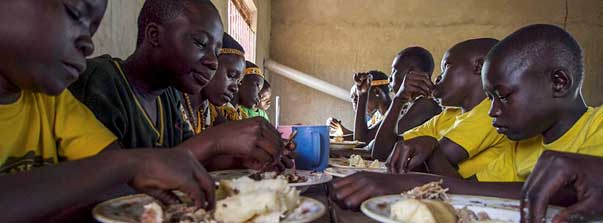
Students of the Lira Integrated Fish Farm in Uganda, a South-South Cooperation Facility for Agriculture and Food Security, eat their lunch. Credit: FAO/Isaac Kasamani

UNITED NATIONS, Sep 10 2021 (IPS) – The 2021 high-level commemoration of the United Nations Day for South-South Cooperation, organized ahead of the opening of the seventy-sixth session of the United Nations General Assembly, provided an opportunity to discuss Southern solidarity in support of a more inclusive, resilient and sustainable future while effectively responding to the global COVID-19 crisis across the global South.


The 2021 United Nations Day for South-South cooperation presented the opportunity for stakeholders to highlight concrete follow-up to the twentieth session of the High-level Committee on South-South Cooperation (HLC), which took place from 1 to 4 June 2021 in New York.

“South-South and triangular cooperation must have a central place in our preparations for a strong recovery”, says Secretary-General António Guterres, reminding us that “we will need the full contributions and cooperation of the global South to build more resilient economies and societies and implement the Sustainable Development Goals”.

The General Assembly High-level Committee (HLC) on South-South Cooperation met in June to review progress made in implementing the Buenos Aires Action Plan (BAPA+40) and other other key decisions on South-South cooperation.

This HLC session considered follow-up actions arising from previous sessions and hosted a thematic discussion on “Accelerating the achievement of the SDGs through effective implementation of the BAPA+40 outcome document while responding to the COVID-19 pandemic and similar global crises”.

The HLC hosted 75 member states – including a Head of State and Ministers from around the world – as well as 23 intergovernmental organizations, 25 UN entities, civil society and the private sector. More than 400 people participated during side events which HLC Bureau Members took the lead in organizing on issues of importance to the South.

Deliberations focused on actions arising from the Report of the Secretary-General to the nineteenth session, which proposed concrete ways to enhance the role and impact of the United Nations Office for South-South Cooperation, as well as the key measures taken to improve the coordination and coherence of UN support to South-South cooperation.

In terms of important messages and statements, Member States highlighted that COVID-19 has taught the world that South-South development cooperation is critical to an effective response to emergencies.

South-South cooperation was strongly reaffirmed as the means to support countries’ national development priorities, alignment with the SDGs, and the acceleration of achievement toward the 2030 Agenda.

South-South cooperation was also recognized as an effective approach to accelerate and deepen the efforts to build back better, healthier, safer, more resilient and sustainable.

It was emphasized that over the past decade, the world has witnessed the increase in the scale, scope, and diversity of approaches of South-South and triangular cooperation.

Countries of the Global South have strengthened institutional capacities for cooperation by formulating and implementing national development policies, strategies, and agencies, and by developing information and performance management systems for data gathering, expertise and technology mapping, and impact assessment.

With the strengthening of national capacities on South-South and triangular cooperation there is opportunity to collect and exchange evidence of how much South-South and triangular cooperation is being done, how it benefits people, and how to create institutional mechanisms to help countries align South-South collaboration with their national and regional agendas.

As the world fights the COVID-19 pandemic and strives to build back better, international development organizations must offer innovative, timely responses to remain relevant. This includes new forms of coordination based on more “coherent” and “integrated support” capable of unleashing change on the ground.

Traditionally, South-South and triangular cooperation has taken place among governments on bilateral terms. As development becomes more dynamic in nature and unprecedented in scale, South-South and triangular cooperation is now used to source innovation from wherever it is.

Also highlighted was that South-South and triangular cooperation is increasingly recognized as an important complement to North-South cooperation in financing for sustainable development.

UNOSSC will continue to promote, coordinate and support South-South and triangular cooperation globally and within the UN system. It will also continue to support governments and the UN system to analyse and articulate evolving and emerging trends, dynamics and opportunities in South-South cooperation.
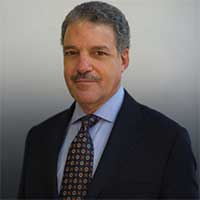
Adel Abdellatif. Credit: FAO/Isaac Kasamani

In response to Member States requests, UNOSSC consistently demonstrates strong convening power across the UN system and serves as secretariat of UN Conferences including BAPA+40. UNOSSC has developed research networks at the global level, compiling evidence of good practices in South-South cooperation toward achievement of the SDGs, and created a global network of think tanks on South-South and triangular cooperation. UNOSSC also offers the South-South Galaxy platform for sharing knowledge and brokering partnership. The Office also manages a number of South-South cooperation trust funds and programmes.

Given UNOSSC’s mandate to support South-South and triangular cooperation globally and within the UN system, the Secretary-General requested UNOSSC to coordinate the preparation and launch of the UN System-wide Strategy on South-South and Triangulation Cooperation for Sustainable Development with the engagement of the UN Inter-Agency Mechanism for South-South and Triangular Cooperation, and other stakeholders.

The Strategy’s objective is to provide a system-wide policy orientation to UN entities in order to galvanize a coordinated and coherent approach to policy, programmatic and partnership support on South-South and triangular cooperation and increase impact across UN activities at all levels: national, regional and global. Implementation is governed by each entity individually, based on its own mandate and programme of work.

UNOSSC is also currently developing its 2022-2025 Strategic Framework. It is an opportunity for the Office to catalyze the use of South-South and triangular cooperation to accelerate the speed and scale of action towards achieving the SDGs.

For example, the Office aims to offer a platform whereby: (i) countries of the Global South can exchange knowledge, develop capacities, and transfer technologies to address their own development priorities as well as coordinate and co-design solutions to shared development challenges; (ii) UN agencies, programs, and funds can strengthen their support to SSTC at the global, regional and country levels.

No country is too poor to contribute to South-South cooperation for development, and no country is too rich to lean from the South. All partners have important elements to contribute. So, it follows that triangular cooperation is an important element of our work.

The COVID-19 pandemic has laid bare severe and systemic inequalities.

The pandemic has also highlighted the importance of the digital revolution. Building institutional capacity in sub-Saharan Africa and LDCs through South-South and triangular cooperation is essential for countries to fully harness digital transformation and recovery.

Triangular cooperation is a flexible platform where partners can mobilize different funding capacities in support of developing countries’ priorities.

Triangular cooperation demands horizontality and shared governance approved by all parties. It is based on a clear respect for national sovereignty and the seeking of mutual benefit in equal partnerships.

Recovery from pandemic requires additional support, innovative development solutions and arrangements between public and private sectors. We must facilitate opportunities to expand development cooperation and its processes and to improve the effectiveness of multilateral cooperation. Fostering multi-dimensionality and multi-stakeholders approaches is the way forward to enhance development impact.

During the June HLC Member States highlighted that in the COVID and post-COVID era, the below priority areas for triangular cooperation could be considered: 1) health, 2) data infrastructure, 3) manufacturing capacity and supply chain for relevant medical material and equipment, as well as treatment; 4) solar energy and reducing carbon footprint; 5) a coalition for disaster resilient initiatives; and 6) currency swap arrangements from international financial institutions.

Adel Abdellatif is the Director, a.i., of the United Nations Office for South-South Cooperation. Before joining UNOSSC, he served as Deputy Director, a.i., and Senior Strategic Adviser in the Regional Bureau for Arab States of the United Nations Development Programme (UNDP). He came to UNDP following a two-decade career at the Ministry of Foreign Affairs of Egypt.
  Source

In a Watershed Year for Climate Change, the Commonwealth Secretary-General calls for Urgent, Decisive and Sustained Climate Action

Biodiversity, Climate Change, Combating Desertification and Drought, Commonwealth, Conferences, Conservation, COP26, Editors’ Choice, Environment, Featured, Gender, Global, Headlines, Humanitarian Emergencies, Sustainability, TerraViva United Nations, Water & Sanitation, Women & Climate Change

Climate Change

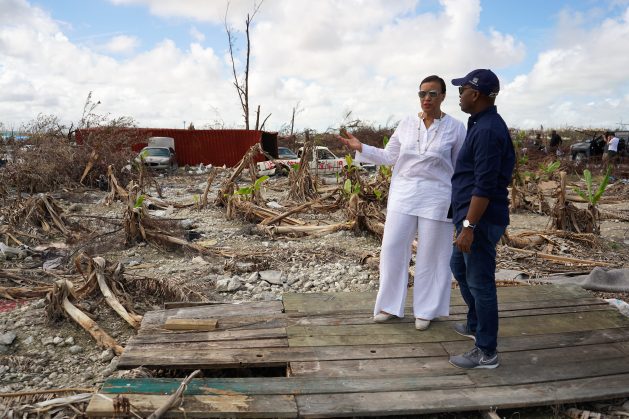
Commonwealth Secretary-General Patricia Scotland in The Bahamas after Hurricane Dorian. Scotland expressed concerns about the impact of climate change on exacerbating superstorms, like this 2019 event which took a massive human toll. Credit: Commonwealth

London, Sep 8 2021 (IPS) – This November, five years after signing the Paris Agreement and pledging to limit global warming to 2 degrees Celsius above pre-industrial levels, with a further target of below 1.5 degrees Celsius, world leaders will meet in Glasgow, UK amid COVID-19 pandemic shocks, rising hunger and an Intergovernmental Panel on Climate Change report that warns of more extreme temperature, droughts, forest fires and ice sheet loss due to human activity.


The leaders are expected to submit more ambitious targets to limit greenhouse gas emissions.

Out of the 197 countries which signed the Paris Agreement, 54 are members of the Commonwealth. That association has been helping its members to craft their national climate targets and follow through with implementation.

IPS spoke to Commonwealth Secretary-General the Rt Hon Patricia Scotland QC about the Association’s climate initiatives, the unique challenges faced by small states, its focus on gender mainstreaming and access to financing for critical adaptation and mitigation projects.

Scotland is the sixth Secretary-General of the Commonwealth and the first woman to hold the post. The Commonwealth is an association of 54 countries that work together to advance shared values enshrined in the Commonwealth Charter, including democracy, human rights and sustainable development.

Excerpts of the interview follow:

===========
Inter Press Service (IPS): Secretary-General, it is a pleasure to be able to interview you from a small community in Dominica. Dominica continues to be proud of not just being a member of the Commonwealth but the land of your birth and the home of the Baroness Patricia Scotland Primary School.

In Dominica, we know that the Commonwealth is invested in climate change, and I’m happy to be speaking to you about one of the most pressing issues of our time.

The IPCC report has been dominating the climate change headlines in the lead-up to COP26. It is a sobering report that calls for urgent, increasingly ambitious action by world leaders to tackle the climate crisis. What does the report mean for the 54 member countries of the Commonwealth?

The Rt Hon. Patricia Scotland QC (PS): The latest IPCC report is a stark warning for humanity. One cannot argue with the definitive scientific evidence in the report, which shows how climate change is intensifying on a global scale, with widespread impacts. Some of these impacts are unravelling on our television screens and even right before our eyes, including increasingly destructive extreme weather events – from monstrous super storms in the Pacific and Caribbean to deadly floods in Africa and raging wildfires in Europe.

In many ways, the report reaffirms many of the concerns the Commonwealth has been advocating for over the past 30 years, particularly in relation to small and other vulnerable states. It also challenges us, as an international community, to respond – urgently!

We no longer have any excuse not to act. We already have a blueprint for international cooperation in the form of the Paris Agreement. What’s more, emerging from the Covid pandemic, we have a critical window to set a new development path and build back better. What the world needs now is urgent, decisive and sustained climate action. As I’ve always said: if not now, then when; if not us, then who?

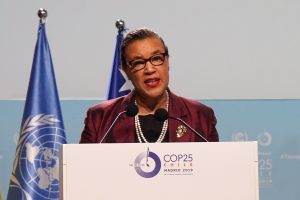
Commonwealth Secretary-General Patricia Scotland at COP 25. She was speaking to IPS ahead of the 26th UN Climate Change Conference of the Parties (COP26) to be held in Glasgow in October and November 2021. Credit: Commonwealth

(IPS): We know that Nationally Determined Contributions (NDCs) are important to gauge how each country intends to do its part to reduce global warming. We also know that new NDCs should be submitted every five years, but some countries have not met the deadlines. How is the Commonwealth assisting member countries with articulating and submitting their NDCs?

(PS): The Nationally Determined Contributions – or national climate plans – are at the heart of the Paris Agreement. I cannot overstate their importance. It is through the NDCs that we translate this global agreement into reality on the country level.

This is why the Commonwealth Secretariat is working with the NDC Partnership to support governments in enhancing and delivering their national climate plans under the Climate Action Enhancement Package (CAEP).

Through this initiative, we embed highly skilled Commonwealth National Climate Finance Advisers in countries to fast-track the process. In Jamaica and Eswatini, our experts help create frameworks to include climate-related spending in national budget planning. In Belize and Zambia, our advisers assist in developing national climate finance strategies.

Our flagship Commonwealth Climate Finance Access Hub has also deployed advisers in nine other countries across Africa, the Caribbean and the Pacific to help governments develop strong climate finance proposals for NDC implementation and wider climate action.

Commonwealth Secretary-General Patricia Scotland pictured in Seychelles. She is particularly concerned about the financing and support of small island developing nations with their climate change challenges. Credit: Commonwealth

(IPS): How can Commonwealth countries help each other with their NDCs submission and implementation?

(PS): The Commonwealth is a family of 54 equal and independent nations, spanning five geographical regions with a combined population of 2.4 billion people, 60 percent of whom are under age 30. Thirty-two members are considered ‘small states’, while we also have some of the world’s biggest economies along with emerging countries in our group.

One of the most valuable aspects of the Commonwealth is, therefore, its diversity and incredible capacity to be a platform for countries to share experiences on a wide range of global issues, examining what works and what does not work and cross-fertilising ideas. Building on this, the Secretariat organises regular virtual events, convening a range of actors from different regions and sectors to exchange knowledge and best practices for climate action.

We also welcome the generous financial and in-kind support from member countries such as Australia, the United Kingdom and Mauritius, which enables the work of key programmes like the Commonwealth Climate Finance Access Hub and the CommonSensing Project (funded by the UK). The CCFAH ‘hub and spokes’ model ensures a dynamic network of expertise and a useful mechanism for cross-regional dialogue and international cooperation around NDCs.

(IPS): Access to finance for climate adaptation and mitigation initiatives continues to be an issue of concern, particularly for small island developing states. What mechanisms have the Commonwealth Secretariat established to assist countries in financing their climate commitments?

(PS): Funding for climate action is absolutely critical for the survival of our small and vulnerable member states. However, a concerning paradox is that countries most vulnerable to climate change are often the ones that find it most challenging to access climate finance.

This is mainly because they have constrained resources or capacity. For example, a small island developing nation may have just a small ministry or unit dedicated to climate change, and a single officer, if any, focused on mobilising finance. When you look at the complex requirements, application processes and varying criteria set by different international climate funds, it is clear there is a gap.

Consequently, many countries can spend months and even years working through the process to access finance, delaying climate action whilst impacts are ongoing.

This is why the Commonwealth Climate Finance Access Hub (CCFAH) was initiated in 2015, whereby long-term Commonwealth national climate finance advisers are embedded in government departments to help them develop successful funding proposals, and who then pass on the knowledge and skills to local officials and actors. As of June 2021, CCFAH has helped raise US$ 43.8 million of climate finance, including US$ 3 million of country co-financing for 31 approved projects. More than US$762 million worth of projects are in the pipeline.

We are also looking at innovative ways to fill the data gap in project proposals. Under the CommonSensing Project, we work with UNITAR-UNOSAT, the UK Space Agency and others, to use earth observation technology and satellite data to build more robust, evidence-based cases for climate finance in Fiji, Solomon Islands and Vanuatu.

(IPS): According to agencies like UNICEF, women and girls are disproportionately impacted by climate change – a reflection of patterns of gender inequality seen in other areas. Are you satisfied with the work of the Commonwealth in ensuring gender integration across climate change initiatives?

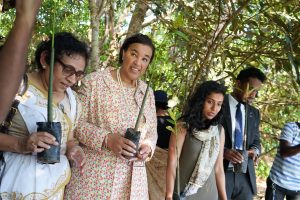
Commonwealth Secretary-General Patricia Scotland planting mangroves in Sri Lanka. Scotland believes that the diversity of the Commonwealth is its strength in tackling climate issues. Credit: Commonwealth

(PS): To tackle climate change, we simply cannot ignore the role of half the world’s people who are women. In fact, the most recent Commonwealth Women’s Affairs Ministers Meeting in 2019 reiterated gender and climate change as one of four priority areas on gender equality. It is absolutely a top concern for the Secretariat, which is committed to mainstreaming gender across its work programmes.

All our regional/national climate finance advisers are expected to mainstream gender and youth considerations in their operations. All their projects must be responsive to the needs of women, men, girls and boys, as equal participants in decision-making and beneficiaries of climate action.

For instance, the Commonwealth National Climate Finance Adviser in Jamaica helped the government secure a grant of US$270,000 from the Green Climate Fund for the project ‘Facilitating a Gender Responsive Approach to Climate Change Adaptation and Mitigation’.

The Secretariat recently launched a gender analysis of member country climate commitments. This research will help us better understand the current situation and inform future activities and programmes.


A Regional Agreement for Healthy Eco-Systems in Latin America & the Caribbean

Civil Society, Development & Aid, Editors’ Choice, Environment, Featured, Headlines, Latin America & the Caribbean, Poverty & SDGs, Regional Categories, TerraViva United Nations

Opinion

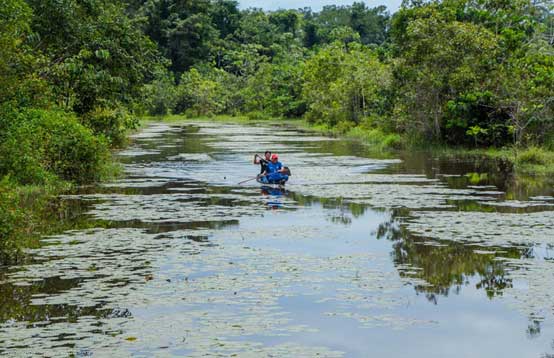
Community-led environmental monitors actively protecting the Amazon Rainforest’s biodiversity as well as their livelihoods in Ushpayacu, Pastaza River basin, Peru. Credit: UNDP Peru/Susan Bernuy

VANCOUVER, British Columbia, Sep 8 2021 (IPS) – In August 31st 2021, five Nations including Costa Rica – the country where the Escazú Agreement was adopted – announced publicly working towards a proposal for UN Human Rights Council to recognize globally the right to a clean, safe, healthy and sustainable environment at its 48th session in September.


In a world where social-ecological crises are all too prevalent, do we need a broader human rights frame where also empathy and hope through legal innovation have a prevalent place? Can we imagine a world in which everyone can effectively engage in public participation and have access information and justice?

Latin America and Caribbean (LAC), like other parts of the world, face significant social-ecological challenges. In 2018, the UN Economic Commission of LAC estimated that around 185 million people lived in situation of poverty.

As a result of the COVID-19 pandemic, these already high numbers are rising with more than one third of its 650 million population now living in poverty.

The pressures for healthy ecosystems in LAC range from climate change to pollution in land and water, and conversion of tropical forests to monoculture plantations. The LAC region presents a rising trend in major pressures on biodiversity with the highest proportion of threatened species on Earth.

Latin America – my home for many years – consistently tops the dire statistics of dangerous places to be an environmental human rights defender since Global Witness began to publish data in 2012.

Yet, there is also another story. A story of ordinary and courageous women and men, girls and boys. A story of empowered right-holders and responsible duty-bearers that day-to-day contribute to legal advances with a regional scope.

Vibrant grass-roots and civil society pushed and pulled in the negotiations of the Regional Agreement on Access to Information, Public Participation and Justice in Environmental Matters in Latin America and the Caribbean (Escazú Agreement).

Their continued energy and collective action together with the legislative, executive and judiciary in their respective countries, will be vital for the Agreement’s implementation.

The Escazú Agreement – that weaves together human rights law and environment law – entered into force on Earth Day in 2021, and has a been ratified by half of its 24 signatory countries.

In the words of the Secretary-General of the United Nations “…this landmark agreement has the potential to unlock structural change and address key challenges of our times.”

Human rights are legally binding obligations that have contributed to precipitate societal transformations such as the recognition of indigenous peoples, peasants and local communities individual and rights across many Latin America and Caribbean countries.

In my work – which for the past twenty years has focused on human rights and environment – I have seen how degradation of healthy ecosystems afflicts specially the rights of people in vulnerable situations.

However, I have also witnessed first-hand how people in vulnerable situations including women environmental rights defenders are often those triggering change to safeguard the rich biological and cultural diversity in the region. This biocultural diversity provides essential contributions to the economy and livelihoods.

I believe that is just as important to place a spotlight in innovations and people’s agency in LAC countries as it is to report on catastrophic environmental and social events affecting the region.

While reading international media, I often find a single narrative of catastrophe associated with the LAC region or certain countries. In my view, this narrative risks creating distance rather than bringing people together, emphasising differences rather than our equal human dignity that is at the core of human rights.

Leaving no-one behind involves recognizing the agency of all and supporting everyone’s participation in caring for our planet.

Rather than a narrative of fear and despair of the global scale of environmental challenges, action implementing the Escazú Agreement connecting local and global instruments can generate positive change.

The Escazú Agreement can build on innovative governance instruments such as participatory environmental monitoring schemes – in which people not only access but also generate environmental information.

Transnational collaboration can also help, for example the 2021 EU Parliament Resolution which calls the EU Commission and EU member states to support countries to implement the Escazú Agreement.

The Escazú Agreement can also synergize with the post-2020 global biodiversity framework and National Biodiversity Strategies and Action Plans required by the Convention on Biological Diversity. Other instruments include National Action Plans aiming to implement the UN Guiding Principles on Business and Human Rights (UNGPs).

Having already recognised the right to a healthy environment, the signatory Escazú Agreement countries have a historic opportunity to champion the global recognition of this right.

Already sixty nine States have endorsed a statement in favour of its by the Human Rights Council. Fifteen UN Agencies declared that “the time for global recognition, implementation, and protection of the human right to a safe, clean, healthy and sustainable environment is now”.

Complementary to the legal obligations that the Escazú Agreement generates, I consider that this agreement also provides an opportunity for right-holders and duty-bearers to place human rights narratives within a broader frame encompassing empathy and hope for present and future generations.

Strategically using legal innovations from the local to the global level can contribute to planetary stewardship and good quality of life in harmony with nature, leaving no-one behind.

Claudia Ituarte-Lima is a public international lawyer and scholar. She is researcher on international environmental law at Stockholm University, senior researcher at the Raoul Wallenberg Institute of Human Rights and Humanitarian Law and visiting scholar at School of Public Policy and Global Affairs at the University of British Columbia. Ituarte-Lima holds a PhD from the University College London and a MPhil from the University of Cambridge. Twitter: CItuarteLima

  Source

“Time Is A-Wasting”: Making the Case for CEDAW Ratification by the United States

Civil Society, Featured, Gender, Global, Headlines, Human Rights, IPS UN: Inside the Glasshouse, TerraViva United Nations

Opinion

Credit: UN Women

NEW YORK, Sep 7 2021 (IPS) – The U.S. is one of only a handful of countries that has yet to ratify the Convention on the Elimination of Discrimination against Women (CEDAW), rendering it “strange bedfellows” with Sudan, Somalia, Iran, Tonga, and Palau.


Twenty years ago, after Harold Koh*, made a clear foreign policy case for ratification, we develop three more reasons as to why now—during the Biden Administration— the U.S. is at a critical moment to finally ratify the CEDAW.

1) A New Public Reckoning: Advancing our Domestic Policy on Gender and Race Intersectionality

For four decades, Congress failed to rally enough votes to ratify the CEDAW, but today, social justice movements are building new momentum like never before.

At a time of a public reckoning spawned by the Black Lives Matter (BLM) and #MeToo Movements, the Convention represents an important vehicle to address institutional and structural sexism through an intersectional lens.

As Harold Koh argued in 2002, “a country’s ratification of the CEDAW is one of the surest indicators of the strength of its commitment to internalize the universal norm of gender equality into its domestic laws.”

The potential for the CEDAW to inspire necessary change in the US directly relates to some of the United States’ current policy objectives.

The National Strategy for the COVID-19 Response and Pandemic Preparedness (2021) illustrates the Administration’s commitment to place women and girls at the center of global recovery. The Rescue Plan recognizes that COVID-19 has exacerbated domestic violence and sexual assault, thereby creating a “shadow pandemic.”

As the Biden Administration looks toward the reauthorization of the Violence against Women Act (VAWA), it must now look to the horizon—to the ratification of the CEDAW. Ratifying the Convention will give the Biden Administration significantly more legitimacy in its effort to end violence against women and would demonstrate the solidarity needed to achieve this goal.

As President Biden himself stated, the renewal of the VAWA “should not be a Democratic or Republican issue—it’s about standing up against the abuse of power and preventing violence.”

Our data analysis of the State Party Reports to the CEDAW Committee from 2016 to 2020 reveals a significant focus by the CEDAW Committee on two issues that are central to the Biden Administration and to the United States’ national security and foreign policy in general: (1) violence against women; and (2) an intersectional focus on gender.

In every Concluding Observation across all five years between 2016 and 2020 (107 countries reported to the CEDAW Committee during this period), the CEDAW Committee mentioned intersectionality and gender-based violence 100 percent of the time.

2) Ratification of the CEDAW is part of the U.S.’s Transformative Power Arsenal: From Soft Power, Smart Power, to Transformative Power

In response to global challenges, CEDAW continues to be one of the standard-setting policy tools to advance gender and intersectional equality and we address this in our analysis of CEDAW’s impact on drafting domestic legislation, national constitutions, judicial decision making and in changing the national conversations and public discourse in countries in the Arab region.

As Ambassador Melanne Verveer, one of the authors, testified before Congress in 2010: “[I]t is true many countries do not live up to that treaty, but we know how effectively that lever is for rights advocates to seize and to use effectively to bring about the kind of consistent application of the principles of the treaty to their own lives.”

3) The Women Peace and Security and its Linkages to CEDAW

The Women, Peace, and Security (“WPS”) agenda is one gender issue that has near total bipartisan support, as demonstrated by over a decade of concerted legislative efforts by both Democrats and Republicans.

We explore how the United States’ strong bipartisan commitment to the WPS agenda and how its global security goals can be advanced by ratifying the CEDAW. From the United Kingdom to Afghanistan, the CEDAW has played a role in strengthening commitments to the WPS agenda.

The United States has emerged as a global leader in WPS, both by spearheading U.N. Security Council Resolutions to condemn sexual violence against women and girls in armed conflict, and by codifying its commitment to pursuing the WPS agenda in domestic law.

Former U.S. Secretary of State Condoleezza Rice introduced what later became Security Council Resolution 1820 (2008). In proposing this Resolution, Secretary Rice confirmed that sexual violence against women in conflict was an imperative which the U.N. Security Council was charged to address.

A year later, Security Council Resolution (SCR) 1888, introduced by then Secretary of State Hillary Clinton, reaffirmed Secretary Rice’s premise, acknowledged that the CEDAW is inextricably connected to women’s security.

The U.S. needs to leverage the bipartisan support for the WPS agenda to piggyback support for the Convention. After all, global security is in our best national interest.

In 2020, during the 75th Anniversary of the U.N., the CEDAW Concluding Observations for Afghanistan, the Congo, and Zimbabwe had sections dedicated specifically to WPS, providing substantial suggestions for improvement in state action in this issue area.

For instance, the CEDAW Committee observed in detail that “Afghan women are systematically excluded from formal peace negotiations, such as the 2018 Kabul Process and the negotiations that followed the conference held in Geneva in 2018.”

Today as we bear witness to the fall of Afghanistan, history will judge us on how we protect the rights of women and girls in Afghanistan.

As we fight the forces of a pandemic, the global and domestic recovery will be measured by whether it created greater gender and racial equity.

Ultimately, the arc of American engagement, both in foreign and domestic policy, must bend toward ratifying the CEDAW. After decades of lawmakers failing to muster the political will for ratification, the demand for change has now reached a fever pitch both nationally and globally.

The Biden administration must rally bipartisan support to ratify the CEDAW as a tool to advancing the human rights of women around the world. In then- Senator Biden’s words in 2002, “Time is a Wasting” for the U.S. ratification of the CEDAW.

This summary is excerpted from the article by Rangita de Silva de Alwis, faculty at Penn Law and Hillary Rodham Clinton Fellow on Gender Equity at GIWPS, Georgetown (2020-2021); and Ambassador Melanne Verveer, the first U.S. Ambassador for Global Women’s Issues. Rangita thanks Dean Theodore Ruger, Dean of Penn Law for his support in writing the paper.

*Footnote: On September 10th, Columbia Law School’s Journal of Transnational Law will convene a High Level Roundtable highlighting “Time Is A-Wasting”: Making the Case for CEDAW Ratification by the United States by Professor Rangita de Silva de Alwis and Ambassador Melanne Verveer to be published in Volume 60 of the Columbia Law School’s Journal of Transnational Law. The goal of the High-Level Roundtable is to raise national attention to elevate the importance of the CEDAW ratification ahead of the 76th Session of the UN General Assembly.

Commentators will be led by Harold Hongju Koh– former Dean of Yale Law School, Sterling Professor of Law, former Legal Adviser and Assistant Secretary of State for Democracy, Human Rights and Labor, currently Senior Advisor in the Office of the Legal Adviser, U.S. State Department for the Biden Administration and repeat witness before Congress on behalf of the CEDAW.

The Roundtable will be opened with a welcome by Dean Gillian Lester, Dean of Columbia Law School. More information on remote participation in the Roundtable can be found here: Roundtable landing page

  Source

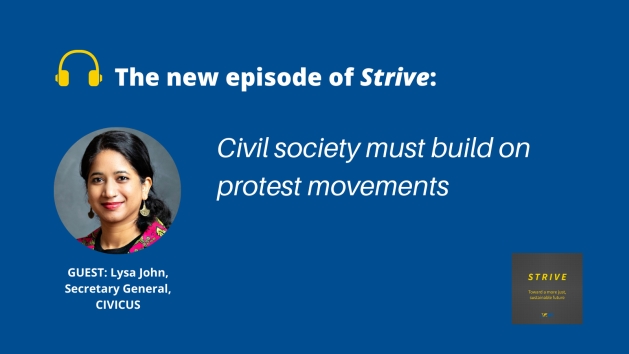
Civil Society Must Build on Protest Movements – Podcast

Civil Society, Featured, Gender, Global, Headlines, Human Rights, Multimedia, Podcast, TerraViva United Nations

Civil Society

In these tumultuous times, what civil society must do better is channel the energy of the movements on the streets into medium and long-term projects to build alternatives to existing structures, says Lysa John, Secretary General of CIVICUS

KATHMANDU, Sep 6 2021 (IPS) – 2020 was a year of tremendous upheaval. The murder of George Floyd, followed by global Black Lives Matter protests, Covid-19 and the stark light that the pandemic shone on inequality within countries and between the global north and south, protests and brutal repression after elections in Belarus, ongoing demonstrations for climate action led by youth around the world, to name just a few.


Civil society, that is all sectors of our lives that are not family, government or for-profit, played a central role in all of these movements. But are those actions leading to positive results that will change people’s lives for the better?

Today’s guest, Lysa John, Secretary General of CIVICUS, a global alliance of civil society groups, responds unequivocally yes. She points to past examples like the campaigns to recognize women’s right to vote and for legal recognition of gay rights.

In these tumultuous times, she argues, what civil society must do better is channel the energy of the movements on the streets into medium and long-term projects to build alternatives to existing structures.

In these tumultuous times, what civil society must do better is channel the energy of the movements on the streets into medium and long-term projects to build alternatives to existing structures, says Lysa John, Secretary General of CIVICUS

  Source

The Future of Food & Water Systems in Pakistan & Central Asia?

Asia-Pacific, Civil Society, Development & Aid, Editors’ Choice, Environment, Featured, Food and Agriculture, Headlines, Poverty & SDGs, Regional Categories, TerraViva United Nations, Water & Sanitation

Opinion

Clara Colton Symmes, Princeton-in-Asia Fellow, International Water Management Institute (IWMI), Sri Lanka

 
In an Interview with Dr Mohsin Hafeez, Country Representative – Pakistan, Regional Representative – Central Asia

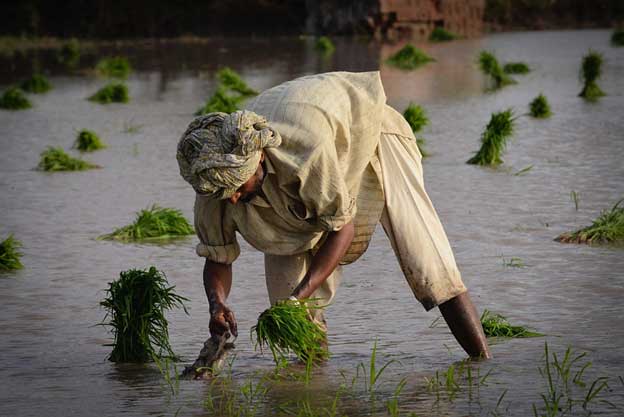
Farmer working in a paddy field in Pakistan. Credit: Faseeh Shams / IWMI

COLOMBO, Sri Lanka, Sep 3 2021 (IPS) – An intense monsoon season in Pakistan means the country’s food system faces the challenge of both extreme floods and extended droughts.

In an effort to address these challenges through cross-sectoral collaboration, Dr. Mohsin Hafeez, IWMI’s Country Representative for Pakistan and Regional Representative for Central Asia, convened a regional dialogue in advance of the UN Food Systems Summit (which is scheduled to take place at the United Nations, September 23) .


Human actions are at the root of much water scarcity, but these international dialogues are an opportunity for humans to be a part of the solution by working to reconcile our damages through transforming how we approach food systems.

Pakistan ranks 88th out of 107 countries on the Global Hunger Index and extreme weather, intensified by climate change, has made farming a challenging venture there. Much of Pakistan’s food is now imported from overseas.

Dr. Hafeez’s work centers around improving the resiliency and efficiency of Pakistan’s water systems. This includes innovating water capture and storage systems in Islamabad and Rawalpindi, where he is working to introduce nature-based solutions like recharging groundwater with rainfall runoff.

By convening April’s regional dialogue and organizing four provincial dialogues in the time since, Dr. Hafeez provided the collaborative platforms necessary for reaching sustainably-managed water sources in his region. It is only through cross-sectoral dialogues and work that Pakistan will achieve sustainable food systems management.

“There is an urgent need for promoting inter-sectoral cooperation through evidence-based information to ensure water-food-energy security and environmental sustainability for food system transformation in Pakistan,” Dr. Hafeez said.

The pre-summit hosted in Italy was another opportunity to bring together diverse stakeholders in food systems in the leadup to the UNFSS. On the IWMI blog, we will be exploring what country managers in Uzbekistan and Pakistan hope to achieve through the UNFSS process.

A Q&A with Dr Hafeez:

How are water and food systems connected?

Water supply systems are first and fundamental in food systems. In Pakistan more than 90 to 95% of our total water resources is used for irrigating crops. It’s a water system intrinsically linked with the food system.

When there is a water shortage, we see a direct impact on food production because this is an arid environment, and farmers are not able to do agriculture without the artificial applying of water.

What are the most pressing challenges facing food and water systems in your region?

Pakistan is a food insecure country. We don’t even have food to eat, let alone nutritious options. Around 45% of the children have stunted growth. People don’t have enough food to meet their caloric needs. We’re importing all the other major crops in the last 4 to 5 years from overseas.

And the food system is dependent on water. When we don’t have enough water, the farmers are not able to grow anything, which impacts the lives and livelihoods of everyone.

If you’re talking about even the linkages between the water system and food system: the current water storage systems are only able to cope for 30 days of water supply.

Then there is also the issue of water quality. There is a lot of wastewater and effluents that mix directly into the into the water supply system including the canals and water networks. This also impacts the food system, so that what we grow may not have a same nutritious value.

Why is water storage so essential in Pakistan?

80% of annual rainfall happens during the monsoon season, which is around 60 to 90 days between July and September. The remaining nine months we receive only 16-20% of the water supply.

Water systems here are not resilient, so water storage capacity is quite low. And when we face extreme climate shocks like droughts, this stresses the water and food systems. Either we are facing three months of floods, or nine months without enough water.

What would a water secure world look like for Pakistan and what needs to happen in order to achieve that?

We need to make water systems more efficient, and that will only happen if we improve the efficiency of the irrigation system, which would make water more available for the other sectors. We also need to make water systems more resilient.

There has been a lot of focus on building large dams, but they require a lot of capital resources. I believe we should also focus on improving water resilience through nature-based solutions like rainwater harvesting and groundwater recharging at the localized level.

We need local, nature-based solutions and the government of Pakistan is planning to introduce 3000 small ponds across Pakistan so farmers will have more water available.

A holistic approach and reliable database on water resources and their usage across Pakistan is key to achieving food, water, and energy security. We are the fifth most climate-vulnerable country in the world and there is an urgent need for promoting inter-sectoral cooperation through evidence-based information.

We also need groundwater management policy. Even though we have a national water policy and provincial water acts, we don’t have a comprehensive groundwater plan. Ministries, like those for climate change and food security policy, must stop working in silos and collaborate.

The regional dialogue we convened did this. It brought ministries together and made them talk about how each could help the other in the water, food, energy (WEF) nexus.

How were you able to give voice during the dialogue to historically underrepresented groups like smallholder farmers, women, children, and rural communities?

We invited people from various government and private sectors and farmers. But because they were held in English, we faced the challenge of a language barrier. Many rural farmers do not speak English. So, we invited some and did what we could to help them with translators.

Another challenge is that this dialogue was conducted virtually, and many smallholder farmers did not have access to that. So, we had only two or three farmers participate.

But we had many government agencies that are directly involved in the farmers community. They were able to represent the farmers and a group called the Farmer’s Federation was also able to attend.

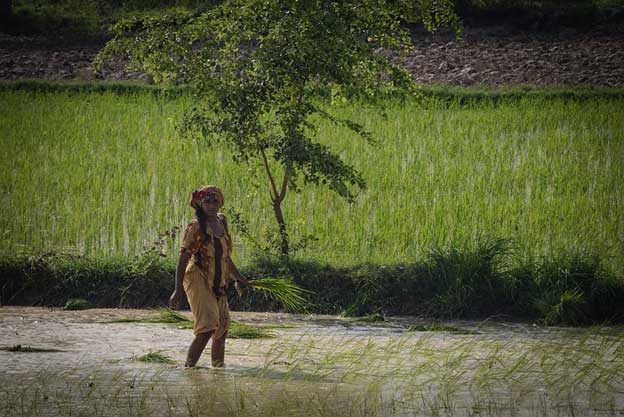
Woman working in a paddy field. Credit: Faseeh Shams / IWMI

How do events like the regional dialogues and then the larger UNFSS affect water systems in your region? And what would you like to see as a result of the UNFSS?

When people talk about the food systems, they talk about production, the food value chain, and consumption. And they often ignore the importance of water. This is really the first time in 10 years when we’re talking holistically about food in a way that includes every aspect of the system.

At a recent provincial dialogue, part of the Member State Dialogue, we had people working on nutrition, agriculture, the value supply chain, traditional agriculture, water, and policy. It provided a platform where people worked together and thought beyond their own specialty: identifying real issues and how they could be improved in the future together.

Pakistan joined a UNFSS coalition for developing countries facing food insecurity. The Pakistani government is emphasizing the need to build resilient societies and improve food accessibility. There will be actions and pledges made to invest more into food systems areas which have been typically ignored.

What upcoming IWMI projects do you think will affect the kind of food system transformation desired by the UNFSS?

IWMI and International Food Policy Research Institute are designing a CGIAR Initiative to scale up the integrated management of water, energy, food, land, biodiversity, and forests for inclusive, sustainable development in transboundary river basins in the context of a changing climate.

The NEXUS Gains Initiative will be a game changer, but also many other IWMI projects will be helpful in interconnected thinking about improving the food security and water systems.

As IWMI and the other One CGIAR centers work together, we will be able to make change in a more systematic, holistic way that will change the mindset around food systems and ultimately improve the resilience of water supply systems.

What is making you feel hope about the future of food and water systems in Pakistan and Central Asia?

The current government is Pakistan is saying that food security is one of their highest priorities. They have initiated so many social initiatives in that field, including a resource program where they are providing food to vulnerable communities, with a focus on gender and the stunted growth of children.

The government also emphasized a need to understand the challenges in agriculture sector, linking from the basic production system towards the value supply chain, because as I mentioned that 22% of the system level losses are there.

  Source