UN Volunteers – and Their Over Reaching Mission

Civil Society, Democracy, Featured, Global, Headlines, Human Rights, IPS UN: Inside the Glasshouse, TerraViva United Nations

Opinion

UN Volunteers Day is commemorated annually on December 5.

KATHMANDU, Nepal, Dec 4 2023 (IPS) – If there is an agency or program within the UN that I really admire and wish the best for, this is the United Nation Volunteers or UNV. Its overarching mission, mandate and key objectives are paramount for humanity.


Unfortunately, volunteerism is neglected worldwide and its transformative importance never fully understood. There are no single issues affecting our planet and the whole humanity that does not require volunteerism.

That’s why UNV that is technically part of UNDP, has a big role to play. Yet, to some extents, UNV is missing into action as it has been unable to raise to the challenges. It can be an issue of lack of availability of resources or it could be the complex red tape system bogging down the whole UN System.

It can be simply the fact that each agency and program within this galaxy of UN entities is simply not too adept at mainstreaming and embed volunteerism in their operations. For sure, UNV does not lack expertise nor very passionate and capable persons, some of whom I have been able to collaborate with in the past.

They really believe in the cause, in the promotion of volunteerism and they really want to push hard so that development can fully leverage its power. But somehow, considering its expertise, UNV is underperforming.

Probably one of the biggest challenges for an organization like UNV is the difficulty in engaging and involving stakeholders on continuous basis. There are actually some big success stories for UNV on this regard.

For example, the Global Technical Meeting held in July 2020 after months of preparations was a truly, groundbreaking initiative.

The end result was an important blueprint to embed volunteerism in the global development agenda, ensuring that volunteerism could really placed at the center of the pursuing the Agenda 2030 and the Sustainable Development Goals.

Getting the Global Technical Meeting in place took months of preparation and several online discussion groups were created where stakeholders, practitioners and citizens passionate about volunteerism, could contribute. Enabling such forums was remarkable and a true achievement for UNV.

Yet after more than three years since then, no real follow up mechanism has been established. The initial excitement that a new level of global discussion on volunteerism had been achieved, then rapidly declined.

Now I am wondering why in the recently held SDG Summit, to my best knowledge, there was no serious debate on what volunteerism can do to support the implementation of the Agenda 2030.

It is not surprising, therefore, that there has not any apparent and inclusive exercise to revise the implementation of The Plan of Action to Integrate Volunteering into the 2030 Agenda.

Another example is the organization of the International Volunteer Day (IVD) that is celebrated December 5. This can be a great opportunity not only to raise awareness but should also be seen as a key platform to engage and mobilize people throughout the year.

So far, the practice, at countries level, has been to have a sort of coordination mechanism one or at the most two months before the celebrations. While it is important to bring practitioners and stakeholders together for IVD and while I always considered these engagements meaningful, I always felt that we were missing an opportunity.

I always believed that IVD should be not only a big carnival, a moment of joys where local volunteering champions are recognized and duly acknowledged. This component is essential and always needs to be on the front.

At the same time, the day should be used to talk about the less glorious and yet important nitty gritty of policy making. Many might not think of this aspect as strategic.

Yet, if we really want to elevate volunteerism at the center of the Agenda 2030, it is essential to discuss about policies and legislations that can truly empower volunteering efforts for social change.

Think for example about the process of localizing the SDGs? Can’t it be a phenomenal way of engaging and involving citizens? Participation is also a key aspect of volunteerism and a key tenant of the broader concept of civic engagement.

Yet the most important function for IVD is to rally together the whole “movement”, all those love volunteerism: academicians, practitioners, experts, representative of national and international NGOs, donors but also students and any citizens passionate about it.

This means coming forward with extensive planning and collective capacity to execute them, a process that requires months and months of preparation. By my own observation, it was way too late, towards the end of November, when UNV started sharing information about today’s main message.

Even deciding on the theme of IVD could become an exercise of participation with rounds of consultations, ideas contests to provide the best and more meaningful ideas for it. In a way, IVD, in the way I see it, should be seen as the pinnacle of a whole year coordination exercise, not only an end into itself but a catalytic event that stirs the movement to action throughout the year.

UNV has a unique role to help shape this whole dynamic. Conducive to it would be the creation of coordination mechanisms that bring together all the stakeholders. These could take different shapes and forms, from informal working groups to more formal networks and forums.

Based on my own experience, it is wise to start small and then build momentum gradually, step by step. These mechanisms would not only work as info sharing and coordinating platforms but also as groups that plan and execute joint events and activities all year long.

For example, running two or three of such activities, like discussion forums, or awareness trainings at school levels could precede and build excitement around the final big event, IVD. There is no other player that has the mandate and convening power like UNV to bring together such collaborations.

At the same time, I am fully aware that resources at disposal for UNV are not endless especially in times of crises and UNV local country offices have to balance many competing priorities.

That’s why better and more strategic coordination at local level could tremendously help UNV pursue its mission. Another one that deserves attention is the mobilization of UNV Volunteers.

I always felt something odd about such programs. In reality, the program, even if admirable, is basically a full-time paid job. If you compare its stipends or allowances with formal UN jobs, it is clear that a member of UNV just receives a decent remuneration.

Yet the reality is different and more complex. Compared with many local jobs offered by local NGOs, that same package disbursed to an UNV volunteer looks like an awesome salary.

But the compensation aspect is only one problematic side of the equation. The other is the fact that this form of full-time volunteerism promoted by UNV risks to create further confusion about some of the key tenants that are enshrined into it.

I am referring to the cooperative, solidarity driven and generosity filled self-conscious decision of helping, even in very organized forms, others. By no means, I am implying that full time volunteering is intrinsically and necessarily wrong.

It is one of the many ways to support a cause and act selflessly. Yet there are several other experiences of it that are better enabling positive change at grassroots levels, closer to the beneficiaries that can, more easily, become true partners in advancing social justice.

In these examples, international full-time volunteers do get some allowances that provide for their basic expenses and live safely and with dignity. Yet these “privileges” are not too detached from the reality of the hosting countries.

National and International UNV Volunteers are on many ways promoters of positive development outcomes and should be praised for their commitment. Yet there is something wrong when many join the UNV volunteer program, either nationally and internationally, because they know that this is a great launchpad to full fledged careers with the UN.

I have no doubt that UNV is uniquely positioned to enable systemic social and economic progress.Its mandate and mission are more important than ever. Yet from engaging in the global discussions to achieve the Agenda 2030 to rethinking the role of citizens in the delivery of essential services, including ways people can participate in the decision making, volunteerism is the hidden gem of the global development agenda.

In this International Volunteer Day, let’s praise the accomplishments so far realized by UNV. At the same time, let’s work together to ensure that a more agile, proactive organization can turn itself into a much stronger hub of activism, social change and dynamic discussions.

Volunteerism is a too important aspect of our humanity.Only a revamped UNV can leverage it and help it truly become indispensable dimension of our lives, not only in the South but also the North as well.

Simone Galimberti is the Co-Founder of ENGAGE and The Good Leadership. He is based in Kathmandu, Nepal.

IPS UN Bureau

  Source

Human Rights Crucial as Wealthy Nations Reap Energy Transition Benefits

Civil Society, Climate Action, Climate Change, Climate Change Finance, Climate Change Justice, COP28, Development & Aid, Editors’ Choice, Environment, Featured, Global, Headlines, Human Rights, Humanitarian Emergencies, Sustainable Development Goals, TerraViva United Nations

COP28

Yamide Dagnet, the Director for Climate Justice at Open Society Foundations, delves into the intricacies of the negotiations at the United Nations Framework Convention on Climate Change (UNFCCC) 27th session of the Conference of Parties (COP28) in Dubai.

Yamide Dagnet points to the urgency of climate action to meet the Paris Agreements, while protecting frontline communities as about 70 000 attendees grapple with issues during the UN Climate Change Conference COP28. Credit: COP28/Walaa Alshaer

Yamide Dagnet points to the urgency of climate action to meet the Paris Agreements, while protecting frontline communities as about 70 000 attendees grapple with issues during the UN Climate Change Conference COP28. Credit: COP28/Walaa Alshaer

DUBAI, Dec 3 2023 (IPS) – As the world converges for COP 28, the urgency of addressing climate change has never been more palpable. In an exclusive interview with IPS, Yamide Dagnet, the Director for Climate Justice at Open Society Foundations, delves into the intricate details of this pivotal conference—from the unprecedented start to key challenges and opportunities in climate finance. She offers a comprehensive and nuanced perspective on global climate discourse.


As COP 28 unfolds, this interview provides a panoramic view of the complex landscape of climate action. From the challenges of climate finance to the critical role of the private sector and the ethical considerations in technology deployment, Dagnet offers a roadmap for navigating the intricate terrain of climate change, including an urgent call to action urging global leaders, businesses, and civil society to address the challenges that lie ahead collaboratively. As the world grapples with the consequences of climate change, the interview serves as a compass, guiding stakeholders towards a more sustainable and resilient future, and her voice clearly articulates her views that while the just energy and industrial revolution hold immense potential for economic growth in resource-rich nations, it is crucial to protect the rights of frontline communities and activists.

The Start of COP 28

The conference’s initial day set an unprecedented tone. “Positive developments like the creation of the Loss and Damage Fund and sizeable pledges, especially from countries like the UAE, Germany, and the EU, are highlights of this momentum’s emphasis on international solidarity; I hope that the momentum generated on day one will permeate the entirety of COP 28,” Dagnet told Inter Press Service.

Yamide Dagnet, Director for Climate Justice at Open Society Foundations. Credit: TJ Kirkpatrick, Open Society Foundations

Yamide Dagnet, Director for Climate Justice at Open Society Foundations. Credit: TJ Kirkpatrick, Open Society Foundations

Wealthier Nations and Climate Change

Dagnet delves into the role of wealthier nations in the fight against climate change. “While there is an expectation for these nations to fulfil their commitments, reality paints a different picture. Adaptation finance has not seen the necessary investment,” she said while pointing to a critical gap in addressing the immediate impacts of climate change. Looking at the financial dynamics, Dagnet dissected the pledges made by key nations and highlighted the ongoing challenges in reaching the financial targets made since 2009 and outlined in the Paris Agreement. Dagnet contends that “fulfilling pledges and demonstrating seriousness are essential steps for wealthier nations to regain trust and ensure a unified front in the fight against climate change.”

Key Trends in Climate Change Policy

Transitioning into a discussion on key trends shaping climate change policy in the next decade, Dagnet underscored the critical importance of aligning investments with the goals of the Paris Agreement. A concerning trend emerges as she highlights the “doubling of subsidies for fossil fuels, signaling a misalignment with the imperative to transition to clean energy. There is a need to redirect investments toward clean energy, adaptation, and activities in line with the Paris Agreement.”

Delving into philanthropic organizations’ role in supporting climate action, Dagnet says that while some positive dynamics have emerged on loss and damage, much work remains to be done. “Let us not forget that economic and non-economic losses and damages cost several hundreds of thousands of dollars each year.” She says there is a need to prioritize investments in supporting adaptation efforts, acknowledging the urgent need for resilience in the face of climate change impacts. She is hopeful as diverse group of eleven philanthropic organizations committed on December 2 to develop a joint strategic plan, joining the global chorus of voices calling for increased funding and action on climate adaptation.

Balancing Economic Goals and Climate Policies

Dagnet also highlights the challenge of balancing economic goals while adhering to climate policies, emphasizing the integration of climate policy into the broader development agenda. She illustrated the economic risks posed by climate-related disasters, citing examples of hurricanes causing widespread destruction. “Resilient infrastructure is vital, as even substantial economic gains can be wiped out if development projects are not resilient to floods, hurricanes, and other climate-related events,” she said.

Exploring the business sense of investing in reducing emissions, Dagnet highlights that, with the decreasing costs of renewable energy, it is not only an environmental imperative but also financially prudent. “The cost-effectiveness of renewable energy makes a compelling case for nations to prioritize emission reduction efforts, aligning economic goals with sustainable development,” she said.

It also means recognizing that the rare transition minerals needed to scale up the use of renewable energy require a just energy and industrial revolution, which holds immense potential for economic growth in resource-rich nations.

“However, the risk of human rights abuses and other adverse effects should be taken into account and mitigated by focusing on value addition in mineral supply chains by reconciling with the protection of activists and frontline communities, including people’s rights in land use, labor, and conservation of cultural heritage.”

The Role of the Private Sector

Dagnet further delves into the role of the private sector in climate action, focusing on areas such as adaptation and loss and damage. She acknowledged the challenges faced by the private sector in engaging with these aspects, emphasizing the need for them to integrate climate risk into their business models. “While adaptation may not seem immediately profitable, the long-term consequences of inaction are severe,” she says. She suggests that insurance companies need to review their business models, considering how they can better contribute to tackling losses and damages.

Technology for Addressing Climate Change

Turning to the role of technology in addressing climate change, Dagnet discussed the potential and pitfalls. She advocates for a “balanced approach that leverages indigenous knowledge alongside technological solutions. Dagnet highlights the importance of proper assessment, monitoring, safeguards, and global governance to mitigate the risks associated with less-proven and more controversial solutions like geoengineering, carbon dioxide removal, and carbon capture and storage. This is critical for responsible technology deployment, recognizing that while technology can offer solutions, it must be guided by ethical considerations, an understanding of potential risks, and the design of appropriate guardrails to minimize unintended adverse impacts.” She suggested that a holistic approach, which includes both technological advancements and indigenous knowledge, together with a more participatory process bringing various constituencies from both the global north and global south, provides a more robust foundation for addressing climate change challenges in an innovative and equitable way.

Civil Society’s Accountability Role

Dagnet further highlighted the vital role of civil society in holding governments accountable for their climate commitments, including their financial pledges. She contends that efforts to “measure progress and scrutinize government actions are essential tools for civil society to hold governments accountable for their commitments.” She also acknowledged the power of public pressure to drive governments to take more ambitious climate action. Dagnet emphasized the need for a multi-faceted approach, combining legal frameworks, grassroots movements, and international collaboration based on robust data and supported by nuanced and more sophisticated communication strategies, to hold governments accountable on the global stage effectively.

Assessment of International Agreements

Dagnet provided a sober assessment of the international agreements reached so far in the fight against climate change. She also acknowledged that the world is far from achieving its climate objectives, and the window to meet temperature goals is shrinking rapidly. But like many climate justice avengers, she is not defeated and points out ways COP28 and its global stocktake can create an inflection point, with a “course correction pathway” that highlights the need for increased attention to scaling up efforts to keep global temperature increases to 1.5 degrees Celsius and enhance resilience, especially in the face of recent climate-related disasters globally. “No country is immune to the disasters the climate change is unleashing. It is imperative to scale up and speed up efforts to keep fossil fuels on the ground while focusing on building resilience to mitigate the impact of climate change,” she concluded.

IPS UN Bureau Report

  Source

Africa Will Not Cope with Climate Change Without a Just, Inclusive Energy Transition

Africa, Civil Society, Climate Action, Climate Change, Climate Change Finance, COP28, Editors’ Choice, Energy, Environment, Featured, Headlines, Human Rights, Humanitarian Emergencies, Sustainable Development Goals, TerraViva United Nations

COP28

Climate change impact on Africa has been devastating as this photo taken in the aftermath of Cyclone Idai in Mozambique shows. A just transition is needed. Credit: Denis Onyodi / IFRC/DRK

Climate change impact on Africa has been devastating as this photo taken in the aftermath of Cyclone Idai in Mozambique shows. Credit: Denis Onyodi / IFRC/DRK

NAIROBI, Nov 24 2023 (IPS) – A just transition should be viewed as an opportunity to rectify some of the wrongs where women are not prioritised in the energy mix, yet their experience of the impact of climate change is massive, says Thandile Chinyavanhu, a young South African-based climate and energy campaigner with Greenpeace Africa.


Recent UN scientific research on the state of the climate change crisis and ongoing climate action reveals that the window to reach climate goals is rapidly closing. The world is not on track to reach the goals set out in the Paris Agreement, which commits all countries to pursue efforts to limit the global temperature increase to 1.5°C above pre-industrial levels.

To achieve this goal, emissions must decrease by 45% by 2030 and reach net zero by 2050. Ahead of COP28 in Dubai, United Arab Emirates (UAE), expectations are high that a clear roadmap to net zero progress will be reached, bringing issues of energy, a global energy transition, and energy security into sharp focus.

The energy sector has a significant impact on climate as it accounts for an estimated two-thirds of all harmful greenhouse gas emissions. The burning of fossil fuels is the primary cause of the ongoing global climate change crisis, significantly altering planet Earth. The issue of energy and climate is of particular concern to African countries, especially the Sub-Saharan Africa region, as they also relate to increased vulnerabilities for women, especially rural women. The intersection between energy security and economic growth, poverty reduction, and the empowerment of women and girls is not in doubt.

Still, despite access to reliable, affordable, and sustainable energy for all being articulated under the UN’s SDG 7, one in eight people around the world has no access to electricity. In sub-Saharan Africa alone, nearly 600 million people, or an estimated 53 percent of the region’s population, have no access to electricity. Currently, less than a fifth of African countries have targets to reach universal electricity access by 2030. For some, the silver bullet is to dump fossil fuels and go green; for others, it is an urgent, just, and equitable transition to renewables.

IPS spoke to Chinyavanhu about her role as a social justice and climate activist. She says she wants to contribute to climate change mitigation, ensuring that people and cities are prepared for climate change and can adapt to what is coming.

Thandile Chinyavanhu

Thandile Chinyavanhu

Here are excerpts from the interview.

IPS: Why are current energy systems untenable, considering the ongoing climate change crisis?

Chinyavanhu: On going green and dumping fossil fuels, there are several issues at play, and they vary from country to country. Fossil fuels—coal, oil, and gas—are by far the largest contributors to global climate change, as they account for more than 75 percent of global greenhouse gas emissions and nearly 90 percent of all carbon dioxide emissions. South Africa, for instance, has a big coal mining industry and is one of the top five coal-exporting countries globally. The country relies heavily on coal for about 70 percent of its total electricity production. We need to move away from energy consumption models that are exacerbating the climate crisis, but we must also ensure that we are centred on a just transition.

IPS: What should a ‘just energy transition’ look like for Africa and other developing nations?

Chinyavanhu: Overall, we are looking at issues of socio-economic development models that leave no one behind. To achieve this, renewable energy is the pathway that provides us with energy security and accelerated development. We have serious energy-related challenges due to a lack of preparation and planning around the energy crisis. The challenge is that Africa needs energy and, at the same time, accelerates its development in a manner that leaves no one behind, be it women or any other vulnerable group that is usually left behind in policy responses.

There is a need to address challenges regarding access to energy for all so that, in transitioning to clean energy, we do not have any groups of people being left behind, as has been the case. This is not so much a problem or challenge as an opportunity for countries to address gaps in access to energy and ensure that it is accessible to all, especially women, bearing in mind the many roles they play in society, including nurturing the continent’s future workforce. A just energy transition is people-centred.

We must recognise and take stock of the economic impact that moving from fossil fuels to clean energy could have on people and their livelihoods, such as those in the mining sector. It is crucial that people are brought along in the process of transition, giving them the tools and resources needed for them to be absorbed into new clean energy models. There is a very deep socio-economic aspect to it because people must be given the skills and capacities to engage in emerging green systems and industries.

IPS: As a young woman activist, what do you think the roles of women in an energy transition are?

Chinyavanhu: Women are generally not prioritised, and so they do not have the same opportunities as men, even in matters of climate change adaptation and mitigation, and this is true for sectors such as agriculture and mining. Women have great economic potential and have a very big role to play towards a just energy transition as key drivers of socio-economic progress.

In the green energy space, economic opportunities are opening up. Men are quickly taking over the renewable energy industry, but there are plenty of opportunities for women to succeed if given the right resources. We are at a point in time when we have the opportunity to leave behind polluting technologies and, at the same time, address some of the key socio-economic challenges that have plagued societies for a long time.

This transition should be viewed as an opportunity to rectify some of those wrongs in a way that is people-centred and inclusive. No one should be left behind. It is really about building harmony with nature while also addressing many of the socio-economic issues that plague us today. This is more of an opportunity than a hurdle. It is about understanding and rectifying systems’ thinking that contributes to women being left behind. It is important that we see the bigger picture—identify and acknowledge that different groups—not just women, but any identifier that places people at a point of vulnerability—have been left furthest behind. The energy transition process has presented an opportunity to make it right.
IPS UN Bureau Report

  Source

COP28: Climate Summit in Closed Civic Space

Civil Society, Climate Action, Climate Change, Crime & Justice, Energy, Environment, Featured, Global, Headlines, Human Rights, Press Freedom, TerraViva United Nations

Opinion

Credit: Bryan Bedder/Getty Images for Bloomberg Philanthropies

LONDON, Nov 17 2023 (IPS) – The need to act on the climate crisis has never been clearer. In 2023, heat records have been shattered around the world. Seemingly every day brings news of extreme weather, imperilling lives. In July, UN Secretary-General António Guterres grimly announced that ‘the era of global boiling has arrived’.


In short, there’s a lot at stake as the world heads into its next climate summit.

But there’s a big problem: COP28, the latest in the annual series of conferences of parties (COP) to the UN Framework Convention on Climate Change, will be held in the United Arab Emirates (UAE). This is a country with closed civic space, where dissent is criminalised and activists are routinely detained. It’s also a fossil fuel power bent on continuing extraction.

At multilateral summits where climate change decisions are made, it’s vital that civil society is able to mobilise to demand greater ambition, hold states and fossil fuel companies and financiers to account and ensure the views of people most affected by climate change are heard. But that can’t happen in conditions of closed civic space.

Concerning signs

In September, the UAE was added to the CIVICUS Monitor Watchlist, which highlights countries experiencing significant declines in respect for civic freedoms. Civic space in the UAE has long been closed: no dissent against the government or advocacy for human rights is allowed, and those who try to speak out risk criminalisation. In 2022, a Cybercrime Law introduced even stronger restrictions on online expression.

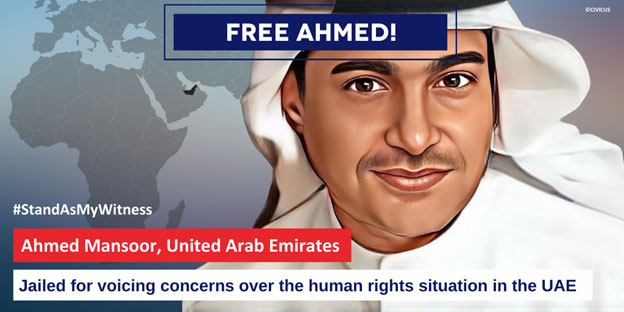
There’s widespread torture in jails and detention centres and at least 58 prisoners of conscience have been held in prison despite having completed their sentences. Many of them were part of a group known as the UAE 94, jailed for the crime of calling for democracy. Among the ranks of those incarcerated is Ahmed Mansoor, sentenced to 10 years in jail in 2018 for his work documenting the human rights situation, and held in solitary confinement for over five years and counting.

Ahead of COP28, civil society has worked to highlight the absurdity of holding such a vital summit in closed civic space conditions. Domestic civil society is unable to influence COP28 and its preparatory process, and it’s hard to see how civil society, both domestic and international, will be able to express itself freely during the summit.

Civil society is demanding that the UAE government demonstrate that it’s prepared to respect human rights, including by releasing political prisoners – something it’s so far failed to budge on.

An ominous sign came when the UAE hosted a climate and health summit in April. Participants were reportedly instructed not to criticise the government, corporations, individuals or Islam, and not to protest while in the UAE.

Civic space restrictions aren’t the only indication the UAE isn’t taking COP28 seriously. The president of the summit, Sultan Ahmed Al Jaber, also happens to be head of the state’s fossil fuel corporation ADNOC, the world’s 11th-biggest oil and gas producer. It’s like putting an arms manufacturer in charge of peace talks. Multiple other ADNOC staff members have roles in the summit. ADNOC is currently talking up its investments in renewable energies, all while planning one of the biggest expansions of oil and gas extraction of any fossil fuel corporation.

Instead of real action, all the signs are that the regime is instrumentalising its hosting of COP28 to try to launder its reputation, as indicated by its hiring of expensive international lobbying firms. An array of fake social media accounts were created to praise the UAE as host and defend it from criticism. A leaked list of key COP28 talking points prepared by the host made no mention of fossil fuels.

A summit that should be about tackling the climate crisis – and quickly – is instead being used to greenwash the image of the host government – something easiest achieved if civil society is kept at arm’s length.

Fossil fuel lobby to the fore

With civil society excluded, the voices of those actively standing in the way of climate action will continue to dominate negotiations. That’s what happened at COP27, also held in the closed civic space of Egypt, where 636 fossil fuel lobbyists took part – and left happy. Like every summit before it, its final statement made no commitment to reduce oil and gas use.

The only way to change this is to open the doors to civil society. Civil society has consistently sounded the alarm and raised public awareness of the need for climate action. It’s the source of practical solutions to cut emissions and adapt to climate impacts. It urges more ambitious commitments and more funding, including for the loss and damage caused by climate change. It defends communities against environmentally destructive impacts, resists extraction and promotes sustainability. It pressures states and the private sector to stop approving and financing further extraction and to transition more urgently to more renewable energies and more sustainable practices. These are the voices that must be heard if the cycle of runaway climate change is to be stopped.

COPs should be held in countries that offer an enabling civic space that allows strong domestic mobilisation, and summit hosts should be expected to abide by high standards when it comes to domestic and international access and participation. That should be part of the deal hosts make in return for the global prestige that comes with hosting high-level events. Civil society’s exclusion mustn’t be allowed to happen again.

Andrew Firmin is CIVICUS Editor-in-Chief, co-director and writer for CIVICUS Lens and co-author of the State of Civil Society Report.

  Source

Pacific Games Channels Youth Aspirations in the Solomon Islands

Asia-Pacific, Civil Society, Economy & Trade, Editors’ Choice, Featured, Headlines, Human Rights, Sustainable Development Goals, TerraViva United Nations, Youth

Youth

Jovita Ambrose and Timson Irowane are two young athletes training to be part of the Solomon Islands national team at the Pacific Games. Credit: Catherine Wilson/IPS

HONIARA, SOLOMON ISLANDS, Nov 17 2023 (IPS) – The Pacific Games, the most prestigious sporting event in the Pacific Islands region, will open in the Solomon Islands in the southwest Pacific on 19 November. And it is set to shine a spotlight on the energy, hopes and aspirations of youths who comprise the majority of the country’s population.


Timson Irowane (25), who has been competing in triathlons for the past six years, is brimming with confidence and anticipation. “The Pacific Games is a big event because my people are here, and it is very special because this is the first time the Solomon Islands is hosting the Games that I’ve been involved in,” Irowane told IPS during an interview at the Solomon Islands National Institute of Sport in the capital, Honiara. 

Every four years, a Pacific Island nation is chosen to host the regional multi-sport Pacific Games. And this year, about 5,000 athletes from 24 Pacific Island states, such as Papua New Guinea, Kiribati, Fiji and New Caledonia, will arrive in Honiara to compete in 24 sports, ranging from athletics and swimming to archery and basketball.

The Solomon Islands has a high population growth rate of 2.3 percent and about 70 percent of the country’s population of about 734,000 people are aged under 35 years. Christian Nieng, Executive Director of the Pacific Games National Hosting Authority, told IPS that it will be a chance to showcase their talents and achievements. “It is the biggest international event ever hosted in the country. And as we are hosting, we want to compete for every medal chance,” Nieng said.

Not far from Honiara city centre, the new Games precinct includes a large national stadium, which can accommodate 10,000 people, as well as swimming and tennis centres. Eighty percent of the funding needed to build the facilities and organize the Games has been provided by international donors and bilateral partners, including Australia, New Zealand, Papua New Guinea, China, Saudi Arabia, India, Korea and Indonesia.

“One of the long-term benefits of the Games is that we now have a new sports city as a legacy of the event,” Nieng added. It will be one of the best in the Pacific region, he believes, and, if well maintained, will last for 25 years, providing world-class facilities for Solomon Islanders to pursue their development and ambitions in sport.

At the sports institute, about 1,200 athletes are in training, and their energy and excitement is palpable. Here, Irowane, who is from Western and Malaita, two outer island provinces, is one among many who are striving to be selected for the national team of about 650 athletes who will represent the Solomon Islands later this month. His dedication has already led to international success. He participated in the Pacific Games held in Samoa in 2019 and numerous regional championships before heading to the Commonwealth Games hosted in Birmingham in the United Kingdom last year.

But he said that there were many wider benefits of sport to young people. “Triathlon is a multi-sport which involves discipline. Sport is not just for training, for fitness and skills that you learn in a specific sport, but it trains holistically to be a better person and a responsible person,” Irowane said. “And it helps athletes and individuals to be good citizens.”

Another local star aiming high is 21-year-old Jovita Ambrose, also from Malaita Province. “I started athletics and running during school games when I was 17 years old. When I’m running, I know that I’m good at it. When you are good at sport, it keeps you busy; it helps you stay healthy and not get involved in negative activities, such as drugs,” Ambrose said. In the last two years, she has travelled to competitions overseas, including the World Athletics Championships in Oregon in the United States last year and in Budapest, Hungary, three months ago.

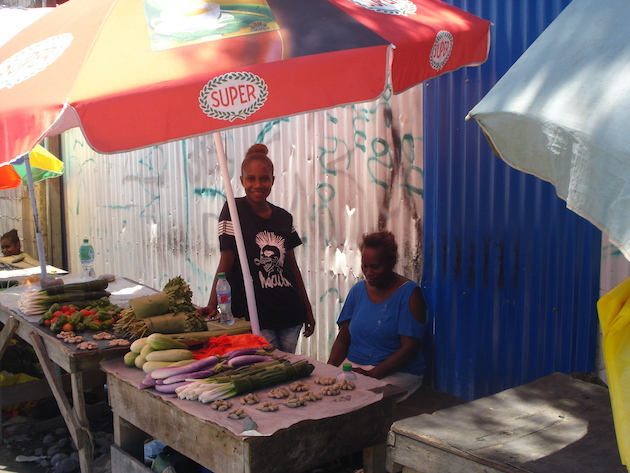
Many local businesses in the formal and informal sectors are hoping for increased visitors and business during the Pacific Games being hosted in the Solomon Islands in late November. Burns Creek Settlement market in Honiara. Credit: Catherine Wilson/IPS

Many local businesses in the formal and informal sectors are hoping for increased visitors and business during the Pacific Games being hosted in the Solomon Islands in late November. Burns Creek Settlement market in Honiara. Credit: Catherine Wilson/IPS

The Solomon Islands has a rural majority population that is scattered across more than 900 islands where there is often limited access to roads, basic services and employment. And the younger generation faces significant economic and development challenges. In a country which is not generating enough jobs for those of working age, the government estimates that 16,000-18,000 youths enter the employment market every year, with less than 4,000 likely to gain a secure job. Estimates of youth unemployment range from 35 percent to 60 percent.

“There is a lot of unemployment and, also, under-employment, where young people get a job opportunity which does not match their skill set. It is a real frustration for them when they are educated and still waiting for a job opportunity,” Harry James Olikwailafa, Chairman of the Solomon Islands National Youth Congress, explained to IPS. “The important issues for young people today are economic opportunities, employment opportunities and educational opportunities.”

In the last two decades, Solomon Islanders have also grappled with the aftermath of a five-year civil conflict. ‘The Tensions’, triggered by factors including urban-rural inequality, corruption and competition for land and resources, erupted in 1998 between rival armed groups representing local Guale landowners on Guadalcanal Island and internal settlers from Malaita Province. Hostilities ended in 2003, by which time many people, including children, had experienced violence, atrocities and displacement and had been deprived of education.

Morrison Filia 936) and his wife, Joycelyn (32), grew up in the aftermath of the conflict. And now, through a new entrepreneurial initiative, are aiming to help grow economic opportunities in Honiara. In August, they launched a new tourism business, Happy Isle Tours and Transfers, which offers airport transfers for visitors and tourists to hotels, as well as tours of Honiara, its history and landmarks, and excursions to World War II memorial sites on Guadalcanal Island.

“In Honiara, there are a lot of young people, and employment is a problem. So, the main idea is that we try to create this business so that we can employ more young people. We are trying to give young people opportunities,” Morrison told IPS.

They have also opened their business in time for the Games. “One of the other reasons why we started the business is that we noticed tourists and visitors coming [to the Solomon Islands], but they find it difficult to find transport,” Joycelyn said. “We are excited and looking forward to the Games because we are expecting more tourists. It will bring other different people to the country, and we are expecting increased bookings. I think it will also increase employment in the country and help us in our economy,” she continued.

The Pacific Games will continue for two weeks and finish on the 2 December. And like Morrison and Joycelyn, Timson Irowane has long-term goals. “I wish to be a role model, to introduce the sports and motivate more young people to be involved in any sport they are interested in. I love to encourage them because we have the advantage of the facilities here beyond the Games,” he declared.

IPS UN Bureau Report

  Source

Smallholder Farmers Gain Least from International Climate Funding

Africa, Aid, Civil Society, Climate Action, Climate Change, Climate Change Finance, COP28, Development & Aid, Editors’ Choice, Food and Agriculture, Food Security and Nutrition, Food Sustainability, Global, Headlines, Human Rights, Humanitarian Emergencies, Sustainable Development Goals, TerraViva United Nations

Climate Change Finance

David Obwona at his seed rice farm in Katukatib village, Amoro district, northern Uganda. The farmer is part of a group that is now engaged in seed rice farming to climate-proof agriculture courtesy of the Regional Universities Forum for Capacity Building Agriculture. Credit: Maina Waruru/IPS

David Obwona at his seed rice farm in Katukatib village, Amoro district, northern Uganda. The farmer is part of a group that is now engaged in seed rice farming to climate-proof agriculture courtesy of the Regional Universities Forum for Capacity Building Agriculture. Credit: Maina Waruru/IPS

NAIROBI, Nov 14 2023 (IPS) – Smallholder farmers from the Global South benefit from a grossly disproportionate 0.3% of international climate finance despite producing a third of the world’s food and despite holding the key to climate-proofing food systems.


The family farmers and rural communities received around USD 2 billion from both public and private international climate funds out of the USD 8.4 billion that went to the agriculture sector in 2021, even as over 2.5 billion people globally depended on the farms for their livelihoods.

The USD 8.4 billion was almost half of the USD 16 billion that was availed for the energy sector and is only a fraction of the estimated USD 300-350 billion needed annually to “create more sustainable and resilient food systems,” a new report has found.

The amount was also quite different from the USD 170 billion that smallholder farmers in Sub-Saharan Africa alone would require per year, the study on global public finance for climate mitigation and adaptation conducted by Dutch climate advisory company Climate Focus has found.

The low level of climate finance for agriculture, forestry, and fishing is of concern, given the impact of climate change on food production and the extent to which food and agriculture are fueling the climate and biodiversity crisis.

Agricultural productivity has declined by 21 percent due to climate change, while the food and agriculture sector as a whole is responsible for 29 percent of greenhouse gas emissions and 80 percent of global deforestation, the study explains.

The farmers have been sidelined by global climate funders and locked out of decision-making processes on food and climate despite being the engines of rural economic growth. This is especially so in Sub-Saharan Africa, where up to 80 percent of agriculture is by smallholder farmers and where 23 percent of regional GDP is attributable to the sector.

It reveals that 80 percent of international public climate finance spent on the agri-food sector is channeled through governments and donor country NGOs, making it hard for smallholder farmers’ organizations to access it. This is because of complex eligibility rules and application processes and a lack of information on how and where to apply.

Many family farmers also lack the infrastructure, technology, and resources to adapt to climate impacts, with serious implications for global food security and rural economies as well, it notes.

The study ‘Untapped Potential: An analysis of international public climate finance flows to sustainable agriculture and family farmers,’ published on 14 November, laments that only a fifth of international public climate finance for food and agriculture supports sustainable practice. The money mainly goes to the Global North, even as agriculture becomes the third biggest source of global emissions. and the main driver of biodiversity loss.

“Climate change is hitting harvests and driving up food prices across the globe. It has helped push 122 million people into hunger since 2019. We need to create more sustainable and resilient food systems that can feed people in a changing climate, but we can’t do this without family farmers,” the report compiled on behalf of ten farmer organizations in Africa, Asia, Latin America, and the Pacific says.

“Family farmers are also key to climate adaptation. They are at the forefront of the shift to more diverse, nature-friendly food systems, which the Intergovernmental Panel on Climate Change (IPCC) says is needed to safeguard food security in a changing climate,” it further notes.

The groups are led by the World Rural Forum and include African groups—the Eastern Africa Farmers Federation, Eastern and Southern Africa small-scale Farmers Forum, the Regional Platform of Farmers’ Organisations in Central Africa, and the Network of West African Farmers’ and Producers’ Organisations. Also part of the group is Northern Africa’s Maghreb and North African Farmers Union.

The Asian Farmers Association for Sustainable Rural Development, the Pacific Island Farmers Organization Network, the Confederation of Family Producers’ Organizations of Greater Mercosur, and the Regional Rural Dialogue Programme are also represented in the study.

Many of the farmers are already practicing climate-resilient agriculture, including approaches such as agroecology, which implies a wider variety of crops, including traditional ones, mixing crops, livestock, forestry, and fisheries, while reducing agrochemical use, and building strong connections to local markets.

The study by the new alliance of farmer networks representing over 35 million smallholder producers ahead of COP28, which is set to agree on a Global Goal for Adaptation, is concerned that since 2012, overall, only 11% of international public climate finance has been targeted at agriculture, forestry, and fishing, which amounts to an average of USD 7 billion a year.

In 2021, the World Bank, Germany, the Green Climate Fund, and European Union institutions contributed around half—54 percent, amounting to USD 4 billion collectively, while Nigeria, India, and Ethiopia were the top recipients, receiving a combined USD 1.8 billion. Notably, some of the world’s most food insecure countries, including Sudan, Sierra Leone, and Zambia, each received less than USD 20 million, it discloses.

“As the climate crisis pushes the global food system ever closer to collapse, it is vital that governments recognize family farmers as powerful partners in the fight against climate change,” it warns.

Hakim Baliriane, Chair of the Eastern and Southern Africa small-scale Farmers Forum, observed: “Climate change has helped push 122 million people into hunger since 2019. Reversing this trend will not be possible if governments continue to tie the hands of millions of family farmers.”

The study defines small-scale family farms as those of less than two hectares, mainly in developing countries.

On the other hand, international climate finance broadly refers to finance channeled to “activities that have a stated objective to mitigate climate change or support adaptation. These include multilateral flows in and outside the (UNFCCC) and the Paris Agreement, as well as bilateral flows at national and regional levels, including the Global Environment Facility, Adaptation Fund, and Green Climate Fund, and are usually disbursed as grants and concessional loans

The study finds that family farms are also the backbone of rural economies, supporting over 2.5 billion people globally who depend on family farms for their livelihoods. It says that in Sub-Saharan Africa, where up to 80 percent of farming is done by smallholder farmers, agriculture contributes 23 percent to regional Gross Domestic Product.

Family farmers are also key to climate adaptation in that they are at the forefront of the shift to more “diverse, nature-friendly food systems,” which, according to the Intergovernmental Panel on Climate Change (IPCC), are critical in safeguarding food security in a changing climate.

It finds that millions of smallholder farmers are already practicing climate-resilient agriculture, including approaches such as agroecology—growing a wider variety of crops, including traditional crops, mixing crops, livestock, forestry, and fisheries, reducing agrochemicals use while building “strong connections to local markets.”

It concludes that governments must ensure that available climate finance for sustainable climate-resilient practices is increased, including that of agroecological approaches.

It explains: “This means funds to support diverse, nature-friendly approaches and to create community-based solutions that build on traditional expertise and experience.

It recommends that small-scale family farmers ought to have direct access to more climate finance and that financing mechanisms and funds should be developed with the participation of farmers’ organizations to meet their needs.

In addition, efforts should be made to ensure longer-term, flexible funding so that communities can determine their own priorities.

The role of the farmers as powerful catalysts for climate action, food system transformation, and the protection of biodiversity should be acknowledged and given a “real say” in decision-making on food and climate at the local, national, regional, and international levels. This should include decisions on land reform and agricultural subsidies.

The COP28 in Dubai later this month has food systems as a big part of the agenda.

An August report by the UK’s ActionAid has found that climate adaptation and green transition initiatives in the Global South received 20 times less financing when compared to main global emitters, fossil fuels, and intensive agriculture sectors in the last seven years.

It found that leading banking multinationals funded the emitters’ activities in the southern hemisphere to the tune of USD 3.2 trillion since 2015 when the Paris Agreement on Climate was adopted. German agrochemical giant Bayer was the biggest recipient of the financing, receiving an estimated USD 20.6 billion since 2016.

IPS UN Bureau Report

  Source