Slovakia PM Assassination Attempt Sparks Journalists’ Safety Fears

Editors’ Choice, Europe, Featured, Freedom of Expression, Headlines, Human Rights, Press Freedom, TerraViva United Nations

Freedom of Expression

Camera crews wait outside the Slovak parliament building in Bratislava days after the attempted assassination of PM Robert Fico. Credit: Ed Holt/IPS

Camera crews wait outside the Slovak parliament building in Bratislava days after the attempted assassination of PM Robert Fico. Credit: Ed Holt/IPS

BRATISLAVA, May 24 2024 (IPS) – Fears for the safety of journalists in Slovakia are growing in the wake of an assassination attempt on the country’s prime minister, which some politicians are blaming in part on local independent media.

Relations between some media and members of the governing coalition, led by Prime Minister Robert Fico’s Smer party, have become increasingly tense since the government came to power in October last year.


And immediately after Fico was shot and seriously injured on May 15, as he greeted members of the public after a government meeting, senior members of coalition parties linked the attack to critical coverage of Fico and accused outlets of spreading hate against him.

The 71-year-old man who shot the prime minister is thought to have had a political motive for his attack.

Since then, there have been calls from some other politicians and heads of media organizations to stop trying to apportion blame for the attack on any group so as to defuse tensions in society.

But senior figures from governing coalition parties have continued to attack the media for what they see as their role in fomenting anger towards the government and provoking the tragedy.

Journalists in Slovakia, and press freedom watchdogs, worry this is increasing the risk reporters could also become targets of a violent attack.

“Journalists are in no way responsible for this, and blaming them is only fueling the fires and increasing the likelihood of another violent incident,” Oliver Money-Kyrle, Head of European Advocacy and Programmes at the International Press Institute (IPI), told IPS.

For many years, Fico and his Smer party, who have been in power for much of the last 18 years in Slovakia, have publicly attacked individual media, and specific journalists in some cases, for their critical reporting of the various governments he has led.

When Jan Kuciak, a reporter investigating alleged corruption by people close to Fico’s government, and his fiancée, Martina Kusnirova, were murdered in 2018, critics said Fico’s rhetoric towards journalists had contributed to creating an atmosphere in society in which those behind the killings believed they could act with impunity.

Fico was forced to step down as PM not long after the murders, following massive public protests against his government.

But since returning to power, he and other members of the ruling coalition have repeatedly attacked journalists they see as critical of the government and his party has refused to communicate with certain newspapers and broadcasters.

The government has also pushed through legislation that media freedom organizations and members of the European Commission have warned could severely restrict independent media and press freedom.

Some journalists at major news outlets have been regularly receiving death threats and facing horrific online harassment for years, but others have said they have become increasingly worried for their safety in recent months, and that those concerns have been exacerbated now in the wake of Fico’s shooting.

Many believe that years of aggressive, derogatory rhetoric against them has made them a target for hate among some parts of a society with widespread distrust of media—a recent survey showed only 37 percent of Slovaks trust the media.

Since the assassination attempt, some newsrooms have taken extra security measures and the government has said it will also be providing extra protection for groups which could be facing an elevated safety risk, including media.

While this has been welcomed by media rights organizations, they have said politicians must take the lead in reducing tensions in society and lessening immediate safety risks for journalists.

“The way to de-escalate the situation is that political hate speech against media must stop,” Pavol Szalai, head of the EU/Balkans desk at RSF at Reporters Without Borders (RSF), told IPS.

In the immediate hours after the shooting, some ministers appeared to be pushing to calm the situation.  At a press conference, Interior Minister Matus Sutaj Estok appealed “to the public, to journalists, and to all politicians to stop spreading hatred”.

Meanwhile, dozens of editors from print and broadcast media issued a joint statement publicly condemning the attack on the prime minister and calling for politicians and media to come together to calm tensions.

However, even days after the shooting, senior government figures continued to attack specific media or play down the seriousness  of comments made by colleagues just after the shooting, including  labelling media as “disgusting pigs”.

The Slovak government did not respond to questions on journalists’ safety from IPS.

But beyond putting journalists at increased risk, it is feared that the assassination attempt may also worsen what research has shown is significantly worsening media freedom in the country.

The government recently approved legislation – which is expected to be passed in parliament within weeks that will see the country’s public broadcaster, RTVS, completely overhauled and, critics say, effectively under control of the government.

Ominously, the leader of the governing coalition Slovak National Party (SNS), Andrej Danko, warned after Fico was shot that there would “be changes to the media” now.

And on May 19, speaking on the TA3 private news channel, he said he was planning to propose legislation that would set new regulations governing journalistic ethics, relations between journalists and politicians, and what politicians would be obliged to “put up with” from journalists.

Beata Balogova, Editor in Chief of the Sme daily newspaper, one of the news outlets in the country regularly criticized by government politicians, told international media that the government could now introduce “brutal measures against the media.”

Local journalists say any repressive measures would make an already difficult job even harder.

“I haven’t thought about how things could get more difficult for us to do our work in the future because it’s already very hard. It’s so difficult to gather news with political parties refusing to speak to us. [More restrictions] certainly wouldn’t make things easier,” Michaela Terenzani, an editor at Sme, told IPS.

She added, though, that it was difficult to predict what would happen in the coming days and weeks.

“At the moment, we are all just getting over the shock and trying to get on with our work as best we can. This is a major moment in Slovakia’s history and we will have to see what happens with relations between the media and politicians. Everyone is calling for calm, and I hope that is what we get,” she said.

IPS UN Bureau Report

  Source

SBSTTA and SBI—Biodiversity Meetings Crucial for the Global South Begin

Africa, Biodiversity, Conferences, Development & Aid, Editors’ Choice, Environment, Featured, Global, Headlines, Health, Sustainability, Sustainable Development Goals, TerraViva United Nations

Biodiversity

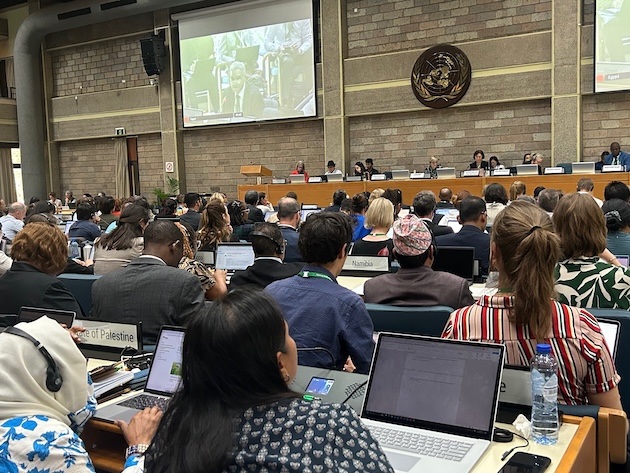
More than 1,400 delegates are present at two crucial meetings, where the topic of preserving the planet’s ongoing biodiversity for the benefit of humanity is under discussion. Under the spotlight are the Kunming-Montreal Global Biodiversity Framework, synthetic biology, the detection and identification of living modified organisms, and, critically, biodiversity and health.

Over 1,400 delegates, including 600 representing parties or signatories from over 150 countries and a significant delegation of Indigenous Peoples and other observer organizations, including women’s groups are attending two crucial biodiversity meetings in Nairobi, Kenya. Credit: Stella Paul/IPS

Over 1,400 delegates, including 600 representing parties or signatories from over 150 countries and a significant delegation of Indigenous Peoples and other observer organizations, including women’s groups are attending two crucial biodiversity meetings in Nairobi, Kenya. Credit: Stella Paul/IPS

NAIROBI, May 14 2024 (IPS) – The 26th meeting of the Subsidiary Body of Scientific, Technical, and Technological Advisors (SBSTTA) of the United Nations Convention on Biological Diversity (UNCBD) started in Nairobi, Kenya, on Monday. Over 1,400 delegates, including 600 representing signatories or parties from over 150 countries, are present for the seven-day meeting at the headquarters of the United Nations Environment Programme (UNEP). A large number of members from Indigenous Peoples and other observer organizations, including women’s groups, are also attending the meetings.


SBSTTA will be followed by the meeting of the Subsidiary Body on Implementation (SBI), another subsidiary body of the United Nations Convention on Biological Diversity (CBD). The SBI will take place from May 20–29 at the same venue.

Opening the meeting on Monday morning, David Cooper, the Acting Executive Secretary of the UN Convention on Biological Diversity, called on the delegates for a successful meeting.

“A key part of ensuring the implementation of the Global Biodiversity Framework is to monitor the progress and that’s why finalizing a monitoring framework includes authenticators for the parties to report on. I would like to give my sincere appreciation to all those working on putting together a comprehensive set of authenticators. I encourage you to make full use of what we have achieved so far and let’s make this meeting a success,” Cooper said.

IPS, which is exclusively covering the meetings, has insights into the meetings and presents here the brief history of both the meetings and their significance in larger global biodiversity protection, especially in the global south, including the implementation of the Global Biodiversity Framework (GBF), the legally binding international biodiversity treaty adopted by the nations in December 2022

SBSTTA: History, Mandate and Role in the COP

SBSTTA was established 30 years ago, in 1994, as a subsidiary body of the CBD during the first meeting of the Conference of the Parties (COP) to the CBD in Nassau, Bahamas. Article 25 of the CBD, which mandated its creation, tasked it with giving the COP timely advice regarding the application of the Convention.

Since then, SBSTTA ‘s main role has been providing assessments of scientific, technical, and technological information relevant to the conservation and sustainable use of biological diversity. It typically meets once or twice a year to review and assess relevant scientific information, including reports submitted by Parties, relevant organizations, and stakeholders. Its discussions cover a wide range of topics, including biodiversity loss, ecosystem services, invasive species, genetic resources, and biotechnology.

The main output of SBSTTA meetings is a set of recommendations to the COP, which are based on the scientific and technical assessments conducted during its sessions. These recommendations provide guidance to Parties and other stakeholders on key issues related to the implementation of the CBD.

For example, in 2007, SBSTTA recommended that the biodiversity COP consider the potential impacts of synthetic biology on biodiversity and ecosystems and encourage Parties to undertake further research, risk assessments, and regulatory measures to address any potential risks associated with the release of synthetic organisms into the environment.

This recommendation was later taken up by the CBD COP, leading to the adoption of decisions on synthetic biology, including Decision XIII/17, which encouraged Parties to continue their efforts to address the potential positive and negative impacts of synthetic biology on biodiversity, and take a  precautionary approach.

A more recent example is the SBSTTA’s recommendation from 2018 that the COP should encourage Parties to mainstream biodiversity considerations into sectoral and cross-sectoral policies, plans, and programs, including those pertaining to agriculture, fisheries, forestry, tourism, energy, and infrastructure.

The CBD COP later agreed with this suggestion, which led to the adoption of decisions and guidelines on mainstreaming biodiversity across sectors. One of these was Decision XIV/4, which asked Parties to do more to mainstream biodiversity into relevant sectors and to encourage synergies between the goals of sustainable development and biodiversity conservation.

SBSTTA and Genetically Modified Mosquitoes

SBSTTA-26 has a large number of issues on its agenda. Most prominent among them are: 1) creating a monitoring framework for the Kunming-Montreal Global Biodiversity Framework; 2) synthetic biology; 3) detection and identification of living modified organisms; and 4) biodiversity and health.

It is expected that under the detection and identification of living modified organisms, genetically engineered mosquitoes for Malaria prevention will be discussed. Research on genetically engineered mosquitoes for malaria control has been an area of interest and investigation for several years, although little information is available on it in the public domain.

Scientists in many countries, including in the United States and Brazil, have been exploring various genetic modification techniques to create mosquitoes that are resistant to the malaria parasite or are unable to transmit the disease. One approach involves genetically modifying mosquitoes to produce antibodies that neutralize the malaria parasite when it enters their bodies.

The other approach is to use “Gene Drive Technology,” which involves modifying mosquitoes in a way that ensures the modified genes are passed on to a high proportion of their offspring. Already, many field trials of genetically engineered mosquitoes have been conducted or are underway in different parts of the world, most notably those conducted by the company Oxitec in Brazil and the Cayman Islands.

At the SBSTTA, scientific and technical advisors will look closely at the important environmental and ethical considerations related to GE mosquitoes. According to the World Health Organization’s 2023 World Malaria Report, there has been an increase in malaria infections all over the world as a result of climate change. However, several countries and organizations have serious reservations against the release of GM mosquitoes, which they believe may have an irreversible and devastating impact on local biodiversity. One of the most vocal organizations against GE/GM mosquitoes has been Friends of the Earth, a US-based environmental advocacy group. Dana Perls, senior program manager at Friends of the Earth, said, “Significant scientific research on genetically engineered mosquitoes is still needed to understand the potential public health and environmental threats associated with the release of this novel genetically engineered insect.”

The SBSTTA is expected to witness passionate discussions, especially from environmental NGOs and faith-based organizations, including the need to ensure that communities are properly informed and engaged in decision-making processes, especially in the global south.

The agenda for the meetings includes creating a monitoring framework for the Kunming-Montreal Global Biodiversity Framework, synthetic biology, detection and identification of living modified organisms, and biodiversity and health. Credit: Stella Paul/IPS

The agenda for the meetings includes creating a monitoring framework for the Kunming-Montreal Global Biodiversity Framework, synthetic biology, detection and identification of living modified organisms, and biodiversity and health. Credit: Stella Paul/IPS

SBI: Most Crucial Agenda Items

The SBI was established under the CBD during the third meeting of the Conference of the Parties (COP) to the CBD in 1996. The SBI’s mandate includes providing guidance and recommendations to the COP on matters related to the implementation of the CBD as well as identifying obstacles and challenges that may hinder effective implementation.

Like SBSTTA, SBI also typically meets once or twice a year to conduct its work. Its discussions cover a wide range of topics related to the implementation of the CBD, including national biodiversity strategies and action plans, financial resources and mechanisms, capacity-building, and technology transfer.

Chaired by Chirra Achalender Reddy of India, the SBI in Nairobi has placed several items on its agenda. However, the most crucial ones among them are: 1) resource mobilization and financial mechanisms; 2) a review of the progress in national target setting; and 3) the updating of national biodiversity strategies and action plans.

As IPS recently reported, only a handful of countries have so far been able to submit their updated biodiversity action plans, while the rest are said to be facing multiple challenges in doing so, including a lack of capacity. In fact, Kenya, the host country of these meetings, has not been able to submit their updated action plan yet.

On Monday, in her inaugural address during the opening ceremony of SBSTTA, Ingrid Andersen, the Executive Director of UNEP, acknowledged that a lack of capacity to revise and update their action plans has been reported by several member states. “Capacity building is a serious issue and at the SBSTTA and SBI, this will be seriously discussed,” Andersen said.

David Ainsworth, the Communications Director of UNCBD, said that the capacity is lacking in several areas, including communications (where countries do not know how to communicate to different ministries the need for working together to develop their biodiversity action plans), finance (lack of funding, budgetary constraints), and knowledge.

“Perhaps the most crucial of these is finance and this will be seriously discussed at the SBI,” Ainsworth said.

IPS UN Bureau Report

 

Inclusivity, Impact, and Innovation Needed to Meet SDGs, UN Civil Society Conference Hears

Active Citizens, Civil Society, Conferences, Development & Aid, Editors’ Choice, Featured, Headlines, Poverty & SDGs, Sustainable Development Goals, TerraViva United Nations, Youth Thought Leaders

Sustainable Development Goals

The United Nations Office at Nairobi is hosting the 2024 United Nations Civil Society Conference on May 9 and 10, under the theme Shaping a Future of Global and Sustainable Progress. Credit: Joyce Chimbi/IPS

The United Nations Office at Nairobi is hosting the 2024 United Nations Civil Society Conference on May 9 and 10, under the theme Shaping a Future of Global and Sustainable Progress. Credit: Joyce Chimbi/IPS

NAIROBI, May 9 2024 (IPS) – The world is neither on track to meet the Sustainable Development Goals (SDGs) nor is it leveraging emerging opportunities to effectively address global concerns such as extreme hunger, poverty, conflict, and climate change. Global concerns have outpaced existing structures for international cooperation and coping.


To forge a global perspective, the United Nations Office in Nairobi is currently hosting the 2024 United Nations Civil Society Conference under the theme Shaping a Future of Global and Sustainable Progress. Bringing together more than 2,000 participants from civil society organizations, academic institutions, think tanks, member states, private sector companies, UN entities, change-makers, and other relevant stakeholders from across the globe.

“That civil society engagement remains a critical cog in the wheel of development is well established. Greater collaboration between civil society organizations, governments, and the private sector can therefore not be more urgent at this time as we gear up for the Summit of the Future,” says Carole Ageng’o, Global Initiatives Lead & Africa Regional Representative at HelpAge International.

Indeed, civil society participation will contribute greatly towards meeting the aspiration of an international system that is better prepared to manage the challenges we face now and, in the future, for the sake of all humanity and for future generations.”

Since 1947, sixty-eight civil society conferences have resulted in successful outcomes due to previous interactions with civil society organizations. The ongoing conference is the premier event on the civil society calendar at the United Nations and the first of the UN’s civil society conferences to be held in Africa.

Born in Zimbabwe and currently working in South Africa as a human rights defender, Constance Mukarati told IPS that the role of civil society organizations and, more so, human rights defenders cannot be overstated towards ensuring that no one is left behind.

“For us, SDG 5 is really SDG 1. As a matter of urgency, women and girls everywhere must have equal rights and opportunities. We are still in an era where girl child education is not a priority and a gathering such as this is an opportunity for a revolution in how we think about issues of national and global concern, how we talk about these issues, who is in the room and how we execute and implement commitments towards sustainable development,” says Mukarati from the African Initiative of Women Human Rights Defenders.

The ongoing gathering of civil society and other stakeholders is on track to provide preliminary discussions and data ahead of the world’s leaders’ Summit of the Future on September 22–23, 2024, at the UN Headquarters in New York. The Summit is part of a monumental effort to reset global cooperation towards accelerating efforts to meet our existing international commitments and take concrete steps to respond to emerging challenges and opportunities.

Ultimately, the Summit of the Future is about rethinking what multilateralism means in a world characterized by plummeting levels of trust in public institutions, glaring wealth inequalities, and a majority of the world’s population in underdeveloped and developing nations being left furthest behind, falling deeper into extreme hunger and poverty. To address global concerns, the Summit will produce three international frameworks: the Pact for the Future (available as a zero draft), the Global Digital Compact, and the Declaration on Future Generations.

“It is highly urgent that the UN systems relook and redesign how they engage its global citizenry so that the citizens can in turn engage the UN more effectively. This is what is needed to bring the SDGs back on track. What are people saying about the multiple challenges they face today? There is a feeling within the civil society movement that governments’ voices are prioritized within the UN system. This engagement is unique and highly relevant for our voices as activists and human rights defenders, which will inform and influence the direction that the Summit of the Future takes,” Eric Omondi, a Nairobi-based activist, told IPS.

This is a historic gathering aimed at galvanizing collaboration and reinforcing civil society organizations engagement in sustainable development. “We recognize that our generation stands at a critical junction where every action we take can significantly shape the future of our shared planet,” said Florence Syevuo, Executive Director, SDG Kenya Forum, and Co-Chair, Coalition for the UN We Need, Nairobi.

She stressed that the need to recognize the urgency of addressing global concerns such as climate change has never been more tangible as the effects of human interactions with nature become even more evident, underpinning why the outcome of the conference matters to all.

The Civil Society Conference and the Summit of the Future are critical platforms for deepening the engagement of citizens in international cooperation. As a prelude to the Summit of the Future, the Civil Society Conference features in-depth dialogues, a variety of workshops, and exhibits centered on three main objectives: inclusivity, impact, and innovation.

Inclusivity helps broaden the scope of discourse on global issues by enhancing the visibility and impact of diverse voices. On impact, participants are shaping global multi-stakeholder coalitions to advocate for and push the key issues that will be the outcome of the September Summit of the Future. On innovation, the two-day gathering is redefining the interaction between civil society and intergovernmental processes, showcasing a new model of collaboration that spans generations and sectors.

“The inclusion of youths and young voices in the SDG processes and other related commitments must become a priority. I recently completed my studies in law at Kampala International University and I intend to use my legal knowledge to amplify the most pressing problems facing young people in the global south and the communities in which they live,” Kiconco Shallom Esther, a youth participant from Uganda, told IPS.

As the curtain fell on the first day of the landmark civil society conference, there was consensus around the need to promote civil society’s insights and initiatives to bolster the Member State-led Summit of the Future process. Further emphasizing that a reinvigorated, organized civil society group can more effectively hold governments and powers accountable for progress towards a just, fair, and equitable shared future.

IPS UN Bureau Report


Media Freedom Declining Across Europe, With Implications for Rule of Law

Democracy, Editors’ Choice, Europe, Featured, Freedom of Expression, Headlines, Human Rights, Press Freedom, Sustainable Development Goals, TerraViva United Nations

Press Freedom

World Press Freedom Day 2024

Protestors gathered in Bratislava on May 2, 2024 to protest against changes to the public broadcaster, RTVS. The placard in the picture reads: RTVS on a flat-screen TV; STVR about a flat earth. Credit: Ed Holt/IPS

Protestors gathered in Bratislava on May 2, 2024 to protest against changes to the public broadcaster, RTVS. The placard in the picture reads: RTVS on a flat-screen TV; STVR about a flat earth. Credit: Ed Holt/IPS

BRATISLAVA, May 3 2024 (IPS) – A new report has warned media freedom in the EU is close to “breaking point” in many states amid rising authoritarianism across the continent.


In its latest annual report covering 2023, the Berlin-based Civil Liberties Union for Europe (Liberties) highlighted widespread threats, intimidation and violence against journalists and attacks on the independence of public broadcasters in the EU, with roll backs in media freedom down to “deliberate harm or neglect by national governments”.

The group says its research confirms a continuation of alarming trends seen in the previous year, including heavy media ownership concentration, insufficient ownership transparency rules, and threats to the independence and finances of public service media,

And it warns the decline in media freedom seen in a number of EU member states has the potential to pose a direct threat to democracy.

“Media freedom is falling across Europe, and what we see, not just in Europe but in many places around the world, is that where media freedom declines, the rule of law declines too,” Eva Simon, Senior Advocacy Officer at Liberties, told IPS.

The Slovak Radio building in Bratislava, part of the RTVS public broadcaster. Credit: Ed Holt/IPS

The Slovak Radio building in Bratislava, part of the RTVS public broadcaster. Credit: Ed Holt/IPS

The Liberties report, compiled with 37 rights groups in 19 countries, comes as other media freedom watchdogs and rights groups warn of growing  concentration of media ownership, lack of ownership transparency, surveillance and violence against journalists in EU countries, government capture of public broadcasters, and rising restrictions on freedom of expression.

Press freedom watchdog Reporters Without Borders (RSF) released its annual World Press Freedom Index today (April 3, 2024), warning that politicians in some EU countries are trying to crack down on independent journalism. They single out a number of leaders as being “at the forefront of this dangerous trend,” including Hungary’s pro-Kremlin prime minister, Viktor Orban, and his counterpart in Slovakia, Robert Fico.

It also highlights concerns for press freedom in other places, such as Malta, Greece, and Italy, pointing out that in the latter—which fell in the Index’s rankings this year—a member of the ruling parliamentary coalition is trying to acquire the second biggest news agency (AGI), raising fears for future independence of media.

“One of the main themes of this year is that the institutions that should be protecting media freedom, for example, governments, have been undermining it,” Pavol Szalai, head of the EU/Balkans desk at RSF, told IPS.

Like Liberties, RSF has cited particular concern about media freedom in Hungary and Slovakia among EU states.

Media freedom has been on the decline in Hungary for more than a decade, as autocratic leader Orban has, critics say, steadily cracked down on independent journalism. His party, Fidesz, has de facto control of 80 percent of the country’s media, and while independent media outlets still exist, their sustainable funding is under threat as state advertising is funneled to pro-government outlets.

The government’s effective control of Hungary’s public broadcaster is another major concern.

“Capturing public broadcasters limits access to information and that can have a huge impact on formulating political opinions and then how people vote,” said Simon.

Hungary is also suspected of having arbitrarily monitored journalists using the controversial Pegasus software.

RSF and Liberties both say their worry is not just what is happening to media freedom in Hungary, but that what Orban has done has provided a blueprint for other autocratic leaders to follow.

“Leaders in Europe are being inspired by Orban in his war against independent media. Just look at Fico in Slovakia, who has declared war on independent media,” said Szalai.

For years, Fico has repeatedly attacked and denigrated independent media and journalists.

In 2018, investigative journalist Jan Kuciak—who had been looking into alleged corruption by people close to Fico’s government— and his fiancée Martina Kusnirova were murdered. Critics said Fico’s rhetoric against journalists had contributed to creating an atmosphere in society that allowed those behind the killings to believe they could act with impunity.

Independent journalists continue to face harassment and abuse from Smer MPs today.

Since being elected Prime Minister for the fourth time last autumn, Fico and the governing coalition led by his Smer party have continued their attacks. They also refuse to communicate with critical media, claiming they are biased.

It has also approved legislation—which is expected to be passed in parliament within weeks—that will see the country’s public broadcaster, RTVS, completely overhauled and, critics say, effectively under the control of the government.

“If the bill is passed and signed into law in its current form, RTVS will become a mouthpiece for government propaganda,” said Szalai.

The government has rejected criticism over the bill and argued changes to RTVS are necessary because it is no longer objective, is persistently critical of the government, and is not fulfilling its remit as a public broadcaster to provide balanced and objective information and a plurality of opinions. A senior official at the Slovak Culture Ministry who is among the favorites to take over as head of the public broadcaster in its new form has since suggested that people who support the flat-earth theory should be invited onto shows to air their opinions on the broadcaster.

The bill has led to public protests and threats of a mass strike from current RTVS employees.

However, against this grim backdrop, media watchdogs say new EU legislation provides hope for an improvement in media freedom.

The recently-passed European Media Freedom Act (EMFA), which takes full effect across the EU in August next year,  will, among others, ban governments from pursuing journalists to reveal their sources by deploying spyware, force media to disclose full ownership information, introduce transparency measures for state advertising, and checks on media concentration. It also provides a mechanism to prevent very big online platforms from arbitrarily restricting press freedom.

Another key measure in the legislation is that it enshrines the editorial independence of public service media, setting out that leaders and board members of public media organizations be selected through “transparent and non-discriminatory procedures for sufficiently long terms of office.”

“It is a good law that creates a very important base [for ensuring media freedom], which can be built on in the future. More safeguards [to media freedom] could be added to it in the future,” said Simon.

Szalai agreed, highlighting that the legislation was legally binding for member states. He admitted it had some shortcomings—for example, under some exceptions, journalists could be forced to reveal sources—but emphasized that it would take precedence over any national legislation, “and so governments cannot ignore it or try to get around it.”

But its implementation will be down to individual governments and authorities—something, that media freedom organizations have said must be closely watched.

A new EU body, the European Board for Media Services, is to be set up to oversee the implementation of the laws.

“It is important to make sure that the forces attacking media freedom are held back by this law. It will be up to the European Commission to hold governments to account on its implementation, and the Commission needs to consider press freedom as a priority after the European Parliament elections [in June] and to check on the EMFA’s implementation and take measures against any countries that violate it,” said Szalai.

IPS UN Bureau Report

IPS UN Bureau, IPS UN Bureau Report,

  Source

Transgender Health Rights Boosted by Hospitals’ ‘Separate Room’ Policy

Asia-Pacific, Civil Society, Development & Aid, Featured, Gender, Gender Identity, Headlines, Health, Human Rights, Humanitarian Emergencies, LGBTQ, Sustainable Development Goals, TerraViva United Nations

Health

The community frequently targets transgender people. Now they are able to welcome new measures that mean they will be able to safely access health care. Credit: Yusufzai Ashfaq/IPS

The community frequently targets transgender people. Now they are able to welcome new measures that mean they will be able to safely access health care. Credit: Yusufzai Ashfaq/IPS

PESHAWAR, Pakistan, Apr 30 2024 (IPS) – Transgender people and civil society organizations have welcomed the decision of the chief minister in Khyber Pakhtunkhwa, Pakistan, to allocate separate rooms in hospitals for the transgender community so they can avail themselves of uninterrupted healthcare.


“We demand that all provinces follow suit and announce facilities for more than 500,000 transgender people in the country,” Farzana Shah, president of the Khyber Pakhtunkhwa (KP) Transgender Association, told IPS.

On April 6, KP Chief Minister Ali Amin Khan Gandapur announced separate rooms for transgender persons in public hospitals after complaints that they aren’t getting admissions because they face violence in the facilities.

“In the last year, about 47 transgender people have died because of violence, and 90 have been injured. Many injured transgender people die due to delayed treatment. In most cases, we can’t get healthcare at hospitals,” Shah, 40, said.

The Chief Minister’s directives to reserve rooms have received a positive response.

Members of a delegation of transgender people who recently met him quoted Gandapur as saying, “Provision of better health facilities to transgender persons in the province is our priority. We will help the underprivileged community.”

Arzoo Khan, a social activist, is overwhelmed.

“In all 38 district-level hospitals, we now have a separate room. Previously, the hospitals denied admission to our colleagues,” Khan said.

“The problem we face is that most transgender people have been deserted by their families because of social repercussions. People look down on transgender people.”

“We don’t have anyone to help us; therefore, the government’s support is a highly welcome step,” Khan said.

In addition to the allocation of space, the government also provided land for a separate graveyard for transgender people.

Civil society activist Jamal Khan said that there are several instances when the local communities have denied the burial of eunuchs because they don’t consider them Muslims.

“They earn their livelihoods through dancing at marriage parties and on other festive occasions where they have social acceptability,” he said. “The allocation of separate hospitals’ rooms and land for graveyards are really commendable measures that will lead to the protection and respect of transpeople.”

Transgender people are often deprived of last rituals, like giving them baths and performing their funerals after deaths.

Sobia Khan, another leader, said they are deeply vulnerable and subject to abuse and violent attacks, despite being a cheap source of entertainment.

“Some transgender people also have HIV/AIDS and other potentially fatal diseases for which they need continuous medication,” Sobia said.

The attitude of the police towards the group was also bad, she added

“More often than not, police beat up our members; they pull them by their collars and drag them into the streets.”

Khan claimed that her parents have been excluding her for the past ten years.

“Peshawar, the capital of KP, is home to 9,000 transgender persons; most of them have lost connections with their families and they were regarded as sinners and hence ditched by near and dear ones,” Sobia said.

Where the group was targeted by violence, the perpetrators were seldom brought to justice, which emboldens others to mistreat transgender people.

“Sexual harassment of trans people is a common sight. Everyone thinks that we are sex workers, which is untrue because we only dance. Many are raped,” she said.

Police officer Rahim Shah told IPS that many transgender people were invited to marriage parties where they danced for money.

Shah claimed that upon their return from the performance at night, robbers targeted them and killed or injured those who attempted to resist.

“In cases of murder or transgender injuries, their family members don’t come to receive dead bodies for burial or look after the wounded in hospitals,” he said. Their problems are complex, as they neither enjoyed respect in the community nor in their families.

Sumaira Shah, 29, narrates her ordeal after running away from home.

“My family was staunchly opposed to dancing and my father and brothers used to beat me every day, forcing me to quit dancing as it was a source of dishonoring the family but it was my fashion,” she said.

“Sick of daily taunts and beatings, I ran away from my native Swat district to Peshawar when I was just 14,” she said. Since then, I haven’t seen any of my relatives. Shah said she welcomed the hospital room policy.

“A month ago, a hospital in Peshawar sent me back home with some medicines despite having a high fever,” she said.

She said, “People frequently threaten me when I decline their offer for sex relations, and I’m afraid because many of our seniors have died at the hands of gangsters when they didn’t comply with their demand for illicit relations.”

Social rights activist Pervez Ahmed appreciates the government’s new initiatives.

He claimed that this was the first time the government had made an effort to safeguard the health of those who had lost their parents’ support and faced harsh rejection from the community.

Ahmed said that the government has already included transgender people in a free health insurance program, under which they can avail themselves of USD 12,000 per year.

IPS UN Bureau Report

  Source

Lao PDR Lawmakers Meet to Further ICPD25 Programme of Action

Conferences, Development & Aid, Featured, Gender, Gender Violence, Headlines, Population, Sustainable Development Goals

Population

Delegates at the workshop on Harnessing Demographic Dividend through the Roadmap to 2030 for Lao PDR. Credit: APDA

Delegates at the workshop on Harnessing Demographic Dividend through the Roadmap to 2030 for Lao PDR. Credit: APDA

VIENTIANE, Apr 29 2024 (IPS) – A recent workshop of lawmakers heard that targeted interventions would be necessary to meet the International Conference on Population and Development (ICPD), its Programme of Action (PoA), and Lao PDR’s national commitments to ICPD25 at the Nairobi Summit 2019.


The Workshop on Harnessing Demographic Dividend through the Roadmap to 2030 for Lao PDR aimed to equip parliamentarians with the knowledge and strategies necessary to address the critical population and development challenges confronting Lao PDR.

Thoummaly Vongphachanh, MP and Chair of Social and Cultural Affairs Committees, National Assembly, told the workshop in her opening address that collective action was important for tackling population and development challenges.

Edcel Lagman, MP Philippines and acting Chair of AFPPD, addressed the ICPD’s emphasis on individual rights, gender equality, and the correlation between development and women’s empowerment. With this in mind, he urged parliamentarians to enact rights-based policies that promote gender equality and social justice, incorporating population dynamics into development planning.

UNFPA Representative to Lao PDR, Dr Bakhtiyor Kadyrov, reiterated the organization’s commitment to supporting parliamentarians and government initiatives in addressing population and development challenges, emphasizing the importance of inclusive policies and partnerships to ensure no one is left behind.

A representative of DoP/MPI, Kaluna Nanthavongduangsy, provided an overall overview of the ICPD and its POA, along with Lao PDR’s national commitments to ICPD25, at the Nairobi Summit 2019. He said its commitment was based on five pillars.

  • Managing and using demographic benefits and investing in youth.
  • Addressing climate change and its impact on the public sector and social protection.
  • Promoting health and well-being, including rights to sexual and reproductive health.
  • Enhancing the availability and use of demographic information.
  • Strengthening partnerships and mobilizing resources.

Latdavanh Songvilay, Director General of the Macroeconomic Research Institute, Lao Academy of Social and Economic Sciences, outlined various challenges hindering the realization of the demographic dividend in Lao PDR. These challenges may include barriers to education and employment, inadequate healthcare infrastructure, and socio-cultural factors impacting women’s empowerment and reproductive health.

Her presentation offered valuable insights into the complex interplay between demographic changes, socio-economic development, and policy formulation in Lao PDR. By identifying opportunities and addressing challenges, her analysis was crucial for the parliamentarians to make informed decisions and identify targeted interventions that could maximize the benefits of the demographic transition.

The Lao’s Family Welfare Promotion Association’s Executive Director, Dr Souphon Sayavong, emphasized the importance of comprehensive approaches that combine legal frameworks, law enforcement, survivor support services, and community engagement to combat SGBV effectively.

He also noted that harmful practices, such as child marriage and other forms of gender-based violence, needed targeted interventions to raise awareness, provide support to survivors, and change social norms that perpetuate harmful practices.

Sayavong also said that there were socio-economic consequences of gender inequality and SGBV, emphasizing their detrimental effects on individual well-being, community development, and national progress.

Dr Mayfong Mayxay, Member of Parliament and Vice-Rector of the University of Health Sciences, Ministry of Health, Lao PDR, said it was crucial to identify and tackle the various problems encountered by young people, including drug addiction, school dropout, early marriage, adolescent pregnancy, and inadequate nutrition during pregnancy.

He said additional issues like substance abuse, smoking, and alcohol consumption needed targeted interventions, including prevention programmes and awareness campaigns. School dropout issues were often socioeconomic, so it was important to find strategies including scholarships, vocational training opportunities, and community-based support systems to ensure that young people can access education and pursue their aspirations.

During his presentation, he highlighted the risks associated with early marriage and adolescent pregnancies, which pose significant health risks for both mothers and children.

Mayxay emphasized the importance of comprehensive sexual education, access to reproductive health services, and legal reforms to address these issues and protect the rights of young girls.

He underscored the importance of promoting maternal and child health, including the need for nutritional education, prenatal care services, and support systems to address malnutrition and its adverse effects on maternal and child health outcomes.

Solutions he suggested involved holistic approaches encompassing education, healthcare, community support, and policy reforms, to empower young people and ensure their health and well-being.

Dr Usmonov Farrukh, interim Executive Director of AFPPD, reiterated AFPPD’s commitment to supporting parliamentarians’ advocacy on population and development in the Asia-Pacific in his closing speech, emphasizing collective action and partnership.

Vongphachanh’s closing remarks summed up the priorities agreed to in the meeting of the 14 National Commitments at the first National Conference on Population and Development, Demographic Change, held in 2023. She said opportunities, challenges, and policy levers to achieve demographic dividends, women’s empowerment and prevention and response to GBV and harmful practices, commitment to their programme of Family Planning 2030, and the health and future of the young population, particularly the resolutions for social issues they are facing such as drug use, school dropout, early marriage, and adolescent pregnancy, were crucial.

Note: This workshop was supported by AFPPD and APDA, the UNFPA, and the Japan Trust Fund.