Guatemala Clings to Democratic Promise

Credit: Silvia Rodríguez/AFP via Getty Images

By Inés M. Pousadela
MONTEVIDEO, Uruguay, Jul 5 2023 (IPS)

When Guatemalans went to the polls on 25 June, distrust and disillusionment were rife. First place in the presidential contest was claimed by none of the candidates: it went to invalid votes, at 17 per cent. Many didn’t bother, resulting in an abstention rate over 40 per cent.


But an unexpected development brought some hope: Bernardo Arévalo, leader of the progressive Movimiento Semilla, made it to the runoff.

Arévalo’s promise to fight against systemic corruption and bring back the numerous justice operators – people such as judges, prosecutors and public defenders – currently in exile to help clean up institutions is causing great concern for those who profit from the current state of affairs. The fact that Arévalo could become Guatemala’s next president has made the election results an instant object of contention.

Corruption and democratic decline

Guatemalan electoral processes aren’t pristine, but that isn’t where the most serious problems lie. Civic freedoms are steadily deteriorating and state institutions have been weakened by predatory elites and coopted by organised crime. Transparency International finds evidence of strong influence by organised criminals over politics and politicians, with some criminals themselves in office.

No wonder Guatemalans have a low level of confidence in state institutions. In the latest Latinobarómetro report, the church was by far the most trusted institution, winning the trust of 71 per cent of people, followed at some distance by the armed forces and police. But only nine per cent of people trust political parties, and trust is also very low in Congress, electoral bodies and the judiciary.

At 25 per cent, satisfaction with the performance of democracy is extremely low – as is the number of people who think the country is ruled for the benefit of all rather than just elites.

The run-up to the vote

Those denouncing corruption, collusion, illegal private sector practices and human rights abuses have increasingly been subjected to smear campaigns, surveillance, harassment and criminalisation by state authorities. Many have been pushed into exile. Rising violence against journalists and human rights defenders, including killings – the latest being that of journalist Orlando Villanueva – recently led the CIVICUS Monitor to downgrade its civic space rating for Guatemala to the second-worst category, repressed.

Restrictions on civic freedoms increased in the run-up to elections, ranging from smear campaigns to criminalisation. On 14 June, José Rubén Zamora, head of the newspaper elPeriódico, which had exposed more than 200 corruption cases, was sentenced to six years in prison for alleged money laundering. Zamora had been subjected to harassment and intimidation for years and had survived an assassination attempt.

An observation mission carried out by Reporters Without Borders and others ahead of voting warned that the absence of basic press freedoms made it impossible to guarantee a legitimate electoral process.

The process was indeed marred by multiple irregularities, starting with the disqualification of several contenders, including Indigenous leader Thelma Cabrera and her running mate, Jordán Rodas Andrade, the only left-wing candidacy polls showed stood a fighting chance. The candidate who led opinion polls, conservative business leader and TikTok star Carlos Pineda, was also disqualified.

What happened on 25 June

With two dozen candidates competing in the presidential race, it was no surprise that none reached the 50 per cent threshold required to avoid a runoff. What was unexpected was Arévalo’s good performance.

The front-runner, Sandra Torres of National Unity of Hope, is a political insider, Guatemala’s first lady between 2008 and 2011. Now standing for the third time in a row, she received 16 per cent of the vote. If elected, she would become Guatemala’s first female president. But she’s by no means a champion of women’s rights: she’s a vocal anti-abortion activist and her running mate is an evangelical pastor.

Runner-up Arévalo is an unusual politician at the head of an unusual party. Originally an academic with social-democratic views, he’s currently a member of Congress, where he leads a five-member progressive caucus. His running mate, low-key feminist Karin Herrera, is a microbiology researcher and university professor.

Unlike many Guatemalan parties, Arévalo’s party wasn’t created as a vehicle for someone’s presidential ambitions or corrupt interests: it was the creature of a group of concerned people that grew out of mass anti-corruption protests that broke out in 2015. In 2019, its presidential candidate was disqualified. But it found its footing among middle class groups, young people and women, particularly in Guatemala City.

The aftermath

Opinion polls had placed Arévalo eighth or ninth among the many contenders, so his performance caught elites off guard.

There’s no guarantee he’ll win the run-off. He’d have to gain the votes of the many who abstained or cast blank and invalid votes. But the fact that Arévalo might win has galvanised those who currently profit from the corrupt status quo, and they’re trying to push him out of the race. A majority of pro-establishment parties, including Torres’s party, have submitted complaints demanding a recount. Their supporters converged outside the Supreme Electoral Tribunal (TSE), quickly pushing further and calling for a rerun.

While various incidents were recorded on election day – including instances of vote buying, mostly by parties linked to the ruling alliance – international and domestic observers alike concluded that the results were valid and the gap of more than 200,000 votes between Semilla and the next contender, the outgoing president’s party, was insurmountable.

Mirador Electoral, a civil society platform, denounced pressures on the TSE as an attempted ‘electoral coup’. The European Union’s observer mission and the Organization of American States have called for the will of voters to be respected. Arévalo condemned it all as an intimidatory manoeuvre and called for the TSE, the Supreme Court and the Constitutional Court to act quickly and responsibly.

Instead, the Constitutional Court ordered the TSE to suspend official certification of results until complaints are resolved. Some fear an attempt to annul the elections will come next.

Guatemala stands at a crossroads. On the eve of voting it seemed on the verge of autocracy. An unexpected result hinted at the possibility of a much brighter path – one that fills many with hope but scares those who see their wealth and power endangered. The coming days and weeks will witness an arm-wrestling match between the past and the future, with three potential outcomes.

In the worst-case scenario, the runoff continues to be delayed by legal appeals and the task of appointing a president ultimately falls to Congress. In the second-worst scenario, a vote-by-vote recount is conducted instead of a simple cross-check of tally sheets, fraud occurs along the way and the ruling party’s candidate takes Arévalo’s runoff spot. Either way, the past wins.

Only if the recount is properly conducted, the results are corroborated and the runoff is held on 20 August will the future have a fighting chance. The corrupt establishment may still beat Arévalo – but this decision belongs to no one but the citizens of Guatemala.

Inés M. Pousadela is CIVICUS Senior Research Specialist, co-director and writer for CIVICUS Lens and co-author of the State of Civil Society Report.


!function(d,s,id){var js,fjs=d.getElementsByTagName(s)[0],p=/^http:/.test(d.location)?’http’:’https’;if(!d.getElementById(id)){js=d.createElement(s);js.id=id;js.src=p+’://platform.twitter.com/widgets.js’;fjs.parentNode.insertBefore(js,fjs);}}(document, ‘script’, ‘twitter-wjs’);  

Source

Women Suffer Harassment and Discrimination on Chile’s Public Transport

Perla Venegas is one of 1444 female bus drivers in the surface public transport network in Santiago, Chile, which aims at gender inclusion and offers job stability and shift flexibility compatible with family life. CREDIT: Orlando Milesi / IPS

Perla Venegas is one of 1444 female bus drivers in the surface public transport network in Santiago, Chile, which aims at gender inclusion and offers job stability and shift flexibility compatible with family life. CREDIT: Orlando Milesi / IPS

By Orlando Milesi
SANTIAGO, Jun 26 2023 (IPS)

Sexual harassment and discrimination are daily realities for women on public transport in Chile and also an obstacle for plans to expand mass transit in order to reduce pollution in several cities in this South American country.


Santiago, the capital, is the most polluted city based on fine air particulate matter among the large Latin American cities, according to the World Air Quality Report 2022, ahead of Lima and Mexico City, while five other Chilean cities are among the 10 most polluted in South America.

Sexual harassment is the most visible form of discrimination against women in Chilean public transportation, in addition to insecurity due to poorly lit bus stops, inadequate buses, and more frequent trips at times when women are less likely to travel.

Personal accounts gathered by IPS also mentioned problems such as the constant theft of cell phones and the impossibility for young women to wear shorts or low-cut tops when traveling on buses or the subway, the backbone of Santiago’s public transportation system.

To address these problems, the Chilean government and the Santiago city government adopted gender strategies: they put in place special telephones to report harassers and thieves, began installing “panic buttons” and alarms at bus stops, and incorporated more women in driving and security.

“When I was younger I suffered a lot of harassment because I didn’t have the character to stand up to the harassers. Now that I am older, I am able to confront an aggressor without fear, even when he is harassing another person, whether a man or a woman. When I confront them, they run away,” Bernardita Azócar, 34, told IPS.


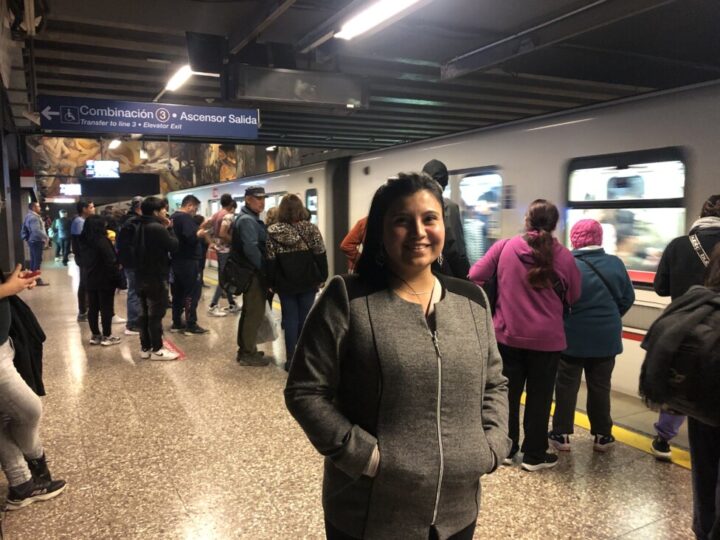
Bernardita Azócar, in a subway station in Santiago, Chile, heads to her job in a collection agency. She says she suffered sexual harassment on public transport in the capital when she was younger, but now she is more alert to any aggression and feels empowered to help others who suffer the same bad experience. CREDIT: Orlando Milesi / IPS

Bernardita Azócar, in a subway station in Santiago, Chile, heads to her job in a collection agency. She says she suffered sexual harassment on public transport in the capital when she was younger, but now she is more alert to any aggression and feels empowered to help others who suffer the same bad experience. CREDIT: Orlando Milesi / IPS


“It happened to me a couple of times when I was younger. They want to grope you or try to touch another girl and now I confront them. I suffer less because I’m more aware and I try not to put myself at risk,” she added during a dialogue at the University of Chile subway station in Santiago.

Azócar, who works for a collection company, said the root cause of harassment lies in education and in Chilean society.

“If you wear a miniskirt or show cleavage, society points the finger at you, as if you were provoking men and it was your fault. And I don’t think that’s why it happens. It’s abuse to be harassed in the public system…or anywhere else,” she said.

Maite, a humanities student at the Catholic University, feels that women are at a disadvantage on public transportation.

“When a woman takes a bus, she tends to sit next to the aisle to have an easier way to flee from any threat. Or she sits next to another woman so as not to travel alone. There are many things that women do that are not explicit. They are behaviors we learn, to get by on public transportation,” said the young woman who, like her friends, preferred not to give her last name.

According to Maite, “women can’t wear shorts or backpacks on the bus, or openly use a cell phone. Every time you get on the bus you have to take a lot of measures.”

Maite and four other classmates told IPS that they take a combination of buses and the subway to go to school and that none of them have suffered harassment on the bus, but they know of several cases that happened to their friends.

“If someone tries to touch me or crowd me too closely I don’t feel so safe,” said Elena, a commercial engineering student.

“A friend of mine had her cell phone stolen. I have not been harassed, but I would never go on the bus or subway in shorts even if I were dying of heat. I wear long pants because wearing shorts is a risk,” added Emilia, a psychology student.


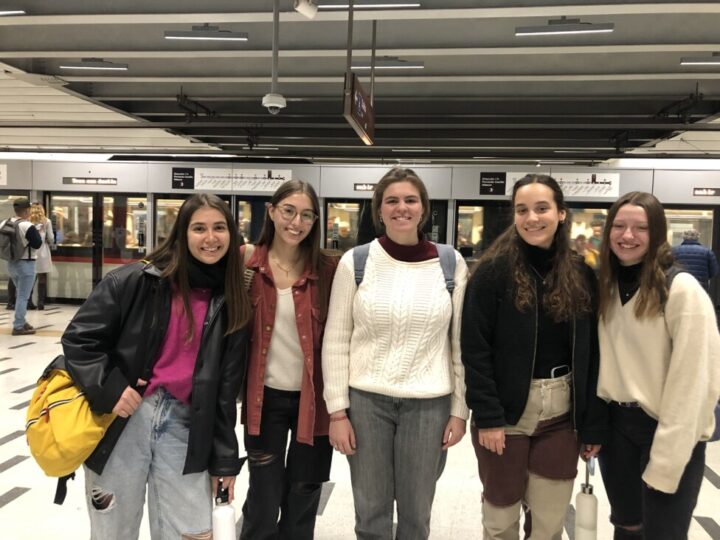
The five university students in this group lament the discrimination women suffer on Chilean public transport and recognize that they have a "code of conduct" that they personally follow to avoid problems, such as not wearing shorts or miniskirts or showing cleavage, even in summertime, although it sometimes restricts their personal freedom. CREDIT: Orlando Milesi / IPS

The five university students in this group lament the discrimination women suffer on Chilean public transport and recognize that they have a “code of conduct” that they personally follow to avoid problems, such as not wearing shorts or miniskirts or showing cleavage, even in summertime, although it sometimes restricts their personal freedom. CREDIT: Orlando Milesi / IPS


The joys and pitfalls of being a female bus driver

Getting more people to use buses and other public transport in Chile, a long narrow country with a population of 19.8 million, is difficult because 71 percent of households own at least one car.

The incorporation of more female bus drivers is aimed at a friendlier mass transit system.

Perla Venegas, 34, has been working as a bus driver in Santiago’s public transportation system for six years.

“I like my job and driving. The most complicated thing is dealing with cyclists, pedestrians and passengers, who are never satisfied,” she told IPS while parked waiting to pull out on the corner of Santa Rosa and Alameda, in the heart of downtown Santiago.

Her route connects downtown Santiago with the municipality of Maipú, in the western outskirts of the capital.

“I’m on a par with the male drivers, but I’m more cautious, not so aggressive and I’m a more defensive driver. I have been complimented several times, especially by elderly people,” said Venegas, who lives with her two daughters, aged 16 and 8.

“I have female colleagues who have been hit and beaten. I received a death threat from a passenger because when the route ended he wouldn’t get off. He was a homeless drug addict. It was 5:30 AM. In the end I found a carabineros (police) patrol car and I turned him in,” she said.

She added that she has had both pleasant and negative experiences and acknowledged that she is proud that her eldest daughter also wants to be a bus driver “although I would not like her to experience the hard parts.”


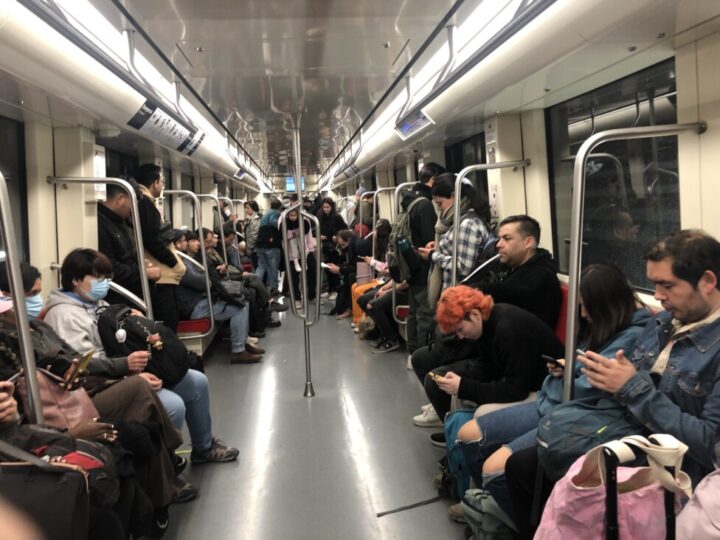
The Santiago subway is the backbone of the mass transit system in the Chilean capital. It makes it possible to reach 23 of the 32 municipalities that encompass the capital and allows passengers to combine with a bus network to reach any point of the metropolitan region. CREDIT: Orlando Milesi / IPS

The Santiago subway is the backbone of the mass transit system in the Chilean capital. It makes it possible to reach 23 of the 32 municipalities that encompass the capital and allows passengers to combine with a bus network to reach any point of the metropolitan region. CREDIT: Orlando Milesi / IPS


Staying alert in the subway, the main means of public transport

On the Santiago subway there are 2.3 million trips on working days. Its tracks cover 140 kilometers on six lines, with 136 stations in 23 of the 32 municipalities that comprise the metropolitan area. Greater Santiago is home to 7.1 million people.

An additional 2.1 million average daily trips are made on surface public transport.

According to official statistics, during the first five months of the year there were 21 pollution episodes in Santiago above the maximum standard level and eight environmental alerts for excess fine particulate matter, so increasing the use of public transport instead of private vehicles is considered a priority for the authorities.

Paulina del Campo, the subway’s sustainability manager, told IPS that gender issues are a strategic objective in this state-owned company.

“We have taken the issue of harassment very seriously. We do not have large numbers, but we do have moments like March 2022 when the issue was raised because of situations in the streets and in universities that included public transportation,” she said.

After meetings with authorities and student leaders, the subway increased the presence of female security guards at stations in the university district.

“One of the things they said is that in a situation of harassment it is much more comfortable to ask for help from a woman than from a man,” explained Del Campo.

The company thus hired a specific group of female guards to receive and respond to complaints.

“Qualified staff respond and are trained to provide support for the victims. We can quickly activate the protocols with the carabineros police. When it happens we can intercept the train and often arrest the people (aggressors) on the spot,” said Del Campo.

In another campaign, a standard methodology designed by international foundations with expertise in harassment was adapted to the situation in Chile.

At the same time, the subway increased its female staff and the number of women in leadership positions.

“Two years ago we had a female staff of around 20 percent and now, in May, 26.5 percent of the 4,400 subway workers are women. In the area of security guards we have a staff of approximately 700 and of these 110 are women,” explained the company’s Sustainability Manager.


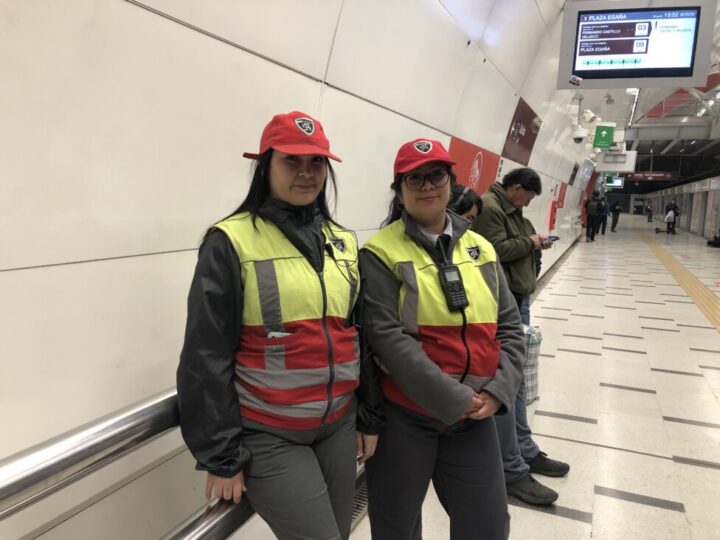
These two women are security guards at the Plaza Egaña subway station, on line 6 in Chile's capital. The state-owned Metro company is increasing the number of women in its services as part of a gender policy that even includes the maintenance of trains. CREDIT: Orlando Milesi / IPS

These two women are security guards at the Plaza Egaña subway station, on line 6 in Chile’s capital. The state-owned Metro company is increasing the number of women in its services as part of a gender policy that even includes the maintenance of trains. CREDIT: Orlando Milesi / IPS


Gender policies in public transportation

The Metropolitan Public Transport Directorate (DTPM) informed IPS that it aims to reduce the male-female gap in public transport.

It also plans to increase the number of women bus drivers.

The Red system, with buses running throughout Santiago, currently employs 1,444 women – only 7.6 percent of all drivers.

“Many women who have entered this field come from highly precarious and unregulated jobs, so this opportunity has allowed them greater autonomy and, on many occasions, to leave violent environments and improve their self-confidence,” the DTPM stressed in response to questions from IPS.

“This has meant an effort to train and generate conditions to keep and promote women who are part of the system,” it added.

Origin-Destination Surveys reveal that women are the main users of public transport and 65 percent of trips for the purpose of caring for the home, children or other people are made by women. They are more likely to make multidirectional trips and in the so-called off-peak hours, with little traffic.

According to the DTPM, waiting for the bus is one of the most critical moments in every trip.

“This is why we installed the panic button at bus stops and real-time information on the arrival of buses to improve the perception of security,” it explained.

The information is available through an application on cell phones, while the panic buttons began as a women’s safety pilot plan in October 2022 at stops in one of the capital’s municipalities. The plan is to extend them to a large number of stops in Santiago.

Source

Biodigesters Boost Family Farming in Brazil

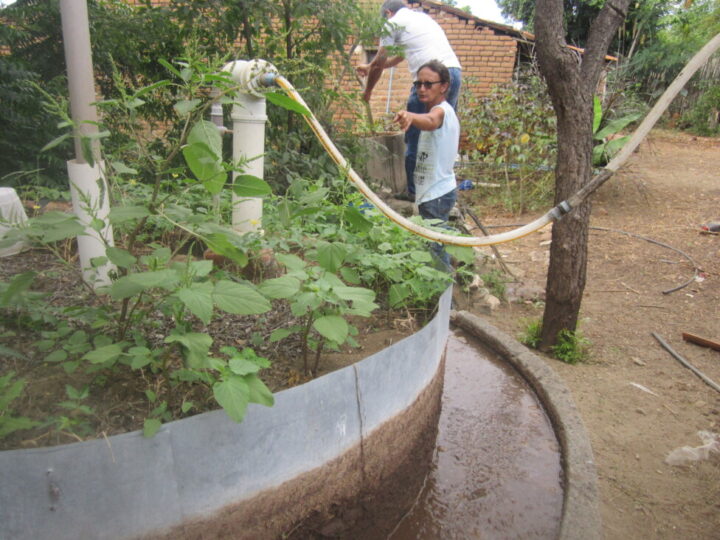
Lucineide Cordeiro loads manure from her two oxen and two calves into the "sertanejo" biodigester that produces biogas for cooking and biofertilizer for her varied crops on the one-hectare agroecological farm she manages on her own in the rural municipality of Afogados da Ingazeira, in the semiarid ecoregion of northeastern Brazil. CREDIT: Mario Osava / IPS

Lucineide Cordeiro loads manure from her two oxen and two calves into the “sertanejo” biodigester that produces biogas for cooking and biofertilizer for her varied crops on the one-hectare agroecological farm she manages on her own in the rural municipality of Afogados da Ingazeira, in the semiarid ecoregion of northeastern Brazil. CREDIT: Mario Osava / IPS

By Mario Osava
AFOGADOS DA INGAZEIRA, Brazil , Jun 24 2023 (IPS)

“The biodigester really gives a huge boost to those who have the courage to do things,” said Maria das Dores Alves da Silva, based on her own experience as a 63-year-old small farmer.


She did not hesitate to accept the offer of Diaconia, a social organization of Protestant churches in Brazil, to acquire the equipment to produce biogas on her farm in the rural area of Afogados da Ingazeira, a municipality of 38,000 people in the state of Pernambuco in the Northeast region of Brazil.”We seek to promote energy, food and water autonomy to maintain more resilient agroecosystems, to coexist with climate change, strengthening community self-management with a special focus on the lives of women.” — Ita Porto

At first she did not have the cattle whose manure she needed to produce biogas, that enables her to save on liquefied petroleum gas, which costs 95 reais (20 dollars) for a 13-kg cylinder – a significant cost for poor families.

She brought manure from a neighboring farm that gave it to her for free, in an hour-long trip with her wheelbarrow, until she was able to buy her first cow and then another with loans from the state-owned Banco del Nordeste.

“Now I have more than enough manure,” she said happily as she welcomed IPS to her four-hectare farm where she and her husband have lived alone since their two children became independent.

Das Dores, as she is known, is an example among the 163 families who have benefited from the “sertanejos biodigesters” distributed by Diaconia in the sertão of Pajeú, a semiarid micro-region of 17 municipalities and 13,350 square kilometers in the center-north of Pernambuco.

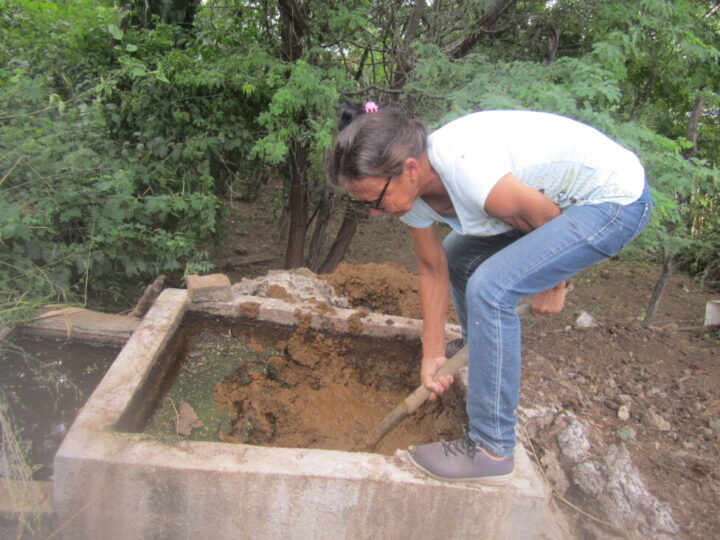
Farmer Maria das Dores Alves da Silva stands between the manure pit and the "sertanejo" biodigester designed by Diaconia, a social organization of Protestant churches in Brazil, which has already installed 713 biogas production plants in eight of Brazil's 26 states. CREDIT: Mario Osava / IPS

Farmer Maria das Dores Alves da Silva stands between the manure pit and the “sertanejo” biodigester designed by Diaconia, a social organization of Protestant churches in Brazil, which has already installed 713 biogas production plants in eight of Brazil’s 26 states. CREDIT: Mario Osava / IPS

Biofertilizer

In addition to using the biogas, she sells the manure after it has been subjected to anaerobic biodigestion that extracts the gases – the so-called digestate, a biofertilizer that she packages in one-kilo plastic bags, after drying and shredding it.

Every Saturday, she sells 30 bags at the agroecological market in the town of Afogados da Ingazeira, the municipal seat. At two reais (40 cents) a bag, she earns an extra income of 60 reais (12.50 dollars), on top of her sales of the various sweet cakes she bakes at home, at a cost reduced by the biogas, and of the seedlings she also produces.

The seedlings provided her with a new business opportunity. “The customers asked me if I didn’t also have fertilizer,” she said. The biodigester produces enough fertilizer to sell at the market and to fertilize the farm’s crops of beans, corn, fruit trees, flowers and different vegetables.

This diversity is common in family farming in Brazil’s semiarid Northeast, but even more so in the agroecological techniques that have expanded in this territory of one million square kilometers in the northeastern interior of the country, which has an arid biome highly vulnerable to climate change, subject to frequent droughts, and where there are areas in the process of desertification.

The Pajeú river basin is the micro-region chosen by Diaconia as a priority for its social and environmental actions.

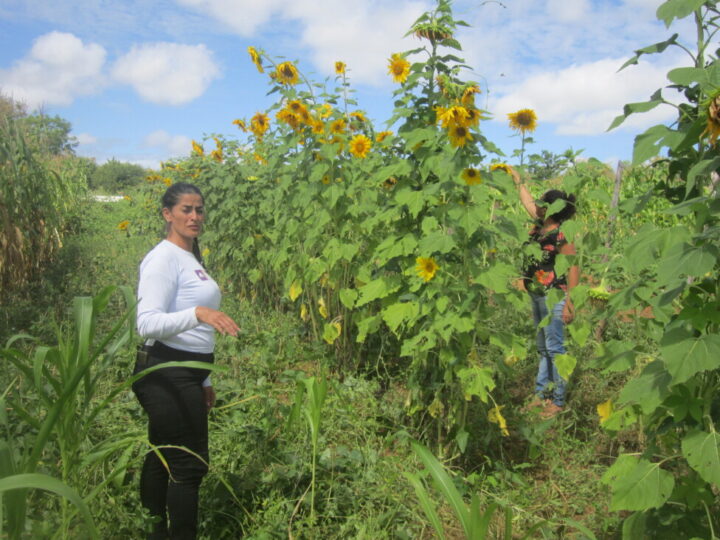
On Lucineide Cordeiro's small farm, cotton, corn, sesame, sunflower, cassava and fruit trees are alternated in the fields, as recommended by agroecology, which is on the rise on family farms in Brazil's semiarid Northeast, which is threatened by longer and more severe droughts due to the climate crisis. CREDIT: Mario Osava / IPS

On Lucineide Cordeiro’s small farm, cotton, corn, sesame, sunflower, cassava and fruit trees are alternated in the fields, as recommended by agroecology, which is on the rise on family farms in Brazil’s semiarid Northeast, which is threatened by longer and more severe droughts due to the climate crisis. CREDIT: Mario Osava / IPS

Energy and food security

“We seek to promote energy, food and water autonomy to maintain more resilient agroecosystems, to coexist with climate change, strengthening community self-management with a special focus on the lives of women,” Ita Porto, Diaconia’s coordinator in the Pajeu ecoregion, told IPS.

“The production of biogas on a rural family scale fulfills the needs of energy for cooking, sanitary disposal and treatment of animal waste and reduction of deforestation, in addition to increasing food productivity, with organic fertilizer, while bolstering human health,” said the 48-year-old agronomist.

More than 713 units of the “sertanejo biodigester”, a model developed by Diaconia 15 years ago, have been installed in Brazil. In addition to the 163 in the sertão do Pajeú, there are 150 in the neighboring state of Rio Grande do Norte and another 400 distributed in six other Brazilian states, financed by the Caixa Econômica Federal, a government bank focused on social questions.

“Hopefully the government will make it a public policy, as it has already done with the rainwater harvesting tanks in the semarid Northeast,” said Porto.

More than 1.3 million rainwater harvesting tanks for drinking water have already been built, but some 350,000 are still needed to make them universal in rural areas, according to the Articulation of the Semi-Arid (Asa), a network of 3,000 social organizations that spearheaded the transformative program.

Maria Das Dores examines the biofertilizer that comes out of the biodigester, without the gases from the animal manure. She sells this by-product at the agroecological market in the town of Afogados da Ingazeira, the seat of the municipality where her four-hectare farm is located, which earns her an average extra income of 12.5 dollars a week. CREDIT: Mario Osava / IPS

The value of manure

“One cow is enough to produce the biogas consumed in our stove,” said Lucineide Cordeiro, on her one-hectare farm where she grows cotton, corn, sesame seeds and fruit, in an interconnected agroecological system, along with chickens, pigs and fish in a pond.

She also has two oxen and two calves, which she proudly showed to IPS during the visit to her farm.

“Pig manure produces biogas more quickly, but I don’t like the stench,” the 37-year-old farmer who is the director of Women’s Policies at the Afogados da Ingazeira Rural Workers Union told IPS.

The difference in the crops before and after fertilization by the biodigester by-product is remarkable, according to her and other farmers in the municipality.

She tends to her many crops on her own, although she is sometimes helped by friends, and has several pieces of equipment such as a brushcutter and a micro-tractor.

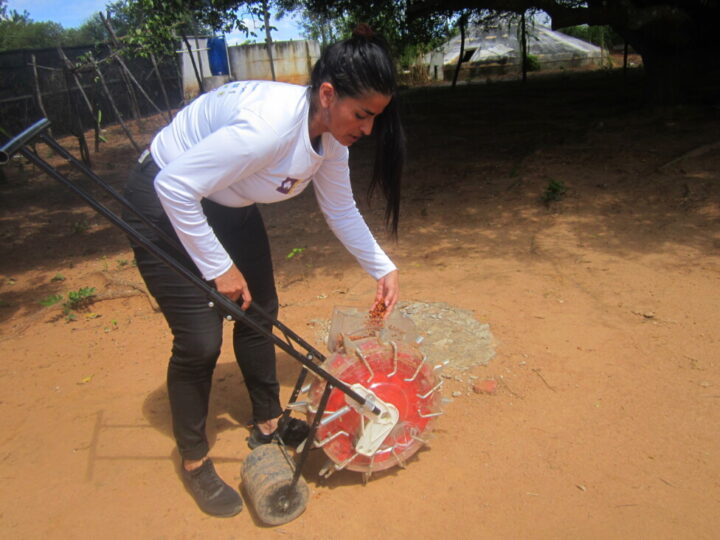
"It's the best invention," says Lucineide Cordeiro, as she shows IPS the seeder created by the Japanese for small-scale farming, which allows her to sow in half a day the land that used to take her two days to plant, on her one-hectare farm in Afogados da Ingazeira, in Brazil's semiarid Northeast. CREDIT: Mario Osava / IPS

“It’s the best invention,” says Lucineide Cordeiro, as she shows IPS the seeder created by the Japanese for small-scale farming, which allows her to sow in half a day the land that used to take her two days to plant, on her one-hectare farm in Afogados da Ingazeira, in Brazil’s semiarid Northeast. CREDIT: Mario Osava / IPS

“But the seeder is the best invention that changed my life, it was invented by the Japanese. Planting the seeds, which used to take me two days of work, I can now do in half a day,” Cordeiro said.

The seeder is a small machine pushed by the farmer, with a wheel filled with seeds that has 12 nozzles that can be opened or closed, according to the distance needed to sow each seed.

The emergence of appropriate equipment for family farming is recent, in a sector that has favored large farmers in Brazil.

Female protagonism clashes with male chauvinist violence

For the success of local family farming, the support of the Pajeú Agroecological Association (Asap), of which Cordeiro is a member and a “multiplier”, as the women farmers who are an example to others of good practices are called, is important.

In family farming the empowerment of women stands out, which in many cases was a response to sexist violence or oppression.

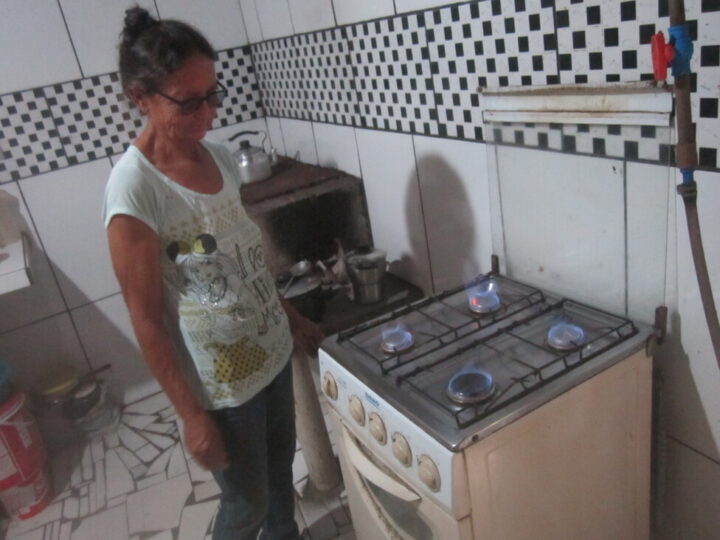
 Blue flames emerge from the burners of Maria Das Dores' biogas stove at her home in Afogados da Ingazeira, in Brazil's semiarid Northeast region. A single ox or cow produces enough manure to generate more biogas than a family requires for its domestic needs. CREDIT: Mario Osava / IPS

Blue flames emerge from the burners of Maria Das Dores’ biogas stove at her home in Afogados da Ingazeira, in Brazil’s semiarid Northeast region. A single ox or cow produces enough manure to generate more biogas than a family requires for its domestic needs. CREDIT: Mario Osava / IPS

“The first violence I suffered was from my father who did not let me study. I only studied up to fourth grade of primary school, in the rural school. To continue, I would have had to go to the city, which my father did not allow. I got married to escape my father’s oppression,” said Cordeiro, who also separated from her first husband because he was violent.

After living in a big city with the father of her two daughters, she separated and returned to the countryside in 2019. “I was reborn” by becoming a farmer, she said, faced with the challenge of taking on that activity against the idea, even from her family, that a woman on her own could not possibly manage the demands of agricultural production.

Organic cotton, promoted and acquired in the region by Vert, a French-Brazilian company that produces footwear and clothing with organic inputs, has once again expanded in the Brazilian Northeast, after the crop was almost extinct due to the boll weevil plague in the 1990s.

In the case of Das Dores, a small, energetic, active woman, she has a good relationship with her husband, but she runs her own business initiatives. Thanks to what she earns she was able to buy a small pickup truck, but it is driven by her husband, who has a job but helps her on the farm in his free time.

“He drives because he refuses to teach me how, so I can’t go out alone with the vehicle and drive around everywhere,” she joked.

Source

Chile: New Constitution in the Hands of the Far Right

Credit: Martín Bernetti/AFP via Getty Images

By Inés M. Pousadela
MONTEVIDEO, Uruguay, May 19 2023 (IPS)

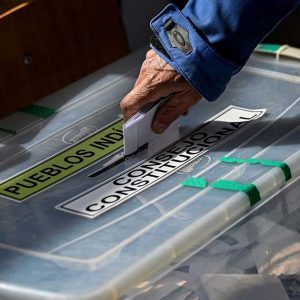
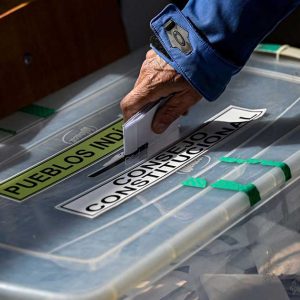
On 7 May, Chileans went to the polls to choose a Constitutional Council that will produce a new constitution to replace the one bequeathed by the Pinochet dictatorship – and handed control to a far-right party that never wanted a constitution-making process in the first place.


This is the second attempt at constitutional change in two years. The first process was the most open and inclusive in Chile’s history. The resulting constitutional text, ambitious and progressive, was widely rejected in a referendum. It’s now far from certain that this latest, far less inclusive process will result in a new constitution that is accepted and adopted – and there’s a possibility that any new constitution could be worse than the one it replaces.

A long and winding road

Chile’s constitution-making process was born out of mass protests that erupted in October 2019, under the neoliberal administration of Sebastián Piñera. Protests only subsided when the leaders of major parties agreed to hold a referendum to ask people whether they wanted a new constitution and, if so, how it should be drafted.

In the vote in October 2020, almost 80 per cent of voters backed constitutional change, with a new constitution to be drafted by a directly elected Constitutional Assembly. In May 2021, the Constitutional Assembly was elected, with an innovative mechanism to ensure gender parity and reserved seats for Indigenous peoples. Amid great expectations, the plural and diverse body started a one-year journey towards a new constitution.

Pushed by the same winds of change, in December 2021 Chile elected its youngest and most unconventional president ever: former student protester Gabriel Boric. But things soon turned sideways, and support for the Constitutional Assembly – often criticised as made up of unskilled amateurs – declined steadily along with support for the new government.

In September 2022, a referendum resulted in an overwhelming rejection of the draft constitution. Although very progressive in its focus on gender and Indigenous rights, a common criticism was that the proposed constitution failed to offer much to advance basic social rights in a country characterised by heavy economic inequality and poor public services. Disinformation was also rife during the campaign.

The second attempt kicked off in January 2023, with Congress passing a law laying out a new process with a much more traditional format. Instead of the large number of independent representatives involved before, this handed control back to political parties. The timeframe was shortened, the assembly made smaller and the previous blank slate replaced by a series of agreed principles. The task of producing the first draft is in the hands of a Commission of Experts, with a technical body, the Technical Admissibility Committee, guarding compliance with a series of agreed principles. One of the few things that remained from the previous process was gender parity.

Starting in March, the Commission of Experts was given three months to produce a new draft, to be submitted to the Constitutional Council for debate and approval. A referendum will be held in December to either ratify or reject the new constitution.

Rise of the far right

Compared with the 2021 election for the Constitutional Convention, the election for the Constitutional Council was characterised by low levels of public engagement. A survey published in mid-April found that 48 per cent of respondents had little or no interest in the election and 62 per cent had little or no confidence in the constitution-making process. Polls also showed increasing dissatisfaction with the government: in late 2022, approval rates had plummeted to 27 per cent. This made an anti-government protest vote likely.

While the 2021 campaign focused on inequality, this time the focus was on rising crime, economic hardship and irregular migration, pivoting to security issues. The party that most strongly reflected and instrumentalised these concerns came out the winner.

The far-right Republican Party, led by defeated presidential candidate José Antonio Kast, received 35.4 per cent of the votes, winning 23 seats on the 50-member council. The government-backed Unity for Chile came second, with 28.6 per cent and 16 seats. The traditional right-wing alliance Safe Chile took 21 per cent of the vote and got 11 seats. No seats were won by the populist People’s Party and the centrist All for Chile alliance, led by the Christian Democratic Party. The political centre has vanished, with polarisation on the rise.

 
What to expect

The Expert Commission will deliver its draft proposal on 6 June and the Constitutional Council will then have five months to work on it, approving decisions with the votes of three-fifths of its members – meaning 31 votes will be needed to make decisions, and 21 will be enough to block them. This gives veto power to the Republican Party – and if it manages to work with the traditional right wing, they will be able to define the new constitution’s contents.

 
The chances of the new draft constitution being better than the old one are slim. In the best-case scenario, only cosmetic changes will be introduced. In the worst, an even more regressive text will result.

People will have the final say on 17 December. If they ratify the proposed text, Chile will adopt a constitution that is, at best, not much different from the existing one. If they reject it, Chileans will be stuck with the old constitution that many rose up against in 2019. Either way, a once-in-a-generation opportunity to expand the recognition of rights will have been lost, and it will fall on civil society to keep pushing for the recognition and protection of human rights.

Inés M. Pousadela is CIVICUS Senior Research Specialist, co-director and writer for CIVICUS Lens and co-author of the State of Civil Society Report.


!function(d,s,id){var js,fjs=d.getElementsByTagName(s)[0],p=/^http:/.test(d.location)?’http’:’https’;if(!d.getElementById(id)){js=d.createElement(s);js.id=id;js.src=p+’://platform.twitter.com/widgets.js’;fjs.parentNode.insertBefore(js,fjs);}}(document, ‘script’, ‘twitter-wjs’);  

Source

“Defending Human Rights Is a Crime in Some Countries and a Deadly Activity in Others”

An activist in Colombia, the deadliest country in the world for human rights defenders in 2022, accounting for 186 killings – or 46% – of the global total registered last year. Credit: Sebastian Barros

By Bibbi Abruzzini and Clarisse Sih, Forus
BRUSSELS, Apr 27 2023 (IPS)

In today’s world, human rights defenders face immense challenges, with threats, attacks, and repression being rampant in many countries. According to the latest report by Front Line Defenders, killings of rights defenders increased in 2022, with a total of 401 deaths across 26 different countries. Despite the adoption of the UN Declaration on Human Rights Defenders 25 years ago, the threats faced by defenders persist globally.


One striking example of the dire situation is in Bolivia, where violations of freedoms of expression, association, peaceful assembly, and the right to defend rights have been recorded by the Observatory of Rights Defenders of UNITAS, with the Permanent Assembly of Human Rights of Bolivia (APDHB) being a longstanding victim of attacks and delegitimization. A total of 725 violations of the freedoms of expression, association and peaceful assembly, democratic institutions and the right to defend rights have been recorded by the Observatory of Rights Defenders.

Gladys Sandova, a human rights and environmental defender in the Tariquía Flora and Fauna National Reserve in Bolivia, reveals how the state often aligns with oil businesses instead of protecting communities. “Tariquía is the lung of Tarija,” Gladys explains, yet this vital source of water for southern Bolivia and home to over 3,000 people, is at risk due to the state-owned Yacimientos Petrolíferos Fiscales Bolivianos (YPFB) seeking to revive oil exploration in the reserve.

“Oil companies are here, we are going to lose our natural richness, they are going to affect the lives of families, and contaminate our water and our air,” says Gladys, reflecting the urgent need to defend human rights and the environment.

Her story is similar to that of several other human rights defenders across the globe : they are victims of hostilities, interference, threats, and harassment. The campaign, ReImagina La Defensa de Derechos, by UNITAS collects the testimonies of human rights defenders and indigenous leaders across Bolivia raising awareness about the challenges they face.

Stories from human rights defenders from across the globe are also featured in the #AlternativeNarratives campaign, which seeks to amplify the voices of civil society organizations and grassroots movements that work towards social justice, human rights, and sustainable development. The campaign encourages the use of storytelling, multimedia tools, and creative expression to highlight alternative perspectives, challenge stereotypes, and advocate for positive chang while fostering a more inclusive and equitable narrative space that reflects the diversity of human experiences and promotes solidarity, empathy, and mutual understanding.

Human rights defenders, including women defenders, continue to mobilize against repressive regimes and occupying forces in countries like Afghanistan, the DRC, El Salvador, Iran, Myanmar, Sudan, and Ukraine. Mary Lawlor, UN Special Rapporteur on the situation of human rights defenders, highlights the underreporting of human rights violations against defenders, particularly women, and outlines “disturbing trends” in relation to civic space worldwide.

Repongac, representing over 1,200 NGOs in Central Africa, states that “human rights in Central Africa are no longer guaranteed,” with civil society actors, journalists, and defenders facing repression, prosecution, and arrests. Recent campaigns organized by Repongac in Central Africa and Repaoc in West Africa, supported by Forus and the French Development Agency, brought together diverse stakeholders, including human rights defenders, political parties, parliamentarians, journalists, and security personnel, to initiate a dialogue and protect civic space amnd fundametnal freedoms in the region.

To support activists and defenders globally, the Danish Institute for Human Rights has launched a monitoring tool that assesses whether an enabling environment for human rights defenders exists across five critical areas. Developed in collaboration with 24 institutions and organizations, including the United Nations and civil society networks, the tool not only tracks the number of killings of human rights defenders but also analyzes the presence of appropriate legislation and practices to protect defenders.

As Carol Rask, a representative of the Danish Institute for Human Rights, explains, defending human rights is a crime in some countries and a deadly activity in others. It is a call to action for change, urging individuals, organizations, and governments to prioritize and protect the crucial work of human rights defenders worldwide.

Griselda Sillerico, human rights defender in Bolivia for over 30 years, quotes Ana María Romero and says “human rights are seeds that we continue to plant and that over the years we harvest.” Griselda Sillerico’s quote echoes the enduring spirit of human rights advocacy, where the work of human rights defenders like her is a constant effort to sow the seeds of justice, equality, and dignity for all. Despite the challenges and setbacks, human rights defenders across the world continue to plant these seeds, often at great personal risk, with the hope of reaping a future where human rights are universally respected and protected.

IPS UN Bureau


!function(d,s,id){var js,fjs=d.getElementsByTagName(s)[0],p=/^http:/.test(d.location)?’http’:’https’;if(!d.getElementById(id)){js=d.createElement(s);js.id=id;js.src=p+’://platform.twitter.com/widgets.js’;fjs.parentNode.insertBefore(js,fjs);}}(document, ‘script’, ‘twitter-wjs’);  

Source

Racist Political System Thwarts Candidacy of Mayan Woman in Guatemala

Thelma Cabrera and Jordán Rodas launch their candidacy for the presidency and vice presidency of Guatemala in December 2022, which has been vetoed by the courts, in a maneuver that has drawn criticism from human rights groups at home and abroad. CREDIT: Twitter

Thelma Cabrera and Jordán Rodas launch their candidacy for the presidency and vice presidency of Guatemala in December 2022, which has been vetoed by the courts, in a maneuver that has drawn criticism from human rights groups at home and abroad. CREDIT: Twitter

By Edgardo Ayala
SANTA CATARINA PALOPÓ, Guatemala, Mar 4 2023 (IPS)

Centuries of racism and exclusion suffered by indigenous peoples in Guatemala continue to weigh heavily, as demonstrated by the denial of the registration of a political party that is promoting the presidential candidacy of indigenous leader Thelma Cabrera in the upcoming general elections.


On Mar. 2, the Guatemalan Constitutional Court ruled against Cabrera’s party, the leftist Movement for the Liberation of the Peoples (MLP), which had appealed a Feb. 15 Supreme Court resolution that left them out of the Jun. 25 elections.“There is a racist system and structure, and we indigenous people have barely managed to start climbing the steps, but with great difficulty and zero opportunities.” — Silvia Menchú

Cabrera’s candidacy and that of her vice-presidential running-mate Jordán Rodas are now hanging by a thread, with their hopes depending on a few last resort legal challenges.

The deadline for the registration of candidates is Mar. 25.


A centuries-old racist system

Guatemala’s political and economic elites “are looking for ways to keep her (Cabrera) from registering; everyone has the right to participate, but they are blocking her,” Sonia Nimacachi, 31, a native of Santa Catarina Palopó, told IPS. The municipality, which has a Cachiquel Mayan indigenous majority, is in the southwestern Guatemalan department of Sololá.

“We would like a person with our roots and culture to become president, I think it would help our people,” added Nimacachi, standing by her street stall in the center of town.

Nimacachi, a Cachiquel Mayan woman, sells “granizadas” or snow cones: crushed ice sweetened with syrup of various flavors, perfect for hot days.

“There is a racist system and structure, and we indigenous people have barely managed to start climbing the steps, but with great difficulty and zero opportunities,” Silvia Menchú, director of the K’ak’a Na’oj (New Knowledge, in Cachiquel) Association for the Development of Women, told IPS.

The organization, based in Santa Catarina Palopó, carries out human rights programs focused on indigenous women.


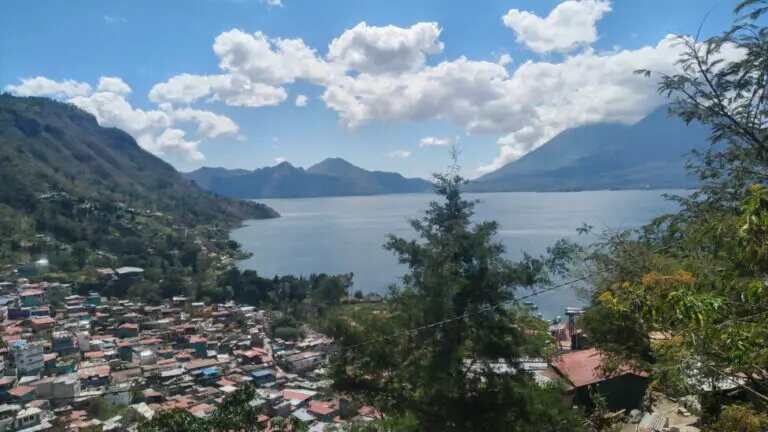
Santa Catarina Palopó, a picturesque Cachiquel Mayan town located on the shore of Lake Atitlán in the southwestern Guatemalan department of Sololá, is preparing for the upcoming general elections, where voters will choose a new president, vice president, 160 members of Congress, 20 members of the Central American Parliament, as well as 340 mayors. CREDIT: Edgardo Ayala/IPS

Santa Catarina Palopó, a picturesque Cachiquel Mayan town located on the shore of Lake Atitlán in the southwestern Guatemalan department of Sololá, is preparing for the upcoming general elections, where voters will choose a new president, vice president, 160 members of Congress, 20 members of the Central American Parliament, as well as 340 mayors. CREDIT: Edgardo Ayala/IPS


“Racism has prevailed, we are mistreated everywhere by the government and the authorities, we are seen as people with little capacity,” said Menchú, of the Maya Quiché ethnic group.

An alleged illegality attributed to Rodas, the vice-presidential candidate, was the cause for denying the MLP the right to register for the elections.

Analysts and social organizations perceive obscure maneuvering on the part of the powers-that-be, who cannot accept the idea that an indigenous woman is trying to break through the barriers of the country’s rigid, racist political system.

Cabrera is a 51-year-old Mayan Mam woman who is trying for a second time to run in the unequal fight for the presidency of this Central American country of 14.9 million inhabitants.

Of the total population, 43.7 percent identify as indigenous Mayan, Xinca, Garífuna and Afro-descendant peoples, according to the 2018 census.

In the 2019 elections Cabrera came in fourth place, winning 10 percent of the total votes cast.

In the Jun. 25 general elections voters will choose a new president for the period 2024-2028, as well as 160 members of Congress and 20 members of the Central American Parliament, and 340 mayors.

In Guatemala, the ancient Mayan culture was flourishing when the Spanish conquistadors arrived in the 16th century.

The descendants of that pre-Hispanic civilization still speak 24 different autochthonous languages, most of which are Mayan.

Years of exclusion and neglect of indigenous rural populations led Guatemala to a civil war that lasted 36 years (1960-1996) and left some 250,000 dead or disappeared.


The presidential candidacy of Thelma Cabrera, of the Movement for the Liberation of the Peoples (MLP), must be allowed by the Guatemalan authorities, so that the indigenous population is represented in the Jun. 25 elections, says Silvia Menchú, director of the K’ak’a Na’oj (New Knowledge, in Cachiquel) Association for the Development of Women. CREDIT: Edgardo Ayala/IPS

The presidential candidacy of Thelma Cabrera, of the Movement for the Liberation of the Peoples (MLP), must be allowed by the Guatemalan authorities, so that the indigenous population is represented in the Jun. 25 elections, says Silvia Menchú, director of the K’ak’a Na’oj (New Knowledge, in Cachiquel) Association for the Development of Women. CREDIT: Edgardo Ayala/IPS


A blatant maneuver

The Supreme Electoral Tribunal’s (TSE) rejection of the MLP arose from a complaint against Rodas, who served between 2017 and 2022 as head of the Office for the Defense of Human Rights.

In that office, Rodas strongly questioned alleged acts of corruption by the current government of Alejandro Giammattei, who took office in January 2020.

The criminal complaint against the vice-presidential candidate was filed on Jan. 6 by the current head of the Office for the Defense of Human Rights, Alejandro Córdoba.

After Cabrera and Rodas attempted to register as candidates, Córdoba said he had “doubts” about some payments allegedly received by his predecessor in the Office for the Defense of Human Rights.

His “doubts” apparently had to do with some alleged illegality on the part of Rodas, but since Córdoba has not described it in detail, his statements have been nothing but a weak half-hearted accusation.

However, that was enough for the Supreme Electoral Tribunal to reject the MLP on Feb. 2, which triggered protests by rural and indigenous people, who blocked roads in at least 12 parts of the country.

According to Guatemalan law, all candidates for popularly elected positions must have a document that attests that they have no pending legal issues.

But analysts have pointed out that this document should only take into account actual legal rulings handed down by courts, and not “doubts” vaguely expressed by some government official.

By vetoing Rodas, the TSE automatically bars his presidential runningmate Cabrera, who may actually be the ultimate target of the maneuver, since she is the one who is trying, once again, to win the votes of the indigenous population.

On Feb. 15, the MLP runningmates filed a provisional injunction with the Supreme Court, so that it would take effect immediately and overrule the TSE’s decision, while the Supreme Court studied and resolved the matter in depth.

But the injunction was rejected, so the MLP appealed the next day to the Constitutional Court, asking it to review the case and order the Supreme Court to admit the provisional injunction, to allow the fight for the registration of Cabrera and Rodas to continue forward.

But the appeal was denied Thursday Mar. 2 by the Constitutional Court.

However, the Supreme Court has not yet issued a final ruling on the injunction, but only a provisional stance. This means that when it is finally issued, if it goes against the MLP, Cabrera and Rodas could once again turn to the Constitutional Court, in a last-ditch effort.

But it seems as if the die is already cast.

In a tweet on Thursday Mar. 2, Rodas wrote: “The constitutional justice system has denied my constitutional right to be elected and denies the population the right to choose freely. We await the Supreme Court ruling on the injunction and the position of the @IACHR (Inter-American Commission on Human Rights). Our fight continues.”


Guatemala's political and economic elites are determined to block the candidacy of indigenous leader Thelma Cabrera, says Sonia Nimacachi, a Cachiquel Mayan woman selling snowcones in Santa Catarina Palopó, in the country's southwest. She would vote for Cabrera again, if her candidacy is finally allowed. CREDIT: Edgardo Ayala/IPS

Guatemala’s political and economic elites are determined to block the candidacy of indigenous leader Thelma Cabrera, says Sonia Nimacachi, a Cachiquel Mayan woman selling snowcones in Santa Catarina Palopó, in the country’s southwest. She would vote for Cabrera again, if her candidacy is finally allowed. CREDIT: Edgardo Ayala/IPS


Cabrera’s second attempt

This is Cabrera’s second attempt to run for the presidency. Her first was in the 2019 elections, when she failed to fully capture the indigenous vote.

“I would dare to think that the majority of the indigenous population did not vote for her because of those instilled prejudices: that she is a woman and also indigenous, not a professional, are issues that have nothing to do with the dignity and the quality of a person,” argued Silvia Menchú.

She added that the right-wing parties have been allies of the country’s evangelical churches, through which they keep in submission segments of the indigenous population that end up supporting conservative parties, rather than a candidate who comes from their Mayan culture.

To illustrate, she said that in Santa Catarina Palopó, a town of 6,000 people, there is only one school to cover primary and middle-school education, “but there are about 15 evangelical churches.”

The TSE’s veto of the registration of Cabrera and Rodas puts the credibility of the elections at risk, Human Rights Watch (HRW) and the Washington Office on Latin America (WOLA) warned on Feb. 27.

In a joint statement, the two organizations said the electoral authority’s rejection of aspiring candidates “is based on dubious grounds, puts political rights at risk, and undermines the credibility of the electoral process.”

“The electoral process is taking place in the context of a decline in the rule of law, in which the institutions responsible for overseeing the elections have little independence or credibility,” they stated.

In addition to Cabrera and Rodas, the TSE also rejected the registration of right-wing candidate Roberto Arzú, because he allegedly began campaigning too early.

HRW and Wola added that “efforts to exclude or prosecute opposition candidates create unequal conditions that could prevent free and fair elections from taking place.”

Meanwhile, the TSE did endorse, on Feb. 4, the presidential candidacy of Zury Ríos, daughter of General Efraín Ríos Montt, who governed de facto between 1982 and 1983.

In 2013 the general was found guilty of genocide and crimes against humanity for the massacre of more than 1,400 indigenous Ixil people in the north of the country.

He was sentenced to 80 years in prison, but the Constitutional Court later revoked the ruling. Ríos Montt died in April 2018.

Article 186 of the Guatemalan constitution prohibits people involved in coups d’état, or their relatives, for running for president.

Meanwhile, snowcone vendor Sonia Nimacachi said in the central square of Santa Catarina Palopó that she still held out hope that Cabrera would be able to register as a candidate.

“If they let her participate, I would vote for her again,” she said, while serving a customer.

Source