Coronavirus, New Threat for Mexican Migrant Workers in the U.S.

Civil Society, Development & Aid, Economy & Trade, Editors’ Choice, Featured, Food & Agriculture, Global Governance, Globalisation, Headlines, Human Rights, Labour, Latin America & the Caribbean, Migration & Refugees, North America, Regional Categories, TerraViva United Nations
Migration & Refugees

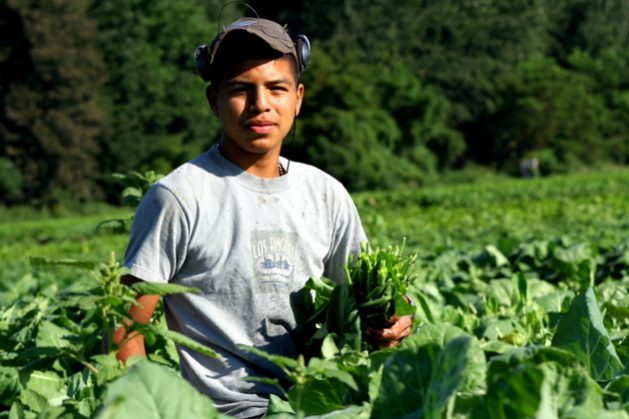
Considered essential to the U.S. economy, as Donald Trump himself now acknowledges, Mexico's seasonal farmworkers are exposed to the coronavirus pandemic as they work in U.S. fields, which exacerbates violations of their rights, such as wage theft, fraud, and other abuses. CREDIT: Courtesy of MHP Salud

Considered essential to the U.S. economy, as Donald Trump himself now acknowledges, Mexico’s seasonal farmworkers are exposed to the coronavirus pandemic as they work in U.S. fields, which exacerbates violations of their rights, such as wage theft, fraud, and other abuses. CREDIT: Courtesy of MHP Salud

MEXICO CITY, Apr 21 2020 (IPS) – As the high season for agricultural labour in the United States approaches, tens of thousands of migrant workers from Mexico are getting ready to head to the fields in their northern neighbour to carry out the work that ensures that food makes it to people’s tables.


But the SARS-CoV-2 (COVID-19) pandemic, of which the U.S. has become the world’s largest source of infection, threatens to worsen the already precarious conditions in which these workers plant, harvest, process and move fruits and vegetables in the U.S.

Exposed to illegal charges for visa, transport and accommodation costs, labour exploitation, lack of access to basic services and unhealthy housing, Mexican seasonal workers driven from their homes by poverty must also now brave the risk of contagion.

Evy Peña, director of communications and development at the non-governmental Centro de los Derechos del Migrante (Migrant Rights Centre – CDM), told IPS from the city of Monterrey that the COVID-19 pandemic is exacerbating violations of the rights of migrant workers.

“Temporary visa programmes are rife with abuse, from the moment workers are recruited in their communities. They suffer fraud, they are offered jobs that don’t even exist in the United States. It’s a perverse system in which recruiters and employers have all the control. There are systemic flaws that will become more evident now,” the activist said.

In 1943, the United States created H2 visas for unskilled foreign workers, and in the 1980s it established H-2A categories for farm workers and H-2B categories for other work, such as landscaping, construction and hotel staff.

In 2019, Washington, which had already declared them “essential” to the economy, granted 191,171 H-2A and 73,557 H-2B visas to Mexican workers, and by January and February of this year had issued 27, 058 and 6,238, respectively.

Two emergencies converge

Now, the two countries are negotiating to send thousands of farmworkers within or outside of the H2 programme, starting this month, to ensure this year’s harvest in the U.S. The Mexican government has polled experts to determine the viability of the plan, IPS learned.

The migrant workers would come from Michoacan, Oaxaca, Zacatecas and the border states. The plan would put leftist President Andres Manuel López Obrador in good standing with his right-wing counterpart, Donald Trump; generate employment for rural workers in the midst of an economic crisis; and boost remittances to rural areas.

For his part, Trump, forced by a greater need for rural workers in the face of the pandemic and under pressure from agriculture, abandoned his anti-immigrant policy and on Apr. 1 even issued a call for the arrival of Mexican migrant workers.

“We want them to come in,” he said. “They’ve been there for years and years, and I’ve given the commitment to the farmers: They’re going to continue to come.”

U.S. authorities can extend H-2A visas for up to one year and the maximum period of stay is three years. After that, the holder must remain outside U.S. territory for at least three months to qualify for re-entry with the same permit.

On Apr. 15, Washington announced temporary changes allowing workers to switch employers and to stay longer than three years.
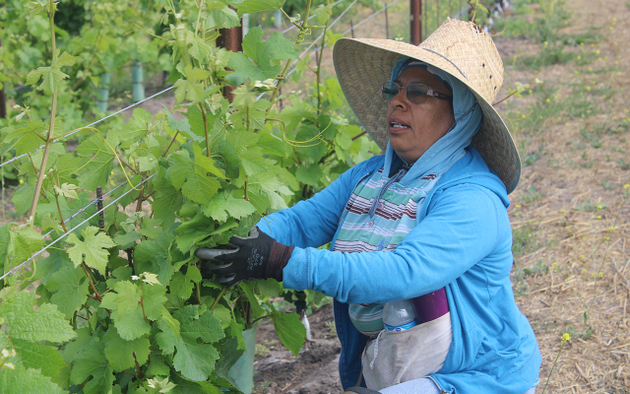
A Mexican migrant worker works at a vineyard in California, one of the U.S. states most dependent on seasonal labour from Mexico in agriculture, and which has now urged President Donald Trump to facilitate the arrival of guest workers from that country so crops are not lost. CREDIT: Kau Sirenio/En el Camino

A Mexican migrant worker works at a vineyard in California, one of the U.S. states most dependent on seasonal labour from Mexico in agriculture, and which has now urged President Donald Trump to facilitate the arrival of guest workers from that country so crops are not lost. CREDIT: Kau Sirenio/En el Camino

The most numerous jobs are in fruit harvesting, general agricultural work such as planting and harvesting, and on tobacco plantations, according to the U.S. Department of Labor.

Migrant workers traditionally come from Mexican agricultural and border states and their main destinations are agricultural areas where there is a temporary or permanent shortage of labourers.

Jeremy McLean, policy and advocacy manager for the New York-based non-governmental organisation Justice in Motion, expressed concern about the conditions in which migrants work.

The way the system works, “it’s not going to be easy to follow recommendations for social distancing. Hundreds of thousands of people are going to come and won’t be able to follow these recommendations, and they will put themselves at risk. It could spell another wave of infection and transmission,” he warned IPS.

“This population group has no health services and no medical insurance. If they fall ill in a remote area, what help can they get?” he said from New York.

On Mar. 26, the U.S. Embassy in Mexico reported that it would process without a personal interview the applications of those whose visas had expired in the previous two years or who had not received them in that time, under pressure from U.S. agribusiness.

Trapped with no way out

The migrant workers’ odyssey begins in Mexico, where they are recruited by individual contractors – workers or former workers of a U.S. employer, fellow workers, relatives or friends, in their hometowns – or by private U.S. agencies.

Although article 28 of Mexico’s Federal Labour Law, in force since 1970 and overhauled in 2019, regulates the provision of services by workers hired within Mexico for work abroad, it is not enforced.

It requires that contracts be registered with the labour authorities and that a bond be deposited to guarantee compliance. It also holds the foreign contractor responsible for the costs of transport, repatriation, food for the worker and immigration, as well as the payment of full wages, compensation for occupational hazards and access to adequate housing.

In addition, it states that Mexican workers are entitled to social security benefits for foreigners in the country where they are offering their services.

Although the Mexican government could enforce article 28 of the law in order to safeguard the rights of migrant workers who enter and leave the United States under the visa programme, it has failed to do so.

In its recent report “Ripe for Reform: Abuse of Agricultural Workers in the H-2A Visa Program”, the bi-national CDM organisation reveals that migrant workers experience wage theft, health and safety violations, discrimination, and harassment as part of a human trafficking system.

Recruitment without oversight

For Mayela Blanco, a researcher at the non-governmental Centre for Studies in International Cooperation and Public Management, the problem is the lack of monitoring or inspections of recruiters and agencies.

“In Mexico there are still many gaps in the mechanisms for monitoring and inspecting recruitment. There is still fraud,” she told IPS. “How often do they inspect? How do they guarantee that things are working the way they’re supposed to?”

There are 433 registered placement agencies in the country, distributed in different states, according to data from the National Employment Service. For the transfer of labour abroad, there are nine – a small number considering the tens of thousands of visas issued in 2019.

For its part, the U.S. Department of Labor reports 239 licenced recruiters in that nation working for a handful of U.S. companies.

Data obtained by IPS indicates that Mexico’s Ministry of Labour only conducted 91 inspections in nine states from 2009 to 2019 and imposed 12 fines for a total of around 153,000 dollars. Some states with high levels of migrant workers were never visited by inspectors.

Furthermore, the records of the federal labour board do not contain any reports of violations of article 28.

Mexico is a party to the Fee-Charging Employment Agencies Convention 96 of the International Labour Organisation (ILO), which it violates due to non-compliance with the rights of temporary workers.

Peña stressed that there is still a gap between the U.S. and Mexico in labour protection and said workers are being left behind because of that gap.

“Countries like Mexico see temporary visas as a solution to labour migration and allow the exploitation of their citizens. The H2 programme is about labour migration and governments forget that bilateral solutions are needed,” she said.

In response to the pandemic and its risks, 37 organisations called on the U.S. government on Mar. 25 for adequate housing with quarantine facilities, safe transportation, testing for workers before they arrive in the United States, physical distancing on farms and paid treatment for those infected with COVID-19.

Blanco emphasised the lack of justice and reparation mechanisms. “The more visas issued, the greater the need for oversight. Mexico is perceived as a country of return or transit of migrants, but it should be recognised as a place of origin of temporary workers. And that is why it must comply with international labour laws,” she said.

McLean raised the need for a new U.S. law to guarantee the rights of migrant workers, who are essential to the economy, as underscored by the demand reinforced by the impact of COVID-19.

“We pushed for a law to cover all temporary visa programmes so that there would be more information, to avoid fraud and wage theft. But it is very difficult to get a commitment to immigration dialogue in the United States today,” he said.

But the ordeal that migrant workers face will not end with their work in the U.S. fields, because in October they will have to return to their hometowns, which will be even more impoverished due to the consequences of the health crisis, and with COVID-19 in all likelihood still posing a threat.
  Source

Young People Bring Solar Energy to Schools in the Argentine Capital

Civil Society, Development & Aid, Editors’ Choice, Education, Energy, Environment, Featured, Headlines, Integration and Development Brazilian-style, Latin America & the Caribbean, Population, Projects, Regional Categories, Special Report, TerraViva United Nations

Energy

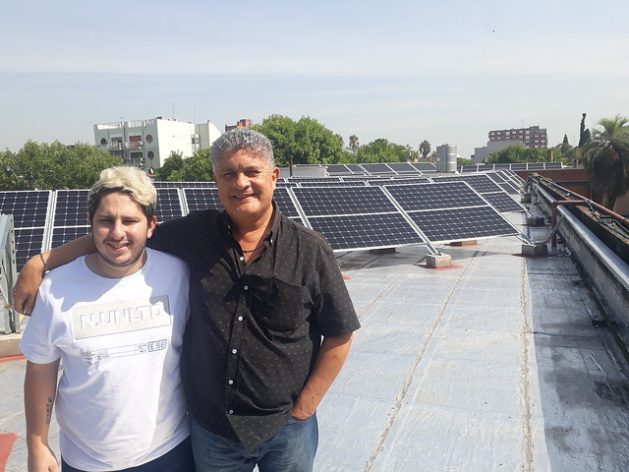
Sebastián Ieraci (L), a member of the group of students who in 2014 pushed for the switch to solar energy at the Antonio Devoto High School, stands next to the school's principal Marcelo Mazzeo on the rooftop of the educational institution located in the Buenos Aires neighbourhood of Villa Devoto. Credit: Daniel Gutman/IPS

Sebastián Ieraci (L), a member of the group of students who in 2014 pushed for the switch to solar energy at the Antonio Devoto High School, stands next to the school’s principal Marcelo Mazzeo on the rooftop of the educational institution located in the Buenos Aires neighbourhood of Villa Devoto. Credit: Daniel Gutman/IPS

BUENOS AIRES , Mar 19 2020 (IPS) – “The idea came to a group of schoolmates and me in 2014, but we never thought it could become a reality,” says Sebastián Ieraci, 23, as he points to a multitude of photovoltaic solar panels shining on the roof of the Antonio Devoto High School in the Argentine capital.


The secondary school is one of the first public centres in Buenos Aires that has managed, since last November, to cover 100 percent of its electricity needs from renewable energy generated in the building itself.

Although today only seven of the city’s public schools have solar panels, the authorities have identified another 140 school buildings with the conditions to generate solar energy, and the plan is to gradually equip all of them with solar panels.

But perhaps the most interesting aspect of this case is that it was the students’ own enthusiasm for clean energy and community involvement that allowed the school to be chosen for an experiment that is new to Buenos Aires.

“Now they come to see us from schools in different parts of the country, to see what we have done and to try to replicate it.” — Marcelo Mazzeo

Ieraci, who arrives in a hurry at his former school after his workday at a paint factory, was in his last year of high school in 2014, when law teachers suggested to him and his classmates that they come up with a project for the programme The Legislature and Schools.

The programme, carried out for over 20 years, invites final-year high school students to submit proposals to the Buenos Aires city legislature, in the areas of environment, public spaces, traffic and transport and security.

Once they do so, the students sit on the city legislature for an afternoon to discuss their proposals with students from other schools.

“We came up with the idea of installing solar panels because we knew that the school’s rooftop was not being used for anything and that doing so could be doubly beneficial, both environmentally and economically, since the school could generate its own energy,” says Ieraci during IPS’s visit to his former school.

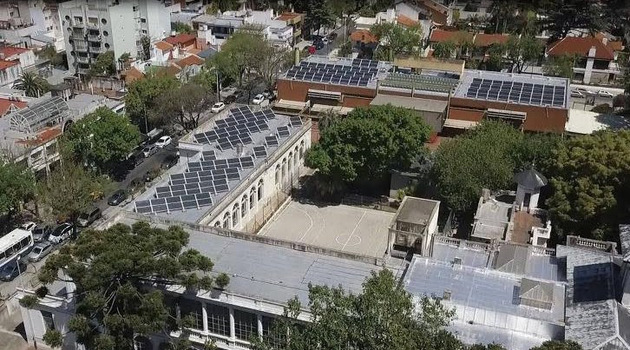
Aerial view of the rooftops of the primary and secondary schools located across from the main square in Villa Devoto, a residential neighborhood in the Argentine capital. The adjacent schools now have 200 solar panels with an installed capacity of 70 kilowatts, and the surplus is injected into the Buenos Aires electricity grid. Credit: Courtesy of Buenos Aires city government

Aerial view of the rooftops of the primary and secondary schools located across from the main square in Villa Devoto, a residential neighborhood in the Argentine capital. The adjacent schools now have 200 solar panels with an installed capacity of 70 kilowatts, and the surplus is injected into the Buenos Aires electricity grid. Credit: Courtesy of Buenos Aires city government

“Then we started looking for information, and after a month we presented the project. Back then it was a utopia and today seeing these panels makes me very proud, because this is a school that generates a sense of belonging,” he explains.

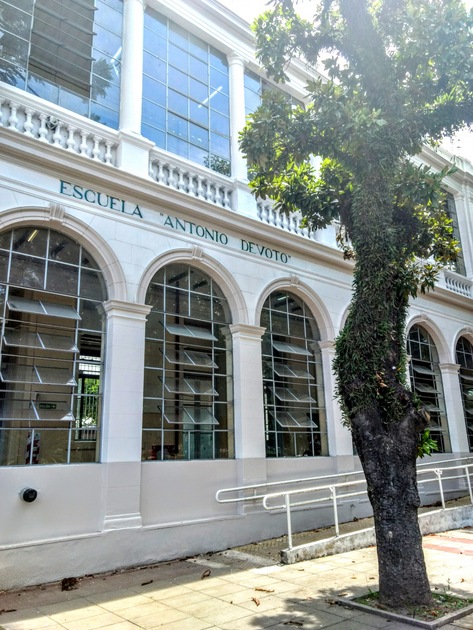
The school is located in a large two-storey building that preserves the style of the old manor house that Italian immigrant Antonio Devoto had built there at the beginning of the 20th century. Devoto is considered the founder of the middle-class residential neighbourhood that today bears his name.

The school is located across from the main square of Devoto, in an area with many old trees and few tall buildings, full of bars and restaurants, and bursting with vitality far from the centre of Buenos Aires.

The Devoto teenagers’ solar panel project was the winner among more than 70 initiatives that students presented in 2014 to the local legislature, and in 2016 the Buenos Aires city government launched it. The first step was to start feasibility studies in more than 600 school buildings.

But it was in 2017 that the school received the definitive push to move towards solar energy, when it once again presented the project in a competition, this time in BA Elige (Buenos Aires Chooses), a citizen participation programme in which the more than three million inhabitants of Buenos Aires proper vote on the projects they want to see carried out.

On that occasion, the residents of Devoto expressed their opinions online, supporting the installation of solar panels in the neighbourhood schools and thus enabling the authorities to allocate budget funds.

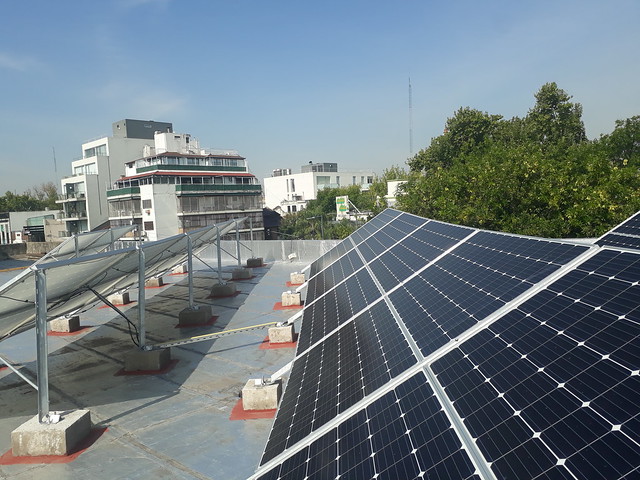
The installation of the solar panels began in August 2019 and took three months. Since November, 87 two-by-one meter solar panels have been in operation on the rooftop of the Antonio Devoto High School.

The primary school next door was soon incorporated into the programme, and since January 113 solar panels have been operating, bringing the total to 200 panels on the adjacent rooftops of the two schools that serve a combined total of 500 students.

Solar panels nearly cover the entire rooftop of the Antonio Devoto High School in Buenos Aires. Until last year the rooftop area was not put to any use. The idea of using that space to generate renewable energy came from students in their final year in 2014, who presented a project to the Buenos Aires city legislature. Credit: Daniel Gutman/IPS

Solar panels nearly cover the entire rooftop of the Antonio Devoto High School in Buenos Aires. Until last year the rooftop area was not put to any use. The idea of using that space to generate renewable energy came from students in their final year in 2014, who presented a project to the Buenos Aires city legislature. Credit: Daniel Gutman/IPS

“In secondary schools, the panels have 30 kilowatts (kW) of installed capacity, and in primary schools, 40. But the most interesting thing is that the primary school injects its surplus energy into the city’s electricity grid, generating credit with the power company,” engineer Andrés Valdivia, head of climate action in the city government’s Ministry of Education, told IPS.

The Ministry reports that the 140 school rooftops declared suitable for the installation of solar panels – because there are few high buildings surrounding them and they receive good solar radiation – have a combined surface area of 145,000 square meters and could have a total installed capacity of 13 megawatts (MW).

Renewable energies – basically, solar and wind – have experienced major growth in Argentina since a fund was created by law in September 2015 to finance the construction of facilities and to guarantee the purchase of the energy generated.

By late 2019, nearly eight percent of the electricity produced in the country came from renewable sources, up from just 2.2 percent in early 2016, according to official statistics.

However, that growth will not continue because the recession and the devaluation of the local currency in Argentina mean that almost no new projects will be launched, say industry analysts.

View of the front of the Antonio Devoto High School, which was built in an old manor house belonging to the Italian immigrant recognised as the founder of the Villa Devoto neighbourhood in Buenos Aires, the capital of Argentina. Credit: Courtesy of Marcelo Mazzeo

View of the front of the Antonio Devoto High School, which was built in an old manor house belonging to the Italian immigrant recognised as the founder of the Villa Devoto neighbourhood in Buenos Aires, the capital of Argentina. Credit: Courtesy of Marcelo Mazzeo

“Ours is not a technical school; we have an orientation in economics and administration. But the kids’ interest in the energy transition surprised us and led us to gather a lot of information together about the subject,” said Marcelo Mazzeo, the principal of the Antonio Devoto High School.

“Now they come to see us from schools in different parts of the country, to see what we have done and to try to replicate it,” he told IPS.

Félix Aban, one of the law teachers who worked with the students on the project and is now the school’s vice-principal, said that “one of the most interesting things was that in 2014 the kids suggested that the surplus energy generated by their schools could be injected into the power grid, when that possibility was not even being discussed in Argentina.”

In fact, the law on distributed (or decentralised) energy was not approved by Congress until 2017, under the official name “Regime to foment distributed renewable energy generation integrated into the public electricity grid”.

“They investigated and found that in other countries individual generators fed power into the grid. So we can say that the kids at this school were really ahead of the game,” said Aban.

  Source

Water Is Worth More than Milk in Extrema, Brazil

Biodiversity, Civil Society, Development & Aid, Economy & Trade, Editors’ Choice, Environment, Featured, Food & Agriculture, Green Economy, Headlines, Integration and Development Brazilian-style, Latin America & the Caribbean, Projects, Regional Categories, TerraViva United Nations, Water & Sanitation

Water & Sanitation

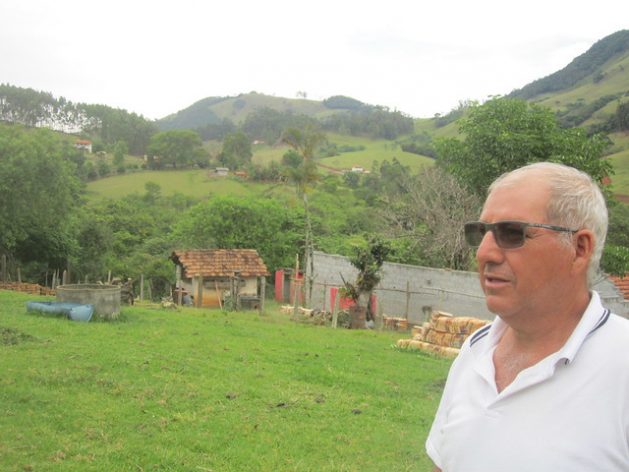
Elias Cardoso is proud of the restored forests on his 67-hectare farm, where he has protected and reforested a dozen springs as well as streams. "I was a guinea pig for the Water Conservator project, they called me crazy," when the mayor's office was not yet paying for it in Extrema, a municipality in southeastern Brazil. Credit: Mario Osava/IPS

Elias Cardoso is proud of the restored forests on his 67-hectare farm, where he has protected and reforested a dozen springs as well as streams. “I was a guinea pig for the Water Conservator project, they called me crazy,” when the mayor’s office was not yet paying for it in Extrema, a municipality in southeastern Brazil. Credit: Mario Osava/IPS

EXTREMA, Brazil, Nov 29 2019 (IPS) – “They called me crazy” for fencing in the area where the cows went to drink water, said Elias Cardoso, on his 67-hectare farm in Extrema, a municipality 110 km from São Paulo, Brazil’s largest metropolis.


“I realized the water was going to run out, with cattle trampling the spring. Then I fenced in the springs and streams,” said the 60-year-old rancher. “But I left gates to the livestock drinking areas.”

Cardoso was a pioneer, getting the jump on the Water Conservancy Project, launched by the local government in 2005 with the support of the international environmental organisation The Nature Conservancy and the Forest Institute of the southeastern state of Minas Gerais, where Extrema, population 36,000, is located at the southern tip.

The project follows the fundamentals of the National Water Agency‘s Water Producer Programme, which focuses on different ways to preserve water resources and improve their quality, such as measures to conserve soil, preventing sedimentation of rivers and lakes.

But at the core of the project is the Payments for Environmental Services (PES), which in the case of Extrema compensate rural landowners for land they no longer use for crops or livestock, to restore forests or protect with fences.

The “Water Conservator” (Conservador das Águas) began operating in 2007, with contracts offered by the PES to farmers who reforest and protect springs, riverbanks and hilltops, which are numerous in Extrema because it is located in the Sierra de Mantiqueira, a chain of mountains that extends for about 100,000 square km.

“Then everyone jumped on board,” Cardoso said, referring to the project in the Arroyo das Posses basin, where he lives and where the environmental and water initiative began and had the biggest impact.

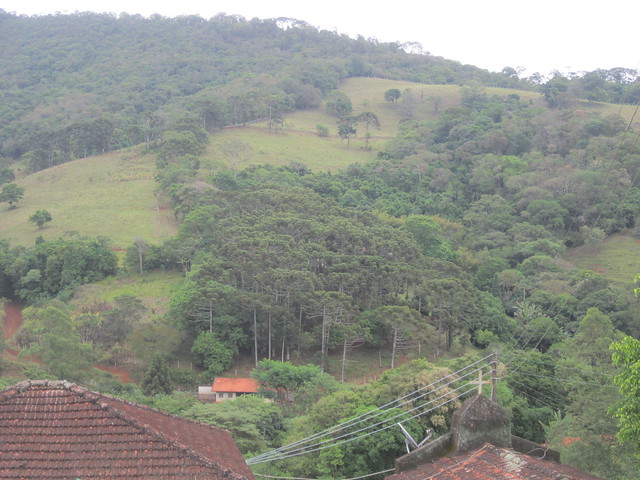
View of the new landscape in the hilly area around Extrema, after the reforestation of thousands of hectares in three basins in this municipality in southeastern Brazil, where the local government has fomented the process of recovery by paying landowners for environmental services. The priority is to restore the forests at the headwaters of the rivers and on hilltops and protect them with cattle fences. Credit: Mario Osava/IPS

View of the new landscape in the hilly area around Extrema, after the reforestation of thousands of hectares in three basins in this municipality in southeastern Brazil, where the local government has fomented the process of recovery by paying landowners for environmental services. The priority is to restore the forests at the headwaters of the rivers and on hilltops and protect them with cattle fences. Credit: Mario Osava/IPS

In the 14 years since it was launched, the project has only worked fully in three basins, where two million trees were planted and close to 500 springs were protected. It is now being extended to seven other watersheds.

“The goal is to reach 40 percent of forest cover with native species” in the municipality and “so far we already have 25 percent covered, and 10 percent is thanks to the Water Conservator,” said Paulo Henrique Pereira, promoter of the project as Environment Secretary in Extrema since 1995.

“Planting trees is easy, creating a forest is more complex,” the 50-year-old biologist told IPS, stressing that it’s not just about planting trees to “produce” and conserve water.

The project began with the prospecting of areas and the training of technicians, after the approval of a municipal PES statute, since there is no national law on remunerated environmental services.

“The bottleneck is that there is no skilled workforce” to reforest and implement water conservation measures, Pereira said.

The project now has its own nursery for the large-scale production of seedlings of native tree species, to avoid the past dependence on external acquisitions or donations, which drove up costs and made planning more complex.

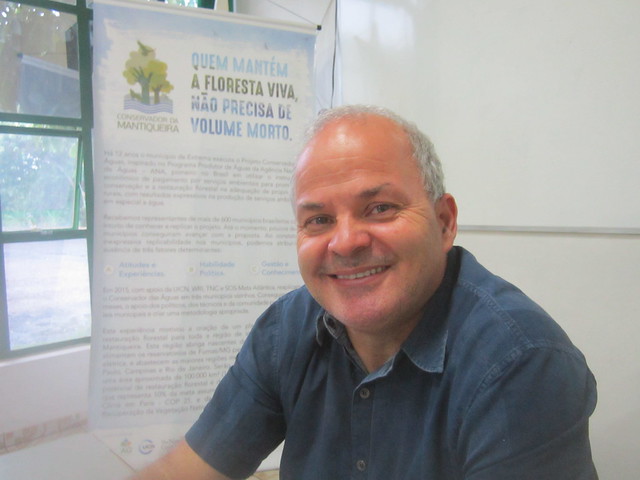
Since 2005 Paulo Henrique Pereira, Secretary of Environment in Extrema since 1995, has promoted the Water Conservator Project, which has won national and international awards for its success in recovering and preserving springs and streams, by paying for environmental services to rural landowners who reforest in this municipality in southeastern Brazil. "Planting trees is easy, creating a forest is more complex," he says. Credit: Mario Osava/IPS

Since 2005 Paulo Henrique Pereira, Secretary of Environment in Extrema since 1995, has promoted the Water Conservator Project, which has won national and international awards for its success in recovering and preserving springs and streams, by paying for environmental services to rural landowners who reforest in this municipality in southeastern Brazil. “Planting trees is easy, creating a forest is more complex,” he says. Credit: Mario Osava/IPS

The success of Extrema’s project, which has won dozens of national and international good practice awards, “is due to good management, which does not depend on the continuity of government,” said the biologist, although he admitted that it helped that he had been in the local Secretariat of the Environment for 24 years and that the mayors were of the same political orientation.

“It is a well-established project that is not likely to suffer setbacks,” he said.

The fact that the project offers both environmental and economic benefits helps keep it alive.

“My grandfather, who spent his life deforesting his property, initially rejected the project. It didn’t make sense to him to plant the same trees he had felled to make pasture for cattle,” said Aline Oliveira, a 19-year-old engineering student who is proud of the quality of life achieved in Extrema.

“When I was a girl, I didn’t accept the idea of protecting springs to preserve water either. I thought it was absurd to plant trees to increase water, because planting 200 or 300 trees would consume a lot of water. That was how I used to think, but then in practice I saw that springs survived in intact forest areas,” she said.

Later, when the PES arrived in the area, her grandfather gave in and more than 10 springs on the 112-hectare farm were reforested and protected. The payment is 100 municipal monetary units per hectare each year, currently equivalent to about 68 dollars.

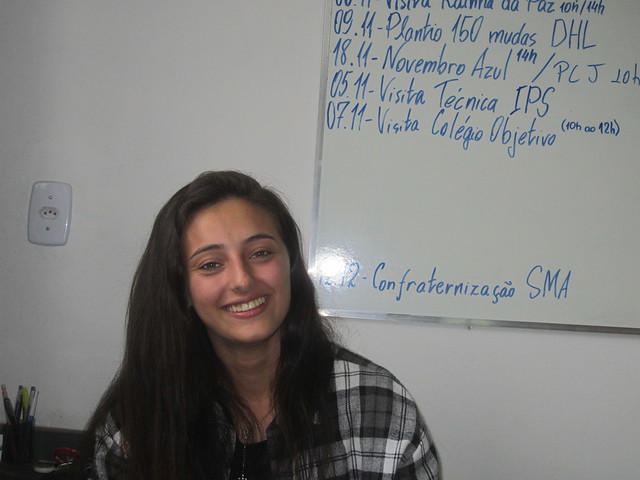
Aline Oliveira studies engineering and lives on her family's farm in southeastern Brazil. She is proud of the way life has improved in Extrema, a process that began with the establishment of the Payments for Environmental Services system, which guarantees income to farmers and ranchers for reforesting watersheds. It is a secure income at a time of falling milk prices and in a town far from the dairy processing plants. Credit: Mario Osava/IPS

Aline Oliveira studies engineering and lives on her family’s farm in southeastern Brazil. She is proud of the way life has improved in Extrema, a process that began with the establishment of the Payments for Environmental Services system, which guarantees income to farmers and ranchers for reforesting watersheds. It is a secure income at a time of falling milk prices and in a town far from the dairy processing plants. Credit: Mario Osava/IPS

“The PES is a secure income, while milk prices have dropped, and everything has become more expensive than milk in the last 10 years. In addition, there were losses due to lack of transportation, since there is no major dairy processing plant within 50 km,” she told IPS.

Thanks to the municipal payments, “we were able to invest in cows with better genetics, buy a milking parlor and improve health care for the cattle, thus increasing productivity,” which compensated for the reduction in pastures, added the student, who works for the project.

The programme coincided with a major improvement in the economy and quality of life in Extrema. “I was born in Joanópolis, where there were better hospitals than in Extrema. But now it’s the other way around” and people from there come to Extrema, 20 km away, for heath care, Oliveira said.

This is also due to the industrialisation experienced by Extrema in recent decades, which becomes evident during a walk around the town, where many new industrial plants can be seen.

The water conservation project has also contributed to the water supply for a huge population in the surrounding area.

Arlindo Cortês, head of environmental management at Extrema's Secretariat of the Environment, stands in the nursery where seedlings are grown for reforestation in this municipality in southeastern Brazil. "Building reservoirs does not ensure water supply if the watershed is deforested, degraded, sedimented. There will be floods and water shortages because the rainwater doesn't infiltrate the soil," he explains. Credit: Mario Osava/IPS

Arlindo Cortês, head of environmental management at Extrema’s Secretariat of the Environment, stands in the nursery where seedlings are grown for reforestation in this municipality in southeastern Brazil. “Building reservoirs does not ensure water supply if the watershed is deforested, degraded, sedimented. There will be floods and water shortages because the rainwater doesn’t infiltrate the soil,” he explains. Credit: Mario Osava/IPS

The Jaguari River, which crosses Extrema, receives water from fortified streams and increases the capacity of the Jaguari reservoir, part of the Cantareira system, which supplies 7.5 million people in greater São Paulo, one-third of the total population of the metropolis.

“If the watersheds are deforested, degraded and sedimented, merely building reservoirs solves nothing,” said Arlindo Cortês, the head of environmental management at Extrema’s Secretariat of the Environment.

Extrema’s efforts have translated into local benefits, but contributed little to the water supply in São Paulo, partly because it is over 100 km away, said Marco Antonio Lopez Barros, superintendent of Water Production for the Metropolitan Region at the local Sanitation Company, Sabesp.

“No increase in the capacity of the Cantareira System has been identified since the 1970s,” he said in an interview with IPS.

“Thousands of similar initiatives will be necessary” to actually have an impact in São Paulo, because of the level of consumption by its 22 million inhabitants, he said, adding that improvements in basic sanitation in cities have greater effects.

São Paulo experienced a water crisis, with periods of rationing, after the 2014 drought in south-central Brazil, and faces new threats this year, as it has rained less than average.

Extrema also felt the shortage. “Since 2014 we have only had weak rains,” said Cardoso. The problem is the destruction of forests by the expansion of cattle ranching in the last three decades.

“The creek where I used to swim has lost 90 percent of its water. The recovery will take 50 years, the benefits will only be felt by our children,” he said.

  Source

IDB Modernises Crucial Social and Environmental Safeguards

Civil Society, Development & Aid, Economy & Trade, Editors’ Choice, Environment, Eye on the IFIs, Global Governance, Green Economy, Headlines, Integration and Development Brazilian-style, Latin America & the Caribbean, Projects, Regional Categories, TerraViva United Nations

Development & Aid

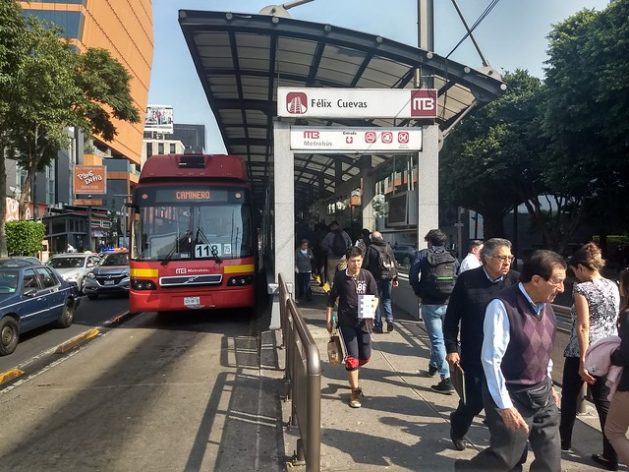
The IDB finances sustainable transportation projects in Latin America and the Caribbean, but these and other works to which the bank provides loans must meet social and environmental standards. The picture shows part of Mexico City's Metrobus public transport system, which runs on a dedicated lane with bi-articulated units. Credit: Emilio Godoy/IPS

The IDB finances sustainable transportation projects in Latin America and the Caribbean, but these and other works to which the bank provides loans must meet social and environmental standards. The picture shows part of Mexico City’s Metrobus public transport system, which runs on a dedicated lane with bi-articulated units. Credit: Emilio Godoy/IPS

MEXICO CITY, Nov 27 2019 (IPS) – The Inter-American Development Bank (IDB) is in the process of modernising the social and environmental safeguards that govern the financing of projects considered vital for the construction of sustainable infrastructure in the Latin American region.


The participation of social organisations and local communities in the analysis of projects, dissemination of information, gender perspective and the focus on climate change are major challenges in this process of reforming the safeguards.

The Washington-based IDB will begin regional consultations with civil society organisations in January to upgrade the standards of those safeguards, approved between 1998 and 2010, after it closed the public consultation for the draft of the new environmental and social sustainability policy for its private sector lending arm IDB Invest on Oct. 15.

Vanessa Torres, deputy director of the Colombian NGO Environment and Society, told IPS that a Latin American coalition of NGOs and local communities asked for adequate time to coordinate their positions and exchange and study information.

“There will be an opportunity to update the risks and comment on the substance. They will have to be adapted to the characteristics of the region. We have not yet seen the draft of the update. Our concern is that substantial aspects, which are already in the current safeguards, not be watered down.” — Carolina Juaneda

“The communities affected by the projects must be informed in order for them to participate. This is a positive process, because the bank has been very open, but we are waiting to see what was included in the draft,” said Torres, an environmental lawyer.

The IDB, whose president is Colombian businessman Luis Moreno, will disseminate the draft at the end of November and stage consultations in 2020 in Argentina, Panama, Jamaica and Peru.

In September 2020, the bank’s Board of Executive Directors, made up of 14 representatives from several blocks of countries, will receive the final version and the implementation plan.

Among other measures, at the end of the process, in terms of environmental and social policy in project finance, the IDB will adopt the eight principles of the International Finance Corporation (IFC), the private lending arm of the World Bank, on issues such as environmental impacts, labour issues, biodiversity conservation and indigenous peoples, and will apparently incorporate a gender approach and stakeholder participation and information dissemination.

The multilateral institution proposes an integrated policy framework, with a socio-environmental statement and 10 technical standards for the management of environmental and social risks.

“There will be an opportunity to update the risks and comment on the substance. They will have to be adapted to the characteristics of the region. We have not yet seen the draft of the update. Our concern is that substantial aspects, which are already in the current safeguards, not be watered down,” said Carolina Juaneda, a consultant for the Latin America Program of the non-governmental Washington-based Bank Information Center.

The current IDB Environmental Safeguards and Compliance Policy consists of environmental, population resettlement, disaster risk management, gender equality, indigenous peoples and access to information requirements.

In 2018, the IDB approved 96 sovereign guaranteed (backed by a government) loan projects with total financing of 13.4 billion dollars, and disbursed more than 9.9 billion dollars.

The bank ranks the level of risk in terms of a project’s environmental and social sustainability. In 2018, eight percent of the loans were granted to high risk projects, 24 percent substantial risk, 31 percent low risk and 37 percent moderate, according to the 2018 Sustainability Report.

 The IDB will investigate whether IDB Invest, its private finance arm, failed to comply with the safeguards in the loan for the Ituango hydroelectric plant, which is being built on the Cauca River, 170 km from the city of Medellín, Colombia, after a serious accident with the dam in 2018. Credit: Courtesy of Colombia's Attorney General's Office

The IDB will investigate whether IDB Invest, its private finance arm, failed to comply with the safeguards in the loan for the Ituango hydroelectric plant, which is being built on the Cauca River, 170 km from the city of Medellín, Colombia, after a serious accident with the dam in 2018. Credit: Courtesy of Colombia’s Attorney General’s Office

Ten percent of the projects failed to meet the standards, 20 percent adhered to the guidelines, 21 percent required immediate corrective action, and 49 percent had partially consistent compliance with the requirements.

The IDB has 2,596 active projects worth 60.8 billion dollars, most of which are being implemented by Argentina, Brazil, Colombia, Mexico and Paraguay in areas like transportation, energy, water and sanitation. In addition, it is evaluating 225 projects for another 19.8 billion dollars.

The ravages of the climate emergency in Latin America and the Caribbean, such as more intense hurricanes, rising temperatures, loss of biodiversity and rising sea levels, make the construction of sustainable infrastructure an imperative.

Safeguards as a tool

Beginning in the 1990s, multilateral financial institutions began to design safeguards that their clients – governments and companies – and the projects they finance must respect, thanks in part to pressure from affected social organisations and communities demanding that the impacts of these ventures be taken into account.

They also put in place mechanisms to process complaints of non-compliance with the standards or requirements set by the safeguards in projects financed by the multilateral banks.

Since last decade, financial institutions have revised these guidelines to adapt them to a changing social and environmental context, such as the worsening of climate change and its effects, including intense storms, droughts and rising temperatures. Currently, the greatest pressure on the banks is for them not to finance hydrocarbon projects, due to the climatic urgency to stop using fossil fuels.

Moreno, who assumed the presidency of the IDB in 2005, will conclude his term in mid-2020 and wants to do so having put in place updated social and environmental standards.

In updating the safeguards, the IDB has developed more than 60 new environmental, social, economic and institutional criteria to be applied in the design, construction, operation and final conclusion of a project financed by the institution.

The update stems from recommendations made in 2018 by the IDB Office of Evaluation and Oversight, which found that a large percentage of IDB projects that were reviewed did not fully comply with the initial safeguards requirements prior to loan authorisation and that the requirements were not addressed during execution.

The organisations involved in the update process mention, as an example of unsustainable infrastructure, the Ituango hydroelectric dam, built by Empresas Públicas de Medellín on the Cauca River, Colombia’s largest river. The IDB provided 550 million dollars for the project and administered part of the one billion dollars provided by other banks.

In May 2018, torrential rains overflowed the river, causing the collapse of the tunnel built to divert that flow, and as a result landslides, floods and the displacement of thousands of people from their homes, raising serious questions about the sustainability of the country’s largest hydroelectric project and one of the biggest in Latin America.

In June of that year, 477 residents of eight municipalities in the northwestern department of Antioquia requested that the Independent Consultation and Investigation Mechanism (Mici), the bank’s autonomous body responsible for evaluating performance against its standards, investigate whether the IDB and IDB Invest respected their own socioenvironmental safeguards.

The IDB Board of Directors resolved on Oct. 29 that it would inquire whether IDB Invest had complied.

Between 2010 and September 2019, Mici received 151 complaints, of which 144 referred to the IDB, four to IBD Invest and four to IDB Lab, a platform that seeks to mobilise capital, knowledge and connections to promote innovation in the region. Thirteen are active, of which seven are in the consultation phase, five in the compliance review phase and one is being assessed for eligibility.

This year, Mici has three cases open from Argentina and two from Brazil, while it rejected two complaints from Argentina and Brazil, and it has one each from Barbados, Colombia, Ecuador, Guyana and Paraguay, respectively, while it declared a complaint from Chile ineligible.

The organisations say the bank’s sustainability framework should include a comprehensive approach embodied in the operational strategy and safeguards, with an exclusion list of hydrocarbon projects.

The IDB has an active regional initiative to promote the reduction of polluting emissions and improvements in efficiency through the use of gas, backing for Guyana’s oil sector and other support for the “sustainable and responsible development” of mining and hydrocarbons in Colombia.

  Source

Rock Glaciers Supply Water to Highlands Communities in Argentina

Civil Society, Combating Desertification and Drought, Development & Aid, Editors’ Choice, Environment, Featured, Food & Agriculture, Human Rights, Indigenous Rights, Integration and Development Brazilian-style, Latin America & the Caribbean, Projects, Regional Categories, Water & Sanitation

Water & Sanitation

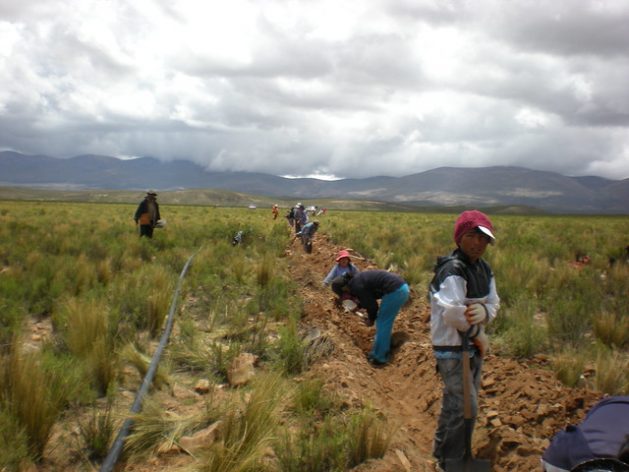
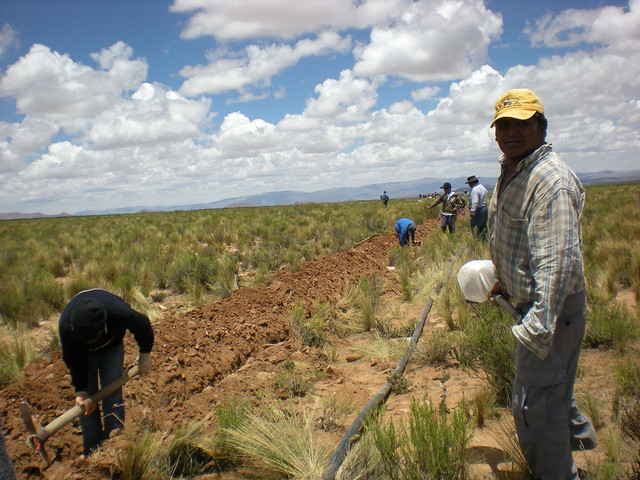
Long months of community work to install pipes to bring water from rock glaciers to indigenous villages in the Puna region in northwest Argentina served to strengthen collective organisation and community ties in an inhospitable ecoregion, where solidarity and joint efforts are essential to daily survival. Credit: Courtesy of Julio Sardina

Long months of community work to install pipes to bring water from rock glaciers to indigenous villages in the Puna region in northwest Argentina served to strengthen collective organisation and community ties in an inhospitable ecoregion, where solidarity and joint efforts are essential to daily survival. Credit: Courtesy of Julio Sardina

EL CÓNDOR, Argentina, Nov 14 2019 (IPS) – In Argentina’s Puna region, at 4,000 metres above sea level, the color green is rare in the arid landscape, which is dominated by different shades of brown and yellow. In this inhospitable environment, daily life has improved thanks to a system of piping water downhill from rock glaciers to local communities.


“When I was a girl we would walk an hour or two to fetch water from the hills. Since we didn’t have jerry cans or buckets, we carried it in sheepskin bags,” Viviana Gerónimo, a 50-year-old Kolla indigenous woman, tells IPS.

“We also built dams, to retain rainwater. We used it for ourselves and for our animals,” she adds. Gerónimo, a married mother of five, lives in Hornaditas de la Cordillera, an indigenous hamlet of just 15 families in the province of Jujuy in northwest Argentina, a few kilometres from the Bolivian border.

The Puna highlands region is a desert where only a few shrubs grow to less than half a metre in height and where it hardly ever rains – the average is around 200 millimetres a year, almost all of which falls in the southern hemisphere summer: December to March.

These high plateaus located above 3,000 metres altitude in the Andes mountains cover not only northwest Argentina but also northern Chile and southern Bolivia and Peru.

Local inhabitants in the Puna region depend mainly on livestock, although they cannot raise cows due to the poor quality of the pastures.

Geronimo’s family has 80 llamas and 120 sheep – the domestic species that best adapt to the climate of the Puna, although the profit margins are slim. In fact, the local indigenous people rarely shear them anymore because the wool fetches such low prices. They raise them for their own consumption and to sell the surplus meat.

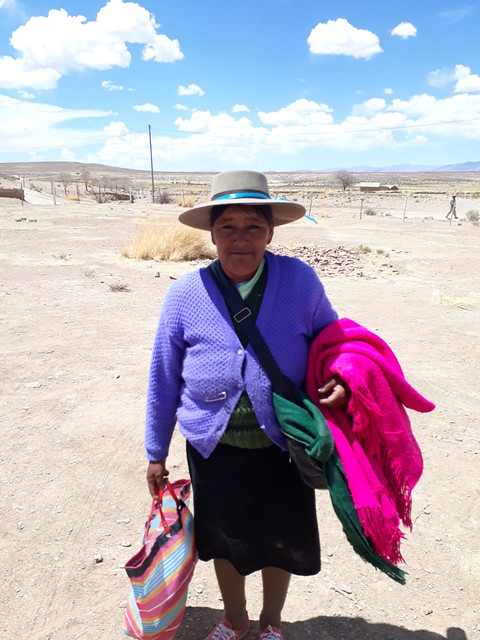
Viviana Gerónimo adds color to the yellow and brown arid landscape of Hornaditas de la Cordillera, one of the Kolla indigenous communities that now have water for the consumption of the 15 local families and for their sheep, llamas and vicuñas, as well as subsistence crops, in this Andean highlands region in the northwest Argentine province of Jujuy. Credit: Daniel Gutman/IPS

Viviana Gerónimo adds color to the yellow and brown arid landscape of Hornaditas de la Cordillera, one of the Kolla indigenous communities that now have water for the consumption of the 15 local families and for their sheep, llamas and vicuñas, as well as subsistence crops, in this Andean highlands region in the northwest Argentine province of Jujuy. Credit: Daniel Gutman/IPS

The Kolla are the largest of the dozen or so indigenous peoples in Jujuy, where 7.8 percent of the population was recognised as native in the last national census in 2010 – more than three times the national figure of only 2.4 percent. Officially, there are 27,631 members of the Kolla people, although the real number is probably much higher, as there are more than 100 Kolla communities in the Puna.

Water brings change

The water collection system benefits the indigenous communities of Hornaditas de la Cordillera, Escobar Tres Cerritos and Cholacor, and the town of El Condor, the municipal seat, which has a primary and secondary school and first aid clinic.

El Cóndor is an hour’s drive from La Quiaca, the main Argentine city on the border with Bolivia. It has about 400 inhabitants, while the communities of the rest of the municipality number less than 100 people in all.

Climate change also seems to be playing its part in exacerbating the scarcity of water. “Although the biggest problem here has always been water, our grandparents said it used to rain more,” says 53-year-old Ricardo Tolaba, another resident of Hornaditas.

“In the past, the ponds, where underground water comes to the surface, dried up in June or July, after the summer rains. Now they dry up in March or April,” he told IPS.

The most important resource are the so-called rock glaciers: moving ice in the mountains covered in rocks and debris which keep them from melting; invisible but strategic water reserves.

The province of Jujuy has 255 rock glaciers, according to the National Glacier Inventory published by the Argentine government in 2018.

With government support, the local communities built a system of underground pipes that run down the slopes for 33 kilometres, using the force of gravity to pipe water to different villages.

“Back in 2007 we began to talk to the communities about how we could build a solution to the lack of water,” says agronomist Julio Sardina, a technician with the Secretariat of Family Agriculture who has worked with the indigenous settlements of Jujuy for more than 20 years.

Long months of community work to install pipes to bring water from rock glaciers to indigenous villages in the Puna region in northwest Argentina served to strengthen collective organisation and community ties in an inhospitable ecoregion, where solidarity and joint efforts are essential to daily survival. Credit: Courtesy of Julio Sardina

Long months of community work to install pipes to bring water from rock glaciers to indigenous villages in the Puna region in northwest Argentina served to strengthen collective organisation and community ties in an inhospitable ecoregion, where solidarity and joint efforts are essential to daily survival. Credit: Courtesy of Julio Sardina

“The problem was that people in the lower-lying areas didn’t have water for their animals. And some wanted to plant crops but couldn’t because of the lack of water,” he adds during his tour with IPS through the different communities participating in the project, which are precariously connected by dirt roads in poor condition.

Sardina explains that the Secretariat of Family Agriculture provided the materials to build the system, thanks to funding from the Socioeconomic Inclusion in Rural Areas Project (Pisear), a national government programme.

From the outset, it was stipulated that the work had to be carried out by the members of the beneficiary communities.

“The project, besides bringing water to the villages, helped the communities organise and forge closer ties, since the families were isolated from each other,” says Sardina.

The system benefits some 600 people in an area where families are often nomadic, moving around to find the best pastures. Many Kolla Indians have communal land titles, which is not common among native peoples in Argentina.

When it reaches the communities, the water is stored in a tank. It is also piped to some of the houses and to water troughs for livestock.

But the greatest impact of the project was on agriculture, which has always been limited in the Puna region by the lack of water.

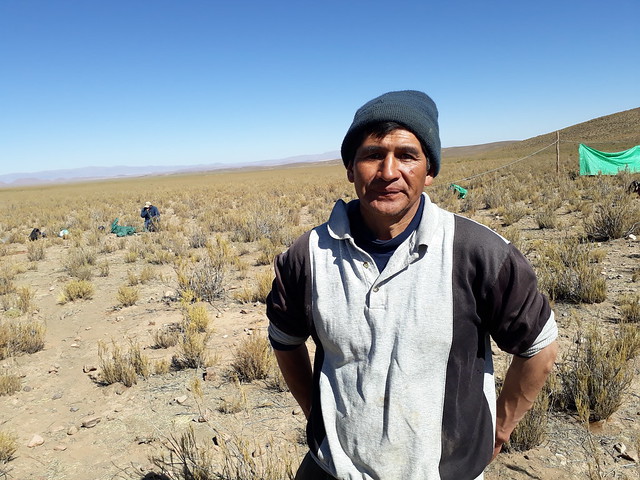
In the high Andean plateau of the Puna, in northwest Argentina, the biggest need was always water, says Ricardo Tolaba. People walked for hours to find it and carry it back in small containers, for human and animal consumption. With the new community-built system that pipes it from rock glaciers, "things began to change," he adds. Credit: Daniel Gutman/IPS

In the high Andean plateau of the Puna, in northwest Argentina, the biggest need was always water, says Ricardo Tolaba. People walked for hours to find it and carry it back in small containers, for human and animal consumption. With the new community-built system that pipes it from rock glaciers, “things began to change,” he adds. Credit: Daniel Gutman/IPS

David Quiquinte, also from Hornaditas, proudly relates that “a 40-centimetre-deep ditch was dug, where the pipe was buried to prevent freezing,” since in the wintertime temperatures in the Puna region can drop to 25 degrees Celsius below zero.

“For nearly six months, the entire community threw its effort into this work… except for one or two people,” the 40-year-old local resident told IPS, without concealing his irritation with those who didn’t help out.

During meetings with technicians from the Secretariat of Family Agriculture, the indigenous communities in Jujuy’s Puna region raised their concern about the growth of the population of vicuñas, a wild South American camelid native to the Andean highlands.

The vicuña came close to extinction in the 1960s, but recovered thanks to protection measures agreed by the countries of the Puna ecoregion.

“We needed water, especially because there wasn’t enough for the animals. And in the meetings about the water system project, many people complained that the vicuñas were eating the grass needed by the llamas and sheep,” Luis Gerónimo, 30, who lives in the community of Escobar Tres Cerritos, told IPS.

That is how the idea arose for training for the “chaccu”, an ancestral practice that the Kolla Indians have taken up again, as have other indigenous communities in Bolivia and Peru, which consists of capturing, shearing and releasing wild vicuñas.

“We’ve been practicing the chaccu for five years and people no longer see vicuñas as a problem. Today they are taken care of. The llamas and sheep graze in the lowlands and the hills are left to the vicuñas,” says Luis Gerónimo.

The chaccu and the water project pursue the same ultimate goal: to enable people from the communities to stay in Jujuy’s Puna region instead of migrating to the cities.

“I am one of the people who went to work in different parts of Argentina and came back. And I’m convinced that we have the resources to keep young people in the Puna,” says Tolaba.

He points out that “the main need in the Puna has always been water. Walking for hours to fetch water or to take the animals to drink are things we’ve been used to since we were kids here.”

But “with this project, things have begun to change,” he adds.

  Source

Central America – Fertile Ground for Human Trafficking

Civil Society, Crime & Justice, Democracy, Editors’ Choice, Featured, Gender, Gender Violence, Headlines, Human Rights, Latin America & the Caribbean, Migration & Refugees, Regional Categories, Special Report

Crime & Justice

This is part of a series of features from across the globe on human trafficking. IPS coverage is supported by the Riana Group.

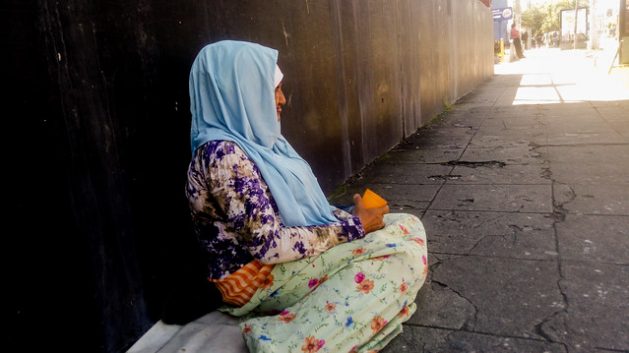
An older woman panhandles on a street in San Salvador. Criminal trafficking groups take advantage of vulnerable people, such as the destitute, to force them to beg. But in Central America, 80 percent of the victims of trafficking are women and girls, for purposes of sexual exploitation. Credit: Edgardo Ayala/IPS

An older woman panhandles on a street in San Salvador. Criminal trafficking groups take advantage of vulnerable people, such as the destitute, to force them to beg. But in Central America, 80 percent of the victims of trafficking are women and girls, for purposes of sexual exploitation. Credit: Edgardo Ayala/IPS

SAN SALVADOR, Nov 8 2019 (IPS) – Central America is an impoverished region rife with gang violence and human trafficking – the third largest crime industry in the world – as a major source of migrants heading towards the United States.


Human trafficking has had deep roots in Central America, especially in Guatemala, Honduras and El Salvador, for decades, and increasingly requires a concerted law enforcement effort by the region’s governments to dismantle trafficking networks, and to offer support programmes for the victims.

The phenomenon “has become more visible in recent years, but not much progress has been made in the area of more direct attention to victims,” Carmela Jibaja, a Catholic nun with the Ramá Network against Trafficking in Persons, told IPS.

“We know that El Salvador, Honduras and Guatemala are countries with a heavy flow of undocumented migrants, which puts them at risk of becoming victims of trafficking.” — Carlos Morán

This Central American civil society organisation forms part of the Talita Kum International Network against Trafficking in Persons, based in Rome, which brings together 58 anti-trafficking organisations around the world.

Jibaja pointed out that “the biggest trafficking problem is at the borders, because El Salvador is a country that expels migrants,” as well as in tourism areas. The most recognised form of trafficking in the region is sexual exploitation, whose victims are women.

Carlos Morán, Interpol security officer and a member of the Honduran police Cybercrime Unit, concurs .

“We know that El Salvador, Honduras and Guatemala are countries with a heavy flow of undocumented migrants, which puts them at risk of becoming victims of trafficking,” Morán told IPS while participating in a regional forum on the issue, hosted Nov. 4-8 by San Salvador.

The “Regional Seminar on Investigation Techniques and Protection of Victims of Trafficking in Persons” brought together officials from the office of the public prosecutor, police officers, legal experts and other key actors and experts from Guatemala, El Salvador and Honduras, the countries that make up the so-called Northern Central American Triangle.

The objective is to strengthen capacities and good practices in the investigation of trafficking, especially when the crime is transnational in nature.

Morán and other participants in the meeting declined to talk about figures on the extent of trafficking in the region, due to the lack of reliable data.

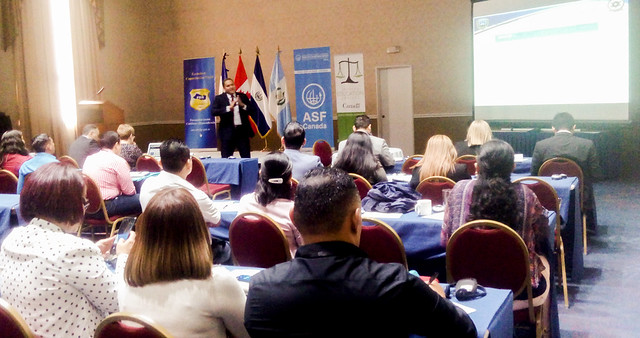
Prosecutors, police officers, government officials, experts and representatives of social organisations from Central America are participating in a special seminar on human trafficking Nov. 4-8 to identify and coordinate joint efforts. Credit: Edgardo Ayala/IPS

Prosecutors, police officers, government officials, experts and representatives of social organisations from Central America are participating in a special seminar on human trafficking Nov. 4-8 to identify and coordinate joint efforts. Credit: Edgardo Ayala/IPS

Civil society supports victims

In the countries of the Northern Triangle there are government efforts to develop victim care programmes, but they are insufficient and civil society organisations have had to take up the challenge.

Mirna Argueta, executive director of the Association for the Self-Determination of Salvadoran Women (AS Mujeres), told IPS that “the problem is serious, because we are facing networks with great economic and political influence, and victims are not being protected,” and there are very few programmes to help with their reinsertion in society.

Her organisation has been working since 1996 with victims of trafficking, offering psychological and medical support, and is also an important ally of the Attorney-General’s Office in victim protection work.

AS Mujeres collaborates with the police and prosecutors when victims have to be moved from one place to another, in the most secretive way possible, especially when judicial cases against organised crime networks are underway.

In the past it has also offered shelter to women victims of trafficking, but now the prosecutor’s office does, said Argueta, who is also coordinator in El Salvador of the Latin American Observatory on Trafficking in Persons, which brings together 15 countries.

AS Mujeres’ victim care programme includes, in addition to psychological support, medical assistance which incorporates non-traditional techniques such as biomagnetism, performed by a physician specialising in this area, as well as massage and aromatherapy.

“Experience has shown us that with the combination of these three techniques, recovery is more effective, and care is more integral,” said Argueta.

She added that since the programme’s inception in 1996, it has served some 600 trafficking victims.

They currently offer support to five women, who IPS could not speak to because they are under legal protection, and providing their names or a telephone number for them has criminal consequences.

For the same reason, the public prosecutor’s office also vetoed conducting interviews with victims under its protection.

AS Mujeres also promotes a self-care network.

“When the victim has gone through different stages, we integrate her with other women and they can share their experiences, making it less painful, and helping them with their reinsertion in society,” Argueta added.

She said many victims feel they are “damaged,” or worthless, and they turn to prostitution.

Victims can spend anywhere from six months to two and a half years in the programme, depending on the complexity of each case. For example, there are women with acute problems of depression, suicidal thoughts and persecutory delusions.

According to figures from the United Nations office in Honduras, released in July, 80 percent of the victims of human trafficking in Central America are women and girls.

In El Salvador, 90 percent of cases involve sexual exploitation, according to official figures provided by the public prosecutor’s office during the regional forum in San Salvador.

However, other types of trafficking have been detected, such as labour exploitation, forced panhandling and others.

So far this year, the prosecution has reported 800 victims, cases that are still open.

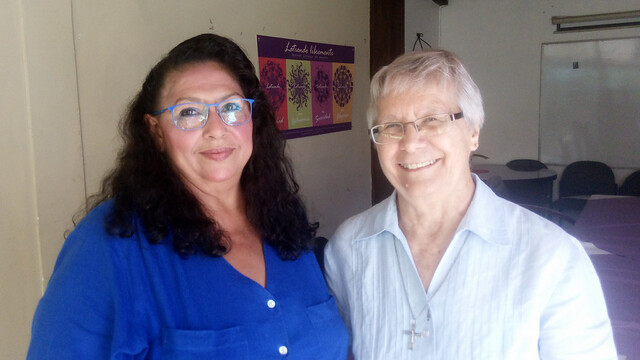
Mirna Argueta (L), executive director of the Association for the Self-Determination of Salvadoran Women, and Catholic nun Carmela Jibaja, of the Central American Network against Trafficking in Persons, are two activists working to provide care for victims of trafficking, who are mostly women. Credit: Edgardo Ayala/IPS

Mirna Argueta (L), executive director of the Association for the Self-Determination of Salvadoran Women, and Catholic nun Carmela Jibaja, of the Central American Network against Trafficking in Persons, are two activists working to provide care for victims of trafficking, who are mostly women. Credit: Edgardo Ayala/IPS

In Guatemala, in 2018, the Public Prosecutor’s Office detected 478 possible victims of human trafficking, four percent more than the previous year. There were 276 reported cases, also an increase of four percent.

Children and adolescents continue to be vulnerable to trafficking, as 132 children and adolescents were detected as possible victims of human trafficking, 28 percent of the total, 111 of whom were rescued.

They were victims of illegal adoptions, labour exploitation, forced marriage, forced panhandling, sexual exploitation and forced labour or services. But the most invisible form of trafficking, according to the prosecutor’s office, is the recruitment of minors into organised crime.

Gangs involved in people trafficking

Experts consulted by IPS point out that many trafficking cases are the product of a relatively new phenomenon: involvement in trafficking by the gangs that are responsible for the crime wave in the three Northern Triangle countries.

The gangs have mutated into bona fide organised crime groups, with tentacles in the illicit drug trade, extortion rackets, “sicariato” or murder for hire and now human trafficking, among other criminal activities.

In El Salvador, it is common to hear stories in neighborhoods and towns controlled by gangs about young girls who gang leaders “ask for”, to be used as sex toys by the leaders and other members of the gang, and the families hand them over because they know that they could be killed if they don’t.

But the gangs go farther than that, forcing their victims to provide sexual services for profit, another aspect of trafficking.

Official figures from the National Council against Trafficking in Persons, which brings together government agencies to combat the phenomenon, indicate that in 2018 there were 46 confirmed victims, 43 police investigations and 38 judicial proceedings.

The trials led to four convictions and two acquittals. The rest are still winding their way through court, according to the Council’s Work Report 2018.

The document also reported that the attention to victims included programmes to help them launch small enterprises, as well as measures of integral reparations for families of children and adolescents in the shelters.

Emergency response teams were also coordinated to provide assistance to victims, whether the women are foreigners or nationals.

El Salvador is part of the Regional Coalition against Trafficking in Persons and Smuggling of Migrants, along with Belize, Costa Rica, Guatemala, Honduras, Mexico, Nicaragua, Panama and the Dominican Republic.

Honduras has also provided support for economic reinsertion, offering seed capital to set up small jewelry businesses, among others, said Interpol’s Morán.

At least 337 people from Honduras have been rescued since 2018, including 13 in Belize and Guatemala, according to a report by the Inter-Institutional Commission Against Commercial Sexual Exploitation and Trafficking in Persons in Honduras.

  Source