Prejudice and Discrimination, the Uncured Ills of Leprosy

Civil Society, Democracy, Development & Aid, Editors’ Choice, Headlines, Health, Human Rights, Latin America & the Caribbean, Population, Regional Categories
Health

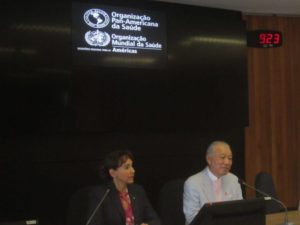
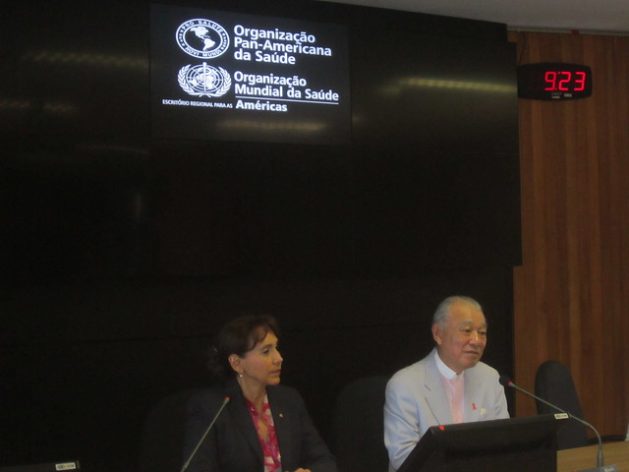
Nippon Foundation President Yohei Sasakawa and Socorro Gross, Pan American Health Organisation representative in Brazil, hold a press conference in Brasilia at the end of a 10-day visit to this country by the Japanese activist who is also World Health Organisation Goodwill Ambassador for Leprosy Elimination. Credit: Mario Osava/IPS

Nippon Foundation President Yohei Sasakawa and Socorro Gross, Pan American Health Organisation representative in Brazil, hold a press conference in Brasilia at the end of a 10-day visit to this country by the Japanese activist who is also World Health Organisation Goodwill Ambassador for Leprosy Elimination. Credit: Mario Osava/IPS

BRASILIA, Jul 11 2019 (IPS) – “The ambulance team refused to take my sick friend to the hospital because he had had Hanseniasis years before,” said Yohei Sasakawa, president of the Nippon Foundation, at one of the meetings held during his Jul. 1-10 visit to Brazil.


His friend was completely cured and had no visible effects of the disease, but in a small town everyone knows everything about their neighbours, he said.

This didn’t happen in a poor country, but in the U.S. state of Texas, only about 20 years ago, Sasakawa pointed out to underline the damage caused by the discrimination suffered by people affected by Hansen’s Disease, better known as leprosy, as well as those who have already been cured, and their families.

“The disease is curable, its social damage is not,” he said during a meeting with lawmaker Helder Salomão, chair of the Human Rights Commission in Brazil’s lower house of Congress, to ask for support in the fight against Hanseniasis, the official medical name for the disease in Brazil, where the use of the term leprosy has been banned because of the stereotypes and stigma surrounding it.

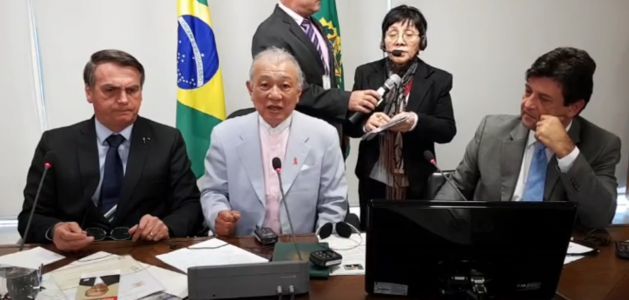
The highlight of the mission of Sasakawa, who is also a World Health Organisation (WHO) Goodwill Ambassador for Leprosy Elimination, was a meeting on Monday Jul. 8 with President Jair Bolsonaro, who posted a message on Facebook during the meeting, which had nearly 700,000 hits as of Thursday Jul. 11.

In the 13-and-a-half minute video, Bolsonaro, Sasakawa, Health Minister Luiz Mandetta and Women, Family and Human Rights Minister Damares Alves issued a call to the authorities, organisations and society as a whole to work together to eradicate the disease caused by the Mycobacterium Leprae bacillus.

A preliminary agreement emerged from the dialogues held by the Japanese activist with members of the different branches of power in Brasilia, to hold a national meeting in 2020 to step up the fight against Hanseniasis and the discrimination and stigma faced by those affected by it and their families.

The idea is a conference with a political dimension, with the participation of national authorities, state governors and mayors, as well as a technical dimension, said Carmelita Ribeiro Coriolano, coordinator of the Health Ministry’s Hanseniasis Programme. The Tokyo-based Nippon Foundation will sponsor the event.

Brazil has the second highest incidence of Hansen’s Disease in the world, with 27,875 new cases in 2017, accounting for 12.75 percent of the world total, according to WHO. Only India has more new cases.

The government established a National Strategy to Combat Hanseniasis, for the period 2019-2022, in line with the global strategy outlined by the WHO in 2016.
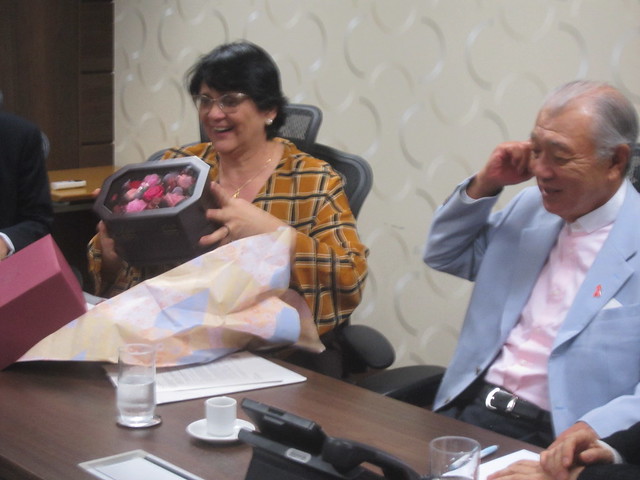
Brazilian Minister of Women, Family and Human Rights Damares Alves receives a gift from Yohei Sasakawa, president of the Nippon Foundation, at the beginning of a meeting in Brasilia, in which the minister promised to strengthen assistance to those affected by Hansen's Disease, including the payment of compensation to patients who were isolated in leprosariums or leper colonies in the past. Credit: Mario Osava/IPS

Brazilian Minister of Women, Family and Human Rights Damares Alves (L) receives a gift from Yohei Sasakawa, president of the Nippon Foundation, at the beginning of a meeting in Brasilia, in which the minister promised to strengthen assistance to those affected by Hansen’s Disease, including the payment of compensation to patients who were isolated in leprosariums or leper colonies in the past. Credit: Mario Osava/IPS

Extensive training of the different actors involved in the treatment of the disease and plans at the state and municipal levels, tailored to local conditions, guide the efforts against Hansen’s Disease, focusing particularly on reducing cases that cause serious physical damage to children and on eliminating stigma and discrimination.

Before his visit to Brasilia, Sasakawa, who has already come to Brazil more than 10 times as part of his mission against Hansen’s Disease, toured the states of Pará and Maranhão to discuss with regional and municipal authorities the obstacles and the advances made, in two of the regions with the highest prevalence rate.

“In Brazil there is no lack of courses and training; the health professionals are sensitive and give special attention to Hanseniasis,” said Faustino Pinto, national coordinator of the Movement for the Reintegration of People Affected by Hanseniasis (MORHAN), who accompanied the Nippon Foundation delegation in Brasilia.

“Promoting early diagnosis, to avoid serious physical damage, and providing better information to the public and physical rehabilitation to ensure a better working life for patients” are the most necessary measures, he told IPS.

Pinto’s case illustrates the shortcomings in the health services. He was not diagnosed as being affected with Hansen’s Disease until the age of 18, nine years after he felt the first symptoms. It took five years of treatment to cure him, and he has serious damage to his hands and joints.

His personal plight and the defence of the rights of the ill, former patients and their families were outlined in his Jun. 27 presentation in Geneva, during a special meeting on the disease, parallel to the 41st session of the Human Rights Council, the highest organ of the Office of the United Nations High Commissioner for Human Rights.

Pinto is an eloquent advocate of the use of Hanseniasis or Hansen’s Disease, rather than leprosy, a term historically burdened with religious prejudice and stigma, which aggravates the suffering of patients and their families, but continues to be used by WHO, for example.
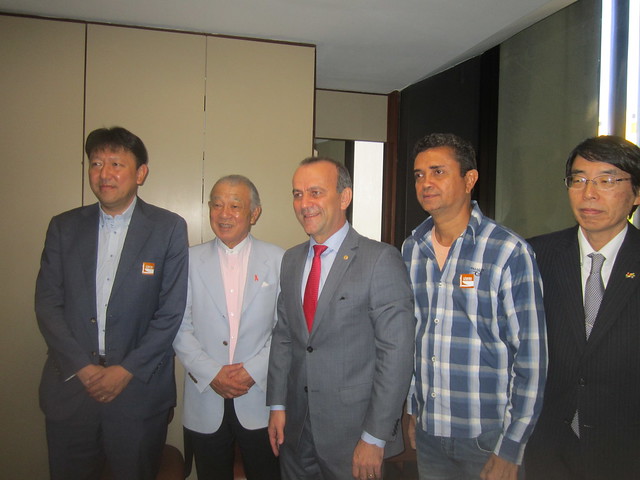
Yohei Sasakawa (2nd-L), president of the Nippon Foundation, accompanied by two members of his delegation, took part in a meeting with Congressman Helder Salomão (C), chair of the Human Rights Commission of the Brazilian Chamber of Deputies, who pledged to support initiatives to eliminate leprosy in his country. Faustino Pinto (2nd-R), national coordinator of the Movement for the Reintegration of Persons Affected by Hanseniasis (MORHAN), also participated. Credit: Mario Osava/IPS

Yohei Sasakawa (2nd-L), president of the Nippon Foundation, accompanied by two members of his delegation, took part in a meeting with Congressman Helder Salomão (C), chair of the Human Rights Commission of the Brazilian Chamber of Deputies, who pledged to support initiatives to eliminate leprosy in his country. Faustino Pinto (2nd-R), national coordinator of the Movement for the Reintegration of Persons Affected by Hanseniasis (MORHAN), also participated. Credit: Mario Osava/IPS

Discrimination against people with the disease dates back to biblical times, when it was seen as a punishment from God, said Sasakawa during his meeting with Minister Damares Alves, a Baptist preacher who describes herself as “extremely Christian”.

In India there are 114 laws that discriminate against current or former Hansen’s Disease patients, banning them from public transport or public places, among other “absurdities”, he said.

In India, they argue that these are laws that are no longer applied, which justifies even less that they remain formally in force, he maintained during his meetings in Brasilia to which IPS had access.

Prejudice and misinformation not only subject those affected by the disease to exclusion and unnecessary suffering, but also make it difficult to eradicate the disease by keeping patients from seeking medical care, activists warn.

His over 40-year battle against Hansen’s Disease has led Sasakawa to the conclusion that it is crucial to fight against the stigma which is still rife in society.

He pressed the United Nations General Assembly to adopt in 2010 the Resolution for the Elimination of Discrimination against Persons Affected by Leprosy and their Families.

He said these attitudes and beliefs no longer make sense in the light of science, but persist nonetheless.

Treatment making isolation for patients unnecessary in order to avoid contagion has been available since the 1940s, but forced isolation in leprosariums and leper colonies officially continued in a number of countries for decades.

In Brazil, forced segregation officially lasted until 1976 and in practice until the following decade.

With multi-drug treatment or polychemotherapy, introduced in Brazil in 1982, the cure became faster and more effective.

Information is key to overcoming the problems surrounding this disease, according to Socorro Gross, the Pan American Health Organisation (PAHO) representative in Brazil who also held meetings with the Nippon Foundation delegation.

“Communication is essential, the media has a decisive role to play” to ward off atavistic fears and to clarify that there is a sure cure for Hansen’s Disease, that it is not very contagious and that it ceases to be so shortly after a patient begins to receive treatment, Gross, a Costa Rican doctor with more than 30 years of experience with PAHO in several Latin American countries, told IPS.
 

A Lifelong Battle Against the “Disease of Silence”

Civil Society, Development & Aid, Editors’ Choice, Featured, Headlines, Health, Latin America & the Caribbean, Population, Poverty & SDGs, Regional Categories

Health

Mario Osava interviews YOHEI SASAKAWA, president of the Nippon Foundation

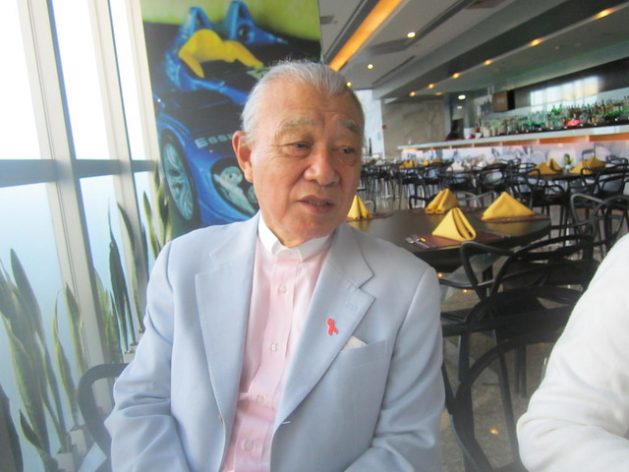
Yohei Sasakawa, president of the Nippon Foundation, is interviewed by IPS in the Brazilian capital, where he concluded a tour of the country aimed at promoting the elimination of Hansen's Disease, better known as leprosy, and also the stigma that make it the "disease of silence.” Credit: Mario Osava/IPS

Yohei Sasakawa, president of the Nippon Foundation, is interviewed by IPS in the Brazilian capital, where he concluded a tour of the country aimed at promoting the elimination of Hansen’s Disease, better known as leprosy, and also the stigma that make it the “disease of silence.” Credit: Mario Osava/IPS

BRASILIA, Jul 10 2019 (IPS) – Yohei Sasakawa has dedicated half of his 80 years of life to combating the “disease of silence” and is still fighting the battle, as president of the Nippon Foundation and World Health Organisation (WHO) goodwill ambassador for elimination of leprosy, formally known as Hansen’s Disease.


His current emphasis is on combating the discrimination, prejudice and stigma that aggravate the suffering of people with leprosy, their families and even those who have already been cured. They also stand in the way of treatment, because people with the disease keep silent out of fear of hostility, he told IPS in an interview in the Brazilian capital.

“I travel around the world and speak out against the discrimination that marginalises those affected by the disease. But these are prejudices that have existed for 2,000 years; they cannot be overcome in two or three years. Many share my viewpoint and accompany me in the struggle. One day the discrimination will end. It is more difficult to cure the disease that plagues society than the illness itself. My effort is to hold a dialogue with presidents and ministers, people in positions of leadership, so that my message acquires political strength and can lead to a solution.”

Sasakawa visited Brazil Jul. 1 to 10, as part of his activism aimed at reducing the prevalence and social impacts of a disease stigmatised since biblical times. In Brasilia, he mobilised President Jair Bolsonaro, legislators and health and human rights officials to promote more intense efforts against the disease.

The idea of holding a national conference on Hansen’s Disease emerged from the meetings, with the political objective of disseminating knowledge and bolstering the disposition to eradicate prejudice, and the technical goal of improving strategies and efforts against the disease.

Brazil is second only to India with respect to the number of new infections diagnosed each year. The country implemented a National Strategy to Combat Hanseniasis from 2019 to 2022, with plans also at the level of municipalities and states, tailored to the specific local conditions.

The Tokyo-based Nippon Foundation is funding several projects and is preparing to support new initiatives in Brazil.

Brazil and Japan abolished the word leprosy from their medical terminology, due to the stigma surrounding it, and adopted the term Hanseniasis to refer to the disease caused by the Mycobacterium leprae bacillus. Sasakawa used this name during his interview with IPS, even though the WHO continues to employ the term leprosy.

IPS: Why did you choose as your mission the fight against Hansen’s Disease and the different kinds of harm it causes to patients and their families?

YOHEI SASAKAWA: It started with my father, the founder of the Nippon Foundation, who as a young man fell in love with a young woman who suddenly disappeared when she was taken far away and put in isolation. My father was appalled by the cruelty and, driven by a spirit of seeking justice, he started this movement. No one discussed the reason she was taken away, but I sincerely believe it was because she had Hanseniasis.

Later my father built hospitals in different places, including one in South Korea, where I accompanied him to the inauguration. On that occasion I noticed that my father touched the hands and legs of the patients, even though they had pus. He hugged them. That impressed me.

I was surprised for two reasons. It frightened me that my father so easily embraced people in those conditions. Besides, I wasn’t familiar with the disease yet. I saw people with a sick, unhealthy pallor. They were dead people who were still alive, the living dead, abandoned by their families.

I was filled with admiration for my father’s work and immediately decided that I should continue it.

IPS: What are the main difficulties in eradicating Hanseniasis?

YS: In general, when faced with a problem specialists and intellectuals come up with 10 reasons why it’s impossible to solve. I have the strong conviction that it is possible, and that’s why I address the problem in such a way that I can identify it and at the same time find a solution.

The people who find it difficult generally work in air-conditioned offices pushing around papers, studying the data. The most important thing is to have the firm conviction that the problem can be solved and then begin to take action.

The president of the Nippon Foundation, Yohei Sasakawa (C) is seen meeting with the president of Brazil, Jair Bolsonaro (L), in an IPS screen capture from the video that the president broadcast on Facebook to raise public awareness about the importance of eliminating Hansen's Disease, better known as leprosy, and eradicating the prejudice faced by patients and their families. Credit: IPS

The president of the Nippon Foundation, Yohei Sasakawa (C) is seen meeting with the president of Brazil, Jair Bolsonaro (L), in an IPS screen capture from the video that the president broadcast on Facebook to raise public awareness about the importance of eliminating Hansen’s Disease, better known as leprosy, and eradicating the prejudice faced by patients and their families. Credit: IPS

Since the 1980s more than 16 million people have been cured of Hansen’s Disease. Today, 200,000 patients a year are cured around the world.

IPS: What role do prejudice, stigma and discrimination play in the fight against this disease?

YS: That is a good question. After working for many years with the WHO, focusing mainly on curing the disease, I realised that many people who had already been cured could neither find work nor get married; they were still suffering the same conditions they faced when they were sick.

I concluded that Hanseniasis was like a two-wheeled motorcycle – the front one is the disease that can be cured and the back one is the prejudice, discrimination and stigma that surround it. If you don’t cure both wheels, no healing is possible.

In 2003, I submitted to the United Nations Commission on Human Rights a proposal to eliminate discrimination against Hanseniasis. After seven years of paperwork and procedures, the 193-member General Assembly unanimously approved a resolution to eradicate this problem that affects the carrier of the disease as well as those who have been cured, and their families.

But this does not mean that the problem has been solved, because prejudice and discrimination are the disease plaguing society.

People believe that Hanseniasis is a punishment from God, a curse, a hereditary evil. It’s hard to eradicate this judgment embedded in people’s minds. Even today there are many patients who have recovered and are totally healed, who cannot find a job or get married. In spite of the new laws, their conditions do not improve, because of the prejudice in people’s hearts.

In Japan, several generations of the family of someone who had the disease were unable to marry. This is no longer the case today.

That’s why I travel the world and speak out against the discrimination that marginalises those affected by the disease. But these are prejudices that have existed for 2,000 years; they cannot be overcome in two or three years.

Many share my viewpoint and accompany me in the struggle. One day the discrimination will end. It is more difficult to cure the disease that plagues society than the illness itself.

My effort is to hold a dialogue with presidents and ministers, people in positions of leadership, so that my message acquires political strength and can lead to a solution.

IPS: How did Japan manage to eradicate Hansen’s Disease?

YS: One way was the collective action of people who had the disease. Long-term media campaigns were conducted to spread knowledge about the disease. Movies, books and plays were also produced.

In Japan, Hanseniasis ceased to be the ‘disease of silence’. The nation apologised for the discrimination and compensated those affected. But in other countries, people affected by the disease have not yet come together to fight. Brazil, however, does have a very active movement.

IPS: As an example of what can be done, you cite Brazil’s Movement for the Reintegration of People Affected by Hanseniasis, MORHAN. Are there similar initiatives in other countries?

YS: Morhan really stands out as a model. Organisations have been formed by patients in India and Ethiopia, but they still have limited political influence. The Nippon Foundation encourages such movements.

IPS: You’ve visited Brazil more than 10 times. Have you seen any progress on this tour of the states of Pará and Maranhão, in the north, and in Brasilia?

YS: On that trip we couldn’t visit patients’ homes and talk to them, but we did see that the national, regional and local governments are motivated. We will be able to expand our activities here. In any country, if the highest-level leaders, such as presidents and prime ministers, take the initiative, solutions can be accelerated.

We agreed to organise a national meeting, promoted by the Health Ministry and sponsored by the Nippon Foundation, if possible with the participation of President Jair Bolsonaro, to bolster action against Hanseniasis.

We believe that this would generate a strong current to reduce the prevalence of Hanseniasis to zero and also to eliminate discrimination and prejudice. If this happens, my visit could be considered very successful.

IPS: What would you emphasise about the results of your visit?

YS: The message that President Bolsonaro spread directly to the population through Facebook during our meeting, with his view addressed to all politicians, to his team and and to all government officials on the need to eliminate the disease. I feel as if I have obtained the support of a million people who will work with us.


Right to Information in Latin America & the Caribbean

Civil Society, Democracy, Featured, Headlines, Human Rights, Latin America & the Caribbean, Press Freedom, TerraViva United Nations

Opinion

Luis Felipe López-Calva is UN Assistant Secretary-General and UNDP Regional Director for Latin America and the Caribbean

UNITED NATIONS, Jul 9 2019 (IPS) – Transparency is a critical element of making governance more effective. By making information available, it creates a foundation for greater accountability to citizens.


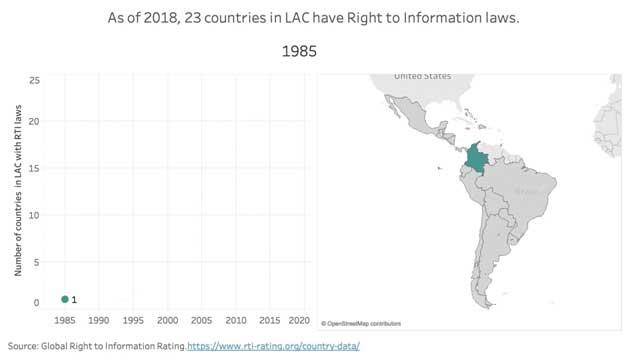
In recent decades, transparency has been on the rise across Latin America and the Caribbean. According to data from the Global Right to Information Rating, 23 countries in LAC have laws securing citizens’ right to information.

Colombia was the first country in the region to pass such a law in 1985, and Saint Kitts and Nevis was the most recent country to do so in 2018.

While transparency is a necessary condition for promoting accountability, it is not a sufficient condition. We can think about transparency as a first step.

While transparency makes information available, we also need publicity to make information accessible, and accountability mechanisms to make information actionable.

Information, per se, is nothing without publicity and accountability. If information does not reach the interested audiences, its effect is negligible. Similarly, even if information reaches the public, if it does not lead to consequences, its effect is not only negligible but potentially harmful.

For example, we have seen, unfortunately, many cases in our region where people can access detailed information about corruption cases, but nothing happens to those who are responsible. This leads to frustration and destroys trust.

Luis Felipe López-Calva

We can think about this progression from transparency to accountability as the “information value chain.” Recently, one way in which the information value chain has been broken in Latin America and the Caribbean is the intentional creation and spread of false information (what is known as “disinformation”).

In many cases these pseudo-facts are created for political purposes and target specific audiences, with the intention to induce certain outcomes (for example, by influencing voting behavior).

This system has been called the “fake news” industry—a term widely used by politicians in recent times. It’s important to note that false information can also be spread unintentionally (what is known as “misinformation”).

The rise of disinformation and misinformation has been facilitated by the rise of technology. Technology—particularly the rise of social media and messaging apps—has reduced the cost of disseminating information to massive audiences.

This has made the “publicity” industry more competitive and created a new social dynamic in which people often take access to information as equivalent to knowledge.

While knowledge is difficult to build and constantly update, information has become easy to get, and public debates are increasingly based on false—and often deliberately false—information.

Indeed, a recent study by scholars at MIT found that false news spreads much more rapidly than true news—and this effect is particularly salient for false political news (in comparison to false news about topics such as terrorism, natural disasters, science, urban legends, or financial information).

According the 2018 Reuters Institute Digital News Report, citizens in LAC countries are facing high exposure to false information, and are very concerned about what news is real and what news is fake on the internet.

In each of the four LAC countries included in the study (Brazil, Chile, Mexico, and Argentina), over 35% of respondents stated that they were exposed to completely made-up news in the last week—reaching as high as 43% of the sample in Mexico.

Moreover, over 60% of respondents stated that they are very or extremely concerned about what is real and what is fake on the internet when it comes to news—reaching as high as 85% of the sample in Brazil.

This high level of concern is consistent with recent experiences with political disinformation in the region—for example, the use of automated bots to influence public opinion in Brazil, Argentina, and Venezuela.

This problem carries with it the concern for broader potential consequences such as deepening political polarization or the erosion of trust in the media. Indeed, over the past few decades years, the dissemination of false information by political parties and levels of political polarization are increasing in tandem in LAC.

This is a challenge not only in LAC, but in many regions around the world. This global preoccupation was reflected in the theme chosen for this year’s World Press Freedom Day—which focused on journalism and elections in times of disinformation.

Several of the countries in Latin America are holding presidential elections later this year: Argentina, Bolivia, Guatemala, and Uruguay. There is a concern in the region about how disinformation campaigns, coupled with microtargeting of political messages and sophisticated online advertising through social networks and online platforms, could affect the outcome of elections.

There is a lot we can do in this area to protect the information value chain and the quality of elections—such as “clean campaign” agreements between political parties, the creation of independent fact-checking services, greater enforcement by social media companies, and the promotion of information literacy among citizens.

In Latin America, these initiatives are still nascent, but they are growing. It is important to recognize, however, that combatting the challenge of disinformation campaigns will require the coordinated action of multiple stakeholders such as electoral courts, the media, civil society, academia and tech businesses (such as Facebook, Google, WhatsApp, and Twitter).

Without a strong coalition of actors, it will be difficult to successfully repair the information value chain and achieve accountability.


Chilean Schools Recycle Greywater to Combat Drought

Active Citizens, Civil Society, Climate Change, Combating Desertification and Drought, Development & Aid, Editors’ Choice, Education, Environment, Featured, Headlines, Integration and Development Brazilian-style, Latin America & the Caribbean, Population, Poverty & SDGs, Projects, Regional Categories, Special Report, Water & Sanitation

Water & Sanitation

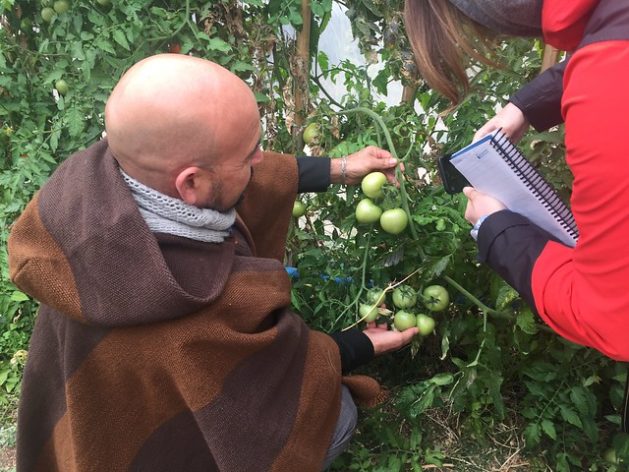
The principal of the Samo Alto rural school, Omar Santander, shows organic tomatoes in the greenhouse built by teachers, students and their families, who raise the crops irrigated with rainwater or recycled water in Coquimbo, a region of northern Chile where rainfall is scarce. Credit: Orlando Milesi/IPS

The principal of the Samo Alto rural school, Omar Santander, shows organic tomatoes in the greenhouse built by teachers, students and their families, who raise the crops irrigated with rainwater or recycled water in Coquimbo, a region of northern Chile where rainfall is scarce. Credit: Orlando Milesi/IPS

OVALLE, Chile, Jul 4 2019 (IPS) – Children from the neighboring municipalities of Ovalle and Río Hurtado in northern Chile are harvesting rain and recycling greywater in their schools to irrigate fruit trees and vegetable gardens, in an initiative aimed at combating the shortage of water in this semi-arid region.


And other youngsters who are completing their education at a local polytechnic high school built a filter that will optimise the reuse and harvesting of water.

“The care of water has to start with the children,” Alejandra Rodríguez, who has a son who attends the school in Samo Alto, a rural village on the slopes of the Andes Mountains in Río Hurtado, a small municipality of about 4,000 inhabitants in the Coquimbo region, told IPS.

“My son brought me a tomato he harvested, to use the seeds. For them, the harvest is the prize. He planted his garden next to the house and it was very exciting,” said Maritza Vega, a teacher at the school, which has 77 students ranging in age from four to 15.

The principal of the school, Omar Santander, told IPS during a tour of rural schools in the area involved in the project that “the Hurtado River (which gives the municipality its name) was traditionally generous, but today it only has enough water for us to alternate the crops that are irrigated, every few days. People fight over watering rights.”

The Samo Alto school collects rainwater and recycles water after different uses. “The water is then sent to a double filter,” he explained, pointing out that they have a pond that holds 5,000 liters.

The monthly water bill is much lower, but Santander believes that the most important thing “is the awareness it has generated in the children.”

“There used to be water here, and the adults’ habits come from back then. The students help raise awareness in their families. We want the environmental dimension to be a tool for life,” he said.

For Admalén Flores, a 13-year-old student, “the tomatoes you harvest are tastier and better,” while Alexandra Honores, also 13, said “my grandfather now reuses water.”

El Guindo primary school, located 10 kilometers from the city of Ovalle, the municipal seat, in a town known as a hotspot for drug sales, performed poorly in tests until three years ago.

At that time, the principal, Patricio Bórquez, and the science teacher, Gisela Jaime, launched a process of greywater recovery. They also planted trees and native species of plants to adapt to the dry environment of the municipality of 111,000 inhabitants, located about 400 kilometers north of Santiago.

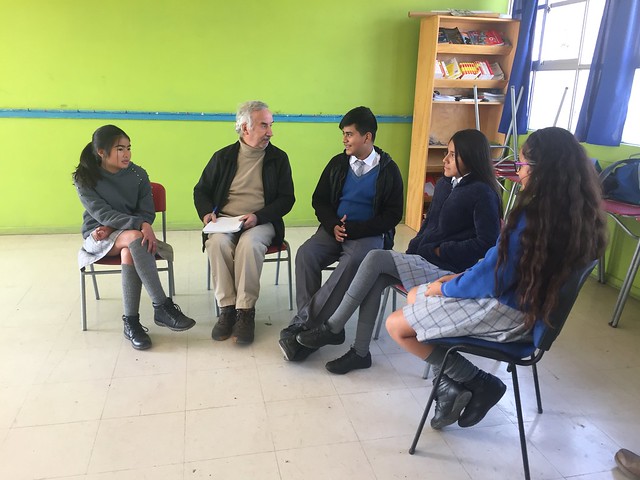
Four students, ages 13 and 14, talk to IPS about how the water reuse project has made them aware of the importance of taking care of water in the semi-arid territory where they live, in a classroom at the rural school of El Guindo, in the municipality of Ovalle, Chile. Credit: Orlando Milesi/IPS

Four students, ages 13 and 14, talk to IPS about how the water reuse project has made them aware of the importance of taking care of water in the semi-arid territory where they live, in a classroom at the rural school of El Guindo, in the municipality of Ovalle, Chile. Credit: Orlando Milesi/IPS

“The project was born because there was no vegetation,” said the teacher. Today they recover 8,000 litres of water a month. “Teaching care for the environment provides a life skill,” said Bórquez.

“Our school had the stigma of being in a place rife with drug addiction. Today in Ovalle we are known as the school with the most programs. We placed third in science,” she said.

Jaime described the experience as “gratifying” because it has offered “tools to grow and create awareness among children and the entire community about the importance of caring for water and other resources.”

Geographer Nicolás Schneider, founder of the “Un Alto en el Desierto” Foundation, told IPS that his non-governmental organisation estimates that one million litres of greywater have been recovered after eight years of work with rural schools in Ovalle.

In this arid municipality with variable rainfall, “only 37.6 mm of rainwater fell in 2018 – well below the normal average for the 1981-2010 period of 105.9 mm,” Catalina Cortés, an expert with Chile’s meteorology institute, told IPS from Santiago.

Schneider describes the water situation as critical in the Coquimbo region, which is on the southern border of the Atacama Desert and where 90 percent of the territory is eroded and degraded.

“Due to climate change, it is raining less and less and when it does, the rainfall is very concentrated. Both the lack of rain and the concentration of rainfall cause serious damage to the local population,” she said.

Innovative recycling filter

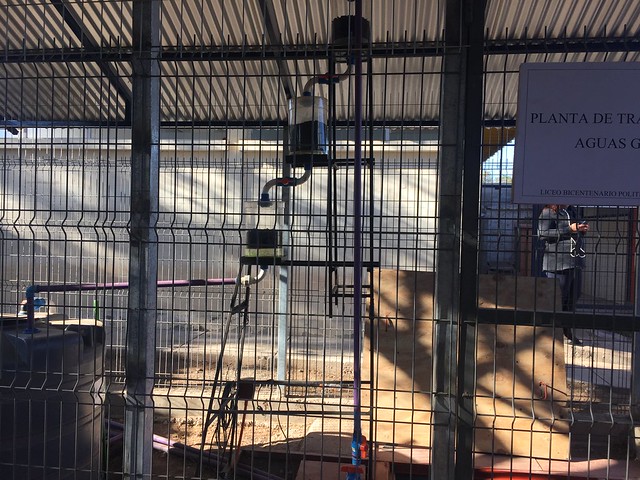
With guidance from their teachers, students at the Ovalle polytechnic high school built a filtration system devised by Eduardo Leiva, a professor of chemistry and pharmacy at the Catholic University. The filter seeks to raise the technical standard with which greywater is purified.

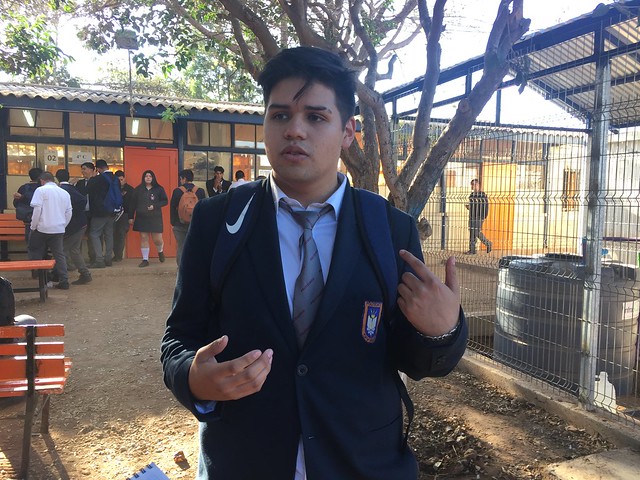
Duan Urqueta, 17, a fourth-year electronics student at the Ovalle polytechnic high school, describes the award-winning greywater filter he helped to build. Initially, units will be installed in eight rural schools in this municipality in northern Chile. Credit: Orlando Milesi/IPS

Duan Urqueta, 17, a fourth-year electronics student at the Ovalle polytechnic high school, describes the award-winning greywater filter he helped to build. Initially, units will be installed in eight rural schools in this municipality in northern Chile. Credit: Orlando Milesi/IPS

The prototype recycles the greywater from the bathrooms used by the 1,200 students at the polytechnic high school. This water is used to irrigate three areas with 48 different species of trees. Similar filters will be installed in eight rural schools in Ovalle.

The quality of the recovered water will improve due to the filter built thanks to a project by the Innovation Fund for Competitiveness of the regional government of Coquimbo, with the participation of the Catholic University, the “Un Alto en el Desierto” Foundation, and the Ovalle polytechnic high school.

The prototype was built by 18 students and eight teachers of mechanics, industrial assembly, electronics, electricity and technical drawing, and includes two 1,000-litre ponds.

The primary pond holds water piped from the bathroom sinks by gravity which is then pumped to a filter consisting of three columns measuring 0.35 meters high and 0.40 meters in diameter.

“The filter material in each column…can be activated charcoal, sand or gravel,” said Hernán Toro, the head teacher of industrial assembly.

Toro told IPS that “the prototype has a column with zeolite and two columns of activated charcoal. The columns are mounted on a metal structure 2.60 meters high.”

View of the water cleaning filter designed at the Ovalle polytechnic high school and built by a group of teachers and students with funding from the government of the region of Coquimbo, in northern Chile. Each unit costs 2,170 dollars and it will promote water recycling in the schools in the semi-arid municipality. Credit: Orlando Milesi/IPS

View of the water cleaning filter designed at the Ovalle polytechnic high school and built by a group of teachers and students with funding from the government of the region of Coquimbo, in northern Chile. Each unit costs 2,170 dollars and it will promote water recycling in the schools in the semi-arid municipality. Credit: Orlando Milesi/IPS

The water is pumped from the pond to the filter’s highest column, passes through the filter material and by gravity runs sequentially through the other columns. Finally, the water is piped into the secondary pond and by means of another electric pump it reaches the irrigation system.

Duan Urqueta, a 17-year-old electronics student, told IPS that they took soil and water samples in seven towns in Ovalle and “we used the worst water to test the filter that is made here at the high school with recyclable materials.”

In 2018, “we won first place with the filter at the Science Fair in La Serena, the capital of the region of Coquimbo,” he said proudly.

Pablo Cortés, a 17-year-old student of industrial assembly, said the project “changed me as a person.”

Toro said the experience “has been enriching and has had a strong social impact. We are sowing the seeds of ecological awareness in the students.”

“It’s a programme that offers learning, service, and assistance to the community. Everyone learns. We have seen people moved to the point of tears in their local communities,” the teacher said.

Now they are going to include solar panels in the project, which will cut energy costs, while they already have an automation system to discharge water, which legally can only be stored for a short time.

Eight schools, including the ones in Samo Alto and El Guindo, are waiting for the new filters, which cost 2,170 dollars per unit.

Schneider believes, however, that at the macro level “water recycling is insufficient” to combat the lack of water in this semi-arid zone. And he goes further, saying “there is an absence of instruments for territorial planning or management of watersheds.”

“Under the current water regulatory framework, the export agribusiness, mainly of fruit, has taken over the valleys, concentrating water use…and the government turns a blind eye,” he complained.


Nicaraguans “Will Not Be Silenced”

Civil Society, Democracy, Editors’ Choice, Featured, Global Governance, Headlines, Human Rights, IPS UN: Inside the Glasshouse, Latin America & the Caribbean, TerraViva United Nations

Active Citizens

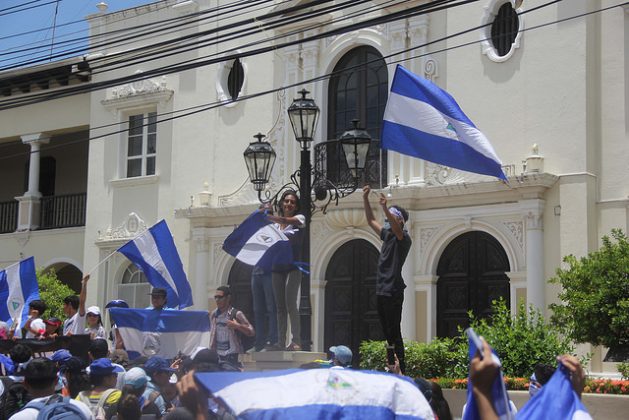
A year since Nicaragua spiralled into a socio-political crisis, human rights leaders have called on the country to refrain from violence and uphold the human rights of its citizens. Credit: Eddy López/IPS

UNITED NATIONS, Apr 17 2019 (IPS) – A year since Nicaragua spiralled into a socio-political crisis, human rights leaders have called on the country to refrain from violence and uphold the human rights of its citizens.


In light of blatant, persistent human rights violations, United Nations agencies and human rights groups have urged the Nicaraguan government to halt its brutal crackdown on its citizens.

“Throughout the last year, the government of President Ortega has brutally and repeatedly repressed anyone who dares to stand up to his administration. The Nicaraguan authorities continue to violate the rights to justice, truth and reparation of hundreds of victims, while also preventing civil society organisations and international human rights monitors from working freely in the country,” said Amnesty International’s Americas Director Erika Guevara-Rosas.

“This has got to stop,” she added.

“Violations…coupled with the lack of accountability for unlawful excesses by members of the security forces, have stoked rather than reduced the tensions in the country,” said High Commissioner for Human Rights Michelle Bachelet.

After thousands took to the streets to protest controversial social security reforms in April 2018, demonstrations were quickly met with violence by state security forces and pro-pro-government armed groups.

According to the Office of the UN High Commissioner for Human Rights, over 300 people have been killed, more than 2,000 injured, and 2,000 arrested.

The Central American country has also since banned all protest and censored media in order to prevent any government criticism.

In December, Nicaraguan police raided TV station 100% Noticias and arrested station director Miguel Mora and news director Lucia Pineda Ubau, both of whom are being held on charges of “inciting hate and violence.”

At least 300 others, including human rights defenders, face charges of terrorism.

The High Commissioner particularly expressed concern over reports of torture and ill-treatment of detainees, including recent reports of authorities beating and using dogs and tear gas on detained protestors in La Modelo prison.

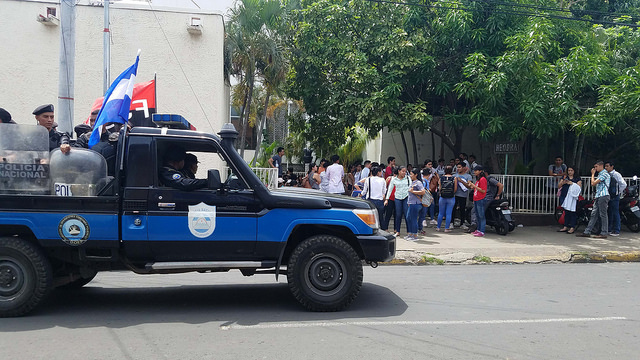
Government police and shock troops besiege a protest by medical students trying to organise on Sept. 12 in the city of León, 90 km west of Managua. Credit: Eddy López/IPS

As major protests are expected to mark the anniversary of the start of the crisis later this week, many fear another violent reaction.

The targeting of dissidents and protestors have prompted a massive exodus as an estimated 60,000 people have fled to neighbouring countries, including Costa Rica.

Among those seeking asylum are students, opposition figures, journalists, doctors, human rights defenders and farmers.

According to the UN Refugee Agency (UNHCR), many families are taking extreme measures to cross the border after being persecuted or receiving threats making it “overwhelmingly a refugee flow.”

After several attempted attacks and being informed that he was wanted “dead or alive,” Manuel left his banana plantations and fled to Costa Rica with his pregnant wife Andrea and their two children.

“We lived with the anxiety of not knowing when they would break into the house to get us…I’m sure if I go home they will hurt me,” Manuel told UNHCR.

Taking great lengths to avoid police, Manuel took a small boat along the Pacific Coast while Andrea walked through a back route of muddy fields with the children.

While they are now safe in the neighbouring country, Manuel and Andrea’s children are still haunted by their last days in Nicaragua where they were hunted by gun-carrying men in uniform.

“My youngest son hugs me every time he sees the Costa Rican police because they look like the officials who attacked us. He hugs me and says that he takes care of his daddy,” Manuel said.

While the Nicaraguan government and the opposition Civic Alliance for Justice and Democracy negotiated two pacts, including one on the release of detained protestors, the agreements have still yet to be implemented in its entirety and further negotiations have stalled.

“The fact that the negotiations have come to a standstill and the Government is not honouring the agreements reached so far, is undermining the possibility of establishing a genuine inclusive dialogue to solve the serious social, political and human rights crisis facing the country,” Bachelet said.

“A solution to the crisis must address the institutional flaws and strengthen the rule of law…it is of paramount importance that a thorough and transparent accountability process is established to ensure justice, truth and reparations, as well as a clear guarantee of non-repetition,” she added, highlighting the need to put victims of human rights violations at the heart of negotiations.

Guevara-Rosas urged the government to respect the public’s rights including the right to assembly, stating: “The Nicaraguan government must put an immediate end to its strategy of repression and release all the students, activists and journalists detained solely for exercising their rights to freedom of expression and peaceful assembly….the brave people of Nicaragua will not be silenced.”


The Amazon Seeks Alternatives that Could Revolutionise Energy Production

Civil Society, Conferences, Development & Aid, Economy & Trade, Editors’ Choice, Energy, Environment, Featured, Green Economy, Headlines, Human Rights, Indigenous Rights, Integration and Development Brazilian-style, Latin America & the Caribbean, Projects, Regional Categories, TerraViva United Nations

Energy

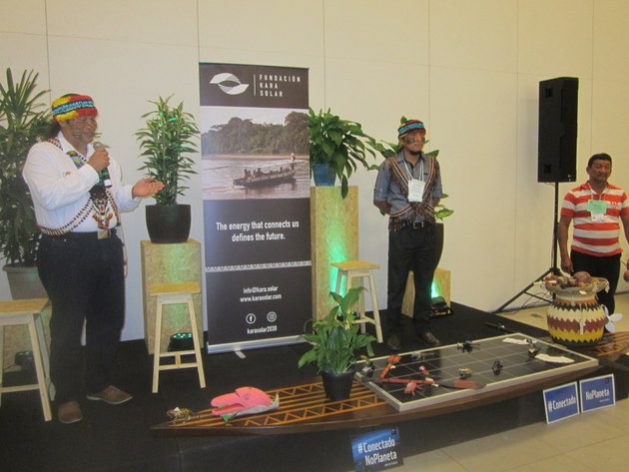
Milton Callera (holding the microphone) and Nantu Canelos, members of the indigenous Achuar community, explain how the two solar boats built to transport their people on the Amazon rivers of Ecuador work. The project is from the Kara Solar Foundation, which is promoting an alliance to "solarise" river transport in the Amazon rainforest. Credit: Mario Osava/IPS

Milton Callera (holding the microphone) and Nantu Canelos, members of the indigenous Achuar community, explain how the two solar boats built to transport their people on the Amazon rivers of Ecuador work. The project is from the Kara Solar Foundation, which is promoting an alliance to “solarise” river transport in the Amazon rainforest. Credit: Mario Osava/IPS

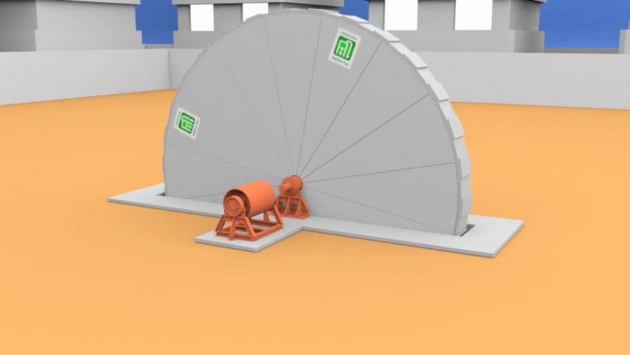
MANAUS, Brazil, Apr 5 2019 (IPS) – A large steel wheel, 14 meters in diameter and 1.3 meters wide, could be the energy solution of the near future, generating 3.5 megawatts – enough to supply a city of 30,000 people, according to a company in the capital city of the state of Amazonas in northwest Brazil.


An internal fluid, which expands through a chemical reaction in contact with an ink, drives the rotation that produces electricity without interruption for at least five years, say executives at Eletro Roda, a company in the city of Manaus that is marketing the invention and is building its first demonstration unit.

“Installation of the unit costs less than half that of an equivalent solar power plant and occupies an area of just 200 square meters, compared to 50,000 square meters for solar and 5,000 square meters for wind power,” Fernando Lindoso, the director of the company in which he is a partner, told IPS.

In other words, in the space occupied by a wind power plant that generates 3.5 megawatts (MW), 25 electro-wheels could be installed, multiplying the generating capacity by a factor of 25.

In addition, it has the advantage of stable generation, “free of the intermittency of other sources,” said Lindoso, who estimated the cost of each 3.5 MW unit at around five million dollars, a price that is reduced for social projects.

There are interested parties in Japan, India and other countries in Asia, as well as in European and Middle Eastern countries, based on earlier prototypes that never made it to market, he said.

There will be a smaller version, generating one MW, “30 percent cheaper”, of identical dimensions, but with three tons of the fluid that is biodegradable, instead of the four used in the other model.

This was one of the alternatives presented at the Fair and Symposium on Energy Solutions for Communities in the Amazon, which brought together more than 500 participants and 39 companies and institutions in Manaus Mar. 25-28.

“My favorite is the solar boat, a good example of how to find solutions,” said Sam Passmore, director of the Environmental Programme at the U.S.-based Charles Stewart Mott Foundation, one of the meeting’s eight international sponsors.

A large metal wheel that can be taken apart in order to facilitate transport produces electricity by rotating driven by an internal fluid, which is expanded by a chemical reaction. Producing 3.5 megawatts, the generator to be sold by Eletro Roda could produce a steady supply of electricity on just 200 square meters of space. Credit: Courtesy of Eletro Roda

A large metal wheel that can be taken apart in order to facilitate transport produces electricity by rotating driven by an internal fluid, which is expanded by a chemical reaction. Producing 3.5 megawatts, the generator to be sold by Eletro Roda could produce a steady supply of electricity on just 200 square meters of space. Credit: Courtesy of Eletro Roda

An alliance for solar-powered transportation in the Amazon is propose by the Kara Solar Foundation, of the indigenous Achuar people of Ecuador, who since 2017 have built two 18-passenger boats powered by electricity from a rooftop made of photovoltaic panels.

Kara means dream in the Achuar language and it is about maintaining the sustainable culture of river transport, as opposed to “the roads that threaten our territory, presented as if they represented development,” project coordinator Nantu Canelos told IPS during the fair.

“We want to build 300, 400 solar boats,” said Milton Callera, technical director of the Coordinating Committee of Indigenous Organisations of the Amazon Basin (Coica).

Riverside dwellers and indigenous people in Brazil are also seeking to “solarise” their boats, especially the small ones, dedicated to fishing and the transportation of a few people. The problem is where to put the solar panels on the so-called “flying boats”, without slowing them down.

The discussions at the symposium, however, focused on the need to universalise energy. “There are still 500,000 people, or 100,000 families, without access to electricity in Brazil’s Amazon region,” according to Paulo Cerqueira, coordinator of Social Policies at the Ministry of Mines and Energy.

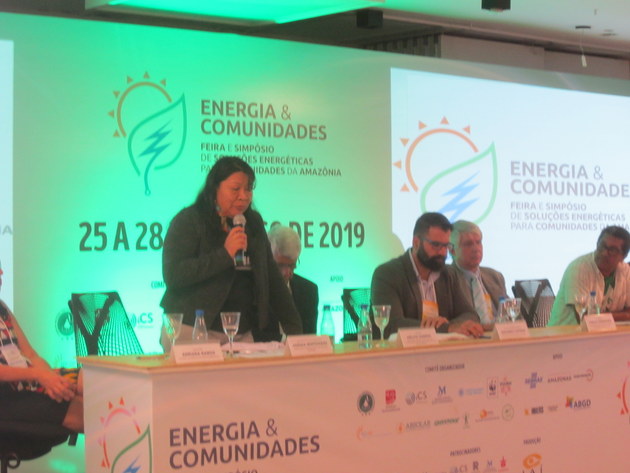
Attorney Joenia Wapichana, the first indigenous woman to hold a seat in Brazil's Chamber of Deputies, speaks at the opening of the Symposium on Energy Solutions for Communities in the Amazon, in the city of Manaus. She is from Roraima, the state with a high indigenous population in northwest Brazil that is suffering a serious energy crisis due to the interruption of supplies from neighboring Venezuela. Credit: Mario Osava/IPS

Attorney Joenia Wapichana, the first indigenous woman to hold a seat in Brazil’s Chamber of Deputies, speaks at the opening of the Symposium on Energy Solutions for Communities in the Amazon, in the city of Manaus. She is from Roraima, the state with a high indigenous population in northwest Brazil that is suffering a serious energy crisis due to the interruption of supplies from neighboring Venezuela. Credit: Mario Osava/IPS

The Light for All Programme, launched in 2003, benefited more than 16 million people, according to the ministry, in this country of 208 million people. But so far, isolated and remote communities, not reached by the power grid, have been excluded.

There are also millions of families who do have electricity, but are outside the National Integrated System, including the entire state of Roraima, in the northeast, with 580,000 inhabitants, on the border with Venezuela, from where it received most of its electricity until the supply crisis that erupted in March in the neighboring country.

Isolated communities in the state receive electricity mainly from diesel- or other petroleum-fueled generators.

The slogan for such cases is to replace costly, slow and unreliable transportation fueled by fossil fuels on the Amazon rainforest rivers, and to prioritise clean sources of energy. Solar power is presented as the most feasible solution, since the Amazon rainforest is not windy.

The exception is Roraima, where the state´s numerous indigenous people are studying the adoption of wind farms to help defend themselves from the impacts of the Venezuelan crisis.

Autonomous solar generation projects are mushrooming in the Amazon, in indigenous villages and riverbank settlements, sometimes funded by non-governmental institutions and international assistance, such as the German Agency for International Cooperation (GIZ) and the Rainforest Foundation of Norway.

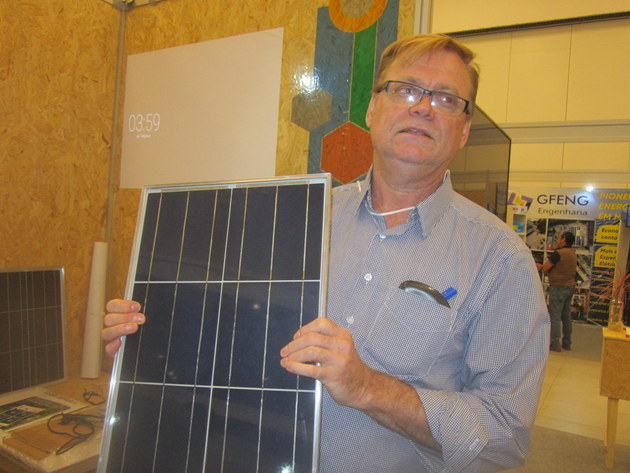
Willi Seilert, from the I9SOL Institute, explains how his solar panels are manufactured, during the Fair and Symposium on Energy Solutions for Amazonia, held in Manaus. He has a project to disseminate a thousand small solar panel factories in Brazil, in order to make photovoltaic generation cheaper in poor communities. Credit: Mario Osava/IPS

Willi Seilert, from the I9SOL Institute, explains how his solar panels are manufactured, during the Fair and Symposium on Energy Solutions for Amazonia, held in Manaus. He has a project to disseminate a thousand small solar panel factories in Brazil, in order to make photovoltaic generation cheaper in poor communities. Credit: Mario Osava/IPS

As a result, companies such as Fabortec Solar, which installs photovoltaic systems and sells equipment, focused on designing and offering off-grid projects, incorporating batteries and equipment that ensure operation and maintenance by the users themselves.

“The Amazon is a great market for those who don’t mind long trips and can work in places that are difficult to access,” a company technician told IPS.

The expansion of solar energy in many parts of Brazil, not only in the Amazon, prompted Willi Seilert to design a plan to promote 1,000 solar panel micro-factories throughout the country.

This could make the product cheaper and facilitate access by poor families and communities to solar energy, in addition to training, employing and generating income for nearly 20,000 people in the country, he estimated.

That’s why he founded the I9SOL Institute, where the “9” stands for innovation.

A 50-square-meter office, at least 10 people trained by two instructors, a glass-top table, an oven and a few tools are enough to produce small solar panels, he told IPS.

“The main obstacle is the import of photovoltaic cells, which Brazil does not produce and which has to pay too high a tariff, because of a strange legal measure adopted in 2012,” he lamented.

In addition to this, there are two industrial processes for processing silicon, and “the rest is packaging work that trained people can do without difficulty,” he said, before pointing out that this continues to be the case in China and India, which provides employment for millions of workers, especially women.

The project is to be launched in Teófilo Otoni, a city of 140,000 people in the southeastern state of Minas Gerais, whose mayor plans to employ prisoners nearing release in the solar industry, Seilert said.

There are more energy alternatives in the Amazonian region. Experiments with the use of oil from the babassu (Attalea speciosa) palm tree abundant in the Amazon and neighboring areas, and from andiroba (Carapa guianensis), a tree with oilseeds, for electricity generation were presented at the symposium.

Railton de Lima, the inventor of the Eletro Roda, which he called a “voluntary engine for mechanical energy generation,” also developed a system for converting urban waste into charcoal briquettes to generate electricity, making it easier to recycle metals.

This technology is already used in several Brazilian cities, including Manaus. Of Lima’s 28 inventions, more than half are already being used in the market, and others are being developed for energy purposes.

Creativity, which helps to seek more suitable alternatives, is also found in poor communities.

“The idea of the right to energy is powerful” and stimulates solutions, said Passmore of the Mott Foundation. In the same sense, the diversity of peoples and communities represented at the Manaus meeting was “a very positive factor,” he concluded.