When Democracy Freezes, Autocrats Rise

Civil Society, Democracy, Economy & Trade, Editors’ Choice, Global, Headlines, Human Rights, IPS UN: Inside the Glasshouse, TerraViva United Nations

Opinion

When Democracy Freezes, Autocrats Rise

Pro-Democracy protesters gather in front of the headquarters of the Sudanese army in the capital, Khartoum. Credit: Masarib/Ahmed Bahhar via UN News

VIENNA, Austria, Jan 5 2026 (IPS) – Consider our political systems not merely as battlegrounds of passions, ideologies and economic interests, but as systematically functioning arrangements of interactions, akin to game theory. In recent decades, we have witnessed the dissolution of large homogeneous groups into numerous subgroups — a patchwork of minorities.


This fragmentation, compounded by individualisation and the resulting weakening of strong political bonds, has profound consequences for democratic governance.

In nations with majority voting systems, this process fragments the party system itself. As dissatisfaction with political parties grows – initially quietly but eventually becoming pronounced – new parties emerge, further splintering the political landscape.

This increasing fragmentation complicates government formation and makes majorities more precarious. Often, only coalitions that can agree on the lowest common denominator are formed. Consequently, the outcomes of politics do not necessarily improve; in most cases, they worsen.

A vicious circle

Decisive action, bold moves and clear leadership have become increasingly elusive. This reinforces dissatisfaction and the prevailing sentiment among voters that politicians are failing to achieve meaningful results. Doubts about the effectiveness of the political system become self-perpetuating, creating a situation where decisive politics is nearly impossible.

The rise of populists and right-wing extremists is both a consequence of this stagnation and a further catalyst — a ratchet effect. Right-wing agitators stoke discontent, transforming it into anger and outrage while exploiting negative emotions.

As they gain strength, democratic politics becomes more paralysed, often preoccupied with defending against radicalism, preventing the worst outcomes, and forming coalitions whose members can agree on little more than a lacklustre commitment to ‘more of the same’.

When social cohesion erodes, the radical right gains ground — which then leads to even more division. The perceived polarisation and alienation that accompanies the rise of right-wing extremism increases the perception of social disintegration and decay.

Democracy gives rise to its own threats

In a sense, right-wing radicalism is itself the problem that it then laments in a subsequent cycle. It is the disintegration that it denounces. In this way, it contributes to the chain of evidence that reinforces authoritarian reflexes. Authoritarianism feeds authoritarianism.

These framework conditions of political systems – fragmentation and the resulting weakness of action – lead German democracy theorist Veith Selk to diagnose that modernisation and social change are increasingly putting democracy under stress, making a reversal unlikely.

This presents a rather depressing diagnosis of decline: democracy gives rise to its own threats.

Additionally, globalisation necessitates ‘global governance’, which, even under favourable circumstances, has historically produced solutions at an unbearably slow pace and is now reaching its limits amid chaotic multilateralism.

Conversely, ‘de-globalisation’ – through national power politics, tariffs and trade wars – provides no relief and instead creates new problems, such as the loss of sales markets, disrupted supply chains and a consequent decline in economic growth, potentially destroying whole economic sectors.

Europe’s mounting crises

The emergencies of the future are already on the horizon. The climate catastrophe threatens not only our livelihoods but also has tangible economic repercussions. Crop failures due to droughts and floods are already contributing to rising inflation in the cost of living, particularly for vegetables and fruit.

This situation is certain to become much more severe. Even if successful, socio-economic transformation will be costly. Insurance companies may face financial difficulties, asset portfolios could lose value rapidly, and if we are unfortunate, a sudden ‘Minsky moment’ could trigger a downward spiral leading to a financial crisis.

Ageing populations are already straining public finances, with healthcare and care systems becoming increasingly expensive, pushing European welfare states to their financial limits.

Government debt is rising, and under current conditions, it will be more challenging to “grow out” of debt than it was in the past. Growth will be harder to mobilise, and austerity is not a viable alternative, as contraction strategies lead to dire consequences. These are all concerning prospects.

Here are a few highlights:

Germany’s economy has stagnated for six years, and private investment remains weak. France is facing a budget deficit of 5.8 per cent and a public debt ratio of 113 per cent of GDP, while sliding from one government crisis to another. Political actors are unable to achieve a socially just change of course that would reconcile savings in the pension system with additional revenue from wealth taxes.

Austria was projected to have a budget deficit of six per cent, prompting left-wing Keynesian Finance Minister Markus Marterbauer to assemble a package of tightening measures aimed at reducing the deficit to 4.5 per cent by 2025.

Ensuring that large fortunes contribute to costs through higher taxation is not only a matter of fairness but also an economic necessity — yet there is a lack of parliamentary majorities for decisive measures nearly everywhere.

There is a growing desire for politics to provide sensible solutions instead of getting bogged down in petty details.

A whole panorama of emergencies is unfolding before us. As noted earlier, most of those in power have little energy or flexibility to think and act beyond daily problems. This situation has tangible and psychopolitical effects: citizens feel that things are deteriorating and that serious trouble is brewing, while simultaneously sensing that those in power are merely tinkering with details.

For many, this leads to outright fear and a generally pessimistic mood, which in turn fuels the rise of right-wing radicals.

The political forces of the left and the conservative centre must, above all, demonstrate their ability to act together. A few years ago, the prevailing view was that various political camps should dare to engage in more conflict to make democratic life more vibrant.

At that time, there were complaints about everyone crowding into the centre and becoming interchangeable. However, we find ourselves in a different situation today.

There is a growing desire for politics to provide sensible solutions instead of getting bogged down in petty details or wasting time on pointless culture wars. The left may need to acknowledge that states are reaching their financial limits, while conservatives must recognise that clientele politics, which ensures free rides for the super-wealthy, is no longer viable.
Urgent issues require swift action, and all of this comes at a high cost.

Rhetoric is no longer effective, and pandering to the extreme right leads nowhere. Conservatives, in particular, need to understand this, as they sometimes give the impression that they view fascists as merely slightly more radical conservatives (or conservatives as moderate fascists).

This perception is not only misguided; it also highlights a significant identity crisis within traditional conservatism. Fortunately, some are beginning to realise that authoritarianism is not a relative; it is the enemy. The best way to undermine it is to demonstrate a commitment to action.

Robert Misik is a writer and essayist. He publishes in many German-language newspapers and magazines, including Die Zeit and Die Tageszeitung.

This is from a joint publication by Social Europe and IPS Journal.

Source: International Politics and Society (IPS), Brussels, Belgium

IPS UN Bureau

  Source

‘Zambia Has Environmental Laws and Standards on Paper – the Problem Is Their Implementation’

Active Citizens, Africa, Civil Society, Crime & Justice, Energy, Environment, Featured, Food and Agriculture, Headlines, Health, TerraViva United Nations

Dec 29 2025 (IPS) –  
CIVICUS discusses environmental accountability in Zambia with Christian-Geraud Neema, Africa editor at the China Global South Project, an independent journalism initiative that covers and follows China’s activities in global south countries.


Zambia has environmental laws and standards on paper – the problem is their implementation’

Christian-Geraud Neema

A group of 176 Zambian farmers has filed a US$80 billion lawsuit against a Chinese state-owned mining company over a major toxic spill. In February, the collapse of a dam that was supposed to control mining waste released 50 million litres of toxic wastewater into the Kafue River system, killing fish, destroying crops and contaminating water sources for thousands of people. The compensation demand highlights broader questions about mining governance, environmental oversight and corporate accountability.

What’s this lawsuit about, and why are farmers seeking US$80 billion?

The farmers are suing Sino-Metals Leach Zambia, a subsidiary of the Chinese state-owned China Nonferrous Metal Mining Group, because on 18 February, the company’s tailings dam collapsed, releasing an estimated 50 million litres of acidic, toxic wastewater and up to 1.5 million tonnes of waste material into the Kafue River. This led to water pollution affecting communities in Chambishi and Kitwe, far beyond the immediate mining area.

The lawsuit reflects real harm and frustration. From the farmers’ perspective, the company is clearly responsible. Their livelihoods have been destroyed, their land contaminated and their future made uncertain. In that context, seeking accountability through the courts is a rational response.

That said, the US$80 billion figure is likely exaggerated. It shows the absence of credible damage assessments rather than a precise calculation. When no one provides clear data on losses, communities respond by anchoring their claims in worst-case scenarios.

This case also highlights a broader accountability gap. Mining companies should be held responsible, but governments must also be questioned. These projects are approved, inspected and regulated by state authorities. If a dam was unsafe, why was it authorised? Why was oversight insufficient?

It should be noted that Zambia’s legal framework allows communities to bring such cases domestically, which is a significant step forward compared to earlier cases where affected communities had to sue foreign companies in courts abroad.

What caused the toxic spill?

There is no single, uncontested explanation. There were clear structural weaknesses in the tailings dam. Reports from civil society and media suggest the dam was not built to the required standards under Zambian regulations. But the company argues the dam complied with existing standards and that it was encroachment by surrounding communities that weakened the structure over time.

These two narratives are not mutually exclusive. Even if community interactions with the site occurred, the primary responsibility still lies with the company. Mining operations take place in complex social environments, and companies are expected to anticipate these realities and design infrastructure that is robust enough to withstand them. Ultimately, this incident reflects governance and regulatory failures. It was not an isolated accident.

What were the consequences of the spill?

The impacts have been severe and multidimensional. The spill polluted large sections of the Kafue River, reportedly extending over 100 kilometres. It killed large numbers of fish, contaminated riverbeds and disrupted ecosystems. Agriculturally, farmers using river water for irrigation saw their crops destroyed or rendered unsafe. Livestock and soil quality were also affected. Acidic and toxic substances entered water sources used daily for cooking, drinking and washing, and communities were exposed to serious health risks.

What makes the situation particularly troubling is the lack of reliable and independent data. There has been no transparent and comprehensive assessment released by the government, the company or an independent body. This absence has left communities uncertain about long-term environmental damage and health effects, and fuelled emotionally charged debates instead of evidence-based responses.

Was the disaster preventable?

Absolutely. At a technical level, stronger infrastructure, better-quality materials and stricter adherence to safety standards could have significantly reduced the risk. At an operational level, companies know mining sites are rarely isolated, and community proximity, informal access and social dynamics must be factored in when designing and securing tailings dams.

But prevention also depends heavily on governance. Mining companies are profit-driven entities, and in weak governance environments, the temptation to cut costs is high. This is not unique to Chinese firms. The main difference in how companies operate is not their origin but their context: the same companies often operate very differently in countries with weak or strong regulatory oversight. Where rules are enforced, behaviour improves; where oversight is weak, shortcuts become the norm.

The key issue here is enforcement. Zambia has good environmental laws and standards on paper. The problem is their implementation.

Could this case set a precedent?

This case has the potential to strengthen existing accountability mechanisms rather than create a new precedent. Zambia has seen similar cases before, including lawsuits involving western mining companies. What is different now is the increased legal space for communities to act locally.

If successful, the case could reinforce civil society advocacy for responsible mining, greater transparency and stronger enforcement of environmental regulations. It could also raise awareness among communities living near mining sites about their rights and the risks they face.

GET IN TOUCH
Website
Facebook
TikTok
Twitter
YouTube
Christian-Geraud Neema/LinkedIn

SEE ALSO
South Africa: ‘Environmental rights are enforceable and communities have the right to be consulted and taken seriously’ CIVICUS Lens | Interview with The Green Connection 12.Dec.2025
DRC: ‘International demand for coltan is linked to violence in the DRC’ CIVICUS Lens | Interview with Claude Iguma 09.Jul.2025
Ghana: ‘We demand an immediate ban on illegal mining and strict enforcement of environmental laws’ CIVICUS Lens | Interview with Jeremiah Sam 29.Oct.2024

  Source

A Grim Year for Democracy and Civic Freedoms – but in Gen Z There Is Hope

Active Citizens, Armed Conflicts, Civil Society, Climate Change, Crime & Justice, Democracy, Economy & Trade, Environment, Featured, Gender, Global, Headlines, Human Rights, Inequality, LGBTQ, TerraViva United Nations

Opinion

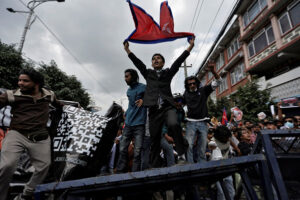
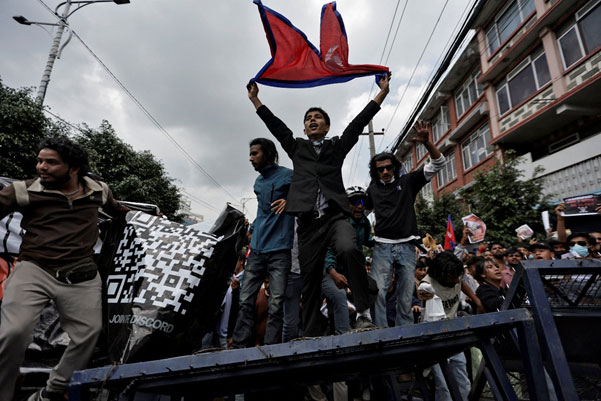
People take part in an anti-corruption protest in Kathmandu, Nepal on 8 September 2025. Credit: Navesh Chitrakar/Reuters via Gallo Images

NEW YORK, Dec 24 2025 (IPS) – 2025 has been a terrible year for democracy. Just over 7 per cent of the world’s population now live in places where the rights to organise, protest and speak out are generally respected, according to the CIVICUS Monitor, a civil society research partnership that measures civic freedoms around the world. This is a sharp drop from over 14 per cent this time last year.


Civic freedoms underpin healthy democracies, and the consequences of this stifling of civil society are apparent. At the end of the first quarter of the 21st century, the world is experiencing 19th century levels of economic inequality. The wealth of the richest 1 per cent is surging while some 8 per cent of the world’s population – over 670 million people – suffer from chronic hunger. Weapons-producing firms, closely intertwined with political elites, are reaping windfall profits as death and destruction rains down in Gaza, Myanmar, Sudan, Ukraine and many other places. It should surprise no one that the political leaders fomenting these conflicts are also squashing civic freedoms to avert questions about their motivations.

From Lima to Los Angeles, Belgrade to Dar es Salaam and Jenin to Jakarta, far too many people are being denied the agency to shape the decisions that impact their lives. Yet these places have also been the site of significant protests against governments this year. Even as authoritarianism appears to be on the march, people are continuing to pour onto the streets to insist on their freedoms. As we speak people in Sofia in Bulgaria are demonstrating in large numbers against endemic corruption which recently forced the government to resign.

History shows that mass demonstrations can lead to major advances. In the 20th century, people’s mobilisations helped achieve women’s right to vote, liberation of colonised peoples and adoption of civil rights legislation to address race-based discrimination. In the 21st century, advances have been made in marriage equality and other LGBTQI+ rights, and in highlighting the climate crisis and economic inequality through protests. But in 2025, the right to protest, precisely because it can be effective, is under assault by authoritarian leaders. Around the world, the detention of protesters is the number one recorded violation of civic freedoms, closely followed by arbitrary detentions of journalists and human rights defenders who expose corruption and rights violations.

This backsliding is now happening in major established democracies. This year, the CIVICUS Monitor downgraded Argentina, France, Germany, Italy and the USA to an ‘obstructed’ civic space rating, meaning the authorities impose significant constraints on the full enjoyment of fundamental rights. This regression is being driven by anti-rights nationalist and populist forces determined to degrade constitutional checks and balances and advance ballot box majoritarianism that denies minorities a fair say in economic, political and social life.

The push to degrade democracy by anti-rights forces now coming to fruition has been many years in the making. It accelerated this year with the return of Donald Trump. His administration immediately withdrew support to international democracy support programmes and instead built links to politicians responsible for crushing civic freedoms and committing grotesque human rights violations. Trump has laid out of the red carpet to El-Salvador’s Nayib Bukele, Hungary’s Victor Orbán, Israel’s Benjamin Netanyahu, Russia’s Vladimir Putin and Saudi Arabia’s Mohammed bin Salman, ushering in a new era of values-free might-is-right diplomacy that threatens to undermine decades of painstaking progress achieved by civil society.

The fallout is clear. Many wealthy democratic governments that traditionally fund civil society activities have significantly reduced their contributions. At the same time, they have linked their remaining support for civil society to narrowly defined strategic military and economic interests. In doing so, they have played directly into the hands of powerful authoritarian states such as China, Egypt, Iran, Nicaragua and Venezuela that seek to discredit domestic calls for accountability. Countries including Ecuador and Zimbabwe have introduced laws to limit the ability of civil society organisations to receive international funding.

All these developments are negatively impacting on civil society efforts for equality, peace and social justice. Yet the story of 2025 is also one of persistent resistance, and some successes. The courage demonstrated by Generation Z protesters has inspired people around the world. In Nepal, protests triggered by a social media ban led to the fall of the government, offering hope for a much-needed political reset. In Kenya, young protesters continued to take to the streets to demand political reform despite state violence. In Moldova, a cash-rich disinformation campaign run by a fugitive oligarch failed to sway the course of the national election away from human rights values. In the USA, the number of people joining the No-Kings protests just keeps on growing.

With over 90 per cent of the world’s population living with the institutional denial of full civic freedoms, anti-rights forces must be feeling pretty smug right now. But democratic dissent is brewing, particularly among Generation Z, denied political and economic opportunities but understanding that another world – one more equal, just, peaceful and environmentally sustainable – is possible. It’s far from game over yet, and even in difficult times, people will demand freedoms – and breakthroughs may be just around the corner.

Mandeep S Tiwana is Secretary General of CIVICUS, the global civil society alliance.

  Source

Myanmar’s Sham Election: Trump Legitimises Murderous Military Dictatorship

Active Citizens, Armed Conflicts, Asia-Pacific, Civil Society, Crime & Justice, Democracy, Featured, Headlines, Human Rights, Migration & Refugees, Press Freedom, TerraViva United Nations

Opinion

Credit: Issei Kato/Reuters via Gallo Images

MONTEVIDEO, Uruguay, Dec 22 2025 (IPS) – Myanmar is heading for an election, beginning on 28 December, that’s ostensibly an exercise in democracy – but it has clearly been designed with the aim of conferring more legitimacy on its military junta.


Almost five years after its February 2021 coup, the regime continues to fight pro-democracy forces and ethnic armed organisations, barely controlling a fifth of Myanmar’s territory. The junta has acknowledged that voting won’t be possible in much of the country.

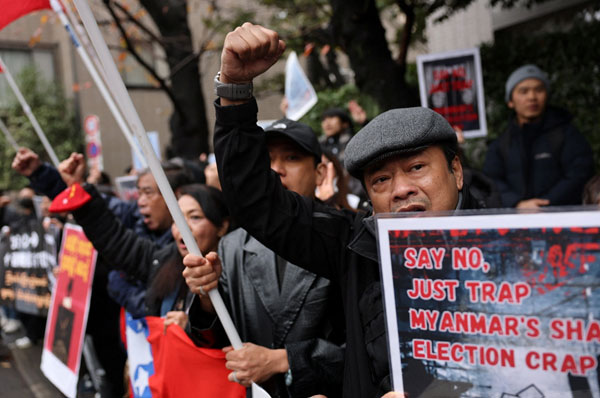
The upcoming election fails every test of democratic legitimacy. The main democratic parties — the National League for Democracy and the Shan Nationalities League for Democracy — are banned. What remains is the Union Solidarity and Development Party, the military’s puppet party, plus minor groups that won no seats in the democratic election held in 2020. Independent media outlets have been crushed, journalists are arrested and intimidated daily and internet access is heavily restricted. In areas that resist military rule, civilians face escalating violence and arbitrary detention.

This election is designed not to reflect the popular will but to entrench military power. It comes as the regime continues its systematic campaign of violence against civilians: weeks before the junta announced the vote, Myanmar’s air force bombed a school in Oe Htein Kwin village, killing two teachers and 22 children, the youngest only seven years old.

The Assistance Association for Political Prisoners has confirmed 6,231 civilians have been killed by the military since the coup, though true figures could be much higher. Nearly half of all civilian deaths are estimated to have been caused by airstrikes. These are not indiscriminate military operations where civilians are collateral damage; they are deliberate attacks where civilians are the targets. The majority of locations of airstrikes have been sites with protected status under international law: camps for displaced people, churches, clinics and schools, often with no presence of armed groups nearby.

The junta has some powerful international allies. China backs it with billions in aid and advanced weapons. Russia supplies the fighter jets that drop bombs on civilians. India quietly sells arms. The three have long provided diplomatic cover and shielded the junta from international accountability. Meanwhile, the Association of Southeast Asian Nations (ASEAN) continues pursuing its failed Five-Point Consensus agreed with the regime in April 2021, despite its systematic violation of every commitment. Regional powers have negotiated exclusively with the junta without input from the National Unity Government — the government in exile formed by democratically elected lawmakers — effectively treating the military regime as Myanmar’s legitimate rulers.

Now recent decisions by the Trump administration threaten to tip the balance decisively in favour of legitimising military rule. Trump has lifted sanctions, cut independent media funding and eliminated the protections formerly afforded to Myanmar’s refugees in the USA. Consistent with his transactional approach, he’s choosing access to rare earth minerals over democracy.

The concern now is that ASEAN member states may follow suit, using the sham election as justification to normalise relations with the military regime. Some have already started moving in this direction, with the junta leader invited to regional meetings.

Myanmar’s pro-democracy forces continue to resist despite the shifting international context. The People’s Defence Forces and ethnic armed groups maintain coordinated operations across most of the country. Civil society continues documenting violations, providing aid to displaced people and advocating for international action. They deserve better than to watch the world legitimise their oppressors.

The junta’s control on the ground remains tenuous, but its diplomatic position is strengthening. Whether this consolidation continues depends on how the world responds to the election. The international community must be clear that treating the election as legitimate would signal to authoritarians everywhere that democratic institutions can be overthrown with impunity, war crimes carry no real consequences and regimes that bomb schools and imprison elected leaders can secure international acceptance.

Inés M. Pousadela is CIVICUS Head of Research and Analysis, co-director and writer for CIVICUS Lens and co-author of the State of Civil Society Report. She is also a Professor of Comparative Politics at Universidad ORT Uruguay.

For interviews or more information, please contact research@civicus.org

  Source

Kenyan Court Restores Seed Freedom: Landmark Ruling Boost for Food Security and Sovereignty

Active Citizens, Africa, Biodiversity, Civil Society, Development & Aid, Economy & Trade, Environment, Featured, Food and Agriculture, Food Systems, Natural Resources, TerraViva United Nations, Trade & Investment

Food Systems

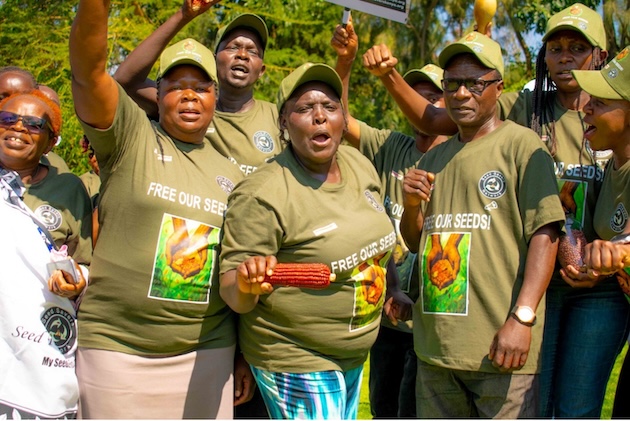
Farmers celebrate in Gilgil town in Kenya, after a court ruling that decriminalized the sharing of indigenous seeds. Credit: Jackson Okata/IPS

Farmers celebrate in Gilgil town in Kenya, after a court ruling that decriminalized the sharing of indigenous seeds. Credit: Jackson Okata/IPS

NAIROBI, Dec 18 2025 (IPS) – For years, smallholder farmers across Kenya have been engaged in a legal battle with the government over a law that criminalizes the practice of saving, sharing and exchanging indigenous seeds.


In 2022, a group of 15 Kenyan smallholder farmers petitioned the country’s High Court, seeking to compel the government to review sections of a law that bans the sharing and exchange of uncertified and unregistered seeds.

Rural smallholder farmers in Kenya rely on informal farmer-managed systems to acquire seeds through seed saving and sharing, but the Seeds and Plant Varieties Act limited their access.

Kenya’s government enacted the law in 2012 to develop, promote, and regulate a modern and competitive seed industry, but farmers are calling for its review.

The informal farmer-managed seed system allows farmers to store a portion of their seeds after harvesting, which guarantees them seeds for the next planting season.

Victory for Farmers

In a decisive victory for food sovereignty and climate justice, the High Court on November 27, 2025, ruled in favor of smallholder farmers, declaring punitive sections of the Seed and Plant Varieties Act unconstitutional.

The judgment effectively decriminalizes the age-old practice of saving, sharing, and exchanging indigenous seeds, affirming that Farmer-Managed Seed Systems (FMSS) are a protected right, not a criminal activity.

Under the punitive law, farmers faced jail terms of up to two years and a fine of 1 million shillings (about 7,800 USD) for selling or exchanging unregistered seeds.

Farmer rights defenders had argued that the law gave control of the country’s food system to multinational corporations.

In her judgment, Justice Rhoda Rutto declared unconstitutional sections of the Act that gave seed inspectors sweeping powers to raid seed banks and seize seeds meant for the next harvest, made it illegal for farmers to process or sell seeds unless they were registered seed merchants, gave extensive proprietary rights to plant breeders and none to farmers, and made it illegal for farmers to save or share seeds from their harvest without prior knowledge of seed proprietors.

Samuel Wathome, a smallholder farmer who was a petitioner in the case, says that “just like his grandmother did, he can now freely save seeds for his grandchildren without fear of police or prison.”

According to Elizabeth Atieno, a Food Campaigner at Greenpeace Africa, the court ruling affirmed the long-known tradition of seed sovereignty.

“The court ruling removed shackles from Kenya’s farmers.  This is not just a legal win; it is a victory for our culture, our resilience, and our future,” Atieno told IPS.

She added, “By validating indigenous seeds, the court has struck a blow against the corporate capture of our food system. We can finally say that in Kenya, feeding your community with climate-resilient, locally adapted seeds is no longer a crime.”

Protecting Biodiversity

According to Gideon Muya, Programs Officer, Biodiversity and Biosafety Association of Kenya, the judgment is a shield for the country’s biodiversity.

“Indigenous seeds are the library of life because they hold the genetic diversity we need to withstand droughts, pests, and a changing climate. The court has recognized that you cannot patent nature’s heritage. We have reclaimed the right to choose what we plant and what we eat, free from the coercion of commercial seed monopolies,” Muya told IPS.

Claire Nasike, an agroecologist, noted that the judgment indicates that the seed is life, and it is sovereign, and whoever controls it influences the lifeline of a generation.

Nasike observes that the ruling is a big boost for biodiversity, climate resilience and food sovereignty since indigenous seeds tend to be well adapted to local conditions like soil types, rainfall patterns, pests and disease traits that are often lost in uniform, certified commercial seeds.

“By enabling farmers to save, exchange and diversify their seed stock, communities can preserve genetic diversity, a key buffer against climate shocks like droughts and pests, as well as a safeguard for long-term food security.”

IPS UN Bureau Report

  Source

My Niece Was Killed Amid Mexico’s Land Conflicts. The World Must Hold Corporations Accountable

Civil Society, Headlines, Human Rights, Indigenous Rights, IPS UN: Inside the Glasshouse, Latin America & the Caribbean, TerraViva United Nations

Opinion

My Niece was Killed Amid Mexico’s Land Conflicts.

Claudia Ignacio Álvarez in San Lorenzo de Azqueltan, Jalisco, Mexico. Credit : Eber Huitzil

MICHOACÁN, Mexico , Dec 18 2025 (IPS) – My niece Roxana Valentín Cárdenas was 21 years old when she was killed. She was a Purépecha Indigenous woman from San Andrés Tziróndaro, a community on the shores of Lake Pátzcuaro in the Mexican state of Michoacán.


Roxana was killed during a peaceful march organised by another Indigenous community commemorating the recovery of their lands. Forty-six years earlier, three people had been murdered during that same land struggle. This time, the commemoration was once again met with gunfire.

Roxana was not armed and was not participating in the march. She encountered the demonstration and was struck by gunfire. Her death was deeply personal, but it took place within a broader context of long-standing violence linked to land and territory.

That violence has intensified in Michoacán recently, where the assassination of a mayor in November this year underscored how deeply insecurity has penetrated public life and how little protection exists for civilians, community leaders and local authorities alike.

Across Mexico, Indigenous people are being killed for defending land, water and forests. What governments and corporations often describe as “development” is experienced by our communities as dispossession enforced by violence – through land grabbing, water theft and the silencing of those who resist.

A way of life under threat
I come from San Andrés Tziróndaro, a farming, fishing and musical community. For generations, we have cared for the lake and the surrounding forests as collective responsibilities essential to life. That way of life is now under threat.

In Michoacán, extractive pressure takes different forms. In some Indigenous territories, it is mining. In our region, it is agro-industrial production, particularly avocados and berries grown for export. Communal land intended for subsistence is leased for commercial agriculture. Water is extracted from Lake Pátzcuaro through irregularly installed pipes to irrigate agricultural fields, depriving local farmers of access.

Agrochemicals contaminate soil and water, forests are deliberately burned to enable land-use change, and ecosystems are transformed into monocultures that consume vast amounts of water. This is not development. It is extraction.

Violence as a method of enforcement
When Indigenous communities resist these processes, violence follows.

Two cases illustrate this reality and remain unresolved.

José Gabriel Pelayo, a human rights defender and member of our organisation, has been forcibly disappeared for more than a year. Despite an urgent action issued by the United Nations Committee on Enforced Disappearances, progress has been blocked. Authorities have delayed access to the investigation file, and meaningful search efforts have yet to begin. His family continues to wait for answers.

Eustacio Alcalá Díaz, a defender from the Nahua community of San Juan Huitzontla, was murdered after opposing mining operations imposed on his territory without consultation. After his killing, the community was paralysed by fear, and it was no longer possible to continue human rights work safely.

Together, these cases show how violence and impunity are used to suppress community resistance.

Militarisation is not protection
It is against this backdrop of escalating violence and impunity that the Mexican state has once again turned to militarisation. Thousands of soldiers are being deployed to Michoacán, and authorities point to arrests and security operations as indicators of stability.

In practice, militarisation often coincides with areas of high extractive interest. Security forces are deployed in regions targeted for mining, agro-industrial expansion or large infrastructure projects, creating conditions that allow these activities to proceed while community resistance is contained.

Indigenous people experience this not as protection, but as surveillance, intimidation and criminalisation. While companies may claim neutrality, they benefit from these security arrangements and rarely challenge the violence or displacement that accompanies them, raising serious questions about corporate complicity.

A global governance failure
Indigenous territories are opened to extractive industries operating across borders, while accountability remains fragmented. Corporations divide their operations across jurisdictions, making responsibility for environmental harm and human rights abuses difficult to establish.

Voluntary corporate commitments have not prevented violence or environmental degradation. National regulations remain uneven and weakly enforced, particularly in regions affected by corruption and organised crime. This is not only a national failure. It is a failure of global governance.

International responsibility, now
In this context, I have recently spent ten days in the United Kingdom with the support of Peace Brigades International (PBI), meeting with parliamentarians, officials from the Foreign, Commonwealth and Development Office, and civil society organisations.

These discussions are part of a broader international effort to ensure that governments whose companies, financial systems or diplomatic relationships are linked to extractive activities take responsibility for preventing harm and protecting those at risk.

While the UK is only one actor, its policies on corporate accountability and support for human rights defenders have consequences far beyond its borders.

Why binding international rules are necessary
For years, Indigenous peoples and civil society organisations have called for a binding United Nations treaty on business and human rights. The urgency of this demand is reflected in the lives lost defending land and water and in the defenders who remain disappeared.

A binding treaty could require mandatory human rights and environmental due diligence across global supply chains, guarantee access to justice beyond national borders, and recognise the protection of human rights defenders as a legal obligation. It could make Free, Prior and Informed Consent enforceable rather than optional.

Such a treaty would not prevent development. It would ensure that development does not depend on violence, dispossession and impunity.

Defending life for everyone
Indigenous peoples are not obstacles to progress. We are defending ecosystems that sustain life far beyond our territories. Indigenous women are often at the forefront of this defence, even as we face extraordinary risks.

When defenders disappear, when others are murdered, and when young women like my niece lose their lives, it is not only our communities that suffer. The world loses those protecting land, water and biodiversity during a deep ecological crisis.

Defending life and land should not come at the cost of human lives.

Claudia Ignacio Álvarez is an Indigenous Purépecha feminist, lesbian, and environmental human rights defender from San Andrés Tziróndaro, Michoacán. Through the Red Solidaria de Derechos Humanos, she supports Indigenous and rural communities defending their territories from extractive industries and organised crime. Her work has been supported by Peace Brigades International (PBI) since 2023.

IPS UN Bureau

  Source