Blog

Latest News from the Malawi Diaspora

Maldives Election: What Now for Civil Society?

Asia-Pacific, Civil Society, Crime & Justice, Featured, Gender, Headlines, Human Rights, LGBTQ, Press Freedom, TerraViva United Nations

Opinion

Credit: Mohamed Afrah/AFP via Getty Images

LONDON, Oct 12 2023 (IPS) – Ahead of the presidential election, Solih faced accusations of irregularities in his party’s primary vote, in which he defeated former president Mohamed Nasheed. The Electoral Commission was accused of making it harder for rival parties to stand, including the Democrats, a breakaway party Naheed formed after the primary vote. The ruling party also appeared to be instrumentalising public media and state resources in its favour. Solih’s political alliances with conservative religious parties were in the spotlight, including with the Adhaalath Party, which has taken an increasingly intolerant stance on women’s and LGBTQI+ rights.


Big beasts battle for influence

If the two candidates seemed similar in their attitudes towards civil society, they stood on opposite sides of a geopolitical divide. In recent years Maldives, a chain of small Indian Ocean islands with a population of around half a million, has become a major site of contestation in the battle for supremacy between China and India. The location is seen as strategic, not least for control of shipping routes, vital for the transport of oil from the Gulf to China.

Civic space under pressure

Solih quickly conceded defeat and thanked voters for playing their part in a democratic and peaceful process. It’s far from rare for incumbents to lose in Maldives: there’s been a change at every election since the first multiparty vote in 2008. But there are concerns that Muizzu will follow the same course as former president Abdulla Yameen, leader of his party, the People’s National Congress.

Yameen, in office from 2013 to 2018, wanted to run again, but the Supreme Court barred him because he’s serving an 11-year jail sentence for corruption and money-laundering. Critics question the extent to which Muizzu will be his own person or a proxy for Yameen. Perhaps there’s a clue in the fact that Yameen has already been moved from jail to house arrest on Muizzu’s request.

The question matters because the human rights situation sharply deteriorated under Yameen’s presidency. The 2018 election was preceded by the declaration of a state of emergency enabling a crackdown on civil society, the media, the judiciary and the political opposition. Judges and politicians were jailed. Protests were routinely banned and violently dispersed. Independent media websites were blocked and journalists subjected to physical attacks.

Ultimately, Yameen was roundly defeated by a united opposition who capitalised on widespread alarm at the state of human rights. Some positive developments followed, including repeal of a criminal defamation law. But many challenges for civil society remained and hopes of significant progress were largely disappointed.

A restrictive protest law stayed in effect and parliament rejected changing it in 2020. Police violence towards protesters continued, as did impunity. Civil society groups were still smeared and vilified if they criticised the government. Activists have been subjected to smears, harassment, threats and violence from hardline conservative religious groups. Women’s rights activists have been particularly targeted.

In 2019, a prominent civil society organisation, the Maldivian Democracy Group, was deregistered and had its funds seized following pressure from religious groups after it published a report on violent extremism. It now operates from exile.

Ahead of the presidential election, Solih faced accusations of irregularities in his party’s primary vote, in which he defeated former president Mohamed Nasheed. The Electoral Commission was accused of making it harder for rival parties to stand, including the Democrats, a breakaway party Naheed formed after the primary vote. The ruling party also appeared to be instrumentalising public media and state resources in its favour. Solih’s political alliances with conservative religious parties were in the spotlight, including with the Adhaalath Party, which has taken an increasingly intolerant stance on women’s and LGBTQI+ rights.

Big beasts battle for influence

If the two candidates seemed similar in their attitudes towards civil society, they stood on opposite sides of a geopolitical divide. In recent years Maldives, a chain of small Indian Ocean islands with a population of around half a million, has become a major site of contestation in the battle for supremacy between China and India. The location is seen as strategic, not least for control of shipping routes, vital for the transport of oil from the Gulf to China.

India has historically had close connections with Maldives, something strongly supported by Solih. But Muizzu, like his predecessor Yameen, seems firmly in the China camp. Under Yameen, Maldives was a recipient of Chinese support to develop infrastructure under its Belt and Road Initiative, epitomised in the 1.4 km China-Maldives Friendship Bridge.

India has come to be a big issue in Maldivian politics. Under Solih, India established a small military presence in Maldives, mostly involved in providing air support for medical evacuations from isolated islands. But the development of a new India-funded harbour prompted accusations that the government was secretly planning to give India’s military a permanent base.

This sparked opposition protests calling for the Indian military to be expelled. Protests faced heavy restriction, with many protesters arrested. In 2022, Solih issued a decree deeming the protests a threat to national security and ordering them to stop. This high-handed move only further legitimised protesters’ grievances.

Muizzu’s campaign sought to centre the debate on foreign interference and Maldives’ sovereignty. He used his victory rally to reiterate his promise that foreign soldiers will be expelled.

In practice, the new administration is likely to mean a change of emphasis rather than an absolute switch. Maldives will still need to trade with both much bigger economies and likely look to play them off against each other, while India will seek to maintain relations, hoping that the political pendulum will swing its way again.

Time to break with the past

International relations were far from the only issue. Economic strife and the high cost of living – a common issue in recent elections around the world – was a major concern. And some people likely switched votes out of unhappiness with Solih’s failure to fulfil his 2018 promises to challenge impunity for killings by extremists and make inroads on corruption, and to open up civic space.

Neither India, where civic freedoms are deteriorating, nor China, which stamps down on all forms of dissent, will have any interest in whether the Maldives government respects the space for civil society. But there’s surely an opportunity here for Muizzu to prove he’ll stand on his own feet by breaking with both the dismal human rights approach of Yameen and the increasingly compromised positions of Solih. He can carve out his own direction by committing to respecting and working with civil society, including by letting it scrutinise and give feedback on the big development decisions he may soon be taking in concert with China.

Andrew Firmin is CIVICUS Editor-in-Chief, co-director and writer for CIVICUS Lens and co-author of the State of Civil Society Report.

  Source

Mexico on the Rights Path

Civil Society, Featured, Gender, Headlines, Health, Human Rights, Latin America & the Caribbean, TerraViva United Nations, Women’s Health

Opinion

Crerdit: Silvana Flores/AFP via Getty Images

MONTEVIDEO, Uruguay, Oct 10 2023 (IPS) – Mexico’s Supreme Court recently declared abortion bans unconstitutional, effectively decriminalising abortion throughout the vast federal country, so far characterised by a legislative patchwork.

The ruling came in response to a lawsuit filed by a civil society organisation, Information Group on Reproductive Choice. It forces the Federal Congress to repeal the Federal Penal Code articles that criminalise abortion. Effective immediately, those seeking abortions and those providing them can no longer be punished for doing so. The ruling also enshrines the right to access abortion procedures in all institutions of the federal health system network, even in states where the crime of abortion remains on the books.


Global trends

Mexico is part of a global, long-term trend of progress in sexual and reproductive rights. According to the Center for Reproductive Rights, the vast majority of countries that have changed their national abortion laws over the past couple of decades have made them less restrictive. Only four countries have gone the other way: El Salvador, Nicaragua, Poland and the USA.

Several Latin American countries have been swept by the ‘green tide’ that originated in Argentina, increasingly liberalising abortion laws. Before the 2010s, abortion was legal in only one Latin American country, Cuba. It was legalised in Uruguay in 2012, and eight years later in Argentina. Colombia decriminalised abortion in February 2022, and other countries, such as Chile and Ecuador, have since made it legal on limited grounds, notably when pregnancy is a result of rape – which women’s rights organisations see as a milestone on the road to full legalisation.

Globally, abortion is currently legal on request in 75 countries, often until 12 weeks into pregnancy. Around a dozen more allow it for broad socio-economic reasons. Many more permit it for specific reasons such as health grounds or to save a pregnant person’s life.

But abortion remains banned under any circumstances in 24 countries, and overall 40 per cent of women of reproductive age live under restrictive abortion laws. These restrictions have a significant impact on women: it’s estimated that unsafe abortions costs the lives of 39,000 women and girls every year.

A legislative patchwork

The trend towards decriminalisation in Mexico kicked off in 2007 in Mexico City, and it took 12 years for another state, Oaxaca, to follow its lead. Change accelerated in recent years, with Hidalgo and Veracruz legalising abortion in 2021.

In September 2021, the federal Supreme Court issued its first-ever decision on abortion rights, unanimously recognising a constitutional right to safe, legal and free abortion services within a ‘short period’ early in pregnancy, and on specific grounds later. The ruling came in response to a lawsuit against the state of Coahuila, which imposed prison terms of up to three years for voluntary abortion.

Although this ruling only applied to Coahuila, it had a wider impact: judges in other states were no longer able to sentence anyone for the crime of voluntary abortion in the early stages of pregnancy.

Two days after this judgment, the Supreme Court addressed another lawsuit concerning the state of Sinaloa, issuing a ruling that declared it unconstitutional for state laws to redefine the legal concept of personhood by protecting ‘human life from conception’. And soon after, it declared invalid the principle of conscientious objection for medical practitioners in the General Health Law. A couple of months earlier it had ruled unconstitutional the time limits set by some states for abortions in cases of rape.

By the time of the Coahuila ruling, only four federal entities allowed abortion on demand up to 12 weeks. But several have changed their laws since, and by the time of the latest Supreme Court ruling, abortion on demand was already legal in 12 of Mexico’s 32 states. All states also allowed abortions for pregnancies resulting from rape, most allowed abortion when necessary to save a pregnant person’s life, and several allowed it in cases of risks to a pregnant person’s health or severe congenital foetal abnormalities.

Regional experience however suggests that making abortion conditional on exceptional grounds that must be proven tends to result in denial of access. Additionally, in Mexico, access by particularly vulnerable women has often been restricted through resistance in bureaucracies and medical institutions, even in states where abortion is legal.

Now Congress has until the end of its current session, which runs until 15 December, to amend the Penal Code clauses that criminalise abortion. But even after this, abortion will continue to be a state-level crime in 20 states. This means that abortion complaints will continue to be filed in those states. In most cases judges will ultimately have to dismiss the charges – but women will continue to be subjected to unnecessary barriers and uncertainty. For this reason, the women’s rights movement is pushing locally for decriminalisation in every Mexican state.

Effective access the next struggle

Mexican women’s rights groups are getting ready for what promises to be a long battle for effective access. They feel confident, for now, that thanks to decades of hard work public opinion is on their side. But they know that, while there may be less up-front resistance than before, there are still powerful forces against change. Resistance manifests in the imposition of barriers to prevent effective access to what is now recognised as a right, particularly for people from the most excluded groups in society.

Denial of access can take many forms: long waiting times, the need for multiple doctors’ appointments and parental or marital consent, disinformation and the extension of conscientious objection from individual health personnel to entire institutions.

Sexual and reproductive health, including abortion procedures, is basic healthcare and should be easily accessible to all. Mexican feminists know this, and will continue fighting to change both policy and minds so nobody is denied access to their rights.

Inés M. Pousadela is CIVICUS Senior Research Specialist, co-director and writer for CIVICUS Lens and co-author of the State of Civil Society Report.

  Source

Epidemic: Bodies Remember What Was Done to Them

A black-and-white photograph from 1976 shows a female doctor leaning over the bed of a patient recovering from surgery. The image caption reads: “A doctor greets a woman who has undergone tubectomy operation at the AIWC-Family Planning Hospital at the Jamshedpur Blood Bank.”
In the early ’50s, India launched a family planning program in which the government would use various tactics to sterilize people — some voluntary, some for a monetary reward, some by force. In this 1976 photo published by Tata Steel in TISCO News, patients are recovering from a sterilization procedure. The image caption reads: “A doctor greets a woman who has undergone tubectomy operation at the AIWC – Family Planning Hospital at the Jameshedpur Blood Bank.” (TISCO News Volume 24: No. 1, June 1976, Page 73)

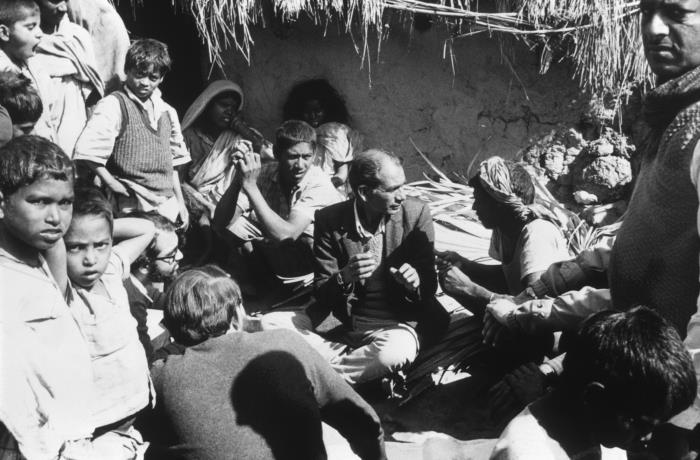
A black-and-white photograph from 1975 shows a health care worker sitting on the ground among a small crowd as he speaks to them.
In this photograph from 1975, an Indian health care worker speaks with families about ways to stop the spread of smallpox. Smallpox eradication workers say that violent and coercive tactics during India’s family planning campaign created distrust that was hard to overcome as they worked to vaccinate people against smallpox. Sitting down and speaking with community leaders directly helped rebuild trust. (J.D. Millar/CDC)

Global fears of overpopulation in the ’60s and ’70s helped fuel India’s campaign to slow population growth. Health workers tasked to encourage family planning were dispatched throughout the country and millions of people were sterilized — some voluntarily, some for a monetary reward, and some through force.

This violent and coercive campaign — and the distrust it created — was a backdrop for the smallpox eradication campaign happening simultaneously in India. When smallpox eradication worker Chandrakant Pandav entered a community hoping to persuade people to accept the smallpox vaccine, he said, he was often met with hesitancy and resistance.

“People’s bodies still remember what was done to them,” said medical historian Sanjoy Bhattacharya.

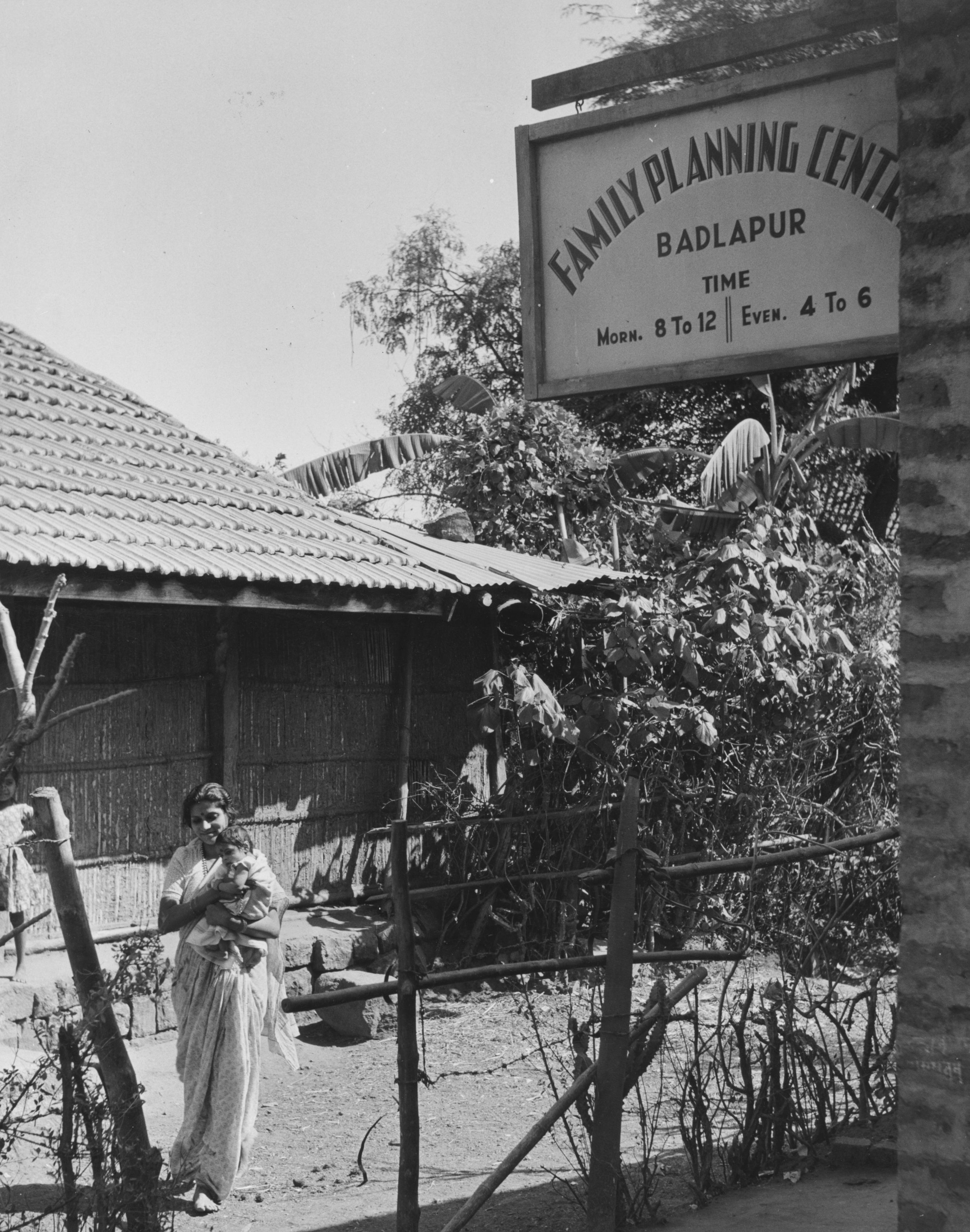
A woman carries a baby outside the family planning center in the village of Badlapur in 1954.
A woman carries a baby outside the family planning center in the village of Badlapur in 1954. India’s family planning campaign created an atmosphere of intimidation and harassment that was nearly impossible to escape, says “Epidemic” host Céline Gounder. (Hulton Archive/Getty Images)

Episode 6 of “Eradicating Smallpox” shares Pandav’s approach to mending damaged relationships.

To gain informed consent, he sat with people, sang folk songs, and patiently answered questions, working both to rebuild broken trust and slow the spread of smallpox.

To conclude the episode, host Céline Gounder speaks with the director of the global health program at the Council on Foreign Relations, Thomas Bollyky. He said public health resources might be better spent looking for ways to encourage cooperation in low-trust communities, rather than investing to rebuild trust.

The Host:

In Conversation With Céline Gounder:

Voices From the Episode:

Podcast Transcript 
Epidemic: “Eradicating Smallpox” 
Season 2, Episode 6: Bodies Remember What Was Done to Them 
Air date: Oct. 10, 2023 

Editor’s note: If you are able, we encourage you to listen to the audio of “Epidemic,” which includes emotion and emphasis not found in the transcript. This transcript, generated using transcription software, has been edited for style and clarity. Please use the transcript as a tool but check the corresponding audio before quoting the podcast. 

Céline Gounder: In the early 1970s, all around the world, worries about overpopulation were mounting. 

Politicians warned about the dangers. 

Richard Nixon: Our cities are gonna be choked with people. They’re going to be choked with traffic. They’re gonna be choked with crime. … And they will be impossible places in which to live. 

Céline Gounder: And news outlets repeated the claims. A 1970 news analysis from The New York Times described “two avenues” to deal with the problem of overpopulation. 

Voice actor reading from NYT article: “… one is persuasion of people to limit family size voluntarily, by contraception, sterilization or abortion. The other is compulsory, through such means as large‐scale injection of at least temporary infertility drugs into food or water. 

Céline Gounder: Popular books like “The Population Bomb” suggested an impending, apocalyptic future. Pulpy paperbacks were passed around — capturing people’s imagination and stoking fears. 

Two million copies of “The Population Bomb” were sold. And the author landed on late-night television, his dire predictions becoming entertainment for Americans sitting at home on their couches. 

Meanwhile, on the other side of the globe, India — with its growing population — was in the crosshairs of the world’s anxieties. 

[Solemn music plays.] 

Céline Gounder: In the early ’50s, India had launched a family planning program. 

Narrator of Indian Family Planning Film: There are 5 million more mouths to feed every year. … If our population continues to grow unchecked at the present alarming rate, we cannot solve our problems of food and shelter. 

Céline Gounder: And that state-sponsored campaign got political and financial backing from international organizations like the World Bank and American foundations like Ford and Rockefeller. 

Health workers were dispatched across India to get people to have fewer children. 

Sometimes voluntarily. 

Sometimes for a monetary reward. 

Sometimes using force. 

Violence and coercion created distrust. 

In this episode, we’ll explore how that distrust affected the public health campaign to stop smallpox. 

And ask: What is the path to restoring trust? 

I’m Dr. Céline Gounder and this is “Epidemic.”  

[“Epidemic” theme music plays.] 

Chandrakant Pandav: Ready? Good afternoon. My name is Dr. Chandrakant Pandav. This is a recording in my office at New Delhi. 

Céline Gounder: Chandrakant Pandav’s office is decorated with his academic degrees, lantern lights, and floral wallpaper. There are photos of Mahatma Gandhi, Mother Teresa, and various Hindu deities framed in gold. 

And on his desk is a small saffron-white-and-green flag. 

Chandrakant Pandav: Most important, I have India’s flag always in front of me. 

Céline Gounder: And what’s the reason for that?  

Chandrakant Pandav: Patriotism, mera desh mahaan

Céline Gounder: Mera desh mahaan — “My great Nation”— he says in Hindi. Chandrakant was so eager to share his pride that at one point he picked up the flag and waved it around a bit. 

He could barely contain his love for his country — and its culture. 

He even got up out of his chair, turned on a song, and started dancing. 

[Video of Chandrakant dancing to upbeat music playing.] 

Céline Gounder: A twist of the hand here, a little shimmy there; he did a few hand mudras with a look of delight on his face. 

I couldn’t help but smile along with him. 

[Dance video continues playing, Céline and Chandrakant laugh.] 

Céline Gounder: But even with all that joy, when the music stopped and he shuffled back to his chair, you’re reminded that Chandrakant is in his 70s, with more than 50 years of experience in public health. 

[Video of Chandrakant dance video fades out.] 

Céline Gounder: He was one of thousands of people asked to take part in the smallpox eradication program in the early and mid-’70s. He didn’t hesitate when he got the call. 

Chandrakant Pandav: I said, this is the time to serve my India. Because India has spent so much of money on my education and making me a doctor, so I came from this culture strong, strong ethical background that your life is not for yourself. Money is … doesn’t matter. Serve the society. 

Céline Gounder: Chandrakant led a team of smallpox eradication workers. He says nearly every person he talked to about taking the smallpox vaccine seemed to have the same worry, the same questions. 

Chandrakant Pandav: “What is this vaccine? What is this you’re doing us? Maybe it’s a population control measure.” So the strongest question they had: “This is the government of India’s new policy for sterilization?” 

Céline Gounder: Sterilization. The government’s decades-long family planning campaign was very much top of mind. 

Decades later, when Chandrakant thinks about the program — and the unethical tactics India used — the pride melts off his face. 

Chandrakant Pandav: It was a very aggressive strategy, unfortunately. I don’t want to go into that period. It was very aggressive. 

Céline Gounder: Chandrakant didn’t want to talk about it. But you can’t tell the story of smallpox eradication success without talking about the family planning policies that came first. 

Without talking about the state-sponsored coercive tactics that were commonplace and accepted by many. 

Without acknowledging the violence of forced sterilizations. 

Public health doesn’t happen in a vacuum. 

And India’s approach to family planning eroded trust in public health workers for years. 

So — in this season all about smallpox — we’re going to spend some time this episode diving into the details of the family planning program. 

Gyan Prakash: My name is Gyan Prash and I’m professor of history at Princeton University. 

Céline Gounder: Gyan has spent years studying India’s family planning campaign and the various tactics the government used to sterilize millions of people. 

The government would pay people to get sterilized, and after natural disasters, like a drought, when many were desperate, any amount of money could be a powerful motivator. Patients might receive fewer than 100 rupees as compensation — which translates to only a few days’ wages, according to a 1986 article published in the journal “Studies in Family Planning.” 

Gyan Prakash: It was a very small amount, but it mattered; it mattered to the poor. It was coercive, because it was between going hungry and, and not going hungry. 

Céline Gounder: And if you chose not to get sterilized, Gyan says, the government found other ways to twist the screw. Families would receive food rations for up to only three children — any child beyond that would not be allotted food. 

Gyan Prakash: Which punishes families which have more than three children. 

Céline Gounder: At one point, the government began to prioritize men for sterilization. 

Vasectomies were sometimes pushed on men, according to a 1972 report from The Associated Press. 

Céline Gounder: Gyan says India’s family planning campaign created an atmosphere of intimidation and harassment that was nearly impossible to escape. 

Gyan Prakash: You know, sending district authorities, backed by police, to the countryside and hold sterilization camps. So, I mean, the entire state machinery was mobilized to get people to the sterilization table. 

Céline Gounder: Some of the harshest treatment during the sterilization campaign was aimed at Muslims and Indigenous populations like Adivasi tribes living in remote and rural parts of the country. I spoke to Sanjoy Bhattacharya about this. 

Sanjoy Bhattacharya: I’m a historian of medicine with a deep interest in health policy, national, international, and global. And I’m the head of the School of History at the University of Leeds, United Kingdom. 

Céline Gounder: Sanjoy says marginalized communities were often scapegoated. 

Sanjoy Bhattacharya: That global narrative of overpopulation took the shape of, oh, Muslims have more children than Hindus, therefore Muslims are the problem behind Indian overpopulation. So we need to control the Muslim birthrate. What sterilization did was to violently sterilize men from a certain community who were blamed for a population problem that was a general population problem. 

Céline Gounder: Sanjoy says many Adivasi and Muslim communities, in particular, lost trust in the government. This distrust lingered and simmered for years. 

Imagine for a moment that for decades government trucks have descended on your village unannounced. Tents were set up. Equipment was unloaded. Workers fanned out to talk to village leaders. 

This is what it looks like when Indian health workers showed up to sterilize you and your people. 

And then, in the early 1970s, more government trucks arrived, maybe with familiar faces at the wheel. Maybe it’s some of the same public health workers. 

They unload similar sharp-edged tools and set up their tents, but this time they promise it’s not for sterilization, it’s for a smallpox eradication program. You’d have a hard time trusting them. 

Sanjoy Bhattacharya: And there are tales of how villages would empty when rumors would spread that these teams were coming ostensibly to vaccinate, but maybe really to sterilize. I mean, people’s bodies still remember what was done to them. 

Chandrakant Pandav: They were treated like animals. Coercion, coercion, coercion. 

Céline Gounder: That’s community medicine physician and longtime public health leader Chandrakant Pandav again. He says when he arrived in the northern region of the state of Bihar, he knew these communities had every reason to doubt his team. 

So first he worked to earn people’s trust. 

Chandrakant Pandav: So when you sit with the leader of the village, along with the batch of people there, you talk to them, you explain to them. 

Céline Gounder: And Chandrakant says it’s helpful to think of yourself more as a guest than a guest of honor. 

Chandrakant Pandav: You don’t sit on a chair. Céline, I didn’t sit on a chair. I sat next to them to make them feel that I’m part of that community. 

Céline Gounder: It sounds like convincing the village leader was enough to convince the villagers. 

Chandrakant Pandav: It is the first step. 

Céline Gounder: Another important step, he says, was to learn the local traditions around smallpox. Locals in Bihar faced the disease for many years, and they’d developed their own ways of dealing with it. 

They would tie the leaves of a neem tree outside the homes of infected people. 

The neem tree is said to have medicinal properties. Displaying its leaves outside homes where an active infection was present alerted others to stay away — a strategy designed to slow disease spread. 

It didn’t stop the virus — it wasn’t effective in the same way as vials of vaccine or the bifurcated needle — but the traditions needed to be honored. 

So Chandrakant and the other public health workers adopted some of the local strategies. 

Chandrakant Pandav: So it was a very good combination of ancient medicine, ancient practice, with modern approach. Very good combination. 

Céline Gounder: Another tradition his team tapped into was folk songs. They frequently used drums, songs, and the public address systems to communicate with people about smallpox.  

Music was an especially good match for Chandrakant’s lively personality. 

Remember all that joy for India I witnessed in his office in New Delhi — the flag? The dancing? Imagine that harnessed on behalf of his mission to wipe out smallpox. 

In fact, he still remembers some of those folk songs nearly half a century later. 

Chandrakant Pandav: Because it’s part of me, every atom, every molecule residing [sings folk song in Hindi]. So, it became an important method of communication. I come back again and again, Céline, to the same point: Establish a rapport and instill a sense of faith, anything is possible. 

Céline Gounder: Chandrakant was able to pave the way for acceptance of the smallpox vaccine and rebuild trust in public health. But he was one charismatic man. His approach, his compassion were admirable — and it worked, where he was, with the people in front of him. 

But the Indian government broke trust with tens of millions of its citizens during the family planning campaign. It makes me wonder about what it might look like to repair trust at that level, across the public health system, across an entire country. 

Maybe that would mean an apology. Maybe that would be some kind of reparation to victims for the damage done to their bodies. 

My friend and colleague Tom Bollyky says there’s no single silver bullet for rebuilding trust. 

Tom Bollyky: That is too big of a mission for public health. We have enough challenges as it is. Instead of planning for how do we rebuild trust, we should be planning for dysfunction. 

Céline Gounder: That’s after the break. 

[Music fades out.] 

Céline Gounder: Distrust and mistrust in the government became something of a defining feature of the response to the covid pandemic here in the United States. And while that might have taken many Americans by surprise, it was totally predictable to Tom Bollyky. He’s the director of the global health program at the Council on Foreign Relations. Bollyky says trust in the U.S. has been deteriorating since Watergate, and that decline accelerated around the 2008 financial crisis. Mistrust here divides along racial lines. It’s lower among African Americans, for example. And most notably, mistrust tends to be partisan. But it didn’t start that way during the covid pandemic. 

Tom Bollyky: I think we all forget that there was, for a period of time, a surprising level of political consensus. Almost all states imposed protective policy mandates and most states imposed them at the same time. But as the fall stretched out, you saw some of those mandates and responses become more politicized. 

And the moment I regret is, I think there was a moment, when the Biden administration came in and there was an attempt to reset and I … myself and many others really again focused on this message of following the science. But I do feel like perhaps we missed a opportunity to try to pull in some people across partisan lines at that moment. 

Céline Gounder: So, as I’m hearing you describe this, restoring trust seems like a really massive undertaking. 

I wonder whether you think that’s even the right framework that we should be using to think about this challenge. 

Tom Bollyky: Such a great question. No, I think it isn’t. I think if we set an agenda for public health to rebuild the cohesiveness of our societies, to make us have a better relationship with our government, with each other, we will fail. 

That is too big of a mission for public health. We have enough challenges as it is. Instead of planning for how do we rebuild trust, we should be planning for dysfunction. That’s really what preparedness is about. 

Céline Gounder: So what are some of the ways that public health officials can reach skeptical communities? 

Tom Bollyky: Through kinship networks and, uh, local leaders has been important. In some other public health crises, like HIV, people have used soap operas. 

Céline Gounder: I remember being in South Africa in the early 2000s. There was a soap opera called “Soul City.” We pulled a clip of it, and there’s this one scene where a husband comes home to find his wife has placed a romantic gift by their bedside. He opens it up and sees condoms. 

[Music

“Soul City” clip: Woman: So that we can have safe sex. Man: Safe sex. Woman: I can’t have sex with you while I’m anxious about getting sick. Or, would you prefer I use condoms maybe? Man: We don’t need condoms. Woman: I do. 

Tom Bollyky: I was in South Africa and the country was riveted. People really talked about it. It took, it took hold. Uh, they did a nice job of making it interesting, like weaving in the themes you wanted to weave in about people getting tested and talking to their partners and loved ones about their circumstances. 

I know, Céline, you were very involved in the Ebola response, in 2013 through 2016. You know, there is high levels of mistrust in government in those post-conflict settings that were most affected in that epidemic. 

Céline Gounder: People there don’t trust government, they think that people who serve in government do so to enrich themselves and their family and friends. 

When I was in Guinea during the Ebola epidemic, they said Ebola was a hoax, that it was just a way for government officials and international organizations to enrich themselves. And yet, we were able to make some inroads convincing people to comply with Ebola control measures, so hand-washing, testing, safe burials. 

Much of that was done through imams and other religious and community leaders. 

Tom Bollyky: Those are the types of strategies we should be deploying when the next health crisis emerges, but not simply waiting until that happens. We need to start to build the infrastructure, the relationships. Again, even if it isn’t around fundamentally transforming, you know, communities, relationships with the government, or even how community members feel about, uh, one another, because interpersonal trust, social trust is a big part of this, too. 

It’s about building the connections, the networks, about starting to engage individuals in these programs or through those institutions so that when the crisis emerges, you’re not building that from scratch. 

Céline Gounder: Well, and to your point, as we prepare for the next pandemic, do you think we’ve learned those lessons about trust or are there things we’re still getting wrong? 

Tom Bollyky: I think there is a greater appreciation for trust as an important issue. You hear that messaging. What I worry about is we’re not seeing it reflected yet in where the money is going. Where the money is going by and large is to developing vaccines faster, better vaccines in the future. But if really the lessons we’re drawing from this crisis are that developing a vaccine instead of in 326 days in 250 days … if we really think that would have made a difference in this pandemic, we haven’t been paying attention. 

Céline Gounder: Next time on “Epidemic” … 

Daniel Tarantola: They did not consider smallpox as the major issues among the many issues they were confronting. … No. 1 priority is food and food and food. And the second priority is food and food and food. 

CREDITS 

Céline Gounder: “Eradicating Smallpox,” our latest season of “Epidemic,” is a co-production of KFF Health News and Just Human Productions. 

Additional support provided by the Sloan Foundation. 

This episode was produced by Taylor Cook, Zach Dyer, Bram Sable-Smith, and me. 

Saidu Tejan-Thomas Jr. was scriptwriter for the episode. 

Swagata Yadavar was our translator and local reporting partner in India. 

Our managing editor is Taunya English. 

Oona Tempest is our graphics and photo editor. 

The show was engineered by Justin Gerrish. 

We had extra editing help from Simone Popperl. 

Music in this episode is from the Blue Dot Sessions and Soundstripe. 

This episode featured clips from National Education & Information Films Limited 

We’re powered and distributed by Simplecast. 

If you enjoyed the show, please tell a friend. And leave us a review on Apple Podcasts. It helps more people find the show. 

Follow KFF Health News on X (formerly known as Twitter), Instagram, and TikTok

And find me on X @celinegounder. On our socials, there’s more about the ideas we’re exploring on our podcasts. 

And subscribe to our newsletters at kffhealthnews.org so you’ll never miss what’s new and important in American health care, health policy, and public health news. 

I’m Dr. Céline Gounder. Thanks for listening to “Epidemic.” 

[“Epidemic” theme fades out.] 

Additional Newsroom Support

Lydia Zuraw, digital producer 
Tarena Lofton, audience engagement producer 
Hannah Norman, visual producer and visual reporter 
Simone Popperl, broadcast editor 
Chaseedaw Giles, social media manager 
Mary Agnes Carey, partnerships editor 
Damon Darlin, executive editor 
Terry Byrne, copy chief
Gabe Brison-Trezise, deputy copy chief
Chris Lee, senior communications officer 

Additional Reporting Support

Swagata Yadavar, translator and local reporting partner in India
Redwan Ahmed, translator and local reporting partner in Bangladesh

Epidemic” is a co-production of KFF Health News and Just Human Productions.

To hear other KFF Health News podcasts, click here. Subscribe to “Epidemic” on Apple Podcasts, Spotify, Google, Pocket Casts, or wherever you listen to podcasts.

Source

Open Migration Flows and Closed-Up Houses in Venezuela

Civil Society, Development & Aid, Economy & Trade, Editors’ Choice, Featured, Financial Crisis, Headlines, Human Rights, Humanitarian Emergencies, Latin America & the Caribbean, Migration & Refugees, Population, Poverty & SDGs, Regional Categories, TerraViva United Nations

Migration & Refugees

A view of Caracas from the south side of the narrow valley where it sits, dotted with houses and residential buildings where full occupancy was the norm until a few years ago. As a result of the massive migration of young people and adults, more and more homes are left unoccupied or inhabited only by the elderly and young children. CREDIT: Humberto Márquez / IPS

A view of Caracas from the south side of the narrow valley where it sits, dotted with houses and residential buildings where full occupancy was the norm until a few years ago. As a result of the massive migration of young people and adults, more and more homes are left unoccupied or inhabited only by the elderly and young children. CREDIT: Humberto Márquez / IPS

CARACAS, Oct 4 2023 (IPS) – Gladys swore she would not cry in front of her small children, but she still had to wipe away a couple of tears when she turned her head and looked, perhaps for the last time, at her dream house on Margarita Island in Venezuela, from where she migrated, driven by a lack of income and by fear.


“It hurts to leave your own home, the most precious material asset for a family like ours (she works in administration, her husband is a mechanic, and they have two boys), but we lost our jobs and were robbed in broad daylight in the middle of the city. That led us to decide to emigrate,” she told IPS from Miami, Florida in the U.S.

Due to the economic, social and political crisis, which gave rise to a complex humanitarian emergency, 7.7 million Venezuelans, according to United Nations agencies, have migrated from this country, the vast majority in the last decade, and the flow is not slowing down, especially to other countries in the region.

“It hurts to leave your own home, the most precious material asset for a family like ours, but we lost our jobs and were robbed in broad daylight in the middle of the city. That led us to decide to emigrate.” — Gladys

The family of Gladys, who like other people who talked to IPS preferred not to give her last name, tried their luck in Colombia, Panama and Spain, before finally settling in the United States, “and the worry about the house followed us like a shadow, but fortunately we made a deal with an enterprising young man who takes care of it, improves it and pays a modest rent.”

There are thousands like her. Migrants try not to leave their homes empty and abandoned, because they could lose them. For this reason, since most migrants are adults in their most productive age and young people, relatives of other ages remain in the homes, giving Venezuela the appearance of being a country of elderly people and children.

“I have to close up my home,” said Juan Manuel Flores, from San Antonio de Los Altos, a satellite city of Caracas with many middle class houses. “The neighbors will take care of it. It took us more than five years to build it and it cost between 150,000 and 200,000 dollars. Now I can’t get more than 60,000 dollars for it. We are not just going to give it away for that price.”

Flores, a teacher at a school where he earns less than 200 dollars a month, is preparing to travel to Spain, where his wife and adult daughters have gone ahead of him. “I will return to Venezuela when the country and its economy improve, and housing prices will rise again,” he told IPS, although without much conviction.

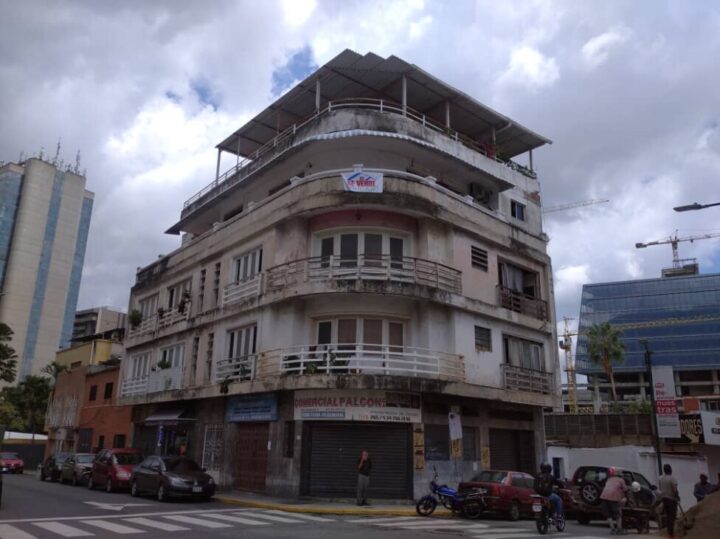
Solitude eats away at houses and buildings even in sought-after areas of the residential and commercial municipality of Chacao, in eastern Caracas. The real estate and construction market is suffering in Venezuela from the general economic crisis and in particular from the oversupply of housing created by those leaving the country. CREDIT: Humberto Márquez / IPS

Solitude eats away at houses and buildings even in sought-after areas of the residential and commercial municipality of Chacao, in eastern Caracas. The real estate and construction market is suffering in Venezuela from the general economic crisis and in particular from the oversupply of housing created by those leaving the country. CREDIT: Humberto Márquez / IPS

Why not rent out their house? “Because the laws and the authorities always favor the tenant, and if they have children it is impossible to get them out when the lease is up, whether they pay the rent or not, and they end up staying in the house for years,” said Nancy, a pastry chef, also from San Antonio, who left a niece in charge of her apartment when she moved to Brazil last year.

A survey of migrants in Colombia, Ecuador and Peru, released in October 2022 by the Interagency Coordination Platform for Refugees and Migrants in Venezuela (R4V), led by United Nations agencies, showed that only 23 percent considered the homes they left behind in their country to be safe.

Selling is also not an option in most cases, because the magnitude of the exodus over the last decade has so depressed demand that the most that can be obtained for a property is 15 or 20 percent of the value it had 15 years ago, if you are lucky. So selling a home even if you want to is a long, difficult process that provides meager results.

Those who have no other choice say that they are not selling their home but “giving it away” for whatever they can get, with great regret, mostly to internal migrants from other parts of the country, who “take refuge” in Caracas because outside the capital there are recurrent power outages, and scarcity of water and fuel, in addition to other shortages.

“Real estate deteriorates, ceases to serve those who need it and remains an important asset that produces nothing for the owner, for example a migrant who needs to pay rent as soon as they arrive in another country,” Roberto Orta, president of the Venezuelan Real Estate Chamber, told IPS.

The businessman said “this is an issue that, we have proposed, should be addressed with political will in order to reform the laws that constrain the real estate market, to benefit both landlords and tenants. Up to 250,000 homes could be freed up in five years.”

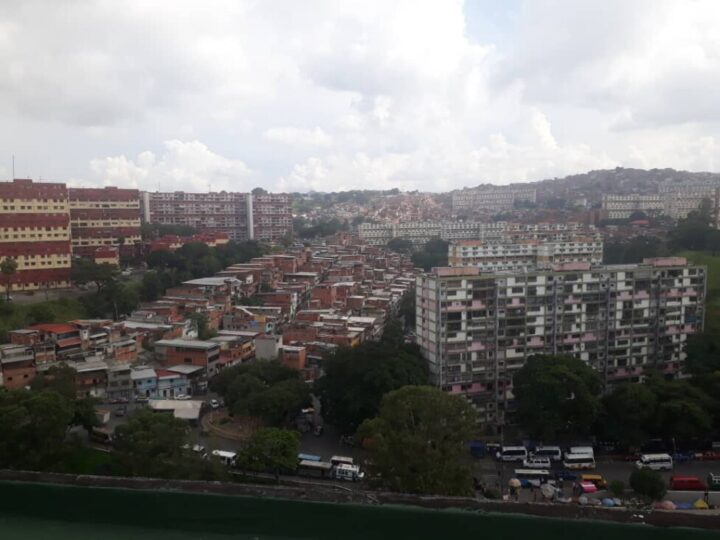
A view of the working-class neighborhood of 23 de Enero on the west side of Caracas. In low-income barrios, closed, empty houses are almost non-existent, as those who decide to emigrate look for relatives to move in, to avoid the risk of the homes being invaded or robbed. CREDIT: Humberto Márquez / IPS

A view of the working-class neighborhood of 23 de Enero on the west side of Caracas. In low-income barrios, closed, empty houses are almost non-existent, as those who decide to emigrate look for relatives to move in, to avoid the risk of the homes being invaded or robbed. CREDIT: Humberto Márquez / IPS

A trade is born

In the residential buildings located in Caracas and other cities, closing up an apartment and moving outside the country is not the same as leaving a house abandoned to solitude and neglect, because the neighbors, for their own safety and in order to pay the common expenses, keep watch and take care to prevent strangers from occupying the empty apartments.

But houses, especially middle-class homes, are an attractive and easy target for crime and even for people who want to occupy them by de facto means. That is why a new profession has appeared: the home caretaker.

“I have taken care of three houses in housing developments in the southeast (of Caracas), it’s the way I make ends meet,” said Daniel, who also works as a self-employed gardener. “I would go to one house twice a week, three times a week to another, and every day to another.”

He explains that in the last house “the owners were Portuguese business owners who went away and left three dogs. I would go to a pet food store to pick up the food, feed the dogs, check around the house and that was it.”

Family friends of the owners have now taken charge of the dogs and Daniel no longer receives payment for taking care of them. “I don’t have an account in dollars, I was paid through a restaurant friend of the owners, who does have an offshore account,” he said.

To pay for caretakers from abroad, intermediaries are indispensable, since in Venezuela, whose currency has been made nearly worthless by the economic crisis, there is a de facto dollarization, without agreement from the U.S. authorities, who also use sanctions to block the transactions of government bodies.

Daniel is saving up to join one of the groups forming in Antímano, the working-class neighborhood where he lives in the southwest of the capital, to migrate as well. He said that “I didn’t leave a few weeks ago because I hadn’t sold my motorcycle yet, otherwise right now I would be in the Darien,” the dangerous jungle between Colombia and Panama that thousands of migrants cross every day.

A more successful caretaker is Arturo, who is in charge of two houses with large living rooms, corridors, yards, a swimming pool and parking area. He is paid a modest fee to care for and maintain the homes, but is authorized to rent them out for social gatherings and parties.

“In both cases the owners are people with good incomes, they left with their children to study abroad and plan to return in a few years if conditions in the country change. They would like to find their homes as they left them,” he said.

When he rents out the property for a day or a night, guests can use the yards, swimming pool and even awnings, tables and chairs. But Arturo closes off access to the more private parts of the house and hires assistants to watch out for damages or disturbances. “I live well, I keep up the houses and each one brings me about 3,000 dollars in profits per month,” Arturo said.

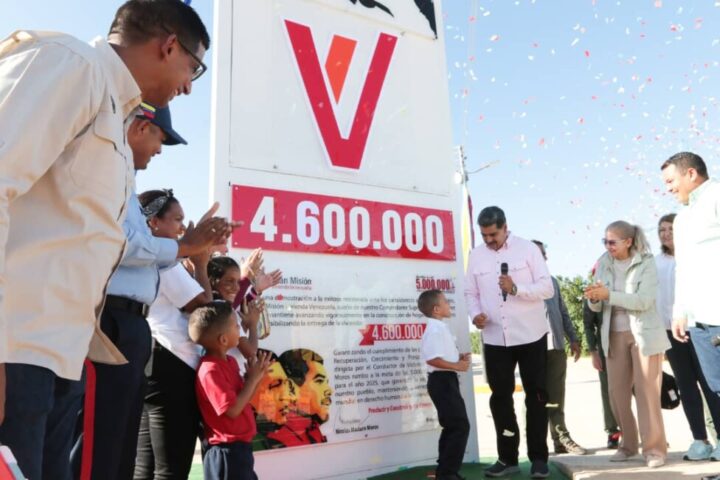
President Nicolás Maduro delivers a batch of houses in the northwestern state of Falcón, which form part of the 4.6 million homes that the government claims to have built and provided to Venezuelan families since 2013. The figure is questioned by organizations dedicated to monitoring economic and social rights. CREDIT: Minhvi

President Nicolás Maduro delivers a batch of houses in the northwestern state of Falcón, which form part of the 4.6 million homes that the government claims to have built and provided to Venezuelan families since 2013. The figure is questioned by organizations dedicated to monitoring economic and social rights. CREDIT: Minhvi

No empty houses in the shantytowns

In the shantytowns of the cities and towns of this country – which has a population of 33.7 million according to government figures and 28 million according to university studies – the situation is different and there are hardly any empty or unoccupied houses.

“In the shantytowns, no house is left empty. The very next day someone can invade it, occupy it, or take what is left inside by those who left, furniture or household goods. Someone stays in charge, the grandfather or in-laws, a trusted neighbor, or a relative is brought from the interior of the country,” explained Alejandra, from the Gramoven area.

She lives in a shantytown of informally constructed dwellings in the northwest of Caracas, similar to the ones that cover most of the many hills and hollows occupied by the capital’s most disadvantaged inhabitants.

“Many people leave, the young people emigrate, my children want to leave through the Darien jungle. But nobody leaves their house empty. If you do, you lose it,” Alejandra said.

In Santa Bárbara del Zulia, on the hot plains south of western Lake Maracaibo, “the situation is the same,” Julio, a bricklayer who migrated to Colombia for four years and has returned to care for his elderly parents, told IPS.

“You can’t leave your house alone in these towns,” said Julio. “When my parents went to Maracaibo and Caracas for medical treatment, they went and came back quickly, because the Community Council warned them not to leave their house empty for too long, because they would not be able to ward off people who wanted to occupy it.”

The Community Councils are committees set up by the government to represent and manage community affairs – such as the distribution of bags of subsidized food to poor families – and they channel decisions by the government.

“But people are leaving anyway. It’s something that won’t stop as long as people here earn only a pittance and can’t even eat properly (the minimum wage and official pensions in Venezuela are equivalent to four dollars a month). People care about their houses, but food has to come first,” said Julio.

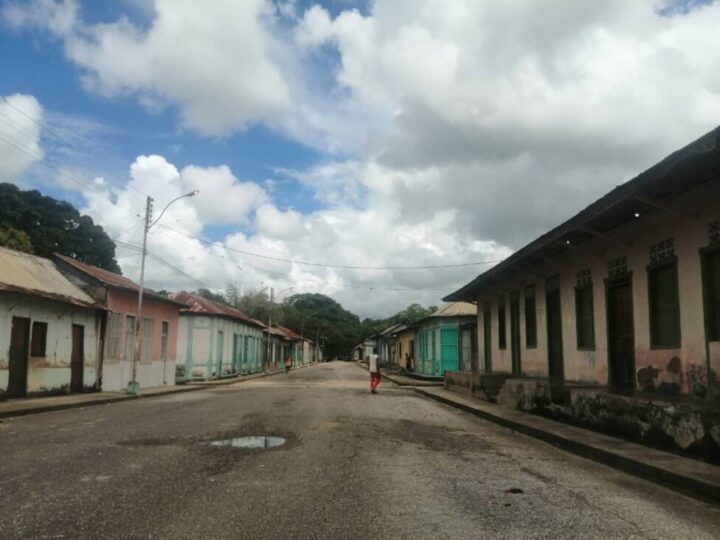
View of a row of houses practically abandoned by most of their inhabitants in a town in eastern Venezuela. Migration from the countryside and small towns to large cities and oil producing areas marked the 20th century in Venezuela. And today, migration from this country mainly to other Latin American nations has become a regional crisis. CREDIT: VV

View of a row of houses practically abandoned by most of their inhabitants in a town in eastern Venezuela. Migration from the countryside and small towns to large cities and oil producing areas marked the 20th century in Venezuela. And today, migration from this country mainly to other Latin American nations has become a regional crisis. CREDIT: VV

A matter for the government and the business community

While the plight of people leaving their homes continues to drag on, the government of President Nicolás Maduro announces more or less twice a year the construction of hundreds of thousands of new homes, in a program initiated by his late predecessor Hugo Chávez (1999-2013), called “Venezuela’s Great Housing Mission”.

According to official figures, since 2011, 4.6 million homes have been built and delivered by the Mission, mostly residential complexes to which the president goes to personally hand over the keys of one or more houses to their new inhabitants.

In accordance with the Mission, the occupants are tenants, not owners, so they cannot sell the homes. If they leave, the home can be reassigned to new tenants. To avoid this, those who choose to move to another city or country first look for relatives who can move into the house, and thus keep it.

However, the official figures on the number of homes built is not borne out by anecdotal evidence, to judge by the myriad of informal self-built houses still occupied in the slums, and by reports from business and civil society organizations.

The Chamber of Construction reports that the sector has decreased 96 percent in the last 10 years, and that its members employ 20,000 workers, down from 1.2 million in better times, while cement companies are working at 10 percent of their capacity and the steel industry at seven percent.

The civil society organization Provea, which specializes in the study of economic, social and cultural rights, has compared and contrasted the figures of the Housing Mission – which have not been audited, according to Provea – with independent studies, and reached the conclusion that the government has built and delivered only 130,856 housing units in 10 years.

In 1955 the Venezuelan writer Miguel Otero Silva (1908-1985) published his famous novel “Casas Muertas” (Dead Houses), describing the decline of Ortiz, a town in the central plains, caused by the loss of its population due to malaria and emigration to the big cities and oil production centers.

The flow of Venezuelan emigration in this century has not been enough to turn this into a country of dead houses. But its many closed doors bear witness to a collapse that has pushed millions of its inhabitants abroad, as do the small number of lights that are lit at night in the buildings of Caracas and other cities.

  Source

Lazarus Chakwera hails Unga trip

President Lazarus Chakwera has said his trip to the 78th Session of the United Nations General Assembly (Unga) in New York, the United States, was successful.

Chakwera said this Monday at Kamuzu International Airport in Lilongwe when he arrived from New York.

He said he took advantage of the trip to engage investors, who have since expressed interest in investing in Malawi.

On October 21, Chakwera addressed the Unga, where he asked developed countries to cancel debts that poor countries owe them.

“I was happy to represent our nation and was able to not just represent Malawi but also other nations, in terms of least developed countries, since we have just handed over the chairpersonship of that group. And, so, I spoke concerning things that really have troubled least developed countries.

– Advertisement –

“And then I had side meetings and I was happy that the Secretary General [of the United Nations] was able to send an assistant Secretary General for Humanitarian Affairs to the Malawian Partners in Development Meeting. We were actually surprised, presantly surprised, because of the turnout,” Chakwera said.

The Malawi leader said some African Americans showed particular determination to invest in the country so that they can be part of Malawi’s story.

Chakwera left the country for Unga on September 15 2023.

Source

RSS
Follow by Email