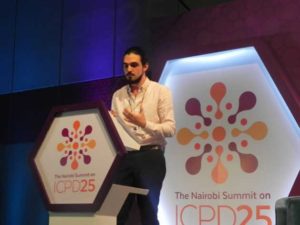
World Youth Call to Governments to Ban All Hin Drances to LGBTQI Communities

Africa, Conferences, Crime & Justice, Development & Aid, Economy & Trade, Education, Featured, Gender, Gender Violence, Global, Headlines, Health, Human Rights, LGBTQ, TerraViva United Nations
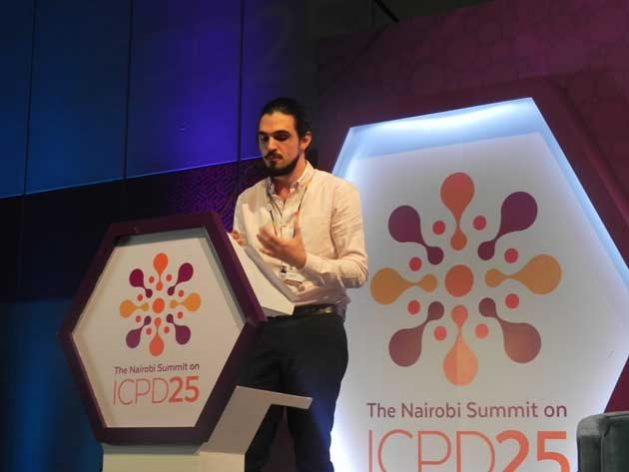
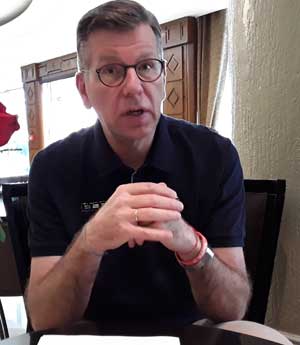
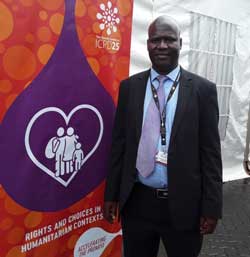
MARTIN KARADZHOV, Global Youth Commitee speaking at ICPD25. Credit: Mantoe Phakathi / IPS

NAIROBI, Kenya, Nov 13 2019 (IPS) – Governments across the world must ban all state-implemented harmful practices against the Lesbian, Gay, Bisexual, Transgender, Queer and Intersex (LGBTQI) community delegates at the ICPD25 tells IPS.


Adding his voice in bridging the gap of Sexual Reproductive Health Rights (SRHR) among the youth, Martin Karadzhov, chair for Global Youth Steering Committee, told delegates at a youth event themed “our bodies, our lives, our world”, at the 25thInternational Conference on Population Development (ICDP25).

LGBTQI young people remain voiceless

Although there are 1.8 billion youths between the ages of 10 and 24 years, they continue to be marginalised when it comes to SRHR issues. Karadzhov said LGBTQI youth in many countries were subjected to harmful practices including pressure on them to convert, a practice with no scientific basis which is also unethical and, in most instances, a torture. “Justice for one is justice for all,” he said.

He urged governments to repeal discriminatory laws against the LGBTQI community, adding that they were denied access to Sexual Reproductive Health (SRH) services on the basis of their sexuality. “Our human rights are not controversial,” said Karadzhov.

Young people often only a statistic

Echoing his sentiments was Mavis Naa Korley Aryee, a youth programme national radio host at Curious Minds. She said although there are 1. 8 billion reasons why young people should be involved in decision-making process, they are only mentioned as statistics.“Being part of a minority should not be a reason for discrimination,” said Aryee.
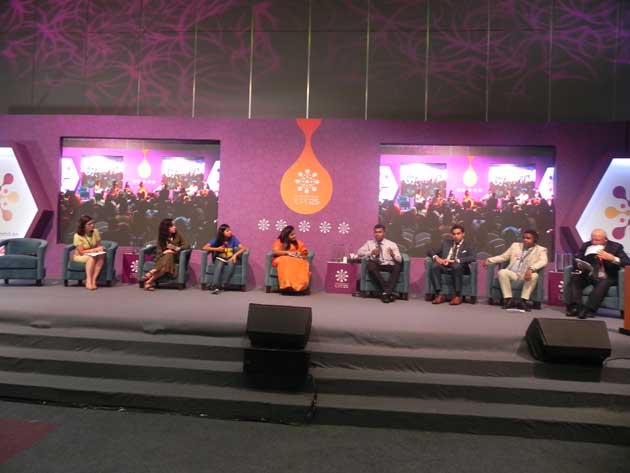
Young people speak out at Nairobi Summit. Credit: Mantoe Phakathi / IPS

She advocated for access to SRH services to be made available to all young people, adding that they have a right to make choices about their bodies. She was, however, encouraged by the way the global youth had stood up to be counted despite the challenges they face. Aryeenoted that the youth contributed to the development agenda leading to ICPD25, adding that the UN Sustainable Development Goals (SDGs) are also about them.

“We have then numbers. No one will ignore 1.8 billion reasons. The more we collaborate, the more we advance our agenda,” she said.

Fighting for a seat a the table

The global youth is fighting for a seat on the decision-making table where Marco Tsaradia, a Member of Parliament from Madagascar, said young people are told: “things have always been done like this”. He said the youth are keen to bring about new ideas because they are talented and innovative. However, he complained that the existing decision-making structure prevented them from achieving this objective.

It gets worse if young persons with disabilities want to enter the table because, said Leslie Tikolitikoca from the Fiji Disabled Peoples Federation, they tend to be “judged on their disabilities rather than their abilities”. For example, he said, instead of providing services to those who are unable to hear or see, those in power would rather make decisions on their behalf instead of helping them to contribute to the discussion.

“How are we going to ensure that we leave no one behind if we don’t involve all young people?” he wondered.

EU commits funding

Following the youth’s proposed solutions to their SRHR, Henriette Geiger, from the directorate of people and peace at the European Union Commission, said it was time to act. She said the EU has proposed that governments should consider reducing the voting age to 16 years.
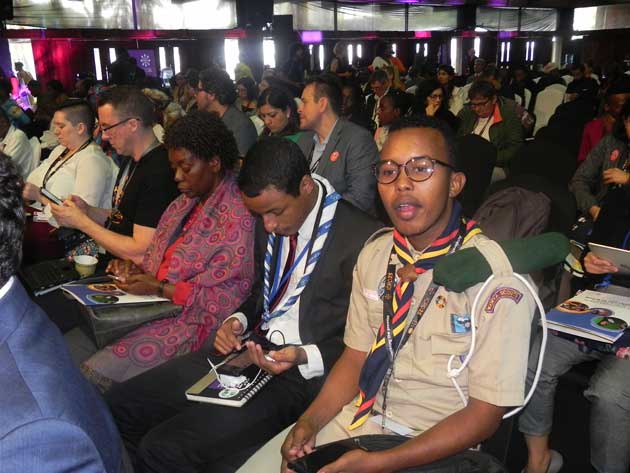
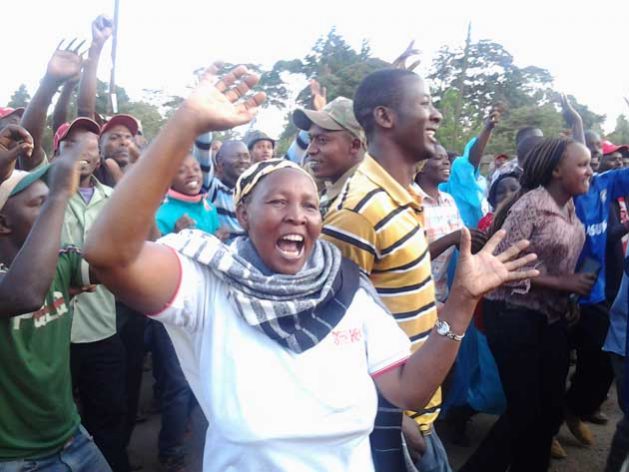
Young people at ICPD25 youth session. Credit: Mantoe Phakathi / IPS

“That would make a huge impact in decision-making on youth policy,” she said, adding that the EU was funding key initiatives to change public perceptions about the LGBTQI community by using film.

Although she said the EU was involved in many SRHR programmes in Africa, she further pledged €29 million towards SRHR programmes for the youth, urging organisations to take advantage of this initiative.

Not all doom and gloom

During the opening address of the ICPD25, the United Nations Population Fund (UNFPA) executive director, Natalia Kanem, told delegates “good progress is not good enough”, insisting that the promises made to girls, women and everyone should be kept.

Kanem paid special tribute to the youth, for bringing new ideas and resources to make rights and choices a reality.

“To the youth, you’re inspiring in pushing us to go further Thank you,” said Kanem.

It is not all sad and gloomy for the youth, said Ahmed Alhendawi, the secretary-general of the World Organisation of the Scouts Movement. The fact that the youth have formed themselves into a global youth movement should be celebrated because that is how they are going to win the fight to be part of decision-making processes.
 

Cairo Dream Requires $264 Billion to Deliver Women’s Call for Justice and Bold Leadership

Africa, Conferences, Development & Aid, Economy & Trade, Education, Featured, Gender, Gender Violence, Global, Headlines, Health, Human Rights, TerraViva United Nations, Women’s Health

NAIROBI, Kenya, Nov 12 2019 (IPS) – For each of the 830 women dying each day from pregnancy complications and childbirth, an estimated 20 others suffer serious injuries, infections or disabilities.

This is the reality that millions of women face, and informs the Nairobi Summit’s three critical commitments which are to bring preventable maternal deaths, gender-based violence and harmful practices, as well as unmet need for family planning, to zero. To achieve this objective money is needed.


Joyce Chimbi

Finding the money for commitments

Private sector organisations including the Ford Foundation, Johnson & Johnson, Philips and World Vision, announced that the world as envisioned in Cairo in 1994 will cost $264 billion to deliver.

“Building financial momentum and bridging existing resource gaps around these commitments will not be easy. While most countries have constitutionalised reproductive health and rights, mobilising domestic resources has not automatically followed,” says Nerima Were, programme manager of the Kenya Legal and Ethical Issues told IPS.

How much will it really cost to deal with family planning?

To bring maternal mortality to zero in the 120 countries that account for over 95 percent of maternal mortality will cost $115.5 billion in key maternal health interventions.

Ending the unmet need for family planning in the same number of priority countries will cost $68.5 billion. Ending gender-based violence will require investing 42 billion dollars in 132 priority countries.

Currently, only $42 billion in development assistance is expected to be spent on advancing these goals. It, therefore, means that an additional $222 billion in investments will be required over the next decade.

Who will really fund commitments?

Were says that envisioning and articulating what form and shape these investments will take, is critical. She argues that at the moment it is not clear whether these additional costs will be raised in foreign investments, domestic allocation or private spending.

“This discussion is not just about dollars and cents but values and choices. It is also about translating choices into practical ways of making decisions,” says Achim Steiner, of the United Nations Development Programme, UNDP.

Steiner says that financial decisions can be framed in different ways, and that analysing the cost and gaps in delivering the three commitments, is a way to advise the world on how to invest.

Making informed decisions

“It is about helping societies to be better informed and to make better choices. The issue is not what it will cost to bring them to zero, but the cost of not bringing them to zero,” he argues.

World Bank data has shown that family planning is the “best buy” for governments. For each additional dollar spent on contraceptive services in developing countries, the cost of maternal and newborn healthcare could be reduced by two dollars and twenty cents. Importantly, estimates also show that every dollar invested in family planning pays itself back $120 in saved costs.

Africa must and can find the money

Researchers at the African Population and Health Research Centre indicate that African countries will need to dig deeper.

Budget underspending in the health sector prevails across the continent. “Africa has the resources to achieve these three critical goals. The exponential growth of economies across the country is reflective of the continents financial muscle,” says Jackson Chekweko, executive director for Reproductive Health Uganda, the member association for International Planned Parenthood Federation (IPPF).

Chekweko argues that political will and commitments are more important, and that “there will always be resources for what the government, especially presidents, say is a priority. African presidents wield a lot of influence on resource allocation.”

He argues, for instance, that Uganda made a commitment at the recent London Summit “to allocate $5 million to family planning annually. This has been done because the president said so.”

Bold leadership from Kenya’s Uhuru Kenyatta

Chekweko adds that there’s also a new generation of leaders such as President Uhuru Kenyatta of Kenya who will not shy away from making ambitious commitments.

“President Kenyatta made several bold statements at the ICPD25 Summit. He has declared that East African countries will reduce FGM to zero by 2022 and confirmed gender-based violence will, without a doubt, be reduced to zero,” he says.

Chekweko says that a demonstrable political commitment will encourage partnerships to help meet existing resource gaps. “Once we agree that issues of sexual and reproductive health and rights are a priority, the money will follow this purpose. Even if it means raising taxes such as VAT(value-added taxes) and PAYE (pay as you earn) by just one percent, it will be done,” Chekweko says.

Were adds that within the context of limited domestic funding, a scale back by external donors, and ambitious health and health coverage targets and domestic resource mobilisation, has never been more critical.

“To reach zero in all three areas, governments will need to carefully decide what their priorities are, anything that falls within that priority framework must be achieved,” she says.


Call to Action as Thousands Breathe New Life to the Cairo Promise at ICPD 25 Summit in Nairobi This Week

Africa, Civil Society, Conferences, Development & Aid, Economy & Trade, Education, Featured, Gender, Gender Violence, Global, Headlines, Health, Human Rights, Population, Sustainability, TerraViva United Nations, Women’s Health

Gender equality and women empowerment at the heart of ICPD25. Credit: Joyce Chimbi / IPS

NAIROBI, Kenya, Nov 11 2019 (IPS) – Every day 830 women die while giving life. At least 33,000 girls are forced into child marriage with 11,000 girls undergoing female genital mutilation. These are some of the cruel realities young women face every day. However, there is renewed hope that delegates expected to attend the International Conference on Population and Development (ICPD) in Nairobi this week will re-energise and breathe new life to the Cairo Promise.


“The Summit is a call to action to accelerate progress towards the world we imagined in 1994,” Arthur Erken, one of the three co-chairs of the International Steering Committee of the Nairobi Summit, tells IPS. He emphasises that the magic of the first ICPD conference is in the paradigm shift from “a numbers-driven approach to development to placing people, their needs and aspirations, at the heart of sustainable development”.

Erken says this summit is, therefore, a call to action to countries and partners to fulfil the Cairo Promise by making concrete commitments towards achieving the ICPD goals.

Unfulfilled promises and Re-energising the global community

Co-hosted by the governments of Kenya, Denmark and the United Nations Population Fund (UNFPA), the Nairobi Summit takes place on the 25th anniversary of the ground-breaking 1994 International Conference on Population and Development (ICPD).

Arthur Erken says that ICPD25 is a call for action to accelerate the Cairo promise. Credit: Joyce Chimbi / IPS

Unfortunately, says Erken, this promise has for millions of women and girls around the world not been fulfilled. “The world we imagined in Cairo is not a reality,” says Erken. He says the Cairo Promise was about ensuring that all people have access to sexual and reproductive healthcare, including safe pregnancy, childbirth and family planning services, and are free from all forms of violence and harmful practices.

Other experts such as Beatrice Okundi, assistant director of the National Council for Population and Development (NCPD), affirms that at the heart of the promise is gender equality, and the emphasis placed on equality and empowerment of women and girls.

Raising awareness

Okundi says that accelerating the Cairo Promise will require raising awareness on the relationship between population growth and sustainable development. “For Kenya to absorb an additional one million people every year as it has done for the past 10 years, our economy must grow at a double-digit figure up from the current 5.7 percent,” she tells IPS.

Five themes to a call for Action

Erken explains that the summit is focused around five themes: universal access to sexual and reproductive health and rights, financing the ICPD agenda, drawing on the demographic dividends, ending gender-based violence and harmful practices and upholding the right to sexual and reproductive healthcare, even in humanitarian and fragile contexts.

He says the summit is also about achieving three critical zeroes: zero unmet need for family planning, zero maternal deaths and zero violence and harmful practices against women and girls, including child marriages and female genital mutilation. “ICPD25 is also about assessing how much these three zeroes will cost governments as well as partners, and emphasises the need for innovative financial models,” Okundi adds.

She says that “ICPD sets in place a far-sighted plan that advances human well-being and their rights, well ahead of numerical numbers”.

Erken points out the Nairobi Statement “is not a negotiated document”. However, it is nonetheless the overall global framework formulated and based on wide consultations with diverse stakeholders, including governments and CSOs, among others. “This statement is an embodiment of areas that need prioritisings. It is a reflection of the state of implementation of the ICPD Programme of Action and the areas where concrete commitments are required in order to move the ICPD agenda forward.”

Finish what we started….

But not every expert or delegate is as hopeful, as expressed by Angela Nguku, the executive director of White Ribbon Alliance, an international coalition on safe motherhood. She argues there is no need for new promises or commitments.
“We need to finish what we started in Cairo by removing obstacles, especially corruption from our path,” she says. Nguku says that misappropriation of public funds continues to stand between populations and Cairo promise.

“On this continent, the ICPD agenda remains unfulfilled, not because of a resource gap, but a leadership and governance gap. We need to put the resources we have where they are needed,” she tells IPS.

Nonetheless, delegates expect that the new commitments made in the next three days will lead to completion of the unfinished business of ICPD.

Let’s not wait another 25 years

ICPD25 runs from November 12-14, bringing together more than 6,000 delegates from around the world, with at least 164 countries and delegates drawn from civil society organisations, grassroots organisations, young people, business and community leaders, faith-based organisations, indigenous peoples, international financial institutions, people with disabilities, academics and many others working towards the pursuit of sexual and reproductive health and rights.

“The summit is not a platform to prescribe solutions to convening countries and convening delegates. It is an opportunity for governments and other partners to make commitments, and own the process,” says Erken.

Experts acknowledge that tremendous progress has been made over the last 25 years, but emphasize that a lot more will need to be achieved in a shorter period of time, to fulfil the promise by 2030.

“We cannot have another 25 years of ICPD. This is hopefully the last ICPD conference,” Erken observes.


Central America – Fertile Ground for Human Trafficking

Civil Society, Crime & Justice, Democracy, Editors’ Choice, Featured, Gender, Gender Violence, Headlines, Human Rights, Latin America & the Caribbean, Migration & Refugees, Regional Categories, Special Report

Crime & Justice

This is part of a series of features from across the globe on human trafficking. IPS coverage is supported by the Riana Group.

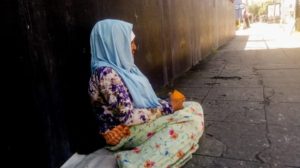
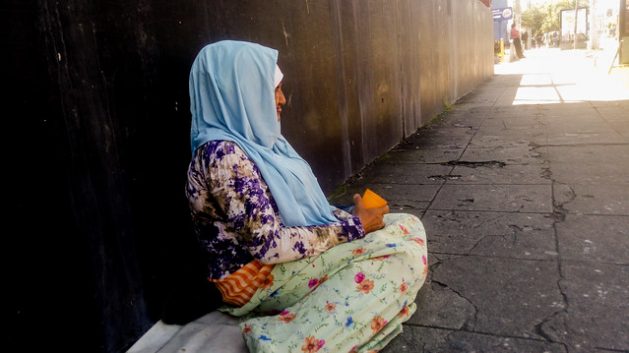
An older woman panhandles on a street in San Salvador. Criminal trafficking groups take advantage of vulnerable people, such as the destitute, to force them to beg. But in Central America, 80 percent of the victims of trafficking are women and girls, for purposes of sexual exploitation. Credit: Edgardo Ayala/IPS

An older woman panhandles on a street in San Salvador. Criminal trafficking groups take advantage of vulnerable people, such as the destitute, to force them to beg. But in Central America, 80 percent of the victims of trafficking are women and girls, for purposes of sexual exploitation. Credit: Edgardo Ayala/IPS

SAN SALVADOR, Nov 8 2019 (IPS) – Central America is an impoverished region rife with gang violence and human trafficking – the third largest crime industry in the world – as a major source of migrants heading towards the United States.


Human trafficking has had deep roots in Central America, especially in Guatemala, Honduras and El Salvador, for decades, and increasingly requires a concerted law enforcement effort by the region’s governments to dismantle trafficking networks, and to offer support programmes for the victims.

The phenomenon “has become more visible in recent years, but not much progress has been made in the area of more direct attention to victims,” Carmela Jibaja, a Catholic nun with the Ramá Network against Trafficking in Persons, told IPS.

“We know that El Salvador, Honduras and Guatemala are countries with a heavy flow of undocumented migrants, which puts them at risk of becoming victims of trafficking.” — Carlos Morán

This Central American civil society organisation forms part of the Talita Kum International Network against Trafficking in Persons, based in Rome, which brings together 58 anti-trafficking organisations around the world.

Jibaja pointed out that “the biggest trafficking problem is at the borders, because El Salvador is a country that expels migrants,” as well as in tourism areas. The most recognised form of trafficking in the region is sexual exploitation, whose victims are women.

Carlos Morán, Interpol security officer and a member of the Honduran police Cybercrime Unit, concurs .

“We know that El Salvador, Honduras and Guatemala are countries with a heavy flow of undocumented migrants, which puts them at risk of becoming victims of trafficking,” Morán told IPS while participating in a regional forum on the issue, hosted Nov. 4-8 by San Salvador.

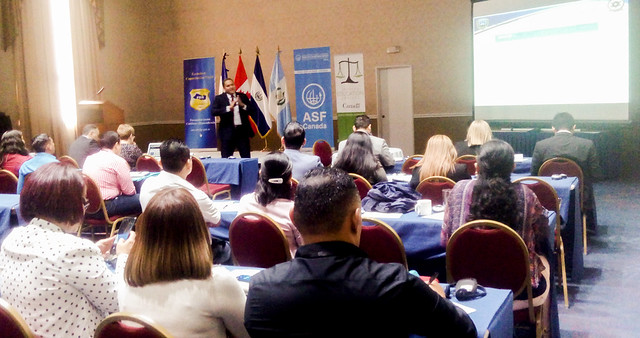
The “Regional Seminar on Investigation Techniques and Protection of Victims of Trafficking in Persons” brought together officials from the office of the public prosecutor, police officers, legal experts and other key actors and experts from Guatemala, El Salvador and Honduras, the countries that make up the so-called Northern Central American Triangle.

The objective is to strengthen capacities and good practices in the investigation of trafficking, especially when the crime is transnational in nature.

Morán and other participants in the meeting declined to talk about figures on the extent of trafficking in the region, due to the lack of reliable data.

Prosecutors, police officers, government officials, experts and representatives of social organisations from Central America are participating in a special seminar on human trafficking Nov. 4-8 to identify and coordinate joint efforts. Credit: Edgardo Ayala/IPS

Prosecutors, police officers, government officials, experts and representatives of social organisations from Central America are participating in a special seminar on human trafficking Nov. 4-8 to identify and coordinate joint efforts. Credit: Edgardo Ayala/IPS

Civil society supports victims

In the countries of the Northern Triangle there are government efforts to develop victim care programmes, but they are insufficient and civil society organisations have had to take up the challenge.

Mirna Argueta, executive director of the Association for the Self-Determination of Salvadoran Women (AS Mujeres), told IPS that “the problem is serious, because we are facing networks with great economic and political influence, and victims are not being protected,” and there are very few programmes to help with their reinsertion in society.

Her organisation has been working since 1996 with victims of trafficking, offering psychological and medical support, and is also an important ally of the Attorney-General’s Office in victim protection work.

AS Mujeres collaborates with the police and prosecutors when victims have to be moved from one place to another, in the most secretive way possible, especially when judicial cases against organised crime networks are underway.

In the past it has also offered shelter to women victims of trafficking, but now the prosecutor’s office does, said Argueta, who is also coordinator in El Salvador of the Latin American Observatory on Trafficking in Persons, which brings together 15 countries.

AS Mujeres’ victim care programme includes, in addition to psychological support, medical assistance which incorporates non-traditional techniques such as biomagnetism, performed by a physician specialising in this area, as well as massage and aromatherapy.

“Experience has shown us that with the combination of these three techniques, recovery is more effective, and care is more integral,” said Argueta.

She added that since the programme’s inception in 1996, it has served some 600 trafficking victims.

They currently offer support to five women, who IPS could not speak to because they are under legal protection, and providing their names or a telephone number for them has criminal consequences.

For the same reason, the public prosecutor’s office also vetoed conducting interviews with victims under its protection.

AS Mujeres also promotes a self-care network.

“When the victim has gone through different stages, we integrate her with other women and they can share their experiences, making it less painful, and helping them with their reinsertion in society,” Argueta added.

She said many victims feel they are “damaged,” or worthless, and they turn to prostitution.

Victims can spend anywhere from six months to two and a half years in the programme, depending on the complexity of each case. For example, there are women with acute problems of depression, suicidal thoughts and persecutory delusions.

According to figures from the United Nations office in Honduras, released in July, 80 percent of the victims of human trafficking in Central America are women and girls.

In El Salvador, 90 percent of cases involve sexual exploitation, according to official figures provided by the public prosecutor’s office during the regional forum in San Salvador.

However, other types of trafficking have been detected, such as labour exploitation, forced panhandling and others.

So far this year, the prosecution has reported 800 victims, cases that are still open.

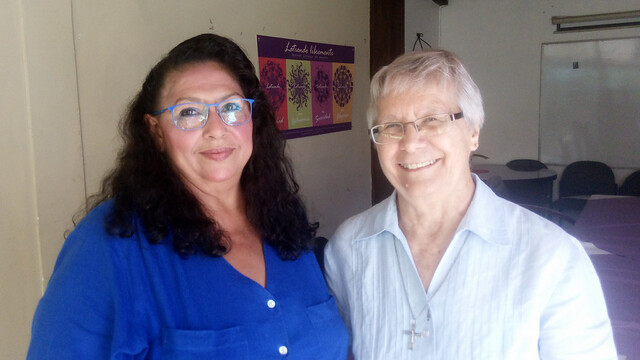
Mirna Argueta (L), executive director of the Association for the Self-Determination of Salvadoran Women, and Catholic nun Carmela Jibaja, of the Central American Network against Trafficking in Persons, are two activists working to provide care for victims of trafficking, who are mostly women. Credit: Edgardo Ayala/IPS

Mirna Argueta (L), executive director of the Association for the Self-Determination of Salvadoran Women, and Catholic nun Carmela Jibaja, of the Central American Network against Trafficking in Persons, are two activists working to provide care for victims of trafficking, who are mostly women. Credit: Edgardo Ayala/IPS

In Guatemala, in 2018, the Public Prosecutor’s Office detected 478 possible victims of human trafficking, four percent more than the previous year. There were 276 reported cases, also an increase of four percent.

Children and adolescents continue to be vulnerable to trafficking, as 132 children and adolescents were detected as possible victims of human trafficking, 28 percent of the total, 111 of whom were rescued.

They were victims of illegal adoptions, labour exploitation, forced marriage, forced panhandling, sexual exploitation and forced labour or services. But the most invisible form of trafficking, according to the prosecutor’s office, is the recruitment of minors into organised crime.

Gangs involved in people trafficking

Experts consulted by IPS point out that many trafficking cases are the product of a relatively new phenomenon: involvement in trafficking by the gangs that are responsible for the crime wave in the three Northern Triangle countries.

The gangs have mutated into bona fide organised crime groups, with tentacles in the illicit drug trade, extortion rackets, “sicariato” or murder for hire and now human trafficking, among other criminal activities.

In El Salvador, it is common to hear stories in neighborhoods and towns controlled by gangs about young girls who gang leaders “ask for”, to be used as sex toys by the leaders and other members of the gang, and the families hand them over because they know that they could be killed if they don’t.

But the gangs go farther than that, forcing their victims to provide sexual services for profit, another aspect of trafficking.

Official figures from the National Council against Trafficking in Persons, which brings together government agencies to combat the phenomenon, indicate that in 2018 there were 46 confirmed victims, 43 police investigations and 38 judicial proceedings.

The trials led to four convictions and two acquittals. The rest are still winding their way through court, according to the Council’s Work Report 2018.

The document also reported that the attention to victims included programmes to help them launch small enterprises, as well as measures of integral reparations for families of children and adolescents in the shelters.

Emergency response teams were also coordinated to provide assistance to victims, whether the women are foreigners or nationals.

El Salvador is part of the Regional Coalition against Trafficking in Persons and Smuggling of Migrants, along with Belize, Costa Rica, Guatemala, Honduras, Mexico, Nicaragua, Panama and the Dominican Republic.

Honduras has also provided support for economic reinsertion, offering seed capital to set up small jewelry businesses, among others, said Interpol’s Morán.

At least 337 people from Honduras have been rescued since 2018, including 13 in Belize and Guatemala, according to a report by the Inter-Institutional Commission Against Commercial Sexual Exploitation and Trafficking in Persons in Honduras.

  Source

UN Peacekeeping Should Not Violate Charter or Principles of Sovereignty of Member States

Armed Conflicts, Civil Society, Featured, Global, Global Governance, Headlines, Humanitarian Emergencies, IPS UN: Inside the Glasshouse, TerraViva United Nations

Opinion

Ambassador Kshenuka Senewiratne is Permanent Representative of Sri Lanka to the United Nations

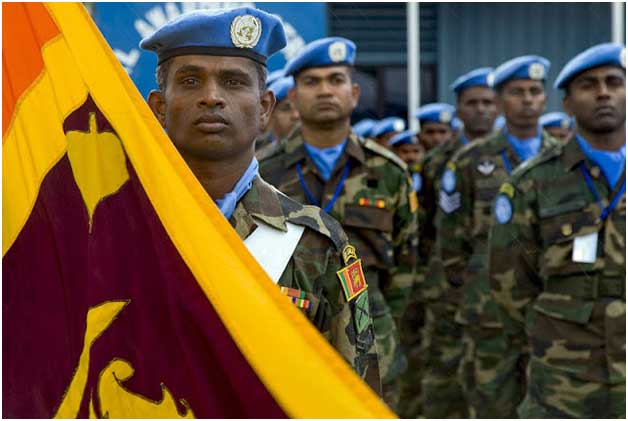
Sri Lankan Peacekeeping troops

UNITED NATIONS, Nov 8 2019 (IPS) – Given the political, economic and social exigencies of contemporary peacekeeping, it is important that the Department of Political and Peacebuilding Affairs (DPPA) remains engaged in the process.


To achieve durable peace, there must be cooperation and coordination between the United Nation’s peacebuilding architecture, its peacekeeping operations and the respective member states.

As peacekeepers are being deployed in increasingly dangerous environments, the UN faces multi-dimensional challenges in a constantly changing landscape. In order to address these new challenges, the management methods of peace operations within the UN must strive to be fair and equitable, and field operations must adapt and acquire specialized capabilities.

It is fundamental to the values of this august body, that the Secretariat adheres to accepted procedures, in order for the work of the United Nations not serve misplaced political interests of a few. This could affect the proper deployment of capable and qualified peacekeepers, thus jeopardizing the respective operations.

In this regard, Sri Lanka is compelled to refer to a matter of questionable procedure, having experienced unjust treatment at the hand of the Secretariat, in terms of the Department of Peace Operations (DPO).

This situation arose when an unilateral decision was made and conveyed by the DPO, on the adjustment of Sri Lanka’s contribution to a peacekeeping operation. This violated the provision of the related MoU, thereby bringing into question the adopted procedure, which has been flawed from the very beginning.

The DPO sought to link its decision of not replacing a contingent of peacekeepers on rotation to an internal appointment made by Sri Lanka as a sovereign right, thereby challenging the Head of State of a member country. Further the nominations of the replacing peacekeeping contingent had been made well before that of the high appointment in question to the DPO.

Ambassador Kshenuka Senewiratne

Hence the linking of the appointment of the commander of the Army to that of the peacekeepers is an anomalous situation. The UN which prides itself on humanitarian work in this instance chose to practice its tenets in the breach, by overlooking the denial of the identified peacekeepers added aspirations once nominated for the respective operation.

The flawed procedure began with the decision to adjust a Sri Lankan peacekeeping contingent and the reasons for such punitive action, being originally communicated verbally. A request was made by Sri Lanka for all these details to be informed formally in writing.

Surprisingly only the troop details were thus communicated, and the DPO chose instead to formally make a statement to the media regarding the reason; while to date Sri Lanka is yet to receive the requested information in writing.

Furthermore, though USG Lacroix even yesterday assured that every single area of Peacekeeping is rule-based, it is disconcerting that DPO chose to violate Article 15 of the related MOU, by not consulting with Sri Lanka prior to the decision being taken thus presenting a fait accompli to the UN member state. Such action has unfortunately and plausibly culminated in the creation of a trust deficit concerning DPO.

Furthermore, this manner of treatment could lead to precedent setting which member states must seek to arrest, lest the practice becomes systemized only to entrench politicization within the UN system.

It also opens the window for the pernicious violation of the principles of the UN Charter on non-interference and sovereignty of States which must be adhered to not only in relation to Peacekeeping mandates, but also in troop deployment.

It is imperative for the Secretariat, to hold sacrosanct the fact that the UN system is member state led, and discharge of its responsibilities in that context, while upholding equal treatment. This will also avoid the Secretariat contributing to the possible erosion of multilateralism.

Furthermore, while appreciating the Secretary General’s assurance to meet obligations to Member States providing troops and equipment as promptly as possible based on the availability of funds, Sri Lanka also urges the Secretariat to fulfill its financial obligations vis-a-vis peacekeepers when identified to be replaced, at the point of their repatriation.

Additionally, it is important to ensure a predictive system of payment on all dues concerning peacekeeping operations.

With the paucity of funding, peacekeeping mandates should take into account the complexities of their current operations and be clear and operable. The UN should consult TPCCs and recipient states in developing and renewing the mandate, as without those inputs, the operations may not reflect real needs.

It is also important to address the causes of instability and conflict, and peace operations must seek to build local information networks, in order to protect civilians and non-combatants. Additionally, peacekeepers should be deployed in support of robust diplomatic efforts.

At the very heart of these mandates, must be the protection of children and the most vulnerable among the community. The images of the suffering of children in conflict especially as recently seen, are particularly unacceptable.

The UN apparatus must seek coherence among its agencies in order to address this issue. As we mark 20 years of UN Security Council Resolution 1325(2000), it is important to make every effort at national, regional and global levels to include women in peacekeeping and peacebuilding.

In order to address the disproportionate and unique impact of armed conflict on women, gender perspectives must be incorporated in all UN peace and security efforts. Women are received differently by the local population and are often successful in building relationships within those communities.

In this regard it is worthy to note that Sri Lanka is currently in the process of developing by October 2020 an Action Plan on Women Peace and Security for the implementation of Resolution 1325 with the support of the Government of Japan.

Sri Lanka has demonstrated its wholehearted commitment to the elimination of Sexual Exploitation and Abuse and its zero-tolerance policy by signing the Secretary General’s related Voluntary Compact, joining his Circle of Leadership and making contributions to the Trust Fund to help such victims.

The country has also adopted several best practices including a stringent vetting procedure for selecting peacekeeping troops with the involvement of the Office of the High Commissioner for Human Rights and the Independent National Human Rights Commission of Sri Lanka.

Sri Lanka’s involvement with UN peacekeeping has covered six decades. The country commenced contributing to UN Peacekeeping Operations in 1956 initially with Military Observers. Since then a total of 22,587 peacekeepers have rotated within the Missions. Today, contributions by Sri Lanka to UN Peacekeeping stand at 657 personnel and in field support with equipment and a hospital.

Currently Sri Lanka maintains a Level II Hospital and a fleet of Combat Support Helicopters in South Sudan (UNMISS), a fleet of Helicopters in Central Africa (MINUSCA), an Infantry Company each in Lebanon (UNIFIL) and Mali (MINUSMA) and Military Observers and Staff Officers in most Missions.

It is worth noting that operating under trying circumstances, Sri Lanka’s troops – in particular under MINUSMA, the helicopter units operating in UNMISS and MINUSCA – have come in for high praise from senior officials of the UN system.

Our troops are highly professional and have been part of many endeavours of the United Nations to maintain peace and security around the world. Sri Lanka has considerable experience in combating violent unruly elements, and providing humanitarian assistance and disaster relief.

Sri Lankan peacekeepers continue to work in difficult terrain and having acquired multiple skills while facing complex situations, and possess excellent operational experience and expertise, having ended nearly three decades of separatist terrorism domestically.

Finally, over the years, hundreds of thousands of military personnel, as well as tens of thousands of UN police and other civilians from more than 120 countries, have participated in UN peacekeeping operations.

Many, including Sri Lankan peacekeepers, have paid the ultimate sacrifice while serving under the UN flag. Sri Lanka pays the highest tribute to them, and with grateful thanks and humility, recognize and commend their achievements.

  Source

The Nairobi Summit Is about the Future of Humanity and Human Prosperity

Africa, Conferences, Crime & Justice, Development & Aid, Education, Featured, Gender, Gender Violence, Global, Headlines, Health, Labour, Population, TerraViva United Nations, Women’s Health

Opinion

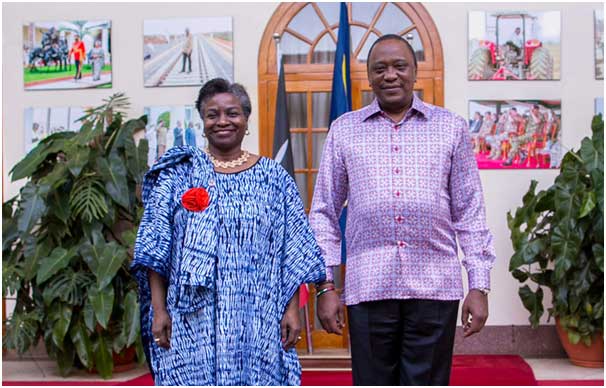
Kenyan President Uhuru Kenyatta hailed the strong partnership between his government and UNFPA during a meeting with UNFPA’s Executive Director, Dr. Natalia Kanem in March 2019, which will jointly convene the ICPD 25 from 12 to 14 November 2019 along with the Government of Denmark. Credit: PSCU

NAIROBI, Kenya, Nov 8 2019 (IPS) – As we count down the remaining days to the opening of the Nairobi Summit or the International Conference for Population and Development(ICPD), I am confounded by how much humanity has managed to simultaneously empower more women than at any other time in history, while at the same time failing to see that ‘women’s issues’ are actually ‘everyone’s issues’.


That countdown evokes memories of my own grandmother, who followed a common trend in India at the time, dropping out of school to get married and give birth to her first child at age 11. In many parts of the world, girls have over the years faced unthinkable obstacles while trying just to get an education, often jeopardizing their personal safety and risking being ostracized by their families and communities.

It wasn’t until a mere 25 years ago at the ICPD in Cairo that the world agreed that population and economic development issues must go hand in hand, and that women must be at the heart of our efforts for development.

Back then, governments, donors, civil society, and other partners made commitments to reduce infant and child mortality, reduce maternal mortality, ensure universal education, and increase access to sexual and reproductive health and rights, amongst many others. These commitments were a massive step forward for the rights of women and girls.

At the Conference in Nairobi, we all have an opportunity to repeat the message that women’s empowerment will move at snail-pace unless we bolster reproductive health and rights across the world. This is no longer a fleeting concern, but a 21st century socio-economic reality.

We can choose to take a range of actions, such as empowering women and girls by providing access to good health, education and job training. Or we can choose paths such as domestic abuse, female genital mutilation and child marriages, which, according to a 2016 Africa Human Development Report by UNDP, costs sub-Saharan Africa $95 billion per year on average due to gender inequality and lack of women’s empowerment.

Fortunately, the world has made real progress in the fight to take the right path. There is no lack of women trailblazers in all aspects of human endeavour. It has taken courage to make those choices, with current milestones being the result of decades of often frustrating work by unheralded people, politics and agencies.

Leaders like the indefatigable Dr. Natalia Kanem the Executive Director of UNFPA and her predecessors, supported especially by the Nordic countries, are pushing the global change of paradigm to ensure we demolish the silo of “women’s issues” and begin to see the linkages between reproductive rights and human prosperity.

Numerous studies have shown the multi-generation impact of the formative years of women. A woman’s reproductive years directly overlap with her time in school and the workforce, she must be able to prevent unintended pregnancy in order to complete her education, maintain employment, and achieve economic security.

Denial of reproductive health information and services places a women at risk of an unintended pregnancy, which in turn is one of the most likely routes for upending the financial security of a woman and her family.

A lot has been achieved since the years of my grandmother, when girls were expected to be demure and remain in the background. In many places the current teenage girl believes that every door is open to them; they can rise to any heights.

Yet in a lot of other countries, girls are up against a system that seems rigged against them for the long-term. These are countries where greater leadership and the right policies are sorely missing; where women and girls are robbed of the education they deserve and the jobs they need to lift themselves and their families out of poverty; where they are victims of sexual and physical abuse in their own homes or sold into child marriage.

As the UN Resident Coordinator to Kenya, I am privileged to serve in a country, which is hosting this very important conference. It has shown leadership to advance the cause of women’s right-from criminalizing female genital mutilation to stepping up the fight to end child marriage and pushing hard on improving reproductive, maternal and child health.

When the ICPD opens in Nairobi on 12 November 2019, I wonder how my grandmother’s life might have been different if she had been able to learn how to read and write and achieve her full human potential, but also appealing to all Governments to work towards giving half the world population the final and absolute control over their own bodies.

Siddharth Chatterjee is the United Nations resident coordinator to Kenya.