‘Passion Seeds’ Fertilize Brazil’s Semiarid Northeast

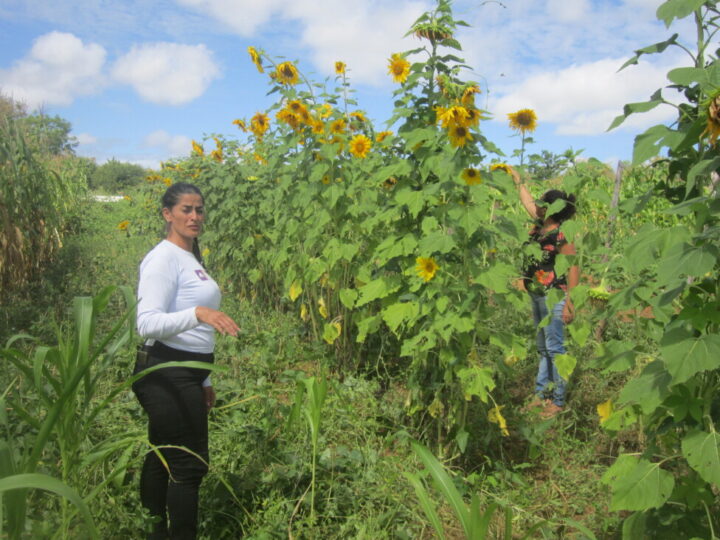
Ligoria Felipe dos Santos poses for a photo on her agroecological farm that mixes corn, squash, fruits, vegetables and medicinal herbs. She is part of the women's movement that is trying to prevent the installation of wind farms in the Borborema mountain range, in the northeastern Brazilian state of Paraíba. CREDIT: Mario Osava / IPS

Ligoria Felipe dos Santos poses for a photo on her agroecological farm that mixes corn, squash, fruits, vegetables and medicinal herbs. She is part of the women’s movement that is trying to prevent the installation of wind farms in the Borborema mountain range, in the northeastern Brazilian state of Paraíba. CREDIT: Mario Osava / IPS

By Mario Osava
ESPERANÇA, Brazil , Jul 14 2023 (IPS)

Zé Pequeno cried when he learned that the heirloom seeds he had inherited from his father were contaminated by the transgenic corn his neighbor had brought from the south. Fortunately, he was able to salvage the native seeds because he had shared them with other neighbors.


Euzébio Cavalcanti recalls this story from one of his colleagues to highlight the importance of “passion seeds” for family farming in Brazil’s semiarid low-rainfall ecoregion which extends over 1.1 million square kilometers, twice the size of France, in the northeastern interior of the country.”These are seeds adapted to the semiarid climate. They can withstand long droughts, without irrigation.” Euzébio Cavalcanti

Saving heirloom seeds is a peasant tradition, but two decades ago the Brazilian Semiarid Articulation (ASA), a network of 3,000 social organizations that emerged in the 1990s, named those who practice it as individual and community guardians of seeds. By September 2021, it had registered 859 banks of native seeds in the region.

Cavalcanti, a 56-year-old farmer with multiple skills such as poet, musician and radio broadcaster, coordinates the network of these banks in the Polo de Borborema, a joint action area of 14 rural workers’ unions and 150 community organizations in central-eastern Paraíba, one of the nine states of the Brazilian Northeast.

“These are seeds adapted to the semiarid climate. They can withstand long droughts, without irrigation, that is why they are so important,” he explained. They also preserve the genetic heritage of many local crop species and family history; they have sentimental value.

“Don’t plant transgenics, don’t erase my history”, is a slogan of the movement that promotes agroecological practices and is opposed to the expansion of genetically modified organisms in local agriculture. “Corn free of transgenics and agrotoxins (agrochemicals)” is the goal of their campaign.

In Paraíba, the name “passion seeds” has been adopted, instead of native or heirloom seeds, since 2003, when the state government announced that it would provide seeds from a specialized company to family farmers.

“If the government offers these seeds, I don’t want them. I have family seeds and I have passion for them,” reacted a farmer in a meeting with the authorities.

“‘Passion seeds’ spread throughout Paraíba. In other states they’re called ‘seeds of resistance’,” Cavalcanti said.

Agroecology is one of the banners of the Polo de Borborema, as it is for ASA in the entire semiarid ecosystem that covers most of the Northeast region and a northern strip of the southeastern state of Minas Gerais.
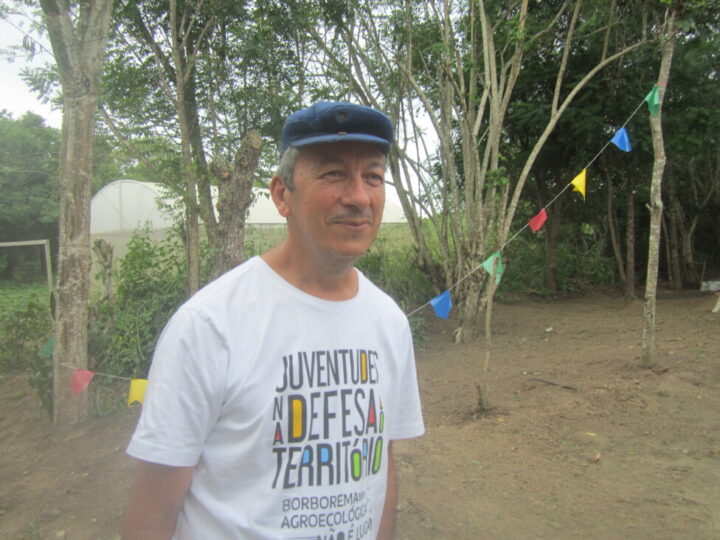
"Passion seeds," as heirloom seeds are known locally, ensure better harvests on semiarid lands, free of transgenics or "agricultural poisons," according to Euzébio Cavalcanti, a small farmer, poet and musician who helped lead the struggle for agrarian reform and cares for the seeds in the highlands of Borborema, in northeastern Brazil. CREDIT: Mario Osava / IPS

“Passion seeds,” as heirloom seeds are known locally, ensure better harvests on semiarid lands, free of transgenics or “agricultural poisons,” according to Euzébio Cavalcanti, a small farmer, poet and musician who helped lead the struggle for agrarian reform and cares for the seeds in the highlands of Borborema, in northeastern Brazil. CREDIT: Mario Osava / IPS

Learning to coexist with semiarid conditions

This approach arose from a change in the development strategy adopted on the part of local society, especially ASA, since the 1990s. “Coexisting with semiarid conditions” replaced the traditional, failed focus on “fighting the drought”.

Large dams and reservoirs, which only benefit large landowners and do not help the majority of small farmers, gave way to more than 1.2 million tanks for collecting rainwater from household or school rooftops and various ways of storing water for crops and livestock.

It is a process of decolonization of agriculture, education and science, which prioritizes knowledge of the climate and the regional biome, the Caatinga, characterized by low, twisted, drought-resilient vegetation. It also includes the abandonment of monoculture, with the implementation of traditional local horticultural and family farming techniques.

The Northeast, home to 26.9 percent of the national population, or 54.6 million inhabitants according to the 2022 demographic census, concentrates 47.2 percent of the country’s family farmers, according to the 2017 agricultural census. There are 1.84 million small farms worked mainly by family labor.

Brazil’s semiarid region is one of the rainiest in the world for this type of climate, with 200 to 800 millimeters of rain per year on average, although there are drier areas in the process of desertification.

A stand at the ecological market in the municipality of Esperança, in northeastern Brazil, is a link between urban consumers and family farmers opposed to agrochemicals, monoculture and transgenic products. CREDIT: Mario Osava / IPS

A stand at the ecological market in the municipality of Esperança, in northeastern Brazil, is a link between urban consumers and family farmers opposed to agrochemicals, monoculture and transgenic products. CREDIT: Mario Osava / IPS

Borborema, the name of a high plateau that obstructs the humidity coming from the sea, making the territory to its west drier, is the scene of various peasant struggles, such as the mobilization for agrarian reform since the 1980s and for small-scale agriculture “without poisons” or agrochemicals, of which the “seeds of passion” are a symbol.

Cavalcanti is a living memory of local history, also as a founder of the local Landless Workers Movement (MST) and an activist in the occupations of unproductive land to create rural settlements, on one of which he gained his own small farm where he grows beans, corn and, vegetables and has two rainwater collection tanks.

Women help drive the expansion of agroecology

Women have played a key role in the drive towards agroecology. The March for Women’s Lives and Agroecology is an annual demonstration that since 2010 has defended family farming and the right to a healthy life.

This year, on Mar. 16, 5,000 women gathered in Montadas, a municipality of 5,800 inhabitants, to block the creation of wind farms that have already caused damage to the health of small farmers by being installed near their homes.

Borborema is “a territory of resistance,” say the women. About 15 years ago, they succeeded in abolishing the cultivation of tobacco.
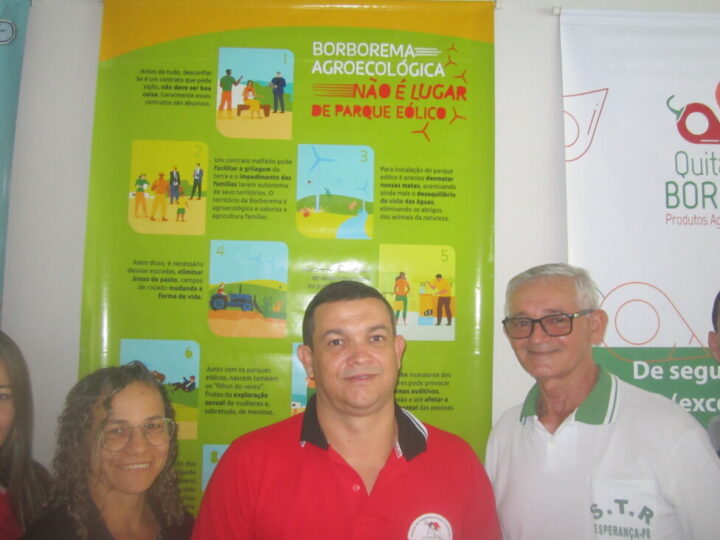
The president of the Union of Rural Workers of the municipality of Esperança, Alexandre Lira (C) and other leaders pose in front of a poster declaring the union's current goals: "Agroecological Borborema is no place for a wind farm," he says about this area in Brazil's semiarid Northeast region. CREDIT: Mario Osava / IPS

The president of the Union of Rural Workers of the municipality of Esperança, Alexandre Lira (C) and other leaders pose in front of a poster declaring the union’s current goals: “Agroecological Borborema is no place for a wind farm,” he says about this area in Brazil’s semiarid Northeast region. CREDIT: Mario Osava / IPS

When the citrus blackfly arrived, the government tried to combat it with pesticides, but “we resisted; we used natural products and solved the problem for our oranges and lemons,” said Ligoria Felipe dos Santos, a 54-year-old mother of three.

“That is agroecology, which is strengthened in the face of threats. Farmers are aware, they resort to alternative defenses, they know that it is imbalance that leads to pests,” she told IPS.

“Agroecology is a good banner for union activity,” said Lexandre Lira, 42, president of the Rural Workers Union of Esperança, a municipality of 31,000 people in the center of the Polo de Borborema.

It is also a factor in keeping farmers’ children on the farms, because it awakens the interest of young people in agriculture, said Edson Johny da Silva, 27, the union’s youth coordinator.
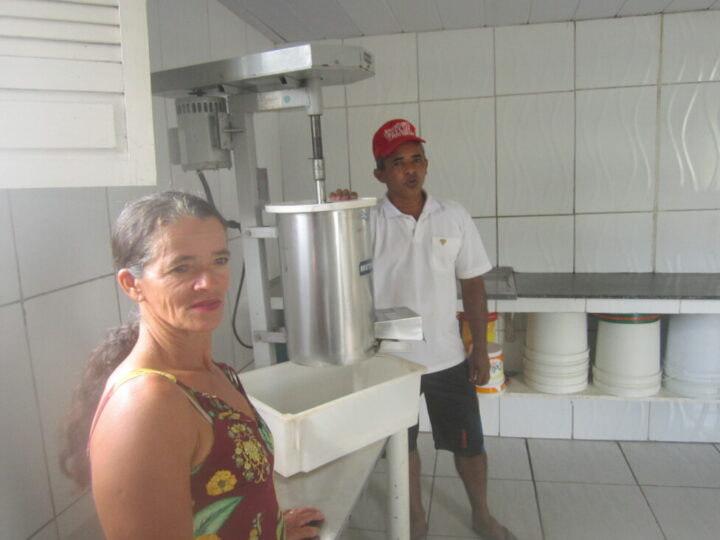
Maria das Graças Vicente and Givaldo Firmino dos Santos stand next to the machine they use for making pulp from native fruits little known outside Brazil, such as the umbu (Brazil plum), cajá (hog plum), acerola (Amazon or Barbados cherry), along with cashews, mangos, and guava. CREDIT: Mario Osava / IPS

Maria das Graças Vicente and Givaldo Firmino dos Santos stand next to the machine they use for making pulp from native fruits little known outside Brazil, such as the umbu (Brazil plum), cajá (hog plum), acerola (Amazon or Barbados cherry), along with cashews, mangos, and guava. CREDIT: Mario Osava / IPS

Pulp, added value

Maria das Graças Vicente, known as Nina, 51, along with her husband Givaldo Firmino dos Santos, 52, is an example of agroecological productivity. On 1.25 hectares of land they produce citrus fruits, passion fruit, acerola (Amazon or Barbados cherry), mango and other fruits, as well as sugar cane, corn, beans and other vegetables.

Grafted fruit tree seedlings are another of the products they use to expand their income, as IPS was shown during a visit to their farm.

Using their own harvest and fruit they buy from neighbors, they make pulp in a small shed separate from their home, with a small machine purchased with the support of the Advisory and Services to Projects in Alternative Agriculture (AS-PTA), a non-governmental organization that supports farmers in Borborema and other parts of Brazil.

“Luckily we have a microclimate in the valley, where it rains more than in the surrounding areas. Everything grows here,” Santos told IPS.

But the couple created three reservoirs to collect rainwater and withstand droughts: a 16,000-liter water tank for household use, another that collects water on the paved ground for irrigation, and a small lagoon dug in the lower part of the farm.

But in 2016 the lagoon dried up, because of the “great drought” that lasted from 2012 to 2017, Vicente said.

The fruit pulp factory has grown in recent years and now has seven small freezers to store fruit and pulp for sale to the town’s stores and restaurants. The couple decided to purchase a cold room with the capacity of 30 freezers.

“I work in the mornings on the land, in the afternoons I make pulp and my husband is in charge of the sales,” she said.

Hiring workers from outside the family to reduce the workload costs too much and “we try to save as much as possible on everything, to sell the pulp at a fair price,” Santos said.

Source

Human Rights Concerns Ahead of Zimbabwe Polls

Analysts are concerned about pre-election violence and intimidation ahead of next month's Zimbabwean poll. Credit: Ignatius Banda/IPS

Analysts are concerned about pre-election violence and intimidation ahead of next month’s Zimbabwean poll. Credit: Ignatius Banda/IPS

By Ignatius Banda
BULAWAYO, Jul 13 2023 (IPS)

Zimbabwe holds general elections next month amid growing human rights and press freedom concerns in what analysts say could mar conditions for undisputed poll results.


Lawyers representing opposition political activists have not been spared assaults from police and suspected ruling Zimbabwe African National Union Patriotic Front (Zanu PF) party supporters as economic conditions worsen.

In January, Kudzayi Kadzere, a human rights lawyer, was beaten up by police and his arm broken after being dispatched to a local police station in the capital city, Harare, to represent arrested opposition political party supporters. The police accused him of being a “criminal nuisance.”

Early this month, the country’s security forces allegedly attacked Obey Shava, a human rights lawyer who has represented several opposition Citizens for Coalition for Change (CCC) officials and other human rights abuse victims. Unknown assailants broke his legs.

However, the country’s main political opposition led by Nelson Chamisa, the CCC, was quick to point fingers at ruling party activists and the country’s secret police for Shava’s attack. The CCC has routinely been tipped to win successive elections without success.

These incidents have been met with widespread condemnation on the eve of what is seen as crucial elections slated for 23 August, with the British parliament discussing and raising concerns early this month about what is seen as deteriorating human rights conditions in Zimbabwe ahead of the polls.

“What we are seeing in this election cycle is lawfare or the weaponisation of the law,” said Ringisai Chikohomero, a senior analyst at the  Institute for Security Studies (ISS) in Pretoria, South Africa.

“This has led to a lot of prosecution and persecution, and what this has done is to create an atmosphere of fear that you can be locked up for a long time without actually going to trial,” Chikohomero told IPS.

These comments come when human rights organisations say almost a hundred political prisoners are incarcerated, with former opposition legislator Job Sikhala having spent more than a year behind bars and accused of obstruction of justice.

Amnesty International has condemned Sikhala’s long detention, with Flavia Mwangovya, Deputy Director for East and Southern Africa, Amnesty International saying in a May statement  that “there is a worrying restriction of civic space underway in Zimbabwe with growing attempts to persecute anyone who dares to freely express themselves.”

The developments come amid escalating economic hardships, with President Emmerson Mnangagwa accusing the business sector of deliberately sabotaging the economy to stoke anti-government sentiment.

While Mnangagwa has used the campaign trail and radio jingles to denounce violence and appeal for peaceful elections, human rights defenders have questioned the continuing human rights abuses despite its condemnation from the highest office in the land.

“The challenge about the pre-election conditions is that can it be proven that there have been systematic human rights violations,” said Piers Pogue, senior analyst at the International Crisis Group.

“Though international observers from the EU are coming, it is quite clear that six weeks before elections doesn’t constitute long-term observation,” Pogue told IPS.

Already, police have banned or placed stringent conditions for opposition political rallies, such as outlawing the chanting of slogans, further setting the stage for possible confrontations and running battles with party supporters as has happened in past elections.

However, analysts say there is a need for the country to move from continued disputed poll outcomes, and one of the recommendations is to have long-term observer teams from such groups as the African Union and the Southern African Development Community (SADC).

“Ideally, the AU and SADC should have deployed longer-term observer teams. We have seen in the past that only long-term missions manage to get to grips with election conditions. Differences between long and short-term observer missions expose the contradictions of how electoral conditions are assessed,” Pigou said.

Zimbabwe’s elections have for years hogged regional and international headlines after successive controversial victories by the founding Zanu (PF) party amid decades-old worsening economic conditions; with eleven presidential candidates in next month’s general election, the stage could be set for yet another contentious poll outcome.

Meanwhile, as election day approaches, the Zimbabwe Catholic  Bishops Conference has added its voice to concerns about the pre-election conditions, appealing to voters to exercise their democratic right to vote.

“Do not be intimidated, coerced or manipulated to vote against your will. Please refuse to be used in violent attacks against your fellow brothers and sisters,” the Catholic bishops said on 9 July.

The clerics also appealed to the country’s security services, long accused of doing the ruling party’s bidding, to maintain law and order without taking sides.

“To members of the security sector, we appeal to you to work to maintain peace and justice and let all the perpetrators of political violence be held accountable,” the bishops said.

IPS UN Bureau Report


!function(d,s,id){var js,fjs=d.getElementsByTagName(s)[0],p=/^http:/.test(d.location)?’http’:’https’;if(!d.getElementById(id)){js=d.createElement(s);js.id=id;js.src=p+’://platform.twitter.com/widgets.js’;fjs.parentNode.insertBefore(js,fjs);}}(document, ‘script’, ‘twitter-wjs’);  

Source

Women Suffer Harassment and Discrimination on Chile’s Public Transport

Perla Venegas is one of 1444 female bus drivers in the surface public transport network in Santiago, Chile, which aims at gender inclusion and offers job stability and shift flexibility compatible with family life. CREDIT: Orlando Milesi / IPS

Perla Venegas is one of 1444 female bus drivers in the surface public transport network in Santiago, Chile, which aims at gender inclusion and offers job stability and shift flexibility compatible with family life. CREDIT: Orlando Milesi / IPS

By Orlando Milesi
SANTIAGO, Jun 26 2023 (IPS)

Sexual harassment and discrimination are daily realities for women on public transport in Chile and also an obstacle for plans to expand mass transit in order to reduce pollution in several cities in this South American country.


Santiago, the capital, is the most polluted city based on fine air particulate matter among the large Latin American cities, according to the World Air Quality Report 2022, ahead of Lima and Mexico City, while five other Chilean cities are among the 10 most polluted in South America.

Sexual harassment is the most visible form of discrimination against women in Chilean public transportation, in addition to insecurity due to poorly lit bus stops, inadequate buses, and more frequent trips at times when women are less likely to travel.

Personal accounts gathered by IPS also mentioned problems such as the constant theft of cell phones and the impossibility for young women to wear shorts or low-cut tops when traveling on buses or the subway, the backbone of Santiago’s public transportation system.

To address these problems, the Chilean government and the Santiago city government adopted gender strategies: they put in place special telephones to report harassers and thieves, began installing “panic buttons” and alarms at bus stops, and incorporated more women in driving and security.

“When I was younger I suffered a lot of harassment because I didn’t have the character to stand up to the harassers. Now that I am older, I am able to confront an aggressor without fear, even when he is harassing another person, whether a man or a woman. When I confront them, they run away,” Bernardita Azócar, 34, told IPS.


Bernardita Azócar, in a subway station in Santiago, Chile, heads to her job in a collection agency. She says she suffered sexual harassment on public transport in the capital when she was younger, but now she is more alert to any aggression and feels empowered to help others who suffer the same bad experience. CREDIT: Orlando Milesi / IPS

Bernardita Azócar, in a subway station in Santiago, Chile, heads to her job in a collection agency. She says she suffered sexual harassment on public transport in the capital when she was younger, but now she is more alert to any aggression and feels empowered to help others who suffer the same bad experience. CREDIT: Orlando Milesi / IPS


“It happened to me a couple of times when I was younger. They want to grope you or try to touch another girl and now I confront them. I suffer less because I’m more aware and I try not to put myself at risk,” she added during a dialogue at the University of Chile subway station in Santiago.

Azócar, who works for a collection company, said the root cause of harassment lies in education and in Chilean society.

“If you wear a miniskirt or show cleavage, society points the finger at you, as if you were provoking men and it was your fault. And I don’t think that’s why it happens. It’s abuse to be harassed in the public system…or anywhere else,” she said.

Maite, a humanities student at the Catholic University, feels that women are at a disadvantage on public transportation.

“When a woman takes a bus, she tends to sit next to the aisle to have an easier way to flee from any threat. Or she sits next to another woman so as not to travel alone. There are many things that women do that are not explicit. They are behaviors we learn, to get by on public transportation,” said the young woman who, like her friends, preferred not to give her last name.

According to Maite, “women can’t wear shorts or backpacks on the bus, or openly use a cell phone. Every time you get on the bus you have to take a lot of measures.”

Maite and four other classmates told IPS that they take a combination of buses and the subway to go to school and that none of them have suffered harassment on the bus, but they know of several cases that happened to their friends.

“If someone tries to touch me or crowd me too closely I don’t feel so safe,” said Elena, a commercial engineering student.

“A friend of mine had her cell phone stolen. I have not been harassed, but I would never go on the bus or subway in shorts even if I were dying of heat. I wear long pants because wearing shorts is a risk,” added Emilia, a psychology student.


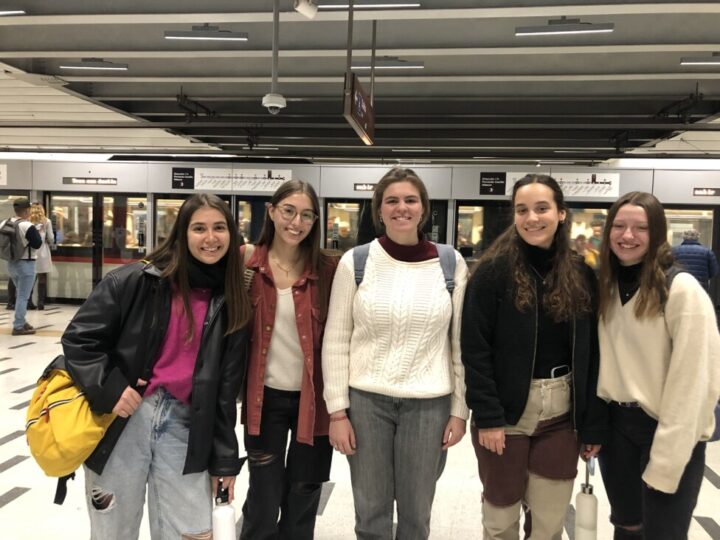
The five university students in this group lament the discrimination women suffer on Chilean public transport and recognize that they have a "code of conduct" that they personally follow to avoid problems, such as not wearing shorts or miniskirts or showing cleavage, even in summertime, although it sometimes restricts their personal freedom. CREDIT: Orlando Milesi / IPS

The five university students in this group lament the discrimination women suffer on Chilean public transport and recognize that they have a “code of conduct” that they personally follow to avoid problems, such as not wearing shorts or miniskirts or showing cleavage, even in summertime, although it sometimes restricts their personal freedom. CREDIT: Orlando Milesi / IPS


The joys and pitfalls of being a female bus driver

Getting more people to use buses and other public transport in Chile, a long narrow country with a population of 19.8 million, is difficult because 71 percent of households own at least one car.

The incorporation of more female bus drivers is aimed at a friendlier mass transit system.

Perla Venegas, 34, has been working as a bus driver in Santiago’s public transportation system for six years.

“I like my job and driving. The most complicated thing is dealing with cyclists, pedestrians and passengers, who are never satisfied,” she told IPS while parked waiting to pull out on the corner of Santa Rosa and Alameda, in the heart of downtown Santiago.

Her route connects downtown Santiago with the municipality of Maipú, in the western outskirts of the capital.

“I’m on a par with the male drivers, but I’m more cautious, not so aggressive and I’m a more defensive driver. I have been complimented several times, especially by elderly people,” said Venegas, who lives with her two daughters, aged 16 and 8.

“I have female colleagues who have been hit and beaten. I received a death threat from a passenger because when the route ended he wouldn’t get off. He was a homeless drug addict. It was 5:30 AM. In the end I found a carabineros (police) patrol car and I turned him in,” she said.

She added that she has had both pleasant and negative experiences and acknowledged that she is proud that her eldest daughter also wants to be a bus driver “although I would not like her to experience the hard parts.”


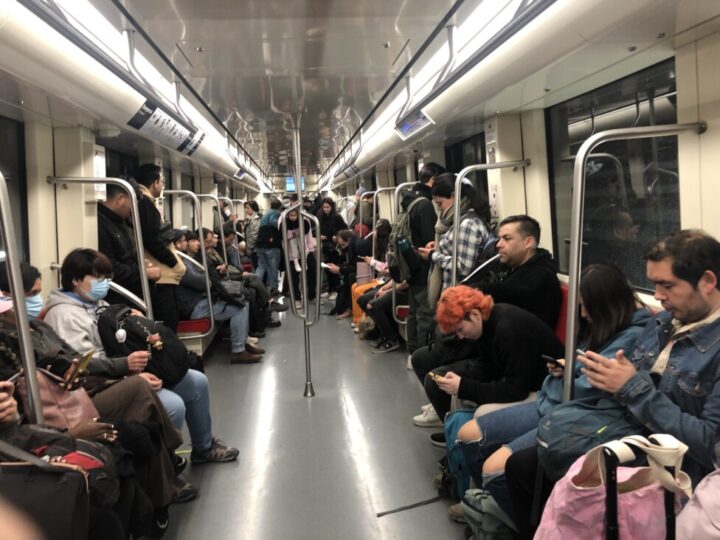
The Santiago subway is the backbone of the mass transit system in the Chilean capital. It makes it possible to reach 23 of the 32 municipalities that encompass the capital and allows passengers to combine with a bus network to reach any point of the metropolitan region. CREDIT: Orlando Milesi / IPS

The Santiago subway is the backbone of the mass transit system in the Chilean capital. It makes it possible to reach 23 of the 32 municipalities that encompass the capital and allows passengers to combine with a bus network to reach any point of the metropolitan region. CREDIT: Orlando Milesi / IPS


Staying alert in the subway, the main means of public transport

On the Santiago subway there are 2.3 million trips on working days. Its tracks cover 140 kilometers on six lines, with 136 stations in 23 of the 32 municipalities that comprise the metropolitan area. Greater Santiago is home to 7.1 million people.

An additional 2.1 million average daily trips are made on surface public transport.

According to official statistics, during the first five months of the year there were 21 pollution episodes in Santiago above the maximum standard level and eight environmental alerts for excess fine particulate matter, so increasing the use of public transport instead of private vehicles is considered a priority for the authorities.

Paulina del Campo, the subway’s sustainability manager, told IPS that gender issues are a strategic objective in this state-owned company.

“We have taken the issue of harassment very seriously. We do not have large numbers, but we do have moments like March 2022 when the issue was raised because of situations in the streets and in universities that included public transportation,” she said.

After meetings with authorities and student leaders, the subway increased the presence of female security guards at stations in the university district.

“One of the things they said is that in a situation of harassment it is much more comfortable to ask for help from a woman than from a man,” explained Del Campo.

The company thus hired a specific group of female guards to receive and respond to complaints.

“Qualified staff respond and are trained to provide support for the victims. We can quickly activate the protocols with the carabineros police. When it happens we can intercept the train and often arrest the people (aggressors) on the spot,” said Del Campo.

In another campaign, a standard methodology designed by international foundations with expertise in harassment was adapted to the situation in Chile.

At the same time, the subway increased its female staff and the number of women in leadership positions.

“Two years ago we had a female staff of around 20 percent and now, in May, 26.5 percent of the 4,400 subway workers are women. In the area of security guards we have a staff of approximately 700 and of these 110 are women,” explained the company’s Sustainability Manager.


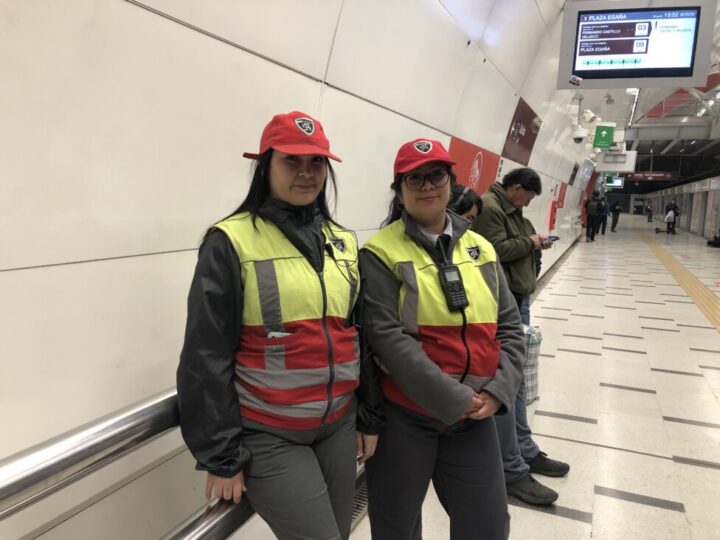
These two women are security guards at the Plaza Egaña subway station, on line 6 in Chile's capital. The state-owned Metro company is increasing the number of women in its services as part of a gender policy that even includes the maintenance of trains. CREDIT: Orlando Milesi / IPS

These two women are security guards at the Plaza Egaña subway station, on line 6 in Chile’s capital. The state-owned Metro company is increasing the number of women in its services as part of a gender policy that even includes the maintenance of trains. CREDIT: Orlando Milesi / IPS


Gender policies in public transportation

The Metropolitan Public Transport Directorate (DTPM) informed IPS that it aims to reduce the male-female gap in public transport.

It also plans to increase the number of women bus drivers.

The Red system, with buses running throughout Santiago, currently employs 1,444 women – only 7.6 percent of all drivers.

“Many women who have entered this field come from highly precarious and unregulated jobs, so this opportunity has allowed them greater autonomy and, on many occasions, to leave violent environments and improve their self-confidence,” the DTPM stressed in response to questions from IPS.

“This has meant an effort to train and generate conditions to keep and promote women who are part of the system,” it added.

Origin-Destination Surveys reveal that women are the main users of public transport and 65 percent of trips for the purpose of caring for the home, children or other people are made by women. They are more likely to make multidirectional trips and in the so-called off-peak hours, with little traffic.

According to the DTPM, waiting for the bus is one of the most critical moments in every trip.

“This is why we installed the panic button at bus stops and real-time information on the arrival of buses to improve the perception of security,” it explained.

The information is available through an application on cell phones, while the panic buttons began as a women’s safety pilot plan in October 2022 at stops in one of the capital’s municipalities. The plan is to extend them to a large number of stops in Santiago.

Source

Biodigesters Boost Family Farming in Brazil

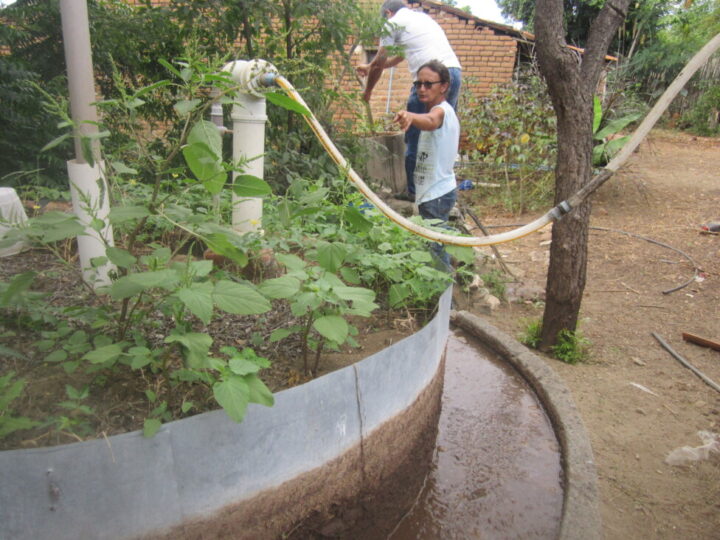
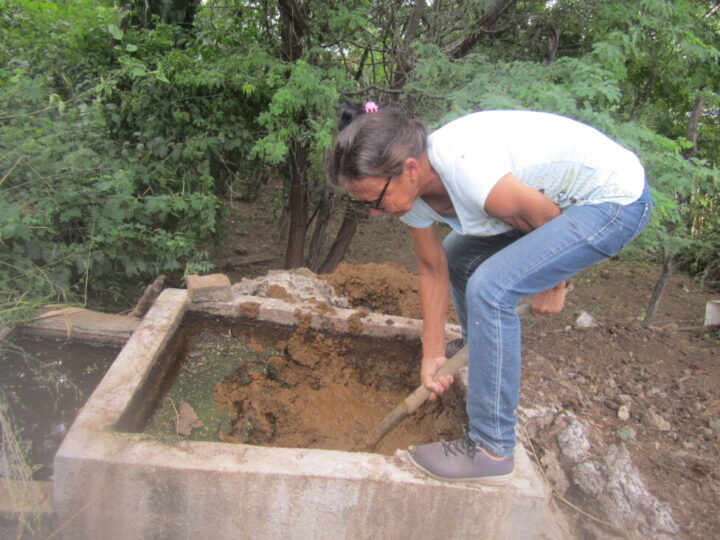
Lucineide Cordeiro loads manure from her two oxen and two calves into the "sertanejo" biodigester that produces biogas for cooking and biofertilizer for her varied crops on the one-hectare agroecological farm she manages on her own in the rural municipality of Afogados da Ingazeira, in the semiarid ecoregion of northeastern Brazil. CREDIT: Mario Osava / IPS

Lucineide Cordeiro loads manure from her two oxen and two calves into the “sertanejo” biodigester that produces biogas for cooking and biofertilizer for her varied crops on the one-hectare agroecological farm she manages on her own in the rural municipality of Afogados da Ingazeira, in the semiarid ecoregion of northeastern Brazil. CREDIT: Mario Osava / IPS

By Mario Osava
AFOGADOS DA INGAZEIRA, Brazil , Jun 24 2023 (IPS)

“The biodigester really gives a huge boost to those who have the courage to do things,” said Maria das Dores Alves da Silva, based on her own experience as a 63-year-old small farmer.


She did not hesitate to accept the offer of Diaconia, a social organization of Protestant churches in Brazil, to acquire the equipment to produce biogas on her farm in the rural area of Afogados da Ingazeira, a municipality of 38,000 people in the state of Pernambuco in the Northeast region of Brazil.”We seek to promote energy, food and water autonomy to maintain more resilient agroecosystems, to coexist with climate change, strengthening community self-management with a special focus on the lives of women.” — Ita Porto

At first she did not have the cattle whose manure she needed to produce biogas, that enables her to save on liquefied petroleum gas, which costs 95 reais (20 dollars) for a 13-kg cylinder – a significant cost for poor families.

She brought manure from a neighboring farm that gave it to her for free, in an hour-long trip with her wheelbarrow, until she was able to buy her first cow and then another with loans from the state-owned Banco del Nordeste.

“Now I have more than enough manure,” she said happily as she welcomed IPS to her four-hectare farm where she and her husband have lived alone since their two children became independent.

Das Dores, as she is known, is an example among the 163 families who have benefited from the “sertanejos biodigesters” distributed by Diaconia in the sertão of Pajeú, a semiarid micro-region of 17 municipalities and 13,350 square kilometers in the center-north of Pernambuco.

Farmer Maria das Dores Alves da Silva stands between the manure pit and the "sertanejo" biodigester designed by Diaconia, a social organization of Protestant churches in Brazil, which has already installed 713 biogas production plants in eight of Brazil's 26 states. CREDIT: Mario Osava / IPS

Farmer Maria das Dores Alves da Silva stands between the manure pit and the “sertanejo” biodigester designed by Diaconia, a social organization of Protestant churches in Brazil, which has already installed 713 biogas production plants in eight of Brazil’s 26 states. CREDIT: Mario Osava / IPS

Biofertilizer

In addition to using the biogas, she sells the manure after it has been subjected to anaerobic biodigestion that extracts the gases – the so-called digestate, a biofertilizer that she packages in one-kilo plastic bags, after drying and shredding it.

Every Saturday, she sells 30 bags at the agroecological market in the town of Afogados da Ingazeira, the municipal seat. At two reais (40 cents) a bag, she earns an extra income of 60 reais (12.50 dollars), on top of her sales of the various sweet cakes she bakes at home, at a cost reduced by the biogas, and of the seedlings she also produces.

The seedlings provided her with a new business opportunity. “The customers asked me if I didn’t also have fertilizer,” she said. The biodigester produces enough fertilizer to sell at the market and to fertilize the farm’s crops of beans, corn, fruit trees, flowers and different vegetables.

This diversity is common in family farming in Brazil’s semiarid Northeast, but even more so in the agroecological techniques that have expanded in this territory of one million square kilometers in the northeastern interior of the country, which has an arid biome highly vulnerable to climate change, subject to frequent droughts, and where there are areas in the process of desertification.

The Pajeú river basin is the micro-region chosen by Diaconia as a priority for its social and environmental actions.

On Lucineide Cordeiro's small farm, cotton, corn, sesame, sunflower, cassava and fruit trees are alternated in the fields, as recommended by agroecology, which is on the rise on family farms in Brazil's semiarid Northeast, which is threatened by longer and more severe droughts due to the climate crisis. CREDIT: Mario Osava / IPS

On Lucineide Cordeiro’s small farm, cotton, corn, sesame, sunflower, cassava and fruit trees are alternated in the fields, as recommended by agroecology, which is on the rise on family farms in Brazil’s semiarid Northeast, which is threatened by longer and more severe droughts due to the climate crisis. CREDIT: Mario Osava / IPS

Energy and food security

“We seek to promote energy, food and water autonomy to maintain more resilient agroecosystems, to coexist with climate change, strengthening community self-management with a special focus on the lives of women,” Ita Porto, Diaconia’s coordinator in the Pajeu ecoregion, told IPS.

“The production of biogas on a rural family scale fulfills the needs of energy for cooking, sanitary disposal and treatment of animal waste and reduction of deforestation, in addition to increasing food productivity, with organic fertilizer, while bolstering human health,” said the 48-year-old agronomist.

More than 713 units of the “sertanejo biodigester”, a model developed by Diaconia 15 years ago, have been installed in Brazil. In addition to the 163 in the sertão do Pajeú, there are 150 in the neighboring state of Rio Grande do Norte and another 400 distributed in six other Brazilian states, financed by the Caixa Econômica Federal, a government bank focused on social questions.

“Hopefully the government will make it a public policy, as it has already done with the rainwater harvesting tanks in the semarid Northeast,” said Porto.

More than 1.3 million rainwater harvesting tanks for drinking water have already been built, but some 350,000 are still needed to make them universal in rural areas, according to the Articulation of the Semi-Arid (Asa), a network of 3,000 social organizations that spearheaded the transformative program.

Maria Das Dores examines the biofertilizer that comes out of the biodigester, without the gases from the animal manure. She sells this by-product at the agroecological market in the town of Afogados da Ingazeira, the seat of the municipality where her four-hectare farm is located, which earns her an average extra income of 12.5 dollars a week. CREDIT: Mario Osava / IPS

The value of manure

“One cow is enough to produce the biogas consumed in our stove,” said Lucineide Cordeiro, on her one-hectare farm where she grows cotton, corn, sesame seeds and fruit, in an interconnected agroecological system, along with chickens, pigs and fish in a pond.

She also has two oxen and two calves, which she proudly showed to IPS during the visit to her farm.

“Pig manure produces biogas more quickly, but I don’t like the stench,” the 37-year-old farmer who is the director of Women’s Policies at the Afogados da Ingazeira Rural Workers Union told IPS.

The difference in the crops before and after fertilization by the biodigester by-product is remarkable, according to her and other farmers in the municipality.

She tends to her many crops on her own, although she is sometimes helped by friends, and has several pieces of equipment such as a brushcutter and a micro-tractor.

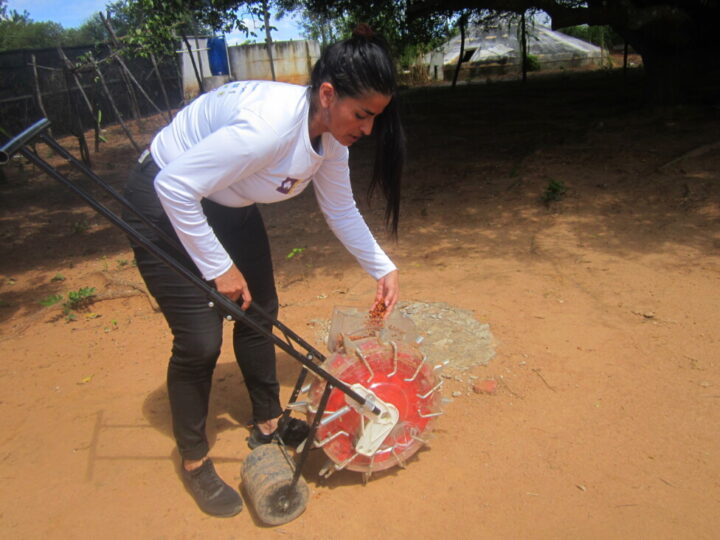
"It's the best invention," says Lucineide Cordeiro, as she shows IPS the seeder created by the Japanese for small-scale farming, which allows her to sow in half a day the land that used to take her two days to plant, on her one-hectare farm in Afogados da Ingazeira, in Brazil's semiarid Northeast. CREDIT: Mario Osava / IPS

“It’s the best invention,” says Lucineide Cordeiro, as she shows IPS the seeder created by the Japanese for small-scale farming, which allows her to sow in half a day the land that used to take her two days to plant, on her one-hectare farm in Afogados da Ingazeira, in Brazil’s semiarid Northeast. CREDIT: Mario Osava / IPS

“But the seeder is the best invention that changed my life, it was invented by the Japanese. Planting the seeds, which used to take me two days of work, I can now do in half a day,” Cordeiro said.

The seeder is a small machine pushed by the farmer, with a wheel filled with seeds that has 12 nozzles that can be opened or closed, according to the distance needed to sow each seed.

The emergence of appropriate equipment for family farming is recent, in a sector that has favored large farmers in Brazil.

Female protagonism clashes with male chauvinist violence

For the success of local family farming, the support of the Pajeú Agroecological Association (Asap), of which Cordeiro is a member and a “multiplier”, as the women farmers who are an example to others of good practices are called, is important.

In family farming the empowerment of women stands out, which in many cases was a response to sexist violence or oppression.

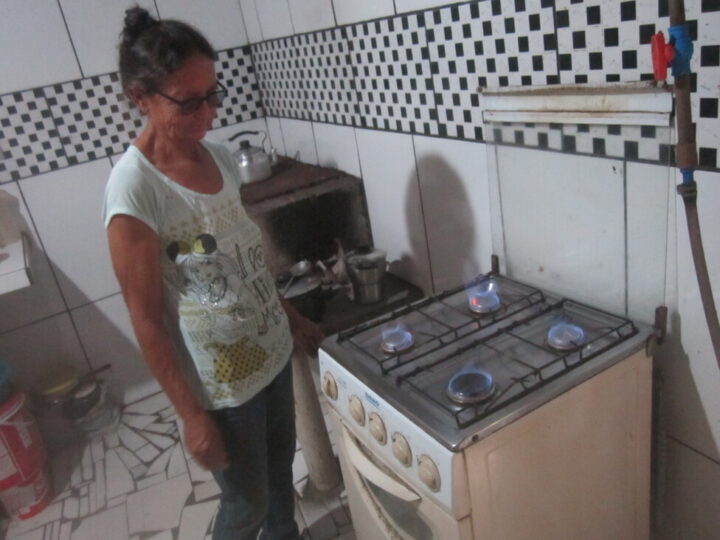
 Blue flames emerge from the burners of Maria Das Dores' biogas stove at her home in Afogados da Ingazeira, in Brazil's semiarid Northeast region. A single ox or cow produces enough manure to generate more biogas than a family requires for its domestic needs. CREDIT: Mario Osava / IPS

Blue flames emerge from the burners of Maria Das Dores’ biogas stove at her home in Afogados da Ingazeira, in Brazil’s semiarid Northeast region. A single ox or cow produces enough manure to generate more biogas than a family requires for its domestic needs. CREDIT: Mario Osava / IPS

“The first violence I suffered was from my father who did not let me study. I only studied up to fourth grade of primary school, in the rural school. To continue, I would have had to go to the city, which my father did not allow. I got married to escape my father’s oppression,” said Cordeiro, who also separated from her first husband because he was violent.

After living in a big city with the father of her two daughters, she separated and returned to the countryside in 2019. “I was reborn” by becoming a farmer, she said, faced with the challenge of taking on that activity against the idea, even from her family, that a woman on her own could not possibly manage the demands of agricultural production.

Organic cotton, promoted and acquired in the region by Vert, a French-Brazilian company that produces footwear and clothing with organic inputs, has once again expanded in the Brazilian Northeast, after the crop was almost extinct due to the boll weevil plague in the 1990s.

In the case of Das Dores, a small, energetic, active woman, she has a good relationship with her husband, but she runs her own business initiatives. Thanks to what she earns she was able to buy a small pickup truck, but it is driven by her husband, who has a job but helps her on the farm in his free time.

“He drives because he refuses to teach me how, so I can’t go out alone with the vehicle and drive around everywhere,” she joked.

Source

Pact Protecting Environmentalists Suffers Threats in Mexico

Active Citizens, Civil Society, Conservation, Editors’ Choice, Environment, Global Governance, Headlines, Human Rights, Indigenous Rights, Latin America & the Caribbean, Regional Categories

Environment

A mining waste deposit in the center of the municipality of Topia, in the northern Mexican state of Durango, threatens the air, water and people’s health. The Escazú Agreement, In force since 2021, guarantees access to environmental information and justice in Latin American countries, as well as public participation in decision-making on these issues. CREDIT: Emilio Godoy/IPS

A mining waste deposit in the center of the municipality of Topia, in the northern Mexican state of Durango, threatens the air, water and people’s health. The Escazú Agreement,
In force since 2021, guarantees access to environmental information and justice in Latin American countries, as well as public participation in decision-making on these issues. CREDIT: Emilio Godoy/IPS

MEXICO CITY, Feb 7 2023 (IPS) – In the municipality of Papantla, in the southeastern Mexican state of Veracruz, the non-governmental Regional Coordinator of Solidarity Action in Defense of the Huasteca-Totonacapan Territory (Corason) works with local communities on empowering organizations, advocacy capacity in policies and litigation strategies.


“This participation with organizations that work at the national level and have the capacity to influence not only the legal field is important,” Corason coordinator Alejandra Jiménez told IPS from Papantla. “They are able to bring injunctions, and this is how they have managed to block mining projects, for example.”

“Up to now, the Escazú Agreement is dead letter, that is the history of many laws in Mexico. Environmentalists have clearly suffered from violence, and let’s not even mention access to information, where there have even been setbacks.” — Alejandra Jiménez

She was referring to the collaboration between locally-based civil society organizations and others of national scope.

Since its creation in 2015, Corason has supported local organizations in their fight against the extraction of shale gas through hydraulic fracturing or fracking, a highly polluting technique that uses large volumes of water and chemicals, in Veracruz and Puebla, as well as mining and hydroelectric plants in Puebla.

Cases like this abound in Mexico, as they do throughout Latin America, a particularly dangerous region for environmentalists.

Activists agreed on the challenges involved in enforcing the Regional Agreement on Access to Information, Public Participation and Justice in Environmental Matters in Latin America and the Caribbean, known as the Escazú Agreement, seen as a tool to mitigate dangers faced by human rights defenders in environmental matters.

A case that has been in the hands of Mexico’s Supreme Court since August 2021 is currently addressing the power of organizations to express their disagreement with environmental decisions and will outline the future of environmental activism in this Latin American country of some 130 million people, and of the enforcement of the Escazú Agreement.

The origin of the case lies in two opposing rulings by Mexican courts in 2019 and 2020, in which one recognized the power of organizations and the other rejected that power. As a result, the case went to the Supreme Court, which must reach a decision to settle the contradiction.

In August 2022 and again on Jan. 25 this year, the Supreme Court postponed its own verdict, which poses a legal threat to the megaprojects promoted by the government of President Andrés Manuel López Obrador, a staunch defender of the country’s oil industry.

Gustavo Ampugnani, general director of Greenpeace Mexico, said the case was an alert to the Escazú Agreement, and that it should not represent a setback for the defense of the environment.

“The significance lies in the risks involved in a wrong decision by the Supreme Court on how to resolve this existing contradiction. If the Court decides that the legal creation of an environmental organization is not enough and that other elements are required, it would limit citizen participation and access to justice,” he told IPS.

Environmentalists are waiting for their Godot in the form of the novel agreement, to which Brazil and Costa Rica do not yet belong, to improve their protection.

The treaty, in force since April 2021 and which takes its name from the Costa Rican city where it was signed, guarantees access to environmental information and justice, as well as public participation in environmental decision-making. It thus protects environmentalists and defenders of local land.

Mexico’s foreign ministry, which represented this country in negotiating the agreement, has identified a legislative route to reform laws that make its application possible and promote the integration of a multisectoral group with that same purpose.

Escazú has been undermined in Mexico by López Obrador’s constant attacks against defenders of the environment, whom he calls “pseudo-environmentalists” and “conservatives” for criticizing his policies, which they describe as anti-environmental and extractivist.

For this reason, a group of organizations and activists requested in a letter to the foreign ministry, released on Feb. 2, details of the progress in the creation of inter-institutional roundtables, selection of indicators, creation of protection mechanisms, and training of officials, including courts, while demanding transparency, inclusion and equity in the process.

Activists from the southern Mexican state of Puebla protest the activities of a water bottling company, on Apr.19, 2021. Environmentalists face serious threats in Mexico, where the Escazú Agreement, which since 2021 provides guarantees to these activists in Latin American countries, has not been applied. CREDIT: Emilio Godoy/IPS

Activists from the southern Mexican state of Puebla protest the activities of a water bottling company, on Apr.19, 2021. Environmentalists face serious threats in Mexico, where the Escazú Agreement, which since 2021 provides guarantees to these activists in Latin American countries, has not been applied. CREDIT: Emilio Godoy/IPS

High risk

In 2021, there were 200 murders of environmentalists around the world, a slight decrease from 227 the previous year, according to a report by the London-based non-governmental organization Global Witness.

Latin America led these crimes, accounting for 157 of the killings, with a slight decline from 165 the previous year. Mexico topped the list with 54 murders, compared to 30 in 2020. Colombia ranked second despite the drop in cases: 33, down from 65 in 2020, followed by Brazil (26 vs. 20), Honduras (eight vs. 17) and Nicaragua (13 vs. 12).

The attacks targeted people involved in opposition to logging, mining, large-scale agribusiness and dams, and more than 40 percent of the victims were indigenous people.

In Mexico there are currently some 600 ongoing environmental conflicts without a solution from the government, according to estimates by the Ministry of Environment and Natural Resources.

The most recent case was the Jan. 15 disappearance of lawyer Ricardo Lagunes and indigenous activist Antonio Díaz, an opponent of mining in the western state of Michoacán, which the United Nations High Commissioner for Human Rights has demanded be urgently clarified.

One year after it came into force, the Escazú Agreement is facing major challenges, especially in countries such as Brazil, Colombia, Guatemala, Honduras, Mexico and Nicaragua, where environmentalists face particular risks.

Olimpia Castillo, coordinator of the non-governmental organization Communication and Environmental Education, said the context sends out a warning.

“It is a very interesting round, because article 10 (of the agreement) refers to highlighting the participation of the organizations. That article could be violated, which would mean a major limitation. These are things that as a country we are going to have to face up to,” the activist, who participated in the negotiation of the agreement as a representative of civil society, told IPS.

In Mexico, compliance with the agreement has already faced hurdles, such as the November 2021 decree by which López Obrador declared his megaprojects “priority works for national security”, thus guaranteeing provisional permits, in contravention of the treaty.

Dispute resolution

Activists are already planning what to do if the Supreme Court hands down a negative verdict: they will turn to the Escazú Agreement dispute resolution mechanism – although the signatory countries have not actually designed it yet.

“We would consider turning to the treaty to resolve the issue. Environmental activism is highly dangerous. But that should not set aside the right of organizations to intervene in decisions. Activists and organizations must be given tools to use regional agreements, because what is happening in the country is very serious,” said Greenpeace’s Ampugnani.

Castillo’s organization is working to raise awareness about the agreement. “If no one knows it exists and that they are obliged to comply with it, how do we make them do it? There are still informative processes in which an application has not yet received a response. We have to demand compliance. There are conditions to apply the agreement. But we need political will to comply with it and to get the word out about it,” she said.

Corason’s Jiménez questioned whether the treaty was up-to-date. “Up to now, the Escazú Agreement is dead letter, that is the history of many laws in Mexico. Environmentalists have clearly suffered from violence, and let’s not even mention access to information, where there have even been setbacks. There is an environment that hinders progress,” she said.

In her view, it is not in the interest of governments to apply the agreement, because it requires participation, information and protection in environmental issues.

In March 2022, the first meeting of the Conference of the Parties to the Escazú Agreement took place, which focused on its operational issues and other aspects that the countries will have to hash out before the next summit is held in 2024.

The Supreme Court, which has not yet set a date for handing down its ruling, is caught between going against the government if it favors environmental organizations or hindering respect for the agreement. For now, the treaty is as far from land as Mexico City is from Escazú: about 1,925 kilometers.

  Source

Solar Energy Useless Without Good Batteries in Brazil’s Amazon Jungle

Active Citizens, Civil Society, Climate Action, Climate Change, Development & Aid, Economy & Trade, Editors’ Choice, Energy, Environment, Green Economy, Headlines, Human Rights, Indigenous Rights, Integration and Development Brazilian-style, Latin America & the Caribbean, Projects, Regional Categories

Energy

Solar panels with a capacity to generate 30 kilowatts no longer work in the Darora Community of the Macuxi people, an indigenous group from Roraima, a state in the far north of Brazil. The batteries only worked for a month before they were damaged because they could not withstand the charge. CREDIT: Boa Vista City Hall

Solar panels with a capacity to generate 30 kilowatts no longer work in the Darora Community of the Macuxi people, an indigenous group from Roraima, a state in the far north of Brazil. The batteries only worked for a month before they were damaged because they could not withstand the charge. CREDIT: Boa Vista City Hall

BOA VISTA, Brazil, Jan 25 2023 (IPS) – “Our electric power is of bad quality, it ruins electrical appliances,” complained Jesus Mota, 63. “In other places it works well, not here. Just because we are indigenous,” protested his wife, Adélia Augusto da Silva, of the same age.


The Darora Community of the Macuxi indigenous people illustrates the struggle for electricity by towns and isolated villages in the Amazon rainforest. Most get it from generators that run on diesel, a fuel that is polluting and expensive since it is transported from far away, by boats that travel on rivers for days.

Located 88 kilometers from the city of Boa Vista, capital of the state of Roraima, in the far north of Brazil, Darora celebrated the inauguration of its solar power plant, installed by the municipal government, in March 2017. It represented modernity in the form of a clean, stable source of energy.

A 600-meter network of poles and cables made it possible to light up the “center” of the community and to distribute electricity to its 48 families.

But “it only lasted a month, the batteries broke down,” Tuxaua (chief) Lindomar da Silva Homero, 43, a school bus driver, told IPS during a visit to the community. The village had to go back to the noisy and unreliable diesel generator, which only supplies a few hours of electricity a day.

“The solar panels were left here, useless. We want to reactivate them, it would be really good. We need more powerful batteries, like the ones they put in the bus terminal in Boa Vista.” — Lindomar da Silva Homero

Fortunately, about four months later, the Boa Vista electricity distribution company laid its cables to Darora, making it part of its grid.

“The solar panels were left here, useless. We want to reactivate them, it would be really good. We need more powerful batteries, like the ones they put in the bus terminal in Boa Vista,” said Homero, referring to one of the many solar plants that the city government installed in the capital.

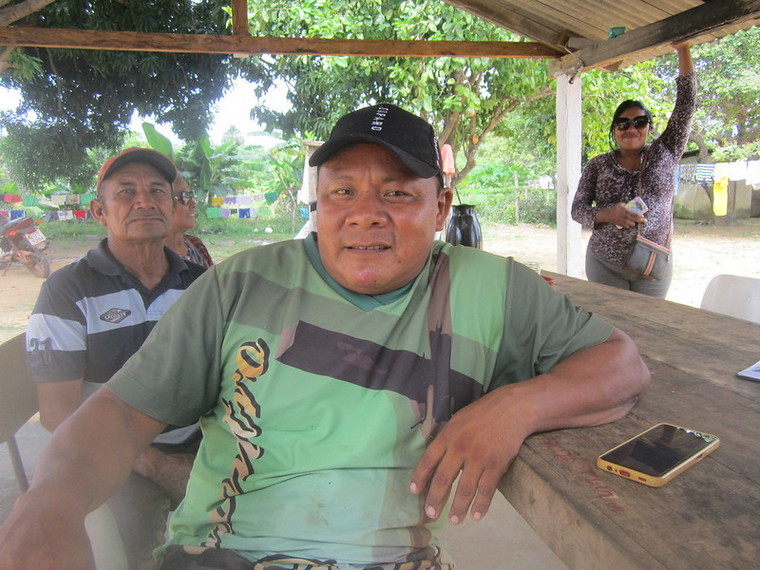
Tuxaua (chief) Lindomar Homero of the Darora Community is calling for new adequate batteries to reactivate the solar power plant, because the electricity they receive from the national grid is too expensive for the local indigenous people. Behind him stands his predecessor, former tuxaua Jesus Mota. CREDIT: Mario Osava/IPS

Tuxaua (chief) Lindomar Homero of the Darora Community is calling for new adequate batteries to reactivate the solar power plant, because the electricity they receive from the national grid is too expensive for the local indigenous people. Behind him stands his predecessor, former tuxaua Jesus Mota. CREDIT: Mario Osava/IPS

Expensive energy

But indigenous people can’t afford the electricity from the distributor Roraima Energía, he said. On average, each family pays between 100 and 150 reais (20 to 30 dollars) a month, he estimated.

Besides, there are unpleasant surprises. “My November bill climbed to 649 reais” (130 dollars), without any explanation,” Homero complained. The solar energy was free.

“If you don’t pay, they cut off your power,” said Mota, who was tuxaua from 1990 to 2020.”In addition, the electricity from the grid fails a lot,” which is why the equipment is damaged.

Apart from the unreliable supply and frequent blackouts, there is not enough energy for the irrigation of agriculture, the community’s main source of income. “We can do it with diesel pumps, but it’s expensive; selling watermelons at the current price does not cover the cost,” he said.

“In 2022, it rained a lot, but there are dry summers that require irrigation for our corn, bean, squash, potato, and cassava crops. The energy we receive is not enough to operate the pump,” said Mota.

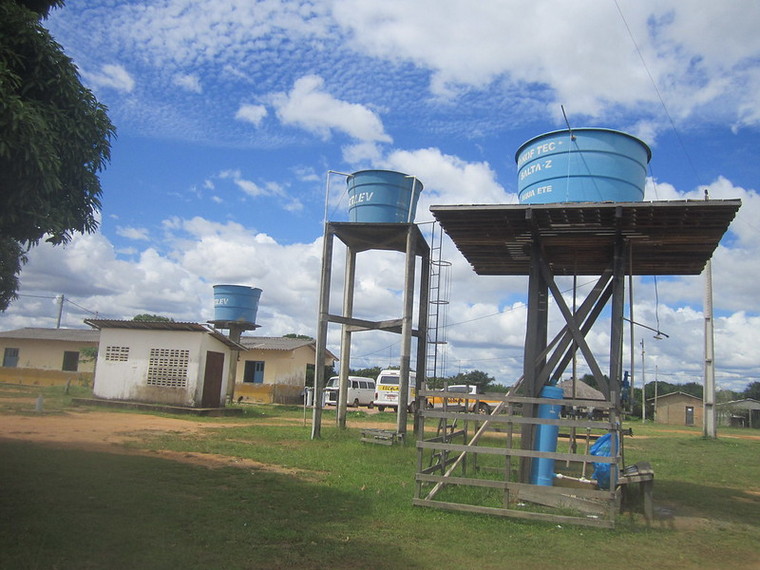
A photo of the three water tanks in the village of Darora, one of which holds water that is made potable by chemical treatment. The largest and longest building is the secondary school that serves the Macuxi indigenous community that lives in Roraima, in northern Brazil. CREDIT: Mario Osava/IPS

A photo of the three water tanks in the village of Darora, one of which holds water that is made potable by chemical treatment. The largest and longest building is the secondary school that serves the Macuxi indigenous community that lives in Roraima, in northern Brazil. CREDIT: Mario Osava/IPS

Achilles’ heel

Batteries still apparently limit the efficiency of solar energy in isolated or autonomous off-grid systems, with which the government and various private initiatives are attempting to make the supply of electricity universal and replace diesel generators.

Homero said that some of the Darora families who live outside the “center” of the village and have solar panels also had problems with the batteries.

Besides the 48 families in the village “center” there are 18 rural families, bringing the community’s total population to 265.

A solar plant was also installed in another community made up of 22 indigenous families of the Warao people, immigrants from Venezuela, called Warao a Janoko, 30 kilometers from Boa Vista.

But of the plant’s eight batteries, two have already stopped working after only a few months of use. And electricity is only guaranteed until 8:00 p.m.

“Batteries have gotten a lot better in the last decade, but they are still the weak link in solar power,” Aurelio Souza, a consultant who specializes in this question, told IPS from the city of São Paulo. “Poor sizing and the low quality of electronic charging control equipment aggravate this situation and reduce the useful life of the batteries.”

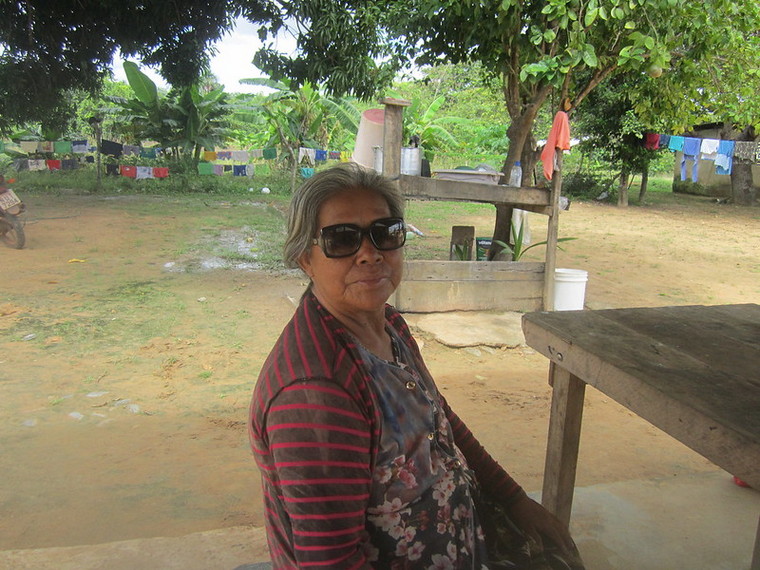
The low quality of the electricity supplied to Darora is due to the discrimination suffered by indigenous people, according to Adélia Augusto da Silva. The water they used to drink was also dirty and caused illnesses, especially in children, until the indigenous health service began to chemically treat their drinking water. CREDIT: Mario Osava/IPS

The low quality of the electricity supplied to Darora is due to the discrimination suffered by indigenous people, according to Adélia Augusto da Silva. The water they used to drink was also dirty and caused illnesses, especially in children, until the indigenous health service began to chemically treat their drinking water. CREDIT: Mario Osava/IPS

In Brazil’s Amazon jungle, close to a million people live without electricity, according to the Institute of Energy and the Environment, a non-governmental organization based in São Paulo. More precisely, its 2019 study identified 990,103 people in that situation.

Another three million inhabitants of the region, including the 650,000 people in Roraima, are outside the National Interconnected Electricity System. Their energy therefore depends mostly on diesel fuel transported from other regions, at a cost that affects all Brazilians.

The government decided to subsidize this fossil fuel so that the cost of electricity is not prohibitive in the Amazon region.

This subsidy is paid by other consumers, which contributes to making Brazilian electricity one of the most expensive in the world, despite the low cost of its main source, hydropower, which accounts for about 60 of the country’s electricity.

Solar energy became a viable alternative as the parts became cheaper. Initiatives to bring electricity to remote communities and reduce diesel consumption mushroomed.

But in remote plants outside the reach of the grid, good batteries are needed to store energy for the nighttime hours.

Part of the so-called "downtown" in Darora, which has lamp posts, houses, a soccer field and a shed where the community meets. A larger community center is needed, says the leader of the Macuxi village located near Boa Vista, the capital of the northern Brazilian state of Roraima. CREDIT: Mario Osava/IPS

Part of the so-called “downtown” in Darora, which has lamp posts, houses, a soccer field and a shed where the community meets. A larger community center is needed, says
the leader of the Macuxi village located near Boa Vista, the capital of the northern Brazilian state of Roraima. CREDIT: Mario Osava/IPS

A unique case

Darora is not a typical case. It is part of the municipality of Boa Vista, which has a population of 437,000 inhabitants and good resources, it is close to a paved road and is within a savannah ecosystem called “lavrado”.

It is at the southern end of the São Marcos indigenous territory, where many Macuxi indigenous people live but fewer than in Raposa Serra do Sol, Roraima’s other large native reserve. According to the Special Secretariat for Indigenous Health (Sesai), there were 33,603 Macuxi Indians living in Roraima in 2014.

The Macuxi people also live in the neighboring country of Guyana, where there are a similar number to that of Roraima. Their language is part of the Karib family.

Although there are no large forests in the surrounding area, Darora takes its name from a tree, which offers “very resistant wood that is good for building houses,” Homero explained.

The community emerged in 1944, founded by a patriarch who lived to be 93 years old and attracted other Macuxi people to the area.

The progress they have made especially stands out in the secondary school in the village “center”, which currently has 89 students and 32 employees, “all from Darora, except for three teachers from outside,” Homero said proudly.

A new, larger elementary and middle school for students in the first to ninth grades was built a few years ago about 500 meters from the community.

Water used to be a serious problem. “We drank dirty, red water, children died of diarrhea. But now we have good, treated water,” said Adélia da Silva.

“We dug three artesian wells, but the water was useless, it was salty. The solution was brought by a Sesai technician, who used a chemical substance to make the water from the lagoon drinkable,” Homero said.

The community has three elevated water tanks, two for water used for bathing and cleaning and one for drinking water. There are no more health problems caused by water, the tuxaua said.

His current concern is to find new sources of income for the community. Tourism is one alternative. “We have the Tacutu river beach 300 meters away, great fruit production, handicrafts and typical local gastronomy based on corn and cassava,” he said, listing attractions for visitors.

  Source