Coronavirus Hasn´t Slowed Down Ecological Women Farmers in Peru’s Andes Highlands

Active Citizens, Civil Society, Development & Aid, Economy & Trade, Editors’ Choice, Featured, Food & Agriculture, Gender, Green Economy, Headlines, Latin America & the Caribbean, Regional Categories, Special Report, TerraViva United Nations, Women & Economy
Women & Economy

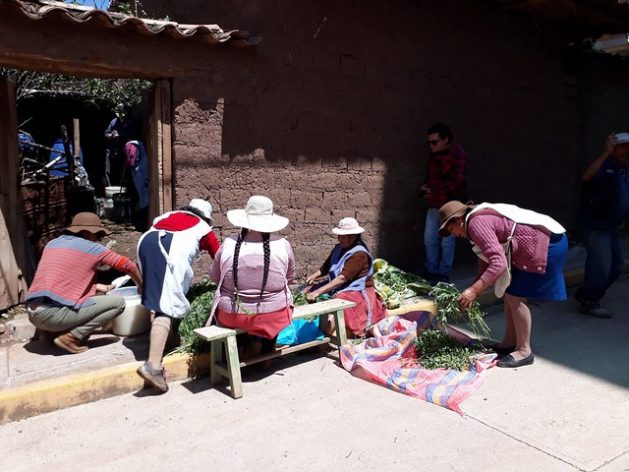
Quechua indigenous farmers from the town of Huasao, in the Andes highlands of Peru, cut insect repellent plants in front of Juana Gallegos' house, while others prepare the biol mixture, a liquid organic fertiliser that they use on their vegetable crops. CREDIT: Mariela Jara/IPS

Quechua indigenous farmers from the town of Huasao, in the Andes highlands of Peru, cut insect repellent plants in front of Juana Gallegos’ house, while others prepare the biol mixture, a liquid organic fertiliser that they use on their vegetable crops. CREDIT: Mariela Jara/IPS

HUASAO, Peru, May 6 2020 (IPS) – It’s eight o’clock in the morning and Pascuala Ninantay is carrying two large containers of water in her wheelbarrow to prepare with neighbouring women farmers 200 litres of organic fertiliser, which will then be distributed to fertilise their crops, in this town in the Andes highlands of Peru.


“We grow healthy, nutritious food without chemicals,” she tells IPS, describing the sustainable agriculture she practices in Huasao, a town of about 1,500 people in Quispicanchi province, 3,300 metres above sea level, in the department of Cuzco in south-central Peru.

It will take them four hours to prepare the “biol”, a liquid fertiliser composed of natural inputs contributed by the local farmers as part of a collective work tradition of the Quechua indigenous people, to which most of the inhabitants of Huasao and neighbouring highlands villages in the area belong.

“Between all of us we bring the different ingredients, but we were short on water so I went to the spring to fill my ‘galoneras’ (multi-gallon containers),” explains Ninantay.

The women, gathered at the home of Juana Gallegos, work in community. While some gather insect repellent plants like nettles and muña (Minthostachys mollis, an Andes highlands plant), others prepare the huge plastic drum where they will make the mixture that includes ash and fresh cattle dung.

They keep working until the container is filled with 200 litres of the fertiliser which, after two months of fermentation in the sealed drum, will be distributed among them equally.

Making organic fertiliser is one of the agro-ecological practices that Ninantay and 15 of her neighbours have adopted to produce food that is both beneficial to health and adapted to climate change.

They are just a few of the almost 700,000 women who, according to official figures, are engaged in agricultural activities in Peru, and who play a key role in the food security and sovereignty of their communities, despite the fact that they do so under unequal conditions because they have less access to land, water management and credit than men.

That is the view of Elena Villanueva, a sociologist with the Flora Tristán Centre for Peruvian Women, a non-governmental organisation that for the past two years has been promoting women’s rights and technical training among small-scale women farmers in Huasao and six other areas of the region, with support from two institutions in Spain’s Basque Country: the Basque Development Cooperation agency and the non-governmental Mugen Gainetik.

“During this time we have seen how much power the 80 women we have supported have gained as a result of their awareness of their rights and their use of agro-ecological techniques. In a context of marked machismo (sexism), they are gaining recognition for their work, which was previously invisible,” she told IPS.
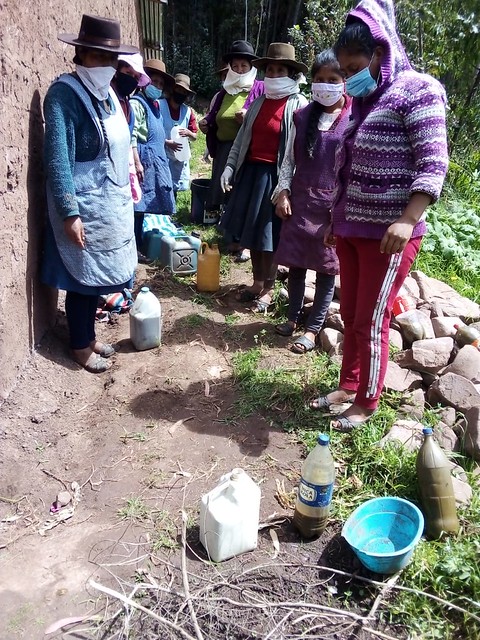
A group of women farmers are ready to head out to the plots they farm on the community lands outside of Huasao, a rural town in Peru's Andes highlands department of Cuzco. They are wearing masks to prevent the spread of COVID-19, because they depend on their production for food and income from the sale of the surplus, to cover their household expenses. CREDIT: Nayda Quispe/IPS

A group of women farmers are ready to head out to the plots they farm on the community lands outside of Huasao, a rural town in Peru’s Andes highlands department of Cuzco. They are wearing masks to prevent the spread of COVID-19, because they depend on their production for food and income from the sale of the surplus, to cover their household expenses. CREDIT: Nayda Quispe/IPS

This group of women farmers is convinced of the need for nutritious food that does not harm people’s health or nature, and they are happy to do their small part to make that happen.

“We want to have a variety of food constantly available, but taking care of our soil, water, plants, trees and air,” says Ninantay.

“We no longer use chemicals,” says Gallegos. “Thanks to the training we have received, we understood how the soil and our crops had become so dependent on those substances, we thought that only by using them would we have a good yield. But no, with our own fertilisers we grow lettuce, tomatoes, chard, artichokes, radishes and all our big, beautiful, tasty vegetables. Everything is organic.”

Once they were producing their fresh produce using agro-ecological techniques, the women decided to also begin growing their staple crops of potatoes and corn organically. “I see that the plants are happier and the leaves are greener now that I fertilise them naturally,” says Ninantay.

Villanueva says these decisions on what to plant and how to do it contribute to new forms of agricultural production that meet the food needs of the women and their families while also contributing to the sustainable development of their communities.

“With agro-ecology they enrich their knowledge about the resistance of crops to climate change, they carry out integrated management of pests and diseases, and they have tools to improve their production planning,” she explains.

And even more important, “this process raises their self-esteem and strengthens their sense of being productive citizens because they are aware that they are taking care of biodiversity, diversifying their crops and increasing their yields,” she adds.

Thanks to this, these peasant women are obtaining surpluses that they now market.

Three times a week, Ninantay and the other women set up their stall in Huasao’s main square where they sell their products to the local population and to tourists who come in search of local healers, famous for their fortune telling and cures, which draw on traditional rituals and ceremonies.
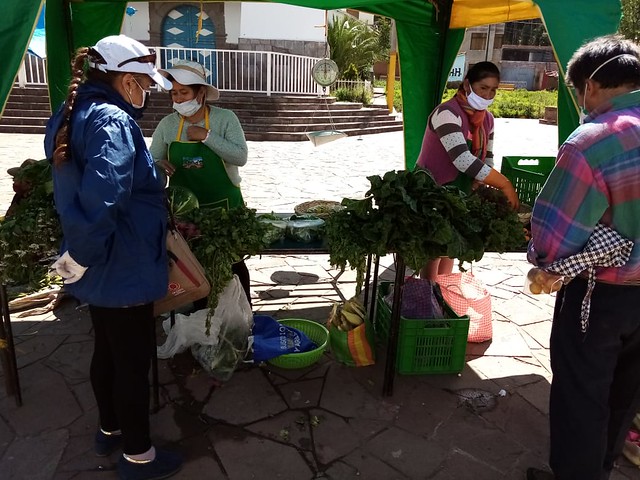
The agro-ecological women farmers set up their stall three times a week in the main square of the rural municipality of Huasao to sell lettuce, tomatoes, Chinese onions, radish and other fresh produce. They are now marketing their wares in compliance with the health regulations put in place in response to the coronavirus pandemic, for which they have received training from the municipal authorities. CREDIT: Nayda Quispe/IPS

The agro-ecological women farmers set up their stall three times a week in the main square of the rural municipality of Huasao to sell lettuce, tomatoes, Chinese onions, radish and other fresh produce. They are now marketing their wares in compliance with the health regulations put in place in response to the coronavirus pandemic, for which they have received training from the municipal authorities. CREDIT: Nayda Quispe/IPS

Coronavirus alters local dynamics

However, the measures implemented by the central government on Mar. 15 to curb the spread of the COVID-19 pandemic have reduced trade, by not allowing outsiders to visit Huasao, known locally as “the village of the witchdoctors” because of its healers.

But the work in the fields has not stopped; on the contrary, the women are working harder than ever.

“We used to have the income of my husband who worked in the city, but because of the state of emergency he can no longer leave,” says Ninantay. “My fellow women farmers are in the same boat, so we continue to harvest and sell in the square and what we earn goes to buying medicines, masks, bleach and other things for the home.”

Initially, she says, the husbands didn’t want their wives to participate in the project and stay overnight away from home to attend the training workshops. But after they saw the money they were saving on food and the income the women were earning, “they now recognise that our work is important.”

Their husbands, like most Huasao men, do not work in the fields. They work in construction or services in the city of Cuzco, about 20 km away, or migrate seasonally to mining regions in search of a better income.

So the community lands, where each family has usufruct rights on three-hectare plots, were left in the hands of women, even though the title is usually held by the men. With the opportunity offered by the Flora Tristán project, they have increased their harvests and are no longer merely subsistence farmers but earn an income as well.

Despite the pandemic, the women obtained permission from the authorities and received training on the care and prevention measures to be followed in order to market their products under conditions that are safe for them and their customers.

Their stall at the open-air market in the town’s main square is already known for offering healthy food, and on Mondays, Tuesdays and Thursdays they run out of vegetables and other products they offer. They also sell their wares in other fairs and markets.

Their stall in the municipal market is also seen as an alternative to return to more natural foods in the face of the increasing change in eating patterns in rural areas.

“Many people don’t want to eat quinoa or ‘oca’ (Oxalis tuberosa, an Andean tuber), they prefer noodles or rice,” says Ninantay. “Children fill up on sweets and junk food and they are not getting good nutrition, and that’s not right. We have to educate people about healthy eating if we want strong new generations.”

She stresses the importance of people understanding that nature, “Mother Earth”, must be respected.

“We have to recover the wisdom of our ancestors, of our grandmothers, to take care of everything that we need to live,” she warns. “If we do not do this, our grandchildren and their children will not have water to drink, seeds to plant, or food to eat.”

Flora Tristán’s Villanueva announced that the 80 women farmers in the programme would participate in initiatives for the recovery of agricultural and water harvesting practices based on forestation and infiltration ditches, using native trees known as chachacomas (Escallonia resinosa) and queñuas (Polylepis).

The women hope that their experience and knowledge will be extended on a large scale, because although they share with their families, neighbours and relatives what they are learning, they believe that the authorities should help expand these practices.

“We would like not only Huasao, but all of Cuzco to be an agro-ecological region, so that we can help nature and guarantee healthy food for the families of the countryside and the city,” says Gallegos, convinced that if they could do it, everyone can.

  Source

Citizen Action is Central to the Global Response to COVID-19

Active Citizens, Development & Aid, Economy & Trade, Global, Headlines, Health, Humanitarian Emergencies, Labour, TerraViva United Nations

Opinion

NEW YORK and MANILA, Apr 22 2020 (IPS) – The coronavirus (COVID-19) pandemic has created an unprecedented human and economic crisis. Governments are taking strong actions, enforcing quarantines to reduce contagion, testing populations, building emergency intensive care units. Governments have also launched large fiscal stimulus plans to protect jobs and the economy, as well as temporary social protection programs such as income/food support, subsidies to utilities and care services.


Isabel Ortiz

But in many countries, even stronger actions are needed if we are to protect lives and jobs. States must respond adequately to this public emergency. Citizens must question if the measures implemented by their governments are sufficient and adequate.

The following are important issues for citizens and civil society organizations (CSOs) to watch out at the country level:

    1. It is time to invest in universal public health, not only emergency support. Given COVID-19, governments are advised to ramp up public health expenditures. Indeed, respirators, tests and masks are necessary, but countries need more than just emergency support. There is a risk that, as governments will become indebted, they continue with austerity cuts and privatizations that have been eroding public health systems in recent years, returning to a situation where millions are excluded from healthcare.
    2. Stimulating the economy and employment. This is much necessary to support job-generating enterprises during the COVID-19 lockdown. However, citizens need to be vigilant that fiscal stimulus do not go to the wrong hands, to large corporations avoiding taxes, to cronies, to the untaxed financial sector. If public funds are given to companies, it should be with strict conditions to stop tax evasion and share buybacks, undergo adequate regulation, cut obnoxious management bonusses, pay living wages and preserve employment.
    3. Providing social protection, income and food support to people. These measures are extremely urgent if people are to be quarantined and are unable to telework. In developing countries, most work precariously in the informal economy and isolation is not possible, households will suffer hunger with no income. Given the low living conditions in most developing countries, policymakers should consider the need for universal social protection floors.
    4. Governments need more executive powers to implement these measures. States and public policies have been weakened over the last decades by deregulations, privatizations and budget cuts. Better planning, better resources and better public policies for all citizens are needed, but it is important to ensure that far right and authoritarian leaders do not use the need for decisive executive action to grab more power for their own ends (eg. Brazil, Hungary, India, Philippines, US).

Additionally, it is important for citizens and CSOs to push for the following measures at the global level:

Walden Bello

    5. Support for global public health, at stake is the survival of the planet. The coronavirus pandemic has revealed the weak state of global public health systems – generally overburdened, underfunded and understaffed because of earlier austerity policies and privatizations. There is urgent need to improve the global governance of health, including the strengthening the WHO and UN agencies that support the extension of public health systems, as well as CSOs monitoring progress.
    6. Put pressure on the international financial institutions such as the IMF and the development banks, so their policies support universal public health systems, jobs and social protection floors at present as well as after the COVID-19 emergency, including resources and fiscal space to finance them.
    7. Given high sovereign debt levels, continue lobbying for debt forgiveness or radical debt relief to ensure that countries get the needed financing; or at least a debt moratoria, and later debt restructuring/relief.
    8. Watch out that new debt and fiscal deficits created to respond to COVID-19 do not result in a new round of austerity cuts with negative social impacts that will undermine public health systems, jobs and social protection.
    9. Ensure capital controls. Capital is flying North to safety, to the US, to Europe. Developing countries are going to be hard hit, not only because of the capital drain but also from the fall of commodity prices and others. Capital controls are easy to implement, with immediate results.
    10. A Global Marshall Plan, or a Global Green New Deal. Global problems require global solutions; after the WW2, the US implemented a Marshall Plan to rebuild Europe. This time, no country alone can or should finance a global plan, it can be built as part of a progressive multilateralism. There are many ways to finance it, solidarity taxes to wealth may well be a best way to reduce inequalities and even up world’s development. It can be complemented by other measures such as issuing more Special Drawing Rights (SDRs) at the international organizations.

The coronavirus pandemic has provided stark evidence of the weaknesses and extreme injustices of our world. We must not return to “normality”, a world where half of its population is living below the poverty line of $5.50 a day. We must move away from an inequitable model based on unregulated finance and corporate power, blind to harmful social and environmental impacts. We must back away from a system that disregards the work of health staff, cleaners, garbage collectors, farmers, and instead reward with huge salaries corporate managers, football players, and others who do not perform any essential activity. Now citizens have the opportunity to move forward.

As countries and enterprises recuperate from the crisis, they will have to rethink their economic model, including fewer links with global supply chains, and more links closer to home. It will be an important time for citizens and CSOs to press for “deglobalization”, making the domestic market again the center of gravity of the economy by preserving local production with decent jobs and green investments, and question global supply chains based on taking advantage of cheaper wages, lesser taxes and environmental regulations elsewhere.

Now is the time for citizens to ensure that world leaders forcefully respond to the COVID-19 crisis, in accordance with human rights. This time it cannot be like many earlier crisis experiences, where insufficient support was provided, or ended in the wrong hands, bailing out banks not the population. Citizens and CSOs have a very important role to play to ensure that governments respond to people.

Isabel Ortiz is Director of the Global Social Justice Program at the Initiative for Policy Dialogue, Columbia University, and former director of the International Labour Organization (ILO) and UNICEF.

Walden Bello is senior analyst at the Bangkok-based Focus on the Global South and the International Adjunct Professor of Sociology at the State University of New York at Binghamton.

  Source

Could the Coronavirus Pandemic have been Avoided if the World Listened to Indigenous Leaders?

Active Citizens, Climate Change, Editors’ Choice, Environment, Featured, Global, Headlines, IPS UN: Inside the Glasshouse, Regional Categories, TerraViva United Nations

Climate Change

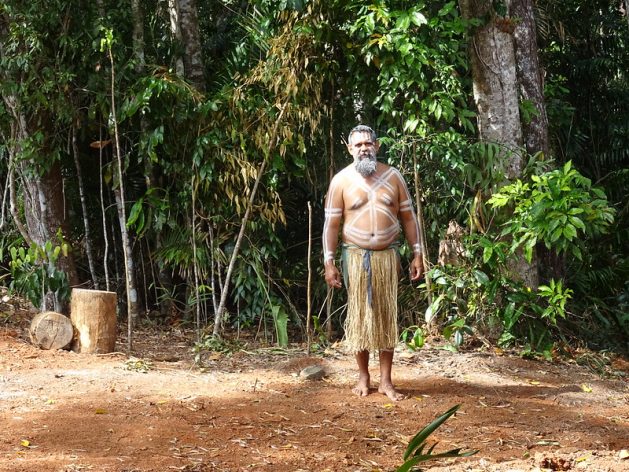
William Clark Enoch of Queensland. Aboriginal and Torres Strait Islander people, who comprise only 2.5 percent of Australia’s nearly 24 million population, are part of the oldest continuing culture in the world. At a Covering Climate Now panel in New York on Friday, indigenous leaders reiterated the need for the world to listen to them in addressing climate concerns. Credit: Neena Bhandari/IPS

UNITED NATIONS, Mar 19 2020 (IPS) Mina Setra remembers the story clearly. As a Dayak Pompakng indigenous person from Indonesia, when  visitors from the city who came into her community; brought bottled water with them because they were worried about the water not being suitable for drinking. 

Setra, who is the deputy secretary-general of the Indigenous Peoples’ Alliance of the Archipelago (AMAN), recalls one of the elders telling the visitors, “This is the problem of you city people: You eat and drink all the dead things. Like the water that is already in a bottle? It is dead water. The vegetables that you buy from the freezer in the supermarket, they’re all dead plants.”

The anecdote sums up a much bigger conversation that is relevant today: how climate change is linked to coronavirus, and why it’s important to listen to indigenous leaders on the matter.

Setra shared the story with IPS when asked about links between climate change and coronavirus, during a panel talk by Covering Climate Now in New York on Friday, where indigenous leaders reiterated the need for the world to listen to them in addressing climate concerns — and reminding them how climate change can lead to or exacerbate a global health crisis as grave as the current virus. 

The talk took place as global communities scrambled to take effective measures against the deadly virus, and just as the U.S. announced a global emergency while struggling to contain its coronavirus cases. More than two months since the world became aware of coronavirus — and increasingly learned of its alarming implicants — the pandemic has globally claimed 8,810 lives, with more than 218,800, cases. 

While global conversations have mainly focused on the issue of death rate, or the racism attached to the virus, or different countries’ isolation methods (or lack thereof), little has been said about the link to climate change.

This remains a much bigger conversation that indigenous leaders want people to be aware of: how climate change can exacerbate the dangers of something like the coronavirus, and why the world should’ve been listening to indigenous leaders to avoid such a catastrophic spread.  While many believe that coronavirus started with a bat, experts argue it’s not so black and white. A February report established what the leaders discussed at the talk: how deforestation can lead to a loss of habitat for many wild animals and species. As a result, they move to habitat that brings them to closer proximity to humans which can lead to repeated contact between them.  

“The inequilibrium of our planet is not just about climate change, but it’s also about the global economy,” Levi Sucre Romero, a member of the BriBri indigenous community from Costa Rica, told IPS at the panel talk. “So coronavirus is now telling the world what we have been saying for thousands of years: that if we do not help protect biodiversity and nature, that we will face this and worse future threats.”

Romero, a coordinator of the Mesoamerican Alliance of Peoples and Forests, further highlighted a United Nations’ statement for why it’s important for global communities to work with indigenous leaders and learn from their knowledge. United Nations for Indigenous Peoples did not respond to the IPS’ request for comments. 

While wild animals and species are forced to find a home in close proximity to humans as a result of deforestation, another crucial concern is the treatment of animals by people from commercial hubs and cities that can act as a catalyst for such a global crisis.

“Our animals are not contaminated by themselves. They get contaminated by people,” Tuxá said in response to IPS’ question about the link between coronavirus and climate change. “And the proof is that these viruses start in the commercial centres of the world. There is a direct correlation between this and coronavirus and other pandemics that are to come.”

Tuxá added the next pandemic’s cure can be found in the diversity of indigenous peoples’ lands. 

“That’s why it’s really important to demarcate and recognise our lands, to protect our lands and our biodiversity because future life depends on it,” he said.

  Source

World’s Young Activists at War: First, Occupy Wall Street, Next Un-Occupy Palestine

Active Citizens, Climate Change, Editors’ Choice, Featured, Global, Headlines, IPS UN: Inside the Glasshouse, Peace, Regional Categories, TerraViva United Nations

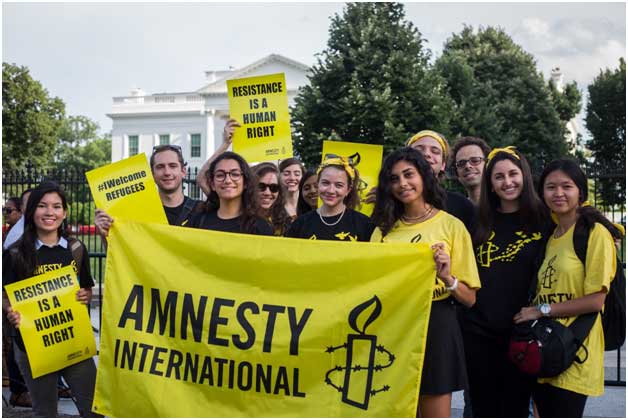
Credit: Amnesty International

UNITED NATIONS, Feb 6 2020 (IPS) – The world’s young activists, numbering over 3.8 billion, are on the war path.

The rising new socialist movements—which originated with “Black Lives Matter” and “Occupy Wall Street” (one protester’s slogan read: “Un-Occupy Palestine”) — were aimed at battling racism, political repression and institutionalized inequalities in capitalist societies.


In its recent cover story, Time magazine dubbed it “Youthquake” – a new phenomenon shaking up the old order, as young activists lead the fight against right-wing authoritarianism, government corruption and rising new hazards of climate change.

Joanne Mariner, Senior Crisis Response Adviser at Amnesty International (AI), told IPS “it is stunning to see how aggressive government efforts to quash protests, including by killing protesters, have not even succeeded in stopping them in the short run”.

In the long run, far too much is at stake, she said, where the coming years are likely to see more protests rather than fewer.

And it is more so in Asia, says AI, in a recently-released report which reviews human rights in 25 Asian and Pacific states and territories during 2019.

“2019 was a year of repression in Asia, but also of resistance”.

“As governments across the continent attempt to uproot fundamental freedoms, people are fighting back – and young people are at the forefront of the struggle,” says Nicholas Bequelin, AI’s Regional Director for East and South-East Asia and the Pacific.

“From students in Hong Kong leading a mass movement against growing Chinese encroachment, to students in India protesting against anti-Muslim policies; from Thailand’s young voters flocking to a new opposition party to Taiwan’s pro LGBTI-equality demonstrators. Online and offline, youth-led popular protests are challenging the established order,” he added.

Also, the rise of a new generation determined to lead the fight against climate emergency has led to a major youth movement worldwide, resulting in protest marches, with thousands of young people demonstrating in the streets of New York and in several world capitals.

According to Time magazine, the world’s under-30 population has been rising since 2012, and today accounts for more than half of the world’s 7.5 billion people.

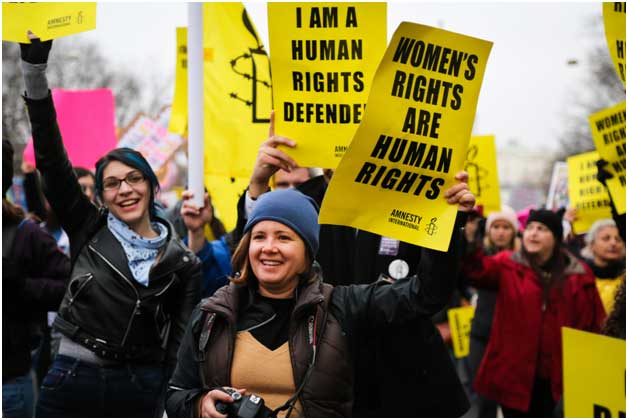
Credit: Amnesty International

Asked for the primary reasons for this surge in young activism, Mariner said this new era of youth activism reflects young people’s understanding that it’s their future at stake.

“If they don’t demand more from governments, including a voice in the decisions that affect their lives, their future is uncertain. It is the young who will inherit this fast-warming planet, and they see all too clearly the consequences of their elders’ inaction and irresponsibility,” she argued.

Meanwhile, the Youth Assembly, described as one of the longest-running and largest global youth summits, is scheduled to take place in New York city February 14-16.

The theme of next week’s 25th session will be: “It’s Time: Youth for Global Impact” aimed at underlining the importance of engaging young people, “especially at a time when the youth are influencing and leading movements that can change the world.”

Meanwhile, the Amnesty International report says China and India, Asia’s two largest powers, set the tone for repression across the region with their overt rejection of human rights.

Beijing’s backing of an Extradition Bill for Hong Kong, giving the local government the power to extradite suspects to the mainland, ignited mass protests in the territory on an unprecedented scale.

Since June, Hong Kongers have regularly taken to the streets to demand accountability in the face of abusive policing tactics that have included the wanton use of tear gas, arbitrary arrests, physical assaults and abuses in detention. This struggle against the established order has been repeated all over the continent, said AI.

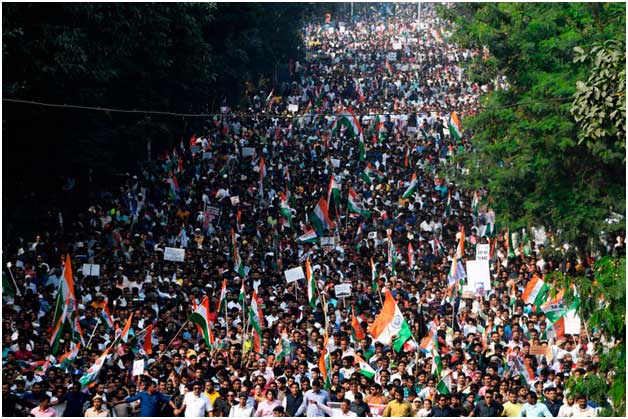
In India, the AI report noted, millions decried a new law that discriminates against Muslims in a swell of peaceful demonstrations. In Indonesia, people rallied against parliament’s enactment of several laws that threatened public freedoms.

In Afghanistan, marchers risked their safety to demand an end to the country’s long-running conflict. In Pakistan, the non-violent Pashtun Tahaffuz Movement defied state repression to mobilize against enforced disappearances and extrajudicial executions.

Divya Srinivasan, Equality Now’s South Asia Consultant, told IPS young people across Asia have shown incredible resilience and bravery in their continuing battle against government repression in 2019.

One remarkable feature of these protests is that in many instances, they have been led by women and girls, including those from minority communities, she added.

In India, one of the epicentres of protests against the new anti-Citizenship Amendment Act (CAA) which discriminates against Muslims, has been the neighbourhood of Shaheen Bagh in New Delhi.

Srinivasan said women and children have braved the winter chill and gathered in huge numbers to continuously occupy a highway around the clock in a peaceful protest that has already lasted over a month.

“The voices of these women, particularly Muslim women, have been bravely opposing the Government’s discriminatory laws, and voicing concerns about the oppression of minorities and police brutality.”

“The Shaheen Bagh protest began on December 14th with around a dozen local women and their children and numbers soon swelled into the hundreds”, she said.

And the site has become a creative space for many children and young people, with singing, storytelling, poetry, and talks happening daily, and drawings, graffiti, posters, photographs, and art installations decorating the roadside where people are camping”

In early 2019, Srinivasan said, India saw another historic protest in the form of the Dignity March, which was a 10,000-kilometre long march through 24 states that brought together thousands of survivors of sexual violence, including many young women and girls, who were raising their voices to call for justice, dignity, and an end to victim-blaming and stigma.”

“Young women across Asia are making their voices heard. We cannot ignore them any longer,” declared Srinivasan, a licensed attorney in India with a background in women’s rights, including work on sexual harassment in the workplace and sexual violence against women.

Asked whether there is a role for the United Nations to either support or give its blessings to these youth activists, AI’s Mariner said: “The UN, including at the highest levels, can and should speak out to demand that governments respect the right of peaceful protest”

She pointed out it was heartening to hear UN Secretary General Antonio Guterres condemn the killings of protesters in Iraq, “although he has been far less vocal regarding repression elsewhere”.

Also encouraging, from the perspective of UN action, are the numerous UN special rapporteurs who have called on the authorities in Hong Kong, India, and Indonesia, among others, to protect the rights of those who participate in protests, she declared.

The AI repot said people speaking out against these atrocities were routinely punished, but their standing up made a difference. There were many examples where efforts to achieve human rights progress in Asia paid off.

In Taiwan, same-sex marriage became legal following tireless campaigning by activists. In Sri Lanka, lawyers and activists successfully campaigned against the resumption of executions.

Brunei was forced to backtrack on enforcing laws to make adultery and sex between men punishable by stoning, while former Malaysian prime minister Najib Razak took the stand on corruption charges for the first time.

The Pakistani government pledged to tackle climate change and air pollution, and two women were appointed as judges on the Maldivian Supreme Court for the first time.

And in Hong Kong, the power of protest forced the government to withdraw the Extradition Bill. Yet, with no accountability for months of abuses against demonstrators, the fight goes on.

The writer can be contacted at thalifdeen@aol.com

  Source

India’s Citizenship Law Triggered by Rising Right-Wing Ideology

Active Citizens, Asia-Pacific, Civil Society, Democracy, Editors’ Choice, Education, Featured, Fostering Global Citizenship, Global, Global Governance, Headlines, Human Rights, Inequity, IPS UN: Inside the Glasshouse, Population

Credit: Foreign Policy

UNITED NATIONS, Jan 6 2020 (IPS) – “Fire bullets at the traitors of the country,” chanted mobs of Bharatiya Janata Party, or BJP, supporters wrapped in Indian flags in Delhi last week.


It’s been less than a month since protests emerged against the BJP’s Citizenship Amendment Act (CAA), a new law to redefine and restrict who is considered an Indian citizen. In a violent crackdown, 27 peaceful protesters have been killed and police have detained 1500 others. BJP vigilante mobs continue to threaten and beat people protesting this controversial bill.

The CAA became law on December 11th, 2019 to provide a path to citizenship for minorities that fled from Afghanistan, Bangladesh, and Pakistan prior to 2014, but its most controversial point is that it specifically excludes Muslims. Critics call it discriminatory and say it threatens the secular nature of India’s constitution by trying to establish a Hindu religious state, or a “Hindu Rashtra,” akin to other religious states like Saudi Arabia or Israel’s attempt for a Jewish nation state.

In addition to the CAA, the Indian government is also planning to implement a National Register of Citizens, also known as the NRC, across the whole nation by 2021. The most recent NRC was implemented by the Indian government in the state of Assam in 2015 forcing Indians to provide documented proof of their citizenship to be considered Indian citizens. The result was the disenfranchisement of 1.9 million mostly Muslim residents who now risk being sent to illegal detention camps as they do not have what the government considers sufficient documentation or “legacy documents” which must date back to the 1970s. People fear that its extension to the rest of the country will not only affect Muslims who are not safeguarded by the CAA, but also the poorest, unlettered parts of society.

According to Indian historian and executive-director of the Tricontinental Institute for Social Research, Vijay Prashad, the BJP has couched the CAA as a progressive refugee policy which is redundant given that India is already a signatory of the Global Compact for Migration as well as other international treaties on migration and refugees.

“Why not bring these treaties to be ratified by India, why bother to create your own bizarre thing if there’s already an international framework to say that we accept refugees and migration?” he asked rhetorically. “Well it’s because they’ve used the question of migration not for migration itself but to define what is an Indian citizen, which is a very chilling thing because now they are making the claim that Muslims are not citizens in India,” Prashad told IPS News.

Prashad says this is a core part of the BJP’s right-wing ideology. India’s home minister Amit Shah even referred to undocumented Muslim migrants coming from Bangladesh to India as “termites” and “infiltrators” and threatened to throw them into the Bay of Bengal.

India is currently the world’s largest democracy which historically has not used religion as a prerequisite for citizenship. According to Ramya Reddy, human rights lawyer from Georgetown University Law Center, the CAA puts India’s democracy at risk by violating Articles 14 and 21 of the Indian constitution, which deal with equality and liberty.

Protests

Daily protests have been met with extreme violence by the police who have fired stun grenades, smoke bombs, tear gas, and even used live ammunition to shoot and kill protestors. Police have attempted to stop protests by imposing Section 144 of the Penal Code, a draconian law from the British Raj historically used to crush freedom fighters by prohibiting the assembly of more than 4 people. The section of this law, however, is being applied selectively.

“When the radical Hindutva supporters gather, this is not considered an unlawful gathering according to the police because they’re pro-government. The police even escort them,” said Aatir Arshad a Bachelor’s student from Jamia Millia University who’s been involved in recent protests.

Jamia Millia Islamia University, a public college in New Delhi with a majority-Muslim student body, became the center of the protest movement in Delhi after police stormed the university campus, dragged out several students, beat them up and arrested them, including those who were not participating in the demonstrations.

“They rushed into the library, where students were not even protesting, they were just studying for their exams and the police beat them up,” Arshad told IPS News. “That moment was apocalyptic for Jamia Milia Islamia. They also harassed students and then claimed they did nothing.”

Arshad adds that police also entered the mosque on the university campus, beat up the Imam, as well as the guards of the university. Protests are still going on because of the events from that day.

Ahla Khan, an alumnus from Jamia Millia and resident of the Jamia Nagar area, explained to IPS News how on the first day of protests her and her sister were just walking to Jamia University when they got caught in the middle of a confrontation between police and protesters. They ran to the sidewalk and watched as police hit students with batons.

“I was watching a guy standing there, just looking at his phone doing nothing. The police ask him ‘where are you going’ and he doesn’t say anything. And just like that the police start beating him up,” says Khan.

She explains how the protesters have been highly organized and peaceful in Delhi. Many have volunteered to distribute tea in the biting cold weather, organized assemblies and facilitated plays and book readings. Chants and slogans have called for repealing the CAA as well as for Azaadi, or freedom. Police have been more restrained than in Uttar Pradesh (UP) where police violence has been lethal. The Chief Minister of UP called a meeting in late December threatening to seize property of those involved in protests “to compensate damage to public property.”

“In UP police and RSS goons have been barging into people’s houses, hitting them, beating people up, thrashing their entire houses, looting them, TVs and fridges broken,” said Khan.

The government has also made several attempts to prevent media outlets from covering police violence and has blocked the internet is several parts of India where there are massive protests. Internet shutdowns have become commonplace, with the shutdown in Kashmir being the longest ever in a democracy.

International Response

While many protesters are still languishing in jail, the United Nations has voiced concern over the CAA with Secretary-General Antonio Guterres’ spokesperson, Stephane Dujarric, calling for “restraint and urg[ing] full respect for the rights of freedom of opinion and expression and peaceful assembly.” UN Human Rights Commissioner Michelle Bachelet’s spokesperson stated that the law “would appear to undermine the commitment to equality before the law enshrined in India’s Constitution.”

Despite this, Reddy says that this doesn’t have any enforcement as domestic law always takes precedence over international law. Even though the UN has criticized the CAA, “[changes have] to happen domestically or with pressure,” she said. And right now, no other major international powers like the UK, the US, and Canada have come out against this because they’re strong allies [of India],” Reddy told IPS News.

In fact, on a recent visit to Washington, D.C. India’s External Affairs Minister Subrahmanyam Jaishankar cancelled a meeting with the House Foreign Affairs Committee after the other members of Congress refused to exclude Rep. Pramila Jayapal (D-Wash.), a critic of the CAA, NRC, and India’s actions in Kashmir.

South Asian students in the United States are expressing their dismay with the Indian government by launching a campaign demanding their House of Representatives “express their disapproval through targeted sanctions against Modi government officials until both laws are repealed.” So far, the letter has been signed by the Yale South Asian Society, Harvard College U.S.-India Initiative, Columbia University South Asian Organization, University of Pennsylvania South Asia Society Board, Cornell University South Asian Law Students Association, Brown University South Asian Students Association and Dartmouth University Muslim Students Association Al-Nur, and many other student groups.

Democratic Deficit

Implementing a nationwide National Register of Citizens will cause massive economic disruption, according to a recent report by the Wire. The article states that the NRC in the state of Assam alone, which makes up just 3% of the population, “took almost a decade, required the involvement of over 50,000 government employees and cost more than Rs. 1,200 crore,” or just over 168 million US dollars. While the Indian development dream is flailing with its ranking in hunger slipping annually and unemployment rising, the implications of implementing these exclusionary laws go beyond the marginalization of Muslims to also draining resources from some of the world’s poorest residents.

“This is not about a policy you can really implement,” said Prashad. “You can’t actually, practically expatriate 200 million Muslims.” Prashad also pointed out in his recent article that India’s Muslims form the eighth-largest country in the world.

The point, he adds, is that “this is a marker saying we are redefining citizenship and emboldening the hard-right and mobs on the street to make it clear to Muslims that they are not welcome here and that India is a Hindu country,” Prashad told IPS.

Despite the hard attempt by the government quell any resistance to the CAA, protests have been occurring daily with Muslims, Dalits, Buddhists, Christians, Sikhs, farmers, lawyers, workers, writers, and journalists joining together to prevent what could leave millions stateless in “the largest disenfranchisement in human history.”

When asking Aatir Ashad, who’s been protesting daily, about his experience he tells IPS News that whenever there’s a call for a protest, the police just close all of the metro stations so that no one can reach the protest site.

“Great democratic country we’re living in,” he says sarcastically, distressingly, as he prepares for another day of joining the protests.

  Source

NYC Library Ditches Controversial Saudi Royal MBS’ Event

Active Citizens, Armed Conflicts, Civil Society, Crime & Justice, Editors’ Choice, Featured, Global Governance, Headlines, Human Rights, IPS UN: Inside the Glasshouse, Middle East & North Africa, North America, Peace, Press Freedom, Regional Categories, TerraViva United Nations

Human Rights

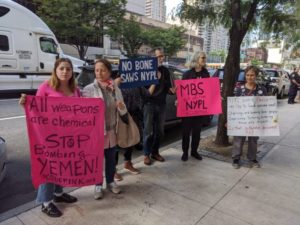
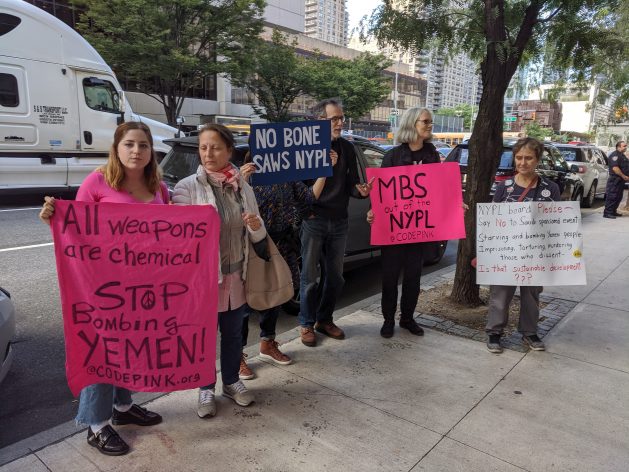
Protestors rallied outside a library building in Manhattan on Wednesday, carrying placards about Saudi Arabia’s war in Yemen and referencing the “bone saw” that was reportedly used to dismember Jamal Khashoggi, a prominent critic of Saudi prince Mohammad bin Salman. Credit: James Reinl/IPS

UNITED NATIONS, Sep 19 2019 (IPS) A New York library appeared to bow to pressure this week when it canceled an event that was being co-hosted by Saudi Arabia’s crown prince Mohammad bin Salman, who is accused of a range of human rights abuses.


On Wednesday, the New York Public Library (NYPL) said it was scrapping the so-called Misk-OSGEY Youth Forum, a workshop on Sept. 23 that was being co-hosted by bin Salman’s Misk Foundation and U.N. youth envoy Jayathma Wickramanayake. 

The event had been blasted by Human Rights Watch (HRW) and other campaign groups, who said it served to whitewash bin Salman’s reputation after the killing of Saudi journalist Jamal Khashoggi in October last year — reportedly on the crown prince’s orders. 

Evan Chesler, chairman of the NYPL board, said that dropping the workshop was the “appropriate thing to do” after weeks of protests and an online petition that had garnered more than 7,000 signatures.

In a statement, the library said it had cancelled the “space rental” amid “concerns about possible disruption to library operations as well as the safety of our patrons” amid “public concern around the event and one of its sponsors”. 

It remains unclear whether the Misk Foundation will seek an alternative venue for the workshop at short notice. A U.N. spokesman told IPS it was “up to Misk to provide information on whether the event will take place elsewhere or not”.

Saudi Arabia’s mission to the U.N. and the Misk Foundation declined to comment on the controversy.

Protestors rallied outside a library building in Manhattan on Wednesday, carrying placards about Saudi Arabia’s war in Yemen and referencing the “bone saw” that was reportedly used to dismember Khashoggi, a prominent critic of bin Salman. 

“This week’s protests show that the public will not keep quiet while the leadership of the NYPL, a treasured repository of civilisation, hires our library out to the butcherer of Khashoggi,” Matthew Zadrozny, president of the Committee to Save the New York Public Library, told IPS.

“The NYPL leadership must explain to the public it serves who signed the deal with bin Salman’s foundation and why.”

Kenneth Roth, director of HRW, blasted the “repression-whitewashing event” on Twitter and asked U.N. secretary-general Antonio Guterres to scrap the partnership between his youth envoy, Wickramanayake, and the crown prince’s charity. 

Suzanne Nossel, CEO of rights group PEN America, said the library had made the “right choice”, addiing bin Salman’s government had “orchestrated the murder and dismemberment of journalist Jamal Khashoggi”.

“Hosting this event just days before the anniversary of Jamal’s killing would have been particularly appalling not just for his family, friends, and colleagues, but also for those currently being persecuted in the kingdom.”

Nossel also noted that the library “is the crown jewel of the literary community in New York” and it stands for “free exchange of ideas and free expression, qualities that the crown prince has repeatedly disdained in both words and actions”.

The NYPL event was set to see some 300 budding young entrepreneurs learn about green themes, corporate responsibility and other parts of the U.N.’s Sustainable Development Goals (SDG) agenda.

Khashoggi, a U.S.-based journalist who frequently criticised the Saudi government, was killed and dismembered on Oct. 2 last year after visiting the Saudi consulate in Istanbul, where he collecting documents for his wedding.

The CIA assessed that bin Salman had ordered Khashoggi’s killing. U.N. expert Agnes Callamard has described the death as a “premeditated execution,” and called for bin Salman and other high-ranking Saudis to be investigated.

Officials in Riyadh, who initially said Khashoggi had left the premises unharmed, now say the journalist was killed by a rogue hit squad that did not involve bin Salman. Activists have since pushed for accountability over the killing.

  Source