Disaster Risk Resilience: Key to Protecting Vulnerable Communities

Active Citizens, Aid, Asia-Pacific, Climate Change, Economy & Trade, Education, Environment, Featured, Food & Agriculture, Headlines, Health, Human Rights, Labour, Poverty & SDGs, TerraViva United Nations, Water & Sanitation

Opinion

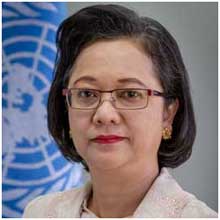
Armida Salsiah Alisjahbana is Under-Secretary-General of the United Nations and Executive Secretary of the United Nations Economic and Social Commission for Asia and the Pacific (ESCAP).

BANGKOK, Thailand, Aug 28 2019 (IPS) – The past five years have been the hottest on record in Asia and the Pacific. Unprecedented heatwaves have swept across our region, cascading into slow onset disasters such as drought. Yet heat is only part of the picture. Tropical cyclones have struck new, unprepared parts of our region and devastatingly frequent floods have ensued. In Iran, these affected 10 million people this year and displaced 500,000 of which half were children. Bangladesh is experiencing its fourth wave of flooding in 2019. Last year, the state of Kerala in India faced the worst floods in a century.

Armida Salsiah Alisjahbana

This is the new climate reality in Asia and the Pacific. The scale of forecast economic losses for the region is sobering. Including slow-onset disasters, average annualised losses until 2030 are set to quadruple to about $675 billion compared to previous estimates. This represents 2.4 percent of the region’s GDP. Economic losses of such magnitude will undermine both economic growth and our region’s efforts to reduce poverty and inequality, keeping children out of schools and adults of work. Basic health services will be undermined, crops destroyed and food security jeopardised. If we do not act now, Asia-Pacific’s poorest communities will be among the worst affected.

Four areas of Asia and the Pacific are particularly impacted, hotspots which combine vulnerability to climate change, poverty and disaster risk. In transboundary river basins in South and South-East Asia such as the Ganges-Brahmaputra-Meghna river basin, floods alternate with prolonged droughts. In South-East Asia and East and North-East Asia earthquakes, tsunamis and landslides threaten poor populations in the Pacific Ring of Fire. Intensifying sand and dust storms are blighting East, Central and South-west Asia. Vulnerable populations in Pacific Small Islands Developing States are five times more at risk of disasters than a person in South and South-East Asia. Many countries’ sustainable development prospects are now directly dependent on their exposure to natural disasters and their ability to build resilience.

Yet this vicious cycle between poverty, inequalities and disasters is not inevitable. It can be broken if an integrated approach is taken to investing in social and disaster resilience policies. As disasters disproportionately affect the poor, building resilience must include investment in social protection as the most effective means of reducing poverty. Conditional cash transfer systems can be particularly effective as was shown in the aftermath of Typhoon Haiyan in the Philippines. Increasing pre-arranged risk finance and climate risk insurance is also crucial. While investments needed are significant, in most countries these are equivalent to less than half the costs forecast to result from natural disasters.

The use of technological innovations to protect the region from natural disasters must go hand in hand with these investments. Big data reveal patterns and associations between complex disaster risks and predict extreme weather and slow onset disasters to improve the readiness of our economies and our societies. In countries affected by typhoons, big data applications can make early warning systems stronger and can contribute to saving lives and reducing damage. China and India are leading the way in using technology to warn people of impending disasters, make their infrastructure more resilient and deliver targeted assistance to affected farmers and citizens.

Asia and the Pacific can learn from this best practice and multilateral cooperation is the way to give scale to our region’s disaster resilience effort. With this ambition in mind, representatives from countries across the region are meeting in Bangkok this week at the United Nations Economic and Social Commission for Asia and the Pacific (ESCAP) to explore regional responses to natural disasters. Their focus will include strengthening Asia-Pacific’s Disaster Resilience Network and capitalising on innovative technology applications for the benefit of the broader region. This is our opportunity to replicate successes, accelerate drought mitigation strategies and develop a regional sand and dust storm alert system. I hope the region can seize it to protect vulnerable communities from disaster risk in every corner of Asia and the Pacific.
  Source

Is Civil Society Arguing Itself out of Political Space?

Active Citizens, Civil Society, Development & Aid, Global, Headlines, Regional Categories

Opinion

Felix Dodds is Adjunct Professor at the University of North Carolina and Associate fellow at the Tellus Institute

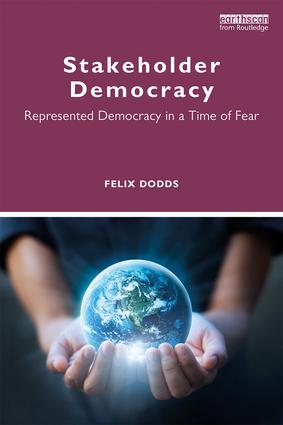
NEW YORK, Jul 29 2019 (IPS) – As some of you will know I have a new book out Stakeholder Democracy: Represented Democracy in a Time of Fear.  (other contributors to the book were:  Jan-Gustav Strandenaes, Carolina Duque Chopitea, Minu Hemmati, Susanne Salz, Bernd Lakemeier, Laura Schmitz, and Jana Borkenhagen). 


The book’s theory of change is very simple involving stakeholders in the decision making makes better-informed decisions and that those decisions are more likely to be implemented with those stakeholder’s support either singularly or in partnership.

The book places Stakeholder Democracy within the spectrum of Representative to Participatory Democracy.

It argues that we need to strengthen represented democracy in a time of fear through engaging stakeholders. It recognizes that in many places politicians are no longer believed but they need to make difficult decisions. To help them do this engaging with the support of stakeholders can help them to have the political courage to address climate change or the wave of new technologies coming or migration or the many other difficult issues we will be facing in the next ten years up to 2030.

Two discourses

Since around 1992 we have had two different political discourses in play that of stakeholders and that of civil society.

Under the leadership of Maurice Strong, Chip Lindner, and Nitin Desai the Earth Summit moved away from the old NGO discourse. This was that in the UN everyone who wasn’t a government or an intergovernmental organization was an NGO as far as the UN was concerned.

The Earth Summit changed that. Agenda 21 recognized 9 stakeholder groups in society who should be involved in policy development and in helping to deliver Agenda 21 and the Rio Conventions. These were:

  1. Women
  2. Children and Youth
  3. Indigenous Peoples
  4. Non-Governmental Organizations
  5. Local Authorities
  6. Workers and Trade Unions
  7. Business and Industry
  8. Scientific and Technological Community
  9. Farmers

By the way, these were enlarged in the development of the 2030 Agenda to include others such as older people and the disabled.

At the same time in the  World Social Summit (1995), the Financing for Development space (2002) and those around the Bretton Woods Institutions a different political discourse evolved that of civil society.

This discourse recognized only two different groups than government and intergovernmental bodies these two were industry and civil society. What did this mean?

Civil Society concept increases space for industry

We often hear in the civil society discourse of the increased space that industry has.

Well, the conceptual framework for civil society by its nature increases the space of industry from one of nine to one to two.

So let’s be clear the advocates for this by their own actions are giving up massive space for industry and reducing space for other stakeholders.

It also allows governments and intergovernmental organizations to just group anyone who isn’t industry into a catch-all group.

Who is Civil Society?

Well, there are many definitions out there and the book looks at some of them. But what it tends to be is a space dominated by NGOs…it does subjugate women, youth, community groups etc into this one space no longer having their individual and unique voices.

By doing this it dilutes the gender perspective – it reduces the voice of the next generation.

Civil Society also excludes a number of key stakeholders that includes academics and scientists, Indigenous Peoples – they are a “Peoples” and should, of course, have not to be subjugated to other views.

It excludes local and subnational government who is seen as a level of government but whose voices freedom found with their national government.

The book goes into examples where this course has resulted in the wrong people being at the table.

The Stakeholder discourse, on the other hand, requires an ongoing stakeholder mapping process to ensure the right people are at the table.

It gives them individual space to articulate for a gender perspective or youth a next-generation perspective. It enables new relevant stakeholders that have emerged over the last 25 years to be recognized and given space such as older people or people with disabilities.

Civil Society discourse is a lazy discourse

What amazes me is how groups that do not benefit from the civil society discourse seem to accept it without question.

I can only think it is because its easier than to argue for the individual voice of relevant stakeholders.

For governments and intergovernmental organizations, it makes their life much easier.

They don’t have to show what they are doing for engaging each of the stakeholders they leave it to a broad engagement with this catch-all group of civil society.

What it has done in many UN bodies that have adopted this reduces the staff support for stakeholders and increase it for industry – a good example of this is UNEP.

After all, now intergovernmental bodies would only be servicing two groups… resulting in the need for only a form of parity between civil society support and industry. Previously there needed to be evidence of support for women, youth, Indigenous Peoples etc.

You can hear from some of those lazy people the comments like…

“ahh how do you decide which stakeholder group you should be a member of”

They go on to say “what if you are a woman and a young person and work for an NGO.

Well, the engagement isn’t and shouldn’t be based on the individual it’s based on the organization in all cases. To be clear it should be based on what the organization’s policy priorities are. If the organization is focused on youth policies then it should engage with the youth caucus, if its work is gender then it should engage with the women’s stakeholder group and if it’s a mixture well work in a number of different stakeholder groups.

Who benefits from the Civil Society discourse?

I always like to look at who benefits to see if that has a bearing.

It’s clear that there is a number that benefit.

Governments and Intergovernmental organizations benefit as they don’t have to address the different voices and leave that coordination to whoever is organizing the civil society group.

Industry benefits as they gain a huge additional space vacated by key stakeholders one of 2 is so much better than one of 9 or more for them.

Also, large well organized northern-based NGOs benefit as they can assert a larger influence on one space than many.

So if you are happy with giving more space to industry, reducing space for women and youth and other key stakeholders, not recognizing Indigenous Peoples right for their own space, do not want academics and scientists to be able to represent their research then do continue to use the civil society concept but understand what you are doing.

You are actively taking part in reducing space for all other stakeholders.


Chilean Schools Recycle Greywater to Combat Drought

Active Citizens, Civil Society, Climate Change, Combating Desertification and Drought, Development & Aid, Editors’ Choice, Education, Environment, Featured, Headlines, Integration and Development Brazilian-style, Latin America & the Caribbean, Population, Poverty & SDGs, Projects, Regional Categories, Special Report, Water & Sanitation

Water & Sanitation

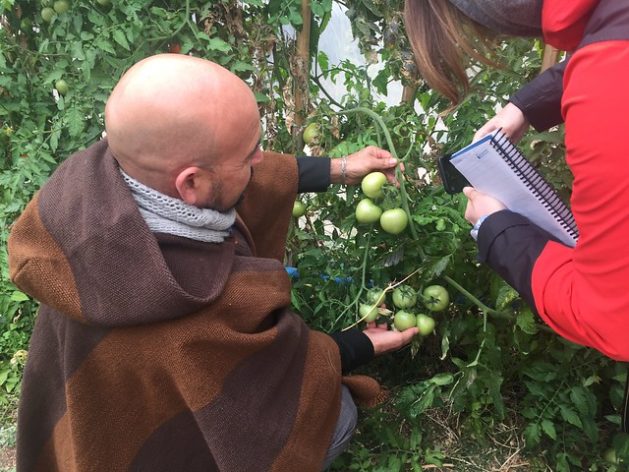
The principal of the Samo Alto rural school, Omar Santander, shows organic tomatoes in the greenhouse built by teachers, students and their families, who raise the crops irrigated with rainwater or recycled water in Coquimbo, a region of northern Chile where rainfall is scarce. Credit: Orlando Milesi/IPS

The principal of the Samo Alto rural school, Omar Santander, shows organic tomatoes in the greenhouse built by teachers, students and their families, who raise the crops irrigated with rainwater or recycled water in Coquimbo, a region of northern Chile where rainfall is scarce. Credit: Orlando Milesi/IPS

OVALLE, Chile, Jul 4 2019 (IPS) – Children from the neighboring municipalities of Ovalle and Río Hurtado in northern Chile are harvesting rain and recycling greywater in their schools to irrigate fruit trees and vegetable gardens, in an initiative aimed at combating the shortage of water in this semi-arid region.


And other youngsters who are completing their education at a local polytechnic high school built a filter that will optimise the reuse and harvesting of water.

“The care of water has to start with the children,” Alejandra Rodríguez, who has a son who attends the school in Samo Alto, a rural village on the slopes of the Andes Mountains in Río Hurtado, a small municipality of about 4,000 inhabitants in the Coquimbo region, told IPS.

“My son brought me a tomato he harvested, to use the seeds. For them, the harvest is the prize. He planted his garden next to the house and it was very exciting,” said Maritza Vega, a teacher at the school, which has 77 students ranging in age from four to 15.

The principal of the school, Omar Santander, told IPS during a tour of rural schools in the area involved in the project that “the Hurtado River (which gives the municipality its name) was traditionally generous, but today it only has enough water for us to alternate the crops that are irrigated, every few days. People fight over watering rights.”

The Samo Alto school collects rainwater and recycles water after different uses. “The water is then sent to a double filter,” he explained, pointing out that they have a pond that holds 5,000 liters.

The monthly water bill is much lower, but Santander believes that the most important thing “is the awareness it has generated in the children.”

“There used to be water here, and the adults’ habits come from back then. The students help raise awareness in their families. We want the environmental dimension to be a tool for life,” he said.

For Admalén Flores, a 13-year-old student, “the tomatoes you harvest are tastier and better,” while Alexandra Honores, also 13, said “my grandfather now reuses water.”

El Guindo primary school, located 10 kilometers from the city of Ovalle, the municipal seat, in a town known as a hotspot for drug sales, performed poorly in tests until three years ago.

At that time, the principal, Patricio Bórquez, and the science teacher, Gisela Jaime, launched a process of greywater recovery. They also planted trees and native species of plants to adapt to the dry environment of the municipality of 111,000 inhabitants, located about 400 kilometers north of Santiago.

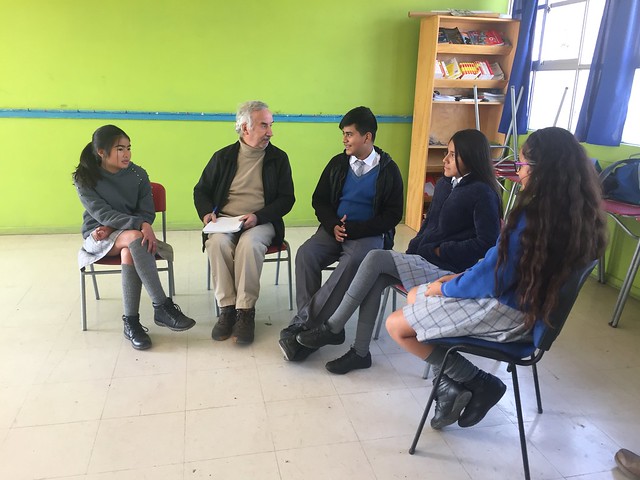
Four students, ages 13 and 14, talk to IPS about how the water reuse project has made them aware of the importance of taking care of water in the semi-arid territory where they live, in a classroom at the rural school of El Guindo, in the municipality of Ovalle, Chile. Credit: Orlando Milesi/IPS

Four students, ages 13 and 14, talk to IPS about how the water reuse project has made them aware of the importance of taking care of water in the semi-arid territory where they live, in a classroom at the rural school of El Guindo, in the municipality of Ovalle, Chile. Credit: Orlando Milesi/IPS

“The project was born because there was no vegetation,” said the teacher. Today they recover 8,000 litres of water a month. “Teaching care for the environment provides a life skill,” said Bórquez.

“Our school had the stigma of being in a place rife with drug addiction. Today in Ovalle we are known as the school with the most programs. We placed third in science,” she said.

Jaime described the experience as “gratifying” because it has offered “tools to grow and create awareness among children and the entire community about the importance of caring for water and other resources.”

Geographer Nicolás Schneider, founder of the “Un Alto en el Desierto” Foundation, told IPS that his non-governmental organisation estimates that one million litres of greywater have been recovered after eight years of work with rural schools in Ovalle.

In this arid municipality with variable rainfall, “only 37.6 mm of rainwater fell in 2018 – well below the normal average for the 1981-2010 period of 105.9 mm,” Catalina Cortés, an expert with Chile’s meteorology institute, told IPS from Santiago.

Schneider describes the water situation as critical in the Coquimbo region, which is on the southern border of the Atacama Desert and where 90 percent of the territory is eroded and degraded.

“Due to climate change, it is raining less and less and when it does, the rainfall is very concentrated. Both the lack of rain and the concentration of rainfall cause serious damage to the local population,” she said.

Innovative recycling filter

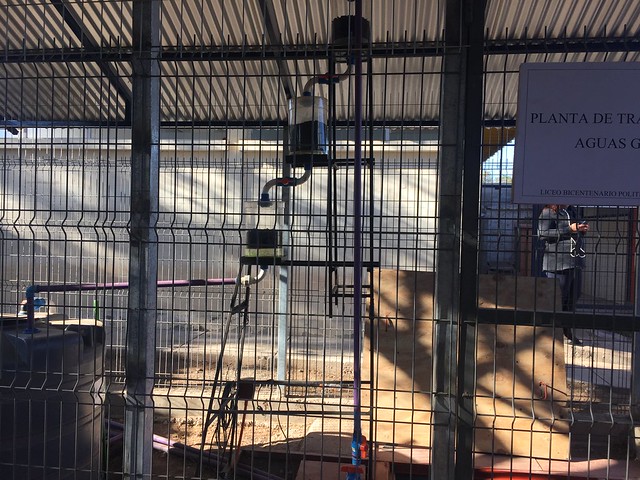
With guidance from their teachers, students at the Ovalle polytechnic high school built a filtration system devised by Eduardo Leiva, a professor of chemistry and pharmacy at the Catholic University. The filter seeks to raise the technical standard with which greywater is purified.

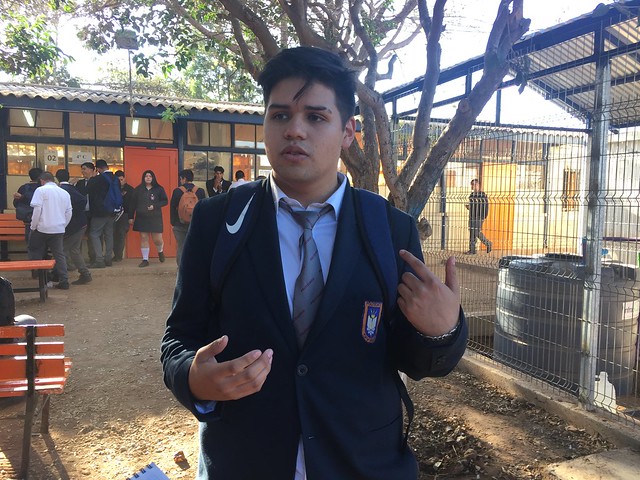
Duan Urqueta, 17, a fourth-year electronics student at the Ovalle polytechnic high school, describes the award-winning greywater filter he helped to build. Initially, units will be installed in eight rural schools in this municipality in northern Chile. Credit: Orlando Milesi/IPS

Duan Urqueta, 17, a fourth-year electronics student at the Ovalle polytechnic high school, describes the award-winning greywater filter he helped to build. Initially, units will be installed in eight rural schools in this municipality in northern Chile. Credit: Orlando Milesi/IPS

The prototype recycles the greywater from the bathrooms used by the 1,200 students at the polytechnic high school. This water is used to irrigate three areas with 48 different species of trees. Similar filters will be installed in eight rural schools in Ovalle.

The quality of the recovered water will improve due to the filter built thanks to a project by the Innovation Fund for Competitiveness of the regional government of Coquimbo, with the participation of the Catholic University, the “Un Alto en el Desierto” Foundation, and the Ovalle polytechnic high school.

The prototype was built by 18 students and eight teachers of mechanics, industrial assembly, electronics, electricity and technical drawing, and includes two 1,000-litre ponds.

The primary pond holds water piped from the bathroom sinks by gravity which is then pumped to a filter consisting of three columns measuring 0.35 meters high and 0.40 meters in diameter.

“The filter material in each column…can be activated charcoal, sand or gravel,” said Hernán Toro, the head teacher of industrial assembly.

Toro told IPS that “the prototype has a column with zeolite and two columns of activated charcoal. The columns are mounted on a metal structure 2.60 meters high.”

View of the water cleaning filter designed at the Ovalle polytechnic high school and built by a group of teachers and students with funding from the government of the region of Coquimbo, in northern Chile. Each unit costs 2,170 dollars and it will promote water recycling in the schools in the semi-arid municipality. Credit: Orlando Milesi/IPS

View of the water cleaning filter designed at the Ovalle polytechnic high school and built by a group of teachers and students with funding from the government of the region of Coquimbo, in northern Chile. Each unit costs 2,170 dollars and it will promote water recycling in the schools in the semi-arid municipality. Credit: Orlando Milesi/IPS

The water is pumped from the pond to the filter’s highest column, passes through the filter material and by gravity runs sequentially through the other columns. Finally, the water is piped into the secondary pond and by means of another electric pump it reaches the irrigation system.

Duan Urqueta, a 17-year-old electronics student, told IPS that they took soil and water samples in seven towns in Ovalle and “we used the worst water to test the filter that is made here at the high school with recyclable materials.”

In 2018, “we won first place with the filter at the Science Fair in La Serena, the capital of the region of Coquimbo,” he said proudly.

Pablo Cortés, a 17-year-old student of industrial assembly, said the project “changed me as a person.”

Toro said the experience “has been enriching and has had a strong social impact. We are sowing the seeds of ecological awareness in the students.”

“It’s a programme that offers learning, service, and assistance to the community. Everyone learns. We have seen people moved to the point of tears in their local communities,” the teacher said.

Now they are going to include solar panels in the project, which will cut energy costs, while they already have an automation system to discharge water, which legally can only be stored for a short time.

Eight schools, including the ones in Samo Alto and El Guindo, are waiting for the new filters, which cost 2,170 dollars per unit.

Schneider believes, however, that at the macro level “water recycling is insufficient” to combat the lack of water in this semi-arid zone. And he goes further, saying “there is an absence of instruments for territorial planning or management of watersheds.”

“Under the current water regulatory framework, the export agribusiness, mainly of fruit, has taken over the valleys, concentrating water use…and the government turns a blind eye,” he complained.


US Takes Back Signature on Arms Trade Treaty

Active Citizens, Armed Conflicts, Civil Society, Democracy, Featured, Global, Global Geopolitics, Global Governance, Headlines, Human Rights, IPS UN: Inside the Glasshouse, Peace, TerraViva United Nations

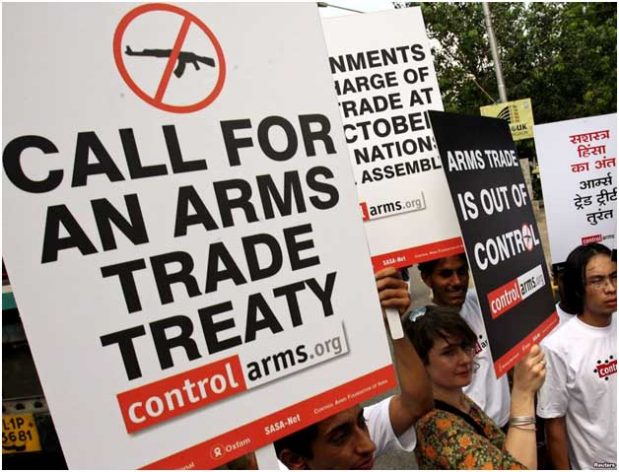
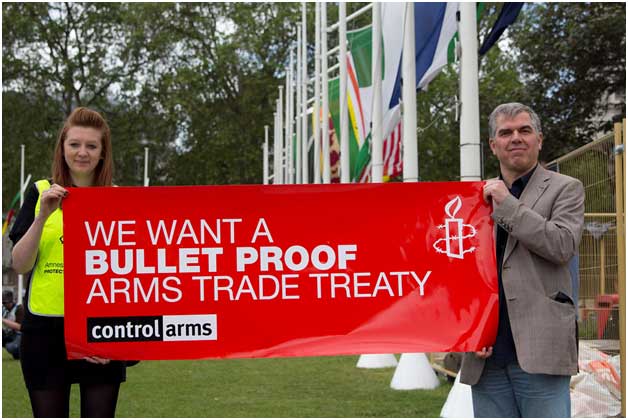
UNITED NATIONS, Apr 29 2019 (IPS) – The United States dropped a political bombshell when President Donald Trump announced his administration would withdraw from the historic Arms Trade Treaty (ATT) which the former Obama administration signed in September 2013.


“We are taking our signature back”, said Trump April 26, addressing a meeting of the National Rifle Association (NRA), one of the most powerful gun lobbies in the US.

The US, in effect, joins three other “rogue states” – North Korea, Iran and Syria – who voted against the treaty at the UN General Assembly back in April 2013, along with 23 countries that abstained on the voting, including China, Russia, India, Indonesia and Saudi Arabia.

Jayantha Dhanapala, a former UN Under-Secretary-General for Disarmament Affairs and ex-President of the Pugwash, told IPS that President Trump “continues to create mayhem in the field of disarmament by wrecking the legal regime created by the international community at the behest of vested interests in the gun lobby sacrificing the humanitarian norms of the world to which the US has contributed.”

The US, which has increasingly shown virtual contempt for multilateralism, has already scuttled the 2015 multilateral nuclear agreement with Iran, refused to participate in the global migration compact, pulled out of the 2015 Paris climate change agreement, abandoned the 12-nation Trans Pacific Partnership (TPP) agreement, and revoked the 1987 Intermediate-Range Nuclear Forces Treaty with Russia.

Dr. Natalie J. Goldring, a Senior Fellow and Adjunct Full Professor with the Security Studies Program in the Edmund A. Walsh School of Foreign Service at Georgetown University, told IPS President Trump is pandering to the National Rifle Association yet again.

She said his announcement that the United States is “un-signing” the Arms Trade Treaty is yet another example of this administration’s abdication of responsibility in the arms control sphere.

In the fact sheet announcing this decision, the Trump Administration stated, “The ATT is simply not needed for the United States to engage in responsible arms trade.”

“The Trump Administration has not been engaged in responsible arms trade in any way, shape, or form. There is indisputable evidence that Saudi Arabia, for example, consistently violates international human rights and humanitarian law”.

“But the Trump Administration continues to pursue arms sales agreements with the Saudi regime,” said Dr Goldring, who is also a Visiting Professor of the Practice in the Duke University Washington DC program.

She pointed out that the United States is the world’s largest arms dealer. It’s long past time for the United States to show leadership on the global arms trade, rather than merely treating arms sales as economic transactions, she added.

The ATT, which was adopted by the United Nations in April 2013 and entered into force in December 2014, was initiated by the UK, a NATO ally of the US.

As of last week, the Treaty has 101 state parties with ratifications, and 45 countries which have signed but not ratified.

Responding to questions at a press briefing April 26, UN spokesperson Stephane Dujarric told reporters that the Arms Trade Treaty is the only global instrument aimed at improving transparency and accountability in the international arms trade.

“It is a landmark achievement in the efforts to ensure responsibility in international arms transfers. This is particularly important in present times, when we witness growing international tensions and renewed interest in expanding and modernizing arsenals,” he added.

Credit: Sarah Myers

Rachel Stohl, Managing Director at the Stimson Center and a consultant who helped draft the text of the treaty, said that President Trump has “once again walked away from America’s leadership role in the world and undermined international efforts to reduce human suffering caused by irresponsible and illegal arms transfers”.

In statement released here, Stohl said “Un-signing the Arms Trade Treaty will undermine international peace and security, increase irresponsible and illegal sales of conventional weapons, and harm the American economy”.

A transparent, responsible arms trade fundamentally serves U.S. national security, promotes U.S. foreign policy objectives, and supports American values.

The ATT facilitates transparency and accountability in a global arms trade worth nearly $90 billion a year, building confidence among governments and ending decades of impunity, she declared.

Dr Goldring said the US government regularly claims to have the strongest global standards for arms transfers. Yet it seeks to abandon the only legally binding treaty that addresses these issues.

“This may seem like a symbolic step, because the Trump Administration had already made clear its lack of support for the treaty,” she added.

But this act has substantive implications as well.

It’s in the US interest to be part of the ATT and to work with other countries to increase their standards for importing and exporting weapons, she noted.

‘Unsigning’ the ATT decreases our leverage with these countries. ‘Do as I say, not as I do’ is a cynical and unpersuasive policy approach,” said Dr Goldring who also represents the Acronym Institute at the United Nations on conventional weapons and arms trade issues.

Abby Maxman, President of Oxfam America, said Trump’s decision to un-sign the Arms Trade Treaty “is a reckless, self-inflicted wound that continues to demonstrate the Administration’s desire to turn its back on global norms, standards and US leadership. It is one more misguided step to dismantle the international partnerships that keep us all safe.”

Just last week, the Administration held hostage a UN Security Council resolution to address sexual violence in conflict– until language about the need for sexual & reproductive health services was removed.

And, it’s no coincidence that this comes on the heels of President Trump’s veto of the Yemen War Powers Resolution and continued military support for Saudi Arabia in the war in Yemen, said Maxman.

President Trump is sending a clear message to civilians caught in the crossfire: “we don’t care.”

The United States will now lock arms with Iran, North Korea and Syria as non-signatories to this historic treaty whose sole purpose is to protect innocent people from deadly weapons.

“The Arms Trade Treaty was developed and signed by the US and others to keep deadly weapons out of the hands of those who may use them to commit genocide, crimes against humanity and war crimes. The treaty has the power to save millions from death, rape, assault and displacement. Each year an estimated 500,000 people are killed as a result of the unregulated and under-regulated arms trade,” said Maxman.

“The Treaty does not infringe on Americans’ right to bear arms or hamper the country’s ability to defend itself or its allies, despite what groups like the NRA, and the Trump Administration may claim.”

Last week’s announcement, he said, “is an empty play to pander to those who resisted this Treaty from the beginning.”

Meanwhile, in a report released April 29, the Stockholm International Peace Research Institute (SIPRI) said total world military expenditure rose to $1,822 billion in 2018, representing an increase of 2.6 per cent from 2017.

The five biggest spenders in 2018 were the United States, China, Saudi Arabia, India and France, which together accounted for 60 per cent of global military spending.

Military spending by the US increased for the first time since 2010, while spending by China grew for the 24th consecutive year. The comprehensive annual update of the SIPRI Military Expenditure Database is accessible from at www.sipri.org.

The report also said that US military spending grew—for the first time since 2010—by 4.6 per cent, to reach $649 billion in 2018.

The US remained by far the largest spender in the world, and spent almost as much on its military in 2018 as the next eight largest-spending countries combined.

‘The increase in US spending was driven by the implementation from 2017 of new arms procurement programmes under the Trump administration,’ said Dr Aude Fleurant, the director of the SIPRI AMEX programme.

Link to ATT Secretariat data on ratification:
https://thearmstradetreaty.org/hyper-images/file/List%20of%20ATT%20States%20Parties%20(alphabetical%20order)(10%20April%202019)/List%20of%20ATT%20States%20Parties%20(alphabetical%20order)(10%20April%202019).pdf

The writer can be contacted at thalifdeen@ips.org


UN’s Empty Promises to World’s Indigenous Peoples

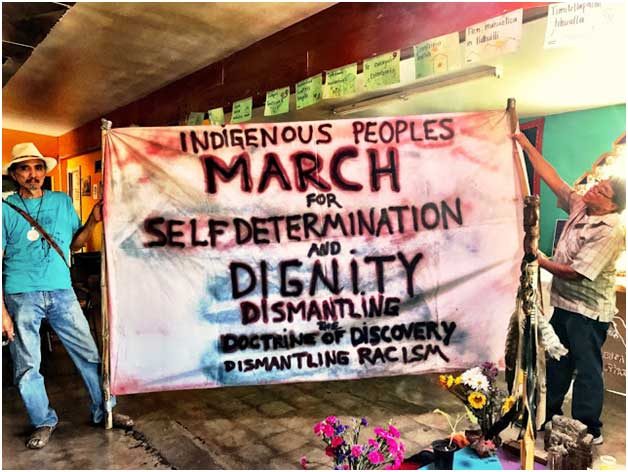
Tupac Enrique Acosta is a member of the Nahuatl Nation and serves as firekeeper for the Nahuacalli, Embassy of Indigenous Peoples in Phoenix, Arizona.

The 18th Session of the United Nations Permanent Forum on Indigenous Issues (UNPFII) will take place 22 April 3 May 2019. The theme of the session will be: “Traditional knowledge: Generation, Transmission and Protection”

PHOENIX, Arizona, Apr 19 2019 (IPS) – The United Nations, as in so many other areas, gives lip service in support of Indigenous issues while lacking the political will and enforcement power over individual member states to comply with the protection of fundamental human rights for the Original Nations of Indigenous Peoples of the world.


It took 47 years since the 1960’s UN declaration in support of the right of “all peoples” to self-determination to be extended to Indigenous Peoples, with the adoption of the 2007 UN Declaration on the Rights of Indigenous Peoples.

But twelve years later, those words have not moved far off the paper on which they are written. Indigenous issues are still being subsumed under the individual domestic rubric of the member states of the UN Nations General Assembly, in defiance of the commitment to universal human rights that self-determination invokes and professes for all humanity.

It is no accident that the last four nation states to support the Declaration – Australia, New Zealand, Canada and the United States – were precisely those nations where the Anglo-European colonizers of the British Empire globally entrenched their colonial relationship with the Indigenous Peoples subsequent to the decline of Great Britain as a world power.

The devastation and genocide of Indigenous Nations and territories continues till today, but under a new mantle of progress called “Development”

For the Original Nations of Indigenous Peoples of the Great Turtle Island Abya Yala [Americas], we know that the subjugation of Indigenous Peoples started 526 years ago with the sword and the cross are now perpetrated with trade agreements and the empty promises of dead letters from the United Nations.

It is all a reflection of the continuing pernicious influence of the Doctrine of Discovery, the series of 15th century papal bulls in which a succession of popes authorized European explorers “discovering” lands in the New World that were not occupied by Christians to consider those lands vacant – terra nullius, in the words of the Doctrine – and to seize those lands in the names of their sovereign and enslave those people who lived there.

Pope Francis, the first pontiff from the Americas, in a 2015 speech in Bolivia went so far as to apologize for the sins of the Church – not individual conquistadores, but the Church itself – in the subjugation and colonization of Indigenous peoples during the conquest of the Americas.

But even as the Pope denounced the “new colonialism” of global capital oppressing Indigenous peoples, he ignores the pleas by a wide array of Christian denominations, including the World Council of Churches, for the Church to renounce the Doctrine. It is ancient history; the Papal Nuncio at the United Nations has said.

But it is not ancient history. It remains the basis of all Indigenous land law in the United States, and across the continent. In Mexico, the entire legal infrastructure since independence from Spain in 1836 is also based on the dictates of the Doctrine, known as the legaloid concept of Original Property of the State.

That is why Indigenous peoples take Mexican President Andres Manuel Lopez Obrador’s recent letter to the Spanish king and the Pope asking for apologies for those genocidal colonial campaigns with little more than a grain of salt.

We know the Doctrine of Discovery’s impact is still pernicious. We see it in the Trump Administration’s racist immigration and refugee policies in the United States, which refuses to even recognize the historical reality of the descendants of those Indigenous peoples who have traveled freely across the US-Mexican border region before it even existed.

We see it in Brazil, where President Jair Bolsinairo has emboldened racist attacks on Indigenous Amazonian communities in the name of promoting even more destruction of ancient forest and waterways that sustain the entire planet.

We see it in Mexico, where President Lopez Obrador has pushed ahead with the tourism-promoting “Maya Train” across the Yucatan peninsula, tearing through the jungles and rivers in Indigenous homelands without even legitimately consulting the indigenous peoples who have lived there since time immemorial.

And we see it in the continuing devastation that a capital-centered economy, with its extractive industries that destroy the air and water we all rely on for survival, threatens the very future of global humanity. The stakes could not be higher.

We had hoped the UN’s creation of the Permanent Forum and passage of the Declaration on the Rights of Indigenous Peoples had started to turn the battleship of oppression at long last, but we have been disappointed. Instead of extending the universal human rights enshrined in those actions to include protection for Indigenous Peoples, the UN member states have subsumed them to the interests of the nation states that wield the most power with the UN’s halls.

That is why we will take to the streets on Monday, April 22, in New York across from the UN on the first day of this year’s session of the Permanent Forum on Indigenous Issues to let delegates know that we will not be quiet, and we will not ignore the continuing impact of the racist and white-supremacist policies let loose on the Western Hemisphere by the Doctrine of Discovery.

And we will continue to call on the United Nations to live up to the commitments it has made to ensuring that the universal human rights it professes to champion before the world extends to the Indigenous peoples as it has, at least in word, committed. We call for world peace, and peace with Mother Earth.

We know the United Nations is far better at its words than at its deeds. We are here to say that is not enough.


Q&A: Achieving “Togetherness”

Active Citizens, Civil Society, Conferences, Featured, Headlines, TerraViva United Nations

Civil Society

This article is part of a series on the current state of civil society organisations (CSOs), which was the focus of International Civil Society Week (ICSW), sponsored by CIVICUS, and which took place in Belgrade, April 8-12.

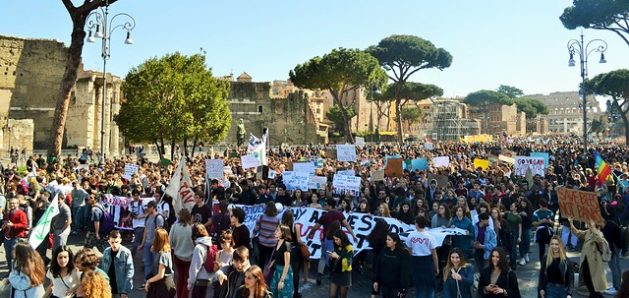
Thousands of youth gather in Rome on Friday, Mar. 15, to join the climate strike, a global movement that aims to make governments and institutions aware of taking serious steps to implement the Paris Agreements and save the planet. Together First, one of the partners of ICSW, is among the groups urging for a more inclusive, collaborative movement to work towards solutions for all. Credit: Maged Srour/IPS

UNITED NATIONS, Apr 16 2019 (IPS) – Increasingly facing restrictions and assault, civil society from around the world have come together to celebrate and promote people power.


Organised by CIVICUS, International Civil Society Week (ICSW) brought together civil society organisations and activists to discuss the threats and challenges that they face in a world where arbitrary detention, censorship, and exclusion have sadly become the norm.

Together First, one of the partners of ICSW, is among the groups urging for a more inclusive, collaborative movement to work towards solutions for all.

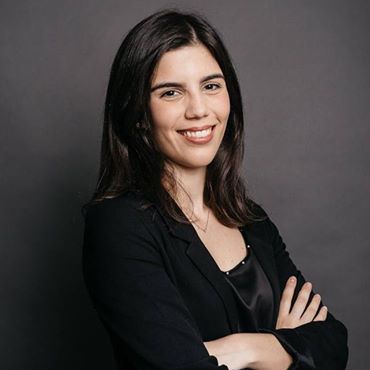
IPS spoke to Giovanna Marques Kuele, non-resident research fellow at Igarapé Institute (Brazil) and a member of Together First’s informal steering group, about the importance of civil society and working together.

Giovanna Marques Kuele, non-resident research fellow at Igarapé Institute (Brazil) and a member of Together First’s informal steering group speaks to IPS about the importance of civil society and working together.

Inter Press Service (IPS): How important is the protection and inclusion of civil society and human rights defenders to you and the global system as a whole?

Giovanna Marques Kuele (GMK): The protection and inclusion of civil society and human rights defenders are essential. While young people are raising their voices to demand inclusion for change, human rights defenders are under attack across the globe, including in my home country Brazil.

During the Civil Society Summit—which took place on the first day of ICSW—Together First endorsed the “The Belgrade Call to Action,” which calls on United Nations member states to take concrete urgent action against the shrinking space for civil society and the increasing reprisals against human rights defenders. Together First relies on the protection of civic space because we—civil society together—are the voices and agents of change that can push for the actions we sorely need to avert existential risks such as climate change.

For us, multilateralism is about more than states. It is about people and organisations working together to achieve a common goal. We at Together First believe that we can no longer rely on the turgid rate of progress by world leaders. Instead, we need to raise our voices and say: we can and must do better. And so we are building a movement that is truly global and meaningfully inclusive. During the ICSW, as a small first step, I met with youngsters who work at grassroots organisations to make sure we find ways to echo their voices, as decisions and actions taken in distance places, like city capitals and New York, can affect their daily lives.

IPS: What are the biggest challenges faced by civil society and human rights defenders today?

GMK: Like many of our colleagues at the ICSW meeting, Together First believes that multilateralism is under threat at a time when we need it more than ever. Global risks such as climate change and weapons proliferation need a collective response. These risks can be grouped into three sets: the ones great powers have not wanted to address (e.g. climate change), the risks insufficiently understood by politicians (e.g. new technologies), and the risks considered too difficult (e.g. the glaring deficit in cyber governance). These risks need collective action. But many governments are overwhelmed. Some are turning inwards, becoming more fiercely nationalist. As a result, the UN—already overstretched and underfunded—is now facing further cuts and struggling to deliver in this difficult environment.

IPS: As a multi-stakeholder group, how does Together First work with and mobilise civil society?

GMK: Together First seeks to build a global people’s movement for a people-centred multilateralism. Together, we want to identify and call for transformative next steps – the most important changes we can make now to address global risks. We also want to raise our level of ambition. The challenges we face are vast and complex; we must demand more than the current glacial pace of change.

Ultimately, we know that if we want to build the effective global governance system we so badly need, we cannot rely on world leaders alone. We must open up the conversation so that, in turn, we can make the system itself transparent and inclusive, where stakeholders play a meaningful role in the decisions and actions that affect their lives.

IPS: What role can the UN play to better promote and protect civil society?

GMK: Together First believes that by harnessing progressive power of civil society and by deploying an innovative and thorough methodology, we can work together to identify feasible and actionable steps to make global governance more effective – and put them into practice.

One of these steps must involve a greater role at the UN for civil society, who are key actors in the policy space and on the ground. What I heard from many people at ICSW is that organisations–as much as they work to achieve SDGs at country level, for instance–do not feel connected to the UN Headquarters, where decisions are ultimately taken. A concrete suggestion is to establish an Envoy for Civil Society—carefully chosen to make sure she or he is able to understand and transmit grassroots concerns to the upper levels.

IPS: As International Civil Society Week comes to a close, what message would you want civil society groups and human rights defenders to take home?

GMK: At ICSW, Together First, with our partners UN2020, made a public call for civil society to share their perspectives and need so we can demand that they are on the table for the UN’s 75th Anniversary in 2020.

Moving forward, it’s essential that our voices are heard at key meetings in the lead up to 2020. On April 23, I will be speaking at an event on building trust in multilateralism organised by the President of the General Assembly and IPI. Please send me your questions and comments via #MultilateralismMatters @TogetherFirst and I will be sure to raise them.

As the theme of this year suggested, ICSW is a testament to the existence of the ‘Power of Togetherness’ – the reality that people and organisations around the world are working together to unlock the potential of collective action. I think the energy of this event showed that we can believe that together it is possible to promote meaningful and inclusive change.