As Civil Society Is Silenced, Corruption and Inequality Rise

Active Citizens, Asia-Pacific, Civil Society, Climate Change, Climate Change Justice, Conferences, COP30, Democracy, Editors’ Choice, Environment, Featured, Global, Headlines, Human Rights, Press Freedom, Sustainable Development Goals, TerraViva United Nations
Civil Society

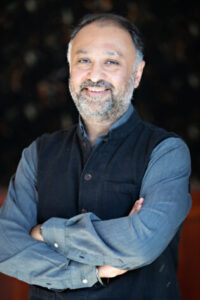
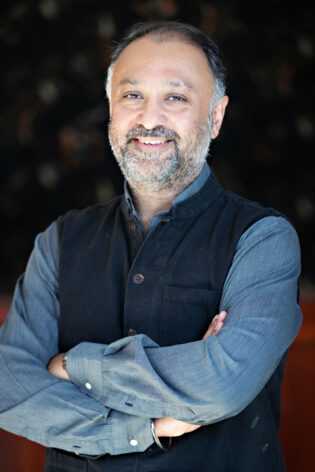
Mandeep Tiwana, Secretary General, CIVICUS Global Alliance. Credit: CIVICUS

Mandeep Tiwana, Secretary General, CIVICUS Global Alliance. Credit: CIVICUS

BULAWAYO & BANGKOK, Oct 31 2025 (IPS) – From the streets of Bangkok to power corridors in Washington, the civil society space for dissent is fast shrinking. Authoritarian regimes are silencing opposition but indirectly fueling corruption and widening inequality, according to a leading global civil society alliance.


The warning is from Mandeep Tiwana, Secretary General of CIVICUS Global Alliance, who points to a troubling trend: civil society is increasingly considered a threat to those in power.

That is a sobering assessment from CIVICUS, which reports that a wave of repression by authoritarian regimes is directly fueling corruption and exploding inequality.

“The quality of democracy on hand around the world is very poor at the moment,” Tiwana tells IPS in an exclusive interview. “That is why civil society organizations are seen as a threat by authoritative leaders and the negative impact of attacking civil society means there is a rise in corruption, there is less inclusion, there is less transparency in public life and more inequality in society.”

His comments come ahead of the 16th International Civil Society Week (ICSW) from 1–5 November 2025 convened by CIVICUS and the Asia Democracy Network. The ICSW will bring together more than 1,300 delegates comprising activists, civil society groups, academics, and human rights advocates to empower citizen action and build powerful alliances. ICSW pays tribute to activists, movements, and civil society achieving significant progress, defending civic freedoms, and showing remarkable resilience despite the many challenges.

The ICSW takes place against a bleak backdrop. According to the CIVICUS Monitor, a research partnership between CIVICUS and over 20 organizations tracking civic freedoms, civil society is under attack in 116 of 198 countries and territories. The fundamental freedoms of expression, association, and peaceful assembly face significant deterrents worldwide.
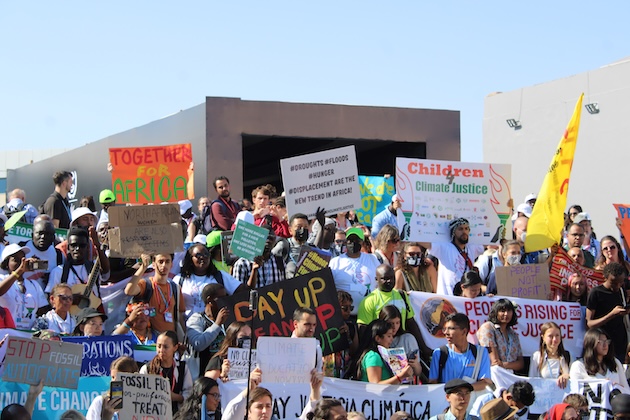
Protests at COP27 in Egypt. Mandeep Tiwana, Secretary General of CIVICUS Global Alliance, is hopeful that COP30, in Belém, Brazil, will be more inclusive. Credit: Busani Bafana/IPS

Protests at COP27 in Egypt. Mandeep Tiwana, Secretary General of CIVICUS Global Alliance, is hopeful that COP30, in Belém, Brazil, will be more inclusive. Credit: Busani Bafana/IPS

“It is becoming increasingly dangerous to be a civil society activist and to be the leader of a civil society organization,” Tiwana tells IPS. “Many organizations have been defunded because governments don’t like what they do to ensure transparency or because they speak out against some very powerful people. It is a challenging environment for civil society.”

Research by CIVICUS categorizes civic freedom in five dimensions: open, narrowed, obstructed, repressed, and closed. Alarmingly, over 70 percent of the world’s population now lives in countries rated in the two worst categories: ‘repressed’ and ‘closed.’

“This marks a regression in democratic values, rights, and accountability,” Tiwana noted, adding that even in the remaining 30% of nations, restrictions on civic freedoms remain.

Repression Tools in Tow

The ICSW, being held under the theme ‘Celebrating citizen action: reimagining democracy, rights, and inclusion for today’s world,’ convenes against this backdrop.

Multifaceted tools are used by governments to stifle dissent. Governments are introducing laws to block civil society organizations from receiving international funding while simultaneously restricting domestic resources. Besides, laws have also been enacted in some countries to restrict the independence of civil society organizations that scrutinize governments and promote transparency.

For civil society activists, the consequences are sobering.

“If you speak truth to power, uncover high-level corruption and try to seek transformative change in society, whether it’s on gender equality or inclusion of minorities you  can be subjected to severe forms of persecution,” Tiwana explained. “This includes stigmatization, intimidation,  imprisonment for long periods, physical attacks, and death.”

Multilateralism Tumbles, Unilateralism Rises

Tiwana said there is an increasing breakdown in multilateralism and respect for international laws from which civil society draws its rights.

This erosion of civic space is reflected in the breakdown of the international system. Tiwana identified a surge in unilateralism and a disregard for the international laws that have historically safeguarded the rights of civil society.

“If you look at what’s happening around the world, whether with regard to conflicts in Palestine, in the Congo, in Sudan, in Myanmar, in Ukraine, in Cameroon, and elsewhere, governments are not respecting international norms,” he observed, remarking that authoritarian regimes were abusing the sovereignty of other countries, ignoring the Geneva conventions, and legalizing attacks on civilians, torturing and persecuting civilians.

This collapse of multilateralism has enabled a form of transactional diplomacy, where narrowly defined national interests trump human rights. Powerful states now collude to manipulate public policy, enhancing their wealth and power. When civil society attempts to expose these corrupt relationships, it becomes a target.

“They are colluding to game public policy to suit their interests and to enhance their wealth.  The offshoot of this is that civil society is attacked when it tries to expose these corrupt relationships,” said Tiwana, expressing concern  about the rise in state capture by oligarchs who now own vast swathes of the media and technology landscapes.

Citing countries like China and Rwanda, which, while they have different ways of functioning, Tiwana said both are powerful authoritarian states engaging in transactional diplomacy and are opposed to the civil society’s power to hold them to account.

The election of Donald Trump as US President in 2025 has shattered the foundation of the US as a democracy, Tiwana noted. The country no longer supports democratic values internationally and is at home with  attacks on the media and defunding of civil society.

The action by the US has negative impacts, as some leaders around the world are taking their cue from Trump in muzzling civil society and media freedoms, he said, pointing to how the US has created common cause with authoritarian governments in El Salvador, Israel,  Argentina, and Hungary.

The fight Goes On

Despite facing repression and threats, civil society continues to resist authoritarian regimes. From massive street protests against corruption in Nepal, and Guatemala  to pro-democracy movements that have removed  governments in Bangladesh  and Madagascar,

“People need to have courage to stand up for what they believe and to speak out when their neighbors are persecuted,” Tiwana told IPS. “People still need to continue to speak the truth and come out in the streets in peaceful protest against the injustice that is happening. They should not lose hope.”

On the curtailing of civil society participation in climate change negotiations, Tiwana said the upcoming COP30 in Brazil offered hope. The host government believes in democratic values and including civil society at the table.

“Past COPs have been held in petro states—Azerbaijan, the United Arab Emirates and Egypt—which are all authoritarian states where civil society has been attacked, crushed, and persecuted,” he said. “We are hopeful that there will be greater inclusion of voices and the commitments that will be made to reduce emissions will be ambitious but the question is really going to be after the COP and if those commitments will be from governments that really don’t care about civil society demands or about the well-being of their people.”

Young people, Tiwana said, have shown the way. Movements like Fridays for Future  and the Black Lives Matter have demonstrated the power of solidarity and unified action.

But, given the massive protests, has this resistance led to change of a similar scale?

“Unfortunately, we are seeing a rise in military dictatorships around the world,” Tiwana admitted, attributing this to a fraying appetite by the international community to uphold human rights and democratic values.

“Conflict, environmental degradation, extreme wealth accumulation, and high-level corruption are interlinked because it’s people who want to possess more than they need.”

Tiwana illustrated what he means by global priorities.

“We have USD 2.7 trillion in military spending year-on-year nowadays, whereas 700 million people go to bed hungry every night.”

“As civil society, we are trying to expose these corrupt relationships that exist. So the fight for equality, the struggle to create better, more peaceful, more just societies—something CIVICUS supports very much—are some of the conversations that we will be looking to have at the International Civil Society Week.”

IPS UN Bureau Report

  Source

They Have Known Nothing but War—The Plight of Syria’s Out-of-School Children

Active Citizens, Aid, Armed Conflicts, Conferences, Development & Aid, Education, Featured, Headlines, Human Rights, Humanitarian Emergencies, Latin America & the Caribbean, Middle East & North Africa, Sustainable Development Goals

Education

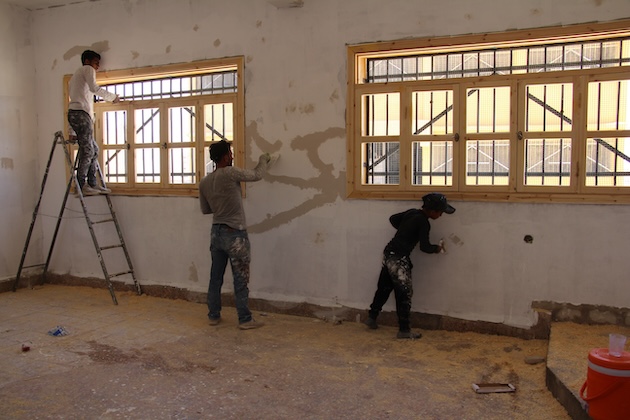
The community gets together to repair a school in the city of Saraqib, located south of Idlib, that was destroyed by bombing during the Assad regime. Credit: Sonia Al Ali/IPS

The community gets together to repair a school in the city of Saraqib, located south of Idlib, that was destroyed by bombing during the Assad regime. Credit: Sonia Al Ali/IPS

IDLIB, Syria, Oct 16 2025 (IPS) – The war has deprived thousands of Syrian children of their right to education, especially displaced children in makeshift camps. Amidst difficult economic conditions and the inability of many families to afford educational costs, the future of these children is under threat.


Adel Al-Abbas, a 13-year-old boy from Aleppo, northern Syria, was forced to quit his education after being displaced from his city and moving to a camp on the Syrian-Turkish border. He says, “I was chasing my dream like any other child, but my family’s poverty and the harsh circumstances stood in my way and destroyed all my dreams.”

Adel had hoped to become an engineer, but he left school and gave up on his goal. He replaced books and pens with work tools to help his impoverished family secure life’s necessities. He adds, “We are living in extremely difficult conditions today; we can’t even afford food. So, I have to find a job to survive and help my family, especially after my father was hit by shrapnel in the head, which caused him a permanent disability.”

Adel’s mother is saddened by her son’s situation, saying to IPS, “We need the income my son brings in after my husband got sick and became unable to provide for our family. In any case, work is better than an education that is now useless after he’s been out of school for so long and has fallen behind his peers.”

Reem Al-Diri, an 11-year-old, left school after her family was displaced from rural Damascus to the city of Idlib in northern Syria. Explaining why, she speaks with a clear sense of regret: “I loved school very much and was one of the top students in my class, but my family decided I had to stop my education to help my mom with the housework.”

The young girl confirms that she watches children on their way to school every morning, and she wishes she could go with them to complete her education and become a teacher in the future.

Reem’s mother, Umayya Al-Khalid, justifies her daughter’s absence from school, saying, “After we moved to a camp on the outskirts of Idlib, the schools became far from where we live. We also suffer from a lack of security and the widespread kidnapping of girls. So, I feared for my daughter and preferred for her to stay at home.”

Causes of school dropout

Akram Al-Hussein, a school principal in Idlib, northern Syria, speaks about the school dropout crisis in the country.

“School dropouts are one of the most serious challenges facing society. The absence of education leads to an unknown future for children and for the entire community.”

Al-Hussein emphasizes that relevant authorities and the international community must exert greater efforts to support education and ensure it does not remain a distant dream for children who face poverty and displacement.

He adds, “The reasons and motivations for children dropping out of school vary, ranging from conditions imposed by war—such as killings, displacement, and forced conscription-to child labor and poverty. Other factors include frequent displacement and the child’s inability to settle in one place during the school year, as well as a general lack of parental interest in education and their ignorance of the risks of depriving a child of schooling.”

In this context, the Syria Response Coordinators team, a specialized statistics group in Syria, noted in a statement that the number of out-of-school children in Syria has reached more than 2.5 million, with northwestern Syria alone accounting for over 318,000 out-of-school children, with more than 78,000 of them living in displacement camps. Of this group, 85 percent are engaged in various occupations, including dangerous ones.

In a report dated June 12, 2024, the team identified the key reasons behind the widening school dropout crisis.

A shortage of schools relative to the population density, a shift towards private education, difficult economic conditions, a lack of local government laws to prevent children from entering the labor market, displacement and forced migration, and a marginalized education sector with insufficient support from both local and international humanitarian organizations are seen as the causes.

The team’s report warned that if this trend continues, it will lead to the emergence of an uneducated, illiterate generation. This generation will be consumers rather than producers, and as a result, these uneducated children will become a burden on society.

Initiatives to Restore Destroyed Schools

The destruction of schools in Syria has significantly contributed to the school dropout crisis. Throughout the years of war, schools were not spared from destruction, looting, and vandalism, leaving millions of children without a place to learn or in buildings unfit for education. However, with the downfall of the Assad regime, several initiatives have been launched to restore these schools. This is seen as an urgent and immediate necessity for building a new Syria.

Samah Al-Dioub, a school principal in the northern Syrian city of Maarat al-Nu’man, says, “Syria’s schools suffered extensive damage from both the earthquake and the bombings. We have collected funds from the city’s residents and are now working on rehabilitating the school, but the need is still immense and the costs are very high, especially with residents returning to the city.” She explained that their current focus is on surveying schools and prioritizing which ones need renovation the most.

Engineer Mohammad Hannoun, director of school buildings at the Syrian Ministry of Education, states that approximately 7,400 schools across Syria were either partially or completely destroyed. They have restored 156 schools so far.

Hannoun adds, “We are working to rehabilitate schools in all Syrian regions, aiming to equip at least one school in every village or city to welcome returning students. The Ministry of Education, along with local and international organizations and civil society, are all contributing to these restoration efforts.”

Hannoun points out that the extensive damage to school buildings harms both teachers and students. It leads to a lack of basic educational resources, puts pressure on the few schools that are still functional, and causes a large number of students to drop out, which ultimately impacts the quality of the educational process.

As part of their contingency plans, Hannoun explains that the ministry, in collaboration with partner organizations, intends to activate schools with the available resources to accommodate children returning from camps and from asylum countries. This effort is particularly focused on affected areas that have experienced massive waves of displacement.

The United Nations Children’s Fund (UNICEF) said in 2025, 16.7 million people, including 7.5 million children, are in need of humanitarian support in the country, with 2.45 million children out of school, and 2 million children are at risk of malnutrition.

The phenomenon of school dropouts has become a crisis threatening Syria’s children, who have been forced by circumstances to work to earn a living for their families. Instead of being in a classroom to build their futures, children are struggling to survive in an environment left behind by conflict and displacement.

  Source

Global South Can Rebalance Climate Agenda in Belém, Says Gambian Negotiator

Active Citizens, Africa, Climate Change, Climate Change Finance, Climate Change Justice, COP30, Development & Aid, Editors’ Choice, Environment, Featured, Global, Headlines, International Justice, Latin America & the Caribbean, Sustainable Development Goals, TerraViva United Nations

COP30


COP30 negotiator Malang Sambou Manneh believes the method of countering growth in fossil fuel development lies in technology. Showcasing alternatives that work provides the opportunity for the global South to take the lead and present best practices in renewables.

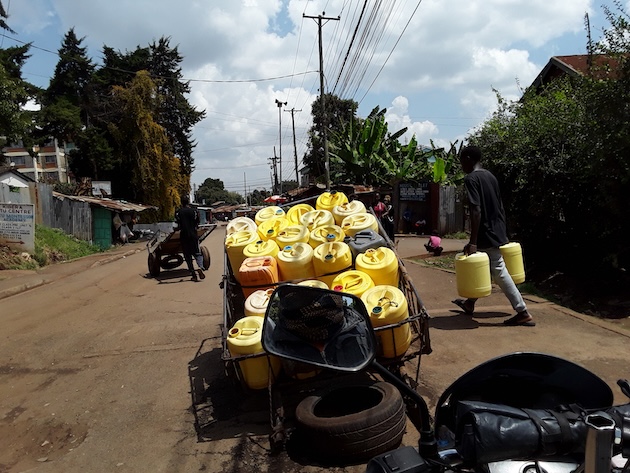
Climate change is a significant contributor to water insecurity in Africa. Water stress and hazards, like withering droughts, are hitting African communities, economies, and ecosystems hard. Credit: Joyce Chimbi/IPS

Climate change is a significant contributor to water insecurity in Africa. Water stress and hazards, like withering droughts, are hitting African communities, economies, and ecosystems hard. Credit: Joyce Chimbi/IPS

NAIROBI, Oct 14 2025 (IPS) – The Gambia’s lead negotiator on mitigation believes that COP30 presents a unique opportunity to rebalance global climate leadership.


“This COP cannot be shrouded in vagueness. Too much is now at stake,” Malang Sambou Manneh says in an interview with IPS ahead of the climate negotiations. He identified a wide range of issues that are expected to define COP30 climate talks.

The global community will shortly descend on the Amazon rainforest, the world’s largest intact forest, home to more than 24 million people in Brazil alone, including hundreds of thousands of Indigenous Peoples. Here, delegates will come face-to-face with the realities of climate change and see what is at stake.

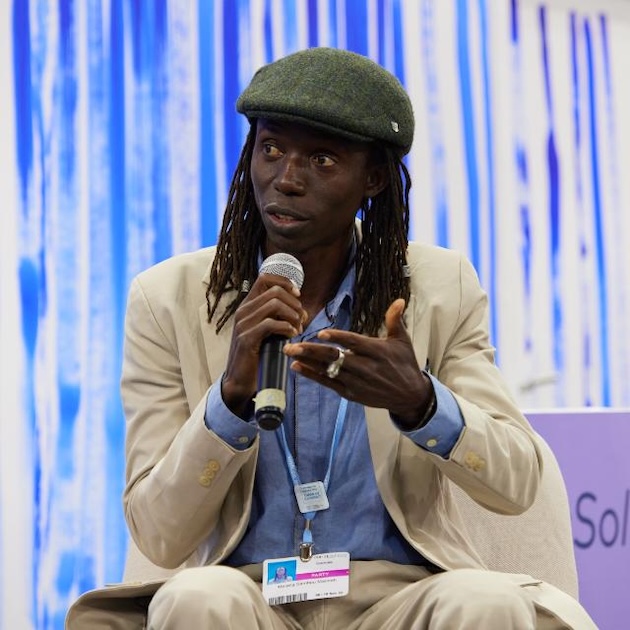
Malang Sambou Manneh

Malang Sambou Manneh.

COP30, the UN’s annual climate conference, or the Conference of Parties, will take place from November 10-21, 2025 in the Amazonian city of Belém, Brazil and promises to be people-centered and inclusive. But with fragmented and fragile geopolitics, negotiations for the best climate deal will not be easy.

Sambou, a lead climate negotiator who has attended all COPs, says a unified global South is up to the task.

He particularly stressed the need for an unwavering “focus on mitigation or actions to reduce or prevent greenhouse gas emissions.” Stating that the Mitigation Work Programme is critical, as it is a process established by the United Nations Framework Convention on Climate Change (UNFCCC) at COP26 to urgently scale up the ambition and implementation of efforts to mitigate climate change globally.

Sambou spoke about how COP30 differs from previous conferences, expectations from the global South, fossils fuels and climate financing, stressing that “as it was in Azerbaijan for COP29, Belem will be a ‘finance COP’ because climate financing is still the major hurdle. Negotiations will be tough, but I foresee a better outcome this time round.”

The Baku to Belém Roadmap to 1.3T is expected to be released soon, outlining a framework by the COP 29 and COP 30 Presidencies for scaling climate finance for developing countries to at least USD 1.3 trillion annually by 2035.

Unlike previous conferences, COP30 focuses on closing the ambition gap identified by the Global Stocktake, a periodic review that enables countries and other stakeholders, such as the private sector, to take inventory to assess the world’s collective progress in meeting its climate goals.

The first stocktake was completed at COP28 in 2023, revealing that current efforts are insufficient and the world is not on track to meet the Paris Agreement. But while the Paris Agreement, a legally binding international treaty on climate change, set off on a high singular note when it entered into force in November 2016, that unity is today far from guaranteed.

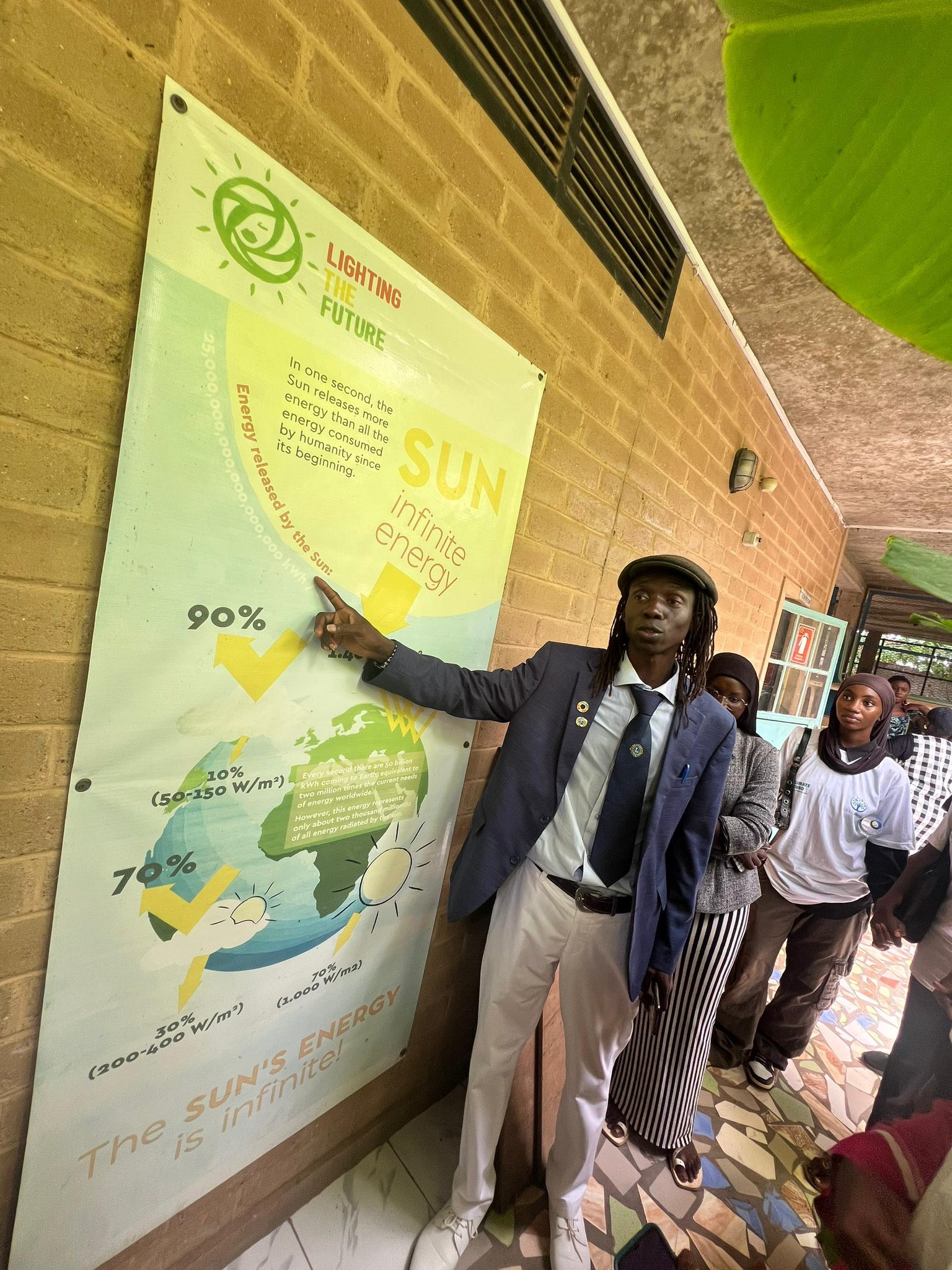
Malang Sambou Manneh with She-Climate Fellows. Credit: Clean Earth Gambia/Facebook

Malang Sambou Manneh with She-Climate Fellows. Credit: Clean Earth Gambia/Facebook

Unlocking high-impact and sustainable climate action opportunities amidst geopolitical turbulence was always going to be difficult. Not only did President Donald Trump pull the United States out of the Paris Agreement, but he is now reenergized against climate programs and robustly in support of fossil fuels—and there are those who are listening to his message.

Sambou says while this stance “could impact the transition from fossil fuels to clean energy, many more countries are in favor of renewable energy than against.”

“But energy issues are complex because fossil fuels have been a way of life for centuries, and developed countries leveraged fossil fuels to accelerate development. And then, developing countries also started discovering their oil and gas, but they are not to touch it to accelerate their own development and must instead shift to renewables. It is a complex situation.”

Ilham Aliyev, the President of Azerbaijan, famously described oil as a “gift from God” at COP29 to defend his country’s reliance on fossil fuels despite climate change concerns. This statement highlights the complexity of the situation, especially since it came only a year after the landmark COP28 hard-won UAE Consensus included the first explicit reference to “transitioning away from all fossil fuels in energy systems” in a COP agreement.

As a negotiator, Sambou says he is very much alive to these dynamics but advises that the global community “will not successfully counter fossil fuels by saying they are bad and harmful; we should do so through technology. By showcasing alternatives that work. This is an opportunity for the global South to take the lead and present best practices in renewables.”

And it seems there is evidence for his optimism. A recent report shows the uptake of renewables overtaking coal generation for the first time on record in the first half of 2025 and solar and wind outpacing the growth in demand.

This time around, the global south has its work cut out, as it will be expected to step up and provide much-needed leadership as Western leaders retreat to address pressing problems at home, defined by escalating economic crises, immigration issues, conflict, and social unrest.

It is in the developing world’s leadership that Sambou sees the opportunities—especially as scientific evidence mounts on the impacts of the climate crisis.

The World Meteorological Organization projects a continuation of record-high global temperatures, increasing climate risks and potentially marking the first five-year period, 2025-2029.

Sambou says all is not lost in light of the new and ambitious national climate action plans or the Nationally Determined Contributions.

This past September marked the deadline for a new set of these contributions, which will guide the COP30 talks. Every five years, the signatory governments to the Paris Agreement are requested to submit new national climate plans detailing more ambitious greenhouse gas emission reduction and adaptation goals.

“Ambition has never been a problem; it is the lack of implementation that remains a most pressing issue. Action plans cannot be implemented without financing. This is why the ongoing political fragmentation is concerning, for if there was ever a time to stand unified, it is now. The survival of humanity depends on it,” he emphasizes.

“Rather than just setting new goals in Belém, this time around, we are better off pushing for a few scalable solutions, commitments that we can firmly hold ourselves accountable to, than 200 pages of outcomes that will never properly translate into climate action.”

Despite many competing challenges and a step forward, two steps backwards here and there, from the heart of the Amazon rainforest, COP30’s emphasis on the critical role of tropical forests and nature-based solutions is expected to significantly drive action for environmental and economic growth.

Note: This interview is published with the support of Open Society Foundations.

IPS UN Bureau Report

  Source

‘No Solution Will Work If the Institutions Responsible for Abuses Remain in Charge of Implementing It’

Active Citizens, Civil Society, Crime & Justice, Featured, Headlines, Human Rights, Latin America & the Caribbean, TerraViva United Nations

Oct 13 2025 (IPS) –  
CIVICUS discusses enforced disappearances in Mexico with a member of the International Network of Associations of Missing Persons.

The crisis of disappearances in Mexico has reached alarming proportions, with over 52,000 unidentified bodies in morgues and mass graves. On 1 July, the Mexican Congress approved controversial changes to the General Law on Disappearances, which promise to modernise the search process through a national biometric system, but which human rights organisations and victims’ groups claim could establish an unprecedented system of mass surveillance.


What are the main changes and how will they affect searches?
The changes seek to strengthen the mechanisms for searching for, locating and identifying missing persons. The main innovations include the creation of a National Investigation File Database and a Single Identity Platform that will integrate various databases. The revised law also provides for the strengthening of the Unique Population Registry Code (CURP) through the incorporation of biometric data such as iris scans, photographs and fingerprints.

The law obliges authorities and individuals to provide information useful for search processes and incorporates new institutions such as the National Guard and the Ministry of Security into the National Search System. It also increases the penalties for the crime of enforced disappearance.

The new system aims to ensure faster and more efficient searches through technology and inter-institutional coordination. It also provides for the use of satellite imagery and advanced identification technologies, under the coordination of the National Search System.

What risks are posed by the authorities’ access to biometric data?

There are serious concerns that the changes give security and justice institutions, including prosecutors’ offices, the National Guard and the National Intelligence Centre, immediate and unrestricted access to public and private databases, including those containing biometric information. The official argument is that this will speed up searches.

However, civil society warns that the Single Identity Platform and the biometric CURP could become instruments of mass surveillance. It is feared the authorities could misuse the information and, instead of helping to find missing persons, use it to help control the population, putting the rights to privacy and security at risk.

How have victims’ groups reacted?

Victims’ collectives have rejected the reform as opaque and rushed. They complain that, although round table discussions were organised, these were merely symbolic and their proposals were not taken into account.

The families of missing persons argue the changes focus on technological solutions that don’t address the underlying structural problems of corruption, cronyism, organised crime and impunity. But no technological solution will work as long as the institutions responsible for abuses and cover-ups remain in charge of implementing it.

This law runs the risk of repeating the mistakes of the 2017 General Law on Enforced Disappearances. That was an important step forward, as it criminalised the offence, created a national search system and sought to guarantee the participation of families in locating and identifying missing persons. Unfortunately, it was never properly implemented. There are fears this new law, in the absence of effective enforcement mechanisms, will only deepen frustration and perpetuate impunity.

What alternatives do victims’ groups propose?

Their demands go beyond legislative changes: they demand truth and justice through thorough investigations, the prosecution of those responsible in state institutions and organised crime groups and an effective search in the field, with the coordination and active participation of victims’ groups.

The collectives also stress the urgency of identifying the over 52,000 unnamed people in morgues and mass graves, and are calling for the creation of an Extraordinary Forensic Identification Mechanism. And they demand real protection for those searching for their relatives, who continue to face threats and attacks.

Above all, they demand an end to impunity through the dismantling of the networks of corruption and collusion between authorities and organised crime. As one local activist summed it up, at the end of the day, without a genuine National Plan for Missing Persons, none of this will work. Each state also needs its own plan. Otherwise, we will remain in the same situation: without results, without reports and without answers about our disappeared.

GET IN TOUCH
Website
Facebook

SEE ALSO
Mexico’s judicial elections consolidate ruling party power CIVICUS Lens 23.Jun.2025
The disappeared: Mexico’s industrial-scale human rights crisis CIVICUS Lens 22.Apr.2025
‘The discovery of the torture centre exposed the state’s complicity with organised crime’ CIVICUS Lens | Interview with Anna Karolina Chimiak 09.Apr.2025

  Source

Wealthy Nations Urged to Curb Climate Finance Debt For Developing Countries

Active Citizens, Civil Society, Climate Action, Climate Change, Climate Change Finance, Climate Change Justice, Conferences, Development & Aid, Economy & Trade, Environment, Gender, Global, Headlines, Sustainability, Sustainable Development Goals, TerraViva United Nations

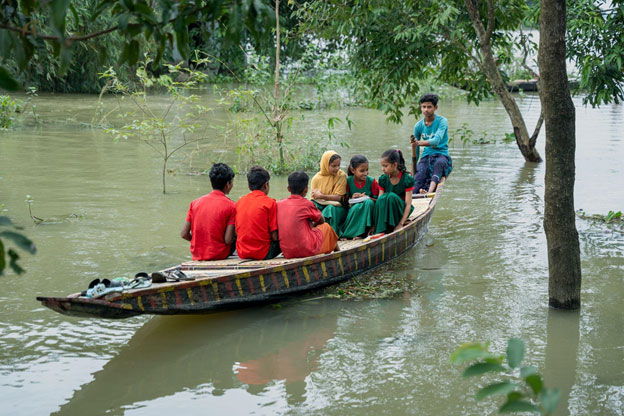
Children in Bangladesh riding a boat through a flooded river to attend school. Bangladesh is one of the most climate-sensitive regions in the world. Credit: UNICEF/Suman Paul Himu

UNITED NATIONS, Oct 8 2025 (IPS) – In recent years, international climate financing has declined sharply, leaving billions of people in developing nations increasingly vulnerable to natural disasters and unable to adapt effectively. With major cuts in foreign aid, these communities are expected to face the brunt of the climate crisis, while wealthier nations continue to reap economic benefits.


A new report from Oxfam and CARE Climate Justice Center, Climate Finance Shadow Report 2025: Analyzing Progress on Climate Finance Under the Paris Agreement, showcases the significant gaps in climate financing for developing countries in the Global South, and the far-reaching implications for climate resilience and global preparedness.

This comes ahead of the 30th United Nations (UN) Climate Change Conference (COP30), in which world leaders, diplomats, and civil society groups will converge in Belém, Brazil, from November 10–21, to discuss strategies to strengthen global cooperation, advance inclusive and sustainable development, and accelerate efforts to address the climate crisis. The United Nations Environment Programme (UNEP) states that there will be a major focus on allocating public funds for mitigation and adaptation efforts in developing countries, aiming to mobilize at least USD 300 billion annually by 2035 for developing countries and a yearly USD 1.3 trillion over the same period.

In the report, CARE and Oxfam found that developing countries are paying disproportionately high disbursements to wealthy nations in exchange for comparatively modest climate finance loans—spending about seven dollars for every five dollars they receive in return. This, compounded with “the most vicious foreign aid cuts since the 1960s”, shows a nearly 9 percent drop in climate funding in 2024, which is projected to drop by a further 9-17 percent in 2025.

“Rich countries are failing on climate finance and they have nothing like a plan to live up to their commitments to increase support. In fact, many wealthy countries are gutting aid, leaving the poorest to pay the price, sometimes with their lives” said John Norbo, Senior Climate Advisor at CARE Denmark. “COP30 must deliver justice, not another round of empty promises.”

As of 2022, developed nations reported pledging approximately USD 116 billion in climate funding for developing countries. However, the actual amount delivered is less than one-third of the pledged total — estimated at only USD 28–35 billion. Nearly 70 percent of this funding came in the form of loans, often issued at standard rates of interest without concessions. As a result, wealthy nations are driving developing countries deeper into debt, despite these nations contributing the least to the climate crisis and lacking the resources to manage its impacts.

It is estimated that developing countries are indebted by approximately USD 3.3 trillion. In 2022, developing countries received roughly USD 62 billion in climate loans, which is projected to produce over USD 88 billion for wealthy countries, yielding a 42 percent profit for creditors. The countries issuing the highest concessional loans in climate financing were France, Japan, Italy, Spain, and Germany.

“Rich countries are treating the climate crisis as a business opportunity, not a moral obligation,” said Oxfam’s Climate Policy Lead, Nafkote Dabi. “They are lending money to the very people they have historically harmed, trapping vulnerable nations in a cycle of debt. This is a form of crisis profiteering.”

Despite wealthy nations issuing high loans to developing countries, Least Developed Countries (LDCs) received only 19.5 percent of the total public climate funding over 2021-2022, while Small Island Developing States (SIDs) received roughly 2.9 percent. Only 33 percent of this funding went toward climate adaptation, a “critically underfunded” measure according to Oxfam, as the majority of creditors favor investing in mitigation efforts that deliver faster financial returns. Additionally, only 3 percent of this funding went to gender equality efforts, despite women and girls being disproportionately impacted by the climate crisis.

The report also underscores the dire impacts of the misallocation of climate financing and funding cuts, as vulnerable communities in particularly climate-sensitive environments find themselves with far fewer resources to adapt to natural disasters.

In 2024, communities in the Horn of Africa were ravaged by brutal cycles of droughts and flooding, which displaced millions of civilians and pushed tens of millions into food insecurity. In Rio Grande do Sul, Brazil, massive floods caused over 180 civilian deaths, displaced 600,000 people, and the resulting damage led to billions of dollars in losses. According to figures from UNICEF, around 35 million children in Bangladesh experienced school disruptions in 2024 due to heatwaves, cyclones, and floods, posing serious risks to their long-term development. The United Nations Environment Programme (UNEP) warns that global temperatures are on course to rise to a “catastrophic” 3°C by the end of the century, with extreme weather events expected to intensify further.

Ahead of the COP30 conference, Oxfam has urged wealthy nations to honor their climate finance commitments, including the delivery of the full USD 600 billion pledged for the 2020–2025 period, aligning with the UN’s target of mobilizing USD 300 billion annually. The organization also called for a substantial increase in global funding for climate adaptation and loss management, alongside the implementation of higher taxes on the wealthiest individuals and fossil fuel companies—which could generate an estimated USD 400 billion per year. Additionally, Oxfam emphasized the need for developed countries to stop deepening the debt of climate-vulnerable nations by expanding the share of grants and highly concessional financing instead of standard loans.

IPS UN Bureau Report


New Report Investigates Violence Against Women and Girls Through Surrogacy, Sparks Global Dialogue

Active Citizens, Civil Society, Development & Aid, Editors’ Choice, Featured, Gender, Gender Violence, Global, Headlines, Health, IPS UN: Inside the Glasshouse, Sustainable Development Goals, TerraViva United Nations, Women’s Health

United Nations Special Rapporteur Reem Alsalem recently released her report on violence against women and girls with a focus on surrogacy, one of the most controversial topics in the medical field.

United Nations Special Rapporteur Reem Alsalem. Credit: UN Photo/Loey Felipe

United Nations Special Rapporteur Reem Alsalem. Credit: UN Photo/Loey Felipe

UNITED NATIONS, Sep 19 2025 (IPS) – A United Nations report calling for the global abolition of surrogacy has sparked intense debate among experts, with critics arguing that blanket bans could harm the very women the policy aims to protect.


Reem Alsalem, the United Nations Special Rapporteur on violence against women and girls, issued a report on violence against women and girls with a specific focus on surrogacy as a form of exploitation. The report, officially titled “The different manifestations of violence against women and girls in the context of surrogacy,” was published on July 14, 2025, and is slated for discussion at the upcoming UN General Assembly session in October.

The report calls surrogacy “direct and exploitative use of a woman’s bodily and reproductive functions for the benefit of others, often resulting in long-lasting harm and in exploitative circumstances.”

It further delves into the danger of surrogacy business models, in particular, which embrace the ambiguity of international law to churn a profit, often at the expense of both the surrogate and the prospective family. Alsalem recommends the abolition of surrogacy and asks member states to “work towards adopting an international legally binding instrument prohibiting all forms of surrogacy.”

One of the largest problems with surrogacy today, according to Senior Lecturer at Swinburne University Jutharat Attawet, is a lack of comprehensive education and legal standards around the practice. This results in social alienation and false conceptions, which worsen exploitation of people who participate in surrogacy—they are not provided adequate resources

Attawet, who specializes in surrogacy healthcare and domestic policy, considers surrogacy itself a beneficial tool for nontraditional family building. However, she acknowledges the steps it has to take to ensure autonomy and respect for surrogates.

Attawet’s research, cited in Alsalem’s report, shows that approximately 1 percent of babies born in Australia are from surrogates, so although the number has doubled over the past decade, doctors are not familiar with the process. Furthermore, legislation is primarily top-down rather than region- or area-specific. Since doctors in places like Australia are “intimidated by the language” surrounding surrogacy due to minimal education, they are less willing to openly engage with the procedures. This pushes families to seek surrogates elsewhere, where laws are less stringent and doctors more comfortable with the procedures.

Another incentive for overseas surrogacy, Attawet says, is lack of national support for surrogacy. Since it does not fulfill the criteria of most healthcare insurance plans, prospective parents often seek a more affordable surrogacy birth internationally. This further contributes to the exploitation both she and Alsalem note in their respective research—international surrogacy is much more difficult to regulate between different countries’ laws and often primarily harms the surrogate and the child, who is less likely to know their birth mother from an international surrogacy.

Alsalem criticized the practice of international surrogacy as an exploitative technique to perpetuate wealth inequality between different countries, but many experts argue that the job is one of the few accessible, well-paying jobs for child-bearing people who need to care for their family full-time. Polina Vlasenko, a researcher whose work was also cited in Alsalem’s report, explained to IPS that international surrogacy in Ukraine and the Republic of Georgia “is the type of job you can combine with having a kid and being a full-time caretaker of your kid… it still benefits women.”

Vlasenko elaborated, saying that most workers in the surrogacy industry, including intermediaries and clinicians, were women who had some sort of pre-existing connection to the process—often being former surrogates. To ban surrogacy entirely, Vlasenko argues, would merely harm women in all facets of the industry rather than resolving wealth gaps. She said, “this inequality is much deeper than services of surrogacy.”

Social worker and professor at Ohio State University Sharvari Karandikar similarly opposes the Special Rapporteur’s recommendation of abolition. In an interview with IPS, Karandikar explained that “in countries like India, it’s really hard to implement policies in a uniform way, and I think that one needs to have proper oversight of medical professionals and how they’re engaging in surrogate arrangements and medical tourism. Blanket bans do not work.”

She emphasized the dangers of surrogacy without regulation, saying it would only do more harm.

Instead, Karandikar advocates for “the safety, the better communication, more education, more informed choice and decision, more safeguards, better treatment options, and long-term health coverage for women who engage in surrogacy” as “a wonderful way to speak about women’s choices, decisions and their health instead of penalizing anyone.”

However, in order for the global conversation surrounding surrogacy to center around female agency, experts like Vlasenko say the perception of surrogates needs to change. She said, “sex work is not seen as violence or exploitation when it’s done for free… it’s the same with childbirth… surrogate mothers are taking the only work that, in their situation, allows them to fulfill certain responsibilities like childcare and income generation. They think that they’re agents in this process, but society sees them as victims.”

Ultimately, the surrogacy debate reflects broader questions about women’s autonomy, economic inequality and reproductive rights. As Vlasenko noted, addressing the “much deeper inequality” that pushes women to surrogacy may prove more effective than focusing solely on limiting the practice itself.

IPS UN Bureau Report

  Source