Carbon Markets Can Provide a Crucial Part of the Solution to the Climate Crisis

Climate Change, Conferences, Development & Aid, Economy & Trade, Energy, Environment, Global, Green Economy, Headlines, Labour, TerraViva United Nations

Opinion

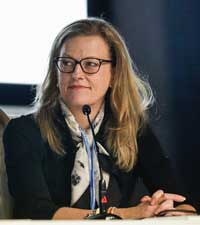
Fenella Aouane, Principal Green Finance Specialist, Investment and Policy Solutions Division, Global Green Growth Institute (GGGI)

SEOUL, South Korea, Dec 18 2019 (IPS) – One of the main discussions at the COP25 climate change talks was Article 6, which is designed to provide financial support to emerging economies and developing countries to help them reduce emissions by using global carbon markets. Carbon pricing is an essential piece of the puzzle to curb emissions. Without a value on carbon, there is less incentive to make positive changes, especially in the private sector. The most efficient way to carry this forward is to allow trading of carbon both nationally and internationally, which will ensure the lowest cost of mitigation for participants globally.

Fenella Aouane

The COP25 negotiations in Madrid have largely been dominated by Article 6 negotiations on potential carbon markets as they are perceived by many, including businesses, as a way to generate financial flows to emerging economies and developing countries, and to reduce emissions at the lowest possible cost. Thus, it’s crucial to adopt decisions on Article 6 as rules need to be set to show how such markets will operate – this is the guidance the Article 6 rulebook will create. The sooner the better, overall mitigation in global emissions (OMGE) will be possible under the Paris Agreement through international carbon trading with aspects such as corresponding adjustments, which were lacking under the Kyoto Protocol. Carbon markets are a way to not only manage mitigation emissions cuts, but help to find the lowest cost and therefore a strong motivator for implementing international efforts.

The Global Green Growth Institute (GGGI), a Seoul-based treaty-based international, inter-governmental organization that supports emerging economies and developing country governments transition to a model of economic growth that is environmentally sustainable and socially inclusive, is already involved in several programs, funded by developed country governments such as Norway and Sweden. GGGI is working with the Norwegian Ministry of Climate and Environment on wider policy approaches, which have been made possible under Article 6 of the Paris Agreement through cooperative approaches. This program looks at helping its member and partner governments to identify areas above their Nationally Determined Contribution (NDC) targets, where emissions reductions directly resulting from policy interventions are quantified and transacted. This creates a flow of carbon finance, in exchange for the transfer of the resultant internationally transferred mitigation outcomes (ITMOs). These programs will not only create ITMO transactions but also set up the lasting infrastructure needed for countries to be able to govern and properly account for future transfers, ensuring environmental integrity and transparency.

GGGI has a key role to play. A further good example is GGGI’s recent collaboration with the Swedish Energy Agency (SEA). The two organizations will work together to catalyze international trading of mitigation outcomes in support of the increased climate ambitions needed under the Paris Agreement. Through a joint cooperation, SEA and GGGI will identify and structure mitigation activities and support the establishment of governance frameworks within host countries as required under the developing rulebook of Article 6 of the Paris Agreement, with the goal of completing ITMO transactions.

Although specific rules related to cooperative approaches under Article 6 have yet to be codified, Article 6 aims at supporting the authorization of international emissions trades while avoiding double counting and ensuring environmental integrity, permitting the movement of the related emission reductions between registries, and better linking national emission trading schemes, project-level transactions, and cooperative approaches.

What next? Carbon markets can and should be seen as an opportunity to lower the cost of cutting greenhouse gas emissions and enabling countries to commit to more ambitious targets. At next year’s Glasgow climate change conference, countries need to come forward with more ambitious Nationally Determined Contributions. GGGI’s work on pioneering designs for international carbon transactions over 2020 will help shape how the carbon markets can contribute to this increased ambition. It has also made the 2020 NDCs a priority in support of its Members and will ensure that there is strong support to deliver this next year. We need to come to Glasgow with concrete plans and steps. However, tackling climate change cannot be solved by one government alone. There needs to be high-level political commitment and collective action – these are a must.
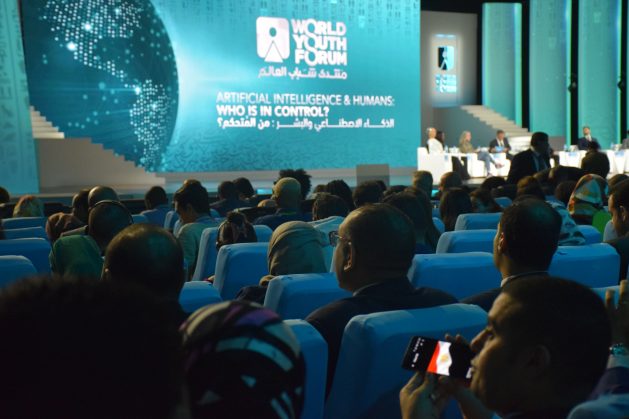
 

Arab Region’s Largest Youth Gathering Focuses on New Tech

Conferences, Economy & Trade, Featured, Headlines, Middle East & North Africa, Population, Regional Categories, TerraViva United Nations

Population

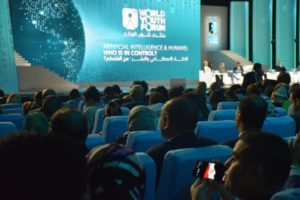
At the Global Youth Forum in Egypt thousands of youth attend a session on Artificial Intelligence and to hear Sophia — a humanoid robot capable of displaying humanlike expressions and interacting with people. Credit: Stella Paul/IPS

SHARM-EL-SHEIKH, Egypt, Dec 18 2019 (IPS) – On late Monday morning, a motley group of more than a thousand youth gathered in a hall in Sharm el-Sheikh, Egypt, to listen to Sophia — a humanoid robot capable of displaying humanlike expressions and interacting with people. Yahya Elghobashy, a computer science engineering student from Cairo, sat excitedly in the audience. A few meters away from him, also in the audience, was Abdel Fattah el-Sisi — the President of Egypt.


As Sophia and a panel of scientists on the stage spoke about Artificial Intelligence (AI), El-Sisi was seen listening attentively and taking notes while the young crowd around him squealed and took photos.

“It was very exciting that I was going to see and hear the world’s best humanoid robot and that the president himself was there,” Elghobashy revealed, a big smile on his face.

Since 2017, Egyptian president El-Sisi has been seen here at the World Youth Forum each year. The event is now the Arab world’s largest youth gathering, focusing on peace, culture and development.

The 3-day forum, which ended yesterday, Dec.17, drew nearly 8,000 people including 64 speakers and several hundred youth leaders from Africa, Asia, Europe, and the Americas. There was also a large contingent of government officials and ministers in attendance, which has been happening under the direct patronage of the president. The core theme of the event is “Egypt: where civilisations meet” – an effort to highlight the cultural diversity of the country to the world.

Technology and innovation in the spotlight

But the dominating subject of discussions at the forum this year was technology and innovation. Of the 20 sessions, half were centred around technology and artificial intelligence (AI), cyber security, industrial innovation and blockchain technologies and applications.

On Monday, Dec. 16, at the session on AI, youths were seen loudly cheering as Sophia the robot spoke. Designed by Hanson Robotics of Hong Kong, Sophia described herself as a robot who is here to assist in the fields of research, education, and entertainment, and help promote public discussion about AI.  At the session, a panel of youth experts also talked passionately about ethics and the future of robotics. “You can build robots that are energy-efficient and also run on renewable energy,” said the humanoid robot to the cheering young crowd.

“This is very progressive that we are discussing advanced technology like AI here. As an engineering student, I think it especially encourages us to talk about what is most relevant to our life, our country and our future,” Elghobashy told IPS.

At a press conference later, El-Sisi assured people that the government was indeed paying attention to the developments at World Youth Forum and planned to bring cutting-edge technologies to the country’s youth for a better future.

“We will be launching a series of new universities teaching all relevant digital age sciences. We will also seek partnerships with international institutions to guarantee a high level of quality education,” El-Sisi said.

New technologies, risks and challenges

Besides the excitement of ground-breaking technologies, the forum also threw light on the risks and challenges of new technologies such as  blockchain – a decentralised, distributed ledger that records the provenance of a digital asset. Cryptocurrency, like Bitcoin, is a perfect example of blockchain technology.

Challenges faced by various countries regarding blockchain due to the lack of national legislation in countries other than China and the United States was also a prominent talking point. This includes possible threats like blockchain being misused by terrorist organisations to sell oil, purchase weapons, and exchange digital currencies.

The missing technologies

Samia Khamis is a student of international relations in Amman, Jordan who traveled to the forum for the first time. “I came via Cairo, which is only an hour away from Jordan, but the moment I stepped out of the airport I could feel that the air pollution level is much higher than my country,” she told IPS.

Cairo is one of the world’s most polluted cities.  According to NUMBEO – an air quality data monitor, residents of Cairo breathe in polluted air, with levels reaching as high as 85 percent.

According to Khamis, Egypt needs to develop technologies that could clear its sky which is “dark” because of pollution. “It is good that we are brining so many technologies on display here, but we need technologies that can make our environment better and our air clearer,” she said.

The forum’s closing ceremony took place on Tuesday night.


Social Summit Demands Stronger Commitments in Climate Talks

Civil Society, Climate Change, Conferences, Development & Aid, Economy & Trade, Editors’ Choice, Environment, Featured, Global, Global Governance, Globalisation, Green Economy, Headlines, Human Rights, Indigenous Rights, IPS UN: Inside the Glasshouse, Poverty & SDGs, Regional Categories

Climate Change

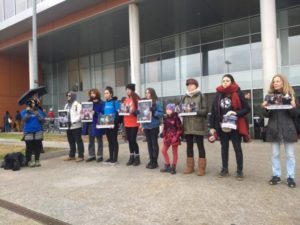
One of the continuous protests staged at the Social Summit for Climate Action, meeting Dec. 7-13 parallel to the official 25th Conference of the Parties (COP25) on climate change. The Summit, hosted by the Complutense University of Madrid, is tackling issues such as the controversial trading of carbon credits, human rights in the climate struggle and opposition to the growing production of hydrocarbons. Credit: Emilio Godoy/IPS

One of the continuous protests staged at the Social Summit for Climate Action, meeting Dec. 7-13 parallel to the official 25th Conference of the Parties (COP25) on climate change. The Summit, hosted by the Complutense University of Madrid, is tackling issues such as the controversial trading of carbon credits, human rights in the climate struggle and opposition to the growing production of hydrocarbons. Credit: Emilio Godoy/IPS

MADRID, Dec 9 2019 (IPS) – As the COP25 deliberations enter the decisive final week, representatives of environmental and social organisations gathered in a parallel summit are pressing the governments to adopt stronger commitments in the face of a worsening climate emergency.


In the debates in the week-long Social Summit for Climate Action, which began Dec. 7 parallel to the Dec. 2-13 United Nations 25th Conference of the Parties (COP25) on climate change taking place in Madrid, skepticism has been expressed with respect to the results to come out of the official meeting.

“Nothing good is going to come out of it for Central America, only proposals that are going to make it more vulnerable. The damage is going to become more serious,” Carolina Amaya, representative of the Salvadoran Ecological Unit, told IPS, pointing out that the region is one of the most exposed to the climate crisis, facing persistent droughts, intense storms, rising sea levels and climate migrants.

The social summit is taking place at the public Complutense University, in the west of the Spanish capital, about 15 km from the IFEMA fairgrounds which are hosting COP25 after Chile pulled out on Oct. 30 from holding the event due to massive anti-government protests and social unrest.

The alternative activities, which also end on Friday Dec. 13, include a varied menu of issues, such as free trade and its socioenvironmental impacts, oil drilling in indigenous territories, the protection of forests, and opposition to trading reductions in greenhouse gas (GHG) emissions, which cause global warming.

They are also discussing the monetisation of environmental services, increased funding for the most vulnerable nations, climate justice and attacks against land rights activists.

The Madrid Social Summit is also holding sessions in Santiago de Chile, under the same slogan, “Beyond COP25: People for Climate”, although there are fewer representatives of organised civil society than at previous COPs because of the last minute change of venue.

Civil society groups are also organising activities at their green pavilion within the official COP25 compound of the United Nations Framework Convention on Climate Change (UNFCCC), where their participation is more formal and ceremonious.

The demands of civil society gained visibility thanks to the mass demonstration held in Madrid on Friday Dec. 6, with the participation of Swedish activist Greta Thunberg, the reluctant star of the official conference and social summit.

COP25 is the third consecutive COP held in Europe, this time under the motto “Time to act”.

The deliberations, which enter the crucial phase of the adoption of agreements Tuesday Dec. 10, are focusing on financing national climate policies, rules for emission reduction markets, and the preparation of the update of emissions reductions and funding of the Warsaw International Mechanism for Loss and Damage, designed to assist regions particularly affected by climate change.

COP25 is the climate summit that directly precedes the 2020 entrance into effect of the historic Paris Agreement on climate change, adopted in the French capital in 2015, which left key areas to be hashed out at the current conference, such as the controversial emissions market.

In their statement to the COP, the organisations criticise the economic model based on the extraction of natural resources and mass consumption, blaming it for the climate crisis, and complaining about the lack of results in the UNFCCC meetings.

“The scientific diagnosis is clear regarding the seriousness and urgency of the moment. Economic growth happens at the expense of the most vulnerable people,” says the statement, which defends climate justice “as the backbone of the social fights of our time” and “the broadest umbrella that exists to protect all the diversity of struggles for another possible world.”

At the social summit, the first “Latin American Climate Manifesto was presented on Monday Dec. 9, which lashes out at carbon credit trading, the role of corporations in climate change and the increase in production of hydrocarbons, while expressing support for the growth of agroecology, the defence of human rights and the demand for climate justice.

In addition, indigenous peoples are holding their own meeting, the “indigenous Minga“, with the message “Traditional knowledge at the service of humanity in the face of climate change.” They are demanding respect for their rights, participation in the negotiations and recognition of their role as guardians of ecosystems such as forests.

“We are here to raise our voices and offer our contribution to fight” against the climate emergency, Jozileia Kaingang, a chief of the Kaingang people and a representative of the non-governmental Articulation of the Indigenous Peoples of Brazil, told IPS.

Brazilian indigenous groups are in conflict with the government of far-right President Jair Bolsonaro because of its attempts to undermine their rights and encourage the commercial exploitation of their territories. In fact, the Brazilian government delegation does not include a single indigenous member – unprecedented in the recent history of the COPs.

Faced with this dispute and the critical situation of the Amazon jungle, Brazil’s indigenous people have sent representatives to Madrid to speak out and seek solidarity.

The murder of two leaders of the Guajajara people in northeastern Brazil on Saturday Dec. 7 shook the indigenous delegation. Two murders had already occurred in that native community in the last two months.

In 2017, the States Parties to the UNFCCC adopted at COP23 the Local Communities and Indigenous Peoples Platform for the exchange of experiences and best practices, thereby ensuring the participation of these groups in the negotiations of the convention.

The Platform’s facilitative working group, composed of delegates from seven States Parties and seven indigenous peoples, is currently developing its plan for the period 2020-2021.

Martín Vilela, a representative of the Bolivian Platform for Climate Change umbrella group of local organisations, questioned the effectiveness of the climate summits.

“The agreements are only paper. Emissions continue to rise and countries’ voluntary targets are insufficient. The countries have to be more ambitious if they really want to avoid major disasters,” he told IPS.

Social organizations fear that the Paris Agreement, when it replaces the Kyoto Protocol next year, will be stillborn, because countries are failing to keep their promises, even though scientists are warning that the goal of limiting global warming to 1.5 degrees Celsius is insufficient.

The Agreement sets mandatory emission reduction targets for industrialised countries and voluntary targets for developing countries in the South.

“The countries need to know that we’re monitoring them. We, the organisations, must prepare ourselves to demand better action,” said Amaya from El Salvador.

For her part, Brazil’s Kaingang argued that the climate struggle would only be effective if it includes indigenous peoples.

COP26 will be hosted by Glasgow, Scotland in November 2020, after pre-conference meetings in Germany and Italy.

This article was supported by the COP25 Latin American Journalistic Coverage Programme.


Indigenous Knowledge, a Lesson for a Sustainable Food Future

Biodiversity, Climate Change, Conferences, Development & Aid, Economy & Trade, Environment, Featured, Food & Agriculture, Food Sustainability, Global, Headlines, Health, Indigenous Rights, Poverty & SDGs, TerraViva United Nations, Trade & Investment

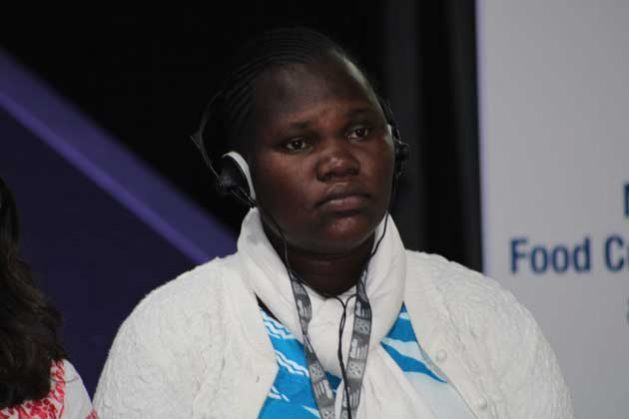
BCFN Yes winner Geraldin Lengai is researching bio-integrated crop management among tomato farmers in Tanzania. Credit: Busani Bafana / IPS

MILAN, Italy, Dec 4 2019 (IPS) – Local knowledge systems rooted in traditional practices and culture passed down generations provide sustainable solutions to food and nutritional insecurity on the back of climate change, a conference heard this week.


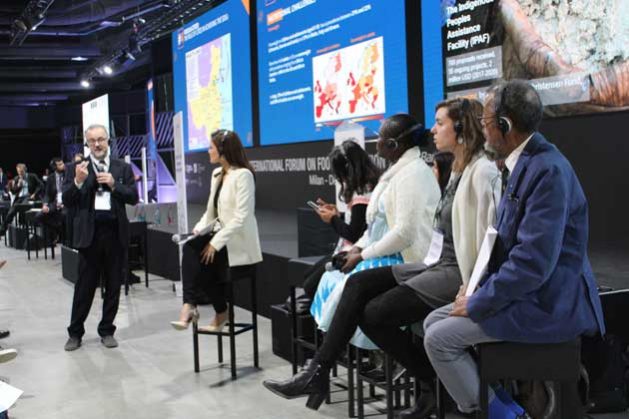
More than 370 million indigenous people, living in 70 countries, make up just 6 percent of the global population, according to the United Nations. But their food systems are models of diet diversity, innovation, conservation and local adaptability the world can benefit from in the face of risks such as climate change, delegates at the 10th Forum on Food and Nutrition convened by the Barilla Centre heard.

Speaking at a panel session on Preserving Mother Earth, Food Culture, Local Traditions and Biodiversity, Mattia Prayer Galletti, lead technical specialist on indigenous peoples and tribal issues at IFAD, said indigenous peoples have a connection with nature. They understand the concept of sustainability and the protection of natural resources.

IFAD has promoted an Indigenous People’s Forum to foster dialogue and consultant among indigenous people organisations and IFAD member countries. Through this Forum, IFAD has supported the economic empowerment of indigenous people, particularly women and the youth. IFAD has also contributed to the improvement in livelihoods of indigenous peoples through the Indigenous Peoples Assistance Facility which has provided small grants of up to US$50 000 for development projects.

He said indigenous food systems provide food security and biodiversity because indigenous communities have cultivated resilient foods, making them ideal in adapting to climate change. This despite the growing threats indigenous communities have faced, including marginalisation, loss of their ancestral lands and the destruction of their way of life.

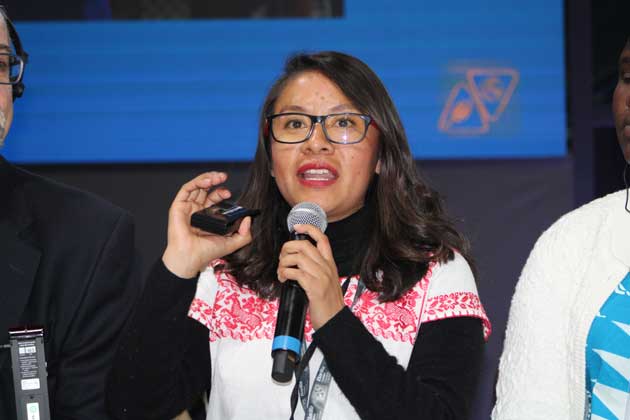
Dali Nolasco Cruz, an advisory board member of the Indigenous Terra Madre (ITM) from Mexico. Credit: Busani Bafana / IPS

Dali Nolasco Cruz, an advisory board member of the Indigenous Terra Madre (ITM) from Mexico, concurred saying indigenous people are being criminalised and killed by big powers that are extracting natural resources in their lands.

“We need alliances, we need to fight for Mother Earth,” Cruz said, “We need to transform our livelihoods by protecting the Earth to help others.”

Indigenous Innovations for food security

Indigenous knowledge provides innovations researchers are convinced can provide models for promoting resilience in our current food systems. Several researchers shared their on-going work on this.

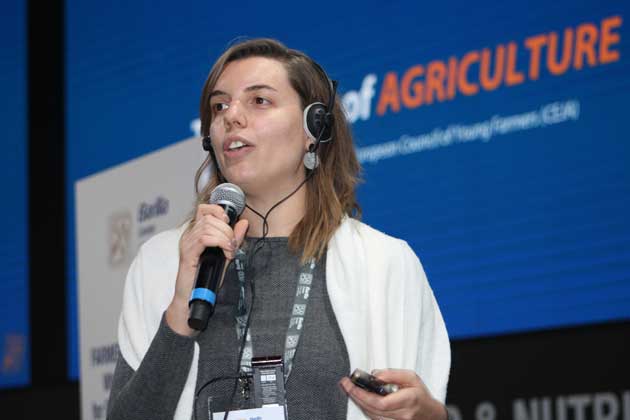
Martina Occelli, a PhD student at the Santa Anna School of Advanced Studies in Pisa, is undertaking multidisciplinary research on how smallholder farmer’s collective knowledge is shaping soil productivity in the Gera Gera region of Ethiopia among 300 smallholder farmers. The research has shown that collective knowledge within and between households which farmers learnt from their fathers was relevant in determining the soil ability, which is critical in food production and resilience.

Martina Occelli speaks at the 10th International Forum on Food and Nutrition. Credit: Busani Bafana / IPS

Occelli is a winner of 2018 BCFN Yes international multidisciplinary contest launched by the BCFN Foundation in 2012 to support research on promoting the intersection of food sustainability and environmental sustainability.

Geraldin Lengai, another BCFN Yes winner, is researching on enhancing sustainable agriculture through the adoption of bio-integrated crop management among tomato farmers in Tanzania comparing conventional and non-conventional farming methods. Her research expects to provide insights into the use of organic pesticide properties of ginger and turmeric – cash crops grown by farmers in Tanzania – in fighting pests and diseases in vegetables. Also, she has researched the efficacy of organic fertilisers such as goat manure and chicken manure on the productivity of the spice coriander and amaranthus, a plant cultivated as a vegetable.

“Sustainable agriculture is important because you need a doctor once in a while, but you need the farmer at least three times a day,” Lengai told IPS. “I believe people should have access to food that is safe and healthy. How we produce the food, process it and how the food reaches the end consumer is the business of sustainable agriculture, and my research is on crop protection because people use crop protection synthetically yet there are alternatives that nature has provides. Before synthetic pesticides, our forefathers used tobacco to control insects, and if we can look at other plants that have the same capacity, we can promote sustainable agriculture.”

Lengai said the benefits of manure has in producing vegetables and the near to zero cost for farmers who keep animals means farmers have a sustainable fertiliser for organic produce which is attractive for global markets. Citing the case of pesticides with the Kenya market for French beans, Lengai said organic produce had secured international markets which have traceability systems in place.

“Growing organic vegetables and using organic pesticides and fertilisers is a win-win for everybody for the environment, for the farmer for the consumer,” said Lengai. She added that synthetic pesticides are favoured because they are easy to apply and cheaper – but come at a cost to the environment and health.


Fixing the Business of Food

Conferences, Development & Aid, Economy & Trade, Environment, Featured, Food & Agriculture, Food Sustainability, Global, Headlines, Health, Poverty & SDGs, TerraViva United Nations, Trade & Investment

Delegates grappled with getting the business of food right. Credit: Busani Bafana / IPS

MILAN, Italy, Dec 4 2019 (IPS) – Milan is the city where Leonardo da Vinci painted his iconic Last Supper. Frozen in time is the moment Christ told his disciples there was a traitor among them. Visitors to the painting can examine the expressions on the faces of the disciples and look the food they might have eaten – the bread and wine, and of course the spilt salt. As one delegate to the 10th International Forum on Food and Nutrition noted, the diet did not seem varied or healthy.


Several centuries later, with the spotlight firmly on the state of our planet, global warming, delegates grappled solutions for producing and consuming food, nutrition and the state of the earth. Taking centre stage was the question of the roles, activists, workers, businesses and leadership play in the food cycle.

Mario Monti, Senator for Life of the Italian Republic; articulated the challenge succinctly. The forum with the theme Fostering Business and Innovation while preserving Mother Earth he said, provided a “beautiful challenge” dedicated to securing food for people to inhabit the planet.

Ertharin Cousin, from the Chicago Council on Global Affairs, referred to a conundrum that while in the United States 1450 deals were signed across 1000 agri-food tech start-ups none of the businesses focused on addressing the challenges of low-income people.

It was clear from the presentation by Jeremy Oppenheim, Founder and Managing Partner, SYSTEMIQ the food system’s hidden costs amounting to $12 trillion, including food subsidies – that the food system is dysfunctional.

Many speakers alluded to resolving the conundrum involving complex interplays between activism; innovative business practice and digital innovation, financing and political commitment.

Changing the culture of business and financing of companies was considered a major consideration which needed change to fix the food system.

Ben Valk, Lead Food and Agriculture Benchmark, commented that, for example, there were solutions which reduce the pressure on land and therefore on deforestation.

“First things we should do is to start to implement those solutions,” he said, but added that it astonishing to that so little money was allocated towards the Sustainable Development Goals. Change was needed and money allocated to sport for, example, should be reduced to ensure the SDGs were achieved.

Charlotte Ersbøll, representing the United Nations Global Compact, commented that businesses should be aware that employees were committed to sustainable practices. She referred to a study done in the US where half of all the staff would accept a salary cut if they were if they could work for a more climate-friendly company. “And if you look at the millennials, it would be two thirds. And, and all of them were frustrated that they really didn’t see the companies following through and really taking the lead.”

Oppenheim concluded his presentation with a note of caution. People at the conference were the converted, people already finding and looking at solutions to food and nutrition.

“What we need to do is to take this room and have thousands of rooms of like this … The real opportunity is to take this agenda to seize it with both hands to translate it into massive business opportunities.”


Right to Food Denied by Poor Policies and Inaction

Africa, Conferences, Development & Aid, Economy & Trade, Environment, Featured, Food & Agriculture, Food Sustainability, Global, Headlines, Health, Multimedia, Poverty & SDGs, TerraViva United Nations, Trade & Investment, Video

MILAN, Italy, Dec 3 2019 (IPS) – Global food systems are ripe for transformation if people are to be nourished and the planet sustainable, says Hilal Elver, Special Rapporteur of the Right to Food of the United Nations Human Rights Council.


Hilal Elver, Special Rapporteur of the Right to Food of the United Nations Human Rights Council speaking at the 10th International Forum on Food and Nutrition convened in Milan. Credit: Busani Bafana / IPS

Elver, told delegates at the 1oth International Forum on Food and Nutrition convened in Milan by the Barilla Centre, that the world needs food citizens who will act responsibly in promoting food equality and reducing food waste, which underlie global food and nutrition insecurity in the world today.

Food citizens are responsible for protecting the right to food through multi-actor actions including promoting a conducive environment that will secure food for all while promoting dialogue around food access, production and equitable distribution.

Citing the situation in Zimbabwe, Elver said the food crisis was a blot on the right to food that the world must respond to with urgency.

“The situation in Zimbabwe in mind boggling,” said Elver who has just returned from a mission to Zimbabwe to access the situation. “We need to know what is going as we talk about the need to diet, many in Zimbabwe eat once a day if they are lucky and food aid basically maize, just one meal a day. .. This is a very serious issue that we do not know it beyond the sustainable.”

Elver spoke with IPS on her mission to Zimbabwe. Excerpts of the interview:

IPS: You have just come back from Zimbabwe, what did you see?

Zimbabwe is an amazing country but if it facing a lot of challenges. It does not have basic public services and only four hours a day electricity and I understand that and government buildings, companies and some restaurants are using generators. But also you need fuel for the generators and for your car – if you have money to buy gas (fuel). The system is collapsing. People do not have time to work, because they either have to wait for gas for hours and hours and have to wait in front of the banks to get cash and 24 hours and transportation is very expensive. It is a vicious cycle and something should give in internally and externally because this has affected the food situation in the country too.

What has these challenges mean for the right to food?

That is a major problem. The root causes are a man-made journey to starvation. Every person in Zimbabwe has a responsibility to act. It did not come from drought. Yes drought is there. Other countries had a drought. Zambia had a drought, Mozambique had a drought and Cyclone Idai but Mozambique had huge aid from outside and Zimbabwe only got ten percent of it because of the sanctions.

What has been the impact of sanction on food security?

The intentional community should consider lifting the sanction because sanctions in the 20 years have had multiple impacts on the ordinary people’s lives. They talk about the targeted sanction but the sanctions are targeted by US, UK and EU, they are living perfectly fine and they do not travel a lot outside as they are high level government officials. It is okay for them but for the ordinary people it is not. They are suffering because all the international aid is blocked in one way or another. Investment is not coming. No one wants to invest in a country under sanctions.

Ask the IMF or World Bank why they cannot give the money to them. All the money they try to help Zimbabwe with goes to the NGOs and international organisations. If you are given $100 million, the people on the ground only get 20 percent of it. This is bad and this must change.

Is lifting sanctions everything to get Zimbabwe out of its challenges?

That is an important question. The government should make some democratic reforms, the freedom of speech, and freedom of association and give the opportunities to the people because the people are peaceful. The first thing is that the government should sit together with the opposition and all parties in a democratic manner and to think about how they can help their people together.

Land reform has been done in the last 20 years gradually here and there and there has been some kind of complaints as to why white farmers need compensation and black farmers are dysfunctional, these are myths going round. Black farmers are dysfunctional because they did not get any help from the government. You need first of all credit and you need technical help and you need seed and the government is in a terrible shape to give all these things. Of course there is disfunctionality but they cannot access resources there is land but they cannot do anything with it. If people find one square metres of land they just produce on it. The main problem is this corn based reliance. People are so obsessed with sadza, who brought maize to Zimbabwe? We should think about that.

Are you saying food diversification is a solution to the food problem?

Of course. The traditional food in Africa is very much good for the environmental conditions. Traditional small grains do to need too much water like maize and they should go back to this.

[embedded content]