Urgent Need to Replace Competition with Cooperation in the Aral Sea Basin

Asia-Pacific, Climate Change, Conferences, Development & Aid, Economy & Trade, Education, Environment, Featured, Global, Headlines, Humanitarian Emergencies, Poverty & SDGs, TerraViva United Nations, Water & Sanitation

Opinion

Stefanos Xenarios is a Professor at Nazarbaev University, Kazakhstan and co-editor-in-chief of the Central Asian Journal of Water Research; Iskandar Abdullaev is Deputy Director, CAREC Institute, China and Vladimir Smakhtin is Director, UN University Institute for Water, Environment and Health, Canada and series editor of the Routledge publishers’ Earthscan Series on Major River Basins of the World, in which the Aral Sea Basin Book is the latest addition.
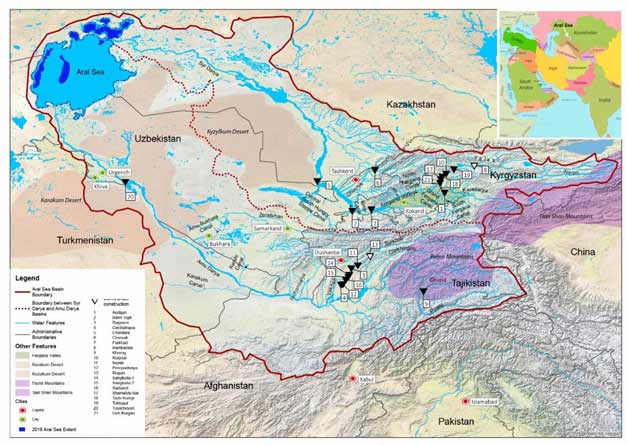
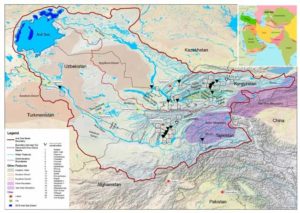
The Aral Sea Basin, defined in red, straddles six countries in Central Asia. See detailed map in full at http://bit.ly/2BQPpRm. Credit: UNU-INWEH

NUR-SULTAN CITY, Kazakhstan, Nov 7 2019 (IPS) – The water resources in Central Asia’s Aral Sea Basin support the lives and livelihoods of about 70 million people — a population greater than Thailand, France, or South Africa.


And unless well-funded and coordinated joint efforts are stepped up, with competition replaced by cooperation, ongoing over-withdrawals compounded by climate change will cause dangerous water shortages in this huge, highly complex watershed spanning six nations: Afghanistan, Kazakhstan, Kyrgyzstan, Tajikistan, Turkmenistan, and Uzbekistan.

That’s the key message of a new book co-authored by 57 regional and international experts from 14 countries and the United Nations, who spent years examining a suite of challenges in the Aral Sea Basin.

The new book assembles the views of nearly all major regional and international experts on the great challenges faced in the Aral Sea Basin. They include three co-authors from the UN University’s Institute for Water, Environment and Health, in Hamilton, Canada.

And almost half of the authors are based in Central Asia, creating a unique blend of regional and international voices and expertise on these critical issues.

The Basin’s two major rivers, the Amu Darya and Syr Darya, discharge now only about 10% of what flowed into the Aral Sea until the 1960s, shrinking the sea by more than 80 percent — “one of the world’s most severe and emblematic environmental disasters.”

Freshwater is key to food, energy, environmental security and social stability among the six Aral Basin countries. And given the countries’ prospective economic and population growth, reliance on water resources will increase, compelling cooperation in sharing benefits and reducing costs.

Intensive, wasteful irrigated farming when the nations were part of the Soviet Union was the main cause of the Aral Sea drying up and irrigation continues to consume about 90 percent of the total water withdrawal in the Basin, with agriculture contributing from 10 to 45 percent of GDP, and 20 to 50 percent of rural employment.

Most irrigation, hydropower and other water-related infrastructural systems and facilities are in transition, a blend today of past and present. Unfortunately, the existing observational meteorological and hydrological networks in the Basin, which declined in the 1990s when the Soviet period ended, are insufficient to support informed water management, and regional water data sharing is suboptimal.

Degradation of land and water are among the major hindrances to sustainable development in the region, with land degradation alone estimated to cost about US$3 billion of losses in ecosystem services annually.

There has been uneven progress across the countries on the Sustainable Development Goals (SDGs), and particularly Goal 6 (Clean Water and Sanitation), with contrasting progress also between urban and rural populations within each nation, most particularly Afghanistan.

The new book suggests a number of interventions and initiatives to end and reverse deterioration of the Aral Basin. For example, if existing large hydropower projects were managed in a collaborative manner, they can bring all countries multiple benefits, including improved reliability of supply and availability of water for agriculture, domestic use and electricity generation.

Monitoring of snow and glaciers in high altitude mountain areas, as well as permafrost, is essential for sound estimates of water availability and water-related hazards. Such systems need to be re-installed.

Also needed: institutions for decentralized management of natural resources, such as water user associations to promote cooperative, sustainable, intra-regional management between upstream and downstream countries and integrated rural development approaches.

Existing regional frameworks must either be reformed or replaced by new mechanisms of cooperation in order to successfully translate political will into highly effective, integrated regional water management.

Reforming the water sector, however, goes well beyond new policies and initiatives, updating the legislative framework, and building new institutions. A key challenge is to achieve continuous, strong, high-level political engagement throughout the Basin countries, the active participation of stakeholders, and technical and financial support.

The Aral Basin’s many water-related issues must be addressed jointly by all involved states within the concept that water, energy, and food issues represent a critical, interlinked nexus of needs.

Major geopolitical and economic development interests are placing increasing pressure on countries of the Basin to end resource competition and find a way to closer cooperation and effective pursuit of their shared interests.


 

Red Alert for Blue Planet and Small Island States

Asia-Pacific, Climate Change, Conferences, Development & Aid, Economy & Trade, Education, Environment, Featured, Global, Headlines, Humanitarian Emergencies, Poverty & SDGs, TerraViva United Nations, Water & Sanitation

Opinion

Farhana Haque Rahman is Senior Vice President of IPS Inter Press Service; a journalist and communications expert, she is a former senior official of the United Nations Food and Agriculture Organization and the International Fund for Agricultural Development.

The Pacific island is one of the countries worst affected by sea-level rise. Credit: UNICEF

ROME, Oct 31 2019 (IPS) – Barely a week passes without alarming news of the most recent scientific research into the global climate crisis compounding a growing sense of urgency, particularly the impact on small island states from rising sea levels and extreme weather.


Latest findings suggest that several hundred million more people than previously thought are at risk of coastal flooding due to climate change. Climate Central, a non-profit research and news organisation, found data used in past calculations overstated the elevation of many low-lying coastal communities.

And for the people of the Bahamas who had just endured Hurricane Dorian, the most intense tropical cyclone on record to hit their islands, it came as little surprise when the UN Intergovernmental Panel on Climate Change (IPCC) soon after released its landmark special report on the planet’s oceans and frozen regions, warning of “multiple climate-related hazards” for coastal regions.

“The ocean is warmer, more acidic and less productive,” the IPCC report stated.

The “Blue Pacific” concept sees the island states establishing themselves as “large ocean states” and guardians of the region rather than “small island states”

Oceans are absorbing heat twice as fast as just two decades ago, with hundreds of billions of tonnes of melting ice raising sea levels at an average rate of 3.6 millimetres a year, more than twice as fast as during the last century.

If greenhouse gas emissions “continue to increase strongly”, the IPCC report said, then levels could rise more than a metre by 2100.

Some island states in the Pacific face becoming uninhabitable. As UN Secretary-General Antonio Guterres noted while visiting Tuvalu, the sea level rise in some Pacific countries is four times greater than the world average, posing “an existential threat” to several island states.

Against this background the UN COP25 climate change summit scheduled to be held in Santiago in December had been dubbed the Blue COP, with expectations of a focus on the oceans and commitments of aid to poorer nations most at risk. So it comes as a serious blow that President Sebastian Pinera has just announced that Chile is calling off its hosting of COP25 because of mass anti-government protests rocking the country.

While the UN anxiously looks for an alternative venue (and Santiago had been the second choice after Brazil’s newly elected president, Jair Bolsonaro, pulled out of hosting it), the small island states of the Pacific will be making their voices heard as they seek to confirm themselves in the role of custodians of the world’s largest region.

It is an existential struggle but it is not a blame game however.

As Micronesia’s President David Panuelo declared last week in The Diplomat: “Rather than point fingers, we must all point the way toward solutions.”

“No single country created this problem, and certainly a small country like ours is bearing far greater responsibility for the solution than we ever contributed to the crisis in the first place. But we sit shoulder to shoulder in a coalition which has set a goal of growing economies while achieving 30 percent marine protection globally,” he wrote in a plea for action to save the oceans.

“Everyone must do more when garbage patches larger than entire countries float in the Pacific, and rising carbon dioxide levels increase ocean acidity and devastate coral reefs and marine life.”

The Pacific Community, the principal scientific and technical organisation in the region and founded as the SPC in 1947, counts 22 Pacific island countries and territories among its members who see themselves as the “tip of the spear” in terms of the impacts of climate change and their efforts to adapt.

SPC has recently established the Pacific Community Centre for Ocean Science (PCCOS) to provide the framework to “focus its scientific and technical assistance on providing solutions that will build, sustain, and drive blue economies in Pacific Island countries and territories” and support SDG 14 of conserving and sustainably using oceans and marine resources.

The SPC’s new and growing Pacific Data Hub is a public resource of data and publications on the Pacific across key sectors, from education and human rights to oceans and geoscience.

Such initiatives reflect how Pacific Island states have grown more assertive in their diplomacy, becoming more active in global multilateral forums and using their voices and votes for increased leverage rather than the old reliance on support from Australia and New Zealand.

The “Blue Pacific” concept sees the island states establishing themselves as “large ocean states” and guardians of the region rather than “small island states”. As stewards of the Pacific with their cultural identity shaped by the ocean, the Blue Pacific framework seeks to establish leadership on issues, with smart policies backed by scientific expertise and data.

As Micronesia’s president has reminded us, the climate crisis is neither abstract nor “tomorrow’s faraway challenge”. It is happening now and as the IPCC’s special report on the oceans and cryosphere warned in September the crisis is gathering speed, as seen in the recent acceleration of sea level rise.

In Antarctica the rate of ice loss tripled in the decade 2007-2016. May and August in 2019 were the warmest on record for the Arctic while this year saw the summer minimum extent of sea ice reaching a joint-second lowest in 40 years of satellite records.

As summarised by Carbon Brief, the IPCC warns that this accelerating ice loss, and the more rapid sea level rises it causes, will continue to gather pace over this century regardless of whether greenhouse gas emissions are reduced. The “likely” maximum rise of 1.1 metres by 2100 is some 10cm above the top-end estimate from its previous estimate, while a rise of 2 metres cannot be ruled out.

Such warnings were intended to provide input at COP25 for world leaders who face mounting calls to adopt more ambitious goals for carbon emission cuts. Those negotiations will not be happening in December in Santiago after all. An alternative must be found urgently.


Austerity, the “New Normal”

Civil Society, Conferences, Development & Aid, Economy & Trade, Featured, Financial Crisis, Global, Headlines, Health, Labour, TerraViva United Nations

Opinion

Isabel Ortiz is Director of the Global Social Justice Program at Joseph Stiglitz’s Initiative for Policy Dialogue at Columbia University, former Director at the International Labour Organization (ILO) and UNICEF, and senior official at the UN and at the Asian Development Bank.
 
Matthew Cummins is senior economist who has worked at UNDP, UNICEF and the World Bank.

WASHINGTON DC, Oct 11 2019 (IPS) – While this week Ministers of Finance and economists meet in Washington to confront global economic challenges at the IMF and World Bank Annual Meetings, the majority of the world population lives with austerity cuts and see their living standards deteriorating. World leaders must reverse this trend.


Isabel Ortiz

Since 2010, most governments in both high income and developing counties have been implementing austerity policies, cutting public expenditures. Surprisingly, this trend is expected to continue at least until 2024, according to a global study just published by the Initiative for Policy Dialogue at Columbia University, global trade unions and civil society organizations. Austerity has become “the new normal.”

Based on IMF fiscal projections, the study finds that a new fiscal adjustment shock will start in 2020. By 2021, government expenditures as a share of GDP will be declining in 130 countries, nearly three-fourths of which are in the developing world. The reach of austerity is staggering: nearly 6 billion persons will be affected by 2021.

How are governments cutting their budgets and implementing austerity reforms? In practice, the most commonly considered adjustment measures in 2018-19 include: pension and social security reforms (in 86 countries); cutting or capping the public sector wage bill, including the number and salaries of teachers, health workers and civil servants delivering public services (in 80 countries); labor flexibilization reforms (in 79 countries); reducing or eliminating subsidies (in 78 countries); rationalizing and/or further targeting social assistance or safety nets (in 77 countries); increasing regressive consumption taxes, such as sales and value added taxes (in 73 countries); strengthening public-private partnerships (PPPs) (in 60 countries); privatizing public assets/services (in 59 countries); and healthcare reforms (in 33 countries).

All of these measures have negative social impacts. As a result, in many countries older persons have lower pensions; there are not sufficient teachers, medical and care staff, and the quality of public services suffers; there are less jobs, and people work under more precarious conditions; prices increase while wages are stagnant; and the low and middle classes are squeezed and under pressure.

Matthew Cummins

In perspective, the macroeconomic and fiscal choices made by governments over the last decade are alarming. The G20 alone committed US$10 trillion to support the financial sector in response to the global financial crisis, and then passed the costs of adjustment to populations, with millions of people being pushed into poverty and lower living standards.

The worldwide drive toward austerity or fiscal consolidation can be expected to aggravate the growth and employment crisis and diminish public support at a time of high development needs, soaring inequalities and social discontent.

Austerity is also being used as a trojan horse to induce “Washington Consensus” policies to cut back on public policies and the welfare state. Once budgets are contracting, governments must look at policies that minimize the public sector and expand private sector delivery, including PPPs. There are clear winners and losers from this renewed Washington Consensus, and governments must effectively assess and question these policies.

Austerity and budget cuts do not need to be “the new normal.” There are alternatives, even in the poorest countries. Governments can find additional fiscal space to fund public services and development policies through at least eight options, which range from increasing progressive tax revenues, cracking down on illicit financial flows, improving debt management and using fiscal and foreign exchange reserves, to adopting more accommodative macroeconomic frameworks, reprioritizing public expenditures and -for lower income countries- lobbying for greater aid. All these options are endorsed by the United Nations and the international financial institutions.

It is time for world leaders to abandon the myopic scope of macroeconomic and fiscal policy decisions that benefit few and, instead, look for new fiscal space and financing opportunities to foster a robust global recovery and the achievement of long-term global prosperity for all.


India Promotes South-South Cooperation, but Key Questions Unaddressed

Biodiversity, Climate Change, Combating Desertification and Drought, Conferences, Development & Aid, Economy & Trade, Environment, Featured, Food & Agriculture

Opinion

Joydeep Gupta is the South Asia Director for the Third Pole.

Indian Prime Minister Narendra Modi advocated, “greater South-South cooperation in addressing climate change, biodiversity and land degradation.” Courtesy: GCIS

At his speech at the United Nations Convention to Combat Desertification (UNCCD) summit in Delhi, Prime Minister Narendra Modi emphasised South-South cooperation and technology solutions, but issues of land ownership dog the ongoing negotiations.

As the second week of the UNCCD Conference of Parties (COP) kicked off in Delhi, Indian Prime Minister Narendra Modi highlighted South-South cooperation and issues of land degradation.

Speaking at the opening ceremony of the high level segment, he said that it was increasingly accepted that climate change impacts were leading to a loss of land, plants and animal species, and that it was causing, “land degradation of various kinds (including) rise of sea levels, wave action, and erratic rainfall and storms”.

All of these issues have a significant impact on India, and other developing countries, and as such, the Prime Minister advocated, “greater South-South cooperation in addressing climate change, biodiversity and land degradation.”

He said India would act both internally and externally on this. Domestically, he said that India was increasing its commitment to restore 21 million hectares of land by 2030 to 26 million hectares, an increase of 5 million hectares. The co-benefit of this would be that it would help create a carbon sink for 2.5-3 billion tonnes of carbon through increased tree cover.

On external action, he said that India was, “happy to help other friendly countries cost-effective satellite and space technologies,” and that it would be creating a Centre for Excellence at the Indian Council for Forestry Research and Education in Dehradun to promote South-South cooperation, where other countries could access technology and training.

Hard questions

Nevertheless, this avoids some of the hard questions that have been dogging the UNCCD COP. Who owns the land? Who is responsible when the land is no longer able to support a livelihood, and a farmer is forced to migrate?

These are not questions anyone thought about when they launched the UNCCD 25 years ago. But since degradation of land due to a variety of reasons precedes desertification, these questions are increasingly worrying policymakers, especially from developing countries. At the ongoing New Delhi summit, the issues have come to the fore, and have divided governments along the lines of developed and developing nations, a process familiar to observers of UN climate negotiations.

Despite Narendra Modi’s speech at the high level segment, these issues remained unresolved, with bureaucrats awaiting instructions from the 100-odd ministers gathered at the Indian capital.

The NGOs who work on farming issues are clear that land degradation cannot be halted unless farmers around the world have guaranteed rights over the land on which they grow food for everyone. This may sound like a no-brainer, but estimates show that globally only around 12% of all farmers can claim legal rights over the land they till. To this, experts would like to add the land held in various forms of community ownership, sometimes by indigenous communities. But few countries have strong laws to protect such ownership.

In the first week of the New Delhi summit, developing country governments have wanted this issue of land tenure being discussed at the UNCCD forum, and developed countries – led by the US delegation – have opposed the inclusion. The industrialised countries say it is an issue of different laws in different countries, and discussing it in the UN is not going to help.

Land tenure

But, with land degradation being inextricably tied up with climate change and biodiversity, the urgency of the situation may force UNCCD to discuss land tenure in this and future meetings, and to come up with possible solutions.

The solutions are not always as straightforward as they may seem, warned UNCCD chief scientist Baron Orr in a conversation with thethirdpole.net. Think of what a farmer – especially a smallholder farmer – is likely to do if offered a high price for land. Most of them are likely to sell, as evidenced by the mushrooming malls, offices and homes all around the current summit venue, which was all farmland just about a decade ago. And what happens to our food supply if this replicated globally?

Land tenure is important to halt degradation because people naturally provide better protection to land they own. But it is not enough. A farmer faced with competitors using chemical fertilisers and pesticides is not going to move to organic farming just because that is better for the soil.

Most farmers cannot afford to do that. They need help, as was seen in India when the state of Sikkim pledged to do only organic farming. Sikkim is a relatively small state – replicating that kind of help on a global or even national scale may need far more money than is available for the purpose, as Orr pointed out.

Land tenure is also an area where women face discrimination in a big way. Data journalism site IndiaSpend reported that 73.2% of the country’s rural women workers are farmers, but have only 12.8% of India’s land holdings.

Migration: the hot potato

Farmers being forced to migrate because their farms can no longer support them due to land degradation and climate change is the hottest potato of them all. Developed countries are united in opposing this major “push” factor in migration, insisting that people migrate only due to “pull” factors such as better economic opportunities. Developing countries, especially those from the Sahel belt stretching from the western to the eastern coast of Africa, point to numerous instances where farmers are forced off land gone barren, and insist on this issue being discussed by UNCCD.

Former UNCCD chief Monique Barbut has said almost all Africans trying to move to Europe are doing so due to land degradation and drought. Without putting it in words that strong, current UNCCD chief Ibrahim Thiaw has backed the inclusion of migration in the conference agenda.

As host government and conference president, India may have to use all its diplomatic skills if this knot is to be untied during this summit – an especially tricky manoeuvre because India has consistently refused to accept that immigrants from Bangladesh are entering this country because their farms can no longer support them.

And it is not just migration across countries. At a meeting organised on the sidelines of the summit by local government organisation ICLEI, mayor after mayor got up to say farmers are coming into their cities in increasing numbers due to land degradation and climate change, but they have no budget to provide any housing, water, electricity, roads or any form of livelihood to these millions of immigrants.

Still, developed country delegations insist UNCCD is not the right forum to discuss migration. What all 196 governments and the European Union agree upon in the next day or two remains to be seen.

Human efforts

Prakash Javadekar, India’s Minister of Environment, Forests and Climate Change and the conference president, had said at the opening, “If human actions have created the problems of climate change, land degradation and biodiversity loss, it is the strong intent, technology and intellect that will make (the) difference. It is human efforts that will undo the damage and improve the habitats. We meet here now to ensure that this happens.” This foreshadowed what the Prime Minister said today.

He pointed out that 122 countries, among them Brazil, China, India, Nigeria, Russia and South Africa, which are among the largest and most populous nations on earth, “have agreed to make the Sustainable Development Goal of achieving land degradation neutrality a national target.”

Thiaw drew attention to the warnings sounded by recent scientific assessments and the growing public alarm at the frequency of weather-related disasters such as drought, forest fires, flash floods and soil loss. He urged delegates to be mindful of the opportunities for change that are opening up, and take action. The response of governments from developed countries will decide how useful the current summit will be.

The world is in trouble otherwise. The current pace of land transformation is putting a million species at risk of extinction. One in four hectares of this converted land is no longer usable due to unsustainable land management practices. These trends have put the well-being of 3.2 billion people around the world at risk. In tandem with climate change, this may force up to 700 million people to migrate by 2050.

This story was first published on thethirdpole.net and can be found here.


The Business of Social Enterprise

Active Citizens, Asia-Pacific, Civil Society, Conferences, Development & Aid, Economy & Trade, Featured, Global, Headlines, Human Rights, Poverty & SDGs, Regional Categories, TerraViva United Nations

Human Rights

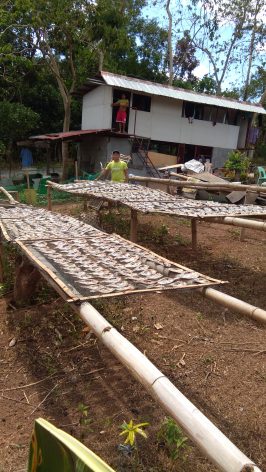
Ariel Lazarte of the Coalition of Leprosy Advocates of the Philippines (CLAP) shows off the dried fish production run by patients of a transient house operated by HD (Hope & Dignity) Philippines. Courtesy: Ariel Lazarte

MANILA, Sep 8 2019 (IPS) – Organisations supporting people affected by Hansen’s disease (leprosy) have social rather than capitalist aims, but they need to take a business-minded approach to their work if they wish to be sustainable, experts at a global conference in Manila, Philippines said.


In workshops conducted at the Global Forum of People’s Organisations on Hansen’s Disease in Manila on Saturday and Sunday, Sept. 7 and 8, representatives of organisations from Asia, Africa, and Latin America agreed that sustainability is the biggest challenge they face.

Every organisation faces some uncertainty over the continuity of donor or government financial support, so reducing or eliminating reliance on external funding is considered a critical priority.

Japan’s The Nippon Foundation (TNF) and Sasakawa Health Foundation (SHF), which sponsored the global forum and provided capacity support to the participating organisations, have long taken the view that sustainability should be the ultimate goal.

At a regional conference of people’s organisations held here in March, SHF Executive Director Dr. Takahiro Nanri stressed that his foundation’s goal was to see its beneficiaries become self-supporting. “In order to be truly sustainable, the organisation needs to develop an income-generating programme,” Nanri said at the time.

Dr. Marie Lisa Dacanay president of the Institute for Social Entrepreneurship in Asia (ISEA) outlined the fundamentals of effective social enterprises, which were derived from research conducted by ISEA in India, Indonesia, Bangladesh and the Philippines. Credit: Ben Kritz/IPS

Fundamentals of social enterprises

On Sunday Sept. 8, Dr. Marie Lisa Dacanay president of the Institute for Social Entrepreneurship in Asia (ISEA) outlined the fundamentals of effective social enterprises, which were derived from research conducted by the institute in India, Indonesia, Bangladesh and the Philippines.

Social enterprises have three common traits, Dacanay explained:

  • They are driven by a social mission instead of an enterprise mission;
  • Successful social enterprises are wealth-creating organisations that provide some form of marketable products or services; and
  • They follow a distributive enterprise philosophy in that profits are directed towards the social mission rather than being collected as return on investment.

In carrying out its mission, a social enterprise faces a number of external and internal challenges, Dacanay said.

External pressures come in the form of climate or environmental factors – a significant concern of agriculture-based enterprises; unfavourable government policies; harmful industry or market practises; inadequate government support for social programs; and institutional corruption.

Internal challenges include difficulty in accessing needed technology; securing initial financing; organisational and management capacity; production efficiency; and developing practical measures of the enterprise’s social impact.

Based on ISEA’s research, successful social enterprises can be organised following an entrepreneur non-profit model, a social cooperative model, a social business model, or what she described as “social entrepreneurship intervention,” which is a hybrid combining characteristics of all three models.
In determining which form of organisation is most suitable to the social mission, Dacanay told IPS, “I think everything starts with the reality. Every social entrepreneur starts with, ‘what are the needs, and the problem?’”

“The first step is really understanding the stakeholders you want to help,” Dacanay continued, “find out what they are doing already, and look at what gaps there are. That, along with the resources and capabilities available, define a way of moving forward, and then the organisational form will follow.”

Social business is still business

In the Saturday workshop, Earl Parreno, the chairman of the Philippines’ Altertrade Foundation, Inc. (ATFI) conducted a training in business planning basics for the assembled people’s organisations.

Defining a social enterprise as one that pursues a triple bottom line philosophy (financial, social, and environmental results), Parreno explained that the fundamentals of business planning must still be applied, but that organisations that are made up of people who are both the providers and beneficiaries of a social mission are often handicapped by a complete lack of capacity.

“Poverty is not just lack of financial resources,” Parreno told the workshop participants in his presentation, “It’s really incapability, a lack of knowledge.”

Developing the capabilities can be an arduous process, but is achievable. One of ATFI’s areas of focus in the Philippines is among poor farmworkers in Negros Province, a centre for sugar production. Parreno described the success of the social enterprise supported by ATFI in marketing Muscovado sugar – semi-raw sugar that was at one time considered “poor man’s sugar,” but is now a premium-priced staple in organic food stores.

“The business ideation is really critical,” Parreno explained to IPS. “We have a saying here in the Philippines: gaya-gaya puta maya, which means something like ‘copycat.’” A common problem among new social enterprises, Parreno said, is a lack of originality in the revenue-generating product or service they wish to pursue.

“What we stress to our social enterprise partners is that they should not conceive a product or service that’s just better, but one that is truly different and has a ‘solidarity market,’” Parreno said, such as the market of “mindful consumers” for organic Muscovado sugar discovered by the Negros sugar farmers. “That solidarity market is so important. It really gives the people’s organisation a fighting chance.”

According to Parreno, developing a sound business plan, from business ideation through resource mapping, feasibility study, and market analysis answers one of the key concerns expressed by many of the forum participants in the post-workshop discussion: The difficulty in securing initial funding to launch a social enterprise.

“The only difference between this kind of (social) business and a conventional business is where the profits go,” Parreno explained. “The discipline and the steps that need to be taken to develop it are very much the same, and if the result is a good business plan, the investors to get it off the ground will follow.”

A poultry and dried fish production project located in Baras, Rizal Province, east of the Philippine capital, employs about 10 people, all residents of a transient house for leprosy patients. It is a good example of a social enterprise that has proved successful.

Ariel Lazarte, a member of Coalition of Leprosy Advocates of the Philippines (CLAP) who runs the social enterprise, told IPS that sales have been good enough that his out-of-pocket expenses have been fully covered by the revenue, as well as providing much-needed funding for the transient house residents.
The social enterprise, part of HD (Hope and Dignity) Philippines, a non-profit managed by Lazarte, makes about 560 dollars a month.

Half of this is ploughed back into the social enterprise and the remainder is used to pay for the living expenses of the patients, including paying for medicines, transport, food, water, and vitamins.
“The only outside funding we had was for [the pen for the chickens],” Lazarte told IPS, noting that the Tikkun Olam Foundation, which supports Hansen’s disease in the country, provided the funding for this.

“The residents of the house who are capable help to tend the chickens, which are layers, and produce the dried fish. We then sell the eggs and fish in the local market.”

Part of the marketing advantage the poultry project has is that the eggs are organic. “We use organic feed for the chickens,” Lazarte said. “No synthetic feed.”


Disaster Risk Resilience: Key to Protecting Vulnerable Communities

Active Citizens, Aid, Asia-Pacific, Climate Change, Economy & Trade, Education, Environment, Featured, Food & Agriculture, Headlines, Health, Human Rights, Labour, Poverty & SDGs, TerraViva United Nations, Water & Sanitation

Opinion

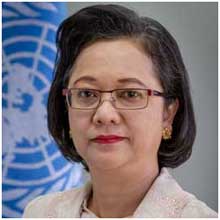
Armida Salsiah Alisjahbana is Under-Secretary-General of the United Nations and Executive Secretary of the United Nations Economic and Social Commission for Asia and the Pacific (ESCAP).

BANGKOK, Thailand, Aug 28 2019 (IPS) – The past five years have been the hottest on record in Asia and the Pacific. Unprecedented heatwaves have swept across our region, cascading into slow onset disasters such as drought. Yet heat is only part of the picture. Tropical cyclones have struck new, unprepared parts of our region and devastatingly frequent floods have ensued. In Iran, these affected 10 million people this year and displaced 500,000 of which half were children. Bangladesh is experiencing its fourth wave of flooding in 2019. Last year, the state of Kerala in India faced the worst floods in a century.


Armida Salsiah Alisjahbana

This is the new climate reality in Asia and the Pacific. The scale of forecast economic losses for the region is sobering. Including slow-onset disasters, average annualised losses until 2030 are set to quadruple to about $675 billion compared to previous estimates. This represents 2.4 percent of the region’s GDP. Economic losses of such magnitude will undermine both economic growth and our region’s efforts to reduce poverty and inequality, keeping children out of schools and adults of work. Basic health services will be undermined, crops destroyed and food security jeopardised. If we do not act now, Asia-Pacific’s poorest communities will be among the worst affected.

Four areas of Asia and the Pacific are particularly impacted, hotspots which combine vulnerability to climate change, poverty and disaster risk. In transboundary river basins in South and South-East Asia such as the Ganges-Brahmaputra-Meghna river basin, floods alternate with prolonged droughts. In South-East Asia and East and North-East Asia earthquakes, tsunamis and landslides threaten poor populations in the Pacific Ring of Fire. Intensifying sand and dust storms are blighting East, Central and South-west Asia. Vulnerable populations in Pacific Small Islands Developing States are five times more at risk of disasters than a person in South and South-East Asia. Many countries’ sustainable development prospects are now directly dependent on their exposure to natural disasters and their ability to build resilience.

Yet this vicious cycle between poverty, inequalities and disasters is not inevitable. It can be broken if an integrated approach is taken to investing in social and disaster resilience policies. As disasters disproportionately affect the poor, building resilience must include investment in social protection as the most effective means of reducing poverty. Conditional cash transfer systems can be particularly effective as was shown in the aftermath of Typhoon Haiyan in the Philippines. Increasing pre-arranged risk finance and climate risk insurance is also crucial. While investments needed are significant, in most countries these are equivalent to less than half the costs forecast to result from natural disasters.

The use of technological innovations to protect the region from natural disasters must go hand in hand with these investments. Big data reveal patterns and associations between complex disaster risks and predict extreme weather and slow onset disasters to improve the readiness of our economies and our societies. In countries affected by typhoons, big data applications can make early warning systems stronger and can contribute to saving lives and reducing damage. China and India are leading the way in using technology to warn people of impending disasters, make their infrastructure more resilient and deliver targeted assistance to affected farmers and citizens.

Asia and the Pacific can learn from this best practice and multilateral cooperation is the way to give scale to our region’s disaster resilience effort. With this ambition in mind, representatives from countries across the region are meeting in Bangkok this week at the United Nations Economic and Social Commission for Asia and the Pacific (ESCAP) to explore regional responses to natural disasters. Their focus will include strengthening Asia-Pacific’s Disaster Resilience Network and capitalising on innovative technology applications for the benefit of the broader region. This is our opportunity to replicate successes, accelerate drought mitigation strategies and develop a regional sand and dust storm alert system. I hope the region can seize it to protect vulnerable communities from disaster risk in every corner of Asia and the Pacific.

  Source