Balanced and Gender-Inclusive Education is a Smart Investment

Africa, Conferences, Development & Aid, Editors’ Choice, Education, Featured, Gender, Global, Headlines, Regional Categories, TerraViva United Nations
Education

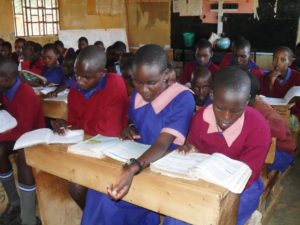
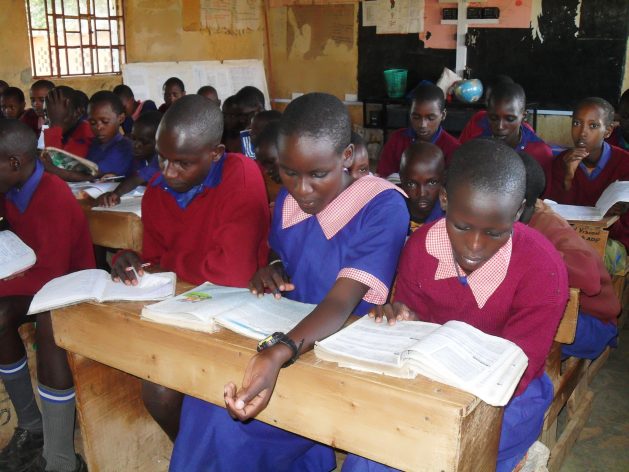
Pupils at the Elangata Enterit boarding primary school in Kenya’s Narok County. Experts say that a balanced education includes enabling girls to participate at the same level as boys. Credit: Joyce Chimbi/IPS

DJIBOUTI CITY, Jan 27 2020 (IPS) – Fihima Mohamed’s mother never attended school and until two years ago she could not read or write. Mohamed’s mother had been born in neighbouring Somalia but was sent to Djibouti as a young girl to live with her aunt. The expectation had been that she would have a better life by escaping the ongoing conflict in her home country at the time.


Instead, Mohamed’s mother became a domestic servant to her aunt — a circumstance that showed her that her own daughter’s future would be just as difficult if she too did not go to school.

Born and raised in the Republic of Djibouti, Mohamed told IPS that most of her childhood was spent in school or studying.

Between the ages of six and 16 years, she was driven by the vivid pictures her mother painted of the life that awaited her if she did not stay in school and perform well — one of domestic abuse. “I was told that as a woman, education would give me freedom,” she said, remembering how her mother was not able to make major household decisions and did not have the freedom to determine what direction her life took.

But her mother did make a decision that determined the course of Mohamed’s life. She opted not to buy the fish her children enjoyed so much for their meals and instead spent the money on private tuition classes for her daughter to supplement her schooling.

“I attended public school during the day, and at night, two hours of private school tuition. My mother sacrificed a lot to raise 25 dollars per month to pay for these night classes,” she said, explaining that she went to those classes not for her own sake but also so that she could help her three younger siblings with their homework.

The sacrifice paid off and Mohamed was placed among the country’s top-five students for her high school final exam. She received a scholarship to study in France for four years.

Fast track to 2020, Mohamed holds a bachelor’s degree in law and political science, and a Master’s degree in refugee studies. She is a social entrepreneur, a gender and environment activist and the founder of the Women Initiative, a local social movement for the empowerment of women and girls.

She said that Djibouti is among a growing list of developing countries were education attainment levels have significantly narrowed between boys and girls. United Nations statistics indicate that the gross primary school enrolment rates for girls have risen to nearly 61 percent.

This emerged during the 3rd International Summit on Balanced and Inclusive Education that is currently being held in Djibouti City, in the Horn of Africa nation of Djibouti.

Organised by the Education Relief Foundation (ERF), over 200 delegates and government representatives from over 35 countries rallied behind an education pathway that leaves no one behind.

  • According to the World Economic Forum’s Global Gender Gap Report 2020, there is an increasing number of countries in the global south where, on average, educational attainment gaps are now relatively small.
  • These countries include Cambodia, Kenya, Cuba, Myanmar and Ethiopia.
  • In Myanmar, for instance, primary school enrolment rates stand at 88 percent for girls, and 90 percent for boys.
    • Additionally, in secondary level, enrolment rate for girls is at 62 percent and 57 percent for boys.
    • Even at tertiary level, enrolment rates for girls stand at 19 percent, compared to 13 percent for boys.

Countries struggling with gender parity in education include Togo, Burkina Faso and Burundi.

Togolese Prime Minister Komi Selom, Klassou confirmed that alarming gender inequalities exist, despite the existence of innovative strategies towards an inclusive education system.

“We have school canteens to provide school free meals, free medical cover for school-going children and the newly approved year-on-year budgetary increase to the education sector,” he said during the summit.

  • The Global Gender Gap Report indicates that in Togo, enrolment in primary school is at 88 percent among girls, and 94 percent for boys.
  • Secondary school enrolment for girls is at 34 percent for girls and 49 percent for boys.
  • At tertiary level, 10 percent of girls enrol vis-à-vis 19 percent of boys.

“Efforts to narrow this gap include a new government commitment to allocate at least 25 percent of its national budget to the education sector,” he said.
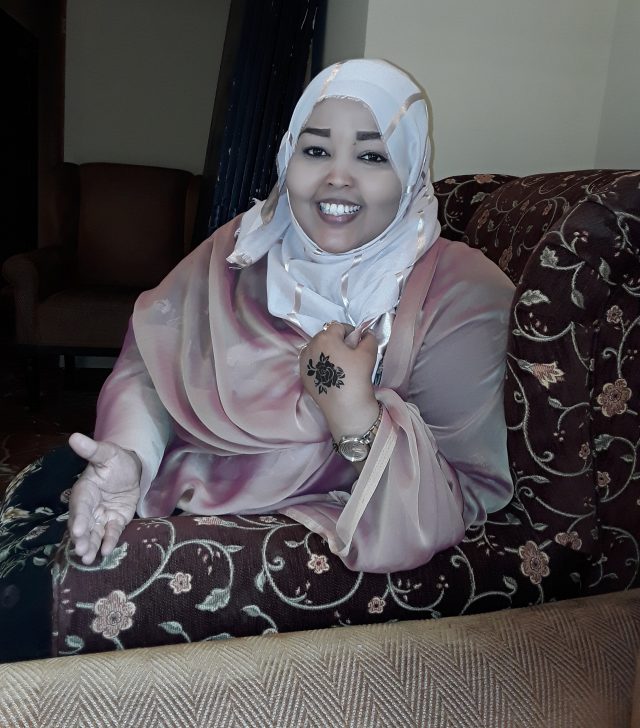
Fahima Mohamed says Djibouti is among a growing list of developing countries were education attainment levels have significantly narrowed between boys and girls. She called for more investments to ensure that girls participate at the same level as boys. Credit: Joyce Chimbi/IPS

Mohamed told IPS that ongoing consultations on education will bring the global south a step closer towards “building fairer and more inclusive economies by transforming our education systems to ensure that every child has access to quality education”.

She explained that ultimately the idea was to embrace an education system that reflects the reality of children in the global south. This also included improving educational infrastructure and content so that the latter could be more diverse to reflect the multiple-cultural narrative of the global south.

Nonetheless, Sheikh Manssour Bin Mussallam, President of ERF, emphasised that balanced and inclusive education systems are not solely about having more children in classrooms, but the “construction of systems that makes exclusion impossible”.

“Our education systems should guarantee that marginalised groups participate under balanced and equitable conditions. The transformative power of education is only true if education itself is transformed and driven by forces that uphold equality and equity,” he said during the opening day of the summit.

Data by the U.N. Educational, Scientific and Cultural Organisation (UNESCO) shows that existing education systems are far from equitable, prosperous and sustainable.

  • In sub-Saharan Africa, 21 percent of girls are much more likely to be out of school at primary school age compared to 16 percent of boys.
  • Globally, UNESCO statistics indicate that sub-Saharan Africa and South Asia have the worst rates of education exclusion. One in four children in South Asia, and one in five children in sub-Saharan Africa will never enter school.
  • Equally alarming, World Bank statistics show that children with a disability are more likely to never enrol in school at all. Overall, only one in four children with disabilities complete secondary school.
  • Additionally, primary school completion rates are 10 percentage points lower for girls with disabilities compared to girls without disabilities.

“In Sri Lanka where girls are consistently outpacing boys in both education access and achievement, our main challenge is lack of financial and technical resources to address the [requirements] of special needs children,” P.C.K. Pirisyala, director of education at the Sri Lanka Education Administrative Service, told IPS.

“Developing countries are grappling with a lack of teachers to provide adequate training and material to provide disability-inclusive education,” she said.

She further said that a lack of resources (both technical and financial) and a lack of schools equipped to accommodate special needs children has made it difficult for these children in the global south to access education and participate with their peers.

“This forum will provide the global south with a roadmap that reflects these realities, and bring us closer to the dream of balanced and inclusive education for all by 2030. This is all in line with the [U.N.] sustainable development goal four on education for all,” she concluded.

The summit runs until Wednesday, Jan. 29.
 

Women’s Groups Applaud Gender Action Plan Following COP 25

Civil Society, Development & Aid, Editors’ Choice, Featured, Gender, Global, Global Governance, Headlines, IPS UN: Inside the Glasshouse, TerraViva United Nations

Opinion

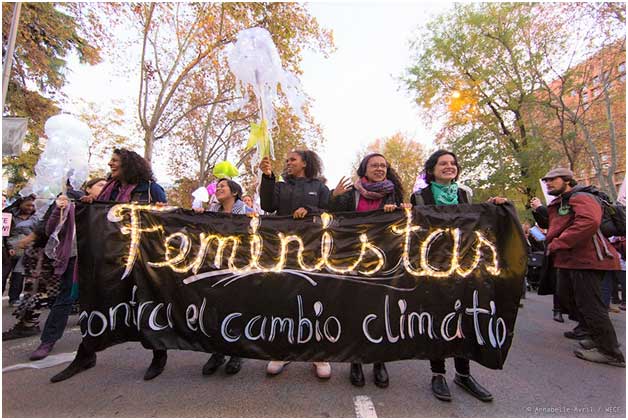
Credit: Annabelle Avril – Women in Europe for a Common Future (WECF)

MADRID, Spain, Jan 8 2020 (IPS) – After nearly two weeks of negotiations at COP 25 climate negotiations in Madrid last month (2-13 December), governments will be adopting a new 5-year Gender Action Plan (GAP) that progressively builds upon the first GAP, and works to address many of the concerns raised by women and gender groups at the Framework Convention on Climate Change (UNFCCC), including calls for greater focus on implementation and scaling up gender-just climate solutions.


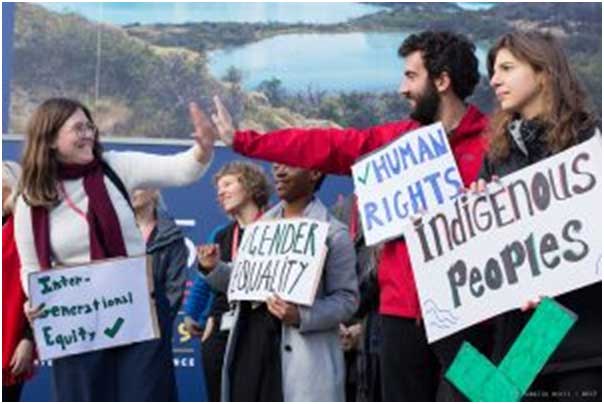
The GAP has been unanimously agreed to by governments who are called to lead or contribute to actions to promote gender-equality in the UNFCCC process as well as support all activities. Crucially, this GAP takes into account human rights, ensuring a just transition, and the challenges Indigenous Peoples face while fighting for climate justice and protecting their communities.

“In comparison to the initial GAP, new activities provide the opportunity to meaningfully shift towards capacity building and enhanced implementation of gender-responsive climate action at all levels, including for example, the promotion of gender-responsive technology solutions and preserving local, indigenous and traditional knowledge and practices in different sectors” said Ndivile Mokoena, GenderCC – Women for Climate Justice Southern Africa.

The negotiations were not easy, with Parties failing to deliver a text for the closing of the Subsidiary Body for Implementation (SBI) as expected, and the COP25 Presidency having to host high-level consultations in the final week to come to a consensus.

Delays in negotiations included initial process challenges to arrive at a basis for negotiating text, followed by disagreement on inclusion of previously agreed language on human rights and just transition, as well as over references to finance and means of implementation.

“While it was frustrating to witness delays in the negotiations, particularly challenges to agreed language on rights, the fact that we have achieved and adopted a 5 year gender action plan that includes many of the key demands of Parties as well as views of women and gender groups goes to show the critical importance to which countries have started to understand and value gender equality in climate action.”

“I think the political will shown by negotiators under this agenda to negotiate towards consensus and achieve a robust outcome could and should be modeled under all other items in this process. In particular, I want to highlight the incredibly strong leadership of the Government of Mexico in facilitating Parties to come to this agreement. It was inspiring to witness!” said Bridget Burns, WEDO, United States.

Political will was also built through the effective mobilization efforts of both the Women and Gender Constituency and other civil society allies who refused to see this COP stall progress on gender equality.

“Mobilization efforts via social media, letters to Ministers, including protests by civil society movements were critical to raising political awareness on GAP,” said Kavita Naidu, Asia Pacific Forum on Women, Law and Development (APWLD), Thailand.

However, there are concerns that the Gender Action Plan lacks clearly defined indicators and targets for measuring its progress, such as a progressive target on advancing women’s leadership in the process.

Credit: Annabelle Avril/ WECF

“While the GAP acknowledges intersectional identities that women hold, including indigenous women and women with disabilities, more work needs to be done to understand the multidimensional and non-binary social intersections that impact the ways in which people mitigate to and build resilience to climate impacts.”

“The adoption of the enhanced GAP does not mean our work is done. We will need to focus our work now at the national level to ensure the implementation of the GAP, as well as monitoring its implementation,” Nanna Birk, LIFE Education Sustainability Equality, Germany.

While Women and Gender Constituency applauds this outcome, it fully recognizes and maintains that no real action on gender equality can be achieved without progress from Parties to fully implement the Paris Agreement, including to limiting warming to 1.5 degrees.

“We know we are far from that reality. The GAP is a tool to advance progress on both gender equality and effective climate solutions, but gender equality does not live in the GAP. It is realized through just and bold climate action. We remain appalled by the lack of progress overall in these negotiations and move forward boldly to lift up women’s rights and the voices of women and gender advocates everywhere as we know that real climate action can only be achieved when these voices and leadership are centered and heeded.” added Burns.

Read the agreed outcome of the gender agenda item here.

The Women and Gender Constituency (WGC) is one of the nine stakeholder groups of the UNFCCC. Established in 2009, the WGC now consists of 29 women’s and environmental civil society organizations, who are working to ensure that women’s voices and their rights are embedded in all processes and results of the UNFCCC framework, for a sustainable and just future, so that gender equality and women’s human rights are central to the ongoing discussions.

http://womengenderclimate.org

  Source

India’s Citizenship Law Triggered by Rising Right-Wing Ideology

Active Citizens, Asia-Pacific, Civil Society, Democracy, Editors’ Choice, Education, Featured, Fostering Global Citizenship, Global, Global Governance, Headlines, Human Rights, Inequity, IPS UN: Inside the Glasshouse, Population

Credit: Foreign Policy

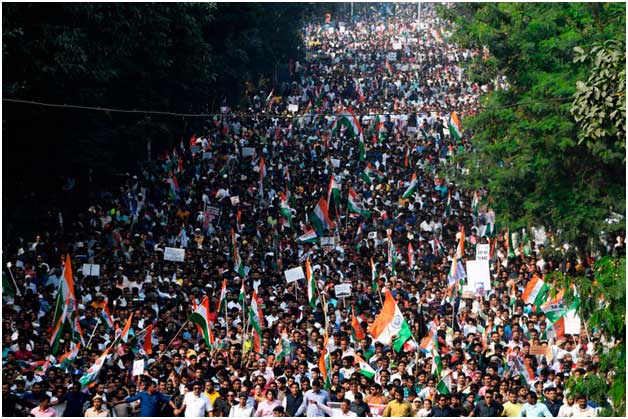
UNITED NATIONS, Jan 6 2020 (IPS) – “Fire bullets at the traitors of the country,” chanted mobs of Bharatiya Janata Party, or BJP, supporters wrapped in Indian flags in Delhi last week.


It’s been less than a month since protests emerged against the BJP’s Citizenship Amendment Act (CAA), a new law to redefine and restrict who is considered an Indian citizen. In a violent crackdown, 27 peaceful protesters have been killed and police have detained 1500 others. BJP vigilante mobs continue to threaten and beat people protesting this controversial bill.

The CAA became law on December 11th, 2019 to provide a path to citizenship for minorities that fled from Afghanistan, Bangladesh, and Pakistan prior to 2014, but its most controversial point is that it specifically excludes Muslims. Critics call it discriminatory and say it threatens the secular nature of India’s constitution by trying to establish a Hindu religious state, or a “Hindu Rashtra,” akin to other religious states like Saudi Arabia or Israel’s attempt for a Jewish nation state.

In addition to the CAA, the Indian government is also planning to implement a National Register of Citizens, also known as the NRC, across the whole nation by 2021. The most recent NRC was implemented by the Indian government in the state of Assam in 2015 forcing Indians to provide documented proof of their citizenship to be considered Indian citizens. The result was the disenfranchisement of 1.9 million mostly Muslim residents who now risk being sent to illegal detention camps as they do not have what the government considers sufficient documentation or “legacy documents” which must date back to the 1970s. People fear that its extension to the rest of the country will not only affect Muslims who are not safeguarded by the CAA, but also the poorest, unlettered parts of society.

According to Indian historian and executive-director of the Tricontinental Institute for Social Research, Vijay Prashad, the BJP has couched the CAA as a progressive refugee policy which is redundant given that India is already a signatory of the Global Compact for Migration as well as other international treaties on migration and refugees.

“Why not bring these treaties to be ratified by India, why bother to create your own bizarre thing if there’s already an international framework to say that we accept refugees and migration?” he asked rhetorically. “Well it’s because they’ve used the question of migration not for migration itself but to define what is an Indian citizen, which is a very chilling thing because now they are making the claim that Muslims are not citizens in India,” Prashad told IPS News.

Prashad says this is a core part of the BJP’s right-wing ideology. India’s home minister Amit Shah even referred to undocumented Muslim migrants coming from Bangladesh to India as “termites” and “infiltrators” and threatened to throw them into the Bay of Bengal.

India is currently the world’s largest democracy which historically has not used religion as a prerequisite for citizenship. According to Ramya Reddy, human rights lawyer from Georgetown University Law Center, the CAA puts India’s democracy at risk by violating Articles 14 and 21 of the Indian constitution, which deal with equality and liberty.

Protests

Daily protests have been met with extreme violence by the police who have fired stun grenades, smoke bombs, tear gas, and even used live ammunition to shoot and kill protestors. Police have attempted to stop protests by imposing Section 144 of the Penal Code, a draconian law from the British Raj historically used to crush freedom fighters by prohibiting the assembly of more than 4 people. The section of this law, however, is being applied selectively.

“When the radical Hindutva supporters gather, this is not considered an unlawful gathering according to the police because they’re pro-government. The police even escort them,” said Aatir Arshad a Bachelor’s student from Jamia Millia University who’s been involved in recent protests.

Jamia Millia Islamia University, a public college in New Delhi with a majority-Muslim student body, became the center of the protest movement in Delhi after police stormed the university campus, dragged out several students, beat them up and arrested them, including those who were not participating in the demonstrations.

“They rushed into the library, where students were not even protesting, they were just studying for their exams and the police beat them up,” Arshad told IPS News. “That moment was apocalyptic for Jamia Milia Islamia. They also harassed students and then claimed they did nothing.”

Arshad adds that police also entered the mosque on the university campus, beat up the Imam, as well as the guards of the university. Protests are still going on because of the events from that day.

Ahla Khan, an alumnus from Jamia Millia and resident of the Jamia Nagar area, explained to IPS News how on the first day of protests her and her sister were just walking to Jamia University when they got caught in the middle of a confrontation between police and protesters. They ran to the sidewalk and watched as police hit students with batons.

“I was watching a guy standing there, just looking at his phone doing nothing. The police ask him ‘where are you going’ and he doesn’t say anything. And just like that the police start beating him up,” says Khan.

She explains how the protesters have been highly organized and peaceful in Delhi. Many have volunteered to distribute tea in the biting cold weather, organized assemblies and facilitated plays and book readings. Chants and slogans have called for repealing the CAA as well as for Azaadi, or freedom. Police have been more restrained than in Uttar Pradesh (UP) where police violence has been lethal. The Chief Minister of UP called a meeting in late December threatening to seize property of those involved in protests “to compensate damage to public property.”

“In UP police and RSS goons have been barging into people’s houses, hitting them, beating people up, thrashing their entire houses, looting them, TVs and fridges broken,” said Khan.

The government has also made several attempts to prevent media outlets from covering police violence and has blocked the internet is several parts of India where there are massive protests. Internet shutdowns have become commonplace, with the shutdown in Kashmir being the longest ever in a democracy.

International Response

While many protesters are still languishing in jail, the United Nations has voiced concern over the CAA with Secretary-General Antonio Guterres’ spokesperson, Stephane Dujarric, calling for “restraint and urg[ing] full respect for the rights of freedom of opinion and expression and peaceful assembly.” UN Human Rights Commissioner Michelle Bachelet’s spokesperson stated that the law “would appear to undermine the commitment to equality before the law enshrined in India’s Constitution.”

Despite this, Reddy says that this doesn’t have any enforcement as domestic law always takes precedence over international law. Even though the UN has criticized the CAA, “[changes have] to happen domestically or with pressure,” she said. And right now, no other major international powers like the UK, the US, and Canada have come out against this because they’re strong allies [of India],” Reddy told IPS News.

In fact, on a recent visit to Washington, D.C. India’s External Affairs Minister Subrahmanyam Jaishankar cancelled a meeting with the House Foreign Affairs Committee after the other members of Congress refused to exclude Rep. Pramila Jayapal (D-Wash.), a critic of the CAA, NRC, and India’s actions in Kashmir.

South Asian students in the United States are expressing their dismay with the Indian government by launching a campaign demanding their House of Representatives “express their disapproval through targeted sanctions against Modi government officials until both laws are repealed.” So far, the letter has been signed by the Yale South Asian Society, Harvard College U.S.-India Initiative, Columbia University South Asian Organization, University of Pennsylvania South Asia Society Board, Cornell University South Asian Law Students Association, Brown University South Asian Students Association and Dartmouth University Muslim Students Association Al-Nur, and many other student groups.

Democratic Deficit

Implementing a nationwide National Register of Citizens will cause massive economic disruption, according to a recent report by the Wire. The article states that the NRC in the state of Assam alone, which makes up just 3% of the population, “took almost a decade, required the involvement of over 50,000 government employees and cost more than Rs. 1,200 crore,” or just over 168 million US dollars. While the Indian development dream is flailing with its ranking in hunger slipping annually and unemployment rising, the implications of implementing these exclusionary laws go beyond the marginalization of Muslims to also draining resources from some of the world’s poorest residents.

“This is not about a policy you can really implement,” said Prashad. “You can’t actually, practically expatriate 200 million Muslims.” Prashad also pointed out in his recent article that India’s Muslims form the eighth-largest country in the world.

The point, he adds, is that “this is a marker saying we are redefining citizenship and emboldening the hard-right and mobs on the street to make it clear to Muslims that they are not welcome here and that India is a Hindu country,” Prashad told IPS.

Despite the hard attempt by the government quell any resistance to the CAA, protests have been occurring daily with Muslims, Dalits, Buddhists, Christians, Sikhs, farmers, lawyers, workers, writers, and journalists joining together to prevent what could leave millions stateless in “the largest disenfranchisement in human history.”

When asking Aatir Ashad, who’s been protesting daily, about his experience he tells IPS News that whenever there’s a call for a protest, the police just close all of the metro stations so that no one can reach the protest site.

“Great democratic country we’re living in,” he says sarcastically, distressingly, as he prepares for another day of joining the protests.

  Source

2020 Is the Decade of Action & It Has to Be a Sprint

Africa, Armed Conflicts, Climate Change, Conferences, Crime & Justice, Development & Aid, Economy & Trade, Featured, Gender, Global, Headlines, Human Rights, Labour, Peace, Poverty & SDGs, Sustainability, TerraViva United Nations, Trade & Investment

Opinion

Hosted by the governments of Kenya, Denmark and UNFPA, world leaders gather for the 3-day Nairobi Summit on ICPD25 to advance sexual, reproductive health & rights for all. November 12, 2019. Photo Courtesy: Redhouse Public Relations

NAIROBI, Kenya, Dec 31 2019 (IPS) – Happy New Year, Kenya. 2020 marks a decade of action towards the realization of the Sustainable Development Goals by 2030.

Peace and development are inextricably linked, with each making the achievement of the other far more likely. This puts the conflict-prevention and development work of the UN at the heart of the agenda in East Africa, but in a multi-agency and programme environment, making meaningful progress is challenging.


Aware of this, the UN began a process of structural reforms led by the UN Secretary-General António Guterres who made reforms of the United Nations, a priority at the very beginning of his term in January 2017. The aim being to deliver better results through cooperation, collaboration and integration. 2019 was the year that the impact of these reforms became real and nowhere more than in the peace, conflict-prevention and development pillars of the UN’s work.

At the country level, that shift towards a nimble, 21st century UN challenges deeply entrenched practices and operations. In a country team with over 23 individual agencies, funds and programmes, the reform process can be complicated, even messy.

To the credit of the Kenya country team, we overcame the challenges of ceding long-held agency interests for the collective good and achieved some ground-breaking milestones in our partnership with governments, civic organizations and the private sector.

The most outstanding was our venturing out to confront challenges that transcend borders. East Africa faces major threats to peace and development across multiple fronts, and respective UN country teams have, in a remarkable show of teamwork, sought to harmonize their responses to these threats. Internecine border conflicts and the effects of climate change together make a formidable challenge that brought together UN teams from Kenya and Uganda, in a pact that seeks to bring sustainable development to the Karamoja triangle.

This pact follows from another successful regional collaboration project on the Kenya-Ethiopia border where communities accustomed to recurrent hostilities are now reaching out to each other to find solutions to common socio-economic challenges.

We believe that our regional surge towards prevention, peacemaking and diplomacy will have a particular impact on the youth, who suffer an enduring sense of being neglected and ignored. This narrative is a breeding ground for extremism and radicalization, so addressing such concerns was a key point of deliberation during last July’s African Regional High-Level Conference on Counter-Terrorism and the Prevention of Violent Extremism in Nairobi.

The same regional approach was behind the initiative by Kenya, Uganda, Tanzania, Ethiopia and Somalia to sign the Declaration and Action Plan to End Cross-border FGM in April 2019. This was the first time multiple countries had come together to tackle this pernicious cross-border crime.

But there remain many in the region still left behind by development, and we continue to stand up for them through our UN Development Assistance Framework 2018-2022. The framework’s gender equality and rights focus is unmistakable, because in too many communities, the simple fact of being born female shatters one’s chances of living in full human dignity.

Our focus on giving a leg-up to those left farthest behind has attracted a positive response from our partners in national and county governments. By staying in lockstep with national priorities on issues such as health, agriculture and housing, the common thread of messages from our partners is that we are staying effective and responsive to the ambitions of Kenyans.

As 2020 beckons, the decade of action starts and it has to be a sprint to deliver on the SDGs, the UN team in Kenya is rolling up its sleeves with greater urgency, ambition and innovation. We will enhance regional cooperation and private-public partnerships as we work with the Government towards lifting millions of the citizens of this region out of poverty and upholding their human rights.

We are re-imagining ways of delivering development in ways such as the co-creation of an SDG innovation lab between the Government of Kenya, the Centre for Effective Global Action at the University of California in Berkeley, the Rockefeller Foundation, and the UN. The SDG Lab will kick off with support for the delivery of Kenya’s Big Four agenda by harnessing, big data, technology and innovation to achieve scale and impact.

As a UN country team, we got off the blocks in 2019 in pursuit of UN Deputy Secretary General Amina Mohammed’s challenge to “flip the orthodoxy” for the repositioning of the UN. We have dared to go beyond the typical and will do whatever it takes to respond effectively to the challenges faced by Kenya’s people, now and in the future.

Siddharth Chatterjee is the United Nations Resident Coordinator in Kenya.


Arab Region’s Largest Youth Gathering Focuses on New Tech

Conferences, Economy & Trade, Featured, Headlines, Middle East & North Africa, Population, Regional Categories, TerraViva United Nations

Population

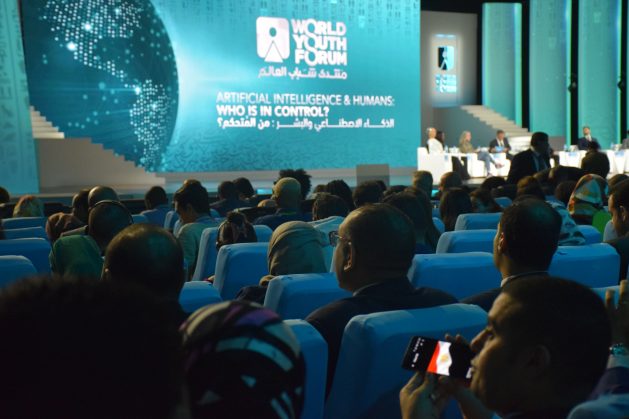
At the Global Youth Forum in Egypt thousands of youth attend a session on Artificial Intelligence and to hear Sophia — a humanoid robot capable of displaying humanlike expressions and interacting with people. Credit: Stella Paul/IPS

SHARM-EL-SHEIKH, Egypt, Dec 18 2019 (IPS) – On late Monday morning, a motley group of more than a thousand youth gathered in a hall in Sharm el-Sheikh, Egypt, to listen to Sophia — a humanoid robot capable of displaying humanlike expressions and interacting with people. Yahya Elghobashy, a computer science engineering student from Cairo, sat excitedly in the audience. A few meters away from him, also in the audience, was Abdel Fattah el-Sisi — the President of Egypt.


As Sophia and a panel of scientists on the stage spoke about Artificial Intelligence (AI), El-Sisi was seen listening attentively and taking notes while the young crowd around him squealed and took photos.

“It was very exciting that I was going to see and hear the world’s best humanoid robot and that the president himself was there,” Elghobashy revealed, a big smile on his face.

Since 2017, Egyptian president El-Sisi has been seen here at the World Youth Forum each year. The event is now the Arab world’s largest youth gathering, focusing on peace, culture and development.

The 3-day forum, which ended yesterday, Dec.17, drew nearly 8,000 people including 64 speakers and several hundred youth leaders from Africa, Asia, Europe, and the Americas. There was also a large contingent of government officials and ministers in attendance, which has been happening under the direct patronage of the president. The core theme of the event is “Egypt: where civilisations meet” – an effort to highlight the cultural diversity of the country to the world.

Technology and innovation in the spotlight

But the dominating subject of discussions at the forum this year was technology and innovation. Of the 20 sessions, half were centred around technology and artificial intelligence (AI), cyber security, industrial innovation and blockchain technologies and applications.

On Monday, Dec. 16, at the session on AI, youths were seen loudly cheering as Sophia the robot spoke. Designed by Hanson Robotics of Hong Kong, Sophia described herself as a robot who is here to assist in the fields of research, education, and entertainment, and help promote public discussion about AI.  At the session, a panel of youth experts also talked passionately about ethics and the future of robotics. “You can build robots that are energy-efficient and also run on renewable energy,” said the humanoid robot to the cheering young crowd.

“This is very progressive that we are discussing advanced technology like AI here. As an engineering student, I think it especially encourages us to talk about what is most relevant to our life, our country and our future,” Elghobashy told IPS.

At a press conference later, El-Sisi assured people that the government was indeed paying attention to the developments at World Youth Forum and planned to bring cutting-edge technologies to the country’s youth for a better future.

“We will be launching a series of new universities teaching all relevant digital age sciences. We will also seek partnerships with international institutions to guarantee a high level of quality education,” El-Sisi said.

New technologies, risks and challenges

Besides the excitement of ground-breaking technologies, the forum also threw light on the risks and challenges of new technologies such as  blockchain – a decentralised, distributed ledger that records the provenance of a digital asset. Cryptocurrency, like Bitcoin, is a perfect example of blockchain technology.

Challenges faced by various countries regarding blockchain due to the lack of national legislation in countries other than China and the United States was also a prominent talking point. This includes possible threats like blockchain being misused by terrorist organisations to sell oil, purchase weapons, and exchange digital currencies.

The missing technologies

Samia Khamis is a student of international relations in Amman, Jordan who traveled to the forum for the first time. “I came via Cairo, which is only an hour away from Jordan, but the moment I stepped out of the airport I could feel that the air pollution level is much higher than my country,” she told IPS.

Cairo is one of the world’s most polluted cities.  According to NUMBEO – an air quality data monitor, residents of Cairo breathe in polluted air, with levels reaching as high as 85 percent.

According to Khamis, Egypt needs to develop technologies that could clear its sky which is “dark” because of pollution. “It is good that we are brining so many technologies on display here, but we need technologies that can make our environment better and our air clearer,” she said.

The forum’s closing ceremony took place on Tuesday night.


Mainstreaming Leprosy-affected People a Big Challenge in Bangladesh

Asia-Pacific, Conferences, Development & Aid, Featured, Headlines, Health, Human Rights, Poverty & SDGs, TerraViva United Nations

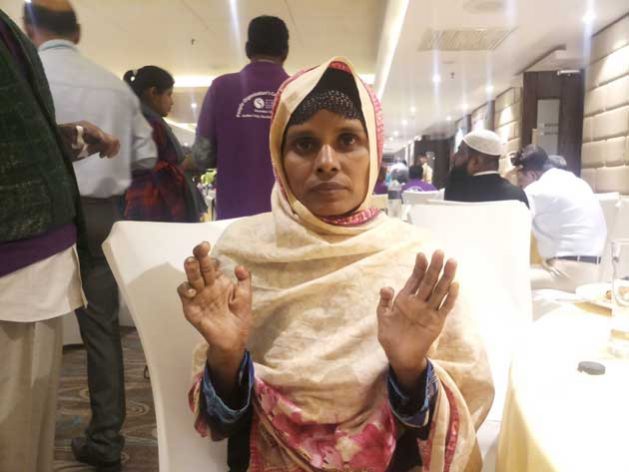
Feroza Begum, Leprosy activist. Credit: Rafiqul Islam / IPS

DHAKA, Bangladesh, Dec 12 2019 (IPS) – When Feroza Begum was first diagnosed with leprosy in 2006, it felt as though she had been struck by a thunderbolt due to the deep-seated prejudice in her society that the disease is a curse from Allah (God).


“ I was affected with leprosy disease, nobody accepted me (in the past). They had made me isolated. I cannot forget the plight I suffered at that time. Even my family was broken as I was left by my husband,” she told IPS. The 35-year old says she was ostracized and made to feel like a lesser person.

Feroza travelled about 200 kilometres from Bogura district to Dhaka, the capital city to attend the first-ever Conference of organizations of persons affected by leprosy. Feroza came to listen and talk to other people who had similar stories and also to engage with organizations that are fighting for an end to discrimination of people with leprosy.

“I got married in 2006 and a few days later, I was diagnosed as a leprosy patient’. She says after the diagnosis, members of her husband’s family started ignoring her. ‘They ignored me and did not talk to me and one day sometime in 2007 my husband divorced me and sent me back to my father’s home.”

After returning home, she started treatment with support from a local NGO and she eventually recovered from the Hansen disease. But as a result of the disease, she could not avoid disability.

Leprosy stigma in Communities

Although there is a stigma around leprosy in her society, Feroza is living with a disability and is leading a normal life. “Fighting stigma for a leprosy patient is a hard task in our society and leading a normal life is a challenging task too,” she added.

“Now my mother and I prepare mats and sell them in a local market. This is our only livelihood option but I never bow down to the stigma,” Feroza said.

Dr David Pahan, Country Director of Lepra Bangladesh, said Prime Minister Sheikh Hasina’s announcement of the ‘Zero Leprosy Initiative’ to eliminate the Hansen disease from the country by 2030 is commendable.

“Bringing leprosy patients into the mainstream of society is big for us as there is a negative perception about leprosy in our society,” he told IPS on the sidelines of the conference.

Now it is time for an Action Plan

Although the Zero Leprosy Initiative was announced, formulation of policies and action plans to eliminate leprosy is also a challenging task which lies ahead, he added.

Dr Pahan, who has been working on leprosy elimination since 1996, said leprosy patients must raise their voice together so that the authorities concerned take proper steps to bring them into the mainstream of society.

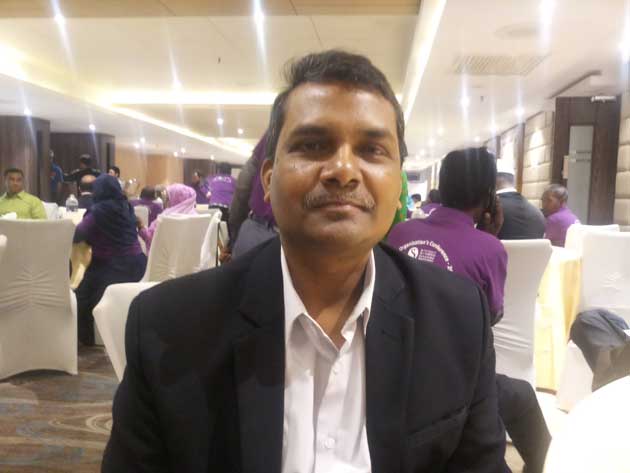
Dr David Pahan, Country Director of Lepra Bangladesh. Credit: Rafiqul Islam / IPS

Close to 100 leprosy patients and representatives from several organizations working in the field of leprosy attended the landmark leprosy conference in Dhaka which was organized by members of the Leprosy and TB Coordinating Committee (LTCC) and People Organizations, with support from The Nippon Foundation and Sasakawa Health Foundation.

The conference allowed people from across the country to share their experiences about the long plight in the recovering period of the disease.

Bangladesh is still a high burden leprosy country. The registered prevalence of leprosy was 0.7 percent, 0.27 percent and 0.2 percent in 2000, 2010 and 2016 respectively, and stood at 0.19 per 10,000 population in 2018, according to official data. The data also shows that about 4,000 patients were detected per year in the country over the last few years, with this figure standing at 3,729 in 2018.

Access to resources limited

Sonia Prajapoti of HEED Bangladesh, a local NGO working on leprosy control, said the case of leprosy is highly prevalent among tea workers in Sylhet, Habiganj and Moulvibazar districts as they are not aware of the leprosy disease and have limited access to civic amenities.

She said a social awareness must be created among the tea workers to keep them free from leprosy, while the leprosy patients could be brought into the mainstream of society by increasing their social status, providing proper healthcare and creating working opportunities for them.

“Prime Minister Sheikh Hasina’s announcement of the ‘Zero Leprosy Initiative, will increase the voice of the people who have been working on leprosy elimination, and this will help them fight leprosy together,” said participant Shandha Mondal, district coordinator of local NGO Shalom (leprosy) in Meherpur.

Speaking as the chief guest at the conference, Chairman of The Nippon Foundation and WHO Goodwill Ambassador for Leprosy Elimination, Yohei Sasakawa, assured Bangladesh of continuing support of the implementation of ‘the Zero Leprosy Initiative’ which was announced by Prime Minister Sheikh Hasina and which aims to eliminate leprosy by 2030.

“The government has already announced the Zero Leprosy Initiative that will help eliminate the discrimination the leprosy patients have been facing,” he said.

“You, the leprosy patients, know better about the disease than doctors…your government is working to eliminate leprosy by 2030. And we are here to know how we can help your government fight leprosy,” Sasakawa said.

The Nippon Foundation and the Sasakawa Health Foundation of Japan organized a national conference on leprosy in Dhaka on December 11 under the theme “ZeRo leprosy initiative”.