The UN’s Own Relevance Is at Stake at This Year’s General Assembly

Armed Conflicts, Civil Society, Climate Change, Crime & Justice, Development & Aid, Featured, Global, Headlines, Health, Human Rights, Inequality, Peace, Sustainable Development Goals, TerraViva United Nations

Opinion

United Nations Secretary General Antonio Guterres addresses the 22nd session of the Permanent Forum on Indigenous Issues at the General Assembly Hall of the United Nations headquarters in New York City on 17 April 17 2023. Credit: Ed Jones/AFP via Getty Images

NEW YORK, Sep 7 2023 (IPS) – This September, world leaders and public policy advocates from around the world will descend on New York for the UN General Assembly. Alongside conversations on peace and security, global development and climate change, progress – or the lack of it – on the Sustainable Development Goals (SDGs) is expected to take centre-stage. A major SDG Summit will be held on 18 and 19 September. The UN hopes that it will serve as a ‘rallying cry to recharge momentum for world leaders to come together to reflect on where we stand and resolve to do more’. But are the world’s leaders in a mood to uphold the UN’s purpose, and can the UN’s leadership rise to the occasion by resolutely addressing destructive behaviours?


Sadly, the world is facing an acute crisis of leadership. In far too many countries authoritarian leaders have seized power through a combination of populist political discourse, outright repression and military coups. Our findings on the CIVICUS Monitor – a participatory research platform that measures civic freedoms in every country – show that 85% of the world’s population live in places where serious attacks on basic fundamental freedoms to organise, speak out and protest are taking place. Respect for these freedoms is essential so that people and civil society organisations can have a say in inclusive decision making.

UN undermined

The UN Charter begins with the words, ‘We the Peoples’ and a resolve to save future generations from the scourge of war. Its ideals, such as respect for human rights and the dignity of every person, are being eroded by powerful states that have introduced slippery concepts such as ‘cultural relativism’ and ‘development with national characteristics’. The consensus to seek solutions to global challenges through the UN appears to be at breaking point. As we speak hostilities are raging in Ukraine, Sudan, the Occupied Palestinian Territories and the Sahel region even as millions of people reel from the negative consequences of protracted conflicts and oppression in Afghanistan, Ethiopia, Myanmar, Syria and Yemen, to name a few.

Article 1 of the UN Charter underscores the UN’s role in harmonising the actions of nations towards the attainment of common ends, including in relation to solving international problems of an economic, social, cultural or humanitarian character, and to promote respect for human rights and fundamental freedoms for all. But in a time of eye-watering inequality within and between countries, big economic decisions affecting people and the planet are not being made collectively at the UN but by the G20 group of the world’s biggest economies, whose leaders are meeting prior to the UN General Assembly to make economic decisions with ramifications for all countries.

Economic and development cooperation policies for a large chunk of the globe are also determined through the Organisation for Economic Cooperation and Development (OECD). Established in 1961, the OECD comprises 38 countries with a stated commitment to democratic values and market-based economics. Civil society has worked hard to get the OECD to take action on issues such as fair taxation, social protection and civic space.

More recently, the BRICS – Brazil, Russia, India, China and South Africa – grouping of countries that together account for 40 per cent of the world’s population and a quarter of the globe’s GDP are seeking to emerge as a counterweight to the OECD. However, concerns remain about the values that bind this alliance. At its recent summit in South Africa six new members were admitted, four of which – Egypt, Iran, Saudi Arabia and the United Arab Emirates – are ruled by totalitarian governments with a history of repressing civil society voices. This comes on top of concerns that China and Russia are driving the BRICS agenda despite credible allegations that their governments have committed crimes against humanity.

The challenge before the UN’s leadership this September is to find ways to bring coherence and harmony to decisions being taken at the G20, OECD, BRICS and elsewhere to serve the best interests of excluded people around the globe. A focus on the SDGs by emphasising their universality and indivisibility can provide some hope.

SDGs off-track

The adoption of the SDGs in 2015 was a groundbreaking moment. The 17 ambitious SDGs and their 169 targets have been called the greatest ever human endeavour to create peaceful, just, equal and sustainable societies. The SDGs include promises to tackle inequality and corruption, promote women’s equality and empowerment, support inclusive and participatory governance, ensure sustainable consumption and production, usher in rule of law and catalyse effective partnerships for development.

But seven years on the SDGs are seriously off-track. The UN Secretary-General’s SDG progress report released this July laments that the promise to ‘leave no one behind’ is in peril. As many as 30 per cent of the targets are reported to have seen no progress or worse to have regressed below their 2015 baseline. The climate crisis, war in Ukraine, a weak global economy and the COVID-19 pandemic are cited as some of the reasons why progress is lacking.

UN Secretary-General Antonio Guterres is pushing for an SDG stimulus plan to scale up financing to the tune of US$500 billion. It remains to be seen how successful this would be given the self-interest being pursued by major powers that have the financial resources to contribute. Moreover, without civic participation and guarantees for enabled civil societies, there is a high probability that SDG stimulus funds could be misused by authoritarian governments to reinforce networks of patronage and to shore up repressive state apparatuses.

Also up for discussion at the UN General Assembly will be plans for a major Summit for the Future in 2024 to deliver the UN Secretary-General’s Our Common Agenda report, released in 2021. This proposes among other things the appointment of a UN Envoy for Future Generations, an upgrade of key UN institutions, digital cooperation across the board and boosting partnerships to drive access and inclusion at the UN. But with multilateralism stymied by hostility and divisions among big powers on the implementation of internationally agreed norms, achieving progress on this agenda implies a huge responsibility on the UN’s leadership to forge consensus while speaking truth to power and challenging damaging behaviours by states and their leaders.

The UN’s leadership have found its voice on the issue of climate change. Secretary-General Guterres has been remarkably candid about the negative impacts of the fossil fuel industry and its supporters. This July, he warned that ‘The era of global warming has ended; the era of global boiling has arrived’. Similar candour is required to call out the twin plagues of authoritarianism and populism which are causing immense suffering to people around the world while exacerbating conflict, inequality and climate change.

The formation of the UN as the conscience of the world in 1945 was an exercise in optimism and altruism. This September that spirit will be needed more than ever to start creating a better world for all, and to prove the UN’s value.

Mandeep S. Tiwana is chief officer for evidence and engagement + representative to the UN headquarters at CIVICUS, the global civil society alliance.

  Source

African Startups Mull Home-Grown Solutions to Combat Climate Change

Climate Action, Climate Change, Featured, Food and Agriculture, Headlines, Innovation, Sustainable Development Goals, TerraViva United Nations

Innovation

Delegates outside the Climate Action Innovation Hub on the frontlines of the Africa Climate Summit. Credit: Aimable Twahirwa

Delegates outside the Climate Action Innovation Hub on the frontlines of the Africa Climate Summit. Credit: Aimable Twahirwa

NAIROBI, Sep 6 2023 (IPS) – A group of young African startups made their presence known at the Africa Climate Summit in Nairobi, Kenya, hoping to play a big role in promoting home-grown climate-oriented solutions.


In line with the recently adopted African Union Climate Change and Resilient Development Strategy (2022-2032), experts believe that broad-based ownership and inclusive participation are vital for engaging Africa’s women and young people to showcase their ‘game-changing’ innovations.

According to Dr Yossi Matias, Vice-President of the Google Research initiative, pushing for innovative solutions and research around climate change remains critical for Africa when considering that the continent continues to feel the impacts of global warming in many ways.

“Most solutions promoted by African startups and innovators are in danger of being ignored because of many factors, but there is a way to overcome these challenges,” Yossi told IPS.

Among the solutions put forward by young innovators at the Climate Action Innovation Hub, which took place on the sidelines of the summit, were clean energy, climate-smart agriculture and sustainable land management, biodiversity conservation, water storage and conservation, waste management, and circular economy.

The innovations can also enhance the key cross-cutting areas needed to amplify climate cooperation and action, including climate advocacy, empowerment, awareness raising, capacity building, and climate literacy.

Other key areas of innovation are green transport and climate-resilient infrastructure, resilient, climate-smart cities, digital transformation, and food security.

The latest estimates by the UN agencies show that changing precipitation patterns, rising temperatures, and more extreme weather contributed to mounting food insecurity, poverty, and displacement in Africa.

Official figures show that food insecurity increases by 5–20 percentage points with each flood or drought in sub-Saharan Africa

While African Governments are committed to supporting climate solution innovation to varying levels and with different approaches to tackle this phenomenon, some experts believe that what is needed is to encourage a growing number of African startups to shift in mindset—by becoming providers of solutions to improving the continental climate change resilience.

“What is needed for these young African innovators is to look for mentors and incubators because, as an entrepreneur, you need to learn how to develop a successful product that brings some short-term and long-term positive benefits to combat climate change in your community,” Yossi said.

Through its Accelerator programs, the Google Research initiative currently seeks to empower startups, developers, and nonprofits, especially in Africa, to better solve the world’s biggest challenges — from economic development, diversity, sustainability, and climate change — relying on its technology.

For example, one of the initiatives presented at the summit seeks to produce plastic waste collected from local communities in the Rwandan capital Kigali where a startup is producing handcrafts from plastic waste collected in the city.

Sonia Umulinga, a young Rwandan female entrepreneur and owner of ‘Plastic Craft’, a company that seeks to tackle the problem of plastic pollution, told IPS that key priority had been given not only to help reduce plastic pollution but also to her new business model in using the collected waste to produce unique products on the markets.

Harsen Nyambe Nyambe, Director, Sustainable Environment and Blue Economy, African Union Commission, told delegates that the current situation where the lack of ownership over innovations, coupled with a whole narrative built around imported solutions, constitutes a major challenge for the continent to combat climate change.

“Africa needs to redefine on how to engage of the issue of climate change, and countries need to work together to find possible innovative solutions to the challenges they are facing,” he said.

While some officials and experts cite innovation as an important driver of growth and the fight against hunger and malnutrition, which continue to affect major parts of the African continent, others believe there is a need for these African startup entrepreneurs to test and refine these ideas for the benefit of their community.

Current efforts for Africa’s transformation emphasize switching agriculture from subsistence to commercial, which means producing a surplus for the markets and making agriculture become a business while relying on home-grown innovative ideas.

Prof Kindiwe Sibanda, system Board Chair at the Consultative Group for International Agricultural Research (CGIAR), pointed out that the startup initiative is critical for the African Agriculture sector to expedite the production of food.

“We should not give up because we need these startup home-grown solutions to help small-scale farmers meet their needs,” she told delegates.

However, some small-scale farmers and pastoralists believe that indigenous innovation also constitutes another driver for innovation in African Agricultural systems considering that climate change impacts are stalling progress towards food security on the continent.

Tumal Orto, a livestock breeds farmer from Marsabit County in Northern Kenya, told IPS that weaving indigenous knowledge with scientific research remains critical.

“Small-scale farmers are also innovators in their own ways using local ingenuity in their practices,” he said.

However, most experts at the innovation hub on the sidelines of the Africa Climate Summit (ACS) in Nairobi were unanimous that more productive and resilient solutions to combat climate change in Africa will still require a major shift in the way various resources are managed.

IPS UN Bureau Report

  Source

Toothless Global Financial Architecture Fuelling Africa’s Climate Crisis

Africa, Biodiversity, Climate Action, Climate Change, Climate Change Finance, Climate Change Justice, Conferences, Editors’ Choice, Environment, Featured, Food and Agriculture, Headlines, Humanitarian Emergencies, Sustainable Development Goals, TerraViva United Nations

Climate Change Justice

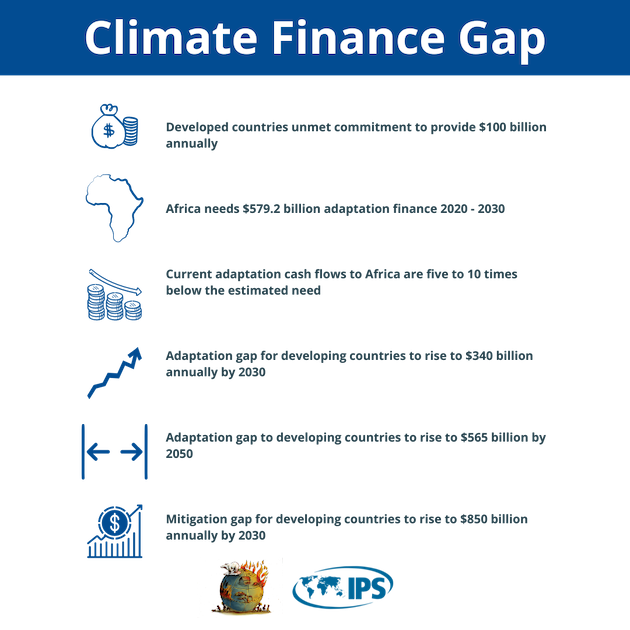
Africa needs approximately USD 579.2 billion in adaptation finance over the period 2020 to 2030, and yet the current adaptation flows are five to 10 times below estimated needs.
 

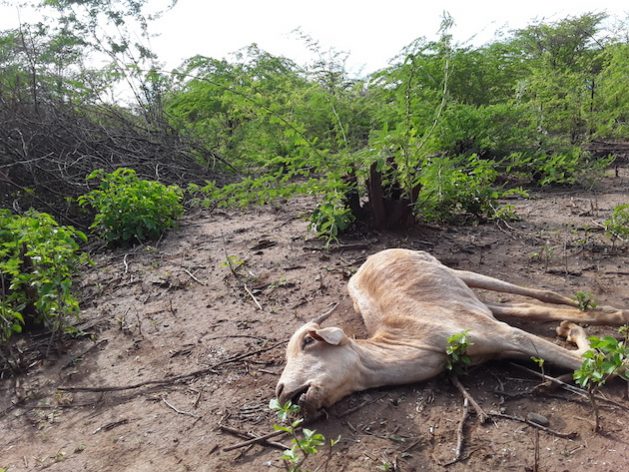
This goat died of starvation while surrounded by an inedible invasive plant. Lives hang in the balance as Kenya’s dryland is ravaged by a severe prolonged drought. Credit: Joyce Chimbi/IPS

This goat died of starvation while surrounded by an inedible invasive plant. Lives hang in the balance as Kenya’s dryland is ravaged by a severe prolonged drought. Credit: Joyce Chimbi/IPS

NAIROBI, Sep 5 2023 (IPS) – As thousands convene in Kenya’s capital, Nairobi, for the Africa Climate Summit, the first time the African Union has summoned its leaders to solely discuss climate change under the theme ‘Driving Green Growth and Climate Finance Solutions for Africa and the World’, the backdrop is a country on the frontlines of a climate crisis.


The severe, sharp effects of climate change are piercing the very heart of an economy propped up by rainfed agriculture and tourism – sectors highly susceptible to climate change. After five consecutive failed rainy seasons, more than 6.4 million people in Kenya, among them 602,000 refugees, need humanitarian assistance – representing a 35 per cent increase from 2022.

It is the highest number of people in need of aid in more than ten years, says Ann Rose Achieng, a Nairobi-based climate activist. She tells IPS that Kenya is hurtling full speed towards a national disaster in food security as “at least 677,900 children and 138,800 pregnant and breastfeeding women in Kenya’s arid and semi-arid regions alone are facing acute malnutrition. Nearly 70 per cent of our wildlife was lost in the last 30 years.”

Despite Kenya contributing less than 0.1 per cent of the global greenhouse gas emissions per year, the country’s pursuit of a low carbon and resilient green development pathway produced a most ambitious Nationally Determined Contribution (NDC) to cut greenhouse gasses by 32 per cent by 2030 in line with the Paris Agreement.

But as is the case across Africa, there are no funds to actualise these lofty ambitions. Africa needs approximately USD 579.2 billion in adaptation finance over the period 2020 to 2030, and yet the current adaptation flows to the continent are five to ten times below estimated needs. Globally, the estimated gap for adaptation in developing countries is expected to rise to USD 340 billion per year by 2030 and up to USD 565 billion by 2050, while the mitigation gap is at USD 850 billion per year by 2030.

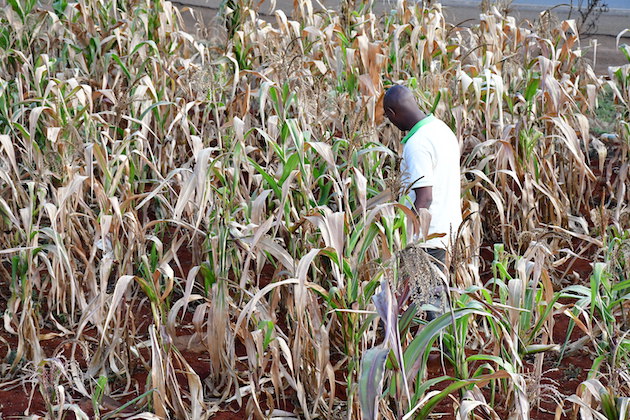
After five consecutive failed rainy seasons, food insecurity is expected to escalate as maize crop has failed to flourish due to erratic weather patterns. Credit: Joyce Chimbi/IPS

After five consecutive failed rainy seasons, food insecurity is expected to escalate as maize crop has failed to flourish due to erratic weather patterns. Credit: Joyce Chimbi/IPS

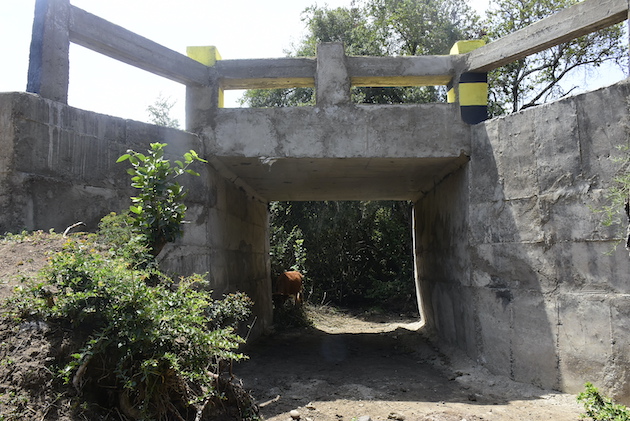
As dams and rivers dry up, Kenya will continue to be on the frontlines of a climate crisis unless climate change adaptation and mitigation efforts are escalated. Credit: Joyce Chimbi/IPS

As dams and rivers dry up, Kenya will continue to be on the frontlines of a climate crisis unless climate change adaptation and mitigation efforts are escalated. Credit: Joyce Chimbi/IPS

Frederick Kwame Kumah, Vice President of Global Leadership African Wildlife Foundation, tells IPS a big part of the problem is Africa’s burgeoning gross public debt which increased from 36 per cent of Gross Domestic Product (GDP) to 71.4 per cent of GDP between 2010 and 2020 – a drag on its development progress and a disincentive for climate finance flows.

“There is a concern that climate finance, if and when provided, will be used to first service Africa’s debt burden. The first step to addressing Africa’s Climate Finance must be action towards debt relief for Africa. Freeing up debt servicing arrangements will release resources for continued development and climate finance purposes,” Kumah explains.

He says there is an urgent need to challenge the existing unfair paradigm for financing by developing countries. It is very expensive for developing countries to borrow for development purposes. Africa must then leverage its natural capital towards seeking innovative financing mechanisms such as green bonds and carbon credits to address its development and climate change challenges.

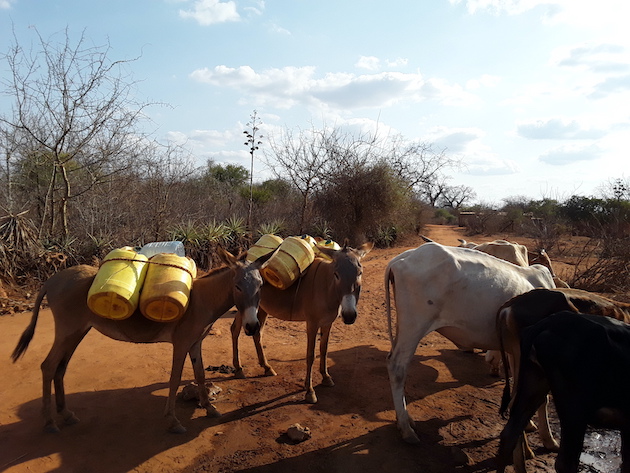
Nearly half, 23 out of 47 counties in Kenya, are classified as arid and semi-arid. Livelihoods are at risk as pastoralists are unable to cope with drastic weather changes. Credit: Joyce Chimbi/IPS

Nearly half, 23 out of 47 counties in Kenya, are classified as arid and semi-arid. Livelihoods are at risk as pastoralists are unable to cope with drastic weather changes. Credit: Joyce Chimbi/IPS

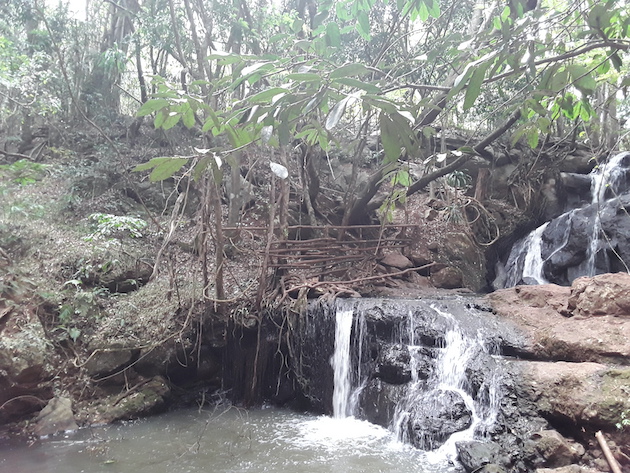
This waterfall is on the verge of drying up. Kenya's economy is heavily dependent on tourism and agriculture. The two sectors are highly susceptible to climate change. Credit: Joyce Chimbi/IPS

This waterfall is on the verge of drying up. Kenya’s economy is heavily dependent on tourism and agriculture. The two sectors are highly susceptible to climate change. Credit: Joyce Chimbi/IPS

“Climate finance was, as expected, a key part of COP27. It is a grave concern for Africa that developed countries’ commitment to provide $100 billion annually has yet to be met, even though the need for finance is becoming increasingly obvious. In COP27, we noted that new climate finance pledges were more limited than expected. Countries such as those in Africa are still waiting for previous pledges to be fulfilled,” says Luther Bois Anukur, Regional Director, IUCN (International Union for Conservation of Nature).

Meanwhile, Anukur tells IPS negotiations on important agenda items, most notably the new finance target for 2025, stalled. In COP27, Parties concentrated on procedural issues – deferring important decisions about the amount, timeframe, sources, and accountability mechanisms that may be relevant to a new finance goal in the future. African countries and many other vulnerable countries are in the fight for our lives, and sadly they are losing.

Anukur stresses that Africa’s natural resources are depleted, eroded, and biodiversity lost due to extreme effects of climate change leading to loss of lives and ecosystem services and damage to infrastructure at an alarming rate. Yet climate finance pledges have not materialised. The Africa Climate Summit should be the platform for Africa and developing partners to address existing finance gaps with clear programmatic and project approaches.

Africa must use the Summit to assess and prepare their position for the COP28 in the United Arab Emirates towards strengthening partnerships for the delivery of desired climate finance. Kumah adds that the principle of equal but differentiated responsibilities of nations must be adhered to for climate justice and to enable developing countries, who are least responsible for the effects of climate, to have much-needed resources to cope and adapt to biodiversity loss and climate change.

“In that respect, the creation of a dedicated funding mechanism to address loss and damage and another for adaptation and mitigation to redress historical and continued inequities in contributions towards biodiversity loss and climate change. We must rethink how private investments can be reshaped and harnessed for the benefit of biodiversity and climate action,” Kumah expounds.

“Private investments can be scaled through green bonds, carbon markets, sustainable agricultural, forestry and other productive sector supply chains.  Transformative financing architecture is necessary at the domestic and international levels to bring the private and public sectors together to secure the critical backbone of Africa’s natural infrastructure.”

Climate finance gap. Graphic: Joyce Chimbi & Cecilia Russell

Climate finance gap. Graphic: Joyce Chimbi & Cecilia Russell

While developing countries submitted revised and ambitious National Adaptation Plans and NDCs as requested, Anukur says complicated processes to access financing for their climate actions persist. Stressing the need for reforming the international financial architecture, starting with multilateral development banks.

“The 2023 Summit for New Global Financing Pact held in Paris committed to a coalition of 16 philanthropic organizations to mobilize investment and support UN’s SDG priorities by unlocking new investment for climate action in low- and middle-income countries while reducing poverty and inequality,” Anukur observes.

Civil society organizations and activists such as Achieng have expressed concerns that such announcements are insufficient considering the scale of the challenges facing planet Earth. The Summit will have failed if the global financial architecture is not overhauled in line with the needs of the African continent, she says.

Anukur says the Summit must therefore propel Africa to new heights of climate financing to help reduce Africa’s vulnerability to climate change and increase its resilience and adaptive capacity in line with the Global Goal on Adaptation. Ultimately expressing optimism that the opportunity to unlock the potential of climate financing – breaking the shackles of debt and building a climate-resilient and prosperous Africa is, at last, in sight.

IPS UN Bureau Report


Alleviating Urban Poverty Through Livelihood Generation

Aid, Asia-Pacific, Civil Society, Development & Aid, Featured, Headlines, Humanitarian Emergencies, Poverty & SDGs, Sustainable Development Goals, TerraViva United Nations

Poverty & SDGs

BRAC International recently signed a memorandum of understanding with the Bihar Government’s Rural Livelihoods Promotion Society to launch Satat Jeevikoparjan Yojana Shahari, the first government-led urban Graduation programme in Asia. Credit: BRAC

BRAC International recently signed a memorandum of understanding with the Bihar Government’s Rural Livelihoods Promotion Society to launch Satat Jeevikoparjan Yojana Shahari, the first government-led urban Graduation programme in Asia. Credit: BRAC

PUNE, INDIA, Aug 30 2023 (IPS) – In a bid to tackle the complexities of urban poverty, the Government of Bihar’s Rural Livelihoods Promotion Society (BRLPS) has launched Satat Jeevikoparjan Yojana Shahari (SJY Urban). The program will include a time-bound series of multifaceted interventions addressing food security, social inclusion, and sustainable economic livelihoods to enable participating households to achieve a better standard of living.


As part of this program, BRLPS has signed a Memorandum of Understanding (MoU) with BRAC International, which will serve as a thought partner to the Government of Bihar for the project development and also is building a consortium of partners to support the government in its implementation. Project Concern International (PCI), for example, is taking on management responsibilities and will also host thematic workshops across departments and with civil society experts to support inclusive learning and dialogue.

Mobile Creches will create a community cadre of childcare providers who will support maternal and child health. They have a 50-year-old history of providing childcare support, maternal and nutritional health, and WASH training to urban women in the slums of Delhi, Mumbai, and Pune. Quicksand will support the learning process to consolidate the design through ethnographic methods, prototyping, and other design elements. These learnings will help inform the project about the fabric of each respective urban community and provide a feedback loop once the rollout starts.

SJY Urban was inspired by the existing rural programme, Satat Jeevikoparjan Yojana (SJY), locally known as JEEVIKA, the largest government-led Graduation programme in the world, which has reached over 150,000 households as of early 2023 and is still expanding. SJY Urban is modelled on the rural programme’s six basic modules: 1) Building up the aspirations and confidence of households; 2) Financial Inclusion; 3) Improvement of Health, Nutrition, and Sanitation; 4) Social Development; 5) Livelihood generation; and 6) Government Convergence.

While taking inspiration from JEEVIKA, the Urban Programme will be adapted to respond to the unique challenges people in poverty face within the urban context.

“Urban poverty is complex and inadequately addressed,” said Shweta S Banerjee, Country Lead – India, BRAC International. “SJY Shahari is a unique project in the many challenges it has accepted, including supporting project participants during extreme heat waves. BRAC is excited and committed to serving as a thought partner to the Government of Bihar as we take the time to test, learn, relearn, and deploy the project design.”

Applying Learnings from the Rural Programme to the Urban

The 36-month SJY Urban Programme will be launched in five wards in Patna and five wards in Gaya for now and will be scaled up in a year’s time. Given the unique challenges in urban settings, where research and solutions are more limited in comparison to rural settings, the programme will incorporate learnings from the SJY programme.

“In keeping with the requirements in an urban setting, we intend to provide improved skill sets in carpentry, plumbing, welding, and the like that can help workers access better employment opportunities both within and outside Bihar. For instance, there are around 50,000 to 100,000 Bihar workers in the Tiruppur hosiery industry. We intend to provide them with the necessary skill certification through the National Skill Development Council,” Jeevika CEO Rahul Kumar told IPS.

Designed with a focus on women’s empowerment, SJY has made a pronounced difference for people living in extreme poverty in Bihar, particularly through inclusive livelihood development and access to financial security through self-help groups (SHGs). The urban programme will also utilise SHGs to improve financial opportunities along with sustainable livelihood options.

While the livelihood options are different, there is still a great opportunity for skill development for people living in urban poverty. JEEVIKA plans to pursue livelihoods for participants through conventional entrepreneurship, building up specific skills for trades, and partnerships with public utilities. The existing bank sakhi programme, a program that has trained rural women to assist customers in opening accounts and other administrative bank-related services, as part of JEEVIKA, saw 2,500 bank sakhis leverage Rs 10,000 crore in business for various banks.

According to Rahul Kumar, the bank sakhi programme could be introduced in across Bihar and offer additional financial products such as insurance and mutual funds.

There are also climate-responsive livelihoods that have been utilised in the rural programme that can work for an urban setting as well, such as waste management, recycling of waste, and the use of e-rickshaws. With climate change contributing to rapid urbanisation across Asia and driving millions more into poverty, affecting those furthest behind first, sustainable, resilient livelihood development will be a critical component of SJY Urban. The programme will work to further enhance resilience among participants by providing them with resources and training to develop food security and social inclusion.

Creating a Stronger Ecosystem Through Convergence

Similar to the rural programme, SJY Urban will bring together different existing government schemes and agencies to best serve those living in extreme poverty. The programme will also leverage the existing enterprises within the rural programme and promote them in the urban programme as well, such as market poultry and dairy products.

There are existing livelihood initiatives that rural participants are driving forward, such as running nurseries across the state, which have provided saplings to the Environment, Forest, and Climate Change Department for planting. These saplings can be used by urban plantations and gardens that are also under the department. Similarly, there are kiosk carts that sell Neera or palm nectar that are processed and made by JEEVIKA participants. There is an opportunity to expand this enterprise to the urban setting as well.

JEEVIKA will also engage other government agencies to support the design and implementation of the urban programme. Most recently, JEEVIKA and BRAC convened an inaugural workshop in preparation for launching the Urban Poor Graduation Project, in collaboration with the Departments of Urban Development and Housing, Labour Resources, Social Welfare, Women and Child Development Corporation. The workshop brought together government representatives and experts with diverse sectoral expertise to reflect on existing solutions for urban poverty and share key insights that could help inform the design and delivery of the Urban Poor Graduation Project. The workshop also brought together practitioners and leveraged knowledge from Graduation-based programmes outside Bihar and India.

The shared expertise and convergence in existing government schemes and partnerships will allow the programme to address unique challenges facing the urban environment and enhance coordination, which will ultimately improve overall impact.

Challenges and Learning Opportunities in an Urban Environment

This will be one of the first urban Graduation programmes at scale that combine skills development and livelihood support to alleviate urban poverty.

The unique constraints presented by the urban environment in Bihar, such as limited land availability, the migratory nature of the population in urban poor neighbourhoods, and heatwaves impacting the ability to work, present an opportunity to learn and adapt programming further to test what works.

“The kind of social cohesion prevalent in rural areas is lacking in urban centres. This makes social mobilisation, on which the programme rests, a difficult task,” Kumar said.

The first phase in designing the programme, along with the learnings from the first cohort of participants, will offer valuable insights on how to combat the challenges of those living in urban poverty face. Such learnings can then be shared across the Global South to support broader efforts to respond to rapid urbanisation and an increase in urban poverty.

SJY Urban is poised to move head-on, with its consultants scheduled to hammer out a clear strategy in the coming months. In a year’s time, Kumar says the programme aims to cover all 240 urban local bodies in the state.
IPS UN Bureau Report

  Source

Guatemala: Change Within Reach

Civil Society, Crime & Justice, Democracy, Featured, Headlines, Latin America & the Caribbean, Press Freedom, TerraViva United Nations

Opinion

Credit: Luis Acosta/AFP via Getty Images

MONTEVIDEO, Uruguay, Aug 29 2023 (IPS) – On 20 August, Guatemala witnessed a rare event: despite numerous attempts to stop it, the will of the majority prevailed. Democracy was at a dramatic crossroads, but voters got their say, and said it clearly: the country needs dramatic change and needs it now.


Bernardo Arévalo, leader of the progressive Movimiento Semilla (Seed Movement), born out of 2015 anti-corruption protests, is now Guatemala’s president-elect. All-night street celebrations erupted as early results were announced. It was a once-in-a-lifetime occurrence: politics bringing joy rather than disappointment to Guatemalans.

But renewed attempts to prevent change can be expected. What Guatemalans expect from Arévalo is a morally competent government that will bring about genuine democracy – a government looking out for the public rather than self-serving elites. The unprecedented seriousness of Arévalo’s promise is reflected in the fear his rise has fuelled among the beneficiaries of the current authoritarian kleptocracy.

A blatant manipulation of judicial institutions after the first round of voting on 25 June failed to prevent Arévalo competing in the runoff – but now the attempt is to stop his inauguration. Following the runoff, the Public Prosecutor made yet another attempt to have Semilla suspended.

The stakes are so high that an attempt to stop change by force can’t ruled out. An assassination plot involving state and non-state forces came to light days before the runoff.

For security reasons, Arévalo couldn’t address the crowds celebrating on election night. On 24 August, the Inter-American Commission on Human Rights granted precautionary measures to Arévalo and vice-president-elect Karin Herrera, giving the state 15 days to report back on the adoption of additional measures – both already have state-issued security – to protect their physical integrity.

Guatemalans are counting the days to the inauguration of their new government, scheduled for 14 January 2024. But their hope is mingled with uncertainty and fear.

An election surprise and its aftermath

The collective mood on 20 August couldn’t have been more different from that on 25 June, when first place in the first round went to invalid votes.

The run-up to the June vote had been marked by further deterioration of civic space and the restriction of the choice on offer through the disqualification of several contenders, including the candidate first in the polls, conservative business leader Carlos Pineda Soa. But Arévalo wasn’t on the radar of opinion polls and no one saw him coming. In a very fragmented vote, his 12 per cent put him in the runoff. The frontrunner, with 16 per cent, was a political insider, former first lady Sandra Torres of the National Unity of Hope (UNE).

The establishment rightfully feared Arévalo because he didn’t seem the kind they could easily bring into the fold. A progressive academic and a member of Congress since 2020, he promised to bring back the numerous justice officials in exile and resume the fight against corruption ended by his predecessors.

The fact that he could become Guatemala’s next president made the 25 June election results an instant object of contention. Nine parties, including UNE, submitted complaints about supposed ‘irregularities’ that had gone undetected by all international observers. Their supporters converged outside the Supreme Electoral Tribunal (TSE).

In what was denounced as an attempted ‘electoral coup’, the Constitutional Court ordered a recount and instructed the TSE to suspend certification of results. The TSE eventually endorsed the results two weeks later, on 12 July.

But in the meantime, the Attorney General, an official under US corruption sanctions, spearheaded an onslaught of judicial harassment against Arévalo. She launched an investigation of Semilla for alleged registration irregularities and had its offices raided. She twice ordered raids on TSE offices too. And just as the TSE announced Torres and Arévalo as the runoff competitors, she ordered Semilla’s suspension. The Constitutional Court however blocked this order.

Citizens defend democracy

The European Union and the Organization of American States, both of which had observation missions, took a strong stance. Domestic condemnation of the attempt to twist the results was also voiced by groups ranging from leading business associations to Indigenous authorities. But the starring role was played by citizens who spent weeks on the alert to ensure that Arévalo wasn’t kicked out of the runoff.

Large-scale peaceful demonstrations were repeatedly held in Guatemala City and departmental capitals, overwhelmingly led by young people. They were vocally nonpartisan, making clear that they were marching not for Arévalo or Semilla, but for the future of democracy.

On election day, this translated into a clear victory for the change candidate: Arévalo took 58 per cent of the vote, compared to Torres’s 37.2 per cent. The election saw strong participation by young, educated, urban voters, many voting for the first time.

An uncertain future

Once he takes office Arévalo will face a tough time fulfilling his promises, not least because the June election produced a highly fragmented Congress in which Semilla will have only 23 of 160 seats.

But the urgent question now is what lengths deeply entrenched elites will go to to try and stop Arévalo taking office. Torres hasn’t conceded defeat. Instead, she’s cried foul and accused the five TSE magistrates of ‘breach of duties and abuse of authority’.

Meanwhile the Attorney General and her right-hand man, a prosecutor who has made a career of protecting the powerful and persecuting the press, continue the ‘investigation’ through which they seek to shut Semilla down. People have responded by continuing to demonstrate outside the Attorney General’s office demanding her resignation.

Guatemala is living a unique moment, an opportunity that many didn’t think they’d ever see. But it’s also an uncertain time. Guatemala must walk carefully into the future, one step at a time, resisting the onslaught, judicial or otherwise, to get the president-elect to Inauguration Day.

People have made it clear they’re ready to take to the streets in numbers to defend what they’ve achieved. And they’ll need to both support and hold to account the new government for the mission it’s been entrusted with: that of restoring the substance of democracy.

Inés M. Pousadela is CIVICUS Senior Research Specialist, co-director and writer for CIVICUS Lens and co-author of the State of Civil Society Report.

  Source

Debt & Crisis of Survival in Sri Lanka & the World

Armed Conflicts, Asia-Pacific, Civil Society, COVID-19, Economy & Trade, Featured, Headlines, IPS UN: Inside the Glasshouse, Sustainable Development Goals, TerraViva United Nations

Opinion

Anti-government protest in Sri Lanka on April 13, 2022. Credit: Wikipedia

WASHINGTON DC, Aug 25 2023 (IPS) – Sri Lanka has been faced with an unprecedented political and economic crisis since the beginning of 2022.

The dominant narrative attributes the crisis to the confluence of the COVID-19 pandemic, the Ukraine conflict, China’s ‘debt trap diplomacy’ and – most importantly – the corruption and mismanagement of the ruling Rajapaksa family.


Western mainstream media celebrated the so-called aragalaya (struggle, in Sinhala) protest movement that led to the ouster of the Rajapaksas and upholds the IMF bail-out as the only solution to the dire economic situation.

The aragalaya protests emerged from genuine economic grievances, but failed to develop an analysis beyond the ‘Gota, Go Home’ demand for Gotabaya Rajapaksa to resign. Influenced by local and external interests with their own agendas, the protestors exhibited little-to-no awareness or critique of the global political economy and the financial system at the root of the country’s crisis.

In 2022, the United Nations Conference on Trade and Development (UNCTAD) reported that 60 percent of low-income countries and 30 percent of emerging market economies are ‘in or near debt distress.’ While the details differ from country to country, the historical patterns of subordination that have given rise to global crises are the same.

The Sri Lankan crisis is an illustrative example of convergent global debt, food, fuel and energy crises facing much of the world. It is corporate media bias and narrative control that deflects from this analysis.

The island’s severe debt and economic crisis must be seen in a broader global context as the culmination of several centuries of colonial and neo-colonial developments, and the disastrous and inevitably self-destructive capitalist paradigm of endless growth and profit. Debt is not “a straightforward number but a social relation embedded in unequal power relations, discourses and moralities…and…institutionalized power.”.

Colonialism and Neocolonialism

The development of export agriculture and the import of food and other essentials under British colonialism turned Sri Lanka into a dependent ‘peripheral’ unit of the global capitalist economy.

Adopting ideologies of modernization and development and theories of comparative advantage, the capitalist imperative integrated self-sustaining indigenous, peasant, and regional economies into the growing global economy, through the appropriation of land, natural resources, and labor for export production.

Monocultural agriculture, mining, and other export-based production disturbed traditional patterns of crop rotation and small-scale subsistence production that were more harmonious with the regional ecosystems and cycles of nature.

Plantation development contributed to deforestation, loss of biodiversity and animal habitats. While a small local elite prospered through their collaboration with colonialism, most people became poor, indebted, and dependent on the vagaries of the global market for their sustenance.

Although colonized countries including Sri Lanka gained political independence following World War II, unequal exchange continued under neo-colonialism. Terms of trade disadvantaged the ‘Third World’ with their labor, resources and exports grossly undervalued and imports overvalued.

The dynamic is better understood as poorer countries being over-exploited rather than under-developed. Rising populations combined with corruption and inefficiency of local governments gave rise to endemic foreign exchange shortages and economic crises in Sri Lanka and many other countries.

The debt relief and aid given by the IMF, the World Bank and bilateral institutions from the Global North have been mere band-aids to keep the ex-colonial countries tethered to the global financial and economic structures. Post-independent Sri Lanka went to the IMF 16 times before the current 2023 bail-out which seeks to further perpetuate the county’s cycle of debt dependence.

The transfer of financial and resource wealth from poor countries in the global South to the rich countries in the North is not a new phenomenon. It has been an enduring feature throughout centuries of both classical and neo-colonialism. Between 1980 and 2017, developing countries paid out over $4.2 trillion solely in interest payments, dwarfing the financial aid they received from the developed countries during that period.

Currently, international financial institutions – notably the IMF and the World Bank – remain outside political and legal control without even ‘elementary accountability’. As critics from the Global South point out, “The overwhelming power of financial institutions makes a mockery of any serious effort for democratization and addressing the deteriorating socioeconomic living conditions of the people in Sri Lanka and elsewhere in the Global South.”

Financialization and Debt

Corporate and financial deregulation which accompanied the rise of neoliberalism starting in the 1970s has given rise to financialization, and the increasing importance of finance capital. As more and more aspects of social and planetary life are commoditized and subjected to digitalization and financial speculation, the real value of nature and human activity are further lost.

As a 2022 United Nations Report points out; food prices are soaring today not due to a problem with supply and demand but due to price speculation in highly financialized commodity markets.

A handful of the largest asset management companies, notably BlackRock (currently worth USD $ 10 trillion) control very large shares in companies operating in practically all the major sectors of the global economy: banking, technology, media, defense, energy, pharmaceuticals, food, agribusiness including seeds, and agrochemicals.

Financial liberalization advanced when interest rates dropped in the richer countries after the global 2008 financial crisis. Developing countries were encouraged to borrow from private international capital markets through International Sovereign Bonds (ISBs) which come with high interest rates and short maturation periods.

Although details are not available to the public, BlackRock is reportedly the biggest ISB creditor of Sri Lanka. Most of Sri Lanka’s foreign debt is ISBs, with over 80% of Sri Lanka’s debt owed to western creditors, and not – as projected in the mainstream narrative – to China.

IMF debt financing requires countries to meet its familiar structural adjustment conditions: privatization of state-owned enterprises (SOEs), cutbacks of social safety nets and labor rights, increased export production, decreased import substitution and alignment of local economic policy with US and other Western interests.

These are the same aims as classical colonialism, they are just better hidden in the more complex modern system and language of global finance, diplomacy and aid.

A vast array of policies exacting these aims are well under way in Sri Lanka, including the sale of state-owned energy, telecommunications and transportation enterprises to foreign owners, with grave implications for Sri Lanka’s economic independence, sovereignty, national security and the wellbeing of her people and the environment.

The IMF approach does not address long-term needs for bioregionalism, sustainable development, local autonomy and welfare. A small vulnerable country such as Sri Lanka cannot change the trajectory of global capitalist development on its own.

Regional and global solidarity and social movements are necessary to challenge the deranged global financial and economic system that is at the root of the current crisis.

Global South Resistance

Since the 1970s, major collaborative projects have been initiated by developing countries and the UNCTAD to develop a multilateral legal framework for sovereign debt restructuring. Yet they are futile in the face of the powerful opposition of creditors and the protection given to them by wealthy countries and their multilateral institutions, and the UN has failed to uphold commitment and implement a debt restructuring mechanism.

Sri Lanka was a global leader in efforts to create a New International Economic Order, the Non-Aligned Movement and the Indian Ocean as a Zone of Peace in the 1960s and 70s. In the early years of their political independence, countries throughout Asia, Africa and Latin America sought to forge their own paths of economic and political development, independent of both capitalism and communism and the Cold War.

These included African socialist projects such as Tanzania’s Ujamma, import substitution programs in Latin America and left-wing nationalism and decolonization efforts in Sri Lanka and many other countries.

Almost without exception, these nationalist efforts failed, not only due to internal corruption and mismanagement but also due to persistent external pressure and intervention. Massive efforts have been taken by the Global North to stop the Global South from moving out of the established world order.

A case in point is the nationalization of oil companies owned by western countries in Sri Lanka in 1961 and the backlash against the left-nationalist Sri Lankan government which dared to take such a bold move.

The western response included the 1962 Hickenlooper Amendment passed in the U.S. Senate stopping foreign aid to Sri Lanka and to “any country expropriating American property without compensation.” As a result, Sri Lanka lost its credit worthiness, the domestic economic situation worsened, and the left-nationalist government lost the 1965 elections (with some covert US election support).

Observing those developments, political economist Richard Stuart Olsen wrote: “…the coerciveness of economic sanctions against a dependent, vulnerable country resides in the fact that an economic downturn can be induced and intensified from the outside, with the resulting development of politically explosive ‘relative deprivation’…”

These observations resonate with Sri Lanka’s current repetition of the same vicious cycle: an externally dependent export-import economy; worsening terms of trade; foreign exchange shortage; policy mismanagement; external political pressure; debt crisis; shortages of food, fuel and other essentials; mass suffering; and political turmoil.

Geopolitical Rivalry

Sri Lanka’s present economic crisis – the worst since the country’s political independence from the British – must be seen in the context of the accelerating neocolonial geopolitical conflict between China and the USA in the Indian Ocean. Many other countries across the world are also caught in the neocolonial superpower competition to control their natural resources and strategic locations.

There is much speculation as to whether the debt default on April 12, 2022 and political destabilization in Sri Lanka were ‘staged’ or intentionally precipitated to further the US’s ‘Pivot to Asia’ policy, the Indo-Pacific Strategy and the Quadrilateral Alliance (USA, India, Australia and Japan) in its competition to confront China’s $1 trillion Belt and Road Initiative and counter China’s presence in Sri Lanka.

It is widely recognized in Sri Lanka that ‘The policy of neutrality is the best defence Sri Lanka has to deter global powers from attempting to get control of Sri Lanka because of its strategic location.’ Although President Gotabaya Rajapaksa claimed to pursue a ‘neutral’ foreign policy, the Rajapaksas were seen as closer to China than the west. After Prime Minister Mahinda Rajapaksa and President Gotabaya Rajapaksa were forced to resign, Ranil Wickramasinghe – a politician who was resoundingly rejected in the previous elections by the electorate but is a close ally of the west – was appointed as President in an undemocratic transition of power.

To what extent were Sri Lanka and her people victims of an externally manipulated ‘shock doctrine’ and a regime change operation, sold to the world as internal disintegration caused by local corruption and incapability?

While it is not possible to provide definitive answers to these issues, it is necessary to consider the available credible evidence and the geopolitics of debt and economic crises in Sri Lanka and the world at large.

Paradigm Shift

As the locus of global power shifts from the west and a multipolar world arises, new multilateral partnerships are emerging for development financing, such as the New Development Bank (NDB) – formerly referred to as the BRICS (Brazil, Russia, India, China and South Africa) Development Bank – as alternatives to the Bretton Woods and other western dominated institutions.

However, given controversial projects, such as China’s Port City and India’s Adani Company investments in Sri Lanka as well as their projects elsewhere, it is necessary to ask if the BRICS represent a genuine alternative to the prevailing political-economic model based on domination, profit and power?

Dominant political power in our era is about propaganda, control of narratives and exploiting ignorance and fear. In the face of worsening environmental and social collapse across the world, there is a practical need for a fundamental questioning of the values, assumptions and misrepresentations of the dominant neoliberal model and its manifestations in Sri Lanka and the world.

At the root of the crisis, we face is a disconnect between the exponential growth of the profit-driven economy and a lack of development in human consciousness, i.e., in morality, empathy, and wisdom.

Ultimately, dualism, domination and the unregulated market paradigm need to be questioned to find a balanced path of human development, based on interdependence, partnership and ecological consciousness. Such a path of development would uphold the ethical principles necessary for long-term survival: rational use of natural resources, appropriate use of technology, balanced consumption, equitable distribution of wealth, and livelihoods for all.

This article is derived from the author’s new book: Asoka Bandarage, CRISIS IN SRI LANKA AND THE WORLD: COLONIAL AND NEOLIBERAL ORIGINS: ECOLOGICAL AND COLLECTIVE ALTERNATIVES (Berlin: De Gruyter,2023) https://www.degruyter.com/document/isbn/9783111203454/html?lang=en]

IPS UN Bureau

  Source