Hurricane Otis and the Indifference Toward the Children of Acapulco

Civil Society, Crime & Justice, Gender, Gender Violence, Headlines, Human Rights, Inequality, Labour, Latin America & the Caribbean, Poverty & SDGs, TerraViva United Nations

Opinion

ACAPULCO, Mexico, Nov 2 2023 (IPS) – Acapulco is a paradise. A port of golden sunsets, toasted sand, and deep blue sea. Its dream beaches captivated the hearts of Elvis Presley and Elizabeth Taylor. US President John F. Kennedy chose its shores to spend his honeymoon with Jackie Kennedy. Its luxury hotels and the untamed sea made it the most famous tourist destination in Mexico.


Rosi Orozco

Today, Acapulco is devastated. A Category 5 hurricane—the deadliest possible rating—called “Otis” hit the beach on October 25 with incomparable force. No one anticipated it. Hours before it made landfall, it was just an inconvenient storm. Suddenly it became a deadly cyclone. Most of the hotels are destroyed, the sea swallowed people, houses were blown away, and dozens of people are dead.

In the last century, its beauty attracted the world’s most influential celebrities. Its tranquil mornings and lively nightlife attracted actresses, singers, politicians, aristocratic musicians, and families who wanted to spend their summers by the sea. I myself spent my youth at the family timeshare apartment in Acapulco, and it was there that I met my husband Alejandro, with whom I’ve been married for 40 years. My life is permanently connected to Acapulco.

Luxury businessmen, millionaire athletes, and Michelin-starred chefs arrived. Also drug dealers, money launderers, and men looking for girls and boys to rape in exchange for food or a few dollars for their parents who lived in the city’s poor areas.

Because there are two Acapulcos. They both share an airport and roads, so all roads lead to that pair of versions of the same city. There is a “diamond Acapulco” where the rich vacation with all the amenities at their disposal. And there is a “traditional Acapulco,” where the poor live who work for wealthy tourists.

The people who inhabit “diamond Acapulco” and “traditional Acapulco” do not usually cross paths. They live in the same city, but they are separated by golf courses and exclusive shopping malls. Only rich foreigners and wealthy nationals cross to the poor side when they feel a repugnant urge: to make their plans for child sex tourism a reality with girls and boys as young as 3 years old.

Acapulco is one of the most unequal tourist destinations in the world. In Mexico, it is the most unequal municipality of all: more than 60% of its 900,000 inhabitants live in extreme poverty, which means they do not know what they will eat today or tomorrow. They are the workers who serve plates of fresh seafood, who sweep marble floors, who fill the wine glasses of tourists.

For years, journalists and human rights organizations have told horrific stories that combine poverty, inequality, and sex tourism: a 6-year-old boy rented out to be photographed naked in exchange for milk and eggs; a 9-year-old girl sold to a Canadian tourist to be his wife for a month; homeless teenagers invited to sex parties on lavish yachts in exchange for food; parents and mothers waiting outside hotels for their children to be raped for a price paid in dollars per hour.

Those pedophiles and child molesters turned Acapulco into the country’s primary destination for child sexual tourism. They also led Mexico to the disgraceful second position in the production of child pornography, only surpassed by Thailand, according to data from the Mexican Chamber of Deputies and the United Nations Children’s Fund.

Today, Acapulco is a different place. Little remains of the port that enchanted singers Agustín Lara and Luis Miguel. There are thousands of poor families without homes, hundreds of workers who lost their jobs, and dozens of fishermen without boats to go out to sea to find sustenance. The destruction is so extensive that complete economic recovery is estimated to take decades, not years.

Under these conditions, childhood is at very high risk. Many families have lost so much that their bodies are the only currency they have left. And in the dirty business of forced prostitution, child bodies are the most sought after.

Amid this unprecedented crisis in Mexico, the Chamber of Deputies approved amendments to the general law against human trafficking. These changes aim to broaden the scope of the law enacted in 2012 and update it to address new technologies that traffickers and organized crime engaged in sexual exploitation can use. The wording has some issues that we are still analyzing, but it also includes positive aspects.

For example, it introduces new protections for individuals with injuries, intellectual disabilities, and Afro-Mexican towns and communities. The latter represent 6.5% of the total population in Guerrero and 4% of the residents in Acapulco, according to the National Population Council.

Civil society organizations are monitoring these changes and hope that the deputies will honor their commitment to protecting the victims.

Meanwhile, it is the responsibility of all, not just in Mexico, to help Acapulco back on its feet, a place that has given so much to both nationals and foreigners. It won’t be easy or quick, but every day we delay puts the vulnerable children at risk due to the magnitude of sexual tourism in that beautiful port.

After Hurricane Otis, Acapulco will be different. Its reconstruction is an opportunity to build a new city on the ruins of depravity, one with values and respect for human dignity. I long for the day to see it standing and for its coastline, beach, and air to remain a paradise, especially for children like me who grew up happily by the sea.

IPS UN Bureau

  Source

Gender Parity: Rise of Denmark and Downfall of Afghanistan

Civil Society, Democracy, Featured, Gender, Global, Headlines, Human Rights, IPS UN: Inside the Glasshouse, TerraViva United Nations

Credit: UN Women

UNITED NATIONS, Oct 25 2023 (IPS) – The UN agency, which advocates women’s rights and gender empowerment, has predicted that gender equality is “300 years away.”

Addressing the UN Commission on the Status of Women last March, Secretary-General Antonio Guterres not only quoted the estimates provided by UN Women but also warned that progress toward gender equality is “vanishing before our eyes.”


“Women’s rights are being abused, threatened and violated around the world,” he said.

But a new report — the 2023 fourth edition of the global Women Peace and Security Index (WPS Index)—released October 24 draws on recognized data sources to measure women’s inclusion, justice, and security in 177 countries—covering over 99% of the world’s population.

“No country performs perfectly on the WPS Index and the results reveal wide disparities across countries, regions, and indicators. The WPS Index offers a tool for identifying where resources and accountability are needed most to advance women’s status – which benefits us all”, says the report.

India passes law to reserve seats for women legislators
4 OCTOBER 2023

The Index finds that societies where women are doing well are also more peaceful, democratic, prosperous, and better prepared to adapt to the impacts of climate change.

Denmark leads the 2023 rankings as the top country to be a woman, scoring more than three times higher than Afghanistan which is at the bottom.

Afghanistan ranks worst of 177 countries– in terms of the status of women, according to this year’s Women, Peace and Security (WPS) Index launched in New York.

The five highest ranking countries were Denmark, Switzerland, Sweden, Finland and Luxembourg. And the five lowest ranking countries were Afghanistan, Yemen, Central African Republic, Democratic Republic of the Congo and South Sudan.

Published by Georgetown University’s Institute for Women, Peace and Security (GIWPS) and the Centre on Gender, Peace and Security at the Peace Research Institute Oslo, the WPS Index uses 13 indicators to measure women’s status, ranging from education and employment to laws and organized violence.

The United States ranks 37th this year, scoring similarly to Slovenia, Bulgaria and Taiwan in the second quintile.

Dr. Purnima Mane. Ex- President and CEO of Pathfinder International, and former Deputy Executive Director (Program) of the United Nations Population Fund (UNFPA), told IPS the WPS Index emphasizes the sobering realities which different sectors of society –- including academic institutions, the United Nations, the media and civil society in general – have emphasized repeatedly over the years:

She said many countries which rank low in women’s status continue to remain so over time, despite global advocacy for gender equality

“Growing conflict and lack of security in countries could even worsen the situation for women and will not ensure adequate results in our efforts to boost women’s status. The relationship between peace and security and women’s overall wellbeing remains critical and demands adequate attention and investment.”

Data from the WPS Index, funded by the Norwegian Ministry of Foreign Affairs show evidence of this relationship between peace and security and women’s status.

A clear example is the countries that rank high and low in this Index –not surprisingly the countries that rank low in women’s status are the very same countries in which peace and security are at an abysmally low level, she added.

Sanam Anderlini, Founder/CEO of the International Civil Society Action Network (ICAN)* told IPS according to the index, in 2017, Afghanistan was ranked 152 out of 153 countries, with Syria coming last.

In 2019/2020, it was 16th out of 167, with Yemen coming last, and now in 2023, Afghanistan is coming at the bottom of the index.

‘This indicates that Afghan women were facing a long struggle even prior to the Taliban, but given that 60% of Afghans were under the age of 25, and many young women were in universities and entering professions including law, medicine and education, there was hope that the country’s overall ranking could also improve over time.’

She pointed out that Taliban’s takeover has set them on a downward generational spiral. The tragedy is that this decline was a result of the US’s loss to the Taliban at the negotiating tables in Doha.

“It is a result of the diplomatic community’s unwillingness to heed the warnings of Afghan women about the Taliban, or uphold their own commitments to the women peace and security agenda’s first tenet — the participation of women in peace processes.”

“But despite the darkness, we cannot forsake and forget Afghan women and girls. They are still fighting and finding ways to access education, healthcare and livelihoods,” said Anderlini.

“Now, more than ever, the international community must double down on engaging them and ensuring they are present and fully participating in the decision-making pertaining to the future of their country — not only in the humanitarian space, but also on economic, social and political and security matters. There are plenty of Afghan women – inside and outside the country — ready to take on this challenge,” she declared.

Elaborating further, Dr Mane said a range of reports prepared by a variety of sources, including the UN and academic institutions have been referenced in this Index using 13 different indicators on women’s status, to show that societies where women’s economic, social, and political situation, formal and informal justice for women, and the status of the security of women at the social and community level are doing well, are the very same societies, which overall, are more peaceful, economically stronger, have more democratic systems in place and are also dealing better with the impacts of climate change.

The WPS Index and its data, she pointed out, identify clearly areas where further investment is needed to boost women’s status. But what about general conflict and lack of security which adversely impact women particularly hard, along with others who are marginalized in different societies?

“The Index clearly demonstrates that all of the bottom 20 countries have experienced war and armed conflict of some sort, between 2021 and 2022 with more than half the women living in or near zones of conflict”.

With armed conflict growing in many countries over the last few years and the continuation of a generally negative climate in terms of women’s status in several countries such as Afghanistan, she argued, one cannot hope for a change in the status quo for women unless countries take a hard look at their policies and investments in both national peace and security and in women’s status.

“Any real change is possible only if the world acknowledges that the link between the two is critical, and paying attention to both is vital for improvements in national wellbeing as well as gender equality”, said Dr Mane, a former UN Assistant-Secretary-General (ASG) and an internationally recognized expert on gender, population and development, and public health, and who has devoted her career to advocating for population and development issues and working on sexual and reproductive health.

“With its scores, rankings, and robust data, the WPS Index offers a valuable tool for people working on issues of women, peace, and security,” said Elena Ortiz, the lead author of the WPS Index.

“Policymakers can use it to pinpoint where resources are needed. Academics can use it to study trends within indicators and across regions. Journalists can use it to give context and perspective to their stories. And activists can use it to hold governments accountable for their promises on advancing the status of women.”

All of the bottom 20 countries on this year’s Index have experienced armed conflict between 2021 and 2022. In most of these countries, more than half of women live in close proximity to conflict.

“Since 2021, Afghanistan has ranked the worst in the world to be a woman. Afghan women wake up each day to no jobs, no education and no autonomy over their lives. This report should serve as a wakeup call to world leaders that a nation of women is imprisoned.” said Torunn L. Tryggestad, Director of the Peace Research Institute Oslo’s Centre for Gender, Peace and Security.

IPS UN Bureau Report

  Source

How to Defend the Environment and Survive in the Attempt, as a Woman in Mexico

Active Citizens, Biodiversity, Civil Society, Climate Action, Conservation, Crime & Justice, Editors’ Choice, Environment, Featured, Gender, Headlines, Human Rights, Latin America & the Caribbean, Regional Categories, TerraViva United Nations, Water & Sanitation, Women & Climate Change

Human Rights

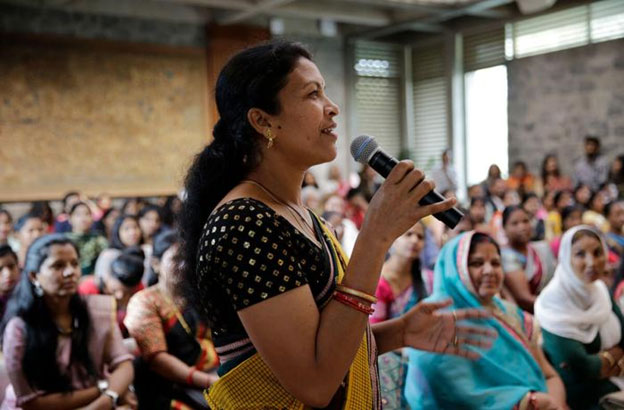
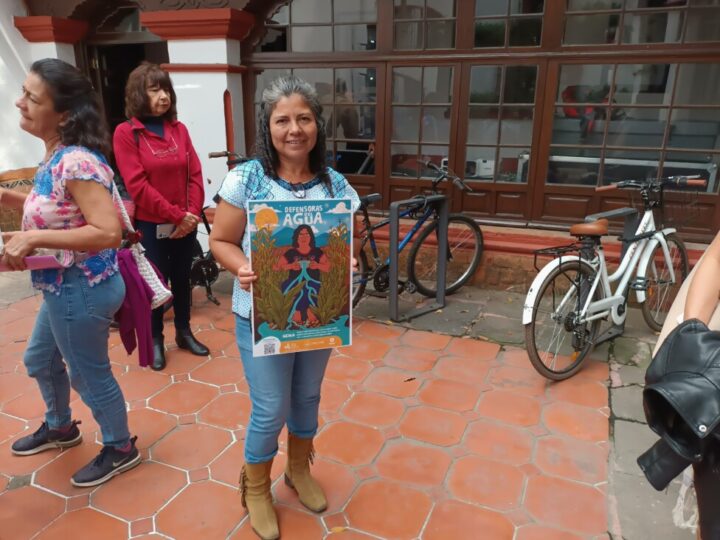
Dozens of women environmentalists participated in Mexico City in the launch of the Voices of Life campaign by eight non-governmental organizations on Oct. 12, 2023, which brings together hundreds of activists in five of the country's 32 states. CREDIT: Emilio Godoy / IPS

Dozens of women environmentalists participated in Mexico City in the launch of the Voices of Life campaign by eight non-governmental organizations on Oct. 12, 2023, which brings together hundreds of activists in five of the country’s 32 states. CREDIT: Emilio Godoy / IPS

MEXICO CITY, Oct 24 2023 (IPS) – The defense of the right to water led Gema Pacheco to become involved in environmental struggles in the southern Mexican state of Oaxaca, an area threatened by drought, land degradation, megaprojects, mining and deforestation.


Care “means first and foremost to value the place where we live, that the environment in which we grow up is part of our life and on which our existence depends,” said Pacheco, deputy municipal agent of San Matías Chilazoa, in the municipality of Ejutla de Crespo, some 355 kilometers south of Mexico City.

“We are in the phase of seeing how the Escazú Agreement will be applied. The most important thing is effective implementation. It is something new and it will not be ready overnight.” — Gisselle García

A biologist by profession, the activist is a member of the Local Committee for the Care and Defense of Water in San Matías Chilazoa, which belongs to the Coordinating Committee of Peoples United for the Care and Defense of Water (Copuda).

The local population is dedicated to growing corn, beans and chickpeas, an activity hampered by the scarcity of water in a country that has been suffering from a severe drought over the past year.

To deal with the phenomenon, the community created three water reservoirs and infiltration wells to feed the water table.

“Women’s participation has been restricted, there are few women in leadership positions. The main challenge is acceptance. There is little participation, because they see it as a waste of time and it is very demanding,” lamented Pacheco.

In November 2021, the 16 communities of Copuda obtained the right to manage the water resources in their territories, thus receiving water concessions.

But women activists like Pacheco face multiple threats for protecting their livelihoods and culture in a country where such activities can pose a lethal risk.

For this reason, eight organizations from five Mexican states launched the Voices of Life campaign on Oct. 12, involving hundreds of habitat protectors, some of whom came to the Mexican capital for the event, where IPS interviewed several of them.

Involvement in the defense of water led Gema Pacheco to become an environmental activist, participating in the Voices of Life campaign in Mexico, which seeks to bring visibility and respect to this high-risk activity in Mexico. CREDIT: Emilio Godoy / IPS

Involvement in the defense of water led Gema Pacheco to become an environmental activist, participating in the Voices of Life campaign in Mexico, which seeks to bring visibility and respect to this high-risk activity in Mexico. CREDIT: Emilio Godoy / IPS

The initiative seeks to promote the right to a healthy environment, facilitate environmental information, protect and recognize people and organizations that defend the environment, as well as learn how to use information and communication technologies.

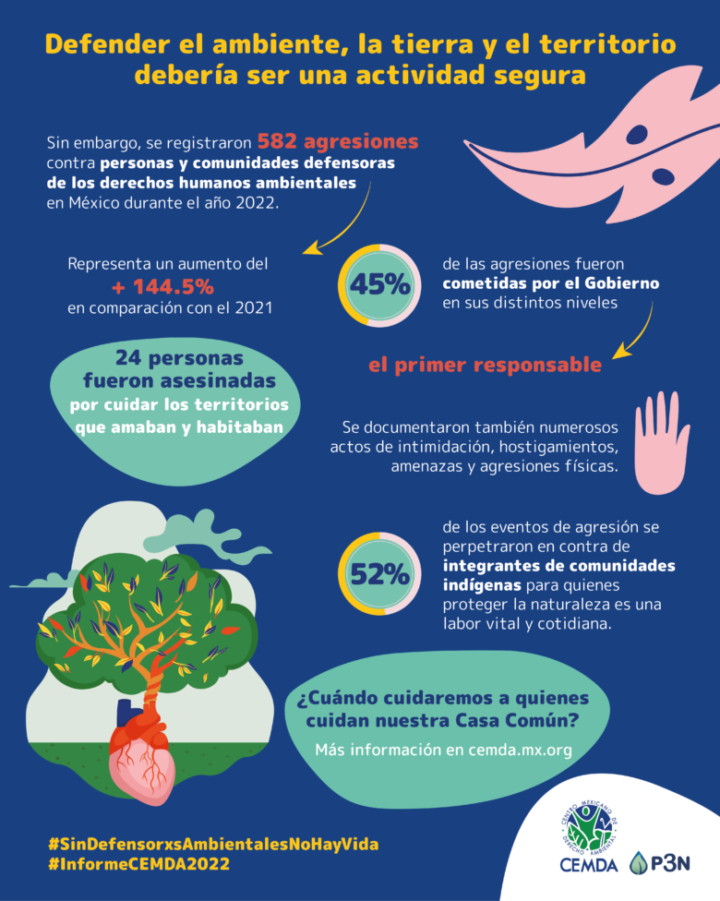
In 2022, Mexico ranked number three in Latin America in terms of murders of environmental activists, with 31 killed (four women and 16 indigenous people), behind Colombia (60) and Brazil (34), out of a global total of 177, according to the London-based non-governmental organization Global Witness.

A year earlier, this Latin American country of almost 129 million inhabitants ranked first on the planet, with 54 killings, so 2022 reflected an improvement.

“The situation in Mexico remains dire for defenders, and non-fatal attacks, including intimidation, threats, forced displacement, harassment and criminalization, continued to greatly complicate their work,” the report says.

The outlook remains serious for activists, as the non-governmental Mexican Center for Environmental Law (Cemda) documented 582 attacks in 2022, more than double the number in 2021. Oaxaca, Mexico City and the northern state of Chihuahua reported the highest number of attacks.

Urban problems

The south of Mexico City is home to the largest area of conservation land, but faces growing threats, such as deforestation, urbanization and irregular settlements.

Protected land defines the areas preserved by the public administration to ensure the survival of the land and its biodiversity.

Social anthropologist Tania Lopez said another risk has now emerged, in the form of the new General Land Use Planning Program 2020-2035 for the Mexican capital, which has a population of more than eight million people, although Greater Mexico City is home to more than 20 million.

“There was no public consultation of the plan based on a vision of development from the perspective of native peoples. In addition, it encourages real estate speculation, changes in land use and invasions,” said López, a member of the non-governmental organization Sembradoras Xochimilpas, part of the Voices of Life campaign.

Mexico is one of the most dangerous countries in the world for environmental defenders. In 2022, 31 activists were murdered, the third highest number in the region behind Colombia and Brazil. CREDIT: Cemda

Mexico is one of the most dangerous countries in the world for environmental defenders. In 2022, 31 activists were murdered, the third highest number in the region behind Colombia and Brazil. CREDIT: Cemda

Apart from the failure to carry out mandatory consultation processes, activists point out irregularities in the governmental Planning Institute and its technical and citizen advisory councils, because they are not included as members.

The conservation land, which provides clean air, water, agricultural production and protection of flora and fauna, totals some 87,000 hectares, more than half of Mexico City.

The plan stipulates conservation of rural and urban land. But critics of the program point out that the former would lose some 30,000 hectares, destined for rural housing.

The capital’s legislature is debating the program, which should have been ready by 2020.

Gisselle García, a lawyer with the non-governmental Interamerican Association for Environmental Defense, said attacks on women activists occur within a patriarchal culture that limits the existence of safe spaces for women’s participation in the defense of rights.

“It’s an entire system, which reflects the legal structure. If a woman files a civil or criminal complaint, she is not heard,” she told IPS, describing the special gender-based handicaps faced by women environmental defenders.

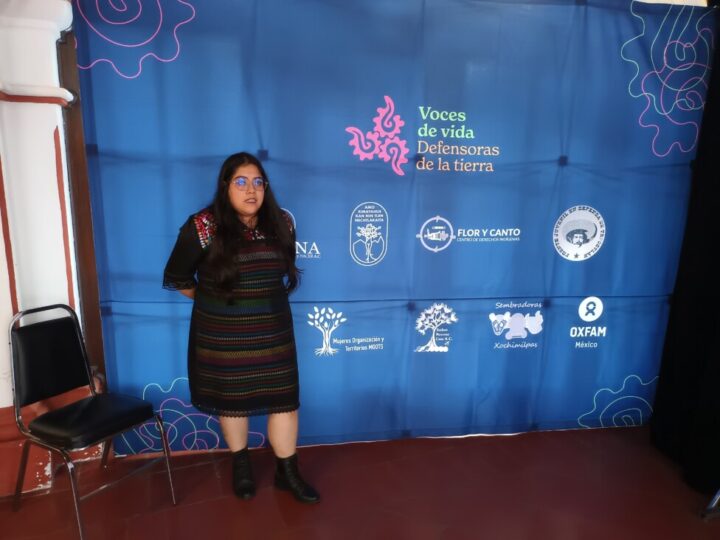
Social anthropologist Tania López is one of the members of the Voices of Life campaign, launched by eight non-governmental organizations on Oct. 12, 2023 to highlight the work of women environmental defenders in Mexico. CREDIT: Emilio Godoy / IPS

Social anthropologist Tania López is one of the members of the Voices of Life campaign, launched by eight non-governmental organizations on Oct. 12, 2023 to highlight the work of women environmental defenders in Mexico. CREDIT: Emilio Godoy / IPS

Still just an empty promise

This risky situation comes in the midst of preparations for the implementation of the Regional Agreement on Access to Information, Public Participation and Justice in Environmental Matters in Latin America and the Caribbean, known as the Escazú Agreement, an unprecedented treaty that aims to mitigate threats to defenders of the environment, in force since April 2021.

Article 9 of the Agreement stipulates the obligation to ensure a safe and enabling environment for the exercise of environmental defense, to take protective or preventive measures prior to an attack, and to take response actions.

The treaty, which takes its name from the Costa Rican city where it was signed, guarantees access to environmental information and justice, as well as public participation in environmental decision-making, to protect activists.

The Escazú Agreement has so far been signed by 24 Latin American and Caribbean countries, 15 of which have ratified it as well.

But its implementation is proceeding at the same slow pace as environmental protection in countries such as Mexico, where there are still no legislative changes to ensure its enforcement.

In August, the seven-person Committee to Support the Implementation of and Compliance with the Escazú Agreement took office. This is a non-contentious, consultative subsidiary body of the Conference of the Parties to the agreement to promote and support its implementation.

Meanwhile, in Mexico, the Escazú National Group, made up of government and civil society representatives, was formed in June to implement the treaty.

During the annual regional Second Forum of Human Rights Defenders, held Sept. 26-28 in Panama, participants called on the region’s governments to strengthen protection and ensure a safe and enabling environment for environmental protectors, particularly women.

While the Mexican women defenders who gathered in Mexico City valued the Escazú Agreement, they also stressed the importance of its dissemination and, even more so, its proper implementation.

Activists Pacheco and Lopez agreed on the need for national outreach, especially to stakeholders.

“We need more information to get out, a lot of work needs to be done, more people need to know about it,” said Pacheco.

The parties to the treaty are currently discussing a draft action plan that would cover 2024 to 2030.

The document calls for the generation of greater knowledge, awareness and dissemination of information on the situation, rights and role of individuals, groups and organizations that defend human rights in environmental matters, as well as on the existing instruments and mechanisms for prevention, protection and response.

It also seeks recognition of the work and contribution of individuals, groups and organizations that defend human rights, capacity building, support for national implementation and cooperation, as well as a follow-up and review scheme for the regional plan.

García the attorney said the regional treaty is just one more tool, however important it may be.

“We are in the phase of seeing how the Escazú Agreement will be applied. The most important thing is effective implementation. It is something new and it will not be ready overnight,” she said.

As it gains strength, the women defenders talk about how the treaty can help them in their work. “If they attack me, what do I do? Pull out the agreement and show it to them so they know they must respect me?” one of the women who are part of the Voices of Life campaign asked her fellow activists.

  Source

Brazil: A Step Forward for Indigenous Peoples’ Rights

Civil Society, Climate Change, Environment, Featured, Headlines, Human Rights, Indigenous Rights, Latin America & the Caribbean, TerraViva United Nations

Opinion

Credit: Evaristo Sa/AFP via Getty Images

MONTEVIDEO, Uruguay, Oct 24 2023 (IPS) – Brazil’s Supreme Court has delivered a long-awaited ruling upholding Brazilian Indigenous peoples’ claims to their traditional land. It did so by rejecting the ‘Temporal Framework’ principle, which only allowed for the demarcation and titling of lands physically occupied by the Indigenous groups who claimed them by 5 October 1988, when the current constitution was adopted. This excluded the numerous Indigenous communities who’d been violently expelled from their ancestral lands before then, including under military dictatorship between 1964 and 1985.


The case was brought in relation to a land dispute in the state of Santa Catarina, but the ruling applies to hundreds of similar situations throughout Brazil.

This was also good news for the climate. Brazil is home to 60 per cent of the Amazon rainforest, a key climate stabiliser due to the enormous amount of carbon it stores and the water it releases into the atmosphere. Most of Brazil’s roughly 800 Indigenous territories – over 300 of which are yet to be officially demarcated – are in the Amazon. And there are no better guardians of the rainforest than Indigenous peoples: when they fend off deforestation, they protect their livelihoods and ways of life. The best-preserved areas of the Amazon are those legally recognised and protected as Indigenous lands.

But there’s been a sting in the tale: politicians backed by the powerful agribusiness lobby have passed legislation to enshrine the Temporal Framework, blatantly ignoring the court ruling.

A tug of war

The Supreme Court victory came after a long struggle. Hundreds of Indigenous mobilisations over several years called for the rejection of the Temporal Framework.

Powerful agribusiness interests presented the Temporal Framework as the proper way of regulating article 231 of the constitution in a way that provides the legal security rural producers need to continue to operate. Indigenous rights groups denounced it as a clear attempt to make theft of Indigenous lands legal. Regional and international human rights mechanisms sided with them: the Inter-American Commission on Human Rights and the United Nations (UN) Special Rapporteur on the rights of Indigenous Peoples warned that the framework contradicted universal and Inter-American human rights standards.

In their 21 September decision, nine of the Supreme Court’s 11 members ruled the Temporal Framework to be unconstitutional. With a track record of agribusiness-friendly rulings, the two judges who backed it had been appointed by former far-right president Jair Bolsonaro, and one of them had also been Bolsonaro’s justice minister.

As the Supreme Court held its hearings and deliberations, political change took hold. Bolsonaro had vowed ‘not to cede one centimetre more of land’ to Indigenous peoples, and the process of land demarcation had remained stalled for years. But in April 2023, President Lula da Silva, in power since January, signed decrees recognising six new Indigenous territories and promised to approve all pending cases before the end of his term in 2026, a promise consistent with the commitment to achieve zero deforestation by 2030. The recognition of two additional reserves in September came alongside news that deforestation in the Brazilian Amazon had fallen by 66 per cent in August compared to the same month in 2022.

Agribusiness fights back

But the agribusiness lobby didn’t simply accept its fate. The powerful ruralist congressional caucus introduced a bill to enshrine the Temporal Framework principle into law, which the Chamber of Deputies quickly passed on 30 May. The vote was accompanied by protests, with Indigenous groups blocking a major highway. They faced the police with their ceremonial bows and arrows and were dispersed with water cannon and teargas.

The Temporal Framework bill continued its course through Congress even after the Supreme Court’s decision. On 27 September, with 43 votes for and 21 against, the Senate approved it as a matter of ‘urgency’, rejecting the substance of the Supreme Court ruling and claiming that in issuing it the court had ‘usurped’ legislative powers.

The Articulation of Indigenous Peoples of Brazil’s (APIB) assessment was that, as well as upholding the Temporal Framework, the bill sought to open the door to commodity production and infrastructure construction in Indigenous lands, among other serious violations of Indigenous rights. For these reasons, Indigenous groups called this the ‘Indigenous Genocide Bill’.

The struggle goes on

As the 20 October deadline for President Lula to either sign or veto the bill approached, a campaign led by Indigenous congresswoman Célia Xakriabá collected almost a million signatures backing her call for a total veto. Along with other civil society groups, APIB sent an urgent appeal to the UN requesting support to urge Lula to veto the bill.

On 19 October the Federal Public Prosecutor’s Office said Lula should veto the bill on the basis that it’s unconstitutional. On the same day, however, senior government sources informed that there wouldn’t be a total veto, but a ‘very large’ partial one. And indeed, the next day it was announced that Lula had partially vetoed the bill. According to a government spokesperson, all the clauses that constituted attacks on Indigenous rights and went against the Constitution were vetoed, while the ones that remained would serve to improve the land demarcation process, making it more transparent.

Even if the part of the bill that wasn’t vetoed doesn’t undermine the Supreme Court ruling, the issue is far from settled. The veto now needs to be analysed at a congressional session on a date yet to be determined. And the agribusiness lobby won’t back down easily. Many politicians own land overlapping Indigenous territories, and many more received campaigns funding from farmers who occupy Indigenous lands.

While further moves by the right-leaning Congress can’t be ruled out, the Supreme Court ruling also has some problems. The most blatant concerns the acknowledgment that there must be ‘fair compensation’ for non-Indigenous people occupying Indigenous lands they acquired ‘in good faith’ before the state considered them to be Indigenous territory. Indigenous groups contend that, while there might be a very small number of such cases, in a context of increasing violence against Indigenous communities, the compensation proposal would reward and further incentivise illegal invasions.

But beneath the surface of political squabbles, deeper changes are taking place that point to a movement that is growing stronger and better equipped to defend Indigenous peoples’ rights.

The 2022 census showed a 90-per-cent increase, from 896,917 to 1.69 million, in the number of Brazilians identifying as Indigenous compared to the census 12 years before. There was no demographic boom behind these numbers – just longstanding work by the Indigenous movement to increase visibility and respect for Indigenous identities. People who’d long ignored and denied their heritage to protect themselves from racism are now reclaiming their Indigenous identities. Not even the violent anti-Indigenous stance of the Bolsonaro administration could reverse this.

Today the Brazilian Indigenous movement is stronger than ever. President Lula owes his election to positioning himself as an alternative to his anti-rights, climate-denying predecessor. He now has the opportunity to reaffirm his commitment to respecting Indigenous peoples’ rights while tackling the climate crisis.

Inés M. Pousadela is CIVICUS Senior Research Specialist, co-director and writer for CIVICUS Lens and co-author of the State of Civil Society Report.

  Source

UN Chief Urged to Create Civil Society Envoy

Civil Society, Democracy, Featured, Global, Headlines, Human Rights, IPS UN: Inside the Glasshouse, Sustainable Development Goals, TerraViva United Nations

The high-level segment of the UN General Assembly in late September 2021 was attended by more than 100 world leaders and over a thousand delegates from 193 countries —despite the UN’s pandemic lockdown. But Civil Society Organizations (CSOs) were banned from the Secretariat building. Credit: UN Photo / Mark Garten

UNITED NATIONS, Oct 16 2023 (IPS) – When the United Nations commemorated the 75th anniversary of the UN Charter back in 2020, Secretary-General Antonio Guterres paid a supreme compliment to Civil Society Organizations (CSOs).


The CSOs, he pointed out, were a vital voice in the San Francisco Conference (where the UN was inaugurated). “You have been with us across the decades, in refugee camps, in conference rooms, and in mobilizing communities in streets and town squares across the world.”

“You are our allies in upholding human rights and battling racism. You are indispensable partners in forging peace, pushing for climate action, advancing gender equality, delivering life-saving humanitarian aid and controlling the spread of deadly weapons”.

And the world’s framework for shared progress, the Sustainable Development Goals (SDGs), is unthinkable without you’, he declared.

But in reality, CSOs are occasionally treated as second class citizens, with hundreds of CSOs armed with U.N. credentials, routinely barred from the United Nations, specifically when world leaders arrive to address the high-level segment of the General Assembly sessions in September.

The annual ritual where civil society is treated as political and social outcasts has always triggered strong protests. The United Nations justifies the restriction primarily for “security reasons”.

A coalition of CSOs– including Access Now, Action for Sustainable Development, Amnesty International, CIVICUS, Civil Society in Development (CISU), Democracy Without Borders, Forus, Global Focus, Greenpeace International, Human Rights Watch, Oxfam International, TAP Network, and UNA-UK— is now proposing the creation of a Special UN Civil Society Envoy to protect, advance and represent the interests of these Organizations.

Credit: United Nations

In a letter to Guterres, the coalition points out the disparity in access for civil society delegates viz. UN staff and members of government delegations who face no such restrictions stand as a critical reminder of the hurdles faced by accredited civil society representatives who travel great distances to contribute their perspectives at the UN.

“It is also a missed opportunity for civil society delegates to engage in key negotiations inside the UN headquarters and for policymakers to benefit from their critical and expert voices buttressed by lived experience in advancing the principles enshrined in the UN Charter,” the letter says.

Considering this recurring disparity, the letter adds, “we believe it’s vital to correct this injustice promptly to ensure opportunities for all stakeholders to contribute to discussions of global consequences”.

“This issue once again underscores the necessity for civil society to have a dedicated champion within the UN system, in the form of a Civil Society Envoy, who can help promote best practices in civil society participation across the UN and foster outreach by the UN to civil society groups worldwide, particularly those facing challenges in accessing the UN.”

“We would also like to express our support for the revision of modalities to ensure meaningful civil society participation at all stages of UN meetings and processes as well as Unmute Civil Society recommendations supported by 52 states and over 300 civil society organizations from around the world”.

“We believe that addressing the above concerns could lead to significant strides in advancing the ideal of a more inclusive, equitable, and effective UN in the spirit of ‘We the Peoples.’ “

Mandeep Tiwana, Chief Officer, Evidence and Engagement, at CIVICUS told IPS civil society representatives have long complained about asymmetries across UN agencies and offices in engaging civil society and have called for a champion within the UN system to drive best practices and harmonise efforts.

One such medium, he said, could be the appointment of a Civil Society Envoy along the lines of the UN Youth Envoy and Tech Envoy to drive key engagements.

Notably, a Civil Society Envoy could foster better inclusion of civil society and people’s voices in UN decision-making at the time when the UN is having to grapple with multiple crises and assertion of national interests by states to the detriment of international agreements and standards, he pointed out.

Five reasons why it’s time for a Civil Society Envoy:

    1. Without stronger civil society participation, the SDGs will not get back on track. The UN’s own assessment laments the lack of progress on the SDGs. We desperately need stronger civil society involvement to drive innovations in public policy, effectively deliver services that ‘leave no one behind’ and to spur transparency, accountability and participation. A Civil Society Envoy can catalyse crucial partnerships between the UN, civil society and governments.

    2. Civil society can help rebalance narratives that undermine the rules based international order. With conflicts, human rights abuses, economic inequality, nationalist populism and authoritarianism rife, the spirit of multilateralism enshrined in the UN Charter is at breaking point. Civil society representatives with their focus on finding global solutions grounded in human rights values and the needs of the excluded can help resolve impasses caused by governments pursuing narrow self-interests.

    3. A civil society envoy can help overcome UNGA restrictions on citizen participation and create better pathways to engage the UN. As it does every year, this September the UN suspended annual and temporary passes issued to accredited NGOs during UNGA effectively barring most civil society representatives from participating. Further, civil society access to the UN agencies and offices remains inconsistent. Reform minded UN leaders and states that support civil society can prioritise the appointment of an envoy for improved access.

    4. More equitable representation. The few civil society organizations who enjoy access to UNGA heavily skew toward groups based in the Global North who have the resources to invest in staff representation in New York, or the right passports to enter key UN locations easily. A UN civil society envoy would lead the UN’s outreach to civil society across the globe and particularly in underserved regions. Moreover, a civil society envoy could help ensure more diverse and equitable representation of civil society at UN meetings where decisions are taken.

    5. A civil society envoy is possible. Getting anything done at the UN requires adhering to what is politically feasible. A civil society special envoy is within reach. The Unmute Civil Society initiative to enable meaningful participation at the UN is supported by 52 states and over 300 civil society organizations. It includes among other things a call for civil society day at the UN and the appointment of a UN envoy.

Recent UN Special Envoys include:

IPS UN Bureau Report

  Source

Silent Struggles: Unraveling Korea’s Startling Elderly Suicide Surge

Active Citizens, Asia-Pacific, Development & Aid, Headlines, Human Rights, Humanitarian Emergencies, Population, TerraViva United Nations, Youth, Youth Thought Leaders

Opinion

In this, the fourth of IPS’ Youth Thought Leaders series, the author looks at suicide rates in older persons and concludes we should break barriers and celebrate the diversity each generation brings.

An image illustrating the ‘No-senior zone’ in a Korean café. Credit: The Nation

An image illustrating the ‘No-senior zone’ in a Korean café. Credit: The Nation

SEOUL, Oct 13 2023 (IPS) – Growing up in a culture that values respect for elders, I was acutely aware of the importance of caring for our aging population. However, my journey to understanding the gravity of this issue truly began with a personal anecdote. I watched my grandmother, a pillar of strength throughout my childhood, gradually withdraw from the vibrant world in which she once thrived. The cheerful twinkle in her eyes began to dim, replaced by an eerie sense of isolation.


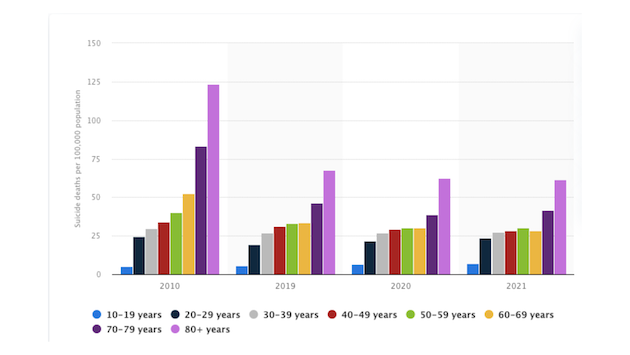
This experience opened my eyes to a stark reality: a disturbing surge in elderly suicide rates hidden beneath the facade of cultural reverence for seniors in Korea and Japan. In 2021, these rates reached 61.3 deaths per 100,000 people in Korea, primarily driven by profound social isolation.

Suicide deaths in Korea. Credit: Statista

Suicide deaths in Korea. Credit: Statista

Some may argue that these figures are insignificant, but the persistence of a high suicide rate cannot be dismissed. Moreover, they are poised to become even more critical as we approach a world where, according to WHO, the elderly population over the age of 60 is expected to double by 2050, and those 80 years or older are projected to triple.

So how severe are the elderly suicide rates due to isolation in Korea and Japan? Well, research highlights that this is due to the significant rise in the elderly population. Such an increase has been concurrent with the rising elderly suicide rates. The Global Burden of Disease study emphasizes that the global elderly suicide rate is almost triple the suicide rates across all other age groups. For example, in South Korea alone, there has been a 300% increase in elderly suicide rates.

If the world’s elderly population has increased overall, why is it that the elderly suicide rates within Korea and Japan have been especially severe? This was particularly confusing as I believed that due to cultural and social standards of filial piety and respecting your elders, such suicide rates would be low. However, I found the answer to my own question when I visited Korea in July this year.

When I arrived in the country, one of the first things I did was to visit a cafe to meet with a friend. However, as I was about to enter the cafe, I saw a group of elderly men and women leaving the cafe while comforting each other, saying, “It’s okay; it’s not the first time we’ve been rejected.” As I later found out, this was because the cafe was a ‘no-senior zone.’

Similar to how some places are designated as ‘no-kid zones,’ this cafe, and others, did not allow people over the age of 60 to enter.  According to Lee Min-ah at Chung-Ang University, “The continuous emergence of ‘no-something zones’ in our society means that exclusion among groups is increasing, while efforts to understand each other are disappearing.”

I also discovered that age discrimination is also present in other aspects of the elderly’s life, more specifically, in the workplace. According to a survey by the National Human Rights Commission of Korea, in 2018, 59 percent of the Korean elderly found it difficult to be employed due to age restrictions, and a further 44 percent experienced ageism within their workplace. The increase in discrimination against the elderly has heightened their sense of isolation, eventually leading to cases of suicide in extreme circumstances.

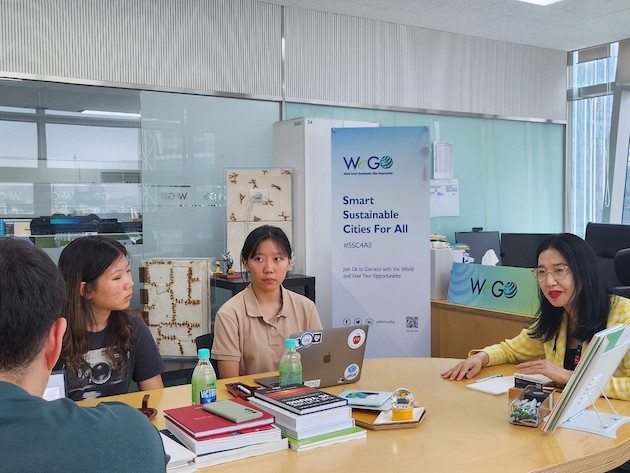
Jung Soon Park, the Secretary General of World Smart Sustainable Cities Organization (WeGo) with the author Hyunsung (Julie) Lee.

Jung Soon Park, the Secretary General of World Smart Sustainable Cities Organization (WeGo) with the author Hyunsung (Julie) Lee.

Interview with Jung Soon Park, the Secretary General of WeGo at the Seoul Global Center

Interview with Jung Soon Park, the Secretary General of WeGo at the Seoul Global Center

I wanted to learn more about the current action being taken to help the elderly feel more included in our society, as I believed this would be key to preventing isolation-related suicide cases. To gain further insight, I decided to interview Jung Soon Park, the Secretary General of the World Smart Sustainable Cities Organization (WeGo).

WeGo is an international association of local governments, smart tech solution providers, and institutions committed to transforming cities worldwide into smart and sustainable cities through partnerships. I believe that by interviewing the Secretary General of WeGo, I would be able to learn more about the specific solutions that governments and organizations are implementing collaboratively.

Through my interview, I gained an understanding that the South Korean government and social organizations are currently focusing on addressing age discrimination, recognizing it as a key factor in isolationism.

Park mentioned that one specific approach to resolving this issue involves the use of ‘meta spaces’ and technological wristbands. She emphasized that in today’s technology-driven world, enabling the elderly to adapt to such technology could bridge the generation gap between the younger and older generations. She further explained that meta spaces, allowing for anonymous communication, and technological wristbands, which could include features like a metro card and direct access to emergency services, would facilitate the elderly’s integration into modern society. Park concluded that enabling the elderly to adapt efficiently to the current social setting could break down the generational barrier between youth and the elderly, fostering a direct connection between these two disparate groups.

During my research, I coincidentally came across a website called Meet Social Value (MSV). MSV is a publishing company that specializes in writing and publishing insightful articles about contemporary social issues. Their most recent article, titled ‘Senior,’ delves into the social challenges faced by the elderly in Korean society and explores solutions involving inclusive designs and spaces.

MSV serves as a prime example of how contemporary social organizations are taking steps to address the issue of elderly discrimination. This is especially significant because, through youthful and trendy engagement on social media, it becomes easier to raise awareness of this issue among younger generations.

Meet Social Value's most recent article, titled 'Senior,' delves into the social challenges faced by the elderly in Korean society and explores solutions involving inclusive designs and spaces.

Meet Social Value’s most recent article, titled ‘Senior,’ delves into the social challenges faced by the elderly in Korean society and explores solutions involving inclusive designs and spaces.

As I continued my research, I started pondering what I, as an 18-year-old, could do to contribute to resolving this issue. Even though I’m still a student, I wanted to find ways to make a difference, especially after witnessing age discrimination and its consequences firsthand.

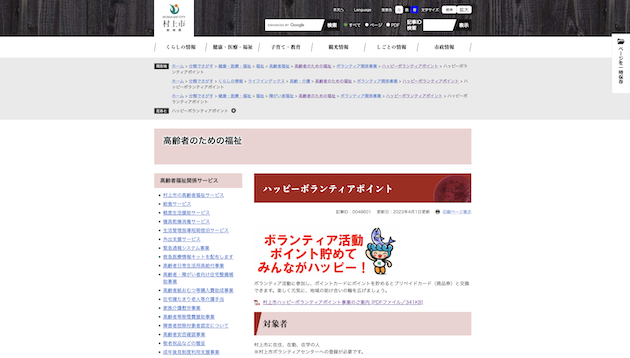
I found the answer to my question when I learned about the initiatives undertaken by the government of Murakami City and the Murakami City Social Welfare Council to bridge the gap between the youth and senior citizens. They introduced the Murakami City Happy Volunteer Point System, which aimed to encourage more people to assist seniors through various volunteering activities such as nursing facility support, hospital transportation services, and operating dementia cafes, among others. The system rewarded volunteers with points that could be exchanged for prepaid cards, creating an incentive for more individuals to get involved in helping their senior citizens.

Taking this into consideration, I believe that the younger generation, especially students, may contribute by creating such an incentivization system. For example, students may create senior volunteering clubs within their schools and take turns volunteering and connecting with elderly citizens every weekend. By doing so, clubs may incentivize their members through points which may later be traded for a snack or lunch at the school cafeteria. Through small incentives, this may naturally encourage more students to participate and thus naturally allow for the youth to create a relationship with the elderly, hence contributing to mitigating the issue of elderly isolation.

The webpage of the Murakami City Happy Volunteer Point System containing the system’s details.

The webpage of the Murakami City Happy Volunteer Point System contains the system’s details.

In Korea’s battle against ageism, we find ourselves at a turning point. To navigate this societal shift successfully, we must recognize that age discrimination not only undermines the dignity of our elders but also hampers our collective progress. The solution requires a comprehensive approach. Policy reforms are crucial, emphasizing stringent anti-ageism measures in the public space and the workplace. Equally significant solutions are awareness campaigns to challenge stereotypes and foster inter-generational understanding.

However, true change starts with the youth. By confronting our biases and engaging in volunteering activities, we can break down barriers and celebrate the diverse experiences each age group brings. Through such efforts, we can create a society where age is not a determinant of worth but a source of strength and wisdom. It’s a journey demanding our collective commitment, but one that will lead us towards a more inclusive and harmonious future for all.

Edited by Hanna Yoon

IPS UN Bureau Report

  Source