One Hundred Years On, Argentine State Acknowledges Indigenous Massacre in Trial

Civil Society, Crime & Justice, Development & Aid, Editors’ Choice, Featured, Headlines, Human Rights, Indigenous Rights, Inequality, Latin America & the Caribbean, Population, Regional Categories

Indigenous Rights

During one of the hearings in Buenos Aires, the court trying a 1924 indigenous massacre in the Chaco heard the testimony of historian Nicolás Iñigo Carrera, from the University of Buenos Aires, who has been studying indigenous history in Argentina for decades. The expert witness described in detail the conditions in the Napalpí indigenous “reducción” or camp where the massacre took place. CREDIT: Daniel Gutman/IPS

During one of the hearings in Buenos Aires, the court trying a 1924 indigenous massacre in the Chaco heard the testimony of historian Nicolás Iñigo Carrera, from the University of Buenos Aires, who has been studying indigenous history in Argentina for decades. The expert witness described in detail the conditions in the Napalpí indigenous “reducción” or camp where the massacre took place. CREDIT: Daniel Gutman/IPS

BUENOS AIRES, May 13 2022 (IPS) – It’s a strange trial, with no defendants. The purpose is not to hand down a conviction, but to bring visibility to an atrocious event that occurred almost a hundred years ago in northern Argentina and was concealed by the State for decades with singular success: the massacre by security forces of hundreds of indigenous people who were protesting labor mistreatment and discrimination.


“We are seeking to heal the wounds and vindicate the memory of the (indigenous) peoples,” explained federal judge Zunilda Niremperger, as she opened the first hearing in Buenos Aires on May 10 in the trial for the truth of the so-called Napalpí Massacre, in which an undetermined number of indigenous people were shot to death on the morning of Jul. 19, 1924.

The trial began on Apr. 19 in the northern province of Chaco, one of the country’s poorest, near the border with Paraguay. But it was moved momentarily to the capital, home to approximately one third of the 45 million inhabitants of this South American country, to give it greater visibility.

In a highly symbolic decision, the venue chosen in Buenos Aires was the Space for Memory and Human Rights, created in the former Navy School of Mechanics (ESMA), where the most notorious clandestine torture and extermination center operated during the 1976-1983 military dictatorship, which kidnapped and murdered as many as 30,000 people for political reasons.

“What we hope is that the sentence will bring out the truth about an event that needs to be understood so that racism and xenophobia do not take hold in Argentina. People need to know about all the blood that has flowed because of contempt for indigenous people.” — Duilio Ramírez

The hearings in Buenos Aires ended Thursday May 12, and the court will reconvene in Resistencia, the capital of Chaco, on May 19, when the prosecutor’s office and the plaintiffs are to present their arguments before the sentence is handed down at an unspecified date.

“This trial is aimed at bringing out the truth that we need, and that I come to support, in the place where they brought my daughter when they kidnapped her. This shows that genocides are repeated in history,” Vera Vigevani de Jarach, seated in the front row of the courtroom, her head covered by the white scarf that identifies the Mothers of Plaza de Mayo human rights group, told IPS.

Vera, 94, is Jewish and emigrated with her family to Argentina when she was 11 years old from Italy, due to the racial persecution unleashed by fascist leader Benito Mussolini in 1939. In 1976 her only daughter, Franca Jarach, then 18 years old, was forcibly disappeared.

“Truth trials” are not a novelty in Argentina. The term was used to refer to investigations of the crimes committed by the dictatorship, carried out after 1999, when amnesty laws passed after the conviction of the military regime’s top leaders blocked the prosecution of the rest of the perpetrators.

A petition filed by a member of the Mothers of Plaza de Mayo (made up of mothers of victims of forced disappearance) before the Inter-American Commission on Human Rights (IACHR) led later to an agreement with the Argentine State, which recognized the woman’s right to have the judiciary investigate the fate of her disappeared daughter, even though the amnesty laws made it impossible to punish those responsible.

Eventually, the amnesty laws were repealed, the trials resumed, and defendants were convicted and sent to prison.

Indigenous communities and human rights organizations held an Apr. 19, 2022 demonstration in Resistencia, capital of the Argentine province of Chaco, at the beginning of the trial for the truth about the Napalpí massacre. CREDIT: Chaco Secretariat of Human Rights and Gender

Indigenous communities and human rights organizations held an Apr. 19, 2022 demonstration in Resistencia, capital of the Argentine province of Chaco, at the beginning of the trial for the truth about the Napalpí massacre. CREDIT: Chaco Secretariat of Human Rights and Gender

Historic reparations

“My grandmother was a survivor of the massacre and I grew up listening to the stories of labor exploitation in Napalpí and about what happened that day. For us this trial is a historic reparation,” Miguel Iya Gómez, a bilingual multicultural teacher who today presides over the Chaco Aboriginal Institute, a provincial agency whose mission is to improve the living conditions of native communities, told IPS.

The trial is built on the basis of official documents and journalistic coverage of the time and the videotaped testimonies of survivors of the massacre and their descendants, and of researchers of indigenous history in the Chaco.

The Argentine province of Chaco forms part of the ecoregion from which it takes its name: a vast, hot, dry, sparsely forested plain that was largely unsettled during the Spanish Conquest. Only at the end of the 19th century did the modern Argentine State launch military campaigns to subdue the indigenous people in the Chaco and impose its authority there.

Once the Chaco was conquered, many indigenous families were forced to settle in camps called “reducciones”, where they had to carry out agricultural work.

“The ‘reducciones’ operated in the Chaco between 1911 and 1956 and were concentration camps for indigenous people, who were disciplined through work,” said sociologist Marcelo Musante, a member of the Network of Researchers on Genocide and Indigenous Policies in Argentina, which brings together academics from different disciplines, at the hearing.

“When indigenous people entered the ‘reducción’, they were given clothes and farming tools, and this generated a debt that put them under great pressure. And they were not allowed to make purchases outside the stores of the ‘reducción’,” he explained.
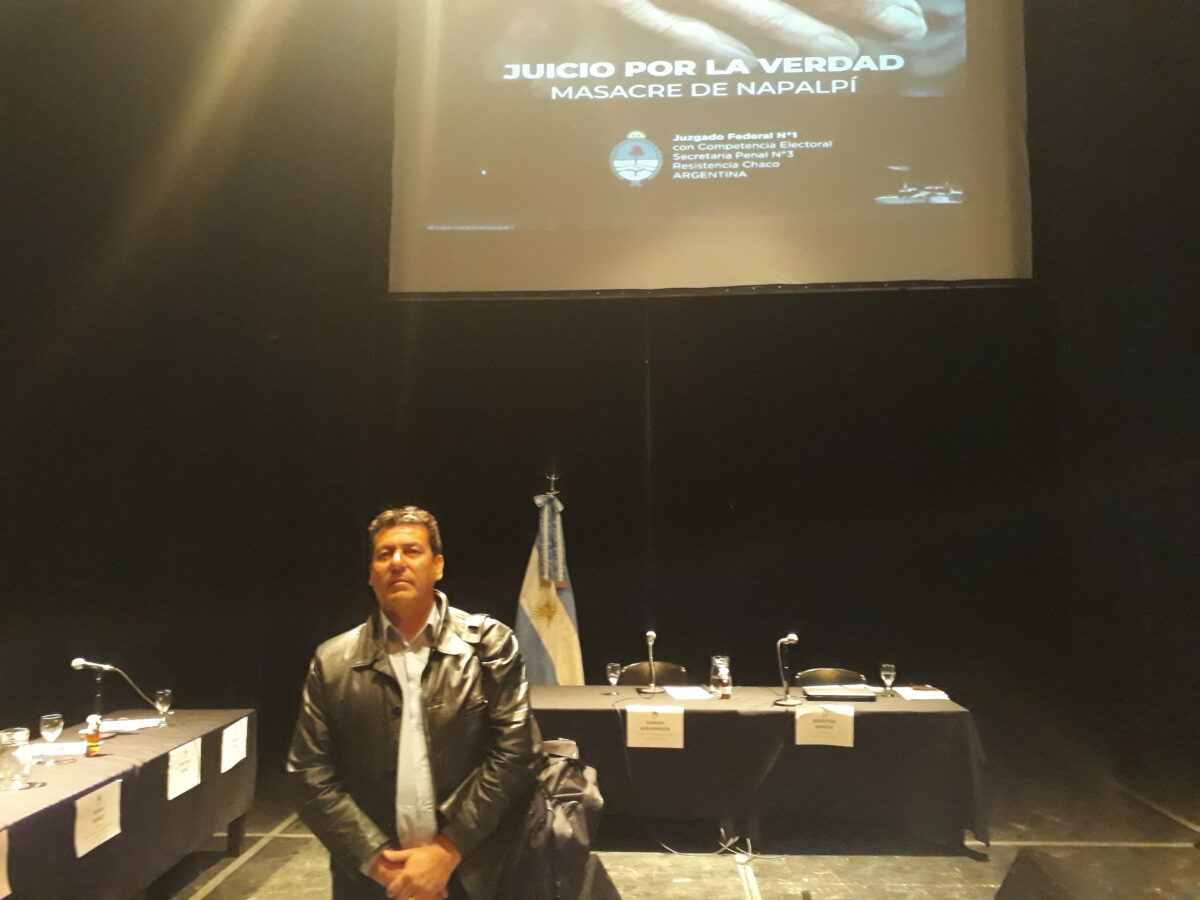
David García, a member of the Napalpí Foundation, created in 2006 to gather information about and bring visibility to the 1924 massacre, took part in the trial in Buenos Aires. His organization was one of the driving forces behind the historic trial in Argentina. CREDIT: Daniel Gutman/IPS

David García, a member of the Napalpí Foundation, created in 2006 to gather information about and bring visibility to the 1924 massacre, took part in the trial in Buenos Aires. His organization was one of the driving forces behind the historic trial in Argentina. CREDIT: Daniel Gutman/IPS

Invaded by cotton

Historian Nicolás Iñigo Carrera said it was common for indigenous people in the Chaco to go to work temporarily in sugar mills in the neighboring provinces of Salta and Jujuy, but the scenario changed in the 1920s, when the Argentine government introduced cotton in the Chaco, to tap into the textile industry’s growing global demand.

“Then the criollo (white) settlers, who often had no laborers, demanded the guaranteed availability of indigenous labor to harvest the cotton crop, and in 1924 the government prohibited indigenous people, who refused to work on the cotton plantations, from leaving the Chaco, declaring any who left subversives,” Carrera said.

Anthropologist Lena Dávila Da Rosa said the Jul. 19, 1924 protest involved between 800 and 1000 indigenous people from Napalpí, and some 130 police officers who opened fired on them, with the support of an airplane that dropped candy so the children would go out to look for it and thus reveal the location of the protesters they were tracking down.

“It’s impossible to know exactly how many indigenous people were killed, but there were several hundred victims,” Alejandro Jasinski, a researcher with the Truth and Justice Program of the Ministry of Justice and Human Rights, told IPS.

“The official report mentioned four people killed in confrontations among themselves, and there was a judicial investigation that was quickly closed. All that was left were the buried memories of the communities,” he added.

The memories were revived and made public in recent years thanks in large part to the efforts of Juan Chico, an indigenous writer and researcher from the Chaco who died of COVID-19 in 2021.

“Juan started collecting oral accounts almost 20 years ago,” David García, a translator and interpreter of the language of the Qom, one of the main indigenous nations of the Chaco, told IPS. “I worked alongside him to bring the indigenous genocide to light, and in 2006 we founded an NGO that today is the Napalpí Foundation. It was a long struggle to reach this trial.”
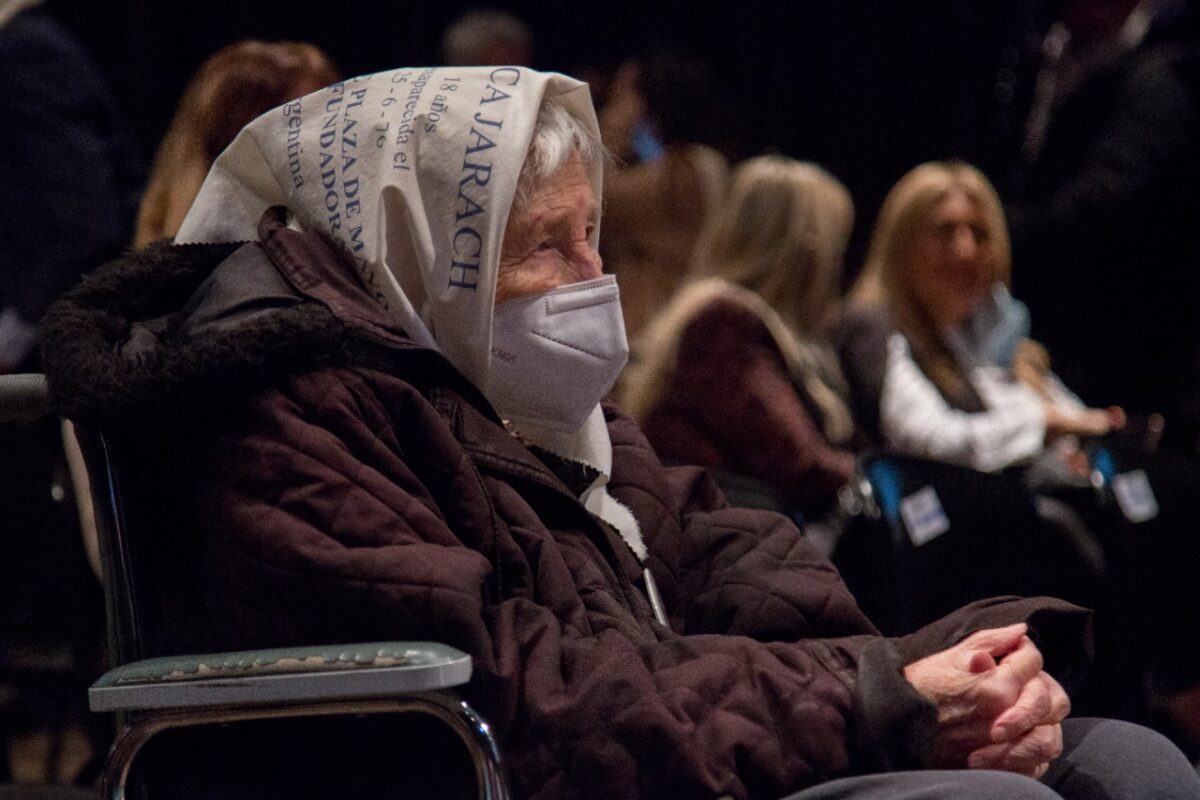
Vera Vigevani de Jarach, a member of the human rights group Mothers of Plaza de Mayo, attended the hearing in Buenos Aires for the Napalpí indigenous massacre, held in the most notorious clandestine detention and torture center used by the 1976-1983 military dictatorship in Argentina. CREDIT: National Secretariat of Human Rights

Vera Vigevani de Jarach, a member of the human rights group Mothers of Plaza de Mayo, attended the hearing in Buenos Aires for the Napalpí indigenous massacre, held in the most notorious clandestine detention and torture center used by the 1976-1983 military dictatorship in Argentina. CREDIT: National Secretariat of Human Rights

Indigenous people in the Chaco today

Of the population of Chaco province, 3.9 percent, or 41,304 people, identified as indigenous in the last national census conducted in Argentina in 2010, which is higher than the national average of 2.4 percent.

Census data reflects the harsh living conditions of indigenous people in the Chaco and the disadvantages they face in relation to the rest of the population. More than 80 percent live in deficient housing while more than 25 percent live in critically overcrowded conditions, with more than three people per room. In addition, more than half of the households cook with firewood or charcoal.

Today, the site of the Napalpí massacre is called Colonia Aborigen Chaco and is a 20,000-hectare plot of land owned by the indigenous community where, according to official data, some 1,300 indigenous people live, from the Qom and Moqoit communities, the most numerous native groups in the Chaco along with the Wichi.

In 2019, mass graves were found there by the Argentine Forensic Anthropology Team, a prestigious organization that emerged in 1984 to identify remains of victims of the military dictatorship and that has worked all over the world.

“What we hope is that the sentence will bring out the truth about an event that needs to be understood so that racism and xenophobia do not take hold in Argentina,” Duilio Ramírez, a lawyer with the Chaco government’s Human Rights Secretariat, which is acting as plaintiff, told IPS. “People need to know about all the blood that has flowed because of contempt for indigenous people.”

“We hope that with the ruling, the Argentine State will take responsibility for what happened and that this will translate into public policies of reparations for the indigenous communities,” he said.

  Source

In Sri Lanka, Things Fall Apart

Asia-Pacific, Civil Society, Crime & Justice, Featured, Headlines, Human Rights, Humanitarian Emergencies, TerraViva United Nations

Opinion

The protestors’ main rallying slogan is ‘GotaGoHome’

LONDON, May 4 2022 (IPS) – When I ended last month’s column hoping that April would not prove to be hapless Sri Lanka’s ‘cruellest month’ (in the words TS Eliot), I hardly anticipated the current turn of events.


In April, the country was to celebrate several ethno-religious festivals. The biggest among them was the Sinhala and Tamil New Year, celebrated by Sri Lanka’s majority community and its main minority. It was also the Muslim month of Ramadan and Easter, commemorated by the Christians.

For over one-and-a-half years Sri Lanka had been grappling with a fast-failing economy. The dwindling of foreign reserves and the consequent shortages of food, medicines, fuel, gas and kerosene for cooking were more recently compounded by power cuts, at times as long as 12hoursper day, bringing manufacturing industries to a standstill and forcing businesses to close down early.

With the country struggling to avert bankruptcy and an unprecedented rise in inflation and spiralling commodity prices, many working-class families, daily wage earners and farmers were facing penury and starvation.

Against this dire background Sri Lanka’s 22 million people were anxiously preparing for the April festivities, wondering whether there would be anything to celebrate.

Then it happened.

On March 31 the residents of Mirihana, a middle- class town on the outskirts of Colombo, held a candle-light protest to highlight the daily power cuts that disrupted their family activities. The protest, initially by women, attracted passers-by and huge crowds from neighbourhood towns and residential areas as President Gotabaya Rajapaksa lived in Mirihana in his private residence.

Swelling crowds shouting slogans later clashed with police firing tear gas and water cannons to break up the demonstration, but many of the protestors held their ground till the next day.

The Mirihana protest has sparked the island-wide conflagration that now has the once all-powerful Rajapaksa family-run government teetering on the wall like Humpty Dumpty awaiting a splintering fall. It will remain an important landmark in this uprising, which some have called, rather erroneously, Sri Lanka’s ‘Arab Spring’.

Mirihana began the assault against the Rajapaksa fiefdom that once seemed impregnable. Gotabaya Rajapaksa is president. Brother Mahinda, who served two terms as president, is currently prime minister. Another brother, Basil, a dual citizen with US citizenship and a home in Los Angeles, was until last month finance minister, and the eldest brother Chamal holds the post ofirrigation minister and state minister of security. Mahinda’s eldest son Namal, whom his father sees as heir apparent, was sports and youth affairs minister, among other portfolios.

It appears that the prime minister suspects he is going to be sacrificed on the altar of expediency

Together, the family reportedly controlled 72 per cent of government resources, free to use as they deemed fit, even to farm off to their acolytes and business friends in the way of government contracts and import monopolies, even during the Covid pandemic.

Today, however, that fortress of power and privilege appears as exposed as France’s Maginot Line, set to crumble against a German Blitzkrieg.

All the Rajapaksas, except Prime Minister Mahinda, lost their positions last month when President Gotabaya suddenly dissolved the cabinet in a desperate attempt to quell the mounting outrage against him. It seemed a weak moral sidestep, for the protesters’ cry was not only against the president but against the entire Rajapaksa family, which they claimed had dipped their hands into the country’s assets for personal gain.

Mirihana lit the fuse for the enormous protest that flared up at Colombo’s beach-front Galle Face Green, right opposite the Presidential Secretariat from where political power radiated. It was this that breached the Rajapaksa citadel.

Economists urged the government seek IMF assistance

At the time of writing, this protest – which shows signs of unifying the country’s multiracial, multi-religious society and has drawn crowds of all ages and a wide cross-section of the Sri Lankan community, including the professional classes – has entered its 17thcontinuous day, with hundreds of protesters camped there day and night despite the heat and rain.

Yet it is no Arab Spring. It is an orderly, non-violent protest, mainly of youth of all shades, with an inventive genius to keep themselves and their cause alive.

Never in Sri Lanka’s 74 years of post-independence history has the country seen anything like this, even though anti-government protests are nothing new to the country, which has seen Leftist political parties and associated trade unions functioning even under British colonial rule.

The main rallying slogan is ‘GotaGoHome’, telling Gotabaya to return to his home – also in Los Angeles –though he relinquished his US citizenship to be eligible to contest the presidential election in November 2019.

Built round that slogan are a myriad other satirical comments in song, verse, caricatures, cartoons and videos, the creative work of the protesters deriding the Rajapaksas, some demanding they return the country’s supposedly stolen assets and otherwise accumulated wealth in tax havens.

Although the protesters are now demanding that the whole Rajapaksa family pack their bags and quit, the main target quite rightly is President Gotabaya. It was his military arrogance – having played a role in the defeat of the separatist Liberation Tigers of Tamil Eelam(LTTE) in 2009, under the leadership of his president brother Mahinda – and his ignorance of politics and governance, and over-reliance on incompetent advisers that started the economic rot.

With a group of retired and serving military men appointed to key civilian positions and a coterie of so-called intellectuals and businessmen as advisers, he plunged head-first into economic policy decisions.

Within a few days of assuming office, he had slashed VAT from 15 per cent to 8per cent and abolished some other taxes that cost the state a whopping 28 per cent in revenue. It led the Central Bank to print money feverishly to meet budgetary commitments, causing inflation.

Also disastrous was the overnight decision to ban chemical fertilisers that drove farmers to burn effigies of ministers and demonstrate on the streets, demanding restitution of their fertiliser needs or face food insecurity in the months ahead, forcing a once adamant president to retract.

While economists had foreseen the impending danger in depleting foreign reserves and international debt repayments this year, and hence urged the government seek IMF assistance, the president clung steadfastly to the advice of the Central Bank Governor and the Treasury Secretary, among others, who dismissed the idea for more than one year even ignoring cabinet support for IMF help.

In a belated gesture, President Gotabaya sacked the two officials immediately after replacing his cabinet with younger, untested MPs. He sent his new finance minister to Washington to plead with the IMF for immediate relief.

The president is hoping for political concessions he has agreed to – including returning to parliament and the prime minister powers that he usurped on coming to office through the 20thconstitutional amendment. He has now agreed to form an interim All Party government.

But one sees a growing rift in the once close-knit family. Names proposed by Prime Minister Mahinda for the new cabinet were ignored by his brother, causing the prime minister to boycott the swearing-in of the new ministers.

If the president opts for an interim government, it means he has decided to stay put but call for the prime minister’s resignation. It would appear that the prime minister suspects he is going to be sacrificed on the altar of expediency.

In an interview the other day, Prime Minister Mahinda Rajapaksa insisted that he will not resign and any reconstituted government must be under his leadership. In the meantime, he has been trying to whip up support against his ouster by canvassing MPs to muster the required 113 votes.

How the protesting public will react to all these political manipulations will depend on what is on offer. Right now, they are determined to continue until President Gotabaya surrenders, which seems unlikely.

Source: Asian Affairs, London

Neville de Silva is a veteran Sri Lankan journalist who held senior roles in Hong Kong at The Standard and worked in London for Gemini News Service. He has been a correspondent for foreign media including the New York Times and Le Monde. More recently he was Sri Lanka’s Deputy High Commissioner in London.

IPS UN Bureau

  Source

Indigenous Women in Mexico Take United Stance Against Inequality

Civil Society, Cooperatives, Development & Aid, Economy & Trade, Editors’ Choice, Featured, Food and Agriculture, Gender, Headlines, Human Rights, Indigenous Rights, Latin America & the Caribbean, Poverty & SDGs, Regional Categories, TerraViva United Nations, Women & Climate Change, Women & Economy

Women & Economy

Every other Tuesday, a working group of Mayan women meets to review the organization and progress of their food saving and production project in Uayma, in the state of Yucatán in southeastern Mexico. CREDIT: Courtesy of the Ko'ox Tani Foundation

Every other Tuesday, a working group of Mayan women meets to review the organization and progress of their food saving and production project in Uayma, in the state of Yucatán in southeastern Mexico. CREDIT: Courtesy of the Ko’ox Tani Foundation

UAYMA, Mexico , Apr 26 2022 (IPS) – Every other Tuesday at 5:00 p.m. sharp, a group of 26 Mexican women meet for an hour to discuss the progress of their work and immediate tasks. Anyone who arrives late must pay a fine of about 25 cents on the dollar.


The collective has organized in the municipality of Uayma (which means “Not here” in the Mayan language) to learn agroecological practices, as well as how to save money and produce food for family consumption and the sale of surpluses.

“We have to be responsible. With savings we can do a little more,” María Petul, a married Mayan indigenous mother of two and a member of the group “Lool beh” (“Flower of the road” in Mayan), told IPS in this municipality of just over 4,000 inhabitants, 1,470 kilometers southeast of Mexico City in the state of Yucatán, on the Yucatán peninsula.

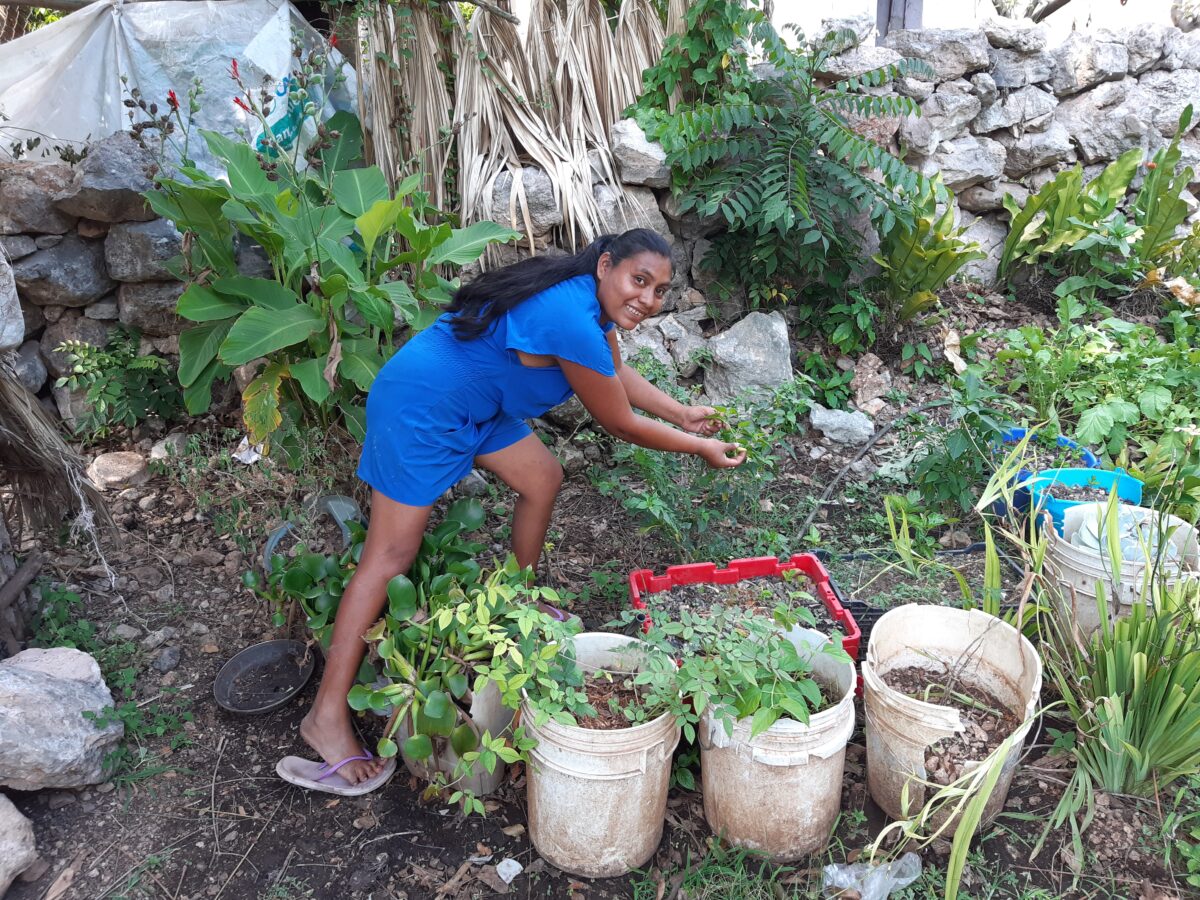
The home garden “gives me enough to eat and sell, it helps me out,” said Petul as she walked through her small garden where she grows habanero peppers (Capsicum chinense, traditional in the area), radishes and tomatoes, surrounded by a few trees, including a banana tree whose fruit will ripen in a few weeks and some chickens that roam around the earthen courtyard.

The face of Norma Tzuc, who is also married with two daughters, lights up with enthusiasm when she talks about the project. “I am very happy. We now have an income. It’s exciting to be able to help my family. Other groups already have experience and tell us about what they’ve been doing,” Tzuc told IPS.

The two women and the rest of their companions, whose mother tongue is Mayan, participate in the project “Women saving to address climate change”, run by the non-governmental Ko’ox Tani Foundation (“Let’s Go Ahead”, in Mayan), dedicated to community development and social inclusion, based in Merida, the state capital.

This phase of the project is endowed with some 100,000 dollars from the Commission for Environmental Cooperation (CEC), the non-binding environmental arm of the North American Free Trade Agreement (NAFTA), formed in 1994 by Canada, the United States and Mexico and replaced in 2020 by another trilateral agreement.

The initiative got off the ground in February and will last two years, with the aim of training some 250 people living in extreme poverty, mostly women, in six locations in the state of Yucatán.

The maximum savings for each woman in the group is about 12 dollars every two weeks and the minimum is 2.50 dollars, and they can withdraw the accumulated savings to invest in inputs or animals, or for emergencies, with the agreement of the group. Through the project, the women will receive seeds, agricultural inputs and poultry, so that they can install vegetable gardens and chicken coops on their land.

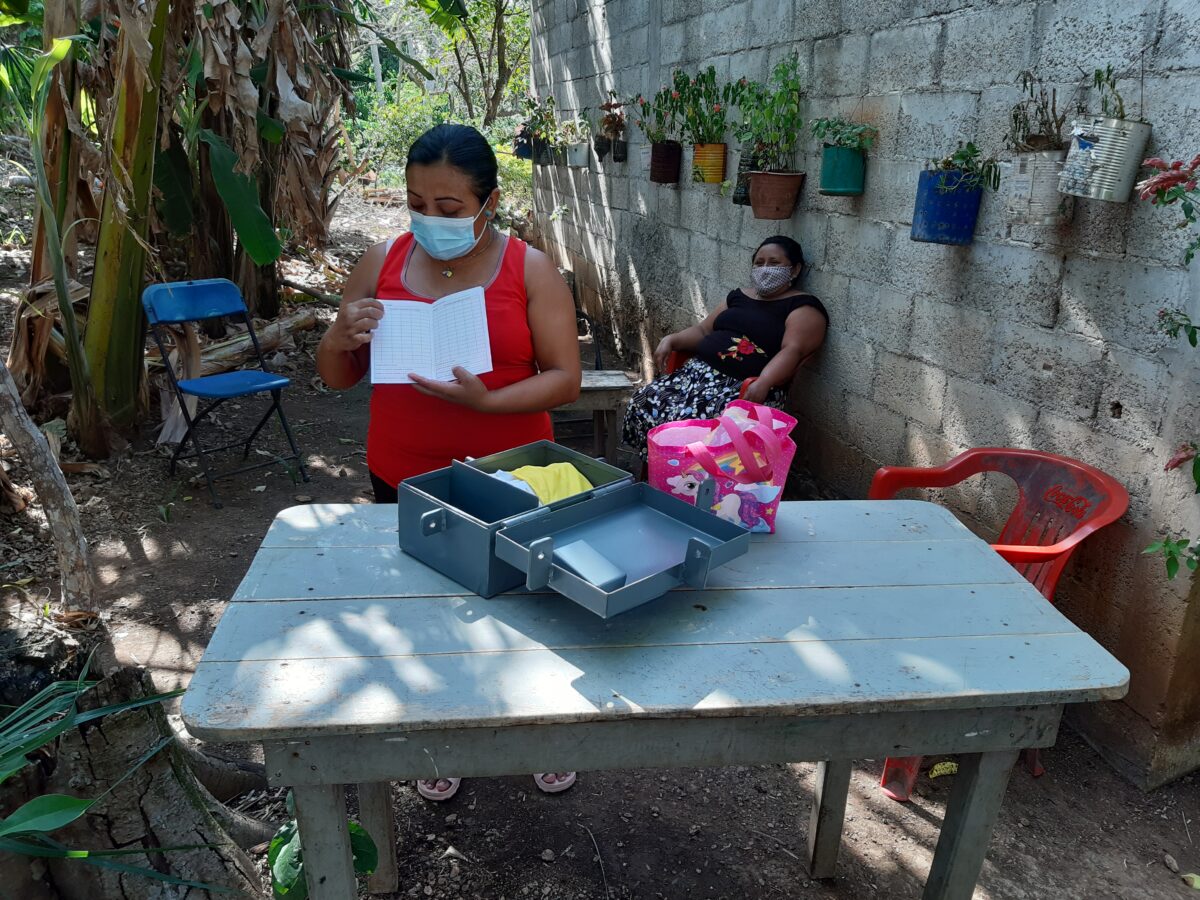
The women write down the quotas in a white notebook and deposit the savings in a gray box, kept in the house of the group’s president.

José Torre, project director of the Ko’ox Tani Foundation, explained that the main areas of entrepreneurship are: community development, food security, livelihoods and human development.

“What we have seen over time is that the savings meetings become a space for human development, in which they find support and solidarity from their peers, make friends and build trust,” he told IPS during a tour of the homes of some of the savings group participants in Uayma.

The basis for the new initiative in this locality is a similar program implemented between 2018 and 2021 in other Yucatecan municipalities, in which the organization worked with 1400 families.

María Petul, a Mayan indigenous woman, plants chili peppers, tomatoes, radishes and medicinal herbs in the vegetable garden in the courtyard of her home in Uayma, in the southeastern Mexican state of Yucatán. CREDIT: Emilio Godoy/IPS

María Petul, a Mayan indigenous woman, plants chili peppers, tomatoes, radishes and medicinal herbs in the vegetable garden in the courtyard of her home in Uayma, in the southeastern Mexican state of Yucatán. CREDIT: Emilio Godoy/IPS

Unequal oasis

Yucatan, a region home to 2.28 million people, suffers from a high degree of social backwardness, with 34 percent of the population living in moderate poverty, 33 percent suffering unmet needs, 5.5 percent experiencing income vulnerability and almost seven percent living in extreme poverty.

The COVID-19 pandemic that hit this Latin American country in February 2020 exacerbated these conditions in a state that depends on agriculture, tourism and services, similar to the other two states that make up the Yucatán Peninsula: Campeche and Quintana Roo.

Inequality is also a huge problem in the state, although the Gini Index dropped from 0.51 in 2014 to 0.45, according to a 2018 government report, based on data from 2016 (the latest year available). The Gini coefficient, where 1 indicates the maximum inequality and 0 the greatest equality, is used to calculate income inequality.

The situation of indigenous women is worse, as they face marginalization, discrimination, violence, land dispossession and lack of access to public services.

More than one million indigenous people live in the state.

Women participating in a project funded by the North American Commission for Environmental Cooperation record their savings in a white notebook and deposit them in a gray box. Mayan indigenous woman Norma Tzuc belongs to a group taking part in the initiative in Uayma, in the southeastern Mexican state of Yucatán. CREDIT: Emilio Godoy/IPS

Women participating in a project funded by the North American Commission for Environmental Cooperation record their savings in a white notebook and deposit them in a gray box. Mayan indigenous woman Norma Tzuc belongs to a group taking part in the initiative in Uayma, in the southeastern Mexican state of Yucatán. CREDIT: Emilio Godoy/IPS

Climate crisis, yet another vulnerability

Itza Castañeda, director of equity at the non-governmental World Resources Institute (WRI), highlights the persistence of structural inequalities in the peninsula that exacerbate the effects of the climate crisis.

“In the three states there is greater inequality between men and women. This stands in the way of women’s participation and decision-making. Furthermore, the existing evidence shows that there are groups in conditions of greater vulnerability to climate impacts,” she told IPS from the city of Tepoztlán, near Mexico City.

She added that “climate change accentuates existing inequalities, but a differentiated impact assessment is lacking.”

Official data indicate that there are almost 17 million indigenous people in Mexico, representing 13 percent of the total population, of which six million are women.

Of indigenous households, almost a quarter are headed by women, while 65 percent of indigenous girls and women aged 12 and over perform unpaid work compared to 35 percent of indigenous men – a sign of the inequality in the system of domestic and care work.

To add to their hardships, the Yucatan region is highly vulnerable to the effects of the climate crisis, such as droughts, devastating storms and rising sea levels. In June 2021, tropical storm Cristobal caused the flooding of Uayma, where three women’s groups are operating under the savings system.

For that reason, the project includes a risk management and hurricane early warning system.

The Mexican government is building a National Care System, but the involvement of indigenous women and the benefits for them are still unclear.

Petul looks excitedly at the crops planted on her land and dreams of a larger garden, with more plants and more chickens roaming around, and perhaps a pig to be fattened. She also thinks about the possibility of emulating women from previous groups who have set up small stores with their savings.

“They will lay eggs and we can eat them or sell them. With the savings we can also buy roosters, in the market chicks are expensive,” said Petul, brimming with hope, who in addition to taking care of her home and family sells vegetables.

Her neighbor Tzuc, who until now has been a homemaker, said that the women in her group have to take into account the effects of climate change. “It has been very hot, hotter than before, and there is drought. Fortunately, we have water, but we have to take care of it,” she said.

For his part, Torre underscored the results of the savings groups. The women “left extreme poverty behind. The pandemic hit hard, because there were families who had businesses and stopped selling. The organization gave them resilience,” he said.

In addition, a major achievement is that the households that have already completed the project continue to save, regularly attend meetings and have kept producing food.

  Source

In Sri Lanka, Rajapaksas on the Ropes

Asia-Pacific, Civil Society, Crime & Justice, Featured, Headlines, Human Rights, Humanitarian Emergencies, TerraViva United Nations

Opinion

There were widespread reports over the weekend of hundreds of demonstrators demanding the resignation of the family-run Rajapaksa government. Credit: Sunday Times, Sri Lanka

LONDON, Apr 4 2022 (IPS) – With the economy in freefall and basics such as food and fuel in dangerously short supply, there is mounting public anger against a failing and desperate government in Sri Lanka.


‘O tempora, O mores,’ said the Roman orator Cicero in a plaintive cry, denouncing the political and social norms of Rome in 70 BC.

Unlike the Romans, the people of Sri Lanka have not left it to politicians or orators to berate what they perceive as their rudderless rulers. They have taken on the task themselves, going into the streets to decry their government in words more telling and malignant than any Cicero might have employed.

They watch as their once ‘Resplendent Isle’ hurtles downhill while confused rulers try desperately to halt its economic and social collapse.

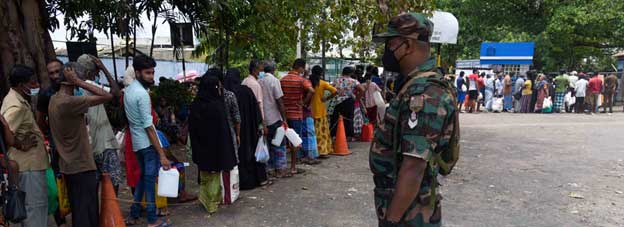
Never in the history of modern Sri Lanka have its citizens queued up for hours to purchase one or two cylinders of cooking gas or a few litres of petrol or kerosene, while a wide range of other shortages continue to plague the country.

If in Ukraine civilians are dying because of the indiscriminate and inconsiderate shelling and bombing by Russian forces, in Sri Lanka they are dying on their feet, some having waited for pre-dawn hours for gas or kerosene to cook what little food they could muster to feed hungry families.

As I write this in late March, reports are pouring in of four people from different parts of the country dying within 48 hours. That is not surprising at a time when the Covid pandemic still persists.

But these four died while waiting in gas or petrol queues, three of then possibly of exhaustion after standing for many hours, and the fourth of stab wounds during an altercation at a filling station.

Today, history is being made. But it is not in the manner the country’s rulers –the powerful Rajapaksa family from Sri Lanka’s south, whose political antecedents go back to the 1930s–ever expected.

Today, the wheel of political fortune has inexorably turned.

It was over a decade ago that two of the Rajapaksa brothers, Mahinda and Gotabaya, were hailed as national heroes for their roles in defeating the dreaded Tamil Tiger separatists in May 2009, after a war that lasted nearly three decades.

Mahinda was then Sri Lanka’s president and Gotabaya his defence secretary.

In April 2019, a couple of days after jihadist terrorists suicide-bombed three churches and three luxury hotels on Easter Sunday, killing some 270 locals and foreigners and wounding another 500, Gotabaya Rajapaksa announced his presidential ambitions.

Politically untested, the former military officer promised enhanced national security, peace, political stability, economic recovery and preservation of Sri Lanka’s 2500-year Buddhist heritage.

In November that year he won the presidential election with 6.9 million votes and in August 2020 Mahinda Rajapaksa led the Sri Lanka People’s Party (SLPP) to victory at the parliamentary election with a near two-thirds majority.

But today, the wheel of political fortune has inexorably turned. Last month in a Gallup-style opinion poll conducted by a local think tank, Veritḗ Research found that only 10 per cent of those queried said they approved of the current government.

Rudderless Rulers

Such is public antipathy that long queues of people spending hours to buy a packet or two of powdered milk booed the president as he passed by.

Some days later busloads of women, led by a former MP whose politician father was shot dead by a rival, who was convicted of murder, sentenced to death but then pardoned by President Gotabaya last year and given a state job, demonstrated outside the president’s private residence.

Teachers, health workers and other trade union-led employees have gone on strike at various times. Farmers have taken to the streets, protesting against the overnight ban last May of chemical fertiliser that saw some rice fields and other agricultural land abandoned and export-earning tea and rubber plantations affected.

Over the past months effigies of the Agriculture Minister have been burnt and posters of the Rajapaksas (four of the brothers are cabinet ministers and so is Mahinda’s eldest son) have been torn or otherwise defaced in blatant displays of public anger and lack of faith in a government that has failed to provide uninterrupted supplies of basics such as electricity, gas, petrol and kerosene, and essential foods and medicines.

It has been said that even the dead have no peace. Some crematoriums have stopped functioning unless they can be certain of continuous electricity.

Outages lasting several hours have often brought factories to a halt. Thermal power stations and other power providers cannot operate continuously for lack of fuel and coal.

Fast depleting foreign reserves have forced the government to slash imports of food, fuel, diesel and gas, compelling many restaurants, bakeries and wayside eateries, as well as other enterprises, to close or restrict their business.

Meanwhile, prices of food and domestic essentials and transport costs have skyrocketed, driving many families, particularly daily wage earners, into penury and starvation.

With foreign reserves at the end of February down to a perilous US$ 2.3 billion and some $7 billion in sovereign debt and loan repayments due this year – including a $1 billion repayment in July – the Rajapaksas turned from their traditional friend and ally China, which that has extended financial help over the years, to neighbouring nations.

A currency swap was arranged with Bangladesh, and last month Finance Minister Basil Rajapaksa flew to New Delhi for meetings with Prime Minister Narendra Modi, External Affairs Minister S. Jaishankar and Finance Minister Nirmala Sitharaman, urging help to rescue Colombo from its foreign exchange crisis.

Never in the history of modern Sri Lanka have its citizens queued for hours to buy fuel

New Delhi extended a $1 billion credit facility to enable the purchase of food, medicines and other essentials. This brought Indian assistance this year to $1.4 billion, which included a $400 million currency swap, besides another half a billion-dollar line of credit for essential fuel imports, and the deferring of a $500 million loan and.

Meanwhile China is considering another $2.5 billion in fresh assistance, China’s ambassador to Sri Lanka stated while turning down the deferment of a loan.

Even as Sri Lanka turns to Asia’s two leading powers, both vying for larger footprints in Sri Lanka, with its strategic location in the Indian Ocean, Colombo has finally turned to the IMF for belated assistance due to internal dissension in the ruling coalition.

President Rajapaksa recently sacked two ministers from minor coalition partners for criticising government policy and attacking Finance Minister Basil Rajapaksa, who has dual Sri Lankan-US citizenship, for bending backwards to satisfy American interests.

Some other state ministers have resigned or been removed as internal squabbles begin to take a toll on stability in the 11-party coalition.

With the economy in tatters and mounting public wrath against President Gotabaya Rajapaksa, with calls of ‘Gota Go Home’, he summoned an all-party conference late last month in the hope of showing a friendly face and seeking solutions to the country’s economic catastrophe.

While some minority Tamil parties which had long sought a meeting with the president and some other parties attended, two of the leading opposition parties, which recently launched anti-government demonstrations, boycotted the conference.

It started on a sour note, with many-time prime minister Ranil Wickremesinghe putting the Governor of the Central Bank Nivard Cabraal in his place for unwanted political remarks, for which President Rajapaksa apologised to Mr Wickremesinghe.

To the average Sri Lankan who has witnessed such conferences over the years, including ones to bring racial peace to a divided country, they are an exercise in political waffling and time-wasting.

With Sri Lanka’s biggest national celebration, the Sinhala and Tamil New Year, in mid-April, the working and middle-class families now struggling to survive wonder whether there will be anything to celebrate. Even if families can get together for the traditional meals, will they be able to cook them for lack of gas and kerosene?

Will this April be the cruellest month?

Source: Asian Affairs, London

Neville de Silva is a veteran Sri Lankan journalist who held senior roles in Hong Kong at The Standard and worked in London for Gemini News Service. He has been a correspondent for foreign media, including the New York Times and Le Monde. More recently, he was Sri Lanka’s deputy high commissioner in London

IPS UN Bureau

  Source

Can Legal Action Alone Put an End to Child Marriage?

Asia-Pacific, Civil Society, Education, Gender, Headlines, Human Rights, Population, Poverty & SDGs

Opinion

In India, nearly one-fourth of women aged between 20 and 24 were reported to have been married before 18. Credit: Jaideep Hardikar/IPS even when the legal age was set at 18, child marriages continued to take place without any fear of the law. This begs the question: Can legislation alone possibly curb child marriage?

In India, nearly one-fourth of women aged between 20 and 24 were reported to have been married before 18. Credit: Jaideep Hardikar/IPS

NEW DELHI, Apr 1 2022 (IPS) – On December 22, 2021, the Prohibition of Child Marriage (Amendment) Bill, 2021, which seeks to raise the legal age of marriage for women from 18 to 21, was sent to a parliamentary standing committee for further discussion.


The bill is built on the assumption that raising the age of marriage will eradicate the practice of child marriage. However, this rationale doesn’t have any prior evidence to support it, because even when the legal age was set at 18, child marriages continued to take place without any fear of the law. This begs the question: Can legislation alone possibly curb child marriage?

Prevalence of child marriage

In a patriarchal society such as India, girls are often raised with the ultimate goal of marriage. They are confined to the household and not educated or expected to enter the workforce. Thus, until they are married, they are seen as a financial burden by the families, and marrying them off early is not only consistent with tradition but also more economically feasible

Child marriage, according to UNICEF, is defined as “a marriage of a girl or boy before the age of 18, and refers to both formal marriages and informal unions in which children under the age of 18 live with a partner as if married”. It is a consequence of deep-rooted socio-cultural norms and entrenched gender inequalities, which end up disproportionately impacting girls.

In a patriarchal society such as India, girls are often raised with the ultimate goal of marriage. They are confined to the household and not educated or expected to enter the workforce. Thus, until they are married, they are seen as a financial burden by the families, and marrying them off early is not only consistent with tradition but also more economically feasible.

The risk of an extramarital pregnancy—which can endanger marriage prospects and make the girl a financial liability for an indefinite period—also makes child marriage seem to be a solution instead of a problem for many Indian communities.

Thus, even though they’re illegal, child marriages have wide societal sanction. This is evident from the recently released fifth round of the National Family Health Survey, according to which nearly one-fourth of women aged between 20 and 24 were reported to have been married before 18.

The decrease is marginal from the last round of the survey conducted in 2015–16, despite the fact that the existing child marriage law has been in place for over four decades. While there was an impressive drop in child marriages from 2005–06 and 2015–16, this might be attributable to better educational opportunities and other factors rather than the law.

Concerns about the proposed legislation

The proposed legislation to raise the legal marriage age for girls to 21 can have several harmful consequences.

1. Possible misuse of the law

According to a survey by Partners for Law in Development, 65 percent of the cases under the existing child marriage law were in response to elopement (not necessarily involving marriage) and were filed by disapproving parents or families.

These cases would be wrongfully filed to harass the couple, their age or legality of the marriage notwithstanding. Increasing the age to 21 will bring more consenting adults who choose to marry under the threat of such harassment, and could become a tool for people to oppose inter-religious and inter-caste marriages.

2. Disempowerment of women
A 2008 Law Commission report on reforming family law recommended a uniform age of marriage for boys and girls at 18 years and not 21. The reason: If all citizens can vote, enter contracts, be guardians, tried as adults for crimes they commit at 18, why shouldn’t they be allowed to get married as well, regardless of their gender? The new law could curtail the freedom of choice of a greater number of women.

3. Possible increase in sex-selective practices
The current socio-economic system makes people want to marry their daughters as soon as they can or choose not to have a daughter at all. Increasing the legal marriage age without changing patriarchal social norms can result in parents feeling even more ‘burdened’ by what they view as additional responsibility of the girl child, which in turn could lead to an increase in sex-selective practices.

Recommendations

There are several strategies that have worked globally in reducing the incidence of child marriages. Some solutions that might work in the Indian context are discussed below.

1. Bringing about parity in the legal age of marriage

We endorse the recommendation of the 2008 Law Commission to make the legal age of marriage for boys and girls uniform at 18 years and not 21. When individuals can vote at 18, they should also be allowed to choose their partners at this age.

2. Investing in girls’ education

There is clear evidence that allowing girls to complete their education delays marriage and provides them with the opportunity of being financially independent. According to the NFHS-4, the median age of marriage increases from 17.2 years for women with no schooling to 22.7 years for women with 12 or more years of schooling. Education enables them to fulfil their aspirations and live a life of dignity, and affords them the agency to uphold their sexual and reproductive rights in their choice to marry.

Child marriages are closely tied to low levels of education, poverty, and rural residence. The NFHS-4 reveals that girls living in rural areas with little or no education and belonging to the lowest wealth quintile are more likely to be married before they turn 18.

The government must address the barriers to girls’ education by providing a safe environment, improving the quality of education, and making girls’ education a more useful investment for parents.

3. Economic and social empowerment of girls

Investing in the capacity and skill building of adolescent girls is critical for them to realise their economic potential. Financial empowerment often gives individuals a greater say in their households and their own future. It can give girls the ability to say no to early marriage, and the family won’t see them as a liability. Greater attention to creating safe opportunities for paid work among women and girls is also required.

4. Targeted social and behaviour change communication (SBCC) campaigns

To end child marriage, we must make investments in targeted SBCC. Social norms that exclude girls and boys from marriage-related decision-making need to change.

Evaluation findings from the Population Foundation of India’s flagship SBCC initiative ‘Main Kuch Bhi Kar Sakti Hoon’ showed that reinforced messaging brought about increased awareness of the perils of child marriage and a positive shift in the attitude of girls and parents exposed to the programme.

We need more comprehensive SBCC initiatives that are supported by local leadership—including elected representatives, community, and religious leaders—to transform gender stereotypes of submissiveness and institutional discrimination that denies women agency.

5. Policies and programmes that reach the most marginalised

Marginalised communities are more vulnerable to early marriages. According to the NFHS-4, general category women tend to get married at a later age, with the median age of marriage for women aged 25–49 being 19.5 years. This figure is 18.5 years for women from other backward castes, 18.4 for scheduled tribes, and 18.1 for scheduled castes.

We need more policies and programmes that connect girls and young women, and their families, especially from marginalised communities, to financial institutions, education, information, health (including sexual, reproductive, and mental health), and nutrition services.

6. Ensuring registration of marriages

Despite a Supreme Court ruling making registration of marriages mandatory, state governments have done little to implement the verdict. The governments must develop a mechanism to ensure that all marriages (including civil, religious, and customary unions), births, and deaths are mandatorily registered through a system, as a means to track marriages and the age of marriage.

Moreover, action should be taken against those authorising and facilitating child marriages in rural areas.

Any approach to end child marriage needs to be geared towards securing the rights of girls, especially those vulnerable to early marriage. We have to think beyond punitive measures and legislations and transform the patriarchal socio-economic system that fosters child marriages.

ABOUT THE AUTHORS

Martand Kaushik works as a media and communications specialist at the Population Foundation of India.

Alok Vajpeyi is the lead for knowledge management and core grants at the Population Foundation of India.

Poonam Muttreja is the Executive Director of the Population Foundation of India

This story was originally published by India Development Review (IDR)

  Source

How Collective Action Can Move the Needle on Gender Equality

Active Citizens, Conferences, Development & Aid, Education, Gender, Global, Headlines, Health, Human Rights, TerraViva United Nations, Women & Climate Change, Women’s Health

Opinion

Delegates take a group photo at the Young Leaders & Alumni Workshop at the Women Deliver 2019 Conference in Vancouver, Canada. Credit: Isabella Sarmiento

NEW YORK, Mar 18 2022 (IPS) – During this year’s sixty-sixth session of the Commission on the Status of Women (CSW66), we are eager to see the global community pivot towards more inclusive approaches to advocacy. It’s imperative to put the spotlight on women’s rights and youth-led organizations in communities that are often left out of key discussions. By handing the mic over to advocates across all backgrounds and ages, we can shift to a model that enables all advocates to take a lead role in policy-making and ultimately translate promises and rhetoric into real impact and accountability.


Since the emergence of the COVID-19 pandemic, the ways that the global community works together to push for inclusive progress toward gender equality — progress that fully and effectively engages and equally benefits everyone — are fundamentally changing. Private conversations between the organizations and people with the resources and privilege to access the halls of power have given way to hybrid events and videoconferences that are open to a more diverse, intergenerational set of stakeholders than ever before. This significant shift began to open the doors to more inclusive partnerships.

Also, during these past two years, a global reckoning called on us all to meaningfully transform our advocacy, practices, and programs. International development organizations, including our own, took a long, overdue look in the mirror, and in some cases, began the deep learning and unlearning needed to acknowledge the persistent power imbalances that plague our sector at large. It’s a first step in living up to the values of equity and inclusion — not just on paper, but in practice.

As the world as we know it changed, we were hard at work changing, too. We began actively leveraging our power and influence more intentionally than ever before to center the work and expertise of women’s rights and youth-led organizations in low- and middle-income countries (LMICs). Now, we are digging deeper to find and use new tools that enable advocates to co-create and co-lead by themselves so that our work and the Women Deliver 2023 Conference (WD2023) is more inclusive, diverse, consultative, and accessible than ever before.

Young gender equality advocates kick off the Youth Zone at the Women Deliver 2019 Conference in Vancouver, Canada. Credit: This Is It Studios

In “calling us in” and championing our ability to foster more inclusive partnerships across all of our programs, we are taking action to effectively and authentically advocate for, with, and alongside girls and women everywhere, in all their intersecting identities, to catalyze lasting progress on gender equality.

Transforming ourselves is of course a continuous process. Each day, we are learning to do better and to be better. We hope that our key learnings, below, can support our development colleagues, wherever they find themselves on their journey.

1. Accessibility and inclusion must lead the way — in-person and virtually.

    According to expert studies, organizations and individuals from LMICs are often under-represented at global health convenings. From day one, it’s urgent to intentionally engage those who have historically been excluded. In planning WD2023, we have leveraged the lessons of the past two years and from prior Women Deliver Conferences. We used an open application to select one-third of our Conference Advisory Group — a diverse panel with a balance of technical expertise. Our advisors represent 30 organizations — 10 individuals are from youth or youth-led organizations and 35 are from LMICs. We have done this to ensure that the Conference is co-created from the start by organizations and individuals representing the intersectional identities of the girls and women we work with and for.

    We meet regularly via videoconference with our Advisory Group to co-create the Conference’s Global Dialogue, theme, programming, and more, with support from social impact design experts at IDEO.org. IDEO also supports us as we carry out targeted discussions with specific stakeholder groups, including Women Deliver Young Leaders and Alumni, Deliver for Good Country Coalitions, and Conference Sponsors and Funders.

    In planning how to shape the dialogue, foster collaboration, and drive collective action before, during, and after the Conference, we’re working with our partners to ensure that all Conference advocacy spaces, be they digital or physical, are accessible to all. This includes low-bandwidth options, closed captioning, interpretation in multiple languages, and International Sign Language. On-site, we will also provide trauma-informed specialists, breastfeeding/nursing stations, child safeguarding support, and mental health specialists.

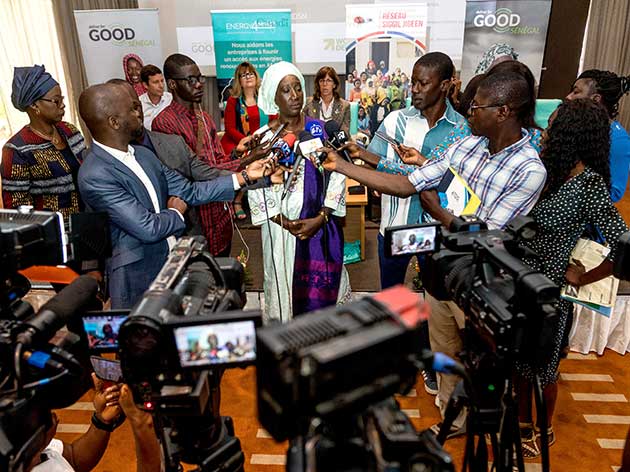
Mme Safiétou Diop, President of Réseau Siggil Jigeen speaking at a press conference during the launch of the Deliver for Good Senegal Campaign in Dakar, Senegal in 2019.

2. Move from meaningful youth engagement to co-leadership and intergenerational action.

    It’s time to follow the lead of young people, shift away from top-down approaches, and actively provide resources for robust youth co-leadership. According to global consensus, young people have a fundamental right to actively and meaningfully engage in all matters that affect their lives. For international development organizations, this means offering space, support, and compensation that youth need and deserve to co-create a more-gender equal future — a future from which they have the most to gain and to lose.

    We created the 14-person Young Leaders Program Alumni Committee, with an honorarium for their valuable expertise, to advise us on strategy and implementation of the Young Leaders Program and ideate youth co-creation opportunities. This committee provides invaluable guidance to ensure the Young Leaders Program models meaningful youth engagement and co-leadership, and effectively meets the needs of Young Leaders on the ground.

    Women Deliver also hosts Multi-Country Workshops to foster capacity strengthening, knowledge sharing, and coordinated advocacy on sexual and reproductive health and rights (SRHR) and gender equality. Starting in 2021, these workshops are now designed and led by a Young Leader Planning Committee representing the regions where the workshops take place. They are in the driver’s seat as they craft workshop content and programming, while Women Deliver provides logistical support and the virtual space to gather. This co-created process has led to more targeted — and impactful — workshops that cater to Young Leaders’ specific needs and build capacity in the issue areas where it’s most needed.

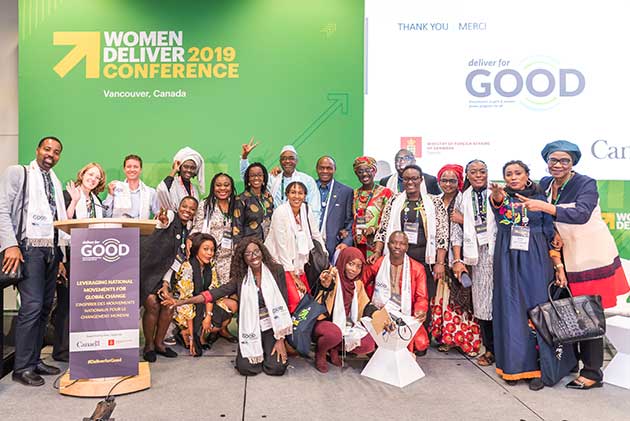
Delegates taking a group photo on stage at the Deliver for Good Campaign side event “Leveraging National Movements for Global Change” at the Women Deliver 2019 Conference in Vancouver, Canada.

3. Elevate diverse voices and support organizations working on the ground.

    Incusion and participation have to be integrated into the mission of development work, not a one-off tactic or strategy. Diverse, resilient feminist and women’s rights organizations and movements are – and must always be positioned as – the key drivers of change for gender equality and women’s rights across the globe.

    Over the past two years, we have stepped back to shift power across every aspect of our organization’s activities, policies, programs, and behaviors, into the hands of the youth and women’s rights groups most impacted by our work. For example, in 2020, in partnership with Girl Effect, as well as with young people themselves, we worked to understand how youth in India, Malawi, and Rwanda use digital platforms to learn about their sexual and reproductive health (SRHR). This project was designed and executed by more than 160 adolescent girls and young women, who worked hand in hand with researchers on the ground in India, Malawi, and Rwanda to conduct interviews within their own communities, as well as to design questions, discuss results, and generate recommendations. Moving forward, we must involve girls and women in all aspects of data collection and evidence generation that impacts them. This will ensure that the local knowledge and skills needed to drive sustainable change in their own communities, regions, and countries are an integral part of effective advocacy and decision-making.

    We’re now handing the pen directly to Young Leaders and spotlighting the work of youth-led organizations during key advocacy moments. Last year, the Deliver for Good Campaign organized its first ever Continental Conversation — an idea conceived by partners in Kenya and Senegal — as a way to work together towards gender equality in the region. What was first envisioned as a one-off peer-to-peer sharing opportunity via videoconference became understood as a vital, first-of-its-kind Continental Conversation to bridge divides — some of which had never been crossed. Together, the Campaign’s country partners shared their own experiences, lessons, challenges, and successes in advancing gender equality, laying the groundwork for a cross-regional peer-to-peer learning model with the power to accelerate progress on girls’ and women’s health and rights in Kenya, in Senegal, and around the world.

    Over the past year, we have also co-convened multi-sectoral coalitions with diverse partners representing the intersectional identities of girls and women. For example, as part of the SRHR & Climate Justice Coalition, we’re working on collective action and coordinated advocacy in partnership with more than 60 representatives from a wide range of civil society organizations. The Coalition is working to advance SRHR and gender equality in the context of climate change from an intersectional and climate justice approach.

    The Coalition emerged from the need to break down silos between the SRHR and Climate Justice organizations and movements, facilitate knowledge sharing, jointly mobilize, and amplify the voices and priorities of grassroots organizations. These organizations are led by girls and women, the LGBTQIA+ community, and Indigenous people from LMICs, particularly those most affected by climate change and without continuous access to high-quality SRH services. The Coalition is currently raising awareness of the interlinkages of SRHR and climate change in order to ensure SRHR is a key part of climate change conversations and action strategies ahead of key policy moments, such as CSW66 and COP27.

4. Collect and present data that accurately represents the diverse needs of all girls and women.

    Sustainable progress — and lasting change — will take all of us. Over the past two years, we’ve focused on connecting advocates working across different issue areas and collecting gender-disaggregated data. The data is broken down into the many factors that shape people’s lives, including race and ethnicity, sexual orientation, disability status, and socioeconomic class in order to drive collective action, the mainstay of transformative change. We also need to engage with data scientists from regions most impacted by this research.

    Last year, we partnered with Focus 2030 to carry out a survey of 17 countries on six continents — representing half of the world’s population. An overwhelming majority said they support gender equality, believe that women should be fully engaged in charting our path forward, and expect leaders – political and in business – to take meaningful action to bridge the gender divide. In centering the voices of citizens, we were able to effectively advocate for bigger, bolder commitments by governments and the private sector, ahead of the Generation Equality Forum.

As Women Deliver evolves and grows, we will continue to call upon our partners and funders, including in the private sector, to ensure that the international development world champions and secures robust, feminist funding and resources for women’s rights organizations, youth, and other marginalized communities. We hope you will join us in leveraging the changes set into motion during the pandemic and the global reckoning in our sector. Let’s work together to bridge existing divides and form inclusive partnerships — between countries, sectors, and generations.

The authors are Kathleen Sherwin (CEO/President), Divya Mathew (Director, Policy & Advocacy), Julia Fan (Senior Manager, Youth Engagement), Gretchen Gasteier (Manager, Conference), Rachel Elliott (Senior Associate, Communications) of Women Deliver

IPS UN Bureau