UN Arms Embargo on Israel: Dead on Arrival

Armed Conflicts, Civil Society, Featured, Global Governance, Headlines, Human Rights, IPS UN: Inside the Glasshouse, Middle East & North Africa, TerraViva United Nations
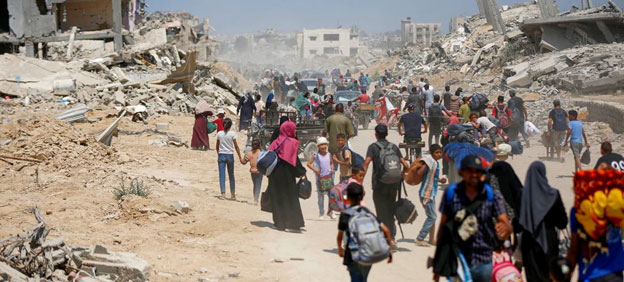
In Khan Younis, thousands of people are fleeing for their lives again. Credit: UNRWA

UNITED NATIONS, Nov 8 2024 (IPS) – When the United Nations imposes sanctions or penalizes a member state – be it the General Assembly or the Human Rights Council – the resolutions are “non-binding” and often remain unimplemented.

But the Security Council resolutions are “binding” – and still openly violated by countries such as North Korea—because all these UN bodies have no means of implementing these resolutions, nor a standing army to forcibly enforce them. But they only carry moral weight.


The Council can also impose its own sanctions, mostly in economic, financial and trade sectors, against violators of its decisions.

And last week there was a move to impose arms sanctions against Israel – and rightly so, judging by the 43,000 plus, mostly Palestinian civilians, killed in Gaza largely with US-supplied weapons since October last year.

But how effective will this be since the strongest opposition will come from the US, an unyielding supporter of Israel, which will unhesitatingly use its veto power if the resolution comes before the Security Council?

Ambassador Anwarul K. Chowdhury, a former UN Under-Secretary-General and one-time Permanent Representative of Bangladesh to the United Nations, told IPS anything short of a real, permanent ceasefire would not create a pathway to end the perpetration of the ongoing genocidal aggression by Israel.

In this context, he said, the joint letter calling on all countries to stop the sale of arms and ammunition to Israel, signed by 52 countries and two UN-recognized multilateral organizations, is meaningfully forward-looking, and contains a purposeful objective of contributing to that “pathway”.

In fact, the Foreign Minister of Turkiye, whose country initiated the letter, asserted that “We must repeat at every opportunity that selling arms to Israel means participating in its genocide.”

“It would be argued rightfully that the United Nations and its apex body, the General Assembly have no powers to enforce such an arms embargo. The Security Council, the sole UN entity which can authorize an arms embargo and obligate the arms suppliers desist from sending arms to the areas of conflict, also becomes powerless if one of the P-5 uses the notorious veto”.

“However, I strongly believe that a General Assembly resolution following the call for the arms embargo to Israel would have a moral value which has its own merit. Despite the politics and power-play which is destroying the UN’s credibility and marginalizing its operational capacity to resolve conflicts, the arms embargo would highlight the principled position taken by the UN,” said Ambassador Chowdhury.

In a way, he pointed out, that would strengthen the Secretary-General’s efforts to promote the much-needed ceasefire.

In the aftermath of Israel’s declaration of the Secretary General as persona non-grata (PNG) and its extension of the attacks on UNIFIL in Lebanon, the General Assembly needs to show that its moral and normative role as envisaged in the UN Charter has not been cowed down by the politics of the frequently-used threat of veto, he declared.

Stephen Zunes, Professor of Politics and International Studies at the University of San Francisco, who has written extensively on the politics of the Security Council, told IPS: “This initiative reflects the view of the vast majority of the world’s governments and peoples and is consistent with imperatives of international humanitarian law, but given that the major arms supplier of Israel is a veto-wielding permanent member of the Security Council, it is unlikely to have much of an impact.”

Also problematic, he pointed out, is that some of the countries sponsoring the initiative, such as Russia and Saudi Arabia, have been guilty not only of similarly providing weapons to those engaging in war crimes but engaging in war crimes themselves.

Turkiye’s foreign minister Hakan Fidan said last week his country had submitted a letter to the United Nations, signed by 52 countries and two inter-governmental organizations, calling for a halt in arms deliveries to Israel.

“We have written a joint letter calling on all countries to stop the sale of arms and ammunition to Israel. We delivered this letter, which has 54 signatories, to the UN on November 1,” said Fidan, according to the Times of Israel.

“We must repeat at every opportunity that selling arms to Israel means participating in its genocide,” said Fidan, adding that the letter is “an initiative launched by Turkiye.”

Among the signatories were Saudi Arabia, Brazil, Algeria, China, Iran and Russia, plus the Arab League and the Organization of Islamic Cooperation (OIC),

Elaborating further, Ambassador Chowdhury said the UN should not forget that the UN’s International Court of Justice which determined that Israel’s occupation of the Gaza Strip and West Bank is illegal under international law. The judgment was followed by a General Assembly resolution last September, demanding Israel leave the occupied territories within a year.

“I am encouraged by the UN’s own 45 Human Rights Experts and Special Rapporteurs, who, driven by their conscience, forcefully called for a ‘permanent ceasefire, … an ‘arms embargo on all warring parties,’ and ‘the deployment of an international protective presence in the occupied Palestinian territory under the supervision of the UN.’ All these well-thought-out measures would only promote dialogue and diplomacy over death and destruction”.

The UN Secretary-General needs to endorse and welcome this call by his in-house experts and recommend to the General Assembly to do the same without any delay, he declared.

Back in April 2024, in a resolution adopted by 28 votes in favour, six against and 13 abstentions, the 47-member Human Rights Council backed a call “to cease the sale, transfer and diversion of arms, munitions and other military equipment to Israel, the occupying Power…to prevent further violations of international humanitarian law and violations and abuses of human rights”.

Presented by Pakistan on behalf of the Organization of Islamic Cooperation, delegates heard that the resolution had also been motivated by the need to stop “egregious” human rights violations in the Occupied Palestinian Territory.

Co-sponsors of the text included Bolivia, Cuba and the State of Palestine, ahead of the vote which saw support from more than two dozen countries including Brazil, China, Luxembourg, Malaysia and South Africa, according to UN News.

Unlike the UN Security Council, Human Rights Council resolutions are not legally binding on States but carry significant moral weight, and in this instance is intended to increase diplomatic pressure on Israel as well as potentially influence national policy decisions.

Israel’s two largest arms sources, the United States and Germany, have resisted calls for an embargo on Israel, though each has been accused of withholding certain arms during the war.

In an October 2024 report, the Stockholm International Peace Institute (SIPRI) said in the past decade, Israel has greatly increased its imports of arms. SIPRI estimates that in the five-year period 2019–23, Israel was the world’s 15th largest importer of major arms, accounting for 2.1 per cent of global arms imports in the period. In 2009–13 it ranked only 47th.

Although only three countries supplied major arms to Israel in 2019–23, the United States, Germany and Italy, many others supplied military components, ammunition or services. The three other global major arms exporters among the top 10: the United Kingdom, France and Spain.

IPS UN Bureau Report
  Source

UNEP: Nations Must Step Up Adaptation—Starting with Bold Finance Action at COP 29

Climate Change Finance, Climate Change Justice, Conferences, COP29, Editors’ Choice, Environment, Featured, Global, Human Rights, Humanitarian Emergencies, Sustainable Development Goals, TerraViva United Nations

COP29

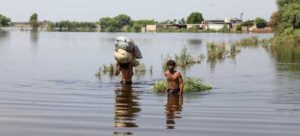
A flooded village in Matiari, in the Sindh province of Pakistan. Credit: UNICEF/Asad Zaidi

A flooded village in Matiari, in the Sindh province of Pakistan. Credit: UNICEF/Asad Zaidi

NAIROBI, Nov 7 2024 (IPS) – The United Nations Environment Programme’s (UNEP) 2024 Adaptation Gap Report has warned that adaptation actions are not keeping pace with the surging demands of a warming planet. Released ahead of the COP29 climate conference in Baku, Azerbaijan, the report—titled Come Hell and High Water—projected a bleak future where vulnerable communities bear the brunt of climate-induced hardships. 


It stresses that robust, well-funded adaptation strategies are vital to safeguarding those most at risk and calls for immediate, substantial global action in adaptation planning, finance, and implementation. With the surging demands of a warming planet. Released ahead of the COP 29 climate conference in Baku, Azerbaijan, the report—titled Come Hell and High Water—projects a bleak future where vulnerable communities bear the brunt of climate-induced hardships. 

It stresses that robust, well-funded adaptation strategies are vital to safeguarding those most at risk and calls for immediate, substantial global action in adaptation planning, finance, and implementation.

Wildfires, floods, and rising temperatures continue to inflict devastating impacts on people worldwide, especially the poor. UNEP Executive Director Inger Andersen has underlined the urgency of scaling up adaptation efforts: “The world is failing to adapt to current climate impacts, let alone those that will come if we do not cut greenhouse gas emissions decisively.

“It is time to treat adaptation as one of humanity’s top priorities, alongside emissions reduction. Those already facing the consequences deserve effective, fair adaptation actions that address their unique needs.”

Furthermore, the report stresses that the scale of climate impacts is moving faster than the world’s response.

“Adaptation is no longer a distant option; it is now a priority,” says UNEP’s Chief Scientific Editor Henry Neufeldt, summarizing the report’s call for urgent action. The report arrives at a time when nations are expected to boost their financial commitments for adaptation as part of the Glasgow Climate Pact.

This Pact urges developed countries to double adaptation finance to developing nations by 2025, a goal that aligns with the need for a New Collective Quantified Goal (NCQG) on climate finance, slated for negotiation at COP29.

Also, UNEP notes that adaptation finance reached only USD 28 billion in 2022, up from USD 22 billion the previous year. While this is a notable increase, it remains far below what is needed to address the vast scale of climate change impacts. According to UNEP, estimated global adaptation needs range between USD 215 billion and USD 387 billion per year through 2030, leaving a significant financing shortfall. Even doubling current financing flows would close only a small fraction of the adaptation finance gap.

“We can’t rely on one source alone. The financial burden is too great,” says Neufeldt. “We must pursue creative financing models and mobilize both public and private sectors to ensure resources reach those who need them most.”

According to the report, 87 percent of the world’s countries have at least one adaptation plan in place, though the quality and coverage vary significantly.

Out of the 197 UN member countries, 171 have established at least one national adaptation instrument, yet 10 nations—most grappling with internal conflict or political instability—are yet to initiate formal adaptation planning. Furthermore, many adaptation plans lack specific timeframes and budgets, undermining their effectiveness.

Anne Hammill from the International Institute for Sustainable Development, who co-authored a chapter on adaptation planning, writes in the report, “There’s a noticeable increase in awareness and preparation for adaptation planning globally. However, for some nations, fragility and limited capacity present obstacles to formulating and executing these plans.”

Moreover, UNEP finds that only 68 percent of countries with national adaptation plans align these strategies with their Nationally Determined Contributions (NDCs), the climate pledges under the Paris Agreement. This disconnect, as per the report, has resulted in overlapping efforts and inefficient resource use.

“When countries update their NDCs, they must ensure these are harmonized with adaptation plans,” Hammill notes. “This alignment is essential to avoid duplicated efforts and to streamline investments where they matter most.”

The uneven quality of adaptation plans means that even those countries with established strategies may struggle with execution. In many cases, adaptation projects—particularly those with international funding—don’t have long-lasting effects. For example, almost half of the projects evaluated were rated either unsatisfactory or unsustainable without continued external funding.

“Adaptation actions need long-term funding and local support to be effective. Temporary measures, while beneficial in the short run, often fail to address underlying vulnerabilities in the long term,” reads the report.

Slow Implementation Leaves Vulnerable Communities Exposed
The report reveals that implementation of adaptation measures lags significantly behind planning efforts, leaving at-risk communities dangerously exposed to climate impacts. An analysis of data shows that adaptation implementation has not kept pace with the accelerating rate of climate change. Floods, wildfires, and extreme weather events increasingly affect millions, yet financial and institutional barriers stymie progress in implementing effective adaptation measures.

The report elaborates, “The data on adaptation implementation is concerning. Many countries start strong with initial adaptation projects, but sustaining them has proven challenging. This gap between planning and action often leads to severe consequences for vulnerable communities.”

In addition to the need for more robust financing mechanisms, UNEP underlines the importance of inclusive adaptation measures that integrate the voices of marginalized communities. Many of the most impacted groups, including women, indigenous peoples, and economically disadvantaged populations, are frequently excluded from the planning process.

“Adaptation must be inclusive and equitable,” Hammill says. “Vulnerable groups often face the worst climate impacts, yet their voices remain underrepresented in the adaptation process.”

The Adaptation Finance Gap: A Call for New Approaches
A central focus of the report is the persistent adaptation finance gap. Although public adaptation finance flows to developing countries saw a record year-on-year increase, UNEP stresses that even substantial gains fall far short of what is required. “Current financing levels are simply inadequate. Doubling the finance might reduce the gap by about 5%, but we need much more ambitious targets to meet the needs.”

To bridge the finance gap, the report advocates a shift from reactive, project-based funding to a more proactive, transformative approach. This requires financing for anticipatory and systemic adaptation actions, such as building climate-resilient infrastructure and enhancing social protection. According to UNEP, innovative financing instruments, such as resilience bonds, risk insurance, and payments for ecosystem services, could mobilize new sources of adaptation funding.

The report points out that the private sector has a key role to play. “While public funds are essential, we need private investments to scale up adaptation,” it explains, adding that in sectors such as agriculture, water, and infrastructure, private finance can be instrumental if de-risking measures are implemented. However, private finance is often inaccessible to the most vulnerable; there is a need for public-private partnerships and targeted government support.

Capacity-Building and Technology Transfer for Effective Adaptation
Beyond finance, UNEP’s report also calls for stronger investments in capacity-building and technology transfer. These efforts are vital to empowering developing nations to manage climate impacts effectively. According to the report, developing countries require additional support for building local adaptation capacity in sectors like agriculture, water management, and public health.

The report also highlights the importance of a multifaceted approach. “Capacity-building must go beyond technical solutions. It requires investing in human resources, policy frameworks, and long-term community engagement. While we see capacity needs highlighted in many national plans, a strategic, coordinated approach is still missing.”

The report indicates that sectors such as food and agriculture receive the most technology-related development finance, yet other crucial areas like coastal protection and disaster preparedness need more support. For example, developing countries face obstacles in adopting technologies like solar-powered irrigation due to high installation and maintenance costs, making widespread use challenging. It suggests that bridging this technology gap will require both public investment and private sector involvement.

Path Forward at COP 29 and Beyond
As COP 29 approaches, the 2024 Adaptation Gap Report has pinned the need for decisive action in Baku to secure global adaptation commitments. At the heart of these discussions is the establishment of a New Collective Quantified Goal (NCQG) on climate finance, a successor to the USD 100 billion annual goal set in 2010. This new target, UNEP argues, must prioritize adaptation and recognize the unique challenges faced by developing nations.

Andersen, who will lead UNEP’s delegation to COP 29, expresses hope that the international community will rally around adaptation as a central theme.

In addition to setting an ambitious finance goal, COP 29 will discuss mechanisms for better tracking adaptation actions, establishing loss and damage funding, and addressing the debt burdens that restrict developing nations from prioritizing adaptation investments. UNEP advocates for debt relief and restructuring as a way to free up funds for climate adaptation, particularly in nations where high debt costs eclipse adaptation funding.

IPS UN Bureau Report


Arab Region Leaders, Experts Gather to Find Solutions to Water Scarcity, Sustainable Development

Active Citizens, Asia-Pacific, Civil Society, Combating Desertification and Drought, Conferences, Conservation, Development & Aid, Editors’ Choice, Featured, Headlines, Human Rights, Latin America & the Caribbean, Sustainable Development Goals, TerraViva United Nations, Water & Sanitation

Population

Forum of Arab Parliamentarians on Population and Development met in Bahrain to to address water scarcity. Credit: APDA

Forum of Arab Parliamentarians on Population and Development met in Bahrain to to address water scarcity. Credit: APDA

MANAMA & NAIROBI, Nov 7 2024 (IPS) – The Arab region is among the most water-scarce areas globally, as nearly 392 million people live in countries facing water scarcity or absolute water scarcity. So dire is the situation that, of the 22 Arab countries, 19 fall below the annual threshold for water scarcity in renewable resources, defined as 1,000 cubic meters per person.


Worst still, 13 countries fall below the absolute water scarcity threshold of 500 cubic meters per person per year. Water scarcity in the Arab region poses a serious challenge, threatening the achievement of Sustainable Development Goals and the realization of the fundamental human right to access water and sanitation. 

It is within this context that the Forum of Arab Parliamentarians on Population and Development, in collaboration with the Asian Population and Development Association in Japan and with support from the United Nations Population Fund, held a meeting on October 26, 2024, in the Kingdom of Bahrain to address water scarcity as a development concern and promote coordinated action across different sectors.

Dr. Mohamed Al-Samadi, Secretary-General of the Forum of Arab Parliamentarians on Population and Development, stressed the need for coordinated governance and measures to close the gap between water security and the Sustainable Development Goals. The gathering that included Bahraini parliamentarians from committees focused on population and development, along with representatives from civil society organizations, experts, academics, and government officials.

The gathering reiterated that “researchers in the field of water science have set the water poverty line at 500 cubic meters per person annually, while 1,000 cubic meters of freshwater per person is considered the threshold for achieving water security. Reports also link this to food security, showing that producing an individual’s annual food supply requires over 2,000 cubic meters of water.

Lawmakers and experts stressed the need for coordinated governance and measures to close the gap between water security and the Sustainable Development Goals. Credit: APDA

Lawmakers and experts stressed the need for coordinated governance and measures to close the gap between water security and the Sustainable Development Goals. Credit: APDA

Stressing that the “water security in the Arab world is now critically at stake as annual usable water resources fall below 40 billion cubic meters. A large portion of these resources is lost to evaporation and infiltration into the soil, and additional amounts are necessary to sustain river flows to their endpoints. Any country that uses 40 percent or more of its total annual water resources is considered to be facing severe water scarcity according to the Water Scarcity Index, also known as the Water Sustainability Index.”

Dr. Muneer Ibrahim, a Member of Parliament and member of the Committee on Water, Environment, and Public Utilities, spoke about water security and the SDGs, emphasizing that water is the fundamental pillar for achieving these global goals across their economic, social, and environmental dimensions, as water security is an essential requirement for their realization.

Further stressing that the relationship between water and sustainable development is reciprocal, and this interconnectedness poses significant challenges in the Arab region, especially given the current water situation. Necessitating the development and implementation of effective policies and solutions to ensure sustainable water resources for various uses.

Hassan Ibrahim, a Member of Parliament and the rapporteur for the Water Committee, spoke about innovation for sustainable water management, highlighting that resolving the water crisis is essential for a livable future on our planet. Noting that whether water is overly abundant, severely scarce, or highly polluted, it presents a triple threat exacerbated by climate change, depriving billions of people of access to clean, safe water and sanitation services.

He said that this then “threatens economies, encourages migration, and may fuel conflict. We need global action to establish water security to enable inclusive and resilient green growth while addressing the interconnected relationship between water, climate, and conflict. Despite the progress made, we are falling behind in achieving the SDGs related to water, which directly affect inclusive development.”

Current trends indicate that by 2030, 1.6 billion people will lack access to safe drinking water, 2.8 billion will be deprived of safe sanitation services, and 1.9 billion will be without basic hygiene facilities. Globally, the investment needs for the water sector exceed USD 1.37 trillion and must increase sixfold from current levels to meet the sixth SDG on ensuring availability and sustainable management of water and sanitation for all by 2030.

“Water accounts for less than 2 percent of public spending, and private investment levels in this sector are also low in low- and middle-income countries. Bahrain has adopted strategies and initiatives to improve the management of water resources, support the strategic water stock, and increase the area and sustainability of rainwater harvesting efficiency to enhance natural groundwater resources,” Ibrahim said.

Bahrain is implementing advanced technical solutions to utilize treated wastewater for irrigation needs, which also helps reduce environmental pollution, address the impacts of climate change, and minimize the depletion of natural water resources. Bahrain, through the Water Security Strategy 2030 launched by the Ministry of Energy and Environment, aims to ensure the sustainability and continuity of access to water under both normal conditions and extreme emergencies.

The key targets of the strategy include reducing total water resource demand by 21 percent, increasing the water productivity index to USD 110 per cubic meter, lowering the water scarcity index by three degrees, and raising the percentage of treated water reuse to 95 percent. Dr. Walid Zubari, a water resources expert and president of the Arab Water Association, presented on the vital role of civil society institutions in raising water awareness to achieve water sustainability and address the challenges facing the water sector in Bahrain.

Regarding civil society institutions, Dr. Zubari said, “It is important for them to play a role in water awareness. Once community members understand the implications of their behavior in dealing with water and there is a religious and moral incentive, it is likely that they will voluntarily rationalize their water usage. If this happens, the community and the executors will be in the same boat, enabling them to achieve water sustainability.”

Dr. Karim Rashid, Member of Parliament, delivered a comprehensive presentation on the importance of water and its essential role in supporting sustainable development, as water impacts all aspects of development and is closely linked to nearly every SDG, driving economic growth, supporting healthy ecosystems, and being essential for life itself.

Still, nearly two billion people worldwide lack access to safely managed drinking water services, while around 3.6 billion suffer from inadequate sanitation services. To enable effective climate change adaptation, he said activities should reflect the importance of water management in reducing vulnerability to risks and building resilience against climate change.

Further emphasizing the necessity of political commitment and leadership, technological innovations, and the advancement of service delivery models and financing to support governments in fulfilling their commitment to achieve Target 6.2 of the SDGs—”to ensure access for all to adequate and equitable sanitation and hygiene services by 2030.”

The expert and water sector advisor at the Ministry of Water in the Kingdom of Bahrain, Eng. Mohammed Sawar, called for adopting a model transformation in the management of water resources in the GCC countries, shifting from the current focus on “supply sustainability” to “consumption sustainability.” Emphasizing economic efficiency in water usage and financial sustainability of water services.

Note: This meeting was supported by the Asian Population and Development Association (APDA), the United Nations Population Fund (UNFPA) and the Japan Trust Fund (JTF).

IPS UN Bureau Report


Voices from the Margins: Small-Scale Fishers Demand Rights, Recognition at COP16

Biodiversity, Conferences, COP16, Development & Aid, Environment, Featured, Food Security and Nutrition, Global, Headlines, Human Rights, Inequality, Least Developed Countries, Migration & Refugees, Natural Resources, Sustainable Development Goals, TerraViva United Nations, Trade & Investment

COP16

Small-scale fishers on the coast of Kerela, India with a variety of fish and prawns. Credit: Aishwarya Bajpai/IPS

Small-scale fishers on the coast of Kerela, India with a variety of fish and prawns. Credit: Aishwarya Bajpai/IPS

CALI, Columbia & DELHI, Nov 5 2024 (IPS) – Small-scale fishers play a fundamental role in feeding people—they use sustainable methods of catching and processing fish products and are a significant force in the employment and livelihoods of millions of people internationally—yet, until now, they have been excluded from climate and biodiversity conferences.


For the first time at COP 16, which closed in Cali, Colombia, on November 1, fishworkers, the most vulnerable small-scale fishers communicated that they seek active participation in decision-making processes that affect the oceans. It seems their message was heard because before the negotiations were suspended, parties adopted a historic decision to open the door for Indigenous Peoples and local communities to influence the global plan to halt the destruction of biodiversity.

Small-scale fisheries provide essential employment and sustenance across the globe, as highlighted in the Illuminating Hidden Harvests: The Contributions of Small-Scale Fisheries to Sustainable Development report (2023). Based on data from 78 national household surveys, around 60.2 million people were employed part- or full-time along the small-scale fishing value chain in 2016, representing nearly 90 percent of all global employment in the industry.

Of these, 27.5 million worked directly in harvesting, with 14.6 million engaged in inland and 12.9 million in marine fisheries. Women play a central role in small-scale fisheries, making up 35 percent of the workforce (around 20.9 million) and almost half (49.8 percent) of those in post-harvest roles.

Conference of the Parties to the Convention on Biological Diversity, fisherpeople conference held in Cali, Columbia. Credit: Aishwarya Bajpai/IPS.

Conference of the Parties to the Convention on Biological Diversity, fisherpeople conference held in Cali, Columbia. Credit: Aishwarya Bajpai/IPS.

This sector supports 113 million workers, who, along with their 378.7 million household members, make up a community of 491.7 million people reliant on these fisheries. Together, they represent 6.6 percent of the world’s population and 13.2 percent of those living in the 45 least developed countries. Despite the scale of their contributions, small-scale fishworkers remain among the most vulnerable populations.

These communities face entrenched poverty and social hardships, exacerbated by multiple challenges.

Environmental shifts—such as changing ecological cycles, biodiversity loss, fish diseases, and habitat degradation—disrupt their resources and directly impact their livelihoods. Economic pressures, including the modernization of fisheries, Blue Economy infrastructure projects, and port construction, threaten to marginalize these communities further.

Minfer Pervez, a Colombian fishworker speaking at a press conference in Cali, put it succinctly:

“I represent small-scale fishers. We face displacement and violations of our rights—the right to dignified work, access to social security, health services, and economic resources to strengthen small-scale fishing communities. We are also exploited due to pollution and hydrocarbons in the sea. Today, we call for a unified government position that includes us in decision-making and participation because we are key to conservation efforts.”

And it was clear these issues were faced by small-scale fishers around the globe.

A fish worker from Madina, Colombia, said the threats faced were often from mining and similar industries.

“The main threat we face is the proliferation of extractive industries, which intrude into our areas and damage the coastal system. This jeopardizes the productivity of fisher people and threatens food security. Governance must be returned to and entrusted to small-scale fishers and communities.”

Alfonso Simon from Panama added that declarations were often imposed upon them without their involvement or consent.

When asked about human rights in the context of small-scale representatives, a fisher from Panama who identified herself as Marta explained: “Our rights are violated when decisions are made without prior consultation or citizenship recognition. We are forcefully displaced, and when our families migrate from fishing areas, we lose not only our physical space but also our cultural identity, customs, and future. Denying us access to the sea and the right to fish, which is our ancestral practice, undermines both our food security and that of others (who do not fish). We feel vulnerable because decisions are made without considering the voices of our people. Small-scale fishers must be part of decision-making processes.”

On society, conservation, and development, Zoila Bustamante from Chile said, “Representing a geographical point on Earth, we must be heard. We are not only representing this region but also millions of small-scale fishers globally. We feed you, and it is important for you to listen to us. We represent several countries, and goal 23, which pertains to artisanal fishing, is being addressed. We want to be involved in drafting policies and decisions about us, not have others speak on our behalf.”

German Hernander from Honduras, speaking for 2 million fisher people, explained, “We are well organized and want our voices heard at the UN and other global platforms. We don’t want others speaking for us because we know our territories best and are better equipped to take part in global events and activities.”

Small-scale fishers are key to conservation, Eduardo Mercado from Panama said.

“We represent fisher people around the world and use ancestral fishing methods, including nets that do not damage the environment. We avoid fishing species that are reproducing and only fish for what we eat. Sadly, small-scale fishing is coming to an end.”

Aaron Chacon from Costa Rica added, “As artisanal fishermen, I believe we are here to pass the torch to the next generation. The future of artisanal fishing lies with young people, and this is an opportunity for us to preserve our culture and protect it for future generations.”

Libia Arcinieges from Colombia explained that this went beyond the seas.

“On behalf of fishworkers, we call on governments to respect and return our fishing territories. This is vital for the sustainability of water bodies and food sovereignty. Rivers and lagoons feed the world, and continental territories support 500 million people.”

Despite the acknowledgement of huge challenges, there was also an understanding that COP16 had opened doors.

“We must celebrate COP 16 because, for the first time, we have a platform to raise our voices. Conservation begins in rural territories. Real conservation is done by people, and it is necessary to guarantee food security. We must ensure good species management and work towards the 2030 goals. We deserve the proper treatment for our efforts in achieving these goals. Conservation cannot coexist with hunger,” said Luis Perez from Colombia.

This was crucial because Indigenous people and small-scale fishers look after the earth; their practices are sustainable.

“Conservation is the result of nature’s use and management by Indigenous people and small-scale fishers. It is not something that comes after the fact but is embedded in our practices. Problems cannot be solved by megaprojects. Evidence shows that the best conservation is done at the local level, and it is managed by Indigenous and local communities. We must not shy away from discussing this. We have a strong relationship with our territories, and our governance capacities lead to real conservation results,” Albert Chan from Mexico’s Maya Community said.

The fishworkers were emphatic—their representation may have been ignored until now, but they would continue to ensure their voices were heard. Their voices at COP16 underscore the determination of small-scale fishworkers worldwide to claim their place in global decision-making forums—a place where they have historically been absent, despite their role as the ocean’s frontline stewards.

Through their collective call for active participation, respect for territorial rights, and recognition of their contribution to sustainable fisheries, they have highlighted the urgent need for inclusive and equitable governance of ocean resources.

The conference ended with the saying, ‘Artisanal fishing is here to stay, and from now on, we will participate in all events, one way or another!’

The voices at COP 16 underscore the determination of small-scale fishworkers worldwide to claim their place in global decision-making forums—a place where they have historically been absent, despite their role as the ocean’s frontline stewards. Through their collective call for active participation, respect for territorial rights, and recognition of their contribution to sustainable fisheries, they have spotlighted the urgent need for inclusive and equitable governance of ocean resources.

As the world confronts the intersecting crises of climate change, biodiversity loss, and food insecurity, it is clear that the sustainable practices and ancestral knowledge held by small-scale fishers and Indigenous communities are indispensable to conservation and global food security.

Their call is not just for policy inclusion but for a fundamental shift that respects their lived realities, cultural heritage, and essential role in preserving marine ecosystems. With this historic milestone, small-scale fishers have opened a new chapter of advocacy that seeks not only acknowledgment but also partnership in building a sustainable and resilient future for the oceans and the communities that depend on them.

IPS UN Bureau Report

IPS UN Bureau, IPS UN Bureau Report, Cali, Columbia, COP16,

  Source

Is India Phasing Out Fossil Fuels Fast Enough To Achieve Its Emission Targets?

Asia-Pacific, Climate Change, Conferences, COP29, Economy & Trade, Editors’ Choice, Environment, Featured, Headlines, Sustainable Development Goals, TerraViva United Nations

Climate Change

Wind turbines overlooking Vyas Chhatri, traditional architecture of Jasalmer district in Rajasthan. Credit: Athar Parvaiz/IPS

Wind turbines overlooking Vyas Chhatri, traditional architecture of Jasalmer district in Rajasthan. Credit: Athar Parvaiz/IPS

NEW DELHI, Nov 4 2024 (IPS) – While India continues to rely heavily on coal, the south Asian economic giant is also aggressively pushing renewable energy production, especially after the costs of renewable energy production have fallen drastically in recent years around the world.


But experts say that India—the world’s third largest emitter of greenhouse gases (GHGs)—has to face many headwinds for achieving its net zero target by 2070 and before that, reaching the target of a 45 percent reduction in GHG emission intensity by 2030 from 2005 levels. 

According to the experts, addressing the gaps in policies and strategies are some of the main measures India needs to take for a rapid transition to renewable energy sources. But most of them believe phasing out fossil fuels such as coal appears to be a daunting task for India given its huge reliance on them. India ratified the Paris Agreement on Climate Change in 2016, committing to limit the global average temperature rise to below 2°C by the end of the century.

As part of its first Nationally Determined Contributions (NDCs), India had pledged to reduce the greenhouse gas (GHG) emission intensity of its economy by 33–35 percent by 2030 from 2005 levels. In August 2022, the Indian government revised its NDCs, raising its ambition to a 45% reduction in GHG emission intensity by 2030 from 2005 levels.

The south Asian country has also pledged to become carbon-neutral or achieve net zero carbon emissions by 2070, an announcement made by the Indian government in 2021 during CoP 26 in UK. According to the UN Climate Change Executive Secretary, Simon Stiell, Decarbonisation is the biggest transformation of the global economy of this century.

Coal to Stay ‘For India’s Development’  

Presently, the contribution of coal for India’s energy generation is 72 percent and accounts for 65 percent of its fossil fuel CO2 emissions. The contribution of coal for energy generation in India, say the experts, is not going to change anytime soon.

“Coal cannot be removed from India’s energy mix in the next 20 years. We require coal because we need a development-led transition, not a transition-led development,” said Amit Garg, a professor at Indian Institute of Management (IIM), Ahmedabad-Gujarat.  “We can adopt new technologies and try new ways, but we in India cannot eradicate coal just yet.”

Anjan Kumar Sinha, an energy expert who is the technical director of Intertek, told IPS that energy security in India is currently dependent on coal and would take time for its phasing out given how the country is yet to be ready for a rapid phase-out of coal, which is currently extremely important for India’s energy security.

“In phasing it out, we have to improve flexible operations of coal-based plants for electricity dispatch, especially with increasing levels of renewable energy,” he said.

According to Sinha, coal being an important energy resource which India has, “we need to wash its sins” with a continuous increase in production of renewables.  India, Sinha said, “has to save itself… it can’t leave it to the rest of the world.”

India has been hailed for the progress the country has achieved in its clean energy transition in recent years. The Indian government aims to increase non-fossil fuel capacity to 500 GW and source 50 percent of its energy from renewables by 2030.

“[This] progress seems encouraging on several fronts. Today, India stands fourth globally in total renewable capacity, demonstrating a 400 percent growth over the last decade,” notes an article published by researchers of the Bharti Institute of Public Policy at the Indian School of Business.

But, despite this progress, the authors say that India faces a lot of challenges as it still remains heavily reliant on fossil fuels.

India’s Growth and Green Journey

With India’s economy expected to expand rapidly in the coming years, there will be an increase in demand for resources, and the environmental footprints will also increase. According to the latest World Energy Outlook report of the International Energy Agency (IEA), India’s energy consumption will increase by 30 percent by 2030 and 90 percent by 2050, with carbon emissions from energy use rising by 32 percent and 72 percent in the same period.

If successful in meeting its climate commitments over the next seven years, India could offer a developmental model wherein a country continues to grow and prosper without significantly increasing its energy or carbon footprint. But the path ahead for India’s energy transition is full of significant challenges.

“This is one of the most challenging times for India. We have the challenge of growth, jobs and energy consumption, which we have to balance with environmental considerations,” B V R Subrahmanyam, the CEO of NITI Ayog, India’s top official think tank, was quoted as saying by India’s national daily, The Times of India, on September 11, 2024.

But he has emphasized that fossil fuels will continue to drive the country’s growth. “It is no longer about growth or sustainability, but growth and sustainability,” he was quoted as saying.

Experts also believe that there are hurdles along the road as the country seeks to phase out polluting energy sources.

According to this article published in Outlook magazine on October 30, uncertainties such as low renewable energy (RE) investments in recent years, land availability, high intermittency of renewables, higher costs of panels due to import duties and distribution companies that are tied up in long-term power purchase agreement (PPA) not buying new RE power are some of the major concerns.

“While there has been progress on deployment of electric vehicles in the country, upfront costs and a lack of reliable charging infrastructure pose challenges in scaling up the initiatives… for the industrial sector, fossilized manufacturing capacities will create decarbonisation challenges,” the article says.

Raghav Pachouri, associate director, Low Carbon Pathways and Modelling, Vasudha Foundation, highlighted how storage can play an important role in making energy transition successful.

“The success of the energy transition to renewable energy lies with the integration of storage. Current capacities are limited, and the quantum of requirements is huge.”

Moreover, Pachouri says, infrastructure for electric vehicles remains inadequate, with fewer than 2,000 public charging stations as of 2023.

IPS UN Bureau Report


UN Remains Paralyzed as “Rogue Nations” Violate Charter & Escalate War Crimes

Armed Conflicts, Civil Society, Featured, Global Governance, Headlines, Human Rights, IPS UN: Inside the Glasshouse, Middle East & North Africa, TerraViva United Nations

Credit: UN Photo/Manuel Elías

UNITED NATIONS, Nov 1 2024 (IPS) – The United Nations continues to be virtually paralyzed – and remains politically impotent amidst two raging conflicts—as Russia and Israel keep defying the world body.

The killings of civilians and the destruction of cities, particularly by Israel, are devastating and continue despite repeated warnings from the UN, its humanitarian agencies, the International Criminal Court (ICC), UN human right experts and the Security Council.


Which prompts the question: has the UN outlived its usefulness –even as it commemorated its 79th anniversary on the annual UN Day on October 24?

The United Nations, which has failed to help resolve some of the world’s ongoing and longstanding civil wars and military conflicts—including Palestine, Afghanistan, Yemen, Western Sahara, Myanmar, Syria, and most recently, Ukraine—was challenged by Ukrainian President Volodymyr Zelenskyy during his address to the Security Council last April.

And he rightly asked: “Where is the peace that the United Nations was created to guarantee? And where is the security that the Security Council was supposed to guarantee?

The repeated US calls for a ceasefire by Israel have fallen on deaf ears—even as violations of the UN Charter continue with accusations of war crimes and genocide in Gaza since October 7 last year.

Speaking on condition of anonymity, an Asian diplomat, was right on target, when he told IPS the countries that violate the UN charter and commit war crimes are “rogue nations” and should be driven out of the world body.

But that will never happen with a Security Council empowered with vetoes.

Sarah Leah Whitson, Executive Director, Democracy for the Arab World Now (DAWN) told IPS the UN Security Council has served as the principal obstacle to global peace and security, hindering rather than helping efforts to end conflicts around the world.

Both the United States and Russia have used their veto power to ensure the wars they support, whether Russia’s conflicts in Ukraine and Syria, or the US supported wars in Gaza, Lebanon and Yemen, continue.

Without ending the veto power of these two global powers that are fomenting the worst conflicts in the world, the UN will continue to be a toothless and discredited institution, Whitson declared.

Dr Ramzy Baroud, a journalist and Editor of The Palestine Chronicle, told IPS the question of whether the United Nations has outlived its usefulness or not, depends on how we choose to comprehend the initial formation and the original purpose of the organization.

“If we believe, and many rightly do, that the UN was formed to protect the interests of those who emerged victorious following the devastation of WWII, then, largely it has succeeded in its mission.”

Indeed, the UN, especially its executive branch, the Security Council, has mainly reflected the balances of global power, which, until recently, was mostly titled in favor of the US and its western allies, he said.

Though this is somewhat changing, he pointed out, the US continues to prove that it is still capable of being a major obstacle before allowing the institution to serve even a nominal role in imposing international and humanitarian laws on guilty parties, the likes of Israel.

“However, if we subscribe to the misconception that the UN existed as a global guarantor of peace through the generation and implementation of international laws, then there is no question it has miserably failed”, he declared.

Responding to a question at a press briefing early October, UN Spokesperson Stephane Dujarric said: “Well, when people talk about the failures of the UN, my question back to you is, which UN are you speaking about?”

“Are you speaking about the inability of the Security Council to come together on critical issues? Are you speaking about Member States not respecting and not implementing resolutions? Are you speaking about Member States not upholding the rulings of the International Court of Justice, which every Member State has signed up to?”

And are you speaking about the Secretary-General feeling that you think he’s not doing enough or his humanitarians are not doing enough? So, I think those types of questions are extremely valid, but I think one has to examine which part of the organization you’re speaking about,” said Dujarric.

On the margins of the BRICS Summit in Kazan on October 24, Secretary-General Antonio Guterres met with Vladimir Putin, President of the Russian Federation and reiterated his position that the Russian invasion of Ukraine was “in violation of the United Nations Charter and international law.”

But Russia’s response went unannounced—even as violations continue.

Responding to a question at a press conference in Colombia on October 29, Guterres said: “We need peace among ourselves. That is the reason I’ve been asking, in line with the Charter, in line with international law, and in line with the General Assembly resolutions.”

“That is why we have been asking for an immediate ceasefire in Gaza, releasing all hostages and massive humanitarian aid to Gaza. That is why we have been asking for peace in Lebanon and peace that respects Lebanese sovereignty and Lebanese territorial integrity and paves the way for a political solution”.

“That is why we have been asking for peace in Sudan, where an enormous tragedy exists,” Guterres said.

Perhaps these are appeals that will continue to remain unanswered.

Elaborating further, Dr Baroud told IPS what is particularly exasperating is that despite its obvious failures, the UN continues to carry on as if it served any other purpose aside from mirroring the existing imbalances of power around the world, and as a publicity platform for the US, Israel and others, who violate international law with complete impunity.

The UN was formed following the atrocities of WWII. Now, it stands completely useless in its inability to stop similar atrocities in Gaza, the West Bank and Lebanon. There is no moral, let alone rational justification of why the UN in its current form should continue to exist, he argued.

Now that the Global South is finally rising with its own political, economic and legal initiatives, it is time for these new bodies to either offer a complete alternative to the UN or push for serious and irreversible reforms at the currently ineffectual organization, said Dr. Baroud, a Non-resident Senior Research Fellow at the Center for Islam and Global Affairs (CIGA). www.ramzybaroud.net

In an oped piece for IPS Dr. Alon Ben-Meir, a retired professor of international relations, most recently at the Center for Global Affairs at New York University (NYU), pointed out that the UN Security Council’s structure, particularly the veto power held by its five permanent members, often leads to inaction.

This power allows any one of these countries to block resolutions, even if there is broad international support. This has resulted in deadlocks on critical issues such as the Syrian Civil War, the Ukraine War, and the Israeli-Palestinian conflict, he said.

“The killings of civilians and the destruction of cities and towns, particularly by Israel and Russia, are devastating and continue unabated even through the UN and its humanitarian agencies.”

The International Criminal Court and UN human rights experts have repeatedly called on the Security Council to act. In these cases, the US and Russia’s adversarial relations prevented them from reaching solutions to mitigate these conflicts, he pointed out.

Although there is broad agreement on the need to reform the UNSC, achieving that involves piloting multifaceted geopolitical landscapes and balancing various national interests.

That said, incremental changes, especially those not requiring formal amendments to the UN charter, may offer a feasible path forward, said Dr Ben-Meir, who has taught courses on international negotiation and Middle Eastern studies.

“If the UNSC does not adopt some of these reforms, the UN will virtually outlive its usefulness, especially in the area of conflict resolution, where the daily horrific death and destruction around the world attests to its dismal failures,” he declared.

Meanwhile, the UN’s declining role in geo-politics, however, has been compensated for, by its increasingly robust performance as a massive humanitarian relief organization.

These efforts are led by multiple UN agencies such as the World Food Program (WFP), the World Health Organization (WHO), the UN children’s fund UNICEF, the Office of the UN High Commissioner for Refugees (UNHCR) , the UN Population Fund (UNFPA), the Food and Agriculture Organization (FAO), the International Organization for Migration (IOM) and the UN Office for the Coordination of Humanitarian Affairs (OCHA), among others.

These agencies, which have saved millions of lives, continue to provide food, medical care and shelter, to those trapped in war-ravaged countries, mostly in Asia, Africa and the Middle East, while following closely in the footsteps of international relief organizations, including Doctors Without Borders, Save the Children, international Committee of the Red Cross (ICRC), CARE International, Action Against Hunger, World Vision and Relief Without Borders, among others.

https://www.ipsnews.net/2024/11/united-nations-outlived-usefulness/

IPS UN Bureau Report

  Source