Violent Deaths by “Small Arms & Light Weapons”: UN Chief’s Warning Dead on Target

Armed Conflicts, Civil Society, Democracy, Featured, Global, Global Governance, Headlines, Human Rights, IPS UN: Inside the Glasshouse, TerraViva United Nations

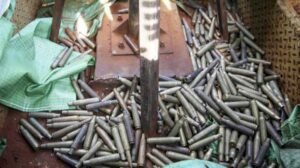
Empty large calibre bullet casings on the floor of a heavy machine gun position of the African Union Mission in Somalia (AMISOM) at Kismayo International Airport in southern Somalia. Credit: UN Photo/Ramadaan Mohamed

UNITED NATIONS, Jun 24 2024 (IPS) – Perhaps two of the biggest misnomers in military jargon are “small arms” and “light weapons” which are the primary weapons of death and destruction in ongoing civil wars and military conflicts, mostly in Asia, the Middle East and Africa.

In a statement last week, at the opening session of the Fourth Review Conference of the Programme of Action on Small Arms and Light Weapons (SALW), UN Secretary-General Antonio Guterres was dead on target when he said there is nothing “small” or “ight” about the damage these weapons cause.


“Small arms and light weapons play a major role in these conflicts. Small arms are the leading cause of violent deaths globally, and are the weapon of choice in nearly half of all global homicides,” Guterres said.

The UN Programme of Action (UNPoA) on small arms and light weapons has an ambitious goal – to “prevent, combat, and eradicate the illicit trade in small arms and light weapons in all its aspects.” But it’s a tough assignment in a political world dominated by the gun lobby and the military-industrial complex.

During the weeklong meeting, scheduled to conclude June 28, diplomats from around the world will review its implementation — against the backdrop of a political agreement that originated back in 2001. Members of civil society are also on hand to present their analyses and lobby and inform governments.

Speaking on behalf of Guterres, UN Under-Secretary-General and High Representative for Disarmament Affairs Izumi Nakamitsu told delegates global military expenditures are on the rise.

And countries, regions and communities across the globe are suffering. New and protracted conflicts are placing millions of people in the line of fire.

“They aggravate crime, displacement and terrorism. From conflict zones to homes, they are used to threaten and perpetrate sexual and gender-based violence”.

According to the UN, “light weapons,” are primarily, weapons designed for use by two or three persons serving as a crew, although some may be carried and used by a single person.

They include, heavy machine guns, handheld under-barrel and mounted grenade launchers, portable anti-aircraft guns, portable anti-tank guns, recoilless rifles, portable launchers of antitank missile and rocket systems, portable launchers of anti-aircraft missile systems, and mortars of a calibre of less than 100 millimetres.

The current civil wars, where the choice of weapons is largely small arms and light weapons, are primarily in Afghanistan, Myanmar, the Central African Republic, the Democratic Republic of the Congo, Haiti, Libya, Mali, Somalia, Sudan, South Sudan and Yemen—besides the two ongoing major wars in Ukraine and Gaza.

But in these two devastating conflicts, the Russians and Israelis are using more sophisticated weapons, including fighter aircraft, combat helicopters, drones, air-to-surface missiles, armoured personnel carriers and battle tanks, among others.

Dr. Natalie J. Goldring, who represents the Acronym Institute for Disarmament Diplomacy in her work at the United Nations on conventional weapons and arms trade issues, told IPS there are many obstacles to the full implementation of the UNPoA, both during the Review Conference and beyond. Two sets of these obstacles seem particularly noticeable at this year’s Review Conference.

The first set of obstacles is external.

In the end, the UNPoA is a political document, designed to be implemented primarily at the national level. States must have the political will to carry out the commitments in the UNPoA and the outcome documents of the various biennial meetings of states and review conferences, she said.

Smaller, less well-resourced States may also need financial assistance to be able to implement some portions of the UNPoA.

As a result, some smaller States are unwilling to accept programs and policies they fear will cost them money to implement, even with the potential availability of international assistance, Dr Goldring pointed out.

“The political challenge is complicated by the major roles played by the arms industry. Weapons manufacturers have financial incentives to sell as many weapons as they can. And States that supply weapons can be dependent on the power of those manufacturers. Some of these manufacturers are so intent on protecting their profits that they even attend, speak, and lobby at these conferences”.

The second key obstacle, she said, is internal.

“The Programme of Action process generally runs on a practice of “consensus”. In theory, that sounds laudable – why wouldn’t we want the process to be dominated by reaching consensus? But in this process, consensus is effectively defined as unanimity. That means that a single negative voice can block change – or progress”.

Because of the consensus process, she argued, these conferences and meetings often face an uncomfortable choice between two main options. One possibility is a strong outcome document, reached through votes, but lacking consensus. Another possibility is a weaker outcome document, reached through consensus.

“If it seems as though consensus is not going to be possible, then the supporters of the UNPoA could – and arguably should – construct an ambitious outcome document that would better fulfill the promise of the UNPoA and would require votes on some of the most controversial paragraphs. Arguably, the worst outcome would be for the proponents of a robust UNPoA to accept a lot of compromises on the text and still not reach consensus,” declared Dr Goldring

Guterres said small arms and light weapons aggravate crime, displacement and terrorism. From conflict zones to homes, they are used to threaten and perpetrate sexual and gender-based violence.

They block vital humanitarian aid from reaching the most vulnerable. They put the lives of United Nations peacekeeping forces and civilian personnel at risk.

And the situation is growing worse, as new developments in the manufacturing, technology and design of small arms — such as 3D printing — make their illegal production and trafficking easier than ever before, warned Guterres.

Rebecca Peters, Director, International Action Network on Small Arms (IANSA), said in an oped piece in the UN Chronicle, that a thousand people die each day from gunshot wounds, and three times as many are left with severe injuries. If the death, injury and disability resulting from small arms were categorized as a disease, it would qualify as an epidemic.

Yet the media and popular perception tend to suggest that gun violence is simply an unavoidable consequence of human cruelty or deprivation, rather than a public health problem which can be prevented or at least reduced, she said.

“The circumstances of gun violence vary so enormously, it would be simplistic to suggest a single solution. A comprehensive approach, reflecting the multi-faceted nature of the problem, is needed to bring down the grim toll of global death and injury.”

Nonetheless, the high school massacres in the US, the armed gangs in Brazil or the systematic sexual violence in the Democratic Republic of the Congo all share a common denominator: the availability of guns (or small arms, as they are known in UN circles).

She said practical steps toward reducing the availability and misuse of small arms can be classified under four headings:

    1. Reducing the existing stockpile
    2. Reducing the supply of new weapons
    3. Closing the gates between the legal and illegal markets
    4. Reducing the motivation for acquiring guns (demand)

Elaborating further, Dr Goldring said the issue of whether or how to include ammunition in the UNPoA is a key example of the difficulty of reaching consensus. This has been the case since the initial negotiation of the UNPoA, when the United States and a few others States showed their willingness to block consensus over this issue. That fight continues at this meeting.

The President of the Review Conference, she said, is a remarkably able diplomat from Costa Rica, Permanent Representative Maritza Chan Valverde. If anyone can thread the needle on having a strong outcome document and reaching consensus at the same time, it’s likely to be Ambassador Chan. But it’s a herculean task.

“I greatly admire her skill and dedication, but I think that the chasm between the supporters of the UNPoA and the obstructionists may simply be too large.”

In discussing the outcome document of the September 2024 Summit of the Future, Ambassador Chan said, “The Pact for the Future cannot remain anchored in the language of the past. Consensus must be forged, not found. Ambition must prevail in the text, and the progress of the many cannot be hindered by the reservations of the few.”

That quote, Dr Goldring said, seems to suggest that she would be willing to have votes in order to avoid having the document be undermined by the obstructionists. But only time will tell.

In the early- to the mid-90s, the international trade in small arms and light weapons was a specialist topic within an extremely small community internationally, and was not on the international policy agenda in a significant way.

Because of the work of analysts and advocates to bring attention to this issue, subsequently accompanied by the work of dedicated diplomats at the UN and elsewhere, it is now an established part of international work to reduce the human costs of armed violence.

“Unfortunately, quantitative measures of the UNPoA’s effectiveness are difficult – if not impossible — to develop. Instead, we often measure outputs and activities, rather than outcomes. We simply don’t know the counterfactual – what the situation would have been without the UNPoA,” she declared.

Thalif Deen is a former Director, Foreign Military Markets at Defense Marketing Services; Senior Defense Analyst at Forecast International; and Military Editor Middle East/Africa at Jane’s Information Group.

IPS UN Bureau Report

  Source

Sawantwadi’s Traditional Handmade Toys Struggle for Survival

Arts, Asia-Pacific, Civil Society, Cooperatives, Development & Aid, Economy & Trade, Editors’ Choice, Environment, Featured, Headlines, Natural Resources, TerraViva United Nations, Trade & Investment

Arts

Shashikant Rane with his wooden fruits. Credit: Rina Mukherji/IPS

Shashikant Rane with his wooden fruits. Credit: Rina Mukherji/IPS

PUNE, Jun 14 2024 (IPS) – Sawantwadi in Maharashtra, on the western coast of India, bordering Goa, has always been known for its wooden toys. A picturesque town amid hills and lush greenery, Sawantwadi retains an old-world charm to this day.  The regal Sawantwadi Palace holds pride of place, with colleges, schools, and temples cloistered around the periphery of the lake, which was once an extension of the royal grounds.  In the centre of the town is the Ubha Bazaar, or Hanging Market, which houses rows of shops selling the iconic wooden toys that are a hallmark of Sawantwadi.


The wooden toys of Sawantwadi are a legacy that the previous rulers nurtured, and they reflect the spirit of the area. Generations of children in Maharashtra and Goa have grown up playing with the life-like depictions of fruits, people, and the pull-along toys that were a necessary part of growing up. But today, these painstakingly carved, hand-made toys made of Pongamia and mango wood are struggling for survival. The once-bustling hilltop market in downtown Sawantwadi, known as Ubha Bazaar (Hanging Market), is now a ghost of what it once was. The artisan families who manufactured and sold these toys from their workshops-cum-homes are now reduced to a handful.

So, what caused the busy hands of these artisans to fall silent?

By the looks of it, several factors are responsible.

Female musicians in concert. Credit: Rina Mukherji/IPS

Female musicians in concert. Credit: Rina Mukherji/IPS

Backgrounder

Unlike the cheap machine-made toys that flood the market today, toys are a traditional craft in India, commanding a hoary lineage from the era of the Indus Valley civilization. Like many other centers in India, Sawantwadi always boasted gifted artisans capable of painstakingly breathing life into wood and carving out an array of life-like figures inspired by everyday life. Over the decades, the life-like depiction of fruits and vegetables was always been a specialty of Sawantwadi craftsmen. Of course, there were other toys too, for every age group of children: pull-along toys for toddlers, kitchen sets for little girls, bullock carts and other vehicles for bigger children, as well as spoons, cutters, and ladles used in the kitchen. What always made these toys stand out was the environment-friendly techniques and colors that were used to produce them.

Toy-making in Sawantwadi had its origins in the arrival of  Telangana Brahmins in the 17th century, who visited the kingdom to take part in religious debates with the then ruler, Khem Sawant II, who was extremely well-versed in Hindu religious scriptures and philosophy. The Chitrali artisans who arrived with the Brahmins brought the craft of toy-making and ganjifa (playing cards) to Sawantwadi.

Ideally suited to the greenery and scenic landscape of Sawantwadi, toy-making here made use of Pongamia and mango wood, which thrived in the thick forests here. The wood used for the toys would be collected in the summer and, after being washed and dried, left out to get thoroughly soaked during the entire monsoon. After thorough drying, they would be carved as per the desired shape. Once the toys were carved out, they would be covered with five layers of earth and left aside for a certain period of time. The lathe would then be used in this stage to impart the desired shape and finish. They would be painted with a powdery mixture made of tamarind and other seeds once dusted off and smoothed with sandpaper. After applying several coats of paint, a coat of lacquer and natural gum would add the finishing touches.  To this day, the lacquer used in Sawantwadi toys is their special feature. It is durable and never fades or chips away, no matter how roughly the toys are used. When toy-making was on the verge of fading out at one point in time, the local royal family gave it an impetus in the early 1970s. Primarily responsible for this shot in the arm were the Queen, Maharani Satvashila Devi and her husband, the reigning king, Rajesaheb Khem Sawant VI, Lt Colonel Shivram Sawant Bhonsale. The reigning royal family also set up a workshop to make hand-painted ganjifa cards at the palace, which is functional to this day.

Sawantwadi Palace grounds. Credit: Rina Mukherji/IPS

Sawantwadi Palace grounds. Credit: Rina Mukherji/IPS

Difficulties in Procuring Inputs

Historically, Sawantwadi was a vassal state of the mighty Maratha empire. When the British defeated the Marathas, Sawantwadi continued to exist as a small principality with a benign ruler during the British Raj.  The erstwhile British Resident’s home in downtown Sawantwadi, at a stone’s throw from the Palace, testifies to those bygone days. The early years of the 20th century saw Sawantwadi thrive in matters of education and culture, with the rulers also making efforts to nurture traditional crafts and artisans.

In recent times, however, deforestation has made it difficult to get adequate supplies of pangara (Pongamia) wood, while mango is not suitable for products that need the lathe machine.  Artisans have now turned to Acacia, Shivan (Gmelina Arborea) and Glyricidea, compromising on the quality of the toys.  Glyricidea has particularly emerged as a favorite, notwithstanding its being environmentally unsound and causing rats to overrun homes.

Lack of skilled artisans

The painstaking nature of the job, the difficulties in procuring wood and other inputs, and an uncertain market that cannot guarantee earnings in keeping with the efforts put in have resulted in many skilled artisans moving out of the industry and opting for employment elsewhere.  Industrialization in the neighboring districts has also been a big draw, while government initiatives to train young artisans in wood carving have been lackadaisical at best.

Very few can carve wood now, unlike in the past. So, instead of carving out a toy, the prevailing trend is to fill up sawdust into ready moulds. This also helps keep costs low and is not labour-intensive.  Shashikant Rane, one of the very few remaining master craftsmen in Sawantwadi, who the government approached about opening a Hastkala (handicrafts) Kendra (centre), tells me, “I entered the profession in the early 1960s, thanks to my father, who had received special training from Abha Gawde, a well-known master in the craft. Traditional toy-making requires a great deal of patience, starting with the procurement of the right wood. You procure the wood in May but cannot work on it until a few months later. In these times of quick turnarounds and massive profits, few are willing to put in the effort,” he points out.

Rane has been training 30 youngsters in the craft every year at his modest workshop-cum-home and is a much sought-after craftsman for prominent projects all over India. Referring to the government’s lackadaisical approach to training artisans, Rane tells me,  “The Minister-In-Charge had identified the venue for setting up the Hastkala Kendra and spoken to me about his vision at length.  But it is over a year now, and the plan still awaits finalization.”

Unfair Competition and Dwindling Demand

There are other factors, too. Cheap Chinese machine-made toys have also made consumers move away from these beautiful, hand-carved toys, which, owing to rising input costs, sell at higher rates. One also perceives a change in taste. P D Kanekar and Company, a prominent seller of toys in Sawantwadi, has moved to manufacture non-traditional toys in recent years.  Ankita Kanekar, from the Kanekar family, tells me, “Pangara (Pongamia) wood was always used to make life-like fruits and vegetables in the past. But no one is interested in playing with those now, unlike the previous generation.  Pangara trees are only available in a few villages now. Besides, a single set takes around one and a half months to be made. The work is painstaking and exacting, and the return is very little. There are very few good artisans practicing the trade.”

She also blames the current transport infrastructure for dwindling sales. “Earlier, the road links from Mumbai and Pune passed through Sawantwadi. But the highways now skirt our town.”

Changing tastes are evident when one browses through the shops today. Imitations of machine-made toys hold pride of place as compared to the artistic depictions of musicians, vegetable -sellers, or fishermen in traditional attire. It is tough to spot a bunch of bananas or betelnuts either.

Lack of government support is another major factor.

The active support of the ruling royal family had bolstered the toy industry in the previous century. This kind of support is no longer forthcoming. The lack of a strong toymakers’ cooperative or guild is also partly to blame. “There is no unity among the various people in the trade to negotiate in one voice with the authorities and demand guarantees or protective subsidies,” rues a prominent toymaker, requesting anonymity.

Consequently, Sawantwadi toys were devoid of geographic identification (GI) until now.

Light at the End of a Tunnel

As I write this, toymakers are jubilant about a GI tag having been granted to Sawantwadi wooden toys on March 30, 2024. This opens up a new vista for them. Toymakers like PD Kanekar have already taken to selling their toys online. “ We started selling online during the pandemic when everything shut down,” Ankita Kanekar tells me. The Kanekars sell through the DirectCreate platform to buyers all over India. Otherwise, sales are made to wholesalers based in Goa, who, in turn, sell to those traveling to India. This is because “international courier services are not yet developed from Sawantwadi. ”

Even so, with Goa’s newly-opened MOPA airport just 15–16 km away, international tourists often come down to Sawantwadi to buy these iconic toys.

One could well say that the GI tag and the inclusivity it bestows on these beautiful handcrafted toys are a good beginning. However, a lot more needs to be done if these toys are to capture the attention of a global market. Improving the courier services as well as government subsidies to the makers could go a long way here.

IPS UN Bureau Report

IPS UN Bureau, IPS UN Bureau Report, India

  Source

African Activists Call on the West to Finance Climate Action

Africa, Civil Society, Climate Change Finance, Climate Change Justice, Conferences, Development & Aid, Editors’ Choice, Environment, Featured, Global, Headlines, Human Rights, Humanitarian Emergencies, Sustainable Development Goals, TerraViva United Nations

Climate Change Finance

Activists at Bonn accuse developed countries of frustrating the process on climate finance. Pictured here are Danni Taaffe, Head of Communications at Climate Action Network (CAN), Mohamed Adow of Power Shift Africa and Sven Harmeling, Head of Climate at CAN. Credit: Isaiah Esipisu/IPS

Activists at Bonn accuse developed countries of frustrating the process on climate finance. Pictured here are Danni Taaffe, Head of Communications at Climate Action Network (CAN), Mohamed Adow of Power Shift Africa and Sven Harmeling, Head of Climate at CAN. Credit: Isaiah Esipisu/IPS

BONN, Jun 13 2024 (IPS) – As the technical session of the global climate negotiations enters the final stretch in Bonn, Germany, climate activists from Africa have expressed fears that negotiators from the developed world are dragging their feet in a way to avoid paying their fair share to tackle the climate crisis.

“I think we will be unfair to the snail if we say that the Bonn talks have all along moved at a snail pace,” quipped Mohammed Adow, the Director, Power Shift Africa.


“Ideally, there will be no climate action anywhere without climate finance. Yet what we have seen is that developed countries are frustrating the process, blocking the UAE annual dialogues, which were agreed upon last year in Dubai, to focus on the delivery of finance so as to give confidence to developing countries to implement climate actions,” said Adow.

According to the UN Framework Convention on Climate Change (UNFCCC), the United Arab Emirates (UAE) dialogue was created to focus on climate finance in relation to implementing the first Global Stoke Take (GST-1) outcomes, with the rationale of serving as a follow up mechanism dedicated to climate finance, ensuring response to and/or monitoring of, as may be appropriate and necessary, all climate finance items under the GST

The two-week Bonn technical session of Subsidiary Bodies (SB60) was expected to develop an infrastructure for the New Collective Quantified Goal (NCQG), a climate change funding mechanism to raise the floor of climate finance for developing countries above the current $100 billion annual target.

In 2009, during the 15th Conference of Parties (COP15) of the UNFCCC in Copenhagen, developed countries agreed that by 2020, they would collectively mobilize $100 billion per year to support priorities for developing countries in terms of adaptation to climate crisis, loss and damage, just energy transition and climate change mitigation.

When parties endorsed the Paris Agreement at COP 21 in 2015, they found it wise to set up the NCQG, which has to be implemented at the forthcoming COP 29, whose agenda has to be set at the SB60 in Bonn, providing scientific and technological advice, thereby shaping negotiations in Azerbaijan.

However, activists feel that the agenda being set in Bonn is likely to undermine key outcomes of previous negotiations, especially on climate finance.

“We came to Bonn with renewed hope that the NCQG discussions will be honest and frank with all parties committed to seeing that the finance mechanism will be based on the priorities and needs of developing countries and support country-driven strategies, with a focus on Nationally Determined Contributions (NDCs) and National Adaptation Plans (NAPs),” said Memory Zonde-Kachambwa, the Executive Director, FEMNET.

“Seeing the devastation climate change is causing in our countries in terms of floods, storms, and droughts, among other calamities, it was our hope that the rich countries would be eager and willing to indicate the Quantum as per Article 9.5 of the Paris Agreement so as to allow developing countries to plan their climate action,” she said.

So far, negotiators from the North have been pushing for collective “mobilization of financial resources,” which African activists believe is merely the privatization of climate finance within NCQG, thus surrendering poor countries to climate-debt speculators and further impoverishing countries clutching onto debt.

Also in the spotlight was the Global Goal on Adaptation (GGA), where the activists feel that the means of implementation is being vehemently fought by the parties from developed countries.

“Adaptation must be funded from public resources and must not be seen as a business opportunity open to private sector players,” said Dr. Augustine Njamnshi, an environmental policy and governance law expert and the Executive Secretary of the African Coalition for Sustainable Energy and Access. “Without clear indications on the means of implementation, GGA is an empty shell and it is not fit-for-purpose.”

According to Ambassador Ali Mohammed, the incoming Chair for the African Group of Negotiators (AGN), the SB60 is an opportunity to rebuild trust in the principle of common but differentiated responsibilities and respective capabilities.

“That trust can only be rebuilt if we come out of Bonn with a quantum that adequately covers the needs of the continent,” he said, noting that the figure Africa is asking for, which is to be part of the agenda for COP29, is USD 1.3 trillion per year by 2030.

IPS UN Bureau Report

 

Biodiversity Meetings in Nairobi End, All Eyes Are Now on COP16

Biodiversity, Climate Change, Conferences, Development & Aid, Environment, Featured, Gender, Global, Headlines, Natural Resources, Sustainable Development Goals, TerraViva United Nations

Biodiversity

A banner demanding an end to harmful subsidies is on display on the last day of the SBI meeting in Nairobi. Credit: Stella Paul/IPS

A banner demanding an end to harmful subsidies is on display on the last day of the SBI meeting in Nairobi. Credit: Stella Paul/IPS

NAIROBI, Jun 3 2024 (IPS) – Regions struggling to revise and update their National Biodiversity Plans aligning them with the Global Biodiversity Framework adopted at COP15, will now be given the technical and scientific support to develop and submit their plans on time.

This was one of the key decisions of the 4th meeting of the Subsidiary Body on Implementation (SBI)—the crucial pre-COP meetings of the United Nations Convention on Biodiversity (UNCBD)—to review the status and challenges of implementing the Global Biodiversity Framework (GBF), which started on May 22 and ended in Nairobi late in the evening of May 29, 2024.


More than 1000 participants from 143 countries gathered for the nine-day meeting, which UNCBD referred to as one of the “largest SBI meetings ever,” to discuss a variety of issues pertaining to the timely implementation of the GBF. As the meeting ended, the participants came up with a list of recommendations that will be presented for nations to consider at the next Biodiversity COP (COP16), scheduled to be held in October in Cali, Colombia.

IPS provided coverage of the twin meetings of SBI and the Subsidiary Body on Scientific, Technical, and Technological Advisors (SBSTTA), which took place earlier on May 13–18.  In this article, we bring you the key issues that topped the agenda of the SBI and the biggest recommendations that were made.

National Biodiversity Strategic Action Plans

In December 2022, at the COP15, parties agreed to revise and update their national biodiversity plans (NBSAP), aligning the targets with the global biodiversity framework that was adopted at the COP. These updated plans are to be submitted to UNCBD by or before the next COP, scheduled to be held in October.

However, as earlier reported by IPS, despite being just five months away from the next COP, only 11 countries have submitted their NBSAPs, while the majority of the countries have not, citing various reasons, including a lack of capacity and resources.

The top agenda item of the SBI has been reviewing these reasons and recommending steps that can help countries close this gap and complete the task of submitting their plans on time.

David Cooper, acting Executive Director of UN Biodiversity and Chirra Achalendar Reddy, chair of SBI-4, address the press conference. Credit: Stella Paul/IPS

David Cooper, acting Executive Director of UN Biodiversity and Chirra Achalendar Reddy, chair of SBI-4, address the press conference. Credit: Stella Paul/IPS

Capacity Building

After the nine-day discussions, delegates at the SBI decided that it would be necessary to provide all countries with specific technical and scientific support that can help them develop their NBSAPs and submit them on time. To provide this support, SBI decided that a network of technical and scientific support centers would be set up at regional and sub-regional level.

According to Chirra Achalender Reddy, Secretary, National Biodiversity Authority, India, and the chair of the SBI-4 meeting, the recommendation to set up these support centers was one of the key decisions made at the meeting.

“I thank the parties for their commitment to implementation of the Convention, as demonstrated by their engagement during the negotiations this week.  While we have many issues to resolve at COP16, the foundation is laid for our discussions in Cali, Colombia, later this year,” said Reddy.

Elaborating further on the decision, David Cooper, Acting Executive Director of the UNCBD, said that 18 regional organizations have been selected worldwide as the support centers. “They will foster and facilitate technical and scientific cooperation as countries harness science, technology and innovation to help halt and reverse biodiversity loss by 2030.”

Cooper also expressed hope that, in the future, these 18 organizations could create more such support centers, expanding the network from regional and sub-regional to national level.

“These subregional support centers will also promote technology transfer among countries, including through joint research programs and joint technology development ventures, acting as “one-stop service centers” offering wide-ranging resources to help meet Biodiversity Plan targets.  The centers are expected to help expand, scale up, and accelerate efforts such as the existing Bio-Bridge initiative,” Cooper added.

Resource Mobilization

In the Global Biodiversity Framework, the financial ambitions set out include investing USD 200 billion a year from both public and private sources until 2030. In addition, the goal also includes saving another USD 500 billion by ending subsidies that are harmful to biodiversity yet are still practiced by countries. This will bring the total available finance for biodiversity conservation to USD 700 billion per year until 2030, the deadline to achieve all GBF targets.

At the SBI, there was an intense discussion on resource mobilization. Several countries complained that, despite being signatories to the GBF, they had not been able to access any resources meant for biodiversity conservation, especially the Global Biodiversity Framework Fund (GBFF), which was launched last year and is managed by the Global Environment Facility.

Delegates from Syria, who spearheaded this discussion, revealed that their country had not been able to receive any money and suggested that the final document prepared by the CBD Secretariat reflect this. Syria’s voice was amplified by Russia, which said that Syria’s inability to access resources should be interpreted as a denial of resources.

Almost all the governments also discussed their own parameters for national biodiversity finance plans, the role of multilateral development banks, existing UN initiatives, and private finance.

An important discussion that took place was about setting up a new Global Biodiversity Fund, separate from the current Global Biodiversity Framework Fund (GBFF).

Women4Biodiversity, a group of women-led NGOs and gender champions, launched a training module on how to mainstream gender at the Global Biodiversity Framework meeting. Credit: Stella Paul/IPS

Women4Biodiversity, a group of women-led NGOs and gender champions, launched a training module on how to mainstream gender at the Global Biodiversity Framework meeting. Credit: Stella Paul/IPS

Gender and Indigenous Peoples

One of the most interesting developments that took place on the sidelines of the SBI meeting was the launch of a training module by Women4Biodiversity, a group that advocates for gender mainstreaming across all 23 targets of the GBF and participates in the meetings as an observer.

Titled “Training Module on Advancing Women’s Rights and Gender Equality in the Implementation of the Kunming Montreal-Global Biodiversity Framework,” the document was prepared in collaboration with World Wildlife Fund (WWF).

Speaking to the press about the training module, Alejandra Duarte, Policy Associate at Women4Biodiversity, said the main objective of the publication was to serve as a source of information for decision-makers, negotiators, indigenous peoples and local communities, women, youth, civil society, businesses, and the whole of society who are engaged in the planning, monitoring, and implementation of the Biodiversity Plan.

Mrinalini Rai, Director of Women4Biodiversity, also explained that the module was created to be understood by all and customized as per the context, community, or country.

Supporting Rai’s comments, Cristina Eghenter, senior global governance policy expert at WWF, said, “I hope that the module will help understand the gaps and what needs to be done for women to be a part of the Biodiversity Plan.”

Rodah Rotino, an indigenous community leader and President of the Pastoral Communities Empowerment Programme (PACEP), a Kenya-based women-led NGO, highlighted the contribution of indigenous women to biodiversity conservation across the world, including Africa.

“In my community, we have started a seed bank that preserves indigenous tree seeds. We plant indigenous plants that help preserve and conserve the local biodiversity and help community members benefit from their many uses, as they have done for centuries,” Rotino said, citing the example of her own community in West Pokot County, where women have started several initiatives. “We even promote the use of our traditional food systems, including the use of traditional indigenous crops, fruits, and vegetables, and we are seeing that after using these, our people, especially women and children, have many health improvements and quick recovery from some ailments. In short, we are going ahead with using our indigenous knowledge without even waiting for the formal implementation of the GBF.”

What’s Next

In Cali, Colombia, the CBD secretariat will present the decisions of the SBI-4 and the SBSTTA to the nations for their consideration and adoption.

However, just before the COP begins, yet another SBI meeting (SBI-5) will be held in Cali. The sole focus of that meeting will be to review the latest status of the national biodiversity plans and the plans that will be submitted between now and the COP.

“Right now, countries are in various stages of developing their NBSAPs and by October, we expect most of them to complete and make the submissions. The SBI-5 will review the plans and the status then,” Cooper explained.

IPS UN Bureau Report


Uniting for Climate Action: UN, World Bank and UNDRR Leaders Push for Climate Finance, Justice and Nature-Based Solutions for SIDS

Caribbean Climate Wire, Climate Action, Climate Change, Climate Change Finance, Climate Change Justice, Conferences, Development & Aid, Editors’ Choice, Environment, Featured, Headlines, Humanitarian Emergencies, Latin America & the Caribbean, PACIFIC COMMUNITY, Pacific Community Climate Wire, Small Island Developing States, Sustainable Development Goals, TerraViva United Nations

Climate Change Finance

Panelists at SDG Media Zone at SIDS4, Antigua and Barbuda. Credit: Alison Kentish/IPS

Panelists at SDG Media Zone at SIDS4, Antigua and Barbuda. Credit: Alison Kentish/IPS

ANTIGUA & BARBUDA, May 29 2024 (IPS) – As leaders of Small Island Developing States (SIDS) meet for the 4th International Conference on SIDS in Antigua this week, top United Nations and World Bank officials are calling for urgent action to help SIDS tackle their unique challenges and plan for the next decade.


Selwin Hart, UN Special Adviser to the Secretary-General and Assistant Secretary-General of the Climate Action Team, had a frank assessment for a United Nations SDG Media Zone event on the sidelines of the conference, known as SIDS4

“The international community has failed to deliver on its commitments to these small nations, but it’s not too late to make amends,” he said.

Hart says the world has the ‘tools, solutions, technologies, and finance’ to support SIDS, but change lies in the political will of  the countries with the greatest responsibility and capacity, particularly G20 nations, which account for almost 80 percent of global greenhouse gas emissions.

“A mere USD 3 billion of the USD 100 billion goal has been mobilized annually for the small island developing state and you compare that to the USD 36 billion in profit that Exxon Mobil made last year. It represents a tenth of the climate finance that SIDS are attracting and mobilizing. We need to correct these injustices and that has to be at the root of the global response to the demands and needs of  small island developing states.”

Nature-Based Solutions for Nations on the Frontlines of Climate Change
“Both natural and man-made disasters hit SIDS first,” the World Bank’s Global Director of Environment, Natural Resources, and Blue Economy, Valerie Hickey, told the Media Zone. She said that for this reason, the international lending body describes SIDS as “where tomorrow happens today,” a nod to small islands’ role as ‘innovation incubators,’ who must adapt to climate change through the creative and sustainable use of natural capital, biodiversity, and nature-based solutions.

She says nature capital also shifts the narrative, focusing less on the vulnerabilities of SIDS and more on their ingenuity.

“We don’t talk enough about the fact that small islands are where natural capital is the engine of jobs and GDP,” she said. “It is fisheries. It is nature-based tourism. These are critically important for most of the small islands and ultimately deliver not just jobs and GDP but are going to be the only technology for adaptation that is available and affordable, and affordability matters for small islands.”

For small island states seeking to adapt to a changing climate, nature-based solutions and ecosystem based adaptation are essential, but it is also necessary to tackle perennial problems that hinder growth and access to finance. That includes a dearth of current, relevant data.

“The data is too fragmented. It’s sitting on people’s laptops. It’s sitting on people’s shelves. Nobody knows what’s out there and that’s true for the private sector and the public sector,” she said.

“In the Caribbean, where there is excess capital sitting in retail banks, USD 50 billion of that can be used to invest in nature-based solutions judiciously, to work on the kind of longer-term infrastructure that would be fit for purpose both for disaster recovery and long-term growth—it’s not happening for lack of data.”

As part of SIDS4, the world’s small island developing states appear to be tackling this decades-long data problem head-on. At the event’s opening session, Antigua and Barbuda’s Prime Minister Gaston Browne said a much-promoted Centre of Excellence will be established at this conference and that this Global Data Hub for Innovative Technologies and Investment for SIDS will use data for decision-making, ensuring that SIDS’ ten-year Antigua and Barbuda Agenda (ABAS) is led by ‘accuracy and timeliness.’

Reducing Disaster Risk and Early Warning Systems for All

A discussion on SIDS is not complete without acknowledging the disproportionate impact of disasters on the island nations. Assistant Secretary-General and Special Representative of the Secretary-General for Disaster Risk Reduction, Kamal Kishore, says mortality rates and economic losses from disasters are significantly higher in SIDS than the global average.

“If you look at mortality from disasters, the number of deaths normalized by the population of the countries, the mortality rate in SIDS is twice that of the rest of the world. If you look at economic losses as a proportion of GDP, globally it is under one percent; in SIDS, in a single event, countries have lost 30 percent of their GDP. SIDS have lost up to two-thirds of their GDP in a single event.”

Kishore says the ambition to reduce disaster losses must match the scale of the problem. He says early warning systems are a must and have to be seen by all not as generosity but responsibility.

“It is not acceptable that anybody on planet Earth should not have access to advanced cyclone or hurricane warnings. We have the technical wherewithal to generate forecasts and warnings. We have technologies to disseminate it. We know what communities need to do and what local governments need to do in order to respond to those warnings. Why is it not happening?”

The Early Warning for All initiative was launched by UN Secretary General Antonio Guterres in 2022. Kishore says 30 countries have been identified in the initial stage and a third of those countries are SIDS. Gap analyses have already been conducted and a road map has been prepared for strengthening early warning systems. The organization needs money to make it happen.

“The world needs to show some generosity and pick up the bill. It’s not in billions. It’s in millions and it will pay for itself in a single event. You invest in early warning in a country and one major event happens in the next five years, you’ve recovered your investment. The evidence is there that it makes financial sense, but we need to mobilize resources to close that gap.”

The Road Ahead

Thirty years since the first International Conference on Small Island Developing States (SIDS), the three leaders agree that there is hope, but that hope is hinged on action—an approach to development in SIDS that involves financial investment, comprehensive data collection and management and nature-based adaptation measures.

“It’s not too late,” says Selwin Hart. “What we need now is the political will to make things right for small island developing states.”

IPS UN Bureau Report


Small Island Nations Demand Urgent Global Action at SIDS4 Conference

Caribbean Climate Wire, Civil Society, Climate Action, Climate Change, Climate Change Finance, Climate Change Justice, Conservation, Development & Aid, Economy & Trade, Editors’ Choice, Environment, Featured, Headlines, Human Rights, Humanitarian Emergencies, IPS UN: Inside the Glasshouse, Latin America & the Caribbean, PACIFIC COMMUNITY, Pacific Community Climate Wire, Small Island Developing States, Sustainable Development Goals, TerraViva United Nations, Trade & Investment

Conferences

The once-in-a-decade SIDS Conference opened in Antigua and Barbuda today, with a clear message: the world already knows the challenges that SIDS face—now it’s time for action.

King Charles III of Britain addresses the opening ceremony of the Fourth International Conference on Small Island Developing States, May 27, 2024. Credit: Alison Kentish/IPS

King Charles III of Britain addresses the opening ceremony of the Fourth International Conference on Small Island Developing States, May 27, 2024. Credit: Alison Kentish/IPS

ANTIGUA, May 27 2024 (IPS) – “This year has been the hottest in history in practically every corner of the globe, foretelling severe impacts on our ecosystems and starkly underscoring the urgency of our predicament. We are gathered here not merely to reiterate our challenges, but to demand and enact solutions,” declared Antigua and Barbuda Prime Minister Gaston Brown at the opening of the Fourth International Conference on Small Island Developing States on May 27.


The world’s 39 small island developing states are meeting on the Caribbean island this week. It is a pivotal, once-a-decade meeting for small states that contribute little to global warming, but are disproportionately impacted by climate change. The Caribbean leader reminded the world that SIDS are being forced to survive crises that they did not create.

“The scales of equity and justice are unevenly balanced against us. The large-scale polluters whose CO2 emissions have fuelled these catastrophic climate changes bear a responsibility—an obligation of compensation to aid in our quest to build resilience,” he said.

“The Global North must honor its commitments, including the pivotal pledge of one hundred billion dollars in climate financing to assist with adaptation and mitigation as well as the effective capitalization and operationalization of the loss and damage fund. These are imperative investments in humanity, in justice, and in the equitable future of humanity.”

Urgent Support Needed from the International Community

United Nations Secretary General Antonio Guterres told the gathering that the previous ten years have presented significant challenges to SIDS and hindered development. These include extreme weather events and the COVID-19 pandemic. He says SIDS, islands that are “exceptionally beautiful, exceptionally resilient, but exceptionally vulnerable,” need urgent support from the international community, led by the nations that are both responsible for the challenges they face and have the capacity to deal with them.

“The idea that an entire island state could become collateral damage for profiteering by the fossil fuel industry, or competition between major economies, is simply obscene,” the Secretary General said, adding, “Small Island Developing States have every right and reason to insist that developed economies fulfill their pledge to double adaptation financing by 2025. And we must hold them to this commitment as a bare minimum. Many SIDS desperately need adaptation measures to protect agriculture, fisheries, water resources and infrastructure from extreme climate impacts you did virtually nothing to create.”

Antigua and Barbuda Agenda for SIDS (ABAS)

The theme for SIDS4 is Charting the Course Toward Resilient Prosperity and the small islands have been praised for collective action in the face of crippling crises. Their voices were crucial to the establishment of the United Nations Framework Convention on Climate Change and the landmark 2015 Paris Agreement.

Out of this conference will come the Antigua and Barbuda Agenda for SIDS (ABAS). President of the UN General Assembly, Dennis Francis, says that programme of action will guide SIDS on a path to resilience and prosperity for the next decade.

“ The next ten years will be critical in making sustained concrete progress on the SIDS agenda – and we must make full use of this opportunity to supercharge our efforts around sustainability,” he said.

The SIDS4 conference grounds in Antigua and Barbuda will be a flurry of activity over the next four days. Apart from plenaries, there are over 170 side events hosted by youth, civil society organizations, non-governmental organizations, and universities, covering a range of issues from renewable energy to climate financing.

They have been reminded by Prime Minister Gaston Browne that this is a crucial juncture in the history of small island developing states, where “actions, or failure to act, will dictate the fate of SIDS and the legacy left for future generations.”

IPS UN Bureau Report

  Source


