Smallholder Farmers Gain Least from International Climate Funding

Africa, Aid, Civil Society, Climate Action, Climate Change, Climate Change Finance, COP28, Development & Aid, Editors’ Choice, Food and Agriculture, Food Security and Nutrition, Food Sustainability, Global, Headlines, Human Rights, Humanitarian Emergencies, Sustainable Development Goals, TerraViva United Nations

Climate Change Finance

David Obwona at his seed rice farm in Katukatib village, Amoro district, northern Uganda. The farmer is part of a group that is now engaged in seed rice farming to climate-proof agriculture courtesy of the Regional Universities Forum for Capacity Building Agriculture. Credit: Maina Waruru/IPS

David Obwona at his seed rice farm in Katukatib village, Amoro district, northern Uganda. The farmer is part of a group that is now engaged in seed rice farming to climate-proof agriculture courtesy of the Regional Universities Forum for Capacity Building Agriculture. Credit: Maina Waruru/IPS

NAIROBI, Nov 14 2023 (IPS) – Smallholder farmers from the Global South benefit from a grossly disproportionate 0.3% of international climate finance despite producing a third of the world’s food and despite holding the key to climate-proofing food systems.


The family farmers and rural communities received around USD 2 billion from both public and private international climate funds out of the USD 8.4 billion that went to the agriculture sector in 2021, even as over 2.5 billion people globally depended on the farms for their livelihoods.

The USD 8.4 billion was almost half of the USD 16 billion that was availed for the energy sector and is only a fraction of the estimated USD 300-350 billion needed annually to “create more sustainable and resilient food systems,” a new report has found.

The amount was also quite different from the USD 170 billion that smallholder farmers in Sub-Saharan Africa alone would require per year, the study on global public finance for climate mitigation and adaptation conducted by Dutch climate advisory company Climate Focus has found.

The low level of climate finance for agriculture, forestry, and fishing is of concern, given the impact of climate change on food production and the extent to which food and agriculture are fueling the climate and biodiversity crisis.

Agricultural productivity has declined by 21 percent due to climate change, while the food and agriculture sector as a whole is responsible for 29 percent of greenhouse gas emissions and 80 percent of global deforestation, the study explains.

The farmers have been sidelined by global climate funders and locked out of decision-making processes on food and climate despite being the engines of rural economic growth. This is especially so in Sub-Saharan Africa, where up to 80 percent of agriculture is by smallholder farmers and where 23 percent of regional GDP is attributable to the sector.

It reveals that 80 percent of international public climate finance spent on the agri-food sector is channeled through governments and donor country NGOs, making it hard for smallholder farmers’ organizations to access it. This is because of complex eligibility rules and application processes and a lack of information on how and where to apply.

Many family farmers also lack the infrastructure, technology, and resources to adapt to climate impacts, with serious implications for global food security and rural economies as well, it notes.

The study ‘Untapped Potential: An analysis of international public climate finance flows to sustainable agriculture and family farmers,’ published on 14 November, laments that only a fifth of international public climate finance for food and agriculture supports sustainable practice. The money mainly goes to the Global North, even as agriculture becomes the third biggest source of global emissions. and the main driver of biodiversity loss.

“Climate change is hitting harvests and driving up food prices across the globe. It has helped push 122 million people into hunger since 2019. We need to create more sustainable and resilient food systems that can feed people in a changing climate, but we can’t do this without family farmers,” the report compiled on behalf of ten farmer organizations in Africa, Asia, Latin America, and the Pacific says.

“Family farmers are also key to climate adaptation. They are at the forefront of the shift to more diverse, nature-friendly food systems, which the Intergovernmental Panel on Climate Change (IPCC) says is needed to safeguard food security in a changing climate,” it further notes.

The groups are led by the World Rural Forum and include African groups—the Eastern Africa Farmers Federation, Eastern and Southern Africa small-scale Farmers Forum, the Regional Platform of Farmers’ Organisations in Central Africa, and the Network of West African Farmers’ and Producers’ Organisations. Also part of the group is Northern Africa’s Maghreb and North African Farmers Union.

The Asian Farmers Association for Sustainable Rural Development, the Pacific Island Farmers Organization Network, the Confederation of Family Producers’ Organizations of Greater Mercosur, and the Regional Rural Dialogue Programme are also represented in the study.

Many of the farmers are already practicing climate-resilient agriculture, including approaches such as agroecology, which implies a wider variety of crops, including traditional ones, mixing crops, livestock, forestry, and fisheries, while reducing agrochemical use, and building strong connections to local markets.

The study by the new alliance of farmer networks representing over 35 million smallholder producers ahead of COP28, which is set to agree on a Global Goal for Adaptation, is concerned that since 2012, overall, only 11% of international public climate finance has been targeted at agriculture, forestry, and fishing, which amounts to an average of USD 7 billion a year.

In 2021, the World Bank, Germany, the Green Climate Fund, and European Union institutions contributed around half—54 percent, amounting to USD 4 billion collectively, while Nigeria, India, and Ethiopia were the top recipients, receiving a combined USD 1.8 billion. Notably, some of the world’s most food insecure countries, including Sudan, Sierra Leone, and Zambia, each received less than USD 20 million, it discloses.

“As the climate crisis pushes the global food system ever closer to collapse, it is vital that governments recognize family farmers as powerful partners in the fight against climate change,” it warns.

Hakim Baliriane, Chair of the Eastern and Southern Africa small-scale Farmers Forum, observed: “Climate change has helped push 122 million people into hunger since 2019. Reversing this trend will not be possible if governments continue to tie the hands of millions of family farmers.”

The study defines small-scale family farms as those of less than two hectares, mainly in developing countries.

On the other hand, international climate finance broadly refers to finance channeled to “activities that have a stated objective to mitigate climate change or support adaptation. These include multilateral flows in and outside the (UNFCCC) and the Paris Agreement, as well as bilateral flows at national and regional levels, including the Global Environment Facility, Adaptation Fund, and Green Climate Fund, and are usually disbursed as grants and concessional loans

The study finds that family farms are also the backbone of rural economies, supporting over 2.5 billion people globally who depend on family farms for their livelihoods. It says that in Sub-Saharan Africa, where up to 80 percent of farming is done by smallholder farmers, agriculture contributes 23 percent to regional Gross Domestic Product.

Family farmers are also key to climate adaptation in that they are at the forefront of the shift to more “diverse, nature-friendly food systems,” which, according to the Intergovernmental Panel on Climate Change (IPCC), are critical in safeguarding food security in a changing climate.

It finds that millions of smallholder farmers are already practicing climate-resilient agriculture, including approaches such as agroecology—growing a wider variety of crops, including traditional crops, mixing crops, livestock, forestry, and fisheries, reducing agrochemicals use while building “strong connections to local markets.”

It concludes that governments must ensure that available climate finance for sustainable climate-resilient practices is increased, including that of agroecological approaches.

It explains: “This means funds to support diverse, nature-friendly approaches and to create community-based solutions that build on traditional expertise and experience.

It recommends that small-scale family farmers ought to have direct access to more climate finance and that financing mechanisms and funds should be developed with the participation of farmers’ organizations to meet their needs.

In addition, efforts should be made to ensure longer-term, flexible funding so that communities can determine their own priorities.

The role of the farmers as powerful catalysts for climate action, food system transformation, and the protection of biodiversity should be acknowledged and given a “real say” in decision-making on food and climate at the local, national, regional, and international levels. This should include decisions on land reform and agricultural subsidies.

The COP28 in Dubai later this month has food systems as a big part of the agenda.

An August report by the UK’s ActionAid has found that climate adaptation and green transition initiatives in the Global South received 20 times less financing when compared to main global emitters, fossil fuels, and intensive agriculture sectors in the last seven years.

It found that leading banking multinationals funded the emitters’ activities in the southern hemisphere to the tune of USD 3.2 trillion since 2015 when the Paris Agreement on Climate was adopted. German agrochemical giant Bayer was the biggest recipient of the financing, receiving an estimated USD 20.6 billion since 2016.

IPS UN Bureau Report

  Source

New Robotic-Assisted Surgery Offers Inspiring Hope for Rwanda

Africa, Featured, Health, Innovation, TerraViva United Nations

Innovation

An artist’s impression of the completed Centre of Excellence in Kigali. The center supported by IRCAD is expected to assist with the training of surgeons throughout the continent with minimally invasive surgery training. Credit: Supplied

An artist’s impression of the completed Centre of Excellence in Kigali. The center supported by IRCAD is expected to assist with the training of surgeons throughout the continent with minimally invasive surgery training. Credit: Supplied

KIGALI, Nov 13 2023 (IPS) – In a newly established Centre of Excellence located in Masaka, a suburb of the Rwandan capital city, Kigali, an expanded lab, complete with innovative facilities and specialized instruments, is now giving surgeons a conducive environment to simulate how to perform minimally invasive surgeries.


French-based Institute for Research into Cancer of the Digestive System (IRCAD) played a major part in this initiative, the first ever on the African continent.

According to medical experts, in comparison to traditional open surgery, often requiring the patient to incur invasive large incisions, minimally invasive surgery procedures allow doctors to insert a camera through a small incision, or sometimes no incision at all.

Dr Alexandre Hostettler, head of the Surgical Data Science Team at IRCAD, pointed out that harnessing robotic and artificial intelligence is critical to enhance the capability of surgical treatment in Africa.

Robot-assisted minimally invasive surgery denotes the surgical technique where the robot-applied laparoscopic tools are remotely controlled by a human operator at a console.

“Performing surgeries using robotic assistance can be more comfortable for surgeons, as they can sit at a console rather than standing for extended periods, reducing physical strain,” he told IPS.

The center also aims to train medical doctors from across Africa about how to perform surgery using very small incisions, allowing the introduction of an endoscope connected to a camera with a magnified image leading to a very precise dissection of the operated organs.

Prof Jacques Marescaux, President and Founder of IRCAD, is convinced that the new center represents a turning point in surgical education and practice in Rwanda and sub-Saharan Africa. “The center is a catalyst for all African surgeons and computer scientists,” he said in an exclusive interview with IPS.

At the same time, Rwanda is striving to build an integrated medical service system that provides high-quality services and is efficient in medical facility management. Rwandan President Paul Kagame believes the key task is to keep investing significantly in public health infrastructure.

“The [new] Centre of Excellence is not serving Rwanda alone. It is serving Africa. It is also improving and taking beyond the talent we have in Africa to a much higher level,” Kagame said at the inauguration of the new facility, for which operations and running costs will be fully funded by the Government of Rwanda and IRCAD France.

Some medical experts observe that despite its numerous advantages over traditional surgery, especially the shorter hospital stay and less blood loss with lower overall costs, the new robotic surgery is not widespread in low- and middle-income countries, especially in Sub-Saharan Africa.

In addition, some researchers argue that computer-assisted navigation and robotics are sometimes challenging to use by perioperative nurses when caring for patients undergoing these procedures.

Dr Christine Mutegaraba, a surgeon from one of the private clinics in Kigali, told IPS that providing appropriate training remains critical for specialized medical practitioners to rely on these robotic surgery systems.

“Huge investment is also needed to ensure that clinics and other specialized referral hospitals are equipped with devices needed to perform these kind of surgical techniques,” Mutegaraba said.

According to the data from Rwanda’s Ministry of Health, laparoscopic was the sole type of minimally invasive surgical technique used by few medical practitioners across the country, and there wasn’t any formal training in place to develop the technical skills for additional doctors.

With the inauguration of the new center, both officials and health experts see hope in developing and advancing this technology, where specialized medical doctors will now be able to perform various kinds of surgeries.

While the introduction of innovative solutions in the health sector remains exciting for health officials, Marescaux points out that the new robotic technology is set to provide patients with high-quality medical services.

“We are working on building the largest team combined with computer scientists and surgeons in Africa,” he said.

Estimates by IRCAD show that access to surgical care in Low- and Middle-Income Countries (LMICs), such as countries in Sub-Saharan Africa, is still extremely limited, which causes a burden on the health care systems.

It said thanks to the center, African surgeons will not have to travel across the continent to receive the best training in surgery since it will be available right at home.

The 2022 World Health Organization’s study shows that strong measures are also needed to boost the training and recruitment of health workers in Africa.

Whereas the UN agency recommends that African countries significantly increase investments in building the health workforce to meet their current and future needs, new findings show that that the region has a ratio of 1.55 health workers (physicians, nurses, and midwives) per 1000 people.

Experts now believe that robotic technology will also lessen surgeon’s workload by efficiently managing the patient flow.

“As technology evolves, robotic systems are likely to incorporate more advanced features, integrating AI, augmented reality, and other technologies to aid the surgical process,” Hostettler said.

IPS UN Bureau Report
  Source

Gender Parity: Rise of Denmark and Downfall of Afghanistan

Civil Society, Democracy, Featured, Gender, Global, Headlines, Human Rights, IPS UN: Inside the Glasshouse, TerraViva United Nations

Credit: UN Women

UNITED NATIONS, Oct 25 2023 (IPS) – The UN agency, which advocates women’s rights and gender empowerment, has predicted that gender equality is “300 years away.”

Addressing the UN Commission on the Status of Women last March, Secretary-General Antonio Guterres not only quoted the estimates provided by UN Women but also warned that progress toward gender equality is “vanishing before our eyes.”


“Women’s rights are being abused, threatened and violated around the world,” he said.

But a new report — the 2023 fourth edition of the global Women Peace and Security Index (WPS Index)—released October 24 draws on recognized data sources to measure women’s inclusion, justice, and security in 177 countries—covering over 99% of the world’s population.

“No country performs perfectly on the WPS Index and the results reveal wide disparities across countries, regions, and indicators. The WPS Index offers a tool for identifying where resources and accountability are needed most to advance women’s status – which benefits us all”, says the report.

India passes law to reserve seats for women legislators
4 OCTOBER 2023

The Index finds that societies where women are doing well are also more peaceful, democratic, prosperous, and better prepared to adapt to the impacts of climate change.

Denmark leads the 2023 rankings as the top country to be a woman, scoring more than three times higher than Afghanistan which is at the bottom.

Afghanistan ranks worst of 177 countries– in terms of the status of women, according to this year’s Women, Peace and Security (WPS) Index launched in New York.

The five highest ranking countries were Denmark, Switzerland, Sweden, Finland and Luxembourg. And the five lowest ranking countries were Afghanistan, Yemen, Central African Republic, Democratic Republic of the Congo and South Sudan.

Published by Georgetown University’s Institute for Women, Peace and Security (GIWPS) and the Centre on Gender, Peace and Security at the Peace Research Institute Oslo, the WPS Index uses 13 indicators to measure women’s status, ranging from education and employment to laws and organized violence.

The United States ranks 37th this year, scoring similarly to Slovenia, Bulgaria and Taiwan in the second quintile.

Dr. Purnima Mane. Ex- President and CEO of Pathfinder International, and former Deputy Executive Director (Program) of the United Nations Population Fund (UNFPA), told IPS the WPS Index emphasizes the sobering realities which different sectors of society –- including academic institutions, the United Nations, the media and civil society in general – have emphasized repeatedly over the years:

She said many countries which rank low in women’s status continue to remain so over time, despite global advocacy for gender equality

“Growing conflict and lack of security in countries could even worsen the situation for women and will not ensure adequate results in our efforts to boost women’s status. The relationship between peace and security and women’s overall wellbeing remains critical and demands adequate attention and investment.”

Data from the WPS Index, funded by the Norwegian Ministry of Foreign Affairs show evidence of this relationship between peace and security and women’s status.

A clear example is the countries that rank high and low in this Index –not surprisingly the countries that rank low in women’s status are the very same countries in which peace and security are at an abysmally low level, she added.

Sanam Anderlini, Founder/CEO of the International Civil Society Action Network (ICAN)* told IPS according to the index, in 2017, Afghanistan was ranked 152 out of 153 countries, with Syria coming last.

In 2019/2020, it was 16th out of 167, with Yemen coming last, and now in 2023, Afghanistan is coming at the bottom of the index.

‘This indicates that Afghan women were facing a long struggle even prior to the Taliban, but given that 60% of Afghans were under the age of 25, and many young women were in universities and entering professions including law, medicine and education, there was hope that the country’s overall ranking could also improve over time.’

She pointed out that Taliban’s takeover has set them on a downward generational spiral. The tragedy is that this decline was a result of the US’s loss to the Taliban at the negotiating tables in Doha.

“It is a result of the diplomatic community’s unwillingness to heed the warnings of Afghan women about the Taliban, or uphold their own commitments to the women peace and security agenda’s first tenet — the participation of women in peace processes.”

“But despite the darkness, we cannot forsake and forget Afghan women and girls. They are still fighting and finding ways to access education, healthcare and livelihoods,” said Anderlini.

“Now, more than ever, the international community must double down on engaging them and ensuring they are present and fully participating in the decision-making pertaining to the future of their country — not only in the humanitarian space, but also on economic, social and political and security matters. There are plenty of Afghan women – inside and outside the country — ready to take on this challenge,” she declared.

Elaborating further, Dr Mane said a range of reports prepared by a variety of sources, including the UN and academic institutions have been referenced in this Index using 13 different indicators on women’s status, to show that societies where women’s economic, social, and political situation, formal and informal justice for women, and the status of the security of women at the social and community level are doing well, are the very same societies, which overall, are more peaceful, economically stronger, have more democratic systems in place and are also dealing better with the impacts of climate change.

The WPS Index and its data, she pointed out, identify clearly areas where further investment is needed to boost women’s status. But what about general conflict and lack of security which adversely impact women particularly hard, along with others who are marginalized in different societies?

“The Index clearly demonstrates that all of the bottom 20 countries have experienced war and armed conflict of some sort, between 2021 and 2022 with more than half the women living in or near zones of conflict”.

With armed conflict growing in many countries over the last few years and the continuation of a generally negative climate in terms of women’s status in several countries such as Afghanistan, she argued, one cannot hope for a change in the status quo for women unless countries take a hard look at their policies and investments in both national peace and security and in women’s status.

“Any real change is possible only if the world acknowledges that the link between the two is critical, and paying attention to both is vital for improvements in national wellbeing as well as gender equality”, said Dr Mane, a former UN Assistant-Secretary-General (ASG) and an internationally recognized expert on gender, population and development, and public health, and who has devoted her career to advocating for population and development issues and working on sexual and reproductive health.

“With its scores, rankings, and robust data, the WPS Index offers a valuable tool for people working on issues of women, peace, and security,” said Elena Ortiz, the lead author of the WPS Index.

“Policymakers can use it to pinpoint where resources are needed. Academics can use it to study trends within indicators and across regions. Journalists can use it to give context and perspective to their stories. And activists can use it to hold governments accountable for their promises on advancing the status of women.”

All of the bottom 20 countries on this year’s Index have experienced armed conflict between 2021 and 2022. In most of these countries, more than half of women live in close proximity to conflict.

“Since 2021, Afghanistan has ranked the worst in the world to be a woman. Afghan women wake up each day to no jobs, no education and no autonomy over their lives. This report should serve as a wakeup call to world leaders that a nation of women is imprisoned.” said Torunn L. Tryggestad, Director of the Peace Research Institute Oslo’s Centre for Gender, Peace and Security.

IPS UN Bureau Report
  Source

UN Chief Urged to Create Civil Society Envoy

Civil Society, Democracy, Featured, Global, Headlines, Human Rights, IPS UN: Inside the Glasshouse, Sustainable Development Goals, TerraViva United Nations

The high-level segment of the UN General Assembly in late September 2021 was attended by more than 100 world leaders and over a thousand delegates from 193 countries —despite the UN’s pandemic lockdown. But Civil Society Organizations (CSOs) were banned from the Secretariat building. Credit: UN Photo / Mark Garten

UNITED NATIONS, Oct 16 2023 (IPS) – When the United Nations commemorated the 75th anniversary of the UN Charter back in 2020, Secretary-General Antonio Guterres paid a supreme compliment to Civil Society Organizations (CSOs).


The CSOs, he pointed out, were a vital voice in the San Francisco Conference (where the UN was inaugurated). “You have been with us across the decades, in refugee camps, in conference rooms, and in mobilizing communities in streets and town squares across the world.”

“You are our allies in upholding human rights and battling racism. You are indispensable partners in forging peace, pushing for climate action, advancing gender equality, delivering life-saving humanitarian aid and controlling the spread of deadly weapons”.

And the world’s framework for shared progress, the Sustainable Development Goals (SDGs), is unthinkable without you’, he declared.

But in reality, CSOs are occasionally treated as second class citizens, with hundreds of CSOs armed with U.N. credentials, routinely barred from the United Nations, specifically when world leaders arrive to address the high-level segment of the General Assembly sessions in September.

The annual ritual where civil society is treated as political and social outcasts has always triggered strong protests. The United Nations justifies the restriction primarily for “security reasons”.

A coalition of CSOs– including Access Now, Action for Sustainable Development, Amnesty International, CIVICUS, Civil Society in Development (CISU), Democracy Without Borders, Forus, Global Focus, Greenpeace International, Human Rights Watch, Oxfam International, TAP Network, and UNA-UK— is now proposing the creation of a Special UN Civil Society Envoy to protect, advance and represent the interests of these Organizations.

Credit: United Nations

In a letter to Guterres, the coalition points out the disparity in access for civil society delegates viz. UN staff and members of government delegations who face no such restrictions stand as a critical reminder of the hurdles faced by accredited civil society representatives who travel great distances to contribute their perspectives at the UN.

“It is also a missed opportunity for civil society delegates to engage in key negotiations inside the UN headquarters and for policymakers to benefit from their critical and expert voices buttressed by lived experience in advancing the principles enshrined in the UN Charter,” the letter says.

Considering this recurring disparity, the letter adds, “we believe it’s vital to correct this injustice promptly to ensure opportunities for all stakeholders to contribute to discussions of global consequences”.

“This issue once again underscores the necessity for civil society to have a dedicated champion within the UN system, in the form of a Civil Society Envoy, who can help promote best practices in civil society participation across the UN and foster outreach by the UN to civil society groups worldwide, particularly those facing challenges in accessing the UN.”

“We would also like to express our support for the revision of modalities to ensure meaningful civil society participation at all stages of UN meetings and processes as well as Unmute Civil Society recommendations supported by 52 states and over 300 civil society organizations from around the world”.

“We believe that addressing the above concerns could lead to significant strides in advancing the ideal of a more inclusive, equitable, and effective UN in the spirit of ‘We the Peoples.’ “

Mandeep Tiwana, Chief Officer, Evidence and Engagement, at CIVICUS told IPS civil society representatives have long complained about asymmetries across UN agencies and offices in engaging civil society and have called for a champion within the UN system to drive best practices and harmonise efforts.

One such medium, he said, could be the appointment of a Civil Society Envoy along the lines of the UN Youth Envoy and Tech Envoy to drive key engagements.

Notably, a Civil Society Envoy could foster better inclusion of civil society and people’s voices in UN decision-making at the time when the UN is having to grapple with multiple crises and assertion of national interests by states to the detriment of international agreements and standards, he pointed out.

Five reasons why it’s time for a Civil Society Envoy:

    1. Without stronger civil society participation, the SDGs will not get back on track. The UN’s own assessment laments the lack of progress on the SDGs. We desperately need stronger civil society involvement to drive innovations in public policy, effectively deliver services that ‘leave no one behind’ and to spur transparency, accountability and participation. A Civil Society Envoy can catalyse crucial partnerships between the UN, civil society and governments.

    2. Civil society can help rebalance narratives that undermine the rules based international order. With conflicts, human rights abuses, economic inequality, nationalist populism and authoritarianism rife, the spirit of multilateralism enshrined in the UN Charter is at breaking point. Civil society representatives with their focus on finding global solutions grounded in human rights values and the needs of the excluded can help resolve impasses caused by governments pursuing narrow self-interests.

    3. A civil society envoy can help overcome UNGA restrictions on citizen participation and create better pathways to engage the UN. As it does every year, this September the UN suspended annual and temporary passes issued to accredited NGOs during UNGA effectively barring most civil society representatives from participating. Further, civil society access to the UN agencies and offices remains inconsistent. Reform minded UN leaders and states that support civil society can prioritise the appointment of an envoy for improved access.

    4. More equitable representation. The few civil society organizations who enjoy access to UNGA heavily skew toward groups based in the Global North who have the resources to invest in staff representation in New York, or the right passports to enter key UN locations easily. A UN civil society envoy would lead the UN’s outreach to civil society across the globe and particularly in underserved regions. Moreover, a civil society envoy could help ensure more diverse and equitable representation of civil society at UN meetings where decisions are taken.

    5. A civil society envoy is possible. Getting anything done at the UN requires adhering to what is politically feasible. A civil society special envoy is within reach. The Unmute Civil Society initiative to enable meaningful participation at the UN is supported by 52 states and over 300 civil society organizations. It includes among other things a call for civil society day at the UN and the appointment of a UN envoy.

Recent UN Special Envoys include:

IPS UN Bureau Report

  Source

Silent Struggles: Unraveling Korea’s Startling Elderly Suicide Surge

Active Citizens, Asia-Pacific, Development & Aid, Headlines, Human Rights, Humanitarian Emergencies, Population, TerraViva United Nations, Youth, Youth Thought Leaders

Opinion

In this, the fourth of IPS’ Youth Thought Leaders series, the author looks at suicide rates in older persons and concludes we should break barriers and celebrate the diversity each generation brings.

An image illustrating the ‘No-senior zone’ in a Korean café. Credit: The Nation

An image illustrating the ‘No-senior zone’ in a Korean café. Credit: The Nation

SEOUL, Oct 13 2023 (IPS) – Growing up in a culture that values respect for elders, I was acutely aware of the importance of caring for our aging population. However, my journey to understanding the gravity of this issue truly began with a personal anecdote. I watched my grandmother, a pillar of strength throughout my childhood, gradually withdraw from the vibrant world in which she once thrived. The cheerful twinkle in her eyes began to dim, replaced by an eerie sense of isolation.


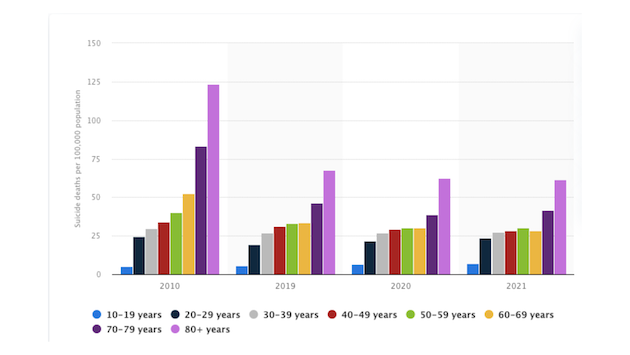
This experience opened my eyes to a stark reality: a disturbing surge in elderly suicide rates hidden beneath the facade of cultural reverence for seniors in Korea and Japan. In 2021, these rates reached 61.3 deaths per 100,000 people in Korea, primarily driven by profound social isolation.

Suicide deaths in Korea. Credit: Statista

Suicide deaths in Korea. Credit: Statista

Some may argue that these figures are insignificant, but the persistence of a high suicide rate cannot be dismissed. Moreover, they are poised to become even more critical as we approach a world where, according to WHO, the elderly population over the age of 60 is expected to double by 2050, and those 80 years or older are projected to triple.

So how severe are the elderly suicide rates due to isolation in Korea and Japan? Well, research highlights that this is due to the significant rise in the elderly population. Such an increase has been concurrent with the rising elderly suicide rates. The Global Burden of Disease study emphasizes that the global elderly suicide rate is almost triple the suicide rates across all other age groups. For example, in South Korea alone, there has been a 300% increase in elderly suicide rates.

If the world’s elderly population has increased overall, why is it that the elderly suicide rates within Korea and Japan have been especially severe? This was particularly confusing as I believed that due to cultural and social standards of filial piety and respecting your elders, such suicide rates would be low. However, I found the answer to my own question when I visited Korea in July this year.

When I arrived in the country, one of the first things I did was to visit a cafe to meet with a friend. However, as I was about to enter the cafe, I saw a group of elderly men and women leaving the cafe while comforting each other, saying, “It’s okay; it’s not the first time we’ve been rejected.” As I later found out, this was because the cafe was a ‘no-senior zone.’

Similar to how some places are designated as ‘no-kid zones,’ this cafe, and others, did not allow people over the age of 60 to enter.  According to Lee Min-ah at Chung-Ang University, “The continuous emergence of ‘no-something zones’ in our society means that exclusion among groups is increasing, while efforts to understand each other are disappearing.”

I also discovered that age discrimination is also present in other aspects of the elderly’s life, more specifically, in the workplace. According to a survey by the National Human Rights Commission of Korea, in 2018, 59 percent of the Korean elderly found it difficult to be employed due to age restrictions, and a further 44 percent experienced ageism within their workplace. The increase in discrimination against the elderly has heightened their sense of isolation, eventually leading to cases of suicide in extreme circumstances.

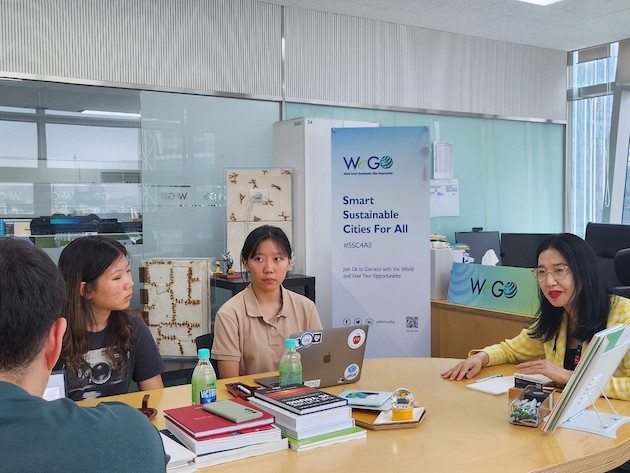
Jung Soon Park, the Secretary General of World Smart Sustainable Cities Organization (WeGo) with the author Hyunsung (Julie) Lee.

Jung Soon Park, the Secretary General of World Smart Sustainable Cities Organization (WeGo) with the author Hyunsung (Julie) Lee.

Interview with Jung Soon Park, the Secretary General of WeGo at the Seoul Global Center

Interview with Jung Soon Park, the Secretary General of WeGo at the Seoul Global Center

I wanted to learn more about the current action being taken to help the elderly feel more included in our society, as I believed this would be key to preventing isolation-related suicide cases. To gain further insight, I decided to interview Jung Soon Park, the Secretary General of the World Smart Sustainable Cities Organization (WeGo).

WeGo is an international association of local governments, smart tech solution providers, and institutions committed to transforming cities worldwide into smart and sustainable cities through partnerships. I believe that by interviewing the Secretary General of WeGo, I would be able to learn more about the specific solutions that governments and organizations are implementing collaboratively.

Through my interview, I gained an understanding that the South Korean government and social organizations are currently focusing on addressing age discrimination, recognizing it as a key factor in isolationism.

Park mentioned that one specific approach to resolving this issue involves the use of ‘meta spaces’ and technological wristbands. She emphasized that in today’s technology-driven world, enabling the elderly to adapt to such technology could bridge the generation gap between the younger and older generations. She further explained that meta spaces, allowing for anonymous communication, and technological wristbands, which could include features like a metro card and direct access to emergency services, would facilitate the elderly’s integration into modern society. Park concluded that enabling the elderly to adapt efficiently to the current social setting could break down the generational barrier between youth and the elderly, fostering a direct connection between these two disparate groups.

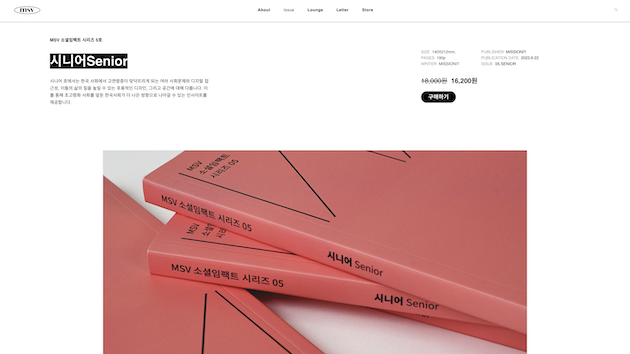
During my research, I coincidentally came across a website called Meet Social Value (MSV). MSV is a publishing company that specializes in writing and publishing insightful articles about contemporary social issues. Their most recent article, titled ‘Senior,’ delves into the social challenges faced by the elderly in Korean society and explores solutions involving inclusive designs and spaces.

MSV serves as a prime example of how contemporary social organizations are taking steps to address the issue of elderly discrimination. This is especially significant because, through youthful and trendy engagement on social media, it becomes easier to raise awareness of this issue among younger generations.

Meet Social Value's most recent article, titled 'Senior,' delves into the social challenges faced by the elderly in Korean society and explores solutions involving inclusive designs and spaces.

Meet Social Value’s most recent article, titled ‘Senior,’ delves into the social challenges faced by the elderly in Korean society and explores solutions involving inclusive designs and spaces.

As I continued my research, I started pondering what I, as an 18-year-old, could do to contribute to resolving this issue. Even though I’m still a student, I wanted to find ways to make a difference, especially after witnessing age discrimination and its consequences firsthand.

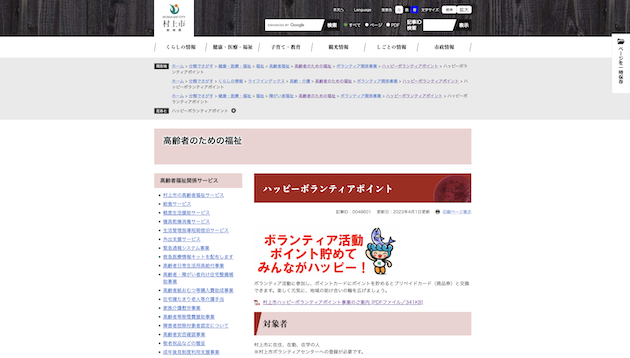
I found the answer to my question when I learned about the initiatives undertaken by the government of Murakami City and the Murakami City Social Welfare Council to bridge the gap between the youth and senior citizens. They introduced the Murakami City Happy Volunteer Point System, which aimed to encourage more people to assist seniors through various volunteering activities such as nursing facility support, hospital transportation services, and operating dementia cafes, among others. The system rewarded volunteers with points that could be exchanged for prepaid cards, creating an incentive for more individuals to get involved in helping their senior citizens.

Taking this into consideration, I believe that the younger generation, especially students, may contribute by creating such an incentivization system. For example, students may create senior volunteering clubs within their schools and take turns volunteering and connecting with elderly citizens every weekend. By doing so, clubs may incentivize their members through points which may later be traded for a snack or lunch at the school cafeteria. Through small incentives, this may naturally encourage more students to participate and thus naturally allow for the youth to create a relationship with the elderly, hence contributing to mitigating the issue of elderly isolation.

The webpage of the Murakami City Happy Volunteer Point System containing the system’s details.

The webpage of the Murakami City Happy Volunteer Point System contains the system’s details.

In Korea’s battle against ageism, we find ourselves at a turning point. To navigate this societal shift successfully, we must recognize that age discrimination not only undermines the dignity of our elders but also hampers our collective progress. The solution requires a comprehensive approach. Policy reforms are crucial, emphasizing stringent anti-ageism measures in the public space and the workplace. Equally significant solutions are awareness campaigns to challenge stereotypes and foster inter-generational understanding.

However, true change starts with the youth. By confronting our biases and engaging in volunteering activities, we can break down barriers and celebrate the diverse experiences each age group brings. Through such efforts, we can create a society where age is not a determinant of worth but a source of strength and wisdom. It’s a journey demanding our collective commitment, but one that will lead us towards a more inclusive and harmonious future for all.

Edited by Hanna Yoon

IPS UN Bureau Report
  Source