Knowledge is Power. Gaza War Supporters Don’t Want Students to Have Both

Civil Society, Democracy, Featured, Global Governance, Headlines, Human Rights, IPS UN: Inside the Glasshouse, Middle East & North Africa, TerraViva United Nations

Opinion

Student protesters at Columbia University, New York. Credit: IPS

SAN FRANCISCO, USA, Sep 6 2024 (IPS) – With nearly 18 million students on U.S. college campuses this fall, defenders of the war on Gaza don’t want to hear any backtalk. Silence is complicity, and that’s the way Israel’s allies like it.


For them, the new academic term restarts a threat to the status quo. But for supporters of human rights, it’s a renewed opportunity to turn higher education into something more than a comfort zone.

In the United States, the extent and arrogance of the emerging collegiate repression is, quite literally, breathtaking. Every day, people are dying due to their transgression of breathing while Palestinian.

The Gaza death toll adds up to more than one Kristallnacht per day — for upwards of 333 days and counting, with no end in sight. The shattering of a society’s entire infrastructure has been horrendous.

Months ago, citing data from the Palestinian Central Bureau of Statistics, ABC News reported that “25,000 buildings have been destroyed, 32 hospitals forced out of service, and three churches, 341 mosques and 100 universities and schools destroyed.”

Not that this should disturb the tranquility of campuses in the country whose taxpayers and elected leaders make it all possible. Top college officials wax eloquent about the sanctity of higher learning and academic freedom while they suppress protests against policies that have destroyed scores of universities in Palestine.

A key rationale for quashing dissent is that anti-Israel protests make some Jewish students uncomfortable. But the purposes of college education shouldn’t include always making people feel comfortable. How comfortable should students be in a nation enabling mass murder in Gaza?

What would we say about claims that students in the North with southern accents should not have been made uncomfortable by on-campus civil rights protests and denunciations of Jim Crow in the 1950s and 1960s? Or white students from South Africa, studying in the United States, made uncomfortable by anti-apartheid protests in the 1980s?

A bedrock for the edifice of speech suppression and virtual thought-policing is the old standby of equating criticism of Israel with antisemitism. Likewise, the ideology of Zionism that tries to justify Israeli policies is supposed to get a pass no matter what — while opponents, including many Jews, are liable to be denounced as antisemites.

But polling shows that more younger Americans are supportive of Palestinians than they are of Israelis. The ongoing atrocities by the Israel “Defense” Forces in Gaza, killing a daily average of more than 100 people — mostly children and women — have galvanized many young people to take action in the United States.

“Protests rocked American campuses toward the end of the last academic year,” a front-page New York Times story reported in late August, adding: “Many administrators remain shaken by the closing weeks of the spring semester, when encampments, building occupations and clashes with the police helped lead to thousands of arrests across the country.” (Overall, the phrase “clashes with the police” served as a euphemism for police violently attacking nonviolent protesters.)

From the hazy ivory towers and corporate suites inhabited by so many college presidents and boards of trustees, Palestinian people are scarcely more than abstractions compared to far more real priorities. An understated sentence from the Times sheds a bit of light: “The strategies that are coming into public view suggest that some administrators at schools large and small have concluded that permissiveness is perilous, and that a harder line may be the best option — or perhaps just the one least likely to invite blowback from elected officials and donors who have demanded that universities take stronger action against protesters.”

Much more clarity is available from a new Mondoweiss article by activist Carrie Zaremba, a researcher with training in anthropology. “University administrators across the United States have declared an indefinite state of emergency on college campuses,” she wrote. “Schools are rolling out policies in preparation for quashing pro-Palestine student activism this fall semester, and reshaping regulations and even campuses in the process to suit this new normal.

“Many of these policies being instituted share a common formula: more militarization, more law enforcement, more criminalization, and more consolidation of institutional power. But where do these policies originate and why are they so similar across all campuses? The answer lies in the fact that they have been provided by the ‘risk and crisis management’ consulting industries, with the tacit support of trustees, Zionist advocacy groups, and federal agencies. Together, they deploy the language of safety to disguise a deeper logic of control and securitization.”

Countering such top-down moves will require intensive grassroots organizing. Sustained pushback against campus repression will be essential, to continually assert the right to speak out and protest as guaranteed by the First Amendment.

Insistence on acquiring knowledge while gaining power for progressive forces will be vital. That’s why the national Teach-In Network was launched this week by the RootsAction Education Fund (which I help lead), under the banner “Knowledge Is Power — and Our Grassroots Movements Need Both.”

The elites that were appalled by the moral uprising on college campuses against Israel’s slaughter in Gaza are now doing all they can to prevent a resurgence of that uprising. But the mass murder continues, subsidized by the U.S. government. When students insist that true knowledge and ethical action need each other, they can help make history and not just study it.

Norman Solomon is the national director of RootsAction.org and executive director of the Institute for Public Accuracy. His latest book, War Made Invisible: How America Hides the Human Toll of Its Military Machine, was published in paperback this month with a new afterword about the Gaza war.

IPS UN Bureau

  Source

UN Efforts for a Resilient Iraq

Civil Society, Climate Action, Climate Change, Editors’ Choice, Environment, Featured, Headlines, Middle East & North Africa, Sustainable Development Goals, TerraViva United Nations

Opinion

UN agencies are working together to integrate traditional knowledge with modern technology, optimizing water use for agriculture. Credit: FAO Iraq

BAGHDAD, Iraq, Aug 28 2024 (IPS) – Climate change and water scarcity pose significant threats to Iraq’s stability, prosperity, and the well-being of its people. The environmental challenges facing the nation are complex and interconnected, requiring a comprehensive and coordinated response.


In Iraq, the United Nations Country Team (UNCT), under my leadership, has been at the forefront of addressing these critical issues, working tirelessly to build a more sustainable and resilient future for all Iraqis.

Through the Resident Coordinator’s Office (RCO), we aim to leverage the diverse expertise and resources of different UN agencies, fostering a coordinated and integrated approach to development challenges.

Through this collaborative model, we can maximize our impact and deliver holistic solutions to tackle the interconnected web of factors that contribute to climate change and water scarcity.

This includes not only mitigating the immediate effects of these environmental threats but also addressing their underlying causes, such as unsustainable water management practices and overreliance on fossil fuels.

United Nations Resident Coordinator in Iraq Ghulam Isaczai visiting a water project site. Credit: UN in Iraq

The UN in Iraq has made a lasting impact in Iraq through a number of key initiatives. These include:

1) Forging climate resilience

Iraq is highly vulnerable to climate change impacts, including rising temperatures, droughts, and desertification severely impacting agricultural productivity and social stability. To address this, the UNCT, in cooperation with the Iraqi Government, organized Iraq’s first Climate Conference in Basra in 2023. This event resulted in the “Basra Declaration” with key government commitments and initiatives like an afforestation campaign, aimed at enhancing Iraq’s climate resilience.

These efforts led to increased national and international awareness and cooperation on climate issues, establishing a framework for future environmental and policy planning, including the National Adaptation Plan (NAP) and Nationally Determined Contributions (NDC).

The Basra Declaration aims at strengthening Iraq’s institutional, technical, and financial capacities to tackle climate change by mainstreaming medium- to long-term adaptation strategies into national and local planning.

2) Advancing water security

Iraq suffers from a critical water crisis due to reduced rainfall and over-utilization of the Tigris and Euphrates rivers. These challenges are exacerbated by inefficient water management and agricultural practices.

Last year, Iraq was the first country in the Middle East to join the UN Water Convention, underscoring the country’s commitment to boosting regional cooperation and ensuring equitable water use, essential for the stability and prosperity of the region.

In alignment with these national objectives, the RCO is leading a ‘Water Task Force’ that brings together UN agencies in Iraq to enhance water governance, boost agricultural resilience, and improve sustainable water usage.

For instance, the UN Educational, Scientific and Cultural Organization (UNESCO) and the Food and Agriculture Organization (FAO) are working together to integrate traditional knowledge with modern technology, optimizing water use for agriculture—an essential step for bolstering Iraq’s food security.

Meanwhile in the Sinjar district, a United Nations Office for Project Services (UNOPS) initiative, funded by the Italian government is transforming local water access, in-line with the need to ensuring safe water for all Iraqis. Similarly, in Ninewa Governorate, the UN Children’s Fund (UNICEF) installed water desalination systems in seven villages, significantly improving living conditions.

3) Preserving the Mesopotamian Marshes

The Mesopotamian Marshes, a unique ecosystem and a UNESCO World Heritage Site, are threatened by climate change, pollution, and unsustainable water management practices, leading to severe ecological and human impacts.

The RCO coordinated efforts across UN agencies to conserve the marshes by developing environmental strategies, supporting afforestation projects and facilitating community-based adaptation plans to improve the livelihoods of local communities.

For example, the World Food Programme (WFP) is undertaking afforestation projects in both southern Iraq and the Kurdistan Region, aligning with the government objective of planting five million trees by 2029. These efforts are directly contributing to the national climate change strategy through the Local Adaptation Plan, focusing on areas most impacted by climate change.

Furthermore, the UN has led legislative advancements in natural resource management, including the adoption of the Environmental Strategy and the National Sustainable Land Management Strategy and Action Plan, which are crucial for agriculture and marshland conservation.

These initiatives have helped restore ecological balance, supported local livelihoods, and bolstered the marshlands’ resilience to environmental pressures, thereby securing their status as a UNESCO World Heritage Site.

4) Developing renewable energy policies

Iraq’s heavy reliance on fossil fuels not only constrains its economic stability but also contributes to substantial greenhouse gas emissions. The country has significant potential for renewable energy development but faces challenges in attracting investment and developing necessary infrastructure.

To address this gap, the UN facilitated the revision and adoption of Iraq’s Renewable Energy Law, a pivotal move towards boosting renewable energy investment and development. The revised Renewable Energy Law has created a more favourable environment for renewable energy investment.

Similarly, an initiative by the United Nations Development Programme (UNDP) is supporting Iraq’s shift away from oil-dependence, through the NAP – which outlines efforts to reduce emissions and prepare for the effects of climate change. The UN is also assisting Iraq develop its NDCs for 2025, which is the country’s commitment to reduce emissions and adapt to climate change as part of the Paris Agreement.

These efforts have opened avenues for increased investment in renewable energy, promoting sustainable economic growth and reducing the country’s carbon footprint.

A sustainable and resilient future for Iraq

The collective work of the UN in Iraq has set the country on a promising trajectory towards climate sustainability and resilience. Our upcoming United Nations Sustainable Development Cooperation Framework (UNSDCF) for 2025-2029 will outline our efforts to help Iraq mitigate and adapt to climate change, manage water resources sustainably, and protect its unique environmental and cultural heritage.

As we look to the future, the UN in Iraq remains committed to supporting the government and people of Iraq in their pursuit of a sustainable and resilient future.

Ghulam Isaczai is United Nations Resident Coordinator in Iraq. To learn more about the work of the UN in Iraq visit iraq.un.org.

IPS UN Bureau

  Source

Fast-Acting Interventions Needed for Sudanese Refugee Children as Needs Outpace Response

Active Citizens, Africa, Aid, Armed Conflicts, Civil Society, Development & Aid, Editors’ Choice, Education, Education Cannot Wait. Future of Education is here, Featured, Headlines, Human Rights, Humanitarian Emergencies, Middle East & North Africa, Migration & Refugees, Population, Poverty & SDGs, Sustainable Development Goals, TerraViva United Nations, Youth

Education Cannot Wait. Future of Education is here

These Sudanese refugee children are among the 748,000 refugees and asylum-seekers who have sought refuge in Egypt. Credit: ECW

These Sudanese refugee children are among the 748,000 refugees and asylum-seekers who have sought refuge in Egypt. Credit: ECW

CAIRO & NAIROBI, Aug 26 2024 (IPS) – As peace eludes war-torn Sudan, thousands of displaced people fleeing the deadly battle between the Sudanese Armed Forces (SAF) and Rapid Support Forces (RSF) have found refuge in neighboring countries, including Egypt.


The Sudanese refugee population in Egypt has grown almost sevenfold in what is considered the worst displacement crisis in the world, impacting 10 million people, with at least 2 million having fled to neighboring countries, including Egypt. In Egypt, over 748,000 refugees and asylum-seekers are registered with the UNHCR, a majority of whom are women and children who have recently arrived from Sudan. This number is expected to continue to rise.

“When Sudan plunged into conflict, the international aid community, UN agencies, civil society and governments developed a response plan to meet the urgent needs of refugees fleeing Sudan to seek safety in five different countries, including Chad, Ethiopia, Egypt, South Sudan and the Central African Republic,” Yasmine Sherif, Executive Director of Education Cannot Wait (ECW), the global fund for education in emergencies and protracted crises within the United Nations, told IPS.

To put it into perspective, the 2024 Sudan Regional Refugee Response Plan calls for USD 109 million to respond to refugee education needs across the region. To date, only 20 percent of this amount has been mobilized, including USD 4.3 million—or 40 percent of the requirement for Egypt.

ECW was among the first to respond in the education sector, providing emergency grants to support partners in all five countries.

The government of Egypt has demonstrated great commitment to providing refugees with access to education services, but with 9,000 children arriving every month, the needs are overwhelming.

Consequently, nearly 54 percent of newly arrived children are currently out of school, per the most recent assessment.

Sherif says despite Egypt’s generous refugee policy, the needs are great, resources are running thin and additional funding is urgently needed to scale up access to safe, inclusive, and equitable quality education for refugee as well as vulnerable host community children.

“Families fleeing the brutal conflict in Sudan endured the most unspeakable violence and had their lives ripped apart. For girls and boys uprooted by the internal armed conflict, education is nothing less than a lifeline. It provides protection and a sense of normalcy amidst the chaos and gives them the resources they need to heal and thrive again,” she said.

Yasmine Sherif, Executive Director of Education Cannot Wait (ECW) interacts with Sudanese refugee children in Egypt. Credit: ECW

Yasmine Sherif, Executive Director of Education Cannot Wait (ECW), interacts with the Sudanese refugee community in Egypt. Credit: ECW

The government of Egypt has demonstrated great commitment to providing refugees with access to education services, but with 9,000 children arriving every month, the needs are overwhelming.

On a high-level stock-taking UN mission to Egypt in August 2024, ECW, UNHCR and UNICEF are urging donors, governments and individuals of good will to contribute to filling the remaining gap and scaling up the education response for refugee and host-community children.

“We have seen the important work that is being undertaken by UNHCR, the Catholic Relief Service and local organizations. But needs are fast outpacing the response, and Egypt now has a growing funding gap of USD 6.6 million. Classrooms are hosting as many as 60 children, most of whom are from host communities,” Sherif says.

Stressing that additional resources are urgently and desperately required to ensure that refugee and host community children in Egypt and other refugee-receiving countries in the region can attend school and continue learning. With the future of the entire region at stake, ECW’s call to action is for as many donors as possible to step in and help deliver the USD10 million required here and now to adequately support the refugee and host communities.

The ECW delegation in Egypt have assessed that at least USD 109 million is needed to assist with refugee education across the region. Credit: ECW

Education Cannot Wait Executive Director Yasmine Sherif, UNHCR, UNICEF, Catholic Relief Services (CRS) staff and Sudanese refugee girls and women at the CRS office in Cairo, Egypt.Credit: ECW

“We have seen the important work that is being undertaken by UNHCR, the Catholic Relief Service and local organizations, such as the Om Habibeh Foundation. But needs are fast outpacing the response,” Sherif says.

“In the spirit of responsibility sharing enshrined in the Global Compact on Refugees, I call on international donors to urgently step up their support. Available funding has come from ECW, ECHO, the EU, Vodafone, and a few other private sector partners. We should not abandon children in their darkest hour. This is a plea to the public and private sectors, and governments to step in and deliver for conflict-affected children,” she said.

Dr. Hanan Hamdan, UNHCR Representative to the Government of Egypt and to the League of Arab States, agreed.

“Forcibly displaced children should not be denied their fundamental right to pursue their education; their flight from conflict can no longer be an impediment to their rights. UNHCR, together with ECW and UNICEF, continue to ensure that children’s education, and therefore their future, are safeguarded,” she said.

“To this end, it is crucial to further support Egypt as a host country. It has shown remarkable resilience and generosity, but the increasing number of displaced individuals requires enhanced international assistance. By strengthening Egypt’s capacity to support refugees, we can ensure that more children have access to education and eventually a brighter future,” Hamdan added.

During the high-level ECW mission in Egypt, the ECW delegation met with key strategic partners—including donors, UN agencies, and local and international NGOs—and with Sudanese refugees to take stock of the scope of needs and the ongoing education response by aid partners.

Jeremy Hopkins, UNICEF Representative in Egypt, reiterated the agency’s commitment.

“UNICEF is steadfast in its commitment to ensure that conflict-affected Sudanese children have the opportunity to resume their education. In Egypt, through innovative learning spaces and the Comprehensive Inclusion Programme, UNICEF is working diligently, under the leadership of the Egyptian government, in cooperation with sister UN agencies and development partners, to create inclusive learning environments and strengthen resilient education systems and services,” Hopkins said.

“This not only benefits displaced Sudanese children but also supports host communities by ensuring that all children have access to quality education.”

In December 2023, ECW announced a USD 2 million First Emergency Response Grant in Egypt. The 12-month grant, implemented by UNHCR in partnership with UNICEF, is reaching over 20,000 Sudanese refugees in the Aswan, Cairo, Giza and Alexandria governorates.

Sudanese displaced children in Egypt are falling behind in their education. Education Cannot Wait has made a global appeal for funds to ensure they are able to continue with their education. Credit: ECW

Sudanese displaced children in Egypt are falling behind in their education. Education Cannot Wait has made a global appeal for funds to ensure they are able to continue with their education. Credit: ECW

The grant supports interventions such as non-formal education, cash grants, social cohesion with host communities, mental health and psychosocial support, and construction and refurbishment work in public schools hosting refugee children to benefit both refugee and host community children. As conflict escalates across the globe, ECW is committed to ensuring that all children have a chance at lifelong learning and earning opportunities.

Beyond Egypt, ECW has allocated USD 8 million in First Emergency Response grants in the Central African Republic, Chad, Ethiopia and South Sudan to address the urgent protection and education needs of children fleeing the armed conflict in Sudan. In Sudan, ECW has invested USD 28.7 million in multi-year and emergency grants, which have already reached more than 100,000 crisis-affected girls and boys.

During the mission, ECW called on leaders to increase funding for the regional refugee response and other forgotten crises worldwide. ECW urgently appeals to public and private donors to mobilize an additional US$600 million to reach 20 million crisis-impacted girls and boys with safe, quality education by the end of its 2023–2026 strategic plan.

IPS UN Bureau Report

  Source

Biden’s Convention Speech Made Absurd Claims About His Gaza Policy

Armed Conflicts, Civil Society, Global Governance, Headlines, Human Rights, IPS UN: Inside the Glasshouse, Middle East & North Africa, TerraViva United Nations

Opinion

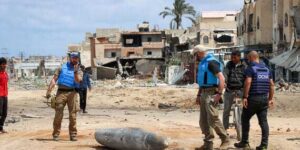
A UN team inspects an unexploded 1,000-pound bomb lying on a main road in Khan Younis. Credit: OCHA/Themba Linden

SAN FRANCISCO, USA, Aug 21 2024 (IPS) – An observation from George Orwell — “those who control the present, control the past and those who control the past control the future” — is acutely relevant to how President Biden talked about Gaza during his speech at the Democratic convention Monday night.


His words fit into a messaging template now in its eleventh month, depicting the U.S. government as tirelessly seeking peace, while supplying the weapons and bombs that have enabled Israel’s continual slaughter of civilians.

“We’ll keep working, to bring hostages home, and end the war in Gaza, and bring peace and security to the Middle East,” Biden told the cheering delegates. “As you know, I wrote a peace treaty for Gaza. A few days ago, I put forward a proposal that brought us closer to doing that than we’ve done since October 7th.”

It was a journey into an alternative universe of political guile from a president who just six days earlier had approved sending $20 billion worth of more weapons to Israel. Yet the Biden delegates in the convention hall responded with a crescendo of roaring admiration.

Applause swelled as Biden continued: “We’re working around-the-clock, my secretary of state, to prevent a wider war and reunite hostages with their families, and surge humanitarian health and food assistance into Gaza now, to end the civilian suffering of the Palestinian people and finally, finally, finally deliver a ceasefire and end this war.”

In Chicago’s United Center, the president basked in adulation while claiming to be a peacemaker despite a record of literally making possible the methodical massacres of tens of thousands of Palestinian civilians.

Orwell would have understood. A political reflex has been in motion from top U.S. leaders, claiming to be peace seekers while aiding and abetting the slaughter. Normalizing deception about the past sets a pattern for perpetrating such deception in the future.

And so, working inside the paradigm that Orwell described, Biden exerts control over the present, strives to control narratives about the past, and seeks to make it all seem normal, prefiguring the future.

The eagerness of delegates to cheer for Biden’s mendaciously absurd narrative about his administration’s policies toward Gaza was in a broader context — the convention’s lovefest for the lame-duck president.

Hours before the convention opened, Peter Beinart released a short video essay anticipating the fervent adulation. “I just don’t think when you’re analyzing a presidency or a person, you sequester what’s happened in Gaza,” he said.

“I mean, if you’re a liberal-minded person, you believe that genocide is just about the worst thing that a country can do, and it’s just about the worst thing that your country can do if your country is arming a genocide.”

Beinart continued: “And it’s really not that controversial anymore that this qualifies as a genocide. I read the academic writing on this. I don’t see any genuine scholars of human rights international law who are saying it’s not indeed there. . . . If you’re gonna say something about Joe Biden, the president, Joe Biden, the man, you have to factor in what Joe Biden, the president, Joe Biden, the man, has done, vis-a-vis Gaza.

It’s central to his legacy. It’s central to his character. And if you don’t, then you’re saying that Palestinian lives just don’t matter, or at least they don’t matter this particular day, and I think that’s inhumane. I don’t think we can ever say that some group of people’s lives simply don’t matter because it’s inconvenient for us to talk about them at a particular moment.”

Underscoring the grotesque moral obtuseness from the convention stage was the joyful display of generations as the president praised and embraced his offspring. Joe Biden walked off stage holding the hand of his cute little grandson, a precious child no more precious than any one of the many thousands of children the president has helped Israel to kill.

Norman Solomon is the national director of RootsAction.org and executive director of the Institute for Public Accuracy. He is the author of many books including War Made Easy. His latest book, War Made Invisible: How America Hides the Human Toll of Its Military Machine, was published in 2023 by The New Press.

IPS UN Bureau

  Source

2023 Deadliest Year for Aid Workers– & 2024 Could be Even Worse, Predicts UN

Armed Conflicts, Civil Society, Featured, Global Governance, Headlines, Human Rights, Humanitarian Emergencies, IPS UN: Inside the Glasshouse, Middle East & North Africa, TerraViva United Nations

UNITED NATIONS, Aug 19 2024 (IPS) – Back in August 2003, the United Nations faced one of its violent tragedies when a terrorist attack on the UN headquarters in the Iraqi capital of Baghdad claimed the lives of 22 people.

Among those killed was Sergio Vieira de Mello of Brazil, the UN envoy in Iraq and High Commissioner for Human Rights, who had a long and distinguished UN career stretching over 30 years.


As the UN commemorated World Humanitarian Day on August 19, it continues to be confronted with rising death tolls among both its humanitarian workers and peacekeepers worldwide.

The commemorative day was established by the General Assembly in 2008 after the 2003 bomb attack in Baghdad.

At last count, at least 254 aid workers have been killed since the current 10-month-old war began in Gaza on Oct. 7 last year, and about 188 worked for UNRWA, the UN agency for Palestinian refugees.

According to the UN, “2023 was the deadliest year on record for humanitarian workers and 2024 is on track to be even worse”.

In a statement ahead of World Humanitarian Day, Dennis Francis, President of the193-member General Assembly said aid organizations – from all over the world – have united to call for the protection of civilians and humanitarian personnel, as well as to ensure their safe and unhindered access, including across conflict lines.

Footage of destruction of Al-Shifa hospital in Gaza, following an Israeli siege. The World Health Organization (WHO) reiterated that hospitals must be respected and protected; they must not be used as battlefields. Credit: UN News

Attacks on humanitarian workers and humanitarian assets must stop, as well as on civilians and civilian infrastructure, he said.

Besides the UN and its agencies, some of the world’s humanitarian organizations in war zones include Doctors Without Borders, CARE International, Save the Children and the International Committee of the Red Cross and the Red Crescent.

Last April, seven members from World Central Kitchen (WCK) were killed in an Israeli air strike in Gaza. The WCK said its team was traveling in a deconflicted zone in two armored cars branded with the WCK logo and a soft skin vehicle.

Despite coordinating movements with the Israeli Defense Force (IDF), the convoy was hit as it was leaving the Deir al-Balah warehouse, where the team had unloaded more than 100 tons of humanitarian food aid brought to Gaza on the maritime route.

“This is not only an attack against WCK, this is an attack on humanitarian organizations showing up in most dire situations where food is being used as a weapon of war. This is unforgivable,” said WCK CEO Erin Gore.

The seven killed were from Australia, Poland, United Kingdom, a dual citizen of the U.S. and Canada, and Palestine.

“I am heartbroken and appalled that we—World Central Kitchen and the world—lost beautiful lives because of a targeted attack by the IDF. The love they had for feeding people, the determination they embodied to show that humanity rises above all, and the impact they made in countless lives will forever be remembered and cherished,” said Gore.

According to the UN Office for the Coordination of Humanitarian Affairs (OCHA), more than half of the 2023 deaths were recorded in the first three months – October to December – of the hostilities in Gaza, mostly as a result of airstrikes.

Extreme levels of violence in Sudan and South Sudan have also contributed to the tragic death toll, both in 2023 and in 2024. In all these conflicts, most of the casualties are among national staff. Many humanitarian workers also continue to be detained in Yemen.

“The normalization of violence against aid workers and the lack of accountability are unacceptable, unconscionable and enormously harmful for aid operations everywhere,” said Joyce Msuya, Acting Under-Secretary-General for Humanitarian Affairs and Emergency Relief Coordinator.

“Today, we reiterate our demand that people in power act to end violations against civilians and the impunity with which these heinous attacks are committed.”

On this World Humanitarian Day, aid workers and those supporting their efforts around the globe have organized events to stand in solidarity and spotlight the horrifying toll of armed conflicts, including on humanitarian staff, she said.

In addition, a joint letter from leaders of humanitarian organizations will be sent to the Member States of the UN General Assembly asking the international community to end attacks on civilians, protect all aid workers, and hold perpetrators to account.

Everyone can add their voice by joining and amplifying the digital campaign using the hashtag #ActforHumanity.

Meanwhile, UN peacekeeping is considered virtually humanitarian—but with a military angle– in conflict ridden countries and war zones where they are also vulnerable to attacks.

At least 11 United Nations personnel — seven military personnel and four civilians — were killed in deliberate attacks in 2023, the United Nations Staff Union Standing Committee on the Security and Independence of the International Civil Service pointed out.

And 32 UN peacekeeping personnel — 28 military and four police, including one woman police officer — were killed in deliberate attacks in 2022, the United Nations Staff Union said.

For the ninth year in a row, the United Nations Multidimensional Integrated Stabilization Mission in Mali (MINUSMA) was the deadliest for peacekeepers with 14 fatalities, followed by 13 fatalities in the United Nations Organization Stabilization Mission in the Democratic Republic of the Congo (MONUSCO), four fatalities in the United Nations Multidimensional Integrated Stabilization Mission in the Central African Republic (MINUSCA) and one fatality in the United Nations Interim Force in Lebanon (UNIFIL).

The figures for preceding years are as follows: 2021 (25 killed); 2020 (15 killed); 2019 (28 killed); 2018 (34 killed); 2017 (71 killed); 2016 (32 killed); 2015 (51 killed); 2014 (61 killed); 2013 (58 killed); 2012 (37 killed); 2011 (35 killed); and 2010 (15 killed).

Roderic Grigson, who was with the UN Emergency Force (UNEF II) on the Egyptian- Israeli border, told IPS the duties of a peacekeeper are extremely hazardous.

“Our job as peacekeepers was to insert ourselves between two warring forces and keep them apart while peace negotiations were conducted at the UN HQ in New York or elsewhere”

Sometimes, he said, those negotiations took years to happen. “The environment we worked in was often a recent warzone, scattered with unexploded shells and mines and the detritus of war.”

“The opposing forces always considered the UN peacekeepers suspicious, and we had to work hard to earn their trust. When travelling through the front lines into the buffer zone, you had to keep your wits about you”.

“We were never alone and were always in touch with headquarters over UHF radios in the clearly marked UN vehicles,” said Grigson, currently a book coach based in Melbourne, who teaches, mentors and supports writers. while running a publishing house for authors who wish to self-publish their stories.

From personal experience, he said, “I can state that I have been shot at several times, had to wear a helmet and body armour while I was working, and have experienced shelling by the two opposing forces who wished to make a point during the ongoing negotiations.”

One of my colleagues was killed while driving the daily mail truck when the road was mined overnight, said Grigson,

https://www.rodericgrigson.com/shorts/

IPS UN Bureau Report

  Source

Yemen Crisis Brings Small Reprieve for Entrepreneurial Women

Active Citizens, Armed Conflicts, Economy & Trade, Featured, Gender, Headlines, Middle East & North Africa, TerraViva United Nations, Women & Economy

Women & Economy

Najat Jumaan, Dean of the Faculty of Commerce and Economics, Dean of the Faculty of Finance and Management at Ar-Rasheed Smart University and Board of Director Member at Jumaan Trading and Investment Co.

Najat Jumaan, Dean of the Faculty of Commerce and Economics, Dean of the Faculty of Finance and Management at Ar-Rasheed Smart University and Board of Director Member at Jumaan Trading and Investment Co.

TORONTO, Aug 16 2024 (IPS) – Once upon a time, the Sheba (Seba’a) Kingdom (today’s Yemen) had a prominent queen. Women, in the presence of men, were held in a higher position, literally.


Things afterward have upended to the disadvantage of female Yemenis living under a strong-hold tribal and patriarchal system. 

Amid an eight year long war between the the government and Houthi rebels brought a humanitarian crisis considered to be one of the worst in the world, there is a small good news story. While the armed conflict has kept Yemeni men busy at the front(s), some Yemeni women have stumbled upon a societal and economic breather, stemming from a national need to generate an income for themselves and their families to stay afloat.

Women began venturing in small, low-risk businesses.

Dhekra Ahmed Algabri, executive director at Al-Amal foundation, praises the rise of women in many trades and commercial sectors, although they are “linked to conservative patterns established by society, such as sewing, hairdressing and styling, cooking, handicraft making, incense and perfume production and women’s clothing.”

Absence of an Integrated, Empowering System

Najat Jumaan, Dean of the Faculty of Commerce and Economics, Dean of the Faculty of Finance and Management at Ar-Rasheed Smart University and Board of Director Member at Jumaan Trading and Investment Co., believes that Yemeni women run projects here and there, “but they are not subject to an integrated system to empower and encourage them from a young age to be an active element in the economic and productive process.”

Nevertheless, some Yemeni women broke free from cultural limitations and into traditionally male-dominated fields, such as programming and engineering. Algabri explains that “during the ongoing conflict, women turned to e-commerce, e-marketing and professional services of consulting and training.”

Dhekra Ahmed Algabri, executive director at Al-Amal Foundation.

Dhekra Ahmed Algabri, executive director at Al-Amal Foundation.

The bright side businesswomen saw in the dark situation of Yemen was their existence in a closed market they knew inside-out.

“I can move in it and find solutions to several of its problems, and when you achieve things in a more natural and organic way, you attract public recognition and reap supplemental exposure,” says Eman Al-Maktari, co-founder and CEO of MOSNAD Talents Marketplace.

The Sustainable Development Goals (SDGs) for Gender Equality in Yemen underlines the need for “women’s full and effective participation and equal opportunities for leadership at all levels of decision-making in political, economic and public life.”

However, there is a  lack of official and reliable numbers about the actual extent of women’s contribution in the economy. According to Jumaan, “women’s participation is very limited and they are poorer compared to men in Yemen.”

Her statement is confirmed by World Bank statistics which putes women’s participation in the labor force at 5.1 percent compared to 60.4 percent for men in 2023. The same study noted there were no official statistics for shares in businesses. Only 5.4 percent of women had bank accounts compared with 18.4 percent of men.

Obstacles and Social Media Blessing

Long-standing obstacles are deep rooted in the society’s culture and perpetuate across generations, such as male-female segregation and restricted movement for women (the imposed “mahram”). Individual exceptions might overcome some of the barriers as in the case of Al-Maktari, whose family is more open, but the majority face “a glass ceiling that prevents them from ascending, growing, continuing, and achieving profits,” says Jumaan.

To make matters worse, war related obstacles appeared. The airport of Sana’a was closed for a long time and hindered participating in meetings and conferences. Additionally, Al-Maktari finds that her Yemeni nationality prevented her “entering other countries to participate in opportunities available to other women around the world, which results in an unfair advantage. The undertakings I made would have had a two- to three-time greater return if I were in another country.”

The alternative rescue came from social media that opened vistas for Yemeni businesswomen to promote and show case their work. Nonetheless, it didn’t solve the problem of regional inaccessibility and foreign investors’ reluctance to join the fragile and volatile Yemeni market and expand there.

Eman Al-Maktari, Co-Founder and CEO of MOSNAD Talents Marketplace.

Eman Al-Maktari, Co-Founder and CEO of MOSNAD Talents Marketplace.

Incentives But Unclear Future

Civil society and donor organizations, the banking sector and the government are investing in “many incentives, initiatives and forms of support for businesswomen through training programs, workshops, financing, loans, professional networks and consultations,” highlights Algabri.

The General Federation of Chambers of Commerce and Industry in Yemen also plays an important role, albeit not prominent in light of the crisis, to support the economic and commercial sector in the country.

Al-Maktari benefitted from mentorship and training programs to understand business and start one of her own.

“I received support from an Indian mentor in the field of IT, and it helped me greatly when I was emerging as a digital expert and found a platform to build projects and a name”.

Yet she describes the current situation in Yemen as “foggy,” with an unclear future for businesswomen in a country weighed down with multi-layered obstacles in women’s paths.

“Even economists are not capable of answering the question about our future. We cannot plan annually or quarterly and have very short-term business plans.”

Despite all challenges, hope is growing for Yemeni women. “If conditions and components of success are met, many of which are related to women and the belief in and perfection of their abilities, they can reach their economic power when given the opportunity to educate, learn, qualify, and gain experiences and talents,” says Jumaan.

IPS UN Bureau Report

  Source