New Report Investigates Violence Against Women and Girls Through Surrogacy, Sparks Global Dialogue

Active Citizens, Civil Society, Development & Aid, Editors’ Choice, Featured, Gender, Gender Violence, Global, Headlines, Health, IPS UN: Inside the Glasshouse, Sustainable Development Goals, TerraViva United Nations, Women’s Health

United Nations Special Rapporteur Reem Alsalem recently released her report on violence against women and girls with a focus on surrogacy, one of the most controversial topics in the medical field.
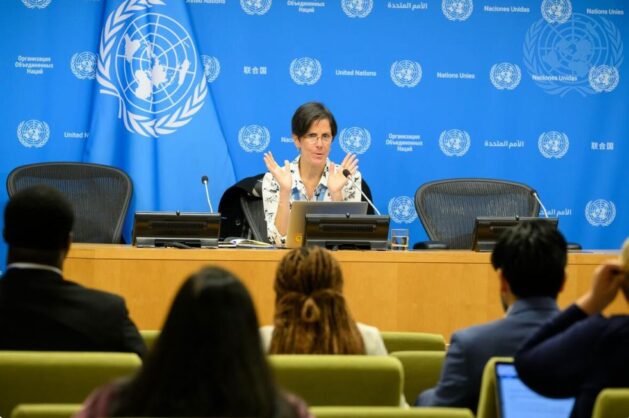
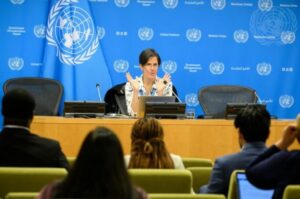
United Nations Special Rapporteur Reem Alsalem. Credit: UN Photo/Loey Felipe

United Nations Special Rapporteur Reem Alsalem. Credit: UN Photo/Loey Felipe

UNITED NATIONS, Sep 19 2025 (IPS) – A United Nations report calling for the global abolition of surrogacy has sparked intense debate among experts, with critics arguing that blanket bans could harm the very women the policy aims to protect.


Reem Alsalem, the United Nations Special Rapporteur on violence against women and girls, issued a report on violence against women and girls with a specific focus on surrogacy as a form of exploitation. The report, officially titled “The different manifestations of violence against women and girls in the context of surrogacy,” was published on July 14, 2025, and is slated for discussion at the upcoming UN General Assembly session in October.

The report calls surrogacy “direct and exploitative use of a woman’s bodily and reproductive functions for the benefit of others, often resulting in long-lasting harm and in exploitative circumstances.”

It further delves into the danger of surrogacy business models, in particular, which embrace the ambiguity of international law to churn a profit, often at the expense of both the surrogate and the prospective family. Alsalem recommends the abolition of surrogacy and asks member states to “work towards adopting an international legally binding instrument prohibiting all forms of surrogacy.”

One of the largest problems with surrogacy today, according to Senior Lecturer at Swinburne University Jutharat Attawet, is a lack of comprehensive education and legal standards around the practice. This results in social alienation and false conceptions, which worsen exploitation of people who participate in surrogacy—they are not provided adequate resources

Attawet, who specializes in surrogacy healthcare and domestic policy, considers surrogacy itself a beneficial tool for nontraditional family building. However, she acknowledges the steps it has to take to ensure autonomy and respect for surrogates.

Attawet’s research, cited in Alsalem’s report, shows that approximately 1 percent of babies born in Australia are from surrogates, so although the number has doubled over the past decade, doctors are not familiar with the process. Furthermore, legislation is primarily top-down rather than region- or area-specific. Since doctors in places like Australia are “intimidated by the language” surrounding surrogacy due to minimal education, they are less willing to openly engage with the procedures. This pushes families to seek surrogates elsewhere, where laws are less stringent and doctors more comfortable with the procedures.

Another incentive for overseas surrogacy, Attawet says, is lack of national support for surrogacy. Since it does not fulfill the criteria of most healthcare insurance plans, prospective parents often seek a more affordable surrogacy birth internationally. This further contributes to the exploitation both she and Alsalem note in their respective research—international surrogacy is much more difficult to regulate between different countries’ laws and often primarily harms the surrogate and the child, who is less likely to know their birth mother from an international surrogacy.

Alsalem criticized the practice of international surrogacy as an exploitative technique to perpetuate wealth inequality between different countries, but many experts argue that the job is one of the few accessible, well-paying jobs for child-bearing people who need to care for their family full-time. Polina Vlasenko, a researcher whose work was also cited in Alsalem’s report, explained to IPS that international surrogacy in Ukraine and the Republic of Georgia “is the type of job you can combine with having a kid and being a full-time caretaker of your kid… it still benefits women.”

Vlasenko elaborated, saying that most workers in the surrogacy industry, including intermediaries and clinicians, were women who had some sort of pre-existing connection to the process—often being former surrogates. To ban surrogacy entirely, Vlasenko argues, would merely harm women in all facets of the industry rather than resolving wealth gaps. She said, “this inequality is much deeper than services of surrogacy.”

Social worker and professor at Ohio State University Sharvari Karandikar similarly opposes the Special Rapporteur’s recommendation of abolition. In an interview with IPS, Karandikar explained that “in countries like India, it’s really hard to implement policies in a uniform way, and I think that one needs to have proper oversight of medical professionals and how they’re engaging in surrogate arrangements and medical tourism. Blanket bans do not work.”

She emphasized the dangers of surrogacy without regulation, saying it would only do more harm.

Instead, Karandikar advocates for “the safety, the better communication, more education, more informed choice and decision, more safeguards, better treatment options, and long-term health coverage for women who engage in surrogacy” as “a wonderful way to speak about women’s choices, decisions and their health instead of penalizing anyone.”

However, in order for the global conversation surrounding surrogacy to center around female agency, experts like Vlasenko say the perception of surrogates needs to change. She said, “sex work is not seen as violence or exploitation when it’s done for free… it’s the same with childbirth… surrogate mothers are taking the only work that, in their situation, allows them to fulfill certain responsibilities like childcare and income generation. They think that they’re agents in this process, but society sees them as victims.”

Ultimately, the surrogacy debate reflects broader questions about women’s autonomy, economic inequality and reproductive rights. As Vlasenko noted, addressing the “much deeper inequality” that pushes women to surrogacy may prove more effective than focusing solely on limiting the practice itself.

IPS UN Bureau Report

  Source

Loss and Damage at COP30: Indigenous Leaders Challenge Top-Down Finance Models

Active Citizens, Civil Society, Climate Action, Climate Change, Climate Change Finance, Climate Change Justice, Conferences, COP29, COP30, Editors’ Choice, Featured, Headlines, Human Rights, Humanitarian Emergencies, Indigenous Rights, International Justice, Sustainable Development Goals, TerraViva United Nations

Indigenous Rights

Indigenous activists continue to fight for a seat at the table in solving climate change, asking for self-determination and financial agency.

Activists demand loss and damage reparations outside the hall where the COP29 negotiators were concluding their negotiations. Credit: UN Climate Change/Kiara Worth

Activists demand loss and damage reparations outside the hall where the COP29 negotiators were concluding their negotiations. Credit: UN Climate Change/Kiara Worth

UNITED NATIONS, Sep 17 2025 (IPS) – As climate-induced disasters continue to devastate the Global South, nations are steadily mounting pressure at the United Nations for wealthier countries to deliver on long-promised climate reparations through the Loss and Damage Fund. For Indigenous peoples, whose territories are often the most ecologically intact yet most damaged by climate change, these negotiations define survival, sovereignty and recognition as rights-holders in global climate governance.


After the fund’s operationalization at the 29th Conference of the Parties to the United Nations Framework Convention on Climate Change (COP29) in Baku last fall, developing countries say that the pledges so far—approximately USD 741 million—fall drastically short of the trillions needed to recover from climate devastation.

This low number is acutely felt in Indigenous communities, whose local economies rely on thriving ecosystems.

“A lot of rich biodiversity, carbon sinks and the most preserved parts of the world are within indigenous territories,” said Paul Belisario, Global Coordinator for the Secretariat of the International Indigenous Peoples Movement for Self-Determination and Liberation (IPMSDL), in an interview with IPS. “Without recognizing Indigenous people’s right to take care of it, to govern it and to live in it so that their traditional knowledge will flourish, we cannot fully address the climate crisis.”

UN Secretary-General António Guterres echoed this sentiment in Baku, saying, “The creation of the Loss and Damage Fund is a victory for developing countries, for multilateralism and for justice.  But its initial capitalization of USD 700 million doesn’t come close to righting the wrong inflicted on the vulnerable.”

These “wrongs,” Indigenous leaders argue, must include the exclusion of traditional and tribal knowledge in decision-making. In light of pushback to make climate action a legal responsibility rather than a political agreement, many are hopeful that COP30 will yield a more successful negotiation for adequate compensation.

The call for action is led by coalition blocs including the Alliance of Small Island States (AOSIS) and G77, an alliance of developing countries with China as its primary political and financial supporter. Both alliances represent the countries most vulnerable to climate-related natural disasters. G77 was particularly vocal during COP29, where their rejection of the deal was backed by a number of climate and civil society organizations who criticized the negotiating text for giving developed countries too much leeway to shirk their climate finance obligations.

For Indigenous groups, this criticism stems from concerns that funding will not successfully reach their communities due to bureaucracy or geographical and political isolation.

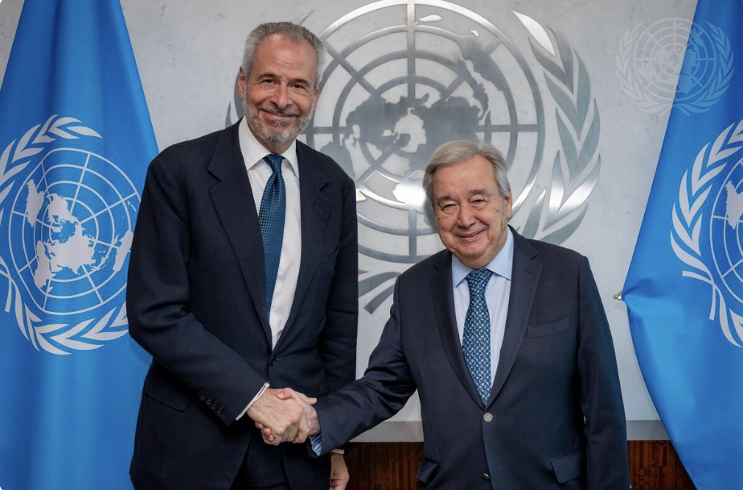
Secretary-General António Guterres meets with André Aranha Corrêa do Lago, President-designate of COP 30, the 2025 UN Climate Change Conference, which will be held in Belém, Brazil. Credit: UN Photo

Secretary-General António Guterres meets with André Aranha Corrêa do Lago, President-designate of COP 30, the 2025 UN Climate Change Conference, which will be held in Belém, Brazil. Credit: UN Photo

Janene Yazzie, director of policy and advocacy at the NDN Collective, spoke about the importance of Indigenous involvement in funding distributions, saying, “What we’re advocating for is to ensure that these mechanisms… are accessible to Indigenous Peoples, uphold the rights of Indigenous Peoples, and can be utilized towards solutions and responses that are designed and prioritized by Indigenous Peoples.”

Last year, countries eventually settled on mobilizing USD 300 billion annually by 2035 to developing countries for climate finance—far below the USD 1 trillion experts say is the minimum for effective mitigation and adaptation. The financial commitment is voluntary, meaning that countries can withdraw without consequence and no protections exist to ensure the money is distributed with regard for Indigenous governance systems.

The Forest Stewardship Council (FSC) Indigenous Foundation noted that groups without formal land titles could be excluded entirely, despite their role in stewarding biodiverse landscapes.

However, a recent International Court of Justice (ICJ) report has created new legal pathways. The court placed stringent obligations on states to prevent significant climate harm and tackle climate change, stating that failure to do so triggers legal responsibility. Scientific evidence can link emissions to specific countries, allowing those affected by climate change to seek legal action, which could include getting money back, restoring land, improving infrastructure, or receiving compensation for financial losses.

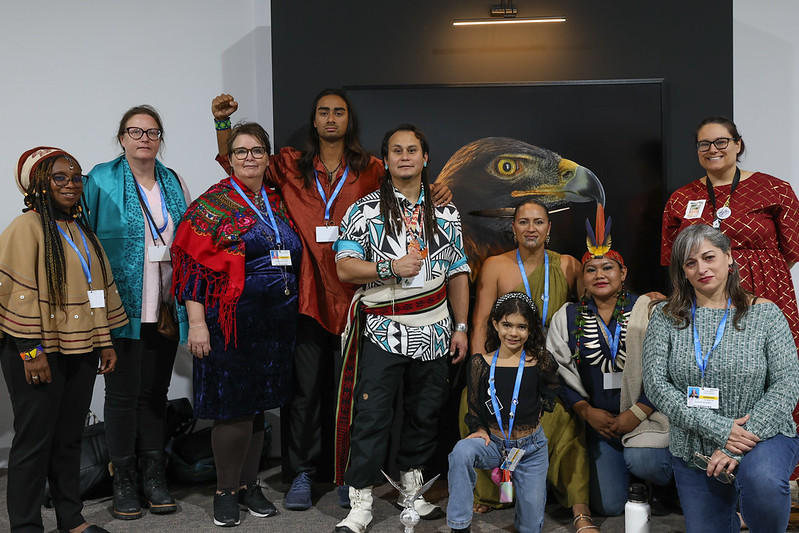
Indigenous activists at COP29. Credit: UN Climate Change/ Kiara Worth

Indigenous activists at COP29. Credit: UN Climate Change/Kiara Worth

This legal opinion opens new pathways for seeking restitution—not only in money but also in land recovery, infrastructure for adaptation, and guarantees of political participation.

This legal shift comes at a crucial time. In April 2025, thousands of Indigenous Brazilians marched in the capital ahead of COP30 in Belém, demanding land rights and decision-making influence. Meanwhile, the National Organization of the Indigenous Peoples of the Colombian Amazon (OPIAC) also issued a statement about the summit for Deforestation of the Amazon. They outline an action plan to end deforestation, strengthen land rights and phase out oil and gas exploration.

After indigenous groups were denied a co-presidency for COP30, Conference President André Corrêa do Lago pledged to establish a “Circle of Indigenous Leadership” within the conference. Many leaders found the arrangement insufficient—the FSC Indigenous Foundation called instead for “co-governance models where Indigenous Peoples are not just consulted but are leading and shaping climate action.”

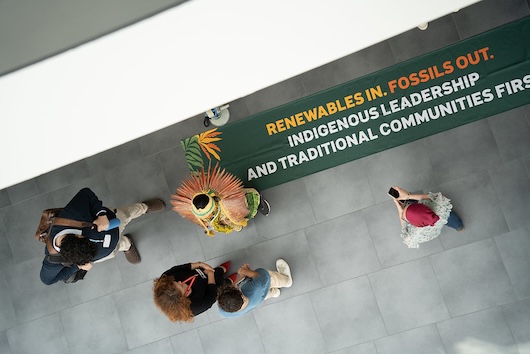
Indigenous people make their message clear during COP29. Credit: Photo- UN Climate Change/Lara Murillo

Indigenous people make their message clear during COP29. Credit: UN Climate Change/Lara Murillo

Other groups were more explicitly critical. The Indigenous Climate Action co-authored a statement at the end of COP29 saying, “There is nothing to celebrate here today… While we urgently need direct and equitable access to climate finance for adaptation, mitigation and loss and damage across all seven socio-cultural regions… we reject the financial colonization that comes from loans and any other financial mechanisms that perpetuate indebtedness of nations that have contributed the least to climate change yet bear the brunt of its tragedies.”

Belisario frames the funding question as a matter of justice rather than charity.

“This funding is not just corporate social responsibility or compensation,” he told IPS. “This is historical justice.”

However, without Indigenous influence in the distribution of money from the Loss and Damage Fund, it remains unclear how effective this aid will be in combating climate change based on Indigenous knowledge and science. Many activists advocate for more localized approaches to climate action.

Belisario acknowledges the limitations of international negotiations.

“It’s been a running joke that we will negotiate until COP100, and we might not have that long. What we would really like to get out of COP30 is to meet many communities to discuss the common problems and make them realize that this COP is just a part of how we would like to solve our climate crisis,” he said. “We really believe that more radical ways to enact accountability and responsibility will start with movements in people’s own countries, in their own localities.”

As the FSC Indigenous Foundation concluded, “Indigenous Peoples must lead the design, management, and oversight of financial mechanisms that affect their lands, lives, and futures. Climate justice will only be possible when Indigenous Peoples are recognized as rights-holders and partners in decision-making.”

IPS UN Bureau Report


Struggle For Water Continues Following Israeli Attacks on Lebanon

Armed Conflicts, Civil Society, Development & Aid, Editors’ Choice, Featured, Headlines, Health, Human Rights, Humanitarian Emergencies, Middle East & North Africa, Sustainable Development Goals, TerraViva United Nations

Water & Sanitation

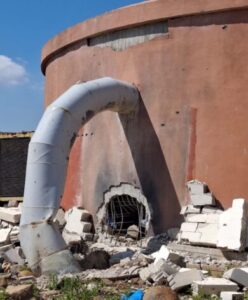
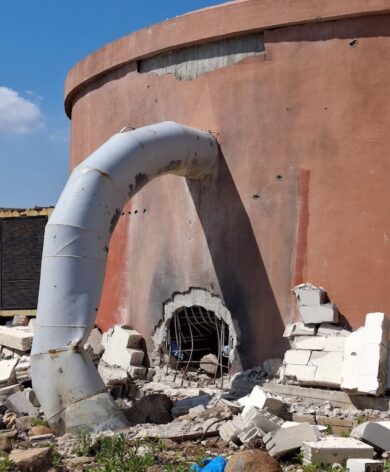
Damage to the water tank at the Maisat water pumping station. Credit: WaSH Sector Lebanon

Damage to the water tank at the Maisat water pumping station.
Credit: WaSH Sector Lebanon

BRATISLAVA, Sep 17 2025 (IPS) – Just under a year into a fragile ceasefire, 150,000 people in southern Lebanon continue to deal with the potentially lethal aftermath of Israeli bombing, highlighting the devastating long-term effects of conflict.


A report published late last month (AUG) by Action Against Hunger, Insecurity Insight, and Oxfam said that at least 150,000 people remain without running water across the south of Lebanon after Israeli attacks had damaged and destroyed swathes of water sanitation and hygiene (WASH) facilities since the beginning of the conflict in Lebanon.

The report, When Bombs Turn the Taps Off: The Impact of Conflict on Water Infrastructure in Lebanon, laid bare both the immediate and long-term effects of repeated attacks on Lebanese water infrastructure between October 2023 and April 2025.

It said that more than 30 villages were without any connection to running water, leading to long-term disruption to supplies of fresh water, fueling dependence on water trucking that many people cannot afford and, according to the World Bank, losses estimated at USD171 million across the water, wastewater and irrigation sectors.

A severe rainfall shortage in recent months has exacerbated the problem, increasing risks of outbreaks of waterborne diseases as  vulnerable communities are forced to resort to utilizing unsafe or contaminated water sources for their daily needs.

But groups behind the report warn that without mitigating action, the situation could become even worse.

“We can see there is the potential for some severe long-term repercussions of these attacks. There are 150,000 people without running water at the moment, but that number could rise in the future,” Suzanne Takkenberg, Action Against Hunger’s country director, told IPS.

Among the groups’ biggest concerns is the effect of the destruction on local agriculture.

In villages near the southern Lebanese border, farmers’ irrigation networks have been destroyed, cutting off vital water supplies to farms. Trucked-in water supplies have not been sufficient to replace this and allow them to irrigate land or give drinking water to their livestock, farmers say.

Meanwhile, farmers have also been unable to access their land due to security concerns—a November ceasefire between Israel and Hezbollah has held only partly, with violations reported regularly—compounding problems with food production.

“One of our major worries is the mid- to long-term effects of the difficulties for farmers to irrigate their land,” explained Takkenberg.

“They have been struggling to irrigate their land since October 2023, due to security concerns hindering access to their land, as well as water problems. We have seen as a consequence of these attacks that food prices have increased and food productivity has decreased.”

Another concern is the growing reliance on trucked-in water for communities.

“Worryingly, people are becoming dependent on using water that is trucked in. This is sometimes ten times more expensive than using water from a public network, and the checks on that water are not the same as those carried out on public water supply networks,” said Takkenberg.

“Water quality after any kind of conflict is a concern and we are definitely worried about it in southern Lebanon after these attacks,” she added.

Illness and disease related to water quality and shortages are major concerns.

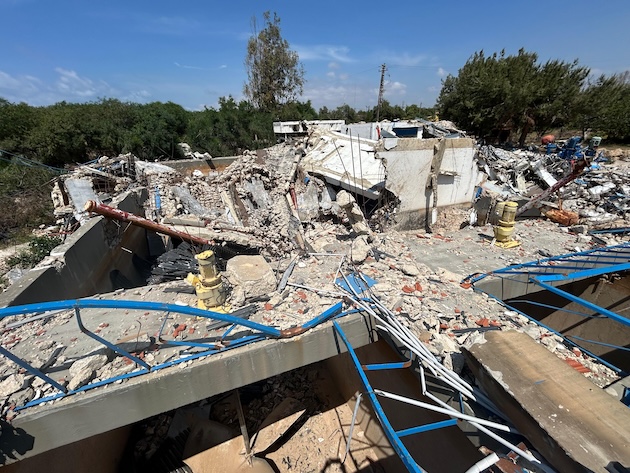
Destroyed water pumping station in Tyre following an airstrike in November 2024.Credit: Insecurity Insight

A destroyed water pumping station in Tyre, Lebanon, following an airstrike in November 2024.
Credit: Insecurity Insight

While the report states that waterborne and water-related illnesses were not reported by people interviewed, some highlighted the limited resources available for testing water quality and possible contamination. There are also worries that water may have been contaminated by white phosphorus, the use of these munitions in Lebanon having been verified by Human Rights Watch.

Meanwhile, there are further concerns that residents may resort to using unsafe water sources due to limited supplies, a situation exacerbated by low rainfall and water shortages at critical reservoirs.

Local officials interviewed for the report also highlighted damage to sewerage networks in some areas. This, combined with the known large-scale damage to water infrastructure and the possibility that damaged sewerage infrastructure has contaminated water sources, ramps up the potential of negative long-term effects on health if the water supply crisis is not adequately addressed, the report states.

It also points to evidence from Ethiopia, Ukraine and the Middle East, demonstrating clear links between damage to water and sanitation infrastructure during conflict and adverse public health outcomes.

“People are cutting back on their water use, which can have an effect on health and hygiene and raises disease risk—cholera is already epidemic in Lebanon and this situation could exacerbate that. Other diseases could also be spread. We have already seen cases of watery diarrhea, which is bad not just in itself, but also because in children it can cause problems with malnutrition as their bodies struggle to absorb nutrients,” Takkenberg said.

But while the potential long-term impact of the damage and destruction to water infrastructure is severe, early action could mitigate the worst possible outcomes, experts say.

“There is an urgent need to repair systems and while this is ongoing, to track water into the area. The consequences of water system destruction are rarely immediate. Most often, the impacts accumulate over time. It is the combination of destroyed infrastructure with the failure to repair it, insufficient water trucking, or lack of access to trucked-in water that eventually produces devastating outcomes for individuals and communities,” Christina Wille, Director of Insecurity Insight, told IPS.

“This is why the destruction of infrastructure demands close attention: if not effectively mitigated, cascading consequences are inevitable. People may be forced to leave, adding to the numbers of displaced populations, or they may fall ill. Yet there is also an opportunity—by addressing damaged infrastructure early—to prevent the worst outcomes of displacement and disease and to save lives,” she added.

But while repairing and rebuilding water infrastructure is essential to preventing the most severe long-term impacts on local communities, implementing it is a different matter.

Authorities have managed to carry out some limited repairs to some networks, but issues around the continued presence of Israeli forces and concerns about ongoing conflict violence have prevented wider-scale or more extensive reconstruction. Finances for repairs are also under strain amid the socio-economic crisis the country has faced since 2019.

“Disease outbreaks are very predictable and the cost of not dealing with them is much worse than dealing with them now. The health ministry has been good in warning [of potential health risks] but there is a limit to what the government can do with the resources that are available after years of economic crisis. It is a very difficult situation,” said Takkenberg.

The report ends with a call for, among others, all parties to the conflict to strictly comply with the ceasefire agreement and adhere to international humanitarian law (IHL) and ensure the protection of civilians, health workers, and essential infrastructure.

It urges humanitarian programmers and donors to support the rehabilitation and operationalization of conflict-affected water infrastructure and ensure temporary access to safe water and basic sanitation services through the provision of water trucking, emergency water points, and safe wastewater discharge.

The report also says UN member states should push for the establishment of independent, impartial, and transparent investigations into all allegations of IHL violations.

Satellite imagery shown in the report indicates that in at least several incidents the damaged or destroyed facilities were located in large open areas without clearly identifiable military targets, suggesting that in some cases they may have been specifically and deliberately targeted.

The authors of the report point out that under IHL, parties to a conflict must always distinguish between lawful military targets and civilians and civilian objects and that deliberately targeting civilians and civilian objects is prohibited and amounts to a war crime. The various kinds of water infrastructure are protected as civilian objects under IHL and must never be attacked.

“Determining whether each incident deliberately targeted water infrastructure would require access to confidential military decisions, which is not available, as well as information on whether any military objectives were present at the time of the attacks. Our data is limited to the observable effects on the ground following the attacks. Nevertheless, the scale and nature of the observed damage raise serious questions regarding compliance with international humanitarian law, which governs the conduct of hostilities,” said Wille.

While it may not be possible to determine whether the attacks were deliberate, their impact is clear and highlights the need to look at not just the direct but also indirect effects of conflict, said Wille.

“Conflict deaths are not only direct (caused by weapons) but also indirect, when the destruction of systems produces cumulative and deadly consequences. The more complex and interconnected our societies become, particularly in securing food and water, the more vulnerable they are to such systemic shocks. At the same time, it becomes harder to trace devastating outcomes back to a single act of destruction.

“This is why we must learn to examine conflicts through the lens of systems and interconnectivity and to apply this knowledge to our legal analysis of the conduct of warfare,” she said.

“The public needs to ask more direct questions about the conduct of warfare and how the principles of distinction, proportionality, and precaution are being applied. We need a broader debate on how these principles should be interpreted in today’s conflicts. Modern societies rely on highly interconnected and complex infrastructure to secure basic needs such as food and water, while warfare is increasingly conducted remotely through advanced technologies. In this context, what counts as proportional? And what kinds of precautions are necessary in today’s world?” she added.

IPS UN Bureau Report

  Source

Inside Africa’s Big Bet on Youth to Feed the Continent and Who’s Actually Getting Funded

Africa, Conferences, Development & Aid, Economy & Trade, Editors’ Choice, Environment, Featured, Food and Agriculture, Food Systems, Gender, Headlines, Sustainable Development Goals, TerraViva United Nations, Trade & Investment, Women & Economy

Food Systems

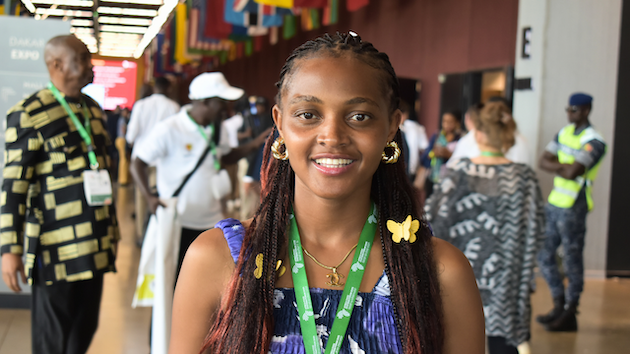
Winnie Wambui, co-founder of Harcourt Agri-Eco Farm in Kenya, speaks to IPS outside the Dealroom at the Africa Food Systems Forum 2025, held at the Centre International de Conférences Abdou Diouf (CICAD) in Dakar, Senegal, September 4, 2025. Credit: Chemtai Kirui/IPS

Winnie Wambui, co-founder of Harcourt Agri-Eco Farm in Kenya, speaks to IPS outside the Dealroom at the Africa Food Systems Forum 2025, held at the Centre International de Conférences Abdou Diouf (CICAD) in Dakar, Senegal, September 4, 2025. Credit: Chemtai Kirui/IPS

DAKAR, Sep 15 2025 (IPS) – Winnie Wambui leans forward on the panel stage, microphone in hand, scanning the room until she spots a raised hand.


Everyone in the room wears headphones, each voice isolated so that discussions don’t clash with sessions in adjacent halls. A question cuts through: how did a student science project become a commercial business?

At 24, Wambui, a Kenyan agripreneur, runs Harcourt Agri-Eco Farm, which recycles organic waste into animal feed using black soldier flies.

“Back then, I didn’t know it would become a farm or a business,” she said to a room of agripreneurs, researchers, and investors, describing her first experiments in 2022 as an energy engineering student at Jomo Kenyatta University of Agriculture and Technology (JKUAT).

Today, her eight-person team processes around 30 tonnes of waste each month and monitors the carbon emissions avoided.

The enterprise now generates at least USD 1,000 in monthly revenue, a modest but steady profit by Kenyan standards.

Inside the calm Knowledge Hub, on a panel organized by the International Centre of Insect Physiology and Ecology (icipe), Wambui tells her story to a dozen listeners in an intimate, almost subdued setting. But just outside, at the leafy Centre International de Conference’s Abdou Diouf (CICAD) in Dakar, Senegal, the atmosphere is charged.

Presidents, cabinet ministers, development banks, and agribusiness executives pace the halls at the annual Africa Food Systems Forum (AFSF) 2025, the continent’s flagship platform for agricultural policy and investment.

This year, the forum positioned youth at the center of Africa’s food security agenda.

Wambui is part of a new generation of innovative agripreneurs that governments and financiers promise to support.

For the first time, youth agripreneurs joined heads of state on the Forum’s opening stage, a symbolic gesture of recognition in a region where nearly 400 million people are under 35.

“Our median age is just 19. And by 2050, one in three young people in the world will be African,” said Claver Gatete, Executive Secretary of the UN Economic Commission for Africa (UNECA).

He said that if given land, finance, technology and markets, the youths can feed not only Africa but also the world.

However, turning such vision into reality is where the continent struggles.

The African Development Bank (AfDB) often says that Africa holds roughly 60 percent of the world’s uncultivated arable land, yet poor infrastructure, limited financing, and climate shocks keep much of it idle.

With the continent collectively importing approximately USD50 billion worth of food annually, according to the African Export–Import Bank (Afreximbank), the stakes are high.

At the national level, countries like Kenya continue to face hunger crises at emergency levels.

At the start of the year, the World Food Programme estimated that around two million people were experiencing acute hunger—a recurring crisis in a country with relatively better infrastructure and higher investment flows than many of its East African neighbors.

Experts say that despite localized crises, structural issues in African agriculture worsen food insecurity across the continent.

“We have relied on grants and aid to keep agriculture afloat, and this has made the agriculture sector stuck in a risk perception trap,” said Adesuwa Ifedi, Vice President of Africa Programs at Heifer International.

Ifedi said that commercial banks and investors avoid the sector, leaving grants to fill the gap. But grant dependence can undermine ventures in the eyes of private financiers.

“Grants should leverage commercial capital so the ecosystem can thrive,” Ifedi said.

This year’s Forum coincided with the recent African Union’s rollout of its Kampala Comprehensive Africa Agriculture Development Programme (CAADP) Strategy & Action Plan (2026–2035), or CAADP 3.0.

The new 10-year plan aims to mobilize USD 100 billion in investment, raise farm output by 45 percent, cut post-harvest losses in half, triple intra-African agrifood trade by 2035, and place youth inclusion at the core of Africa’s food future under the AU’s Agenda 2063.

In Dakar, over 30 agriculture ministers gathered under the chairmanship of former Ethiopian Prime Minister Hailemariam Desalegn Boshem, pledging to move beyond policy drafting toward delivering tangible results for agribusiness investment.

Their top priority, they said, was to shrink Africa’s food import bill by strengthening regional value chains.

Dr. Janet Edeme, head of the Rural Economy Division at the African Union Commission, told IPS that the Forum provides mechanisms to operationalize CAADP 3.0, aiming to empower at least 30 percent of youth in the agri-food sector while closing a USD 65–70 billion annual financing gap for agricultural small and medium-sized enterprises (agri-SMEs).

She said AFSF offers a rare opportunity for youthful agripreneurs to showcase bankable projects, access mentorship, and meet investors who would otherwise be out of reach.

“There are dedicated spaces—deal rooms, youth innovation competitions, investment roundtables—where these innovators can connect with governments, development finance institutions, and private investors,” said Edeme.

Organizers pointed to new spaces for youth to meet investors, but agripreneurs like Wambui said those opportunities felt distant.

She had never heard of the AU’s new flagship plan.

“I’m only hearing about that from you. If it’s meant to guide Africa’s food future, why aren’t there clear materials or programs I can see and use?” Wambui said. “Otherwise, we leave without knowing what strategies exist to support our work.”

By day two of the six-day forum, she had found her way into the deal room, the flagship space to connect entrepreneurs with investors, but instead of streamlined matchmaking, she found confusion.

“We are looking for the investors, and they’re looking for us—yet we don’t meet. Deals still depend on connections. That’s why I came to Dakar.”

Wambui, who co-founded Harcourt Agri-Eco Farm with two other partners, said the business has grown enough to cover wages, taxes, and debt repayments. Banks now extend her loans.

But that access to financing remains an exception in a system stacked against most, said Dr. Eklou Attiogbevi-Somado, the African Development Bank’s Regional Manager for Agriculture and Agro-Industry in West Africa.

He said that AfDB data shows commercial banks in Africa channel just 3–4 percent of their lending into agriculture.

Dr. David Amudavi, CEO of Biovision Africa Trust, said this capital drought is a huge concern in a sector that drives most livelihoods on the continent.

Amudavi, whose non-profit organization promotes ecological agriculture, said that the squeeze leaves farmers, and especially young agripreneurs, struggling to access credit for starting or scaling their agribusinesses, even though nearly 60 percent of Africa’s unemployed are under 25.

“Without finance, many youth-led ventures stay stuck at micro-scale or collapse,” Amudavi said.

Not far from the Youth Dome, at the deal room, Tanzanian agripreneur Nelson Joseph Kisanga, the co-founder of Get Aroma Spices, is also navigating the same maze.

Seven years ago, he left a banking career to try poultry farming, losing almost everything in his first three years.

Kisanga regrouped, merged his venture with that of his wife, Deborah, also a young agripreneur, and built Get Aroma Spices, now working with more than 50,000 farmers across southern Tanzania.

“Agriculture back home is seen as not for young people,” he said. “Even now, scaling means loans at high interest rates. There’s no other way.”

The family-run company exports turmeric, ginger, cardamom, and avocado oil while operating a youth- and women-led agro-processing hub through a public-private partnership.

His presence at the AFSF forum has already borne fruit.

“My intention coming here was to break into the West African market, and I’m happy to say I have clinched a supply deal in Ghana. All that’s left is for the lawyers to finalize the contract.” Kisanga said, before moving to the Youth Dome, a separate pavilion for young participants.

Inside, some groups chatted, others played basketball and table tennis, while others listened as young agri-food innovators pitched their ideas to a panel of investors.

Despite the fanfare, the forum ended without revealing how much capital reached youth-led ventures.

The most visible funding for youth at the summit came via the GoGettaz Agripreneur Prize, a pan-African initiative under the Generation Africa movement. The prize awarded USD 50,000 each to Egypt’s Naglaa Mohammad, who turns agricultural waste into natural products, and Uganda’s Samuel Muyita, who uses nanotechnology to reduce post-harvest fruit and vegetable losses.

An additional USD 60,000 impact award brought total prizes to roughly USD 160,000.

Other announcements included a USD 6.7 million trade programme from the United Kingdom (UK), the Alliance for a Green Revolution in Africa (AGRA), and the African Union (AU).

Senegal also launched a USD 22.5 million pilot for Community Agricultural Cooperatives, with financing linked to the African Food Systems Resilience Fund.

Yet there was no breakdown showing how much, if any, flowed to youth-led ventures.

The opacity mirrors past patterns.

Public summaries from the 2023 deal room reported only USD 3.5 million in closed investments, with no traceable flows to youth-led enterprises.

With AFSF positioned as Africa’s premier delivery platform, observers measured the announcements against CAADP 3.0’s USD 100 billion mobilization target, saying the gap is stark.

“We have seen this pattern before: big pledges at the summit, but little clarity or follow-up on how much actually reaches youth and smallholder farmers—the backbone of African food production,” said Famara Diédhiou, a Senegal-based food systems program manager with a regional civil society network.

“Without such accountability and inclusion of all stakeholders, these forums risk becoming mere showcases rather than platforms that deliver,” he said.

For now, even with the youth-first theme, AFSF still leaves young founders stuck in the same cycle of chasing visibility, hustling for contacts, and stitching together their own contracts.

As Wambui found, Kisanga, who has attended three previous Forums, said that in AFSF access is everything: you need to know in advance who to meet and be in the right room at the right moment.

“All visibility is currency,” said Kisanga. “That’s how you survive.”

IPS UN Bureau Report

IPS UN Bureau, IPS UN Bureau Report, Senegal,


Nepal Faces Political Crisis after Deadly Gen-Z Protests

Asia-Pacific, Civil Society, Democracy, Editors’ Choice, Featured, Headlines, Human Rights, Humanitarian Emergencies, Press Freedom, Sustainable Development Goals, TerraViva United Nations

Human Rights

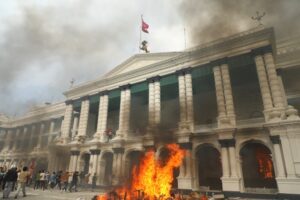
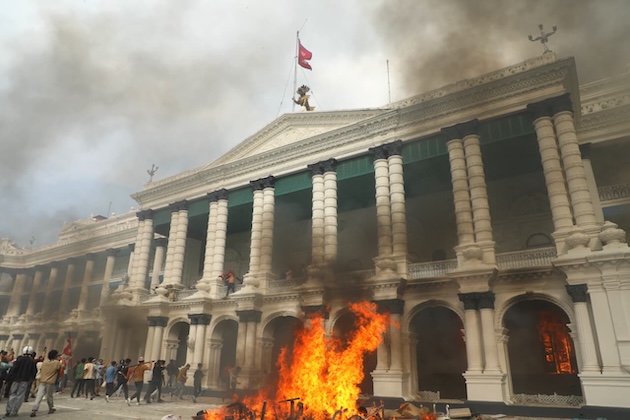
Protestors torched the administrative headquarters of Nepal, the palace of Singha Durbar. This was one of several public properties that were set alight. Credit: Barsha Shah/IPS

Protestors torched the administrative headquarters of Nepal, the palace of Singha Durbar. This was one of several public properties that were set alight. Credit: Barsha Shah/IPS

KATHMANDU, Sep 10 2025 (IPS) – Nepal entered into a new era of constitutional and political crisis after deadly protests by the deeply frustrated young generation (Gen-Z). Prime Minister KP Sharma Oli resigned on Tuesday after protests grew out of control.


Gen-Z protestors took to the streets on Monday, where the government used force. Security forces opened fire at youth protests against corruption, nepotism, and a social media ban. At least 19 people were killed on a single day. It’s one of the deadliest protest days in Nepal’s history. So far, at least 24 people have been confirmed to be dead during this ongoing unrest.

Protesters took to the streets after the government of Nepal banned most social media last week. Social media ban was the final straw, and on TikTok and Reddit, Gen-Z (13-28 years old) users organized peaceful protests, but they escalated. Now the Himalayan country with nearly 30 million people is facing uncertainty.

On Tuesday many of the government agencies and courthouses were set on fire. The country’s administrative headquarters and parliament house burned down. The homes of political leaders were also torched.

Initially reluctant, Oli resigned on Tuesday, citing “the extraordinary situation” in the country. He submitted his resignation to the President effectively immediately.

Later Tuesday, Nepal President Ramchandra Paudel issued a statement urging protestors to cooperate for a peaceful resolution.

“In a democracy, the demands raised by the citizens can be resolved through talks and dialogue, including Gen-Z representatives,” he said in a statement. Paudel urged Gen-Z representatives to “come to talk.”

Balen Shah, mayor of Kathmandu metropolitan city, who is seen as one of the possible leaders, also urged youth protestors to stop destroying public property and come to talk.

“Please gen Z, the country is in your hands; you are the ones who will be building. Whatever is being destroyed is ours; now return home,” he wrote on social media on Tuesday evening.

After the security situation got out of control, the Nepal Army deployed throughout the country from late evening on Tuesday. Army chief also urged protesters to come forward to talk with the president to find solutions.

After the rapidly escalating situation, international agencies, including the United Nations, issued their concerns.

Expressing deep concern over the deaths and destruction, UN human rights chief Volker Türk called on authorities and protesters to de-escalate the spiraling crisis. In a statement, Türk said he was “appalled by the escalating violence in Nepal that has resulted in multiple deaths and the injury of hundreds of mostly young protesters, as well as the widespread destruction of property.”

“I plead with security forces to exercise utmost restraint and avoid further such bloodshed and harm,” he said. “Violence is not the answer. Dialogue is the best and only way to address the concerns of the Nepalese people. It is important that the voices of young people are heard.”

The UN Secretary-General is also closely following the situation, according to his spokesperson. During Tuesday’s daily briefing in New York, Stéphane Dujarric said António Guterres was “very saddened by the loss of life” and reiterated his call for restraint to prevent further escalation.

“The authorities must comply with international human rights law, and protests must take place in a peaceful manner that respects life and property,” Dujarric said, noting the dramatic images emerging from Nepal.

The UN Country team in Nepal urges authorities to ensure that law enforcement responses remain proportionate and in line with international human rights standards.” UN Resident Coordinator Hanaa Singer-Hamdy described the situation as “so unlike Nepal.”

Nepal is known for its political insatiability and has seen more than a dozen governments since it transitioned to a republic after abolishing its monarchy. In 2008, after long protests and a decade-long Maoist war, Nepal transitioned into a republic and got its new construction in 2015.

One decade later, Nepal has again found itself in a political crisis.

IPS UN Bureau Report

  Source

‘Israeli Offensive in Gaza City an Existential Threat to the Two-State Solution’

Armed Conflicts, Crime & Justice, Editors’ Choice, Featured, Freedom of Expression, Headlines, Human Rights, Humanitarian Emergencies, International Justice, Middle East & North Africa, Press Freedom, Sustainable Development Goals, TerraViva United Nations

Armed Conflicts

As Israel escalates its attack on Gaza City, the UN moves to stop further violence and humanitarian violations by renewing UNIFIL’s mandate for the last time.

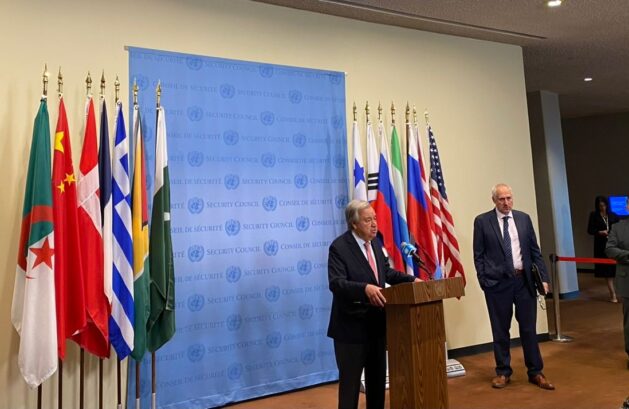
United Nations Secretary-General António Guterres at a press briefing on Israel’s plans to take over Gaza City. Credit: Jennifer Xin-Tsu Lin Levine/IPS

United Nations Secretary-General António Guterres at a press briefing on Israel’s plans to take over Gaza City. Credit: Jennifer Xin-Tsu Lin Levine/IPS

UNITED NATIONS, Aug 28 2025 (IPS) – Ahead of the Security Council meeting on the situation in the Middle East, United Nations Secretary-General António Guterres spoke to the press on the “unfolding tragedy that is Gaza,” calling Israel’s new plans to take over Gaza City with the military a “deadly escalation” and an “existential threat to the two-state solution.”


He warned that such a move could precipitate an unprecedented humanitarian catastrophe that imperiled any remaining prospects for negotiated peace.

The Secretary-General also reiterated his plea for an immediate ceasefire, emphasizing that capturing Gaza City would result in massive civilian casualties and widespread destruction—including severe impacts on the health sector already teetering on collapse.

At the daily press briefing, spokesperson for the Secretary-General Stéphane Dujarric reported on the displacement in Gaza since Israel’s most recent invasion, confirming the Secretary-General’s statements about refugees. UN experts report that the total number of people who have fled from north Gaza to south Gaza since August 14, when the Israeli invasion was announced, is 20,000.

The Secretary-General went on to address the most recent Israeli air strike on the Nasser Hospital in the southern Strip of Gaza, where at least 20 people were killed and 50 others were injured. Israel’s military defended the strike by asserting that it targeted a camera used by Hamas to surveil troop movements.

Dorothy Shea, United States ambassador to the United Nations, defended Israeli actions and urged condemnation of Hamas’ use of civilian facilities for military purposes. She also noted the Hamas members killed by the airstrike.

Prime Minister Benjamin Netanyahu issued a statement calling the strike a “tragic mishap” with no mention of a specific Hamas target. The Secretary-General called for an impartial investigation into these contrasting claims.

Although Netanyahu reaffirmed his respect for journalists on X, formerly known as Twitter, UNESCO reported at least 62 journalists and media workers killed in Palestine while working since October 2023. At least five journalists were killed in the Nasser air strike, according to World Health Organization Director Tedros Adhanom Gebreyesus.

At the Security Council meeting debating whether or not to renew the mandate for the United Nations Interim Force in Lebanon (UNIFIL), many representatives acknowledged Israel’s current military action and called UNIFIL’s work “vital” in maintaining borders, minimizing conflict and stabilizing tensions.

The representative for Algeria Amar Bendjama was critical of UNIFIL’s failures, but spoke in favor of the renewal. He said, “We must ask, has UNIFIL fulfilled its mandate? Clearly, the answer is no. Lebanese lines remain under Israeli occupation, and we regret that our proposal to include a clear reference to the 1949 general armistice agreement was not retained. Without ending Israel’s occupation of Arab lands, peace and stability in the region will remain elusive.”

UNIFIL was initially created in 1978 to oversee Israeli withdrawal from Lebanon. The mandate was adjusted and has played a significant role in maintaining Lebanese army control on the border between Lebanon and Israel rather than Hezbollah, a paramilitary organization, taking over. Critics, led by the United States, see the mandate as a waste of money that has helped Hezbollah consolidate power.

Dujarrac emphasized the necessity of all participating parties to respect UNIFIL’s mandate for it to successfully fulfill its promises.

The Council ultimately voted to renew UNIFIL’s mandate, with many members stressing that the mission continues to play an important role in preventing further escalation along the Israel-Lebanon border.

Guterres’s warnings on Gaza and the debate over UNIFIL underscored the overlapping crises in the region that face the Security Council.

As displacement in Gaza mounts and humanitarian needs continue to fester, UNIFIL’s renewal has bought time rather than answers for a region caught between humanitarian crisis and unresolved conflict.

IPS UN Bureau Report

  Source