EXCLUSIVE: Water Laureate Kaveh Madani on Arrest, Exile and Fight for Science

Aid, Civil Society, Climate Change, Combating Desertification and Drought, Conservation, Development & Aid, Economy & Trade, Editors’ Choice, Environment, Featured, Food and Agriculture, Global, Headlines, Human Rights, IPS UN: Inside the Glasshouse, Sustainable Development Goals, TerraViva United Nations, Water & Sanitation

Environment

It was hope that kept me going. – Professor Kaveh Madani 
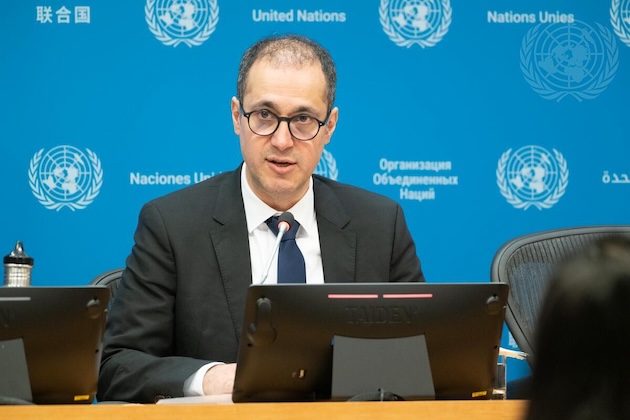
Kaveh Madani, Director of the UN University’s Institute for Water, Environment and Health and lead author of the report entitled “Global Water Bankruptcy: Living Beyond Our Hydrological Means in the Post-Crisis Era” briefs reporters at UN Headquarters. Credit: UN Photo/Evan Schneider

Kaveh Madani, Director of the UN University’s Institute for Water,
Environment and Health and lead author of the report entitled “Global Water
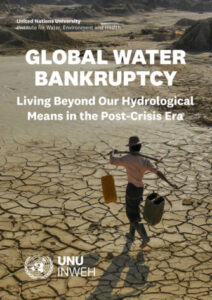
Bankruptcy: Living Beyond Our Hydrological Means in the Post-Crisis Era” briefs reporters at UN
Headquarters.
Credit: UN Photo/Evan Schneider

UNITED NATIONS, Mar 25 2026 (IPS) – Professor Kaveh Madani of Iran has been named the 2026 Stockholm Water Prize laureate. The award will be formally presented by King Carl XVI Gustaf of Sweden in August during World Water Week in Stockholm.


The Stockholm Water Prize is widely regarded as the highest global honour in water science and policy. Often called the Nobel Prize for water, it recognises individuals and institutions for exceptional contributions to the sustainable use and protection of water resources. This year’s selection stands out for both scientific impact and the extraordinary personal journey of the laureate.

At 44, Madani is the first Muslim and the youngest recipient in the prize’s 35 year history. He is also the first United Nations official and the first former politician to receive the award.

Madani currently serves as Director of the United Nations University Institute for Water, Environment and Health. Once a senior official in Iran’s government, he later faced arrest, interrogation, and a sustained smear campaign that forced him to leave his country.

Born in Tehran in 1981, Madani grew up in a family deeply connected to Iran’s water sector. His early exposure to the country’s mounting water challenges shaped his academic direction. He studied civil engineering at the University of Tabriz before moving to Sweden to pursue a master’s degree in water resources at Lund University. He later earned a PhD from the University of California, Davis, followed by postdoctoral research at the University of California, Riverside.

By his early 30s, Madani had established himself as a leading systems analyst. He joined Imperial College, London, where his work focused on the mathematical modelling of complex human water systems. His research combined hydrology, economics, and decision sciences to improve policymaking in water management.

In 2017, he made a decisive move. Leaving a prestigious academic career in London, he returned to Iran to serve as Deputy Vice President and Deputy Head of the Department of Environment. Many viewed his appointment as a signal of reform and a bridge between Iran and its scientific diaspora.

During his tenure, Madani pushed for transparency and structural reforms in water governance. He used innovative public campaigns to raise awareness about environmental degradation. However, his efforts challenged entrenched interests.

State-aligned media accused him of espionage and labelled him a “water terrorist” and “bioterrorist”. Conspiracy theories circulated, linking him to foreign intelligence agencies and even to alleged weather manipulation schemes. His advocacy for international environmental agreements further intensified opposition.

In early 2018, a broader crackdown on environmental experts began. Madani was detained and interrogated multiple times. Several of his colleagues were arrested. One of them, Kavous Seyed Emami, died in custody under contested circumstances.

Facing mounting pressure, Madani left Iran and entered a period of exile. He joined Yale University, where he continued his research and advocacy. He began to focus more on bridging science and policy at the global level.

Madani’s academic contributions have been widely recognised. He is known for integrating game theory into water resource management. His work challenged traditional models that assumed cooperation among stakeholders. He demonstrated that individual incentives often lead to uncooperative behaviour, which makes many engineering solutions ineffective in practice.

This approach provided new tools to understand conflicts over shared water resources. It has been applied to transboundary water disputes and to policy design in regions with limited trust among stakeholders.

One of his most influential contributions is “water bankruptcy.” He introduced the term to describe a condition where water systems can no longer recover to their historical levels. Unlike a crisis, which implies a temporary disruption, water bankruptcy signals a long-term structural failure.

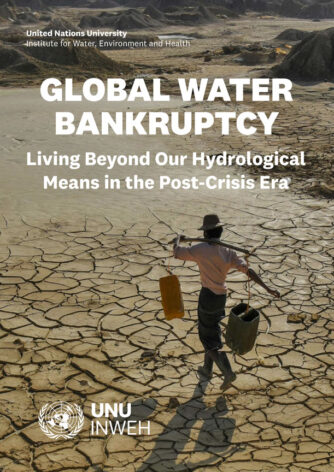
In a recent United Nations report, Madani argued that the world entered an era of global water bankruptcy in January 2026. The report highlighted that many river basins and aquifers have lost their capacity to regenerate. This framing has sparked debate among policymakers and researchers.

Madani uses simple financial language to explain complex ecological realities. He argues that humanity is no longer living off renewable water flows but is depleting long-term reserves. This framing has made the concept widely accessible and influential.

Beyond academia, Madani has built a strong public presence. With a large following on social media, he has used digital platforms to communicate scientific findings in accessible ways. His work includes documentaries and public campaigns aimed at increasing awareness and accountability.

He has also played key roles in international diplomacy. As Iran’s lead environmental diplomat, he participated in global negotiations and served as Vice President of the UN Environment Assembly Bureau in 2017. At the COP23 climate conference in Bonn, he called for greater attention to water in global climate agreements.

Today, as head of the United Nations water think tank, he continues to advocate for integrating water into climate and development policies. He has particularly focused on the Global South, where water stress closely links with food insecurity, migration, and conflict.

The Stockholm Water Prize Committee cited his “unique combination of groundbreaking research, policy engagement, diplomacy, and global outreach, often under personal risk” in awarding him the 2026 prize.

In an exclusive interview with Inter Press Service, Madani recalled the intense pressure and fear that defined his final days in Iran. He described repeated interrogations, surveillance, and a growing sense that his work had placed him in direct confrontation with powerful institutions.

Here are edited excerpts from the interview: 

IPS: You introduced the idea of “water bankruptcy.” How does this change how governments must act today?

Madani: Water bankruptcy is defined as a post-crisis state of failure in which the system is suffering from insolvency, meaning that water use has been more than the available water for an extended period, and also irreversibility, meaning that there are some damages to the ecosystem and the machinery of water production that are irreversible and cannot be fixed.

What that means is that some of the things that used to be just anomalies and abnormal conditions are now the new normal, and we’re no longer experiencing only a temporary deviation from what we are used to, but we have a situation that we have to get used to. Crisis management is about mitigation.

Bankruptcy management is about mitigating what can still be mitigated and adapting to new realities with more restrictions. Bankruptcy management calls for an honest confession, the admission of a confession that a mistake has been made, and the current business model is not working, so it calls for honestly admitting to the mistakes made and transforming the business model, that calls for a fresh new start and a change of course.

It is bitter. Bankruptcy is not a pleasant condition but admitting to it helps us prevent further irreversible damages and enables a future that is less catastrophic.

IPS: You faced arrest, exile, and serious accusations in Iran. What kept you going during that period?

Professor Madani: Hope. Hope is what kept me going because I had gone back there to help and at least at the start, I was trying to take what was happening to me as part of the job and as part of the adventure because I was there to make a positive impact, and if I had given up too quickly, then that would not have matched my essential motivation to help.

I knew that it would not be a very smooth path, but it turned out to be much more bumpy than what I had anticipated, and I think many also, you know, those who made that situation bumpy for me, also regret that today, but by the time they realised mistakes were made, it was too late to do anything about it.

Can you recall your arrest and interrogation? What do you remember most from that experience, and how did it affect you personally?

I think arrests and interrogations are very frustrating, especially when you haven’t done anything wrong.

What kills you is constantly worrying about what others think of you and coming up with different scenarios and conspiracy theories. Dealing with conspiracy theories and proving them wrong is not easy. Those were very hard times for me, but as you know, my background is in behaviour analysis. I was trying to put myself in the shoes of those who were suspicious of me, understand their concerns, and address them so I could help my homeland.

IPS: Many countries still treat water stress as a temporary crisis. What are the biggest policy mistakes they continue to make?

Madani: Yes, crisis management is all about mitigation. Those who deny the crisis and enter the bankruptcy state continue to borrow more from nature, build more infrastructure, dig deeper wells, add additional reservoirs and storage capacity, implement more water transfer projects and build more, and construct more desalination plants. Continuing to add to their supply, on the other hand, they think things would be temporary, and through some sort of rationing, things would be solved, but the continuation of that behaviour and the denial of that reality makes the problem worse.

They get drained into a deepening problem, and again, like the financial world, if your business model is not working and you’re in denial, you continue taking more loans and your expenses and your debt become higher and higher. By the time that people realise that there is no way out of that chaos and that failure, the cost is much, much higher. Remaining in denial would result in major significant irreversible damages that generations would have to pay for.

IPS: You combined science with diplomacy and public outreach. Which of these has had the most real impact on decision-making?

Professor Madani: It’s very hard to really say which one has the most impact, because they’re very complementary. The science is very good, but it’s not enough for decision-making. You still have to understand what the real world looks like and how incentives shape behaviour and actions and how interests promote conflicts and cooperation to be able to act.

Science, of course, opens doors and puts more solutions on the table, but still, without understanding the politics or navigating through politics, it would not work. Diplomacy is another one when it comes to the international scale; even when it comes to negotiating with stakeholders, that’s a skill that would be extremely helpful. So, in a way, these are the things that you need.

And on top of these, public outreach educates you about perceptions, how people and societies understand problems, how they judge different situations, and how their emotions and their perceptions shape their beliefs, and that tells you what you need to do when it comes to communicating your science better, changing their opinion, impacting their opinion, and even negotiating with them or convincing them that things might be different or a different pathway is required. I think they all help you create a recipe for something that might work.

IPS: Your work focuses on human behaviour in water management. Why do technical solutions alone often fail?

Madani: A lot of times, technical solutions developed by our computer models or in our labs don’t take into account the full elements of reality. When humans are involved, we deal with different motives, incentives, emotions, and psychologies, and that makes – that creates – some essentially unexpected realities that might tweak things. Simply put, a lot of times when it comes to developing a solution for a water problem or an environmental solution or a sustainability solution, we think that everyone agrees to making short-term sacrifices for the sake of long-term resilience, but that is not the case in reality because different stakeholders, different groups, farmers, urban users, and industrial users also have short-term goals.

They maximise profit, make sure that the quality of life is not impacted, and so on, which makes them non-cooperative to an extent. And if you miss this reality, then you think that the solution, the optimal solution, is very practical and everyone would cooperate, but then you get very disappointed.

Yet, you can take that into account to the extent possible, try to understand the behavioural element and incorporate those into your assessment and projections to be able to align those incentives and motives with the long-term interest to offer a solution that is more attractive and win-win.

IPS: You now advise governments globally. What is the one urgent action every water-stressed country must take in the next five years?

Madani: I think that by now, countries must understand the importance of water as an essential resource for establishing peace, national security, justice, prosperity, and development. I mean, it supports human development, health, and long-term resilience in society. So, countries must not take it for granted and understand that technological solutions would not be sufficient to address shortages.

They must revisit their practices. They must do a proper accounting to understand what, what’s, and how water is currently being spent and if it’s strategic – strategically speaking, that is the right way of doing things when it comes to matters of national security and long-term resilience. Bankruptcy management starts with accounting and transparency.

That’s something that is missing in many water-stressed and non-water-stressed countries, and I think that’s something that we can focus on, put the lens of science on, and not be afraid of accounting and measuring and monitoring what is happening in the system because that knowledge is required if you want to make improvements.

IPS: Thank you very much for taking the time and speaking to IPS  and congratulations again for the well-deserved award.

IPS UN Bureau Report
  Source

World Enters ‘Era of Global Water Bankruptcy’

Civil Society, Development & Aid, Featured, Global, Headlines, Health, Humanitarian Emergencies, Sustainable Development Goals, TerraViva United Nations, Water & Sanitation

Opinion

Lead author Prof. Kaveh Madani

 
Flagship report calls for fundamental reset of global water agenda as irreversible damage pushes many basins beyond recovery.

UNITED NATIONS, Jan 21 2026 (IPS) – The world is already in the state of “water bankruptcy”. In many basins and aquifers, long-term overuse and degradation mean that past hydrological and ecological baselines cannot realistically be restored.


While not every basin or country is water-bankrupt, enough critical systems around the world have crossed these thresholds, and are interconnected through trade, migration, climate feedbacks, and geopolitical dependencies, that the global risk landscape is now fundamentally altered.

The familiar language of “water stress” and “water crisis” is no longer adequate. Stress describes high pressure that is still reversible. Crisis describes acute, time-bound shocks. Water bankruptcy must be recognized as a distinct post-crisis state, where accumulated damage and overshoot have undermined the system’s capacity to recover.

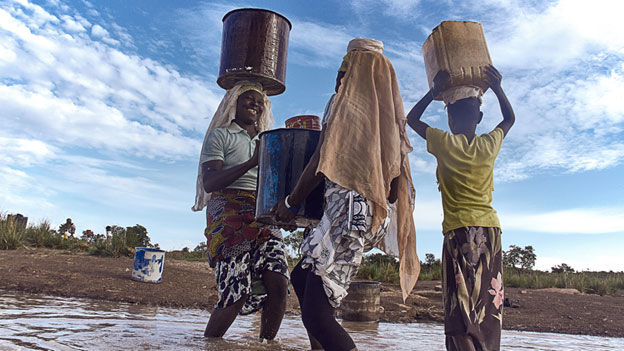
A group of women fetching water from a dam in Taha, Northern Region of Ghana. Credit: Evans Ahorsu. Source: UN University’s Institute for Water, Environment and Health

Water bankruptcy management must address insolvency and irreversibility. Unlike financial bankruptcy management, which deals only with insolvency, managing water bankruptcy is concerned with rebalancing demand and supply under conditions where returning to baseline conditions is no longer possible.

Anthropogenic drought is central to the world’s new water reality. Drought and water shortage are increasingly driven by human activities, over-allocation, groundwater depletion, land and soil degradation, deforestation, pollution, and climate change, rather than natural variability alone. Water bankruptcy is the outcome of long-term anthropogenic drought, not just bad luck with hydrological anomalies.

Water bankruptcy is about both quantity and quality. Declining stocks, polluted rivers, and degrading aquifers, and salinized soils mean that the truly usable fraction of available water is shrinking, even where total volumes may appear stable.

Managing water bankruptcy requires a shift from crisis management to bankruptcy management. The priority is no longer to “get back to normal”, but to prevent further irreversible damage, rebalance rights and claims within degraded carrying capacities, transform water-intensive sectors and development models, and support just transitions for those most affected.

Governance institutions must protect both water and its underlying natural capital. The existing institutions focus on protecting water as a good or service disregarding the natural capital that makes water available in the first place. Efforts to protect a product are ineffective when the processes that produce it are disrupted.

Recognizing water bankruptcy calls for developing legal and governance institutions that can effectively protect not only water but also the hydrological cycle and natural capital that make its production possible.

Water bankruptcy is a justice and security issue. The costs of overshoot and irreversibility fall disproportionately on smallholder farmers, rural and Indigenous communities, informal urban residents, women, youth, and downstream users, while benefits have often accrued to more powerful actors. How societies manage water bankruptcy will shape social cohesion, political stability, and peace.

Water bankruptcy management combines mitigation with adaptation. While water crisis management paradigms seek to return the system to normal conditions through mitigation efforts only, water bankruptcy management focuses on restoring what is possible and preventing further damages through mitigation combined with adaptation to new normals and constraints.

Water can serve as a bridge in a fragmented world. Water can align national priorities with international priorities and improve cooperation between and within nations. Roughly 70% of global freshwater withdrawals are used for agriculture, much of it by farmers in the Global South. Elevating water in global policy debates can help rebuild trust between South and North but also within nations, between rural and urban, left and right constituencies.

Water must be recognized as an upstream sector. Most national and international policy agendas treat water as a downstream impact sector where investments are focused on mitigating the imposed problems and externalities. The world must recognize water as an upstream opportunity sector where investments have long-term benefits for peace, stability, security, equity, economy, health, and the environment.

Water is an effective medium to fulfill the global environmental agenda. Investments in addressing water bankruptcy deliver major co-benefits for the global efforts to address its environmental problems while addressing the national security concerns of the UN member states.

Elevating water in the global policy agenda can renew international cooperation, increase the efficiency of environmental investments, and reaccelerate the halted progress of the three Rio Conventions to address climate change, biodiversity loss, and desertification.

A new global water agenda is urgently needed. Existing agendas and conventional water policies, focused mainly on WASH, incremental efficiency gains and generic IWRM guidelines, are not sufficient for the world’s current water reality. A fresh water agenda must be developed that takes Global Water Bankruptcy as a starting point and uses the 2026 and 2028 UN Water Conferences, the conclusion of the Water Action Decade in 2028, and the 2030 SDG 6 timeline as milestones for resetting how the world understands and governs water.

Global Water Bankruptcy: Living Beyond Our Hydrological Means in the Post-Crisis Era | UN University Institute for Water, Environment and Health (UNU-INWEH) (20 January) (press release)

Support Paper
Madani K. (2026) Water Bankruptcy: The Formal Definition, Water Resources Management, 40 (78) doi: 10.1007/s11269-025-04484-0)

IPS UN Bureau

  Source

Multi-Year Drought Gives Birth to Extremist Violence, Girls Most Vulnerable

Africa, Armed Conflicts, Biodiversity, Child Labour, Climate Change Finance, Climate Change Justice, Combating Desertification and Drought, Conferences, Development & Aid, Disaster Management, Editors’ Choice, Energy, Environment, Europe, Featured, Food and Agriculture, Gender Violence, Global, Headlines, Human Rights, Migration & Refugees, Peace, Sustainable Development Goals, TerraViva United Nations, Water & Sanitation, Women & Climate Change, Youth

Combating Desertification and Drought

In Nairobi’s Kibera, the largest urban informal settlement in Africa, girls and women wait their turn for the scarce water supply. Credit: Manipadma Jena/IPS

SEVILLE & BHUBANESWAR, Jul 2 2025 (IPS) – While droughts creep in stealthily, their impacts are often more devastating and far-reaching than any other disaster. Inter-community conflict, extremist violence, and violence and injustice against vulnerable girls and women happen at the intersection of climate-induced droughts and drought-impoverished communities.


Five consecutive years of failed rain in Ethiopia, Somalia, and Kenya brought the worst drought in seventy years to the Horn of Africa by 2023. In Somalia, the government estimated 43,000 excess deaths in 2022 alone due to drought-linked hunger.

As of early current year, 4.4 million people, or a quarter of Somalia’s population, face crisis-level food insecurity, including 784,000 people expected to reach emergency levels. Together, over 90 million people across Eastern and Southern Africa face acute hunger. Some areas have been enduring their worst ever recorded drought, finds a United Nations-backed study, Drought Hotspots Around the World 2023-2025 released today at the 4th International Conference on Financing for Development (FfD4).

UNCCD Executive Secretary Ibrahim Thiaw said "Drought is here, escalating, and demands urgent global cooperation" Photo courtesy: UNCCD

UNCCD Executive Secretary Ibrahim Thiaw noted that while drought is here and escalating, it demands urgent global cooperation. Photo courtesy: UNCCD

High tempera­tures and a lack of precipitation in 2023 and 2024 resulted in water supply shortages, low food supplies, and power rationing. In parts of Africa, tens of millions faced drought-induced food shortages, malnutrition, and displacement, finds the new 2025 drought analysis, Drought Hotspots Around the World 2023-2025, by the UN Convention to Combat Desertification (UNCCD) and the U.S. National Drought Mitigation Center (NDMC).

It not just comprehensively synthesizes impacts on humans but also on biodiversity and wildlife within the most acute drought hotspots in Africa (Somalia, Ethiopia, Zimbabwe, Zambia, Malawi, Botswana, and Namibia), the Mediterranean (Spain, Morocco, and Türkiye), Latin America (Panama and the Amazon Basin) and Southeast Asia.

Desperate to Cope but Pulled Into a Spiral of Violence and Conflict

“The coping mechanisms we saw during this drought grew increasingly desperate,” says lead author Paula Guastello, NDMC drought impacts researcher. “Girls pulled from school and forced into marriage, hospitals going dark, and families digging holes in dry riverbeds just to find contaminated water. These are signs of severe crisis.”

Over one million Somalis in 2022 were forced to move in search of food, water for families and cattle, and alternative livelihoods. Migration is a major coping mechanism mostly for subsistence farmers and pastoralists. However, mass migration strains resources in host areas, often leading to conflict. Of this large number of displaced Somalis, many crossed into territory held by Islamic extremists.

Drought in a Sub-Saharan district leads to 8.1 percent lower economic activity and 29.0 percent higher extremist violence, an earlier study found. Districts with more months of drought in a given year and more years in a row with drought experienced more severe violence.

Drought expert and editor of the UNCCD study Daniel Tsegai told IPS at the online pre-release press briefing from the Saville conference that drought can turn into an extremist violence multiplier in regions and among communities rendered vulnerable by multi-year drought.

Climate change-driven drought does not directly cause extremist conflict or civil wars; it overlaps and exacerbates existing social and economic tensions, contributing to the conditions that lead to conflict and potentially influencing the rise of extremist violence, added Tsegai.

Extracting water from a traditional well using a manual pulley system. Credit: Abdallah Khalili / UNCCD

Extracting water from a traditional well using a manual pulley system. Credit: Abdallah Khalili / UNCCD

Though the effects of climate change on conflict are indirect, they have been seen to be quite severe and far-reaching. An example is the 2006-2011 drought in Syria, seen as the worst in 900 years. It led to crop failures, livestock deaths and mass rural displacement into cities, creating social and political stress. Economic disparities and authoritarian repression gave rise to extremist groups that exploited individuals facing unbearable hardships.

The UN study cites entire school districts in Zimbabwe that saw mass dropouts due to hunger and school costs. Rural families were no longer able to afford uniforms and tuition, which cost USD 25. Some children left school to migrate with family and work.

Drought-related hunger impact on children

Hungry and clueless about their dark futures, children become prime targets for extremists’ recruitment.

A further example of exploitation of vulnerable communities by extremists is cited in the UNCCD drought study. The UN World Food Programme in May 2023 estimated that over 213,000 more Somalis were at “imminent risk” of dying of starvation. Little aid had reached Somalia, as multiple crises across the globe spread resources thin.

However, al-Shabab, an Islamic extremist group tied to al-Qaida, allegedly prevented aid from reaching the parts of Somalia under its control and refused to let people leave in search of food.

Violent clashes for scarce resources among nomadic herders in the Africa region during droughts are well documented. Between 2021 and January 2023 in eastern Africa alone, over 4.5 million livestock had died due to droughts, and 30 million additional animals were at risk. Facing starvation of both their families and their livestock, by February 2025, tens of thousands of pastoralists had moved with their livestock in search of food and water, potentially into violent confrontations with host regions.

Tsegai said, “Drought knows no geographical boundaries. Violence and conflict spill over into economically healthy communities this way.”

Earlier drought researchers have emphasized to policymakers that “building resilience to drought is a security imperative.”

Women and Girls Worst Victims of Drought Violence

“Today, around 85 percent of people affected by drought live in low- and middle-income countries, with women and girls being the hardest hit,” UNCCD Deputy Executive Secretary Andrea Meza said.

“Drought might not know boundaries, but it knows gender,” Tsegai said. Women and girls in low-income countries are the worst victims of drought-induced societal instability.

Traditional gender-based societal inequalities are what make women and girl children par­ticularly vulnerable.

During the 2023-2024 drought, forced child marriages in sub-Saharan Africa more than doubled in frequency in the four regions hit hardest by the drought. Young girls who married brought their family income in the form of a dowry that could be as high as 3,000 Ethiopian birr (USD 56). It lessened the financial burden on girls’ parental families.

Forced child marriages, however, bring substantial risks to the girls. A hospital clinic in Ethiopia (which, though, it has outlawed child marriage) specifically opened to help victims of sexual and physi­cal abuse that is common in such marriages.

Girls gener­ally leave school when they marry, further stifling their opportunities for financial independence.

Reports have found desperate women exchanging sex for food or water or money during acute water scarcities. Higher incidence of sexual violence happens when hydropower-dependent regions are confronted with 18 to 20 hours without electricity and women and girls are compelled to walk miles to fetch household water.

“Proactive drought management is a matter of climate justice,” UNCCD Meza said.

Drought Hotspots Need to Be Ready for This ‘New’ Normal

“Drought is no longer a distant threat,” said UNCCD Executive Secretary Ibrahim Thiaw, adding, “It is here, escalating, and demands urgent global cooperation. When energy, food, and water all go at once, societies start to unravel. That’s the new normal we need to be ready for.”

“This is a slow-moving global catastrophe, the worst I’ve ever seen. This report underscores the need for systematic monitoring of how drought affects lives, livelihoods, and the health of the ecosystems that we all depend on,” said Mark Svoboda, report co-author and NDMC Founding Director.

“The struggles experienced by Spain, Morocco and Türkiye to secure water, food, and energy under persistent drought offer a preview of water futures under unchecked global warming. No country, regardless of wealth or capacity, can afford to be complacent,” he added.

Global Drought Outlook 2025 estimates the economic impacts of an average drought today can be up to six times higher than in 2000, and costs are projected to rise by at least 35% by 2035.

“It is calculated that $1 of investment in drought prevention results in bringing back $7 into the GDP lost to droughts. Awareness of the economics of drought is important for policymaking,” Tsegai said.

The report released during the International Drought Resilience Alliance (IDRA) event at the Saville conference aims to get public policies and international cooperation frameworks to urgently prioritize drought resilience and bolster funding.

IPS UN Bureau Report


‘A Wake-Up Call from the Womb’—Indigenous People Rally for a Binding Plastics Treaty

Active Citizens, Civil Society, Climate Action, Conferences, Conservation, Development & Aid, Editors’ Choice, Environment, Europe, Featured, Global, Headlines, Health, Human Rights, Humanitarian Emergencies, Natural Resources, North America, Ocean Health, Sustainable Development Goals, TerraViva United Nations, Water & Sanitation

Health

Panelists engaged in a discussion with reporters about plastic pollution. Credit: Kizito Makoye/IPS

Panelists engaged in a discussion with reporters about plastic pollution. Credit: Kizito Makoye/IPS

NICE, France, Jun 11 2025 (IPS) – As the sun peeked through the French Riviera clouds and a dozen reporters sipped orange juice aboard the WWF Panda Boat docked at Port Lympia, Frankie Orona, a Native American rights advocate from the Society of Native Nations in San Antonio, Texas, stunned the room into a moment of absolute stillness.


“Imagine a baby in the womb, completely reliant on its mother for air, water, and nutrients—and yet, plastic chemicals are already finding their way into that sacred space,” he said, his voice trembling with emotion. “That baby has no choice. And neither do future generations if we don’t act now.”

Orona’s stark imagery marked a powerful appeal to the high-level delegation at the UN Ocean Conference on June 10 in Nice, where ministers and representatives from 95 countries backed The Nice Wake-Up Call—a collective demand for an ambitious, legally binding U.N. plastics treaty that addresses the full lifecycle of plastic pollution.

For Orona, the issue is deeply personal and spiritual. “In our culture, the womb is the beginning of the circle of life. Polluting it with plastics is like violating a sacred trust,” he said.

A Crisis in the Making

Plastics are now everywhere—in our oceans, our food, and even our bodies. In 2019 alone, an estimated 28 million metric tons of plastic ended up in the environment—equivalent to dumping the weight of the Titanic into nature every day. Without aggressive intervention, that figure could nearly double by 2040.

For  Orona, who doubles as UNEP co-chair of the Indigenous Peoples Major Group, the negotiations unfolding ahead of the August talks in Geneva are a fight for survival.

Speaking to reporters aboard the WWF Panda, Orona, a descendant of the Tonkawa and Apache tribes, did not mince words. “For Indigenous peoples and frontline communities, plastic pollution is not just an environmental issue—it is a human rights crisis that has been going on for generations,” he said.

With the Mediterranean breeze brushing across the harbor, Orona’s voice cut through the chatter of press briefings and policy handouts. “Our communities live near the extraction sites, the refineries, the chemical plants, the incinerators, and the waste dumps. We are the first to feel the impacts—in our lungs, our water, our food, and our children’s health. And too often, we are the last to be consulted.”

The declaration known as The Nice Wake-Up Call, endorsed by 95 countries at the conference, was a welcome shift in tone for many in the Indigenous rights movement. “It sends a strong signal that many governments are now recognizing what we’ve been saying for decades—that ending plastic pollution means addressing the full life cycle of plastics: from extraction to production to disposal,” Orona said.

From Environmental Damage to Systemic Injustice

Orona, who also represents the International Indigenous Peoples Forum on Plastics and is part of the Plastics Environment Justice Delegation, emphasized that plastic pollution must be understood in the context of historical and ongoing systems of exploitation.

“This is a continuation of environmental racism and systemic injustices. The human rights violations and violence that have been normalized in our communities for generations must stop,” he said.

Citing the disproportionate exposure of Indigenous populations to toxic chemicals used in plastics—some linked to cancer, reproductive harm, and endocrine disruption—he called for a global ban on these additives. “Many of these chemicals are dumped, burned, and leached into our waters, into our sacred lands,” Orona said. “We cannot talk about justice if these harms continue.”

A Just Transition Rooted in Indigenous Knowledge

While many governments are pushing for ambitious production caps and bans on single-use plastics, Orona warned that these measures must not shift the burden onto those least responsible for the crisis.

“A just transition means phasing out fossil fuel-based plastics while investing in community-led solutions, including Indigenous knowledge and science,” he said. “This isn’t just about cleaning up trash; it’s about restoring balance and protecting future generations.”

In a system long dominated by fossil fuel interests and extractive economies, Indigenous communities have often led the way in conservation and sustainable living. “Our knowledge systems are not just cultural—they are scientific. They are proven. And they are part of the solution,” Orona noted.

Follow the Money—and Ensure It Reaches the Frontlines

Orona’s final message was financial. Any treaty, he insisted, must include a mechanism that guarantees direct access to funds for Indigenous and frontline communities.

“Too often, we are shut out of global financing streams—even when we are the ones on the front lines, creating the very solutions the world needs,” he said. “That must end.”

While images of floating plastic bottles and entangled turtles often dominate headlines, experts at the Nice panel were adamant: the crisis begins long before a straw hits the ocean.

Disproportionate Impacts

Plastic production facilities are often located in marginalized communities—adding a layer of environmental injustice to the crisis.

“Indigenous peoples, rural communities, and minority populations suffer the worst impacts,” said Orona. “We’re talking about asthma, cancers, and cardiovascular diseases—especially in children. These are not abstract consequences; these are lived experiences.”

Reporters on the Panda Boat scribbled notes between bites of Mediterranean pastries, visibly moved by Orona’s personal account.

“This is genocide by pollution,” he added. “Our people are dying, and it’s largely invisible to the rest of the world.”

Wildlife at Risk

The panel also underscored the devastating effects of plastic on marine life. Every species of sea turtle has been documented ingesting or getting entangled in plastic. For blue whales, the planet’s largest animals, the reality is even more daunting—they are believed to ingest up to 10 million pieces of microplastic every day, sometimes weighing as much as 44 kilograms.

The next round of negotiations for the plastics treaty is scheduled for August in Geneva, where pressure is mounting to solidify a legally binding agreement that includes all five critical points outlined in the Nice declaration.

The sense of urgency also echoes in the corridors of the International Maritime Organization (IMO), the U.N. agency overseeing the global shipping industry. Tasked with ensuring environmental safety on the high seas, the IMO has stepped up efforts to address plastic waste, among other pressing marine threats.

In response to a question about the devastating 2021 marine spill in Sri Lanka—where a burning cargo vessel released over 1,680 metric tons of plastic pellets into the Indian Ocean—IMO Secretary-General Arsenio Dominguez noted that the agency has been developing new regulations specifically targeting the handling, packaging, and cleanup of plastic pellets. These measures, initially adopted by the European Union, mark a significant step in tightening maritime controls on plastic pollution.

Dominguez stressed that tackling marine pollution also demands inclusive governance. The IMO is increasingly encouraging the participation of Indigenous communities and young people—groups historically sidelined from international maritime decision-making. Their voices, he said, are crucial for shaping policies that are both just and effective.

Next Steps

Professor Bethany Carney Almroth—a renowned environmental toxicologist and one of the leading scientific voices in the negotiations—believes the business world is not the obstacle many assume it to be. Instead, she says, it’s a matter of giving business the legal clarity to act.

“Business follows the rule of law,” she said. “The situation we have today is a mix—some laws are written, others are absent. That’s the problem. If we create new regulations, then it’s no longer a question of whether businesses are voluntarily doing enough. It becomes a question of compliance.”

Carney Almroth, who has worked extensively on the science-policy interface for chemicals and plastics, said that a strong, enforceable treaty is essential to shift the status quo.

“The status quo is broken,” she said plainly. “We need to change the framework so regulations guide businesses to do the best thing possible—for the economy, for the environment, and for people.”

As one of the few experts who has consistently called for systemic reform in how plastics are managed, Carney Almroth said that relying on voluntary industry movements is simply not enough.

“We’ve seen global treaties deliver meaningful results before,” she said. “The Montreal Protocol worked. It changed how we handled chlorofluorocarbons, and it protected the ozone layer. People may not even realize how much their lives have improved because of those decisions—but they have.”

The Hidden Cost of Profit

Responding to a question about the profitability of the plastics industry—especially in countries where it contributes significantly to government revenues—Carney Almroth offered a sobering perspective.

“When we say plastics are profitable, that’s only because we’re not accounting for the real costs,” she said. “Those costs aren’t paid by the companies producing plastics. They’re paid by nature, and they’re paid by people.”

She cited staggering health implications, pointing out that plastics contain thousands of chemicals—many of which are toxic, carcinogenic, or endocrine-disrupting. “The human healthcare costs associated with exposure to these chemicals are astronomical—running into billions of dollars each year. But they’re not included in the price tag of plastic production.”

Building Standards that Protect People and the Planet

So what does it take to eliminate hazardous plastics from global markets?

According to Carney Almroth, we’re still missing a critical piece: effective, fit-for-purpose international standards.

“Right now, most of the existing standards—developed by organizations like ISO or OECD—are geared toward material quality or industrial use. They were never designed to protect human health or the environment,” she explained. “We need new standards. Ones that are developed by independent experts and shielded from vested interests.”

For such standards to be truly effective, she said, they must be holistic and interdisciplinary. “We need to move away from just focusing on economic sustainability. That’s what we’ve done in the past—and it’s failed us. Environmental and social sustainability must be given equal weight.”

As the panel wrapped up, Orona gazed over the Port Lympia waters.

“We have a choice right now,” he said. “To continue poisoning the womb of the Earth—or to become caretakers, protectors.”

And as the reporters descended the gangway of the Panda Boat, the symbolism was not lost: we’re all adrift in this ocean of plastic. Whether we sink or swim depends on what happens next.

IPS UN Bureau Report

 

Girls in Kenya Are Repurposing the Invasive Mathenge Tree Into Furniture

Active Citizens, Africa, Biodiversity, Civil Society, Conservation, Development & Aid, Editors’ Choice, Environment, Featured, Gender, Headlines, Migration & Refugees, Natural Resources, Sustainable Development Goals, TerraViva United Nations, Water & Sanitation, Youth

Youth

Magdalene Ngimoe and Char Tito, learners at Kakuma Arid Zone Secondary School, making chairs from mathenge wood. Credit: Farai Shawn Matiashe/IPS

Magdalene Ngimoe and Char Tito, learners at Kakuma Arid Zone Secondary School, making chairs from mathenge wood. Credit: Farai Shawn Matiashe/IPS

KAKUMA, Kenya, Jun 6 2025 (IPS) – Char Tito is hammering nails into wood at Kakuma Arid Zone Secondary School in Turkana County, northern Kenya. The 16-year-old is making a traditional chair under the scorching sun outside one of the classroom blocks.


The wood she is using is from an unpopular source in this community. It is from a species of mesquite named Prosopis juliflora, which is native to Central and South America and is known in Kenya as mathenge.

Many locals hate mathenge in Turkana County due to its invasiveness and its thorns that are harsh to humans and can cause injuries to livestock. Locals say rivers and dams dry fast in areas with mathenge, and it dominates other plants.

Over the years, the residents have found it an easy source of firewood and charcoal, fuel for many in this community.

But youths, including girls, are now repurposing the mathenge tree to make furniture, particularly chairs.

Char Tito, a learner at Kakuma Arid Zone Secondary School in Kakuma, is seated on a chair made from mathenge wood. Credit: Farai Shawn Matiashe/IPS

Char Tito, a learner at Kakuma Arid Zone Secondary School in Kakuma, is seated on a chair made from mathenge wood. Credit: Farai Shawn Matiashe/IPS

“Plastic chairs are expensive. This is why I started making chairs from mathenge earlier this month,” says Tito, who fled the war in South Sudan to seek refuge in Kakuma Refugee Camp in 2017.

“I was taught here at school. Mathenge is abundant. We have been using it for firewood for years. I did not know that it could be used to make chairs.”

Income-Generating Scheme

The land in Kakuma is barren with sparse vegetation and the soils are so poor that they do not support agriculture. Turkana County receives little or no rain and can go for five years without experiencing a single drop of rain.

Acacia trees and mathenge, which are always green despite the high temperatures and water scarcity, make up most of the trees in this community.

Government statistics indicate that the mathenge trees spread at a rate of 15 percent yearly and have so far colonized a million acres of land in Kenya.

Some use mathenge to fence their homes and to make livestock shelters.

Locals survive on livestock production and trading charcoal and firewood.

Dennis Mutiso, a deputy director at Girl Child Network (GCN), a grassroots non-governmental organization supporting Tito and hundreds of other refugees, says the project is equipping learners with green skills.

Magdalene Ngimoe, a learner at Kakuma Arid Zone Secondary School, is making chairs from mathenge wood in Kakuma. Credit: Farai Shawn Matiashe/IPS

Magdalene Ngimoe, a learner at Kakuma Arid Zone Secondary School, is making chairs from mathenge wood in Kakuma. Credit: Farai Shawn Matiashe/IPS

“It is contributing to national climate plans. It aligns with the school curriculum,” he says.

Mutiso says those youths who have been trained in making chairs partner with those untrained to pass the knowledge to the community.

Tito, who lives with her mother and her three siblings, is so far making chairs for household use but is planning to make some for sale to her neighbors.

“This is a skill that I can use for my entire life. I am looking forward to earning a living out of carpentry,” she says, smiling.

Mathenge was introduced in the 1970s in the East African country to restore degraded dry lands. It is drought resistant, with its deep roots making it ideal for afforestation in areas like Turkana. The mathenge restored the area and blocked wind erosion in some areas, but at a cost to the locals.

Magdalene Ngimoe, a learner at Kakuma Arid Zone Secondary School, is making chairs from mathenge wood in Kakuma. Credit: Farai Shawn Matiashe/IPS

Invasive mathenge tree in Kakuma, northern Kenya. Credit: Farai Shawn Matiashe/IPS

Despite the massive cutting down of this tree for firewood and charcoal, the mathenge regenerates fast, unlike other trees like Acacia.

Lewis Obam, a conservator at the Forestry Commission under Turkana County, says there was a negative perception of the mathenge in the community.

“Communities lost their goats after consuming the tree. Its thorns were affecting the community,” he says.

Obam says mathenge is a colonizer and spreads so fast.

“It was meant to counter desertification. The intention was good,” he says.

Obam says its hardwood is ideal for making chairs.

“It has more opportunities than we knew. It has the second hardest wood in this area. We need maximum use of the mathenge.”

Protecting Environment 

To restore other trees in this semi-arid land, Tito and other girls are planting trees at school and in their homes. She has planted five trees at home and many at school, but water is a challenge amid temperatures that can go as high as 47 degrees Celsius.

Magdalene Ngimoe, a learner at Kakuma Arid Zone Secondary School in Kakuma, planting a tree. Credit: Farai Shawn Matiashe/IPS

Magdalene Ngimoe, a learner at Kakuma Arid Zone Secondary School in Kakuma, planting a tree. Credit: Farai Shawn Matiashe/IPS

“I am proud that I am contributing to measures that reduce the effects of climate change,” she says.

Sometimes, the girls bring water from home to school to ensure that the trees survive.

Trees help mitigate climate change by absorbing carbon dioxide from the atmosphere.

Kenya is targeting to plant at least 15 billion trees by 2032 through its National Tree Growing Restoration campaign launched in December 2022.

Magdalene Ngimoe, another learner at Kakuma Arid Zone Secondary School, says she has so far planted two trees at her home in Kiwandege village in Kakuma.

“I hate mathenge. It makes our lives difficult. But I am happy that I am using it to make chairs. I am also planting trees at school, which will provide shade to other students,” says the 16-year-old Kenyan Ngimoe, the firstborn in a family of seven.

Her family survives on selling meat and she hopes she will earn some money from her newly acquired craft.

Edwin Chabari, a manager at Kakuma Refugee Camp under the Department of Refugee Services, says Mathenge has been a menace not only within the camp but also in the area.

“The local youths can get cash from a tree that we thought was a menace,” he says.

GCN, with funding from Education Above All, a global education foundation based in Qatar, has so far planted 896,000 trees in Kakuma and Dadaab and is targeting 2.4 million trees by next year.

Ngimoe’s favorite subject is science and she wants to be a lawyer representing vulnerable children.

Established in 1992, Kakuma Refugee Camp is home to 304,000 people from more than 10 countries, like South Sudan, Burundi, Somalia, and the Democratic Republic of Congo (DRC).

Joseph Ochura, sub-county director in Turkana County under the Teachers Service Commission (TSC), says the tree-planting initiative has enhanced the learning environment.

“When you visit most of the schools that have been supported, you will see big shades of trees. Whenever there is a break time, learners sit there, including the teachers. Sometimes, some lessons are even carried out under that shade,” Ochura says.

He says that of the 15 billion trees set by the government, TSC was allocated 200 million trees.

Some schools also have their tree nurseries.

When ready, they plant the seedlings at the school and supply others to the community.

“Some of the girls are at the forefront in tree planting. That is a plus. That is what we are telling the girls—outside school, you can still do this in the community,” Ochura says.

Tito, whose favorite subject is English and who wants to be a doctor, is happy to be part of the green jobs being created in Kakuma.

“As a girl, I am proud of myself. I am contributing to environmental protection,” she says.
IPS UN Bureau Report

  Source

Arab Region Leaders, Experts Gather to Find Solutions to Water Scarcity, Sustainable Development

Active Citizens, Asia-Pacific, Civil Society, Combating Desertification and Drought, Conferences, Conservation, Development & Aid, Editors’ Choice, Featured, Headlines, Human Rights, Latin America & the Caribbean, Sustainable Development Goals, TerraViva United Nations, Water & Sanitation

Population

Forum of Arab Parliamentarians on Population and Development met in Bahrain to to address water scarcity. Credit: APDA

Forum of Arab Parliamentarians on Population and Development met in Bahrain to to address water scarcity. Credit: APDA

MANAMA & NAIROBI, Nov 7 2024 (IPS) – The Arab region is among the most water-scarce areas globally, as nearly 392 million people live in countries facing water scarcity or absolute water scarcity. So dire is the situation that, of the 22 Arab countries, 19 fall below the annual threshold for water scarcity in renewable resources, defined as 1,000 cubic meters per person.


Worst still, 13 countries fall below the absolute water scarcity threshold of 500 cubic meters per person per year. Water scarcity in the Arab region poses a serious challenge, threatening the achievement of Sustainable Development Goals and the realization of the fundamental human right to access water and sanitation. 

It is within this context that the Forum of Arab Parliamentarians on Population and Development, in collaboration with the Asian Population and Development Association in Japan and with support from the United Nations Population Fund, held a meeting on October 26, 2024, in the Kingdom of Bahrain to address water scarcity as a development concern and promote coordinated action across different sectors.

Dr. Mohamed Al-Samadi, Secretary-General of the Forum of Arab Parliamentarians on Population and Development, stressed the need for coordinated governance and measures to close the gap between water security and the Sustainable Development Goals. The gathering that included Bahraini parliamentarians from committees focused on population and development, along with representatives from civil society organizations, experts, academics, and government officials.

The gathering reiterated that “researchers in the field of water science have set the water poverty line at 500 cubic meters per person annually, while 1,000 cubic meters of freshwater per person is considered the threshold for achieving water security. Reports also link this to food security, showing that producing an individual’s annual food supply requires over 2,000 cubic meters of water.

Lawmakers and experts stressed the need for coordinated governance and measures to close the gap between water security and the Sustainable Development Goals. Credit: APDA

Lawmakers and experts stressed the need for coordinated governance and measures to close the gap between water security and the Sustainable Development Goals. Credit: APDA

Stressing that the “water security in the Arab world is now critically at stake as annual usable water resources fall below 40 billion cubic meters. A large portion of these resources is lost to evaporation and infiltration into the soil, and additional amounts are necessary to sustain river flows to their endpoints. Any country that uses 40 percent or more of its total annual water resources is considered to be facing severe water scarcity according to the Water Scarcity Index, also known as the Water Sustainability Index.”

Dr. Muneer Ibrahim, a Member of Parliament and member of the Committee on Water, Environment, and Public Utilities, spoke about water security and the SDGs, emphasizing that water is the fundamental pillar for achieving these global goals across their economic, social, and environmental dimensions, as water security is an essential requirement for their realization.

Further stressing that the relationship between water and sustainable development is reciprocal, and this interconnectedness poses significant challenges in the Arab region, especially given the current water situation. Necessitating the development and implementation of effective policies and solutions to ensure sustainable water resources for various uses.

Hassan Ibrahim, a Member of Parliament and the rapporteur for the Water Committee, spoke about innovation for sustainable water management, highlighting that resolving the water crisis is essential for a livable future on our planet. Noting that whether water is overly abundant, severely scarce, or highly polluted, it presents a triple threat exacerbated by climate change, depriving billions of people of access to clean, safe water and sanitation services.

He said that this then “threatens economies, encourages migration, and may fuel conflict. We need global action to establish water security to enable inclusive and resilient green growth while addressing the interconnected relationship between water, climate, and conflict. Despite the progress made, we are falling behind in achieving the SDGs related to water, which directly affect inclusive development.”

Current trends indicate that by 2030, 1.6 billion people will lack access to safe drinking water, 2.8 billion will be deprived of safe sanitation services, and 1.9 billion will be without basic hygiene facilities. Globally, the investment needs for the water sector exceed USD 1.37 trillion and must increase sixfold from current levels to meet the sixth SDG on ensuring availability and sustainable management of water and sanitation for all by 2030.

“Water accounts for less than 2 percent of public spending, and private investment levels in this sector are also low in low- and middle-income countries. Bahrain has adopted strategies and initiatives to improve the management of water resources, support the strategic water stock, and increase the area and sustainability of rainwater harvesting efficiency to enhance natural groundwater resources,” Ibrahim said.

Bahrain is implementing advanced technical solutions to utilize treated wastewater for irrigation needs, which also helps reduce environmental pollution, address the impacts of climate change, and minimize the depletion of natural water resources. Bahrain, through the Water Security Strategy 2030 launched by the Ministry of Energy and Environment, aims to ensure the sustainability and continuity of access to water under both normal conditions and extreme emergencies.

The key targets of the strategy include reducing total water resource demand by 21 percent, increasing the water productivity index to USD 110 per cubic meter, lowering the water scarcity index by three degrees, and raising the percentage of treated water reuse to 95 percent. Dr. Walid Zubari, a water resources expert and president of the Arab Water Association, presented on the vital role of civil society institutions in raising water awareness to achieve water sustainability and address the challenges facing the water sector in Bahrain.

Regarding civil society institutions, Dr. Zubari said, “It is important for them to play a role in water awareness. Once community members understand the implications of their behavior in dealing with water and there is a religious and moral incentive, it is likely that they will voluntarily rationalize their water usage. If this happens, the community and the executors will be in the same boat, enabling them to achieve water sustainability.”

Dr. Karim Rashid, Member of Parliament, delivered a comprehensive presentation on the importance of water and its essential role in supporting sustainable development, as water impacts all aspects of development and is closely linked to nearly every SDG, driving economic growth, supporting healthy ecosystems, and being essential for life itself.

Still, nearly two billion people worldwide lack access to safely managed drinking water services, while around 3.6 billion suffer from inadequate sanitation services. To enable effective climate change adaptation, he said activities should reflect the importance of water management in reducing vulnerability to risks and building resilience against climate change.

Further emphasizing the necessity of political commitment and leadership, technological innovations, and the advancement of service delivery models and financing to support governments in fulfilling their commitment to achieve Target 6.2 of the SDGs—”to ensure access for all to adequate and equitable sanitation and hygiene services by 2030.”

The expert and water sector advisor at the Ministry of Water in the Kingdom of Bahrain, Eng. Mohammed Sawar, called for adopting a model transformation in the management of water resources in the GCC countries, shifting from the current focus on “supply sustainability” to “consumption sustainability.” Emphasizing economic efficiency in water usage and financial sustainability of water services.

Note: This meeting was supported by the Asian Population and Development Association (APDA), the United Nations Population Fund (UNFPA) and the Japan Trust Fund (JTF).

IPS UN Bureau Report