From Truancy to Belonging: Why Safe Spaces Matter for Youth Well-Being

Asia-Pacific, Education, Gender, Headlines, Sustainable Development Goals, TerraViva United Nations, Youth, Youth Thought Leaders
Opinion

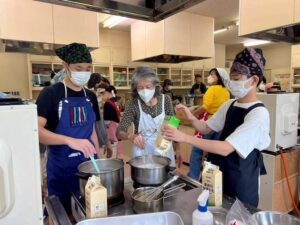
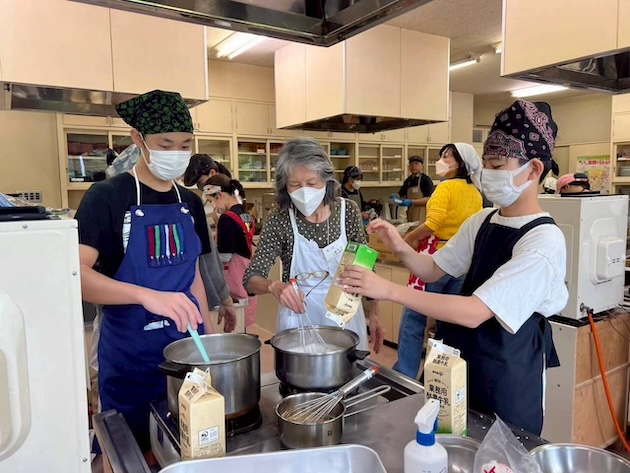
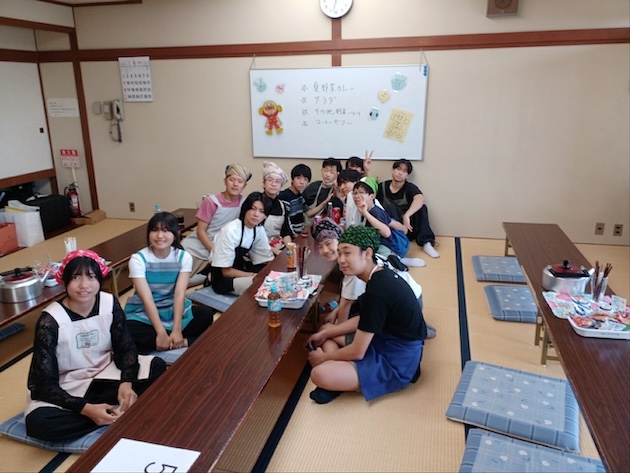
Cooking food to distribute free to children. The meals are made with food that is close to its expiry date. Workshop with Karuizawa Food Bank. Credit: Ippei Takemura

Cooking food to distribute free to children. The meals are made with food that is close to its expiry date. Workshop with Karuizawa Food Bank. Credit: Ippei Takemura

MIYAGI PREFECTURE, Japan, Mar 6 2026 (IPS) – I recently came across a statistic that stopped me in my tracks.


According to the World Health Organization (WHO), Japan has the highest suicide rate among the G7 countries. Even more alarming, suicide is the leading cause of death among people in their teens and twenties. Among elementary, junior high, and high school students, the most common factors linked to suicide are “school-related issues,” including academic pressure and difficulties with peer relationships.

At the same time, the number of children who do not attend school is rising every year. In 2023, Japan’s Ministry of Education reported that more than 340,000 elementary and junior high school students were chronically absent—a record high. These two realities are not separate problems. They are deeply connected.

Truancy is often misunderstood as a lack of motivation or discipline. In reality, it is rooted in complex emotional and psychological struggles that cannot be reduced to a single cause. Rather than treating truancy itself as the problem, society must ask a deeper question: Are we creating environments where young people feel safe, accepted, and understood?

I know this struggle firsthand. I began missing school just three days after entering junior high. My family had lived overseas for many years due to my parents’ work, and returning to Japan left me emotionally exhausted. I found comfort in playing online games with close friends I had made abroad, but while I was holding on to those connections, I missed the chance to build new ones at my new school. Before I realized it, I was caught in a cycle of frequent absences that lasted nearly three years.

What helped me break that cycle was not a dramatic intervention but a small and unexpected turning point. I joined a monthly, off-campus workshop focused on the Sustainable Development Goals (SDGs). To my surprise, students from my school were also participating. Because we shared a genuine interest in global issues, conversation came naturally as we worked together on projects. Eventually, we began spending time together outside the workshop. For the first time in a long while, I started looking forward to going to school again.

That experience taught me a powerful lesson: shared interests and common ground are the foundation of human connection.
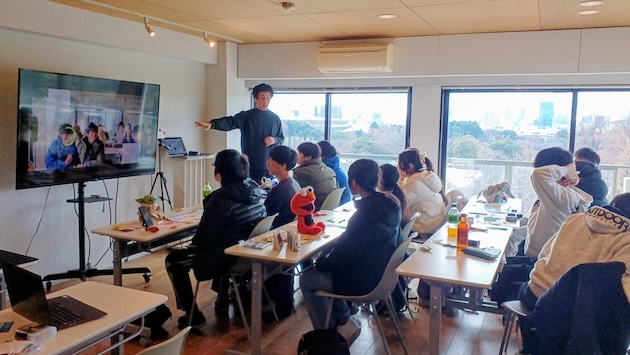
Learn IoT using your own toy; let's upcycle with a workshop with One Smile Foundation. Credit: Ippei Takemura

Learn about the Internet of Things (IoT) using a toy. ‘Let’s upcycle’ workshop with the One Smile Foundation. Credit: Ippei Takemura
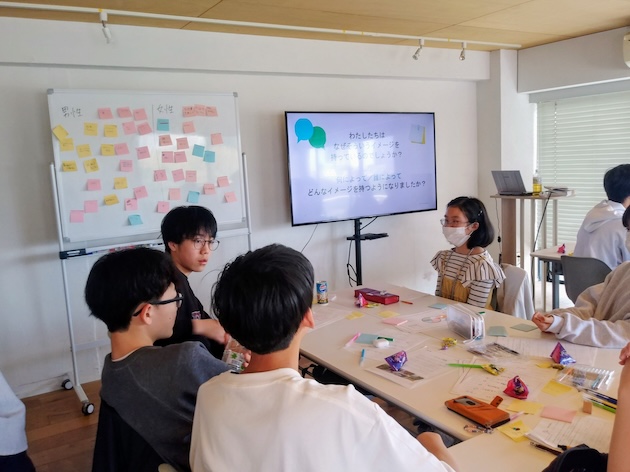
What’s the importance of gender in Japan? Workshop with Plan International, Japan. Credit: Ippei Takemura
What’s the importance of gender in Japan? Workshop with Plan International, Japan. Credit: Ippei Takemura

Provide children with free meals made with food that is close to its expiration date. Workshop with Karuizawa Food Bank. Credit: Ippei Takemura

Provide children with free meals made from food that is close to its expiry date. Workshop with Karuizawa Food Bank. Credit: Ippei Takemura

A place where someone feels safe and comfortable is different for everyone. Sociologist Ray Oldenburg describes this idea through the concept of a “Third Place”—a space that exists beyond home (the first place) and school or work (the second place). Third places allow people to relax, connect, and simply be themselves. Finding such a place was the catalyst that inspired me to want to create similar spaces for others.

Social connection is not optional for human beings. It is essential for mental and physical health, helping to reduce stress, strengthen cognitive function, and foster a sense of belonging. However, people connect at different speeds. Some are naturally outgoing, while others need time and distance before they feel ready to engage. A truly inclusive third place respects these differences.

Based on my experiences, I believe there are three key elements that make a third place successful. First, it must include both spaces for solitude and spaces for interaction, with a clear separation between the two. Some people need time to observe and feel comfortable before speaking. A quiet area allows them to exist without pressure and to join others when they are ready.

Second, there should be shared activities. When people gather around common interests—whether environmental issues, crafts, or sports—conversation becomes easier, and relationships develop more naturally.

Finally, many people struggle to take the first step socially. Having facilitators or mentors who can gently initiate activities or conversations can make a huge difference.

One place that embodies these principles is the Moriumius Summer Camp in Miyagi Prefecture, which I have attended since elementary school. In high school, I joined for the first time as a staff intern. The organizers intentionally build community by using shared work as a catalyst for connection.

Campers collaborate on everyday tasks such as cooking (photo ①), preparing fish, starting fires (photo ②), and cleaning. These shared responsibilities create trust and a sense of equality. Beyond that, participants can deepen relationships through activities aligned with their interests, including crafts (photo ③), marine sports, gardening, and farming. During one workshop, I befriended an elementary school student who was making a bamboo fishing rod and shaping slate into a knife. We connected naturally through our shared love of creating things. Because everyone at the camp already enjoys outdoor life, friendships form more easily—and shared hobbies strengthen them even further.
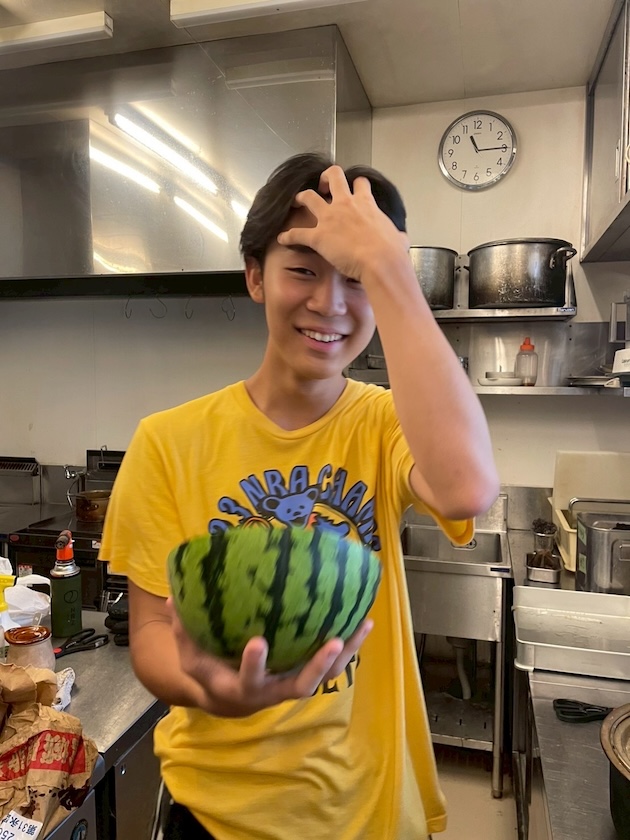
Campers help with Cooking (Photo 1). Credit: Ippei Takemura

Campers help with cooking. Credit: Ippei Takemura
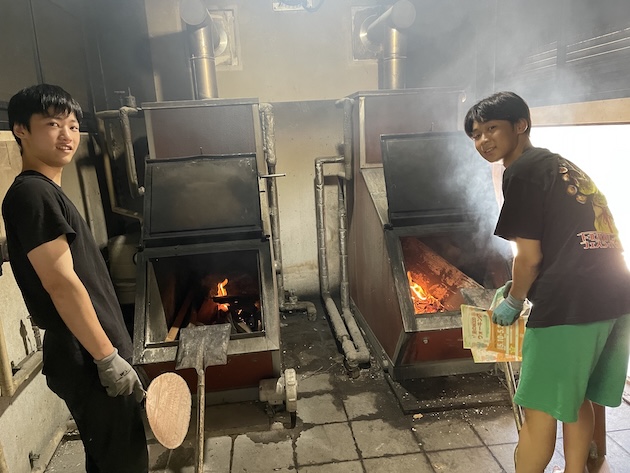
Campers can collaborate on starting fires and cleaning (photo②). Credit: Ippei Takemura

Campers can collaborate on starting fires and cleaning. Credit: Ippei Takemura
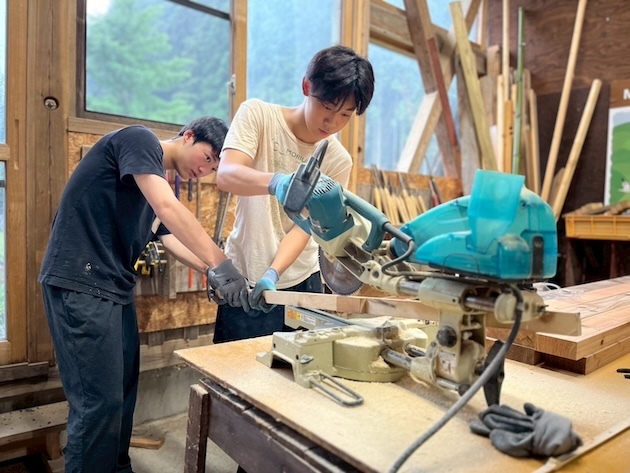
Participants can deepen relationships through activities aligned with their interests, including crafts (photo ②). Credit: Ippei Takemura

Participants can deepen relationships through activities aligned with their interests, including crafts. Credit: Ippei Takemura

A place can be more than just an escape. It can be the first step toward healing, renewed confidence, and hope. When young people find a space where they feel safe enough to be themselves, they often rediscover the courage to reconnect—with others, with learning, and with their own sense of possibility.

This is why I want to continue supporting the creation of spaces that can become “someone’s own place”—places where young people feel seen, valued, and free to grow at their own pace. Sometimes, finding the right space is all it takes for someone to realize that they belong.

Yet this need for belonging is not unique to one school or one country. Around the world, young people are facing increasing isolation, academic pressure, and mental health challenges. Rising youth suicide rates and growing school disengagement reflect a global crisis. When young people are left without spaces where they feel safe, heard, and supported, the consequences extend far beyond classrooms and households—they shape the future of entire societies.

Creating and protecting “third places,” therefore, is not merely a personal or local effort; it is a global responsibility. Governments, schools, communities, and international organizations must work together to invest in inclusive environments where young people can connect through shared interests, express themselves without fear, and rebuild a sense of belonging. Doing so directly supports the Sustainable Development Goals, particularly SDG 3 (Good Health and Well-Being) and SDG 4 (Quality Education), by addressing mental health, social inclusion, and equitable access to supportive learning spaces.

Every young person deserves a place where they feel safe enough to take their first step forward. By listening to youth voices and turning commitment into action, we can move from awareness to impact—and from isolation to hope. The future depends not only on how we educate young people but also on whether we give them places where they truly belong.

Edited by Dr Hanna Yoon

IPS UN Bureau Report

  Source

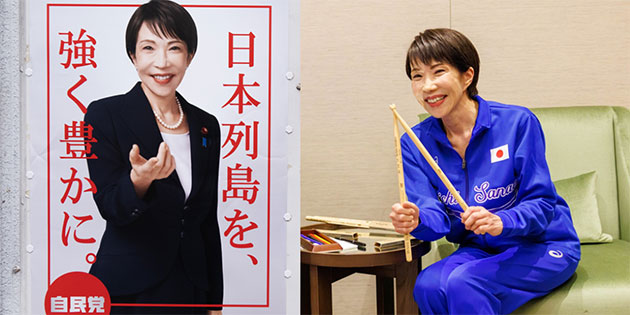
Imagery, Algorithms, and the Ballot: What Takaichi’s Victory Says About Youth Politics in the Digital Age

Active Citizens, Asia-Pacific, Democracy, Development & Aid, Economy & Trade, Headlines, Labour, Peace, TerraViva United Nations, Youth, Youth Thought Leaders

Opinion

Imagery, Algorithms, and the Ballot: What Takaichi’s Victory Says About Youth Politics in the Digital Age

Image: Hiroshi-Mori-Stock / shutterstock.com and 内閣広報室 / Cabinet Public Affairs Office / Wiki Commons

Mar 3 2026 (IPS) –  
Sanae Takaichi’s electoral victory in February marks a historic turning point in Japanese politics. As Japan’s first female prime minister and the leader of a commanding parliamentary majority, she represents change in both symbolic and strategic terms. Conventional wisdom long held that younger Japanese voters leaned progressive, were sceptical of assertive security policies, and disengaged from ideological nationalism. Yet a segment of digitally active youth rallied behind a politician associated with constitutional revision, expanded defence capabilities, and a more unapologetic articulation of national identity. This shift cannot be reduced to a simple conservative swing. Rather, Takaichi’s rise reflects a deeper transformation in how democratic politics is constructed in the digital age: the growing power of imagery, digital mobilisation, and algorithm-driven branding in shaping political choice—particularly among younger voters.


Takaichi’s approval ratings among voters aged 18–29 approached 90 per cent in some surveys, far surpassing those of her predecessors. Youth turnout also rose, suggesting that Japanese youth are not politically apathetic. On the contrary, they are paying attention—but the nature of that engagement has changed. Viral images, short video clips, hashtags, and aesthetic cues travelled faster and farther than policy briefings. For many younger voters, engagement began—and sometimes ended—with the visual and emotional appeal of the candidate. This pattern is not uniquely Japanese. However, the scale of its impact in this election suggests that political communication has entered a new phase in which digital imagery can shape electoral outcomes as much as—or more than—substantive debate.

A New Phase of Digital Politics in Japan

In the months leading up to the election, Takaichi’s image proliferated across social media platforms. Supporters circulated clips highlighting her confident demeanour and historic candidacy. A cultural trend sometimes described as ‘sanakatsu’ or ‘sanae-mania’ framed political support as a form of fandom participation. Hashtags multiplied. ‘Mic-drop’ moments went viral. Even personal accessories—her handbags and ballpoint pens—became symbolic conversation pieces.

Political enthusiasm has always contained emotional and symbolic elements. What is new is the speed and scale at which digital platforms amplify them. Algorithms reward content that provokes reaction—admiration, anger, excitement. A charismatic clip often outperforms a detailed explanation of fiscal reform. For younger voters raised in scroll-based media environments, political information increasingly arrives as curated snippets. Policy complexity competes with—and often loses to—aesthetic immediacy.

Post-election surveys and interviews suggested that many first-time voters struggled to articulate specific policy distinctions between parties. Instead, they cited impressions—strength, change, decisiveness, novelty—suggesting that digital engagement does not automatically translate into policy literacy. Political identity can form through repeated exposure to imagery and narrative rather than sustained examination of legislative proposals. When campaigns are optimized for shareability, they are incentivized to simplify. Nuance compresses poorly into short-form video.

The Politics of Strength in an Age of Uncertainty

Japan’s younger generation has grown up amid prolonged economic stagnation, regional insecurity, and global volatility. China’s rise, tensions over Taiwan, North Korean missile launches, and persistent wage stagnation form the backdrop of their political participation. For many, the future feels uncertain and structurally constrained.

In such an environment, Takaichi’s assertive rhetoric carried emotional resonance. Her emphasis on strengthening national defence, revisiting aspects of the postwar settlement, and making Japan “strong and rich” projected clarity rather than ambiguity. Where institutional politics can appear technocratic or slow, decisive messaging offered the voters psychological reassurance.

At the core of her appeal is a narrative of restoring a ‘strong’ Japan. Calls for constitutional revision and expanded defence capabilities are framed as steps toward recovering national self-confidence. For younger Japanese fatigued by protracted historical disputes and what some perceive as externally imposed guilt, language emphasising pride and sovereignty resonates more readily than complex historical debates. This may not signal a rejection of peace. Rather, it may reflect a generational reframing of peace itself—understood not solely as pacifism, but as deterrence, defence capability, and strategic autonomy. Messages stressing ‘sovereignty’, ‘strength’, and ‘normal country’ can circulate more effectively in shareable digital formats than nuanced and complex historical analysis.

A Global Pattern: Virtual Branding, a Democratic Crossroads

Japan’s experience mirrors a broader transformation in democratic politics: the rise of virtual branding as the central organizing principle of electoral strategy. In earlier eras, campaigns revolved around party platforms and televised debates. Today, strategy increasingly begins with platform optimization. Campaigns are designed not only to persuade, but to perform within algorithmic systems. The guiding question is no longer only “What policies do we stand for?” but “What content travels?”

The election of Donald Trump in the United States illustrated how virtual media strategy can reshape political competition. Memorable slogans and emotionally charged posts dominated attention cycles, often eclipsing policy detail. Scholars have described this as “attention economics in action”: the candidate who captures digital attention shapes political reality before formal debate even begins. More recently, figures such as Zohran Mamdani have demonstrated how youth-centered digital branding can mobilize support with remarkable speed. Campaigns became participatory; supporters did not merely consume messaging but actively distributed political identity.

Takaichi’s recent victory reflects the evolving mechanics of digital democracy. Her leadership will ultimately be judged not by imagery but by governance — by whether her policies deliver economic stability, regional security, and social cohesion. The broader question, however, transcends any single administration. It means political decisions have migrated into digital environments optimised for speed and visual communication. In an age where images travel faster than ideas, democratic choice risks being guided more by what is seen than by what is discussed. In such an environment, political campaigns will be forced to adapt, and produce content that performs well within these algorithmic constraints. Over time, this may reshape voter expectations and politics will begin to resemble influencer culture. Campaigns that fail to master digital branding risk will appear outdated. Those that succeed can mobilize youth at scale.

Democracy has always balanced emotion and reason. The challenge today is ensuring that emotion does not eclipse reason entirely. The future of informed citizenship may depend on restoring that balance. This does not suggest that previous eras were immune to personality politics. What has changed is the proportion. The digital environment magnifies symbolic cues and compresses policy discussion. If democracies wish to maintain robust deliberation, they must consciously rebalance image and substance. This requires civic education focused on media literacy, virtual platform incentives that elevate substantive debate and political leadership willing to engage in depth, not just virality. And the responsibility is collective—voters, educators, media institutions, and candidates alike. The question facing democracies is whether this transformation can coexist with substantive deliberation or whether branding will increasingly overtake it.

Related articles:
Japan Stumbles: The Taiwan Fiasco
The New Takaichi Administration: Confronting Harsh Realities on the International Stage
Middle Powers After Davos

Ria Shibata is currently a Senior Research Fellow at the New Zealand Centre for Global Studies, and the Toda Peace Institute in Japan. She also serves as a Visiting Scholar at the University of Auckland. Her research focuses on identity-driven conflicts, reconciliation, nationalism and the role of historical memory in shaping interstate relations and regional stability in Northeast Asia.

This article was issued by the Toda Peace Institute and is being republished from the original with their permission.

IPS UN Bureau

  Source

Tanzanian Students Drive Climate Action Through Tree Planting

Active Citizens, Africa, Civil Society, Climate Action, Climate Change, Climate Change Finance, Climate Change Justice, COP29, Development & Aid, Editors’ Choice, Education, Environment, Featured, Food and Agriculture, Headlines, Sustainable Development Goals, TerraViva United Nations, Youth Thought Leaders

Climate Change Justice

The act of planting trees offers more than shade and fruit. It symbolizes a deeper mission—restoring soil, preserving water, and, for these students, living in Tanzania’s northern Rorya district, delivering a form of climate justice. The reforestation efforts are in step with Tanzania’s broader plans to fortify its agriculture and water systems against the advancing climate crisis.

Faiza Ally, a pupil at Mtoni Primary School in Mara Region, plants a tree. Credit: Kizito Makoye/IPS

Faiza Ally, a pupil at Mtoni Primary School in Mara Region, plants a tree. Credit: Kizito Makoye/IPS

MUSOMA, Tanzania, Oct 30 2024 (IPS) – At Gabimori primary school, located at Nyamagaro ward in Tanzania’s northern Rorya district, a 15-year-old  Florence Sadiki kneels among polyethylene bags, carefully examining the seedlings she and her classmates  have nurtured from tiny sprouts “We’ve planted many trees to make our school look better and to help fight climate change,” she says.


Sadiki is part of an inspiring grassroots movement in the east African country where students, teachers, and community members team up to fight environmental degradation through reforestation. In Rorya district, nestled on the shores of Lake Victoria, rampant deforestation driven by charcoal production has left the land barren. But the efforts of school environmental clubs, supported by the Lake Community Program (LACOP), are working to repair the damage.

The reality in Rorya is grim. Erratic rainfall and prolonged droughts have changed swathes of once-fertile land into dry savannas, a trend that has only accelerated since the initiative began in 2022. Spearheaded by the global charity World Neighbors and the Lake Community Development Foundation (LACODEFO), this initiative empowers students to plant trees and learn the entire process of growing them.

Daudi Lyamuru speaks during a village meeting to mobilize the community to plant trees and support the climate mitigation project. Credit: Kizito Makoye/IPS

Daudi Lyamuru speaks during a village meeting to mobilize the community to plant trees and support the climate mitigation project. Credit: Kizito Makoye/IPS

Pupils at Mwenge primary school pose for a photo after tree planting exercise. Credit: Kizito Makoye/IPS

Pupils at Mwenge primary school pose for a photo after tree planting exercise. Credit: Kizito Makoye/IPS

“We’re teaching students to set up their own nurseries,” says Idrisa Lema, the project officer. “It’s not enough to hand out seedlings. They need to learn the whole process—choosing drought-resistant species, improving soil with organic manure, and using techniques like mulching.” This holistic approach  promotes sustainability and equips students with transferable skills that can help them for the rest of their lives.

In the past two years, the students have successfully planted 2,800 trees across five villages, a remarkable achievement that has already begun to bear fruit. Some once-dry water springs are starting to flow again. Yet challenges remain, particularly in Nyamagaro and neighboring Kyangasaga villages, where erratic rainfall and drought continue to hinder progress.

“Watering the trees is tough,” admits Alex Lwitiko, an environmental teacher at Rorya Girls’ School. “We’ve had to be strict with the students—otherwise, the trees wouldn’t survive.”

To adapt, students have switched to innovative solutions like bottle irrigation and even drilled water wells to support their young trees. “We focus on drought-resistant species and organic farming methods to give the trees the best chance,” Lwitiko says, emphasizing the program’s commitment to teaching sustainability.

Sadiki herself has learned to adapt. “I know how to graft trees and grow them in tough conditions now,” she says. “These trees are our future. They fight climate change, provide shade, and even improve soil fertility.”

A government official, Aloycia Mdeme, plants a tree to signify the launch of the school environmental club. Credit: Kizito Makoye/IPS

A government official, Aloycia Mdeme, plants a tree to signify the launch of the school environmental club. Credit: Kizito Makoye/IPS

Mtoni primary school pupils plant trees, this project has become central to the region's contribution to climate change mitigation. Credit: Kizito Makoye/IPS

Mtoni Primary School pupils plant trees; this project has become central to the region’s contribution to climate change mitigation. Credit: Kizito Makoye/IPS

In Tanzania, the impact of climate change is becoming increasingly severe. The country aims to reduce greenhouse gas emissions by 30 to 35 percent by 2030, a goal outlined in its Nationally Determined Contributions (NDCs). Despite its low carbon footprint—just 0.22 tons per capita compared to the global average of 7.58—Tanzania is reeling from climate-related disasters. Droughts, floods, and erratic weather patterns disrupt agriculture, drying up water sources and threatening economic stability.

For the rural poor, especially those who rely on farming—the backbone of the economy, making up 28 percent of GDP—the stakes are higher. But in places like Nyagisya and Rorya Girls Secondary Schools, students have taken up the fight. Through tree planting, they have become unlikely climate crusaders, tackling environmental degradation while improving food security and boosting local livelihoods.

The act of planting trees offers more than shade and fruit. It symbolizes a deeper mission—restoring soil, preserving water, and, for these students, delivering a form of climate justice. The reforestation efforts are in step with Tanzania’s broader plans to fortify its agriculture and water systems against the advancing climate crisis.

As these student-led initiatives flourish, they mirror Tanzania’s urgent call for global support. With limited resources, the country is striving to fulfill its commitments yet it recognizes that the battle against climate change is a collective endeavor that requires unity on a global scale.

Despite the promising efforts in Tanzania, significant challenges remain. One of the main hurdles is the unpredictability of funding. Tree-planting initiatives and climate adaptation programs require sustained financial support, but resources are often limited, local analysts say.

Without consistent funding, scaling up projects and maintaining long-term impact becomes difficult.

Community members plant trees in Rorya district. Credit: Kizito Makoye/IPS

Community members plant trees in Rorya district. Credit: Kizito Makoye/IPS

While students have embraced environmental stewardship, not all local households are on board. In some areas, livestock continues to graze on young saplings, undoing the hard work of reforestation. Additionally, cultural and economic pressures, such as the reliance on charcoal for income and firewood for cooking, contribute to ongoing deforestation, making conservation efforts harder.

Erratic rainfall and worsening drought conditions present another barrier. Water scarcity makes it harder to nurture newly planted trees, despite innovative solutions. These conditions also strain local agriculture, which many families depend on, increasing the urgency of balancing conservation with survival needs.

While Tanzania has ambitious climate goals, the gap between policy and practical implementation remains wide, particularly in rural areas where the effects of climate change are felt most acutely. 

At Gabimori Primary School, students have embraced their role as environmental stewards. “They’ve seen how conservation affects their daily lives,” says teacher Witinga Mattambo. “They now understand the link between the trees and the food they eat.”

The impact is vivid for students like Sadiki. “I never realized trees were this important,” she says. “They bring rain and improve our environment.”

For Lema, this is only the beginning. By fostering leadership skills and engaging the broader community, the program is building a new generation of Tanzanians dedicated to environmental protection. “We’ve even seen parents get involved,” Lwitiko says. “They’re starting to plant trees in their own yards.”

Still, the program faces hurdles. Some households allow their livestock to graze on young saplings, undoing the hard work of the students. “It’s frustrating,” admits Lwitiko, “but we’re making progress, step by step.”

Lema has ambitious plans to expand the initiative.

“We’re training students to pass on their knowledge,” he says. “As they move on, they’ll teach younger students, and we’ll spread this effort to other schools.” But scaling the program will require more funding.

“We’re working on securing more resources and partnering with local governments to enforce tree-planting bylaws,” Lema explains. There are also plans to set up household tree nurseries, allowing families to earn extra income while contributing to conservation.

For Sadiki, the program’s impact is lasting.

“We have the duty to plant trees and protect our environment. It’s something we’ll carry with us for the rest of our lives.”

IPS UN Bureau Report

  Source

Summit of the Future: Youth Driven Action Needed to Tackle Nuclear and Climate Crises

Active Citizens, Civil Society, Climate Change, Conferences, Development & Aid, Editors’ Choice, Featured, Global, Headlines, Human Rights, Humanitarian Emergencies, Nuclear Disarmament, Nuclear Energy – Nuclear Weapons, Sustainable Development Goals, TerraViva United Nations, Youth, Youth Thought Leaders

Nuclear Disarmament

Dr. Tshilidzi Marwala, USG and Rector of the United Nations University, and Ms. Kaoru Nemeto, Director of the United Nations Information Centre during a discussion ‘Building the Future: Synergetic Collaboration on Nuclear and Climate Crises.’ Credit: Naureen Hossain/IPS

Dr. Tshilidzi Marwala, USG and Rector of the United Nations University, and Ms. Kaoru Nemeto, Director of the United Nations Information Centre during a discussion ‘Building the Future: Synergetic Collaboration on Nuclear and Climate Crises.’ Credit: Naureen Hossain/IPS

UNITED NATIONS, Sep 23 2024 (IPS) – Driving the Summit of the Future’s core messages of international solidarity and decisive action are young people who are determined to address the intersecting issues that the world contends with today.


During the Summit’s Action Days (20-21 September), it was young people who led the conversations of increasing and defining meaningful engagement, both on- and off-site from the United Nations Headquarters.

Not only are they driving the conversation, but in the Pact for the Future adopted by world leaders at the United Nations on Sunday (September 22), youth and future generations are at the forefront of global leaders’ concerns, and their role was clearly defined with the first ever Declaration on Future Generations, with concrete steps to take account of future generations in our decision-making, including a possible envoy for future generations.

This includes a commitment to more “meaningful opportunities for young people to participate in the decisions that shape their lives, especially at the global level.”

Building the Future: Synergetic Collaboration on Nuclear and Climate Crises, a side event whose co-organizers included Soka Gakkai International (SGI) and the Future Action Festival Organizing Committee, with the support of the United Nations University (UNU) and the United Nations Information Centre (UNIC), brought together young activists to discuss the intersection between two different crises and what will define meaningful youth engagement.

Kaoru Nemoto, the Director General of UNIC in Tokyo, observed that it was “ground-breaking” to see the agenda of the Summit’s Action Days largely led and organized by youth participants, as signified by the majority of seats in the General Assembly Hall being filled by young activists.


“There is an undercurrent, a common message, that the youth can make this world a better place to live,” said Nemoto. “No matter what agenda you are working on, be it climate change, nuclear disarmament, fighting inequality… youth issues are cross-cutting, very strong cross-cutting issues across the board.”

Nemoto further added that the United Nations needs to do much more to engage youth for meaningful participation. This would mean allowing youth to consult in decision-making and to be in positions of leadership. Youth presence cannot be reduced to tokenism.

The climate and nuclear crises are existential threats that are deeply connected, said Dr. Tshilidzi Marwala, the rector of the United Nations University. Climate instability fuels the factors that lead to conflict and displacement. Conflict, such as what is happening in Sudan, Israel, Palestine, and Ukraine, increases the risk of nuclear escalation. As leaders in the present day tackle the issues, Marwala called on the youth to continue raising their voices and to hold those powers accountable.

Marwala noted that the United Nations University would be committed to “realizing meaningful participation” in all parties. For young people, while they are motivated and demonstrate a care for deeper social issues, they face challenges in having their voices heard or in feeling galvanized to take action. Marwala noted that it was important to reach out to those young people who are either not involved or feel discouraged from getting involved in political work and activism.

Chief among the Summit of the Future’s agenda is increasing youth participation in decision-making processes. It has long been acknowledged that young activists and civil society actors drive greater societal change and are motivated to act towards complex issues. Yet they frequently face challenges in participating in policymaking that would shape their countries’ positions.

Among these challenges are representation in political spaces. Within the context of Japan, young people are underrepresented in local and national politics. As Luna Serigano, an advocate from the Japan Youth Council, shared during the event, there is a wider belief among young voters in Japan that their voices will go unheard by authorities.

This is indicated in voter turnout, which shows that only 37 percent of voters are in their 20s, and only 54 percent of voters believe that their votes matter. By contrast, 71 percent of people in their 70s voted in elections. People in their 30s or younger account for just 1 percent of professionals serving in government councils and forums. The Japan Youth Council is currently advocating for active youth participation in the country’s climate change policy by calling for young people to be directly involved as committee members to work on a new energy plan for the coming year.

Yuuki Tokuda, a co-founder of GeNuine, a Japan-based NGO that explores nuclear issues through a gender perspective, shared that young people are out of decision-making spaces. Although their voices may be heard, it is not enough. As she told IPS, the climate and nuclear crises are on the minds of young people in Japan. And while they have ideas on what could be done, they are not informed on how to act.

There is some hope for increasing participation. Tokuda shared within policymakers on nuclear issues, of which 30 percent include women, have begun to engage with young people in these discussions.

“It is time to reconstruct systems so that youth can meaningfully participate in these processes,” said Tokuda. “We need more intergenerational participation in order to work towards the ban of nuclear weapons and the climate crisis.”

During the event, what meaningful youth engagement should look like was discussed. It was acknowledged that efforts have gone towards giving a space to the perspectives of young people. Including young people in the discussions is a critical step. It was suggested that direction should shift towards ensuring that young people have the authority to take the action needed to resolve intersecting, complex issues. Otherwise, the inclusion is meaningless.

“The future-oriented youth is more needed than ever to tackle the challenges in building and maintaining peace,” said Mitsuo Nishikata of SGI.

“As a youth-driven initiative such as what the Future Action Festival demonstrates, youth solidarity can stand as a starting point for resolving and passing issues.”

Next year (2025) will mark 80 years since the end of World War II and the Hiroshima-Nagasaki atomic bombings. Nishikata pointed out that this will be a time for crucial opportunities to advance the discussions on nuclear disarmament and climate action, ahead of the Third Meeting of State Parties on the Treaty on the Prohibition of Nuclear Weapons and the 30th UN Climate Conference (COP30).

“We will continue to unite in our desire for peace, sharing the responsibility for future generations and expanding grassroots actions in Japan and globally.

Other commitments for the Pact for the Future included the first multilateral recommitment to nuclear disarmament in more than a decade, with a clear commitment to the goal of totally eliminating nuclear weapons.

It also pledged reform of the United Nations Security Council since the 1960s, with plans to improve the effectiveness and representativeness of the Council, including by redressing the historical underrepresentation of Africa as a priority.

The pact has at its core a commitment to “turbo-charge” implementation of the Sustainable Development Goals (SDGs), including the reform of the international financial architecture so that it better represents and serves developing countries.

“We cannot build a future that is suitable for our grandchildren with a system that our grandparents created,” as the Secretary-General António Guterres stated.

This article is brought to you by IPS Noram in collaboration with INPS Japan and Soka Gakkai International in consultative status with ECOSOC.

IPS UN Bureau Report


Inclusivity, Impact, and Innovation Needed to Meet SDGs, UN Civil Society Conference Hears

Active Citizens, Civil Society, Conferences, Development & Aid, Editors’ Choice, Featured, Headlines, Poverty & SDGs, Sustainable Development Goals, TerraViva United Nations, Youth Thought Leaders

Sustainable Development Goals

The United Nations Office at Nairobi is hosting the 2024 United Nations Civil Society Conference on May 9 and 10, under the theme Shaping a Future of Global and Sustainable Progress. Credit: Joyce Chimbi/IPS

The United Nations Office at Nairobi is hosting the 2024 United Nations Civil Society Conference on May 9 and 10, under the theme Shaping a Future of Global and Sustainable Progress. Credit: Joyce Chimbi/IPS

NAIROBI, May 9 2024 (IPS) – The world is neither on track to meet the Sustainable Development Goals (SDGs) nor is it leveraging emerging opportunities to effectively address global concerns such as extreme hunger, poverty, conflict, and climate change. Global concerns have outpaced existing structures for international cooperation and coping.


To forge a global perspective, the United Nations Office in Nairobi is currently hosting the 2024 United Nations Civil Society Conference under the theme Shaping a Future of Global and Sustainable Progress. Bringing together more than 2,000 participants from civil society organizations, academic institutions, think tanks, member states, private sector companies, UN entities, change-makers, and other relevant stakeholders from across the globe.

“That civil society engagement remains a critical cog in the wheel of development is well established. Greater collaboration between civil society organizations, governments, and the private sector can therefore not be more urgent at this time as we gear up for the Summit of the Future,” says Carole Ageng’o, Global Initiatives Lead & Africa Regional Representative at HelpAge International.

Indeed, civil society participation will contribute greatly towards meeting the aspiration of an international system that is better prepared to manage the challenges we face now and, in the future, for the sake of all humanity and for future generations.”

Since 1947, sixty-eight civil society conferences have resulted in successful outcomes due to previous interactions with civil society organizations. The ongoing conference is the premier event on the civil society calendar at the United Nations and the first of the UN’s civil society conferences to be held in Africa.

Born in Zimbabwe and currently working in South Africa as a human rights defender, Constance Mukarati told IPS that the role of civil society organizations and, more so, human rights defenders cannot be overstated towards ensuring that no one is left behind.

“For us, SDG 5 is really SDG 1. As a matter of urgency, women and girls everywhere must have equal rights and opportunities. We are still in an era where girl child education is not a priority and a gathering such as this is an opportunity for a revolution in how we think about issues of national and global concern, how we talk about these issues, who is in the room and how we execute and implement commitments towards sustainable development,” says Mukarati from the African Initiative of Women Human Rights Defenders.

The ongoing gathering of civil society and other stakeholders is on track to provide preliminary discussions and data ahead of the world’s leaders’ Summit of the Future on September 22–23, 2024, at the UN Headquarters in New York. The Summit is part of a monumental effort to reset global cooperation towards accelerating efforts to meet our existing international commitments and take concrete steps to respond to emerging challenges and opportunities.

Ultimately, the Summit of the Future is about rethinking what multilateralism means in a world characterized by plummeting levels of trust in public institutions, glaring wealth inequalities, and a majority of the world’s population in underdeveloped and developing nations being left furthest behind, falling deeper into extreme hunger and poverty. To address global concerns, the Summit will produce three international frameworks: the Pact for the Future (available as a zero draft), the Global Digital Compact, and the Declaration on Future Generations.

“It is highly urgent that the UN systems relook and redesign how they engage its global citizenry so that the citizens can in turn engage the UN more effectively. This is what is needed to bring the SDGs back on track. What are people saying about the multiple challenges they face today? There is a feeling within the civil society movement that governments’ voices are prioritized within the UN system. This engagement is unique and highly relevant for our voices as activists and human rights defenders, which will inform and influence the direction that the Summit of the Future takes,” Eric Omondi, a Nairobi-based activist, told IPS.

This is a historic gathering aimed at galvanizing collaboration and reinforcing civil society organizations engagement in sustainable development. “We recognize that our generation stands at a critical junction where every action we take can significantly shape the future of our shared planet,” said Florence Syevuo, Executive Director, SDG Kenya Forum, and Co-Chair, Coalition for the UN We Need, Nairobi.

She stressed that the need to recognize the urgency of addressing global concerns such as climate change has never been more tangible as the effects of human interactions with nature become even more evident, underpinning why the outcome of the conference matters to all.

The Civil Society Conference and the Summit of the Future are critical platforms for deepening the engagement of citizens in international cooperation. As a prelude to the Summit of the Future, the Civil Society Conference features in-depth dialogues, a variety of workshops, and exhibits centered on three main objectives: inclusivity, impact, and innovation.

Inclusivity helps broaden the scope of discourse on global issues by enhancing the visibility and impact of diverse voices. On impact, participants are shaping global multi-stakeholder coalitions to advocate for and push the key issues that will be the outcome of the September Summit of the Future. On innovation, the two-day gathering is redefining the interaction between civil society and intergovernmental processes, showcasing a new model of collaboration that spans generations and sectors.

“The inclusion of youths and young voices in the SDG processes and other related commitments must become a priority. I recently completed my studies in law at Kampala International University and I intend to use my legal knowledge to amplify the most pressing problems facing young people in the global south and the communities in which they live,” Kiconco Shallom Esther, a youth participant from Uganda, told IPS.

As the curtain fell on the first day of the landmark civil society conference, there was consensus around the need to promote civil society’s insights and initiatives to bolster the Member State-led Summit of the Future process. Further emphasizing that a reinvigorated, organized civil society group can more effectively hold governments and powers accountable for progress towards a just, fair, and equitable shared future.

IPS UN Bureau Report


Silent Struggles: Unraveling Korea’s Startling Elderly Suicide Surge

Active Citizens, Asia-Pacific, Development & Aid, Headlines, Human Rights, Humanitarian Emergencies, Population, TerraViva United Nations, Youth, Youth Thought Leaders

Opinion

In this, the fourth of IPS’ Youth Thought Leaders series, the author looks at suicide rates in older persons and concludes we should break barriers and celebrate the diversity each generation brings.

An image illustrating the ‘No-senior zone’ in a Korean café. Credit: The Nation

An image illustrating the ‘No-senior zone’ in a Korean café. Credit: The Nation

SEOUL, Oct 13 2023 (IPS) – Growing up in a culture that values respect for elders, I was acutely aware of the importance of caring for our aging population. However, my journey to understanding the gravity of this issue truly began with a personal anecdote. I watched my grandmother, a pillar of strength throughout my childhood, gradually withdraw from the vibrant world in which she once thrived. The cheerful twinkle in her eyes began to dim, replaced by an eerie sense of isolation.


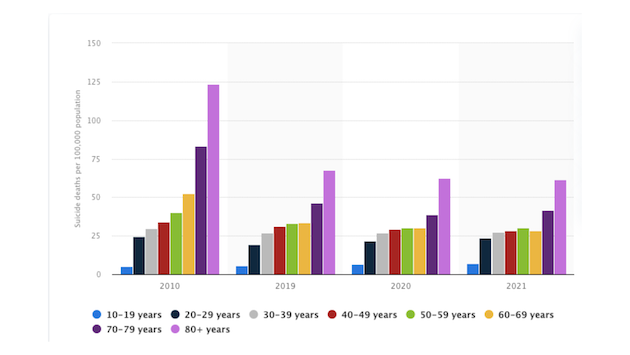
This experience opened my eyes to a stark reality: a disturbing surge in elderly suicide rates hidden beneath the facade of cultural reverence for seniors in Korea and Japan. In 2021, these rates reached 61.3 deaths per 100,000 people in Korea, primarily driven by profound social isolation.

Suicide deaths in Korea. Credit: Statista

Suicide deaths in Korea. Credit: Statista

Some may argue that these figures are insignificant, but the persistence of a high suicide rate cannot be dismissed. Moreover, they are poised to become even more critical as we approach a world where, according to WHO, the elderly population over the age of 60 is expected to double by 2050, and those 80 years or older are projected to triple.

So how severe are the elderly suicide rates due to isolation in Korea and Japan? Well, research highlights that this is due to the significant rise in the elderly population. Such an increase has been concurrent with the rising elderly suicide rates. The Global Burden of Disease study emphasizes that the global elderly suicide rate is almost triple the suicide rates across all other age groups. For example, in South Korea alone, there has been a 300% increase in elderly suicide rates.

If the world’s elderly population has increased overall, why is it that the elderly suicide rates within Korea and Japan have been especially severe? This was particularly confusing as I believed that due to cultural and social standards of filial piety and respecting your elders, such suicide rates would be low. However, I found the answer to my own question when I visited Korea in July this year.

When I arrived in the country, one of the first things I did was to visit a cafe to meet with a friend. However, as I was about to enter the cafe, I saw a group of elderly men and women leaving the cafe while comforting each other, saying, “It’s okay; it’s not the first time we’ve been rejected.” As I later found out, this was because the cafe was a ‘no-senior zone.’

Similar to how some places are designated as ‘no-kid zones,’ this cafe, and others, did not allow people over the age of 60 to enter.  According to Lee Min-ah at Chung-Ang University, “The continuous emergence of ‘no-something zones’ in our society means that exclusion among groups is increasing, while efforts to understand each other are disappearing.”

I also discovered that age discrimination is also present in other aspects of the elderly’s life, more specifically, in the workplace. According to a survey by the National Human Rights Commission of Korea, in 2018, 59 percent of the Korean elderly found it difficult to be employed due to age restrictions, and a further 44 percent experienced ageism within their workplace. The increase in discrimination against the elderly has heightened their sense of isolation, eventually leading to cases of suicide in extreme circumstances.

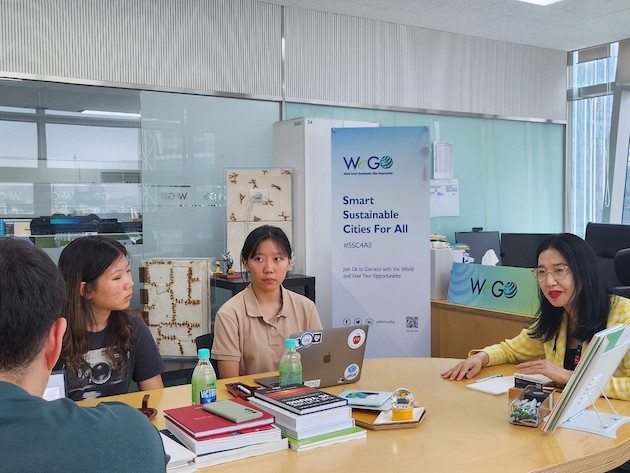
Jung Soon Park, the Secretary General of World Smart Sustainable Cities Organization (WeGo) with the author Hyunsung (Julie) Lee.

Jung Soon Park, the Secretary General of World Smart Sustainable Cities Organization (WeGo) with the author Hyunsung (Julie) Lee.

Interview with Jung Soon Park, the Secretary General of WeGo at the Seoul Global Center

Interview with Jung Soon Park, the Secretary General of WeGo at the Seoul Global Center

I wanted to learn more about the current action being taken to help the elderly feel more included in our society, as I believed this would be key to preventing isolation-related suicide cases. To gain further insight, I decided to interview Jung Soon Park, the Secretary General of the World Smart Sustainable Cities Organization (WeGo).

WeGo is an international association of local governments, smart tech solution providers, and institutions committed to transforming cities worldwide into smart and sustainable cities through partnerships. I believe that by interviewing the Secretary General of WeGo, I would be able to learn more about the specific solutions that governments and organizations are implementing collaboratively.

Through my interview, I gained an understanding that the South Korean government and social organizations are currently focusing on addressing age discrimination, recognizing it as a key factor in isolationism.

Park mentioned that one specific approach to resolving this issue involves the use of ‘meta spaces’ and technological wristbands. She emphasized that in today’s technology-driven world, enabling the elderly to adapt to such technology could bridge the generation gap between the younger and older generations. She further explained that meta spaces, allowing for anonymous communication, and technological wristbands, which could include features like a metro card and direct access to emergency services, would facilitate the elderly’s integration into modern society. Park concluded that enabling the elderly to adapt efficiently to the current social setting could break down the generational barrier between youth and the elderly, fostering a direct connection between these two disparate groups.

During my research, I coincidentally came across a website called Meet Social Value (MSV). MSV is a publishing company that specializes in writing and publishing insightful articles about contemporary social issues. Their most recent article, titled ‘Senior,’ delves into the social challenges faced by the elderly in Korean society and explores solutions involving inclusive designs and spaces.

MSV serves as a prime example of how contemporary social organizations are taking steps to address the issue of elderly discrimination. This is especially significant because, through youthful and trendy engagement on social media, it becomes easier to raise awareness of this issue among younger generations.

Meet Social Value's most recent article, titled 'Senior,' delves into the social challenges faced by the elderly in Korean society and explores solutions involving inclusive designs and spaces.

Meet Social Value’s most recent article, titled ‘Senior,’ delves into the social challenges faced by the elderly in Korean society and explores solutions involving inclusive designs and spaces.

As I continued my research, I started pondering what I, as an 18-year-old, could do to contribute to resolving this issue. Even though I’m still a student, I wanted to find ways to make a difference, especially after witnessing age discrimination and its consequences firsthand.

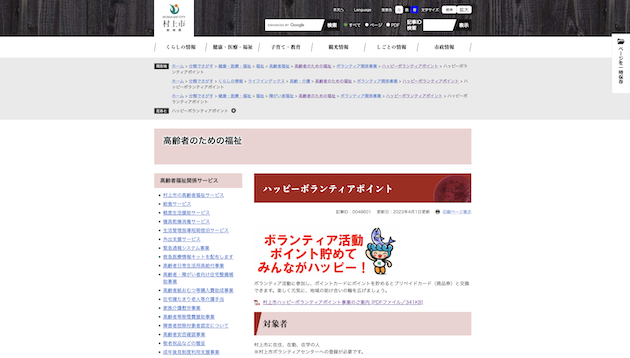
I found the answer to my question when I learned about the initiatives undertaken by the government of Murakami City and the Murakami City Social Welfare Council to bridge the gap between the youth and senior citizens. They introduced the Murakami City Happy Volunteer Point System, which aimed to encourage more people to assist seniors through various volunteering activities such as nursing facility support, hospital transportation services, and operating dementia cafes, among others. The system rewarded volunteers with points that could be exchanged for prepaid cards, creating an incentive for more individuals to get involved in helping their senior citizens.

Taking this into consideration, I believe that the younger generation, especially students, may contribute by creating such an incentivization system. For example, students may create senior volunteering clubs within their schools and take turns volunteering and connecting with elderly citizens every weekend. By doing so, clubs may incentivize their members through points which may later be traded for a snack or lunch at the school cafeteria. Through small incentives, this may naturally encourage more students to participate and thus naturally allow for the youth to create a relationship with the elderly, hence contributing to mitigating the issue of elderly isolation.

The webpage of the Murakami City Happy Volunteer Point System containing the system’s details.

The webpage of the Murakami City Happy Volunteer Point System contains the system’s details.

In Korea’s battle against ageism, we find ourselves at a turning point. To navigate this societal shift successfully, we must recognize that age discrimination not only undermines the dignity of our elders but also hampers our collective progress. The solution requires a comprehensive approach. Policy reforms are crucial, emphasizing stringent anti-ageism measures in the public space and the workplace. Equally significant solutions are awareness campaigns to challenge stereotypes and foster inter-generational understanding.

However, true change starts with the youth. By confronting our biases and engaging in volunteering activities, we can break down barriers and celebrate the diverse experiences each age group brings. Through such efforts, we can create a society where age is not a determinant of worth but a source of strength and wisdom. It’s a journey demanding our collective commitment, but one that will lead us towards a more inclusive and harmonious future for all.

Edited by Hanna Yoon

IPS UN Bureau Report

  Source