Bunker Hill’s One Book Program celebrates one of its own

The college’s One Book Program began in 2007 and provides a means for students, faculty, and staff to share the experience of reading and discussing a common text. Expanding on the decades-old concept of the national “One City, One Book” movement, in which public libraries choose a work to promote community-wide discussion, Bunker Hill’s program encourages professors to incorporate the book into their curriculum. Programming throughout the school year includes author talks, book signings, and discussion groups.

Past selections have included “White Space: Essays on Culture, Race, and Writing” by Jennifer De Leon; “The Other Wes Moore” by Maryland Governor Wes Moore; and “The Immortal Life of Henrietta Lacks” by Rebecca Skloot.

Advertisement


Author Caroline Kautsire signs a book for a student at Bunker Hill Community College. Bunker Hill Community College

“This year marks the 50th anniversary of Bunker Hill Community College,” said English professor Naoko Akai-Dennis, coordinator of the One Book Program. “It was a good year to choose someone local and related to community colleges. Students find Caroline approachable and engaging.”

“What Kind of Girl?” by Caroline Kautsire. Austin Macauley Publishers

Kautsire, who earned her bachelor’s degree at UMass Boston, then completed a master’s degree in English at Brown and a master’s of fine arts in creative writing at Emerson, was 17 when she emigrated from Malawi to Boston. Her first memoir, “What Kind of Girl?,” depicts her childhood in Africa; the second book picks up with her arrival in the United States and explores not only culture shock but issues of gender, race, class, sexuality, and the complications of navigating the immigration system.

Advertisement


The idea that her experiences as an immigrant might be worthy of a memoir began to take shape when Kautsire started teaching at Bunker Hill as an adjunct English instructor more than a decade ago.

“I was teaching contemporary African-American literature, so I found myself talking a lot about race and identity,” she said. “And then I had to ask myself, if I’m teaching students how to understand narratives of Black women in literature, where is my story?”

Bunker Hill student John Massaquoi found numerous commonalities between the feelings Kautsire depicted in her memoir and those he has had since he emigrated from Sierra Leone in early 2022.

“As immigrants, we are out of our comfort zone much of the time,” Massaquoi reflected. “We may be self-conscious or feel insecure.” During a recent class discussion about Kautsire’s memoir, Massaquoi found it comforting to learn that many of his classmates felt the same way.

Author Caroline Kautsire discusses her memoir with a Bunker Hill Community College audience. Bunker Hill Community College

Bunker Hill’s main campus is in Charlestown, with a satellite campus in Chelsea and several learning centers throughout Greater Boston. At Massachusetts’ largest community college, 65 percent of students are people of color and more than half are women, according to statistics provided by the school. There are nearly 600 international students who come from 94 countries and speak more than 75 languages.

“My story is meant to be an invitation,” Kautsire said. “This is a conversation, not a monologue. I want to hear my students’ stories; I want people to hear each other. I hope that what I share can help make immigrants feel more confident about navigating American culture.”

Advertisement


Ilsi Hernandez, a student in one of Kautsire’s writing classes, said “I felt a connection to Caroline from the very first chapter, where she talks about arriving in this beautiful country. I came here from Guatemala three years ago. The students in my class come from a range of different countries. We all had some kind of experience like what she describes when we first arrived, anxious to learn English, afraid we would not be understood.”

Kautsire hopes that nonimmigrants will draw insights from her story as well. In the talks she has given on campus so far, she has emphasized that Americans play their own role in this story.

“What does it mean to be an American living in a community with so many people from other countries?” she asked. “We need to hear their stories also, and understand how they feel about their identities as they interact with people who have left their home countries. What do you lose when you leave your home country, what do you gain when you live here, and what can an American learn from the experience of an immigrant?”

Moreover, she pointed out, themes such as financial insecurity and tensions between conformity and nonconformity feel relevant to nearly every college student, regardless of background.

Advertisement


As she takes part in discussions across campus and in the wider community, Kautsire is gaining new insights from what her readers see in her work.

“Knowing Bunker Hill chose my book to discuss is a sign that stories like mine are needed in communities that really want to bring about social and cultural change,” she said. “Not only does it validate the hard work I put into creating positive impact through my art, but it is also confirmation that my voice as a Malawian is relevant in America.

“I always tell my students that one of the responsibilities of a writer is to provide insight that helps us to cure ignorance. The One Book Program allows us to open a space for conversations that will enable us to connect, that will help us to realize that we are one.”

Nancy Shohet West can be reached at nancyswest@gmail.com.

Source

COP28: Climate Summit in Closed Civic Space

Civil Society, Climate Action, Climate Change, Crime & Justice, Energy, Environment, Featured, Global, Headlines, Human Rights, Press Freedom, TerraViva United Nations

Opinion

Credit: Bryan Bedder/Getty Images for Bloomberg Philanthropies

LONDON, Nov 17 2023 (IPS) – The need to act on the climate crisis has never been clearer. In 2023, heat records have been shattered around the world. Seemingly every day brings news of extreme weather, imperilling lives. In July, UN Secretary-General António Guterres grimly announced that ‘the era of global boiling has arrived’.


In short, there’s a lot at stake as the world heads into its next climate summit.

But there’s a big problem: COP28, the latest in the annual series of conferences of parties (COP) to the UN Framework Convention on Climate Change, will be held in the United Arab Emirates (UAE). This is a country with closed civic space, where dissent is criminalised and activists are routinely detained. It’s also a fossil fuel power bent on continuing extraction.

At multilateral summits where climate change decisions are made, it’s vital that civil society is able to mobilise to demand greater ambition, hold states and fossil fuel companies and financiers to account and ensure the views of people most affected by climate change are heard. But that can’t happen in conditions of closed civic space.

Concerning signs

In September, the UAE was added to the CIVICUS Monitor Watchlist, which highlights countries experiencing significant declines in respect for civic freedoms. Civic space in the UAE has long been closed: no dissent against the government or advocacy for human rights is allowed, and those who try to speak out risk criminalisation. In 2022, a Cybercrime Law introduced even stronger restrictions on online expression.

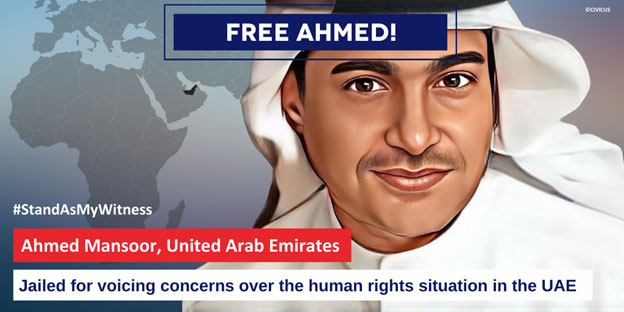
There’s widespread torture in jails and detention centres and at least 58 prisoners of conscience have been held in prison despite having completed their sentences. Many of them were part of a group known as the UAE 94, jailed for the crime of calling for democracy. Among the ranks of those incarcerated is Ahmed Mansoor, sentenced to 10 years in jail in 2018 for his work documenting the human rights situation, and held in solitary confinement for over five years and counting.

Ahead of COP28, civil society has worked to highlight the absurdity of holding such a vital summit in closed civic space conditions. Domestic civil society is unable to influence COP28 and its preparatory process, and it’s hard to see how civil society, both domestic and international, will be able to express itself freely during the summit.

Civil society is demanding that the UAE government demonstrate that it’s prepared to respect human rights, including by releasing political prisoners – something it’s so far failed to budge on.

An ominous sign came when the UAE hosted a climate and health summit in April. Participants were reportedly instructed not to criticise the government, corporations, individuals or Islam, and not to protest while in the UAE.

Civic space restrictions aren’t the only indication the UAE isn’t taking COP28 seriously. The president of the summit, Sultan Ahmed Al Jaber, also happens to be head of the state’s fossil fuel corporation ADNOC, the world’s 11th-biggest oil and gas producer. It’s like putting an arms manufacturer in charge of peace talks. Multiple other ADNOC staff members have roles in the summit. ADNOC is currently talking up its investments in renewable energies, all while planning one of the biggest expansions of oil and gas extraction of any fossil fuel corporation.

Instead of real action, all the signs are that the regime is instrumentalising its hosting of COP28 to try to launder its reputation, as indicated by its hiring of expensive international lobbying firms. An array of fake social media accounts were created to praise the UAE as host and defend it from criticism. A leaked list of key COP28 talking points prepared by the host made no mention of fossil fuels.

A summit that should be about tackling the climate crisis – and quickly – is instead being used to greenwash the image of the host government – something easiest achieved if civil society is kept at arm’s length.

Fossil fuel lobby to the fore

With civil society excluded, the voices of those actively standing in the way of climate action will continue to dominate negotiations. That’s what happened at COP27, also held in the closed civic space of Egypt, where 636 fossil fuel lobbyists took part – and left happy. Like every summit before it, its final statement made no commitment to reduce oil and gas use.

The only way to change this is to open the doors to civil society. Civil society has consistently sounded the alarm and raised public awareness of the need for climate action. It’s the source of practical solutions to cut emissions and adapt to climate impacts. It urges more ambitious commitments and more funding, including for the loss and damage caused by climate change. It defends communities against environmentally destructive impacts, resists extraction and promotes sustainability. It pressures states and the private sector to stop approving and financing further extraction and to transition more urgently to more renewable energies and more sustainable practices. These are the voices that must be heard if the cycle of runaway climate change is to be stopped.

COPs should be held in countries that offer an enabling civic space that allows strong domestic mobilisation, and summit hosts should be expected to abide by high standards when it comes to domestic and international access and participation. That should be part of the deal hosts make in return for the global prestige that comes with hosting high-level events. Civil society’s exclusion mustn’t be allowed to happen again.

Andrew Firmin is CIVICUS Editor-in-Chief, co-director and writer for CIVICUS Lens and co-author of the State of Civil Society Report.

  Source

Pacific Games Channels Youth Aspirations in the Solomon Islands

Asia-Pacific, Civil Society, Economy & Trade, Editors’ Choice, Featured, Headlines, Human Rights, Sustainable Development Goals, TerraViva United Nations, Youth

Youth

Jovita Ambrose and Timson Irowane are two young athletes training to be part of the Solomon Islands national team at the Pacific Games. Credit: Catherine Wilson/IPS

HONIARA, SOLOMON ISLANDS, Nov 17 2023 (IPS) – The Pacific Games, the most prestigious sporting event in the Pacific Islands region, will open in the Solomon Islands in the southwest Pacific on 19 November. And it is set to shine a spotlight on the energy, hopes and aspirations of youths who comprise the majority of the country’s population.


Timson Irowane (25), who has been competing in triathlons for the past six years, is brimming with confidence and anticipation. “The Pacific Games is a big event because my people are here, and it is very special because this is the first time the Solomon Islands is hosting the Games that I’ve been involved in,” Irowane told IPS during an interview at the Solomon Islands National Institute of Sport in the capital, Honiara. 

Every four years, a Pacific Island nation is chosen to host the regional multi-sport Pacific Games. And this year, about 5,000 athletes from 24 Pacific Island states, such as Papua New Guinea, Kiribati, Fiji and New Caledonia, will arrive in Honiara to compete in 24 sports, ranging from athletics and swimming to archery and basketball.

The Solomon Islands has a high population growth rate of 2.3 percent and about 70 percent of the country’s population of about 734,000 people are aged under 35 years. Christian Nieng, Executive Director of the Pacific Games National Hosting Authority, told IPS that it will be a chance to showcase their talents and achievements. “It is the biggest international event ever hosted in the country. And as we are hosting, we want to compete for every medal chance,” Nieng said.

Not far from Honiara city centre, the new Games precinct includes a large national stadium, which can accommodate 10,000 people, as well as swimming and tennis centres. Eighty percent of the funding needed to build the facilities and organize the Games has been provided by international donors and bilateral partners, including Australia, New Zealand, Papua New Guinea, China, Saudi Arabia, India, Korea and Indonesia.

“One of the long-term benefits of the Games is that we now have a new sports city as a legacy of the event,” Nieng added. It will be one of the best in the Pacific region, he believes, and, if well maintained, will last for 25 years, providing world-class facilities for Solomon Islanders to pursue their development and ambitions in sport.

At the sports institute, about 1,200 athletes are in training, and their energy and excitement is palpable. Here, Irowane, who is from Western and Malaita, two outer island provinces, is one among many who are striving to be selected for the national team of about 650 athletes who will represent the Solomon Islands later this month. His dedication has already led to international success. He participated in the Pacific Games held in Samoa in 2019 and numerous regional championships before heading to the Commonwealth Games hosted in Birmingham in the United Kingdom last year.

But he said that there were many wider benefits of sport to young people. “Triathlon is a multi-sport which involves discipline. Sport is not just for training, for fitness and skills that you learn in a specific sport, but it trains holistically to be a better person and a responsible person,” Irowane said. “And it helps athletes and individuals to be good citizens.”

Another local star aiming high is 21-year-old Jovita Ambrose, also from Malaita Province. “I started athletics and running during school games when I was 17 years old. When I’m running, I know that I’m good at it. When you are good at sport, it keeps you busy; it helps you stay healthy and not get involved in negative activities, such as drugs,” Ambrose said. In the last two years, she has travelled to competitions overseas, including the World Athletics Championships in Oregon in the United States last year and in Budapest, Hungary, three months ago.

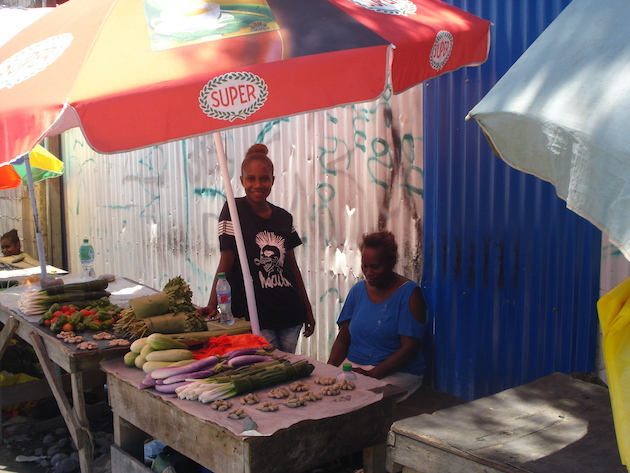
Many local businesses in the formal and informal sectors are hoping for increased visitors and business during the Pacific Games being hosted in the Solomon Islands in late November. Burns Creek Settlement market in Honiara. Credit: Catherine Wilson/IPS

Many local businesses in the formal and informal sectors are hoping for increased visitors and business during the Pacific Games being hosted in the Solomon Islands in late November. Burns Creek Settlement market in Honiara. Credit: Catherine Wilson/IPS

The Solomon Islands has a rural majority population that is scattered across more than 900 islands where there is often limited access to roads, basic services and employment. And the younger generation faces significant economic and development challenges. In a country which is not generating enough jobs for those of working age, the government estimates that 16,000-18,000 youths enter the employment market every year, with less than 4,000 likely to gain a secure job. Estimates of youth unemployment range from 35 percent to 60 percent.

“There is a lot of unemployment and, also, under-employment, where young people get a job opportunity which does not match their skill set. It is a real frustration for them when they are educated and still waiting for a job opportunity,” Harry James Olikwailafa, Chairman of the Solomon Islands National Youth Congress, explained to IPS. “The important issues for young people today are economic opportunities, employment opportunities and educational opportunities.”

In the last two decades, Solomon Islanders have also grappled with the aftermath of a five-year civil conflict. ‘The Tensions’, triggered by factors including urban-rural inequality, corruption and competition for land and resources, erupted in 1998 between rival armed groups representing local Guale landowners on Guadalcanal Island and internal settlers from Malaita Province. Hostilities ended in 2003, by which time many people, including children, had experienced violence, atrocities and displacement and had been deprived of education.

Morrison Filia 936) and his wife, Joycelyn (32), grew up in the aftermath of the conflict. And now, through a new entrepreneurial initiative, are aiming to help grow economic opportunities in Honiara. In August, they launched a new tourism business, Happy Isle Tours and Transfers, which offers airport transfers for visitors and tourists to hotels, as well as tours of Honiara, its history and landmarks, and excursions to World War II memorial sites on Guadalcanal Island.

“In Honiara, there are a lot of young people, and employment is a problem. So, the main idea is that we try to create this business so that we can employ more young people. We are trying to give young people opportunities,” Morrison told IPS.

They have also opened their business in time for the Games. “One of the other reasons why we started the business is that we noticed tourists and visitors coming [to the Solomon Islands], but they find it difficult to find transport,” Joycelyn said. “We are excited and looking forward to the Games because we are expecting more tourists. It will bring other different people to the country, and we are expecting increased bookings. I think it will also increase employment in the country and help us in our economy,” she continued.

The Pacific Games will continue for two weeks and finish on the 2 December. And like Morrison and Joycelyn, Timson Irowane has long-term goals. “I wish to be a role model, to introduce the sports and motivate more young people to be involved in any sport they are interested in. I love to encourage them because we have the advantage of the facilities here beyond the Games,” he declared.

IPS UN Bureau Report

  Source

Good for Girls and Good for the Planet: Eco-Friendly Sanitary Towels

Africa, Climate Change, Conservation, Environment, Featured, Green Economy, Headlines, Health, Innovation, Sustainable Development Goals, TerraViva United Nations

Women’s Health

Stephany Musombi and engineers preparing the banana stems for processing at KIRDI. Credit: Wilson Odhiambo/IPS

Stephany Musombi and engineers preparing the banana stems for processing at KIRDI. Credit: Wilson Odhiambo/IPS

NAIROBI, Nov 16 2023 (IPS) – ’Going Green’ seems to Dr Jacquline Kisato’s favorite catchphrase as she passionately explains her eco-friendly sanitary towel, a product she expects will help empower women and young girls while also putting money into farmers’ pockets.


Kisato is a lecturer at the Kenyatta University (KU), Fashion Design and Marketing, currently working on a project to develop affordable and eco-friendly sanitary towels while also finding a solution for sustainable packaging materials.

Kisato’s venture started out to help communities get a source of employment through the commercialization of banana stems – products that were considered useless by farmers and would usually be left to rot away on farms.

After the Kenyan government enforced a ban on the use of plastic bags in 2018, there was a need to find immediate alternatives.

Plastic bags were a necessity for grocers and fast-food vendors, an item that made it easy for customers to carry their goods home. Despite their advantage, however, their negative impact on the environment could no longer be overlooked.

‘’I started looking at this project from an entrepreneurship point of view on how I could commercialize banana stem fibers. The government had just banned single-use plastic bags, and market vendors needed alternatives to serve their customers,’’ Kisato told IPS.

‘’Poorly disposed sanitary towels also formed part of the pollution problem since they were composed of plastic,’’ she added.

According to Kisato, however, her need to empower women and young girls through affordable sanitary towels was something that she always had in mind after noticing the struggles that school-going girls went through.

‘’While walking along the hallways one day, a student on campus stopped me and asked if I could help her with a packet of sanitary pads. This incident shocked me as for a long time, I had assumed ‘period poverty’ was only experienced amongst high school children,’’ Kisato said.

Kisato and her research team interviewed 400 high school girls from Gatundi, Kibera, and Kawangware, where they found out that more than 50 percent of the girls in these low-income areas could hardly afford sanitary pads even when at home.

This did not sit well with the don as she felt something needed to be done about it.

It was while researching alternatives to plastic bags that she realized that she could solve two problems at the same time.

Kisato, therefore, applied for the National Research Fund (NRF) in 2018 with the aim of developing eco-friendly plastic bags and sanitary towels. Her wish came through when NRF granted Kenyatta University Ksh.9 million (about US $ 61,623) in 2020, with her taking the lead as the principal investigator in the project.

Her team is made up of scholars from different departments and institutions and also includes Ph.D. and master’s students, with each one of them playing a major role in seeing the project through.

‘’I lead a team of engineers from the Kenya Industrial Research and Development Institute (KIRDI), whose task is to reverse engineer machines that can extract fiber from banana stems and use them to create eco-friendly packaging and sanitary towels,’’ she explained. “I also have researchers from Moi University whose work was to turn the extracted fiber into soft materials for use.”

Kisato’s aim was to produce quality sanitary towels that could compete with what was already in the market while still being eco-friendly, a fact that led her to seek the expertise of Edwin Madivoli, a chemistry lecturer at the Jomo Kenyatta University of Agriculture and Technology (JKUAT).

According to Kisato, the towels on the market have a component in them called hydrogel, which enables them to retain fluids for longer, and were also lined with plastic sheets to prevent any leakage. Our intention is to replicate the same but use bioplastic materials, which can degrade as opposed to the normal plastic that is being used.

From her research, Kisato also discovered that Africans, on average, wore sanitary towels for longer as compared to women and girls from developed countries and were thus at risk of getting bacterial infections. This was due to limited access and affordability in Africa.

‘’The recommended period for one to have on a sanitary pad is about three hours, which means that it should be changed at least three times a day to avoid any risk of infections. This is, however, not the case for many girls in Africa due to poverty,’’ Kisato explained to IPS.

‘’We thought adding anti-microbial properties to our product would therefore make it as good or even better than what was in the market,’’ said Kisato.

The research team also found out that there were a lot of myths surrounding menstrual flow among young girls, a fact that led to a lot of stigmatization, which made it difficult for them to understand how to use sanitary towels properly.

Some of the notable ideas that girls told each other concerning menstrual flow included:

  1. It is a curse from God
  2. Girls who had periods were considered dirty and impure
  3. Their faces would become pale from losing blood

‘’These are beliefs that need to be done away with by encouraging parents and the government to speak about monthly periods with young girls openly,’’ Kisato said.

For the second phase of the project, Madivoli’s chemistry expertise came in handy, and the Research Scholarship and Innovation Fund (RSIF) was happy to add an additional Ksh.9 million (about USD 59,000) for Kisato to continue what she had started.

‘’My role is to ensure our sanitary pads are of the same quality as what is in the market while at the same time maintaining an eco-friendly nature, which is the main agenda of this whole project,’’ Madivoli told IPS.

‘’I am tasked with the development of hydrogels, production of bioplastics, and finding a way to incorporate anti-microbial properties into our products to protect the users from possible infections,’’ he said.

JKUAT received funding of Ksh.800,000 (about US $ 5477) from the Kenya National Innovation Agency (KENIA) to further help Madivoli with this research.

“As they are left to dry up on the farms, banana stems are known to produce large amounts of methane, which is a harmful greenhouse gas that contributes to the climate change problems that we are trying to tackle, added Madivoli. ‘”Having an alternative use for the stems therefore limits the greenhouse effect in the atmosphere.’’

Madivoli said that most banana farmers usually do not know what to do with the stems once they have done their harvest, and this project gives them a way to earn some extra income as they expect to buy the stems from them at Ksh.35 per stem.

“This project will not only be environmentally friendly but will also create jobs for the people who go to cut the stems from the farms while also finding use for the biomass that the farmers thought was useless,’’ he concluded.

Once it is up and running, they expect to source banana stems from counties such as Kisii, Muranga, Embu, Meru, and parts of western Kenya.

Stephany Musombi is one of Kisato’s students specializing in textiles whose task in the project is to come up with quality packaging materials.

‘’Apart from the banana fiber, I am also experimenting with other biomass such as pineapple and seaweed,’’ Musombi told IPS. If I can find a way to make this work, the project will open up a market for seaweed and pineapple biomass.

Kisato’s project could not have picked a better time there is an international joint push for green solutions to help mitigate climate change. On September 4, 2023, Kenya also played host to the climate summit that attracted leaders from across Africa.

Kenya’s president, William Ruto, drove himself in a tiny electric car to the Kenyatta International Convention Centre (KICC), where he challenged the African leaders and innovators to find sustainable solutions to their daily activities that can help them reduce the carbon print in the continent and globally.

‘’Africa can power all energy needs with renewable resources. The continent has enough potential to be entirely self-sufficient using wind, solar, geothermal, sustainable biomass, and hydropower energy. Africa can be a green industrial hub that helps other regions achieve their net zero strategies by 2050,’’ Ruto said at the summit.

Kisato expects her product to hit the market later this year, where she plans to make it more affordable for all. Her intention is to team up with startups or established companies that deal with toiletries.

‘’The cheapest sanitary packet in the market costs Ksh.140. We expect ours to go as low as Ksh.100, Kisato,’’ concluded.

Kenyatta University’s Vice Chancellor, Paul Wainaina, lauded the project, stating that it will enable the country to meet its industrial needs while conserving the environment.

IPS UN Bureau Report

  Source

Smallholder Farmers Gain Least from International Climate Funding

Africa, Aid, Civil Society, Climate Action, Climate Change, Climate Change Finance, COP28, Development & Aid, Editors’ Choice, Food and Agriculture, Food Security and Nutrition, Food Sustainability, Global, Headlines, Human Rights, Humanitarian Emergencies, Sustainable Development Goals, TerraViva United Nations

Climate Change Finance

David Obwona at his seed rice farm in Katukatib village, Amoro district, northern Uganda. The farmer is part of a group that is now engaged in seed rice farming to climate-proof agriculture courtesy of the Regional Universities Forum for Capacity Building Agriculture. Credit: Maina Waruru/IPS

David Obwona at his seed rice farm in Katukatib village, Amoro district, northern Uganda. The farmer is part of a group that is now engaged in seed rice farming to climate-proof agriculture courtesy of the Regional Universities Forum for Capacity Building Agriculture. Credit: Maina Waruru/IPS

NAIROBI, Nov 14 2023 (IPS) – Smallholder farmers from the Global South benefit from a grossly disproportionate 0.3% of international climate finance despite producing a third of the world’s food and despite holding the key to climate-proofing food systems.


The family farmers and rural communities received around USD 2 billion from both public and private international climate funds out of the USD 8.4 billion that went to the agriculture sector in 2021, even as over 2.5 billion people globally depended on the farms for their livelihoods.

The USD 8.4 billion was almost half of the USD 16 billion that was availed for the energy sector and is only a fraction of the estimated USD 300-350 billion needed annually to “create more sustainable and resilient food systems,” a new report has found.

The amount was also quite different from the USD 170 billion that smallholder farmers in Sub-Saharan Africa alone would require per year, the study on global public finance for climate mitigation and adaptation conducted by Dutch climate advisory company Climate Focus has found.

The low level of climate finance for agriculture, forestry, and fishing is of concern, given the impact of climate change on food production and the extent to which food and agriculture are fueling the climate and biodiversity crisis.

Agricultural productivity has declined by 21 percent due to climate change, while the food and agriculture sector as a whole is responsible for 29 percent of greenhouse gas emissions and 80 percent of global deforestation, the study explains.

The farmers have been sidelined by global climate funders and locked out of decision-making processes on food and climate despite being the engines of rural economic growth. This is especially so in Sub-Saharan Africa, where up to 80 percent of agriculture is by smallholder farmers and where 23 percent of regional GDP is attributable to the sector.

It reveals that 80 percent of international public climate finance spent on the agri-food sector is channeled through governments and donor country NGOs, making it hard for smallholder farmers’ organizations to access it. This is because of complex eligibility rules and application processes and a lack of information on how and where to apply.

Many family farmers also lack the infrastructure, technology, and resources to adapt to climate impacts, with serious implications for global food security and rural economies as well, it notes.

The study ‘Untapped Potential: An analysis of international public climate finance flows to sustainable agriculture and family farmers,’ published on 14 November, laments that only a fifth of international public climate finance for food and agriculture supports sustainable practice. The money mainly goes to the Global North, even as agriculture becomes the third biggest source of global emissions. and the main driver of biodiversity loss.

“Climate change is hitting harvests and driving up food prices across the globe. It has helped push 122 million people into hunger since 2019. We need to create more sustainable and resilient food systems that can feed people in a changing climate, but we can’t do this without family farmers,” the report compiled on behalf of ten farmer organizations in Africa, Asia, Latin America, and the Pacific says.

“Family farmers are also key to climate adaptation. They are at the forefront of the shift to more diverse, nature-friendly food systems, which the Intergovernmental Panel on Climate Change (IPCC) says is needed to safeguard food security in a changing climate,” it further notes.

The groups are led by the World Rural Forum and include African groups—the Eastern Africa Farmers Federation, Eastern and Southern Africa small-scale Farmers Forum, the Regional Platform of Farmers’ Organisations in Central Africa, and the Network of West African Farmers’ and Producers’ Organisations. Also part of the group is Northern Africa’s Maghreb and North African Farmers Union.

The Asian Farmers Association for Sustainable Rural Development, the Pacific Island Farmers Organization Network, the Confederation of Family Producers’ Organizations of Greater Mercosur, and the Regional Rural Dialogue Programme are also represented in the study.

Many of the farmers are already practicing climate-resilient agriculture, including approaches such as agroecology, which implies a wider variety of crops, including traditional ones, mixing crops, livestock, forestry, and fisheries, while reducing agrochemical use, and building strong connections to local markets.

The study by the new alliance of farmer networks representing over 35 million smallholder producers ahead of COP28, which is set to agree on a Global Goal for Adaptation, is concerned that since 2012, overall, only 11% of international public climate finance has been targeted at agriculture, forestry, and fishing, which amounts to an average of USD 7 billion a year.

In 2021, the World Bank, Germany, the Green Climate Fund, and European Union institutions contributed around half—54 percent, amounting to USD 4 billion collectively, while Nigeria, India, and Ethiopia were the top recipients, receiving a combined USD 1.8 billion. Notably, some of the world’s most food insecure countries, including Sudan, Sierra Leone, and Zambia, each received less than USD 20 million, it discloses.

“As the climate crisis pushes the global food system ever closer to collapse, it is vital that governments recognize family farmers as powerful partners in the fight against climate change,” it warns.

Hakim Baliriane, Chair of the Eastern and Southern Africa small-scale Farmers Forum, observed: “Climate change has helped push 122 million people into hunger since 2019. Reversing this trend will not be possible if governments continue to tie the hands of millions of family farmers.”

The study defines small-scale family farms as those of less than two hectares, mainly in developing countries.

On the other hand, international climate finance broadly refers to finance channeled to “activities that have a stated objective to mitigate climate change or support adaptation. These include multilateral flows in and outside the (UNFCCC) and the Paris Agreement, as well as bilateral flows at national and regional levels, including the Global Environment Facility, Adaptation Fund, and Green Climate Fund, and are usually disbursed as grants and concessional loans

The study finds that family farms are also the backbone of rural economies, supporting over 2.5 billion people globally who depend on family farms for their livelihoods. It says that in Sub-Saharan Africa, where up to 80 percent of farming is done by smallholder farmers, agriculture contributes 23 percent to regional Gross Domestic Product.

Family farmers are also key to climate adaptation in that they are at the forefront of the shift to more “diverse, nature-friendly food systems,” which, according to the Intergovernmental Panel on Climate Change (IPCC), are critical in safeguarding food security in a changing climate.

It finds that millions of smallholder farmers are already practicing climate-resilient agriculture, including approaches such as agroecology—growing a wider variety of crops, including traditional crops, mixing crops, livestock, forestry, and fisheries, reducing agrochemicals use while building “strong connections to local markets.”

It concludes that governments must ensure that available climate finance for sustainable climate-resilient practices is increased, including that of agroecological approaches.

It explains: “This means funds to support diverse, nature-friendly approaches and to create community-based solutions that build on traditional expertise and experience.

It recommends that small-scale family farmers ought to have direct access to more climate finance and that financing mechanisms and funds should be developed with the participation of farmers’ organizations to meet their needs.

In addition, efforts should be made to ensure longer-term, flexible funding so that communities can determine their own priorities.

The role of the farmers as powerful catalysts for climate action, food system transformation, and the protection of biodiversity should be acknowledged and given a “real say” in decision-making on food and climate at the local, national, regional, and international levels. This should include decisions on land reform and agricultural subsidies.

The COP28 in Dubai later this month has food systems as a big part of the agenda.

An August report by the UK’s ActionAid has found that climate adaptation and green transition initiatives in the Global South received 20 times less financing when compared to main global emitters, fossil fuels, and intensive agriculture sectors in the last seven years.

It found that leading banking multinationals funded the emitters’ activities in the southern hemisphere to the tune of USD 3.2 trillion since 2015 when the Paris Agreement on Climate was adopted. German agrochemical giant Bayer was the biggest recipient of the financing, receiving an estimated USD 20.6 billion since 2016.

IPS UN Bureau Report

  Source

The 2023 POZ 100 C–F

Introduction | A-B | C-F | G-M | N-Q | R-Z

Cascade AIDS Project

capnw.org

POZ 100 logos C-F

The Cascade AIDS Project (CAP) is the oldest and largest community-based provider of HIV services, education, housing and advocacy in Oregon and Southwest Washington. The nonprofit helps people living with HIV access essential medical care and secure housing and offers peer support and other free services, including health insurance navigation, HIV and STI testing and linkage to PrEP. Children living with and/or affected by HIV and AIDS can attend CAP’s Camp KC, a free weeklong overnight camp supported by numerous donors and about 50 volunteers with a background in mental health, social work or psychology. CAP’s Aging Well program is aimed at supporting long-term survivors and other adults aging with HIV. CAP recently helped write Oregon House Bill 2574, the first-ever legislation in the nation that clears barriers to emergency PEP for HIV prevention.

Center for Black Health & Equity

centerforblackhealth.org

POZ 100 logos C-F

The Center for Black Health & Equity (The Center) is a North Carolina–based nonprofit that facilitates programs and services to benefit communities and people of African descent. The Center advocates for equity-centered policies to address the social and economic injustices that have given rise to the health disparities experienced by African Americans, especially concerning tobacco control, COVID-19, HIV and AIDS, women’s health, cancer and mental health. It supports anti-stigma campaigns and programs that educate African Americans about HIV testing, treatment and living well with HIV. The Center provides consulting, training and technical assistance and connections to expert speakers for talks and keynote speeches. In September, the Center hosted its State of Black Health conference in Puerto Rico, where hundreds of community leaders and equity advocates gathered to brainstorm ways to achieve health justice and equity.

Center for HIV Law and Policy

hivlawandpolicy.org

POZ 100 logos C-F

The Center for HIV Law and Policy (CHLP) is a national resource and strategy center focused on laws and policies that are guided by racial, gender and economic justice. It works to end stigma, discrimination and violence toward people living with and affected by HIV, notably via its Positive Justice Project, a national coalition of organizations and individuals working to end HIV criminalization. CHLP teaches people about the HIV-specific statutes on the books in their state as well as how to fight for their right to privacy. CHLP also advocates for policies that guarantee comprehensive LGBTQ-affirming sexual health care for youth in government-operated and -regulated facilities. 

Chicago Black Gay Men’s Caucus

chicagoblackgaymenscaucus.org

POZ 100 logos C-F

Founded in 2005, the Chicago Black Gay Men’s Caucus is the city’s only organization that focuses exclusively on improving the health of Black gay, bi and same-gender-loving (GBSGL) men. One of the group’s programs is The Prosperity Project, which was developed to improve representation by GBSGL men in local community planning efforts as well as their experience with health care and support services. The group hosts the Mind, Body and Soul Health and Wellness Circle, which is accessible via a mobile app and supports efforts to engage GBSGL men in a range of health-related services. Other programming includes group exercise classes, yoga, massage therapy and nutrition and cooking classes. It also hosts LoveFest, an annual edutainment festival during which attendees can access free health and wellness resources, including HIV and STI testing.

Community Health PIER

chpier.org

POZ 100 logos C-F

Founded by brother-and-sister duo Cedric and Gloria Sturdevant, Community Health PIER (Prevention, Intervention, Education & Research) is dedicated to achieving health equity in rural Mississippi communities by offering individuals numerous tools and resources to help them make better-informed health choices. Using a holistic, hands-on approach to health, the nonprofit organizes community health walks, hosts educational events and trains individuals in agriculture via community gardens. Services it offers include HIV education, prevention and rapid testing as well as breast and heart health awareness. Sadly, Gloria died this past August.

Cooperative Health HIV Program

cooperativehealthhiv.org

POZ 100 logos C-F

Based in Columbia, South Carolina, the Cooperative Health HIV Program provides the full continuum of health care services for men and women, infants, children and youth. Thanks to funding from Ryan White Parts C and D, clients receive comprehensive, compassionate and affordable health care services in a confidential family-centered setting. Services include transportation, behavioral health counseling, housing support, medical case management, access to PrEP and PEP, dental care, nutritional support, emergency financial assistance and more. As proof of its commitment to the UNAIDS’s 90-90-90 targets (90% of people know their status, 90% of those are on treatment and 90% of those are undetectable), by 2019, Cooperative Health had linked 96% of its HIV patients to care.

The Denver Principles

poz.com/pdfs/denver_principles.pdf

POZ 100 logos C-F

In 1983, a group of people living with HIV gathered at the Fifth Annual National Lesbian and Gay Health Conference in Denver and drafted a revolutionary document now known as The Denver Principles. The manifesto condemned attempts to label people living with AIDS (PLWAs) as “victims.” It outlined the rights of PLWAs as well as recommendations for health care professionals and all others. The Denver Principles demanded that PLWAs be involved in every level of decision-making regarding their health care. The principles launched the self-empowerment movement and are as relevant today as they were in the ’80s.

Eagle Pass SAFE

epsafe.org

POZ 100 logos C-F

Eagle Pass SAFE (Sexuality Advocacy for Everyone) is an LGBTQ resource center located in Eagle Pass, a town on the southwest Texas border. It’s the only organization in the rural area providing HIV prevention and LGBTQ-affirming services. Its mission is “to build visibility as a social group, build a stronger community and to celebrate diversity and gender variance.” The small-community based group offers 24/7 crisis counseling and provides a guide of LGBTQ-inclusive businesses in the area. It also sponsors the region’s annual Pride event and operates a donation center.

EDGE New Jersey

edgenj.org

POZ 100 logos C-F

The mission of EDGE (End Discrimination. Gain Equality) New Jersey is to respond compassionately and responsibly to those living with and at risk for HIV as well as members of the LGBTQ community. To that end, it provides many supportive services that not only link individuals to care but also help them stay in care. EDGE also offers an array of HIV prevention services, such as HIV and STI education and counseling, mobile HIV testing, free condom distribution and access to PEP and PrEP. Plus, Edge hosts numerous LGBTQ support groups for various age groups as well as groups for long-term survivors and those newly diagnosed with HIV.

Eisenhower HIV Program

eisenhowerhealth.org/services/hiv

POZ 100 logos C-F

The HIV Program at Eisenhower Health provides comprehensive HIV primary care and offers clinical, research and educational resources for people living with and at risk for HIV in California’s Coachella Valley. Eisenhower uses advances in HIV treatment to sustain the best possible quality of life for those in its care. Eisenhower frequently collaborates with other local nonprofits at regional events to provide HIV-related resources, educational materials and referrals. This December, the Eisenhower Health Inaugural HIV Interprofessional Symposium will provide education and training to health care professionals to better address the health care needs of people living with HIV.

Elizabeth Glaser Pediatric AIDS Foundation 

pedaids.org

POZ 100 logos C-F

Founded in 1988 by Elizabeth Glaser and friends after Glaser’s daughter, Ariel, died of AIDS-related causes—Glaser herself died of the disease in 1994—the Elizabeth Glaser Pediatric AIDS Foundation has become a proven leader in the global fight to end HIV and AIDS and advocates for every child to live a full and healthy life. With its expertise in service delivery, capacity building, research and advocacy, the nonprofit is a leader in meeting the urgent needs of children with HIV in the world’s most affected regions. It has helped reduce new HIV infections in children in the United States by more than 95% and by more than half in children globally.

The Elizabeth Taylor AIDS Foundation 

elizabethtayloraidsfoundation.org

POZ 100 logos C-F

Hollywood legend and influential early AIDS activist Elizabeth Taylor founded the Elizabeth Taylor AIDS Foundation in 1991 to provide direct care to the most vulnerable people living with AIDS. The ever-evolving nonprofit recently launched the “Stuck in the 1980s” campaign, which asks members of the community to demand that legislators revisit laws (many of them passed in the ’80s) that criminalize HIV based on outdated science and assumptions. The group’s largest share of funding supports youth HIV education and prevention efforts, especially in the South. The nonprofit also funds mental health and wellness programs for U.S. women living with HIV, the Elizabeth Taylor 50+ Network at the San Francisco AIDS Foundation and mobile clinics in Malawi. Taylor’s grandchildren carry on her legacy by serving as ambassadors for the foundation.

Elton John AIDS Foundation

eltonjohnaidsfoundation.org

POZ 100 logos C-F

Launched in 1990 by the Rocket Man himself, the Elton John AIDS Foundation (EJAF) makes a massive global impact. Its annual Academy Awards viewing party alone has raised over $90 million. In 2020, EJAF contributed $15 million to HIV causes, making it the fifth largest philanthropic funder of HIV programs that year. Registered as separate U.S. and U.K. entities but operating as one organization, EJAF funds programs and collaborates with local groups to prevent, diagnose and treat HIV, notably among youth, LGBTQ people and people who use drugs. Recently, EJAF collaborated with Walmart to train specialty pharmacists, and the foundation backed PrEP4All’s fight to launch a national PrEP program.

End HIV 901

endhiv901.org

POZ 100 logos C-F

Shelby County, Tennessee, which includes Memphis, is identified as one of the priority counties in the federal Ending the HIV Epidemic (EHE) initiative. According to CDC data published in 2022,  82% of newly diagnosed individuals were linked to care within a month of their diagnosis. End HIV 901 is a collaborative effort intended to lower new HIV infection rates by 90% or more by 2030. Launched on social media in December 2020, End HIV 901 was awarded $12 million from the HHS Minority HIV/AIDS Fund. It has set up a community advisory board, which will issue grants to various local community groups focusing on four key strategies of the EHE’s A Plan for America: Diagnose, Treat, Prevent and Respond. The End HIV 901 website includes technical assistance for grant writing and a directory compiling HIV-related services and resources for other types of support throughout Shelby County.

Ending the HIV Epidemic in the U.S.

cdc.gov/endhiv

POZ 100 logos C-F

Launched in 2019 by President Donald Trump and coordinated by the Department of Health and Human Services, the 10-year federal initiative Ending the HIV Epidemic (EHE) in the U.S. aims to reduce new HIV infections by 75% by 2025 and by 90% by 2030. This would amount to fewer than 3,000 new HIV cases a year, according to the initiative, and would therefore meet the definition of ending the epidemic. The strategy is to focus federal HIV investments in the 57 key states, counties and cities that account for 50% of new HIV diagnoses. As we went to press, EHE’s future was uncertain, as Republican Congress members were threatening to defund the program.

Equitas Health

equitashealth.com

POZ 100 logos C-F

This Columbus, Ohio–based nonprofit community health care system is one of the nation’s largest organizations catering to the LGBTQ and HIV communities, providing services to tens of thousands of people in Ohio, Texas, Kentucky and West Virginia. Founded in 1984, it offers primary and specialized medical care, a pharmacy, dentistry, mental health and recovery services, HIV and STI treatment and prevention, access to PrEP and PEP, Ryan White HIV case management and advocacy and other community health initiatives. The Equitas Health Institute also offers training—online and in person—to organizations interested in creating more affirming environments for LGBTQ people. Equitas Health is the producer and primary beneficiary of AIDS Walk Ohio, which in the past eight years has raised $2 million for HIV-related services.

Fast-Track Cities

fast-trackcities.org


POZ 100 logos C-F

Using UNAIDS’s 90-90-90 initiative as a starting point, more than 300 cities and municipalities across the world participate in the Fast-Track Cities initiative. Mayors and other officials have joined four global partners (the International Association of Providers of AIDS Care, UNAIDS, the United Nations Human Settlements Programme and the City of Paris) to get to zero new HIV infections and zero AIDS-related deaths worldwide by signing a declaration to help achieve the initiative’s 95-95-95 target. The goal is to get 95% of people living with HIV to know their status, 95% of people who know their status on antiretroviral therapy and 95% of people on antiretroviral therapy to achieve a suppressed viral load. A web portal allows cities to report on their progress. 

Funders Concerned About AIDS

fcaaids.org

POZ 100 logos C-F

Since 1987, the mission of Funders Concerned About AIDS (FCAA) has been to inform, connect and support philanthropic efforts in response to the global HIV pandemic. More than 50 foundations and charities are FCAA members. The organization hosts an annual summit, monthly funder events and working groups to help ensure community-led approaches are embedded into HIV-informed funding. FCAA supports its members by helping to identify new opportunities for collaboration and is a driver of increased resources to underfunded regions, populations and interventions. The Philanthropic Support to Address HIV and AIDS is the group’s resource-tracking report; it includes data on more than 5,000 grants in order to identify gaps, trends and opportunities in HIV-related philanthropy.

Introduction | A-B | C-F | G-M | N-Q | R-Z


Source