Kazakhstan’s Transition: From a Nuclear Test Site to Leader in Disarmament

Armed Conflicts, Asia-Pacific, Conferences, Headlines, Health, Nuclear Energy – Nuclear Weapons, Peace, TerraViva United Nations

Opinion

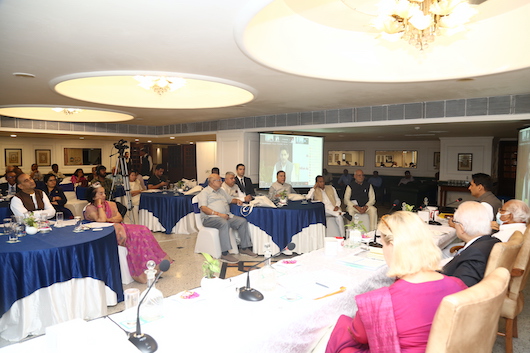
A Group photo of participants of the regional conference on the humanitarian consequences of nuclear weapons and nuclear-free-zone in Central Asia held on August 29, 2023. Credit: Jibek Joly TV Channel

ASTANA, Kazakhstan, Sep 7 2023 (IPS) – Exactly 32 years ago, on September 29, 1991, Kazakhstan, then part of the Soviet Union, made a historic decision that would alter its fate. On that day, Kazakhstan permanently closed the Semipalatinsk Nuclear Test Site, defying the central government in Moscow. This marked the start of Kazakhstan’s transformation from a nuclear-armed state, possessing the fourth-largest nuclear arsenal at the time, to a non-nuclear-weapon state. Kazakhstan’s audacious move to eliminate its nuclear weapons was rooted in a profound commitment to global disarmament, setting an inspiring precedent.


Eighteen years later, in 2009, the United Nations General Assembly adopted a resolution, led by Kazakhstan, designating August 29 as the International Day Against Nuclear Tests. This day serves as a solemn reminder of the catastrophic consequences of nuclear weapons and underscores the urgent imperative for disarmament.

In a world where the threat of nuclear weapons being used again remains a grim reality, a pivotal question looms: Can we genuinely aspire to a world free of nuclear arms? To delve deeper into this pressing concern and comprehend the menace posed by nuclear weapons testing and deployment, we interviewed Karipbek Kuyukov and participants of the “Humanitarian Impact of Nuclear Weapons and the Central Asian Nuclear-Weapon-Free Zone” regional conference. This conference, organized by the Ministry of Foreign Affairs of Kazakhstan in partnership with the Center for International Security and Policy (CISP), Soka Gakkai International (SGI), the International Committee of the Red Cross (ICRC), and the International Campaign to Abolish Nuclear Weapons (ICAN), took place in Astana, Kazakhstan to commemorate this year’s International Day Against Nuclear Tests.
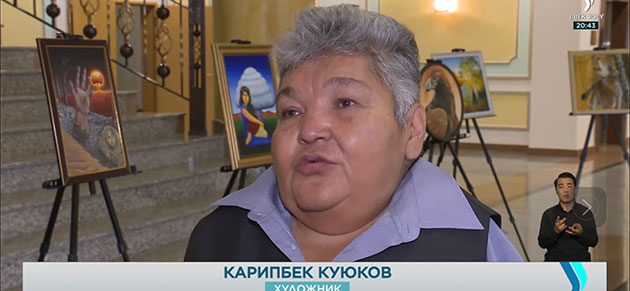
Karipbek Kuyukov is an armless painter from Kazakhstan, and global anti–nuclear weapon testing & nonproliferation activist. Credit: Jibek Joly TV Channel

One of the most poignant moments during the conference came from Dmitriy Vesselov, a third-generation survivor of nuclear testing. He provided a heartfelt testimony about the profound human toll exacted by nuclear testings on his family and the broader community. The nuclear tests conducted at the Semipalatinsk Nuclear Test Site over four decades unleashed explosions 2,500 times more potent than the atomic bombs dropped on Hiroshima and Nagasaki. The repercussions of these tests have echoed through generations, inflicting severe health problems and untold suffering.

Kuyukov, a renowned Kazakh artist born without hands due to radiation exposure in his mother’s womb, has devoted his life to raising awareness about the horrors of nuclear testing. His powerful artwork, created using his lips or toes, depicts the survivors of nuclear tests and serves as a poignant tribute to those who perished. Kuyukov’s unwavering commitment reflects the indomitable human spirit in the face of unimaginable adversity.

Dmitriy Vesselov’s testimony shed light on the ongoing challenges faced by survivors. He candidly shared his struggles with health issues, including acromioclavicular dysostosis, a condition severely limiting his physical capabilities. Vesselov expressed his deep concern about the potential transmission of these health problems to future generations. Consequently, he has chosen not to have children. The conference underscored the imperative of averting the repetition of history by delving into the past tragedies inflicted by nuclear weapons testings.

Hirotsugu Terasaki, Director General of Peace and Global Issues of SGI, commenting on the event said “I believe that this regional conference is a new milestone, a starting point for representatives from five countries of Central Asia to discuss how we can advance the process toward a nuclear-weapon-free world, given the ever-increasing threat of nuclear weapons.”

Terasaki observed that the international community is actively deliberating Articles 6 and 7 of the Treaty on the Prohibition of Nuclear Weapons (TPNW), mandating state parties to provide support to victims and address environmental remediation. He accentuated Kazakhstan’s pivotal role as a co-chair of the working group central to these discussions.

Kazakhstan does provide special medical insurance and benefits to victims of nuclear tests. However, these benefits are predominantly extended to individuals officially certified as disabled or a family member of those who succumbed to radiation-related illnesses. Numerous victims, like Vesselov, who do not fall within these categories, remain ineligible for assistance.

Despite his daunting challenges, Mr. Vesselov maintains an unwavering sense of hope. He hopes that his testimony will serve as a stark reminder of the perils of nuclear weapons and awaken global consciousness regarding the dangers posed by even small tactical nuclear weapons and the specter of limited nuclear conflicts. Ultimately, his deepest aspiration, shared by all victims of nuclear weapons, is that the world will never bear witness to such a devastating tragedy again.

As Kazakhstan assumes its role as President-designate of the third Meeting of States Parties to the TPNW, it reaffirms its steadfast commitment to global peace and disarmament. President Kassym-Jomart Tokayev’s resolute words resonate with the sentiment of a nation that has borne the scars of nuclear testing: “Such a tragedy should not happen again. Our country will unwaveringly uphold the principles of nuclear security.”

At the conference, member states of the Treaty of Semipalatinsk were encouraged to support Kazakhstan in this endeavor, and in its efforts to represent the Central Asian region’s contribution to nuclear disarmament, through attending the second Meeting of States Parties of the TPNW, at least as observers, which will take place at the United Nations Headquarters in New York between 27 November and 1 December this year, and by signing and ratifying the TPNW at the earliest opportunity.

In a world still grappling with the looming specter of nuclear devastation, Kazakhstan’s journey from a nuclear test site to a leading advocate for disarmament serves as a beacon of hope. Kazakhstan’s unwavering commitment to peace stands as a testament to the enduring legacy of a nation that once bore the weight of nuclear tests and now champions a safer, more secure world for all.

Katsuhiro Asagiri is President of INPS Japan and Kunsaya Kurmet-Rakhimova is a reporter of Jibek Joly(Silk Way) TV Channel.

IPS UN Bureau


The UN’s Own Relevance Is at Stake at This Year’s General Assembly

Armed Conflicts, Civil Society, Climate Change, Crime & Justice, Development & Aid, Featured, Global, Headlines, Health, Human Rights, Inequality, Peace, Sustainable Development Goals, TerraViva United Nations

Opinion

United Nations Secretary General Antonio Guterres addresses the 22nd session of the Permanent Forum on Indigenous Issues at the General Assembly Hall of the United Nations headquarters in New York City on 17 April 17 2023. Credit: Ed Jones/AFP via Getty Images

NEW YORK, Sep 7 2023 (IPS) – This September, world leaders and public policy advocates from around the world will descend on New York for the UN General Assembly. Alongside conversations on peace and security, global development and climate change, progress – or the lack of it – on the Sustainable Development Goals (SDGs) is expected to take centre-stage. A major SDG Summit will be held on 18 and 19 September. The UN hopes that it will serve as a ‘rallying cry to recharge momentum for world leaders to come together to reflect on where we stand and resolve to do more’. But are the world’s leaders in a mood to uphold the UN’s purpose, and can the UN’s leadership rise to the occasion by resolutely addressing destructive behaviours?


Sadly, the world is facing an acute crisis of leadership. In far too many countries authoritarian leaders have seized power through a combination of populist political discourse, outright repression and military coups. Our findings on the CIVICUS Monitor – a participatory research platform that measures civic freedoms in every country – show that 85% of the world’s population live in places where serious attacks on basic fundamental freedoms to organise, speak out and protest are taking place. Respect for these freedoms is essential so that people and civil society organisations can have a say in inclusive decision making.

UN undermined

The UN Charter begins with the words, ‘We the Peoples’ and a resolve to save future generations from the scourge of war. Its ideals, such as respect for human rights and the dignity of every person, are being eroded by powerful states that have introduced slippery concepts such as ‘cultural relativism’ and ‘development with national characteristics’. The consensus to seek solutions to global challenges through the UN appears to be at breaking point. As we speak hostilities are raging in Ukraine, Sudan, the Occupied Palestinian Territories and the Sahel region even as millions of people reel from the negative consequences of protracted conflicts and oppression in Afghanistan, Ethiopia, Myanmar, Syria and Yemen, to name a few.

Article 1 of the UN Charter underscores the UN’s role in harmonising the actions of nations towards the attainment of common ends, including in relation to solving international problems of an economic, social, cultural or humanitarian character, and to promote respect for human rights and fundamental freedoms for all. But in a time of eye-watering inequality within and between countries, big economic decisions affecting people and the planet are not being made collectively at the UN but by the G20 group of the world’s biggest economies, whose leaders are meeting prior to the UN General Assembly to make economic decisions with ramifications for all countries.

Economic and development cooperation policies for a large chunk of the globe are also determined through the Organisation for Economic Cooperation and Development (OECD). Established in 1961, the OECD comprises 38 countries with a stated commitment to democratic values and market-based economics. Civil society has worked hard to get the OECD to take action on issues such as fair taxation, social protection and civic space.

More recently, the BRICS – Brazil, Russia, India, China and South Africa – grouping of countries that together account for 40 per cent of the world’s population and a quarter of the globe’s GDP are seeking to emerge as a counterweight to the OECD. However, concerns remain about the values that bind this alliance. At its recent summit in South Africa six new members were admitted, four of which – Egypt, Iran, Saudi Arabia and the United Arab Emirates – are ruled by totalitarian governments with a history of repressing civil society voices. This comes on top of concerns that China and Russia are driving the BRICS agenda despite credible allegations that their governments have committed crimes against humanity.

The challenge before the UN’s leadership this September is to find ways to bring coherence and harmony to decisions being taken at the G20, OECD, BRICS and elsewhere to serve the best interests of excluded people around the globe. A focus on the SDGs by emphasising their universality and indivisibility can provide some hope.

SDGs off-track

The adoption of the SDGs in 2015 was a groundbreaking moment. The 17 ambitious SDGs and their 169 targets have been called the greatest ever human endeavour to create peaceful, just, equal and sustainable societies. The SDGs include promises to tackle inequality and corruption, promote women’s equality and empowerment, support inclusive and participatory governance, ensure sustainable consumption and production, usher in rule of law and catalyse effective partnerships for development.

But seven years on the SDGs are seriously off-track. The UN Secretary-General’s SDG progress report released this July laments that the promise to ‘leave no one behind’ is in peril. As many as 30 per cent of the targets are reported to have seen no progress or worse to have regressed below their 2015 baseline. The climate crisis, war in Ukraine, a weak global economy and the COVID-19 pandemic are cited as some of the reasons why progress is lacking.

UN Secretary-General Antonio Guterres is pushing for an SDG stimulus plan to scale up financing to the tune of US$500 billion. It remains to be seen how successful this would be given the self-interest being pursued by major powers that have the financial resources to contribute. Moreover, without civic participation and guarantees for enabled civil societies, there is a high probability that SDG stimulus funds could be misused by authoritarian governments to reinforce networks of patronage and to shore up repressive state apparatuses.

Also up for discussion at the UN General Assembly will be plans for a major Summit for the Future in 2024 to deliver the UN Secretary-General’s Our Common Agenda report, released in 2021. This proposes among other things the appointment of a UN Envoy for Future Generations, an upgrade of key UN institutions, digital cooperation across the board and boosting partnerships to drive access and inclusion at the UN. But with multilateralism stymied by hostility and divisions among big powers on the implementation of internationally agreed norms, achieving progress on this agenda implies a huge responsibility on the UN’s leadership to forge consensus while speaking truth to power and challenging damaging behaviours by states and their leaders.

The UN’s leadership have found its voice on the issue of climate change. Secretary-General Guterres has been remarkably candid about the negative impacts of the fossil fuel industry and its supporters. This July, he warned that ‘The era of global warming has ended; the era of global boiling has arrived’. Similar candour is required to call out the twin plagues of authoritarianism and populism which are causing immense suffering to people around the world while exacerbating conflict, inequality and climate change.

The formation of the UN as the conscience of the world in 1945 was an exercise in optimism and altruism. This September that spirit will be needed more than ever to start creating a better world for all, and to prove the UN’s value.

Mandeep S. Tiwana is chief officer for evidence and engagement + representative to the UN headquarters at CIVICUS, the global civil society alliance.

  Source

African Startups Mull Home-Grown Solutions to Combat Climate Change

Climate Action, Climate Change, Featured, Food and Agriculture, Headlines, Innovation, Sustainable Development Goals, TerraViva United Nations

Innovation

Delegates outside the Climate Action Innovation Hub on the frontlines of the Africa Climate Summit. Credit: Aimable Twahirwa

Delegates outside the Climate Action Innovation Hub on the frontlines of the Africa Climate Summit. Credit: Aimable Twahirwa

NAIROBI, Sep 6 2023 (IPS) – A group of young African startups made their presence known at the Africa Climate Summit in Nairobi, Kenya, hoping to play a big role in promoting home-grown climate-oriented solutions.


In line with the recently adopted African Union Climate Change and Resilient Development Strategy (2022-2032), experts believe that broad-based ownership and inclusive participation are vital for engaging Africa’s women and young people to showcase their ‘game-changing’ innovations.

According to Dr Yossi Matias, Vice-President of the Google Research initiative, pushing for innovative solutions and research around climate change remains critical for Africa when considering that the continent continues to feel the impacts of global warming in many ways.

“Most solutions promoted by African startups and innovators are in danger of being ignored because of many factors, but there is a way to overcome these challenges,” Yossi told IPS.

Among the solutions put forward by young innovators at the Climate Action Innovation Hub, which took place on the sidelines of the summit, were clean energy, climate-smart agriculture and sustainable land management, biodiversity conservation, water storage and conservation, waste management, and circular economy.

The innovations can also enhance the key cross-cutting areas needed to amplify climate cooperation and action, including climate advocacy, empowerment, awareness raising, capacity building, and climate literacy.

Other key areas of innovation are green transport and climate-resilient infrastructure, resilient, climate-smart cities, digital transformation, and food security.

The latest estimates by the UN agencies show that changing precipitation patterns, rising temperatures, and more extreme weather contributed to mounting food insecurity, poverty, and displacement in Africa.

Official figures show that food insecurity increases by 5–20 percentage points with each flood or drought in sub-Saharan Africa

While African Governments are committed to supporting climate solution innovation to varying levels and with different approaches to tackle this phenomenon, some experts believe that what is needed is to encourage a growing number of African startups to shift in mindset—by becoming providers of solutions to improving the continental climate change resilience.

“What is needed for these young African innovators is to look for mentors and incubators because, as an entrepreneur, you need to learn how to develop a successful product that brings some short-term and long-term positive benefits to combat climate change in your community,” Yossi said.

Through its Accelerator programs, the Google Research initiative currently seeks to empower startups, developers, and nonprofits, especially in Africa, to better solve the world’s biggest challenges — from economic development, diversity, sustainability, and climate change — relying on its technology.

For example, one of the initiatives presented at the summit seeks to produce plastic waste collected from local communities in the Rwandan capital Kigali where a startup is producing handcrafts from plastic waste collected in the city.

Sonia Umulinga, a young Rwandan female entrepreneur and owner of ‘Plastic Craft’, a company that seeks to tackle the problem of plastic pollution, told IPS that key priority had been given not only to help reduce plastic pollution but also to her new business model in using the collected waste to produce unique products on the markets.

Harsen Nyambe Nyambe, Director, Sustainable Environment and Blue Economy, African Union Commission, told delegates that the current situation where the lack of ownership over innovations, coupled with a whole narrative built around imported solutions, constitutes a major challenge for the continent to combat climate change.

“Africa needs to redefine on how to engage of the issue of climate change, and countries need to work together to find possible innovative solutions to the challenges they are facing,” he said.

While some officials and experts cite innovation as an important driver of growth and the fight against hunger and malnutrition, which continue to affect major parts of the African continent, others believe there is a need for these African startup entrepreneurs to test and refine these ideas for the benefit of their community.

Current efforts for Africa’s transformation emphasize switching agriculture from subsistence to commercial, which means producing a surplus for the markets and making agriculture become a business while relying on home-grown innovative ideas.

Prof Kindiwe Sibanda, system Board Chair at the Consultative Group for International Agricultural Research (CGIAR), pointed out that the startup initiative is critical for the African Agriculture sector to expedite the production of food.

“We should not give up because we need these startup home-grown solutions to help small-scale farmers meet their needs,” she told delegates.

However, some small-scale farmers and pastoralists believe that indigenous innovation also constitutes another driver for innovation in African Agricultural systems considering that climate change impacts are stalling progress towards food security on the continent.

Tumal Orto, a livestock breeds farmer from Marsabit County in Northern Kenya, told IPS that weaving indigenous knowledge with scientific research remains critical.

“Small-scale farmers are also innovators in their own ways using local ingenuity in their practices,” he said.

However, most experts at the innovation hub on the sidelines of the Africa Climate Summit (ACS) in Nairobi were unanimous that more productive and resilient solutions to combat climate change in Africa will still require a major shift in the way various resources are managed.

IPS UN Bureau Report

  Source

Toothless Global Financial Architecture Fuelling Africa’s Climate Crisis

Africa, Biodiversity, Climate Action, Climate Change, Climate Change Finance, Climate Change Justice, Conferences, Editors’ Choice, Environment, Featured, Food and Agriculture, Headlines, Humanitarian Emergencies, Sustainable Development Goals, TerraViva United Nations

Climate Change Justice

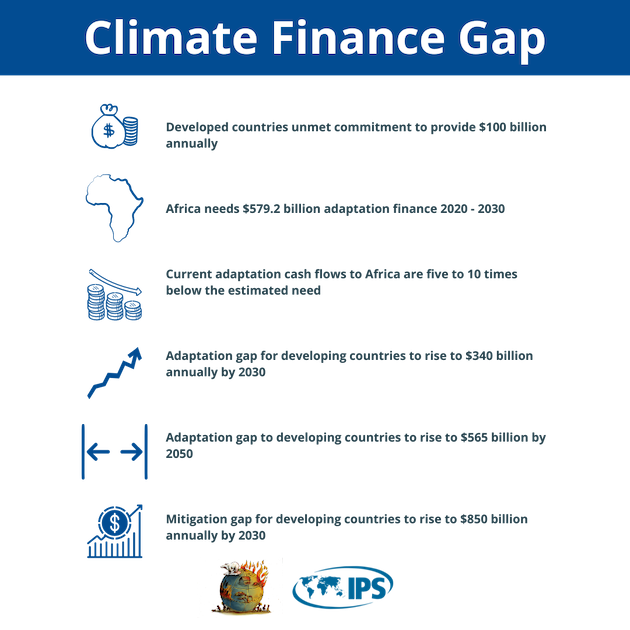
Africa needs approximately USD 579.2 billion in adaptation finance over the period 2020 to 2030, and yet the current adaptation flows are five to 10 times below estimated needs.
 

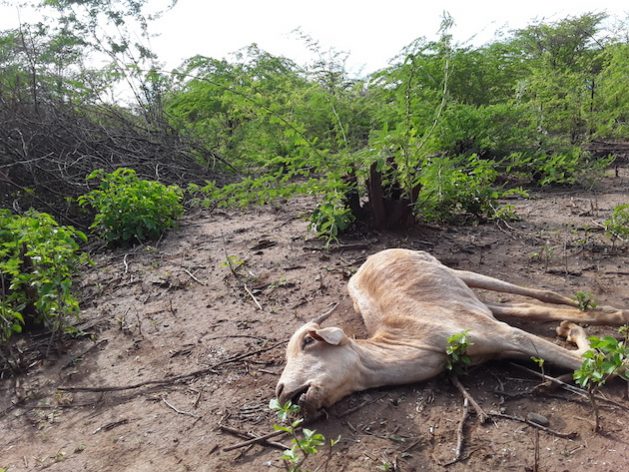
This goat died of starvation while surrounded by an inedible invasive plant. Lives hang in the balance as Kenya’s dryland is ravaged by a severe prolonged drought. Credit: Joyce Chimbi/IPS

This goat died of starvation while surrounded by an inedible invasive plant. Lives hang in the balance as Kenya’s dryland is ravaged by a severe prolonged drought. Credit: Joyce Chimbi/IPS

NAIROBI, Sep 5 2023 (IPS) – As thousands convene in Kenya’s capital, Nairobi, for the Africa Climate Summit, the first time the African Union has summoned its leaders to solely discuss climate change under the theme ‘Driving Green Growth and Climate Finance Solutions for Africa and the World’, the backdrop is a country on the frontlines of a climate crisis.


The severe, sharp effects of climate change are piercing the very heart of an economy propped up by rainfed agriculture and tourism – sectors highly susceptible to climate change. After five consecutive failed rainy seasons, more than 6.4 million people in Kenya, among them 602,000 refugees, need humanitarian assistance – representing a 35 per cent increase from 2022.

It is the highest number of people in need of aid in more than ten years, says Ann Rose Achieng, a Nairobi-based climate activist. She tells IPS that Kenya is hurtling full speed towards a national disaster in food security as “at least 677,900 children and 138,800 pregnant and breastfeeding women in Kenya’s arid and semi-arid regions alone are facing acute malnutrition. Nearly 70 per cent of our wildlife was lost in the last 30 years.”

Despite Kenya contributing less than 0.1 per cent of the global greenhouse gas emissions per year, the country’s pursuit of a low carbon and resilient green development pathway produced a most ambitious Nationally Determined Contribution (NDC) to cut greenhouse gasses by 32 per cent by 2030 in line with the Paris Agreement.

But as is the case across Africa, there are no funds to actualise these lofty ambitions. Africa needs approximately USD 579.2 billion in adaptation finance over the period 2020 to 2030, and yet the current adaptation flows to the continent are five to ten times below estimated needs. Globally, the estimated gap for adaptation in developing countries is expected to rise to USD 340 billion per year by 2030 and up to USD 565 billion by 2050, while the mitigation gap is at USD 850 billion per year by 2030.

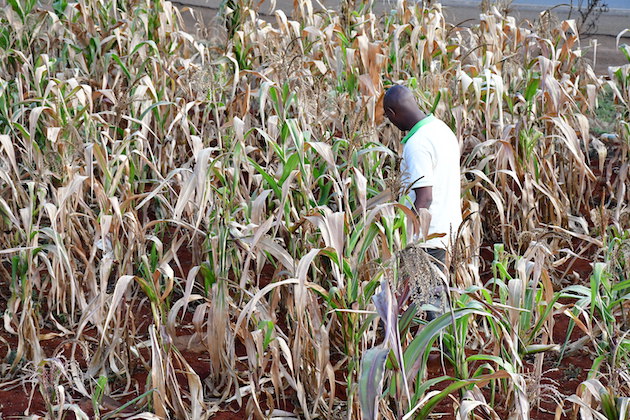
After five consecutive failed rainy seasons, food insecurity is expected to escalate as maize crop has failed to flourish due to erratic weather patterns. Credit: Joyce Chimbi/IPS

After five consecutive failed rainy seasons, food insecurity is expected to escalate as maize crop has failed to flourish due to erratic weather patterns. Credit: Joyce Chimbi/IPS

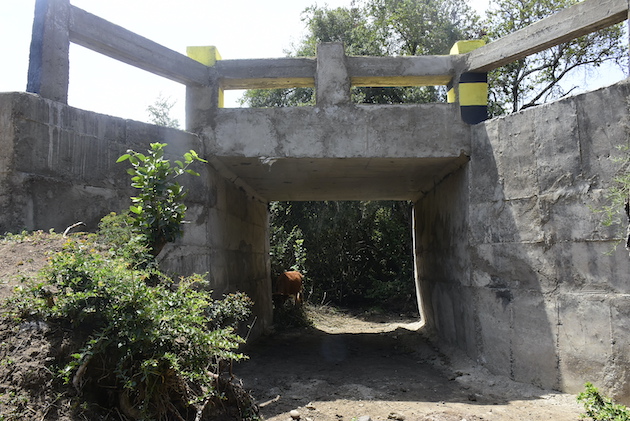
As dams and rivers dry up, Kenya will continue to be on the frontlines of a climate crisis unless climate change adaptation and mitigation efforts are escalated. Credit: Joyce Chimbi/IPS

As dams and rivers dry up, Kenya will continue to be on the frontlines of a climate crisis unless climate change adaptation and mitigation efforts are escalated. Credit: Joyce Chimbi/IPS

Frederick Kwame Kumah, Vice President of Global Leadership African Wildlife Foundation, tells IPS a big part of the problem is Africa’s burgeoning gross public debt which increased from 36 per cent of Gross Domestic Product (GDP) to 71.4 per cent of GDP between 2010 and 2020 – a drag on its development progress and a disincentive for climate finance flows.

“There is a concern that climate finance, if and when provided, will be used to first service Africa’s debt burden. The first step to addressing Africa’s Climate Finance must be action towards debt relief for Africa. Freeing up debt servicing arrangements will release resources for continued development and climate finance purposes,” Kumah explains.

He says there is an urgent need to challenge the existing unfair paradigm for financing by developing countries. It is very expensive for developing countries to borrow for development purposes. Africa must then leverage its natural capital towards seeking innovative financing mechanisms such as green bonds and carbon credits to address its development and climate change challenges.

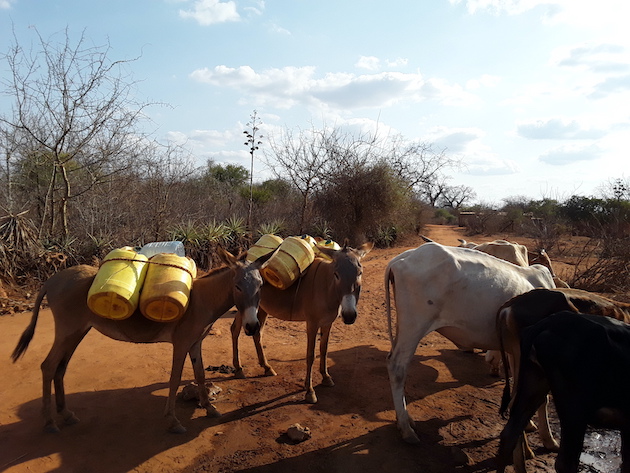
Nearly half, 23 out of 47 counties in Kenya, are classified as arid and semi-arid. Livelihoods are at risk as pastoralists are unable to cope with drastic weather changes. Credit: Joyce Chimbi/IPS

Nearly half, 23 out of 47 counties in Kenya, are classified as arid and semi-arid. Livelihoods are at risk as pastoralists are unable to cope with drastic weather changes. Credit: Joyce Chimbi/IPS

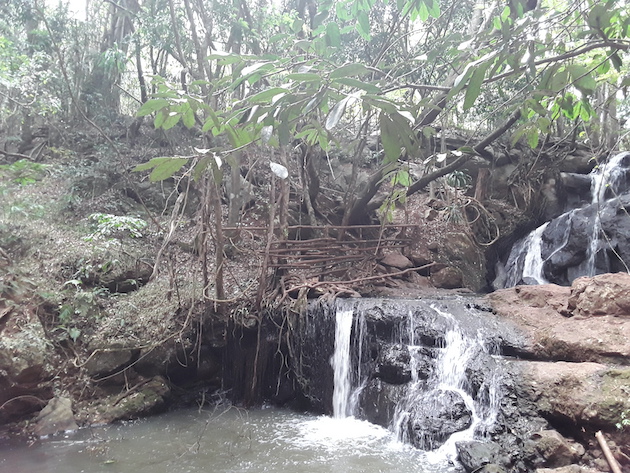
This waterfall is on the verge of drying up. Kenya's economy is heavily dependent on tourism and agriculture. The two sectors are highly susceptible to climate change. Credit: Joyce Chimbi/IPS

This waterfall is on the verge of drying up. Kenya’s economy is heavily dependent on tourism and agriculture. The two sectors are highly susceptible to climate change. Credit: Joyce Chimbi/IPS

“Climate finance was, as expected, a key part of COP27. It is a grave concern for Africa that developed countries’ commitment to provide $100 billion annually has yet to be met, even though the need for finance is becoming increasingly obvious. In COP27, we noted that new climate finance pledges were more limited than expected. Countries such as those in Africa are still waiting for previous pledges to be fulfilled,” says Luther Bois Anukur, Regional Director, IUCN (International Union for Conservation of Nature).

Meanwhile, Anukur tells IPS negotiations on important agenda items, most notably the new finance target for 2025, stalled. In COP27, Parties concentrated on procedural issues – deferring important decisions about the amount, timeframe, sources, and accountability mechanisms that may be relevant to a new finance goal in the future. African countries and many other vulnerable countries are in the fight for our lives, and sadly they are losing.

Anukur stresses that Africa’s natural resources are depleted, eroded, and biodiversity lost due to extreme effects of climate change leading to loss of lives and ecosystem services and damage to infrastructure at an alarming rate. Yet climate finance pledges have not materialised. The Africa Climate Summit should be the platform for Africa and developing partners to address existing finance gaps with clear programmatic and project approaches.

Africa must use the Summit to assess and prepare their position for the COP28 in the United Arab Emirates towards strengthening partnerships for the delivery of desired climate finance. Kumah adds that the principle of equal but differentiated responsibilities of nations must be adhered to for climate justice and to enable developing countries, who are least responsible for the effects of climate, to have much-needed resources to cope and adapt to biodiversity loss and climate change.

“In that respect, the creation of a dedicated funding mechanism to address loss and damage and another for adaptation and mitigation to redress historical and continued inequities in contributions towards biodiversity loss and climate change. We must rethink how private investments can be reshaped and harnessed for the benefit of biodiversity and climate action,” Kumah expounds.

“Private investments can be scaled through green bonds, carbon markets, sustainable agricultural, forestry and other productive sector supply chains.  Transformative financing architecture is necessary at the domestic and international levels to bring the private and public sectors together to secure the critical backbone of Africa’s natural infrastructure.”

Climate finance gap. Graphic: Joyce Chimbi & Cecilia Russell

Climate finance gap. Graphic: Joyce Chimbi & Cecilia Russell

While developing countries submitted revised and ambitious National Adaptation Plans and NDCs as requested, Anukur says complicated processes to access financing for their climate actions persist. Stressing the need for reforming the international financial architecture, starting with multilateral development banks.

“The 2023 Summit for New Global Financing Pact held in Paris committed to a coalition of 16 philanthropic organizations to mobilize investment and support UN’s SDG priorities by unlocking new investment for climate action in low- and middle-income countries while reducing poverty and inequality,” Anukur observes.

Civil society organizations and activists such as Achieng have expressed concerns that such announcements are insufficient considering the scale of the challenges facing planet Earth. The Summit will have failed if the global financial architecture is not overhauled in line with the needs of the African continent, she says.

Anukur says the Summit must therefore propel Africa to new heights of climate financing to help reduce Africa’s vulnerability to climate change and increase its resilience and adaptive capacity in line with the Global Goal on Adaptation. Ultimately expressing optimism that the opportunity to unlock the potential of climate financing – breaking the shackles of debt and building a climate-resilient and prosperous Africa is, at last, in sight.

IPS UN Bureau Report


Lawmakers Call on G20 to Prioritise Spending on Youth, Gender, and Human Security

Asia-Pacific, Conferences, Development & Aid, Gender, Headlines, Humanitarian Emergencies, Population, Poverty & SDGs, Sustainable Development Goals, Youth

Population

Asian Parliamentarians believe it’s important to prioritise spending on ageing and youth populations. Credit: APDA

Asian Parliamentarians believe it’s important to prioritise spending on ageing and youth populations. Credit: APDA

NEW DELHI, Sep 5 2023 (IPS) – Legislators from around the world, this week, officially submitted to the Sherpa of the G20 meeting set for September in New Delhi a declaration calling on governments to prioritise spending on ageing, youth, gender, human security, and other burning population issues.


The submission to the G20 Sherpa follows a workshop held on August 22 in New Delhi to discuss the Declaration first presented at the G7 Hiroshima summit in April by the Global Conference of Parliamentarians on Population and Development (GCPPD) under the UNFPA

“We have now submitted the Declaration to Amitabh Kant, Sherpa to the G-20 so that it can be taken up,” Manmohan Sharma, Executive Secretary of the Indian Association of Parliamentarians on Population and Development (IAPPD), told IPS.

Deepender Hooda, Vice Chair of the AFPPD and a member of India’s Parliament, said the workshop in New Delhi was significant not only because India is hosting the G-20 summit but also because India was expected to have overtaken China as the world’s most populous country reaching 1,425,775,850 people in April.

Lawmakers met in New Delhi to discuss the prioritisation of resources to prepare a declaration to the G20. Credit: APDA

Lawmakers met in New Delhi to discuss the prioritisation of resources to prepare a declaration to the G20. Credit: APDA

Keizo Takemi, member of the House of Councillors, Japan, and Chair of the AFPPD, observed that India faced many challenges that are hard to overcome, and these included the large size of its population, limited school attendance, and a high rate of unemployment. “Prioritisation of population issues is the most important,” he emphasised.

Hooda, a leader of the opposition Congress party from the state of Haryana, said he was concerned at the dwindling budgetary outlay in social sectors like health and education over the last few years in India. “Currently, for some reason, inclusive growth in education and health has fallen,” he told delegates.

A presentation to the workshop by Suneeta Mukherjee indicated that India is among the top five nations leading the ‘out-of-school’ category, with 1.4 million children in the 6-11-years-old age category not attending school. Also, out of every 100 students, 29 per cent drop out of school before completing elementary education.

Mukherjee, an Indian career bureaucrat who has served at the UNFPA, said the situation appeared to be worsening at the upper primary level given that the dropout rate at the upper primary level had gone up to 3 per cent in 2021-2022 while it was only 1.9 per cent in 2020-2021. The annual dropout rate of secondary school students was 14.6 in 2020-2021.

Citing recent studies in her presentation, Mukherjee said 36 per cent of Indians between the ages of 15 and 34 believe that unemployment is the biggest problem facing the country. She said one survey showed 40 per cent of graduates identified unemployment as their most pressing concern.

Said P.J. Kurien, chairperson of IAPPD: “It is important that all MPs take up population-related issues. They need to ask what percentage of the budget is devoted to education and health and ensure that every child goes to school with special attention given to girls.”

Echoing Kurien, Sharma said it was up to members of parliament to ensure that no child is left out in his or her constituency. “The solution is in your hands, but the prioritisation is missing.”

Delegates outlined at the workshop legislative steps taken by Parliamentarians in their countries in implementing the International Conference on Population Development’s Programme of Action and 2030 Agenda.

Josephine Veronique Lacson-Noel, Member, House of Representatives of the Philippines, said over the last two decades, her country had enacted such legislations as the Magna Carta of Women, Reproductive Health Law, 105-Day Expanded Maternity Leave, Act Prohibiting Child Marriage, Universal Health Care Act, Youth Council Reform and Empowerment Act, and an Act to enable conditional cash transfers.

On the anvil, she said, is the Adolescent Pregnancy Prevention Bill, a law to recognise, evaluate and redistribute unpaid care and domestic work done by women, and another to accord social protection for older persons and the promotion of active aging.

For 2023, the budget allocation for reproductive health was $14.9 million dollars, and that for training teachers to implement comprehensive sexuality education was $13.8 million, Lacson-Noel said.

Andrea W. Wojnar, UNFPA India representative and country director for Bhutan, said with the right expertise and skills, India’s 1.4 billion people could be turned into 1.4 billion opportunities.

Wojnar said India, with its large youth cohort — its 254 million youth in the 15-24 age bracket — can be a source of innovation and solutions, especially if girls and women are provided educational opportunities and skills to access new technologies and are empowered to fully exercise their reproductive rights and choices.

With close to 50 per cent of its population below the age of 25, India has a time-bound opportunity to benefit from the demographic dividend, according to Wojnar.

“Women and girls should be at the centre of sexual and reproductive policies and programmes. When rights, choices, and equal value of all people are truly respected and held, only then can we unlock a future of infinite possibilities,” Wojnar said in a statement.

“As the national fertility rate falls below 2.1 (the replacement level), India is at a unique historical opportunity, witnessing a great demographic transition as a youthful nation,” Wojnar said, adding that India also has the largest number of outmigrants and is affected by ageing, urbanisation and issues around sustainable development.

Wojnar warned that, overall, the Asia Pacific region was six times more likely to be affected by disaster events than other regions and is highly susceptible to changing weather patterns, calling for special attention by governments.

The Declaration presented to the Sherpa of the G-20 called on governments, among other things, to implement comprehensive legislation and policies that address all forms of gender-based violence and eradicate harmful practices such as child marriage, early and forced.

It also called for investment in sexual and reproductive health and rights, as well as comprehensive sexuality education toward making future societies economically dynamic and for building peaceful, inclusive, and sustainable societies. Support for political and economic participation by women and girls could ensure the development of societies that guarantee liberty and individual choice for women and girls, it said.

Governments were asked to promote and assure equitable access to health innovation, finance, technology, and medicines in the global community which can support human security, leaving no one behind.

Acknowledgement of the grave impacts of environment/climate change and global warming was important, as also the need to promote policies that address the needs of geographically vulnerable countries, which is a threat to health and human security, the Declaration said.

Investing in young people by providing decent work opportunities and enabling them to become a driving force for sustainable development was important as also addressing active and healthy ageing to enhance people’s overall quality of life by improving areas such as health and long-term care through resilient universal health coverage, physical security, and income stability.

Governments were also asked to enact national legislation and policies and ensure political will through allocation, oversight, and monitoring of budgetary resources to build universal health coverage, which is vital to enhance the global health framework.

IPS UN Bureau Report

  Source

Civil Society Organizations Unite to Urge Public Development Banks to Change the Way Development Is Done

Biodiversity, Civil Society, Climate Change, Development & Aid, Economy & Trade, Energy, Environment, Green Economy, Headlines, Human Rights, Latin America & the Caribbean, TerraViva United Nations

Opinion

CARTAGENA, Colombia, Sep 4 2023 (IPS) – In the midst of a complex web of crises, spanning climate change, biodiversity depletion, constraints on civic space and mounting debt burdens, civil society organizations and human rights defenders from over 50 countries have united their voices to call for immediate and impactful action from Public Development Banks (PDBs).


The global coalition’s message is clear: when it comes to financing for development, principles of rights, justice, sustainability, transparency, accountability and dignity for all cannot remain mere slogans. They must form the core of all projects undertaken by all Public Development Banks.

The Finance in Common Summit has become a pivotal platform for Public Development Banks from around the world. The fact that this year’s summit is taking place in Cartagena, Colombia, the deadliest country in the world in 2022 for human rights, envrionmental and indigenous activists, development banks must acknowledge and integrate the protection of human rights into their projects.

“Development banks are advocating to play an even bigger role in the global economy. But are they truly fit for this purpose? Unfortunately, the stories of communities around the world show us that development banks are failing to address the root causes of the very problems they claim to solve. We need to hold them accountable for this,” says Ivahanna Larrosa, Regional Coordinator for Latin America at the Coalition for Human Rights in Development.

“When PDB projects cause harm to people and the environment, PDBs must remedy these harms. All PDBs should implement an effective accountability mechanism to address concerns with projects and should commit to preventing and fully remediating any harm to communities,” adds Stephanie Amoako, Senior Policy Associate at Accountability Counsel.

The ongoing crises demand a transformation in the quality of financing and a power shift to include the voices of communities. The existing financial architecture not only impedes governments’ ability to safeguard both their citizens and the environment but also contributes to the escalating issue of chronic indebtedness. Policy-based lending and conditionalities enforced by International Financial Institutions have steered countries toward privatization of essential services, reduced social spending and preferential treatment for the private sector. This burdens the population with higher taxes, inflation, and weakened social safety nets.

“The same multinational companies that have polluted and violated human rights in Latin America are now obtaining financing from development banks for energy transition projects. Another example is the development of the green hydrogen industry in Chile, which carries a very high environmental and social risk,” says Maia Seeger, director of the Chilean civil society organization Sustentarse.

Addressing these issues requires a comprehensive and sustainable transformation of the financial architecture as well as holistic reforms and synergies with civil society and communities. Environmental and neo-colonial debts need to be a thing of the past and equitable reforms the thing of the present.

Global civil society, in response to these challenges, demands bold and decisive actions in a collective declaration signed by over 100 organisations. The demands are the result of a 4-year process in which a coalition of civil society organisations has come together to call on all PDBs at the Finance in Common Summit to embrace tangible actions that genuinely prioritize and protect people.

Just last month we have seen that change is possible when communities are involved, as the people of Ecuador voted to ban oil drilling in one of the most biodiverse places on the planet, the Yasuní National Park in the Amazon rainforest.

“The global financial system needs not just a rethink but a surgical operation, and that requires bold action. Governments and institutions such as the Public Development Banks must cancel the debt of the countries that require it and put in place concrete and immediate measures to put an end to public financing of fossil fuels, to have financing based on subsidies so as not to fall into the debt trap once again. It is time for the rich countries, the biggest polluters and creditors, to offer real solutions to the multiple crises we are currently experiencing,” says Gaïa Febvre, International Policy Coordinator at Réseau Action climat France.

“Public and Multilateral Development Banks must divest from funding false climate solutions and projects that harm forests, biodiversity and communities. Instead, they should redirect finance to support gender just, rights based and ecosystems approaches that contribute to transformative changes leading to real solutions that address climate change, loss of biodiversity and create sustainable livelihoods for Indigenous Peoples, women in all their diversities and local communities. Public funds must support community governed agroecological practices, small scale farming and traditional animal rearing practices instead of large scale agri-business which perpetuates highly polluting and emitting industrial agriculture and unsustainable livestock production, the root cause for deforestation and food insecurity,” adds Souparna Lahiri, Senior Climate and Biodiversity Policy Advisor at the Global Forest Coalition (GFC).

The call to action emphasizes that achieving the Sustainable Development Goals (SDGs), effective climate action aligned with the Paris Agreement and successful implementation of the Kunming-Montreal Global Biodiversity Framework require Public Development Banks to pivot from a top-down profit-driven approach to one that prioritizes community-led involvement and human rights-based approaches.

“It is important that civil society participation be strengthened at the Finance in Common Summit (FICS). In previous years, civil society has been sidelined. Clearly, there is still some room for improvement for civil society participation to become truly meaningful. The lack of civil society representative on the opening panel this year is just one example of that. PDBs should promote and support an enabling environment for civil society and systematically incorporate civic space, human rights and gender analysis. This year, we are working towards ensuring that civil society voices, including those from communities are heard at the FICS. In collaboration with the FICS Secretariat, Forus seeks to establish a formal mechanism between civil society and PDBs and to ensure that civil society is recognised as an official engagement group,” says Marianne Buenaventura Goldman, Project Coordinator, Finance for Development at the global civil society network Forus.

IPS UN Bureau

  Source