Can Legal Action Alone Put an End to Child Marriage?

Asia-Pacific, Civil Society, Education, Gender, Headlines, Human Rights, Population, Poverty & SDGs

Opinion

In India, nearly one-fourth of women aged between 20 and 24 were reported to have been married before 18. Credit: Jaideep Hardikar/IPS even when the legal age was set at 18, child marriages continued to take place without any fear of the law. This begs the question: Can legislation alone possibly curb child marriage?

In India, nearly one-fourth of women aged between 20 and 24 were reported to have been married before 18. Credit: Jaideep Hardikar/IPS

NEW DELHI, Apr 1 2022 (IPS) – On December 22, 2021, the Prohibition of Child Marriage (Amendment) Bill, 2021, which seeks to raise the legal age of marriage for women from 18 to 21, was sent to a parliamentary standing committee for further discussion.


The bill is built on the assumption that raising the age of marriage will eradicate the practice of child marriage. However, this rationale doesn’t have any prior evidence to support it, because even when the legal age was set at 18, child marriages continued to take place without any fear of the law. This begs the question: Can legislation alone possibly curb child marriage?

Prevalence of child marriage

In a patriarchal society such as India, girls are often raised with the ultimate goal of marriage. They are confined to the household and not educated or expected to enter the workforce. Thus, until they are married, they are seen as a financial burden by the families, and marrying them off early is not only consistent with tradition but also more economically feasible

Child marriage, according to UNICEF, is defined as “a marriage of a girl or boy before the age of 18, and refers to both formal marriages and informal unions in which children under the age of 18 live with a partner as if married”. It is a consequence of deep-rooted socio-cultural norms and entrenched gender inequalities, which end up disproportionately impacting girls.

In a patriarchal society such as India, girls are often raised with the ultimate goal of marriage. They are confined to the household and not educated or expected to enter the workforce. Thus, until they are married, they are seen as a financial burden by the families, and marrying them off early is not only consistent with tradition but also more economically feasible.

The risk of an extramarital pregnancy—which can endanger marriage prospects and make the girl a financial liability for an indefinite period—also makes child marriage seem to be a solution instead of a problem for many Indian communities.

Thus, even though they’re illegal, child marriages have wide societal sanction. This is evident from the recently released fifth round of the National Family Health Survey, according to which nearly one-fourth of women aged between 20 and 24 were reported to have been married before 18.

The decrease is marginal from the last round of the survey conducted in 2015–16, despite the fact that the existing child marriage law has been in place for over four decades. While there was an impressive drop in child marriages from 2005–06 and 2015–16, this might be attributable to better educational opportunities and other factors rather than the law.

Concerns about the proposed legislation

The proposed legislation to raise the legal marriage age for girls to 21 can have several harmful consequences.

1. Possible misuse of the law

According to a survey by Partners for Law in Development, 65 percent of the cases under the existing child marriage law were in response to elopement (not necessarily involving marriage) and were filed by disapproving parents or families.

These cases would be wrongfully filed to harass the couple, their age or legality of the marriage notwithstanding. Increasing the age to 21 will bring more consenting adults who choose to marry under the threat of such harassment, and could become a tool for people to oppose inter-religious and inter-caste marriages.

2. Disempowerment of women
A 2008 Law Commission report on reforming family law recommended a uniform age of marriage for boys and girls at 18 years and not 21. The reason: If all citizens can vote, enter contracts, be guardians, tried as adults for crimes they commit at 18, why shouldn’t they be allowed to get married as well, regardless of their gender? The new law could curtail the freedom of choice of a greater number of women.

3. Possible increase in sex-selective practices
The current socio-economic system makes people want to marry their daughters as soon as they can or choose not to have a daughter at all. Increasing the legal marriage age without changing patriarchal social norms can result in parents feeling even more ‘burdened’ by what they view as additional responsibility of the girl child, which in turn could lead to an increase in sex-selective practices.

Recommendations

There are several strategies that have worked globally in reducing the incidence of child marriages. Some solutions that might work in the Indian context are discussed below.

1. Bringing about parity in the legal age of marriage

We endorse the recommendation of the 2008 Law Commission to make the legal age of marriage for boys and girls uniform at 18 years and not 21. When individuals can vote at 18, they should also be allowed to choose their partners at this age.

2. Investing in girls’ education

There is clear evidence that allowing girls to complete their education delays marriage and provides them with the opportunity of being financially independent. According to the NFHS-4, the median age of marriage increases from 17.2 years for women with no schooling to 22.7 years for women with 12 or more years of schooling. Education enables them to fulfil their aspirations and live a life of dignity, and affords them the agency to uphold their sexual and reproductive rights in their choice to marry.

Child marriages are closely tied to low levels of education, poverty, and rural residence. The NFHS-4 reveals that girls living in rural areas with little or no education and belonging to the lowest wealth quintile are more likely to be married before they turn 18.

The government must address the barriers to girls’ education by providing a safe environment, improving the quality of education, and making girls’ education a more useful investment for parents.

3. Economic and social empowerment of girls

Investing in the capacity and skill building of adolescent girls is critical for them to realise their economic potential. Financial empowerment often gives individuals a greater say in their households and their own future. It can give girls the ability to say no to early marriage, and the family won’t see them as a liability. Greater attention to creating safe opportunities for paid work among women and girls is also required.

4. Targeted social and behaviour change communication (SBCC) campaigns

To end child marriage, we must make investments in targeted SBCC. Social norms that exclude girls and boys from marriage-related decision-making need to change.

Evaluation findings from the Population Foundation of India’s flagship SBCC initiative ‘Main Kuch Bhi Kar Sakti Hoon’ showed that reinforced messaging brought about increased awareness of the perils of child marriage and a positive shift in the attitude of girls and parents exposed to the programme.

We need more comprehensive SBCC initiatives that are supported by local leadership—including elected representatives, community, and religious leaders—to transform gender stereotypes of submissiveness and institutional discrimination that denies women agency.

5. Policies and programmes that reach the most marginalised

Marginalised communities are more vulnerable to early marriages. According to the NFHS-4, general category women tend to get married at a later age, with the median age of marriage for women aged 25–49 being 19.5 years. This figure is 18.5 years for women from other backward castes, 18.4 for scheduled tribes, and 18.1 for scheduled castes.

We need more policies and programmes that connect girls and young women, and their families, especially from marginalised communities, to financial institutions, education, information, health (including sexual, reproductive, and mental health), and nutrition services.

6. Ensuring registration of marriages

Despite a Supreme Court ruling making registration of marriages mandatory, state governments have done little to implement the verdict. The governments must develop a mechanism to ensure that all marriages (including civil, religious, and customary unions), births, and deaths are mandatorily registered through a system, as a means to track marriages and the age of marriage.

Moreover, action should be taken against those authorising and facilitating child marriages in rural areas.

Any approach to end child marriage needs to be geared towards securing the rights of girls, especially those vulnerable to early marriage. We have to think beyond punitive measures and legislations and transform the patriarchal socio-economic system that fosters child marriages.

ABOUT THE AUTHORS

Martand Kaushik works as a media and communications specialist at the Population Foundation of India.

Alok Vajpeyi is the lead for knowledge management and core grants at the Population Foundation of India.

Poonam Muttreja is the Executive Director of the Population Foundation of India

This story was originally published by India Development Review (IDR)

  Source

Do we Really Need a World Ranking to Measure Happiness?

Aid, Asia-Pacific, Civil Society, Environment, Global Governance, Headlines, Inequality, Population, Poverty & SDGs, Sustainability, TerraViva United Nations

Opinion

Credit: UN Women

KATHMANDU, Nepal, Mar 29 2022 (IPS) – The 10th edition of the World Happiness Report was recently published and once again the findings raised an array of mixed emotions with many questioning the real foundations underpinning the most discussed aspect of the Report, the World Happiness Ranking,


For example, according to the ranking, Nepal appears to be the happiest place in the South Asia but is it really the case? Many experts from the country doubt about it as it was reported by The Kathmandu Post on the 22nd of March.

In the article, Dambar Chemjong, head of the Central Department of Anthropology at Tribhuvan University simply asks “What actually constitutes happiness?”

This is a complex question to answer but certainly it is fair to wonder how come each time this report gets published, it is inevitable that the richest nations, especially the Nordic ones come up on the top while the poorest and more fragile ones instead are hopelessly at the bottom.

There is no doubt that material prosperity determines a person’s quality of life and the World Happiness Report looks at GDP and life expectancy. In addition, the report also explores other factors like generosity, social support, freedom, and corruption.

These six variables, put together, are central to depict what the report calls “life evaluations” that “provide the most informative measure for international comparisons because they capture quality of life in a more complete and stable way than emotional reports based on daily experiences”.

The ranking is based on the Gallup World Poll, that asks “respondents to evaluate their current life as a whole using the mental image of a ladder, with the best possible life for them as a 10 and worst possible as a 0”.

One of the key findings is that social connections in dire times, especially if we think about what the entire world had to endure following the pandemic, do make the difference.

“Now, at a time of pandemic and war, we need such an effort more than ever. And the lesson of the World Happiness Report over the years is that social support, generosity to one another, and honesty in government are crucial for well-being” says Jeffrey Sachs, one of the major “architects” behind the entire concept of measuring happiness worldwide.

This statement further validates the need to further think more broadly about the importance these social relationships and social bonds have in developing nations.

That’s why analyzing happiness across nations should be considered as a working progress and the goal should be to better picture the complex situations on the ground in many parts of the developing world.

These are all nations that have been experiencing hardships consistently, even before the Covid pandemic outbreak and, therefore, they should be acknowledged for having developed unique forms of social bonds and solidarity.

Instead, these social factors, these connectors and the levels of reliance stemming from them in these “unhappy” nations”, are overshadowed by some of the variables determining the life evaluations.

People in developing nations have less access to public services and they are more exposed to corruption and bad governance. Lack of health infrastructures or unequal job market do have a strong incidence in determining a person’s human development and quality of life.

Yet does the fact that their lives are tougher automatically means people are there are unhappy?

Moreover, should not we consider the stress and mental health often affecting the “prosperous” lives of the citizens living in the north of the world?

Probably the problem is the idea of having a ranking itself. Though desirable and useful, measuring real happiness is a daunting and complex job.

Trust, benevolence, real generosity (not just the extrapolated, like in the report, based on donations during the last month) are all key determinants of happiness.

Yet these same factors have always been strong in developing societies where people rely on mutuality and self-help rather than depending on governments unable to fulfill their duties.

As it is now, the World Happiness Ranking risks to become just a “plus” version of the Human Development Index.

There is still a long way to better decipher and understand the meaning of happiness in the so called South of the World.

There is also a great need for the authors to better explain in simpler terms their methodology of calculating the ranking especially the relationships between the six key variables analyzed and positive and negative emotions that are also taken into consideration.

The fact that the ranking and the science behind the report is still a working process, it is recognized in the report itself.

An option would be to re-consider the variables of “life evaluations” that, by default, underscore the concept of wellbeing from a western perspective.

On the positive side, it is encouraging to see how the report includes also a part on “cross-Cultural Perspectives on Balance/Harmony”, central if we want to have a less westernized approach to happiness.

The 2022 edition of the Report devotes also considerable space to the biological basis of happiness, the relationships between genes and environment, what the report calls “Gene-Environment Interplay”.

Such nexus, affecting a person’s feelings and emotions and all the intricacies coming from these interactions, should make us reflect if it is really worthy to continue pursuing the goal of having an annual global ranking on happiness.

The idea of a ranking on happiness risks defeating the purpose of the gigantic and noble effort of better understanding how we can be happier and how public policies can have a role or not in these unfolding dynamics.

Simone Galimberti is Co-Founder of ENGAGE, an NGO partnering with youths living with disabilities. Opinions expressed are personal.

IPS UN Bureau

  Source

Ukraine Shows Why the G20 Anti-Corruption Agenda Is More Important than Ever

Civil Society, Economy & Trade, Global, Headlines

Opinion

With the bloody war in Ukraine dragging on, can the G20 still justify procrastination on the global anti-corruption agenda?

With the bloody war in Ukraine dragging on, can the G20 still justify procrastination on the global anti-corruption agenda? Credit: Marianela Jarroud/IPS

WASHINGTON DC, Mar 25 2022 (IPS) – The world has quickly transitioned from a global health crisis to a geopolitical one, as the war in Ukraine rages into its second month. But the Russian invasion of Ukraine is just the latest in a long list of challenges that at their heart are either caused by or exacerbated by corruption.


Just this year, think of the protests in Sudan, the coup in Burkina Faso, the nationwide demonstrations in Kazakhstan, or the Portuguese elections, for example- all driven, one way or another, by graft.

While G20 countries have made progress within their national borders, there are often lax laws in offshore tax havens that are under their jurisdictions. Equally, beneficial ownership data should not just be open (to regulators and enforcement agencies), it should be public. Citizens and civil society everywhere should be able to monitor conflicts of interest or relationships between policymakers and corporations, free of charge

Now- countries including the US and Europe– are coming together to freeze the assets of Russian oligarchs, but this is not just about Putin’s kleptocracy. As world leaders meet at the G20 next week, it is imperative that they step-up further to fight corruption both at home and abroad.

The Civil-20 (C20), which engages the G20 on behalf of civil society, has been calling for increased accountability from world leaders on critical anti-corruption issues for a long time. The war in Ukraine has only reinforced the need for a focus on the priorities identified by the C20 this year.

First, combating money laundering and the recovery of stolen assets. There are numerous studies that indicate that as much as 85% of Russia’s GDP is laundered into countries including the UK and the US.

There are networks of enablers in Western countries that facilitate this process- from accountants, to lawyers to real estate agents (known as Designated Non-Financial Business and Professions (DNFBPs).

But according to the data collected by Accountability Lab for the G20 Anti-Corruption Commitments Tracker, not all G20 member countries are compliant with FATF recommendations on DNFBP due diligence.

Similarly, others do not have effective frameworks to disclose information on recovered assets. Recognizing the increased risks to anti-money laundering and asset recovery efforts from such omissions, the C20 has called for verified beneficial ownership data through public registers; and the assessment of the effectiveness of measures adopted by the G20 member countries including sanctions for non-compliance.

Second, countering corruption in the energy transition. The G20 Indonesian Presidency has included a sustainable energy transition as a priority issue for 2022. More and more countries, especially in Europe, are cutting ties with Russian energy supplies, which will lead to a more rapid shift of resources towards renewables- but the potential in this for corruption is huge.

Certain countries and energy companies have a variety of incentives to maintain the status quo in corrupt ways; while the supply chains for raw materials for renewable energy are also wide-open for illicit activities. G20 countries urgently need to better understand the level and types of corruption in renewables; and commit to providing transparent data around licensing contracts and budgets.

In this, grassroots civil society groups can be valuable allies by filling information gaps and closing feedback loops in communities affected by renewable energy related projects.

Third, the transparency and integrity of corporations. The recent sanctions against Russian oligarchs have renewed focus on corporate governance and how corporate compliance on issues like foreign bribery, corruption and conflict of interests- including in state owned enterprises and public private partnerships (PPP)- are effectively enforced.

For instance, the Foreign Corrupt Practices Act (FCPA) focuses on anti-bribery and internal controls- and is likely to be further enforced, particularly in countries with close ties to Russia.

But beyond this, G20 member countries must also live up to past commitments to strengthen transparency and integrity in business by criminalizing private sector bribery; enacting whistleblower policies in the private sector; and ensuring accounting and auditing standards to prohibit off-the-book accounts.

Fourth, beneficial ownership transparency. The level of secrecy used by Russian oligarchs to hide assets through shell companies, trusts, partnerships and foundations has been headline news. Concerns around beneficial ownership transparency data (the data on who really owns companies) is not new (see this call to action for example).

While G20 countries have made progress within their national borders, there are often lax laws in offshore tax havens that are under their jurisdictions. Equally, beneficial ownership data should not just be open (to regulators and enforcement agencies), it should be public. Citizens and civil society everywhere should be able to monitor conflicts of interest or relationships between policymakers and corporations, free of charge.

It still costs $40 to access beneficial ownership data in Indonesia for instance- making this far too expensive for the average citizen. All G20 countries should lead by example and commit to open, public beneficial ownership registers.

Finally, Open Contracting. The recent focus on how the Russian military may have misused procurement processes has sadly highlighted again the importance of due diligence and open data. Civil society has unequivocally called on G20 member countries to proactively disclose information at every step of public procurement processes, in line with Open Contracting Data Standards as well as the Open Contracting for Infrastructure Data Standard, and to increase audit and citizen oversight in public procurement.

These reforms are past due. At the same time, successful initiatives like Opentender.net in Indonesia show how civil society can partner with governments to ensure citizen led oversight and the transparency of public procurement.

The Russia-Ukraine crisis is a stark reminder of how corruption issues must be central to any discussion about the causes and solutions to geo-political problems. The C20 has already outlined for G20 leaders how to address these issues- they now have the responsibility to implement these reforms.

Even in peace-time, the economic and human costs of corruption are massive. With the bloody war in Ukraine dragging on, can the G20 still justify procrastination on the global anti-corruption agenda?

Blair Glencorse is Executive Director of the Accountability Lab and is the International Co-Chair of the Civil 20 Anti-Corruption Working Group in 2022.

Sanjeeta Pant is a Programs and Learning Manager at Accountability Lab and leads the G20 Anti-Corruption Commitments Tracker. Follow the Lab on Twitter @accountlab and the C20 @C20EG

  Source

Donors Must Rethink Africa’s Flagging Green Revolution, New Evaluation Shows (Commentary)

Africa, Civil Society, Development & Aid, Economy & Trade, Food and Agriculture, Food Security and Nutrition, Food Sustainability, Green Economy, Headlines, TerraViva United Nations, Trade & Investment

Opinion

BOSTON, Mar 23 2022 (IPS) • A scathing new analysis of the Alliance for a Green Revolution in Africa (AGRA) finds that the program is failing at its objective to increase food security on the continent, despite massive funding from the Bill & Melinda Gates Foundation and the US, UK, and German governments.


• On March 30, critics of AGRA will brief U.S. congressional aides about why they think it is doing more harm than good.

• As fertilizer and food prices spike with rising energy prices from the Russia-Ukraine war, African farmers and governments need the kind of resilient, low-cost alternatives that techniques like agroecology offer, a new opinion piece argues.

A critical new donor-funded evaluation of the Alliance for a Green Revolution in Africa (AGRA) has confirmed what African civil society and faith leaders have claimed: “AGRA did not meet its headline goal of increased incomes and food security for 9 million smallholders.”

The evaluation should be a wake up call, and not just for the private and bilateral donors that have bankrolled this 15-year-old effort to the tune of $1 billion. It should also rouse African governments to repurpose their agricultural subsidies from the Green Revolution package of commercial seeds and fertilizers to agroecology and other low-cost, low-input approaches. They have been providing as much as $1 billion per year for such input subsidies.

Failing Africa’s farmers

Carried out by consulting firm Mathematica, the evaluation confirms that the Green Revolution has failed to achieve AGRA’s stated goal to “catalyze a farming revolution in Africa.”

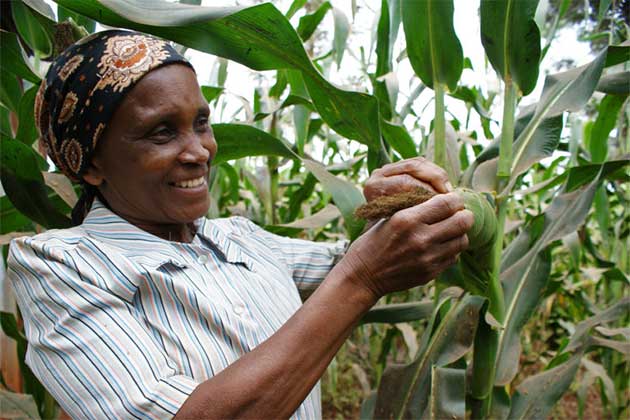
Wambui Mwihaki, a farmer from central Kenya, takes stock of her thriving maize crop following adoption of agroecology. Credit: David Njagi for Mongabay.

The assessment was funded by AGRA’s primary sponsor, the Bill & Melinda Gates Foundation, on behalf of other lead donors in AGRA’s Partnership for Inclusive Agricultural Transformation in Africa (PIATA): the U.K. Foreign, Commonwealth & Development Office; the Rockefeller Foundation; the U.S. Agency for International Development (USAID); and Germany’s Federal Ministry for Economic Cooperation and Development. The evaluation includes a summary of findings, a statistical appendix, and AGRA’s formal responses to the findings, all available publicly.

Such transparency is welcome. AGRA has been plagued by a lack of accountability since its founding in 2006. I undertook my own assessment of AGRA in 2020 when I could find no comprehensive analysis, from AGRA nor its donors, of its progress toward ambitious goals to double yields and incomes for 30 million small-scale farming families while halving food insecurity by 2020. Using national-level data, I found little evidence of progress, with meager productivity increases, little progress on poverty, and a 31% increase in the number of undernourished people in AGRA’s 13 focus countries.

The new evaluation is far from comprehensive. It covers only AGRA’s last five years of work, ignoring its first 10. It reports on results in just six of AGRA’s current 11 focus countries. Its data on yields is almost exclusively on maize and rice, to the exclusion of the many other staple food crops crucial to Africans’ sustenance. And it fails to incorporate or address the concerns raised publicly by African civil society and faith leaders in public letters to AGRA’s donors.

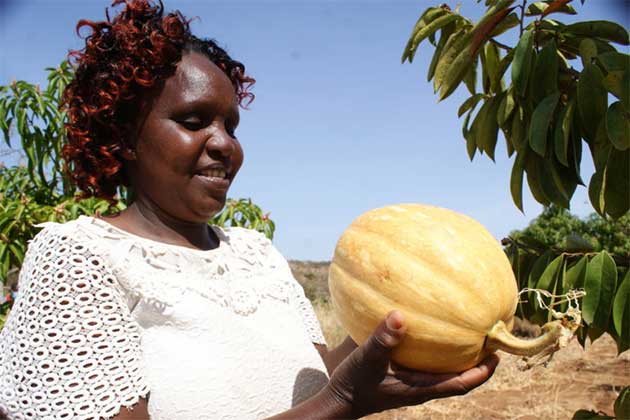
Agroforestry is a kind of agroecology where crops are grown in combination with trees, like this pumpkin that Eunice Manyi raised among fruit trees in Kenya. Credit: David Njagi for Mongabay.

Still, the findings about poor outcomes for farmers should raise concerns for private and bilateral donors to AGRA’s PIATA strategy and for the African governments that are active partners – and funders – in that effort.

Quoting from the evaluation:

    • “PIATA improved maize yields in Ethiopia, Ghana, and Nigeria, but not in Tanzania, Burkina Faso, or Kenya.” Maize is AGRA’s most heavily supported crop, so the failure to achieve yield growth in half the countries studied is alarming.
    • “Across these six countries, only farmers in Burkina Faso experienced improved maize sales as a result of PIATA.” This raises serious questions about the Green Revolution “theory of change.” Even when yields rose, they failed to translate into rising incomes for farmers.
    • “Farmers who adopted improved inputs and experienced yield increases were typically younger, male, and relatively wealthier…. productivity and income gains were also concentrated among these relatively high-resource farmers.” This finding directly contradicts the stated goals of USAID and other bilateral donors to ensure that their assistance programs benefit and empower women.
    • “AGRA’s next strategy could formally recognize that agricultural technologies and practices—such as fertilizer use and rice cultivation—can negatively impact environmental conditions and greenhouse gas emissions.” Evaluators fault AGRA on a wide range of environmentally damaging impacts, including a lack of attention to helping farmers adapt to climate change.
    • “AGRA surveys are currently not suited for rigorous impact analysis.” Evaluators offer many criticisms of the initiative’s poor monitoring and evaluation methods.

Time to rethink Green Revolution model

Evaluators gave AGRA credit for some of its work, saying it “was successful in developing key policy reforms, mobilizing flagships and partnerships, and reaching farmers with extension and seeds,” and it helped “incentivize private sector engagement in the production and delivery of improved seeds in some countries.”

But these intermediate objectives, carried out with substantial funding over 15 years, have thus far failed to further the goals of improving farmers’ productivity, incomes, and food security. When one’s development successes fail to produce the intended results, after 15 years and one billion dollars in donor funding, it is time to reconsider the efficacy of the initiative. It is time to rethink the Green Revolution model.

See related: Push-pull agroecology method debugs organic farming’s pest problem in Kenya

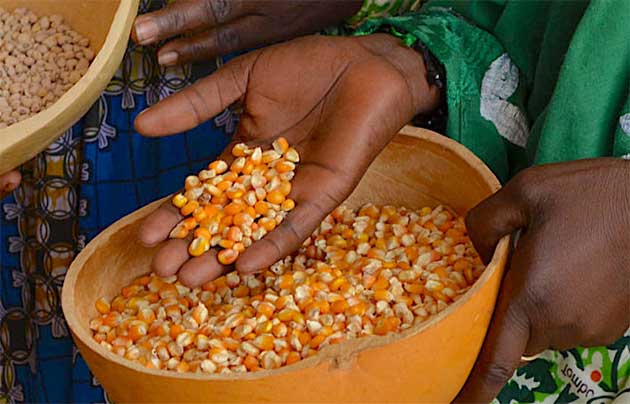
Farmers with seeds in West Africa. Image courtesy of Grassroots International.

AGRA’s management responded to the evaluation saying, “We must therefore rethink our models and focus our support, and that of our partners, on building resilience and adaptation specifically for smallholder farmers.” But there is little sign AGRA intends to pull back from its costly input-intensive Green Revolution model. AGRA president Agnes Kalibata recently defended the status quo in a Q&A with the East African.

Hopefully donors and African governments will take the new evaluation more seriously. African civil society and faith leaders have urged donors to shift their funding to agroecology and other low-cost, low-input systems, which were endorsed last year by the U.N. Committee on World Food Security as a key strategy for climate-resilient development. Such approaches have shown far better results, raising yields across a range of food crops, increasing productivity over time as soil fertility improves, increasing incomes and reducing risk for farmers by cutting input costs, and improving food security and nutrition from a diverse array of crops.

USAID was quick to reject any change in aid priorities. A spokesperson told US Right to Know, “USAID reviewed the findings and recommendations and is satisfied with the independence and rigor of the [Mathematica] evaluation. We appreciate AGRA’s response to the report conclusions and concur with their proposed next steps to improve performance outcomes.”

That will not satisfy African civil society and faith leaders, who were not consulted for the Mathematica evaluation. They plan to take their complaints to the U.S. Congress, which this year has to reauthorize funding for AGRA through its Feed the Future initiative. On March 30, they will brief congressional aides in a closed-door session to explain why the supposed beneficiaries think AGRA is doing more harm than good. As evaluators acknowledge, the main beneficiaries are wealthier male farmers, an outcome at odds with the stated goals of U.S. development policy.

As fertilizer and food prices spike with rising energy prices from the Russia-Ukraine war, African farmers and governments need the kind of resilient, low-cost alternatives agroecology offers. Kenyan farmers report today that the biofertilizers they make themselves from locally available materials cost one-quarter the price of fossil-fuel-based fertilizers.

African governments should recognize that continuing to subsidize increasingly expensive synthetic fertilizer is a losing proposition, especially when that and other Green Revolution inputs are producing such meager results.

It is time for private and bilateral donors – and African governments – to stop throwing good money after bad and recognize that their 15-year effort to “catalyze a farming revolution in Africa” through Green Revolution seeds and fertilizers has fallen short. Fortunately, more promising alternatives are proving their efficacy all over the world. They deserve support.

Timothy A. Wise is a Senior Research Fellow at Tufts University’s Global Development and Environment Institute. A detailed analysis of the recent evaluation of AGRA is available from the Institute for Agriculture and Trade Policy (IATP), where the author is a senior advisor.

IPS UN Bureau

  Source

How Collective Action Can Move the Needle on Gender Equality

Active Citizens, Conferences, Development & Aid, Education, Gender, Global, Headlines, Health, Human Rights, TerraViva United Nations, Women & Climate Change, Women’s Health

Opinion

Delegates take a group photo at the Young Leaders & Alumni Workshop at the Women Deliver 2019 Conference in Vancouver, Canada. Credit: Isabella Sarmiento

NEW YORK, Mar 18 2022 (IPS) – During this year’s sixty-sixth session of the Commission on the Status of Women (CSW66), we are eager to see the global community pivot towards more inclusive approaches to advocacy. It’s imperative to put the spotlight on women’s rights and youth-led organizations in communities that are often left out of key discussions. By handing the mic over to advocates across all backgrounds and ages, we can shift to a model that enables all advocates to take a lead role in policy-making and ultimately translate promises and rhetoric into real impact and accountability.


Since the emergence of the COVID-19 pandemic, the ways that the global community works together to push for inclusive progress toward gender equality — progress that fully and effectively engages and equally benefits everyone — are fundamentally changing. Private conversations between the organizations and people with the resources and privilege to access the halls of power have given way to hybrid events and videoconferences that are open to a more diverse, intergenerational set of stakeholders than ever before. This significant shift began to open the doors to more inclusive partnerships.

Also, during these past two years, a global reckoning called on us all to meaningfully transform our advocacy, practices, and programs. International development organizations, including our own, took a long, overdue look in the mirror, and in some cases, began the deep learning and unlearning needed to acknowledge the persistent power imbalances that plague our sector at large. It’s a first step in living up to the values of equity and inclusion — not just on paper, but in practice.

As the world as we know it changed, we were hard at work changing, too. We began actively leveraging our power and influence more intentionally than ever before to center the work and expertise of women’s rights and youth-led organizations in low- and middle-income countries (LMICs). Now, we are digging deeper to find and use new tools that enable advocates to co-create and co-lead by themselves so that our work and the Women Deliver 2023 Conference (WD2023) is more inclusive, diverse, consultative, and accessible than ever before.

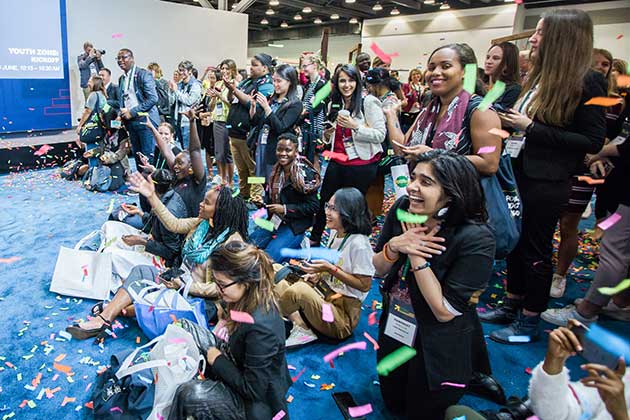
Young gender equality advocates kick off the Youth Zone at the Women Deliver 2019 Conference in Vancouver, Canada. Credit: This Is It Studios

In “calling us in” and championing our ability to foster more inclusive partnerships across all of our programs, we are taking action to effectively and authentically advocate for, with, and alongside girls and women everywhere, in all their intersecting identities, to catalyze lasting progress on gender equality.

Transforming ourselves is of course a continuous process. Each day, we are learning to do better and to be better. We hope that our key learnings, below, can support our development colleagues, wherever they find themselves on their journey.

1. Accessibility and inclusion must lead the way — in-person and virtually.

    According to expert studies, organizations and individuals from LMICs are often under-represented at global health convenings. From day one, it’s urgent to intentionally engage those who have historically been excluded. In planning WD2023, we have leveraged the lessons of the past two years and from prior Women Deliver Conferences. We used an open application to select one-third of our Conference Advisory Group — a diverse panel with a balance of technical expertise. Our advisors represent 30 organizations — 10 individuals are from youth or youth-led organizations and 35 are from LMICs. We have done this to ensure that the Conference is co-created from the start by organizations and individuals representing the intersectional identities of the girls and women we work with and for.

    We meet regularly via videoconference with our Advisory Group to co-create the Conference’s Global Dialogue, theme, programming, and more, with support from social impact design experts at IDEO.org. IDEO also supports us as we carry out targeted discussions with specific stakeholder groups, including Women Deliver Young Leaders and Alumni, Deliver for Good Country Coalitions, and Conference Sponsors and Funders.

    In planning how to shape the dialogue, foster collaboration, and drive collective action before, during, and after the Conference, we’re working with our partners to ensure that all Conference advocacy spaces, be they digital or physical, are accessible to all. This includes low-bandwidth options, closed captioning, interpretation in multiple languages, and International Sign Language. On-site, we will also provide trauma-informed specialists, breastfeeding/nursing stations, child safeguarding support, and mental health specialists.

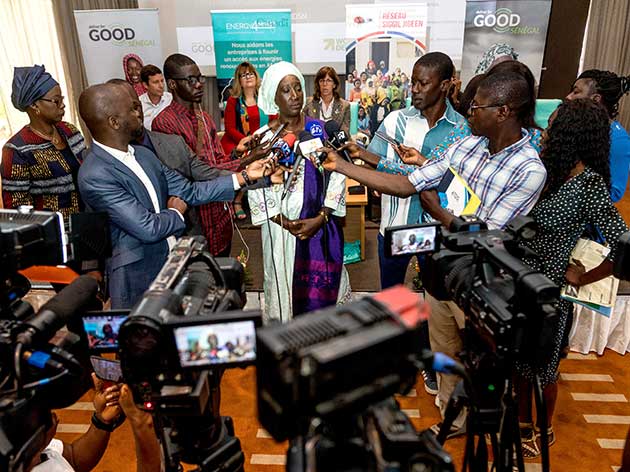
Mme Safiétou Diop, President of Réseau Siggil Jigeen speaking at a press conference during the launch of the Deliver for Good Senegal Campaign in Dakar, Senegal in 2019.

2. Move from meaningful youth engagement to co-leadership and intergenerational action.

    It’s time to follow the lead of young people, shift away from top-down approaches, and actively provide resources for robust youth co-leadership. According to global consensus, young people have a fundamental right to actively and meaningfully engage in all matters that affect their lives. For international development organizations, this means offering space, support, and compensation that youth need and deserve to co-create a more-gender equal future — a future from which they have the most to gain and to lose.

    We created the 14-person Young Leaders Program Alumni Committee, with an honorarium for their valuable expertise, to advise us on strategy and implementation of the Young Leaders Program and ideate youth co-creation opportunities. This committee provides invaluable guidance to ensure the Young Leaders Program models meaningful youth engagement and co-leadership, and effectively meets the needs of Young Leaders on the ground.

    Women Deliver also hosts Multi-Country Workshops to foster capacity strengthening, knowledge sharing, and coordinated advocacy on sexual and reproductive health and rights (SRHR) and gender equality. Starting in 2021, these workshops are now designed and led by a Young Leader Planning Committee representing the regions where the workshops take place. They are in the driver’s seat as they craft workshop content and programming, while Women Deliver provides logistical support and the virtual space to gather. This co-created process has led to more targeted — and impactful — workshops that cater to Young Leaders’ specific needs and build capacity in the issue areas where it’s most needed.

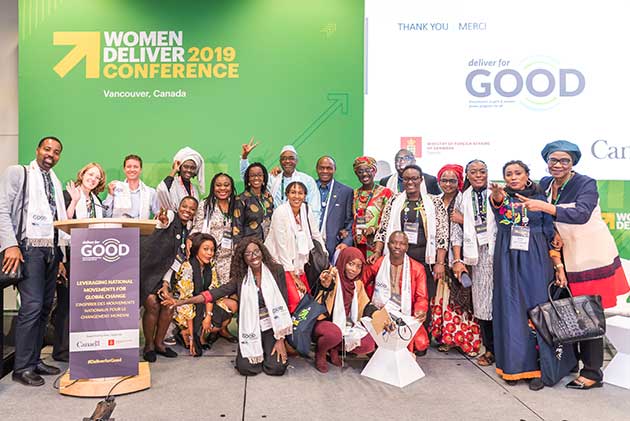
Delegates taking a group photo on stage at the Deliver for Good Campaign side event “Leveraging National Movements for Global Change” at the Women Deliver 2019 Conference in Vancouver, Canada.

3. Elevate diverse voices and support organizations working on the ground.

    Incusion and participation have to be integrated into the mission of development work, not a one-off tactic or strategy. Diverse, resilient feminist and women’s rights organizations and movements are – and must always be positioned as – the key drivers of change for gender equality and women’s rights across the globe.

    Over the past two years, we have stepped back to shift power across every aspect of our organization’s activities, policies, programs, and behaviors, into the hands of the youth and women’s rights groups most impacted by our work. For example, in 2020, in partnership with Girl Effect, as well as with young people themselves, we worked to understand how youth in India, Malawi, and Rwanda use digital platforms to learn about their sexual and reproductive health (SRHR). This project was designed and executed by more than 160 adolescent girls and young women, who worked hand in hand with researchers on the ground in India, Malawi, and Rwanda to conduct interviews within their own communities, as well as to design questions, discuss results, and generate recommendations. Moving forward, we must involve girls and women in all aspects of data collection and evidence generation that impacts them. This will ensure that the local knowledge and skills needed to drive sustainable change in their own communities, regions, and countries are an integral part of effective advocacy and decision-making.

    We’re now handing the pen directly to Young Leaders and spotlighting the work of youth-led organizations during key advocacy moments. Last year, the Deliver for Good Campaign organized its first ever Continental Conversation — an idea conceived by partners in Kenya and Senegal — as a way to work together towards gender equality in the region. What was first envisioned as a one-off peer-to-peer sharing opportunity via videoconference became understood as a vital, first-of-its-kind Continental Conversation to bridge divides — some of which had never been crossed. Together, the Campaign’s country partners shared their own experiences, lessons, challenges, and successes in advancing gender equality, laying the groundwork for a cross-regional peer-to-peer learning model with the power to accelerate progress on girls’ and women’s health and rights in Kenya, in Senegal, and around the world.

    Over the past year, we have also co-convened multi-sectoral coalitions with diverse partners representing the intersectional identities of girls and women. For example, as part of the SRHR & Climate Justice Coalition, we’re working on collective action and coordinated advocacy in partnership with more than 60 representatives from a wide range of civil society organizations. The Coalition is working to advance SRHR and gender equality in the context of climate change from an intersectional and climate justice approach.

    The Coalition emerged from the need to break down silos between the SRHR and Climate Justice organizations and movements, facilitate knowledge sharing, jointly mobilize, and amplify the voices and priorities of grassroots organizations. These organizations are led by girls and women, the LGBTQIA+ community, and Indigenous people from LMICs, particularly those most affected by climate change and without continuous access to high-quality SRH services. The Coalition is currently raising awareness of the interlinkages of SRHR and climate change in order to ensure SRHR is a key part of climate change conversations and action strategies ahead of key policy moments, such as CSW66 and COP27.

4. Collect and present data that accurately represents the diverse needs of all girls and women.

    Sustainable progress — and lasting change — will take all of us. Over the past two years, we’ve focused on connecting advocates working across different issue areas and collecting gender-disaggregated data. The data is broken down into the many factors that shape people’s lives, including race and ethnicity, sexual orientation, disability status, and socioeconomic class in order to drive collective action, the mainstay of transformative change. We also need to engage with data scientists from regions most impacted by this research.

    Last year, we partnered with Focus 2030 to carry out a survey of 17 countries on six continents — representing half of the world’s population. An overwhelming majority said they support gender equality, believe that women should be fully engaged in charting our path forward, and expect leaders – political and in business – to take meaningful action to bridge the gender divide. In centering the voices of citizens, we were able to effectively advocate for bigger, bolder commitments by governments and the private sector, ahead of the Generation Equality Forum.

As Women Deliver evolves and grows, we will continue to call upon our partners and funders, including in the private sector, to ensure that the international development world champions and secures robust, feminist funding and resources for women’s rights organizations, youth, and other marginalized communities. We hope you will join us in leveraging the changes set into motion during the pandemic and the global reckoning in our sector. Let’s work together to bridge existing divides and form inclusive partnerships — between countries, sectors, and generations.

The authors are Kathleen Sherwin (CEO/President), Divya Mathew (Director, Policy & Advocacy), Julia Fan (Senior Manager, Youth Engagement), Gretchen Gasteier (Manager, Conference), Rachel Elliott (Senior Associate, Communications) of Women Deliver

IPS UN Bureau


Youths Trailblazing Paths in Sexual and Reproductive Health Ahead of ICFP Family Planning Conference

Featured, Gender, Global, Headlines, Population, Poverty & SDGs, TerraViva United Nations, Women’s Health, Youth Thought Leaders

Youth Thought Leaders

Youth activists Peace Umanah, from Nigeria and Aurelia Naa Adjeley Sowah-Mensah from Ghana ensure that young people are made aware of their Sexual and Reproductive Health Rights. Credit: ICFP

Nairobi, Kenya, Mar 16 2022 (IPS) – Travelling in northern Nigeria, Peace Umanah noticed teenage girls with multiple children – they would be walking with one strapped to their back, holding another by hand and with a protruding belly.


“These were worrisome sights that got me thinking about whether these young girls knew about contraceptive choices or if they were not given information to make beneficial decisions.”

The same question weighed heavily on young Aurelia Naa Adjeley Sowah-Mensah from Ghana, who grew up in a community where teenage pregnancies are common – mirroring the situation in many developing countries.

These questions set the young women on a trailblazing path to change the trajectory of adolescent and teenage pregnancies in their countries.

The pair have joined forces with other young people, world leaders and actors in Sexual and Reproductive Health and Rights (SRHR) to give young people in every corner of the world much-needed tools to navigate their sexuality. They hope to remove SRHR-related challenges to enable young women to benefit from socio-economic growth and development opportunities.

“Through the International Conference on Family Planning (ICFP) Youth Trailblazer Award, young leaders in the field of family planning and SRHR aged 18-35 years old were invited to submit creative short videos that integrate this year’s conference theme,” says Jose G Rimon II, director of the Bill and Melinda Gates Institute for Population and Reproductive Health at the Johns Hopkins Bloomberg School of Public Health.

Jose G Rimon II, director of the Bill and Melinda Gates Institute for Population and Reproductive Health at the Johns Hopkins Bloomberg School of Public Health. Credit: ICFP

Rimon II, who is also the chair of ICFP’s International Steering Committee, tells IPS the videos “also highlighted youth perspectives, experiences, and voices in family planning and SRHR”.

The videos reflected the conference’s theme: ‘Universal Health Coverage and Family Planning: Innovate, Collaborate, Accelerate’.

Sowah-Mensah and Umanah were among 50 youth leaders working in family planning and SRHR awarded scholarships to attend ICFP this year in Pattaya City, Thailand, on November 14-17, 2022.

Other award winners include Tanaka Chirombo from Malawi, Alison Hoover from Atlanta, USA, and Muhammad Sarim (Saro) Imram from Pakistan.

Awardees are from countries in Africa, Asia, Europe, North and South America, selected from a pool of more than 300 youth worldwide who applied for the Youth Trailblazer Award. The award recognises youth leadership and innovation in family planning and SRHR.

“Selected youth demonstrated strong ideas and commitment, creative thinking that pushed the field forward and challenged norms, and successfully conveyed a clear and powerful message,” says Rimon II.

Youth Trailblazer Award winners will be integrated throughout the ICFP, the world’s largest scientific conference on family planning and reproductive health, to amplify and highlight the voices of young leaders globally, he adds.

“Awardees will actively participate in planning activities for the ICFP, including integral participation on the ICFP subcommittee(s) of their choice, engagement as speakers and moderators at sessions, as well as other conference engagement opportunities that will magnify the voices, perspectives, and experiences of the youth.”

Youth participation will bring to life ICFP’s stance that countries’ universal health coverage packages should include youth-friendly family planning and SRH products and services.

“As of 2021, the modern contraceptive prevalence rate shows only 17 percent of all women of reproductive age in Nigeria use contraceptives,” Umanah says.

In the absence of youth-friendly services, myths and misconceptions influence young people’s understanding of contraceptives. She says they sometimes use lime, soda, antibiotics, and salt to prevent unplanned pregnancies.

Adolescent and teenage pregnancies are the most pressing issues. Consequences include life-threatening health complications and the risk of missing out on lifelong learning and earning opportunities.

According to government statistics, one in every five girls in Kenya between the ages of 15 to 19 is either pregnant or already a mother. Complications during pregnancy and childbirth are a leading cause of death for 15- to 19-year-old girls in this East African nation.

As a youth champion engaging adolescents and young people, Umanah says the cohort needs safe spaces free of stigma and judgment, where they can find answers and solutions to their SRHR needs.

“For young women and girls, being able to speak up and be heard is critical. Social media tools, such as 9ja Girls Now, gives girls a platform to get connected across distances,” Umanah observes.

“9ja Girls is a Facebook platform and a safe space where girls learn and ask questions about love, life and health and find answers.”

Sowah-Mensah is an SRHR mentor of adolescent girls and young women under the Girl Boss initiative with the Youth Action Movement (YAM) of the Planned Parenthood Association of Ghana.

Without support, Sowah-Mensah says, “some girls exchange sex for food or money, ending up in unplanned pregnancies. To avoid stigma, they turn to unsafe ways (to terminate the pregnancy), such as grinding and consuming glass bottles or drinking a mixture of sugar and alcohol. Some lose their lives.”

A dedicated ICFP Youth Pre-conference will take place November 11-13 to support youth leaders and their programmatic work, advocacy, and research.

Rimon II says youth involvement is the “best way to ensure diverse voices are heard and strategies are developed that are sustainable, inclusive, culturally competent and representative of sexual and reproductive health and rights at the global level.”

SRHR youth experts such as Sowah-Mensah and Umanah agree.

Sowah-Mensah says young people are the demographic majority and a powerful instrument for development because they have many innovative ideas.

“But a large percentage of our leaders are not young and are thus unable to address young people’s most pressing needs for SRHR services. You have one generation making bodily autonomy decisions on behalf of a totally different generation,” she says.

The awardees assert that the status quo must change to achieve a desirable outcome. Umanah says, “In designing solutions to challenges that face adolescent girls and young women, their concerns and voices should be the loudest. They should lead conversations towards desired solutions.”

ICFP is supported by the Bill and Melinda Gates Institute for Population and Reproductive Health at Johns Hopkins University and more than two dozen other public, private, and non-profit sponsors, including the World Health Organization and United Nations Population Fund.

[embedded content]

IPS UN Bureau Report

  Source