Water Harvesting Strengthens Food Security in Central America

Active Citizens, Civil Society, Combating Desertification and Drought, Development & Aid, Editors’ Choice, Environment, Food & Agriculture, Headlines, Latin America & the Caribbean, Poverty & SDGs, Regional Categories, TerraViva United Nations, Water & Sanitation
Water & Sanitation

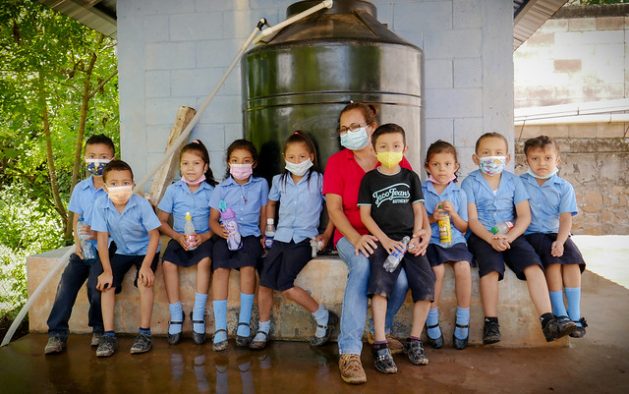
Angélica María Posada, a teacher and school principal in the village of El Guarumal, in eastern El Salvador, poses with primary school students in front of the school where they use purified water collected from rainfall, as part of a project promoted by FAO and Mexican cooperation funds. The initiative is being implemented in the countries of the Central American Dry Corridor. CREDIT: Edgardo Ayala/IPS

Angélica María Posada, a teacher and school principal in the village of El Guarumal, in eastern El Salvador, poses with primary school students in front of the school where they use purified water collected from rainfall, as part of a project promoted by FAO and Mexican cooperation funds. The initiative is being implemented in the countries of the Central American Dry Corridor. CREDIT: Edgardo Ayala/IPS

SENSEMBRA, El Salvador , Jun 23 2021 (IPS) – At the school in El Guarumal, a remote village in eastern El Salvador, the children no longer have to walk several kilometers along winding paths to fetch water from wells; they now “harvest” it from the rain that falls on the roofs of their classrooms.


“The water is not only for the children and us teachers, but for the whole community,” school principal Angelica Maria Posada told IPS, sitting with some of her young students at the foot of the tank that supplies them with purified water.

The village is located in the municipality of Sensembra, in the eastern department of Morazán, where it forms part of the so-called Central American Dry Corridor, a semi-arid belt that covers 35 percent of Central America and is home to some 11 million people, mostly engaged in subsistence agriculture.

In the Corridor, 1,600 kilometers long, water is always scarce and food production is a challenge, with more than five million people at risk of food insecurity.

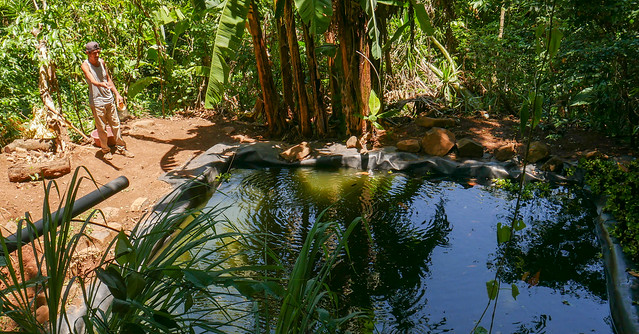
In El Guarumal, a dozen peasant families have dug ponds or small reservoirs and use the rainwater collected to irrigate their home gardens and raise tilapia fish as a way to combat drought and produce food.

“We are all very proud of this initiative, because we are the only school in the country that has a (rainwater harvesting) system like this.” — Angélica María Posada

This effort, called the Rainwater Harvesting System (RHS), has not only been made in El Salvador.

Similar initiatives have been promoted in five other Central American countries as part of the Mesoamerica Hunger Free programme, implemented since 2015 by the United Nations Food and Agriculture Organisation (FAO) and financed by the Mexican Agency for International Development Cooperation (Amexcid).

The aim of the RHS was to create the conditions for poor, rural communities in the Dry Corridor to strengthen food security by harvesting water to irrigate their crops and raise fish.

In Guatemala, work has been done to strengthen an ancestral agroforestry system inherited from the Chortí people, called Koxur Rum, which conserves more moisture in the soil and thus improves the production of corn and beans, staples of the Central American diet.
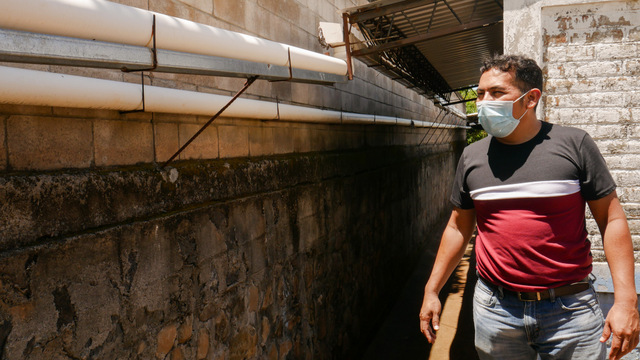
José Evelio Chicas, a teacher at the school in the village of El Guarumal, in El Salvador's eastern department of Morazán, supervises the PVC pipes that carry rainwater collected from the school's roof to an underground tank, from where it is pumped to a filtering and purification station. The initiative is part of a water harvesting project in the Central American Dry Corridor. CREDIT: Edgardo Ayala/IPS

José Evelio Chicas, a teacher at the school in the village of El Guarumal, in El Salvador’s eastern department of Morazán, supervises the PVC pipes that carry rainwater collected from the school’s roof to an underground tank, from where it is pumped to a filtering and purification station. The initiative is part of a water harvesting project in the Central American Dry Corridor. CREDIT: Edgardo Ayala/IPS

“The best structure for conserving water is the soil, and that is where we have to work,” Baltazar Moscoso, national coordinator of Mesoamerica Hunger Free, told IPS by telephone from Guatemala City.

Healthy schools in El Salvador

The principal of the El Guarumal school, where 47 girls, 32 boys and several adolescents study, said that since the water collection and purification system has been in place, gastrointestinal ailments have been significantly reduced.

“The children no longer complain about stomachaches, like they used to,” said Posada, 47, a divorced mother of three children: two girls and one boy.

She added, “The water is 100 percent safe.”

Before it is purified, the rainwater that falls on the tin roof is collected by gutters and channeled into an underground tank with a capacity of 105,000 litres.
Farmer Cristino Martínez feeds the tilapia he raises in the pond dug next to his house in the village of El Guarumal in eastern El Salvador. A dozen ponds like this one were created in the village to help poor rural families produce food in the Central American Dry Corridor. CREDIT: Edgardo Ayala/IPS

Farmer Cristino Martínez feeds the tilapia he raises in the pond dug next to his house in the village of El Guarumal in eastern El Salvador. A dozen ponds like this one were created in the village to help poor rural families produce food in the Central American Dry Corridor. CREDIT: Edgardo Ayala/IPS

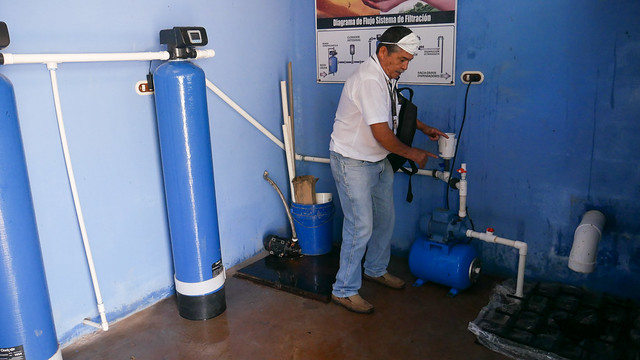
It is then pumped to a station where it is filtered and purified, before flowing into the tank which supplies students, teachers and the community.

The school reopened for in-person classes in March, following the shutdown declared by the government in 2020 to curb the spread of the COVID-19 pandemic.

“We are all very proud of this initiative, because we are the only school in the country that has a system like this,” added the principal.

There are 40 families living in El Guarumal, but a total of 150 families benefit from the system installed in the town, because people from other communities also come to get water.

A similar system was installed in 2017 in Cerrito Colorado, a village in the municipality of San Isidro, Choluteca department in southern Honduras, which benefits 80 families, including those from the neighbouring communities of Jicarito and Obrajito.
Rainwater is filtered and purified in a room adjacent to the classrooms of the school in the village of El Guarumal, in the eastern department of Morazán, El Salvador. Gastrointestinal ailments were reduced with the implementation of this project executed by FAO and financed by Mexican cooperation funds. CREDIT: Edgardo Ayala/IPS

Rainwater is filtered and purified in a room adjacent to the classrooms of the school in the village of El Guarumal, in the eastern department of Morazán, El Salvador. Gastrointestinal ailments were reduced with the implementation of this project executed by FAO and financed by Mexican cooperation funds. CREDIT: Edgardo Ayala/IPS

Vegetable gardens and tilapias boost food security

About 20 minutes from the school in El Guarumal, following a narrow dirt road that winds along the mountainside, you reach the house of Cristino Martínez, who grows tomatoes and raises tilapia in the pond dug next to his home.

The ponds are pits dug in the ground and lined with a polyethylene geomembrane, a waterproof synthetic material. They hold up to 25,000 litres of rainwater.

“The pond has served me well, I have used it for both the tilapia and watering tomatoes, beans and chayote (Sechium edule),” Martínez told IPS, standing at the edge of the pond, while tossing food to the fish.

The cost of the school’s water harvesting system and the 12 ponds totaled 77,000 dollars.

Martínez has not bothered to keep a precise record of how many tilapias he raises, because he does not sell them, he said. The fish feed his large family of 13: he and his wife and their 11 children (seven girls and four boys).

And from time to time he receives guests in his adobe house.

“My sisters come from San Salvador and tell me: ‘Cristino, we want to eat some tilapia,’ and my daughters throw the nets and start catching fish,” said the 50-year-old farmer.
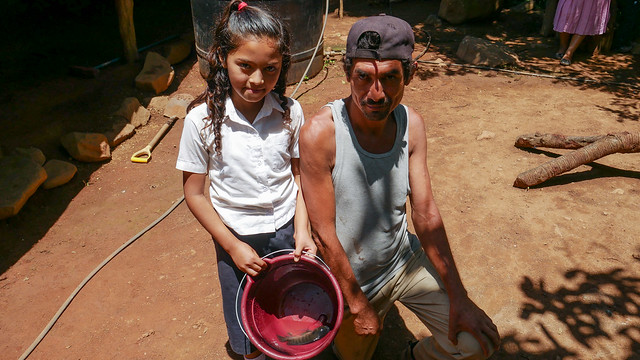
Cristino Martínez and one of his daughters show the tilapia they have just caught in the family pond they have dug in the backyard of their home in the village of El Guarumal in the eastern department of Morazán, El Salvador. The large peasant family raises fish for their own consumption and not for sale. CREDIT: Edgardo Ayala/IPS

Cristino Martínez and one of his daughters show the tilapia they have just caught in the family pond they have dug in the backyard of their home in the village of El Guarumal in the eastern department of Morazán, El Salvador. The large peasant family raises fish for their own consumption and not for sale. CREDIT: Edgardo Ayala/IPS

According to FAO estimates, the ponds can provide about 500 fishes two to three times a year.

The ponds are built on the highest part of each farm, and the drip irrigation system uses gravity to water the crops or orchards planted on the slopes.

Tomatoes are Martínez’s main crop. He has 100 seedlings planted, and manages to produce good harvests, marketing his produce in the local community.

“The pond helps me in the summer to water the vegetables I grow downhill,” another beneficiary of the programme, Santos Henríquez, also a native of El Guarumal, told IPS.

Henríquez’s 1.5-hectare plot is one of the most diversified: in addition to tilapias, corn and a type of bean locally called “ejote”, he grows cucumbers, chili peppers, tomatoes, cabbage and various types of fruit, such as mangoes, oranges and lemons.

“We grow a little bit of everything,” Henríquez, 48, said proudly. He sells the surplus produce in the village or at Sensembra.

However, some beneficiary families have underutilised the ponds. They were initially enthusiastic about the effort, but began to let things slide when the project ended in 2018.
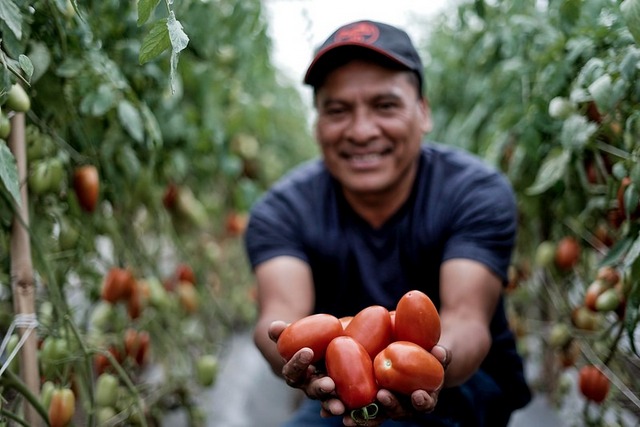
A farmer proudly displays some of the tomatoes he has grown in the region known as Mancomunidad Copán Chortí in eastern Guatemala, which includes the municipalities of Camotán, Jocotán, Olopa and San Juan Ermita, in the department of Chiquimula. Water harvesting initiatives have been implemented in the area to improve agricultural production in this region, which is part of the so-called Central American Dry Corridor. The initiative is supported by FAO and Mexican cooperation funds. CREDIT: FAO Guatemala

A farmer proudly displays some of the tomatoes he has grown in the region known as Mancomunidad Copán Chortí in eastern Guatemala, which includes the municipalities of Camotán, Jocotán, Olopa and San Juan Ermita, in the department of Chiquimula. Water harvesting initiatives have been implemented in the area to improve agricultural production in this region, which is part of the so-called Central American Dry Corridor. The initiative is supported by FAO and Mexican cooperation funds. CREDIT: FAO Guatemala

An ageold Chorti technique in Guatemala

In Guatemala, meanwhile, some villages and communities are betting on an agroforestry technique from their ancestral culture: Koxur Rum, which means “wet land” in the language of the Chortí indigenous people, who also live in parts of El Salvador and Honduras.

The system allows corn and bean crops to retain more moisture with the rains by combining them with furrows of shrubs or trees such as madre de cacao or quickstick (Gliricidia sepium), a tree species that helps fix nitrogen in the soil.

By pruning the trees regularly, leaves and crop stubble cover and protect the soil, thereby better retaining moisture and nutrients.

“Quickstick sprouts quickly and gives abundant foliage to incorporate into the soil,” farmer Rigoberto Suchite told IPS in a telephone interview from the village of Minas Abajo, in the municipality of San Juan Ermita, Chiquimula department in eastern Guatemala, also located in the Central American Dry Corridor.

Suchite said the system was revived in his region in 2000, but with the FAO and Amexcid project, it has become more technical.

As part of the programme, some 150 families have received two 1,500-litre tanks and a drip irrigation system, he added.

“Now we are expanding it even more because it has given us good results, it has improved the soil and boosted production,” said Suchite, 55.

In the dry season, farmers collect water from nearby springs in tanks and, using gravity, irrigate their home gardens.

“Many families are managing to have a surplus of vegetables and with the sales, they buy other necessary food,” Suchite said.

The programme is scheduled to end in Guatemala in 2021, and local communities must assume the lessons learned in order to move forward.
  Source

Maldives’ UN General Assembly Presidency Renews Hope for Small Island Developing States

Civil Society, Development & Aid, Economy & Trade, Featured, Global, Headlines, Human Rights, Inequity, TerraViva United Nations

Opinion

Taking Stock, Looking Forward. Credit UNESCO

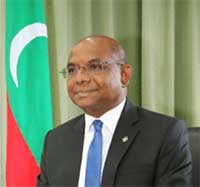
JEDDAH, Saudi Arabia , Jun 23 2021 (IPS) – Earlier this month, Abdulla Shahid, the Maldives’ foreign minister, was elected President of the 76th Session of the United Nations General Assembly (UNGA), which commences in September.


This is the sixth time a candidate from a Small Island Developing State (SIDS) has been elected to steer the work of the UN’s highest policy-making organ during its 76-year history:

Rudy Insanally of Guyana became the first president of the General Assembly elected from the UN-SIDS category in 1993; followed by Saint Lucia’s Julian Hunte in 2003; Haya Rashed Al-Khalifa of Bahrain in 2006; and the late John William Ashe of Antigua and Barbuda in 2013, while Peter Thomson of Fiji, took the helm during the GA’s 71st session in 2016.

https://www.un.org/ohrlls/content/list-sids

It may seem surprising that such small nations have so frequently been named to this high position—the aggregate population of all SIDS is only 65 million, less than one percent of the global population—but the UN’s 38 SIDS constitute one fifth of the international organization’s total voting membership.

This position gives SIDS outsized power as a voting bloc, which they have wielded to great effect, perhaps most significantly when it comes to climate change, which as we will see has benefited the entire global community.

Abdulla Shahid. Credit: United Nations

Far from representing a monolithic group, SIDS hail from every region of the world and are home to dozens of languages and a wide variety of social and economic characteristics. Some, like Guyana and Belize, are not even islands, but they all share unique social, economic and environmental vulnerabilities (like size, remoteness, and limited resources base) that the UN has recognized a distinct group of developing countries since 1992.

They are also highly vulnerable to the impacts of climate change, like extreme weather, sea level rise, and biodiversity loss, making them natural allies in the fight to cut the greenhouse gas emissions responsible for the crisis.

In fact, in 1989, the Maldives hosted one of the first international conferences on sea level rise, a consequential event in the international climate change fight and the inspiration for the creation of the Alliance of Small Island States (AOSIS), which has been credited to establish the the United Nations Framework Convention on Climate Change in 1992 and winning the inclusion of the 1.5 degree Celsius temperature goal in the Paris climate accord in 2015, the latter during the Maldives chairmanship of the group.

SIDS have also shown critical leadership in the creation of the UN’s Sustainable Development Goals (SDGs).

In 2014, SIDS helped lead the negotiations, ultimately creating what is known as the SAMOA Pathway, a blueprint to ensure priorities of SIDS were reflected in the final 17 SDGs.

Before that, John William Ashe skillfully set the stage for the SDGs by working with larger countries to create a process for the SDGs that truly had global buy in.

All along, SIDS main argument that the specific challenges they face need to be given special consideration, and today a number of the SDGs do just that, including sustainable management of fisheries, aquaculture, and tourism. Such recognition was further solidified in 2015 as part of the Addis Ababa Action Agenda adopted at the UN Conference on Financing for Development and again that year in the Sendai Framework for Disaster Risk Reduction.

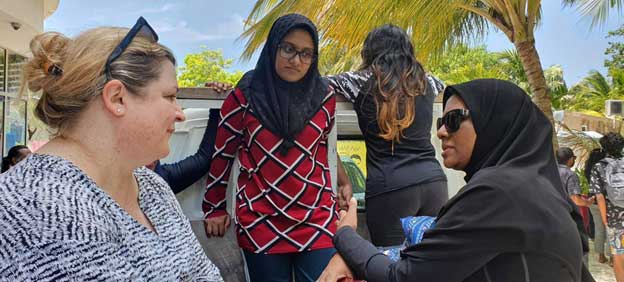
Catherine Haswell, the UN Resident Coordinator in the Maldives (left) meets a group of local women. May 2021. Credit: UN Maldives/Nasheeth Thoha

Unsurprisingly, another theme that has emerged in SIDS international diplomacy over the years is ocean conservation. In December 2017, under Peter Thomson’s leadership, the General Assembly decided to convene negotiations towards an international legally binding instrument under the UN Convention on the Law of the Sea (UNCLOS) on the conservation and sustainable use of marine biological diversity of areas beyond national jurisdiction, what is known as the high seas.

Thomson was also instrumental in developing the UN Ocean Conference that sets out to conserve and sustainably use ocean resources.

SIDS’ important endeavors during the General Assembly not only showcase the value of their contributions there, but of the GA itself, a place where all 193 UN countries, large and small, can elevate their concerns.

During the campaign for the post competing with Zalmai Rassoul, the candidate from Afghanistan, the Maldives’ Shahid launched “a presidency of hope”, noting that his priorities during the year-long presidency are to recover from the Covid-19 pandemic and rebuild economies better and greener.

“The General Assembly can boost efforts towards greater climate action” and “renew momentum” on issues of energy, biological diversity, sustainable fisheries, desertification and the oceans – that are at the heart of SIDS’ concerns.

The UN Secretary General Antonio Guterres, while welcoming the new President-elect Shahid commended his “selection of hope as the central theme in his vision statement” and noted that, “coming from a small island developing state, Mr. Shahid will bring unique insights to the 76th session of the General Assembly, as we prepare for COP26 in Glasgow in November.”

Shahid’s election, as with the SIDS leaders before him, not only offers new hope for islands, but the whole international community. At this precarious moment in history, it is truer than ever that by promoting the interests of SIDS, what we are really doing is protecting the future of mankind.

Ahmed Sareer was the Ambassador/ Permanent Representative of the Maldives to the United Nations from 2012 to 2017 and chairman of the Alliance of Small Island States from 2015 to 2017. He is presently serving at the General Secretariat of the Organization of Islamic Cooperation (OIC) based in Jeddah.

  Source

From Climate Change to Covid, Are We Ready to Deal with Disasters?

Civil Society, Climate Change, Education, Environment, Food Security and Nutrition, Gender Violence, Global, Headlines, Health, Humanitarian Emergencies, Labour, Migration & Refugees, Sustainability, TerraViva United Nations, Water & Sanitation

Opinion

Credit: Bibbi Abruzzini

PARIS, Jun 10 2021 (IPS) – In the last 20 years, disasters affected over 4 billion people. At global level we witness on average one sweeping disaster a day, the majority of which are floods and storms. From the Covid-19 pandemic to climate change, calamities are taking new shapes and sizes, infiltrating every dimension of society. From the emotional to the political, how do we deal with disasters? How can we create a whole-of-society approach to disaster risk reduction?


Right through this vortex of intersecting crises, a new toolkit and interactive website by Forus, the Global Network of Civil Society Organizations for Disaster Reduction (GNDR), Save the Children Switzerland and Inventing Futures, with the support of Fondation de France, looks at how civil society organisations coordinate disaster risk reduction and post-emergency interventions. Meant for civil society networks, activists, government officials and community-based organizations, the toolkit provides best-practices from around the globe.

“Today, we are all actors and victims of crises. How can we better understand and learn to cope with them? These practical tools allow us to discover the stakes, the exemplary actions and their effects, through simple definitions and concrete testimonies experienced by civil society,” says Karine Meaux, Emergency manager at Fondation de France.

“Building resilient communities in the face of natural and man-made hazards has never been more important. While disasters don’t discriminate, policies do. Together we can act and put pressure on decision-makers to promote a holistic approach to disaster prevention and reduction and truly people-centred policies,” says Sarah Strack, Director of Forus.

Civil society at the forefront of disaster management

From resilient communities in Nepal, to conflicts in Mali and peace processes in Colombia, the toolkit presents six approaches to disaster risk reduction gleaned from case studies compiled across the civil society ecosystem. The toolkit looks at various topics from capacity building, to local knowledge, resource mobilisation, partnerships with governments and long-term sustainable development and livelihood resilience, ensuring that communities ‘bounce forward’ after a disaster.

Credit: Bibbi Abruzzini

Specifically, the toolkit aims to clarify the crucial role frontline civil society organisations play in reducing the impacts of disasters in the midst of an expanding and intensifying global risk landscape. Bridging governments, communities and experts is the only way we can tackle the multiple ways disasters affect local and social processes such as education, migration, food security and peace. If civil society is not free to operate – or even exist – our collective capacity to deal with disasters and create long-term resilience is hampered.

“You have countries [in the region] in which civil society is not even allowed to exist. This reality changed a lot after the Arab Spring, with countries living in a terrible crisis, with military conflicts, where the role of civil society now is not only to struggle for their existence, but also to provide the population with basic needs and humanitarian interventions,” says Ziad Abdel Samad, Director of the Arab NGO Network for Development (ANND).

Everyday disasters and inequalities

Robert Ninyesiga, from UNNGOF, the national civil society organisation platform in Uganda, argues that in most cases, “more effort has been put towards disaster response while neglecting the disaster prevention aspect”.

This therefore calls for continuous intentional awareness and capacity building as regards to disaster prevention and this can only be effectively achieved if sustainable partnerships between central governments, local governments, civil society organisations, media and citizens are strengthened.

Shock events, high-impact disasters, such as conflicts, earthquakes or tsunamis are just the tip of the iceberg. Underneath this layer there are an increasingly high number of “everyday disasters” affecting people around the globe. Localised, small scale, and slow onset disasters are often “invisible” – far from the spotlight. Those at low incomes are the most vulnerable and find themselves at the periphery of infrastructures, response systems and media attention.

For instance, in addition to being often exposed to intensive disasters such as floods and storms, residents in urban slums across Bangladesh are suffering much more than other communities since the outbreak of the Covid-19 pandemic.

Credit: Bibbi Abruzzini

“Most slum dwellers are daily wage earners, but they are not able to earn money. They are not able to maintain social distance, because in one room 4-5 members are living. Many people are using a shared bathroom. It’s very difficult to maintain hygiene. There is not enough space to sit or sleep at home while maintaining sufficient distance. Due to lack of money, many slum dwellers have only one or two meals a day. Violence and sexual harassment are increasing in the community due to cramped conditions. Children are not attending school,” explains the Participatory Development Action Programme (PDAP) which works in the slums of Dhaka .

These pressures add to regular “everyday” challenges of air pollution and garbage management, flooding, water-logged land, and poor quality water.

Local knowledge and Resilient Future

Civil society organisations often fill a tremendous gap and find themselves at the forefront of prevention and emergency efforts. The localisation of responses and partnerships are absolutely crucial to understand the needs of communities in pre and post-disaster scenarios.

In Honduras, civil society has created community-led interventions, to prioritise local plans of action across the country.

“Honduras, and Central America more in general, have been hit in the last 10 years by an intensification of disasters, most of them linked to climate change. Our role in helping communities to adapt to climate change and to deal with disasters, is in terms of capacity building, humanitarian assistance and advocacy by creating links between local, national, regional and global levels,” says Jose Ramon Avila from ASONOG, the national platform of civil society organisations in Honduras.

The intense and cascading nature of risks, such as seen in the cases of Covid-19 and climate change, represent a serious threat to the achievement of a sustainable and resilient future. Growing experience over the last three decades has revealed that disasters and development are closely linked. Ignoring the impact of disasters makes it more difficult to pursue sustainable development.

“Sustainable development can only be achieved when local risk is fully understood. Critical to understanding and assessing the complex threats and risks, challenges and opportunities faced by communities most at risk, is the need to partner with those people. This practical toolkit provides valuable insights and examples from GNDR members and others on how this can be achieved,” says Bijay Kumar, Executive Director, Global Network of Civil Society Organisations for Disaster Reduction (GNDR)

It has also been found that much of the negative impact on sustainable livelihoods comes not from large, ‘intensive’ disasters, but from many smaller, ‘everyday’ disasters. It has become crucial to address intensive and everyday disasters and to integrate our responses with overall work to pursue sustainable development.

We need to ask ourselves this question: can we build new bridges of solidarity between civil society, communities and governments? Can we prevent and anticipate disasters? Our future is not disaster-free; to build resilient communities it is crucial to nurture strong roots for our society to flourish.

The author Bibbi Abruzzini is Communications officer at Forus.
Find the toolkit and microsite on Disaster Risk Reduction here. Available in English, French and Spanish.

  Source

Nigeria’s Twitter Ban Is Part of a Larger Attack on Civil Society

Africa, Civil Society, Headlines, Human Rights, Press Freedom, TerraViva United Nations

Opinion

While the Twitter ban surprised many, the government’s action against social media platforms has long been threatened and is part of a long-term strategy to bend civil society and force Nigeria’s citizens into compliance with the government

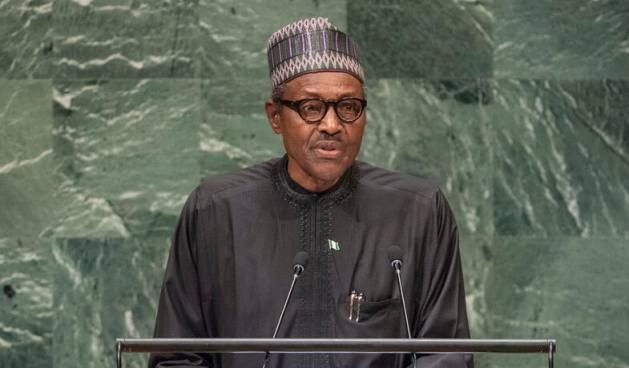
Muhammadu Buhari, President of Nigeria, addresses the general debate of the UN General Assembly, 2019. Credit: UN Photo/Cia Pak

LAGOS, Nigeria, Jun 9 2021 (IPS) – Four years ago, Omoregie* and his friends were arrested without cause and taken into custody. When they got to the station, Omoregie watched as the police began to beat his friends. Afraid, he began to discreetly tweet about the attacks as they took place.


I and many other Twitter users could read his fears while he called for help through his tweets. Taking action as a lawyer, I was able to secure his release within a few hours with the help of other activists through the police unit responsible for citizen complaints.

I had been thinking of Omoregie this week when the government of Nigeria banned the use of Twitter in the country, making use of it a criminal offense. The ban followed the social media platform’s deletion of a tweet from President Muhammad Buhari in which he threatened violence against people in a region in the country’s South East where attacks had been made on public infrastructure.

While the banning of Twitter surprised many, the government’s action against social media platforms has long been threatened and is part of a long-term strategy to bend civil society and force Nigeria’s citizens into compliance with the government. Twitter has been a major source of activism and news in Nigeria

While the banning of Twitter surprised many, the government’s action against social media platforms has long been threatened and is part of a long-term strategy to bend civil society and force Nigeria’s citizens into compliance with the government. Twitter has been a major source of activism and news in Nigeria.

Nigerians spend almost four hours on social media daily and Twitter is the second largest social media platform after Facebook. Most public debates begin on Twitter and the platform often sets the tone for national news carried on traditional media. It has become the platform to hold government, institutions and powerful individuals accountable.

It has also long been a place for activism and to organize protests, including last year’s EndSARS protests, which led to the eradication of the Special Anti Robbery Squad. Ninety-nine people were killed during the EndSARS protest in Nigeria and Twitter helped to expose these abuses. This was most evident during an attack by police and the military on protesters at Lekki Bridge in Lagos.

Documentation of the attack, including a livestream by media personality DJ Switch forced senior military officers to intervene and later acknowledge the attack took place. Since livestreaming the attack, D.J Switch has been forced to seek asylum in Canada as a result of threats to her life.

This efficacy for activism has drawn government’s attention.

About two years ago, Nigerian government introduced a social media bill that sought to regulate the social media space and criminalize simple comments that authorities deemed ‘falsehoods’ or hate speech with fines and jail terms.

As a lawyer and an activist, I appeared before a Senate committee at the public hearing and gave statements about how we use social media to help fight human rights violations, consumer rights, and even to help find missing persons. After the public hearing, the bill was abandoned but, as we saw with last week’s Twitter ban, the Buhari administration did not give up on its ambitions to restrict social media.

They took their opportunity with last week’s shutdown. Nigeria’s judicial system has been effectively on strike for the past two months, so the Twitter ban was implemented without the oversight of the courts. In addition to banning Twitter, the government has demanded licensing of all social media platforms as well as services which stream news and entertainment via the Internet.

All of these restrictions aim to control freedom of expression; a right guaranteed under Nigeria’s Constitution as well as the African Charter on Human and Peoples’ Rights and the United Nations’ Declaration of Human Rights–both of which Nigeria has signed.

The Twitter ban also comes as the Nigerian government increases offline crackdowns on citizen action. They have repeatedly trampled on the right of citizens to assemble and protest in physical space. Activists have been shot at by police and military and many arrested while protesting peacefully. Twitter has also been used to shine a light on these crackdowns.

Since the ban against Twitter was announced, the government has wasted no time in implementing punishment for users. Immediately after the announcement, Nigeria’s Attorney General directed the arrest and prosecution of anyone using the Twitter app.

Practically, this will mean police will be empowered to search telephones for the app. Police searches of phones—and unhappiness with those searches—are not new to Nigerians and were one of the reasons for the EndSARS protests.

The draconian ban also begs the question, if Twitter, a global platform which helps to spotlight the government excesses can be shut down, what safety is there for Nigeria’s local media, journalists and citizens? With the Twitter ban Nigeria risks further sliding into dictatorship and there will be fewer ways to organize challenges to it.

Some will argue that Twitter is to blame for its banning because it overstepped in deleting a tweet from President Buhari that Twitter argues violates its policy. But even if we accept that Twitter was wrong to delete a tweet, the federal government’s reaction to ban a platform so important to public debate and activists is petty and an extreme overreach.

It is time for the world’s democracies to take concrete steps and forestall Nigeria human rights violations. Censorship of independent voices is often a means to shut down accountability and enable autocratic rule.

Allowing the Twitter ban by a few politicians without criticism would signal that the world endorses autocracy. The world’s silence and inaction are an endorsement of the Twitter ban, a shrinking of the ability of civil society to organize and a violation of the rights of 200 million Nigerians.

*Not his real name

Nelson Olanipekun is a human rights lawyer and advocate who uses technology and law to accelerate the pace of justice delivery. He is a 2021 Aspen Institute New Voices Fellow.

  Source

Time to End Generational Injustice with a ‘Global Blue New Deal’ to Protect Oceans

Active Citizens, Biodiversity, Climate Change, Economy & Trade, Education, Environment, Global, Green Economy, Headlines, Labour, Poverty & SDGs, TerraViva United Nations, Water & Sanitation

Opinion

Credit: Australian Institute of Marine Science

PARIS, Jun 8 2021 (IPS) – Increasingly, youth are rising up to declare that they’ve had enough of the cyclical exploitation of the environment that jeopardizes their own future.


Youth activism through the Global Climate Strikes and Fridays For Future protests have helped spur revolutionary policy frameworks, like the Green New Deal championed by U.S. Congresswoman Alexandria Ocasio-Cortez.

International organizations and sovereign governments have now interpreted the Green New Deal into frameworks and policies of their own; it’s clear that environmental policy led by youth has energized the discussion on global decarbonization and the social impacts of climate change.

However, the Green New Deal only mentioned the ocean once. We need to insert more Blue into the green transition.

Earth’s vast oceans are humanity’s single most important climate regulation tool. As governments coalesce around plans to quite literally save our species, we must recognize that there is no future without understanding the role the ocean has to play.

Beyond human life support, the ocean economy contributes to ecosystem services, jobs, and cultural services valued at USD 3-6 trillion, with fisheries and aquaculture alone contributing USD 100 billion per year and 250+ million jobs.

Our ocean, however, is overfished, polluted with plastic, and exploited for non-renewable resources like minerals and fossil fuels. This perpetuates a cycle of generational injustice and leaves youth to inherit an increasingly degraded environment with less and less time to restore it. Not only is this detrimental to progress at large, but our most vulnerable global communities, who contribute the least to global emissions, will feel the effects of our degraded environment the most severely.

Youth not only need to be proactive advocates for the SDGs, we need to hold the global community accountable to commitments they have made between nations and to youth as the greatest stakeholders in the future health of our environment.

Creating the “Global Blue New Deal”

In 2019, the Sustainable Ocean Alliance distributed surveys across its network to identify the key youth policy priorities for a healthy ocean and just future. We received 100+ responses from 38 countries in 5 languages.

Over the past year, SOA’s Youth Policy Advisory Council synthesized these into a youth-led, crowdsourced ocean policy framework: the Global Blue New Deal.

The first public draft of our Global Blue New Deal is being launched now, at the dawn of the UN’s Decade of Ocean Science for Sustainable Development, which aims to gather global ocean stakeholders behind a common framework to deliver “the ocean we need for the future we want.”

Youth want to contribute to the success of the Ocean Decade and call on the international community to recognize our policy suggestions as part of the solutions our planet needs.

The vision of the Global Blue New Deal is to “outline an ocean policy framework that integrates crowdsourced youth priorities that will be proposed to governments on international, national, and local scales for implementation.”

It is organized under four pillars, each containing specific ocean policy solutions.

In brief:

Pillar 1
Carbon Neutrality: Transition to a Zero Carbon Future

    1. End offshore drilling and invest in renewable ocean energy
    2. Decarbonize the shipping industry
    3. Reduce land-based marine pollution
    4. Transition to a circular economy
    5. Strengthen legislation and enforcement against ocean contamination

Pillar 2
Preserve Biodiversity: Apply Nature-based Solutions to Promote Healthy Ecosystems and Climate Resilience

    1. Support the global movement to protect 30% of the world’s ocean by 2030
    2. Enforce against non-compliance in Marine Protected Areas (MPAs)
    3. Establish a global moratorium against deep-sea mining
    4. Transition from “gray” manmade infrastructure like culverts and seawalls to nature-based blue carbon infrastructure including the restoration of wetlands, mangroves and marshes

Pillar 3:
Sustainable Seafood: Match Increasing Global Demand Sustainably

    1. Encourage sustainable governance of capture fisheries
    2. Enforce against illegal, unreported, and unregulated fishing
    3. Eliminate capacity-enhancing fisheries subsidies
    4. Provide a sustainable path for aquaculture
    5. Fund research and development of plant-based and cell-cultured seafood

Pillar 4:
Stakeholder Engagement: Include Local Communities in Natural Ocean Resource Management

    1. Ensure the sustainability of coastal ecotourism
    2. Promote ocean research and innovation, with a goal of mapping 100% of the global seafloor by 2030.
    3. Emphasize ocean literacy and capacity building
    4. Build stakeholder participation in ocean governance

We invite like-minded youths, scientists, policymakers, and other ocean stakeholders to visit https://www.soalliance.org/soablog/youth-led-blue-new-deal and help as we finalize the Global Blue New Deal ocean policy framework during our public comment period throughout July.

Each generation has inherited an increasingly degraded ocean environment with the poorest, most vulnerable communities feeling the impacts the most severely. This is our opportunity to rewrite the long history of compromising our ocean.

Mark Haver and Marina Porto are Chair and Co-Chair respectively of the Youth Policy Advisory Council of the Sustainable Ocean Alliance, the world’s largest youth-led network of ocean allies.

  Source

‘Let’s Talk About Sex’ Discussion Highlights Risks to Women

Civil Society, Crime & Justice, Development & Aid, Economy & Trade, Gender, Gender Violence, Global, Headlines, Health, Human Rights, Humanitarian Emergencies, Poverty & SDGs, TerraViva United Nations, Women’s Health

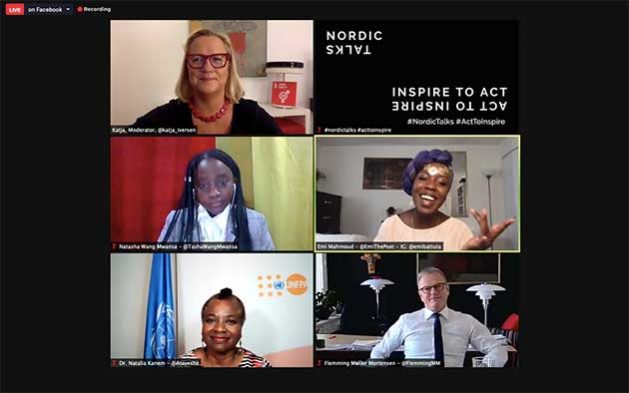
Nordic Talk moderator Katja Iversen shown here with Natasha Wang Mwansa, Emi Mahmoud, Dr Natalia Kanem and Flemming Møller Mortensen during a recent Nordic Talks webinar. Credit: Shuprova Tasneem

DHAKA and NEW YORK, Jun 4 2021 (IPS) – Every two minutes, a girl or woman dies from pregnancy or childbirth-related complications, including unsafe abortions. Every year, around 12 million girls are married while in their childhoods. An additional 10 million are now at risk of child marriage due to the Covid-19 pandemic.


In this context, the most recent Nordic Talk—a high-level debate on bodily autonomy and sexual and reproductive health and rights (SRHR) as a cornerstone of gender equality, aptly titled “Let’s Talk About Sex” — could not have come at a better time.

Moderator Katja Iversen, Dane of the Year (2018) and former CEO of Women Deliver, kicked off the discussion by focusing on the close link between bodily autonomy, gender equality, economic growth, and a healthy planet.

In an exclusive interview with IPS, Iversen said it was clear that “bodily autonomy for girls and women—in all their rich diversity—is political, social, economic and health-related.”

Women needed to have power and agency over their “bodies, fertility, and future, living a life free of violence and coercion in both the private and public sphere. It ties into norms, structure, systems – and if we want equity and health for all, we need to address all of it.”

Emi Mahmoud, two-time World Champion Poet and Goodwill Ambassador for the UNHCR, set the tone for the Nordic Talk with her emotive poetry reflecting women’s experiences in patriarchal societies, asking: “What survivor hasn’t had her struggle made spectacle?”

The three other panellists agreed that the right to control their bodies was a fundamental aspect of women’s rights and that gender equality was an essential part of the sustainable development agenda.

As Dr Natalia Kanem, Executive Director of the UNFPA, explained that “(women’s) freedom over her own body means freedom of choice”, and that all the data points towards how investment in SRHR could be the first step to empowering women to “ultimately contribute to sustainable development.”

It was critical that SRHR was adequately resourced – but warned these would be in short supply because of the COVID pandemic recovery plans.

“Part of the financing challenge is what we abbreviate as political will. It actually does not cost a lot for the agenda for SRHR to be a reality by 2030. It would take $26 billion a year to end the unmet need for contraception and to stop mothers dying at birth, many of whom were too young to be pregnant, but resources are going to be a challenge now with Covid having affected the world economies.”

While Flemming Møller Mortensen, Danish Minister for International and Nordic Development and Nordic Cooperation, expressed optimism regarding resources for SRHR now that “the US is back on track” and the global gag rule had been revoked. He was worried about a growing conservatism and pushback against women’s rights, particularly in the pandemic’s wake.

Iversen told IPS the cuts in various countries could be devastating.

“UNFPA estimates that with the $180 million the UK wants to withdraw from the Supplies Partnership, UNFPA could have helped prevent around 250,000 maternal and child deaths, 14.6 million unintended pregnancies and 4.3 million unsafe abortions. We will need foundations and other donor countries to step up, and we will need national government step up and step in and ensure that their national budgets reflect and fill the SRHR needs.”

She expressed concern that women on COVID-19 decision-making bodies were unrepresented.

“Less than 25% of national COVID-19 decision-making bodies have women included. It is too easy to cut resources from people who are not at the decision-making tables,” she said. “We urgently need to get a lot more women into leadership, including of the COVID-19 response and recovery efforts. All evidence shows that when more women are included in decision-making, there is a more holistic approach and both societies and people fare better.”

This call for inclusivity, not just for women but for the youth, was strongly echoed by adolescent sexual and reproductive health rights expert Natasha Wang Mwansa.

“So many commitments have been made by so many countries, yet there is no meaningful progress or accountability, and young people are not involved when making these decisions,” Mwansa said. “Young people are here as partners, but we are also here to take charge. From making choices over our own bodies to choices on our national budgets, we are ready to be part of these decisions.”

To deal with challenges in providing access to SRHR, Kanem stressed the importance of gender-disaggregated data for planning. She added that despite the hurdles, she was hopeful about the future because “young people and women are not waiting to make the case and show solidarity and understanding when it comes to racism or issues of discrimination and equity that divide us.”

Iversen echoed this optimism in her IPS interview.

“It gives me hope that comprehensive sexual and reproductive health services are included in the roadmap for Universal Health Coverage, in the Global Action Plan for Healthy Lives and Well-being, and latest in the Generation Equality Forum blueprint,” she said.

“Civil society has played a key role in ensuring this with good arguments, data and a lot of tenacity. But words in the big global documents about Health For All is one thing; gender equality and women’s rights, if it has to matter, it has to manifest in concrete action.”

The conversation rounded off with recommendations and commitments from the panellists: Mwansa stressed more investments in youth-run organisations and more social accountability from decision-makers; Mortensen asked for governments to be held accountable and for youth voices to be heard; and Kanem reaffirmed the UNFPA’s goal to put family planning in the hands of women as a means of empowerment, to end preventable deaths in pregnant women and girls, and change fundamental attitudes to end gender-based violence.

In her final comments to IPS, Iversen also stressed the importance of SRHR as a means of empowerment.

“Study after study shows that it pays to invest in girls, women and SRHR – socially, economically and health-wise. But we cannot look at SRHR alone; we need a full gender lens to the COVID response and recovery and development in general,” she said.

“And if we want to see positive change, we have to put girls and women front and centre of coronavirus response and recovery efforts, just as we, in general, need to see many more women in political and economic leadership.”

The Nordic Council of Ministers supports the Nordic Talks, and “Let’s Talk about Sex” was organised in partnership with UNFPA, the Danish Ministry of Foreign Affairs, Generation Equality, the Danish Family Planning Association, and Mind your Business, as a lead up to the Paris Generation Equality Forum.

  Source