The World Is Melting Down and the Cause is Corruption- The G20 Needs to Take Action

Civil Society, Economy & Trade, Global, Headlines

Opinion

The G20 needs to strengthen regulatory authorities across its membership and expand sanctions for violating Anti-Money Laundering requirements.

WASHINGTON DC, Jul 1 2022 (IPS) – The G20 is meeting again next week in Indonesia for the second time this year- at a moment when the world is facing the most difficult economic, political and social challenges for decades.


At their core, these problems are driven by corruption- from the “weaponization” of graft by Russia in Ukraine to the lack of regulation of the enablers of corruption in G20 countries such as the UK. This malfeasance costs lives and livelihoods- and is directly responsible for everything from energy black-outs to food and fuel shortages.

Critical decisions are being made by the G20 about the ways that governments can collectively manage what is now considered a significant transnational threat to peace and prosperity. But despite the earnest anti-corruption commitments made by G20 countries annually, follow-up and delivery on these commitments is a challenge.

Despite the earnest anti-corruption commitments made by G20 countries annually, follow-up and delivery on these commitments is a challenge

Civil society has to make its voice heard on these issues now, before it is too late. The Civil-20 (C20)– which we Co-Chair- engages the G20 on behalf of civil society. Over the past several months we have collectively gathered ideas from civil society around the world related to five central corruption challenges on which the G20 must take action immediately: Anti-Money Laundering (AML) and asset recovery; beneficial ownership transparency; countering corruption in the energy transition; open contracting; and the transparency and integrity of corporations.

This is what the C20 members are telling the G20 it needs to do now. First, effective anti-money laundering efforts are key to detecting illicit financial flows from corrupt activities in countries like Russia.

The G20 needs to strengthen regulatory authorities across its membership and expand sanctions for violating AML requirements, in particular for large financial institutions and what are called Designated Non-Financial Businesses and Professions (DNFBPs) that facilitate illicit financial flows (such as lawyers or accountants).

Similarly, when assets are returned they need to be aligned to GFAR principles, including through the engagement of civil society and community groups to support the transparency of this process.

Second, the G20 has committed to lead by example on beneficial ownership transparency (the real ownership of companies) and has the opportunity to strengthen this commitment by strengthening G20 High-Level Principles on Beneficial Ownership Transparency in line with improved global standards, including those recommended by the Financial Action Task Force (FATF).

One challenge is integrating data and G20 member countries should also implement the Beneficial Ownership Data Standard to share and analyze data more easily- which would dramatically improve the ability of citizens to understand who owns companies that might be involved in corruption.

Third, there is massive amounts of corruption as the world transitions to clean energy, but corruption risks in the renewables sector are not unique- they follow many of the same patterns we have seen in infrastructure and the extractives industries, for example. As more and more countries transition towards renewable energy, it is important to prioritize resource governance in ways that align with existing agreed-upon high-level principles and best practices.

The G20 must regulate lobbying activities around clean energy- including through lobbying registries; enforce a strong and credible sanctions regime, including public databases of companies banned from tenders; and support independent civil society monitoring of large-scale energy projects through integrity pacts and other similar vehicles that help to ensure transparent procurement.

Fourth, government contracting is rife with collusion, nepotism and graft. The G20 must open up contracting processes and strengthen open data infrastructure by sharing information across the whole cycle of procurement for projects- from planning to contracting to awards and implementation.

Governments must also publish high-quality open data that is readily machine-readable so it can be used across multiple systems. This does not mean starting from scratch- there are standards for this, like the Open Contracting Data Standard (OCDS) and the Open Contracting for Infrastructure Data Standard (OC4IDS). It is a question of commitment.

Finally, not all G20 member countries are party to the OECD Anti-Bribery Convention and private sector bribery is not criminalized in every G20 member country as per the UNCAC provisions. This means companies can legally offer bribes to win contracts, and this has to be outlawed immediately.

The EU Directive for Corporate Responsibility Due Diligence includes requirements that the G20 should adopt immediately- for instance to identify the actual or potential adverse human rights impacts of corruption; to prevent or mitigate the potential impacts of bribery; and improve public communication around due diligence processes.

G20 members should also regulate the “revolving doors” through which government and business people can engage in favoritism; and invest in better partnerships between entities working on these issues such as regulators, law enforcement agencies and civil society.

This might all seem quite technical- but the negative impacts of corruption are not felt in government meeting rooms, but in the everyday lives of citizens. The G20 has for too long made excuses for the lack of action on this topic, and we are now seeing the devastating effects. Unless action is taken now, it will be too late.

These ideas were gathered through a consultative process as part of the C20 Anti-Corruption Working Group (ACWG), and represent the inputs of many civil society organizations.

Blair Glencorse is Executive Director of Accountability Lab and is Co-Chair of the C20 ACWG.

Sanjeeta Pant is the Global Programs and Learning Manager at the Lab. Follow the Lab on Twitter @accountlab.

  Source

Healthy Planet Needs ‘Ocean Action’ from Asian and Pacific Countries

Asia-Pacific, Climate Action, Climate Change, Conferences, Development & Aid, Economy & Trade, Environment, Headlines, Poverty & SDGs, Sustainability, TerraViva United Nations

Opinion

BANGKOK, Thailand, Jun 27 2022 (IPS) – As the Second Global Ocean Conference opens today in Lisbon, governments in Asia and the Pacific must seize the opportunity to enhance cooperation and solidarity to address a host of challenges that endanger what is a lifeline for millions of people in the region.


Armida Salsiah Alisjahbana

If done right ocean action will also be climate action but this will require working in concert on a few fronts.

First, we must invest in and support science and technology to produce key solutions. Strengthening science-policy interfaces to bridge practitioners and policymakers contributes to a sound understanding of ocean-climate synergies, thereby enabling better policy design, an important priority of the Indonesian Presidency of the G20 process. Additionally policy support tools can assist governments in identifying and prioritizing actions through policy and SDG tracking and scenarios development.

We must also make the invisible visible through ocean data: just three of ten targets for the goal on life below water are measurable in Asia and the Pacific. Better data is the foundation of better policies and collective action. The Global Ocean Accounts Partnership (GOAP) is an innovative multi-stakeholder collective established to enable countries and other stakeholders to go beyond GDP and to measure and manage progress towards ocean sustainable development.

Solutions for low-carbon maritime transport are also a key part of the transition to decarbonization by the middle of the century. Countries in Asia and the Pacific recognized this when adopting a new Regional Action Programme last December, putting more emphasis on such concrete steps as innovative shipping technologies, cooperation on green shipping corridors and more efficient use of existing port infrastructure and facilities to make this ambition a reality.

Finally, aligning finance with our ocean, climate and broader SDG aspirations provides a crucial foundation for all of our action. Blue bonds are an attractive instrument both for governments interested in raising funds for ocean conservation and for investors interested in contributing to sustainable development in addition to obtaining a return for their investment.

These actions and others are steps towards ensuring the viability of several of the region’s key ocean-based economic sectors, such as seaborne trade, tourism and fisheries. An estimated 50 to 80 per cent of all life on Earth is found under the ocean surface. Seven of every 10 fish caught around the globe comes from Pacific waters. And we know that the oceans and coasts are also vital allies in the fight against climate change, with coastal systems such as mangroves, salt marshes and seagrass meadows at the frontline of climate change, absorbing carbon at rates of up to 50 times those of the same area of tropical forest.

But the health of the oceans in Asia and the Pacific is in serious decline: rampant pollution, destructive and illegal fishing practices, inadequate marine governance and continued urbanization along coastlines have destroyed 40 per cent of the coral reefs and approximately 60 per cent of the coastal mangroves, while fish stocks continue to decline and consumption patterns remain unsustainable.

These and other pressures exacerbate climate-induced ocean acidification and warming and weaken the capacity of oceans to mitigate the impacts of climate change. Global climate change is also contributing to sea-level rise, which affects coastal and island communities severely, resulting in greater disaster risk, internal displacement and international migration.

To promote concerted action, ESCAP, in collaboration with partner UN agencies, provides a regional platform in support of SDG14, aligned within the framework of the UN Decade of Ocean Science for Sustainable Development (2021-2030). Through four editions so far of the Asia-Pacific Day for the Ocean, we also support countries in identifying and putting in place solutions and accelerated actions through regional dialogue and cooperation.

It is abundantly clear there can be no healthy planet without a healthy ocean. Our leaders meeting in Lisbon must step up efforts to protect the ocean and its precious resources and to build sustainable blue economies.

Armida Salsiah Alisjahbana is an Under-Secretary-General of the United Nations and Executive Secretary of the Economic and Social Commission for Asia and the Pacific (ESCAP)

IPS UN Bureau


Employee-run Companies, Part of the Landscape of an Argentina in Crisis

Active Citizens, Civil Society, Cooperatives, Economy & Trade, Editors’ Choice, Featured, Headlines, Labour, Latin America & the Caribbean, Regional Categories, TerraViva United Nations, Trade & Investment

Labour

A group of Farmacoop workers stand in the courtyard of their plant in Buenos Aires. Members of the Argentine cooperative proudly say that theirs is the first laboratory in the world to be recovered by its workers. CREDIT: Courtesy of Pedro Pérez/Tiempo Argentino.

A group of Farmacoop workers stand in the courtyard of their plant in Buenos Aires. Members of the Argentine cooperative proudly say that theirs is the first laboratory in the world to be recovered by its workers. CREDIT: Courtesy of Pedro Pérez/Tiempo Argentino.

BUENOS AIRES, May 24 2022 (IPS) – “All we ever wanted was to keep working. And although we have not gotten to where we would like to be, we know that we can,” says Edith Pereira, a short energetic woman, as she walks through the corridors of Farmacoop, in the south of the Argentine capital. She proudly says it is “the first pharmaceutical laboratory in the world recovered by its workers.”


Pereira began to work in what used to be the Roux Ocefa laboratory in Buenos Aires in 1983. At its height it had more than 400 employees working two nine-hour shifts, as she recalls in a conversation with IPS.

But in 2016 the laboratory fell into a crisis that first manifested itself in delays in the payment of wages and a short time later led to the owners removing the machinery, and emptying and abandoning the company.

The workers faced up to the disaster with a struggle that included taking over the plant for several months and culminated in 2019 with the creation of Farmacoop, a cooperative of more than 100 members, which today is getting the laboratory back on its feet.

In fact, during the worst period of the pandemic, Farmacoop developed rapid antigen tests to detect COVID-19, in partnership with scientists from the government’s National Council for Scientific and Technical Research (Conicet), the leading organization in the sector.

Farmacoop is part of a powerful movement in Argentina, as recognized by the government, which earlier this month launched the first National Registry of Recovered Companies (ReNacER), with the aim of gaining detailed knowledge of a sector that, according to official estimates, comprises more than 400 companies and some 18,000 jobs.

The presentation of the new Registry took place at an oil cooperative that processes soybeans and sunflower seeds on the outskirts of Buenos Aires, built on what was left of a company that filed for bankruptcy in 2016 and laid off its 126 workers without severance pay.

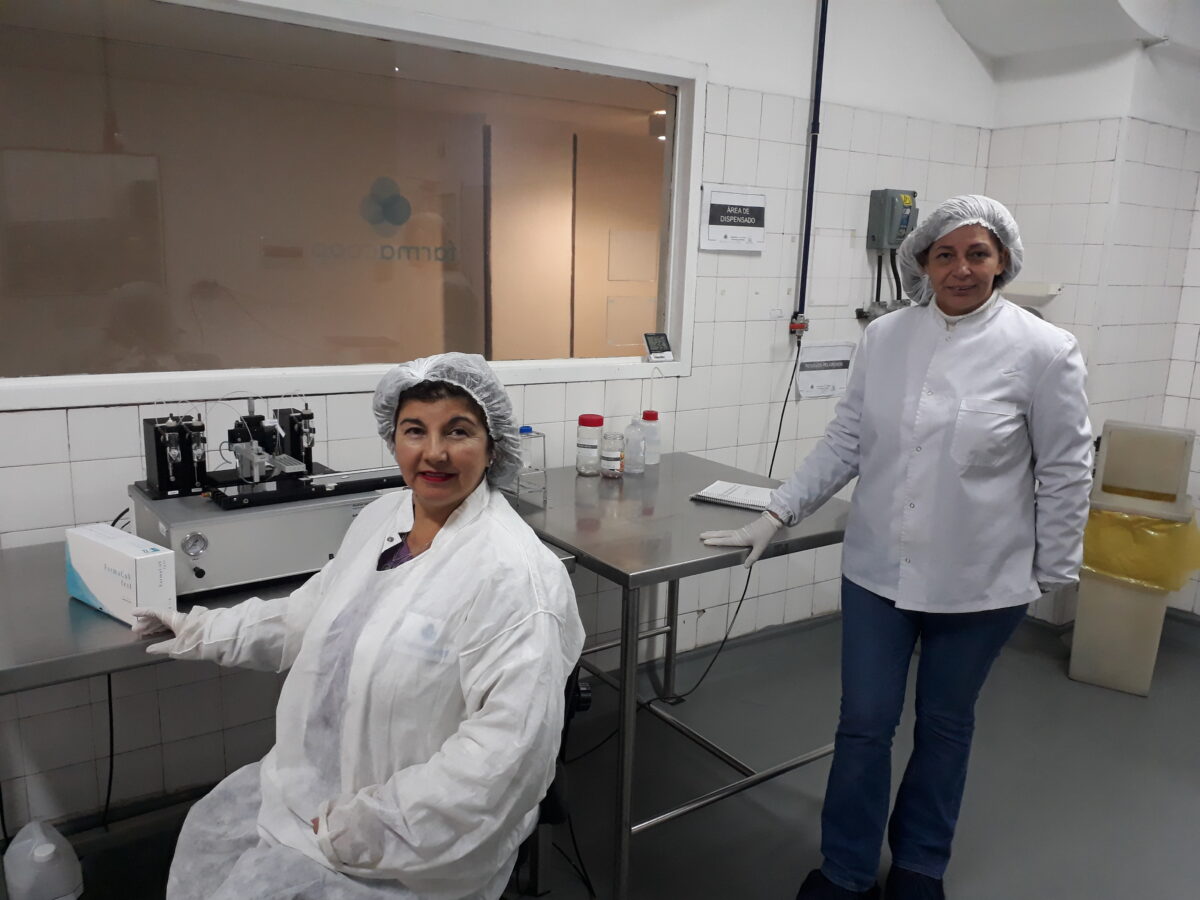
Edith Pereira (seated) and Blácida Benitez, two of the members of Farmacoop, a laboratory recovered by its workers in Buenos Aires, are seen here in the production area. This is the former Roux Ocefa laboratory, which went bankrupt in the capital of Argentina and was left owing a large amount of back wages to its workers. CREDIT: Daniel Gutman/IPS

Edith Pereira (seated) and Blácida Benitez, two of the members of Farmacoop, a laboratory recovered by its workers in Buenos Aires, are seen here in the production area. This is the former Roux Ocefa laboratory, which went bankrupt in the capital of Argentina and was left owing a large amount of back wages to its workers. CREDIT: Daniel Gutman/IPS

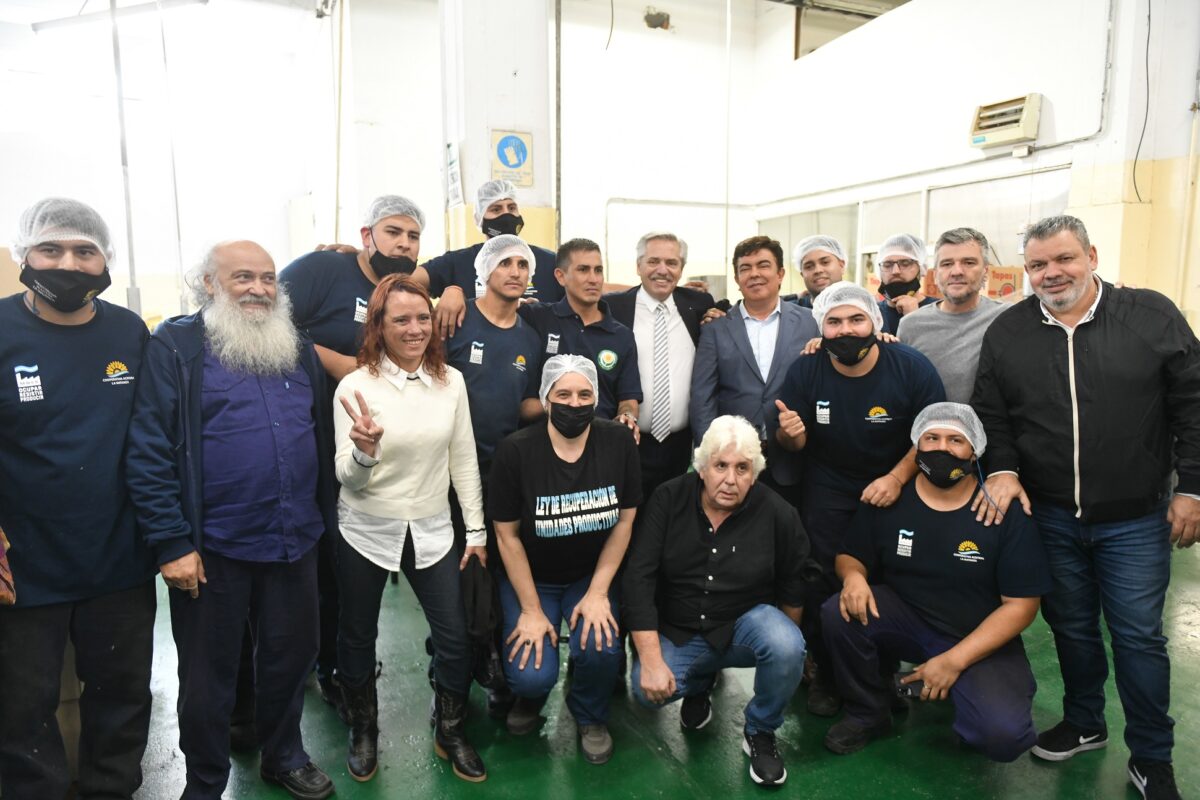
The event was led by President Alberto Fernández, who said that he intends to “convince Argentina that the popular economy exists, that it is here to stay, that it is valuable and that it must be given the tools to continue growing.”

Fernández said on that occasion that the movement of worker-recuperated companies was born in the country in 2001, as a result of the brutal economic and social crisis that toppled the presidency of Fernando de la Rúa.

“One out of four Argentines was out of work, poverty had reached 60 percent and one of the difficulties was that companies were collapsing, the owners disappeared and the people working in those companies wanted to continue producing,” he said.

“That’s when the cooperatives began to emerge, so that those who were becoming unemployed could get together and continue working, sometimes in the companies abandoned by their owners, sometimes on the street,” the president added.

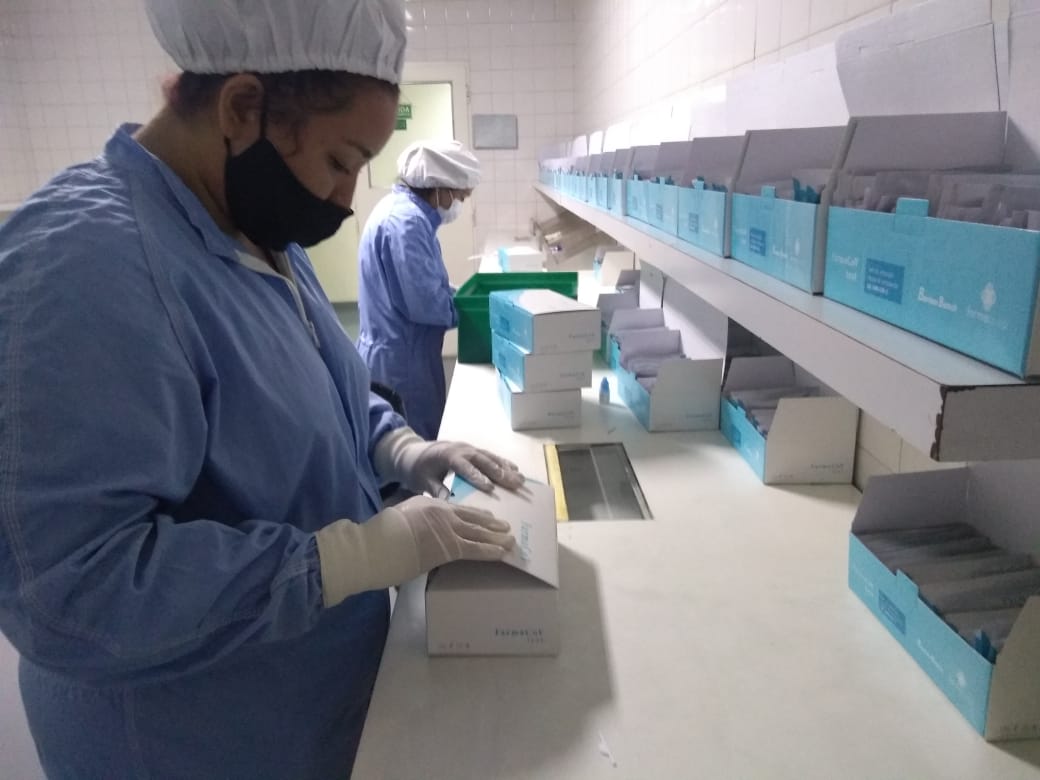
Two technicians package products at the Farmacoop laboratory, a cooperative with which some of the workers of the former bankrupt company undertook its recovery through self-management, a formula that is growing in Argentina in the face of company closures during successive economic crises. CREDIT: Courtesy of Farmacoop

Two technicians package products at the Farmacoop laboratory, a cooperative with which some of the workers of the former bankrupt company undertook its recovery through self-management, a formula that is growing in Argentina in the face of company closures during successive economic crises. CREDIT: Courtesy of Farmacoop

A complex social reality

More than 20 years later, this South American country of 45 million people finds itself once again in a social situation as severe or even more so than back then.

The new century began with a decade of growth, but today Argentines have experienced more than 10 years of economic stagnation, which has left its mark.

Poverty, according to official data, stands at 37 percent of the population, in a context of 60 percent annual inflation, which is steadily undermining people’s incomes and hitting the most vulnerable especially hard.

The latest statistics from the Ministry of Labor, Employment and Social Security indicate that 12.43 million people are formally employed, which in real terms – due to the increase of the population – is less than the 12.37 million jobs that were formally registered in January 2018.

“I would say that in Argentina we have been seeing the destruction of employment and industry for 40 years, regardless of the orientation of the governments. That is why we understand that worker-recovered companies, as a mechanism for defending jobs, will continue to exist,” says Bruno Di Mauro, the president of the Farmacoop cooperative.

“It is a form of resistance in the face of the condemnation of exclusion from the labor system that we workers suffer,” he adds to IPS.

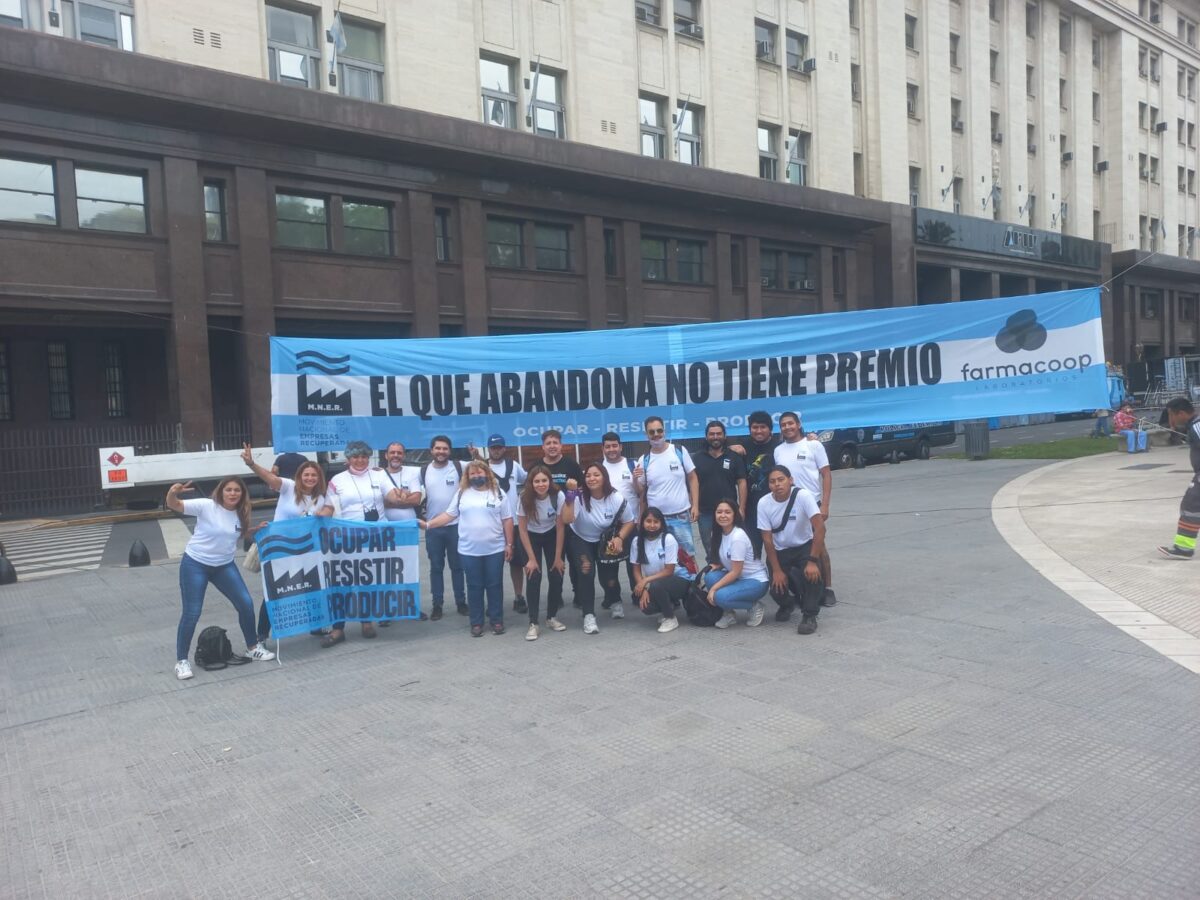
"He who abandons gets no prize" reads the banner with which part of the members of the Farmacoop cooperative were demonstrating in the Plaza de Mayo in downtown Buenos Aires, during the long labor dispute with the former owners who drove the pharmaceutical company into bankruptcy. The workers managed to recover it in 2019. CREDIT: Courtesy of Bruno Di Mauro/Farmacoop.

“He who abandons gets no prize” reads the banner with which part of the members of the Farmacoop cooperative were demonstrating in the Plaza de Mayo in downtown Buenos Aires, during the long labor dispute with the former owners who drove the pharmaceutical company into bankruptcy. The workers managed to recover it in 2019. CREDIT: Courtesy of Bruno Di Mauro/Farmacoop.

Today Farmacoop has three active production lines, including Aqualane brand moisturizing cream, used for decades by Argentines for sunburn. The cooperative is currently in the cumbersome process of seeking authorizations from the health authority for other products.

“When I look back, I think that we decided to form the cooperative and recover the company without really understanding what we were getting into. It was a very difficult process, in which we had colleagues who fell into depression, who saw pre-existing illnesses worsen and who died,” Di Mauro says.

“But we learned that we workers can take charge of any company, no matter how difficult the challenge. We are not incapable just because we are part of the working class,” he adds.

Farmacoop’s workers currently receive a “social wage” paid by the State, which also provided subsidies for the purchase of machinery.

The plant, now under self-management, is a gigantic old 8,000-square-meter building with meeting rooms, laboratories and warehouse areas where about 40 people work today, but which was the workplace of several hundred workers in its heyday.

It is located between the neighborhoods of Villa Lugano and Mataderos, in an area of factories and low-income housing mixed with old housing projects, where the rigors of the successive economic crises can be felt on almost every street, with waste pickers trying to eke out a living.

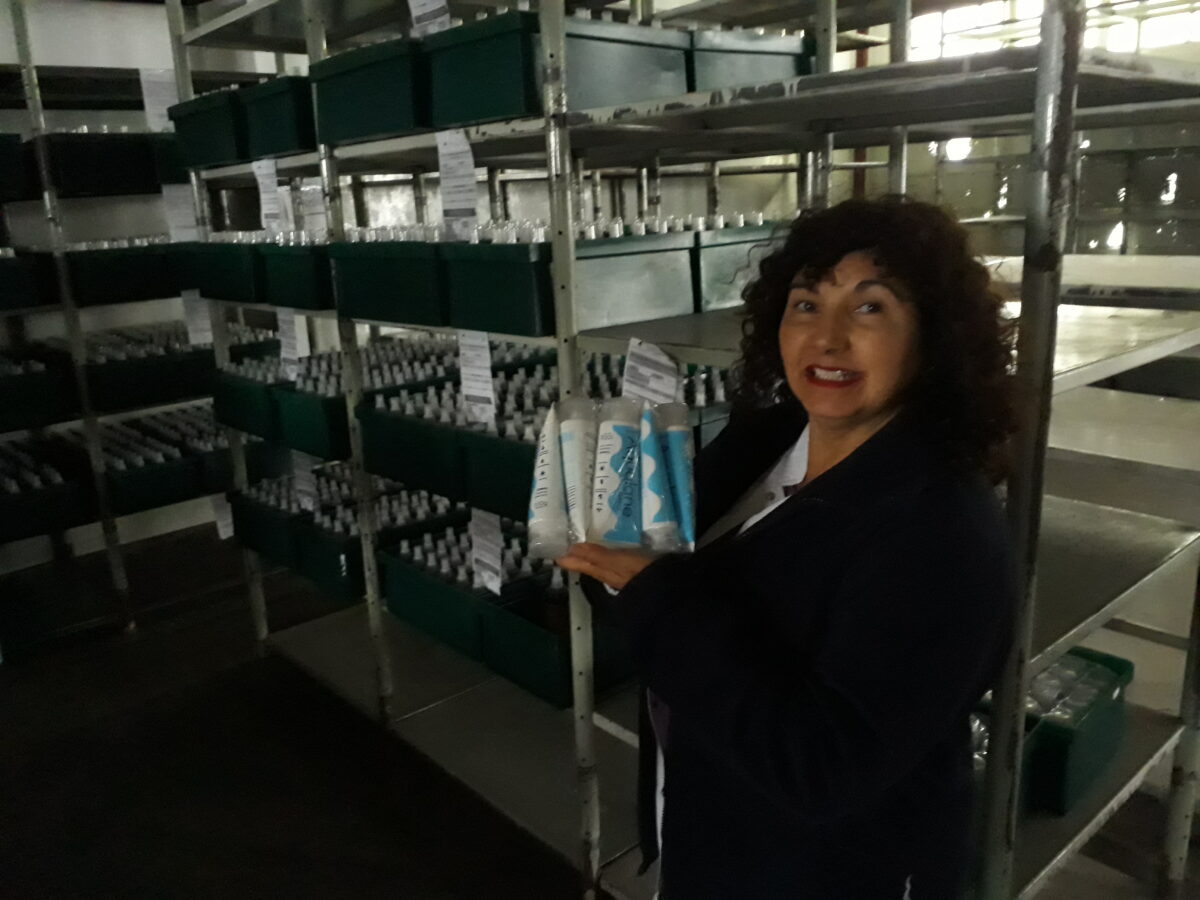
Edith Pereira shows the Aqualane brand moisturizing cream, well known in Argentina, that today is produced by the workers of the Farmacoop cooperative, which has two industrial plants in Buenos Aires, recovered and managed by the workers. CREDIT: Daniel Gutman/IPS

Edith Pereira shows the Aqualane brand moisturizing cream, well known in Argentina, that today is produced by the workers of the Farmacoop cooperative, which has two industrial plants in Buenos Aires, recovered and managed by the workers. CREDIT: Daniel Gutman/IPS

“When we entered the plant in 2019, everything was destroyed. There were only cardboard and paper that we sold to earn our first pesos,” says Blácida Martínez.

She used to work in the reception and security section of the company and has found a spot in the cooperative for her 24-year-old son, who is about to graduate as a laboratory technician and works in product quality control.

A new law is needed

Silvia Ayala is the president of the Mielcitas Argentinas cooperative, which brings together 88 workers, mostly women, who run a candy and sweets factory on the outskirts of Buenos Aires, where they lost their jobs in mid-2019.

“Today we are grateful that thanks to the cooperative we can put food on our families’ tables,” she says. “There was no other option but to resist, because reinserting ourselves in the labor market is very difficult. Every time a job is offered in Argentina, you see lines of hundreds of people.”

Ayala is also one of the leaders of the National Movement of Recovered Companies, active throughout the country, which is promoting a bill in Congress to regulate employee-run companies, presented in April by the governing Frente de Todos.

“A law would be very important, because when owners abandon their companies we need the recovery to be fast, and we need the collaboration of the State; this is a reality that is here to stay,” says Ayala.

Argentine President Alberto Fernández stands with workers of the Cooperativa Aceitera La Matanza on May 5, when the government presented the Registry of Recovered Companies, which aims to formalize worker-run companies. CREDIT: Casa Rosada

Argentine President Alberto Fernández stands with workers of the Cooperativa Aceitera La Matanza on May 5, when the government presented the Registry of Recovered Companies, which aims to formalize worker-run companies. CREDIT: Casa Rosada

The Ministry of Social Development states that the creation of the Registry is aimed at designing specific public policies and tools to strengthen the production and commercialization of the sector, as well as to formalize workers.

The government defines “recovered” companies as those economic, productive or service units that were originally privately managed and are currently run collectively by their former employees.

Although the presentation was made this month, the Registry began operating in March and has already listed 103 recovered companies, of which 64 belong to the production sector and 35 to the services sector.

The first data provide an indication of the diversity of the companies in terms of size, with the smallest having six workers and the largest 177.

  Source

Indigenous Women in Mexico Take United Stance Against Inequality

Civil Society, Cooperatives, Development & Aid, Economy & Trade, Editors’ Choice, Featured, Food and Agriculture, Gender, Headlines, Human Rights, Indigenous Rights, Latin America & the Caribbean, Poverty & SDGs, Regional Categories, TerraViva United Nations, Women & Climate Change, Women & Economy

Women & Economy

Every other Tuesday, a working group of Mayan women meets to review the organization and progress of their food saving and production project in Uayma, in the state of Yucatán in southeastern Mexico. CREDIT: Courtesy of the Ko'ox Tani Foundation

Every other Tuesday, a working group of Mayan women meets to review the organization and progress of their food saving and production project in Uayma, in the state of Yucatán in southeastern Mexico. CREDIT: Courtesy of the Ko’ox Tani Foundation

UAYMA, Mexico , Apr 26 2022 (IPS) – Every other Tuesday at 5:00 p.m. sharp, a group of 26 Mexican women meet for an hour to discuss the progress of their work and immediate tasks. Anyone who arrives late must pay a fine of about 25 cents on the dollar.


The collective has organized in the municipality of Uayma (which means “Not here” in the Mayan language) to learn agroecological practices, as well as how to save money and produce food for family consumption and the sale of surpluses.

“We have to be responsible. With savings we can do a little more,” María Petul, a married Mayan indigenous mother of two and a member of the group “Lool beh” (“Flower of the road” in Mayan), told IPS in this municipality of just over 4,000 inhabitants, 1,470 kilometers southeast of Mexico City in the state of Yucatán, on the Yucatán peninsula.

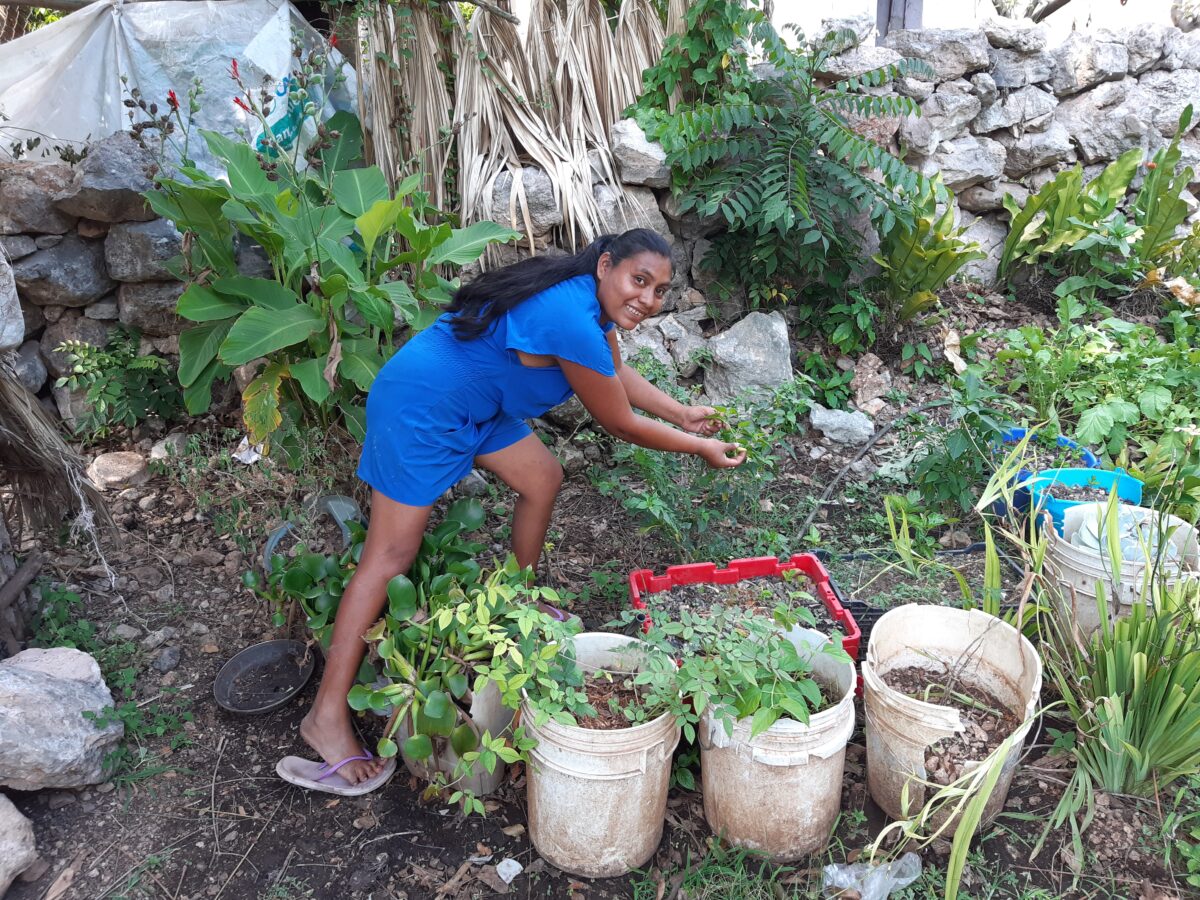
The home garden “gives me enough to eat and sell, it helps me out,” said Petul as she walked through her small garden where she grows habanero peppers (Capsicum chinense, traditional in the area), radishes and tomatoes, surrounded by a few trees, including a banana tree whose fruit will ripen in a few weeks and some chickens that roam around the earthen courtyard.

The face of Norma Tzuc, who is also married with two daughters, lights up with enthusiasm when she talks about the project. “I am very happy. We now have an income. It’s exciting to be able to help my family. Other groups already have experience and tell us about what they’ve been doing,” Tzuc told IPS.

The two women and the rest of their companions, whose mother tongue is Mayan, participate in the project “Women saving to address climate change”, run by the non-governmental Ko’ox Tani Foundation (“Let’s Go Ahead”, in Mayan), dedicated to community development and social inclusion, based in Merida, the state capital.

This phase of the project is endowed with some 100,000 dollars from the Commission for Environmental Cooperation (CEC), the non-binding environmental arm of the North American Free Trade Agreement (NAFTA), formed in 1994 by Canada, the United States and Mexico and replaced in 2020 by another trilateral agreement.

The initiative got off the ground in February and will last two years, with the aim of training some 250 people living in extreme poverty, mostly women, in six locations in the state of Yucatán.

The maximum savings for each woman in the group is about 12 dollars every two weeks and the minimum is 2.50 dollars, and they can withdraw the accumulated savings to invest in inputs or animals, or for emergencies, with the agreement of the group. Through the project, the women will receive seeds, agricultural inputs and poultry, so that they can install vegetable gardens and chicken coops on their land.

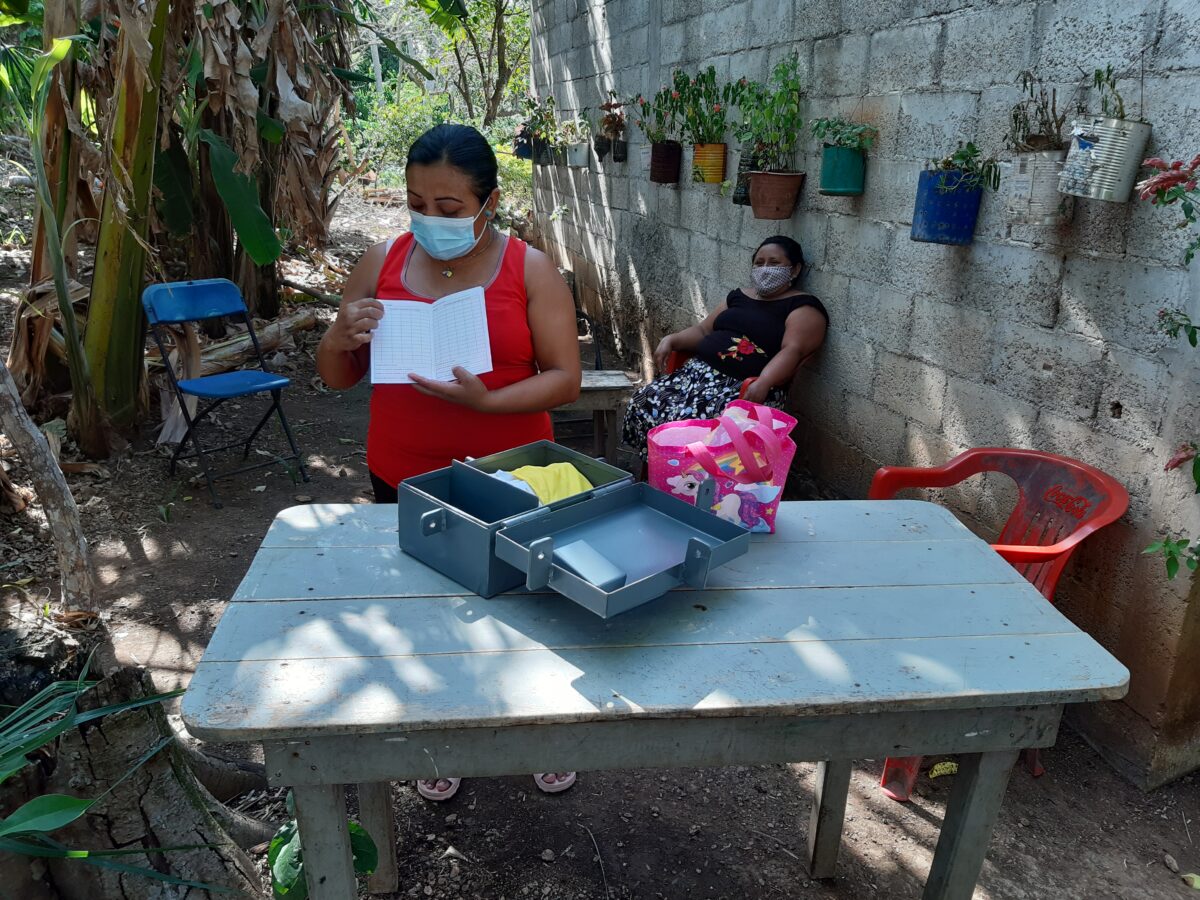
The women write down the quotas in a white notebook and deposit the savings in a gray box, kept in the house of the group’s president.

José Torre, project director of the Ko’ox Tani Foundation, explained that the main areas of entrepreneurship are: community development, food security, livelihoods and human development.

“What we have seen over time is that the savings meetings become a space for human development, in which they find support and solidarity from their peers, make friends and build trust,” he told IPS during a tour of the homes of some of the savings group participants in Uayma.

The basis for the new initiative in this locality is a similar program implemented between 2018 and 2021 in other Yucatecan municipalities, in which the organization worked with 1400 families.

María Petul, a Mayan indigenous woman, plants chili peppers, tomatoes, radishes and medicinal herbs in the vegetable garden in the courtyard of her home in Uayma, in the southeastern Mexican state of Yucatán. CREDIT: Emilio Godoy/IPS

María Petul, a Mayan indigenous woman, plants chili peppers, tomatoes, radishes and medicinal herbs in the vegetable garden in the courtyard of her home in Uayma, in the southeastern Mexican state of Yucatán. CREDIT: Emilio Godoy/IPS

Unequal oasis

Yucatan, a region home to 2.28 million people, suffers from a high degree of social backwardness, with 34 percent of the population living in moderate poverty, 33 percent suffering unmet needs, 5.5 percent experiencing income vulnerability and almost seven percent living in extreme poverty.

The COVID-19 pandemic that hit this Latin American country in February 2020 exacerbated these conditions in a state that depends on agriculture, tourism and services, similar to the other two states that make up the Yucatán Peninsula: Campeche and Quintana Roo.

Inequality is also a huge problem in the state, although the Gini Index dropped from 0.51 in 2014 to 0.45, according to a 2018 government report, based on data from 2016 (the latest year available). The Gini coefficient, where 1 indicates the maximum inequality and 0 the greatest equality, is used to calculate income inequality.

The situation of indigenous women is worse, as they face marginalization, discrimination, violence, land dispossession and lack of access to public services.

More than one million indigenous people live in the state.

Women participating in a project funded by the North American Commission for Environmental Cooperation record their savings in a white notebook and deposit them in a gray box. Mayan indigenous woman Norma Tzuc belongs to a group taking part in the initiative in Uayma, in the southeastern Mexican state of Yucatán. CREDIT: Emilio Godoy/IPS

Women participating in a project funded by the North American Commission for Environmental Cooperation record their savings in a white notebook and deposit them in a gray box. Mayan indigenous woman Norma Tzuc belongs to a group taking part in the initiative in Uayma, in the southeastern Mexican state of Yucatán. CREDIT: Emilio Godoy/IPS

Climate crisis, yet another vulnerability

Itza Castañeda, director of equity at the non-governmental World Resources Institute (WRI), highlights the persistence of structural inequalities in the peninsula that exacerbate the effects of the climate crisis.

“In the three states there is greater inequality between men and women. This stands in the way of women’s participation and decision-making. Furthermore, the existing evidence shows that there are groups in conditions of greater vulnerability to climate impacts,” she told IPS from the city of Tepoztlán, near Mexico City.

She added that “climate change accentuates existing inequalities, but a differentiated impact assessment is lacking.”

Official data indicate that there are almost 17 million indigenous people in Mexico, representing 13 percent of the total population, of which six million are women.

Of indigenous households, almost a quarter are headed by women, while 65 percent of indigenous girls and women aged 12 and over perform unpaid work compared to 35 percent of indigenous men – a sign of the inequality in the system of domestic and care work.

To add to their hardships, the Yucatan region is highly vulnerable to the effects of the climate crisis, such as droughts, devastating storms and rising sea levels. In June 2021, tropical storm Cristobal caused the flooding of Uayma, where three women’s groups are operating under the savings system.

For that reason, the project includes a risk management and hurricane early warning system.

The Mexican government is building a National Care System, but the involvement of indigenous women and the benefits for them are still unclear.

Petul looks excitedly at the crops planted on her land and dreams of a larger garden, with more plants and more chickens roaming around, and perhaps a pig to be fattened. She also thinks about the possibility of emulating women from previous groups who have set up small stores with their savings.

“They will lay eggs and we can eat them or sell them. With the savings we can also buy roosters, in the market chicks are expensive,” said Petul, brimming with hope, who in addition to taking care of her home and family sells vegetables.

Her neighbor Tzuc, who until now has been a homemaker, said that the women in her group have to take into account the effects of climate change. “It has been very hot, hotter than before, and there is drought. Fortunately, we have water, but we have to take care of it,” she said.

For his part, Torre underscored the results of the savings groups. The women “left extreme poverty behind. The pandemic hit hard, because there were families who had businesses and stopped selling. The organization gave them resilience,” he said.

In addition, a major achievement is that the households that have already completed the project continue to save, regularly attend meetings and have kept producing food.

  Source

Ukraine Shows Why the G20 Anti-Corruption Agenda Is More Important than Ever

Civil Society, Economy & Trade, Global, Headlines

Opinion

With the bloody war in Ukraine dragging on, can the G20 still justify procrastination on the global anti-corruption agenda?

With the bloody war in Ukraine dragging on, can the G20 still justify procrastination on the global anti-corruption agenda? Credit: Marianela Jarroud/IPS

WASHINGTON DC, Mar 25 2022 (IPS) – The world has quickly transitioned from a global health crisis to a geopolitical one, as the war in Ukraine rages into its second month. But the Russian invasion of Ukraine is just the latest in a long list of challenges that at their heart are either caused by or exacerbated by corruption.


Just this year, think of the protests in Sudan, the coup in Burkina Faso, the nationwide demonstrations in Kazakhstan, or the Portuguese elections, for example- all driven, one way or another, by graft.

While G20 countries have made progress within their national borders, there are often lax laws in offshore tax havens that are under their jurisdictions. Equally, beneficial ownership data should not just be open (to regulators and enforcement agencies), it should be public. Citizens and civil society everywhere should be able to monitor conflicts of interest or relationships between policymakers and corporations, free of charge

Now- countries including the US and Europe– are coming together to freeze the assets of Russian oligarchs, but this is not just about Putin’s kleptocracy. As world leaders meet at the G20 next week, it is imperative that they step-up further to fight corruption both at home and abroad.

The Civil-20 (C20), which engages the G20 on behalf of civil society, has been calling for increased accountability from world leaders on critical anti-corruption issues for a long time. The war in Ukraine has only reinforced the need for a focus on the priorities identified by the C20 this year.

First, combating money laundering and the recovery of stolen assets. There are numerous studies that indicate that as much as 85% of Russia’s GDP is laundered into countries including the UK and the US.

There are networks of enablers in Western countries that facilitate this process- from accountants, to lawyers to real estate agents (known as Designated Non-Financial Business and Professions (DNFBPs).

But according to the data collected by Accountability Lab for the G20 Anti-Corruption Commitments Tracker, not all G20 member countries are compliant with FATF recommendations on DNFBP due diligence.

Similarly, others do not have effective frameworks to disclose information on recovered assets. Recognizing the increased risks to anti-money laundering and asset recovery efforts from such omissions, the C20 has called for verified beneficial ownership data through public registers; and the assessment of the effectiveness of measures adopted by the G20 member countries including sanctions for non-compliance.

Second, countering corruption in the energy transition. The G20 Indonesian Presidency has included a sustainable energy transition as a priority issue for 2022. More and more countries, especially in Europe, are cutting ties with Russian energy supplies, which will lead to a more rapid shift of resources towards renewables- but the potential in this for corruption is huge.

Certain countries and energy companies have a variety of incentives to maintain the status quo in corrupt ways; while the supply chains for raw materials for renewable energy are also wide-open for illicit activities. G20 countries urgently need to better understand the level and types of corruption in renewables; and commit to providing transparent data around licensing contracts and budgets.

In this, grassroots civil society groups can be valuable allies by filling information gaps and closing feedback loops in communities affected by renewable energy related projects.

Third, the transparency and integrity of corporations. The recent sanctions against Russian oligarchs have renewed focus on corporate governance and how corporate compliance on issues like foreign bribery, corruption and conflict of interests- including in state owned enterprises and public private partnerships (PPP)- are effectively enforced.

For instance, the Foreign Corrupt Practices Act (FCPA) focuses on anti-bribery and internal controls- and is likely to be further enforced, particularly in countries with close ties to Russia.

But beyond this, G20 member countries must also live up to past commitments to strengthen transparency and integrity in business by criminalizing private sector bribery; enacting whistleblower policies in the private sector; and ensuring accounting and auditing standards to prohibit off-the-book accounts.

Fourth, beneficial ownership transparency. The level of secrecy used by Russian oligarchs to hide assets through shell companies, trusts, partnerships and foundations has been headline news. Concerns around beneficial ownership transparency data (the data on who really owns companies) is not new (see this call to action for example).

While G20 countries have made progress within their national borders, there are often lax laws in offshore tax havens that are under their jurisdictions. Equally, beneficial ownership data should not just be open (to regulators and enforcement agencies), it should be public. Citizens and civil society everywhere should be able to monitor conflicts of interest or relationships between policymakers and corporations, free of charge.

It still costs $40 to access beneficial ownership data in Indonesia for instance- making this far too expensive for the average citizen. All G20 countries should lead by example and commit to open, public beneficial ownership registers.

Finally, Open Contracting. The recent focus on how the Russian military may have misused procurement processes has sadly highlighted again the importance of due diligence and open data. Civil society has unequivocally called on G20 member countries to proactively disclose information at every step of public procurement processes, in line with Open Contracting Data Standards as well as the Open Contracting for Infrastructure Data Standard, and to increase audit and citizen oversight in public procurement.

These reforms are past due. At the same time, successful initiatives like Opentender.net in Indonesia show how civil society can partner with governments to ensure citizen led oversight and the transparency of public procurement.

The Russia-Ukraine crisis is a stark reminder of how corruption issues must be central to any discussion about the causes and solutions to geo-political problems. The C20 has already outlined for G20 leaders how to address these issues- they now have the responsibility to implement these reforms.

Even in peace-time, the economic and human costs of corruption are massive. With the bloody war in Ukraine dragging on, can the G20 still justify procrastination on the global anti-corruption agenda?

Blair Glencorse is Executive Director of the Accountability Lab and is the International Co-Chair of the Civil 20 Anti-Corruption Working Group in 2022.

Sanjeeta Pant is a Programs and Learning Manager at Accountability Lab and leads the G20 Anti-Corruption Commitments Tracker. Follow the Lab on Twitter @accountlab and the C20 @C20EG

  Source

Donors Must Rethink Africa’s Flagging Green Revolution, New Evaluation Shows (Commentary)

Africa, Civil Society, Development & Aid, Economy & Trade, Food and Agriculture, Food Security and Nutrition, Food Sustainability, Green Economy, Headlines, TerraViva United Nations, Trade & Investment

Opinion

BOSTON, Mar 23 2022 (IPS) • A scathing new analysis of the Alliance for a Green Revolution in Africa (AGRA) finds that the program is failing at its objective to increase food security on the continent, despite massive funding from the Bill & Melinda Gates Foundation and the US, UK, and German governments.


• On March 30, critics of AGRA will brief U.S. congressional aides about why they think it is doing more harm than good.

• As fertilizer and food prices spike with rising energy prices from the Russia-Ukraine war, African farmers and governments need the kind of resilient, low-cost alternatives that techniques like agroecology offer, a new opinion piece argues.

A critical new donor-funded evaluation of the Alliance for a Green Revolution in Africa (AGRA) has confirmed what African civil society and faith leaders have claimed: “AGRA did not meet its headline goal of increased incomes and food security for 9 million smallholders.”

The evaluation should be a wake up call, and not just for the private and bilateral donors that have bankrolled this 15-year-old effort to the tune of $1 billion. It should also rouse African governments to repurpose their agricultural subsidies from the Green Revolution package of commercial seeds and fertilizers to agroecology and other low-cost, low-input approaches. They have been providing as much as $1 billion per year for such input subsidies.

Failing Africa’s farmers

Carried out by consulting firm Mathematica, the evaluation confirms that the Green Revolution has failed to achieve AGRA’s stated goal to “catalyze a farming revolution in Africa.”

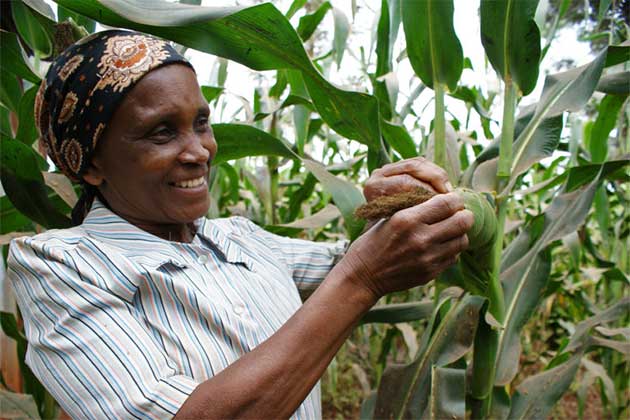
Wambui Mwihaki, a farmer from central Kenya, takes stock of her thriving maize crop following adoption of agroecology. Credit: David Njagi for Mongabay.

The assessment was funded by AGRA’s primary sponsor, the Bill & Melinda Gates Foundation, on behalf of other lead donors in AGRA’s Partnership for Inclusive Agricultural Transformation in Africa (PIATA): the U.K. Foreign, Commonwealth & Development Office; the Rockefeller Foundation; the U.S. Agency for International Development (USAID); and Germany’s Federal Ministry for Economic Cooperation and Development. The evaluation includes a summary of findings, a statistical appendix, and AGRA’s formal responses to the findings, all available publicly.

Such transparency is welcome. AGRA has been plagued by a lack of accountability since its founding in 2006. I undertook my own assessment of AGRA in 2020 when I could find no comprehensive analysis, from AGRA nor its donors, of its progress toward ambitious goals to double yields and incomes for 30 million small-scale farming families while halving food insecurity by 2020. Using national-level data, I found little evidence of progress, with meager productivity increases, little progress on poverty, and a 31% increase in the number of undernourished people in AGRA’s 13 focus countries.

The new evaluation is far from comprehensive. It covers only AGRA’s last five years of work, ignoring its first 10. It reports on results in just six of AGRA’s current 11 focus countries. Its data on yields is almost exclusively on maize and rice, to the exclusion of the many other staple food crops crucial to Africans’ sustenance. And it fails to incorporate or address the concerns raised publicly by African civil society and faith leaders in public letters to AGRA’s donors.

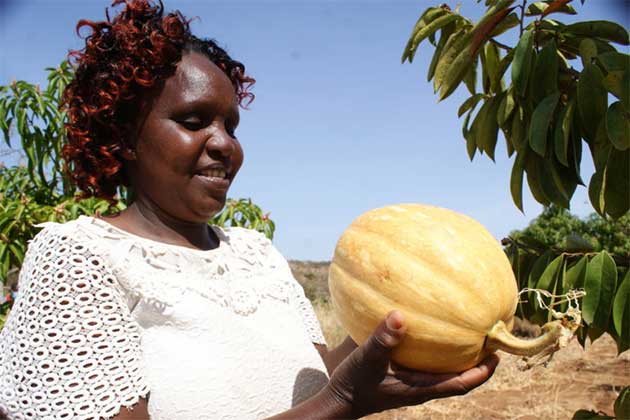
Agroforestry is a kind of agroecology where crops are grown in combination with trees, like this pumpkin that Eunice Manyi raised among fruit trees in Kenya. Credit: David Njagi for Mongabay.

Still, the findings about poor outcomes for farmers should raise concerns for private and bilateral donors to AGRA’s PIATA strategy and for the African governments that are active partners – and funders – in that effort.

Quoting from the evaluation:

    • “PIATA improved maize yields in Ethiopia, Ghana, and Nigeria, but not in Tanzania, Burkina Faso, or Kenya.” Maize is AGRA’s most heavily supported crop, so the failure to achieve yield growth in half the countries studied is alarming.
    • “Across these six countries, only farmers in Burkina Faso experienced improved maize sales as a result of PIATA.” This raises serious questions about the Green Revolution “theory of change.” Even when yields rose, they failed to translate into rising incomes for farmers.
    • “Farmers who adopted improved inputs and experienced yield increases were typically younger, male, and relatively wealthier…. productivity and income gains were also concentrated among these relatively high-resource farmers.” This finding directly contradicts the stated goals of USAID and other bilateral donors to ensure that their assistance programs benefit and empower women.
    • “AGRA’s next strategy could formally recognize that agricultural technologies and practices—such as fertilizer use and rice cultivation—can negatively impact environmental conditions and greenhouse gas emissions.” Evaluators fault AGRA on a wide range of environmentally damaging impacts, including a lack of attention to helping farmers adapt to climate change.
    • “AGRA surveys are currently not suited for rigorous impact analysis.” Evaluators offer many criticisms of the initiative’s poor monitoring and evaluation methods.

Time to rethink Green Revolution model

Evaluators gave AGRA credit for some of its work, saying it “was successful in developing key policy reforms, mobilizing flagships and partnerships, and reaching farmers with extension and seeds,” and it helped “incentivize private sector engagement in the production and delivery of improved seeds in some countries.”

But these intermediate objectives, carried out with substantial funding over 15 years, have thus far failed to further the goals of improving farmers’ productivity, incomes, and food security. When one’s development successes fail to produce the intended results, after 15 years and one billion dollars in donor funding, it is time to reconsider the efficacy of the initiative. It is time to rethink the Green Revolution model.

See related: Push-pull agroecology method debugs organic farming’s pest problem in Kenya

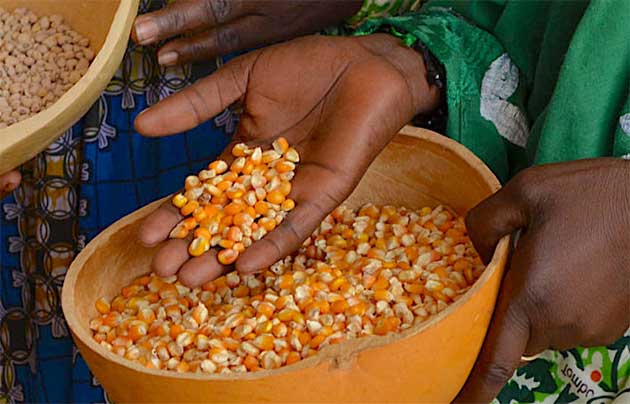
Farmers with seeds in West Africa. Image courtesy of Grassroots International.

AGRA’s management responded to the evaluation saying, “We must therefore rethink our models and focus our support, and that of our partners, on building resilience and adaptation specifically for smallholder farmers.” But there is little sign AGRA intends to pull back from its costly input-intensive Green Revolution model. AGRA president Agnes Kalibata recently defended the status quo in a Q&A with the East African.

Hopefully donors and African governments will take the new evaluation more seriously. African civil society and faith leaders have urged donors to shift their funding to agroecology and other low-cost, low-input systems, which were endorsed last year by the U.N. Committee on World Food Security as a key strategy for climate-resilient development. Such approaches have shown far better results, raising yields across a range of food crops, increasing productivity over time as soil fertility improves, increasing incomes and reducing risk for farmers by cutting input costs, and improving food security and nutrition from a diverse array of crops.

USAID was quick to reject any change in aid priorities. A spokesperson told US Right to Know, “USAID reviewed the findings and recommendations and is satisfied with the independence and rigor of the [Mathematica] evaluation. We appreciate AGRA’s response to the report conclusions and concur with their proposed next steps to improve performance outcomes.”

That will not satisfy African civil society and faith leaders, who were not consulted for the Mathematica evaluation. They plan to take their complaints to the U.S. Congress, which this year has to reauthorize funding for AGRA through its Feed the Future initiative. On March 30, they will brief congressional aides in a closed-door session to explain why the supposed beneficiaries think AGRA is doing more harm than good. As evaluators acknowledge, the main beneficiaries are wealthier male farmers, an outcome at odds with the stated goals of U.S. development policy.

As fertilizer and food prices spike with rising energy prices from the Russia-Ukraine war, African farmers and governments need the kind of resilient, low-cost alternatives agroecology offers. Kenyan farmers report today that the biofertilizers they make themselves from locally available materials cost one-quarter the price of fossil-fuel-based fertilizers.

African governments should recognize that continuing to subsidize increasingly expensive synthetic fertilizer is a losing proposition, especially when that and other Green Revolution inputs are producing such meager results.

It is time for private and bilateral donors – and African governments – to stop throwing good money after bad and recognize that their 15-year effort to “catalyze a farming revolution in Africa” through Green Revolution seeds and fertilizers has fallen short. Fortunately, more promising alternatives are proving their efficacy all over the world. They deserve support.

Timothy A. Wise is a Senior Research Fellow at Tufts University’s Global Development and Environment Institute. A detailed analysis of the recent evaluation of AGRA is available from the Institute for Agriculture and Trade Policy (IATP), where the author is a senior advisor.

IPS UN Bureau

  Source