MILAN, Italy, Dec 3 2019 (IPS) – A coffee producer will receive a cent and a half from a $2.50 cup of coffee. This one stark fact stood out as scientists, researchers, activists and grappled with solutions for change in food and nutrition practises, which would benefit the greater community.
While the solutions are many – slow food to artificial intelligence – it was clear that the delegates were united around one idea: Key to the solution is to ensure that the solutions need to be put in the hands of the broad community – not just in the hands of the powerful.
This also needs the commitment of every sector of society – from multi-national businesses to small scale local farmers.
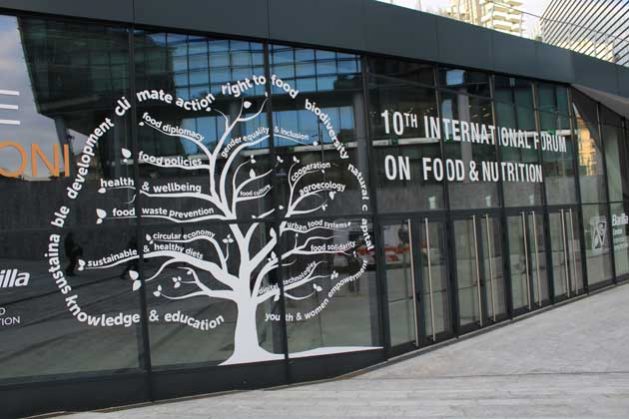
This message was reinforced by Guido Barilla, founder of the Barilla Centre for Food and Nutrition at the 10th International Forum on Food and Nutrition. The forum had the theme of Fostering Business and Innovation while preserving Mother Earth.
He urged all stakeholders come together and educate on the importance of sustainable and virtuous food systems.
Professor Angelo Riccaboni agreed – cooperation between institutions, corporations, NGOs, philanthropic institution and academia was crucial for changing the trajectory.
Ertharin Cousin reminded delegates that biologist Paul Ehrlich once predicted large scale famines, particularly in India – but through innovation in the agricultural sector and community of actors involved in the Green Revolution, these grim visions were overcome.
Even so, she said the challenges are huge – and research suggests that by 2030 half the world’s population would suffer from some form of malnutrition, whether from a shortage of food or micronutrient deficiency.
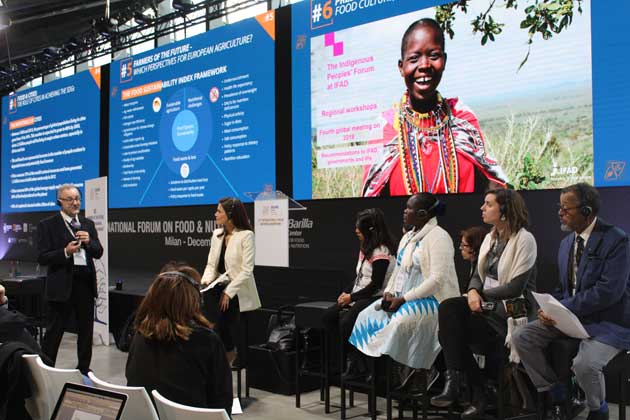
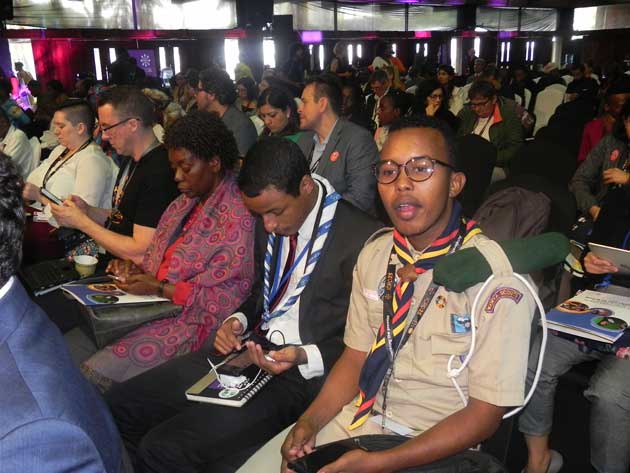
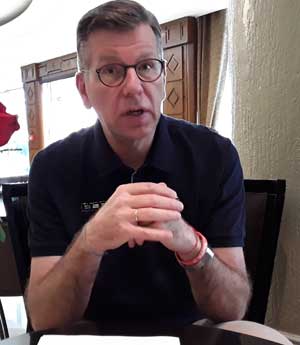
Delegates debate at the 10th International Forum on Food and Nutrition in Milan. Credit: Busani Bafana / IPS
Jeremy Oppenheim, founder of Systemiq, who used the example of the cup of coffee pointed out how starkly pointed out how unequal the chain of production, processing, distribution, consumption and the way it is disposed of requires a radical overall.
The mixed signals were unhelpful, he said.
“We’re sending all these mixed signals, every single day to people … In the next in the run up to Christmas again in the UK, food companies, and retailers will spend, 100 billion pounds – advertising largely unhealthy food.”
Mattia Galletti , IFAD Technical specialist, pointed out 70 million people in the world belong to different indigenous people and in studies in the Amazon, for example, where indigenous farming is practised there was no deforestation.
Carlo Petrini, Founder and President, Slow Food International, agreed. Local communities had the solution in their “DNA” and had essential answers to the critical problems of climate change.
“The biggest challenge today is climate change, and politicians are still ridiculing youth asking for climate justice,” says Petrini.
However, he warned that the economy needed to change – one that was rooted in local communities and not in the hands of a few. It was only then that sustainable development could be achieved. Any other solution was just “blah, blah, blah”, he warned.
However, Galina Peycheva-Miteva suggested that the “idea of farming” had to change.
“Farming is not considered prestigious by the young generation. We have to modernize and digitize farming. We have to make farming attractive again.”
If the return to traditional technologies and systems was a big discussion, so too was the use of modern technologies and artificial intelligence as a solution to food security and diet. The technology could be harnessed for everything from testing the soil, to encouraging people, through the use of Apps, to follow healthy diets.
What is clear, though, is that there needs to be a shared agenda for the future.
“We need everyone to work together, we must travel the same road. We need lawmakers to enact clear rules,” Barilla concluded.
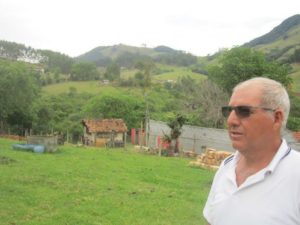
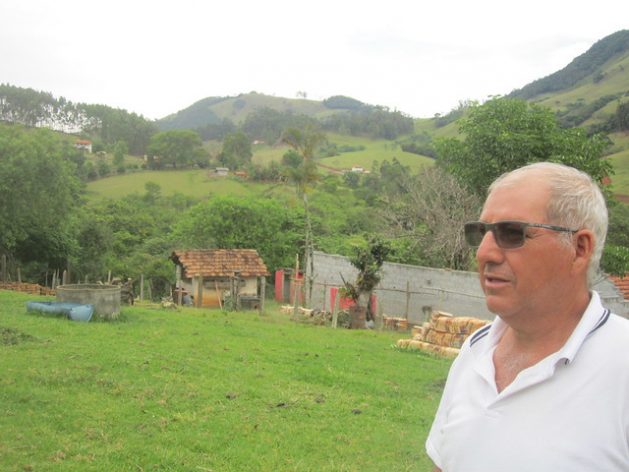
Elias Cardoso is proud of the restored forests on his 67-hectare farm, where he has protected and reforested a dozen springs as well as streams. “I was a guinea pig for the Water Conservator project, they called me crazy,” when the mayor’s office was not yet paying for it in Extrema, a municipality in southeastern Brazil. Credit: Mario Osava/IPS
EXTREMA, Brazil, Nov 29 2019 (IPS) – “They called me crazy” for fencing in the area where the cows went to drink water, said Elias Cardoso, on his 67-hectare farm in Extrema, a municipality 110 km from São Paulo, Brazil’s largest metropolis.
“I realized the water was going to run out, with cattle trampling the spring. Then I fenced in the springs and streams,” said the 60-year-old rancher. “But I left gates to the livestock drinking areas.”
Cardoso was a pioneer, getting the jump on the Water Conservancy Project, launched by the local government in 2005 with the support of the international environmental organisation The Nature Conservancy and the Forest Institute of the southeastern state of Minas Gerais, where Extrema, population 36,000, is located at the southern tip.
The project follows the fundamentals of the National Water Agency‘s Water Producer Programme, which focuses on different ways to preserve water resources and improve their quality, such as measures to conserve soil, preventing sedimentation of rivers and lakes.
But at the core of the project is the Payments for Environmental Services (PES), which in the case of Extrema compensate rural landowners for land they no longer use for crops or livestock, to restore forests or protect with fences.
The “Water Conservator” (Conservador das Águas) began operating in 2007, with contracts offered by the PES to farmers who reforest and protect springs, riverbanks and hilltops, which are numerous in Extrema because it is located in the Sierra de Mantiqueira, a chain of mountains that extends for about 100,000 square km.
“Then everyone jumped on board,” Cardoso said, referring to the project in the Arroyo das Posses basin, where he lives and where the environmental and water initiative began and had the biggest impact.
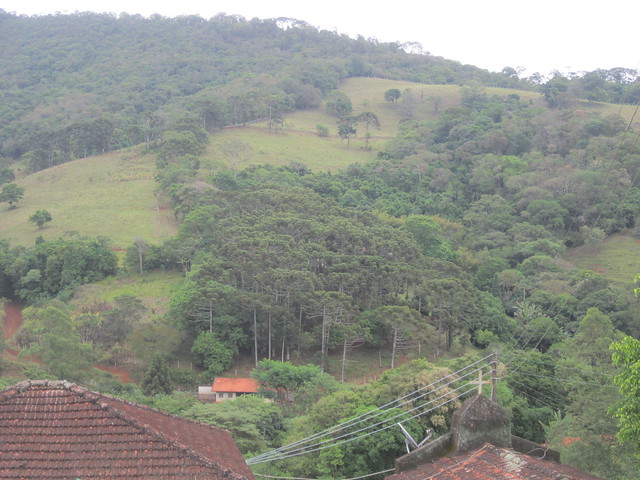
View of the new landscape in the hilly area around Extrema, after the reforestation of thousands of hectares in three basins in this municipality in southeastern Brazil, where the local government has fomented the process of recovery by paying landowners for environmental services. The priority is to restore the forests at the headwaters of the rivers and on hilltops and protect them with cattle fences. Credit: Mario Osava/IPS
In the 14 years since it was launched, the project has only worked fully in three basins, where two million trees were planted and close to 500 springs were protected. It is now being extended to seven other watersheds.
“The goal is to reach 40 percent of forest cover with native species” in the municipality and “so far we already have 25 percent covered, and 10 percent is thanks to the Water Conservator,” said Paulo Henrique Pereira, promoter of the project as Environment Secretary in Extrema since 1995.
“Planting trees is easy, creating a forest is more complex,” the 50-year-old biologist told IPS, stressing that it’s not just about planting trees to “produce” and conserve water.
The project began with the prospecting of areas and the training of technicians, after the approval of a municipal PES statute, since there is no national law on remunerated environmental services.
“The bottleneck is that there is no skilled workforce” to reforest and implement water conservation measures, Pereira said.
The project now has its own nursery for the large-scale production of seedlings of native tree species, to avoid the past dependence on external acquisitions or donations, which drove up costs and made planning more complex.
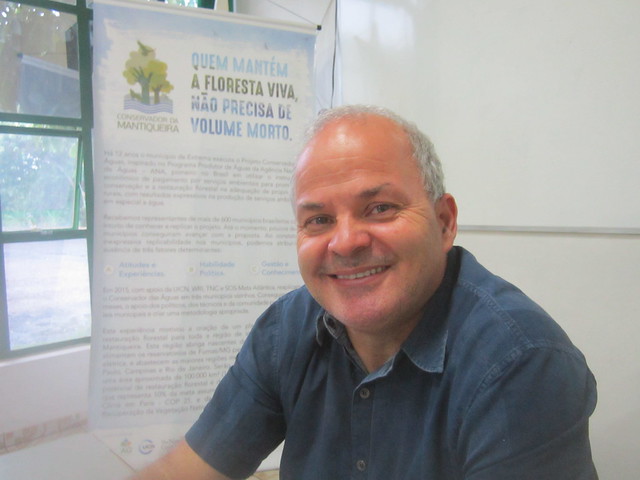
Since 2005 Paulo Henrique Pereira, Secretary of Environment in Extrema since 1995, has promoted the Water Conservator Project, which has won national and international awards for its success in recovering and preserving springs and streams, by paying for environmental services to rural landowners who reforest in this municipality in southeastern Brazil. “Planting trees is easy, creating a forest is more complex,” he says. Credit: Mario Osava/IPS
The success of Extrema’s project, which has won dozens of national and international good practice awards, “is due to good management, which does not depend on the continuity of government,” said the biologist, although he admitted that it helped that he had been in the local Secretariat of the Environment for 24 years and that the mayors were of the same political orientation.
“It is a well-established project that is not likely to suffer setbacks,” he said.
The fact that the project offers both environmental and economic benefits helps keep it alive.
“My grandfather, who spent his life deforesting his property, initially rejected the project. It didn’t make sense to him to plant the same trees he had felled to make pasture for cattle,” said Aline Oliveira, a 19-year-old engineering student who is proud of the quality of life achieved in Extrema.
“When I was a girl, I didn’t accept the idea of protecting springs to preserve water either. I thought it was absurd to plant trees to increase water, because planting 200 or 300 trees would consume a lot of water. That was how I used to think, but then in practice I saw that springs survived in intact forest areas,” she said.
Later, when the PES arrived in the area, her grandfather gave in and more than 10 springs on the 112-hectare farm were reforested and protected. The payment is 100 municipal monetary units per hectare each year, currently equivalent to about 68 dollars.
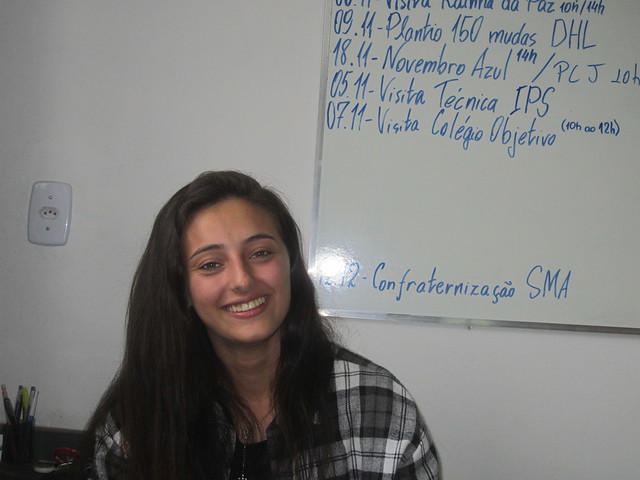
Aline Oliveira studies engineering and lives on her family’s farm in southeastern Brazil. She is proud of the way life has improved in Extrema, a process that began with the establishment of the Payments for Environmental Services system, which guarantees income to farmers and ranchers for reforesting watersheds. It is a secure income at a time of falling milk prices and in a town far from the dairy processing plants. Credit: Mario Osava/IPS
“The PES is a secure income, while milk prices have dropped, and everything has become more expensive than milk in the last 10 years. In addition, there were losses due to lack of transportation, since there is no major dairy processing plant within 50 km,” she told IPS.
Thanks to the municipal payments, “we were able to invest in cows with better genetics, buy a milking parlor and improve health care for the cattle, thus increasing productivity,” which compensated for the reduction in pastures, added the student, who works for the project.
The programme coincided with a major improvement in the economy and quality of life in Extrema. “I was born in Joanópolis, where there were better hospitals than in Extrema. But now it’s the other way around” and people from there come to Extrema, 20 km away, for heath care, Oliveira said.
This is also due to the industrialisation experienced by Extrema in recent decades, which becomes evident during a walk around the town, where many new industrial plants can be seen.
The water conservation project has also contributed to the water supply for a huge population in the surrounding area.
Arlindo Cortês, head of environmental management at Extrema’s Secretariat of the Environment, stands in the nursery where seedlings are grown for reforestation in this municipality in southeastern Brazil. “Building reservoirs does not ensure water supply if the watershed is deforested, degraded, sedimented. There will be floods and water shortages because the rainwater doesn’t infiltrate the soil,” he explains. Credit: Mario Osava/IPS
The Jaguari River, which crosses Extrema, receives water from fortified streams and increases the capacity of the Jaguari reservoir, part of the Cantareira system, which supplies 7.5 million people in greater São Paulo, one-third of the total population of the metropolis.
“If the watersheds are deforested, degraded and sedimented, merely building reservoirs solves nothing,” said Arlindo Cortês, the head of environmental management at Extrema’s Secretariat of the Environment.
Extrema’s efforts have translated into local benefits, but contributed little to the water supply in São Paulo, partly because it is over 100 km away, said Marco Antonio Lopez Barros, superintendent of Water Production for the Metropolitan Region at the local Sanitation Company, Sabesp.
“No increase in the capacity of the Cantareira System has been identified since the 1970s,” he said in an interview with IPS.
“Thousands of similar initiatives will be necessary” to actually have an impact in São Paulo, because of the level of consumption by its 22 million inhabitants, he said, adding that improvements in basic sanitation in cities have greater effects.
São Paulo experienced a water crisis, with periods of rationing, after the 2014 drought in south-central Brazil, and faces new threats this year, as it has rained less than average.
Extrema also felt the shortage. “Since 2014 we have only had weak rains,” said Cardoso. The problem is the destruction of forests by the expansion of cattle ranching in the last three decades.
“The creek where I used to swim has lost 90 percent of its water. The recovery will take 50 years, the benefits will only be felt by our children,” he said.
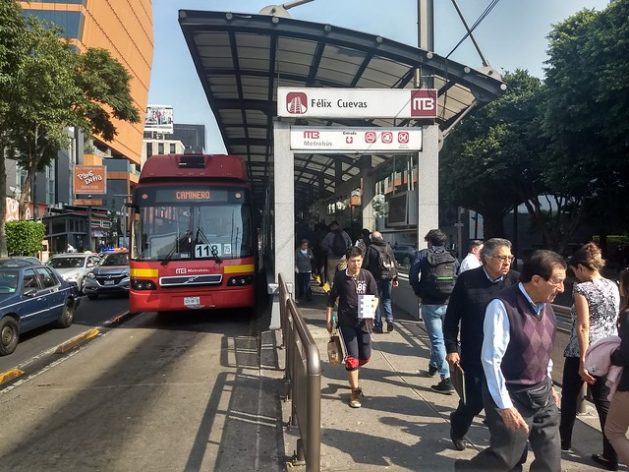
The IDB finances sustainable transportation projects in Latin America and the Caribbean, but these and other works to which the bank provides loans must meet social and environmental standards. The picture shows part of Mexico City’s Metrobus public transport system, which runs on a dedicated lane with bi-articulated units. Credit: Emilio Godoy/IPS
MEXICO CITY, Nov 27 2019 (IPS) – The Inter-American Development Bank (IDB) is in the process of modernising the social and environmental safeguards that govern the financing of projects considered vital for the construction of sustainable infrastructure in the Latin American region.
The participation of social organisations and local communities in the analysis of projects, dissemination of information, gender perspective and the focus on climate change are major challenges in this process of reforming the safeguards.
The Washington-based IDB will begin regional consultations with civil society organisations in January to upgrade the standards of those safeguards, approved between 1998 and 2010, after it closed the public consultation for the draft of the new environmental and social sustainability policy for its private sector lending arm IDB Invest on Oct. 15.
Vanessa Torres, deputy director of the Colombian NGO Environment and Society, told IPS that a Latin American coalition of NGOs and local communities asked for adequate time to coordinate their positions and exchange and study information.
“There will be an opportunity to update the risks and comment on the substance. They will have to be adapted to the characteristics of the region. We have not yet seen the draft of the update. Our concern is that substantial aspects, which are already in the current safeguards, not be watered down.” — Carolina Juaneda
“The communities affected by the projects must be informed in order for them to participate. This is a positive process, because the bank has been very open, but we are waiting to see what was included in the draft,” said Torres, an environmental lawyer.
The IDB, whose president is Colombian businessman Luis Moreno, will disseminate the draft at the end of November and stage consultations in 2020 in Argentina, Panama, Jamaica and Peru.
In September 2020, the bank’s Board of Executive Directors, made up of 14 representatives from several blocks of countries, will receive the final version and the implementation plan.
Among other measures, at the end of the process, in terms of environmental and social policy in project finance, the IDB will adopt the eight principles of the International Finance Corporation (IFC), the private lending arm of the World Bank, on issues such as environmental impacts, labour issues, biodiversity conservation and indigenous peoples, and will apparently incorporate a gender approach and stakeholder participation and information dissemination.
The multilateral institution proposes an integrated policy framework, with a socio-environmental statement and 10 technical standards for the management of environmental and social risks.
“There will be an opportunity to update the risks and comment on the substance. They will have to be adapted to the characteristics of the region. We have not yet seen the draft of the update. Our concern is that substantial aspects, which are already in the current safeguards, not be watered down,” said Carolina Juaneda, a consultant for the Latin America Program of the non-governmental Washington-based Bank Information Center.
The current IDB Environmental Safeguards and Compliance Policy consists of environmental, population resettlement, disaster risk management, gender equality, indigenous peoples and access to information requirements.
In 2018, the IDB approved 96 sovereign guaranteed (backed by a government) loan projects with total financing of 13.4 billion dollars, and disbursed more than 9.9 billion dollars.
The bank ranks the level of risk in terms of a project’s environmental and social sustainability. In 2018, eight percent of the loans were granted to high risk projects, 24 percent substantial risk, 31 percent low risk and 37 percent moderate, according to the 2018 Sustainability Report.
The IDB will investigate whether IDB Invest, its private finance arm, failed to comply with the safeguards in the loan for the Ituango hydroelectric plant, which is being built on the Cauca River, 170 km from the city of Medellín, Colombia, after a serious accident with the dam in 2018. Credit: Courtesy of Colombia’s Attorney General’s Office
Ten percent of the projects failed to meet the standards, 20 percent adhered to the guidelines, 21 percent required immediate corrective action, and 49 percent had partially consistent compliance with the requirements.
The IDB has 2,596 active projects worth 60.8 billion dollars, most of which are being implemented by Argentina, Brazil, Colombia, Mexico and Paraguay in areas like transportation, energy, water and sanitation. In addition, it is evaluating 225 projects for another 19.8 billion dollars.
The ravages of the climate emergency in Latin America and the Caribbean, such as more intense hurricanes, rising temperatures, loss of biodiversity and rising sea levels, make the construction of sustainable infrastructure an imperative.
Safeguards as a tool
Beginning in the 1990s, multilateral financial institutions began to design safeguards that their clients – governments and companies – and the projects they finance must respect, thanks in part to pressure from affected social organisations and communities demanding that the impacts of these ventures be taken into account.
They also put in place mechanisms to process complaints of non-compliance with the standards or requirements set by the safeguards in projects financed by the multilateral banks.
Since last decade, financial institutions have revised these guidelines to adapt them to a changing social and environmental context, such as the worsening of climate change and its effects, including intense storms, droughts and rising temperatures. Currently, the greatest pressure on the banks is for them not to finance hydrocarbon projects, due to the climatic urgency to stop using fossil fuels.
Moreno, who assumed the presidency of the IDB in 2005, will conclude his term in mid-2020 and wants to do so having put in place updated social and environmental standards.
In updating the safeguards, the IDB has developed more than 60 new environmental, social, economic and institutional criteria to be applied in the design, construction, operation and final conclusion of a project financed by the institution.
The update stems from recommendations made in 2018 by the IDB Office of Evaluation and Oversight, which found that a large percentage of IDB projects that were reviewed did not fully comply with the initial safeguards requirements prior to loan authorisation and that the requirements were not addressed during execution.
The organisations involved in the update process mention, as an example of unsustainable infrastructure, the Ituango hydroelectric dam, built by Empresas Públicas de Medellín on the Cauca River, Colombia’s largest river. The IDB provided 550 million dollars for the project and administered part of the one billion dollars provided by other banks.
In May 2018, torrential rains overflowed the river, causing the collapse of the tunnel built to divert that flow, and as a result landslides, floods and the displacement of thousands of people from their homes, raising serious questions about the sustainability of the country’s largest hydroelectric project and one of the biggest in Latin America.
In June of that year, 477 residents of eight municipalities in the northwestern department of Antioquia requested that the Independent Consultation and Investigation Mechanism (Mici), the bank’s autonomous body responsible for evaluating performance against its standards, investigate whether the IDB and IDB Invest respected their own socioenvironmental safeguards.
The IDB Board of Directors resolved on Oct. 29 that it would inquire whether IDB Invest had complied.
Between 2010 and September 2019, Mici received 151 complaints, of which 144 referred to the IDB, four to IBD Invest and four to IDB Lab, a platform that seeks to mobilise capital, knowledge and connections to promote innovation in the region. Thirteen are active, of which seven are in the consultation phase, five in the compliance review phase and one is being assessed for eligibility.
This year, Mici has three cases open from Argentina and two from Brazil, while it rejected two complaints from Argentina and Brazil, and it has one each from Barbados, Colombia, Ecuador, Guyana and Paraguay, respectively, while it declared a complaint from Chile ineligible.
The organisations say the bank’s sustainability framework should include a comprehensive approach embodied in the operational strategy and safeguards, with an exclusion list of hydrocarbon projects.
The IDB has an active regional initiative to promote the reduction of polluting emissions and improvements in efficiency through the use of gas, backing for Guyana’s oil sector and other support for the “sustainable and responsible development” of mining and hydrocarbons in Colombia.
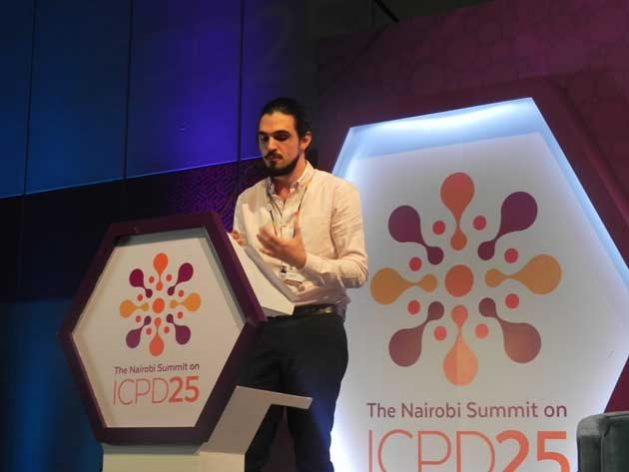
MARTIN KARADZHOV, Global Youth Commitee speaking at ICPD25. Credit: Mantoe Phakathi / IPS
NAIROBI, Kenya, Nov 13 2019 (IPS) – Governments across the world must ban all state-implemented harmful practices against the Lesbian, Gay, Bisexual, Transgender, Queer and Intersex (LGBTQI) community delegates at the ICPD25 tells IPS.
Adding his voice in bridging the gap of Sexual Reproductive Health Rights (SRHR) among the youth, Martin Karadzhov, chair for Global Youth Steering Committee, told delegates at a youth event themed “our bodies, our lives, our world”, at the 25thInternational Conference on Population Development (ICDP25).
LGBTQI young people remain voiceless
Although there are 1.8 billion youths between the ages of 10 and 24 years, they continue to be marginalised when it comes to SRHR issues. Karadzhov said LGBTQI youth in many countries were subjected to harmful practices including pressure on them to convert, a practice with no scientific basis which is also unethical and, in most instances, a torture. “Justice for one is justice for all,” he said.
He urged governments to repeal discriminatory laws against the LGBTQI community, adding that they were denied access to Sexual Reproductive Health (SRH) services on the basis of their sexuality. “Our human rights are not controversial,” said Karadzhov.
Young people often only a statistic
Echoing his sentiments was Mavis Naa Korley Aryee, a youth programme national radio host at Curious Minds. She said although there are 1. 8 billion reasons why young people should be involved in decision-making process, they are only mentioned as statistics.“Being part of a minority should not be a reason for discrimination,” said Aryee.
Young people speak out at Nairobi Summit. Credit: Mantoe Phakathi / IPS
She advocated for access to SRH services to be made available to all young people, adding that they have a right to make choices about their bodies. She was, however, encouraged by the way the global youth had stood up to be counted despite the challenges they face. Aryeenoted that the youth contributed to the development agenda leading to ICPD25, adding that the UN Sustainable Development Goals (SDGs) are also about them.
“We have then numbers. No one will ignore 1.8 billion reasons. The more we collaborate, the more we advance our agenda,” she said.
Fighting for a seat a the table
The global youth is fighting for a seat on the decision-making table where Marco Tsaradia, a Member of Parliament from Madagascar, said young people are told: “things have always been done like this”. He said the youth are keen to bring about new ideas because they are talented and innovative. However, he complained that the existing decision-making structure prevented them from achieving this objective.
It gets worse if young persons with disabilities want to enter the table because, said Leslie Tikolitikoca from the Fiji Disabled Peoples Federation, they tend to be “judged on their disabilities rather than their abilities”. For example, he said, instead of providing services to those who are unable to hear or see, those in power would rather make decisions on their behalf instead of helping them to contribute to the discussion.
“How are we going to ensure that we leave no one behind if we don’t involve all young people?” he wondered.
EU commits funding
Following the youth’s proposed solutions to their SRHR, Henriette Geiger, from the directorate of people and peace at the European Union Commission, said it was time to act. She said the EU has proposed that governments should consider reducing the voting age to 16 years.
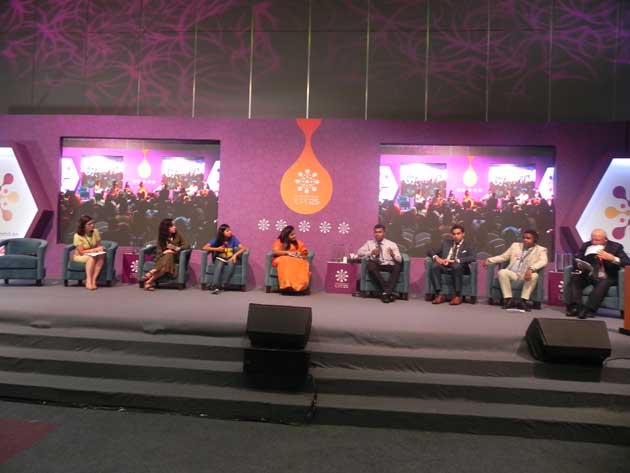
Young people at ICPD25 youth session. Credit: Mantoe Phakathi / IPS
“That would make a huge impact in decision-making on youth policy,” she said, adding that the EU was funding key initiatives to change public perceptions about the LGBTQI community by using film.
Although she said the EU was involved in many SRHR programmes in Africa, she further pledged €29 million towards SRHR programmes for the youth, urging organisations to take advantage of this initiative.
Not all doom and gloom
During the opening address of the ICPD25, the United Nations Population Fund (UNFPA) executive director, Natalia Kanem, told delegates “good progress is not good enough”, insisting that the promises made to girls, women and everyone should be kept.
Kanem paid special tribute to the youth, for bringing new ideas and resources to make rights and choices a reality.
“To the youth, you’re inspiring in pushing us to go further Thank you,” said Kanem.
It is not all sad and gloomy for the youth, said Ahmed Alhendawi, the secretary-general of the World Organisation of the Scouts Movement. The fact that the youth have formed themselves into a global youth movement should be celebrated because that is how they are going to win the fight to be part of decision-making processes.
NAIROBI, Kenya, Nov 12 2019 (IPS) – For each of the 830 women dying each day from pregnancy complications and childbirth, an estimated 20 others suffer serious injuries, infections or disabilities.
This is the reality that millions of women face, and informs the Nairobi Summit’s three critical commitments which are to bring preventable maternal deaths, gender-based violence and harmful practices, as well as unmet need for family planning, to zero. To achieve this objective money is needed.
Joyce Chimbi
Finding the money for commitments
Private sector organisations including the Ford Foundation, Johnson & Johnson, Philips and World Vision, announced that the world as envisioned in Cairo in 1994 will cost $264 billion to deliver.
“Building financial momentum and bridging existing resource gaps around these commitments will not be easy. While most countries have constitutionalised reproductive health and rights, mobilising domestic resources has not automatically followed,” says Nerima Were, programme manager of the Kenya Legal and Ethical Issues told IPS.
How much will it really cost to deal with family planning?
To bring maternal mortality to zero in the 120 countries that account for over 95 percent of maternal mortality will cost $115.5 billion in key maternal health interventions.
Ending the unmet need for family planning in the same number of priority countries will cost $68.5 billion. Ending gender-based violence will require investing 42 billion dollars in 132 priority countries.
Currently, only $42 billion in development assistance is expected to be spent on advancing these goals. It, therefore, means that an additional $222 billion in investments will be required over the next decade.
Who will really fund commitments?
Were says that envisioning and articulating what form and shape these investments will take, is critical. She argues that at the moment it is not clear whether these additional costs will be raised in foreign investments, domestic allocation or private spending.
“This discussion is not just about dollars and cents but values and choices. It is also about translating choices into practical ways of making decisions,” says Achim Steiner, of the United Nations Development Programme, UNDP.
Steiner says that financial decisions can be framed in different ways, and that analysing the cost and gaps in delivering the three commitments, is a way to advise the world on how to invest.
Making informed decisions
“It is about helping societies to be better informed and to make better choices. The issue is not what it will cost to bring them to zero, but the cost of not bringing them to zero,” he argues.
World Bank data has shown that family planning is the “best buy” for governments. For each additional dollar spent on contraceptive services in developing countries, the cost of maternal and newborn healthcare could be reduced by two dollars and twenty cents. Importantly, estimates also show that every dollar invested in family planning pays itself back $120 in saved costs.
Africa must and can find the money
Researchers at the African Population and Health Research Centre indicate that African countries will need to dig deeper.
Budget underspending in the health sector prevails across the continent. “Africa has the resources to achieve these three critical goals. The exponential growth of economies across the country is reflective of the continents financial muscle,” says Jackson Chekweko, executive director for Reproductive Health Uganda, the member association for International Planned Parenthood Federation (IPPF).
Chekweko argues that political will and commitments are more important, and that “there will always be resources for what the government, especially presidents, say is a priority. African presidents wield a lot of influence on resource allocation.”
He argues, for instance, that Uganda made a commitment at the recent London Summit “to allocate $5 million to family planning annually. This has been done because the president said so.”
Bold leadership from Kenya’s Uhuru Kenyatta
Chekweko adds that there’s also a new generation of leaders such as President Uhuru Kenyatta of Kenya who will not shy away from making ambitious commitments.
“President Kenyatta made several bold statements at the ICPD25 Summit. He has declared that East African countries will reduce FGM to zero by 2022 and confirmed gender-based violence will, without a doubt, be reduced to zero,” he says.
Chekweko says that a demonstrable political commitment will encourage partnerships to help meet existing resource gaps. “Once we agree that issues of sexual and reproductive health and rights are a priority, the money will follow this purpose. Even if it means raising taxes such as VAT(value-added taxes) and PAYE (pay as you earn) by just one percent, it will be done,” Chekweko says.
Were adds that within the context of limited domestic funding, a scale back by external donors, and ambitious health and health coverage targets and domestic resource mobilisation, has never been more critical.
“To reach zero in all three areas, governments will need to carefully decide what their priorities are, anything that falls within that priority framework must be achieved,” she says.
Gender equality and women empowerment at the heart of ICPD25. Credit: Joyce Chimbi / IPS
NAIROBI, Kenya, Nov 11 2019 (IPS) – Every day 830 women die while giving life. At least 33,000 girls are forced into child marriage with 11,000 girls undergoing female genital mutilation. These are some of the cruel realities young women face every day. However, there is renewed hope that delegates expected to attend the International Conference on Population and Development (ICPD) in Nairobi this week will re-energise and breathe new life to the Cairo Promise.
“The Summit is a call to action to accelerate progress towards the world we imagined in 1994,” Arthur Erken, one of the three co-chairs of the International Steering Committee of the Nairobi Summit, tells IPS. He emphasises that the magic of the first ICPD conference is in the paradigm shift from “a numbers-driven approach to development to placing people, their needs and aspirations, at the heart of sustainable development”.
Erken says this summit is, therefore, a call to action to countries and partners to fulfil the Cairo Promise by making concrete commitments towards achieving the ICPD goals.
Unfulfilled promises and Re-energising the global community
Co-hosted by the governments of Kenya, Denmark and the United Nations Population Fund (UNFPA), the Nairobi Summit takes place on the 25th anniversary of the ground-breaking 1994 International Conference on Population and Development (ICPD).
Arthur Erken says that ICPD25 is a call for action to accelerate the Cairo promise. Credit: Joyce Chimbi / IPS
Unfortunately, says Erken, this promise has for millions of women and girls around the world not been fulfilled. “The world we imagined in Cairo is not a reality,” says Erken. He says the Cairo Promise was about ensuring that all people have access to sexual and reproductive healthcare, including safe pregnancy, childbirth and family planning services, and are free from all forms of violence and harmful practices.
Other experts such as Beatrice Okundi, assistant director of the National Council for Population and Development (NCPD), affirms that at the heart of the promise is gender equality, and the emphasis placed on equality and empowerment of women and girls.
Raising awareness
Okundi says that accelerating the Cairo Promise will require raising awareness on the relationship between population growth and sustainable development. “For Kenya to absorb an additional one million people every year as it has done for the past 10 years, our economy must grow at a double-digit figure up from the current 5.7 percent,” she tells IPS.
Five themes to a call for Action
Erken explains that the summit is focused around five themes: universal access to sexual and reproductive health and rights, financing the ICPD agenda, drawing on the demographic dividends, ending gender-based violence and harmful practices and upholding the right to sexual and reproductive healthcare, even in humanitarian and fragile contexts.
He says the summit is also about achieving three critical zeroes: zero unmet need for family planning, zero maternal deaths and zero violence and harmful practices against women and girls, including child marriages and female genital mutilation. “ICPD25 is also about assessing how much these three zeroes will cost governments as well as partners, and emphasises the need for innovative financial models,” Okundi adds.
She says that “ICPD sets in place a far-sighted plan that advances human well-being and their rights, well ahead of numerical numbers”.
Erken points out the Nairobi Statement “is not a negotiated document”. However, it is nonetheless the overall global framework formulated and based on wide consultations with diverse stakeholders, including governments and CSOs, among others. “This statement is an embodiment of areas that need prioritisings. It is a reflection of the state of implementation of the ICPD Programme of Action and the areas where concrete commitments are required in order to move the ICPD agenda forward.”
Finish what we started….
But not every expert or delegate is as hopeful, as expressed by Angela Nguku, the executive director of White Ribbon Alliance, an international coalition on safe motherhood. She argues there is no need for new promises or commitments. “We need to finish what we started in Cairo by removing obstacles, especially corruption from our path,” she says. Nguku says that misappropriation of public funds continues to stand between populations and Cairo promise.
“On this continent, the ICPD agenda remains unfulfilled, not because of a resource gap, but a leadership and governance gap. We need to put the resources we have where they are needed,” she tells IPS.
Nonetheless, delegates expect that the new commitments made in the next three days will lead to completion of the unfinished business of ICPD.
Let’s not wait another 25 years
ICPD25 runs from November 12-14, bringing together more than 6,000 delegates from around the world, with at least 164 countries and delegates drawn from civil society organisations, grassroots organisations, young people, business and community leaders, faith-based organisations, indigenous peoples, international financial institutions, people with disabilities, academics and many others working towards the pursuit of sexual and reproductive health and rights.
“The summit is not a platform to prescribe solutions to convening countries and convening delegates. It is an opportunity for governments and other partners to make commitments, and own the process,” says Erken.
Experts acknowledge that tremendous progress has been made over the last 25 years, but emphasize that a lot more will need to be achieved in a shorter period of time, to fulfil the promise by 2030.
“We cannot have another 25 years of ICPD. This is hopefully the last ICPD conference,” Erken observes.