COP16 Agrees to Raise Funds to Protect Biodiversity

Biodiversity, Conferences, COP16, Editors’ Choice, Environment, Featured, Global, Headlines, TerraViva United Nations

COP16

COP16 President Susana Muhamad. Parties to the UN Biodiversity adopted decisions to implementation of the Global Biodiversity Framework. Photo credit: IISD Earth Negotiations Bulletin/Mike Muzurakis.

COP16 President Susana Muhamad. Parties to the UN Biodiversity adopted decisions to implementation of the Global Biodiversity Framework. Credit: IISD Earth Negotiations Bulletin/Mike Muzurakis.

BLOOMINGTON, U.S.A & ROME, Feb 28 2025 (IPS) – The second round of the UN Biodiversity Conference, COP16, concluded in the early hours of Friday, February 28 in Rome, with an agreement to raise the funds needed to protect biodiversity.


COP16 was suspended in Cali, Colombia, in 2024 without any major financial support decision to support biodiversity conservation. But in the second round of the conference in Rome, Italy, governments agreed on a financial strategy to address the action targets of the Kunming-Montreal Global Biodiversity Framework (KMGBF), which was adopted in 2022 with the aim of closing the biodiversity finance gap.

In a final document, all parties to the biodiversity convention agreed to mobilize resources to close the global biodiversity finance gap and achieve the target of mobilizing at least 200 billion dollars a year by 2030, including international flows of USD 20 billion per year by 2025. Which will be rising to USD 30 billion by 2030.

In the closing press briefing in the early hours of Friday, COP16 President Susana Muhamad said the Rome conference came to a successful end. “It was a remarkable achievement of being able to approve all the decisions, especially the most contentious, difficult decisions.” She said, “And not in a way that made the parties feel that they were compromising their main objectives.”

The agreement includes the commitment to establish permanent arrangements for the financial mechanism in accordance with Articles 21 and 39 of the Convention while working on improving existing financial instruments. It also includes a roadmap of the activities and decision-making milestones until 2030.

COP16 president Muhamad also said that the agreement between governments in Rome will help bring the agendas of biodiversity and climate change together. In November, Belem in the Amazon rainforest region of Brazil will be hosting the UN climate conference, COP30.

“The importance of these resolutions that have been approved in Cali and also here of the cooperation between the different conventions,” she said.

The biodiversity COP also adopted a Strategy for Resource Mobilization to mobilize the funds needed for implementation of the KMGBF. Which includes public finance from national and subnational governments, private and philanthropic resources, multilateral development banks, blended finance, and other approaches.

The Cali Fund

The Rome gathering of parties also agreed to establish a dedicated fund for fair and equitable sharing of benefits from the use of Digital Sequence Information on Genetic Research (DSI), known as the Cali Fund.

The fund was launched on 26 February 2025—at least 50 percent of its resources will be allocated to indigenous peoples and local communities, recognizing their role as custodians of biodiversity. Large companies and other major entities benefiting commercially from the use of DSI are expected to contribute a portion of their profits or revenues in sectors and subsectors highly dependent on the use of DSI.

Pharmaceuticals, cosmetics, plant and animal breeding, agricultural biotechnology, industrial biotechnology, laboratory equipment associated with the sequencing and use of digital sequence information on genetic resources, and information, scientific and technical services related to digital sequence information on genetic resources, including artificial intelligence. Academic, public databases, public research institutions and companies operating in the concerned sectors but not relying on DSI are exempt from contributions to the Cali Fund.

The fund is part of a multilateral mechanism on the fair and equitable sharing of benefits arising from the use of digital sequence information on genetic resources adopted at COP15 in December 2022 alongside the KMGBF.

IPS UN Bureau Report


CARICOM Leaders Take Steps to Tackle Crime, Climate, Trade and Food Crises

Climate Change, Climate Change Finance, Conferences, Development & Aid, Economy & Trade, Editors’ Choice, Education, Environment, Featured, Food Security and Nutrition, Headlines, Human Rights, Humanitarian Emergencies, Latin America & the Caribbean, Least Developed Countries, Small Island Developing States, Sustainable Development Goals, TerraViva United Nations, Trade & Investment

Conferences

Leaders of the 15 member states of the Caribbean Community concluded their 48th meeting on February 21 with commitments to tackle growing climate change and food security challenges, education and trade reform, while declaring crime and violence a public health concern.

Press Conference to mark the end of the 48th Regular CARICOM Heads of Government Meeting (L-R) CARICOM Secretary General Dr. Carla Barnett, Prime Ministers Philip Davis (Bahamas), Dr. Keith Rowley (Trinidad & Tobago), Mia Mottley (Barbados), Andrew Holness (Jamaica) and President Dr. Irfaan Ali (Guyana).

Press Conference to mark the end of the 48th Regular CARICOM Heads of Government Meeting (L-R) CARICOM Secretary General Dr. Carla Barnett, Prime Ministers Philip Davis (Bahamas), Dr. Keith Rowley (Trinidad & Tobago), Mia Mottley (Barbados), Andrew Holness (Jamaica) and President Dr. Irfaan Ali (Guyana).

DOMINICA, Feb 24 2025 (IPS) – CARICOM leaders wrapped up a crucial meeting on February 21, reaffirming their commitment to tackling pressing regional challenges with unity and resolve. From crime and security to education, trade and climate change, the leaders highlighted the need for decisive action amid global uncertainties.


Education Transformation

Barbados’ Prime Minister and CARICOM Chair Mia Mottley told the press that the leaders agreed to establish a CARICOM Educational Transformation Commission—a body that will move the region’s education systems beyond outdated foundations.

“We all accept that our educational systems are not fit for purpose. They were designed for a colonial period with a hierarchical system that only served a few, not all of our people. If we are to be able to ensure that we produce citizens fit for the time, with the appropriate social and emotional learning targets, we must move now,” she stated.

Over the coming weeks, the commission’s Terms of Reference and composition will be finalized, marking a major step in reshaping regional education policies.

Violence and Crime: Existential Threats

Outgoing Trinidadian Prime Minister Dr. Keith Rowley, attending his final CARICOM Heads of Government meeting, highlighted the increasing crime surge across the region, particularly the rise of gang violence in some countries.

Trinidad is still in a state of emergency over surging crime levels.

“We agreed that the changing nature of crime is such that action and acts of violence in the public space in certain instances must now be regarded as acts of terrorism. We are talking here about indiscriminate shooting in a public place where perpetrators endanger all and sundry.”

The leaders endorsed the classification of crime and violence as a public health issue and committed to appointing a high-level representative on law and criminal justice to design a strategic plan for modernizing the region’s criminal justice system.

Critical Climate Change Concerns

Another existential threat that leaders are grappling with is climate change.

Representing small island states that contribute minimally to global emissions but face disproportionate vulnerability to its impacts, the CARICOM leaders voiced their frustration with unmet promises by major polluters.

The USD 100 billion climate fund promised in 2015 remains unfulfilled, leaving these nations without critical support.

“For several years we attempted to see how we could shake up those who are pledging and committing to live up to their pledges and commitments. They decided to come up with a new regime called the New Collective Quantified Goal,” said Bahamian Prime MInister Philip Davis, adding, “All I can say is that we should continue our advocacy to ensure that not only is finance available to small island developing states but also to ensure that there will be easier access and timely release of funds once a request is made.”

A Changing Trading Environment

Meanwhile, Jamaican Prime Minister Andrew Holness addressed concerns over shifts in United States trade policy and their potential impact on regional economies.

“We must be prepared. We cannot approach this with panic and we should accept that with these changes the concern should not only be disruption in the normal routine of trade, but that there could also be great opportunities for the region.”

Holness announced that CARICOM will conduct a comprehensive review of its trade relations with the U.S., aiming to deliver a policy direction within the next few months to support regional governments.

Mounting Food Security Worries

Guyanese President Irfaan Ali warned of escalating food security issues due to rising global food prices, bird flu outbreak and increased logistics costs. The region faces a 20% decline in U.S. egg production, leading to a 70% price hike, adding further strain.

“Increased climate-related challenges, increased transportation and logistics costs, and uncertainty in tariffs and trade rules will have a significant impact on the cost of food globally and in our region,” Ali stated.

Ali said that if Brazil is affected by these challenges, it could lead to major problems with pricing and supply for the region. In response, CARICOM is exploring alternative supply routes and strategies to enhance regional capacity against a potential major shock in the global market.

The Dream of Stability—and Elections—in Haiti

The crisis in Haiti remained a focal point of discussions. Prime Minister Mottley reaffirmed CARICOM’s dedication to stabilizing the nation.

“This last incarnation of the Haiti situation goes back to the gas riots of September 2022. It has been an unacceptably long period of time to bring stability and relief to the people of Haiti. You will appreciate that there are some matters that are delicate at the discussion stages, but suffice it to say CARICOM expresses solidarity with the government and people of Haiti that we will work with the United Nations and all of the other friends of Haiti to be able to ensure that Haiti is in a position to have its elections in a fair and free way.”

Martinique’s Potential Associate Membership

In a historic move, CARICOM leaders signed an agreement with France and Martinique, paving the way for the French territory to become the newest associate member of CARICOM, pending ratification by the French government. If approved, Martinique will join Anguilla, Bermuda, the British Virgin Islands, the Cayman Islands, Montserrat and the Turks and Caicos Islands in this capacity.

The way forward

The meeting concluded with a renewed commitment to collective action and regional unity.

Like she did two days before at the meeting’s opening ceremony, the CARICOM Chair underscored the importance of a united CARICOM taking action towards a sustainable future.

“Now, more than ever, unity is crucial for overcoming the shared challenges posed by the world,” Prime Minister Mottley said.

IPS UN Bureau Report


Is the UN’s Human Rights Agenda in Jeopardy?

Civil Society, Democracy, Featured, Global, Global Governance, Headlines, Human Rights, Indigenous Rights, IPS UN: Inside the Glasshouse, TerraViva United Nations

Credit: United Nations

UNITED NATIONS, Feb 24 2025 (IPS) – The UN’s human rights agenda is in danger of faltering since the Geneva-based Office of the High Commissioner for Human Rights (UNHCHR) is planning to “restructure” the office, under the moniker OHCHR 2.0.

But this proposal, if implemented, would result in the abolition of the Special Procedures Branch, established by the Human Rights Council (HRC), to report and advise on human rights from thematic and country-specific perspectives.


The question remains whether or not the HRC will give its blessings to the proposed restructuring. Currently, there are more than 46 thematic mandates and 14 country-specific mandates.

The Special Rapporteurs (who are also designated “independent UN human rights experts”) cover a wide range of thematic issues, including investigations into extrajudicial, summary or arbitrary executions, racism and xenophobia, human rights in the Palestinian territories, right to freedom of opinion and expression, rights of the indigenous peoples, violence against women, human rights of immigrants, among others.

https://www.ohchr.org/en/special-procedures-human-rights-council/current-and-former-mandate-holders-existing-mandates

Ian Richards, an economist at the Geneva-based UN Conference on Trade and Development (UNCTAD) and former President of the Coordinating Committee of International Staff Unions and Associations, told IPS the staff of the Special Procedures Branch play an essential role in supporting the work of the special rapporteurs.

He said former UN Secretary-General Kofi Annan described their work as the jewel in the crown of the UN human rights system.

“We know that some of their recent work has created pushback. There is a belief is that they are being penalized for this”.

“The High Commissioner for Human Rights “hasn’t accepted to meet with the staff union to discuss this, which is unusual. We hope he will change his mind,” said Richards.

Some of the Special Rapporteurs have been vociferously critical of member states, including Israel, on war crimes charges in Gaza, and also countries in the Middle East and South-east Asia, like Singapore and Saudi Arabia, for continuing to enforce the death penalty.

In a press release last week, two Special Rapporteurs said Singapore must urgently halt the execution of Malaysian national Pannir Selvam Pranthaman for drug trafficking.

“We have repeatedly** called on Singapore to halt executions for drug offences which are illegal under international human rights law on several grounds,” the experts said.

“We reiterate that under international law, only crimes of extreme gravity involving intentional killing meet the threshold for the death penalty,” the experts said. “Mandatory death sentences are inherently over-inclusive and inevitably violate human rights law.”

“There is no evidence that the death penalty does more than any other punishment to curb or prevent drug trafficking,” they said.

The experts warned that the rate of execution notices for drug-related offences in Singapore was “highly alarming”. They noted that eight people have already been executed on these charges since 1 October 2024, a period of just four and a half months.

Speaking off-the-record, a UN source told IPS the staff of the Special Procedures Branch fear the “re-structuring” is being done in order to reduce the effectiveness and voice of the Special Rapporteurs. And the High Commissioner’s refusal to consult with the union may be evidence of this, he said.

“As you may be aware, the special rapporteurs, and one in particular, have been vocal on the issue of Gaza, which has generated complaints from a number of member states to the High Commissioner. To seek a second term, he needs their support”.

According to the UN, Special Rapporteurs/Independent Experts/Working Groups are independent human rights experts appointed by the United Nations Human Rights Council. Together, these experts are referred to as the Special Procedures of the Human Rights Council.

Special Procedures experts work on a voluntary basis; they are not UN staff and do not receive a salary for their work. While the UN Human Rights office acts as the secretariat for Special Procedures, the experts serve in their individual capacity and are independent from any government or organization, including OHCHR and the UN.

Any views or opinions presented are solely those of the author(s) and do not necessarily represent those of the UN or OHCHR. Country-specific observations and recommendations by the UN human rights mechanisms, including the special procedures, the treaty bodies and the Universal Periodic Review, can be found on the Universal Human Rights Index https://uhri.ohchr.org/en/

The Office of the High Commissioner is being funded by the UN regular budget and voluntary contributions.

But UN Special Rapporteurs are not paid a salary by the United Nations. They receive funding primarily through logistical and personnel support from the Office of the High Commissioner.

They often also receive additional funding from private foundations and NGOs like the Ford Foundation and Open Society Foundations, which can raise concerns about potential conflicts of interest due to the source of funding.

Special procedures cover all human rights: civil, cultural, economic, political and social as well as issues relating to specific groups. Special procedures mandate-holders are either an individual (called a Special Rapporteur (SR) or Independent Expert (IE)) or a Working Group (WG) of five members, according to the UN.

As part of their mandates, special procedures examine, advise and publicly report on human rights issues and situations. They conduct thematic studies and convene expert consultations, contribute to the development of international human rights standards, engage in advocacy and provide advice for technical cooperation.

Upon the invitation from Governments, they visit particular countries or territories in order to monitor the situation on the ground. Special procedures also act on individual cases and concerns of a broader, structural nature by sending communications to States and other entities in which they bring alleged violations or abuses to their attention.

Finally, they raise public awareness of a specific topic through press releases or other public statements. Special procedures report annually to the Human Rights Council; the majority of the mandates also report annually to the General Assembly

In 2024, OHCHR received a total of US$268.9 million in voluntary contributions. As in previous years, the overwhelming majority of voluntary contributions came from Member States and International organizations including the European Commission and UN partners.

IPS UN Bureau Report

  Source

Trump’s War on Global Governance: Lessons from the Past on How to Fight Back

Civil Society, Democracy, Featured, Global, Global Governance, Headlines, Human Rights, International Justice, IPS UN: Inside the Glasshouse, TerraViva United Nations

Opinion

Daniel D. Bradlow is Professor/Senior Research Fellow, Centre for the Advancement of Scholarship, University of Pretoria, South Africa.

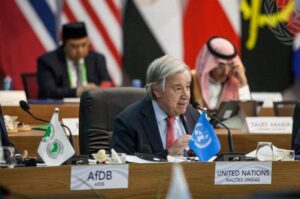
In a powerful appeal to the world’s largest economies during the G20 Summit, November 2024, UN Secretary-General António Guterres called for urgent climate action and reform of international institutions, warning that current systems are failing to meet global challenges. Credit: UN Photo/Gustavo Stephan

PRETORIA, South Africa, Feb 19 2025 (IPS) – US president Donald Trump’s recent actions seem designed to reassert American power and demonstrate that it is still the dominant global power and is capable of bullying weaker nations into following America’s lead.


He has shown contempt for international collaboration by withdrawing from the UN climate negotiations and the World Health Organization. His officials have also indicated that they will not participate in upcoming G20 meetings because he does not like the policies of South Africa, the G20 president for 2025.

In addition, he’s shown a lack of concern for international solidarity by halting US aid programmes and by undermining efforts to keep businesses honest. He has demonstrated his contempt for allies by imposing tariffs on their exports.

These actions demand a response from the rest of the international community that mitigates the risk to the well-being of people and planet and the effective management of global affairs.
My research on global economic governance suggests that history can offer some guidance on how to shape an effective response.

Such a response should be based on a realistic assessment of the configuration of global forces. It should seek to build tactical coalitions between state and non-state actors in both the global south and the global north who can agree on clear and limited objectives.

The following three historical lessons help explain this point.

Cautionary lessons

The first lesson is about the dangers of being overoptimistic in assessing the potential for change. In the late 1960s and early 1970s, the US was confronting defeat in the war in Vietnam, high inflation and domestic unrest, including the assassination of leading politicians and the murder of protesting students.

The US was also losing confidence in its ability to sustain the international monetary order it had established at the Bretton Woods conference in 1944.

In addition, the countries of the global south were calling for a new international economic order that was more responsive to their needs. Given the concerns about the political and economic situation in the US and the relative strength of the Soviet bloc at the time, this seemed a realistic demand.

In August 1971, President Richard Nixon, without any international consultations, launched what became known as the Nixon Shock. He broke the link between gold and the US dollar, thereby ending the international monetary system established in 1944. He also imposed a 10% surcharge on all imports into the US.

When America’s European allies protested and sought to create a reformed version of the old monetary order, US treasury secretary John Connolly informed them that the dollar was our currency but your problem.

Over the course of the 1970s, US allies in western Europe, Asia and all countries that participated in the old Bretton Woods system were forced to accept what the US preferred: a market-based international monetary system in which the US dollar became the dominant currency.

The US, along with its allies in the global north, also defeated the calls for a new international economic order and imposed their neo-liberal economic order on the world.

The second cautionary lesson highlights the importance of building robust tactical coalitions. In 1969, the International Monetary Fund member states agreed to authorise the IMF to create special drawing rights, the IMF’s unique reserve asset.

At the time, many IMF developing country member states advocated establishing a link between development and the special drawing rights. This would enable those countries most in need of additional resources to access more than their proportionate share of special drawing rights to fund their development.

All developing countries supported this demand. But they couldn’t agree on how to do it. The rich countries were able to exploit these differences and defeat the proposed link between the special drawing rights and development.

As a result, the special drawing rights are now distributed to all IMF member states according to their quotas in the IMF. This means that most allocations go to the rich countries who do not need them and have no obligation to share them with developing countries.

A third lesson arises from the successful Jubilee 2000 campaign to forgive the debts of low-income developing countries experiencing debt crises. This campaign, supported by a secretariat in the United Kingdom, eventually involved: civil society organisations and activists in 40 countries a petition signed by 21 million people and governments in both creditor and debtor countries.

These efforts resulted in the cancellation of the debts of 35 developing countries. These debts, totalling about US$100 billion, were owed primarily to bilateral and multilateral official creditors.

They were also a demonstration of the political power that can be generated by the combined actions of civil society organisations and governments in both rich and poor countries.

They can force the most powerful and wealthy institutions and individuals in the world to accept actions that, while requiring them to make affordable sacrifices, benefit low-income countries and potentially poor communities within those states.

What conclusions should be drawn?

We shouldn’t under-estimate the power of the US or the determination of the MAGA movement to use that power. However, their power is not absolute. It is constrained by the relative decline in US power as countries such as China and India gain economic and political strength.

In addition, there are now mechanisms for international cooperation, such as the G20, where states can coordinate their actions and gain tactical victories that are meaningful to people and planet.

But gaining such victories will require the following:

Firstly, the formation of tactical coalitions that include states from both the global south and the global north. If these states cooperate around limited and shared objectives they can counter the vested interests around the world that support Trump’s objectives.

Secondly, a special kind of public-private partnership in which states and non-state actors set aside their differences and agree to cooperate to achieve limited shared objectives. Neither states alone nor civil society groups alone were able to defeat the vested interests that opposed debt relief in the late 1990s. Working together they were able to defeat powerful creditor interests and gain debt relief for the poorest states.

Thirdly, this special partnership will only be possible if there’s general agreement on both the diagnosis of the problem and on the general contours of the solution. This was the case with the debt issue in the 1990s.

There are good candidates for such collaborative actions. For example, many states and non-state actors agree that international financial institutions need to be reformed and made more responsive to the needs of those member states that actually use their services but lack voice and vote in their governance.

The institutions also need to be more accountable to those affected by their policies and practices. They also agree that large corporations and financial institutions should pay their fair share of taxes and should be environmentally and socially responsible.

The urgency of the challenges facing the global community demands that the world begin countering Trump as soon as possible. South Africa as the current chair of the G20 has a special responsibility to ensure that this year the G20, together with its engagement groups, acts creatively and responsibly in relation to people and planet.

Source: Conversation Africa

IPS UN Bureau

  Source

Trump’s Proposed Gaza Takeover Denounced as “Mad Ethnic Cleansing Plan”

Armed Conflicts, Civil Society, Featured, Global Governance, Headlines, Human Rights, IPS UN: Inside the Glasshouse, Middle East & North Africa, TerraViva United Nations

Children in Gaza stand on debris from a destroyed building. February 2025. Credit: UN News

UNITED NATIONS, Feb 19 2025 (IPS) – President Trump—whose rash and ill-conceived proposals continue unabated—has threatened to “seize Gaza,” turn it into a “Riviera of the Middle East,” and move Palestinians to Egypt and Jordan, two longstanding American allies who depend heavily on US support for their survival.

The US President has also hinted that both countries would suffer either cutbacks or elimination of billions of dollars in economic and military aid —if they refuse to cooperate with him.


Is this for real or just an empty threat?

The proposed seizure of Gaza has been condemned by virtually all Arab leaders who have long advocated a full-fledged Palestinian homeland in the Gaza Strip

In an interview with Christiane Amanpour, Chief International Anchor for Cable News Network (CNN), Prince Turki Al-Faisal, a former Saudi ambassador to the US and UK, was quoted as saying Trump’s Gaza strategy is a “mad ethnic cleansing plan.”

Dr Ramzy Baroud, a journalist and Editor of The Palestine Chronicle, told IPS Arabs cannot accept Trump’s ethnic cleansing plan simply because doing so will destabilize the entire region and all of their regimes.

The repercussions of the original ethnic cleansing of Palestinians in 1948 are still felt throughout the Middle East to this day, he said.

At that time, the majority of the native population of the Palestinian homeland was displaced, around 800,000, most of whom remained displaced within historic Palestine.

Displacing a population of 2.2 million, following a genocide that has ignited rage across the Middle East and around the world, he argued, is a suicidal move for Arab regimes that are already struggling in a desperate search for legitimacy.

“I believe Trump already knows this, but is using the threats to put pressure on Arab regimes to come up with an ‘alternative’ plan aimed at disarming the Palestinian resistance, thus meeting Israel halfway. But in essence, the Arabs have no control over the outcome of the war in Gaza”.

If Israel has failed to disarm Gaza after 15 months of a war of extermination, the Arabs won’t be able to do so, said Dr Baroud, author of six books and a Non-resident Senior Research Fellow at the Center for Islam and Global Affairs (CIGA).

In an interview with FRANCE 24, UN Secretary-General Antonio Guterres said Trump’s plan at “ethnic cleansing is not acceptable in our world”.

“In the search for solutions, we must not make the problem worse. It is vital to stay true to the bedrock of international law. It is essential to avoid any form of ethnic cleansing,” Guterres told the U.N. Committee on the Exercise of the Inalienable Rights of the Palestinian People.

Addressing members of the Committee last week, Guterres said: “At its essence, the exercise of the inalienable rights of the Palestinian people is about the right of Palestinians to simply live as human beings in their own land.”

However, he said, “we have seen the realization of those rights steadily slip farther out of reach” as well as “a chilling, systematic dehumanization and demonization of an entire people.”

Dr Baroud said Prince Turki Al-Faisal is correct to call it “a mad ethnic cleansing plan”. It is.

But it will fail if the Arabs understand American intentions and focus their energies on supporting Palestinian steadfastness in Gaza

Israel is in its weakest position in decades, and aside from empty threats and rhetoric, it has very few cards left. Arab unity is now key, and I believe that a collective response could positively influence inner Arab relations and re-center Palestine as the driving cause for all Arab nations.

In fact, this could be the chance for the Arab League to matter once more, after decades of marginalization and irrelevance, declared Dr Baroud.

Meanwhile, when US Secretary of State Marco Rubio was in the Middle East last week, he was able to gauge the widespread Arab opposition to Trump’s plan, but apparently downplayed the proposal.

The New York Times quoted Rubio as saying Trump was merely trying to “get a reaction” and “stir” other nations into providing more assistance to post-war Gaza.

King Abdullah II of Jordan, leading a country which is already home to about 700,00 Palestinian, Syrian and Iraqi refugees, told Trump during a White House meeting last week that he is ready to offer a home to about 2,000 Palestinian children in need of medical care.

And perhaps nothing more.

Incidentally, the wife of the Jordanian King is Queen Rania, who is of Palestinian descent.

The proposed takeover of Gaza –and the forcible transfer of Palestinians—are considered both a war crime and a crime against humanity, according to the International Criminal Court (ICC).

Janina Dill, co-director of the Oxford Institute for Ethics, Law and Armed Conflict, was quoted in the New York Times, as saying: “Trump is just casually making major international crimes into policy proposals. He just normalizes violating, or proposing to violate, the absolute bedrock principles of international law”.

Meanwhile, Reuter’s reported that Egypt’s President Abdel Fattah al-Sisi will not travel to Washington for talks at the White House, if the agenda includes Trump’s plan to expel Palestinians from Gaza, according to two Egyptian security sources.

In a call with al-Sisi on 1 February, the US president extended an open invitation to the Egyptian President to visit the White House. No date has been set for any such visit, a US official said.

The Gaza takeover will also be the primary topic on the agenda of an emergency Arab Summit meeting scheduled to take place in Cairo March 4.

IPS UN Bureau Report

  Source

World’s Largest Religious Gathering Becomes Trans-Inclusive Despite Controversies

Arts, Asia-Pacific, Civil Society, Editors’ Choice, Featured, Gender, Gender Identity, Headlines, Human Rights, LGBTQ, Religion, TerraViva United Nations

Religion

Pavitra Nandagiri—one of the highest-ranking transgender spiritual leaders at Maha Kumbh, the largest religious gathering on earth in Prayagraj, India. Credit: Stella Paul/IPS

Pavitra Nandagiri—one of the highest-ranking transgender spiritual leaders at Maha Kumbh, the largest religious gathering on earth in Prayagraj, India. Credit: Stella Paul/IPS

PRAYAGRAJ, India, Feb 18 2025 (IPS) – Despite a blazing sun and growing heat, Pavitra Nandagiri sits on a cot smiling. Clad in a saffron robe and headgear with her forehead painted with turmeric and vermillion, Nandagiri is a Mahamandaleshwar—one of the highest-ranking monks of the Kinnar Akhada (Transgender Arena) at the Maha Kumbh, the world’s largest religious gathering currently underway in northern India.


As a steady stream of visitors pours in to touch her feet, Nandagiri raises her right hand and touches their heads in a gesture of accepting their respect and blesses them.

Just a few hours ago, she had taken part in the special, ceremonial snan (bathing) in the Sangam—a place with mythological significance where three holy rivers—Ganga, Jamuna and Saraswati—are believed to have met. Taking a dip in the confluence of these rivers is considered by Hindus as the most sacred act of one’s lifetime.

The ceremonial bathing is led by the most important of the living Hindu saints and godmen who follow a strict order of hierarchy. On Wednesday morning (February 12), the fourth ceremonial bathing of the 45-day Maha Kumbh was held. Fifteen transgender spiritual leaders, including Nandagiri, marched along with the Naga Sadhus and Aghoris—the legendary saints with ash-covered bodies, matted hair, and minimalistic clothing. Together, they bathed in the river with the holy chant of “Har har Mahadev” (Hail Shiva) while saints of other sects waited for their turn.

A devotee prays at the Maha Kumbh Sangam, where three rivers are believed to have converged. While two of the rivers—Ganges and Yamuna—are visible, the third river, Saraswati, is said to be hidden underneath. Credit: Stella Paul/IPS

A devotee prays at the Maha Kumbh Sangam, where three rivers are believed to have converged. While two of the rivers—Ganges and Yamuna—are visible, the third river, Saraswati, is said to be hidden underneath. Credit: Stella Paul/IPS

Later, inside the Kinnar Akhada, trans gurus receive visitors while some are seen performing some rituals and meditating along with Aghori ascetics. Asked how the partnership between the third highest order of the religious saints and the trans leaders came to be, Nandagiri says that it had been in the making since 2015 and culminated in a functioning collaboration during this year’s Maha Kumbh, which happens once every 12 years. She, however, does not share other details except that perhaps what brought together the two sects is their shared denouncement of worldly pleasure and embracing of a life free from its wealth and other complexities.

Transgender-Inclusive Kumbh: Conditions Apply

At the Kumbh, Akharas are organized into various sects, primarily categorized based on their philosophical orientation and the deity they worship. The two main sects are Shaiva Akharas, dedicated to Lord Shiva, and Vaishnava Akharas, devoted to Lord Vishnu. Each Akhara operates under a hierarchical structure, typically led by a Mahant (chief) or Acharya (spiritual leader) who oversees the spiritual and administrative functions.

The inclusion of the transgender Acharyas in the Kumbh, especially as a part of the highly revered Juna Akhada of the group of the Naga Sadhus, however, has not been completely free of controversies. Some have disputed their claim of embracing a minimalistic life and accused them of indulging in a game of power and authority considered unbefitting for true sainthood.

On January 24, the community ushered in a former film actress called Mamta Kulkarni as one of its top leaders, which led to protests by many both from within the trans community and leaders of other Hindu sects, who described it as a public relations stunt. Baba Ramdev—a well-known yoga guru—called it a violation of the Hindu religious ethos. Some gurus went as far as threatening to boycott the next Kumbh—to be held in 2037—if the Kinnar Akhada is not excluded from the ritual bathing.

Kalyani Nandagiri—another top-ranking trans guru who opposed the actress’s inclusion—was physically attacked by unidentified assailants on February 12.

A monk at the Transgender Arena within the Maha Kumbh. Credit: Stella Paul/IPS

A monk at the Transgender Arena within the Maha Kumbh. Credit: Stella Paul/IPS

Despite these deep divisions and acts of violence, Pavitra Nanndgiri remains hopeful of the community’s future.

“People say a lot of things; some wrongs also happen. But such small issues should not be highlighted much. We are here today, and we will be here then (in the next Kumbh),” she says, sounding more like a peace advocate.

A Different Picture

While inside the Kinnar Akhada, trans gurus are busy receiving and blessing visitors; outside, on the street, a small crowd of men is seen surrounding a young trans man dancing to the fast beats of music.

“This is Launda Naach,” says Ajeet Bahadur—a local theater artist. “It’s a common form of rural entertainment here, performed typically by cross-dressing trans men.”

The audience of Launda Naach is typically male. It is said to have started at a time when women were not allowed to dance in public because of orthodox social norms. However, today the moves of a Launda Naach performer are often sleazy and according to Ajeet Bahadur, the dancers are often sexually exploited, and their performance is rarely seen as art.

“Their lives are unbelievably miserable; there is little respect for their art, all eyes are on their bodies and exploitation and poverty are a constant part of their lives,” says Bahadur, who has studied the lives of Launda Naach performers for some time.

Aside from Launda Naach performers, thousands of other trans men and women in India struggle to earn a living. They are usually seen begging on the street and inside public transport, while many are also often accused of extorting money from small businesses such as shopkeepers in local markets. Not surprisingly, the presence of a trans person in India usually evokes a mix of fear and contempt instead of the deep respect that is on display in the Kinnar Akhada of the Kumbh. Will the elevated status of the gurus here lead to any change in the social status of the common trans people?

Priyanka Nandagiri, a transgender monk, says that it cannot be guaranteed. “Broadly, the transgender community in India is divided into two groups: the Sanatani and the Deredaar. We are the members of the Sanatani group who have always been immersed in religious activities, while the Deredaar are the ones who have chosen a different lifestyle, such as performing dances on the street and at social events like weddings, etc. So, we have always been following separate paths,” she explains.

Dwita Acharya and Mohini Acharya—two other trans monks—nod in agreement: “It will depend on what life they choose,” they say in unison.

”If they want to follow our path (the Sanatani), they will get that recognition but if they want to continue with their usual Deredaar lifestyle, then people will continue to view them accordingly.”

[embedded content]

IPS UN Bureau Report

  Source