Pacific Games Channels Youth Aspirations in the Solomon Islands

Asia-Pacific, Civil Society, Economy & Trade, Editors’ Choice, Featured, Headlines, Human Rights, Sustainable Development Goals, TerraViva United Nations, Youth

Youth

Jovita Ambrose and Timson Irowane are two young athletes training to be part of the Solomon Islands national team at the Pacific Games. Credit: Catherine Wilson/IPS

HONIARA, SOLOMON ISLANDS, Nov 17 2023 (IPS) – The Pacific Games, the most prestigious sporting event in the Pacific Islands region, will open in the Solomon Islands in the southwest Pacific on 19 November. And it is set to shine a spotlight on the energy, hopes and aspirations of youths who comprise the majority of the country’s population.


Timson Irowane (25), who has been competing in triathlons for the past six years, is brimming with confidence and anticipation. “The Pacific Games is a big event because my people are here, and it is very special because this is the first time the Solomon Islands is hosting the Games that I’ve been involved in,” Irowane told IPS during an interview at the Solomon Islands National Institute of Sport in the capital, Honiara. 

Every four years, a Pacific Island nation is chosen to host the regional multi-sport Pacific Games. And this year, about 5,000 athletes from 24 Pacific Island states, such as Papua New Guinea, Kiribati, Fiji and New Caledonia, will arrive in Honiara to compete in 24 sports, ranging from athletics and swimming to archery and basketball.

The Solomon Islands has a high population growth rate of 2.3 percent and about 70 percent of the country’s population of about 734,000 people are aged under 35 years. Christian Nieng, Executive Director of the Pacific Games National Hosting Authority, told IPS that it will be a chance to showcase their talents and achievements. “It is the biggest international event ever hosted in the country. And as we are hosting, we want to compete for every medal chance,” Nieng said.

Not far from Honiara city centre, the new Games precinct includes a large national stadium, which can accommodate 10,000 people, as well as swimming and tennis centres. Eighty percent of the funding needed to build the facilities and organize the Games has been provided by international donors and bilateral partners, including Australia, New Zealand, Papua New Guinea, China, Saudi Arabia, India, Korea and Indonesia.

“One of the long-term benefits of the Games is that we now have a new sports city as a legacy of the event,” Nieng added. It will be one of the best in the Pacific region, he believes, and, if well maintained, will last for 25 years, providing world-class facilities for Solomon Islanders to pursue their development and ambitions in sport.

At the sports institute, about 1,200 athletes are in training, and their energy and excitement is palpable. Here, Irowane, who is from Western and Malaita, two outer island provinces, is one among many who are striving to be selected for the national team of about 650 athletes who will represent the Solomon Islands later this month. His dedication has already led to international success. He participated in the Pacific Games held in Samoa in 2019 and numerous regional championships before heading to the Commonwealth Games hosted in Birmingham in the United Kingdom last year.

But he said that there were many wider benefits of sport to young people. “Triathlon is a multi-sport which involves discipline. Sport is not just for training, for fitness and skills that you learn in a specific sport, but it trains holistically to be a better person and a responsible person,” Irowane said. “And it helps athletes and individuals to be good citizens.”

Another local star aiming high is 21-year-old Jovita Ambrose, also from Malaita Province. “I started athletics and running during school games when I was 17 years old. When I’m running, I know that I’m good at it. When you are good at sport, it keeps you busy; it helps you stay healthy and not get involved in negative activities, such as drugs,” Ambrose said. In the last two years, she has travelled to competitions overseas, including the World Athletics Championships in Oregon in the United States last year and in Budapest, Hungary, three months ago.
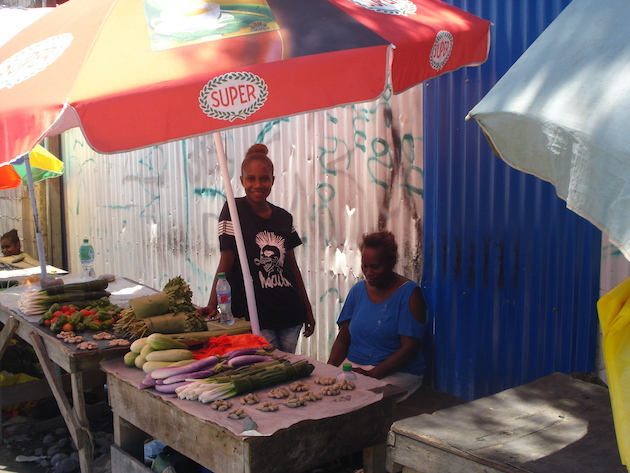
Many local businesses in the formal and informal sectors are hoping for increased visitors and business during the Pacific Games being hosted in the Solomon Islands in late November. Burns Creek Settlement market in Honiara. Credit: Catherine Wilson/IPS

Many local businesses in the formal and informal sectors are hoping for increased visitors and business during the Pacific Games being hosted in the Solomon Islands in late November. Burns Creek Settlement market in Honiara. Credit: Catherine Wilson/IPS

The Solomon Islands has a rural majority population that is scattered across more than 900 islands where there is often limited access to roads, basic services and employment. And the younger generation faces significant economic and development challenges. In a country which is not generating enough jobs for those of working age, the government estimates that 16,000-18,000 youths enter the employment market every year, with less than 4,000 likely to gain a secure job. Estimates of youth unemployment range from 35 percent to 60 percent.

“There is a lot of unemployment and, also, under-employment, where young people get a job opportunity which does not match their skill set. It is a real frustration for them when they are educated and still waiting for a job opportunity,” Harry James Olikwailafa, Chairman of the Solomon Islands National Youth Congress, explained to IPS. “The important issues for young people today are economic opportunities, employment opportunities and educational opportunities.”

In the last two decades, Solomon Islanders have also grappled with the aftermath of a five-year civil conflict. ‘The Tensions’, triggered by factors including urban-rural inequality, corruption and competition for land and resources, erupted in 1998 between rival armed groups representing local Guale landowners on Guadalcanal Island and internal settlers from Malaita Province. Hostilities ended in 2003, by which time many people, including children, had experienced violence, atrocities and displacement and had been deprived of education.

Morrison Filia 936) and his wife, Joycelyn (32), grew up in the aftermath of the conflict. And now, through a new entrepreneurial initiative, are aiming to help grow economic opportunities in Honiara. In August, they launched a new tourism business, Happy Isle Tours and Transfers, which offers airport transfers for visitors and tourists to hotels, as well as tours of Honiara, its history and landmarks, and excursions to World War II memorial sites on Guadalcanal Island.

“In Honiara, there are a lot of young people, and employment is a problem. So, the main idea is that we try to create this business so that we can employ more young people. We are trying to give young people opportunities,” Morrison told IPS.

They have also opened their business in time for the Games. “One of the other reasons why we started the business is that we noticed tourists and visitors coming [to the Solomon Islands], but they find it difficult to find transport,” Joycelyn said. “We are excited and looking forward to the Games because we are expecting more tourists. It will bring other different people to the country, and we are expecting increased bookings. I think it will also increase employment in the country and help us in our economy,” she continued.

The Pacific Games will continue for two weeks and finish on the 2 December. And like Morrison and Joycelyn, Timson Irowane has long-term goals. “I wish to be a role model, to introduce the sports and motivate more young people to be involved in any sport they are interested in. I love to encourage them because we have the advantage of the facilities here beyond the Games,” he declared.

IPS UN Bureau Report

  Source

Good for Girls and Good for the Planet: Eco-Friendly Sanitary Towels

Africa, Climate Change, Conservation, Environment, Featured, Green Economy, Headlines, Health, Innovation, Sustainable Development Goals, TerraViva United Nations

Women’s Health

Stephany Musombi and engineers preparing the banana stems for processing at KIRDI. Credit: Wilson Odhiambo/IPS

Stephany Musombi and engineers preparing the banana stems for processing at KIRDI. Credit: Wilson Odhiambo/IPS

NAIROBI, Nov 16 2023 (IPS) – ’Going Green’ seems to Dr Jacquline Kisato’s favorite catchphrase as she passionately explains her eco-friendly sanitary towel, a product she expects will help empower women and young girls while also putting money into farmers’ pockets.


Kisato is a lecturer at the Kenyatta University (KU), Fashion Design and Marketing, currently working on a project to develop affordable and eco-friendly sanitary towels while also finding a solution for sustainable packaging materials.

Kisato’s venture started out to help communities get a source of employment through the commercialization of banana stems – products that were considered useless by farmers and would usually be left to rot away on farms.

After the Kenyan government enforced a ban on the use of plastic bags in 2018, there was a need to find immediate alternatives.

Plastic bags were a necessity for grocers and fast-food vendors, an item that made it easy for customers to carry their goods home. Despite their advantage, however, their negative impact on the environment could no longer be overlooked.

‘’I started looking at this project from an entrepreneurship point of view on how I could commercialize banana stem fibers. The government had just banned single-use plastic bags, and market vendors needed alternatives to serve their customers,’’ Kisato told IPS.

‘’Poorly disposed sanitary towels also formed part of the pollution problem since they were composed of plastic,’’ she added.

According to Kisato, however, her need to empower women and young girls through affordable sanitary towels was something that she always had in mind after noticing the struggles that school-going girls went through.

‘’While walking along the hallways one day, a student on campus stopped me and asked if I could help her with a packet of sanitary pads. This incident shocked me as for a long time, I had assumed ‘period poverty’ was only experienced amongst high school children,’’ Kisato said.

Kisato and her research team interviewed 400 high school girls from Gatundi, Kibera, and Kawangware, where they found out that more than 50 percent of the girls in these low-income areas could hardly afford sanitary pads even when at home.

This did not sit well with the don as she felt something needed to be done about it.

It was while researching alternatives to plastic bags that she realized that she could solve two problems at the same time.

Kisato, therefore, applied for the National Research Fund (NRF) in 2018 with the aim of developing eco-friendly plastic bags and sanitary towels. Her wish came through when NRF granted Kenyatta University Ksh.9 million (about US $ 61,623) in 2020, with her taking the lead as the principal investigator in the project.

Her team is made up of scholars from different departments and institutions and also includes Ph.D. and master’s students, with each one of them playing a major role in seeing the project through.

‘’I lead a team of engineers from the Kenya Industrial Research and Development Institute (KIRDI), whose task is to reverse engineer machines that can extract fiber from banana stems and use them to create eco-friendly packaging and sanitary towels,’’ she explained. “I also have researchers from Moi University whose work was to turn the extracted fiber into soft materials for use.”

Kisato’s aim was to produce quality sanitary towels that could compete with what was already in the market while still being eco-friendly, a fact that led her to seek the expertise of Edwin Madivoli, a chemistry lecturer at the Jomo Kenyatta University of Agriculture and Technology (JKUAT).

According to Kisato, the towels on the market have a component in them called hydrogel, which enables them to retain fluids for longer, and were also lined with plastic sheets to prevent any leakage. Our intention is to replicate the same but use bioplastic materials, which can degrade as opposed to the normal plastic that is being used.

From her research, Kisato also discovered that Africans, on average, wore sanitary towels for longer as compared to women and girls from developed countries and were thus at risk of getting bacterial infections. This was due to limited access and affordability in Africa.

‘’The recommended period for one to have on a sanitary pad is about three hours, which means that it should be changed at least three times a day to avoid any risk of infections. This is, however, not the case for many girls in Africa due to poverty,’’ Kisato explained to IPS.

‘’We thought adding anti-microbial properties to our product would therefore make it as good or even better than what was in the market,’’ said Kisato.

The research team also found out that there were a lot of myths surrounding menstrual flow among young girls, a fact that led to a lot of stigmatization, which made it difficult for them to understand how to use sanitary towels properly.

Some of the notable ideas that girls told each other concerning menstrual flow included:

  1. It is a curse from God
  2. Girls who had periods were considered dirty and impure
  3. Their faces would become pale from losing blood

‘’These are beliefs that need to be done away with by encouraging parents and the government to speak about monthly periods with young girls openly,’’ Kisato said.

For the second phase of the project, Madivoli’s chemistry expertise came in handy, and the Research Scholarship and Innovation Fund (RSIF) was happy to add an additional Ksh.9 million (about USD 59,000) for Kisato to continue what she had started.

‘’My role is to ensure our sanitary pads are of the same quality as what is in the market while at the same time maintaining an eco-friendly nature, which is the main agenda of this whole project,’’ Madivoli told IPS.

‘’I am tasked with the development of hydrogels, production of bioplastics, and finding a way to incorporate anti-microbial properties into our products to protect the users from possible infections,’’ he said.

JKUAT received funding of Ksh.800,000 (about US $ 5477) from the Kenya National Innovation Agency (KENIA) to further help Madivoli with this research.

“As they are left to dry up on the farms, banana stems are known to produce large amounts of methane, which is a harmful greenhouse gas that contributes to the climate change problems that we are trying to tackle, added Madivoli. ‘”Having an alternative use for the stems therefore limits the greenhouse effect in the atmosphere.’’

Madivoli said that most banana farmers usually do not know what to do with the stems once they have done their harvest, and this project gives them a way to earn some extra income as they expect to buy the stems from them at Ksh.35 per stem.

“This project will not only be environmentally friendly but will also create jobs for the people who go to cut the stems from the farms while also finding use for the biomass that the farmers thought was useless,’’ he concluded.

Once it is up and running, they expect to source banana stems from counties such as Kisii, Muranga, Embu, Meru, and parts of western Kenya.

Stephany Musombi is one of Kisato’s students specializing in textiles whose task in the project is to come up with quality packaging materials.

‘’Apart from the banana fiber, I am also experimenting with other biomass such as pineapple and seaweed,’’ Musombi told IPS. If I can find a way to make this work, the project will open up a market for seaweed and pineapple biomass.

Kisato’s project could not have picked a better time there is an international joint push for green solutions to help mitigate climate change. On September 4, 2023, Kenya also played host to the climate summit that attracted leaders from across Africa.

Kenya’s president, William Ruto, drove himself in a tiny electric car to the Kenyatta International Convention Centre (KICC), where he challenged the African leaders and innovators to find sustainable solutions to their daily activities that can help them reduce the carbon print in the continent and globally.

‘’Africa can power all energy needs with renewable resources. The continent has enough potential to be entirely self-sufficient using wind, solar, geothermal, sustainable biomass, and hydropower energy. Africa can be a green industrial hub that helps other regions achieve their net zero strategies by 2050,’’ Ruto said at the summit.

Kisato expects her product to hit the market later this year, where she plans to make it more affordable for all. Her intention is to team up with startups or established companies that deal with toiletries.

‘’The cheapest sanitary packet in the market costs Ksh.140. We expect ours to go as low as Ksh.100, Kisato,’’ concluded.

Kenyatta University’s Vice Chancellor, Paul Wainaina, lauded the project, stating that it will enable the country to meet its industrial needs while conserving the environment.

IPS UN Bureau Report

  Source

New Robotic-Assisted Surgery Offers Inspiring Hope for Rwanda

Africa, Featured, Health, Innovation, TerraViva United Nations

Innovation

An artist’s impression of the completed Centre of Excellence in Kigali. The center supported by IRCAD is expected to assist with the training of surgeons throughout the continent with minimally invasive surgery training. Credit: Supplied

An artist’s impression of the completed Centre of Excellence in Kigali. The center supported by IRCAD is expected to assist with the training of surgeons throughout the continent with minimally invasive surgery training. Credit: Supplied

KIGALI, Nov 13 2023 (IPS) – In a newly established Centre of Excellence located in Masaka, a suburb of the Rwandan capital city, Kigali, an expanded lab, complete with innovative facilities and specialized instruments, is now giving surgeons a conducive environment to simulate how to perform minimally invasive surgeries.


French-based Institute for Research into Cancer of the Digestive System (IRCAD) played a major part in this initiative, the first ever on the African continent.

According to medical experts, in comparison to traditional open surgery, often requiring the patient to incur invasive large incisions, minimally invasive surgery procedures allow doctors to insert a camera through a small incision, or sometimes no incision at all.

Dr Alexandre Hostettler, head of the Surgical Data Science Team at IRCAD, pointed out that harnessing robotic and artificial intelligence is critical to enhance the capability of surgical treatment in Africa.

Robot-assisted minimally invasive surgery denotes the surgical technique where the robot-applied laparoscopic tools are remotely controlled by a human operator at a console.

“Performing surgeries using robotic assistance can be more comfortable for surgeons, as they can sit at a console rather than standing for extended periods, reducing physical strain,” he told IPS.

The center also aims to train medical doctors from across Africa about how to perform surgery using very small incisions, allowing the introduction of an endoscope connected to a camera with a magnified image leading to a very precise dissection of the operated organs.

Prof Jacques Marescaux, President and Founder of IRCAD, is convinced that the new center represents a turning point in surgical education and practice in Rwanda and sub-Saharan Africa. “The center is a catalyst for all African surgeons and computer scientists,” he said in an exclusive interview with IPS.

At the same time, Rwanda is striving to build an integrated medical service system that provides high-quality services and is efficient in medical facility management. Rwandan President Paul Kagame believes the key task is to keep investing significantly in public health infrastructure.

“The [new] Centre of Excellence is not serving Rwanda alone. It is serving Africa. It is also improving and taking beyond the talent we have in Africa to a much higher level,” Kagame said at the inauguration of the new facility, for which operations and running costs will be fully funded by the Government of Rwanda and IRCAD France.

Some medical experts observe that despite its numerous advantages over traditional surgery, especially the shorter hospital stay and less blood loss with lower overall costs, the new robotic surgery is not widespread in low- and middle-income countries, especially in Sub-Saharan Africa.

In addition, some researchers argue that computer-assisted navigation and robotics are sometimes challenging to use by perioperative nurses when caring for patients undergoing these procedures.

Dr Christine Mutegaraba, a surgeon from one of the private clinics in Kigali, told IPS that providing appropriate training remains critical for specialized medical practitioners to rely on these robotic surgery systems.

“Huge investment is also needed to ensure that clinics and other specialized referral hospitals are equipped with devices needed to perform these kind of surgical techniques,” Mutegaraba said.

According to the data from Rwanda’s Ministry of Health, laparoscopic was the sole type of minimally invasive surgical technique used by few medical practitioners across the country, and there wasn’t any formal training in place to develop the technical skills for additional doctors.

With the inauguration of the new center, both officials and health experts see hope in developing and advancing this technology, where specialized medical doctors will now be able to perform various kinds of surgeries.

While the introduction of innovative solutions in the health sector remains exciting for health officials, Marescaux points out that the new robotic technology is set to provide patients with high-quality medical services.

“We are working on building the largest team combined with computer scientists and surgeons in Africa,” he said.

Estimates by IRCAD show that access to surgical care in Low- and Middle-Income Countries (LMICs), such as countries in Sub-Saharan Africa, is still extremely limited, which causes a burden on the health care systems.

It said thanks to the center, African surgeons will not have to travel across the continent to receive the best training in surgery since it will be available right at home.

The 2022 World Health Organization’s study shows that strong measures are also needed to boost the training and recruitment of health workers in Africa.

Whereas the UN agency recommends that African countries significantly increase investments in building the health workforce to meet their current and future needs, new findings show that that the region has a ratio of 1.55 health workers (physicians, nurses, and midwives) per 1000 people.

Experts now believe that robotic technology will also lessen surgeon’s workload by efficiently managing the patient flow.

“As technology evolves, robotic systems are likely to incorporate more advanced features, integrating AI, augmented reality, and other technologies to aid the surgical process,” Hostettler said.

IPS UN Bureau Report

  Source

Argentina: Unpalatable Choices in Election Plagued with Uncertainty

Civil Society, Economy & Trade, Featured, Financial Crisis, Gender, Gender Identity, Headlines, Latin America & the Caribbean, TerraViva United Nations

Opinion

Credit: Tomás Cuesta/Getty Images

MONTEVIDEO, Uruguay, Nov 3 2023 (IPS) – For many of Argentina’s voters the choice in the 19 November presidential runoff is between the lesser of two evils: Sergio Massa, economy minister of a government that’s presiding over a once-in-a-generation economic meltdown with a whopping 140-per cent inflation rate, or Javier Milei, a far-right libertarian who admires Donald Trump, wants to shut down the Central Bank and wields a chainsaw in public as a symbol of his willingness to slash the state. Many will rue that it ever came to this.


A peculiar outsider

A post-modern media celebrity, Milei’s performance style is a perfect fit for social media. He’s easily angered, reacts violently and insults copiously. He’s unapologetically sexist and mocks identity politics.

Milei bangs the drum for ‘anarcho-capitalism’, an ultra-individualistic ideology in which the market has absolute pre-eminence: earlier this year, he described the sale of human organs as ‘just another market’.

To expand his appeal beyond this extreme economic niche he forged an alliance with the culturally conservative right. His running mate, Victoria Villarruel, represents the backlash against abortion – legalised after decades of civil society campaigning in 2020 – and sexual diversity and gender equality policies, along with reappraisal of the murderous military dictatorship that ruled Argentina between 1976 and 1983.

In the run-up to primary elections in August, the two mainstream coalitions – the centre-left incumbent Union for the Homeland (UP) and the centre-right opposition Together for Change (JxC) – displayed a notable lack of leadership and indulged in internal squabbles that showed very little empathy for people’s daily struggles. All they had to offer in the face of widespread concerns about inflation and insecurity were the candidacies of the current minister of the economy and a former minister of security. They made it easy for Milei to hold them responsible for decades of corruption, ineffectiveness and failure.

In Milei’s discourse, the hardworking, productive majority is being bled dry by taxation to maintain the privileges of a parasitic and corrupt political ‘caste’. His proposal is deceptively simple: shrink the state to a minimum to destroy the caste that lives off it, clearing their way for individual progress.

Milei gained traction among young voters, particularly young men, via TikTok. He found fertile ground among a generation that no longer expect to be better off than their parents. While many of his followers concede that his ideas may be a little crazy, they appear to be willing to take the risk of embracing the unknown on the basis that the really crazy plan would be to allow those long in control to retain their power and expect things to turn out differently. Milei has capitalised on the despair, hopelessness and accumulated anger so many rightfully feel.

Surprise after surprise

The first surprise came on 13 August, when Milei won the most votes of any candidate in the primaries.

Milei only entered politics in 2021, when the 17 per cent vote he amassed in the capital, Buenos Aires, sent him and two other libertarians to the National Congress. In the 2023 primaries he went much further, winning 30 per cent of the vote. He placed ahead of JxC, whose two candidates received a joint 28 per cent, and UP, the current incarnation of the Peronist Party, which took 27 per cent. The bulk of the UP vote, 21 per cent, went to Massa. That Peronism, once the dominant force, came third was a historic first.

The second surprise came on 22 October. Following the primaries, all talk was of Milei winning the presidency. He trumpeted his intent to win the first round outright. Measured against these expectations, his second place looks like an underperformance. But the fact that a candidate who wasn’t on the radar before the primaries has made the runoff shows how quickly the political landscape can shift.

In the October vote Milei took almost the exact share he’d received in the primaries. Massa finished above him with almost 37 per cent, displacing JxC, which lost four points on its second-place performance in the primaries.

The fact that the economy minister was able to distance himself from the government he’s part of – one often described as the worst in 40 years – to come first was viewed as a notable victory, even though his share was just about the lowest Peronism has ever received.

One explanation for Massa’s improved performance was turnout, which increased by eight points to almost 78 per cent – still low for a country with compulsory voting, but enough to make a difference. Much of the increase could be credited to the political machinery that mobilised voters on election day, aided by the minister-candidate pulling as many levers as he could to improve his chances. This included putting lots of instant cash into voters’ pockets, including through tax breaks benefiting targeted groups of workers and consumers.

An unpalatable decision

There’s still much uncertainty ahead. Economic failure is Milei’s best propaganda, so much will depend on how the economy behaves over the next couple of weeks. Milei and the destruction he represents can’t be written off.

Neither those currently in power nor those in the mainstream opposition recognise the obvious: Milei is their fault. They’ve held power for the best part of the past 40 years without effectively tackling any of the issues that concern people the most.

Many voters now feel they face an unpalatable choice between a corrupt and failing government and a dangerous disruptor. They fear that if they choose to keep Milei out, their votes may be misinterpreted as a show of active support for a continuity they also reject. What’s at stake here is more than one election. If Milei is kept at bay, the political dynamics leading to the current economic dysfunction will still need to be addressed – or the far-right threat to democracy won’t end with Milei.

Inés M. Pousadela is CIVICUS Senior Research Specialist, co-director and writer for CIVICUS Lens and co-author of the State of Civil Society Report.

  Source

Gender Parity: Rise of Denmark and Downfall of Afghanistan

Civil Society, Democracy, Featured, Gender, Global, Headlines, Human Rights, IPS UN: Inside the Glasshouse, TerraViva United Nations

Credit: UN Women

UNITED NATIONS, Oct 25 2023 (IPS) – The UN agency, which advocates women’s rights and gender empowerment, has predicted that gender equality is “300 years away.”

Addressing the UN Commission on the Status of Women last March, Secretary-General Antonio Guterres not only quoted the estimates provided by UN Women but also warned that progress toward gender equality is “vanishing before our eyes.”


“Women’s rights are being abused, threatened and violated around the world,” he said.

But a new report — the 2023 fourth edition of the global Women Peace and Security Index (WPS Index)—released October 24 draws on recognized data sources to measure women’s inclusion, justice, and security in 177 countries—covering over 99% of the world’s population.

“No country performs perfectly on the WPS Index and the results reveal wide disparities across countries, regions, and indicators. The WPS Index offers a tool for identifying where resources and accountability are needed most to advance women’s status – which benefits us all”, says the report.

India passes law to reserve seats for women legislators
4 OCTOBER 2023

The Index finds that societies where women are doing well are also more peaceful, democratic, prosperous, and better prepared to adapt to the impacts of climate change.

Denmark leads the 2023 rankings as the top country to be a woman, scoring more than three times higher than Afghanistan which is at the bottom.

Afghanistan ranks worst of 177 countries– in terms of the status of women, according to this year’s Women, Peace and Security (WPS) Index launched in New York.

The five highest ranking countries were Denmark, Switzerland, Sweden, Finland and Luxembourg. And the five lowest ranking countries were Afghanistan, Yemen, Central African Republic, Democratic Republic of the Congo and South Sudan.

Published by Georgetown University’s Institute for Women, Peace and Security (GIWPS) and the Centre on Gender, Peace and Security at the Peace Research Institute Oslo, the WPS Index uses 13 indicators to measure women’s status, ranging from education and employment to laws and organized violence.

The United States ranks 37th this year, scoring similarly to Slovenia, Bulgaria and Taiwan in the second quintile.

Dr. Purnima Mane. Ex- President and CEO of Pathfinder International, and former Deputy Executive Director (Program) of the United Nations Population Fund (UNFPA), told IPS the WPS Index emphasizes the sobering realities which different sectors of society –- including academic institutions, the United Nations, the media and civil society in general – have emphasized repeatedly over the years:

She said many countries which rank low in women’s status continue to remain so over time, despite global advocacy for gender equality

“Growing conflict and lack of security in countries could even worsen the situation for women and will not ensure adequate results in our efforts to boost women’s status. The relationship between peace and security and women’s overall wellbeing remains critical and demands adequate attention and investment.”

Data from the WPS Index, funded by the Norwegian Ministry of Foreign Affairs show evidence of this relationship between peace and security and women’s status.

A clear example is the countries that rank high and low in this Index –not surprisingly the countries that rank low in women’s status are the very same countries in which peace and security are at an abysmally low level, she added.

Sanam Anderlini, Founder/CEO of the International Civil Society Action Network (ICAN)* told IPS according to the index, in 2017, Afghanistan was ranked 152 out of 153 countries, with Syria coming last.

In 2019/2020, it was 16th out of 167, with Yemen coming last, and now in 2023, Afghanistan is coming at the bottom of the index.

‘This indicates that Afghan women were facing a long struggle even prior to the Taliban, but given that 60% of Afghans were under the age of 25, and many young women were in universities and entering professions including law, medicine and education, there was hope that the country’s overall ranking could also improve over time.’

She pointed out that Taliban’s takeover has set them on a downward generational spiral. The tragedy is that this decline was a result of the US’s loss to the Taliban at the negotiating tables in Doha.

“It is a result of the diplomatic community’s unwillingness to heed the warnings of Afghan women about the Taliban, or uphold their own commitments to the women peace and security agenda’s first tenet — the participation of women in peace processes.”

“But despite the darkness, we cannot forsake and forget Afghan women and girls. They are still fighting and finding ways to access education, healthcare and livelihoods,” said Anderlini.

“Now, more than ever, the international community must double down on engaging them and ensuring they are present and fully participating in the decision-making pertaining to the future of their country — not only in the humanitarian space, but also on economic, social and political and security matters. There are plenty of Afghan women – inside and outside the country — ready to take on this challenge,” she declared.

Elaborating further, Dr Mane said a range of reports prepared by a variety of sources, including the UN and academic institutions have been referenced in this Index using 13 different indicators on women’s status, to show that societies where women’s economic, social, and political situation, formal and informal justice for women, and the status of the security of women at the social and community level are doing well, are the very same societies, which overall, are more peaceful, economically stronger, have more democratic systems in place and are also dealing better with the impacts of climate change.

The WPS Index and its data, she pointed out, identify clearly areas where further investment is needed to boost women’s status. But what about general conflict and lack of security which adversely impact women particularly hard, along with others who are marginalized in different societies?

“The Index clearly demonstrates that all of the bottom 20 countries have experienced war and armed conflict of some sort, between 2021 and 2022 with more than half the women living in or near zones of conflict”.

With armed conflict growing in many countries over the last few years and the continuation of a generally negative climate in terms of women’s status in several countries such as Afghanistan, she argued, one cannot hope for a change in the status quo for women unless countries take a hard look at their policies and investments in both national peace and security and in women’s status.

“Any real change is possible only if the world acknowledges that the link between the two is critical, and paying attention to both is vital for improvements in national wellbeing as well as gender equality”, said Dr Mane, a former UN Assistant-Secretary-General (ASG) and an internationally recognized expert on gender, population and development, and public health, and who has devoted her career to advocating for population and development issues and working on sexual and reproductive health.

“With its scores, rankings, and robust data, the WPS Index offers a valuable tool for people working on issues of women, peace, and security,” said Elena Ortiz, the lead author of the WPS Index.

“Policymakers can use it to pinpoint where resources are needed. Academics can use it to study trends within indicators and across regions. Journalists can use it to give context and perspective to their stories. And activists can use it to hold governments accountable for their promises on advancing the status of women.”

All of the bottom 20 countries on this year’s Index have experienced armed conflict between 2021 and 2022. In most of these countries, more than half of women live in close proximity to conflict.

“Since 2021, Afghanistan has ranked the worst in the world to be a woman. Afghan women wake up each day to no jobs, no education and no autonomy over their lives. This report should serve as a wakeup call to world leaders that a nation of women is imprisoned.” said Torunn L. Tryggestad, Director of the Peace Research Institute Oslo’s Centre for Gender, Peace and Security.

IPS UN Bureau Report

  Source

How to Defend the Environment and Survive in the Attempt, as a Woman in Mexico

Active Citizens, Biodiversity, Civil Society, Climate Action, Conservation, Crime & Justice, Editors’ Choice, Environment, Featured, Gender, Headlines, Human Rights, Latin America & the Caribbean, Regional Categories, TerraViva United Nations, Water & Sanitation, Women & Climate Change

Human Rights

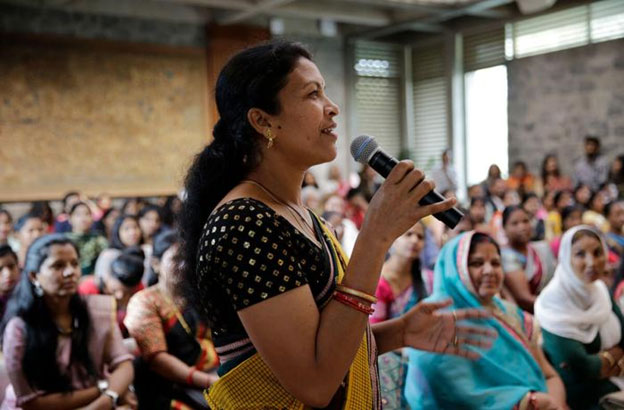
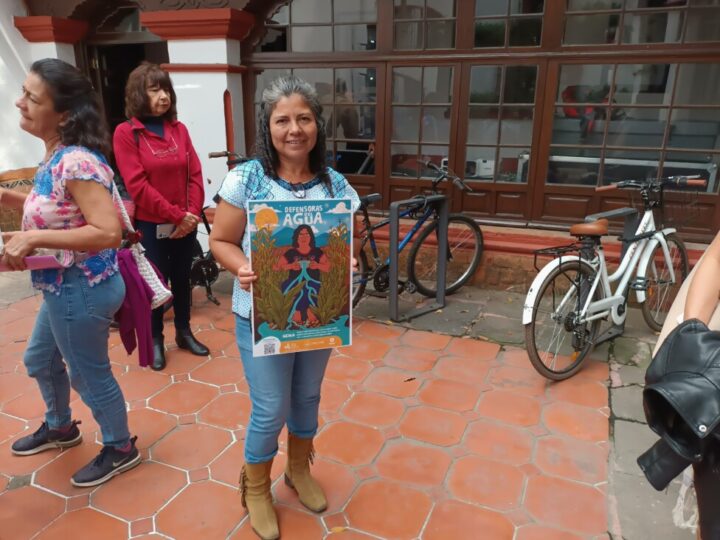
Dozens of women environmentalists participated in Mexico City in the launch of the Voices of Life campaign by eight non-governmental organizations on Oct. 12, 2023, which brings together hundreds of activists in five of the country's 32 states. CREDIT: Emilio Godoy / IPS

Dozens of women environmentalists participated in Mexico City in the launch of the Voices of Life campaign by eight non-governmental organizations on Oct. 12, 2023, which brings together hundreds of activists in five of the country’s 32 states. CREDIT: Emilio Godoy / IPS

MEXICO CITY, Oct 24 2023 (IPS) – The defense of the right to water led Gema Pacheco to become involved in environmental struggles in the southern Mexican state of Oaxaca, an area threatened by drought, land degradation, megaprojects, mining and deforestation.


Care “means first and foremost to value the place where we live, that the environment in which we grow up is part of our life and on which our existence depends,” said Pacheco, deputy municipal agent of San Matías Chilazoa, in the municipality of Ejutla de Crespo, some 355 kilometers south of Mexico City.

“We are in the phase of seeing how the Escazú Agreement will be applied. The most important thing is effective implementation. It is something new and it will not be ready overnight.” — Gisselle García

A biologist by profession, the activist is a member of the Local Committee for the Care and Defense of Water in San Matías Chilazoa, which belongs to the Coordinating Committee of Peoples United for the Care and Defense of Water (Copuda).

The local population is dedicated to growing corn, beans and chickpeas, an activity hampered by the scarcity of water in a country that has been suffering from a severe drought over the past year.

To deal with the phenomenon, the community created three water reservoirs and infiltration wells to feed the water table.

“Women’s participation has been restricted, there are few women in leadership positions. The main challenge is acceptance. There is little participation, because they see it as a waste of time and it is very demanding,” lamented Pacheco.

In November 2021, the 16 communities of Copuda obtained the right to manage the water resources in their territories, thus receiving water concessions.

But women activists like Pacheco face multiple threats for protecting their livelihoods and culture in a country where such activities can pose a lethal risk.

For this reason, eight organizations from five Mexican states launched the Voices of Life campaign on Oct. 12, involving hundreds of habitat protectors, some of whom came to the Mexican capital for the event, where IPS interviewed several of them.

Involvement in the defense of water led Gema Pacheco to become an environmental activist, participating in the Voices of Life campaign in Mexico, which seeks to bring visibility and respect to this high-risk activity in Mexico. CREDIT: Emilio Godoy / IPS

Involvement in the defense of water led Gema Pacheco to become an environmental activist, participating in the Voices of Life campaign in Mexico, which seeks to bring visibility and respect to this high-risk activity in Mexico. CREDIT: Emilio Godoy / IPS

The initiative seeks to promote the right to a healthy environment, facilitate environmental information, protect and recognize people and organizations that defend the environment, as well as learn how to use information and communication technologies.

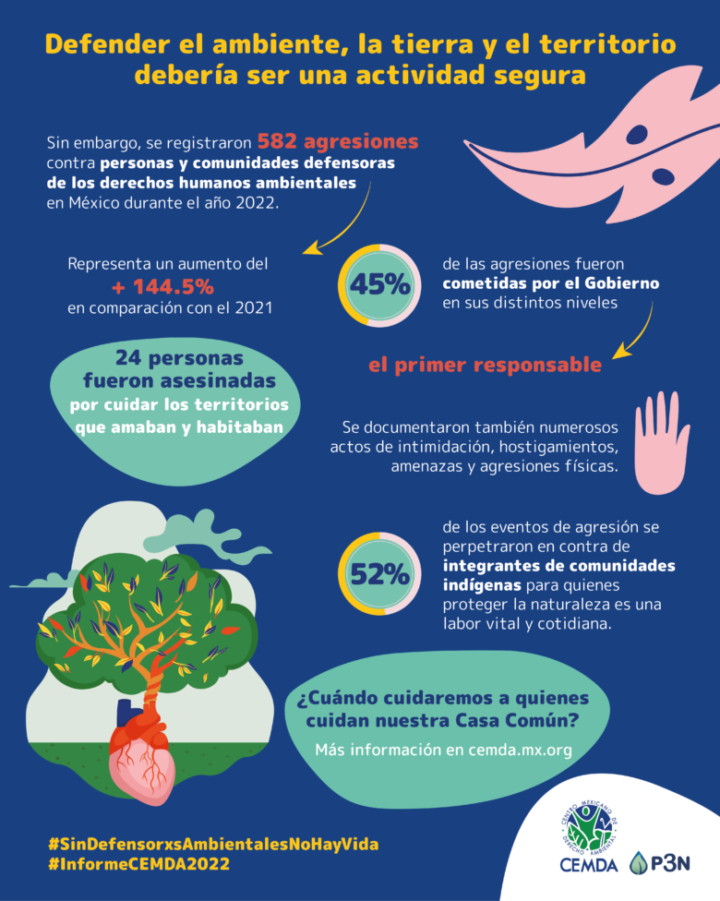
In 2022, Mexico ranked number three in Latin America in terms of murders of environmental activists, with 31 killed (four women and 16 indigenous people), behind Colombia (60) and Brazil (34), out of a global total of 177, according to the London-based non-governmental organization Global Witness.

A year earlier, this Latin American country of almost 129 million inhabitants ranked first on the planet, with 54 killings, so 2022 reflected an improvement.

“The situation in Mexico remains dire for defenders, and non-fatal attacks, including intimidation, threats, forced displacement, harassment and criminalization, continued to greatly complicate their work,” the report says.

The outlook remains serious for activists, as the non-governmental Mexican Center for Environmental Law (Cemda) documented 582 attacks in 2022, more than double the number in 2021. Oaxaca, Mexico City and the northern state of Chihuahua reported the highest number of attacks.

Urban problems

The south of Mexico City is home to the largest area of conservation land, but faces growing threats, such as deforestation, urbanization and irregular settlements.

Protected land defines the areas preserved by the public administration to ensure the survival of the land and its biodiversity.

Social anthropologist Tania Lopez said another risk has now emerged, in the form of the new General Land Use Planning Program 2020-2035 for the Mexican capital, which has a population of more than eight million people, although Greater Mexico City is home to more than 20 million.

“There was no public consultation of the plan based on a vision of development from the perspective of native peoples. In addition, it encourages real estate speculation, changes in land use and invasions,” said López, a member of the non-governmental organization Sembradoras Xochimilpas, part of the Voices of Life campaign.

Mexico is one of the most dangerous countries in the world for environmental defenders. In 2022, 31 activists were murdered, the third highest number in the region behind Colombia and Brazil. CREDIT: Cemda

Mexico is one of the most dangerous countries in the world for environmental defenders. In 2022, 31 activists were murdered, the third highest number in the region behind Colombia and Brazil. CREDIT: Cemda

Apart from the failure to carry out mandatory consultation processes, activists point out irregularities in the governmental Planning Institute and its technical and citizen advisory councils, because they are not included as members.

The conservation land, which provides clean air, water, agricultural production and protection of flora and fauna, totals some 87,000 hectares, more than half of Mexico City.

The plan stipulates conservation of rural and urban land. But critics of the program point out that the former would lose some 30,000 hectares, destined for rural housing.

The capital’s legislature is debating the program, which should have been ready by 2020.

Gisselle García, a lawyer with the non-governmental Interamerican Association for Environmental Defense, said attacks on women activists occur within a patriarchal culture that limits the existence of safe spaces for women’s participation in the defense of rights.

“It’s an entire system, which reflects the legal structure. If a woman files a civil or criminal complaint, she is not heard,” she told IPS, describing the special gender-based handicaps faced by women environmental defenders.

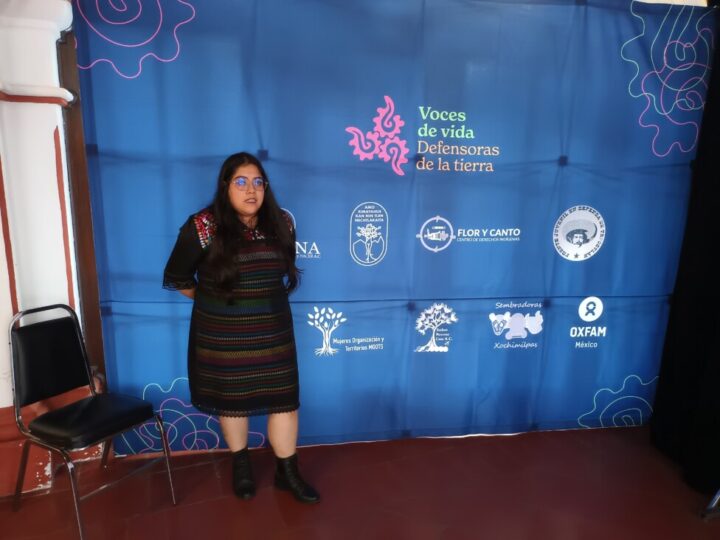
Social anthropologist Tania López is one of the members of the Voices of Life campaign, launched by eight non-governmental organizations on Oct. 12, 2023 to highlight the work of women environmental defenders in Mexico. CREDIT: Emilio Godoy / IPS

Social anthropologist Tania López is one of the members of the Voices of Life campaign, launched by eight non-governmental organizations on Oct. 12, 2023 to highlight the work of women environmental defenders in Mexico. CREDIT: Emilio Godoy / IPS

Still just an empty promise

This risky situation comes in the midst of preparations for the implementation of the Regional Agreement on Access to Information, Public Participation and Justice in Environmental Matters in Latin America and the Caribbean, known as the Escazú Agreement, an unprecedented treaty that aims to mitigate threats to defenders of the environment, in force since April 2021.

Article 9 of the Agreement stipulates the obligation to ensure a safe and enabling environment for the exercise of environmental defense, to take protective or preventive measures prior to an attack, and to take response actions.

The treaty, which takes its name from the Costa Rican city where it was signed, guarantees access to environmental information and justice, as well as public participation in environmental decision-making, to protect activists.

The Escazú Agreement has so far been signed by 24 Latin American and Caribbean countries, 15 of which have ratified it as well.

But its implementation is proceeding at the same slow pace as environmental protection in countries such as Mexico, where there are still no legislative changes to ensure its enforcement.

In August, the seven-person Committee to Support the Implementation of and Compliance with the Escazú Agreement took office. This is a non-contentious, consultative subsidiary body of the Conference of the Parties to the agreement to promote and support its implementation.

Meanwhile, in Mexico, the Escazú National Group, made up of government and civil society representatives, was formed in June to implement the treaty.

During the annual regional Second Forum of Human Rights Defenders, held Sept. 26-28 in Panama, participants called on the region’s governments to strengthen protection and ensure a safe and enabling environment for environmental protectors, particularly women.

While the Mexican women defenders who gathered in Mexico City valued the Escazú Agreement, they also stressed the importance of its dissemination and, even more so, its proper implementation.

Activists Pacheco and Lopez agreed on the need for national outreach, especially to stakeholders.

“We need more information to get out, a lot of work needs to be done, more people need to know about it,” said Pacheco.

The parties to the treaty are currently discussing a draft action plan that would cover 2024 to 2030.

The document calls for the generation of greater knowledge, awareness and dissemination of information on the situation, rights and role of individuals, groups and organizations that defend human rights in environmental matters, as well as on the existing instruments and mechanisms for prevention, protection and response.

It also seeks recognition of the work and contribution of individuals, groups and organizations that defend human rights, capacity building, support for national implementation and cooperation, as well as a follow-up and review scheme for the regional plan.

García the attorney said the regional treaty is just one more tool, however important it may be.

“We are in the phase of seeing how the Escazú Agreement will be applied. The most important thing is effective implementation. It is something new and it will not be ready overnight,” she said.

As it gains strength, the women defenders talk about how the treaty can help them in their work. “If they attack me, what do I do? Pull out the agreement and show it to them so they know they must respect me?” one of the women who are part of the Voices of Life campaign asked her fellow activists.

  Source