Skyrocketing Inflation Puts Food Security in Pakistan at Risk

Asia-Pacific, Civil Society, Food Security and Nutrition, Headlines, Humanitarian Emergencies, Poverty & SDGs, TerraViva United Nations, Trade & Investment

Economy & Trade

Jamaat-i-Islami party stage protest in Peshawar against price-hikes. Credit: Ashfaq Yusufzai/IPS

Jamaat-i-Islami party stage protest in Peshawar against price-hikes. Credit: Ashfaq Yusufzai/IPS

PESHAWAR, PAKISTAN, Sep 26 2023 (IPS) – “We are under extreme stress about skyrocketing prices of essential edible commodities and the cost of gas and electricity. The situation is becoming worse because every day. We must pay more for wheat flour, sugar, tea, milk, oil, etc.,” Azizullah Khan, a civil servant, says.


Khan draws a monthly salary of 30,000 rupees (USD100), but the cost of living is increasing daily, making it hard for his family of eight to survive.

The electricity bill for August was 20,000 rupees (USD67), and two-thirds of his salary went into paying that, while the remaining 10,000 rupees (USD33) is meant to pay for gas and other family expenses, which, he says, is next to impossible.

“Now, we are seriously thinking of selling the small house we inherited from our parents because we have to repay loans to the shopkeepers and pay the school fees of three children,” says Khan, 30. He lives on the outskirts of Peshawar, the provincial capital of Khyber Pakhtunkhwa, one of Pakistan’s four provinces.

Pakistan’s leading economy and business analyst, Khurram Hussain, told IPS that the country has been seeing relentless and unending pressure on the exchange rate and price levels for more than two and a half years.

“The present bout of exchange rate volatility began in May 2021 and has continued unabated since then,” Hussain says. The dollar had from around 150 rupees to the dollar to about 300 to the dollar, he says.

Quoted in Dawn, a newspaper in Pakistan, he noted: “It took ten years for the dollar to double in value from 75 to 150 rupees, from 2008 till 2019. It took less than two and a half years to double again from May 2021 till today.

At the same time, inflation, as measured by the Consumer Price Index, started to skyrocket a few months after May 2021 and has risen relentlessly until now, with a few interruptions.

Muhammad Raees, 28, a daily wager, is severely hit by the cost of living.

“One year back, the price of 20 kg wheat four was Rs1300, which has now increased to Rs3000. I don’t find work every day because the construction activities have nosedived due to cement, iron, marble, and tile prices, and most of the contractors have stopped work,” Raees, a father of two, says.

“Many times, I have thought of committing suicide, but then I think of my children and wife,” he says.

At least ten people have committed suicide in the past two months.

“They were unable to pay electricity bills. Now, the government is mulling about jacking up the gas price by 50 percent. The poor population is the worst hit,” he says.

Javid Shah, a vegetable seller in Nowshera city adjacent to Peshawar, is fed up with life. “Cost of transportation has increased, and so the prices of vegetables and, as a result, sales have declined. Many who bought 1 kg of tomatoes, lady fingers, and potatoes daily are now taking half a kg,” he says. “I have to discard rotten vegetables daily for lack of sales.”

Akram Ali, a fruit seller in a tiny shop, also constantly complains of high inflation and devaluation of rupees. Ali says his business has reached a standstill as people no longer buy fruits due to high prices.

“As a result, I am going to close shop and start the business in a hand pushcart to save on rent.”

“My two sons are going to school, but the last one and half years have been tough, and I cannot pay their fees. Both have quit schools and sit at home,” he complained.

Saleem Ahmed, a local economist, tells IPS that pulses, considered poor men’s diet, are so expensive they are out of reach of many.

“All pulses are imported in dollars, so their prices have increased. The people are struck by inflation, and they cannot buy items, like pulses, which used to be cheap,” he said.

Prices were stable until former Prime Minister Imran Khan was removed in April 2022 in a no-confidence vote at the National Assembly.

“People have been running from pillar to post for two square meals. As if inflation wasn’t enough, huge smuggling of sugar, wheat flour, pulses, oil, etc. to neighboring Afghanistan have hammered the last nail in the coffin of the poverty-stricken masses,” he said.

Ahmed says the government is taking loans from the IMF, the World Bank, and other lenders with high interest rates, impacting the cost of living.

In such a scenario, Afghan refugees living in Pakistan are jubilant over the rising Afghan economy under the Taliban, and many are weighing options to return to their country.

“In Pakistan, the US dollar is equal to 300 rupees while it is traded for 75 Afghani back home,” Muhammad Mustafa, an Afghan with a sanitary business in Peshawar, says.

Mustafa says he had sent his elder son to Kabul to search for the rented shop so he could shift his business there.

“All my family live in Kabul, and we want to be there. The time is ripe for us to shift (back) there,” he says.

Petrol is being sold at 312 rupees (USD1.5) per liter in Pakistan, while its rate was 80 Afghani (USD1.02) in Kabul.

IPS – UN Bureau, IPS UN Bureau Report,

  Source

Empowering Women in Assam: Livestock Farming Brings Economic Relief Post-COVID

Aid, Asia-Pacific, Civil Society, Development & Aid, Editors’ Choice, Featured, Food and Agriculture, Food Security and Nutrition, Food Sustainability, Headlines, Humanitarian Emergencies, Poverty & SDGs, Sustainable Development Goals, TerraViva United Nations

Food and Agriculture

Goat rearing is contributing to economic independence and improved livelihoods of women thanks to a post-COVID-19 empowerment project. CREDIT: Umar Manzoor Shah/IPS

Goat rearing is contributing to economic independence and improved livelihoods of women thanks to a post-COVID-19 empowerment project. CREDIT: Umar Manzoor Shah/IPS

MILONPUR, INDIA, Aug 8 2023 (IPS) – Seema Devi is a 39-year-old woman hailing from India’s northeastern state of Assam. She lives in a village called Milonpur, a small hamlet with no more than 1 000 inhabitants. While most men from the village, including Devi’s husband, move to cities and towns in search of work, women are left behind to take care of the house and kids.


Devi says that after the COVID-19 lockdown in India in the year 2020, the family income drastically plummeted. As most of the factories were shut for months, the workers, including Devi’s husband, were jobless. Even after the lockdown ended and workers were called back to the factories, the wages dipped.

“Earlier my husband would earn no less than Rs 10 000 a month (125 USD), and after the lockdown, it wasn’t more than a mere 6 000 rupees (70 USD). My children and I would suffer for the want of basic needs like medicine and clothing, but at the same time, I was considerate of the situation and helplessness of my husband,” Devi told IPS.

However, there were few alternatives available at home that could have mitigated Devi’s predicament. With the small area of ancestral land used for cultivation, the change in weather patterns caused her family and several households in the village to reap losses.

However, in 2021, a non-government organization visited the hamlet to assess the situation in the post-COVID scenario. The villagers told the team about how most of the men in the village go out to cities and towns in search of livelihood and work as labourers in factories and that their wages have come down due to economic distress in the country.

After hectic deliberations, about ten self-help groups of women were created. They trained in livestock farming and how this venture could be turned into a profitable business.

The women were initially reluctant because they were unaware of how to make livestock farming profitable. They would ask the members of the charitable organisation questions like, “What if it fails to yield desired results? What if some terrible disease affects the animals, and what if the livestock wouldn’t generate any income for them?”

Wilson Kandulna, who was the senior member of the team, told IPS that experts were called in to train the women about cattle rearing and how timely vaccinations, proper feed, and care could make livestock farming profitable and mitigate their basic living costs. “At first, we provided ten goat kids to each women’s group and made them aware of the dos and don’ts of this kind of farming. They were quick to learn and grasped easily whatever was taught to them,” Wilson said.

He added that these women were living in economic distress due to the limited income of their husbands and were desperately anxious about the scarcity of proper education for children and other daily needs.

Devi says that as soon as she got the goat kids, she acquired basic training in feeding them properly and taking them for vaccinations to the nearby government veterinary hospital.

“Two years have passed, and now we have hundreds of goats as they reproduce quickly, and we are now able to earn a good income. During the first few months, there were issues like feeding problems, proper shelter during monsoons and summers, and how and when we should take them out for grazing. As time passed and we learned the skills, we have become very trained goat rearers,” Devi said.

Renuka, another woman in the self-help group, told IPS that for the past year, they have been continuously getting demands for goat milk from the main towns. “People know about the health benefits of goat milk. They know it is organic without any preservatives, and that is the reason we have a very high demand for it. We sell it at a good price, and at times, demand surpasses the supply,” Renuka said.

For Devi, livestock farming has been no less than a blessing. She says she earns more than five thousand rupees a month (about 60 USD) and has been able to cover daily household expenses all by herself. “I no longer rely on my husband for household expenses. I take care of it all by myself. My husband, too, is relieved, and things are getting back on track,” Devi said, smiling.

Kalpana, a 32-year-old member of the group, says the goats have increased in number, and last year, several of them were sold in the market at a good price.

“The profits were shared by the group members. Earlier, women in this village were entirely dependent on their husbands for covering their basic expenses. Now, they are economically self-reliant. They take good care of the house and of themselves,” Kalpana told IPS News.

Note: Names of some of the women have been changed on their request.

IPS UN Bureau Report

  Source

Indian Agriculture Towards 2030

Asia-Pacific, Biodiversity, Civil Society, Climate Change, Combating Desertification and Drought, Environment, Food and Agriculture, Food Security and Nutrition, Food Sustainability, Headlines, Natural Resources, TerraViva United Nations, Trade & Investment, Water & Sanitation

Opinion

KATHMANDU, Nepal, Apr 4 2022 (IPS) – India began its journey as an independent nation in 1947 with fresh memory of the Bengal Famine of 1943 which claimed 1.5 to 3 million lives. Against this backdrop, the First Five Year Plan (1951-56) prioritized agriculture which, however, shifted to heavily industrialization in the second Plan.


Shyam Khadka

The mid-1960s was a difficult time when consecutive droughts hit food production and India had to import about 11 million metric ton (MMT) of wheat per year – about 15% of its domestic food grain production – under US Public Law 480. With the availability of high yielding miracle seeds of wheat and rice accompanied by increasing use of chemical fertilisers, provision of minimum support price (MSP) for rice and wheat, expansion in irrigated area, and gradual mechanization of farms, Indian agri-food system fortunately took a definitive positive turn beginning late 1960s. As a result, India has become the largest producer of milk (187.7 MMT in 2019-20) and cotton (37.5 million bales in 2019-20) and the second largest producer of rice (117.5 MMT in 2019-20) and wheat (106.2 MMT in 2019-20), fruits (97.97 MMT in 2018-19) and vegetables (183.17 MMT in 2018-19). India today is not only food self-sufficient but also a net exporter of agricultural produce. In short, the success of Indian agriculture in last six decades has been nothing less than spectacular.

The success, however, has come with significant costs. The resource intensification that the Green Revolution requires has adversely affected natural resources and environment. India pumped 245 million cubic meters – about 25 percent of total groundwater withdrawn globally – for irrigation in 2011. As a result, ground water in 1,034 blocks (16% of total blocks) are over-exploited. Worse, ground water table has become critical in 4% and semi-critical in 10% of the blocks. Similarly, some 37% of land area in the country (120.4 mn ha) is affected by various types of land degradation. Subsidy policy-induced non-judicious use of fertilizers has led to the chemicalization of soil and pollution of water through leaching and run-off. Despite abundant supply of food grains, in 2020 41.7% of under-5 children suffered from stunting. India is home to 208.6 million – or over a quarter – of world’s undernourished people. Other challenges that Indian agriculture faces today include uneven regional growth, rising fiscal constraints, mounting and unsustainable level of subsidies, small holding size and further fragmentation of holdings and accompanying land tenurial issues, and low resource use efficiency, particularly of water. These factors act as serious impediments for sustained agricultural growth and farmers’ livelihoods.

Amidst the success and emerging challenges NITI Aayog, the apex public policy think tank of the Government of India and the Food and Agricultural Organization of the United Nations (FAO) decided to facilitate a national dialogue among key stakeholders including government agencies, academia, civil society organisations, farmers, private sector, international organizations, media and others to articulate a vision for 2030 and pathways for the remandating of agriculture in India. To this end, 10 thematic papers were commissioned from distinguished professionals. A 3-day national dialogue entitled, ‘Indian Agriculture Towards 2030: Pathways for enhancing Farmers’ Income, Nutritional Security and Sustainable Food and Farm Systems” was held in January 2021. NITI Aayog and FAO have now come up with a publication with the same title (Chand, R., Joshi, P, and Khadka, S., Editors (2022), Springer).

In addition to the challenges enumerated above the books also deals with issues of climate change and its impact on agricultural production and farmers’ incomes and the strategies to mitigate such change; growing incidence of pests, pandemics, and transboundary diseases and threat to biosecurity affecting agricultural production; and alternative farming systems for transformative and sustainable agroecology and biodiverse future. The role of science, technology and innovation is identified as key to sustainable and resilient agriculture. Similarly, role of structural reforms and governance are discussed in detail and the role of price policies, market reforms and institutions are being highlighted for an efficient, inclusive and sustainable agriculture.

The National Dialogue identified pathways for transformation with emphasis on remandating Indian agriculture in a way that makes it more productive, efficient, resilient, resource conserving, nutrition centered and globally focused. These transformational outcomes are to be achieved by focusing on following pathways:

    • Increasing investment in agriculture, first to reverse the declining trend and then achieving ‘efficient’ growth rather than growth alone, increased adoption of improved technology, reorienting agricultural science, technology and innovations, applying digital solutions and artificial intelligence, better use of information and communication technology, application of One Health concept;
    • Making Indian agriculture globally-focused, shifting attention from self-sufficiency to adding value through increased processing and achieving a high rate of export growth
    • Enhancing the efficiency of the water and other resources, mainly by correcting distorted water pricing, adopting water conserving technologies and agro-ecological approach, changes in the cropping pattern, and reversing neglect of rainfed areas;
    • Making agriculture climate resilient, by adopting several no-regret technological and institutional options as well as by undertaking more targeted research, use of big data analytics, and adoption of a science-based and green growth approach;
    • Tackling nutrition and food safety, by diversifying diet, reducing post-harvest losses, encouraging bio-fortifications, empowering women, enforcing food safety standards, improving water sanitation and hygiene, and promoting food safety awareness and nutrition education;
    • Focusing sharply on innovations, incentives and institutions that contribute to enhance productivity, enhance resilience to climate change, incentivize water and energy conservation, and by adopting more conducive regulatory environment such as for exploiting ground water; and
    • Adopting appropriate policies and improving governance such as by reducing distortion caused by the MSP, accelerating rural infrastructure creation, ensuring greater engagement of the state governments, enhancing access to credit and extension services, and expansion of contract farming.

As emphasised by Honourable M. Venkaiah Naidu, Vice-President of India in his foreword, the book ‘provides a sound basis for reflection because they distil important lessons and present an array of policy options for the government to choose from’.

Shyam Khadka is a former senior official of the Food and Agriculture Organization of the United Nations who served as representative in India (2015-18) and was Senior Portfolio Manager in United Nations International Fund for Agricultural Development (1997-2014). An international development professional, Khadka works on policies, programs and projects that aim at developing agriculture, ensuring food security, and reducing poverty globally.

IPS UN Bureau

  Source

Donors Must Rethink Africa’s Flagging Green Revolution, New Evaluation Shows (Commentary)

Africa, Civil Society, Development & Aid, Economy & Trade, Food and Agriculture, Food Security and Nutrition, Food Sustainability, Green Economy, Headlines, TerraViva United Nations, Trade & Investment

Opinion

BOSTON, Mar 23 2022 (IPS) • A scathing new analysis of the Alliance for a Green Revolution in Africa (AGRA) finds that the program is failing at its objective to increase food security on the continent, despite massive funding from the Bill & Melinda Gates Foundation and the US, UK, and German governments.


• On March 30, critics of AGRA will brief U.S. congressional aides about why they think it is doing more harm than good.

• As fertilizer and food prices spike with rising energy prices from the Russia-Ukraine war, African farmers and governments need the kind of resilient, low-cost alternatives that techniques like agroecology offer, a new opinion piece argues.

A critical new donor-funded evaluation of the Alliance for a Green Revolution in Africa (AGRA) has confirmed what African civil society and faith leaders have claimed: “AGRA did not meet its headline goal of increased incomes and food security for 9 million smallholders.”

The evaluation should be a wake up call, and not just for the private and bilateral donors that have bankrolled this 15-year-old effort to the tune of $1 billion. It should also rouse African governments to repurpose their agricultural subsidies from the Green Revolution package of commercial seeds and fertilizers to agroecology and other low-cost, low-input approaches. They have been providing as much as $1 billion per year for such input subsidies.

Failing Africa’s farmers

Carried out by consulting firm Mathematica, the evaluation confirms that the Green Revolution has failed to achieve AGRA’s stated goal to “catalyze a farming revolution in Africa.”

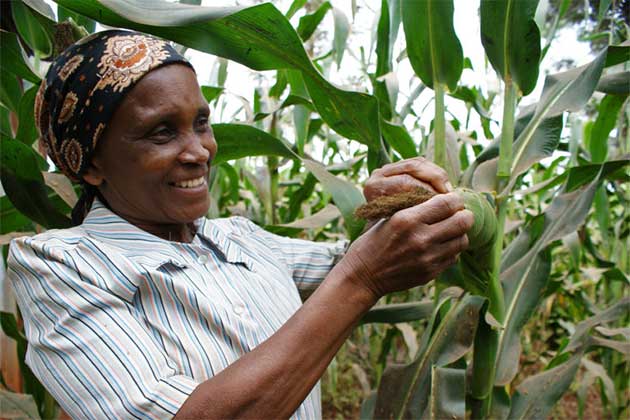
Wambui Mwihaki, a farmer from central Kenya, takes stock of her thriving maize crop following adoption of agroecology. Credit: David Njagi for Mongabay.

The assessment was funded by AGRA’s primary sponsor, the Bill & Melinda Gates Foundation, on behalf of other lead donors in AGRA’s Partnership for Inclusive Agricultural Transformation in Africa (PIATA): the U.K. Foreign, Commonwealth & Development Office; the Rockefeller Foundation; the U.S. Agency for International Development (USAID); and Germany’s Federal Ministry for Economic Cooperation and Development. The evaluation includes a summary of findings, a statistical appendix, and AGRA’s formal responses to the findings, all available publicly.

Such transparency is welcome. AGRA has been plagued by a lack of accountability since its founding in 2006. I undertook my own assessment of AGRA in 2020 when I could find no comprehensive analysis, from AGRA nor its donors, of its progress toward ambitious goals to double yields and incomes for 30 million small-scale farming families while halving food insecurity by 2020. Using national-level data, I found little evidence of progress, with meager productivity increases, little progress on poverty, and a 31% increase in the number of undernourished people in AGRA’s 13 focus countries.

The new evaluation is far from comprehensive. It covers only AGRA’s last five years of work, ignoring its first 10. It reports on results in just six of AGRA’s current 11 focus countries. Its data on yields is almost exclusively on maize and rice, to the exclusion of the many other staple food crops crucial to Africans’ sustenance. And it fails to incorporate or address the concerns raised publicly by African civil society and faith leaders in public letters to AGRA’s donors.

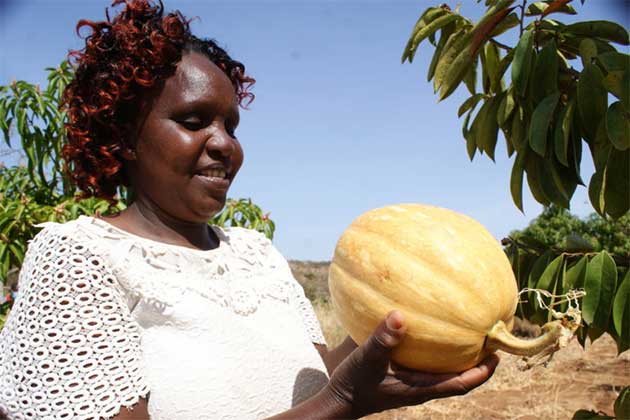
Agroforestry is a kind of agroecology where crops are grown in combination with trees, like this pumpkin that Eunice Manyi raised among fruit trees in Kenya. Credit: David Njagi for Mongabay.

Still, the findings about poor outcomes for farmers should raise concerns for private and bilateral donors to AGRA’s PIATA strategy and for the African governments that are active partners – and funders – in that effort.

Quoting from the evaluation:

    • “PIATA improved maize yields in Ethiopia, Ghana, and Nigeria, but not in Tanzania, Burkina Faso, or Kenya.” Maize is AGRA’s most heavily supported crop, so the failure to achieve yield growth in half the countries studied is alarming.
    • “Across these six countries, only farmers in Burkina Faso experienced improved maize sales as a result of PIATA.” This raises serious questions about the Green Revolution “theory of change.” Even when yields rose, they failed to translate into rising incomes for farmers.
    • “Farmers who adopted improved inputs and experienced yield increases were typically younger, male, and relatively wealthier…. productivity and income gains were also concentrated among these relatively high-resource farmers.” This finding directly contradicts the stated goals of USAID and other bilateral donors to ensure that their assistance programs benefit and empower women.
    • “AGRA’s next strategy could formally recognize that agricultural technologies and practices—such as fertilizer use and rice cultivation—can negatively impact environmental conditions and greenhouse gas emissions.” Evaluators fault AGRA on a wide range of environmentally damaging impacts, including a lack of attention to helping farmers adapt to climate change.
    • “AGRA surveys are currently not suited for rigorous impact analysis.” Evaluators offer many criticisms of the initiative’s poor monitoring and evaluation methods.

Time to rethink Green Revolution model

Evaluators gave AGRA credit for some of its work, saying it “was successful in developing key policy reforms, mobilizing flagships and partnerships, and reaching farmers with extension and seeds,” and it helped “incentivize private sector engagement in the production and delivery of improved seeds in some countries.”

But these intermediate objectives, carried out with substantial funding over 15 years, have thus far failed to further the goals of improving farmers’ productivity, incomes, and food security. When one’s development successes fail to produce the intended results, after 15 years and one billion dollars in donor funding, it is time to reconsider the efficacy of the initiative. It is time to rethink the Green Revolution model.

See related: Push-pull agroecology method debugs organic farming’s pest problem in Kenya

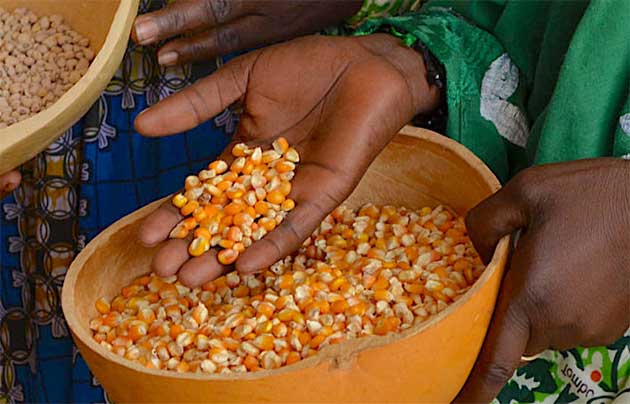
Farmers with seeds in West Africa. Image courtesy of Grassroots International.

AGRA’s management responded to the evaluation saying, “We must therefore rethink our models and focus our support, and that of our partners, on building resilience and adaptation specifically for smallholder farmers.” But there is little sign AGRA intends to pull back from its costly input-intensive Green Revolution model. AGRA president Agnes Kalibata recently defended the status quo in a Q&A with the East African.

Hopefully donors and African governments will take the new evaluation more seriously. African civil society and faith leaders have urged donors to shift their funding to agroecology and other low-cost, low-input systems, which were endorsed last year by the U.N. Committee on World Food Security as a key strategy for climate-resilient development. Such approaches have shown far better results, raising yields across a range of food crops, increasing productivity over time as soil fertility improves, increasing incomes and reducing risk for farmers by cutting input costs, and improving food security and nutrition from a diverse array of crops.

USAID was quick to reject any change in aid priorities. A spokesperson told US Right to Know, “USAID reviewed the findings and recommendations and is satisfied with the independence and rigor of the [Mathematica] evaluation. We appreciate AGRA’s response to the report conclusions and concur with their proposed next steps to improve performance outcomes.”

That will not satisfy African civil society and faith leaders, who were not consulted for the Mathematica evaluation. They plan to take their complaints to the U.S. Congress, which this year has to reauthorize funding for AGRA through its Feed the Future initiative. On March 30, they will brief congressional aides in a closed-door session to explain why the supposed beneficiaries think AGRA is doing more harm than good. As evaluators acknowledge, the main beneficiaries are wealthier male farmers, an outcome at odds with the stated goals of U.S. development policy.

As fertilizer and food prices spike with rising energy prices from the Russia-Ukraine war, African farmers and governments need the kind of resilient, low-cost alternatives agroecology offers. Kenyan farmers report today that the biofertilizers they make themselves from locally available materials cost one-quarter the price of fossil-fuel-based fertilizers.

African governments should recognize that continuing to subsidize increasingly expensive synthetic fertilizer is a losing proposition, especially when that and other Green Revolution inputs are producing such meager results.

It is time for private and bilateral donors – and African governments – to stop throwing good money after bad and recognize that their 15-year effort to “catalyze a farming revolution in Africa” through Green Revolution seeds and fertilizers has fallen short. Fortunately, more promising alternatives are proving their efficacy all over the world. They deserve support.

Timothy A. Wise is a Senior Research Fellow at Tufts University’s Global Development and Environment Institute. A detailed analysis of the recent evaluation of AGRA is available from the Institute for Agriculture and Trade Policy (IATP), where the author is a senior advisor.

IPS UN Bureau

  Source

School Meals Coalition Hopes to Provide a Meal to Every Child

Aid, Civil Society, Development & Aid, Education, Featured, Food Security and Nutrition, Global, Headlines, Health, Humanitarian Emergencies, Inequity, Poverty & SDGs, TerraViva United Nations

Food Security and Nutrition

School meals have a host of benefits, including improving enrollments and preventing malnutrition. Now the School Meals Coalition plans to recruit local food producers to assist in the programme. Credit: Bill Wegener/Unsplash

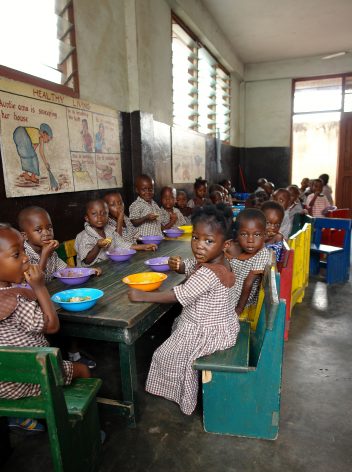
United Nations, Nov 26 2021 (IPS) – Meals at schools not only give each child a nutritious meal but increase enrolments, among other benefits.


This emerged at a recent launch of the School Meals Coalition, a new initiative that aims to give every child a nutritious meal by 2030 through bolstering health and nutrition programmes. The coalition comprises over 60 countries and 55 partners dedicated to restoring, improving and up-scaling meal programs and food systems. Among their partners are UN agencies UNICEF, World Food Programme (WFP), UN Nutrition, Food and Agriculture Organization (FAO), and UNESCO.

In the briefing, the speakers identified School Meals Coalition’s primary goals to restore school meal programmes to the status before the COVID-19 pandemic and reach children in vulnerable areas who have not accessed these plans before. The member countries’ political leaders have come together to support this “important initiative”, according to the permanent representative of Finland to the United Nations, Jukka Salovaara.

“School meals are so much more than just a plate of food. It’s really an opportunity to transform communities, improve education, and food systems globally,” he said.

School meal programmes are a significant safety net for children and their communities. As one of the primary means for children to get healthy meals, they help combat poverty and malnutrition. Their impact on education is seen in increased engagement from students. They also serve as incentives for families to send their children, especially girls, to schools, thus supporting children’s rights to education, nutrition and well-being.

“We see documented jumps of 9 to 12 per cent in enrollment increases just because the meals are present,” WFP Director of School-Based Programmes Carmen Burbano said. “So, these are really important instruments to bring [children] to school.”

The programmes would also provide opportunities for sustainable development practices and transformations in food systems. One key strategy is to promote and maintain home-grown school meal programmes, recruiting local farmers and markets to provide food supplies. Investing in school meal programmes, especially through domestic spending, has proven to increase coverage. In low-income countries, the number of children receiving school meals increased by 36 percent when their governments increased the budgets for these programs.

A WFP study found that at the beginning of 2020, over 380 million children globally received meals through school meal programmes. The closure of schools due to the COVID-19 pandemic effectively disrupted those programmes, depriving 370 million children of what was effectively their main meal for the day. While there have been marked improvements since schools re-opened worldwide, with 238 million children accessing the school meals, there are still 150 million children that don’t have access.

The School Meals Coalition aims to close this gap through a system of collaboration between member countries and their partners. Among their initiatives will be a monitoring and accountability mechanism that is being developed by the WFP and its partners, which will be used to follow the coalition’s accomplishments, and a peer-to-peer information-sharing network, spearheaded by the German government, between members and partners that will use findings to influence their programme output.

Even before the pandemic, school meal programmes did not reach the most vulnerable children, 73 million, who could not access these programmes. Reaching children that have fallen through the cracks can be challenging, but it is significantly more difficult in countries affected by conflict or environmental disruptions.

Education Cannot Wait (ECW) and the World Food Programme (WFP) earlier signed a memorandum of understanding to feed children in protracted crises.

At the signing, WFP Assistant Executive Director, Valerie Guarnieri said: “Simply put, sick children cannot attend school and hungry children cannot learn. It is essential we invest more in the health and nutrition of young learners, particularly girls.”

ECW Director, Yasmine Sherif said a feeding scheme made a massive difference in children’s lives.

“For many children and youth in crisis-affected countries, a meal at school may be the only food they eat all day and can be an important incentive for families to send and keep girls and boys in school. It is also essential for a young person to actually focus and learn,” she said.

The coalition plans to find ways to break the barriers to enable children to reach school or look for alternative learning pathways to reach children who could not physically attend school.

The factors that can prevent children from fully attending schools, such as poverty, complexity in family lives, or conflict, have only been exacerbated over the last nearly two years, thanks mainly to the COVID-19 pandemic. As more schools open worldwide, the restoration of school meal programmes is expected to provide much-needed support for children and their communities in turn.

“This is a very urgent and timely priority,” said Head of the Sustainable Development Unit of the Permanent Mission of France to the United Nations, Olivier Richard. “Because school meals are very important for the recovery of our societies from the impact of the COVID-19 pandemic.”

To learn more about the School Meal Coalitions, you can follow their page.

  Source

Guess Who’s Behind Paralysis on COVID19 in the UN Committee on World Food Security

Aid, Civil Society, COVID-19, Economy & Trade, Food and Agriculture, Food Security and Nutrition, Global, Headlines, Human Rights, Humanitarian Emergencies, IPS UN: Inside the Glasshouse, TerraViva United Nations

Opinion

ROME, Oct 19 2021 (IPS) – ‘COVID 19 has multiplied hunger and malnutrition challenges. We need transformative action!’ The first speaker at the UN Committee on World Food Security’s (CFS) 49th Plenary Session, the Secretary-General of the United Nations, turned the spotlight on the disastrous impacts of the pandemic that have afflicted communities around the world for close to two years.


Nora McKeon

He was echoed by the presenter of the 2021 edition of the State of Food Security and Nutrition in the World for whom ‘COVID is only the tip of the iceberg’, while keynote speaker, Jeffry Sachs, emphasized the multifaceted nature of the crisis, with chronic poverty and conflict at the center.

Delegation after delegation took the virtual floor to share their concerns: Kenya speaking for the Africa Group, Colombia, Cuba, Costa Rica, Norway, Morocco, Peru, Spain, Indonesia, Mexico, Malaysia, Mali, Cape Verde, South Africa, Uganda, Saint Lucia and more. The impacts of Covid 19 on food security and nutrition are heavy and lasting. The vulnerable are the most effected, within and between countries. Covid has deepened and exacerbated existing structural fragilities and injustices in our food systems. Its causes are multisectoral and cannot be treated in a siloed way.

‘Multilateralism, solidarity and cooperation are key to the way forward’, the President of ECOSOC added, and ‘the CFS is a unique multilateral forum because it brings all the actors together in the name of the right to food’. The text adopted at the end of Day 1 summarized all of these contributions, and deepened concern by drawing attention to the possibility of recurrent pandemics.

With this kind of an opening one could have expected a standing ovation when it was proposed, the following day, that the CFS put together a globally coordinated policy response to the impacts of COVID 19 on food security and nutrition and a proposed precautionary approach towards possible future shocks of this kind.

This proposal was a long time in the building. For a year and a half the CFS’s Civil Society and Indigenous Peoples’ Mechanism (CSM) had been documenting the experience and proposals of its constituencies and communities and bringing this evidence from the ground into the global debate. Earlier this year an informal ‘Group of Committed’ governments and other CFS participants had come together to push for the CFS to take determined action. How could it fail to live up to its mandate in the face of the most serious threat to global food security the world has faced since the 2007-2008 food crisis?

Just a week before CFS49 the Group of Committed had held a seminar where evidence and proposals for global policy action were presented by national governments, regional and local authorities, small-scale food producers, the urban food insecure, along with UN agencies, the Special Rapporteur on the Right to Food, and the CFS’s own High-Level Panel of Experts.

The seminar demonstrated that action is being taken by different actors and authorities at local, national and regional levels, while UN agencies have developed and adopted relevant policy instruments and programmes in their respective sectors. What has been missing thus far is a way of putting the different perspectives and initiatives together into a multisectoral, multilaterally coordinated approach. Filling this gap was the proposal that was put on the table in CFS49.

‘We need a globally coherent and coordinated response to support governments’ efforts and the CFS is the appropriate place for this to happen,’ the Ambassador of Mali had exhorted in his opening address.

So what about the standing ovation? The proposal was supported by countries from the Global South led by African countries, the most affected by injustice in access to vaccines, dependency on food imports, and indebtedness, but including also Mexico, Peru, Morocco, the CSM and the Special Rapporteur on the Right to Food. ‘This is the place to deal with COVID!’ he said. ‘It is the priority food issue today. It wasn’t addressed by the UN Food Systems Summit. The CFS has the mandate and the tools, and the other UN agencies are highly committed to cooperate.’

But, incredibly and unacceptably, the proposal did not pass. It was blocked on specious, procedural grounds by a steamroller coalition of big commodity exporters who push back on any possible limitation that might be placed on global trade in the name of human rights, equity, environmental concerns: the US, Canada, Argentina, Brazil, Russia. The EU, shamefully, was silent.

The implications for inclusive multilateralism, democracy, the needed radical transformation of our food systems are severe. ‘A key barrier to transformation is interference from corporations,’ stated the delegate of Mexico. ‘Governments need to assume their role as agents of change, regulators of food systems, and protectors of the planet, but we can’t do it alone. Global attention is needed and the CFS is the right place for it.’

But The CFS is being held hostage. The arrogance with which a few are ignoring reality, evidence and urgency is leading to an unacceptable increase in the violation of the human rights of the many. Patience is wearing thin. ‘If I’m in this room it’s to honor the concerns of those most affected in my region,’ a member of the Group of Committed asserted in the aftermath of the session.

And the people of her region, along with others from around the world, are raising their voices ever more loudly, as in the counter mobilization to transform corporate food systems organized last July in parallel to the Pre-Summit of the UNFSS [hyperlink]. Radical food system transformation is being built from the ground up and the CFS, however handicapped, is the most resounding global echo chamber for people’s claims.

  Source