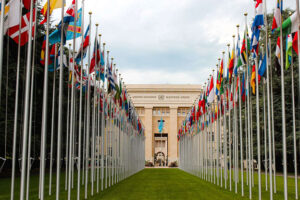
Is UN in Danger of Losing its Battle for Gender Equality?

Civil Society, Democracy, Featured, Global, Global Governance, Headlines, Human Rights, IPS UN: Inside the Glasshouse, TerraViva United Nations

Credit: Inclusion Hub

UNITED NATIONS, Mar 14 2025 (IPS) – The Trump administration’s decision to abandon DEI—diversity, equity and inclusion— which was aimed at promoting fair treatment in the work place, is having its repercussions at the United Nations.

The US has been exerting pressure on UN agencies to drop DEI largely protecting minority groups, and women in particular, who have been historically underrepresented or subject to discrimination.


At least one UN agency has dropped an entire section on DEI following U.S. interventions. And there are reports that some UN agencies are also scrubbing their websites of all references to DEI.

Faced with threats of either US withdrawal or funding cuts, some of the UN agencies are bending over backwards to appease the Trump administration.

The US has already decided to withdraw from the Human Rights Council and the World Health Organization (WHO), while two other UN agencies are under “renewed scrutiny”—the” UN Educational, Scientific, and Cultural Organization (UNESCO) and the UN Relief and Works Agency for Palestine Refugees in the Near East (UNRWA).

The United States has cut $377 million worth of funding to the UNFPA, it was confirmed last week, leading to potentially “devastating impacts”, on women and girls.

The threat against the UN has been reinforced following a move by several Republican lawmakers who have submitted a bill on the U.S. exit from the U.N., claiming that the organization does not align with the Trump administration’s “America First” agenda.

Speaking at a side event during the annual meeting of the Commission on the Status of Women (CSW), March 13, Jonathan Shrier, Acting U.S. Representative to the Economic and Social Council said: “At the United Nations, the United States continues to advocate for women’s empowerment, while firmly opposing attempts to redefine womanhood in ways that undermine the real and meaningful progress women have made.”

“We are committed to promoting policies that support women and families in a way that recognizes and celebrates the biological and social differences that make us who we are. In New York, we have engaged in tough negotiations in a wide variety of UN resolutions, fighting against gender ideology, and calling votes, if necessary, to advance President Trump’s America First foreign policy.”

According to UN Dispatch March 13, even before the CSW began, “the U.S. sought to throw a wrench in the entire event by objecting to otherwise anodyne references to gender equality in a conference document, under the premise that such language directly contradicts Trump’s executive orders against DEI”. In other words, Trump tried to block references to gender equality in a conference dedicated to gender equality.

And according to an Executive Order from the White House last January, the Director of the Office of Management and Budget (OMB), “shall coordinate the termination of all discriminatory programs, including illegal DEI and “diversity, equity, inclusion, and accessibility” (DEIA) mandates, policies, programs, preferences, and activities in the Federal Government, under whatever name they appear.”

https://www.whitehouse.gov/presidential-actions/2025/01/ending-radical-and-wasteful-government-dei-programs-and-preferencing/

Joseph Chamie, a consulting demographer and a former director of the United Nations Population Division, told IPS the Trump administration’s domestic decision to abandon DEI has serious implications for the United Nations, especially with US threats of withdrawal and funding cuts.

In particular, the US administration’s decision to abandon DEI, he said, aims to not only reshape US-UN relations but also reshape practices and policies of the United Nations and its various agencies and programs. Diversity and meritocracy concerns vary across country populations and differ considerably globally.

Similar to America, however, countries worldwide are struggling with the issue of how best to balance diversity and meritocracy across disparate ethnic, racial, caste, linguistic and religious subgroups in their populations.

“How best to balance diversity and meritocracy remains a major challenge for countries and the United Nations. That challenge has become more difficult for many countries as a result of the prejudicial use of racial, ethnic, linguistic, ancestry and origin categories.”, said Chamie

In a growing number of areas, including politics, employment, careers, education, armed forces, immigration, the judicial system, entertainment and sports, countries are making far-reaching decisions regarding when to strive for diversity and when to stress meritocracy.

Many countries with domestic concerns about DEI are likely to welcome the Trump administration’s attempt to diminish or do away with DEI initiatives at the United Nations, he pointed out.

Given a growing world population of more than 8 billion people, the shifting demographic landscapes of national populations and the fundamental need to ensure human rights for all, the challenge of balancing diversity and meritocracy can be expected to become even more critical and consequential for countries as well as for the United Nations in the years ahead, declared Chamie.

According to PassBlue, the US delegation has been telling some UN entities they must excise language on DEI, from their work. The US remarks have been repeated in one form or another to the boards of UN Women, UNICEF and World Food Program. (The latter two are run by Americans.)

Dr. Purnima Mane, President and CEO of Pathfinder International and former Deputy Executive Director (Programme) and UN Assistant-Secretary-General (ASG) at the UN Population Fund (UNFPA), told IPS it is indeed unfortunate that the US government’s decision to move away from diversity, equity and inclusion is creating ripple effects among other entities especially those who benefit from US support and contributions.

Early evidence, she pointed out, suggests that some UN agencies are beginning to display increased caution regarding DEI, especially its positioning and language. Ironically this caution is occurring around the 69th session of the Commission on the Status of Women (16-21 March 2025).

“The initial reactions of caution around DEI which we are witnessing from all organizations and entities which the US works with or is a part of (whether it is the UN, the non-profit organizations, major donors, other governments) are inevitable”.

The US, she said, has played a key role in the formation, development and evolution of the UN and of course continues to provide key support to it.

“It is therefore not surprising that the UN to which the US contributes in many significant ways, is sensitive to the evolution in US views but this should not result in the UN shirking away from the main principles on which it was created.”

DEI, she noted, is an acronym that has come to mean different things to different people and countries but its core philosophy and principles are at the root of the UN and can and need to be protected even if the language of DEI is altered.

“Within the UN there needs to be a healthy, constructive debate and discussion among Member States on how resistance to DEI could threaten the philosophy and principles for which the UN stands and to which the governments collectively signed on, thereby questioning the very existence of the UN.”

“Surely, all Member States feel empowered to voice their views and find ways to ensure that the basic principles of the UN remain steadfast. Putting your own country first does not automatically imply that one must not focus on a common, agreed-to agenda based on respect for all,” declared Dr Mane.

Ian Richards, a former President of the Coordinating Committee of International Staff Unions and Associations and an economist at the Geneva-based UN Conference on Trade and Development (UNCTAD) told IPS: “I don’t think it is correct to say the UN is abandoning DEI”.

The Secretary-General, he said, “is fortunately a big champion and continues to support landmark initiatives on sex, race, disability, regional origin, age and gender identity”.

To varying extents these set hiring quotas, mandatory training and reporting requirements.

A conference will be organized on DEI this summer in Lisbon, hosted by the Government of Portugal, to identify further ways to strengthen measures. Unlike other organizations the Secretary-General has also maintained the right of staff to choose their pronouns in email communications.

IPS UN Bureau Report

  Source

Not Seen in Living Memory: Kashmir’s Rivers Run Dry, Snow Disappears, and Hope Dissipates

Asia-Pacific, Civil Society, Climate Change, Climate Change Justice, COP29, Economy & Trade, Editors’ Choice, Environment, Featured, Headlines, Humanitarian Emergencies, Sustainable Development Goals, TerraViva United Nations, Trade & Investment

Climate Change Justice

With a severe rainfall and snow deficit, some residents of Kashmir, an area known for its snow-capped mountains, lush valleys, and pristine lakes, are looking to the heavens for answers as little assistance seems to be coming from the authorities as their livelihoods dry up.

Experts warn that a decline in precipitation in Kashmir will severely impact the region's water resources. This could reduce river flows, which are essential for irrigation, hydropower, and drinking water supply downstream. Credit: Umar Manzoor Shah/IPS

Experts warn that a decline in precipitation in Kashmir will severely impact the region’s water resources. This could reduce river flows, which are essential for irrigation, hydropower, and drinking water supply downstream. Credit: Umar Manzoor Shah/IPS

SRINAGAR, India, Mar 4 2025 (IPS) – The picturesque Kashmir Valley is battling nature’s fury. This time of year, its majestic mountains would typically be capped with thick snow, and its emerald streams would gush with fresh waters. However, none of these scenes are visible this year.


In the first 50 days of 2025, Kashmir witnessed a rainfall deficit of 83 percent. Data from the government’s meteorological department, accessed by Inter Press Service (IPS News), reveals that from January 1 to February 19, 2025, Kashmir recorded only 29.8 mm of rainfall against the normal precipitation of 175.8 mm—just 17 percent of the usual amount.

The mountainous region of Kargil in Ladakh recorded zero precipitation in 2025, marking a shocking 100 percent deficit compared to the normal rainfall of 18.5 mm.

Kathua, a frontier district bordering Pakistan, witnessed a deficit of 98 percent, with only 3.6 mm of rainfall recorded against the normal of 152.4 mm.

Srinagar, the region’s capital, recorded an 85 percent rainfall deficit in the same period.

Streams and Rivers are Drying up

The Jhelum River, considered the lifeline of Kashmir for water supplies, continues to witness receding water levels. Its level has dropped to -1.01 feet, below the Reduced Level (RL) of zero on the gauge. Credit: Umar Manzoor Shah/IPS

The Jhelum River, considered the lifeline of Kashmir for water supplies, continues to witness receding water levels. Its level has dropped to -1.01 feet, below the Reduced Level (RL) of zero on the gauge. Credit: Umar Manzoor Shah/IPS

Then and now: Achabal, a 16th-century Mughal Garden. Composite: IPS

Then and now: Achabal, a 16th-century Mughal garden. Composite: IPS

Rainfall deficit. Credit: Umar Manzoor Shah/IPS

Rainfall deficit. Credit: Umar Manzoor Shah/IPS

Achabal, a 16th-century Mughal garden, is known for its gushing water stream that flows through its center, providing scenic beauty to the park nestled among majestic Chinar trees. This stream is a vital water source for about 20 adjoining hamlets. For the first time in centuries, the stream has dried up. The fountains are now rusty iron relics from the Middle Ages, and the park presents a frightening sight for residents. Terrified locals have gathered near the stream—some reciting verses from the Quran, others cursing themselves for what they believe are sins that caused the centuries-old stream to dry up.

Renowned earth scientist Professor Shakeel Romshoo told IPS that climate change is the reason for the ongoing crisis.

“The mountains from which the springs emerge and flow down to the habitations are hollow. Snow is the primary source of water for them. Over the past six years, Kashmir has seen little to no snowfall, and what we are witnessing today is the outcome of that snowlessness,” Romshoo explains.

He added that the Kashmir Valley has experienced a significant decline in snowfall, particularly during the peak winter season, leading to the current alarming situation.

“Snowfall is a major source of water for Kashmir’s population. With the pervasive lack of snow, rivers, tributaries, and streams are drying up. These conditions could severely impact the tourism sector, horticulture, and food security systems in Kashmir, with far-reaching economic implications,” Romshoo says.

The Jhelum River, considered the lifeline of Kashmir for water supplies, continues to witness receding water levels. Its level has dropped to -1.01 feet, below the Reduced Level (RL) of zero on the gauge.

A top government official responsible for supplying potable water to Kashmir’s inhabitants told IPS that the persistent rainfall deficit has affected the recharging of water reservoirs across the valley. He stated that the department is in a situation where it cannot guarantee sufficient drinking water for the people of Kashmir in the coming months.

Gulmarg, a northern ski resort known for its world-famous slopes and enchanting snow-covered hills during winter, was dry and barren, with no traces of snow—a first-time scenario for locals. A small amount of snow has since fallen, but far below the usual expectations. Credit: Umar Manzoor Shah/IPS

Gulmarg, a northern ski resort known for its world-famous slopes and enchanting snow-covered hills during winter, was dry and barren, with no traces of snow—a first-time scenario for locals. A small amount of snow has since fallen, but far below the usual expectations. Credit: Umar Manzoor Shah/IPS

Skiers in Gulmarg, Kashmir, in 2023. Credit: Firdous Parray/Unsplash.

Skiers in Gulmarg, Kashmir, in 2023. Credit: Firdous Parray/Unsplash.

Barren Slopes of Gulmarg

Gulmarg, a northern ski resort known for its world-famous slopes and enchanting snow-covered hills during winter, is currently dry and barren, with few traces of snow—a first-time scenario for locals. A small amount of snow fell at the beginning of February—a little to late, some say, as the popular resort area has already lost thousands of visitors and this has had a knock-on effect on the local businesses.

Abdul Rahim Bhat, 73, a local who owns a tea kiosk at the resort, told IPS that such a sight—where brown grass dominates the landscape with no snow in sight—was unimaginable in the past.

“I have spent my entire life here. I have always seen white snow everywhere during winters. Now, even the tourists have stopped coming, impacting my business and livelihood,” Bhat says.

The winter games at Gulmarg, which attract skiers from around the world, had to be postponed due to the lack of snow.

“The required amount of snowfall for competitive games is not there, which is why we have postponed the event. Unless there is fresh snowfall, it is not possible to conduct the games,” Rauf Tramboo, President of the Winter Games Association of Jammu and Kashmir (WGAJK), said in a statement last week. The Olympic committee this week announced that the Gulmarg leg of the Khelo India Winter Games would be held from March 9 to 12 after snowfall.

As per the government estimates, the revenue realized from the Gulmarg Gondola, celebrated as Asia’s highest and longest cable car project, was USD 1.35 million until December 2024. The ski resort welcomed more than 148,357 visitors. The postponement of winter games and the lack of tourists had come as a major economic blow for the locals of the area whose livelihood is dependent on both.

Sharing his predicament is Peer Irfan, a local restaurant owner who says tourists have almost stopped arriving. “They [tourists] would come for snow and not for exploring the barren lands. Here, you can see there is no rush, not many tourists. We fear that if the situation continues to remain the same, we may lose our livelihood,” Irfan says.

He adds that the government has not paid any serious attention to the ongoing climate crisis in Kashmir and that those affected due to it have not been provided any monetary compensation.

“We earlier had demanded to be insured so that we could safeguard our livelihoods. However, the government hasn’t paid the least attention to our demands,” Irfan says.

The tourism industry in Kashmir generates around USD 912 million, contributing to nearly 7 percent of the state’s GDP. Sectors like handicrafts, transport and hospitality are directly dependent on it.

Dilshada Bano, a 37-year-old carpet weaver from north Kashmir’s Kupwara, says that if climate change continues to wreak havoc as it is now, the major impact will be on Kashmir’s local populace.

“Tourists buy our products and if they aren’t visiting, who is here to provide us with a livelihood? This year, the sales have dipped due to snowlessness as a smaller number of tourists have visited Kashmir. Slowly and subtly, it is showing the impact on us,” Bano told IPS.

Nisar Ahmad, a fisherman, says the drastic reduction in the lake’s water levels has left the fishing community struggling, as they grapple with the loss of their primary means of sustenance.Credit: Umar Manzoor Shah/IPS

Nisar Ahmad, a fisherman, says the drastic reduction in the lake’s water levels has left the fishing community struggling, as they grapple with the loss of their primary means of sustenance.Credit: Umar Manzoor Shah/IPS

‘We are not doing enough’

Omar Abdullah, the head of the Kashmir government, stated that Kashmir is facing a severe threat from climate change, particularly in the form of a water crisis. He stressed the need for greater awareness and action. “We are not doing enough to educate our people about the dangers of climate change. A lot of that responsibility lies with us as political leaders,” Abdullah says.

Abdullah, however, did not mention whether the current situation could be declared a state of disaster for Kashmir.

Naeem Akhtar, a senior political leader and former minister, told IPS that drastic climate change is wreaking havoc on Kashmir, with alarming trends such as continuous drought, lack of snow during peak winter months, and the drying up of water bodies and springs that have been vital for centuries. He described the situation as deeply alarming and disturbing.

Akhtar says the government must prioritize addressing the pervasive effects of climate change. He urged the government to consult experts and closely monitor the situation.

“Short- and long-term action plans must be devised, including climate adaptation and mitigation measures, alongside the creation of a loss and damage fund to tackle the severe impacts of climate change. There should be no quick-fix solutions to this apocalyptic situation. A well-considered government response is the need of the hour,” Akhtar says. He warned that if the situation is not handled with caution, the region faces the looming threat of severe drinking water scarcity and a lack of irrigation facilities for agriculture and horticulture.

This year, the government has issued a general advisory to the farming community, advising them to delay sowing crops due to bad weather and water scarcity. Credit: Umar Manzoor Shah/IPS

This year, the government has issued a general advisory to the farming community, advising them to delay sowing crops due to bad weather and water scarcity. Credit: Umar Manzoor Shah/IPS

Farmers Plunged Into Anxiety

Abdul Salam Mir, a saffron farmer from Pampore in South Kashmir, told IPS that the dry weather and shifting weather patterns have put farmers in a difficult situation.

“We have little hope this time. Farming in Kashmir is entirely dependent on water. The acute water shortage is turning crops into dry, dead twigs. We cannot blame the government for this crisis. The climate has turned cruel,” Mir says.

Farmers make up 80 percent of the state’s population, and agriculture and horticulture are the backbone of the state’s economy. The unique climate in the foothills of the Himalayas allows for the cultivation of exotic fruits and vegetables not typically found in India.

However, this year, the government has issued a general advisory to the farming community, advising them to delay sowing crops due to bad weather and water scarcity. A senior official from the agriculture department confirmed that the advisory was issued to prevent further hardships for farmers and to draft a well-planned mechanism to tackle the pervasive crisis.

Although an insurance scheme for the farmers, namely the Pradhan Mantri Fasal Bima Yojana (PMFBY), was introduced in Kashmir as of Kharif 2016-17, its actual implementation has been inconsistent.

As per the farmers, the crop insurance schemes, particularly for fruit crops, have not been effectively executed over the years. This has left them vulnerable to losses from unpredictable weather.

“Last year, because of heavy rains, fruit growers in our area incurred heavy losses. When we approached the government for mitigation of the damage, the response was dismal. The assessment teams are yet to finalize the reports, leaving aside providing us with any financial assistance,” says Noor Mohammad Khan, an orchardist from South Kashmir’s Shopian.

Once a lifeline for nearly 10,000 fishing families in North Kashmir, the renowned Wular Lake is now fighting for its survival, with half of its expanse dried up due to prolonged dry weather in the Valley.

During winter, local fishermen from villages like Kehne Usa, Zurimanz, Ashtangoo, Lankrishipora, Laharwalpora, and Kulhama traditionally harvest fish from the lake, a vital source of income for the community.

“The lake now resembles a small stream. We have to push our boats to the center of Wular before we can even use our oars, as there’s so little water left. Fishing and harvesting chestnuts have been our only source of income for generations. Since my childhood, I’ve seen people rely on the lake for their livelihoods. Now, many in our community are forced to look for other work to survive,” says Nisar Ahmad, a fisherman from Kehneusa village.

The drastic reduction in the lake’s water levels has left the fishing community struggling as they grapple with the loss of their primary means of sustenance.

[embedded content]

Doomsday Scenario?

Dr. Muhammad Muslim, an environmentalist and assistant professor in the Environmental Sciences department at Kashmir University, warned that a winter without precipitation in Kashmir would be catastrophic.

He says it’s a “doomsday scenario.”

“A decline in precipitation will severely impact the region’s water resources. Such an event could reduce river flows, which are essential for irrigation, hydropower, and drinking water supply downstream.

“Reduced snow accumulation during winter would lead to lower water availability in warmer months, potentially disrupting fragile ecosystems and agriculture in the region,” he says.

Echoing these concerns, Dr. Amjad M. Hussaini, an agricultural scientist, highlighted the grim future if snowfall and rainfall continue to decline.

“Winter precipitation is crucial for the healthy development of plants and their vegetative growth. Without it, this process will be severely disrupted,” he says. “The long-term consequences are alarming. Glaciers are receding, carbon emissions are rising, and deforestation is rampant. Unless we implement a robust afforestation plan as a top priority for at least the next decade, the situation will only worsen. Without immediate action, we are heading in a deeply negative direction.”

Scientists are sounding the alarm with renewed urgency, warning that the Earth is nearing a critical tipping point. Evidence suggests that global warming is on track to reach or exceed 1.5 degrees Celsius—the threshold established by the Paris Agreement.

A recent study published in Nature Climate Change reveals that record-breaking temperatures in 2024 could signal the start of a sustained period near or above this limit.

While natural phenomena like El Niño can cause temporary temperature spikes, the primary driver of this crisis remains human activity: our continued dependence on fossil fuels, widespread deforestation, and industrial practices that escalate greenhouse gas emissions.

These activities have driven CO2 levels to unprecedented highs, even as global climate conferences, such as COP29, reaffirm pledges to curb them.

The consequences of crossing the 1.5°C threshold are already evident. Heatwaves, floods, and wildfires are becoming more frequent, intense, and devastating.

Note: This feature is published with the support of Open Society Foundations.

IPS UN Bureau Report

  Source

COP16 Agrees to Raise Funds to Protect Biodiversity

Biodiversity, Conferences, COP16, Editors’ Choice, Environment, Featured, Global, Headlines, TerraViva United Nations

COP16

COP16 President Susana Muhamad. Parties to the UN Biodiversity adopted decisions to implementation of the Global Biodiversity Framework. Photo credit: IISD Earth Negotiations Bulletin/Mike Muzurakis.

COP16 President Susana Muhamad. Parties to the UN Biodiversity adopted decisions to implementation of the Global Biodiversity Framework. Credit: IISD Earth Negotiations Bulletin/Mike Muzurakis.

BLOOMINGTON, U.S.A & ROME, Feb 28 2025 (IPS) – The second round of the UN Biodiversity Conference, COP16, concluded in the early hours of Friday, February 28 in Rome, with an agreement to raise the funds needed to protect biodiversity.


COP16 was suspended in Cali, Colombia, in 2024 without any major financial support decision to support biodiversity conservation. But in the second round of the conference in Rome, Italy, governments agreed on a financial strategy to address the action targets of the Kunming-Montreal Global Biodiversity Framework (KMGBF), which was adopted in 2022 with the aim of closing the biodiversity finance gap.

In a final document, all parties to the biodiversity convention agreed to mobilize resources to close the global biodiversity finance gap and achieve the target of mobilizing at least 200 billion dollars a year by 2030, including international flows of USD 20 billion per year by 2025. Which will be rising to USD 30 billion by 2030.

In the closing press briefing in the early hours of Friday, COP16 President Susana Muhamad said the Rome conference came to a successful end. “It was a remarkable achievement of being able to approve all the decisions, especially the most contentious, difficult decisions.” She said, “And not in a way that made the parties feel that they were compromising their main objectives.”

The agreement includes the commitment to establish permanent arrangements for the financial mechanism in accordance with Articles 21 and 39 of the Convention while working on improving existing financial instruments. It also includes a roadmap of the activities and decision-making milestones until 2030.

COP16 president Muhamad also said that the agreement between governments in Rome will help bring the agendas of biodiversity and climate change together. In November, Belem in the Amazon rainforest region of Brazil will be hosting the UN climate conference, COP30.

“The importance of these resolutions that have been approved in Cali and also here of the cooperation between the different conventions,” she said.

The biodiversity COP also adopted a Strategy for Resource Mobilization to mobilize the funds needed for implementation of the KMGBF. Which includes public finance from national and subnational governments, private and philanthropic resources, multilateral development banks, blended finance, and other approaches.

The Cali Fund

The Rome gathering of parties also agreed to establish a dedicated fund for fair and equitable sharing of benefits from the use of Digital Sequence Information on Genetic Research (DSI), known as the Cali Fund.

The fund was launched on 26 February 2025—at least 50 percent of its resources will be allocated to indigenous peoples and local communities, recognizing their role as custodians of biodiversity. Large companies and other major entities benefiting commercially from the use of DSI are expected to contribute a portion of their profits or revenues in sectors and subsectors highly dependent on the use of DSI.

Pharmaceuticals, cosmetics, plant and animal breeding, agricultural biotechnology, industrial biotechnology, laboratory equipment associated with the sequencing and use of digital sequence information on genetic resources, and information, scientific and technical services related to digital sequence information on genetic resources, including artificial intelligence. Academic, public databases, public research institutions and companies operating in the concerned sectors but not relying on DSI are exempt from contributions to the Cali Fund.

The fund is part of a multilateral mechanism on the fair and equitable sharing of benefits arising from the use of digital sequence information on genetic resources adopted at COP15 in December 2022 alongside the KMGBF.

IPS UN Bureau Report


CARICOM Leaders Take Steps to Tackle Crime, Climate, Trade and Food Crises

Climate Change, Climate Change Finance, Conferences, Development & Aid, Economy & Trade, Editors’ Choice, Education, Environment, Featured, Food Security and Nutrition, Headlines, Human Rights, Humanitarian Emergencies, Latin America & the Caribbean, Least Developed Countries, Small Island Developing States, Sustainable Development Goals, TerraViva United Nations, Trade & Investment

Conferences

Leaders of the 15 member states of the Caribbean Community concluded their 48th meeting on February 21 with commitments to tackle growing climate change and food security challenges, education and trade reform, while declaring crime and violence a public health concern.

Press Conference to mark the end of the 48th Regular CARICOM Heads of Government Meeting (L-R) CARICOM Secretary General Dr. Carla Barnett, Prime Ministers Philip Davis (Bahamas), Dr. Keith Rowley (Trinidad & Tobago), Mia Mottley (Barbados), Andrew Holness (Jamaica) and President Dr. Irfaan Ali (Guyana).

Press Conference to mark the end of the 48th Regular CARICOM Heads of Government Meeting (L-R) CARICOM Secretary General Dr. Carla Barnett, Prime Ministers Philip Davis (Bahamas), Dr. Keith Rowley (Trinidad & Tobago), Mia Mottley (Barbados), Andrew Holness (Jamaica) and President Dr. Irfaan Ali (Guyana).

DOMINICA, Feb 24 2025 (IPS) – CARICOM leaders wrapped up a crucial meeting on February 21, reaffirming their commitment to tackling pressing regional challenges with unity and resolve. From crime and security to education, trade and climate change, the leaders highlighted the need for decisive action amid global uncertainties.


Education Transformation

Barbados’ Prime Minister and CARICOM Chair Mia Mottley told the press that the leaders agreed to establish a CARICOM Educational Transformation Commission—a body that will move the region’s education systems beyond outdated foundations.

“We all accept that our educational systems are not fit for purpose. They were designed for a colonial period with a hierarchical system that only served a few, not all of our people. If we are to be able to ensure that we produce citizens fit for the time, with the appropriate social and emotional learning targets, we must move now,” she stated.

Over the coming weeks, the commission’s Terms of Reference and composition will be finalized, marking a major step in reshaping regional education policies.

Violence and Crime: Existential Threats

Outgoing Trinidadian Prime Minister Dr. Keith Rowley, attending his final CARICOM Heads of Government meeting, highlighted the increasing crime surge across the region, particularly the rise of gang violence in some countries.

Trinidad is still in a state of emergency over surging crime levels.

“We agreed that the changing nature of crime is such that action and acts of violence in the public space in certain instances must now be regarded as acts of terrorism. We are talking here about indiscriminate shooting in a public place where perpetrators endanger all and sundry.”

The leaders endorsed the classification of crime and violence as a public health issue and committed to appointing a high-level representative on law and criminal justice to design a strategic plan for modernizing the region’s criminal justice system.

Critical Climate Change Concerns

Another existential threat that leaders are grappling with is climate change.

Representing small island states that contribute minimally to global emissions but face disproportionate vulnerability to its impacts, the CARICOM leaders voiced their frustration with unmet promises by major polluters.

The USD 100 billion climate fund promised in 2015 remains unfulfilled, leaving these nations without critical support.

“For several years we attempted to see how we could shake up those who are pledging and committing to live up to their pledges and commitments. They decided to come up with a new regime called the New Collective Quantified Goal,” said Bahamian Prime MInister Philip Davis, adding, “All I can say is that we should continue our advocacy to ensure that not only is finance available to small island developing states but also to ensure that there will be easier access and timely release of funds once a request is made.”

A Changing Trading Environment

Meanwhile, Jamaican Prime Minister Andrew Holness addressed concerns over shifts in United States trade policy and their potential impact on regional economies.

“We must be prepared. We cannot approach this with panic and we should accept that with these changes the concern should not only be disruption in the normal routine of trade, but that there could also be great opportunities for the region.”

Holness announced that CARICOM will conduct a comprehensive review of its trade relations with the U.S., aiming to deliver a policy direction within the next few months to support regional governments.

Mounting Food Security Worries

Guyanese President Irfaan Ali warned of escalating food security issues due to rising global food prices, bird flu outbreak and increased logistics costs. The region faces a 20% decline in U.S. egg production, leading to a 70% price hike, adding further strain.

“Increased climate-related challenges, increased transportation and logistics costs, and uncertainty in tariffs and trade rules will have a significant impact on the cost of food globally and in our region,” Ali stated.

Ali said that if Brazil is affected by these challenges, it could lead to major problems with pricing and supply for the region. In response, CARICOM is exploring alternative supply routes and strategies to enhance regional capacity against a potential major shock in the global market.

The Dream of Stability—and Elections—in Haiti

The crisis in Haiti remained a focal point of discussions. Prime Minister Mottley reaffirmed CARICOM’s dedication to stabilizing the nation.

“This last incarnation of the Haiti situation goes back to the gas riots of September 2022. It has been an unacceptably long period of time to bring stability and relief to the people of Haiti. You will appreciate that there are some matters that are delicate at the discussion stages, but suffice it to say CARICOM expresses solidarity with the government and people of Haiti that we will work with the United Nations and all of the other friends of Haiti to be able to ensure that Haiti is in a position to have its elections in a fair and free way.”

Martinique’s Potential Associate Membership

In a historic move, CARICOM leaders signed an agreement with France and Martinique, paving the way for the French territory to become the newest associate member of CARICOM, pending ratification by the French government. If approved, Martinique will join Anguilla, Bermuda, the British Virgin Islands, the Cayman Islands, Montserrat and the Turks and Caicos Islands in this capacity.

The way forward

The meeting concluded with a renewed commitment to collective action and regional unity.

Like she did two days before at the meeting’s opening ceremony, the CARICOM Chair underscored the importance of a united CARICOM taking action towards a sustainable future.

“Now, more than ever, unity is crucial for overcoming the shared challenges posed by the world,” Prime Minister Mottley said.

IPS UN Bureau Report


Is the UN’s Human Rights Agenda in Jeopardy?

Civil Society, Democracy, Featured, Global, Global Governance, Headlines, Human Rights, Indigenous Rights, IPS UN: Inside the Glasshouse, TerraViva United Nations

Credit: United Nations

UNITED NATIONS, Feb 24 2025 (IPS) – The UN’s human rights agenda is in danger of faltering since the Geneva-based Office of the High Commissioner for Human Rights (UNHCHR) is planning to “restructure” the office, under the moniker OHCHR 2.0.

But this proposal, if implemented, would result in the abolition of the Special Procedures Branch, established by the Human Rights Council (HRC), to report and advise on human rights from thematic and country-specific perspectives.


The question remains whether or not the HRC will give its blessings to the proposed restructuring. Currently, there are more than 46 thematic mandates and 14 country-specific mandates.

The Special Rapporteurs (who are also designated “independent UN human rights experts”) cover a wide range of thematic issues, including investigations into extrajudicial, summary or arbitrary executions, racism and xenophobia, human rights in the Palestinian territories, right to freedom of opinion and expression, rights of the indigenous peoples, violence against women, human rights of immigrants, among others.

https://www.ohchr.org/en/special-procedures-human-rights-council/current-and-former-mandate-holders-existing-mandates

Ian Richards, an economist at the Geneva-based UN Conference on Trade and Development (UNCTAD) and former President of the Coordinating Committee of International Staff Unions and Associations, told IPS the staff of the Special Procedures Branch play an essential role in supporting the work of the special rapporteurs.

He said former UN Secretary-General Kofi Annan described their work as the jewel in the crown of the UN human rights system.

“We know that some of their recent work has created pushback. There is a belief is that they are being penalized for this”.

“The High Commissioner for Human Rights “hasn’t accepted to meet with the staff union to discuss this, which is unusual. We hope he will change his mind,” said Richards.

Some of the Special Rapporteurs have been vociferously critical of member states, including Israel, on war crimes charges in Gaza, and also countries in the Middle East and South-east Asia, like Singapore and Saudi Arabia, for continuing to enforce the death penalty.

In a press release last week, two Special Rapporteurs said Singapore must urgently halt the execution of Malaysian national Pannir Selvam Pranthaman for drug trafficking.

“We have repeatedly** called on Singapore to halt executions for drug offences which are illegal under international human rights law on several grounds,” the experts said.

“We reiterate that under international law, only crimes of extreme gravity involving intentional killing meet the threshold for the death penalty,” the experts said. “Mandatory death sentences are inherently over-inclusive and inevitably violate human rights law.”

“There is no evidence that the death penalty does more than any other punishment to curb or prevent drug trafficking,” they said.

The experts warned that the rate of execution notices for drug-related offences in Singapore was “highly alarming”. They noted that eight people have already been executed on these charges since 1 October 2024, a period of just four and a half months.

Speaking off-the-record, a UN source told IPS the staff of the Special Procedures Branch fear the “re-structuring” is being done in order to reduce the effectiveness and voice of the Special Rapporteurs. And the High Commissioner’s refusal to consult with the union may be evidence of this, he said.

“As you may be aware, the special rapporteurs, and one in particular, have been vocal on the issue of Gaza, which has generated complaints from a number of member states to the High Commissioner. To seek a second term, he needs their support”.

According to the UN, Special Rapporteurs/Independent Experts/Working Groups are independent human rights experts appointed by the United Nations Human Rights Council. Together, these experts are referred to as the Special Procedures of the Human Rights Council.

Special Procedures experts work on a voluntary basis; they are not UN staff and do not receive a salary for their work. While the UN Human Rights office acts as the secretariat for Special Procedures, the experts serve in their individual capacity and are independent from any government or organization, including OHCHR and the UN.

Any views or opinions presented are solely those of the author(s) and do not necessarily represent those of the UN or OHCHR. Country-specific observations and recommendations by the UN human rights mechanisms, including the special procedures, the treaty bodies and the Universal Periodic Review, can be found on the Universal Human Rights Index https://uhri.ohchr.org/en/

The Office of the High Commissioner is being funded by the UN regular budget and voluntary contributions.

But UN Special Rapporteurs are not paid a salary by the United Nations. They receive funding primarily through logistical and personnel support from the Office of the High Commissioner.

They often also receive additional funding from private foundations and NGOs like the Ford Foundation and Open Society Foundations, which can raise concerns about potential conflicts of interest due to the source of funding.

Special procedures cover all human rights: civil, cultural, economic, political and social as well as issues relating to specific groups. Special procedures mandate-holders are either an individual (called a Special Rapporteur (SR) or Independent Expert (IE)) or a Working Group (WG) of five members, according to the UN.

As part of their mandates, special procedures examine, advise and publicly report on human rights issues and situations. They conduct thematic studies and convene expert consultations, contribute to the development of international human rights standards, engage in advocacy and provide advice for technical cooperation.

Upon the invitation from Governments, they visit particular countries or territories in order to monitor the situation on the ground. Special procedures also act on individual cases and concerns of a broader, structural nature by sending communications to States and other entities in which they bring alleged violations or abuses to their attention.

Finally, they raise public awareness of a specific topic through press releases or other public statements. Special procedures report annually to the Human Rights Council; the majority of the mandates also report annually to the General Assembly

In 2024, OHCHR received a total of US$268.9 million in voluntary contributions. As in previous years, the overwhelming majority of voluntary contributions came from Member States and International organizations including the European Commission and UN partners.

IPS UN Bureau Report

  Source

Trump’s Proposed Gaza Takeover Denounced as “Mad Ethnic Cleansing Plan”

Armed Conflicts, Civil Society, Featured, Global Governance, Headlines, Human Rights, IPS UN: Inside the Glasshouse, Middle East & North Africa, TerraViva United Nations

Children in Gaza stand on debris from a destroyed building. February 2025. Credit: UN News

UNITED NATIONS, Feb 19 2025 (IPS) – President Trump—whose rash and ill-conceived proposals continue unabated—has threatened to “seize Gaza,” turn it into a “Riviera of the Middle East,” and move Palestinians to Egypt and Jordan, two longstanding American allies who depend heavily on US support for their survival.

The US President has also hinted that both countries would suffer either cutbacks or elimination of billions of dollars in economic and military aid —if they refuse to cooperate with him.


Is this for real or just an empty threat?

The proposed seizure of Gaza has been condemned by virtually all Arab leaders who have long advocated a full-fledged Palestinian homeland in the Gaza Strip

In an interview with Christiane Amanpour, Chief International Anchor for Cable News Network (CNN), Prince Turki Al-Faisal, a former Saudi ambassador to the US and UK, was quoted as saying Trump’s Gaza strategy is a “mad ethnic cleansing plan.”

Dr Ramzy Baroud, a journalist and Editor of The Palestine Chronicle, told IPS Arabs cannot accept Trump’s ethnic cleansing plan simply because doing so will destabilize the entire region and all of their regimes.

The repercussions of the original ethnic cleansing of Palestinians in 1948 are still felt throughout the Middle East to this day, he said.

At that time, the majority of the native population of the Palestinian homeland was displaced, around 800,000, most of whom remained displaced within historic Palestine.

Displacing a population of 2.2 million, following a genocide that has ignited rage across the Middle East and around the world, he argued, is a suicidal move for Arab regimes that are already struggling in a desperate search for legitimacy.

“I believe Trump already knows this, but is using the threats to put pressure on Arab regimes to come up with an ‘alternative’ plan aimed at disarming the Palestinian resistance, thus meeting Israel halfway. But in essence, the Arabs have no control over the outcome of the war in Gaza”.

If Israel has failed to disarm Gaza after 15 months of a war of extermination, the Arabs won’t be able to do so, said Dr Baroud, author of six books and a Non-resident Senior Research Fellow at the Center for Islam and Global Affairs (CIGA).

In an interview with FRANCE 24, UN Secretary-General Antonio Guterres said Trump’s plan at “ethnic cleansing is not acceptable in our world”.

“In the search for solutions, we must not make the problem worse. It is vital to stay true to the bedrock of international law. It is essential to avoid any form of ethnic cleansing,” Guterres told the U.N. Committee on the Exercise of the Inalienable Rights of the Palestinian People.

Addressing members of the Committee last week, Guterres said: “At its essence, the exercise of the inalienable rights of the Palestinian people is about the right of Palestinians to simply live as human beings in their own land.”

However, he said, “we have seen the realization of those rights steadily slip farther out of reach” as well as “a chilling, systematic dehumanization and demonization of an entire people.”

Dr Baroud said Prince Turki Al-Faisal is correct to call it “a mad ethnic cleansing plan”. It is.

But it will fail if the Arabs understand American intentions and focus their energies on supporting Palestinian steadfastness in Gaza

Israel is in its weakest position in decades, and aside from empty threats and rhetoric, it has very few cards left. Arab unity is now key, and I believe that a collective response could positively influence inner Arab relations and re-center Palestine as the driving cause for all Arab nations.

In fact, this could be the chance for the Arab League to matter once more, after decades of marginalization and irrelevance, declared Dr Baroud.

Meanwhile, when US Secretary of State Marco Rubio was in the Middle East last week, he was able to gauge the widespread Arab opposition to Trump’s plan, but apparently downplayed the proposal.

The New York Times quoted Rubio as saying Trump was merely trying to “get a reaction” and “stir” other nations into providing more assistance to post-war Gaza.

King Abdullah II of Jordan, leading a country which is already home to about 700,00 Palestinian, Syrian and Iraqi refugees, told Trump during a White House meeting last week that he is ready to offer a home to about 2,000 Palestinian children in need of medical care.

And perhaps nothing more.

Incidentally, the wife of the Jordanian King is Queen Rania, who is of Palestinian descent.

The proposed takeover of Gaza –and the forcible transfer of Palestinians—are considered both a war crime and a crime against humanity, according to the International Criminal Court (ICC).

Janina Dill, co-director of the Oxford Institute for Ethics, Law and Armed Conflict, was quoted in the New York Times, as saying: “Trump is just casually making major international crimes into policy proposals. He just normalizes violating, or proposing to violate, the absolute bedrock principles of international law”.

Meanwhile, Reuter’s reported that Egypt’s President Abdel Fattah al-Sisi will not travel to Washington for talks at the White House, if the agenda includes Trump’s plan to expel Palestinians from Gaza, according to two Egyptian security sources.

In a call with al-Sisi on 1 February, the US president extended an open invitation to the Egyptian President to visit the White House. No date has been set for any such visit, a US official said.

The Gaza takeover will also be the primary topic on the agenda of an emergency Arab Summit meeting scheduled to take place in Cairo March 4.

IPS UN Bureau Report

  Source