
What Life Patterns Protect Against Sexual Violence?

If the risk of sexual violence accumulates across economic strain, relational conflict, addiction, trauma, isolation, and distorted beliefs, then it makes sense that prevention, would need to be equally layered. Instead of one-dimensional awareness campaigns or interventions, more effective efforts seek to strengthen individuals, marriages, families, and communities at the same time.

If the first article mapped the terrain of vulnerability, the second this part turns to the work of building protection.

What would it look like to respond proportionately to what the evidence actually shows? If certain patterns repeatedly increase vulnerability, then their opposites ought to must become deliberate priorities. In this section, I outline practical steps—grounded in the research reviewed previously above—that families, faith communities, and civic institutions can take to reduce risk and expand real protection for women and children.

The protection of healthy, genuine faith

In part one, I outlined ways that limited religious community and faith commitment can increase the risk of sexual violence against women. The opposite is also true, with religious affiliation, identification and participation often protective against sexual violence according to studies in various countries. For instance:

  • A family’s “affiliation with Christian religious denominations” is “associated with lower risk of physical and sexual violence” in India (Kimuna, et al., 2013). 
  • Being a Muslim was “protective from any type” of intimate partner violence” including “sexual and emotional” in the Ivory Coast (Peltzer & Pengpid, 2014). 
  • The latter finding is mirrored in an earlier study finding Muslim religion protective against intimate partner violence in six African countries (Alio, et al., 2010).

Beyond affiliation alone, regular church attendance was specifically protective against victimization as well (Lown & Vega, 2001O’Connor, et al., 2023). Respondents with higher levels of religious involvement in different studies were less likely to report intimate partner victimization (Zavala & Muniz, 2020) -with the latter U.S. research team noting this finding was “consistent with prior studies looking at the relationship between religious beliefs and intimate partner violence.” For instance: 

  • “Frequent church attendance” is among the factors “associated with decreased risk of violence” in Filipino homes according to Fehringer & Hindin, 2009—who report “less male perpetration if mothers attended church more often”—in line with other findings, as they say “other research supports a protective effect of church attendance on partner violence.” 
  • The same research team observed in a second article that “regular church attendance by the wife” and “regular church attendance by the husband” were both associated with lower risk of perpetrating violence in a marriage (Ansara & Hindin, 2009).
  • Fergusson, et al., 1986 highlighted “church attendance” as a significant factor in the frequency of “wife assault” in New Zealand—with the religious attendance of both fathers and mothers making the perpetration of victimization within their relationship less likely. They specifically found that men and women least likely to commit domestic violence were those who participate in services once a month or more are least -followed by those who attend less than monthly.
  • In an analysis of U.S. couples two decades ago, Ellison, et al., 1999 likewise reported that “regular attendance at religious services” made domestic violence perpetration less likely. “Both men and women who attend religious services regularly are less likely to commit acts of domestic violence than persons who attend rarely or not at all,” they observed—noting that for men, it was only when they participated weekly that this effect showed up, while women also had a protective effect with monthly attendance. 

Overall, “religiosity does decrease (intimate partner) victimization” report Ellison, et al., 2007 based on a U.S. survey—adding that “religious involvement, specifically church attendance, protects against domestic violence”—a “protective effect,” which they note, is “stronger for African American men and women and for Hispanic men, groups that, for a variety of reasons, experience elevated risk for this type of violence.”

As reflected above, studies show repeatedly that faith participation can prevent both perpetration and victimization. This seems, in part, due to pro-social teachings, avoidance of risky behavior and a sense of higher purpose and meaning.

Victims often described in studies how leaders and fellow congregants helped them get away from earlier abuse and begin to find healing. This is not always true, of course—with certain attitudes held by people of faith sometimes functioning as a barrier to healing and safety. Indeed, another set of studies point towards less healthy religious attitudes that leave women at greater risk for different kinds of abuse.

Conflicting evidence

Even so, the influence of religion is not as simple as described above—with more nuance to consider. Psychological, physical and sexual violence had a “significant association” with evangelical faith in a Brazilian study—with the authors reporting a “33% increase in intimate partner sexual abuse in life in evangelical women, compared to those who do not belong to this group” (Santos, et al., 2020). 

A set of other studies in Africa have also found families who were Muslim at greater risk of victimization (in Ethiopia Agumasie & Bezatu, 2015; in Kenya Ward & Harlow, et al., 2021; in Nigeria Bolarinwa, et al., 2022; in Malawi Forty, 2022). 

How exactly to interpret these and other seemingly contradictory findings is a critical point, something I explore in-depth in my full report. In simple form, not all religiosity is the same, with religious faith that allows men to dominate women, or which does not place serious emphasis on avoiding alcohol or casual sex, putting women (and children) at risk. 

“Misinterpretation of religious beliefs” was cited in a Pakistani analysis of influences on sexual and other kinds of violence at home, with the authors advocating for “public policy informed by correct interpretation of religion” which they said could prompt “a change in prevailing societal norms.”

Religious institutions may reduce the risk of violence in a relationship.

After analyzing data from the Philippines, another research team notes that religious institutions may reduce the risk of violence in a relationship “by promoting messages encouraging a commitment to family life, providing counseling in conflict resolution or alcohol-related problems, providing information about resources in the community …. and providing an opportunity for strengthening social networks.”

In addition, there’s also evidence that sincere, “intrinsic” religious practice and conviction among men and women functions as a more powerful protector against sexual violence and other abuse, while more superficial, “extrinsic” religious conviction simply does not. It seems clear that “weak commitment to religion” could be a factor in victimization within a relationship, Vakili, et al., 2010 notes that a “woman and husband’s weak level of religious commitment” in Iran was “significantly associated with an increase in physical, sexual, and psychological abuse.” 

The authors later said that “strong religious beliefs may be instrumental in reducing the likelihood of intimate partner violence among Iranian families” (Vakili, et al., 2010). In the other direction, deeper and more sincere religious conviction shows promising effects—with “religious intensity” associated in another study with a “lower victimization count” (Sabina, et al., 2013). 

Complex, overlapping patterns of vulnerability

While this broad array of variables involved in increasing (or decreasing) the risk for sexual violence can seem overwhelming, I believe it can be invaluable to know that, broadly speaking, women and men who have experienced significant past abuse, who are under heavy current stress and financial pressures and are experiencing compromised faculties, significant conflict and real isolation, are all at much higher risk of future victimization (and perpetration)—especially if they have little awareness about the extent of the risk. 

By contrast, women and men who have been protected from past abuse, who are not facing current heavy stress or compromised faculties, who don’t have significant conflict or isolation, will all be significantly more protected against future victimization (and perpetration)—especially if they have adequate awareness about the extent of the risk. 

To the degree a woman or man falls on a higher or lower place on any of these spectrums (more past trauma, but lower stress levels today … less conflict, but also greater isolation), their level of risk (and protection) will likewise vary widely. 

In addition, women who are less educated, divorced, addicted (or with partners addicted to alcohol or pornography) are more likely to experience sexual violence—especially if they experience inadequate financial support, limited healthy community commitments, and a dearth of higher meaning and spiritual purpose in life.

Perpetrators focus on places where any vulnerability exists

Even one risk factor can have rippling effects—with the sheer, cumulative risk of risk factors also corresponding with greater risk. One researcher, for instance, observed “six percent of young white women with no risk factors, nine percent of those with one, 26 percent of those with two, and 68 percent of those with three or more had been sexually abused before or during adolescence” (Moore, et al., 1989). 

Certainly, none of the above factors operates in a vacuum independent of each other—with interlinkages among all ten factors. For instance, people of faith are also more likely to avoid drug/alcohol dependency, experience nurturing social support and be happily married (while also having more children).

But overall, the research makes it clear that perpetrators focus on places where any vulnerability exists. For instance, women of younger age and much older age are both more likely to be victimized, as are those with reduced cognitive or physical capacity due to disability or prior victimization.

Some factors are more changeable than others, obviously. But even those that appear unchangeable (past abuse) have interventions that can prompt healing. On a general level, as reflected above, “a person’s routine and lifestyle influences the level of exposure one has to potential perpetrators and how vulnerable one is as a target,” as Walker, et al., 2020 state. Consequently, “the identification of variables that influence likelihood of (sexual violence) is fundamental for prevention efforts” (Thomas & Kopel, 2023). 

Alignment with other studies

Many of these themes have been identified in other attempts to survey available risk factors, such as a CDC analysis from 2016, which touched on most of the above patterns, but overlooked the potentially protective role of faith and religiosity.

This national and international data also align with demographic data collected locally in Utah, showing higher vulnerability to sexual violence among women who are homeless, with lower socioeconomic status, using drugs or alcohol, in minority groups, younger, or experiencing some kind of physical or mental impairments.

One especially impressive University of Washington literature review from 2017 concluded that the available evidence “reinforces the long-standing notion that sexual aggression is a complex behavior that emerges based on the interplay of multiple risk factors over time.”

“Additionally,” they note “there are likely very different pathways to the development of sexually aggressive behavior. 

As Casey & Masters, 2017 conclude, “This means that preventing sexual aggression before it begins necessitates prioritizing multiple risk factors, and bolstering multiple protective factors across individuals and communities.” 

The only real purpose of such study, of course, is taking better steps to protect women from sexual violence. 

Better data, better prevention

The CDC advocated nearly two decades ago for building a comprehensive ecological model that “offers a framework for understanding the complex interplay of individual, relationship, social, political, cultural, and environmen­tal factors that influence sexual violence” —all of which they note can inform specific intervention and prevention steps.

In an early 2004 exploration of what sexual violence prevention programs should look like, the CDC called for prevention efforts that “work to modify and/or entirely eliminate the events, conditions, situations, or exposure to influences (risk factors) that result in the initiation of sexual violence” and thereby proactively take steps to “prevent sexual violence from initially occurring.” 

Yet a decade later in 2014, CDC researchers admitted (as I cited earlier) “rates of sexual violence remain alarmingly high, and we still know very little about how to prevent it,” going on to describe how most prevention efforts were largely “one dimensional” attempts to change individual attitudes, and little more. 

Kathleen C. Basile, Associate Director for Science in the Division of Violence Prevention, in the Center for Injury Prevention and Control at the CDC, told me in an interview with Deseret News, “I would also add that sexual violence, intimate partner violence, all types of violence are preventable, and the way we prevent them, like you alluded to earlier, is to understand the size of the problem and who is impacted, and so the characteristics, like who the perpetrators are, who, what age, it happens, things like that” (italics my own). 

In a 2014 review of strategies to prevent sexual violence perpetration, CDC researchers stated that “the vast majority of preventative interventions evaluated to date have failed to demonstrate sufficient evidence of impact on sexual violence perpetration behaviors.”

They went on to call for “an evidence-based, comprehensive, multi-level strategy to combat sexual violence,” suggesting that “addressing a broader range of risk and protective factors for sexual violence may be more likely to be effective.”

Two years later in 2016, the CDC released a prevention resource prevent sexual violence called “STOP SV”—noting that although the evidence for sexual violence prevention is “less developed” than other areas of prevention, “a comprehensive approach with preventive interventions at multiple levels of the social ecological model (i.e., individual, relationship, community, and societal) is critical to having a population level impact on SV.” But they noted that evidence remained “limited and must continuously be built through rigorous evaluation.” 

As CDC researchers summarized in 2016, “Risk for sexual violence perpetration is influenced by a range of factors, including characteristics of the individual and their social and physical environments. These factors interact with one another to increase or decrease risk for SV over time and within specific contexts.” 

CDC researchers also wrote in 2016 that “prevention strategies that address risk and protective factors for sexual violence at the community level are important components of a comprehensive approach,” before lamenting that “few such strategies have been identified or evaluated.” 

Ten life patterns that increase protection 

Our review of these root contributors paints a picture of what deeper strategies of protection would look like. For instance, men who are less educated, financially struggling, addicted, isolated, emotionally unhealthy, promiscuous and spiritually disengaged, are also more likely to perpetrate sexually on vulnerable women.

There’s also protective power in more fully appreciating that women and men who are better off economically, have good educational experiences, and are embedded within both healthy marriages and supportive communities are less vulnerable to sexual violence. This is doubly true if they also avoid substance abuse and habits of risky, casual sexual relations with multiple people, while nourishing a healthy spiritual foundation.

Here are the ten steps that follow from this research broken down: 

  • Helping lift families and communities out of poverty
  • Expanding educational opportunities for both women and men
  • Helping nurture marriages and families that are healthy and happy
  • Providing additional support for younger and larger families
  • Helping to prevent compulsivity and support addicts in finding freedom
  • Encouraging the value of sexually-exclusive marriages and healthy, non-aggressive masculinity
  • Fostering deeper healing for mental health challenges
  • Helping those who have experienced earlier abuse to work through post-traumatic symptoms
  • Expanding robust community connections and durable social support
  • Fostering healthy spirituality and religious connection

To see a broader summary of concrete steps, go here for the Deseret News article.  Some of these ten themes are reflected in a 2016 prevention resource released by the CDC called “STOP SV.” This resource highlighted research-based recommendations that include efforts to “provide opportunities to empower and support girls and women, support victims/survivors to lessen harms, create protective environments, teach skills to prevent sexual violence and promote social norms that protect against violence.”

As reflected above, some of the best ways to ensure women remain safe may be to proactively encourage life and community patterns proven to protect against both victimization and perpetration, including:

  • Healthy marriages that are cooperative and satisfying, surrounded by layers of trustworthy community support.
  • An atmosphere where education is prioritized and there are adequate resources to provide for the financial needs of the family, while helping both men and women avoid drugs and alcohol, delay sexual behavior until marriage, and learn how to control anger and impulses.
  • A hopeful environment that nurtures healing from past trauma and current mental health challenges, while ideally also providing a grounding sense of higher purpose and spiritual meaning.

According to the evidence, women embedded in this kind of a context will be significantly less likely to be sexually victimized (or abused in other ways)—compared with those living within chaotic settings with poor education, financial deficits, fraying marriages, spiritual detachment, few healing resources, rampant substance abuse, sexual promiscuity and out of control anger.

Just as any vulnerability can be exploited by perpetrators, any time a vulnerability is shored up and turned into a strength, there is more protection against multiple kinds of abuse. Therefore, if we want to get at the roots of sexual victimization, more focus needs to go towards these kinds of protective life patterns, and additional ways to encourage and promote them.

Special thanks to Laura Whitney, Odessa Taylor, Jacob Orse, and Brigham Powelson for helping to gather and sift through published studies, and to Diana Gourley for helping edit the review. In addition to recent support from Deseret News, the author expresses thanks to Public Square Magazine for initial funding for the project.

If you or someone you love has experienced sexual assault of any kind and need additional support in the U.S., contact the National Sexual Assault Hotline (1-800-656-HOPE)- with virtual and text-based options available. This is a confidential networking service in the U.S. helping connect victims with local agencies who can offer therapeutic support across the country. Similar kinds of hotlines exist in many countries around the world.

Source

Caribbean Leaders and Civil Society Prepare for Global Push on Fossil Fuel Phase-Out

Aid, Caribbean Climate Wire, Civil Society, Climate Action, Climate Change, Conferences, Development & Aid, Environment, Headlines, Humanitarian Emergencies, Latin America & the Caribbean, Small Island Developing States, Sustainable Development Goals, TerraViva United Nations

Climate Change

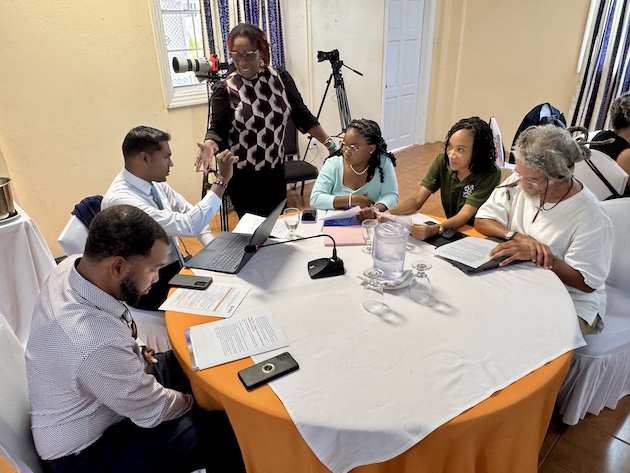
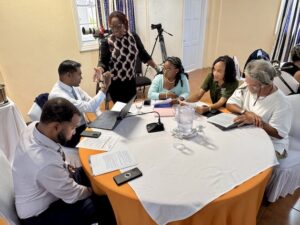
Civil society representatives in discussion during the first day of the Caribbean convening organised by the Fossil Fuel Treaty Initiative. Credit: Alison Kentish/IPS

Civil society representatives in discussion during the first day of the Caribbean convening organised by the Fossil Fuel Treaty Initiative. Credit: Alison Kentish/IPS

SAINT LUCIA, Mar 27 2026 (IPS) – As the world edges closer to breaching key climate thresholds, Caribbean policymakers, scientists and civil society leaders gathered in Saint Lucia this month to coordinate the region’s position ahead of a landmark global meeting on transitioning away from fossil fuels.


The two-day convening, held on 2–3 March, brought together civil society representatives and government officials under the umbrella of the Fossil Fuel Treaty Initiative to discuss the Caribbean’s priorities for the upcoming First International Conference on the Phase-Out of Fossil Fuels in Colombia.

The conference, scheduled for late April in Santa Marta and co-hosted by Colombia, The Netherlands, and Tuvalu, is expected to examine strategies for a unified global transition away from fossil fuels, including financing, governance, and legal structures.

For Caribbean nations reeling from climate impacts, the discussions are far from theoretical.

“Our exposure to climate impacts is acute,” said Dr James Fletcher, climate envoy for CARICOM, in opening remarks to the gathering. “The transition is both an existential necessity and a structural transformation challenge.”

Preparing the Region’s voice

The Saint Lucia meeting was structured across two days: the first dedicated to civil society organisations and the second to government technical officials.

Organisers said the goal was to ensure both groups enter the Santa Marta conference with clear priorities and a coordinated regional position.

The Caribbean has historically played an outsized role in global climate diplomacy. Small island states were instrumental in securing the 1.5°C temperature target within the landmark Paris Agreement, despite contributing only a fraction of global greenhouse gas emissions.

Yet that goal now appears increasingly fragile.

“We will overshoot 1.5 degrees Celsius — at least temporarily,” Fletcher told participants. “The question we now have to grapple with is for how long and by how much.”

Scientists warn that without deep cuts to greenhouse gas emissions, global warming could approach or exceed 2°C by the end of the century. For low-lying island states, that difference could mean the loss of ecosystems, infrastructure and territory.

A Push for Global Coordination

A key focus of the discussions was the proposal for a global fossil fuel treaty. It is an idea that is gaining traction among a coalition of countries and civil society organisations.

The treaty proposal seeks to create an international framework that would manage the decline of fossil fuel production in a coordinated and equitable way.

“The proposal came into the world because many civil society organisations realised that simply saying ‘end fossil fuels’ was not enough,” said Alex Rafalowicz, executive director of the Fossil Fuel Treaty Initiative.

“If we are truly going to address the question of fossil fuels, we have to move beyond rhetoric and get into the details,” he said. “Those details require coordination and cooperation between countries.”

Eighteen countries are currently participating in discussions on the idea, including several small island states such as Antigua and Barbuda, The Bahamas and Saint Kitts and Nevis.

The Science Behind the Urgency

Scientific evidence presented at the Saint Lucia meeting reinforced the sense of urgency.

Professor Tannecia Stephenson, a climate scientist at the University of the West Indies, warned that the world is already experiencing “widespread, unprecedented, rapid and intensified climate change”.

Unless there are “immediate, rapid and sustained large-scale reductions in greenhouse gas emissions”, she told the convening, the goal of limiting warming to 1.5°C will slip out of reach.

The Caribbean, she noted, faces a convergence of climate hazards, stronger hurricanes, rising sea levels and more severe droughts that threaten key sectors such as tourism, agriculture, and water security.

“How does a small island really prepare for a Category 5 storm of the strength and magnitude that we are now seeing?” she asked.

The answer, many participants argued, lies partly in addressing the root cause of climate change, that is, the continued expansion and use of fossil fuels.

Balancing Transition and Reality

Despite the urgency, the transition away from fossil fuels presents complex challenges for the Caribbean.

Many countries remain heavily dependent on imported oil and gas for electricity generation, transport and industry. Others rely on fossil-fuel-related revenues.

At the same time, the region faces chronic fiscal constraints and rising debt levels, often exacerbated by repeated climate disasters.

“Many of our countries are carrying high debt burdens,” Fletcher said. “Why? Because they continuously have to borrow money to recover from the last extreme weather event.”

This financial pressure complicates the transition to renewable energy and climate-resilient infrastructure.

To address this, discussions during the government officials’ session explored potential financing mechanisms linked to a fossil fuel treaty, including proposals for a climate-related debt resolution facility and international transition funds.

Advocates argue that such mechanisms could help ensure that poorer and more vulnerable countries are not left behind as the world shifts toward cleaner energy systems.

Civil Society Demands

The first day of the Saint Lucia convening focused on civil society perspectives, including community organisations and environmental groups from across the Caribbean.

Participants worked in groups to identify priorities and “red lines” for the region ahead of the Santa Marta meeting.

Among the themes raised were the need for stronger international commitments to phase out fossil fuel production, greater financial support for climate-vulnerable countries and protections for workers and communities affected by the energy transition.

Organisers also discussed plans for civil society mobilisation around the Santa Marta conference, including a people’s summit intended to amplify grassroots voices.

A Diplomatic Opening

While the Santa Marta conference is not formally part of the United Nations climate negotiations, many observers see it as an important diplomatic opportunity.

Fletcher described it as a “space outside the formal structure” of the United Nations Framework Convention on Climate Change to explore new governance options and political alignments.

Its significance was underscored when it was referenced during the closing plenary of the COP30 climate summit in Belém, Brazil.

For the Caribbean, preparing a coordinated position is essential, Fletcher said.

“Caribbean leadership is most effective when it is coordinated — when we move as a bloc,” he told participants.

Punching Above Their Weight

Small island states have long leveraged their moral authority in climate negotiations, drawing attention to the disproportionate impacts they face despite contributing little to global emissions.

Fletcher reminded the audience that Caribbean countries helped secure the 1.5°C target in the Paris Agreement and have been at the forefront of campaigns on climate justice, loss and damage financing and reform of the global financial system.

“We do not lead because we are powerful,” he said. “We lead because we are principled. We lead because we are credible.”

But leadership, he added, must be matched with strategy and unity.

As delegates left the Saint Lucia meeting, the message was clear: the Santa Marta conference could represent an important step toward building global momentum for a managed phase-out of fossil fuels.

For the Caribbean, however, the stakes could hardly be higher.

“The Caribbean has often been the moral compass of global climate diplomacy,” Fletcher said. “We must continue to lead strategically, coherently and decisively.”


EXCLUSIVE: Water Laureate Kaveh Madani on Arrest, Exile and Fight for Science

Aid, Civil Society, Climate Change, Combating Desertification and Drought, Conservation, Development & Aid, Economy & Trade, Editors’ Choice, Environment, Featured, Food and Agriculture, Global, Headlines, Human Rights, IPS UN: Inside the Glasshouse, Sustainable Development Goals, TerraViva United Nations, Water & Sanitation

Environment

It was hope that kept me going. – Professor Kaveh Madani 

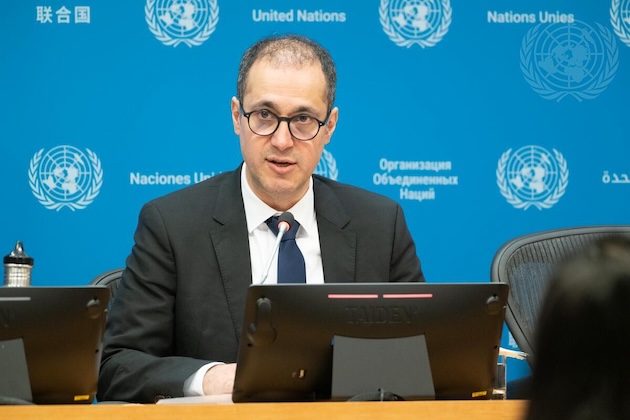
Kaveh Madani, Director of the UN University’s Institute for Water, Environment and Health and lead author of the report entitled “Global Water Bankruptcy: Living Beyond Our Hydrological Means in the Post-Crisis Era” briefs reporters at UN Headquarters. Credit: UN Photo/Evan Schneider

Kaveh Madani, Director of the UN University’s Institute for Water,
Environment and Health and lead author of the report entitled “Global Water
Bankruptcy: Living Beyond Our Hydrological Means in the Post-Crisis Era” briefs reporters at UN
Headquarters.
Credit: UN Photo/Evan Schneider

UNITED NATIONS, Mar 25 2026 (IPS) – Professor Kaveh Madani of Iran has been named the 2026 Stockholm Water Prize laureate. The award will be formally presented by King Carl XVI Gustaf of Sweden in August during World Water Week in Stockholm.


The Stockholm Water Prize is widely regarded as the highest global honour in water science and policy. Often called the Nobel Prize for water, it recognises individuals and institutions for exceptional contributions to the sustainable use and protection of water resources. This year’s selection stands out for both scientific impact and the extraordinary personal journey of the laureate.

At 44, Madani is the first Muslim and the youngest recipient in the prize’s 35 year history. He is also the first United Nations official and the first former politician to receive the award.

Madani currently serves as Director of the United Nations University Institute for Water, Environment and Health. Once a senior official in Iran’s government, he later faced arrest, interrogation, and a sustained smear campaign that forced him to leave his country.

Born in Tehran in 1981, Madani grew up in a family deeply connected to Iran’s water sector. His early exposure to the country’s mounting water challenges shaped his academic direction. He studied civil engineering at the University of Tabriz before moving to Sweden to pursue a master’s degree in water resources at Lund University. He later earned a PhD from the University of California, Davis, followed by postdoctoral research at the University of California, Riverside.

By his early 30s, Madani had established himself as a leading systems analyst. He joined Imperial College, London, where his work focused on the mathematical modelling of complex human water systems. His research combined hydrology, economics, and decision sciences to improve policymaking in water management.

In 2017, he made a decisive move. Leaving a prestigious academic career in London, he returned to Iran to serve as Deputy Vice President and Deputy Head of the Department of Environment. Many viewed his appointment as a signal of reform and a bridge between Iran and its scientific diaspora.

During his tenure, Madani pushed for transparency and structural reforms in water governance. He used innovative public campaigns to raise awareness about environmental degradation. However, his efforts challenged entrenched interests.

State-aligned media accused him of espionage and labelled him a “water terrorist” and “bioterrorist”. Conspiracy theories circulated, linking him to foreign intelligence agencies and even to alleged weather manipulation schemes. His advocacy for international environmental agreements further intensified opposition.

In early 2018, a broader crackdown on environmental experts began. Madani was detained and interrogated multiple times. Several of his colleagues were arrested. One of them, Kavous Seyed Emami, died in custody under contested circumstances.

Facing mounting pressure, Madani left Iran and entered a period of exile. He joined Yale University, where he continued his research and advocacy. He began to focus more on bridging science and policy at the global level.

Madani’s academic contributions have been widely recognised. He is known for integrating game theory into water resource management. His work challenged traditional models that assumed cooperation among stakeholders. He demonstrated that individual incentives often lead to uncooperative behaviour, which makes many engineering solutions ineffective in practice.

This approach provided new tools to understand conflicts over shared water resources. It has been applied to transboundary water disputes and to policy design in regions with limited trust among stakeholders.

One of his most influential contributions is “water bankruptcy.” He introduced the term to describe a condition where water systems can no longer recover to their historical levels. Unlike a crisis, which implies a temporary disruption, water bankruptcy signals a long-term structural failure.

In a recent United Nations report, Madani argued that the world entered an era of global water bankruptcy in January 2026. The report highlighted that many river basins and aquifers have lost their capacity to regenerate. This framing has sparked debate among policymakers and researchers.

Madani uses simple financial language to explain complex ecological realities. He argues that humanity is no longer living off renewable water flows but is depleting long-term reserves. This framing has made the concept widely accessible and influential.

Beyond academia, Madani has built a strong public presence. With a large following on social media, he has used digital platforms to communicate scientific findings in accessible ways. His work includes documentaries and public campaigns aimed at increasing awareness and accountability.

He has also played key roles in international diplomacy. As Iran’s lead environmental diplomat, he participated in global negotiations and served as Vice President of the UN Environment Assembly Bureau in 2017. At the COP23 climate conference in Bonn, he called for greater attention to water in global climate agreements.

Today, as head of the United Nations water think tank, he continues to advocate for integrating water into climate and development policies. He has particularly focused on the Global South, where water stress closely links with food insecurity, migration, and conflict.

The Stockholm Water Prize Committee cited his “unique combination of groundbreaking research, policy engagement, diplomacy, and global outreach, often under personal risk” in awarding him the 2026 prize.

In an exclusive interview with Inter Press Service, Madani recalled the intense pressure and fear that defined his final days in Iran. He described repeated interrogations, surveillance, and a growing sense that his work had placed him in direct confrontation with powerful institutions.

Here are edited excerpts from the interview: 

IPS: You introduced the idea of “water bankruptcy.” How does this change how governments must act today?

Madani: Water bankruptcy is defined as a post-crisis state of failure in which the system is suffering from insolvency, meaning that water use has been more than the available water for an extended period, and also irreversibility, meaning that there are some damages to the ecosystem and the machinery of water production that are irreversible and cannot be fixed.

What that means is that some of the things that used to be just anomalies and abnormal conditions are now the new normal, and we’re no longer experiencing only a temporary deviation from what we are used to, but we have a situation that we have to get used to. Crisis management is about mitigation.

Bankruptcy management is about mitigating what can still be mitigated and adapting to new realities with more restrictions. Bankruptcy management calls for an honest confession, the admission of a confession that a mistake has been made, and the current business model is not working, so it calls for honestly admitting to the mistakes made and transforming the business model, that calls for a fresh new start and a change of course.

It is bitter. Bankruptcy is not a pleasant condition but admitting to it helps us prevent further irreversible damages and enables a future that is less catastrophic.

IPS: You faced arrest, exile, and serious accusations in Iran. What kept you going during that period?

Professor Madani: Hope. Hope is what kept me going because I had gone back there to help and at least at the start, I was trying to take what was happening to me as part of the job and as part of the adventure because I was there to make a positive impact, and if I had given up too quickly, then that would not have matched my essential motivation to help.

I knew that it would not be a very smooth path, but it turned out to be much more bumpy than what I had anticipated, and I think many also, you know, those who made that situation bumpy for me, also regret that today, but by the time they realised mistakes were made, it was too late to do anything about it.

Can you recall your arrest and interrogation? What do you remember most from that experience, and how did it affect you personally?

I think arrests and interrogations are very frustrating, especially when you haven’t done anything wrong.

What kills you is constantly worrying about what others think of you and coming up with different scenarios and conspiracy theories. Dealing with conspiracy theories and proving them wrong is not easy. Those were very hard times for me, but as you know, my background is in behaviour analysis. I was trying to put myself in the shoes of those who were suspicious of me, understand their concerns, and address them so I could help my homeland.

IPS: Many countries still treat water stress as a temporary crisis. What are the biggest policy mistakes they continue to make?

Madani: Yes, crisis management is all about mitigation. Those who deny the crisis and enter the bankruptcy state continue to borrow more from nature, build more infrastructure, dig deeper wells, add additional reservoirs and storage capacity, implement more water transfer projects and build more, and construct more desalination plants. Continuing to add to their supply, on the other hand, they think things would be temporary, and through some sort of rationing, things would be solved, but the continuation of that behaviour and the denial of that reality makes the problem worse.

They get drained into a deepening problem, and again, like the financial world, if your business model is not working and you’re in denial, you continue taking more loans and your expenses and your debt become higher and higher. By the time that people realise that there is no way out of that chaos and that failure, the cost is much, much higher. Remaining in denial would result in major significant irreversible damages that generations would have to pay for.

IPS: You combined science with diplomacy and public outreach. Which of these has had the most real impact on decision-making?

Professor Madani: It’s very hard to really say which one has the most impact, because they’re very complementary. The science is very good, but it’s not enough for decision-making. You still have to understand what the real world looks like and how incentives shape behaviour and actions and how interests promote conflicts and cooperation to be able to act.

Science, of course, opens doors and puts more solutions on the table, but still, without understanding the politics or navigating through politics, it would not work. Diplomacy is another one when it comes to the international scale; even when it comes to negotiating with stakeholders, that’s a skill that would be extremely helpful. So, in a way, these are the things that you need.

And on top of these, public outreach educates you about perceptions, how people and societies understand problems, how they judge different situations, and how their emotions and their perceptions shape their beliefs, and that tells you what you need to do when it comes to communicating your science better, changing their opinion, impacting their opinion, and even negotiating with them or convincing them that things might be different or a different pathway is required. I think they all help you create a recipe for something that might work.

IPS: Your work focuses on human behaviour in water management. Why do technical solutions alone often fail?

Madani: A lot of times, technical solutions developed by our computer models or in our labs don’t take into account the full elements of reality. When humans are involved, we deal with different motives, incentives, emotions, and psychologies, and that makes – that creates – some essentially unexpected realities that might tweak things. Simply put, a lot of times when it comes to developing a solution for a water problem or an environmental solution or a sustainability solution, we think that everyone agrees to making short-term sacrifices for the sake of long-term resilience, but that is not the case in reality because different stakeholders, different groups, farmers, urban users, and industrial users also have short-term goals.

They maximise profit, make sure that the quality of life is not impacted, and so on, which makes them non-cooperative to an extent. And if you miss this reality, then you think that the solution, the optimal solution, is very practical and everyone would cooperate, but then you get very disappointed.

Yet, you can take that into account to the extent possible, try to understand the behavioural element and incorporate those into your assessment and projections to be able to align those incentives and motives with the long-term interest to offer a solution that is more attractive and win-win.

IPS: You now advise governments globally. What is the one urgent action every water-stressed country must take in the next five years?

Madani: I think that by now, countries must understand the importance of water as an essential resource for establishing peace, national security, justice, prosperity, and development. I mean, it supports human development, health, and long-term resilience in society. So, countries must not take it for granted and understand that technological solutions would not be sufficient to address shortages.

They must revisit their practices. They must do a proper accounting to understand what, what’s, and how water is currently being spent and if it’s strategic – strategically speaking, that is the right way of doing things when it comes to matters of national security and long-term resilience. Bankruptcy management starts with accounting and transparency.

That’s something that is missing in many water-stressed and non-water-stressed countries, and I think that’s something that we can focus on, put the lens of science on, and not be afraid of accounting and measuring and monitoring what is happening in the system because that knowledge is required if you want to make improvements.

IPS: Thank you very much for taking the time and speaking to IPS  and congratulations again for the well-deserved award.

IPS UN Bureau Report

  Source

Is WWIII here?

Armed Conflicts, Civil Society, Crime & Justice, Democracy, Europe, Global, Headlines, Human Rights, IPS UN: Inside the Glasshouse, TerraViva United Nations

Opinion

Is WWIII here?

The Russo-Ukrainian war, which began in February 2014, shows no signs of ending. Credit: UNOCHA/Dmytro Filipskyy

KYIV, Ukraine, Mar 19 2026 (IPS) – It is becoming increasingly difficult to ignore the tension, violence and uncertainty in the world in recent years. The number of wars is growing, more and more money is being spent on weapons, and the rhetoric of major powers is becoming increasingly decisive.


The latest escalation in the Middle East has reignited the debate about the start of World War III. The consequences of the Israeli and US strikes on Iran are being felt to varying degrees far beyond the region, at least by those who follow oil prices.

The interests of numerous great powers are at stake, and third parties are considering their next moves and making political statements. Opinions range widely, from the belief that there can be no Third World War because of the existence of nuclear weapons, to the conviction that it has already begun. So, what is really going on?

A journalistic and academic concept

When historians talk about world wars, they mean two unique events in the past. Their scale, the involvement of a wide range of states, the level of violence and the nature of the consequences put them in a league of their own.

To understand how these wars differed from any others, one need only glance at the diagram of human casualties, defence spending, or destruction in various armed conflicts of the 20th century.

However, historians also have different opinions. One of them, better known in his political capacity, Winston Churchill, once described the Seven Years’ War as a world war. This protracted 18th-century conflict drew most of the major powers of the time into direct combat; it spanned numerous battlefields in Europe, North America, the Atlantic and the Indian Ocean; and it had serious geopolitical consequences. How was this not a world war?

By the fact that it was not a total war between industrialised states, the scale of the clashes was rather limited, as were the number of armies; and the consequences, although serious, were not systemic — this may be the response of more conservative historians than the British Prime Minister.

The number of armed conflicts in the world has been growing over the past few years: 2024 has been a record year since World War II.

‘World War’ is both a journalistic and academic concept. To enhance the effect, attract attention or draw conditional analogies, it can be used to describe more events than just the First and Second World Wars. For example, the Thirty Years’ War of the 17th century, the Napoleonic Wars of the 19th century or even the Cold War are sometimes referred to as world wars.

Within this logic, individual elements of a world war can be seen even today. The number of armed conflicts in the world has been growing over the past few years: 2024 has been a record year since World War II. According to some estimates, 61 armed conflicts in 36 countries were recorded this year, which is significantly higher than the average for the previous three decades.

Global military spending is also on the rise: today it has reached 2.5 per cent of the global economy, the highest figure since 2011 and an upward trend since 2021. This is still significantly less than during the Cold War, when a range of 3 to 6 per cent was the norm. Analysing these figures, it is clear that global security has deteriorated in recent years, but how critically?

A more academic approach would be to define a world war as one in which most of the major powers are involved; which has global reach and is total in nature; leads to enormous loss and destruction; and significantly changes the world upon its conclusion. Direct and large-scale armed conflict between major powers is a mandatory criterion.

And this is the main argument against the idea that World War III has already begun. No matter how high the level of destabilisation in the modern world, no matter how far large-scale regional conflicts have escalated, and no matter how much money states spend on armaments, this is not enough for a world war. Large-scale military operations involving major powers are needed.

All just fears?

This has not happened in the world for a long time. The interval between the Second and Third World Wars turned out to be much longer than between the First and Second. Nuclear weapons played a central role in this, raising the price of war so high that major powers began to avoid it by any means possible. This safeguard has been in place for over 80 years and looks set to continue.

Peace, or rather the absence of war between major powers, remains one of the central elements of the current international order. International institutions and regimes may collapse or weaken, regional wars may break out, but the likelihood of war between major powers remains extremely low.

Proponents of the Third World War theory sometimes point out that even in the absence of full-scale war between major powers, other manifestations occur: hybrid wars, cyberattacks, or proxy wars. This is true, but all these outbreaks of conflict are several levels below a world war in terms of their destructive potential and are not total in nature.

Throughout history, states have fought through proxies or resorted to information, trade or religious wars, but we do not consider these wars to be world wars — except in a symbolic sense.

A systemic war does not necessarily have to be a world war

Unlike the 2003 war in Iraq, the strikes on Iran are taking place in a world where, instead of US hegemony, there is complex competition between at least two centres of power. This adds nuances and forces other states to respond, directly or indirectly, for example, by supplying weapons or intelligence data, supporting one side or the other.

But this does not make the war global. Arms supplies, for example, are a common practice found in most regional conflicts, as is diplomatic or financial support from allies or partners. Even if American troops use the technology or expertise of partners – such as Ukrainian drones – this does not mean that Ukraine is being drawn into the war. Just as American arms supplies to Ukraine during the Russian-Ukrainian war did not mean US involvement in the war.

For a world war, the key ingredient is still missing: direct confrontation between major powers. In addition to world wars, there are also systemic wars. In these conflicts, it is not so much the scale that is important as the change in the international order to which they lead.

The Thirty Years’ War, the Napoleonic Wars, and the First and Second World Wars mentioned above were systemic wars: after their completion, the rules of international politics were rewritten and new ones were adopted at peace conferences and congresses. A systemic war does not necessarily have to be a world war.

Moments of hegemonic crisis and the beginning of the struggle for hegemony always carry with them the danger of new wars, arms races and escalations.

The current destabilisation and growth of various risks are largely linked to the struggle for the future of the international order. The United States and China have almost fallen into the ‘Thucydides trap’ — a strategic logic similar to that which led to the Peloponnesian War in the 5th century BC. At that time, the narrowing of the power gap between the hegemon and the challenger forced the Spartans to start a preventive war.

Today, there are well-founded fears that the decline of American hegemony, the rise of China and the approach of a bipolar world will sharply increase the likelihood of direct armed conflict between the superpowers.

The decisive, to put it mildly, steps taken by the US administration can also be considered preventive actions aimed at strategically weakening China’s position while Washington still has the upper hand. Such moments of hegemonic crisis and the beginning of the struggle for hegemony always carry with them the danger of new wars, arms races and escalations.

We are in the midst of such a crisis. It is systemic in the sense that it is not just a collection of regional conflicts in different parts of the world, which have become more numerous, but a manifestation of a large-scale redistribution of influence and power on a global scale. This redistribution will entail changes in the international order, because the rules of the game are linked to the balance of power.

If, at some point, the leaders of major states decide that it is worth taking the risk of war and paying the price, the systemic crisis will turn into a world war. But this, as the Spartans themselves said, is ‘if’.

Nickolay Kapitonenko is an associate professor at the Institute of International Relations at Taras Shevchenko National University of Kyiv and director of the Centre for International Relations Studies.

Source: International Politics and Society, Brussels

IPS UN Bureau

  Source

Beyond Stereotypes: Reclaiming Muslim Histories during Ramadan

Civil Society, Global, Global Governance, Headlines, Human Rights, International Justice, IPS UN: Inside the Glasshouse, Religion, TerraViva United Nations

Opinion

Muslim History Month poster- artist Siddhesh Gautam

DELHI, India, Mar 18 2026 (IPS) – In public discourse today, Muslims often appear as subjects of debate rather than authors of their own histories. Discussions about Muslim societies tend to revolve around geopolitics, security or conflict, leaving little space for the cultural, artistic and intellectual traditions that have shaped Muslim communities across centuries.


Reclaiming these narratives is therefore about reclaiming narrative authority. As a Muslim woman, I have often seen how Muslim voices are sidelined even when conversations centre on our own communities and pasts. It was within this context that I started Muslim History Month, together with my friend and colleague Ashwini KP, currently UN Special Rapporteur on Racism, in 2020, choosing to mark it during the month of Ramadan. Hosted on www.zariya.online, the initiative emerged from a simple conviction: communities must have the space to document and narrate their own histories.

Mariya Salim

Muslim History Month also draws inspiration from earlier community-led initiatives such as Black History Month and Dalit History Month. These movements have long shown how marginalized communities can reclaim pasts and their present, that have been ignored or distorted.

They remind us that history is not only about remembering the past but also about challenging exclusion and reshaping how societies understand themselves. Muslim History Month builds on this legacy by creating a platform where Muslims, and others who are allies, themselves reflect on the diversity, complexity and richness of their historical and cultural experiences.

What began as a modest collaborative project has since developed into a global platform bringing together writers, scholars, artists and activists to explore overlooked dimensions of Muslim histories. Contributors have written from Egypt, the United States, Palestine, Nepal and Russia, among others, representing a range of communities including Pasmanda, Tsakhurs, Roma and Uyghur Muslims. This year alone there are contributors from over 6 countries, from Lebanon and Palestine to India, Egypt and Indonesia.

The urgency of documenting these histories is reflected in the commitment of the contributors themselves. Rima Barakat, an academic in Islamic Art History from the Lebanese American University (LAU), wrote her contribution this year from Beirut. Explaining why she chose to participate in our endeavour despite living amid ongoing conflict, she observed:

“War always incites me to act culturally and to contribute amidst political turmoil. Historically, during World War I and World War II, artists and writers produced prolifically and contributed to sustaining a cultural economy. That is what I do today and how survival is measured by cultural and artistic endurance.”

Mihrab at the Jami Masjid, 17th century, Bijapur, India. Photo- Author Rajarshi Sengupta

Her words capture something fundamental about the role of culture in difficult times. Artistic expression is often treated as secondary to more immediate political realities. Yet history repeatedly shows that culture can become one of the most powerful ways communities endure, remember and rebuild.

The first edition of Muslim History Month brought together writers from different parts of the world to document overlooked aspects of Muslim communities. Contributors wrote about subjects ranging from Sheedi Muslims in Pakistan to what Ramadan/Ramzaan means. The second edition shifted the focus toward Muslim women from across the world who are no longer with us, many of whose contributions have faded from historical memory, from architect Zaha Hadid to Indian Spy Noor Inayat Khan. By revisiting their lives and work, the edition sought to address the erasures that often shape how Muslim women’s life and experiences are recorded.

The third edition, launched this year, turns its attention to Muslim art and architecture. Rather than limiting the discussion to monumental structures or gallery-based art alone, the edition explores a wider spectrum of creative practices. Art and architecture here include performance traditions, Calligraphy and mosque architecture, craft practices like Rogan Art, cultural rituals like wearing Amulets and everyday acts of creativity through which communities’ express faith, identity and belonging.

One of the contributions by Kawther Alkholy Ramadan in Canada for instance reflects on the aftermath of the Afzaal family murders in London, Ontario. In 2021, the Afzaal family was deliberately targeted and killed in an act of anti-Muslim violence that deeply affected the local community. Rather than focusing solely on the violence of the attack, Ramadan’s piece examines how Muslim women responded through creative and cultural expression.

Stories such as these challenge conventional assumptions about what counts as art. They show how creativity often emerges most powerfully in moments of crisis, when communities search for ways to process trauma and reaffirm their presence.

Another contribution from Indonesia by Adzka Haniina Albarri, for instance explores the performative art known as Shalawat Musawa. Shalawat refers to devotional invocations offered by Muslims in honour of the Prophet Muhammad (PBUH) The article examines how Shalawat Musawa has become a space where discussions around gender equality can be articulated. By encouraging women’s participation in a devotional practice historically dominated by men, performers are using art to engage with evolving debates about gender and social justice.

Across the edition, similar stories emerge from different parts of the world. Some pieces engage with contemporary artists, including an interview with world renowned Tunisian calligrapher Karim Jabbari, articles by Palestinian jewellery designer Mai Zarkawi and Egyptian academic Balsam Abdul Rahman Saleh. Others explore artistic traditions shaped by migration, diaspora and local cultural histories.

Muslim History Month III highlights how artistic expression remains embedded in everyday life. From neighbourhood cultural initiatives, architectural marvels, discussions on the Bihari Script Quran in Dallas Museum, to devotional performances, these practices reveal how creativity continues to shape the social and spiritual landscapes of Muslim communities.

They also illustrate the diversity within Muslim cultural production. Muslim societies are far from monolithic, and neither are their artistic traditions.

At a time when public discourse frequently reduces Muslims to political headlines or security narratives, these stories offer an important counterpoint. They remind us that Muslim histories are also histories of creativity, scholarship, craftsperson-ship and cultural exchange.

Documenting these histories is itself an act of preservation. History, and for that matter the present that remains unwritten, are easily forgotten or misrepresented. When communities claim authority to narrate their own pasts and present, they challenge the structures that have historically excluded them from broader cultural narratives. Therefore, Muslim History Month, then, is not only about looking back. It is also about shaping how Muslim histories will be understood in the future.

As Rima Barakat’s reflection from Beirut reminds us, even in times marked by war and uncertainty, cultural production persists. For many communities, it is precisely through artistic endurance that survival itself is measured.

Beyond the stereotypes and headlines that dominate public discourse lies a far richer narrative, one shaped by art, architecture, memory and the collective imagination of communities determined to tell their own stories.

Mariya Salim is co-founder of Zariya. She is a Human Rights activist and an international SGBV expert based in Delhi India.
https://zariya.online/category/muslim-history-month-iii/

IPS UN Bureau

  Source

A Remotely-Piloted Weapon That Targets Civilians in War Zones

Armed Conflicts, Civil Society, Crime & Justice, Democracy, Featured, Global, Headlines, Human Rights, IPS UN: Inside the Glasshouse, TerraViva United Nations

A Remotely-Piloted Weapon That Targets Civilians in War Zones

A sign outside the UN Secretariat building last year.

UNITED NATIONS, Mar 18 2026 (IPS) – As the world continues to be weighed down in political and military turmoil, drones are being increasingly used as weapons of war in a rash of ongoing conflicts—including Ukraine vs Russia, Israel vs Palestine, US vs Iran and Israel vs Lebanon, plus in civil wars in the Democratic Republic of the Congo (DRC), Sudan and Haiti.


Described as Unmanned Aerial Vehicles (UAV), drones have fundamentally transformed modern warfare, “offering a low-cost, high-impact form of air power, challenging traditional military doctrines and giving rise to new tactics and ethical debates”.

Once limited to major military powers like the U.S. and Israel, drones are now being used by numerous state and non-state actors, including militant groups and even organized crime cartels.

The use of drones, particularly in targeted killings and with increasing autonomy, has raised significant international debate regarding accountability, civilian casualties, and compliance with international humanitarian law

UN High Commissioner for Human Rights Volker Türk said last week he was “appalled by the devastating impact on civilians of increasing drone attacks”, amid reports that more than 200 civilians have been killed by drones since 4 March alone in the Kordofan region, and in White Nile state.

“It is deeply troubling that despite multiple reminders, warnings and appeals, parties to the conflict in Sudan continue to use increasingly powerful drones to deploy explosive weapons with wide-area impacts in populated areas,” said Türk.

“I renew my call on them to abide fully with international humanitarian law in their use of these weapons, particularly the clear prohibition on directing attacks against civilians and civilian objects and infrastructure, and against any form of indiscriminate attacks.”

Many homes, schools, markets and health facilities were damaged or destroyed in the attacks, compounding the impacts on civilians and local communities, he said.

Meanwhile drones are also being used in the politically-troubled Haiti and also in the conflict between the Democratic Republic of Congo (DRC) and Rwanda despite a peace agreement brokered by the US last year.

According to a report in Cable News Network (CNN) March 17, the war in Iran is continuing to disrupt travel across the Gulf after Iranian drone strikes triggered two major air incidents in recent days. Flights at Dubai International Airport were briefly suspended on Monday after a drone struck a nearby fuel tank, igniting a large fire.

The shutdown forced cancellations and diversions as aviation authorities closed the airport. Part of the UAE’s airspace was also closed for a few hours overnight after the country said it was responding to incoming missiles and drone strikes from Iran.

Meanwhile, the prices of many global airfares that bypass the Middle East are rising, as the conflict drives up oil prices and airlines warn of higher fuel costs ahead, said CNN.

Focusing on a military perspective, Siemon Wezeman, Senior Researcher, Arms Transfers Programme, Stockholm International Peace Research Institute (SIPRI), told IPS more and more states, (and also non-state armed- rebel – groups) acquire drones of all sizes.

“Some of the numbers are quite amazing – Ukraine getting not a few 1,000, but far over 10,000 drones from various suppliers, and Russia, Ukraine and Iran each use drones by the 100s almost every day in the current conflicts.”

And different from some 10 years ago, when most of the drones where for reconnaissance roles, he pointed out, today many drones are armed and many more are ‘one-way attack drones’ (also called suicide or kamikaze drones). The latter are becoming a cheap alternative for long-range missiles against ground targets.

In the SIPRI arms transfers database (https://armstransfers.sipri.org), he said, “we record transfers of all armed drones, and reconnaissance drones with a weight of at least 150kg (we had to put a weight limit to be able to keep monitoring drone transfers with the resources and sources we have)”.

“And we clearly see in recent years that a) the total numbers of drones transferred between states has grown, b) several non-state actors (e.g. Houthis and Hezbollah) have also been supplied with drones, c) the number of states and non-state actors that have acquired drone has grown – most states in the world have now acquired drones, many of them from foreign suppliers, d) the number of producers and suppliers has grown – the simpler drones are offered by dozens if not 100s of large and very small companies and that number is growing, and e) drones, and especially armed drones.”

That is the picture for flying drones, Wezeman said.

But also, sea drones (surface or submarine) are starting to become popular – even if not yet transferred in any significant number. And land drones are also starting to become popular, he declared.

At a press conference March 10, UN Under-Secretary-General for Humanitarian Affairs Tom Fletcher said: “I’m really worried about drones in particular. I think the world has decided that it’s far more interested in spending enormous amounts of money developing these increasingly deadly weapons than it is on saving lives, and it seems to have decided that it hasn’t got time to work on ensuring that the rules that govern these weapons, these lethal autonomous weapons, keep up with the pace of technology.”

So you’ve got this dangerous alliance between very innovative technology and huge amounts of money and people’s desire to kill more people – and that’s a toxic combination, he said.

“And last year, 90 per cent of all deaths caused by drones were civilians, many of them humanitarians. And we’re seeing that across the crises on which we work – whether it’s Gaza, Sudan or in Ukraine, we’re seeing these bad practices move between crises”.

In the DRC last week, a senior official of the UN children’s agency UNICEF and two civilians were killed in drone strikes.

Amplifying further Wezeman said all these drones and one-way attack drones have become more capable, especially in range (the simple Shahed, one-way attack drones used by Iran and sold to Russia have a range of up to 1500 to 2000km), changing them from tactical battlefield weapons to more strategic weapons.

Development is very rapidly continuing for all type of drones, including making them more autonomous and intelligent to be capable of independent targeting and other decision-making. AI plays a growing role in this process. This process leads to questions about control, but right now it seems the process is moving faster than the discussion on controlling the autonomous aspects (see also our programme on emerging technologies.

https://www.sipri.org/research/armament-and-disarmament/emerging-military-and-security-technologies.

Will they replace systems with a human on board or in the loop? The development goes certainly that way and for missiles and one-way attack drones that has already started. For the larger, more capable and more complex systems such as combat aircraft, warships and larger combat vehicles that is still a future – but not a distant dream as development of for example drone combat aircraft is already moving into prototypes in the USA, China, Australia and Europe.

There still is an element of doubt however – drones need navigation that now is largely based on GPS-type systems, something that is not free from the risks of being jammed or stopped.

The simpler drones, with their simple technology, cheap and easy to produce are also not as effective as hoped. Most of them are rather easy prey for air-defence systems (or jamming) – while Russia, Iran and Ukraine send every day dozens or 100s to attack their opponents, most do no reach their target but are shot down or lost due to jamming or other causes, declared Wezeman.

Meanwhile Human Rights Watch said last week its latest research on “how Haitian security forces and private contractors working with them have conducted extensive and apparently unlawful lethal drone strikes in densely populated areas killing and injuring residents who were not members of criminal groups, including children”.

“We call on Haitian authorities to urgently rein in the security forces and private contractors working for them before more children die”, said HRW.

According to data from multiple sources reviewed by Human Rights Watch, at least 1,243 people were killed by drone strikes in 141 operations between March 1, 2025, and January 21, 2026, including at least 43 adults who were reportedly not members of criminal groups, and 17 children. The data also shows that the drone strikes injured 738 people, at least 49 of whom were reportedly not members of criminal groups.

“Dozens of ordinary people, including many children, have been killed and injured in these lethal drone operations,” said Juanita Goebertus, Americas director at Human Rights Watch. “Haitian authorities should urgently rein in the security forces and private contractors working for them before more children die.”

The United Nations Integrated Office in Haiti has attributed the drone attacks in Haiti to a specialized “Task Force” established by Prime Minister Alix Didier Fils-Aimé that is operated with support from the private military company Vectus Global.

The US ambassador to Haiti has confirmed that the US State Department issued a license to Vectus Global to export defense services to Haiti.

Thalif Deen, Senior Editor, Inter Press Service (IPS) news agency, was a former Director, Foreign Military Markets at Defense Marketing Services; Senior Defense Analyst at Forecast International; military editor Middle East/Africa at Jane’s Information Group and UN correspondent for Jane’s Defence Weekly, London.

IPS UN Bureau Report

  Source