Abusive Governments Set to Win Seats in Human Rights Council

Civil Society, Global, Global Governance, Headlines, Health, Human Rights, International Justice, IPS UN: Inside the Glasshouse, TerraViva United Nations
Opinion

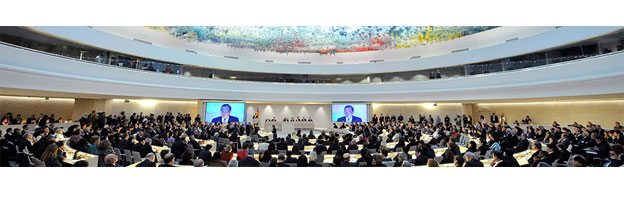
NEW YORK, Oct 10 2025 (IPS) – Egypt and Vietnam are on track to secure seats on the United Nations Human Rights Council despite being woefully unfit for membership. The UN General Assembly will elect members to the UN’s premier rights body in a noncompetitive vote on October 14, 2025.


These 2 countries are among 14 member states seeking three-year terms on the 47-nation Human Right Council starting in January 2026. Vietnam, currently a Council member, is seeking re-election.

“Noncompetitive UN votes permit abusive governments like Egypt and Vietnam to become Human Rights Council members, threatening to make a mockery of the Council,” said Louis Charbonneau, UN director at Human Rights Watch. “UN member states should stop handing Council seats on a silver platter to serial rights violators.”

Egypt, along with Angola, Mauritius, and South Africa are running for four African seats. India, Iraq, and Pakistan are joining Vietnam for the four Asian seats. For Latin America and the Caribbean, Chile, and Ecuador are unopposed for two seats.

In the Western group, Italy and the United Kingdom are running for two available seats, while Estonia and Slovenia are candidates for two seats for Central and Eastern Europe.

General Assembly Resolution 60/251, which created the Human Rights Council in 2006, urges states voting for members to “take into account the contribution of candidates to the promotion and protection of human rights.” Council members are required to “uphold the highest standards in the promotion and protection of human rights” at home and abroad and to “fully cooperate with the Council.”

Candidates only need a simple majority in the secret-ballot vote in the 193-nation General Assembly to secure a seat on the Human Rights Council. That makes it highly unlikely that any of the candidates will not be elected. Nevertheless, UN member states should not cast votes for abusive governments that are demonstrably unqualified for Council membership.

Egyptian President Abdel Fattah al-Sisi’s government has continued wholesale repression, systematically detaining and punishing peaceful critics and activists, and effectively criminalizing peaceful dissent. Government security forces have committed serious human rights abuses with near-absolute impunity. These include killing hundreds of largely peaceful protesters and widespread, systematic torture of detainees, which most likely amount to crimes against humanity.

The government also tries to prevent its own citizens from engaging with the Geneva-based Human Rights Council, and punishes those who engage with brutal reprisals. It ignores UN experts’ requests to visit the country.

The ruling Communist Party of Vietnam maintains a monopoly on political power and allows no challenge to its leadership. Basic rights are severely restricted, including freedoms of expression, peaceful assembly, association, and religion. Rights activists and bloggers face police intimidation, harassment, restricted movement, and arbitrary arrest and detention.

Mauritius and the UK, among the countries running. signed a treaty that recognizes Mauritius’ sovereignty over the Chagos islands but fails to address the ongoing crimes against humanity against Chagossians and their right of return to all the islands.

The UK forcibly displaced the Chagossian people between 1965 and 1973 to allow the US to build a military base. Mauritius and the UK should comply with their international rights obligations, including Chagossians’ right of return and should provide an effective remedy and reparations.

Angolan President João Lourenço has pledged to protect human rights, though Angolan security forces have used excessive force against political activists and peaceful protesters. South Africa has taken strong stances for accountability on Palestine and other issues. It should be similarly robust with rights violations by Russia and China.

The Bharatiya Janata Party government in India led by Prime Minister Narendra Modi has refused access to UN experts. Modi’s party leaders and supporters repeatedly vilify and attack Muslims and Christians with impunity, while the authorities often punish those who protest this campaign of Hindu majoritarianism.

Pakistan should cease the use of draconian counterterrorism and sedition laws to intimidate peaceful critics, and repeal its blasphemy laws. The government should prosecute those responsible for incitement and attacks on minorities and marginalized communities.

In 2024, Iraq passed a law criminalizing same-sex relations and transgender expression. Violence and discrimination against LGBT people are rampant, for which no one is held to account. Iraqi authorities have increasingly repressed activists and journalists.

In Ecuador, the government has attacked judicial independence and security forces have committed serious human rights violations since President Daniel Noboa declared an “internal armed conflict” in January 2024.

In Chile, President Gabriel Boric’s administration has played a leading role in speaking out on human rights violations around the world. Human rights challenges, including racism and abuses against migrants, remain a problem in the country, however.

In the UK, the authorities should end their crackdown on freedom of assembly. Many peaceful protesters in support of Palestinians or action on climate change have been arrested and some imprisoned after demonstrating.

Italy should stop criminalizing and obstructing sea rescues and enabling Libyan forces to intercept migrants and refugees and take them back to Libya, where they face arbitrary detention and grave abuses. Italy also failed to comply with a 2025 International Criminal Court arrest warrant by sending a wanted suspect back to Libya instead of to The Hague.

The Human Rights Council has played a crucial role in investigating abuses in Syria, Myanmar, North Korea, Russia, Ukraine, Israel/Palestine, and elsewhere. It recently established an investigation into serious crimes in Afghanistan by all parties—past and present —and extended its fact-finding mission for Sudan. Other countries and situations need scrutiny.

Council members should press for investigations of abuses by major powers, such as China’s crimes against humanity against Uyghurs and others in Xinjiang, and take up extrajudicial killings by the US of alleged narcotics traffickers on sea vessels.

For Council investigations to be credible, it needs financing. It is critical for countries to pay their assessed UN dues while boosting voluntary contributions. This will ensure that independent human rights investigations do not become casualties of the UN’s financial crisis resulting from the Trump administration halting virtually all payments to the UN and China and others paying late.

“The Human Rights Council has been able to save countless lives by carrying out numerous human rights investigations that deter governments and armed groups from committing abuses,” Charbonneau said. “All governments should recognize that it’s in their interests to promptly pay their UN dues so the rights Council can do its job.”

IPS UN Bureau
  Source

Civil Society on the Edge

Civil Society, Global, Global Governance, Headlines, Human Rights, International Justice, IPS UN: Inside the Glasshouse, Sustainable Development Goals, TerraViva United Nations

Opinion

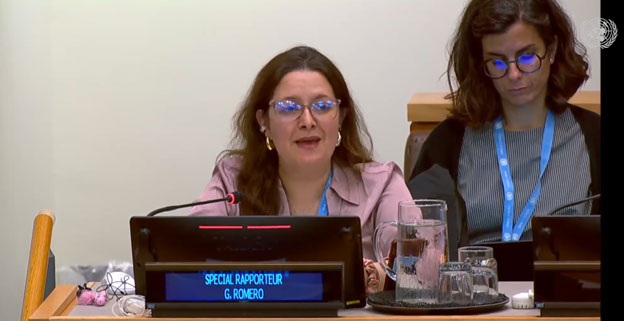
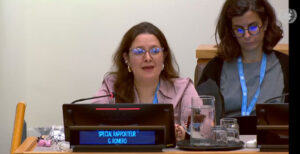
Gina Romero is UN Special Rapporteur for the rights to freedom of assembly and of association.

Credit: UN Web TV

BOGOTA, Colombia, Oct 9 2025 (IPS) – The collapse of aid architecture is one of the greatest dangers for civic space. This shift is not accidental but systemic, reflecting deliberate policy choices – not only by the US but accelerated by its decisions- that prioritize security agendas over human rights and solidarity.


Aid cuts, securitization, and geopolitical rivalries have led to the defunding of grassroots organizations, especially those led by women, LGBTQI groups, and marginalized communities. As a result, associations that once filled critical gaps are disappearing. These dynamics as existential because without resources, protections, and solidarity, civil society cannot survive—let alone flourish.

This is the center of my more recent report, that will be presented at the UN General Assembly on October 16th.

Civil society’s weakening has direct consequences for human rights protection and democratic participation. Without independent associations, accountability mechanisms collapse, and corruption flourishes. The report highlights that marginalized groups are disproportionately affected, as grassroots organizations are often their only safety net. The dismantling of solidarity also jeopardizes progress toward the Sustainable Development Goals (SDGs).

For example, women’s organizations that once advanced gender equality and access to reproductive health are closing. LGBTQI associations providing health services face funding cuts. Environmental defenders, crucial in climate justice, are left exposed.

Thus, the report warns that the rollback of aid and civic freedoms undermines not only democracy but also global commitments to equality and sustainability.

The report makes a call for urgent action to rebuild international solidarity and redesign the architecture of aid in ways that strengthen rather than weaken civic space. The vision is for a people-centered, rights-based, and sustainable system of cooperation. Key elements include:

Guaranteeing equitable access to resources: ensuring groups with high vulnerabilities, have direct and fair access to funding. Includes aid models that channels resources to local civil society, avoiding intermediaries, and simplified bureaucratic procedures.

Repealing restrictive laws and counter-terrorism measures: ending the misuse of security frameworks—such as counter-terrorism and anti-money laundering— and repealing laws that stigmatize NGOs as “foreign agents” or limit their ability to operate freely.

Ensuring meaningful participation of civil society: in multilateral decision-making, as equal partners shaping priorities, including global financing mechanisms and SDG implementation frameworks.

Aligning aid with human rights and civic space protection: Condition aid and credits on compliance with obligations to protect freedoms and rights and promote long-term, flexible funding instead of short-term project-based support.

Protecting digital freedoms and resisting securitization: Safeguarding the use of technologies, including spyware and facial recognition technologies, for association and assembly while preventing its misuse for surveillance and repression.

Reimagining solidarity: Shifting from a charity-based approach to one of global justice and shared responsibility; supporting civil society is not an act of benevolence but a legal and moral obligation under international human rights law.

IPS UN Bureau

  Source

Wealthy Nations Urged to Curb Climate Finance Debt For Developing Countries

Active Citizens, Civil Society, Climate Action, Climate Change, Climate Change Finance, Climate Change Justice, Conferences, Development & Aid, Economy & Trade, Environment, Gender, Global, Headlines, Sustainability, Sustainable Development Goals, TerraViva United Nations

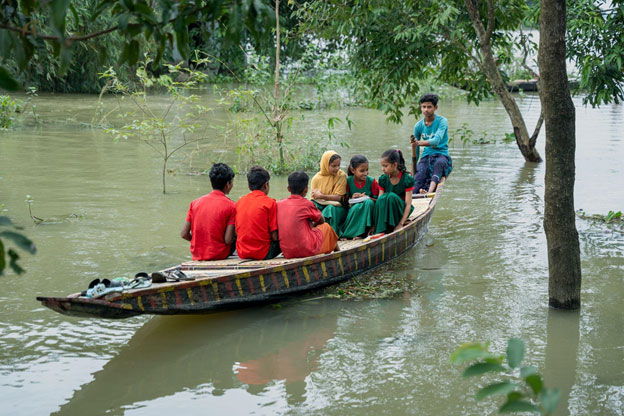
Children in Bangladesh riding a boat through a flooded river to attend school. Bangladesh is one of the most climate-sensitive regions in the world. Credit: UNICEF/Suman Paul Himu

UNITED NATIONS, Oct 8 2025 (IPS) – In recent years, international climate financing has declined sharply, leaving billions of people in developing nations increasingly vulnerable to natural disasters and unable to adapt effectively. With major cuts in foreign aid, these communities are expected to face the brunt of the climate crisis, while wealthier nations continue to reap economic benefits.


A new report from Oxfam and CARE Climate Justice Center, Climate Finance Shadow Report 2025: Analyzing Progress on Climate Finance Under the Paris Agreement, showcases the significant gaps in climate financing for developing countries in the Global South, and the far-reaching implications for climate resilience and global preparedness.

This comes ahead of the 30th United Nations (UN) Climate Change Conference (COP30), in which world leaders, diplomats, and civil society groups will converge in Belém, Brazil, from November 10–21, to discuss strategies to strengthen global cooperation, advance inclusive and sustainable development, and accelerate efforts to address the climate crisis. The United Nations Environment Programme (UNEP) states that there will be a major focus on allocating public funds for mitigation and adaptation efforts in developing countries, aiming to mobilize at least USD 300 billion annually by 2035 for developing countries and a yearly USD 1.3 trillion over the same period.

In the report, CARE and Oxfam found that developing countries are paying disproportionately high disbursements to wealthy nations in exchange for comparatively modest climate finance loans—spending about seven dollars for every five dollars they receive in return. This, compounded with “the most vicious foreign aid cuts since the 1960s”, shows a nearly 9 percent drop in climate funding in 2024, which is projected to drop by a further 9-17 percent in 2025.

“Rich countries are failing on climate finance and they have nothing like a plan to live up to their commitments to increase support. In fact, many wealthy countries are gutting aid, leaving the poorest to pay the price, sometimes with their lives” said John Norbo, Senior Climate Advisor at CARE Denmark. “COP30 must deliver justice, not another round of empty promises.”

As of 2022, developed nations reported pledging approximately USD 116 billion in climate funding for developing countries. However, the actual amount delivered is less than one-third of the pledged total — estimated at only USD 28–35 billion. Nearly 70 percent of this funding came in the form of loans, often issued at standard rates of interest without concessions. As a result, wealthy nations are driving developing countries deeper into debt, despite these nations contributing the least to the climate crisis and lacking the resources to manage its impacts.

It is estimated that developing countries are indebted by approximately USD 3.3 trillion. In 2022, developing countries received roughly USD 62 billion in climate loans, which is projected to produce over USD 88 billion for wealthy countries, yielding a 42 percent profit for creditors. The countries issuing the highest concessional loans in climate financing were France, Japan, Italy, Spain, and Germany.

“Rich countries are treating the climate crisis as a business opportunity, not a moral obligation,” said Oxfam’s Climate Policy Lead, Nafkote Dabi. “They are lending money to the very people they have historically harmed, trapping vulnerable nations in a cycle of debt. This is a form of crisis profiteering.”

Despite wealthy nations issuing high loans to developing countries, Least Developed Countries (LDCs) received only 19.5 percent of the total public climate funding over 2021-2022, while Small Island Developing States (SIDs) received roughly 2.9 percent. Only 33 percent of this funding went toward climate adaptation, a “critically underfunded” measure according to Oxfam, as the majority of creditors favor investing in mitigation efforts that deliver faster financial returns. Additionally, only 3 percent of this funding went to gender equality efforts, despite women and girls being disproportionately impacted by the climate crisis.

The report also underscores the dire impacts of the misallocation of climate financing and funding cuts, as vulnerable communities in particularly climate-sensitive environments find themselves with far fewer resources to adapt to natural disasters.

In 2024, communities in the Horn of Africa were ravaged by brutal cycles of droughts and flooding, which displaced millions of civilians and pushed tens of millions into food insecurity. In Rio Grande do Sul, Brazil, massive floods caused over 180 civilian deaths, displaced 600,000 people, and the resulting damage led to billions of dollars in losses. According to figures from UNICEF, around 35 million children in Bangladesh experienced school disruptions in 2024 due to heatwaves, cyclones, and floods, posing serious risks to their long-term development. The United Nations Environment Programme (UNEP) warns that global temperatures are on course to rise to a “catastrophic” 3°C by the end of the century, with extreme weather events expected to intensify further.

Ahead of the COP30 conference, Oxfam has urged wealthy nations to honor their climate finance commitments, including the delivery of the full USD 600 billion pledged for the 2020–2025 period, aligning with the UN’s target of mobilizing USD 300 billion annually. The organization also called for a substantial increase in global funding for climate adaptation and loss management, alongside the implementation of higher taxes on the wealthiest individuals and fossil fuel companies—which could generate an estimated USD 400 billion per year. Additionally, Oxfam emphasized the need for developed countries to stop deepening the debt of climate-vulnerable nations by expanding the share of grants and highly concessional financing instead of standard loans.

IPS UN Bureau Report


UN Conference Recommits to Solidarity With Rohingyas, People of Myanmar

Armed Conflicts, Asia-Pacific, Civil Society, Development & Aid, Featured, Headlines, Human Rights, IPS UN: Inside the Glasshouse, Migration & Refugees, Religion, Sustainable Development Goals, TerraViva United Nations, Youth

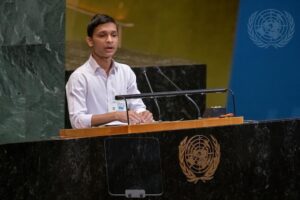
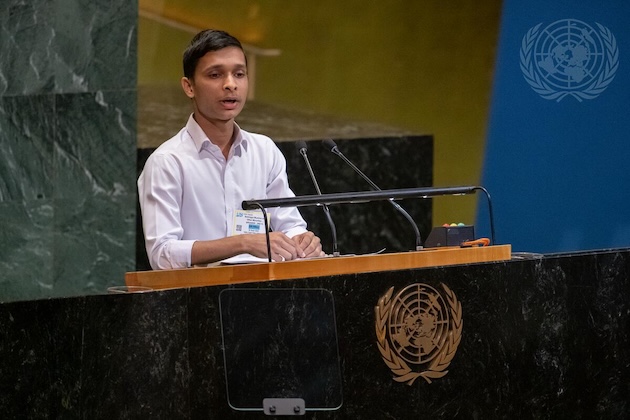
Maung Sawyeddollah, Founder of the Rohingya Students Network, addresses the high-level conference of the General Assembly on the situation of Rohingya Muslims and other minorities in Myanmar Credit: UN Photo/Manuel Elías

Maung Sawyeddollah, Founder of the Rohingya Students Network, addresses the high-level conference of the General Assembly on the situation of Rohingya Muslims and other minorities in Myanmar Credit: UN Photo/Manuel Elías

UNITED NATIONS, Oct 1 2025 (IPS) – The international community convened for a high-level meeting at UN Headquarters, this time to mobilize political support for the ongoing issue of the persecution of the Rohingya Muslims and other minorities in Myanmar.


On Tuesday September 30, representatives from Rohingya advocacy groups, the UN system and member states convened at the General Assembly to address the ongoing challenges facing Rohingya Muslims and the broader context of the political and humanitarian situation in Myanmar.

UN President of the General Assembly Annalena Baerbock remarked that the conference was an opportunity to listen to stakeholders, notably civil society representatives with experience on the ground.

“Rohingya need the support of the international community, not just in words but in action,” she said.

Baerbock added there was an “urgent need for strengthened international solidarity and increased support,” and to make efforts to reach a political solution with unequivocal participation from the Rohingyas.

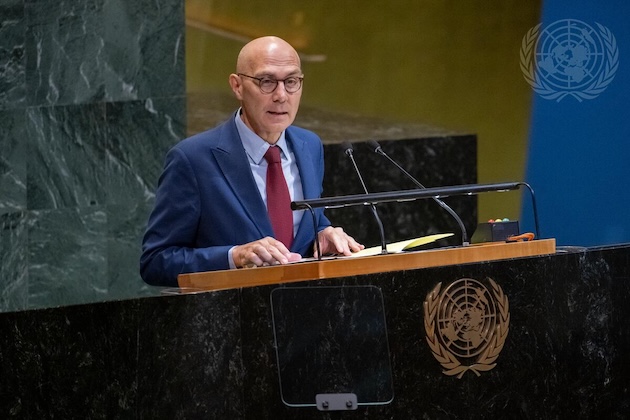
“The violence, the extreme deprivation and the massive violations of human rights have fueled a crisis of grave international concern. The international community must honor its responsibilities and act. We stand in solidarity with the Rohingya and all the people of Myanmar in their hour of greatest need,” said UN Human Rights Commissioner Volker Türk.

In the eight years since over 750,000 Rohingyas fled persecution and crossed the border into Bangladesh, the international community has had to deal with one of the most intense refugee situations in living memory. Attendees at the conference spoke on addressing the root causes that led to this protracted crisis—systematic oppression and persecution at the hands of Myanmar’s authorities and unrest in Rakhine State.

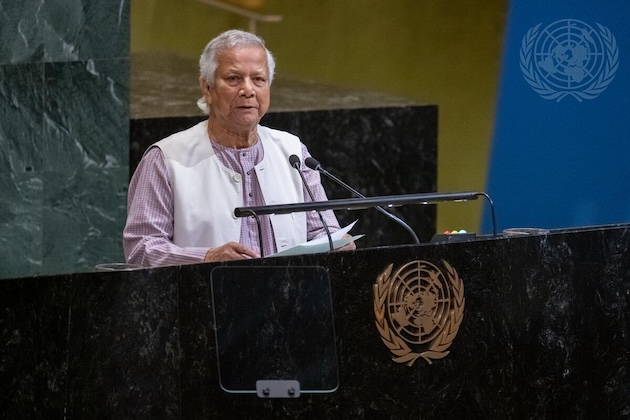
Muhammad Yunus, Chief Adviser of the interim Government of Bangladesh, addresses the high-level conference of the situation of Rohingya Muslims and other minorities in Myanmar. Credit: UN Photo/Manuel Elias

Muhammad Yunus, Chief Adviser of the interim Government of Bangladesh, addresses the high-level conference on the situation of Rohingya Muslims and other minorities in Myanmar. Credit: UN Photo/Manuel Elias

The military junta’s ascension in 2021 has only led to further unrest and instability in Myanmar and has made the likelihood of safe and sustained return far more precarious. Their persecution has only intensified as the Rohingya communities still residing in Rakhine find themselves caught in the middle of conflicts between the junta and other militant groups, including the Arakan Army.

At the opening of the conference, Rohingya refugee activists remarked that the systemic oppression predates the current crisis. “This is a historic occasion for Myanmar. But it is long overdue. Our people have suffered enough. For ethnic minorities—from Kachin to Rohingya—the suffering has spanned decades,” said Wai Wai Nu, founder and executive director of the Women’s Peace Network.

“It has already been more than eight years since the Rohingya Genocide was exposed. Where is the justice for the Rohingyas?” asked Maung Sawyeddollah, founder of the Rohingya Student Network.

For the United Nations, the Rohingya refugee crisis represents the dramatic impact of funding shortfalls on their humanitarian operations. UN Secretary-General António Guterres once said during his visit to the refugee camps in Bangladesh back in April that “Cox’s Bazar is Ground Zero for the impact of budget cuts”.

Funding cuts to agencies like UNICEF and the World Food Programme (WFP) have undermined their capacity to reach people in need. WFP has warned that their food assistance in the refugee camps will run out in two months unless they receive more funding. Yet as of now, the 2025 Rohingya Refugee Response Plan of USD 934.5 million is only funded at 38 percent.

Volker Türk, United Nations High Commissioner for Human Rights, addresses the high-level conference of the General Assembly on the situation of Rohingya Muslims and other minorities in Myanmar. Credit: UN Photo/Manuel Elias

Volker Türk, United Nations High Commissioner for Human Rights, addresses the high-level conference of the General Assembly on the situation of Rohingya Muslims and other minorities in Myanmar. Credit: UN Photo/Manuel Elias

“The humanitarian response in Bangladesh remains chronically underfunded, including in key areas like food and cooking fuel. The prospects for funding next year are grim. Unless further resources are forthcoming, despite the needs, we will be forced to make more cuts while striving to minimize the risk of losing lives: children dying of malnutrition or people dying at sea as more refugees embark on dangerous boat journeys,” said Filippo Grandi, UN High Commissioner for Refugees.

As the host country of over 1 million refugees since 2017, Bangladesh has borne the brunt of the situation. Chief Advisor Muhammad Yunus said that the country faces its own development challenges and systemic issues with crime, poverty and unemployment, and has struggled to support the refugee population even with the help of aid organizations. He made a call to pursue repatriations, the strategy to ensure the safe return of Rohingyas to Rakhine.

“As funding declines, the only peaceful option is to begin their repatriation. This will entail far fewer resources than continuing their international protection. The Rohingya have consistently pronounced their desire to go back home,” said Yunus. “The world cannot keep the Rohingya waiting any longer from returning home.”

Along with the UN, Myanmar and Bangladesh, neighboring and host countries also have a role to play. Regional blocs like the Association of Southeast Asian Nations (ASEAN) are also crucial  in supporting the Rohingya population as well as leading dialogues with other stakeholders across the region.

“In my engagements with Myanmar stakeholders, I have emphasized that peace in Myanmar will remain elusive until inclusive dialogue between all Myanmar stakeholders takes place,” said Othman Hashim, the special envoy of the ASEAN Chair on Myanmar. “For actions within Myanmar, the crucial first step is stopping the hostilities and violence. Prolonged violence will only exacerbate the misery of the people of Myanmar, Rohingya and other minorities included.”

“Countries hosting refugees need sustained support. Cooperation with UNODC [UN Office of Drugs and Crime], UNHCR, and IOM [International Organization for Migration] must be deepened,” said Sugiono, Indonesia’s foreign minister.

Supporting the Rohingya beyond emergency and humanitarian needs would also require investing resources in education and employment opportunities. Involved parties were encouraged to support resettlement policies that would help communities secure livelihoods in  the long-term, or to extend opportunities for longterm work, like in Thailand where they recently granted long-staying refugees the right to work legally in the country.

“Any initiative for the Rohingya without Rohingya in the camp, from decision making to nation-building is unsustainable and unjust. The UN must mobilize resources to empower Rohingya. We are not only victims; we have the potential to make a difference,” said Sawyeddollah.

As one of the few Rohingya representatives present that had previous lived in the camps in Cox’s Bazaar, Sawyeddollah described the challenges he faced in pursuing higher education when he applied to over 150 universities worldwide but did not get into any of them. He got into New York University with a scholarship, the first Rohingya refugee to attend. He reiterated that universities had the capacity to offer scholarships to Rohingya students, citing the example of the Asian University of Women (AUW) in Chittagong, Bangladesh, where it has been offering scholarships to Rohingya girls since at least 2018.

The conference called for actionable measures that would address several key areas in the Rohingya refugee situation. This includes scaling up funding for humanitarian aid in Bangladesh and Myanmar, and notably, pursuing justice and accountability under international law. Türk and other UN officials reiterated that resolving the instability and political tensions in Myanmar is crucial to resolving the refugee crisis.

Kyaw Moe Tun, Permanent Representative of the Republic of the Union of Myanmar to the UN, blamed the military junta for the country’s current state and called for member states to refuse supporting the junta politically or financially. “We can yield results only by acting together to end the military dictatorship, its unlawful coup, and its culture of impunity. At a time when human rights, justice and humanity are under critical attack, please help in our genuine endeavour to build a federal democratic union that rooted in these very principles.”
IPS UN Bureau Report

  Source

UNGA80: Lies Spread Faster Than Facts

Crime & Justice, Featured, Freedom of Expression, Global, Headlines, Multimedia, Press Freedom, TerraViva United Nations, Video

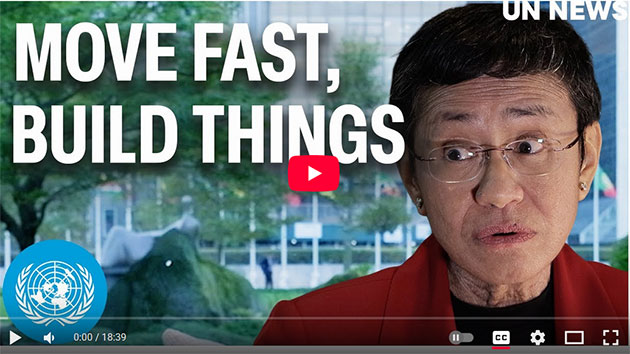
NEW YORK, Sep 30 2025 (IPS) – DANGER – WARNING – ALARM: Nobel Peace Prize Laureate Maria Ressa is warning that lies are being weaponized deliberately to manipulate people around the world. Big, profit-oriented, and technology-enabled companies are now disregarding or trampling over the sanctity and veracity of facts and information to speed up disinformation, (using AI) in ways that quickly erase truth and leave people manipulated.


Even democratic elections are getting manipulated to the extent that some 72 per cent of the world is now living under illiberal or authoritarian regimes that have been “democratically” elected. Journalism, fact-checking, and public trust are under attack from this deliberate subversion of information integrity.

Enjoy this interview I conducted with Ms Ressa, (produced, directed and edited by my UN News and Media colleagues, Paulina Kubiak and Alban Mendes De Leon).

[embedded content]

Ben Malor is the Chief Editor, UN Dailies, at UN News.

  Source

Beijing+30: A Culmination of International, Intergenerational Dialogue

Conferences, Development & Aid, Editors’ Choice, Gender, Gender Identity, Gender Violence, Global, Headlines, Human Rights, Population, Sustainable Development Goals, TerraViva United Nations, Women & Climate Change, Women & Economy, Women in Politics, Women’s Health

IPS UN: Inside the Glasshouse

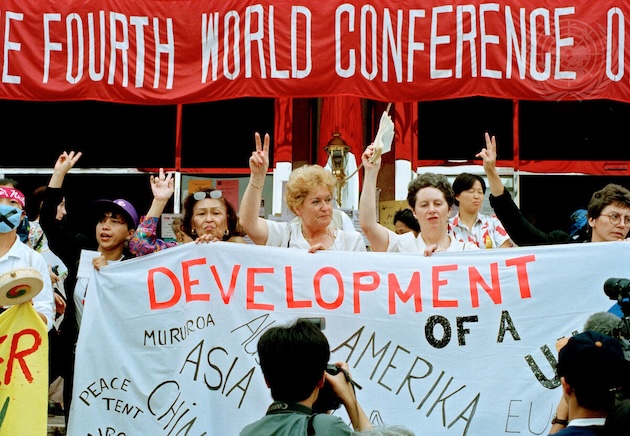
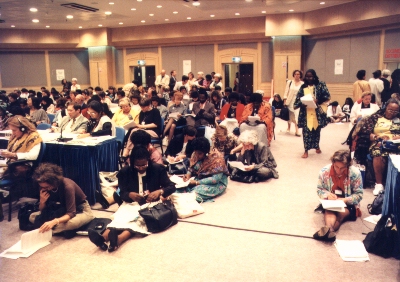
Participants at the Non-Governmental Organizations Forum meeting held in Huairou, China, as part of the United Nations Fourth World Conference on Women held in Beijing, China, on 4-15 september 1995. Credit: UN Photo/Milton Grant

Participants at the Non-Governmental Organizations Forum meeting held in Huairou, China, as part of the United Nations Fourth World Conference on Women held in Beijing, China, on 4-15 september 1995. Credit: UN Photo/Milton Grant

UNITED NATIONS, Sep 30 2025 (IPS) – Thirty years since the UN Fourth World Conference on Women in Beijing, the resolve that defined and united the world toward a global agenda for gender equality make it just as relevant in 2025.


The Beijing Conference represents a turning point for the global movement in gender equality. It is marked by the adoption of the Beijing Declaration and Platform for Action, which is still held up as a landmark document in presenting a comprehensive blueprint to achieve gender equality.

The Beijing Conference was just “one stop in a long and continuing journey of feminist advocacy,” said Sia Nowrojee, a Kenyan women’s rights advocate with more than thirty years’ experience.

“Even though it’s thirty years later, it’s absolutely relevant. It was the culmination of twenty years of advocacy and gender equality.” Nowrojee is the UN Foundation’s Associate Vice President of their Girls and Women Strategy division.

The Beijing Conference was the first time that the international community integrated gender equality into the global development and rights agenda. It was recognition that securing the rights and dignities for all women and girls would be integral to achieving widespread development. This was key for the countries that had emerged in the post-colonial era.

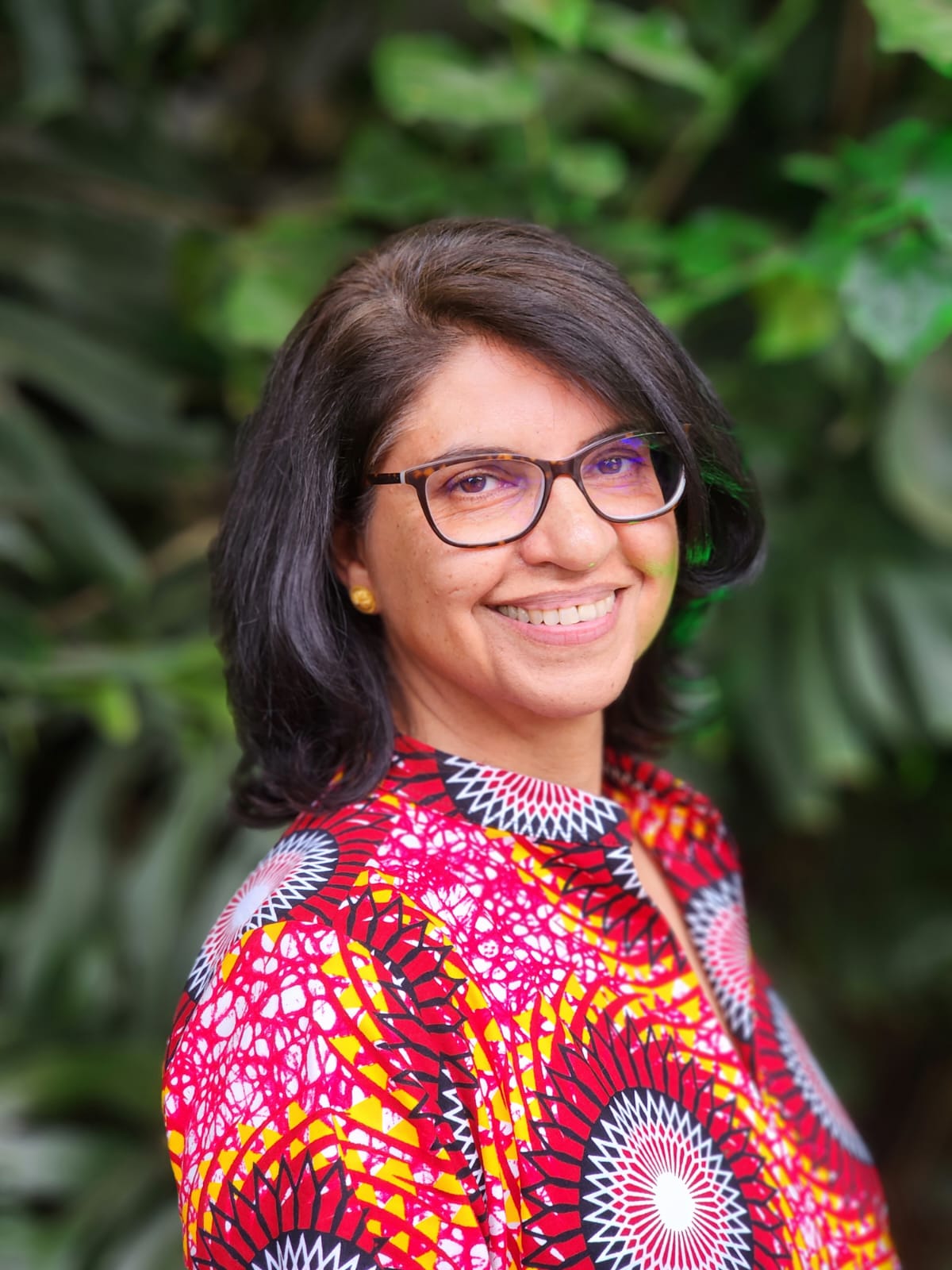
Sia Nowrojee, UN Foundation’s Associate Vice President of Girls and Women Strategy. Credit: UN Foundation

Sia Nowrojee, UN Foundation’s Associate Vice President of Girls and Women Strategy. Credit: UN Foundation

The leadership of advocates from the Global South was instrumental to the Beijing PoA. Representatives from Africa, Asia, and Latin America pushed for the measures that make the framework as inclusive as it is. Nowrojee gave the example of girls’ rights being recognized thanks to the efforts of African feminists in the lead-up to Beijing.

Hibaaq Osman, a Somali human rights activist and founder of El-Karama, considers that the Global South activists had been uniquely prepared to participate as they had lived through their countries’ great political upheavals against colonialism and racism.

Osman attended Beijing 1995 as part of the Center of Strategic Initiatives of Women, a civil society network.

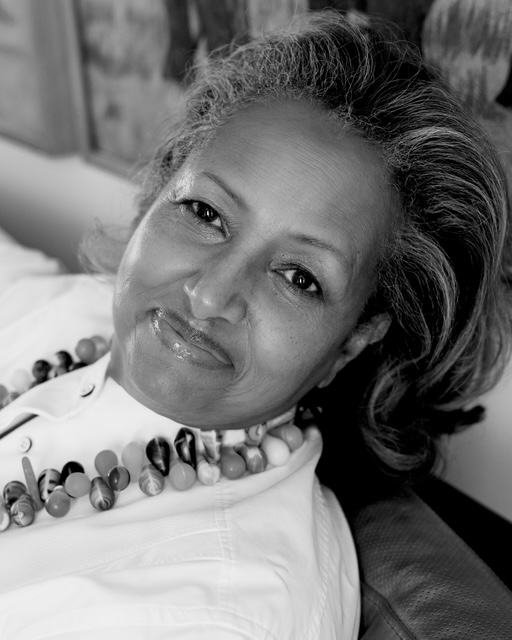
Hibaaq Osman, a Somali human rights activist and founder of El-Karama. Credit: UN Foundation

Hibaaq Osman, a Somali human rights activist and founder of El-Karama. Credit: UN Foundation

“For me, as a young woman, I was shocked by the things that I heard. I was raised to believe that everything was a privacy. But to hear a woman speaking for herself and sharing things that I never thought you could share with others, including violence against women… It absolutely opened my eyes and made me see, ‘Oh my god, I can actually share things with other women,’” Osman told IPS.

For Osman, the Beijing conference represented the possibilities of what could be achieved through a shared agenda and a shared sense of hope. The unique energy from that conference drove her advocacy work through groups like the Strategic Initiative for Women in the Horn of Africa (SIHA) and then El-Karama, which is working to end violence against women in the Arab region and South Sudan.

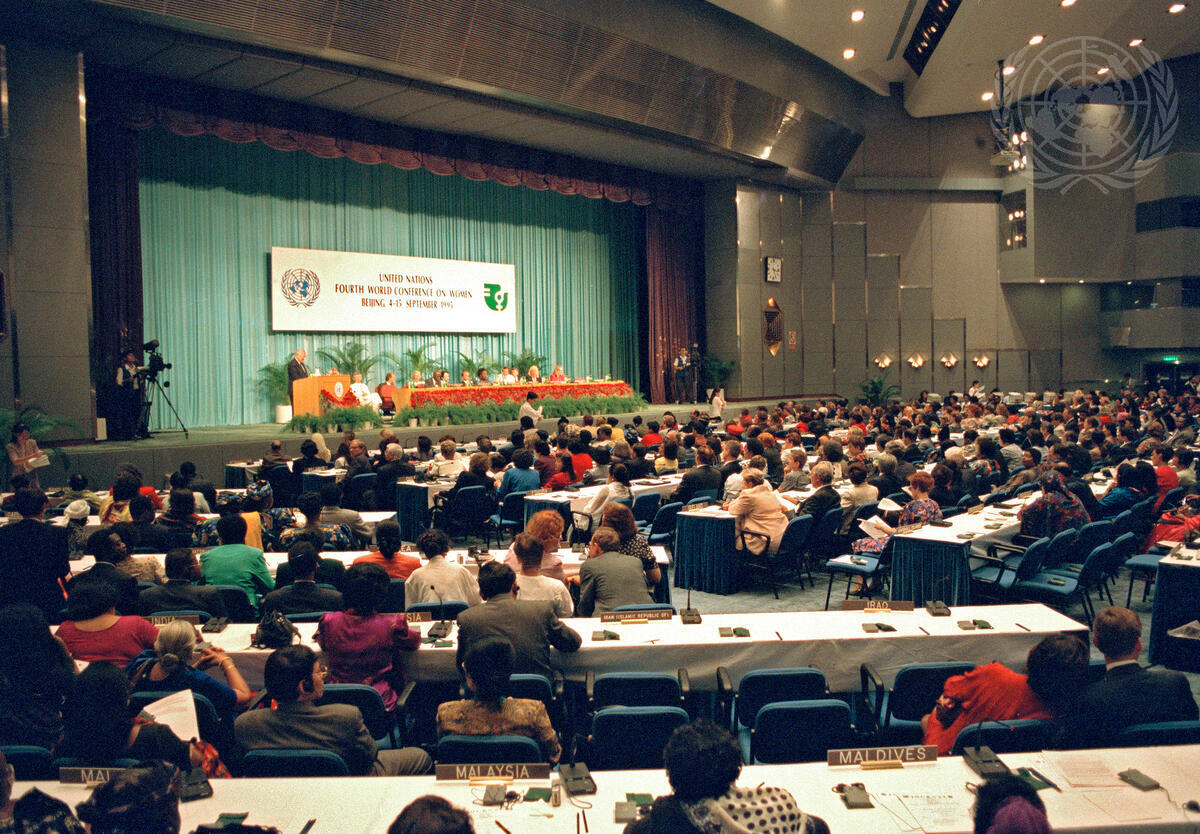
General view of the opening session of the Fourth World Conference on Women in Beijing. Credit: UN Photo/Milton Grant

General view of the opening session of the Fourth World Conference on Women in Beijing. Credit: UN Photo/Milton Grant

Beijing 1995 also provided the expectation of accountability from governments and policy makers if they did not implement the PoA. “That had never happened before. There was a mechanism for the first time…,” said Osman. “You can hold governments and policymakers accountable. But you also have the connection with grassroots. That it was no longer the individual woman that could claim that she was the leader, but having accountability to your own people, I think that whole thing was fantastic.”

“I think the legacy of Beijing 1995 honestly, it gave us a legacy of getting out of our corners and just wide open to the rest of the women. And I think that vision, that framework is still working.”

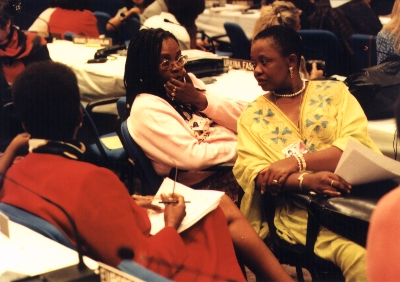
Delegates working late into the night to draft the Beijing Declaration and Platform for Action. Credit: UNDP/Milton Grant

Delegates working late into the night to draft the Beijing Declaration and Platform for Action. Credit: UNDP/Milton Grant

The success of the Women’s Conferences also demonstrated the UN’s role as a space to build up the gender equality movement, Nowrojee remarked. The UN has also served as a platform for emerging countries to raise their issues to the international community and to shape global agendas on their terms.

Prior to Beijing, the UN World Conference on Women had previously been held in Nairobi (1985), Copenhagen (1980) and Mexico City (1975). These were also key forums for people from all parts of the world to build relationships and for there to be a “cross-pollination of ideas and experiences”, laying down the groundwork for what was later achieved in Beijing.

Nowrojee was 18 years old when she attended the Nairobi 1985 Conference as part of a school/youth delegation. The experience was formative in listening to women’s activists from the region impart their wisdom and insights.

“To see the world’s women come to my home and talk about the fact that we mattered was life-changing for me,” Nowrojee said. “I made friends who I still work with and love and see today. And I think there is that sort of personal part, which is both personally sustaining, but it’s a critical part of feminist movement building.”

Each conference built up momentum that saw no sign of slowing down. Osman and Nowrojee explained that as gains were being made at local, national and global levels, this encouraged those in the movement to act with urgency and go further. This provided them the spaces to learn how to refine the messages for local contexts.

Delegates at the Fourth UN World Conference on Women in Beijing 1995.' Credit: UNDPI /UN Women

Delegates at the Fourth UN World Conference on Women in Beijing 1995. Credit: UNDPI /UN Women

The gains towards gender equality should be noted: the codification of women’s rights around the world, their increased participation in politics and in peace negotiations. Evidence has shown that investing in women’s participation in society through health, education and employment leads to economic growth and prosperity. More women in the workforce mean greater economic gains and stability. Increased social protections for women lead to more stability in communities.

And yet, there was backlash to the momentum. Recent years have seen the rise of anti-rights and anti-gender movements gain greater traction, combined with increasing attempts to strip women of their rights. UN Women has warned that one in four countries are reporting a backlash to women’s rights.

Nowrojee remarked that the autocratic leaders that champion these movements target women’s rights because it threatens their own agenda. “If you are silencing half the human family, and you are hampering their ability to make decisions about their bodies, to participate in political process… these are very, very effective ways of undermining democracy, development, peace and the achievement of all the goals and values that we hold dear.”

“They understand that if you bring women down, you are bringing society down, because women are the core of society,” Osman added.

The modern movements are also well-funded and well-organized. But there is an irony to it in that they use the same tactics that feminist movements have been using for decades by organizing at the grassroots level before moving their influence up to the national level and beyond. But this should not be where activists fall to despair. Instead they should understand, Osman and Nowrojee remarked, that women in this space already know what actions need to be taken to regain lost momentum.

“I’m sure that Sia and I and many, many others who were part of that are also thinking about today and what’s happening, and we know the space for civil society is shrinking,” Osman said. “The space for democracy, human rights, justice, reproductive rights, for all of that, there is absolutely a rollback, But it’s not going to delay us. We are just going to be more sophisticated and ask ourselves “Where are the blocks, how do we build… diverse constituencies?”… So it is hard, but we are not slowing down whatsoever.”

Today, it may seem the pursuit of gender equality is an ongoing struggle that faces the threat of autocratic movements that sow distrust and division. For the people who championed the women’s rights movement and can recall a time before the Beijing PoA, they are all too aware of what is at stake. The leaders in modern movements today need to look back to the past to take lessons, and to take courage.

IPS UN Bureau Report