Loss and Damage at COP30: Indigenous Leaders Challenge Top-Down Finance Models

Active Citizens, Civil Society, Climate Action, Climate Change, Climate Change Finance, Climate Change Justice, Conferences, COP29, COP30, Editors’ Choice, Featured, Headlines, Human Rights, Humanitarian Emergencies, Indigenous Rights, International Justice, Sustainable Development Goals, TerraViva United Nations
Indigenous Rights

Indigenous activists continue to fight for a seat at the table in solving climate change, asking for self-determination and financial agency.
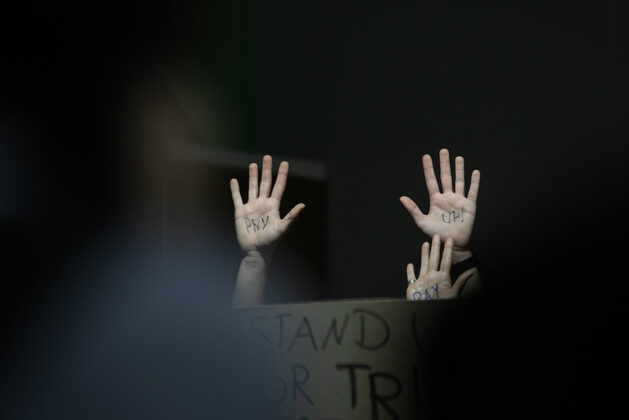
Activists demand loss and damage reparations outside the hall where the COP29 negotiators were concluding their negotiations. Credit: UN Climate Change/Kiara Worth

Activists demand loss and damage reparations outside the hall where the COP29 negotiators were concluding their negotiations. Credit: UN Climate Change/Kiara Worth

UNITED NATIONS, Sep 17 2025 (IPS) – As climate-induced disasters continue to devastate the Global South, nations are steadily mounting pressure at the United Nations for wealthier countries to deliver on long-promised climate reparations through the Loss and Damage Fund. For Indigenous peoples, whose territories are often the most ecologically intact yet most damaged by climate change, these negotiations define survival, sovereignty and recognition as rights-holders in global climate governance.


After the fund’s operationalization at the 29th Conference of the Parties to the United Nations Framework Convention on Climate Change (COP29) in Baku last fall, developing countries say that the pledges so far—approximately USD 741 million—fall drastically short of the trillions needed to recover from climate devastation.

This low number is acutely felt in Indigenous communities, whose local economies rely on thriving ecosystems.

“A lot of rich biodiversity, carbon sinks and the most preserved parts of the world are within indigenous territories,” said Paul Belisario, Global Coordinator for the Secretariat of the International Indigenous Peoples Movement for Self-Determination and Liberation (IPMSDL), in an interview with IPS. “Without recognizing Indigenous people’s right to take care of it, to govern it and to live in it so that their traditional knowledge will flourish, we cannot fully address the climate crisis.”

UN Secretary-General António Guterres echoed this sentiment in Baku, saying, “The creation of the Loss and Damage Fund is a victory for developing countries, for multilateralism and for justice.  But its initial capitalization of USD 700 million doesn’t come close to righting the wrong inflicted on the vulnerable.”

These “wrongs,” Indigenous leaders argue, must include the exclusion of traditional and tribal knowledge in decision-making. In light of pushback to make climate action a legal responsibility rather than a political agreement, many are hopeful that COP30 will yield a more successful negotiation for adequate compensation.

The call for action is led by coalition blocs including the Alliance of Small Island States (AOSIS) and G77, an alliance of developing countries with China as its primary political and financial supporter. Both alliances represent the countries most vulnerable to climate-related natural disasters. G77 was particularly vocal during COP29, where their rejection of the deal was backed by a number of climate and civil society organizations who criticized the negotiating text for giving developed countries too much leeway to shirk their climate finance obligations.

For Indigenous groups, this criticism stems from concerns that funding will not successfully reach their communities due to bureaucracy or geographical and political isolation.
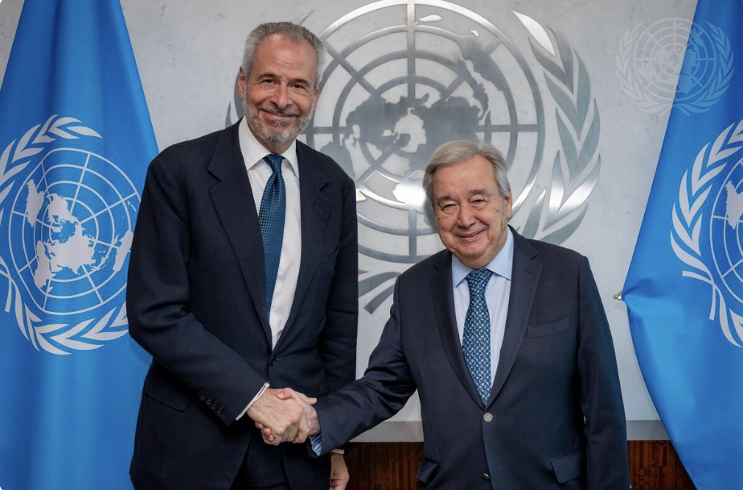
Secretary-General António Guterres meets with André Aranha Corrêa do Lago, President-designate of COP 30, the 2025 UN Climate Change Conference, which will be held in Belém, Brazil. Credit: UN Photo

Secretary-General António Guterres meets with André Aranha Corrêa do Lago, President-designate of COP 30, the 2025 UN Climate Change Conference, which will be held in Belém, Brazil. Credit: UN Photo

Janene Yazzie, director of policy and advocacy at the NDN Collective, spoke about the importance of Indigenous involvement in funding distributions, saying, “What we’re advocating for is to ensure that these mechanisms… are accessible to Indigenous Peoples, uphold the rights of Indigenous Peoples, and can be utilized towards solutions and responses that are designed and prioritized by Indigenous Peoples.”

Last year, countries eventually settled on mobilizing USD 300 billion annually by 2035 to developing countries for climate finance—far below the USD 1 trillion experts say is the minimum for effective mitigation and adaptation. The financial commitment is voluntary, meaning that countries can withdraw without consequence and no protections exist to ensure the money is distributed with regard for Indigenous governance systems.

The Forest Stewardship Council (FSC) Indigenous Foundation noted that groups without formal land titles could be excluded entirely, despite their role in stewarding biodiverse landscapes.

However, a recent International Court of Justice (ICJ) report has created new legal pathways. The court placed stringent obligations on states to prevent significant climate harm and tackle climate change, stating that failure to do so triggers legal responsibility. Scientific evidence can link emissions to specific countries, allowing those affected by climate change to seek legal action, which could include getting money back, restoring land, improving infrastructure, or receiving compensation for financial losses.
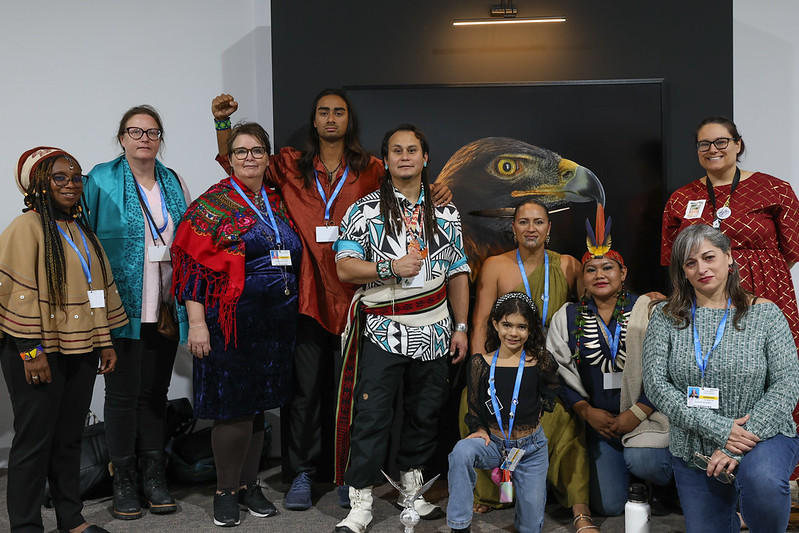
Indigenous activists at COP29. Credit: UN Climate Change/ Kiara Worth

Indigenous activists at COP29. Credit: UN Climate Change/Kiara Worth

This legal opinion opens new pathways for seeking restitution—not only in money but also in land recovery, infrastructure for adaptation, and guarantees of political participation.

This legal shift comes at a crucial time. In April 2025, thousands of Indigenous Brazilians marched in the capital ahead of COP30 in Belém, demanding land rights and decision-making influence. Meanwhile, the National Organization of the Indigenous Peoples of the Colombian Amazon (OPIAC) also issued a statement about the summit for Deforestation of the Amazon. They outline an action plan to end deforestation, strengthen land rights and phase out oil and gas exploration.

After indigenous groups were denied a co-presidency for COP30, Conference President André Corrêa do Lago pledged to establish a “Circle of Indigenous Leadership” within the conference. Many leaders found the arrangement insufficient—the FSC Indigenous Foundation called instead for “co-governance models where Indigenous Peoples are not just consulted but are leading and shaping climate action.”
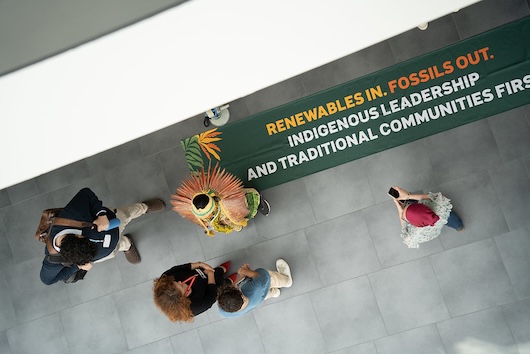
Indigenous people make their message clear during COP29. Credit: Photo- UN Climate Change/Lara Murillo

Indigenous people make their message clear during COP29. Credit: UN Climate Change/Lara Murillo

Other groups were more explicitly critical. The Indigenous Climate Action co-authored a statement at the end of COP29 saying, “There is nothing to celebrate here today… While we urgently need direct and equitable access to climate finance for adaptation, mitigation and loss and damage across all seven socio-cultural regions… we reject the financial colonization that comes from loans and any other financial mechanisms that perpetuate indebtedness of nations that have contributed the least to climate change yet bear the brunt of its tragedies.”

Belisario frames the funding question as a matter of justice rather than charity.

“This funding is not just corporate social responsibility or compensation,” he told IPS. “This is historical justice.”

However, without Indigenous influence in the distribution of money from the Loss and Damage Fund, it remains unclear how effective this aid will be in combating climate change based on Indigenous knowledge and science. Many activists advocate for more localized approaches to climate action.

Belisario acknowledges the limitations of international negotiations.

“It’s been a running joke that we will negotiate until COP100, and we might not have that long. What we would really like to get out of COP30 is to meet many communities to discuss the common problems and make them realize that this COP is just a part of how we would like to solve our climate crisis,” he said. “We really believe that more radical ways to enact accountability and responsibility will start with movements in people’s own countries, in their own localities.”

As the FSC Indigenous Foundation concluded, “Indigenous Peoples must lead the design, management, and oversight of financial mechanisms that affect their lands, lives, and futures. Climate justice will only be possible when Indigenous Peoples are recognized as rights-holders and partners in decision-making.”

IPS UN Bureau Report
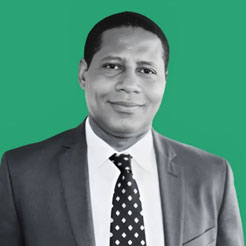
 

‘Angola produces large quantities of oil and diamonds, yet most people don’t see the benefits’

Active Citizens, Africa, Civil Society, Crime & Justice, Democracy, Development & Aid, Economy & Trade, Energy, Featured, Headlines, Human Rights, Labour, Natural Resources, TerraViva United Nations

Sep 5 2025 (IPS) –  
CIVICUS discusses recent protests in Angola with Florindo Chivucute, founder and executive director of Friends of Angola, a US-based civil society organisation established in 2014 that works to promote democracy, human rights and good governance in Angola.


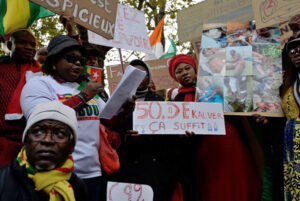
The Angolan government’s 1 July decision to remove diesel subsidies, sharply pushing up public transport costs, triggered a series of protests. Angola is one of Africa’s biggest oil producers, but many have seen little benefit from its oil wealth and continue to live in poverty. People have taken to the streets in unprecedented numbers to demand an end to corruption and mismanagement, presenting the ruling party, in power for 50 years, with its biggest test. Security forces have responded to incidences of looting and vandalism with lethal violence. At least 30 people have been killed, 277 injured and over 1,500 arrested.
What triggered the protests?

Fuel subsidy cuts sparked the crisis. The protests began on 28 July, after the government’s decision to remove diesel subsidies immediately pushed up fuel prices. What started as a drivers’ strike in Luanda, the capital, quickly spread to other provinces and escalated into bigger protests.

The impact was devastating. For many families, even a small rise in fuel costs is crushing, because wages have been eroded by years of recession and currency devaluation. When transport costs rise, food prices and school fees rise too, leaving those already struggling unable to make ends meet.

But fuel was just the trigger. The unrest reflected much deeper frustrations, including high unemployment, particularly among young people, growing poverty and anger at corruption and mismanagement. People see public resources channelled into luxury spending and infrastructure deals benefiting a few powerful figures connected to the ruling People’s Movement for the Liberation of Angola (MPLA), while basic services and jobs are neglected. Combined with the immediate shock of higher fuel prices, these grievances fuelled widespread anger.

Why are people struggling in such a resource-rich country?

This is the irony at the heart of the crisis. Angola produces large quantities of oil, along with diamonds, yet most people don’t see the benefits. Mismanagement and entrenched corruption are central to the problem. Revenues from natural resources have too often been captured by networks close to political power and channelled abroad or invested in ways that don’t create jobs.

Angola’s dependence on fuel imports makes the situation worse. We don’t have sufficient domestic refining capacity. Instead of using oil revenues to build refineries and strengthen local industry, a system emerged in which those with political connections profited from importing refined products back into the country. This removed incentives to invest in local processing or agriculture. The result is a tiny wealthy elite and a large majority with very low wages and limited access to services.

What do these protests reveal about the government’s grip on power?

The protests have marked a turning point. The MPLA has dominated politics since independence in 1975, and large-scale protests are not common. The fact that so many people were willing to take to the streets, particularly in and around the capital, shows growing discontent with the government and ruling party.

The authorities’ reaction has been heavy-handed. Security forces have used teargas and live ammunition in some cases, and carried out numerous arrests, including of union leaders and journalists. In some areas protests were accompanied by looting and, tragically, by deadly clashes with security forces. Civil society has since called for investigations into the killings and for accountability for those responsible.

The government’s strategy risks backfiring. By responding with force and detentions, it risks creating a greater sense of mistrust and frustration, which could influence how people engage with political processes as we approach the 2027 election.

How is civil society organising and what challenges does it face?

Civil society – including church groups, trade unions and local associations — has mobilised quickly to call for accountability and transparency. New coalitions are forming; for example, groups such as the Bishops’ Conference of Angola and São Tomé and Príncipe’s Episcopal Commission for Justice and Peace, Friends of Angola, the Justice, Peace and Democracy Association and Pro Bono Angola are working with religious organisations to push for investigations into the killings and provide humanitarian support to families affected by the unrest.

But the environment is hostile. Funding for democracy and human rights work is scarce, so organisations struggle to pay staff or sustain programmes.

State surveillance creates another barrier. The state has invested heavily in surveillance infrastructure, and civil society organisations are often targeted by cyber intrusions and closely monitored. The legacy of communist authoritarian rule creates deep mistrust, which makes organising more difficult.

Language barriers limit international support. Much of the work happens in Portuguese, which limits reach to the wider international audience that often communicates in English, French or Spanish.

Additional restrictions threaten to further tighten civic space. Recent draconian measures include the 2024 National Security Bill and the Bill on the Crime of Vandalism of Public Goods and Services. In addition, the 2023 draft law on Non-Governmental Organizations, approved by presidential decree, imposed harsh regulations. These restrictive laws and policies undermine fundamental freedoms and, if fully implemented, risk worsening the already limited environment for civil society in Angola.

What would it take to address the underlying problems?

Strong political will is needed to tackle corruption and manage public finances transparently. This means opening up procurement and fiscal data, pursuing accountability for past abuses, and ensuring resource revenues are channelled into public priorities such as hospitals, local industry and schools. Investment in education, healthcare and small-scale agriculture would create jobs, strengthen livelihoods and reduce dependence on imports.

Institutional reform is equally vital. This means protecting property rights, improving the business environment so investment generates employment and strengthening an independent judiciary and electoral processes so people can seek change through democratic channels.

International partners have a role to play by supporting electoral transparency and demanding accountability from companies and governments that operate in Angola.

The 2027 election will offer a crucial test. The international community should pay close attention and support reforms that increase transparency and electoral integrity. Electoral reforms and the clear, public release of results at the local level would go a long way towards restoring confidence in democratic processes.

GET IN TOUCH
Website
Facebook
Instagram
LinkedIn
Twitter

SEE ALSO
Angola: ‘Criticising the government means risking arbitrary detention, intimidation and physical assault’ CIVICUS Lens | Interview with Pedro Paka 30.Jul.2025
Angola: Repressive new laws threaten civic space CIVICUS Monitor 15.Sep.2024
Angola: ‘The untrue government narrative reveals an aversion to civil society denouncing malpractice’ CIVICUS Lens | Interview with Emilio José Manuel 01.Jan.2025

  Source

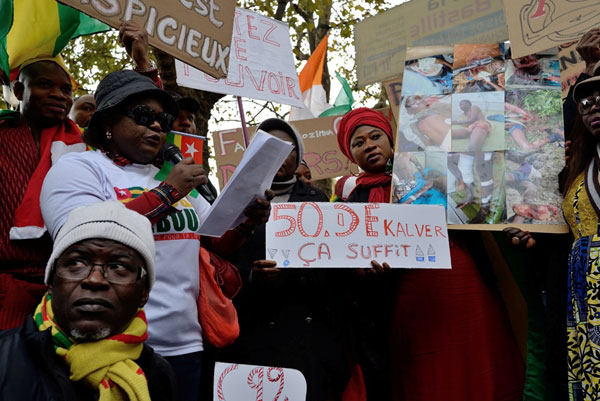
Togo’s Young Generation Challenges Six Decades of Dynastic Rule

Active Citizens, Africa, Civil Society, Crime & Justice, Democracy, Energy, Featured, Headlines, Human Rights, Labour, Press Freedom, TerraViva United Nations

Opinion

Credit: Pascal.Van, licensed under CC BY-SA 2.0

MONTEVIDEO, Uruguay, Sep 2 2025 (IPS) – In late June, thousands flooded the streets of Lomé, Togo’s capital, presenting the ruling dynasty with its biggest challenge in decades.

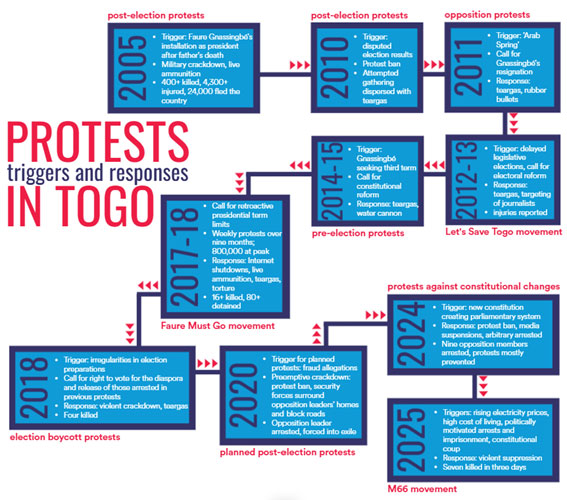
The catalyst was constitutional manoeuvring by President Faure Gnassingbé to maintain his grip on power. In March 2024, his government pushed through constitutional amendments that transformed Togo from a presidential to a parliamentary system. This created a new position, the President of the Council of Ministers – effectively Togo’s chief executive – elected by parliament rather than by popular vote, and with no term limits. Gnassingbé assumed this new role in May, making it abundantly clear the changes were only about keeping him in power indefinitely.


This constitutional manoeuvre was the latest episode in a 58-year family saga that began when Faure’s father, Gnassingbé Eyadéma, seized power in a 1967 coup. For 25 years, the elder Gnassingbé ruled over a one-party state, staging ritual elections that reached absurd heights in 1986 when he claimed re-election with close to 100 per cent of votes on an implausible 99 per cent turnout. Even after nominal multiparty democracy arrived in 1992, elections remained charades with predetermined outcomes, as opposition parties faced systematic obstacles that made fair competition impossible.

When Eyadéma died in 2005, the military simply appointed his son Faure as successor, despite the constitution mandating immediate elections. International pressure forced a hastily organised vote, but this followed the familiar script of violence, fraud and repression. The pattern repeated in 2010, 2015 and 2020, with each election offering a veneer of legitimacy for continued authoritarian rule – and eliciting successive waves of protest that were either violently repressed or pre-emptively suppressed.

Now, two decades after Faure took power, this latest constitutional gambit has triggered the most significant challenge to his rule. The constitutional changes designed to keep him in power have instead galvanised opposition, creating a focal point for decades of accumulated grievances.

The current protests differ from their predecessors by being overwhelmingly led by young people who’ve never known any other leaders than the Gnassingbés. Raised on promises of multiparty democracy, they’ve witnessed systematic electoral fraud to perpetuate a government wholly unresponsive to their needs. They connect their daily struggles with unemployment, power outages and crumbling infrastructure with the long-term denial of their democratic freedoms.

The arrest in May of a popular rapper and TikToker, Aamron – for posting a video calling for street protests to coincide with Gnassingbé’s birthday on 6 June – galvanised discontent, turning simmering frustration into organised resistance. Aamron’s detention sparked the formation of the 6 June Movement (M66), led by young artists, bloggers, diaspora-based activists and civil society figures who rely heavily on social media to coordinate protests, bypassing state-controlled channels.

The government’s response, however, has followed a familiar path of authoritarian crackdown. In late June, security forces killed at least seven people, including 15-year-old Jacques Koami Koutoglo, and they’ve also used teargas, beatings and mass arrests against protesters. The regime has detained journalists, forced deletion of protest footage and imposed internet shutdowns during protests. It has suspended international media outlets including France 24 and RFI for their protest coverage. it has even issued international arrest warrants for M66 leaders based abroad, accusing them of terrorism and subversion.

Protests have continued despite repression. The leadership of young people, less intimidated by the security apparatus and better connected through social media, has allowed for the diversification of opposition tactics, with activists shifting between street protests, legal challenges and international advocacy as circumstances dictate. The diaspora is also playing a role, with Togolese communities abroad organising solidarity protests and advocating with international organisations for sanctions against the Gnassingbé regime.

Significant obstacles however remain. Gnassingbé controls all levers of power, including security forces, the electoral commission and the Constitutional Court. For a democratic transition to result, international pressure would need to intensify, including the imposition of targeted sanctions on regime officials and their economic interests. Regional bodies, particularly the Economic Community of West African States, would need to act, including by threatening to suspend Togo until democratic reforms are implemented.

Whether these protests trigger democratic change or become yet another chapter in the history of repressed dissent will ultimately depend on the ability of pro-democracy forces to sustain pressure and whether the international community finally decides to act. Gnassingbé’s constitutional manoeuvre may prove to be his final act, not because it succeeded in keeping him in power, but because it awakened a new generation. Togo’s young people have discovered the power of collective action—and that could prove decisive.

Inés M. Pousadela is CIVICUS Senior Research Specialist, co-director and writer for CIVICUS Lens and co-author of the State of Civil Society Report.

For interviews or more information, please contact research@civicus.org

  Source

Fiji’s Truth and Reconciliation Commission Aims To Restore Trust and Peace After Decades of Political Crises

Active Citizens, Asia-Pacific, Civil Society, Conferences, Editors’ Choice, Featured, Headlines, Human Rights, Humanitarian Emergencies, PACIFIC COMMUNITY, Peace, Small Island Developing States, Sustainable Development Goals, TerraViva United Nations

Democracy

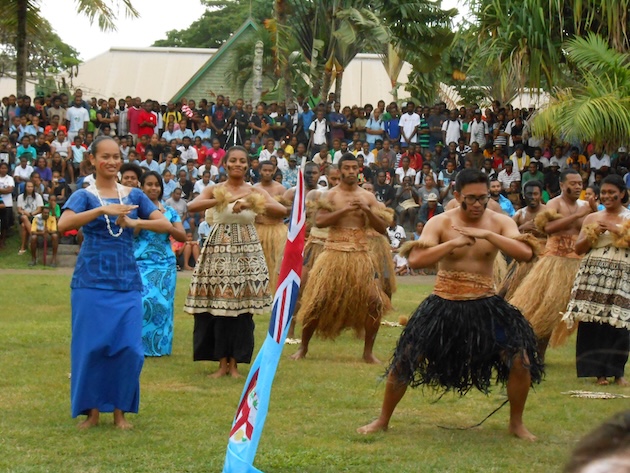
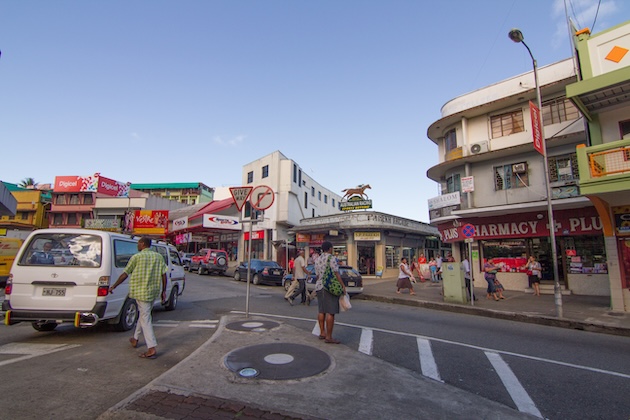
Fiji is a Pacific Island nation renowned for its tourism industry, but it has also endured four armed coups and 38 years of political instability. Photo credit: Julie Lyn

Fiji is a Pacific Island nation renowned for its tourism industry, but it has also endured four armed coups and 38 years of political instability. Credit: Julie Lyn

SYDNEY, Aug 14 2025 (IPS) – Fiji, a nation located west of Tonga in the central Pacific, is renowned for its natural beauty and beach resorts. But for 38 years it has endured a political rollercoaster of instability with four armed coups that overturned democratically elected governments and eroded human rights.


Now, following a peaceful transition of power at the last 2022 election, Prime Minister Sitiveni Rabuka and his coalition government want to deal with the past with a Truth and Reconciliation Commission (TRC) to pave the way for a more peaceful and resilient future.

The commission will “facilitate open and free engagement in truth-telling regarding the political upheavals during the coup periods and promote closure and healing for the survivors,” Rabuka, who led the first coup, told parliament before supporting legislation that was passed in December last year. Now he has pledged to oversee the country’s reconciliation and return to democratic norms.

The TRC is tasked with investigating what happened during the coups d’état of 1987, 2000 and 2006, related human rights abuses and the grievances that have driven the relentless struggle for power between Fiji’s indigenous and Indo-Fijian communities. Its focus is on truth-telling and preventing a repetition of conflict; it will not prosecute perpetrators of abuses or provide reparations to victims.

“This commission aims to serve the people of Fiji to come to terms with your own history… the purpose is not to put blame and to deepen the trauma and the difficulties, but to help the people of Fiji to move on for a better future for everyone,” Dr. Marcus Brand, the TRC chairman, who has extensive experience with transitional justice initiatives and held senior roles in the United Nations and European Union, said in January.

He is joined by four Fijian commissioners, namely former High Court Judge Sekove Naqiolevu, former TV journalist Rachna Nath, former Fiji Airways Captain Rajendra Dass, and leadership expert Ana Laqeretabua.

The Fiji Parliament, Suva, Fiji. Credit: Josuamudreilagi

The Fiji Parliament, Suva, Fiji. Credit: Josuamudreilagi

Florence Swamy, Executive Director of the Pacific Centre for Peacebuilding, a non-governmental organization based in the capital, Suva, told IPS that the TRC is important to building trust in the country, where many people still experience fear and anxiety about the violence they witnessed.

“As a first step, it is creating a safe space for people to talk about what happened to them,” she emphasized.

Fiji’s political turmoil has roots in the past. British colonization in the nineteenth century was accompanied by policies that were intended to strengthen indigenous land rights and prevent dispossession, rights that were reinforced in Fiji’s first constitution at Independence in 1970.

But, at the same time, Fijian society was irrevocably changed by the organized immigration of Indians to work on sugar plantations and boost development of the colony. By the mid-twentieth century, the Indo-Fijian population was larger than the indigenous community and their demands for equal rights increased.

“Fijian Indians were brought to the country, in many cases, under the false pretense of better work and wage opportunities, to develop the economy of Fiji…while indigenous Fijians were hardly consulted about such a momentous decision,” Dr. Shailendra Singh, Head of Journalism at the University of the South Pacific in Fiji, told IPS.

Soon the country’s politics were mired in a fierce contest for power. And in 1987, Rabuka, then an officer in the Fiji military, led the overthrow of the first elected Indo-Fijian government under Prime Minister Timoci Bavadra.

Rabuka then became Prime Minister from 1992 to 1999 before another Indo-Fijian government, led by Mahendra Chaudhry, was voted in. This triggered a second coup instigated by nationalist George Speight in 2000 in which the government was held hostage in the nation’s parliament for weeks. Then, in 2006, Frank Bainimarama, head of the armed forces, orchestrated the third coup, which he claimed was necessary to eliminate corruption and divisive policies in the government of the day presided over by Prime Minister Laisenia Qarase. For the next eight years he oversaw an authoritarian military government until democratic elections were held again in 2014.

Suva, capital city of Fiji. Photo credit: Maksym Kozlenko

Fiji’s capital city Suva. Credit: Maksym Kozlenko

The coups inflicted a significant human cost. Lawlessness, inter-community violence, military and police brutality, and arrests and torture of people critical of the regime occurred increasingly after 2006.

Three years later, Amnesty International called for “an immediate halt to all human rights violations by members of the security forces and government officials, including the arbitrary arrests, intimidation and threats, and assaults and detentions of journalists, government critics and others.” It also called for the repeal of the Public Emergency Regulations imposed by the government in 2009 that led to impunity for state officials involved in abuses.

Today, the demographic balance has shifted again in the wake of an outward exodus of Indo-Fijians, who now comprise about 33 percent of Fiji’s population of about 900,000, while Melanesians constitute about 56 percent. But societal divisions remain entrenched and the past has not been forgotten.

The commission is now preparing to hold hearings over the next 18 months. And Rabuka has promised to be one of the first to testify of his involvement in the political upheavals.

I will swear to say everything, the truth… I want to continue to live with a clear conscience. I want people to know that at least they understand my reasons for doing it,” he told the media in January. But the TRC also promises to place victims and survivors at the center of its mission, claiming that “their lived experiences are vital to fostering accountability, encouraging healing and building a more united and compassionate society.”

However, there are voices of caution, too, warning of the risks of reviving memories of conflict and pain and the need to prevent this from inflaming divisions.

While experts in the country speak of the need to go beyond the TRC and tackle structural issues of inequality and disenfranchisement, which have driven community grievances, “to make everyone feel a sense of belonging and loyalty to the country of their birth,” Singh said.

In particular, “indigenous fears concerning political dominance in Fiji” and “Indo-Fijians’ feeling of being marginalized by the state and not treated as equal citizens” need to be addressed, she continued.

The Fijian armed forces, which played a decisive role in executing the coups, often justifying their actions in protecting Fiji’s internal order, are also critical to the success of the country’s return to democratic governance.

In 2023 an internal reconciliation process began, aimed at ending military intervention in the country’s politics and elections. In April, during an official meeting with the TRC, the military leadership pledged ‘to ensure that past mistakes are not repeated, and that its role as a guardian of Fiji’s constitutional order remains anchored in service to all citizens, regardless of ethnicity, background or political belief.’

After the commission has concluded its estimated two years of work, it will make recommendations in its final report for public measures and policy reforms to support the country’s social cohesion. Here Swamy emphasizes that it is crucial the recommendations do not remain on paper but are acted on.

“In terms of the recommendations, who will be responsible for them? Will they ensure that the recommendations are implemented? And what mechanisms will be put in place to make sure that institutions are held accountable?” she declared.

Looking into the future, Swamy said that she would like to see her country become one “where everyone feels safe, where there is equal opportunity… a country where everyone can realize their potential.”

Note: This article is brought to you by IPS Noram in collaboration with INPS Japan and Soka Gakkai International in consultative status with ECOSOC.

IPS UN Bureau Report


Women in Sudan are Starving Faster than Men; Female-Headed Households Suffer

Active Citizens, Africa, Armed Conflicts, Civil Society, Crime & Justice, Food and Agriculture, Food Security and Nutrition, Gender, Headlines, Health, Human Rights, Humanitarian Emergencies, Migration & Refugees, TerraViva United Nations

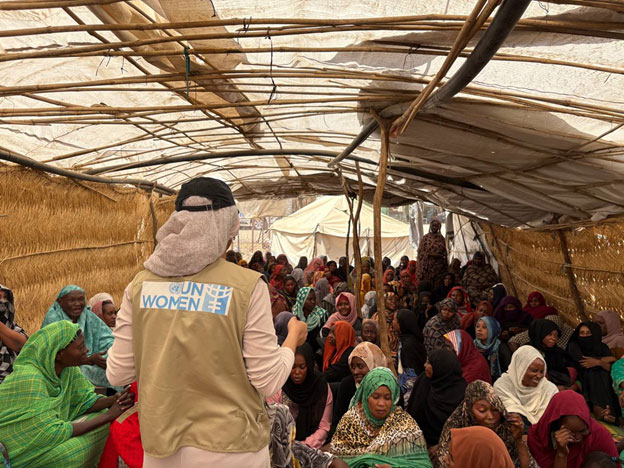
In Sudan, women-led households are three times more likely to deal with serious food insecurity compared to male-led households. Credit: UN Women Sudan

UNITED NATIONS, Aug 12 2025 (IPS) – The food crisis in Sudan is starving more day by day, yet it is affecting women and girls at double the rate compared to men in the same areas. New findings from UN-Women reveal that female-headed households (FHHs) are three times more likely to be food insecure than ones led by men.


Women and girls make up half of the starving in Sudan, at 15.3 million of the 30.4 million people currently in need. In the midst of the current humanitarian crisis brought on by the Sudanese civil war, women are increasingly seen to be leading households in the absence of men due to death, disappearances or displacement amidst the civil war, making simply living in a FHH a statistical predictor of hunger.

“With conditions now at near famine thresholds in several regions in the country, it is not just a food crisis, but a gender emergency caused by a failure of gender-responsive action,” said Salvator Nkuruniza, the UN-Women representative for Sudan.

Famine Risks for Sudan’s Women

This famine has left only 1.9 percent of FFHs food secure, compared to 5.9 percent of male-headed households (MHHs) reporting food security. 45 percent of the FHHs reported poor food consumption which was nearly double the rate as compared to MHHs at 25.7 percent. Considering this, only one third of FHHs have an acceptable diet in comparison to half of MHHs. In these worsening conditions 73.7 percent of women nationally are not meeting the minimum dietary diversity, which is limiting nutrient intake and thus endangering maternal and child health.

Rates of poor food consumption have doubled in one year across FHHs, meaning a longer drawn conflict will see even worse numbers leading to the ultimate starvation of many. Nearly 15 percent of FHHs are living in conditions that meet or are near famine thresholds compared to only 7 percent of MHHs meeting the same threshold.

With all available funding, the World Food Programme (WFP) has scaled assistance to support nearly 4 million people per month, leaving an additional 26 million people still in need of support. As one representative from the UN Office of the Coordination of Humanitarian Affairs (OCHA) told IPS, under these circumstances WFP has had to make tough calls, either shrinking assistance packages or reducing the amount of people who receive assistance. There have been cases where they have been forced to cut off all assistance in general.

Within Sudan’s civil society, women-led organizations (WLO) are playing a central role in delivering vital meals to affected groups across Sudan. Nkurunziza told IPS that “WLOS are the backbone of response in many areas,” who can access areas which the international system cannot reach. WLOs in West Kordofan are solarizing clinics, running nutrition outreach, managing mobile maternal health care, and operating informal shelters. In North Kordofan, WLOs. are running protection hotlines, distributing food, and helping displaced families find safety. Many times they are providing these services without institutional funding.

UN Women has been supporting 45 WLOs with institutional support, funding and technical assistance, which has allowed these organizations to operate across sixteen states. However, underfunding still remains a critical issue for WLOs. Nkurunziza explained how due to funding deficits, one WLO that operates across eight states was forced to shut down thirty-five of its sixty food kitchens. WLOs must also deal with serious logistical and digital constrains, making it nearly impossible to have any form of coordination meetings. Sudan is also facing the world’s largest displacement crisis, making a shrinking of operations among deteriorating consumption rates detrimental to attempts to elevate food security.

Aid Delivery Challenges

Amidst funding shortfalls, supply chains have struggled reaching critical locations due to Sudan’s size, lack of infrastructure, and weather difficulties. WFP shared that Sudan is “roughly the size of western Europe”, and as such they and other humanitarian actors are having to transport humanitarian items over 2500 kilometers across deserts and challenging terrain. They added that road infrastructure in remote areas such as Darfur and Kordofan has further increased the difficulty. The rainy season between April and October has also added further complications, which has made many roads completely flooded or impassable.

WFP said that the conflict has not only affected supply chains, but trade routes themselves. Among the besieged cities of El Fasher and Kadulgi, supplies remain limited and far and few. WFP is “extremely concerned about the catastrophic situation, especially in El Fasher and Kadulgi and urgently [needed] guarantees of safe passage to get supplies in – while we continue supporting with digital cash transfer”. This comes amidst not being able to deliver food and aid supplies by road.

Gender Disparities and Solutions

Nkurunziza told IPS that even before the conflict, women and girls “faced challenges in accessing their rights due to cultural norms and traditional practices”, adding that this conflict has only widened these gaps.

Food access is only one example of how gender inequality manifests during this crisis. Nkurunziza noted that food queues are often dominated by men compared to women from FHHs. He added that women have been “largely left out” of decision-making spaces, therefore their specific needs are “frequently overlooked”.

The search for food has caused an increase in harmful coping mechanisms like child marriage, sexual exploitation, female genital mutilation, and child labor. The nature of these harmful instances come from unchecked sexual exploitation and abuse due to the lack of law enforcement and government in many areas. Since April 2023, 1,138 cases of rape have been recorded, including 193 children. This number is expected to be even higher, as social and security fears may be preventing accurate reporting of gender-based violence crimes.

“The conflict has magnified every existing inequality,” Nkurunziza said, adding that this created the need for responsive action, moving beyond simple rhetoric.

In their report, UN Women outlined several measures that needed to be adopted in order to diminish famine conditions among women, including prioritizing food distribution and assistance planning to FHHs and establishing localized distribution sites, thus reducing movement-related risks for women. They also recommended increased representation in local aid committees and decision-making spaces by at least 40 percent. They called for increasing investment and funding to WLO’s, which are currently receiving less than 2 percent of humanitarian aid funds.

Despite these challenges, Nkurunziza said that WLOs are still working to feed families. “They are not waiting for permission — they are responding. The question is whether the system will finally recognize them as equal partners or continue to leave them behind.”

IPS UN Bureau Report


  Source

‘After Decades of Making Huge Profits, Companies Shouldn’t Be Allowed to Leave Behind a Toxic Legacy’

Active Citizens, Africa, Civil Society, Climate Change, Development & Aid, Economy & Trade, Energy, Environment, Featured, Food and Agriculture, Headlines, Health, TerraViva United Nations

Jul 29 2025 (IPS) –  
CIVICUS speaks with Matthew Renshaw, a partner at a UK law firm that represents Nigerian communities taking legal action against Shell over environmental damage caused by its operations in the Niger Delta.


Matthew Renshaw

Two Nigerian communities, Bille and Ogale, are suing Shell in the UK over decades of oil spills in the Niger Delta that have devastated their land, water and way of life. The High Court has ruled that Shell and its former Nigerian subsidiary can be held liable for ongoing environmental damage, even if caused by oil theft or sabotage, and regardless of how long ago the spills occurred. The decision builds on a 2021 Supreme Court ruling that allowed UK-based parent companies to be sued for harm abroad. A full trial is set for March 2027.

How has oil pollution affected these communities?

Each of the three communities we represent in the Niger Delta have been affected by Shell’s operations in different ways.

The Bodo community endured two major oil spills from Shell pipelines in 2008 that released over half a million barrels of oil, causing the largest devastation of mangrove habitat in history. Families who once depended on fishing can no longer provide for themselves. Even swimming in the waterways is dangerous due to oil contamination. Despite bringing the case before UK courts in 2011, the community is still demanding a proper cleanup that they say has never materialised.

As for the Bille and Ogale communities, they brought their cases against Shell in the UK in 2015. The Ogale community depends primarily on farming and fishing, but since the 1980s, Shell has recorded around 100 spills in and around the area that have resulted in serious contamination of the drinking water. The United Nations conducted tests in 2011 and declared a public health emergency, but very little was done in response. Shell briefly provided safe water to residents, but that ended years ago. With no alternative sources available, many people have been forced to use visibly polluted water to drink and bathe their children.

The Bille community lives on islands in a riverine area where residents depend heavily on fishing and harvesting shellfish. A major pipeline runs directly through the community, very close to where people live. Between 2011 and 2013, multiple oil spills from Shell destroyed mangrove habitats. As with the Bodo community, fishing has become impossible for many people, forcing some to abandon their homes and communities entirely.

Why sue in the UK rather than Nigeria?

The decision to sue Shell in the UK came from our clients. While Shell operates in Nigeria through a local subsidiary, the parent company is based in the UK and has profited immensely from its Niger Delta operations, so our clients view it as equally responsible for the pollution in their communities.

They also believe they can’t get justice in Nigeria. The Nigerian legal system is notoriously slow: cases can take decades to reach judgement due to automatic rights of appeal. Many people won’t live to see justice. Bringing this type of case before Nigerian courts is also prohibitively expensive, because it requires extensive expert evidence that’s inaccessible to most affected communities.

In contrast, UK funding mechanisms make it far more feasible for our clients to pursue justice. They also trust they’ll receive a fairer hearing in London. This approach has already shown results: in the Bodo case, Shell finally brought in international experts to attempt cleanup. International litigation generates meaningful outcomes that wouldn’t happen otherwise.

Even when Shell argued that the case should be heard in Nigeria, in 2021 the UK Supreme Court ruled that because Shell PLC may share responsibility with its subsidiary, the case could proceed in London.

How is Shell defending itself?

Shell claims that most Niger Delta pollution stems from oil theft by local criminals, commonly known as ‘bunkering’. According to Shell, these criminals steal oil from pipelines to sell directly or refine into fuel. The company insists its operations are clean and criminals are to blame, arguing it’s doing its best to stop theft and therefore shouldn’t be held responsible.

This defence is fundamentally flawed. While oil theft is certainly a significant problem in Nigeria, Shell’s claims are overstated. Numerous spills have nothing to do with theft. They’re caused simply by poorly maintained infrastructure and decades-old pipelines that are not fit for purpose. This stands in stark contrast to other countries where maintenance is taken far more seriously.

Even accepting Shell’s argument, our clients contend that Shell should have taken reasonable precautions to prevent foreseeable theft. In other countries, pipelines are buried, fitted with detection systems and monitored closely to detect intrusion attempts or spills. Our clients contend that Shell has failed to implement these basic measures in the Niger Delta.

What did the recent court ruling say, and what do you hope to achieve?

The High Court sided with our position, ruling that if Shell failed to take reasonable steps to prevent foreseeable harm, it can be liable for pollution caused by bunkering. Significantly, the court also rejected Shell’s claims that it couldn’t be held liable for spills older than five years, ruling that if a spill has still not been cleaned up – even if it happened decades ago – the company can still be held accountable.

This ruling has far-reaching implications. It’s particularly significant for the Ogale case where pollution dates back to the 1980s, and it opens the door for many other Niger Delta communities affected by legacy spills dating to the 1970s or earlier. Beyond Nigeria, the ruling sends a warning to multinational companies attempting to divest from polluting operations without accepting responsibility for the damage left behind.

Our clients seek three main outcomes from the 2027 trial: proper cleanup and environmental remediation of their polluted lands, emergency provisions such as access to clean drinking water and compensation for lost livelihoods and damaged property.

A pressing concern is Shell’s recent divestment from its onshore operations in Nigeria. The company has sold its assets to a consortium and is attempting to walk away from decades of pollution. While the communities we represent have at least secured court proceedings, many others have been left behind with no cleanup and no accountability.

We’re determined to prevent Shell and other multinational companies from abandoning polluted sites without taking responsibility. Success in holding Shell accountable, including for decades-old spills, could establish crucial legal precedents. Legally, it would confirm that companies remain responsible for long-term environmental damage. Morally, it’s about basic fairness: after decades of extracting resources and making huge profits, companies shouldn’t be allowed to leave behind a toxic legacy.

While our case won’t create internationally binding precedents, it could significantly influence how similar claims are litigated in other countries, particularly in common law jurisdictions.

GET IN TOUCH
Website
Facebook
Instagram
LinkedIn
Twitter
YouTube

SEE ALSO
Business and Human Rights Treaty: a decade of struggle for corporate accountability CIVICUS Lens 08.Mar.2025
Chiquita verdict offers hope for corporate accountability CIVICUS Lens 29.Jul.2024
Peru’s oil spill raises corporate accountability questions CIVICUS Lens 01.Apr.2022

  Source