Turning Indigenous Territories From ‘Sacrifice’ Zones to Thriving Forest Ecosystems

Biodiversity, Climate Change Finance, Climate Change Justice, Combating Desertification and Drought, Conferences, COP30, Economy & Trade, Editors’ Choice, Environment, Featured, Global, Headlines, Human Rights, Latin America & the Caribbean, Sustainable Development Goals, TerraViva United Nations, Trade & Investment

A new report, ‘Indigenous Territories and Local Communities on the Frontlines,’ calls for secure land rights, free and informed consent, direct financing to communities, protection of life, and recognition of traditional knowledge.

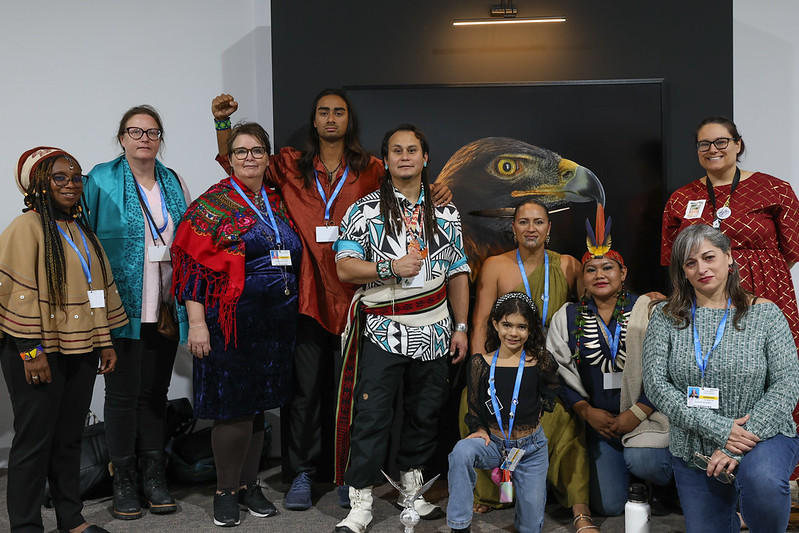
Brazil's Minister of Indigenous Peoples Sonia Guajajara attends a meeting during the UN Climate Change Conference COP 30. Credit: Hermes Caruzo/COP30

Brazil’s Minister of Indigenous Peoples, Sonia Guajajara, attends a meeting during the UN Climate Change Conference COP 30. Credit: Hermes Caruzo/COP30

SRINAGAR, India & BELÉM, Brazil, Nov 8 2025 (IPS) – A report by the Global Alliance of Territorial Communities (GATC) and Earth Insight paints a stark picture of how extractive industries, deforestation, and climate change are converging to endanger the world’s last intact tropical forests and the Indigenous Peoples who protect them.


The report, ‘Indigenous Territories and Local Communities on the Frontlines,’ combines geospatial analysis and community data to show that nearly one billion hectares of forests are under Indigenous stewardship, yet face growing industrial threats that could upend global climate and biodiversity goals.

Despite representing less than five percent of the world’s population, Indigenous Peoples and local communities (IPs and LCs) safeguard more than half of all remaining intact forests and 43 percent of global biodiversity hotspots.

These territories store vast amounts of carbon, regulate ecosystems, and preserve cultures and languages that have sustained humanity’s relationship with nature for millennia. But the report warns that governments and corporations are undermining this stewardship through unrestrained extraction of resources in the name of economic growth or even “green transition.”

One of the main report authors, Florencia Librizzi, who is also a Deputy Director at Earth Insight, told IPS that the perspectives and stories from each region are grounded in the lived realities of Indigenous Peoples and local communities and come directly from the organizations from each of the regions that the report focuses on in Mesoamerica, Amazonia, the Congo Basin, and Indonesia.

Across four critical regions—the Amazon, Congo Basin, Indonesia, and Mesoamerica—extractive industries overlap with millions of hectares of ancestral land. In the Amazon, oil and gas blocks cover 31 million hectares of Indigenous territories, while mining concessions sprawl across another 9.8 million.

In the Congo Basin, 38 percent of community forests are under oil and gas threat, endangering peatlands that store immense quantities of carbon. Indonesia’s Indigenous territories face 18 percent overlap with timber concessions, while in Mesoamerica, 19 million hectares—17 percent of Indigenous land—are claimed for mining, alongside rampant narcotrafficking and colonization.

These intrusions have turned Indigenous territories into sacrifice zones. From nickel extraction in Indonesia to oil drilling in Ecuador and illegal logging in the Democratic Republic of Congo, corporate incursions threaten lives, livelihoods, and ecosystems. Between 2012 and 2024, 1,692 environmental defenders were killed or disappeared across GATC countries, with 208 deaths linked to extractive industries and 131 to logging. The report calls this violence “the paradox of protection”—the act of defending nature now puts those defenders at deadly risk.

Yet the report also documents extraordinary resilience. In Guatemala’s Maya Biosphere Reserve, Indigenous forest communities have achieved near-zero deforestation—only 1.5 percent forest loss between 2014 and 2024, compared to 11 percent in adjacent areas. In Colombia, Indigenous Territorial Entities maintain over 99 percent of their forests intact.

The O’Hongana Manyawa of Indonesia continue to defend their lands against nickel mining, while the Guna people of Panama manage autonomous governance systems that integrate culture, tourism, and ecology.

In the Congo, the 2022 “Pygmy Law” has begun recognizing community rights to forest governance, a historic step toward justice.

The report’s findings were released ahead of the 30th UN Climate Conference (COP30), emphasizing the urgency of aligning international climate and biodiversity frameworks with Indigenous rights.

The 2025 Brazzaville Declaration, adopted at the First Global Congress of Indigenous Peoples and Local Communities from the Forest Basins, provides a roadmap for such alignment.

Signed by leaders from 24 countries representing 35 million people, it calls for five key commitments: secure land rights, free and informed consent, direct financing to communities, protection of life, and recognition of traditional knowledge.

These “Five Demands” are the cornerstone of what the GATC calls a shift “from extraction to regeneration.”

They demand an end to the violence and criminalization of Indigenous leaders and insist that global climate finance reach local hands.

The report notes that, despite the 2021 COP26 pledge of 1.7 billion dollars for forest protection, only 7.6 percent of that money reached Indigenous communities directly.

“Without financing that strengthens territorial governance, all global commitments will remain symbolic,” said the GATC in a joint statement.

Reacting to the announcement of the The Tropical Forest Forever Facility (TFFF) announced on the first day of the COP Leaders’ Summit and touted as a “new and innovative financing mechanism” that would see forest countries paid every single year in perpetuity for keeping forests standing, Juan Carlos Jintiach, Executive Secretary of the Global Alliance of Territorial Communities (GATC) said, “Even if the TFFF does not reach all its fundraising goals, the message it conveys is already powerful: climate and forest finance cannot happen without us Indigenous Peoples and local leadership at its core.

“This COP offers a crucial opportunity to amplify that message, especially as it takes place in the heart of the Amazon. We hope the focus remains on the communities who live there, those of us who have protected the forests for generations. What we need most from this COP is political will to guarantee our rights, to be recognized as partners rather than beneficiaries, to ensure transparency and justice in climate finance, and to channel resources directly to those defending the land, despite growing risks and violence.”

Deforestation in Acre State, Brazil. Credit: Victor Moriyama / Climate Visuals

Deforestation in Acre State, Brazil. Credit: Victor Moriyama / Climate Visuals

Jintiach, who is also the report’s author, told IPS  the Global Alliance has proposed establishing clear mechanisms to ensure that climate finance reaches Indigenous Peoples’ and local communities’ initiatives directly, not through layers of external actors.

“That’s why we have established our Shandia Platform, a global Indigenous-led mechanism designed to channel direct, predictable, and effective climate finance to our territories. Through the Shandia Funds Network, we ensure that funding is managed according to our priorities, governance systems, and traditional knowledge. The platform also includes a transparent system to track and monitor funding flows, with a specific indicator for direct finance to Indigenous Peoples and local communities,” he said.

The report also warns that global conservation goals such as the “30×30” biodiversity target—protecting 30 percent of Earth’s land and sea by 2030—cannot succeed without Indigenous participation. Policies under the Kunming-Montreal Global Biodiversity Framework and the Paris Agreement must, it says, embed Indigenous governance and knowledge at their core. Otherwise, climate strategies risk reinforcing historical injustices by excluding those who have sustained these ecosystems for centuries.

Jintiach said that based on his experience  at GATC, Indigenous Peoples’ and local communities’-led conservation models are not only vital but also deeply effective.

“In our territories, it is our peoples and communities who are conserving both nature and culture, protecting the forests, waters, and biodiversity that sustain all of us,” he said.

He added, “Multiple studies confirm what we already know from experience: Indigenous and local community lands have lower rates of deforestation and higher biodiversity than those managed under state or private models. Our success is rooted in ancestral knowledge, collective governance, and a deep spiritual connection to the land, principles that ensure true, lasting conservation.”

According to Jintiach, the GATC 5 demands and the Brazzaville Declaration are critical global reference points and we are encouraged by the level of interest and engagement displayed by political leaders in the lead-up to COP 30.

Map highlighting extractive threats faced by Indigenous Peoples and Local Communities across the Amazon basin. Credit: GATC

Map highlighting extractive threats faced by Indigenous Peoples and Local Communities across the Amazon basin. Credit: GATC

“We are hopeful that these principles will be uplifted and championed at COP 30, the UN Permanent Forum on Indigenous Issues, CBD COP 17 and on the long road ahead,” he said.

When asked about the rising violence against environmental defenders, Jintiach said that the Brazzaville Declaration calls for a global convention to protect Environmental Human Rights Defenders, including Indigenous Peoples and local community leaders.

According to him, the governments must urgently tackle the corruption and impunity fueling threats and violence while supporting collective protection and preventing rollback of rights.

“This also means upholding and strengthening the Escazú Agreement and UNDRIP, and ensuring long-term protection through Indigenous Peoples and local communities-led governance, secure land tenure, and accountability for human rights violations.”

Earth Insight’s Executive Director Tyson Miller described the collaboration as a call to action rather than another policy document. “Without urgent recognition of territorial rights, respect for consent, and protection of ecosystems, global climate and biodiversity goals cannot be achieved,” he said. “This report is both a warning and an invitation—to act with courage and stand in solidarity.”

The case studies highlight how Indigenous governance models already offer proven solutions to the climate crisis. In the Brazilian Amazon, Indigenous organizations have proposed a self-determined Nationally Determined Contribution (NDC) to reduce emissions through territorial protection. Their slogan, “Demarcation is Mitigation,” underlines how securing Indigenous land rights directly supports the Paris Agreement’s goals. Similarly, in Central Africa, communities have pioneered decolonized conservation approaches that integrate Indigenous leadership into national park management, reversing exclusionary models imposed since colonial times.

In Mesoamerica, the Muskitia region—known as “Little Amazon”—illustrates both crisis and hope. It faces deforestation from drug trafficking and illegal logging, yet community-based reforestation and forest monitoring are restoring ecosystems and livelihoods. Women and youth play leading roles in governance, showing how inclusive leadership strengthens resilience.

The report’s conclusion is unequivocal: where Indigenous rights are recognized, ecosystems thrive; where they are ignored, destruction follows. It argues that the fight for land is inseparable from the fight against climate change. Indigenous territories are not just sources of raw materials; they are “living systems of governance, culture, and biodiversity” essential to humanity’s survival.

The Brazzaville Declaration urges governments to ratify international human rights conventions, end deforestation by 2030, and integrate Indigenous territories into national biodiversity and climate plans. It also calls for a global convention to protect environmental human rights defenders, whose safety is central to planetary stability.

For GATC’s leaders, the message is deeply personal. “Our traditional knowledge is the language of Mother Earth,” said Joseph Itongwa, GATC Co-Chair from the Congo Basin. “We cannot protect the planet if our territories, our identity, and our livelihoods remain under threat.”

This feature is published with the support of Open Society Foundations.

IPS UN Bureau Report

IPS UN Bureau, IPS UN Bureau Report,

  Source

As Civil Society Is Silenced, Corruption and Inequality Rise

Active Citizens, Asia-Pacific, Civil Society, Climate Change, Climate Change Justice, Conferences, COP30, Democracy, Editors’ Choice, Environment, Featured, Global, Headlines, Human Rights, Press Freedom, Sustainable Development Goals, TerraViva United Nations

Civil Society

Mandeep Tiwana, Secretary General, CIVICUS Global Alliance. Credit: CIVICUS

Mandeep Tiwana, Secretary General, CIVICUS Global Alliance. Credit: CIVICUS

BULAWAYO & BANGKOK, Oct 31 2025 (IPS) – From the streets of Bangkok to power corridors in Washington, the civil society space for dissent is fast shrinking. Authoritarian regimes are silencing opposition but indirectly fueling corruption and widening inequality, according to a leading global civil society alliance.


The warning is from Mandeep Tiwana, Secretary General of CIVICUS Global Alliance, who points to a troubling trend: civil society is increasingly considered a threat to those in power.

That is a sobering assessment from CIVICUS, which reports that a wave of repression by authoritarian regimes is directly fueling corruption and exploding inequality.

“The quality of democracy on hand around the world is very poor at the moment,” Tiwana tells IPS in an exclusive interview. “That is why civil society organizations are seen as a threat by authoritative leaders and the negative impact of attacking civil society means there is a rise in corruption, there is less inclusion, there is less transparency in public life and more inequality in society.”

His comments come ahead of the 16th International Civil Society Week (ICSW) from 1–5 November 2025 convened by CIVICUS and the Asia Democracy Network. The ICSW will bring together more than 1,300 delegates comprising activists, civil society groups, academics, and human rights advocates to empower citizen action and build powerful alliances. ICSW pays tribute to activists, movements, and civil society achieving significant progress, defending civic freedoms, and showing remarkable resilience despite the many challenges.

The ICSW takes place against a bleak backdrop. According to the CIVICUS Monitor, a research partnership between CIVICUS and over 20 organizations tracking civic freedoms, civil society is under attack in 116 of 198 countries and territories. The fundamental freedoms of expression, association, and peaceful assembly face significant deterrents worldwide.

Protests at COP27 in Egypt. Mandeep Tiwana, Secretary General of CIVICUS Global Alliance, is hopeful that COP30, in Belém, Brazil, will be more inclusive. Credit: Busani Bafana/IPS

Protests at COP27 in Egypt. Mandeep Tiwana, Secretary General of CIVICUS Global Alliance, is hopeful that COP30, in Belém, Brazil, will be more inclusive. Credit: Busani Bafana/IPS

“It is becoming increasingly dangerous to be a civil society activist and to be the leader of a civil society organization,” Tiwana tells IPS. “Many organizations have been defunded because governments don’t like what they do to ensure transparency or because they speak out against some very powerful people. It is a challenging environment for civil society.”

Research by CIVICUS categorizes civic freedom in five dimensions: open, narrowed, obstructed, repressed, and closed. Alarmingly, over 70 percent of the world’s population now lives in countries rated in the two worst categories: ‘repressed’ and ‘closed.’

“This marks a regression in democratic values, rights, and accountability,” Tiwana noted, adding that even in the remaining 30% of nations, restrictions on civic freedoms remain.

Repression Tools in Tow

The ICSW, being held under the theme ‘Celebrating citizen action: reimagining democracy, rights, and inclusion for today’s world,’ convenes against this backdrop.

Multifaceted tools are used by governments to stifle dissent. Governments are introducing laws to block civil society organizations from receiving international funding while simultaneously restricting domestic resources. Besides, laws have also been enacted in some countries to restrict the independence of civil society organizations that scrutinize governments and promote transparency.

For civil society activists, the consequences are sobering.

“If you speak truth to power, uncover high-level corruption and try to seek transformative change in society, whether it’s on gender equality or inclusion of minorities you  can be subjected to severe forms of persecution,” Tiwana explained. “This includes stigmatization, intimidation,  imprisonment for long periods, physical attacks, and death.”

Multilateralism Tumbles, Unilateralism Rises

Tiwana said there is an increasing breakdown in multilateralism and respect for international laws from which civil society draws its rights.

This erosion of civic space is reflected in the breakdown of the international system. Tiwana identified a surge in unilateralism and a disregard for the international laws that have historically safeguarded the rights of civil society.

“If you look at what’s happening around the world, whether with regard to conflicts in Palestine, in the Congo, in Sudan, in Myanmar, in Ukraine, in Cameroon, and elsewhere, governments are not respecting international norms,” he observed, remarking that authoritarian regimes were abusing the sovereignty of other countries, ignoring the Geneva conventions, and legalizing attacks on civilians, torturing and persecuting civilians.

This collapse of multilateralism has enabled a form of transactional diplomacy, where narrowly defined national interests trump human rights. Powerful states now collude to manipulate public policy, enhancing their wealth and power. When civil society attempts to expose these corrupt relationships, it becomes a target.

“They are colluding to game public policy to suit their interests and to enhance their wealth.  The offshoot of this is that civil society is attacked when it tries to expose these corrupt relationships,” said Tiwana, expressing concern  about the rise in state capture by oligarchs who now own vast swathes of the media and technology landscapes.

Citing countries like China and Rwanda, which, while they have different ways of functioning, Tiwana said both are powerful authoritarian states engaging in transactional diplomacy and are opposed to the civil society’s power to hold them to account.

The election of Donald Trump as US President in 2025 has shattered the foundation of the US as a democracy, Tiwana noted. The country no longer supports democratic values internationally and is at home with  attacks on the media and defunding of civil society.

The action by the US has negative impacts, as some leaders around the world are taking their cue from Trump in muzzling civil society and media freedoms, he said, pointing to how the US has created common cause with authoritarian governments in El Salvador, Israel,  Argentina, and Hungary.

The fight Goes On

Despite facing repression and threats, civil society continues to resist authoritarian regimes. From massive street protests against corruption in Nepal, and Guatemala  to pro-democracy movements that have removed  governments in Bangladesh  and Madagascar,

“People need to have courage to stand up for what they believe and to speak out when their neighbors are persecuted,” Tiwana told IPS. “People still need to continue to speak the truth and come out in the streets in peaceful protest against the injustice that is happening. They should not lose hope.”

On the curtailing of civil society participation in climate change negotiations, Tiwana said the upcoming COP30 in Brazil offered hope. The host government believes in democratic values and including civil society at the table.

“Past COPs have been held in petro states—Azerbaijan, the United Arab Emirates and Egypt—which are all authoritarian states where civil society has been attacked, crushed, and persecuted,” he said. “We are hopeful that there will be greater inclusion of voices and the commitments that will be made to reduce emissions will be ambitious but the question is really going to be after the COP and if those commitments will be from governments that really don’t care about civil society demands or about the well-being of their people.”

Young people, Tiwana said, have shown the way. Movements like Fridays for Future  and the Black Lives Matter have demonstrated the power of solidarity and unified action.

But, given the massive protests, has this resistance led to change of a similar scale?

“Unfortunately, we are seeing a rise in military dictatorships around the world,” Tiwana admitted, attributing this to a fraying appetite by the international community to uphold human rights and democratic values.

“Conflict, environmental degradation, extreme wealth accumulation, and high-level corruption are interlinked because it’s people who want to possess more than they need.”

Tiwana illustrated what he means by global priorities.

“We have USD 2.7 trillion in military spending year-on-year nowadays, whereas 700 million people go to bed hungry every night.”

“As civil society, we are trying to expose these corrupt relationships that exist. So the fight for equality, the struggle to create better, more peaceful, more just societies—something CIVICUS supports very much—are some of the conversations that we will be looking to have at the International Civil Society Week.”

IPS UN Bureau Report

  Source

Vanishing Wisdom of the Sundarbans–How climate change erodes centuries of ecological knowledge

Asia-Pacific, Civil Society, Climate Change, Climate Change Finance, COP30, Development & Aid, Editors’ Choice, Environment, Featured, Headlines, Human Rights, Migration & Refugees, Natural Resources, Sustainable Development Goals, TerraViva United Nations

Climate Change

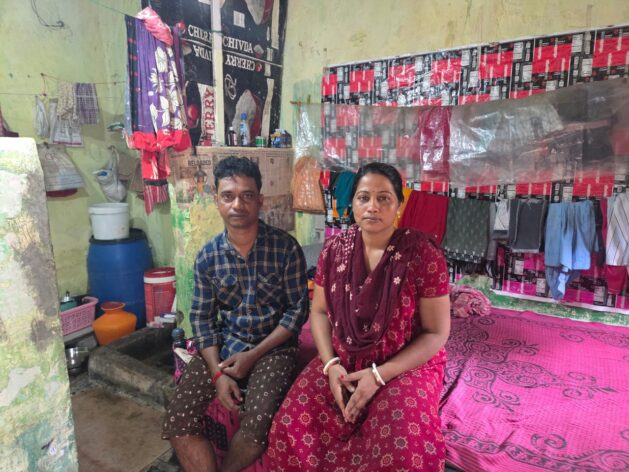
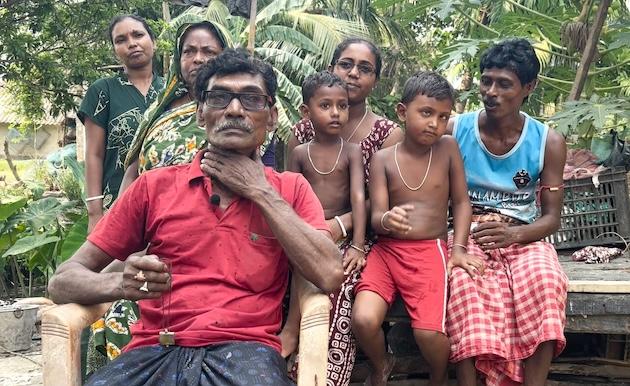
Bapi Mondal and his wife Shanti in Bangalore. Climate change has forced the couple from their traditional livelihoods in the Sundarbans. Credit: Diwash Gahatraj/IPS

Bapi Mondal and his wife Shanti in Bangalore. Climate change has forced the couple from their traditional livelihoods in the Sundarbans. Credit: Diwash Gahatraj/IPS

BANGALORE & PAKHIRALAY, India, Oct 15 2025 (IPS) – Bapi Mondal’s morning routine in Bangalore is a world away from his ancestral village, Pakhiralay, in the Sundarbans, West Bengal. He wakes before dawn, navigates heavy traffic, and spends eight long hours molding plastic battery casings. It’s not the life his honey-gathering forefathers knew, but factors like extreme storms, rising seas, and deadly soil salinity forced the 40-year-old to abandon centuries of family tradition and travel miles away to work in a concrete suburban factory.


Bapi still remembers his traditional skills—walking through a mangrove forest to find a tree with a honeycomb, mending boats and fishing nets, and singing and acting in the traditional plays. His 19-year-old son, Subhodeep—working alongside in the factory—has lost the heritage.

Bapi’s home, the Sundarbans—the world’s largest mangrove forest—is on the frontlines of climate change, and local livelihoods are taking the hit. In this watery maze where land and sea meet, villagers who once relied on fishing, honey collection and farming are now grappling with rising tides, saltier water, and more frequent storms. For many, life is becoming a struggle to hold on to centuries-old ways.

Sea levels in the Sundarbans are rising nearly twice the global rate, flooding villages and forcing families out. Saltwater ruins rice fields and ponds, making farming and fishing harder. Mawalis, the honey gatherers, also struggle as climate change disrupts flowering and damages mangroves, reducing wild bee populations.

A fisherman in Sundarbans. Credit: Diwash Gahatraj/IPS

A fisherman in the Sundarbans. Credit: Diwash Gahatraj/IPS

The crisis doesn’t end with the water. Salinity, once held at bay by freshwater flows, is climbing year after year, disrupting both fishing and farming. Pollution, ill-managed embankments, and overexploitation of resources add to the challenge. As incomes shrink and lands disappear, thousands leave for nearby cities, hoping for work but often finding only life in urban slums.

City life is unforgiving for migrants like Mondal. He spends eight grueling hours on his feet, molding battery casings six days a week in harsh factory conditions. At the end of each day, he returns to a small one-room apartment. He shares this space with his wife Shanti and son, Subhodeep. The family struggles financially. Bapi earns ₹19,000 per month (about USD 215)—barely enough to get by. Despite the hardships, he says the work is still his choice.

“A hard choice, but a choice,” he explains.

Morning rush is hectic for the Mondal family. He points to the wall clock and asks his wife to pack lunch quickly. “All three of us work in different factories in the area,” Mondal says. “We all have to reach work by 8 am.”

Gopal Mondal and his family in the Sundarbans. Credit: Diwash Gahatraj/IPS

Gopal Mondal and his family in the Sundarbans. Gopal still ventures into the forests to collect wild honey. Credit: Diwash Gahatraj/IPS

Shanti, Bapi’s wife, spends her days at a garment factory pressing clothes with a hot iron. She works eight-hour shifts with just one weekly break, earning ₹15,000 per month (about USD 169). Their 19-year-old son, Subhodeep, has also joined his father at the plastic factory. All three now work in Bommasandra, Bangalore’s industrial belt, pooling their wages to survive.

The migration has split their family apart.

“We have an 11-year-old daughter who lives with my in-laws in the Sundarbans,” Shanti explains. The cost of city life forced them to leave their youngest child behind. “It breaks my heart to be apart from my daughter, but we want her to have a good education and life—that’s why we sacrifice,” says Shanti. Her daughter attends school back in the village.

Her job gave her economic independence and a voice in family decisions, like building their new house. Bapi’s family, rooted in the village for centuries, were Mawalis, honey gatherers who knew the forest through knowledge passed down generations.

Still Rooted

Bapi’s father, Gopal Mondal, still ventures into the dangerous forests of Sunderbans. He risks tiger attacks and deadly cyclones to collect wild honey. But the forest that once fed families is now failing them.

Climate change has disrupted everything. Cyclones strike more often and with greater force. The natural flowering cycle has gone haywire. Fish populations in the waters have crashed.

“The honey harvest keeps shrinking and prices keep falling,” Gopal explains.

As Gopal tried to hold on to tradition, his son Bapi could no longer see a future in the same waters and forests.

“The forest no longer provides enough honey or fish,” Bapi shares. The rhythms his ancestors lived by for centuries suddenly made no sense. Faced with shrinking opportunities, Bapi tried other work back home. Besides going to the jungle for honey with his father during the season (April-May), he operated a van gaari—a battery-powered three-wheeler with a wooden platform for passengers. But even that barely paid enough to survive. “There was a time when I struggled to buy a saree for my wife,” he recalls. Migration was the only choice left.

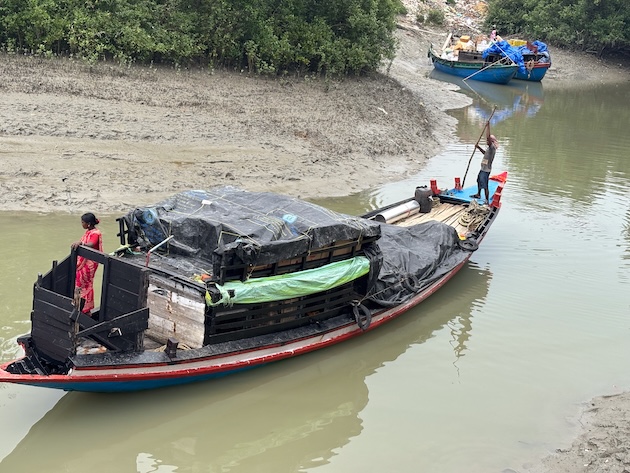
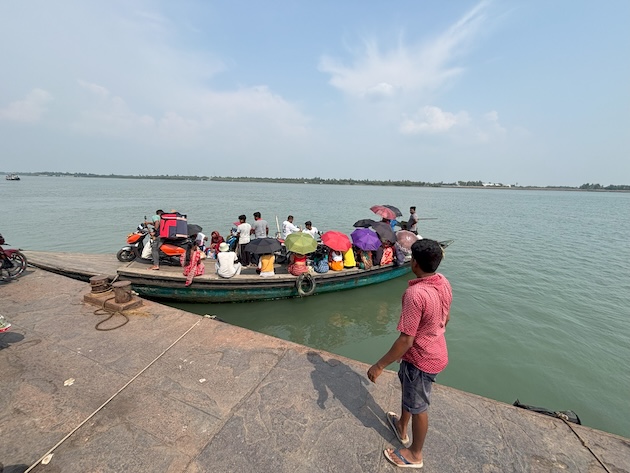
A boat ferries passengers in Sundarbans. Credit: Diwash Gahatraj/IPS

A boat ferries passengers in Sundarbans. Credit: Diwash Gahatraj/IPS

From Forests to Factories

Apart from forced migration, climate change erodes memory, identity, and ancestral knowledge. Leaving the Sundarbans has cost the family more than a homeland.

Bapi still carries traditional skills—navigating treacherous waters by boat and collecting honey deep in the forest.

“I know how to catch shrimp and crabs from the river and sea,” he says. “My father and uncles taught me these skills when I was young.”

His wife, Shanti, nods, adding that she was an expert crab and shrimp collector back in the Sundarbans. “I think I still have it in me,” she says with quiet pride.

But the chain of knowledge is breaking. “I could not pass on that wisdom to my son,” Bapi admits with regret.

Subhodeep represents this lost generation. He finished tenth grade and left his village to join his parents in Bangalore. He has not learned the skills that defined his family for generations. “I have never entered the forest to collect honey or fish back in the village,” Subhodeep explains. “My parents were against it.”

Bon bibi temple in Pakhiralay village. Along with losing traditional livelihoods, religion and cultural life are also in jeopardy. Credit: Diwash Gahatraj/IPS

Bon bibi temple in Pakhiralay village. Along with losing traditional livelihoods, religion and cultural life are also in jeopardy. Credit: Diwash Gahatraj/IPS

The irony is stark. Bapi’s parents encouraged him to learn these ancestral skills. But when environmental collapse made these traditions dangerous and unprofitable, Bapi chose to shield his son from them.

For the Mondals, the forest has become too dangerous and unreliable.

“Going to collect honey or catch fish is very unpredictable now,” Bapi explains. Catch volumes have fallen, and tiger attacks have grown. Bapi’s family knows the risk; his grandfather was killed while gathering honey in the forest.

Years earlier, a tiger also attacked Gopal Mondal. He was luckier—he escaped alive but still carries scars on his hand.

These brutal realities shaped Bapi’s decision about his son’s future. “I don’t want my next generation to have such a risky occupation,” he says. The choice is clear. Families can either cling to dangerous traditions that no longer pay enough to survive or abandon their ancestral practices for safer work in distant cities.

Are there other reasons behind the changes in the Sundarbans?

“We can’t just blame climate change and ignore human activities making things worse,” says Professor Tuhin Ghosh of Jadavpur University’s School of Oceanographic Studies. Human activity and climate change create a deadly combination.

People cleared mangroves for farms and fish ponds and built embankments that blocked tidal flows. The result is salt contamination, poisoned soil and water, vanishing species, and a broken landscape.

Uninhabitable Home

About 4.5 million people live across the Sundarbans region in Bangladesh and India. A recent survey reveals the massive scale of climate migration: nearly 59% of households have at least one family member who has moved away for work.

Some studies report 60,000 people migrated from parts of the Sundarbans by 2018. But household surveys show much higher rates because they measure affected families, not just individuals.

These local figures reflect a much bigger crisis. Across Bangladesh, weather-related disasters displaced 7.1 million people in 2022 alone, showing how climate change drives mass movement.

On the Indian side in West Bengal, researchers document large seasonal and permanent migration flows to cities and other states. Families routinely send members to work elsewhere, though official counts are scarce.

Loss Beyond Dollars

Over the past two decades, the Sundarbans has been hit by cyclones made stronger by climate change. They uprooted thousands and caused millions in losses. But beyond disaster relief and migration, a quieter crisis unfolds: the erosion of centuries-old ecological wisdom, culture, and tradition.

Gopal Mondal, in his early sixties, sits outside his modest home in Pakhiralay. When asked about protective equipment for his dangerous work collecting honey in the Sundarbans forest, he holds up a small amulet—a tabeej.

“This and my prayers to Bon Bibi are my protection,” says Mondal, who leads a team of honey collectors into the mangrove forests. “They shield us from storms and babu (tigers).”

The elderly collector recites mantras passed down through generations—teachings from his father or cousins, though he cannot recall exactly who taught him.

“The whole community worships Bon Bibi,” he explains simply

For Sundarbans communities like Mondal’s, Bon Bibi—the “Lady of the Forest”—is a guardian of the mangroves. For centuries, fishermen, honey collectors, and wood gatherers have sought her protection in tiger territory and cyclone-prone waters. Her worship is more than faith; it reflects the people’s bond with a dangerous yet life-sustaining environment, offering both comfort and identity where safety tools are scarce.

When asked about traditional knowledge slipping away from his family, Mondal’s weathered face shows a faint smile.

“Earlier, every fisherman’s family had someone —a son or grandson—who knew how to repair torn nets or mend boats,” he explains. “But in my family, things are slowly changing. My grandsons and sons live too far away, and their visits home are too short to learn these skills.”

The honey collector pauses, watching the distant mangroves. “The younger generation shows very little interest in our profession,” he adds quietly.

Climate migration expert M. Zakir Hossain Khan of Change Initiative, a Bangladesh-based think tank focused on solving critical global challenges, warns that climate-driven displacement from the Sundarbans is destroying centuries-old ways of life that depend entirely on deep knowledge of the forest and rivers.

Fishermen carry rare knowledge of tides, breeding cycles, and mangrove routes, passed down through years of practice. With youth leaving for city jobs, few inherit it. Honey gatherers know how to find hives, protect bees, and survive in tiger territory. As young people turn away, honey collection is fading from the Sundarbans.

A Vanishing Heritage

This generational shift reflects a broader transformation across the Sundarbans. Traditional skills that once defined coastal communities—net weaving, boat building, reading weather patterns, and forest navigation—are disappearing as young people migrate to cities primarily  for employment and a few for education.

“Similarly, mangrove-based handicrafts and boat-making using leaves, bamboo, and mangrove wood to make mats, roofing materials, and small boats demand both ecological understanding and artisanal skill, which are now rarely passed down,” comments Khan from Change Initiative.

He adds that herbal medicine and spiritual rituals practiced by local healers using plants like sundari bark and hental are also at risk, as migration and urbanization erode the cultural setting that sustains them.

Culture at Crossroads

Ghosh, who has spent over 30 years working in the Sundarbans, points to a troubling pattern.

“Migration is killing our folk arts,” he says. “Bonbibi stories, jatra pala theater, fishermen’s songs—they’re all disappearing. The people who used to perform during festivals are getting old. And there’s no one to replace them.”

The Sundarbans face a cultural crisis. Traditional performances that once brought villages together during religious festivals now struggle to find performers. Young people who might have learned these arts from their elders are instead leaving for cities for a better life

Once central to life in the Sundarbans, folk traditions like Jatra Pala, Bonbibi tales, and fishermen’s songs now fade with their aging performers. With few young apprentices, a rich cultural heritage risks disappearing—leaving behind a region not just economically changed, but culturally empty.

Note: This story was produced with support from Internews’ Earth Journalism Network

IPS UN Bureau Report

  Source

Global South Can Rebalance Climate Agenda in Belém, Says Gambian Negotiator

Active Citizens, Africa, Climate Change, Climate Change Finance, Climate Change Justice, COP30, Development & Aid, Editors’ Choice, Environment, Featured, Global, Headlines, International Justice, Latin America & the Caribbean, Sustainable Development Goals, TerraViva United Nations

COP30


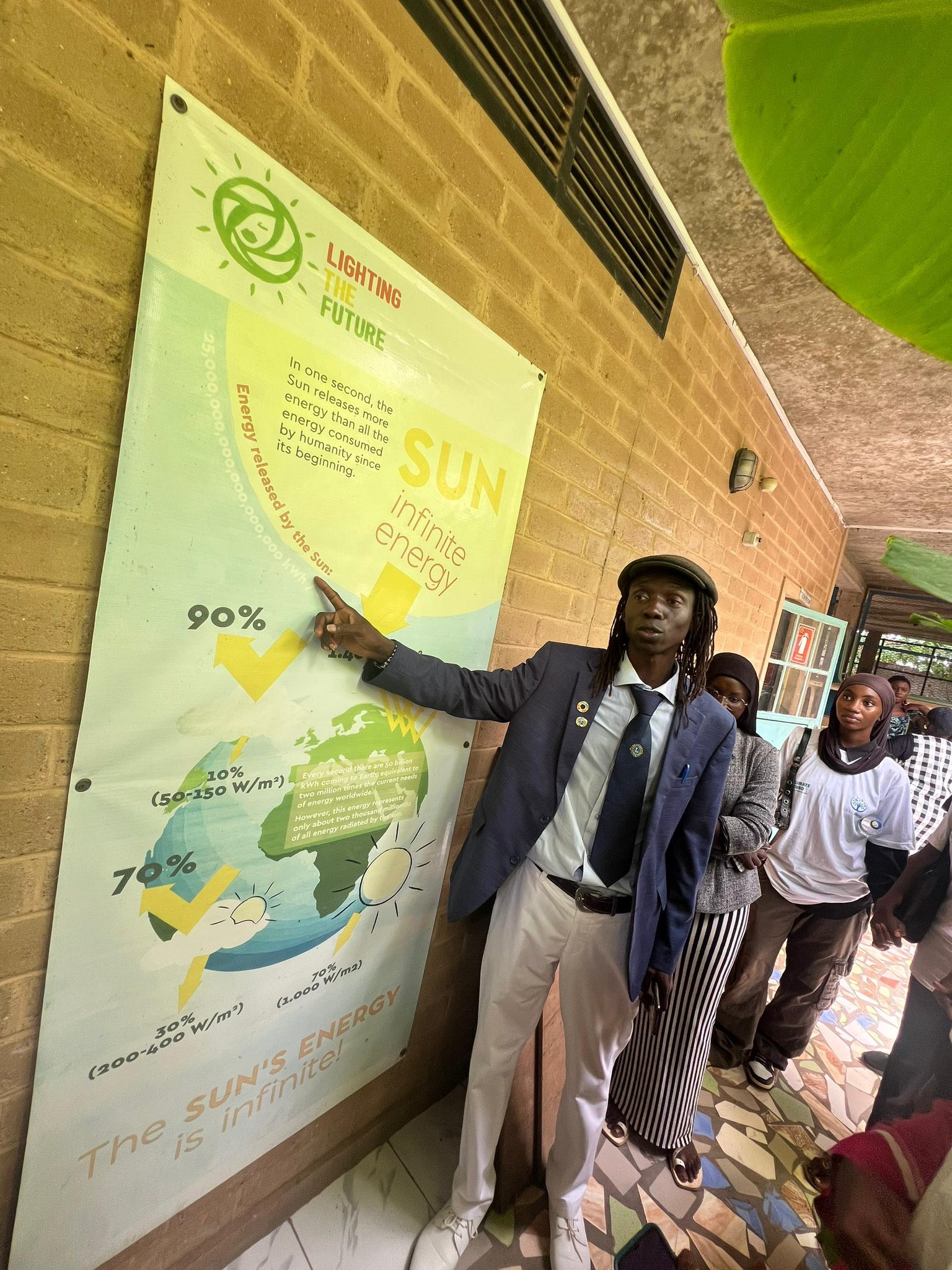
COP30 negotiator Malang Sambou Manneh believes the method of countering growth in fossil fuel development lies in technology. Showcasing alternatives that work provides the opportunity for the global South to take the lead and present best practices in renewables.

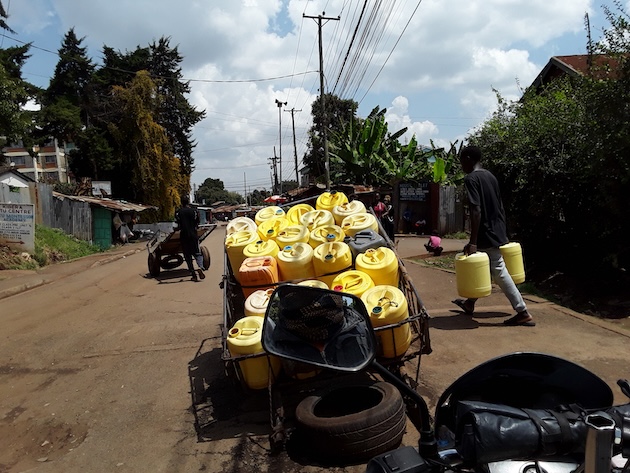
Climate change is a significant contributor to water insecurity in Africa. Water stress and hazards, like withering droughts, are hitting African communities, economies, and ecosystems hard. Credit: Joyce Chimbi/IPS

Climate change is a significant contributor to water insecurity in Africa. Water stress and hazards, like withering droughts, are hitting African communities, economies, and ecosystems hard. Credit: Joyce Chimbi/IPS

NAIROBI, Oct 14 2025 (IPS) – The Gambia’s lead negotiator on mitigation believes that COP30 presents a unique opportunity to rebalance global climate leadership.


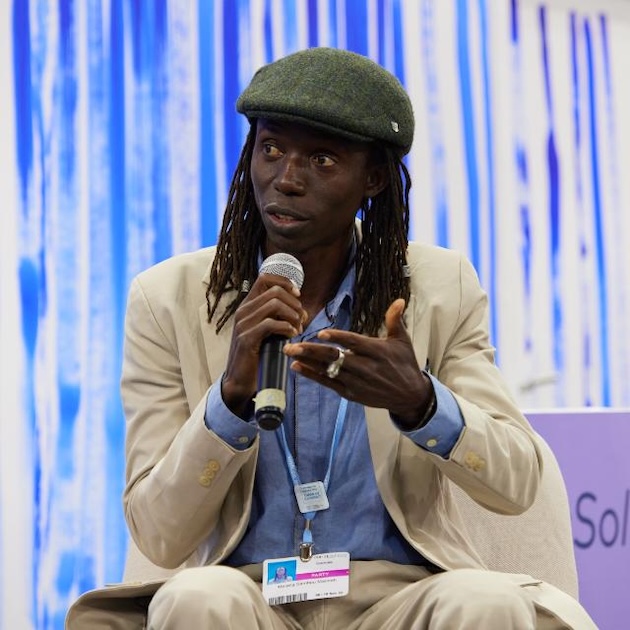
“This COP cannot be shrouded in vagueness. Too much is now at stake,” Malang Sambou Manneh says in an interview with IPS ahead of the climate negotiations. He identified a wide range of issues that are expected to define COP30 climate talks.

The global community will shortly descend on the Amazon rainforest, the world’s largest intact forest, home to more than 24 million people in Brazil alone, including hundreds of thousands of Indigenous Peoples. Here, delegates will come face-to-face with the realities of climate change and see what is at stake.

Malang Sambou Manneh

Malang Sambou Manneh.

COP30, the UN’s annual climate conference, or the Conference of Parties, will take place from November 10-21, 2025 in the Amazonian city of Belém, Brazil and promises to be people-centered and inclusive. But with fragmented and fragile geopolitics, negotiations for the best climate deal will not be easy.

Sambou, a lead climate negotiator who has attended all COPs, says a unified global South is up to the task.

He particularly stressed the need for an unwavering “focus on mitigation or actions to reduce or prevent greenhouse gas emissions.” Stating that the Mitigation Work Programme is critical, as it is a process established by the United Nations Framework Convention on Climate Change (UNFCCC) at COP26 to urgently scale up the ambition and implementation of efforts to mitigate climate change globally.

Sambou spoke about how COP30 differs from previous conferences, expectations from the global South, fossils fuels and climate financing, stressing that “as it was in Azerbaijan for COP29, Belem will be a ‘finance COP’ because climate financing is still the major hurdle. Negotiations will be tough, but I foresee a better outcome this time round.”

The Baku to Belém Roadmap to 1.3T is expected to be released soon, outlining a framework by the COP 29 and COP 30 Presidencies for scaling climate finance for developing countries to at least USD 1.3 trillion annually by 2035.

Unlike previous conferences, COP30 focuses on closing the ambition gap identified by the Global Stocktake, a periodic review that enables countries and other stakeholders, such as the private sector, to take inventory to assess the world’s collective progress in meeting its climate goals.

The first stocktake was completed at COP28 in 2023, revealing that current efforts are insufficient and the world is not on track to meet the Paris Agreement. But while the Paris Agreement, a legally binding international treaty on climate change, set off on a high singular note when it entered into force in November 2016, that unity is today far from guaranteed.

Malang Sambou Manneh with She-Climate Fellows. Credit: Clean Earth Gambia/Facebook

Malang Sambou Manneh with She-Climate Fellows. Credit: Clean Earth Gambia/Facebook

Unlocking high-impact and sustainable climate action opportunities amidst geopolitical turbulence was always going to be difficult. Not only did President Donald Trump pull the United States out of the Paris Agreement, but he is now reenergized against climate programs and robustly in support of fossil fuels—and there are those who are listening to his message.

Sambou says while this stance “could impact the transition from fossil fuels to clean energy, many more countries are in favor of renewable energy than against.”

“But energy issues are complex because fossil fuels have been a way of life for centuries, and developed countries leveraged fossil fuels to accelerate development. And then, developing countries also started discovering their oil and gas, but they are not to touch it to accelerate their own development and must instead shift to renewables. It is a complex situation.”

Ilham Aliyev, the President of Azerbaijan, famously described oil as a “gift from God” at COP29 to defend his country’s reliance on fossil fuels despite climate change concerns. This statement highlights the complexity of the situation, especially since it came only a year after the landmark COP28 hard-won UAE Consensus included the first explicit reference to “transitioning away from all fossil fuels in energy systems” in a COP agreement.

As a negotiator, Sambou says he is very much alive to these dynamics but advises that the global community “will not successfully counter fossil fuels by saying they are bad and harmful; we should do so through technology. By showcasing alternatives that work. This is an opportunity for the global South to take the lead and present best practices in renewables.”

And it seems there is evidence for his optimism. A recent report shows the uptake of renewables overtaking coal generation for the first time on record in the first half of 2025 and solar and wind outpacing the growth in demand.

This time around, the global south has its work cut out, as it will be expected to step up and provide much-needed leadership as Western leaders retreat to address pressing problems at home, defined by escalating economic crises, immigration issues, conflict, and social unrest.

It is in the developing world’s leadership that Sambou sees the opportunities—especially as scientific evidence mounts on the impacts of the climate crisis.

The World Meteorological Organization projects a continuation of record-high global temperatures, increasing climate risks and potentially marking the first five-year period, 2025-2029.

Sambou says all is not lost in light of the new and ambitious national climate action plans or the Nationally Determined Contributions.

This past September marked the deadline for a new set of these contributions, which will guide the COP30 talks. Every five years, the signatory governments to the Paris Agreement are requested to submit new national climate plans detailing more ambitious greenhouse gas emission reduction and adaptation goals.

“Ambition has never been a problem; it is the lack of implementation that remains a most pressing issue. Action plans cannot be implemented without financing. This is why the ongoing political fragmentation is concerning, for if there was ever a time to stand unified, it is now. The survival of humanity depends on it,” he emphasizes.

“Rather than just setting new goals in Belém, this time around, we are better off pushing for a few scalable solutions, commitments that we can firmly hold ourselves accountable to, than 200 pages of outcomes that will never properly translate into climate action.”

Despite many competing challenges and a step forward, two steps backwards here and there, from the heart of the Amazon rainforest, COP30’s emphasis on the critical role of tropical forests and nature-based solutions is expected to significantly drive action for environmental and economic growth.

Note: This interview is published with the support of Open Society Foundations.

IPS UN Bureau Report

  Source

Loss and Damage at COP30: Indigenous Leaders Challenge Top-Down Finance Models

Active Citizens, Civil Society, Climate Action, Climate Change, Climate Change Finance, Climate Change Justice, Conferences, COP29, COP30, Editors’ Choice, Featured, Headlines, Human Rights, Humanitarian Emergencies, Indigenous Rights, International Justice, Sustainable Development Goals, TerraViva United Nations

Indigenous Rights

Indigenous activists continue to fight for a seat at the table in solving climate change, asking for self-determination and financial agency.

Activists demand loss and damage reparations outside the hall where the COP29 negotiators were concluding their negotiations. Credit: UN Climate Change/Kiara Worth

Activists demand loss and damage reparations outside the hall where the COP29 negotiators were concluding their negotiations. Credit: UN Climate Change/Kiara Worth

UNITED NATIONS, Sep 17 2025 (IPS) – As climate-induced disasters continue to devastate the Global South, nations are steadily mounting pressure at the United Nations for wealthier countries to deliver on long-promised climate reparations through the Loss and Damage Fund. For Indigenous peoples, whose territories are often the most ecologically intact yet most damaged by climate change, these negotiations define survival, sovereignty and recognition as rights-holders in global climate governance.


After the fund’s operationalization at the 29th Conference of the Parties to the United Nations Framework Convention on Climate Change (COP29) in Baku last fall, developing countries say that the pledges so far—approximately USD 741 million—fall drastically short of the trillions needed to recover from climate devastation.

This low number is acutely felt in Indigenous communities, whose local economies rely on thriving ecosystems.

“A lot of rich biodiversity, carbon sinks and the most preserved parts of the world are within indigenous territories,” said Paul Belisario, Global Coordinator for the Secretariat of the International Indigenous Peoples Movement for Self-Determination and Liberation (IPMSDL), in an interview with IPS. “Without recognizing Indigenous people’s right to take care of it, to govern it and to live in it so that their traditional knowledge will flourish, we cannot fully address the climate crisis.”

UN Secretary-General António Guterres echoed this sentiment in Baku, saying, “The creation of the Loss and Damage Fund is a victory for developing countries, for multilateralism and for justice.  But its initial capitalization of USD 700 million doesn’t come close to righting the wrong inflicted on the vulnerable.”

These “wrongs,” Indigenous leaders argue, must include the exclusion of traditional and tribal knowledge in decision-making. In light of pushback to make climate action a legal responsibility rather than a political agreement, many are hopeful that COP30 will yield a more successful negotiation for adequate compensation.

The call for action is led by coalition blocs including the Alliance of Small Island States (AOSIS) and G77, an alliance of developing countries with China as its primary political and financial supporter. Both alliances represent the countries most vulnerable to climate-related natural disasters. G77 was particularly vocal during COP29, where their rejection of the deal was backed by a number of climate and civil society organizations who criticized the negotiating text for giving developed countries too much leeway to shirk their climate finance obligations.

For Indigenous groups, this criticism stems from concerns that funding will not successfully reach their communities due to bureaucracy or geographical and political isolation.

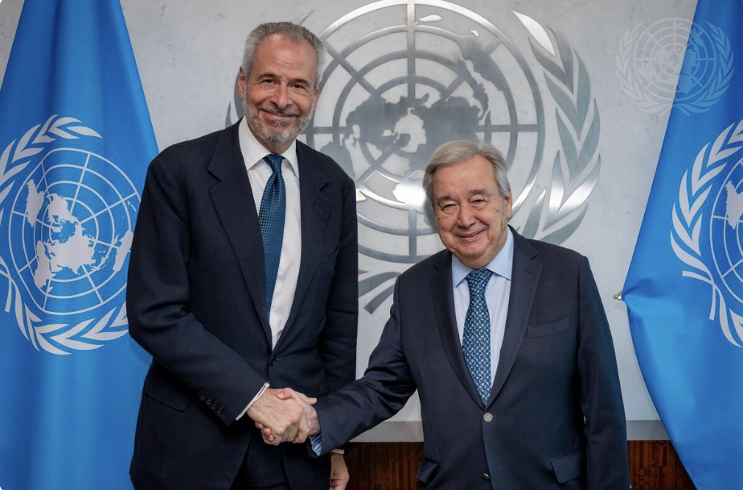
Secretary-General António Guterres meets with André Aranha Corrêa do Lago, President-designate of COP 30, the 2025 UN Climate Change Conference, which will be held in Belém, Brazil. Credit: UN Photo

Secretary-General António Guterres meets with André Aranha Corrêa do Lago, President-designate of COP 30, the 2025 UN Climate Change Conference, which will be held in Belém, Brazil. Credit: UN Photo

Janene Yazzie, director of policy and advocacy at the NDN Collective, spoke about the importance of Indigenous involvement in funding distributions, saying, “What we’re advocating for is to ensure that these mechanisms… are accessible to Indigenous Peoples, uphold the rights of Indigenous Peoples, and can be utilized towards solutions and responses that are designed and prioritized by Indigenous Peoples.”

Last year, countries eventually settled on mobilizing USD 300 billion annually by 2035 to developing countries for climate finance—far below the USD 1 trillion experts say is the minimum for effective mitigation and adaptation. The financial commitment is voluntary, meaning that countries can withdraw without consequence and no protections exist to ensure the money is distributed with regard for Indigenous governance systems.

The Forest Stewardship Council (FSC) Indigenous Foundation noted that groups without formal land titles could be excluded entirely, despite their role in stewarding biodiverse landscapes.

However, a recent International Court of Justice (ICJ) report has created new legal pathways. The court placed stringent obligations on states to prevent significant climate harm and tackle climate change, stating that failure to do so triggers legal responsibility. Scientific evidence can link emissions to specific countries, allowing those affected by climate change to seek legal action, which could include getting money back, restoring land, improving infrastructure, or receiving compensation for financial losses.

Indigenous activists at COP29. Credit: UN Climate Change/ Kiara Worth

Indigenous activists at COP29. Credit: UN Climate Change/Kiara Worth

This legal opinion opens new pathways for seeking restitution—not only in money but also in land recovery, infrastructure for adaptation, and guarantees of political participation.

This legal shift comes at a crucial time. In April 2025, thousands of Indigenous Brazilians marched in the capital ahead of COP30 in Belém, demanding land rights and decision-making influence. Meanwhile, the National Organization of the Indigenous Peoples of the Colombian Amazon (OPIAC) also issued a statement about the summit for Deforestation of the Amazon. They outline an action plan to end deforestation, strengthen land rights and phase out oil and gas exploration.

After indigenous groups were denied a co-presidency for COP30, Conference President André Corrêa do Lago pledged to establish a “Circle of Indigenous Leadership” within the conference. Many leaders found the arrangement insufficient—the FSC Indigenous Foundation called instead for “co-governance models where Indigenous Peoples are not just consulted but are leading and shaping climate action.”

Indigenous people make their message clear during COP29. Credit: Photo- UN Climate Change/Lara Murillo

Indigenous people make their message clear during COP29. Credit: UN Climate Change/Lara Murillo

Other groups were more explicitly critical. The Indigenous Climate Action co-authored a statement at the end of COP29 saying, “There is nothing to celebrate here today… While we urgently need direct and equitable access to climate finance for adaptation, mitigation and loss and damage across all seven socio-cultural regions… we reject the financial colonization that comes from loans and any other financial mechanisms that perpetuate indebtedness of nations that have contributed the least to climate change yet bear the brunt of its tragedies.”

Belisario frames the funding question as a matter of justice rather than charity.

“This funding is not just corporate social responsibility or compensation,” he told IPS. “This is historical justice.”

However, without Indigenous influence in the distribution of money from the Loss and Damage Fund, it remains unclear how effective this aid will be in combating climate change based on Indigenous knowledge and science. Many activists advocate for more localized approaches to climate action.

Belisario acknowledges the limitations of international negotiations.

“It’s been a running joke that we will negotiate until COP100, and we might not have that long. What we would really like to get out of COP30 is to meet many communities to discuss the common problems and make them realize that this COP is just a part of how we would like to solve our climate crisis,” he said. “We really believe that more radical ways to enact accountability and responsibility will start with movements in people’s own countries, in their own localities.”

As the FSC Indigenous Foundation concluded, “Indigenous Peoples must lead the design, management, and oversight of financial mechanisms that affect their lands, lives, and futures. Climate justice will only be possible when Indigenous Peoples are recognized as rights-holders and partners in decision-making.”

IPS UN Bureau Report


Bending the Curve: Overhaul Global Food Systems to Avert Worsening Land Crisis

Biodiversity, Civil Society, Climate Action, Climate Change, Combating Desertification and Drought, Conferences, Conservation, COP30, Development & Aid, Editors’ Choice, Environment, Featured, Food and Agriculture, Food Systems, Global, Headlines, Human Rights, Humanitarian Emergencies, Natural Resources, Sustainable Development Goals, TerraViva United Nations

Food Systems

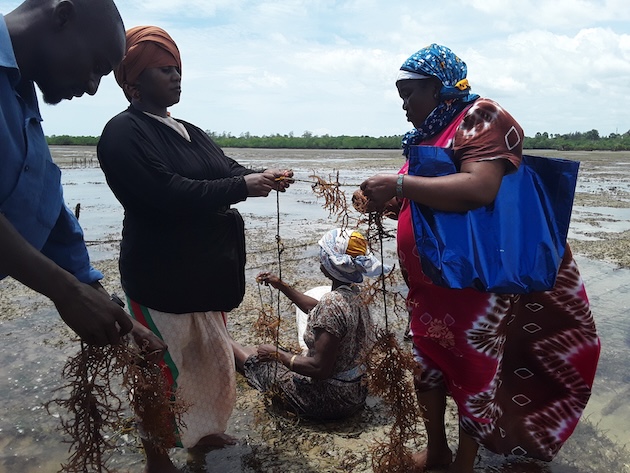
Scientists say replacing just 10 percent of global vegetable intake with seaweed-derived products could free up large portions of land. Credit: Joyce Chimbi/IPS

Scientists say replacing just 10 percent of global vegetable intake with seaweed-derived products could free up large portions of land. Credit: Joyce Chimbi/IPS

Current rates of land degradation pose a major environmental and socioeconomic threat, driving climate change, biodiversity loss, and social crises. Food production to feed more than 8 billion people is the dominant land use on Earth. Yet, this industrial-scale enterprise comes with a heavy environmental toll.


Preventing and reversing land degradation are key objectives of the United Nations Convention to Combat Desertification (UNCCD) and are also fundamental for the United Nations Framework Convention on Climate Change (UNFCCC) and the Convention on Biological Diversity (CBD).

These three conventions emerged from the 1992 Rio Earth Summit to address the interconnected crises of biodiversity loss, climate change and land degradation. A paper published today in Nature by 21 leading scientists argues that the targets of “these conventions can only be met by ‘bending the curve’ of land degradation and that transforming food systems is fundamental for doing so.”

Lead author Fernando T. Maestre of the King Abdullah University of Science and Technology (KAUST), Saudi Arabia, says the paper presents “a bold, integrated set of actions to tackle land degradation, biodiversity loss, and climate change together, as well as a clear pathway for implementing them by 2050.”

“By transforming food systems, restoring degraded land, harnessing the potential of sustainable seafood, and fostering cooperation across nations and sectors, we can ‘bend the curve’ and reverse land degradation while advancing towards goals of the UN Convention to Combat Desertification and other global agreements.”

Co-author Barron J. Orr, UNCCD’s Chief Scientist, says, “Once soils lose fertility, water tables deplete, and biodiversity is lost, restoring the land becomes exponentially more expensive. Ongoing rates of land degradation contribute to a cascade of mounting global challenges, including food and water insecurity, forced relocation and population migration, social unrest, and economic inequality.”

“Land degradation isn’t just a rural issue; it affects the food on all our plates, the air we breathe, and the stability of the world we live in. This isn’t about saving the environment; it’s about securing our shared future.”

The authors suggest an ambitious but achievable target of 50 percent land restoration for 2050—currently, 30 percent by 2030—with enormous co-benefits for climate, biodiversity and global health. Titled ‘Bending the curve of land degradation to achieve global environmental goals,’ the paper argues that it is imperative to ‘bend the curve’ of land degradation by halting land conversion while restoring half of degraded lands by 2050.

“Food systems have not yet been fully incorporated into intergovernmental agreements, nor do they receive sufficient focus in current strategies to address land degradation. Rapid, integrated reforms focused on global food systems, however, can move land health from crisis to recovery and secure a healthier, more stable planet for all,” reads parts of the paper.

Against this backdrop, the authors break new ground by quantifying the impact of reducing food waste by 75 percent by 2050 and maximizing sustainable ocean-based food production—measures that alone could spare an area larger than Africa. They say restoring 50 percent of degraded land through sustainable land management practices would correspond to the restoration of 3 Mkm² of cropland and 10 Mkm² of non-cropland, a total of 13 Mkm².

Stressing that land restoration must involve the people who live on and manage the land—especially Indigenous Peoples, smallholder farmers, women, and other vulnerable people and communities. Co-author Dolors Armenteras, Professor of Landscape Ecology at Universidad Nacional de Colombia, Bogotá, says land degradation is “a key factor in forced migration and conflict over resources.”

“Regions that rely heavily on agriculture for livelihoods, especially smallholder farmers, who feed much of the world, are particularly vulnerable. These pressures could destabilize entire regions and amplify global risks.”

To support these vulnerable segments of the population, the paper calls for interventions such as shifting agricultural subsidies from large-scale industrial farms toward sustainable smallholders, incentivizing good land stewardship among the world’s 608 million farms, and fostering their access to technology, secure land rights, and fair markets.

“Land is more than soil and space. It harbors biodiversity, cycles water, stores carbon, and regulates climate. It gives us food, sustains life, and holds deep roots of ancestry and knowledge. Today, over one-third of Earth’s land is used to grow food – feeding a global population of more than 8 billion people,” says Co-author Elisabeth Huber-Sannwald, Professor, the Instituto Potosino de Investigación Científica y Tecnológica, San Luis Potosí, Mexico.

“Yet today,” she continues, “Modern farming practices, deforestation, and overuse are degrading soil, polluting water, and destroying vital ecosystems. Food production alone drives nearly 20 percent of global emissions of greenhouse gases. We need to act. To secure a thriving future – and protect land – we must reimagine how we farm, how we live, and how we relate to nature – and to each other.”

With an estimated 56.5 Mkm² of agricultural land, cropland, and rangelands being used to produce food, and roughly 33 percent of all food produced being wasted, of which 14 percent is lost post-harvest at farms and 19 percent at the retail, food service and household stages, reducing food waste by 75 percent, therefore, could spare roughly 13.4 Mkm² of land.

The authors’ proposed remedies include policies to prevent overproduction and spoilage, banning food industry rules that reject “ugly” produce, encouraging food donations and discounted sales of near-expiry products, education campaigns to reduce household waste and supporting small farmers in developing countries to improve storage and transport.

Other proposed solutions include integrating land and marine food systems, as red meat produced in unsustainable ways consumes large amounts of land, water, and feed and emits significant greenhouse gases. Seafood and seaweed are sustainable, nutritious alternatives. Seaweed, for example, needs no freshwater and absorbs atmospheric carbon.

The authors recommend measures such as replacing 70 percent of unsustainably produced red meat with seafood, such as wild or farmed fish and mollusks. Replacing just 10 percent of global vegetable intake with seaweed-derived products could free up over 0.4 Mkm² of cropland.

They nonetheless note that these changes are especially relevant for wealthier countries with high meat consumption. In some poorer regions, animal products remain crucial for nutrition. The combination of food waste reduction, land restoration, and dietary shifts, therefore, would spare or restore roughly 43.8 Mkm² in 30 years (2020-2050).

The proposed measures combined would also contribute to emission reduction efforts by mitigating roughly 13.24 Gt of CO₂-equivalent per year through 2050 and help the world community achieve its commitments in several international agreements, including the three Rio Conventions and UN SDGs.

Overall, the authors call for the UN’s three Rio conventions—CBD, UNCCD and UNFCCC—to unite around shared land and food system goals and encourage the exchange of state-of-the-art knowledge, track progress and streamline science into more effective policies, all to accelerate action on the ground.

A step in the right direction, UNCCD’s 197 Parties, at their most recent Conference of Parties (COP16) in Riyadh, Saudi Arabia, have already adopted a decision on avoiding, reducing and reversing land and soil degradation of agricultural lands.

The Findings By Numbers

  • 56%: Projected increase in food production needed by 2050 if we stay on our current path
  • 34%: Portion of Earth’s ice-free land already used for food production, headed to 42% by 2050
  • 21%: Share of global greenhouse gas emissions produced by food systems
  • 80%: Proportion of deforestation driven by food production
  • 70%: Amount of freshwater consumption that goes to agriculture
  • 33%: Fraction of global food that currently goes to waste
  • USD 1 trillion: Estimated annual value of food lost or wasted globally
  • 75%: Ambitious target for global food waste reduction by 2050
  • 50%: Proposed portion of degraded land to be restored by 2050 using sustainable land management
  • USD 278 billion: Annual funding gap to achieve UNCCD land restoration goals
  • 608 million: Number of farms on the planet
  • 90%: Percentage of all farms under 2 hectares
  • 35%: Share of the world’s food produced by small farms
  • 6.5 billion tons: Potential biomass yield using 650 million hectares of ocean for seaweed farming
  • 17.5 million km²: Estimated cropland area saved if humanity adopts the proposed Rio+ diet (less unsustainably produced red meat and more sustainably sourced seafood and seaweed-derived food products)
  • 166 million: Number of people who could avoid micronutrient deficiencies with more aquatic foods in their diet

IPS UN Bureau Report

  Source