Malala: ‘Honest Conversations on Girls’ Education Start by Exposing the Worst Violations’

Asia-Pacific, Civil Society, Conferences, Development & Aid, Editors’ Choice, Education, Featured, Gender, Headlines, Human Rights, Humanitarian Emergencies, Sustainable Development Goals, TerraViva United Nations

Education

Pop singer and education activist Shehzad Roy plays chess with Malala Yousafzai. Courtesy: Shehzad Roy

Pop singer and education activist Shehzad Roy plays chess with Malala Yousafzai. Courtesy: Shehzad Roy

KARACHI, Pakistan, Jan 13 2025 (IPS) – “She was at her brilliant best, speaking fearlessly and boldly about the treatment of women by the Afghan Taliban, robbing an entire generation of girls their future, and how they want to erase them from society,” said educationist and one of the speakers, Baela Raza Jamil, referring to the speech by Nobel Laureate and education activist Malala Yousafzai.


Jamil heads Idara-e-Taleem-o-Aagahi, an organization promoting progressive education.

Malala addressed the second day of a two-day international conference organized by the Pakistan Ministry of Federal Education and Professional Training (MoFE&PT) on January 11 and 12, to discuss the challenges and opportunities for girls’ education in Muslim communities.

“They are violators of human rights, and no cultural or religious excuse can justify them,” said Malala. “Let’s not legitimize them.”

Pop singer and education activist Shehzad Roy was equally impressed.

Roy said, “When she speaks, she speaks from the heart.”

It has been a little over three years since the Taliban banned secondary education for girls in Afghanistan on September 17, shortly after their return to power in August 2021. In 2022, the Taliban put a ban on women studying in colleges, and then in December 2024, this was extended to include women studying nursing, midwifery and dentistry.

In October 2012, at 15, Malala survived a Taliban assassination attempt for advocating girls’ education in Mingora, Pakistan. She was flown to England for treatment and has since settled there with her family while facing continued Taliban threats.

Dr. Pervez Hoodbhoy, a university professor and columnist, acknowledged that the treatment of girls and women in Afghanistan was essentially “primitive and barbaric,” but emphasized that “before the Pakistani government takes on the mantle of being their [Afghan women’s] liberator, there are laws relating to women (in Pakistan) that need to be changed and anti-women practices that need to be dismantled.”

Syani Saheliyan project which helped nearly 50,000 adolescent girls by providing academic, life skills, vocational training, and technology-driven support to reintegrate Courtesy: Idara-e-Taleem-o-Aagahi

Syani Saheliyan project, which helped nearly 50,000 adolescent girls by providing academic, life skills, vocational training, and technology-driven support to reintegrate Courtesy: Idara-e-Taleem-o-Aagahi

Dismantling many of the colonial laws and legal systems that perpetuate gender inequality at both personal and societal levels was also pointed out by Jamil, who spoke about the important role women can play in peacebuilding. But that was only possible, she said, when society can promote education and lifelong learning without discrimination.

“In Malala, we have a living example of a contemporary young student’s lived experience of responding to deadly violence by becoming a unique peacebuilder,” said Jamil in her speech to the conference.

This high-profile conference deliberately kept low-key till the last minute for “security reasons gathered 150 delegates, including ministers, ambassadors, scholars, and representatives from 44 Muslim and allied countries, as well as international organizations like UNESCO, UNICEF, the World Bank, and the Saudi-funded Muslim World League.

[embedded content]

Hoodbhoy, however, said the summit was “solely purposed to break Pakistan’s isolation with the rest of the world and shore up a wobbly government desperate for legitimacy.”

While some Indian organizations were represented, Afghanistan, despite being invited, was conspicuously absent.

This did not go unnoticed.

“The silence of the Taliban, the world’s worst offender when it comes to girls’ education, was deafening,” pointed out Michael Kugelman, director of the Washington D.C.-based Wilson Center’s South Asia Institute. Given the strained relationship between Pakistan and Afghanistan, he said the former may have wanted this conference to bring attention to the Taliban’s horrific record on girls’ education.

“And it has succeeded, to a degree, especially with an iconic figure like Malala using the conference as a platform to condemn gender apartheid in Afghanistan under the Taliban.”

[embedded content]

Yusafzai was glad that the conference was taking place in Pakistan. “Because there is still a tremendous amount of work that is ahead of us, so that every Pakistani girl can have access to her education,” she said, referring to the 12 million out-of-school girls.

Kugelman credited Pakistan as the host for not trying “to hide its own failures” on the education front. “It was important that Prime Minister Sharif acknowledged the abysmal state of girls’ education in Pakistan in his conference speech,” he said.

With 26 million out-of-school children in Pakistan, 53 percent of whom are girls, the summit seemed to be in line with Prime Minister Shehbaz Sharif’s declaration of an education emergency in Pakistan last year, vowing to “bring them [unschooled children] back to school.”

“The PM is rightly worried about out-of-school kids, but I’m more worried about those who complete ten years of education and fail to develop critical thinking,” said Roy, commenting on the summit. The pop singer has been a very vocal education activist for over two decades.

Hoodbhoy had similar thoughts. “Had there been serious intent to educate girl children, the more effective and far cheaper strategies would be to make coeducation compulsory at the primary and early secondary levels to increase school availability and design curriculum to educate and inform girls (and boys) rather than simply brainwash,” he said.

Pop singer and education activist Shehzad Roy is concerned with the quality of education. Courtesy: Shehzad Roy

Pop singer and education activist Shehzad Roy is concerned with the quality of education. Courtesy: Shehzad Roy

Roy stated that Yousafzai has consistently emphasized the importance of quality education. With just 150 government training institutions in Pakistan, he said there was an urgent need for reform through public-private partnerships. He also noted that many private schools hire unqualified teachers and advocated for a teaching license, like medical licenses.

Since forming the Zindagi Trust in 2003, Roy has been advocating for better quality education in public schools. He has also adopted two government girl’s schools in Karachi and turned them around, providing meals to nursery children and teaching chess and musical instruments, both unheard of in public schools, especially for girls.

The Prime Minister acknowledged that enrolling 26 million students in school was a challenging task, with “inadequate infrastructure, safety concerns, as well as deeply entrenched societal norms” acting as barriers, and stated that the real challenge was the “will” to do it.

For 34 years, Jamil has raised questions about the design and process of education in Pakistan through annual reports. She believes that bringing 26 million children back to school is less challenging than ensuring “foundational learning” for those already enrolled. “Forty-five percent of children aged 5-16 fail in reading, comprehension, and arithmetic,” she told IPS. Along with improved funding and well-equipped school infrastructure, Jamil was also concerned about what she termed a runaway population.

Lamenting on a “lack of imagination to solve the education crisis” within the government, she said there was potential to achieve so much more. Jamil’s own organisation’s 2018 Syani Saheliyan project helped nearly 50,000 adolescent girls (ages 9-19) in South Punjab who had dropped out of school. It provided academics, life skills, vocational training, and technology-driven support to reintegrate them into education. The project was recognized by HundrEd Innovation in 2023.

Even Dr. Fozia Parveen, assistant professor at Aga Khan University’s Institute for Educational Development, would like the government to think outside the box and find a “middle ground” by including local wisdom in modern education.

“Instead of western-led education in an already colonial education system, perhaps a more grassroots approach using local methods of education can be looked into,” she suggested, adding: “There is so much local wisdom and knowledge that we will lose if we continue to be inspired by and adopt foreign systems. An education that is localized with all modern forms and technologies is necessary for keeping up with the world,” she said.

Further, Parveen, who looks at environmental and climate education, said “more skill-based learning would be needed in the times to come, which would require updated curriculum and teachers that are capacitated to foster those skills.”

The two-day International Conference on Girls’ Education in Muslim Communities ended with the signing of the Islamabad Declaration, recognizing education as a fundamental right protected by divine laws, Islamic teachings, international charters, and national constitutions. Muslim leaders pledged to ensure girls’ right to education, “without limitations” and “free from restrictive conditions,” in line with Sharia. The declaration highlighted girls’ education as a religious and societal necessity, key to empowerment, stable families, and global peace, while addressing extremism and violence.

It condemned extremist ideologies, fatwas, and cultural norms hindering girls’ education and perpetuating societal biases. Leaders committed to offering scholarships for girls affected by poverty and conflict and developing programs for those with special needs to ensure inclusivity.

The declaration concluded by affirming “it will not be a temporary appeal, an empty declaration, or simply a symbolic stance. Rather, it will represent a qualitative transformation in advocating for girls’ education—bringing prosperity to every deprived girl and to every community in dire need of the contributions of both
its sons and daughters equally”.

A permanent committee was urged to oversee the implementation of these outcomes.

IPS UN Bureau Report


Colombia’s Historic Child Marriage Ban

Civil Society, Education, Featured, Gender, Gender Violence, Headlines, Health, Human Rights, Indigenous Rights, Latin America & the Caribbean, Sustainable Development Goals, TerraViva United Nations, Women’s Health

Opinion

Credit: Fundación Plan/Instagram

MONTEVIDEO, Uruguay, Jan 8 2025 (IPS) – Colombia has just marked a historic milestone in the global campaign against child marriage, with the Senate passing one of Latin America and the Caribbean’s most comprehensive bans on child marriage and early unions. In a country where one in five girls under 18 and one in 10 under 14 are married or live in marriage-like conditions, the new law raises the minimum age to 18 with no exceptions, eliminating a 137-year-old Civil Code provision that allowed children over 14 to marry with parental consent. This achievement aligns with goal 5 of the Sustainable Development Goals (SDGs), which has a target of eliminating harmful practices like child marriage by 2030. The new law now awaits the signature of President Gustavo Petro to come into effect.


The breakthrough

Child marriage disproportionately affects Colombia’s most vulnerable communities, with rates of between 40 and 65 per cent among rural, Indigenous and Afro-Colombian populations. In some communities, girls as young as 10 are married off. These early unions expose girls to unequal power relations, deny them education, limit their bodily and economic autonomy and lead to higher rates of gender-based violence and health issues linked to early pregnancy.

The passage of the #SonNiñasNoEsposas (‘They are girls, not wives’) bill reflected the power of persistent civil society advocacy. After several failed attempts since 2007, the bill, authored by two congresswomen, passed with unanimous support. This success was driven by a coalition of Colombian civil society organisations as part of the Girls Not Brides global network, including the Foundation for Gender and Family Development, Fundación Plan and Profamilia, working alongside international partners such as Equality Now and Plan International, with Girls Not Brides directly supporting legislative advocacy and media campaigns.

Beyond raising the marriage age, the new law establishes the National Comprehensive Programme for Life Projects for Children and Adolescents. This preventive initiative targets the structural causes of early unions – poverty and lack of education – particularly in remote rural areas. The programme includes the participation of Indigenous communities through their own governance structures, recognising the importance of cultural sensitivity in implementation.

The global landscape

Colombia is by no means alone in having a child marriage problem. Around the world, some 12 million girls are married each year, two million before the age of 15. While child marriage can affect boys as well, girls are six times more likely to be married as children than boys.

According to the Child Marriage Monitoring Mechanism, a collaborative initiative to generate evidence to support efforts to end child marriage, one in five young women worldwide are married before their 18th birthday, with rates highest in sub-Saharan Africa.

To tackle this problem, The Elders, a group of senior public figures, launched the global Girls Not Brides partnership in 2011. With over 1,400 member organisations in more than 100 countries, Girls Not Brides works to prevent under-age marriage, recognising it as both a human rights violation and an obstacle to development. It identifies four main drivers of child marriage: poverty, limited educational and economic opportunities, gender inequality and insecurity in conflict or disaster situations. It tackles the problem with awareness-raising campaigns, national and international policy advocacy and community engagement to challenge social norms that perpetuate child marriage.

Since then, efforts have multiplied. In 2016, the United Nations Population Fund and the United Nations Children’s Fund (UNICEF) launched the Global Programme to End Child Marriage. Now in its third phase, set to run until 2030, the programme operates in 12 high-prevalence countries in Africa, the Middle East and South Asia. Working directly with governments, it has reached millions of adolescent girls, focusing on education, healthcare and economic opportunities.

Regional-level initiatives include the South Asian Initiative to End Violence Against Children, which works in Afghanistan, Bangladesh, Bhutan, India, the Maldives, Nepal, Pakistan and Sri Lanka, and the African Union’s Campaign to End Child Marriage in Africa, launched in 2014 in 10 high-prevalence countries and later expanded to 30.

Many more initiatives work at national and local levels. They combine multiple responses, including working with religious and community leaders to change social norms, supporting girls’ education and economic empowerment, engaging with men and boys on gender equality, advocating for stronger laws and their enforcement, providing support services to girls at risk of child marriage, using media and technology to raise awareness and change attitudes and building networks of young advocates and change-makers.

Progress and challenges

These efforts have contributed to a global decline in child marriage rates. According to UNICEF, the proportion of young women married as children has decreased from 25 per cent to 21 per cent over the past decade, meaning that 25 million child marriages have been prevented. However, the global number of child brides is still estimated at 650 million, including girls under 18 who have already married and adult women who married as children.

The average annual rate of reduction has been 0.7 per cent over the past 25 years and 1.9 per cent over the past decade, showing the impact of recent initiatives. But at this rate, the SDG target of eliminating the practice by 2030 won’t be achieved.

Setbacks have been caused by the COVID-19 pandemic, climate change, conflict and economic instability. Wherever insecurity rises, so does child marriage, as parents see early marriage of daughters as a financial and security solution. During Syria’s conflict, for example, the rate of child marriages shot up among refugees in countries such as Jordan and Lebanon.

Looking ahead

Colombia’s new law marks significant progress, but it’s just the beginning, as evidenced by the fact that many of the early marriages that take place in Colombia would have been illegal under the old law.

The real work of implementation begins now. Colombia’s efforts over the next few years will be crucial in demonstrating how legislative change can translate into real protection for vulnerable girls. For Latin America and the Caribbean, it should open up opportunities for strengthened cross-border cooperation and similar legislative reforms.

Colombia’s comprehensive approach could serve as a model for change in a region where many countries still have legal exceptions that allow child marriage under some circumstances, while others have strong laws that aren’t adequately implemented.

While the declining trend in global child marriage rates offers hope, the current pace of change remains far too slow. Colombia’s example shows that significant progress is possible through sustained, multi-stakeholder commitment and comprehensive approaches that change laws but also address underlying social dynamics. The international community must build on this momentum. This means scaling up successful initiatives, increasing funding for civil society organisations and maintaining political pressure.

Inés M. Pousadela is CIVICUS Senior Research Specialist, co-director and writer for CIVICUS Lens and co-author of the State of Civil Society Report.

For interviews or more information, please contact research@civicus.org.

  Source

Erratic Sales and Government Apathy Hurt Telangana Weavers

Arts, Asia-Pacific, Civil Society, Development & Aid, Editors’ Choice, Featured, Headlines, Labour, Sustainable Development Goals, TerraViva United Nations, Trade & Investment

Arts

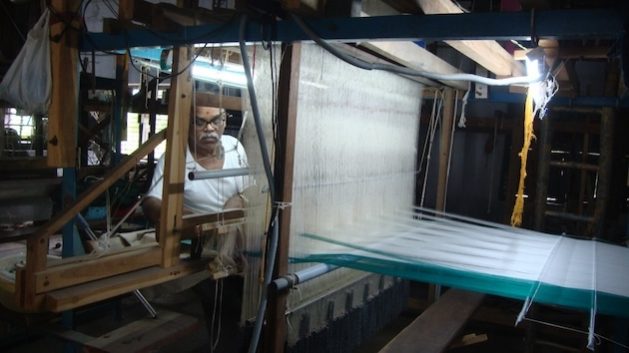
Siddipet cotton fabric being woven. Credit: Rina Mukherji/IPS

Siddipet cotton fabric being woven. Credit: Rina Mukherji/IPS

SIDDIPET, POCHAMPALLY & KOYALAGUDDEM, India, Jan 8 2025 (IPS) – The southern Indian state of Telangana has always been home to exquisite cotton and silk weaves. But in recent years, lack of market access, expensive inputs, and government apathy have taken their toll on the weaving community. As a result, the younger generation is refraining from pursuing this traditional occupation and opting for more lucrative pursuits.


This is evident when one visits the weaving towns of the state. Take Siddipet, which is about 100 km from the metropolitan city of Hyderabad. Siddipet has always been known for its exquisite cotton saris and stoles. But today, only about a hundred wizened individuals, spread over seven handloom cooperatives, still weave.

Srivikailasam is a renowned middle-aged weaver who was honoured by the Chief Minister with the Konda Laxman Bapuji Award. His saris, dupattas and stoles are prized items in the export market. Yet none of his children—a son and two daughters—want to inherit his craft.

Another weaver, known as Ilaiyah, has been weaving for the past 60 years, since he turned 15. Yet his children have turned their backs to weaving.

Yadagiri has also been weaving for the past 60 years, like his fellow weavers. But neither his son nor daughter are interested in learning to weave.

Master weaver Mallikarjun Siddi, who also owns a marketing outlet in Siddipet, followed his father, renowned weaver Buchaiah Siddi, into the profession. But his children have opted out of this traditional occupation.

However, Siddi defends the youngsters.

“Why would youngsters want to adopt a profession that pays so little? A weaver earns Rs 1000 (USD 11.82) a day here, and it takes three full days to weave a sari. A job in the IT hub of HiTech City in Hyderabad fetches a lot more.”

Worse, the Telangana government does not subsidize electricity; this has resulted in the Siddipet weavers continuing to use handlooms instead of switching to powerlooms, making their work even more tedious and hard. Electricity is Rs 10 (USD 0.12) a unit. If subsidized, the cost comes down to Rs 1 (US$ 0.012) per unit. Power loom machinery is expensive, ranging from Rs 1.5 lakh to 6 lakh (USD 1773.5 to USD 7101). With electricity subsidy, a weaver can bear the burden. Otherwise, it is not possible. Hence, even today, you see only handlooms here,” explains Siddi.

Master weaver Laxman Tadaka prepares his materials. Credit: Rina Mukherji/IPS

Master weaver Laxman Tadaka prepares his materials. Credit: Rina Mukherji/IPS

Marketing the product is also tough. The government buys the product at higher rates but does so lackadaisically. “Their representatives come only once a year, and although the payment is higher, it is not immediate. Private parties come regularly, and often, pay immediately,” say weavers.

The story is hardly any different in Pochampally, world-renowned for its ikat silk weaves. Ikat here can be either single ikat or double ikat, with the second being even more expensive. The yarn has to be initially soaked and then dyed before weaving. Since ikat weaves require every thread of the yarn to be dyed separately, a power loom can never be used. Thus, ikat weaves, whether cotton or silk, must be woven on a handloom, as master weaver Laxman Tadaka points out. The silk yarn comes from Bengaluru and is priced at Rs 4500 (USD 53.20) per kilogram. A weaver needs an average of 6 kg of yarn to weave seven saris a month. To bear the cost of inputs and the effort, a weaver must make enough sales. “The 15 percent subsidy extended by the government can hardly suffice,” Tadaka points out.

Rudra Anjanelu, manager of the Pochampally Handloom Weavers Cooperative Society, says they are dependent on subsidies.

“Our silk saris are expensive. But we cannot afford to give discounts unless the government supports us. A major problem is the 5 percent Goods and Services Tax (GST) that has now been imposed by the central government. It makes saris and other silk products even more expensive.”

In the past, the state government used to render marketing support through its outlets, offering the products to customers at discounted prices, especially during the festive season, while subsidizing weavers. This is not forthcoming anymore, making it tough for weavers.

Most weavers have to rely on the Telangana State Handloom Weavers Cooperative Society Limited (TSCO), their apex cooperative, to sell their product.

“We had suggested a method to jack up our sales. The Telangana government has a Kalyanalakshmi scheme, wherein parents of girls are given Rs 1 lakh (USD 1182.32) for their daughter’s wedding. Along with the money, the government could easily provide a sari worth Rs 10,000 (USD 118.23) for the bride. This will help us weavers too, while helping the parents with the bridal trousseau,” Anjanelu says.

Besides, most weavers are not happy with the quality of the subsidized yarn provided by the government through the National Handloom Development Corporation.

Muralikrishnan, a weaver from Koyalaguddem, a village renowned for its cotton ikat, laments, “The yarn provided by the government is of inferior quality and this, in turn, can affect the quality of our end product. It is unlike what we get from private traders.”

Moreover, as Anjanelu points out, “Yarn has to be paid for. When sales are down, how can weavers buy any yarn?”

A big challenge for handloom weavers remains the flooding of markets by printed duplicates, which sell at a fraction of the price of handloom fabric.

On hindsight, though, it is not as if nothing was done for weavers by the Telangana government. However, if weavers have not experienced long-term benefits, could this be attributed to the outcome of the ballot?

The previous Chandrashekhar Reddy (state) government, for instance, introduced a 36-month savings-cum-insurance scheme for weavers termed the Thrift Scheme, wherein the government contributed an amount matching the investment made by an individual.

In Pochampally, land was also sanctioned for a handloom institute, and a handloom park was set up on the outskirts of the town. However, with a new Chief Minister getting elected, the plans came to naught. The Handloom Park too suffered from bad planning. Weavers who had set up shop at the park now have to market their products from their homes.

It is ironical that the weavers of Pochampally, Koyalaguddem and Siddipet find it tough to sell their exquisite weaves, despite being located in the vicinity of metropolitan Hyderabad, which boasts of an upwardly mobile population with high disposable income.

Notwithstanding the problems faced, there are a few who have found a solution. Dudyala Shankar and Muralikrishnan of Koyalaguddem have diversified their range of products to include ikat fabric and bedsheets, alongside traditional saris, dupattas, and stoles. Muralikrishnan has been accessing markets all over India through the internet, from his dusty little village.

“It is the only way out,” he tells me.

Indeed, the World Wide Web can certainly fill in where humans cannot. Product diversification and market access translating into sales may ultimately wean back the younger generation to keep the weaving tradition alive in Telangana and prevent it from dying out.

IPS UN Bureau Report

  Source

A Renewed Vision for Prosperity for Landlocked Developing Countries

Civil Society, Climate Change, Climate Change Justice, Development & Aid, Environment, Featured, Global, Headlines, Human Rights, Humanitarian Emergencies, Least Developed Countries, Natural Resources, Small Island Developing States, Sustainable Development Goals, TerraViva United Nations, Trade & Investment

Opinion

OHRLLS Office Banner. Credit: The United Nations Office of the High Representative for the Least Developed Countries, Landlocked Developing Countries and Small Island Developing States (UN-OHRLLS)

UNITED NATIONS, Jan 3 2025 (IPS) – Over 570 million people live in the world’s 32 Landlocked Developing Countries (LLDCs), spanning across Africa, Asia, Europe, and Latin America. These nations face unique and complex development challenges. Their lack of direct access to the sea, geographical isolation, limited infrastructure, and difficulty integrating into global trade and value chains hinder sustainable development and progress.


The lingering impacts of the COVID-19 pandemic, rising vulnerability to external shocks, climate change, and mounting debt burdens have further compounded these challenges, eroding progress achieved under the last developmental roadmap for LLDCs—the Vienna Programme of Action.

However, a pivotal moment for LLDCs is at hand. In the lead-up to the Third United Nations Conference on LLDCs (LLDC3), to be held next year, the international community has adopted a new Programme of Action (PoA) to guide LLDCs’ development from 2025 to 2035.

UN Under-Secretary-General (USG) and High Representative, cr. Credit: OHRLLS

A new decade of opportunity and progress

The new PoA is a landmark achievement designed to address the structural challenges of LLDCs and accelerate their socio-economic integration into the global economy. This vision focuses on five priority areas critical to transforming LLDCs into resilient and competitive economies:

Structural Transformation and Science, Technology, and Innovation (STI)

Economic diversification is crucial for LLDCs. Their dependence on a narrow range of commodities leaves them highly vulnerable to external shocks. The new PoA prioritizes value-added industries and leveraging technology and innovation to help LLDCs integrate more effectively into global value chains and build more resilient economies.

Digital connectivity, which is pivotal for sustainable development, is also an important focus of the PoA. In 2023, only 39% of LLDC populations used the internet, compared to the global average of 67%. The PoA aims to create regional digital platforms for peer learning and capacity building while increasing support to LLDCs to leverage technology for sustainable growth.

Trade, Trade Facilitation, and Regional Integration

Trade drives economic growth, yet LLDCs account for just 1.1% of global merchandise exports. High trade costs—averaging 30% more than coastal countries—significantly hamper their competitiveness.

The new PoA highlights LLDCs’ interest in establishing a dedicated work programme at the World Trade Organization (WTO) to address their unique needs. It also recommends developing a high-level panel of experts to examine the application of existing international laws on freedom of transit for LLDCs, ensuring that LLDCs can engage in international trade under fairer conditions.

Transit, Transport, and Connectivity

Transport infrastructure is a critical link for LLDCs to global markets. Bridging the current gap—nearly 200,000 km of paved roads and over 46,000 km of railways—will require over half a trillion dollars.

To address this, the PoA proposes an Infrastructure Investment Finance Facility (IIFF) for LLDCs to mobilize resources for sustainable transport infrastructure, thereby reducing trade costs and enhancing connectivity.

Enhancing Adaptive Capacity and Resilience to Climate Change and Disasters

LLDCs face significant vulnerabilities to climate-related disasters. Between 2012 and 2022, 447 such events affected 170 million people in LLDCs—double the global average.

The PoA emphasizes climate-resilient infrastructure, sustainable agriculture, and improved access to climate finance. It also notes LLDCs’ interest in developing a dedicated work programme under the United Nations Framework Convention on Climate Change (UNFCCC).

Lastly, but more importantly,

Means of Implementation

The success of the new Programme of Action depends on robust means of implementation, including adequate resources, technical support, and strong partnerships. The PoA calls for increased development assistance and emphasizes the role of public-private partnerships in realizing its ambitious goals.

Driving Progress through Partnerships – a call for global solidarity and action

The adoption of the new Programme of Action is more than a commitment—it is a renewed call to action. Global solidarity is essential to provide LLDCs with the financial, technical, and capacity-building support they need. Strengthened partnerships and concerted efforts will enable LLDCs to leverage their potential and contribute meaningfully to the global economy.

The upcoming LLDC3 Conference in 2025 will serve as a critical platform to build this momentum and strengthen international collaboration and multi-sectoral partnerships for the implementation of the PoA.

With political resolve, enhanced partnerships, and tangible actions, LLDCs can emerge as dynamic contributors to the global economy, charting a path toward sustainable prosperity over the coming decade.

Ms. Rabab Fatima, United Nations Under-Secretary-General and High Representative for the Least Developed Countries, Landlocked Developing Countries and Small Island Developing States.

IPS UN Bureau

  Source

‘Digital platforms amplify the Israeli narrative while systematically silencing Palestinian voices’

Armed Conflicts, Civil Society, Crime & Justice, Featured, Headlines, Human Rights, Middle East & North Africa, Migration & Refugees, Press Freedom, TerraViva United Nations

Jan 2 2025 (IPS) –  
CIVICUS discusses the challenges Palestinian civil society faces in resisting digital suppression and advocating for justice with Palestinian lawyer and researcher Dima Samaro.


As the director of Skyline International for Human Rights, Dima advocates for digital freedoms and human rights in the Middle East and North Africa (MENA). She is a board member of Innovation for Change, MENA Hub, and the Surveillance in the Majority World Network, and volunteers with Resilience Pathways, which helps Palestinian civil society organisations (CSOs) reclaim the narrative amid Israeli efforts to manipulate public opinion, block funding and restrict civic space.

Dima Samaro

How are digital platforms influencing the narrative on Palestine?

Digital platforms have become key to shaping narratives about Palestine, often amplifying the Israeli narrative while systematically silencing Palestinian voices. Platforms such as Meta, TikTok and X, formerly Twitter, routinely remove Palestinian content under vague ‘policy violations’. This has intensified since October 2023, with the Israeli Cyber Unit issuing over 9,500 takedown requests, 94 per cent of which were approved. These actions have resulted in the removal of posts, shadow bans – a form of censorship that limits visibility of pro-Palestinian content without user notification – and account suspensions, and have extended to the censorship of hashtags such as #FreePalestine.

Algorithmic bias further marginalises Palestinian narratives. For example, Instagram once mistranslated the Arabic phrase ‘alhamdulillah’ – praise be to God – next to a Palestinian flag as ‘terrorists fighting for their freedom’. On WhatsApp, AI-generated images depicted militarised scenes as illustrations for ‘Palestinian’ but benign cartoons for terms such as ‘Israeli boy’ or ‘Israeli army’. While these incidents are often dismissed as technical errors, they reveal a systemic bias.

Policies such as Meta’s Dangerous Organisations and Individuals framework are heavily influenced by US terrorism designations and stifle Palestinian discourse by prohibiting expressions of ‘praise’ or ‘support’ for major political movements. Meanwhile, hate speech targeting Palestinians – including posts celebrating violence or calling for the destruction of Gaza – often goes unchecked. While ads inciting violence against Palestinians are allowed, the use of terms like ‘Zionist’ is flagged as hate speech. This double standard silences Palestinian voices while enabling propaganda that justifies collective punishment and shields atrocities from scrutiny.

Platform complicity goes beyond censorship. In April, +972 Magazine reported that WhatsApp, which belongs to Meta, played a role in supporting the Israeli AI surveillance system Lavender, which has been linked to the killing of civilians in Gaza. These disturbing revelations suggest direct corporate complicity in violations of international law.

Digital platforms are distorting narratives, dehumanising Palestinians and normalising violence against an already oppressed and besieged population. They actively suppress efforts to document war crimes and manipulate information. They must be held accountable for this.

What challenges does Palestinian civil society encounter?

Palestinian CSOs work under immense pressure, facing arbitrary arrests, travel bans, funding cuts and violence. In October 2021, Israel designated six prominent Palestinian human rights groups as terrorist organisations. These unfounded accusations delegitimised their work, fuelling defamation campaigns and enabling harassment and other restrictions on their work.

Many human rights defenders have also become targets of digital surveillance. Pegasus spyware, developed by the Israeli company NSO Group, has been used to hack the devices of Palestinian activists and human rights defenders, putting their safety and work at risk. This surveillance has been widely condemned by organisations such as Amnesty International and Human Rights Watch.

But the crackdown on Palestinian civil society goes beyond digital tactics: human rights defenders are harassed, arbitrarily detained and physically attacked. In Gaza, the situation has worsened after October 2023. Several civil society workers have been killed, injured or detained, and many have been displaced by the ongoing bombardment. The destruction of infrastructure has further hampered their work.

Journalists also face violence. Gaza has become the world’s deadliest place for journalists, with 195 media workers killed to date, many of them deliberately targeted while carrying out their duties. This loss of independent reporting creates a massive information gap, leaving human rights violations unreported and unchecked.

To make matters worse, international donors such as Germany, Sweden and Switzerland have suspended funding over unsubstantiated allegations of links to terrorism. The European Union’s imposition of ‘anti-incitement’ clauses also stigmatises Palestinian CSOs by forcing them to prove their neutrality, limiting their ability to document human rights violations without risking their safety.

How is Skyline International helping address these challenges?

We work at the intersection of technology, social media and human rights in Palestine and the region. We track, monitor and document human rights violations committed by states and corporations, particularly in the digital sphere. This includes tracking digital surveillance, analysing the ethical implications of AI in conflict settings and advocating for the protection of fundamental online rights such as freedom of expression, access to information and the right to privacy.

In Palestine, we support civil society activists and journalists by tackling online censorship and digital bias. We work closely with human rights defenders to document cases of over-enforcement of policies, content takedowns, account suspensions and algorithmic bias by social media platforms, as well as the illegal use of spyware and new technologies to target media workers. We also condemn Israel’s use of digital tools to target journalists in Gaza and Lebanon. Our aim is to draw national and international attention to these violations and advocate for the protection of press and online freedoms, ensuring that journalists can report without fear of retribution.

We also hold technology companies to account for their impact on human rights. In September, for example, we sent an open letter to Binance, a leading cryptocurrency exchange, expressing serious concerns about allegations of a mass seizure of Palestinian crypto wallets at Israel’s request. These actions exacerbate the economic and financial blockade of Gaza, making it even more difficult to access essential resources such as water, food and medical supplies. We demanded transparency regarding the criteria used to determine which accounts were frozen and immediate action to mitigate the humanitarian impact on Palestinian users. Although Binance responded, it didn’t provide a clear explanation or take any action.

What can the international community do to support Palestinian civil society?

Support for the work of Palestinian civil society is crucial to documenting abuses and advocating for justice. But this support must go beyond expressions of solidarity or charity. We need our allies to support our struggle for freedom and dignity.

The international community must move beyond empty rhetoric and take tangible action. It must also do more than just provide financial aid: it must put political pressure on Israel to end its occupation and respect Palestinian human rights. This includes protecting activists, fighting Israel’s constant attempts to criminalise and silence our work and holding accountable those who profit from the ongoing genocide. It means stopping arms exports to Israel and holding tech platforms accountable for their complicity in suppressing Palestinian voices, amplifying hate speech and facilitating Israeli surveillance and repression.

GET IN TOUCH
Website
Facebook
Twitter
Dima on Twitter

SEE ALSO
Palestine: ‘The international community has failed to stop the genocide, not because it can’t, but because it won’t’ Interview with Tahreer Araj 26.Nov.2024
‘AI-powered weapons depersonalise the violence, making it easier for the military to approve more destruction’ Interview with Sophia Goodfriend 23.Nov.2024
Palestine: ‘Ending impunity for violations of Palestinians’ rights would strengthen global norms that protect all humanity’ Interview with Kifaya Khraim 11.Nov.2024

  Source

Civil Society Trends for 2025: Nine Global Challenges, One Reason for Hope

Armed Conflicts, Civil Society, Climate Action, Climate Change, Crime & Justice, Economy & Trade, Environment, Featured, Global, Headlines, Human Rights, Labour, LGBTQ, Migration & Refugees, TerraViva United Nations

Opinion

LONDON / MONTEVIDEO, Uruguay, Dec 24 2024 (IPS) – It’s been a tumultuous year, and a tough one for struggles for human rights. Civil society’s work to seek social justice and hold the powerful to account has been tested at every turn. Civil society has kept holding the line, resisting power grabs and regressive legislation, calling out injustice and claiming some victories, often at great cost. And things aren’t about to get any easier, as key challenges identified in 2024 are likely to intensify in 2025.


Andrew Firmin

1. More people are likely to be exposed to conflict and its consequences, including humanitarian and human rights disasters, mass displacement and long-term trauma. The message of 2024 is largely one of impunity: perpetrators of conflict, including in Israel and Russia, will be confident they can resist international pressure and escape accountability. While there may be some kind of ceasefire in Gaza or halt to the Russia-Ukraine conflict, those responsible for large-scale atrocities are unlikely to face justice. Impunity is also likely to prevail in the conflicts taking place largely off the global radar, including in Myanmar and Sudan. There will also be growing concern about the use of AI and automated weapons in warfare, a troublingly under-regulated area.

As recent events in Lebanon and Syria have shown, changing dynamics, including shifting calculations made by countries such as Iran, Israel, Russia, Turkey and the USA, mean that frozen conflicts could reignite and new ones could erupt. As in Syria, these shifts could create sudden moments of opportunity; the international community and civil society must respond quickly when these come.

Inés M. Pousadela

2. The second Trump administration will have a global impact on many current challenges. It’s likely to reduce pressure on Israel, hamper the response to the climate crisis, put more strain on already flawed and struggling global governance institutions and embolden right-wing populists and nationalists the world over. These will bring negative consequences for civic space – the space for civil society, which depends on the freedoms of association, expression and peaceful assembly. Funding for civil society is also likely to be drastically reduced as a result of the new administration’s shifting priorities.

3. 2025 is the year that states are required to develop new plans to reduce greenhouse gas emissions and adapt to climate change under the Paris Agreement. The process will culminate in the COP30 climate summit in Brazil, likely the world’s last chance to limit the global temperature rise to 1.5 degrees above preindustrial levels. This will only happen if states stand up to fossil fuel companies and look beyond narrow short-term interests. Failing that, more of the debate may come to focus on adaptation. The unresolved question of who will pay for climate transition will remain central. Meanwhile, extreme weather events such as heatwaves and floods can be expected to continue to devastate communities, impose high economic costs, drive migration and exacerbate conflicts.

4. Globally, economic dysfunction is likely to increase, with more people struggling to afford basic necessities, increasingly including housing, as prices continue to rise, with climate change and conflict among the causes. The gap between the struggling many and the ultra-wealthy few will become more visible, and anger at rising prices or taxes will drive people – particularly young people deprived of opportunities – onto the streets. State repression will often follow. Frustration with the status quo means people will keep looking for political alternatives, a situation right-wing populists and nationalists will keep exploiting. But demands for labour rights, particularly among younger workers, will also likely increase, along with pressure for policies such as wealth taxes, a universal basic income and a shorter working week.

5. A year when the largest number of people ever went to the polls has ended – but there are still plenty of elections to come. Where elections are free and fair, voters are likely to keep rejecting incumbents, particularly due to economic hardship. Right-wing populists and nationalists are likely to benefit the most, but the tide will eventually turn: once they’ve been around long enough to be perceived as part of the political establishment, they too will see their positions threatened, and they can be expected to respond with authoritarianism, repression and the scapegoating of excluded groups. More politically manipulated misogyny, homophobia, transphobia and anti-migrant rhetoric can be expected as a result.

6. Even if developments in generative AI slow as the current model reaches the limits of the human-generated material it feeds on, international regulation and data protection will likely continue to lag behind. The use of AI-enabled surveillance, such as facial recognition, against activists is likely to increase and become more normalised. The challenge of disinformation is likely to intensify, particularly around conflicts and elections.

Several tech leaders have actively taken the side of right-wing populists and authoritarians, putting their platforms and wealth at the service of their political ambitions. Emerging alternative social media platforms offer some promise but are likely to face similar problems as they grow.

7. Climate change, conflict, economic strife, repression of LGBTQI+ identities and civil and political repression will continue to drive displacement and migration. Most migrants will remain in difficult and underfunded conditions in global south countries. In the global north, right-wing shifts are expected to drive more restrictive and repressive policies, including the deportation of migrants to countries where they may be at risk. Attacks on civil society working to defend their rights, including by assisting at sea and land borders, are also likely to intensify.

8. The backlash against women’s and LGBTQI+ rights will continue. The US right wing will continue to fund anti-rights movements in the global south, notably in Commonwealth African countries, while European conservative groups will continue to export their anti-rights campaigns, as some Spanish organisations have long done throughout Latin America. Disinformation efforts from multiple sources, including Russian state media, will continue to influence public opinion. This will leave civil society largely on the defensive, focused on consolidating gains and preventing setbacks.

9. As a result of these trends, the ability of civil society organisations and activists to operate freely will remain under pressure in the majority of countries. Just when its work is most needed, civil society will face growing restrictions on fundamental civic freedoms, including in the form of anti-NGO laws and laws that label civil society as agents of foreign powers, the criminalisation of protests and increasing threats to the safety of activists and journalists. Civil society will have to devote more of its resources to protecting its space, at the expense of the resources available to promote and advance rights.

10. Despite these many challenges, civil society will continue to strive on all fronts. It will continue to combine advocacy, protests, online campaigns, strategic litigation and international diplomacy. As awareness grows of the interconnected and transnational nature of the challenges, it will emphasise solidarity actions that transcend national boundaries and make connections between different struggles in different contexts.

Even in difficult circumstances, civil society achieved some notable victories in 2024. In the Czech Republic, civil society’s efforts led to a landmark reform of rape laws, and in Poland they resulted in a law making emergency contraception available without prescription, overturning previous restrictive legislation. After extensive civil society advocacy, Thailand led the way in Southeast Asia by passing a marriage equality law, while Greece became the first predominantly Christian Orthodox country to legalise same-sex marriage

People defended democracy. In South Korea, people took to the streets in large numbers to resist martial law, while in Bangladesh, protest action led to the ousting of a longstanding authoritarian government. In Guatemala, a president committed to fighting corruption was sworn in after civil society organised mass protests to demand that powerful elites respect the election results, and in Venezuela, hundreds of thousands organised to defend the integrity of the election, defeated the authoritarian government in the polls and took to the streets in the face of severe repression when the results weren’t recognised. In Senegal, civil society mobilised to prevent an attempt to postpone an election that resulted in an opposition win.

Civil society won victories in climate and environmental litigation – including in Ecuador, India and Switzerland – to force governments to recognise the human rights impacts of climate change and do more to reduce emissions and curb pollution. Civil society also took to the courts to pressure governments to stop arms sales to Israel, with a successful verdict in the Netherlands and others pending.

In 2025, the struggle continues. Civil society will keep carrying the torch of hope that a more peaceful, just, equal and sustainable world is possible. This idea will remain as important as the tangible impact we’ll continue to achieve despite the difficult circumstances.

Andrew Firmin is Editor-in-Chief and Inés M. Pousadela is Senior Research Specialist at CIVICUS: World Alliance for Citizen Participation. The two are co-directors and writers for CIVICUS Lens and co-authors of the State of Civil Society Report.

  Source